What Happens When the Country is Closed for Average Americans?

A Report By: Benjamin Groff© Groff Media 2024© Truth Endures

A Shift in the Landscape of Freedom

Amid political upheaval, the everyday American—who works a regular job, pays taxes, and seeks a life of routine and stability—may question their future in an increasingly polarized society. As extreme political movements push for agendas that center around ideas of “Project 25” or the return of Trump, advocating for a strict interpretation of Christianity, suppression of women’s rights, and an aggressive nationalistic framework, the real impact may be felt most by the “regular Joe”—the one who wants to live a quiet, predictable life.

For the average person, life may close in on them in such a scenario. The country may become unrecognizable, not in a dystopian fantasy, but in subtle, pervasive ways. It might start with the suppression of individual freedoms—targeting what people can say, wear, or how they worship. Religious dogma could permeate public life, not as a choice but as a mandate, affecting schools, workplaces, and government institutions. The Bible in every building might become symbolic and a requirement, with legal frameworks promoting a particular religious view while leaving others on the margins.

Erosion of Women’s Rights

Regular Americans might witness fundamental changes in the status of women while going about their daily lives. With growing pressure from ultra-conservative elements, efforts to curtail women’s autonomy could accelerate. The reversal of women’s rights, particularly reproductive rights, is already in motion. In this new political order, women might have even fewer choices about their bodies, careers, and participation in public life. For many, this will mark a turning point when personal freedom can no longer be taken for granted.

The Fear of the Unknown

Fear might become customary for those not part of this hard-right movement. The “regular Joe” will likely feel caught between competing narratives. On one side, there is the quiet desperation of wanting to hold on to their everyday life, and on the other, the nagging sense that the world is changing in ways that might soon render them powerless. Whether one is bisexual, straight, or simply someone with no interest in pushing their identity into the political arena, they might start feeling stalked by the system—monitored, judged, and left wondering if their way of life is still valid.

A New “American Dream?”

In this environment, the American Dream could become narrow. No longer about opportunity for all, it may become a dream only accessible to those who fit the suitable mold—racially, religiously, and socially. If one does not align with the ideals of whiteness or conservative sexuality, they could find themselves increasingly ostracized, with opportunities drying up. The path to success might depend less on hard work and more on conformity to ideals driven by far-right ideologues.

The reality could become darker for the person who comes home daily, pats their dog on the head, and watches the news. The content of that evening television might change, with media outlets pushing extreme viewpoints or censorship becoming the norm. Growing anxieties about what tomorrow holds could interrupt quiet moments of relaxation.

Where Do They Go?

If the country starts closing itself to all but those who align with this rigid agenda, the regular Joe may ask, “Where do I go?” It is hard to imagine a physical place for escape in a country that feels increasingly closed off to dissent. For many, the answer might not be in leaving the country but in finding a way to resist quietly—by forming communities with others who feel left behind, advocating for empathy and open-mindedness, and holding on to the idea that the heart of America lies not in exclusion but inclusion.

The danger is not just in the policies themselves but in the erosion of what makes America a place where people of all walks of life can live freely, with differences embraced rather than punished. When that idea is under attack, the question of “Where will you go?” takes on a much deeper meaning because the honest answer is about preserving a sense of home, not just for oneself but for everyone.

In this potential future, where does the regular Joe go? Perhaps they remain right where they are, standing in quiet defiance, continuing to pay their taxes, pat their dog, and live with the hope that balance will one day return to a nation at risk of losing itself.

2024 Hand-Counting Election: A Tale of Two Residents counting the nations ballots

A Story By: Benjamin Groff© Groff Media 2024© Truth Endures

In the heart of the dusty plains, where tumbleweeds rolled lazily across the horizon, sat the humble town of Booterville. A place so small it didn’t even appear on most maps. Known for little more than its annual chili cook-off and the town’s general store, Booterville got entrusted with one of the most critical tasks in the 2024 election: hand-counting every vote nationwide.

Rumor had it that some miscommunication at a high level led to Booterville’s selection. The plan had been simple: With all the national turmoil surrounding electronic voting machines, distrust of mail-in ballots, and other voting controversies, someone high up had the idea to return to a “simpler” method—hand counting. Unfortunately, the job landed in the laps of Booterville’s only two permanent residents qualified to take on the task: Earl and Maude Jenkins.

Earl and Maude, both pushing 80, had stayed in Booterville for decades. Earl was a retired mailman with a sharp eye for sorting, while Maude was known for her days as the town librarian, meticulous in her record-keeping, and famous for knitting scarves with perfect symmetry. Together, they formed what the nation had come to call the “Election Duo.”

As election night approached, the rest of the country anxiously prepared for the returns. Cable news channels buzzed with frantic energy. Experts spoke confidently about the “return to integrity” with hand-counted ballots. However, they could only explain how it was physically possible for two people to count hundreds of millions of votes promptly. Analysts debated whether the results would come in within hours, days, or—worst case—months.

Booterville, meanwhile, was calm, as always. Earl and Maude sat on their front porch, sipping sweet tea, staring at the horizon where, in just a few hours, trucks would arrive carrying boxes upon boxes of ballots from all over the country.

The first truck pulled up right on time—around 9 p.m.—loaded with crates of ballots from California. Earl scratched his head and squinted at the car, which stretched longer than the main street of Booterville itself.

He muttered.

As Maude gingerly opened the first crate, the magnitude of the task became apparent. Inside were hundreds of thousands of paper ballots, each needing to be verified, double-checked, and counted by hand. Earl retrieved an abacus from their parlor, confident that the ancient method would sufficiently tally the votes.

Frustrated news anchors from CNOX and FONN NEWS networks chimed in, saying in general –––

“Our experts say we should have heard from at least the smaller states by now.”

Booterville, however, wasn’t so much concerned with the rush. Ever the perfectionist, Earl spent twenty minutes on each ballot, inspecting signatures, verifying dates, and ensuring no Chad hung loosely from the corners.

Maude cross-referenced each voter’s name with meticulously kept records from her days as a librarian. She spent additional time knitting if any name seemed unfamiliar while contemplating its legitimacy.

By midnight, the panic had spread. Election officials from every state began ringing Booterville’s single landline, asking for updates. But halfway through her evening tea, Maude had turned off the ringer to avoid distractions. Earl had managed to count precisely 72 ballots.

By morning, networks were abuzz with speculation. Some suggested Earl and Maude were holding the election hostage, while others theorized a deep conspiracy in which Booterville’s hand-counting was a covert means of election tampering. In truth, Earl and Maude were simply slow workers.

As the days dragged on, Earl and Maude remained unphased. They didn’t own a television, and Maude had never been a radio fan. They were blissfully unaware that the world was falling apart outside of Booterville. Mass protests erupted in cities, with demands for transparency. Accusations flew between political parties.

In some corners of the internet, Booterville became a symbol of resilience; in others, it became a meme, representing all that was wrong with the electoral process.

Two weeks later, the National Guard arrived. They politely knocked on Earl and Maude’s door, requesting an update on the election. Maude, unperturbed, invited them in for tea and showed them the ballots neatly stacked in her living room. The guards, bewildered, nodded and promised to relay their findings back to the capital.

Finally, in mid-December, a breakthrough occurred. After endless negotiations, Booterville agreed to let nearby towns assist in the counting process. Volunteers, election experts, and even some former contestants from the chili cook-off converged on Booterville to save the election.

But even with the new help, it took another month before all the votes got tallied.

As Earl and Maude sat together on New Year’s Eve, looking out at the winter stars, Earl leaned back in his chair and said,

Maude, knitting a scarf with perfect stitches, smiled and nodded. They never knew their efforts had plunged the nation into one of the most prolonged and chaotic elections in history. But to them, it was just another quiet day in Booterville.

Earl did ask Maude,

Maude said,

Earl replied,

Maude, rocking back and forth in her rocker, replied ––

Earl just grumbled.

The End.

Fight Today For A Better Tomorrow – Saving America – Coming Home

A Report By: Benjamin Groff© Groff Media 2024© Truth Endures

A Nation’s Call

It was the fall of 2024, and the country had never seemed more divided. Political upheaval had peaked, with protests echoing through city streets, harsh words hurled in homes, and debates erupting at family dinner tables. The election season had become more than just a contest of policies; it had morphed into a battle over the nation’s soul, pitting neighbor against neighbor.

At the heart of this turmoil was a young senator named Jacob Randall. A man of few words but deep conviction, he had saw firsthand the devastating effects of division. Randall had grown up in a small town where his mother and father, though from opposite sides of the political spectrum, had found common ground in their love for family, faith, and community. That shared foundation had always given him hope that unity was possible.

However, as he stood before Congress, he wondered if that hope had been misplaced. The chamber was restless, with representatives glaring at one another across the aisle, the tension palpable. Randall chose to speak at what many called a last-ditch effort—a desperate attempt to heal the nation before it tore apart.

Taking a deep breath, he began.

“Fellow citizens, colleagues, I stand before you not as a Democrat or a Republican but as an American. Our great nation is facing a challenge unlike any other. We have become so entrenched in our political camps that we no longer see each other as fellow countrymen. We see enemies where once we saw neighbors. And that division is killing the very fabric of our society.

“My parents did not always agree on politics. Mother was a staunch conservative, Father a proud progressive. But they understood something we have forgotten: that compromise is not a weakness but the cornerstone of democracy. They believed that every person, no matter how much they disagreed, had something valuable to contribute to the conversation.”

Randall’s words caught the attention of some. A few heads began to nod slowly. He pressed on, feeling the weight of the moment.

“Our founders, too, were divided. They had different visions for this country and ideas about what liberty and justice should look. Nevertheless, they knew that to create something lasting, they had to pull together to find common ground. And they did. That is the spirit that created America. Moreover, that is the spirit we need to rediscover today.”

As Randall continued, he saw a shift in the faces before him. Some were hard, unmoving, but others softened, listening with new ears. He was not offering easy solutions but calling for something more complicated: humility.

“When we look across the aisle, we must not see enemies but partners in this great American experiment. We have different ideas about achieving a better future, but we all want a better one. And if we cannot even agree on that, we have already lost.”

He paused, letting the gravity of his words settle in the room.

“In every crisis, there is opportunity, an opportunity to rise above the noise, the hatred, and the division. It is an opportunity to remember that we are bound together not just by the laws of this land but by the ideals it represents. Life, liberty, and the pursuit of happiness—for everyone. Not just for those who agree with us.”

Randall stepped away from the podium and glanced up at the gallery above. It was filled with citizens from across the country, watching with anxious eyes, waiting for anyone to bring clarity to the chaos. He saw young activists clutching signs, older veterans with tears in their eyes, and families holding hands.

“I am not asking you to abandon your beliefs. Listen to those who see the world differently. Not to argue but to understand a call for uniformity, but for unity because we cannot get found without uniting.”

The silence in the chamber was deafening. No one was shouting for the first time in what seemed like years. No one was trying to outdo the other with statistics or soundbites. They were listening.

Randall’s speech ended with a simple message: “America is not a perfect nation, but it is a nation built on the belief that we can pursue perfection together. Let us, as a people, return to that pursuit—not as adversaries, but as Americans.”

As he stepped away from the podium, the room erupted—not in protest, but in applause. Representatives stood on both sides of the aisle, clapping not just for Randall’s words but for what those words represented: a glimmer of hope that maybe, just maybe, the country could pull itself back from the brink.

It would take work. It would not happen overnight. But in that moment, something had shifted. For the first time in a long time, there was a shared sense of purpose— a belief that even in the darkest of times, unity was possible—and that together, the nation could find its way back to the light.

A Lesson In History, For Today. A Letter From AN American – Heather Cox Richardson

Reposted By: Benjamin Groff© Groff Media 2024© Truth Endures

On September 16, CNN senior data reporter Harry Enten wrote that while it’s “[p]retty clear that [Democratic candidate Vice President Kamala] Harris is ahead nationally right now… [h]er advantage in the battlegrounds is basically nil. Average it all, Harris’[s] chance of winning the popular vote is 70%. Her chance of winning the electoral college is 50%.” Two days later, on September 18, Senator Lindsey Graham (R-SC) skipped votes in the Senate to travel to Nebraska, where he tried to convince state legislators to switch the state’s system of allotting electoral votes by district to a winner-take-all system. That effort so far appears unsuccessful. 

In a country of 50 states and Washington, D.C.—a country of more than 330 million people—presidential elections are decided in just a handful of states, and it is possible for someone who loses the popular vote to become president. We got to this place thanks to the Electoral College, and to two major changes made to it since the ratification of the Constitution. 

The men who debated how to elect a president in 1787 worried terribly about making sure there were hedges around the strong executive they were creating so that he could not become a king. 

Some of the delegates to the Constitutional Convention wanted Congress to choose the president, but this horrified others who believed that a leader and Congress would collude to take over the government permanently. Others liked the idea of direct election of the president, but this worried delegates from smaller states, who thought that big states would simply be able to name their own favorite sons. It also worried those who pointed out that most voters would have no idea which were the leading men in other states, leaving a national institution, like the organization of Revolutionary War officers called the Society of the Cincinnati, the power to get its members to support their own leader, thus finding a different way to create a dictator. 

Ultimately, the framers came up with the election of a president by a group of men well known in their states but not currently office-holders, who would meet somewhere other than the seat of government and would disband as soon as the election was over. Each elector in this so-called Electoral College would cast two votes for president. The man with the most votes would be president, and the man with the second number of votes would be vice president (a system that the Twelfth Amendment ended in 1804). The number of electors would be equal to the number of senators and representatives allotted to each state in Congress. If no candidate earned a majority, the House of Representatives would choose the president, with each state delegation casting a single vote.

In the first two presidential elections—in 1788–1789 and 1792—none of this mattered very much, since the electors cast their ballots unanimously for George Washington. But when Washington stepped down, leaders of the newly formed political parties contended for the presidency. In the election of 1796, Federalist John Adams won, but Thomas Jefferson, who led the Democratic-Republicans (which were not the same as today’s Democrats or Republicans) was keenly aware that had Virginia given him all its electoral votes, rather than splitting them between him and Adams, he would have been president. 

On January 12, 1800, Jefferson wrote to the governor of Virginia, James Monroe, urging him to back a winner-take-all system that awarded all Virginia’s electoral votes to the person who won the majority of the vote in the state. He admitted that dividing electoral votes by district “would be more likely to be an exact representation of [voters’] diversified sentiments” but, defending his belief that he was the true popular choice in the country in 1796, said voting by districts “would give a result very different from what would be the sentiment of the whole people of the US. were they assembled together.” 

Virginia made the switch. Alarmed, the Federalists in Massachusetts followed suit to make sure Adams got all their votes, and by 1836, every state but South Carolina, where the legislature continued to choose electors until 1860, had switched to winner-take-all. 

This change horrified the so-called Father of the Constitution, James Madison, who worried that the new system would divide the nation geographically and encourage sectional tensions. He wrote in 1823 that voting by district, rather than winner-take-all, “was mostly, if not exclusively in view when the Constitution was framed and adopted.” He proposed a constitutional amendment to end winner-take-all.

But almost immediately, the Electoral College caused a different crisis. In 1824, electors split their votes among four candidates—Andrew Jackson, John Quincy Adams, Henry Clay and William Crawford—and none won a majority in the Electoral College. Although Jackson won the most popular votes and the most electoral votes, when the election went to the House, the state delegations chose Adams, the son of former president John Adams.

Furious Jackson supporters thought a developing elite had stolen the election, and after they elected Jackson outright in 1828, the new president on December 8, 1829, implored Congress to amend the Constitution to elect presidents by popular vote. “To the people belongs the right of electing their Chief Magistrate,” he wrote; “it was never designed that their choice should in any case be defeated, either by the intervention of electoral colleges or…the House of Representatives.” 

Jackson warned that an election in the House could be corrupted by money or power or ignorance. He also warned that “under the present mode of election a minority may…elect a President,” and such a president could not claim legitimacy. He urged Congress “to amend our system that the office of Chief Magistrate may not be conferred upon any citizen but in pursuance of a fair expression of the will of the majority.”

But by the 1830s, the population of the North was exploding while the South’s was falling behind. The Constitution counted enslaved Americans as three fifths of a person for the purposes of representation, and direct election of the president would erase that advantage slave states had in the Electoral College. Their leaders were not about to throw that advantage away.

In 1865 the Thirteenth Amendment ended slavery (except as punishment for a crime) and scratched out the three-fifths clause, meaning that after the 1870 census the southern states would have more power in the Electoral College than they did before the war. In 1876, Republicans lost the popular vote by about 250,000 votes out of 8.3 million cast, but kept control of the White House through the Electoral College. As Jackson had warned, furious Democrats threatened rebellion. They never considered Republican Rutherford B. Hayes, whom they called “Rutherfraud,” a legitimate president. 

In 1888 it happened again. Incumbent Democratic president Grover Cleveland won the popular vote by about 100,000 votes out of 11 million cast, but Republican candidate Benjamin Harrison took the White House thanks to the 36 electoral votes from New York, a state Harrison won by fewer than 15,000 votes out of more than 1.3 million cast. Once in office, he and his team set out to skew the Electoral College permanently in their favor. Over twelve months in 1889–1890, they added six new, sparsely populated states to the Union, splitting the territory of Dakota in two and adding North Dakota, South Dakota, Montana, Washington, Idaho, and Wyoming while cutting out New Mexico and Arizona, whose inhabitants they expected would vote for Democrats.

The twentieth century brought another wrench to the Electoral College. The growth of cities, made possible thanks to modern industry—including the steel that supported skyscrapers—and transportation and sanitation, created increasing population differences among the different states.

The Constitution’s framers worried that individual states might try to grab too much power in the House by creating dozens and dozens of congressional districts, so they specified that a district could not be smaller than 30,000 people. But they put no upper limit on district sizes. After the 1920 census revealed that urban Americans outnumbered rural Americans, the House in 1929 capped its numbers at 435 to keep power away from those urban dwellers, including immigrants, that lawmakers considered dangerous, thus skewing the Electoral College in favor of rural America. Today the average congressional district includes 761,169 individuals—more than the entire population of Wyoming, Vermont, or Alaska—which weakens the power of larger states.  

In the twenty-first century the earlier problems with the Electoral College have grown until they threaten to establish permanent minority rule. A Republican president hasn’t won the popular vote since voters reelected George W. Bush in 2004, when his popularity was high in the midst of a war. The last Republican who won the popular vote in a normal election cycle was Bush’s father, George H.W. Bush, in 1988, 36 years and nine cycles ago. And yet, Republicans who lost the popular vote won in the Electoral College in 2000—George W. Bush over Democrat Al Gore, who won the popular vote by about a half a million votes—and in 2016, when Democrat Hillary Clinton won the popular vote by about 3 million votes but lost in the Electoral College to Donald Trump. 

In our history, four presidents—all Republicans—have lost the popular vote and won the White House through the Electoral College. Trump’s 2024 campaign strategy appears to be to do it again (or to create such chaos that the election goes to the House of Representatives, where there will likely be more Republican-dominated delegations than Democratic ones).

In the 2024 election, Trump has shown little interest in courting voters. Instead, the campaign has thrown its efforts into legal challenges to voting and, apparently, into eking out a win in the Electoral College. The number of electoral votes equals the number of senators and representatives to which each state is entitled (100 + 435) plus three electoral votes for Washington, D.C., for a total of 538. A winning candidate must get a majority of those votes: 270.

Winner-take-all means that presidential elections are won in so-called swing or battleground states. Those are states with election margins of less than 3 points, so close they could be won by either party. The patterns of 2020 suggest that the states most likely to be in contention in 2024 are Arizona, Georgia, Michigan, Nevada, North Carolina, Pennsylvania, and Wisconsin, although the Harris-Walz campaign has opened up the map, suggesting its internal numbers show that states like Florida might also be in contention. Candidates and their political action committees focus on those few swing states—touring, giving speeches and rallies, and pouring money into advertising and ground operations. 

But in 2024 there is a new wrinkle. The Constitution’s framers agreed on a census every ten years so that representation in Congress could be reapportioned according to demographic changes. As usual, the 2020 census shifted representation, and so the pathway to 270 electoral votes shifted slightly. Those shifts mean that it is possible the election will come down to one electoral vote. Awarding Trump the one electoral vote Nebraska is expected to deliver to Harris could be enough to keep her from becoming president.

Rather than trying to win a majority of voters, just 49 days before the presidential election, Trump supporters—including Senator Graham—are making a desperate effort to use the Electoral College to keep Harris from reaching the requisite 270 electoral votes to win. It is unusual for a senator from one state to interfere in the election processes in another state, but Graham similarly pressured officials in Georgia to swing the vote there toward Trump in 2020.

You can find more comments about this report and ones like it by clicking and visiting Heather Cox Richardson here!

Harrison J. Goldin, Longtime New York City Comptroller, Former New York State Senator, Dies at 90

An Obituary Presented By Benjamin Groff© Groff Media 2024© Turth Endures

Harrison J. Goldin, Longtime New York City Comptroller, Dies at 90

Harrison J. Goldin, Longtime New York City Comptroller, Dies at 90

Harrison J. Goldin, who served as New York City’s comptroller for 16 years and was pivotal in steering the city through its near-bankruptcy in the 1970s, his death was reported on September 16th, 2024. He was 90.

A Harvard Law School graduate, Goldin was a driving force in New York politics from the late 1960s through the 1980s. Goldin, who won the election to become New York City’s comptroller in 1973, and his tenure coincided with one of the city’s most challenging financial crises. Goldin, then-Mayor Abraham Beame, and others worked tirelessly to restructure the city’s finances, helping to avert fiscal collapse. He was instrumental in negotiating critical deals with creditors and introducing reforms that put the city on a path toward financial recovery.

Goldin’s unwavering commitment to public finance and his no-nonsense approach earned him a reputation as a watchdog for the public purse. He initiated audits of city agencies and pushed for greater transparency and efficiency in government spending, leaving an indelible mark on the comptroller’s office. Even amid New York’s darkest financial days, Goldin remained steady, advocating for long-term solutions over short-term fixes, inspiring all with his steadfast commitment.

Harrison Golden

Before his time as comptroller, Goldin was a New York State Senator, championing civil rights, education reform, and fair housing policies. His political career reflected his deep commitment to social justice, a value he carried throughout his public service and one that we can all appreciate.

Following his departure from public office in 1989, Goldin transitioned to private law practice, consulting on financial matters and representing high-profile clients. He remained a respected voice in financial and legal circles despite stepping back from the political spotlight.

Goldin leaves behind many family and friends who remember him as a dedicated public servant, a passionate advocate for New Yorkers, and a loving father and grandfather.

His contributions to the city’s financial recovery will long stand, as New York owes much of its financial resilience to the groundwork he helped lay during its most difficult times. We are grateful for his service and dedication.

“A Letter From An American!”

POSTED BY Benjamin Groff© GROFF MEDIA 2024© TRUTH ENDURES

Written By: Heather Cox Richardson

September 14, 2024

Five years ago, on September 15, 2019, after about a six-week hiatus during the summer, I wrote a Facebook post that started:

“Many thanks to all of you who have reached out to see if I’m okay. I am, indeed (aside from having been on the losing end of an encounter with a yellow jacket this afternoon!). I’ve been moving, setting up house, and finishing the new book. Am back and ready to write, but now everything seems like such a dumpster fire it’s very hard to know where to start. So how about a general overview of how things at the White House look to me, today….” 

I wrote a review of Trump’s apparent mental decline amidst his faltering presidency, stonewalling of investigations of potential criminal activity by him or his associates, stacking of the courts, and attempting to use the power of the government to help his 2020 reelection. 

Then I noted that the chair of the House Intelligence Committee, Representative Adam Schiff (D-CA), had written a letter to the acting director of national intelligence, Joseph Maguire, on Friday, September 13, telling Maguire he knew that a whistleblower had filed a complaint with the inspector general of the intelligence community, who had deemed the complaint “credible” and “urgent.” This meant that the complaint was supposed to be sent on to the House Intelligence Committee. But, rather than sending it to the House as the law required, Maguire had withheld it. Schiff’s letter told Maguire that he’d better hand it over. Schiff speculated that Maguire was covering up evidence of crimes by the president or his closest advisors.

And I added: “None of this would fly in America if the Senate, controlled by Majority Leader Mitch McConnell of Kentucky, were not aiding and abetting him.”

“This is the story of a dictator on the rise,” I wrote, “taking control of formerly independent branches of government, and using the power of his office to amass power.”

Readers swamped me with questions. So I wrote another post answering them and trying to explain the news, which began breaking at a breathtaking pace. 

And so these Letters from an American were born.

In the five years since then, the details of the Ukraine scandal—the secret behind the whistleblower complaint in Schiff’s letter—revealed that then-president Trump was running his own private foreign policy to strong-arm Ukraine into helping his reelection campaign. That effort brought to light more of the story of Russian support for Trump’s 2016 campaign, which until Russia’s February 2022 invasion of Ukraine seemed to be in exchange for lifting sanctions the Obama administration imposed against Russia after Russia invaded Ukraine in 2014. 

The February 2022 invasion brought renewed attention to the Mariupol Plan, confirmed by Trump’s 2016 campaign advisor Paul Manafort, that Russia expected a Trump administration to permit Russian president Vladimir Putin to take over eastern Ukraine. 

The Ukraine scandal of 2019 led to Trump’s first impeachment trial for abuse of power and obstruction of Congress, then his acquittal on those charges and his subsequent purge of career government officials, whom he replaced with Trump loyalists. 

Then, on February 7, just two days after Senate Republicans acquitted him, Trump picked up the phone and called veteran journalist Bob Woodward to tell him there was a deadly new virus spreading around the world. It was airborne, he explained, and was five times “more deadly than even your strenuous flus.” “This is deadly stuff,” he said. He would not share that information with other Americans, though, continuing to play down the virus in hopes of protecting the economy.

More than a million of us did not live through the ensuing pandemic.

We have, though, lived through the attempts of the former president to rig the 2020 election, the determination of American voters to make their voices heard, the Black Lives Matter protests after the murder of George Floyd, the election of Democrat Joe Biden and Vice President Kamala Harris, and the subsequent refusal of Trump and his loyalists to accept Biden’s win. 

And we have lived through the unthinkable: an attack on the U.S. Capitol by a mob determined to overrule the results of an election and install their own candidate in the White House. For the first time in our history, the peaceful transfer of power was broken. Republican senators saved Trump again in his second impeachment trial, and rather than disappearing after the inauguration of President Biden, Trump doubled down on the Big Lie that he had been the true winner of the 2020 presidential election. 

We have seen the attempts of Biden and the Democratic-controlled Congress to move America past this dark moment by making coronavirus vaccines widely available and passing landmark legislation to rebuild the economy. The American Rescue Plan, the Bipartisan Infrastructure Law, the CHIPS and Science Act, and the Inflation Reduction Act spurred the economy to become the strongest in the world, proving that the tested policy of investing in ordinary Americans worked far better than post-1980 neoliberalism ever did. After Republicans took control of the House in 2023, we saw them paralyze Congress with infighting that led them, for the first time in history, to throw out their own speaker, Kevin McCarthy (R-CA). 

We have watched as the Supreme Court, stacked by Trump with religious extremists, has worked to undermine the proven system in place before 1981. It took away the doctrine that required courts to defer to government agencies’ reasonable regulations and opened the way for big business to challenge those regulations before right-wing judges. It ended affirmative action in colleges and universities, and it overturned the 1973 Roe v. Wade decision recognizing the constitutional right to abortion. 

And then we watched the Supreme Court hand down the stunning decision of July 1, 2024, that overturned the fundamental principle of the United States of America that no one is above the law. In Donald J. Trump v. U.S., the Supreme Court ruled that a president could not be prosecuted for crimes committed as part of his official duties.

We saw the reactionary authoritarianism of the former president’s supporters grow stronger. In Republican-dominated states across the country, legislatures passed laws to suppress Democratic voting and to put the counting of votes into partisan hands. Trump solidified control over the Republican Party and tightened his ties to far-right authoritarians and white supremacists. Republicans nominated him to be their presidential candidate in 2024 to advance policies outlined in Project 2025 that would concentrate power in the president and impose religious nationalism on the country. Trump chose as his running mate religious extremist Ohio senator J.D. Vance, putting in line for the presidency a man whose entire career in elected office consisted of the eighteen months he had served in the Senate.

In that first letter five years ago, I wrote: “So what do those of us who love American democracy do? Make noise. Take up oxygen…. Defend what is great about this nation: its people, and their willingness to innovate, work, and protect each other. Making America great has never been about hatred or destruction or the aggregation of wealth at the very top; it has always been about building good lives for everyone on the principle of self-determination. While we have never been perfect, our democracy is a far better option than the autocratic oligarchy Trump is imposing on us.” 

And we have made noise, and we have taken up oxygen. All across the country, people have stepped up to defend our democracy from those who are open about their plans to destroy it and install a dictator. Democrats and Republicans as well as people previously unaligned, we have reiterated why democracy matters, and in this election where the issue is not policy differences but the very survival of our democracy, we are working to elect Democratic presidential nominee Kamala Harris and her running mate, Minnesota governor Tim Walz.

If you are tired from the last five years, you have earned the right to be.

And yet, you are still here, reading. 

I write these letters because I love America. I am staunchly committed to the principle of human self-determination for people of all races, genders, abilities, and ethnicities, and I believe that American democracy could be the form of government that comes closest to bringing that principle to reality. And I know that achieving that equality depends on a government shaped by fact-based debate rather than by extremist ideology and false narratives. 

And so I write.

But I have come to understand that I am simply the translator for the sentiments shared by millions of people who are finding each other and giving voice to the principles of democracy. Your steadfast interest, curiosity, critical thinking, and especially your kindness—to me and to one another—illustrate that we have not only the power, but also the passion, to reinvent our nation.

To those who read these letters, send tips, proofread, criticize, comment, argue, worry, cheer, award medals (!), and support me and one another: I thank you for bringing me along on this wild, unexpected, exhausting, and exhilarating journey.

— Heather Cox Richardson

Notes:

https://www.nbcnews.com/politics/donald-trump/trump-told-bob-woodward-he-knew-february-covid-19-was-n1239658

https://ourworldindata.org/coronavirus

Share

Heather Cox Richardson is an American historian. She is a professor of history at Boston College, where she teaches courses on the American Civil War, the Reconstruction Era, the American West, and the Plains Indians.[1] She previously taught history at MIT and the University of Massachusetts Amherst.[2]

Richardson has authored seven books on history and politics. In 2019, Richardson started publishing Letters from an American, a nightly newsletter that chronicles current events in the larger context of American history.[3] The newsletter accrued over one million subscribers, making her, as of December 2020, the most successful individual author of a paid publication on Substack.[4 (see more click here)

The Concept of a ‘Chosen People’ and Modern Political Dominance

By: Benjamin Groff© Groff Media 2024© Truth Endures

When Did God Decide to Have ‘A Chosen People’?

The concept of a “chosen people” has sparked debates throughout history, especially when tied to moral, societal, and political questions. In modern times, the idea of being “chosen” is often reimagined or repurposed to justify decisions that affect minority groups.

Recently, the U.S. House Committee on Education and the Workforce advanced a controversial bill, H.R. 736, that aims to force schools to out transgender students to their guardians. The bill, titled the “PROTECT Kids Act,” requires schools receiving federal funding to notify guardians if a student wishes to change their gender markers, pronouns, or preferred names. The legislation also seeks to dictate which school facilities these students can use, including bathrooms and locker rooms.

This legislative action raises an important question: who gets to decide the fate of vulnerable groups, and under whose authority do they claim this right? Much like the ancient notion of being “chosen” by God, this modern political move asserts dominance over others, deciding for them what is best based on a rigid set of beliefs.

The bill passed the House in 2023 as part of the “Parents Bill of Rights Act” (H.R. 5) but faced bipartisan solid opposition. Every Democrat and five Republicans voted against it, while most supported it. Despite the potential for this bill to move through the House, it is unlikely to pass the Senate or gain approval from President Joe Biden.

Opponents of the legislation, including the Congressional Equality Caucus, condemned it as an attack on transgender students’ safety. Chair Mark Pocan highlighted how, in the wake of a tragic school shooting, Republicans chose to focus on targeting vulnerable students instead of addressing genuine safety concerns.

The question of who is “chosen” can be expanded beyond ancient religious contexts to current identity, rights, and protection issues. The targeting of trans students under the guise of protecting children raises more profound philosophical questions about power, authority, and the consequences of imposing one’s beliefs on others.

The biblical idea of a “chosen people” once symbolized favor and responsibility, but that label often becomes a tool to exclude and control in modern times. This recent bill serves as a reminder that decisions made in the name of protection or moral righteousness can have far-reaching, often damaging, effects on those they claim to protect.

In the end, it is crucial to ask when the power to choose the fate of others—whether through divine claim or political force—became justified. And who truly benefits from these decisions?

The World Of One

A Story By Benjamin Groff© Groff Media 2024© Truth Endures

Tom Richardson awoke one ordinary morning with an extraordinary conviction: he was the sole individual of significance. He did not consider himself to be isolated—others still surrounded him. However, in his perception, they were merely silhouettes, existing solely to fulfill his desires, frustrations, and caprices. The needs, emotions, and experiences of all others were simply ambient noise, inconsequential to the grand narrative of his existence. In this self-centered realm, Tom stood as the sole inhabitant, a solitary monarch in a realm of his own creation.

Tom was entitled, cutting to the front of lines, talking over people in meetings, and driving through red lights without hesitation. He believed the world should move at his pace, bulldozing through daily interactions with unchecked arrogance.

At work, Tom’s behavior was incredibly disruptive. His coworkers noticed how he monopolized conversations during meetings, often interrupting others and steering the discussions towards his own agenda. He frequently dismissed ideas he did not like, making it challenging for his colleagues to express their opinions freely. Additionally, Tom had a habit of taking credit for work he had not done, which created a toxic environment of mistrust and resentment among the team. His colleague Melissa, in particular, had spent months pouring her energy and creativity into a project, only to watch Tom take the spotlight during the presentation without acknowledging her contributions. Her face burned with frustration and disappointment, but Tom was already basking in the praise, completely unaware—or uncaring—of the hurt he had caused. As a result of his actions, the morale of the team suffered, productivity decreased, and valuable talent began seeking opportunities elsewhere. The tangible consequences of Tom’s behavior were felt deeply by those around him, and the weight of his actions continued to impact the work environment.

  • Outside the office, Tom’s interactions were just as callous. In a crowded coffee shop, he snapped at the barista for taking too long with his order. When the woman in front of him politely asked if she could move ahead to grab her drink, Tom scoffed and said, “Wait your turn, like the rest of us.” It never occurred to him that her child was crying in the car outside or that her day might unravel.

In relationships, Tom’s selfishness is all-consuming. His girlfriend, Kate, was initially patient, excusing his behavior as stress. However, as time passed, she realized that Tom’s wants and needs dictated every conversation, every plan, and every moment they shared.

“Can we ever do something I want?”

she asked one evening. Tom shrugged, dismissing her words as if they were background noise.

“It is not that important,”

he replied, flipping through the TV channels as she sat beside him, feeling smaller every second.

The world began to push back.

  • At work, Melissa and other colleagues stopped inviting Tom to meetings. His input was more a hindrance than a help. Projects moved more smoothly without his constant interruptions. The team thrived in his absence, but Tom remained blissfully unaware, believing that his exclusion was a sign of jealousy or resentment, never his behavior.
  • On the streets, strangers grew cold. People who once offered pleasantries started to avoid him. The barista, usually polite despite his rudeness, began greeting him with silent, stony indifference. Tom, of course, assumed they were having bad days.
  • “Not my problem,” ––– he muttered each time.

At home, Kate left. Her final words echoed through their now-empty apartment:

“You do not see me, Tom. Tom, never will you see me!.”

Tom stood in the doorway, confused and angry, unable to comprehend why she was so upset. As far as he was concerned, everything had been fine—because everything had always been about him.

However, despite the growing distance between him and the world, Tom did not connect the dots. The problem, as far as he was concerned, was not him. It was everyone else. Why didn’t people understand that he was in charge of his life? Why didn’t they see that his needs were urgent, his time valuable, his presence essential? His self-centeredness was creating a chasm between him and the rest of the world, a gap that was widening with each passing day.

The final straw came one quiet evening. Tom sat in a restaurant, dining alone —–– a common occurrence now. He waved the waiter over impatiently, complaining about the wait for his meal. The waiter, a man in his late fifties with graying hair and tired eyes, looked at Tom and sighed.

“You are not the only person in the world, you know,” the waiter said softly, his voice edged with exhaustion. “You act like we are all here just for you, but we are not.”

Tom bristled at the remark, ready to retort with something biting to remind the man of his place. However, the waiter’s words hung in the air momentarily, their truth unsettled. The weight of his words, heavy with truth, began to sink in, stirring something deep within Tom.

For the first time in a long time, Tom looked around. The restaurant was filled with people—couples sharing meals, families laughing, servers rushing between tables. Each of them had their own stories, struggles, and lives. They were not shadows. They were not here for him. They were living their own lives, just as vivid and real as his.

The weight of it settled on Tom like a cold wave. For years, he had moved through the world as if it were his stage, oblivious to the people around him. He had interrupted their lives, stepped over their feelings, and demanded their attention without a second thought. He had bulldozed his way through, never considering the damage he left behind.

And then, in a moment that would change his life, he saw it. For the first time, Tom indeed saw the world around him, not as a stage for his performance, but as a rich tapestry of lives, each as important as his own.

Tom left the restaurant without finishing his meal, the waiter’s words echoing in his mind. As he walked down the street, past people he had never noticed, a strange feeling stirred in him—something akin to humility, though he would not have called it that. It was a shift in his attitude and his perception of the world.

The world did not revolve around him—it never had. Perhaps, for the first time in his life, Tom realized just how much he had lost because of it.

As just as he did, not expecting for it to happen, Jesus Christ popped in and said he is going to vote for Kamala Harris!

The End

Elmer’s Forgotten Ending

A Story By: Benjamin Groff© Groff Media 2024© Truth Endures

At 85, Elmer had circled the globe twice, a testament to his adventurous spirit. He was known as a reliable friend to his neighbors, colleagues, and family, earning their trust and respect. His life was a rich tapestry of experiences woven from the people he met and the challenges he overcame.

No one knew that since 80, Elmer had been slowly forgetting things. Elmer lived alone, having never had children. The love of his life, Bill, had been his husband. Together, they built a home and a life they had fought for since the 1960s. But Bill had died in the 1990s of AIDS, leaving Elmer to quietly close himself off from the world, no longer inviting people into his home.

In the last five years, Elmer had taken to raising quarter horses, finding solace in their company. But as time passed, he needed help to keep up with them. Elmer would leave gates open and have to chase the horses down or forget to feed them on time. Once, after a late ride, he left a horse saddled overnight. The guilt he felt was overwhelming, and he knew something was wrong. 

A visit to the doctor revealed a possible explanation: lack of sleep and depression, likely linked to his grief over Bill’s passing.

Determined to regain control, Elmer began taking medication to lift his spirits and help him sleep. He convinced himself he could manage. On Wednesday, Elmer had an appointment with a buyer interested in purchasing two of his horses. He thought selling them might relieve some of the pressure, leaving him with only one horse to tend to.

But Elmer had other concerns. He now shared his home with a group of stray cats that seemed to have appeared out of nowhere, along with his faithful companion, Roger, a golden-eyed Saint Bernard. Roger was more than just a pet; he was Elmer’s protector, especially when the owner began drinking whiskey.

Elmer tried to manage his responsibilities—his horses, cats, dog, and the home he had shared with Bill—but his mind kept slipping. He believed that Bill might still come home, even calling Bill’s sister, Matilda, to ask if she’d seen him. Matilda gently reminded him that Bill had passed away years ago.

Realizing he had let his secret slip, Elmer quickly covered by asking if she had seen a particular picture of Bill. 

Matilda, sensing something was wrong, insisted on visiting.

“Elmer, damn it, I need to see you. I haven’t been over in two years, and it’s time we have dinner!” 

Matilda demanded.

Caught off guard, Elmer couldn’t refuse.

“In the morning would be fine,”

He replied, resigned to the visit.

After hanging up, Elmer sorted through his mail and found a late notice from the electric company. He had forgotten to pay his bill, and the power got scheduled to be disconnected the next day. Frustrated, Elmer called the company, only to learn he had missed several payments. He assured them he would take care of it first thing in the morning.

Elmer hung up the phone, the weight of the day pressing down on him. His forgetfulness had become more frequent and more troubling. Once, he ended up in a faraway town, wondering how he got there. He had forgotten the names of his horses, even his dog Roger, and once needed help figuring out what his car keys were for.

That evening, Elmer and Roger settled into the family room to watch a news program, a series on Alzheimer’s. The more Elmer watched, the more convinced he became that he was suffering from the disease. The thought terrified him. He looked at Roger and grumbled, 

“I’ll be damned if I’m going out like that! I’m going out on top, not lingering around aloof and half-quacking!”

Determined to end his life on his terms, Elmer went to the liquor cabinet, packed five large bottles of whiskey into a box, grabbed some water, and called for Roger to get into the truck. He was visiting their favorite spot to watch the sunset—his and Bill’s particular spot. There, he planned to drink himself into oblivion and end his life.

As they arrived at the overlook, Elmer realized with a bitter laugh that he had forgotten the gun he intended to use. 

“Shit! I forgot the gun to shoot myself with!”

He muttered. Searching for an alternative, he looked for a rope to hang himself, but that too was missing. 

“Well, shit, Roger! I don’t have a rope.”

Roger, ever loyal, had been trained by a local bartender to remove the keys from Elmer’s truck whenever the pet’s master started drinking heavily. As Elmer continued drinking, Roger did just that, hiding the keys.

Now thoroughly drunk, Elmer looked at Roger and slurred, 

“What the hell did we come out here for?” 

He was confused, unable to remember his grim plan. By 

2:00 AM, the sky was pitch dark, and both man and dog were asleep in the truck.

Back at Elmer’s home, the morning brought concern. 

Matilda arrived, along with the horse buyer and the electric company. But Elmer was nowhere to be found. Sensing something was wrong, Matilda called out to the others, 

“Elmer would never allow a cat inside his house; something is wrong here!”

The electric company worker radioed his office to report a possible missing person, while Matilda assured them she would cover the bill to keep the power on. Their primary concern was finding Elmer.

The horse buyer suggested, 

“I figure Elmer’s out at the overlook like he is every year at this time. He and Bill went there every year on the 15th of this month for their anniversary.”

Meanwhile, Elmer was waking up at the overlook, groggy and disoriented. Roger, ever the guardian, brought him the truck keys. 

Elmer looked at the dog, 

“Roger, ‘ole boy, why in the hell are we out here? And who brought all these damn whiskey bottles?”

With no recollection of his plan, Elmer drove home, where a flurry of activity awaited him. 

As he approached the gathering, he overheard someone say, 

“A homeowner has gone missing, and everyone’s looking for him.”

Elmer, confused, asked, “Why are they doing it here?”

“They think this is where it happened,” came the reply.

“They think he went missing here? 

I was here until 10 PM last night and didn’t see anything,” Elmer responded.

The man shouted to the Sheriff, “This man says he was here until 10 PM last night and didn’t see anything!”

The Sheriff called back, “What’s his name?”

Elmer, finally realizing the situation, shouted,

“ELMER!”

You’re on my damn land, damn it!”

Matilda reached Elmer, talked to him, and promised he would never be alone. She would ensure he did not get treated like others he had witnessed on television. 

Matilda said, 

“Elmer, you are 85. Other parts of you are more likely to take you out before the mind takes you!”

Elmer, looking around, remarked, 

Matilda, you have a way of comforting the soul. Are you the one who brought all these damn cats out here and turned them loose in my house?

Matilda asked Elmer where he had been and what he had been doing.

Elmer said,

Truthfully, I don’t know. Roger and I just woke up at the overlook, and it was yesterday, today, and the 15th all coming together. I didn’t realize it. 

Matilda confronted Elmer, saying, “Well, Roger had more to say about. In fact, a lot more. You see, he gave me this note you gave him. It is a goodbye note you put on his collar last night.” 

Elmer’s face brightens as if a light bulb had gone on, responds,

Now I remember what I went out there for, but I just remembered that I need to bring—ugh, ice.

Matilda snaps back

Nice try, old man. I know what you are thinking, and it can’t happen. You still have a reason. And you can’t die until you no longer have a reason, like it or not. Your reason is not up yet! So get used to it. You still have a Reason

For more information on Alzheimers and Dementia Illnesses visit https://www.alz.org Also check when you can participate in the walk to prevent Alzheimers 2024!

The Arlington Cemetery: A Place of Solemnity and Reverence

A Few Words Written By Benjamin Groff© Groff Media 2024© Truth Endures

It’s a stark reality that the respect owed to those who made the ultimate sacrifice for our nation gets often overlooked during political and commercial events. A red, white, and blue flower bouquet, more fitting for a picnic table than a sacred resting place, laid at the headstone of a fallen hero is a painful reminder of this disrespect.

It’s crucial to understand that there’s a distinct time and place for honoring our heroes and a separate space for casual group photos. These two should never mix. It’s our responsibility, especially for those in influential positions like Donald Trump, to uphold this distinction.

Why Hasn’t Kamala Harris Delivered on Her Promises? It Is Simple -A Pip Squeak!
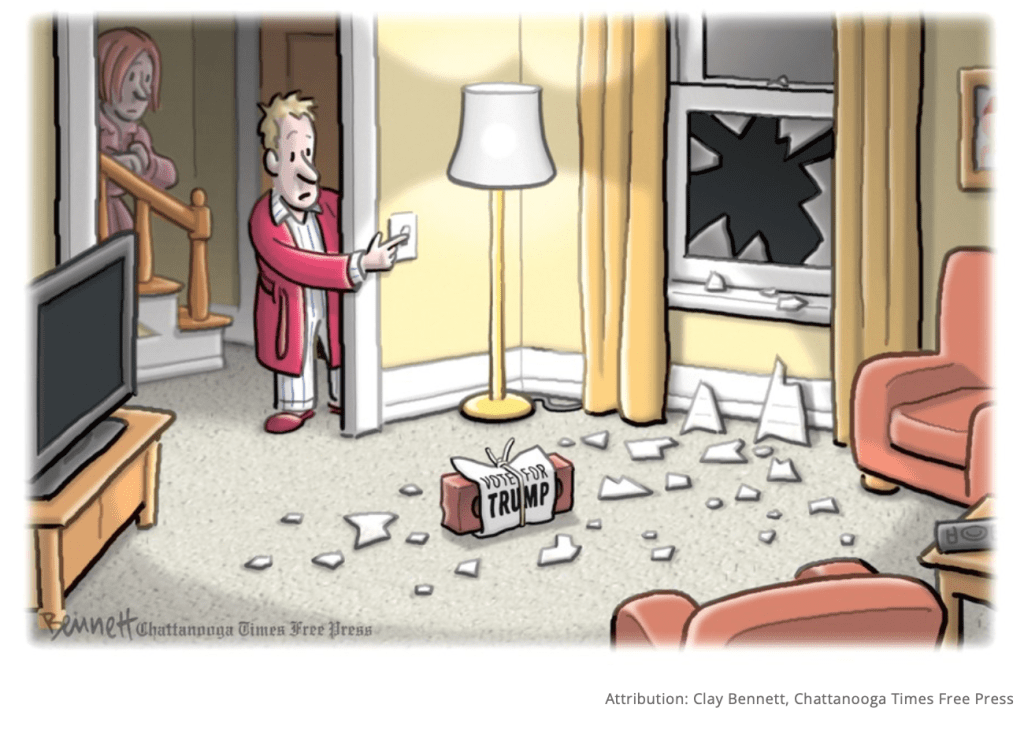
By: Benjamin Groff© Groff Media 2024© Truth Endures

The GOP, particularly their latest pick as Trump’s potential successor, keeps asking why Kamala Harris hasn’t accomplished everything she claims she’ll do if elected.

As Vice President, Harris’s role isn’t to set policy but to support the President’s mission. Over the past four years, that mission has centered on recovering from Trump’s administration’s chaos. Trump’s mishandling of the COVID-19 pandemic blindsided the nation, but despite these challenges, the Biden-Harris administration has worked tirelessly to put Americans back to work and rebuild neglected institutions.

It’s important to understand that any proposed initiatives by the President or Vice President require funding and legislation, which starts in the GOP-controlled House. Bipartisan cooperation is crucial, but the current House struggles to agree on leadership, let alone budgeting and legislation. The GOP’s track record in these areas is questionable at best. Blaming someone and then withholding their ability is classic GOP.

It is why many of Harris’s proposed measures are likely to gain traction during the first two years of her potential administration when a Democratic majority in both the Senate and House is more likely.

If critics want to question what Harris should have already accomplished, they should first focus on sponsoring and passing the necessary legislation. Only then can Harris take the steps needed to fulfill her promises.

The Campaign Flare That Saved the First Lady and the Candidate for President

A FICTIONAL Story By: Benjamin Groff© Groff Media 2024© Truth Endures

In a time of intense political enthusiasm, the nation’s largest city braced for the Democratic National Convention. The convention was monumental, drawing over 200,000 people, including fervent supporters, passionate protestors, and those harboring darker intentions. The city’s population swelled, and the number of people and calls for service pushed authorities’ abilities, as law enforcement officers from seven neighboring states were called to ensure the safety of all in attendance.

The Convention Management needed two massive arenas to accommodate the influx of attendees, all eager to witness the nomination of their party’s candidate. Security was tight, with officers meticulously screening everyone entering the venues. Despite the thorough checks, the atmosphere was tense; no one knew what might happen as the evening unfolded.

As the convention began, volunteers handed out bracelets and necklaces designed to light up in vibrant shades of blue and pink. These accessories, when activated, blinked with a strobe-like effect, adding to the electric atmosphere. However, as the lights flashed rapidly, the joy turned into panic. For some, the blinking lights triggered seizures, turning the arena into a scene of chaos as over five hundred attendees began convulsing.

The sudden medical emergency overwhelmed the official responders. But amid the turmoil, a few quick-thinking attendees with first responder training stepped in, helping to manage the situation. They guided others in assisting the stricken, and together, they stabilized the crisis without needing additional outside help.

Realizing the cause of the seizures, the speaker at the podium urged the crowd to switch their bracelets and necklaces to a steady glow or to turn them off altogether. As the crowd complied, the flashing lights faded, and calm returned to the arena.

But a new and more sinister threat emerged just as the situation seemed to be under control. An embittered and desperate opposing candidate had managed to slip into the venue through a back door. Claiming he had a scheduled meeting with his Democratic opponent, he bypassed security and found his way to a room intended for the candidate.

Unbeknownst to him, the candidate wasn’t there that evening. Instead, a former First Lady entered the room, unaware of the intruder’s presence. As she closed the door behind her, the man, believing he was facing his political rival, prepared to attack. But before he could strike, the former First Lady, trained in Krav Maga, swiftly neutralized him. In a matter of seconds, the would-be attacker was subdued, left crying, and defeated on the floor.

He didn’t know the incident was captured on a security camera, complete with audio. The footage revealed his violent intentions, his use of racist slurs, and his plan to kill who he thought was his opponent. The video also showed the failure of both his and her security teams to prevent the breach, highlighting the danger she faced.

Despite the overwhelming evidence, the authorities neither arrested nor questioned the intruder. Instead, the former First Lady, a Black woman, was detained and interrogated as if she were the aggressor. It wasn’t until the security footage was reviewed that the truth was undeniable: she had acted in self-defense against a deliberate attack.

A week later, authorities showed the video to the public. The opposing campaign scrambled to make excuses, suggesting that the former First Lady should have chosen a different dressing room and their candidate had every right to be where he was. But the damage was done. The public, especially the supporters of the former First Lady and her candidate, were galvanized. They were more determined than ever to prevent such evil from reaching the Oval Office.

Ultimately, what began as a night of political celebration became a defining moment in the campaign. One woman’s bravery, coupled with the quick thinking of ordinary citizens, may have saved her life and the nation’s future.

The Hidden Trails ~ The Silent Path To Danny’s Peace Of Mind

A Story By: Benjamin Groff© Groff Media 2024© Truth Endures

Every day after school, the weight of the small, tightly-knit town in the heart of the Oklahoma hills seemed to press harder on Danny’s shoulders. The rumors, the whispers behind his back, and the constant need to mask who he was took a toll on him. 

At sixteen, he was already an expert at blending in, concealing his true self beneath layers of false smiles and careful words. But the act drained him. In stark contrast, the woods were the only place where he could breathe and feel free, a sanctuary that beckoned him from behind his family’s modest home.

The woods were the only place where he could breathe and feel free. Nestled behind his family’s farmstyle home, the sprawling expanse of forest beckoned him like a sanctuary. It was his escape, a world where no one judged him or cared who he loved and where he could be.

Every day, as soon as the final school bell rang, Danny would hurry home, change out of his school clothes, and grab his two loyal companions—Scout, an energetic Border Collie, and Rusty, a golden retriever with a heart as big as the sky. The moment he stepped into the woods, the weight on his chest began to lift, with the dogs by his side, their presence adding to the sense of freedom.

He knew every trail like the back of his hand, each winding path, every hidden meadow, and the secret spots that felt like they belonged to him alone. He would venture deep into the canyons, where the towering cliffs seemed to embrace him, sheltering him from the outside world. The sound of the wind whispering through the trees and the rustling leaves underfoot became his symphony.

The lake, with its glassy surface reflecting the changing colors of the sky, was his favorite spot. Here, he could sit for hours, watching Scout and Rusty chase each other along the shore, their barks echoing off the canyon walls. The beauty and tranquility of the place calmed his restless heart. It was here, in the stillness, that he could let his thoughts wander freely.

He often imagined what it would be like to live without fear, to love whomever he chose openly. But such thoughts were dangerous in a town like his. The smallness of the place meant that everyone knew everyone, and secrets were as rare as rain in the summer. So, he kept his dreams tucked away, only allowing them to surface in these moments of solitude.

As the sun set in the western sky, casting long shadows across the landscape, Danny would reluctantly begin the journey home. Sensing his mood, the dogs would walk quietly beside him, their once energetic bounces replaced by a calm understanding. The return to reality was always bittersweet, but their silent support made it bearable.

But each day, the promise of the woods and the solace they offered kept him going. The hidden trails became his refuge, where he could escape the daily blues of school and the oppressive weight of his secret identity. In the forest, Danny was free, even if only for a few precious hours.

And so, the days passed, with each walk bringing him closer to understanding himself and finding the courage he needed. The woods were patient, waiting for the day Danny would no longer need to hide when he could step out from the shadows and into the light of his truth.

Until then, the hidden trails remained his sanctuary, where he could find peace and strength, one step at a time.

A News Report Waiting For Its Headline “Politicians Play With How Votes Get Certified!”

A Story By: Benjamin Groff© Groff Media 2024© Truth Endures

In the heart of Georgia, the political landscape was shifting beneath the surface, unseen by most but sensed by many. The Georgia State Election Board, a government body entrusted with overseeing the state’s election rules, had recently become a focal point of national attention. Former President Donald Trump had praised the board in an unusual move, commending three members: Janice Johnston, Rick Jeffares, and Janelle King. “Pitbulls fighting for honesty, transparency, and victory,” he had called them. But what exactly were they fighting for?

Max Flugrath, director of communications for Fair Fight Action, a keen political observer, had meticulously followed these developments. He noted the oddity of Trump’s involvement in such detailed matters. Typically, Trump preferred grand gestures and sweeping statements rather than delving into the minutiae of election certification rules. Yet here he was, thanking these newly appointed board members for their efforts to change Georgia’s certification rules.

The backdrop to this intrigue was a rapidly approaching election, less than 100 days away. The Trump-aligned members of the Georgia State Election Board had convened a meeting that Flugrath noted was unlawfully noticed and carried out. In this meeting, they advanced changes to the state’s election certification process, changes that could potentially undermine the democratic processes in Georgia. These changes could lead to delays in election results, create uncertainty, and allow for manipulation of the election outcome, a cause for concern for all citizens.

A lawsuit quickly followed, challenging the legality and transparency of the board’s actions. The controversy forced the board to hold another vote on some of the proposed election rule changes, scheduled for Tuesday, August 6. The proposed changes were alarming to many. One such rule would empower local election officials to slow down or refuse to certify the 2024 election results. With election deniers in local election positions, the implications were chilling.

Flugrath’s analysis painted a stark picture. The new rules, if passed, could be used to sow doubt in the election results, creating delays and uncertainty. The behavior you read about is not just a Georgia issue; similar behavior patterns were emerging in other states. Across the country, efforts were underway to change election rules, often under the guise of ensuring honesty and transparency. It’s vital for Americans to remain vigilant and demand transparency in these processes, as they have the potential to undermine the very foundation of democratic elections.

In Texas, a similar narrative was unfolding. The state’s election board, encouraged by Georgia’s actions, began proposing changes to the certification process. In Florida, [newly appointed election officials, who were praised by Trump for their dedication and were seen as his allies], were pushing for rules that would grant them unprecedented power over election outcomes. Even in Pennsylvania, whispers of changes to election certification rules were becoming louder.

As the shadows of democracy stretched across the nation, citizens found themselves in a united battle for the integrity of their elections. Flugrath’s warnings resonated, echoing the sentiments of those who valued transparency and fairness. The fight was about the upcoming election and preserving the principles that had long underpinned the democratic process. It’s a fight that unites us all, regardless of our political affiliations.

The day the vote arrived in Georgia. Protesters gathered outside the election board’s meeting, voicing dissent. Inside, the tension was palpable. The board members, conscious of the national scrutiny, deliberated their decision. The future of Georgia’s election rules hung in the balance, a microcosm of the broader struggle across the United States.

As the sun set, the board announced its decision. The proposed changes got narrowly voted down, a victory for those advocating transparency and fairness. But the battle was far from over. The events in Georgia had set a precedent, a reminder of the fragility of democracy and the constant vigilance required to protect it.

Flugrath watched the aftermath with cautious optimism. The shadows of inequity are held at bay for now, but the fight for the soul of American democracy continued. The story unfolded in real-time, with the stakes higher than ever.

This story is about a news report that could be featured in any newspaper or news program in the United States. It is taken from actual events currently taking place. Whether or not this is the exact outcome relies upon the people of Georgia. The news report may be the opposite of what you just read. The board voted to instate these rules and overthrow the state election to favor any person of their choice.

Read the article that inspired this story. It is reality. We hope this story comes true. Sadly, it looks like it will become fiction. The originating news report may be found here!

The Nightmare They Escaped Is Part Of The Plan In Project 2025

Click the here for full report!

Two Russian dissidents released in a prisoner swap on Thursday said they refused to sign a petition for mercy to be sent to Russian President Vladimir Putin as requested by prison officials. 

During a news conference in Germany, Vladimir Kara-Murza and Ilya Yashin said they did not admit guilt or give Russian officials their consent to be removed, and vowed to return home one day. 

Mr Kara-Murza said the deal had saved “16 human lives” and that he had been convinced he would die in prison.

He added that many Russians were “opposed to Putin’s war in Ukraine”.

We require to listen to those who on were brought home. The hell they describe is the future Donald Trump and the GOP dream of for the U.S.A.

A Sacrifice for the Nation ~ A True Patriot

A Story By Benjamin Groff© Groff Media 2024© Truth Endures

The day had been incredibly long, the weight of it pressing down on President Thompson. Meetings had stacked back to back, leaving him barely a moment to breathe. As he finally sat down at his desk, his phone rang. Picking up the extension, he spoke with a firm, authoritative tone, 

“Yes, Bill, what do we have?”

Bill, the President’s unwavering right hand, had been the first assistant to hold the position since day one. He always attended a meeting, a news conference, or an appearance. 

He was always there, ready to serve. Bill replied, 

“Mr. President, a gaggle of news reporters is waiting outside the news pit. They want to know about your decision.”

President Thompson sighed, a deep weariness in his voice. 

“My decision? Which is that, the dog, the house, the dinner menu, my son, and what time is it?”

Bill returned with patience and clarity, 

“Sir, they want to know whether or not you’ve decided to remain in the presidential re-election campaign.”

The President leaned back in his chair, staring at the ceiling as the enormity of the situation weighed on him. He had spent countless hours deliberating, balancing the nation’s needs with his ambitions. The country was at a crossroads, facing unprecedented challenges that required steadfast leadership. His heart was torn between his love for the nation and his aspirations.

“Bill,” 

He said softly,

“I’ve given this much thought. The country is in a fragile state, and it needs unity and stability. It’s time to put the nation’s needs before my aspirations.

Bill listened intently, sensing the gravity of the President’s words. 

“Are you saying you will withdraw from the race, sir?”

“Yes,”

President Thompson replied with resolve. 

“I am. I will support Senator Adams. She has the vision and the strength to lead us through these turbulent times. My focus now will be on ensuring a smooth transition and doing everything I can to help her succeed.”

Bill nodded, understanding the magnitude of the decision. 

“I’ll prepare the statement for the press, Mr. President. Withdrawing from the race will shock many, but it’s a selfless act that people will remember throughout history.”

As Bill left to handle the media, President Thompson took a moment to reflect. He had dedicated his life to serving his country; now, he was making the ultimate sacrifice for its future. It wasn’t an easy decision, but it was the right one.

When the time came, President Thompson stood before the nation, his voice steady and his gaze unwavering. 

“My fellow Americans,” he began, “after much contemplation and discussion with my closest advisors, I have decided to withdraw from the presidential reelection campaign. Our country needs unity, and I believe Senator Adams is the right leader for this critical time. I will dedicate my efforts to supporting her and ensuring we progress together.”

The news reverberated across the country, a mixture of surprise and admiration. President Thompson’s decision was a testament to his character and commitment to the nation’s well-being. As he stepped aside, he felt a sense of peace, knowing that he had placed his country before himself, making the ultimate sacrifice for its future. A bittersweet feeling of relief and sadness washed over him, but he knew he had done the right thing.

Winning at Any Cost: The Deterioration of Political Ethics

Mudslinging, once the most reprehensible act a political contestant could commit, was a behavior that branded the perpetrator as untrustworthy, someone respectable voters would never support. These were the days when community bonds were robust. Neighbors were familiar faces, and the widow down the street was always checked on. People went out of their way to support a friend’s business, driven by loyalty and the value of relationships.

Courtesy was not just a virtue, it was a way of life. You didn’t honk at the car ahead for hesitating at a stop sign, and everyone, regardless of race, was treated with respect. You honored their facilities at sporting events in neighboring towns, expecting the same respect in return during your homecoming games. These were the values that held our society together, and their erosion is a cause for concern.

Winning an election was once a sign of trust in the democratic process. It meant the elected individual would represent the community, county, state, or nation for their term. There was no need for your parents to rally the neighbors, seeking to punish those who voted differently or to overturn the results. They trusted the process and the enduring truth. However, today, this trust has seemingly eroded, and the need for reflection and change in our political and social interactions is more pressing than ever.

Today, it seems that the aim is not just to win, but to annihilate the opponent’s life and reputation.

Embracing a New Chapter: The Journey of Clean Slate Services

Photo by Alexander Grey on Pexels.com

Lemi stood at the threshold of his tidy apartment, staring at the email that had just ended his decade-long tenure at the executive office. He had been a critical player with innovative ideas and unmatched dedication. But the corporate world had no room for loyalty when profits wavered. The company’s polite yet impersonal farewell words blurred as he fought back the rising tide of emotions. The sense of loss and betrayal was overwhelming, and he found himself questioning his worth and identity. Yet, amidst the turmoil, a flicker of hope began to emerge, a whisper that maybe, just maybe, this was an opportunity for something new and fulfilling.

At first, Lemi saw it as a temporary measure. He printed flyers, set up a simple website, and spread the word. His first clients were mostly friends and acquaintances, curious and supportive of his new venture. The physical work starkly contrasted his former desk job, but he found unexpected satisfaction in transforming spaces from dusty and cluttered to spotless and serene.

The next few days were a whirlwind of updating resumes, connecting with old contacts, and browsing job boards. But as the days turned into weeks, the stress of bills and dwindling savings forced Lemi to confront a stark reality: he needed an immediate source of income. Yet, in the midst of this uncertainty, a flicker of hope ignited. He had always found a strange solace in cleaning, a control over chaos that was missing in his current life. And thus, Clean Slate Services was born, a testament to his resilience and adaptability.

One sunny afternoon, Lemi arrived at the grand home of his new client, Daniel. The man who opened the door was effortlessly handsome, with a warm smile that lit up his face. As Lemi introduced himself and got to work, he couldn’t help but notice Daniel’s frequent, friendly visits to the rooms he was cleaning. They chatted about everything from the latest books to favorite travel destinations. There was an undeniable spark, a twist in the tale that Lemi tried to dismiss as mere friendliness, but couldn’t ignore.

Days turned into weeks, and Lemi looked forward to his sessions at Daniel’s home more than any other. The routine of cleaning became almost secondary to their growing friendship. One day, as Lemi was packing up his supplies, Daniel invited him to stay for coffee. They sat on the patio, the afternoon sun casting a warm glow around them.

“Lemi, I’ve been meaning to tell you,”

Daniel started, hesitant yet sincere.

“I admire what you’re doing here. Not just the cleaning, but how you’ve turned things around after –– well, you know.”

Lemi felt a warmth spread through him at Daniel’s words.

“Thank you, Daniel. It’s been quite a journey, but it’s been more rewarding than I ever expected.”

Their eyes met, and the world seemed still for a moment. Lemi’s heart raced as he realized the depth of his feelings. But alongside this, a new realization dawned: he genuinely loved what he was doing. The satisfaction of making things clean and bright, the connections he was forming, and the control over his destiny were things he had never found in his corporate job. This realization filled him with a sense of fulfillment and contentment he had long been searching for.

As he drove home that evening, Lemi thought about the path ahead. He had always seen Clean Slate Services as a stopgap, but now he wondered if it was something more. The pride he felt in his work, the joy of seeing his clients happy, and the possibility of exploring his feelings for Daniel combined to create a new vision for his future.

A few days later, Lemi met with an old colleague for lunch. The conversation inevitably turned to job openings in the executive world. As his colleague spoke, Lemi felt a strange detachment. The allure of high-powered meetings and corporate ladders no longer enticed him. He thanked his friend for the information but politely declined to pursue any leads. He had found a new path, a path that was more aligned with his values and brought him true satisfaction. The corporate world, with its politics and pressures, no longer held the same appeal.


Returning home, Lemi sat at his desk, staring at the Clean Slate Services logo he had hastily designed months ago. He lifted up his cell phone and texted Daniel, inviting him to dinner. He felt a new sense of purpose, a feeling that he was precisely where he needed to be.

Lemi had found his true calling—not in the towering office buildings of the corporate world but in the simple, honest work of cleaning homes and the unexpected love blossoming with a kind-hearted client. Looking around his spotless apartment, he knew now was the time to embrace a new chapter with an open mind, arms, and heart.

~ SHARING IN THE PRIDE ~

NewFest Pride

Navigate this page

NewFest Pride has it all — premieres of the year’s most anticipated queer films, conversations, parties and outdoor screenings! Check out the full lineup below. 

Get A Pass

Membership Plus Members + above get free Virtual Passes.


Learn more about becoming a NewFest Member 💖

LINEUP

A HOUSE IS NOT A DISCO (Opening Night Film & Party)

Dir. Brian J. Smith

MY OLD ASS

Dir. Megan Park

In this fresh coming-of-age story, an 18th birthday mushroom trip brings free-spirited Elliott (Maisy Stella) face-to-face with her wisecracking 39-year-old self (Aubrey Plaza).

HAZE

Dir. Matthew Fifer

A young journalist returns home to investigate the unsolved deaths at an abandoned psychiatric center in this eerie, evocative psychological thriller from writer/director Matthew Fifer (CICADA)

CLOSE TO YOU

Dir. Dominic Savage

Producer and co-writer Elliot Page stars in this emotionally observant drama about returning home as yourself and finding hope in potentially rekindled relationships

FANTASMAS (Episodes 1 & 2)

Dir. Julio Torres

A delightfully wry new series from the imagination of creator, star, writer, and director Julio Torres (LOS ESPOOKYS, PROBLEMISTA)

THE QUEEN OF MY DREAMS

Dir. Fawzia Mirza

Grad student Azra feels worlds apart from her seemingly rigid mother yet uncovers their unexpected connections on a trip to Pakistan in this vibrant festival favorite (TIFF, SXSW) from writer/director Fawzia Mirza. Ticket comes with entrance to Women’s Afternoon Out pre-screening reception

SEBASTIAN

Dir. Mikko Mäkelä

A freelance writer and aspiring novelist on his way to ostensible success in London’s cultural spheres finds a different kind of exhilaration as a sex worker in this Sundance sensation.

Dir. Sandra Itäinen

Dir. Peter LoGreco

IN-PERSON + STREAMING
VIP All Access Pass — $185
Discount for NewFest Members
All in-person screenings and events (including Opening Night Film & Party, and Women’s Afternoon Out) and virtual screenings. Early access to theater and reserved seats. Learn how to fulfill passes here.


IN–PERSON
Individual Film Ticket – $19.50
Discount for NewFest Members
In-Person access to a single screening. Does not include A HOUSE IS NOT A DISCO or Women’s Afternoon Out Tickets.

Opening Night Film + Party Ticket – $50
Discount for NewFest Members
In-Person access to the Opening Night Film A HOUSE IS NOT A DISCO and the following party. 

Women’s Afternoon Out + THE QUEEN OF MY DREAMS Ticket – $30
Discount for NewFest Members
In-Person access to Women’s Afternoon Out Brunch prior to the screening of THE QUEEN OF MY DREAMS.

In-Person All Access Pass — $115
Discount for NewFest Members
Includes all in-person screenings, including Opening Night Film & Party, and Women’s Afternoon Out. Learn how to fulfill passes here.


STREAMING
Virtual Pass — $30
Discount for NewFest Members
Virtual access to select screenings. Does not include in-person Q&A’s, however there are a select number of virtual Q&A’s available. All films screening virtually are available May 30 at 12 PM EST through June 3 at 11:59 PM EST. Streaming anywhere in the United States. Individual tickets are only available for WE’RE HERE and TRIXIE MOTEL: DRAG ME HOME.

* Virtual passes and individual tickets are discounted for NewFest Members. Haven’t joined yet? Become a member today!

LOVE ENDURES THE TEST OF TIME ESPECIALLY DURING A TIME WHEN LOVE COULD BE CHALLENGED

In the vast expanse of the Indian Territory, amidst the rugged terrain and the promise of new beginnings, two souls found each other amidst the chaos of land claims and dreams of prosperity. Vol Wilhelm Groff, a spirited young man with a penchant for adventure, and Joseph McElroy, a quiet and contemplative soul, crossed paths in the unforgiving landscape of Oklahoma in the year 1905.

The Indian Territory was a land of opportunity, where dreams clashed with harsh reality, and where individuals staked their claims in the hopes of carving out a future for themselves. Val and Joseph were among those brave souls, drawn to the promise of a better life on the frontier.

Their meeting was serendipitous, a chance encounter amidst the chaos of land rushes and bustling settlements. Val, with his infectious enthusiasm, captured Joseph’s attention from the moment they first locked eyes. Despite their differences in temperament, they found a deep connection that transcended words.

Val and Joesph
Photo Taken In Okarche Oklahoma

As they worked side by side, staking their claims and building their homesteads from the ground up, their bond grew stronger with each passing day. Amidst the challenges of frontier life, they found solace in each other’s presence, drawing strength from their shared dreams and aspirations.

But theirs was a love that dared not speak its name in the harsh reality of the early 20th century. In a world where societal norms dictated strict conformity, Val and Joseph had to tread carefully, concealing their love from prying eyes.

Yet, despite the obstacles they faced, their love endured, a beacon of hope in a world fraught with uncertainty. Through the trials and tribulations of frontier life, they remained steadfast in their devotion to each other, finding solace in the quiet moments shared beneath the starry Oklahoma sky.

As the years passed and the Indian Territory evolved into the state of Oklahoma, Val and Joseph’s love stood the test of time, a testament to the enduring power of love in the face of adversity. And though their names may have been forgotten by history, their love story lived on, a reminder that true love knows no bounds, not even the vast expanse of the American frontier.