The Man Who Saved Himself The Day All Odds Were Against Him

1–2 minutes

Excerpt: The Man Who Saved Himself

Digital Illustration

I often go back through the archives and reread old stories I reported on. Some are small, dusty pieces that barely made a ripple. Others grab you by the collar and refuse to let go. This is one of those stories.

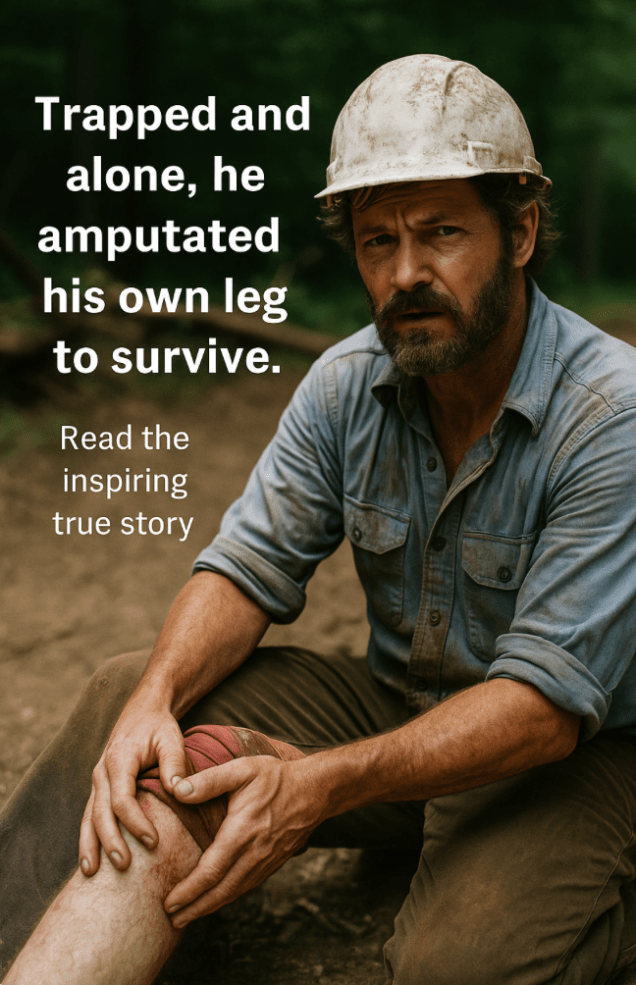
On a summer day in 1993, construction worker Donald Wyman, 37, found himself trapped. He was in the woods of Jefferson County, Pennsylvania. A fallen tree had crushed his leg so severely that he couldn’t free himself. After an hour of pain and helpless screaming, Wyman realized time was running out.

With no other choice, he made a tourniquet out of a shoelace and a wrench from his power saw. Then, with a courage most of us can barely imagine, he amputated his own leg. Using a seven-inch pocketknife—cutting through muscle, skin, and nerves to seize his survival.

Digital Illustration

Badly wounded, he dragged himself to his bulldozer, and drove—bleeding—to his pickup. Once in his truck he managed to reach a neighbor’s farm half a mile away. The neighbor, John Huber, called rescuers, who later found Wyman’s leg still pinned under the tree, boot and all. Thanks to his grit and quick medical response, Wyman survived and was upgraded from critical to stable within days.

Had he hesitated, his story would have been reduced to a one-paragraph obituary in his hometown paper. But Wyman wasn’t a victim—he was a survivor. He did what had to be done.

And that’s the lesson. You may never face a tree crushing your leg. Yet, you may face toxic relationships. You might meet negative influences or habits that hold you back. Sometimes survival means cutting away the very thing that’s dragging you down. You may face a country that has appeared to have turned against you. It won’t be easy. It may hurt. But in the long run, it can save your life—so you can live fully with those you love.

Be your own Wyman. Write your own survival story.


By Benjamin GroffMedia© | benandsteve.com | ©2025 

Uncommon Phobias That Sound Made Up

2–3 minutes

The Strangest Phobias You’ve Never Heard Of

When most people think of phobias, the usual suspects come to mind: spiders, heights, flying, or public speaking. But the human mind is infinitely complex, and so are the fears it produces. Beyond the common anxieties, there are phobias so rare and oddly specific. They almost sound made up, yet they’re very real for those who experience them.


1. Arachibutyrophobia – Fear of Peanut Butter Sticking to the Roof of the Mouth

It sounds funny at first, but this phobia can cause genuine distress. For those who suffer from it, even the thought of peanut butter clinging to their mouth can spark panic. It often extends to sticky foods in general.


2. Nomophobia – Fear of Being Without a Cell Phone

A very modern fear, nomophobia describes the anxiety people feel when separated from their phones. This can occur when the battery dies, the signal drops, or when the device is misplaced. In an age where smartphones are lifelines, this phobia has become increasingly common.


3. Xanthophobia – Fear of the Color Yellow

While most associate yellow with warmth and cheer, some people experience overwhelming anxiety when exposed to the color. It can be triggered by objects, clothing, or even sunshine itself.


4. Papaphobia – Fear of the Pope

Unusual, yes, but historically documented. For those with papaphobia, even images or references to the Pope can cause panic. It’s believed to stem from a mix of religious trauma and authority-based fears.


5. Pogonophobia – Fear of Beards

In some cases, beards are more than just a fashion statement—they’re a trigger. This phobia can cause sufferers to avoid contact with people who have facial hair. This avoidance is rooted in past negative experiences or simply an overwhelming sense of discomfort.


6. Hippopotomonstrosesquipedaliophobia – Fear of Long Words

Ironically named, this phobia is real and involves anxiety around long, complex words. Sufferers feel uneasy in academic or professional settings where such terms are common.


7. Eisoptrophobia – Fear of Mirrors

This phobia goes beyond superstition. For some, looking into mirrors triggers deep anxiety. This anxiety is linked to fears of self-perception. It is also connected to superstition. There is also the uncanny feeling of seeing one’s reflection.


Why These Fears Matter

While some of these phobias sound absurd to outsiders, they are real, debilitating conditions for those who experience them. They highlight the diverse ways our minds process fear. These remind us that what seems laughable to one person feel life-altering to another.

By Benjamin GroffMedia© | benandsteve.com | 2025 

What Will Happen If PLANS To End Social Security Happens?

3–4 minutes

If Social Security were eliminated, the effects would be wide-ranging. It would touch nearly every part of American life. This is especially true for retirees, people with disabilities, and survivors of deceased workers. Here’s how it would unfold:


Social Security now provides monthly benefits to over 70 million Americans, including retirees, disabled individuals, and surviving spouses or children. Without it, many of these households would lose their main or only source of income overnight.

  • Retirees: Many older Americans rely on Social Security for the bulk of their income—especially those without significant savings or pensions.
  • Survivors: Widows, widowers, and children who now get survivor benefits would lose critical support.
  • Disabled workers: People incapable of work due to disability would lose a major safety net.

Before Social Security, poverty among the elderly was extremely high—estimates put it at around 35–50%. The program cut that rate dramatically. Without it, poverty rates among older Americans will return to pre-1935 levels.


The financial burden of caring for elderly or disabled relatives would shift heavily to families. Those without family support be forced into underfunded state programs or charitable care.

  • Families need to delay retirement, take on extra jobs, or house multiple generations under one roof.
  • Local charities and churches would see rising demand for basic necessities like food and shelter.

Social Security benefits aren’t just “checks”—they fuel spending in local economies. Without those payments:

  • Rural and small-town economies (which often have higher percentages of retirees) see sharp declines in consumer spending.
  • Certain industries—especially healthcare, retail, and housing—would feel immediate impacts.

Because Social Security is one of the most popular federal programs, ending it would be politically explosive. It would lead to intense public backlash, large-scale protests, and significant shifts in voter behavior.

  • States try to create their own replacement programs, but poorer states struggle to fund them.
  • The wealth gap would widen sharply. Those without private retirement savings would be left with little to no safety net.

By Benjamin GroffMedia© | benandsteve.com | 2025 

August 2025 commemorates its 90th anniversary. It marks its unwavering commitment to the financial security and dignity of millions of Americans. President Franklin D. Roosevelt signed the Social Security Act into law on August 14, 1935. Since then, the program has grown into one of the most successful and trusted institutions in American history.

“For 90 years, Social Security has stood as a promise kept. It ensures that older Americans have the support they need. It also aids people with disabilities, as well as families facing loss,”

said Commissioner Frank J. Bisignano.

“As we honor this legacy, we are also building a future. This future is where service is faster, smarter, and more accessible than ever before. Through President Trump’s vision, we are protecting and preserving Social Security. We achieve this by delivering extraordinary customer service through technological improvements. Enhanced process engineering also plays a crucial role.”

In an open letter to the American people, Commissioner Bisignano emphasized the importance of Social Security. He highlighted his commitment to strengthening the agency. He also mentioned the significant improvements to customer service achieved in his first 100 days in office.

Read the Letter:  Commissioner Bisignano’s Open Letter to the American People

Today, Commissioner Bisignano also joined President Donald J. Trump at the White House. The President issued a presidential proclamation. He recommitted to always defend Social Security. He recognized the countless contributions of every American senior. They have invested their time, talent, and resources into our Nation’s future. 

Read the Proclamation: Presidential Proclamation: 90th Anniversary of the Social Security Act

I Will Be Back…Or So They Tell Me – A Note Before Surgery

By Benjamin GroffMedia© | benandsteve.com | 2025 Truth Endures©

2–3 minutes

A Note From Benjamin Before Surgery

Benjamin

By the time this post appears, I’ll be less than twenty-four hours from checking into the hospital. I have a scheduled lower back surgery. This operation was first approved in 2020. It was postponed due to the overwhelming strain COVID-19 placed on hospitals at the time.

Now, five years later, the time has come. The need for the surgery has grown unavoidable. It has reached a point where it significantly impacts not just my own quality of life. It also affects those around me—including our ever-faithful dog, Otis. After careful planning and the support of some very good people, the time feels right.

To keep the blog active, I’ve written and scheduled daily posts in advance. These will post – daily over the coming weeks as planned. Once I’m fully back to writing day-to-day pieces again, I’ll let everyone know. That said, if something urgent comes up, I will post an update. If it is of national interest and inspires me, I will do so before then. This is, of course, recovery allowing.

In the meantime, I’m grateful for the many kind gestures, well-wishes, and thoughtful messages already sent. That encouragement has made all the difference. I’m especially mindful of my partner, Steven. He will be holding down the fort. This will be happening while I’m in the care of a trusted medical team. He’ll be shuttling between the hospital and home, making sure Otis gets fresh air, snacks, and his favorite TV channel. We’ve jokingly planned it like a household awaiting a newborn—minus the diapers, thank goodness.

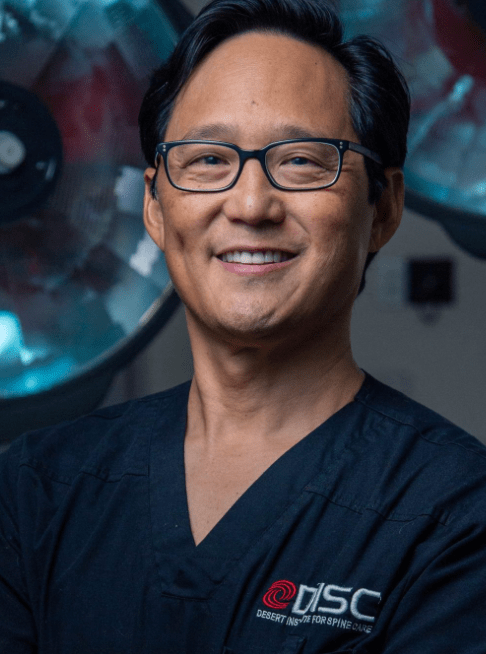
Dr. Christopher Yeung

The procedure itself will be performed by Dr. Christopher Yeung, a well-regarded spine surgeon whose experience includes working with multiple professional sports teams. After an in-depth consultation, I felt confident in both his knowledge and his approach. The surgery, known as an Anterior Lumbar Interbody Fusion, involves accessing the lower spine through the abdomen. An access surgeon helps to safely move internal structures aside. It’s a careful, technical procedure. The recovery is long. It begins with just a few steps on day one and builds slowly through physical therapy. This process continues in the weeks and months ahead.

So for now, I’m focused on the first step: getting checked in and moving ahead. I’m hoping for deep sedation, steady hands, and a smooth path to healing.

Thanks again for walking alongside me, even if just in spirit. I’ll be back in touch when the fog begins to lift.

Man From MRI Accident – Update

A sad update, the man in a report here a few days ago has died.


61‑year‑old Keith McAllister died after being violently pulled into the MRI scanner at Nassau Open MRI in Westbury, Long Island. He entered the MRI room on Wednesday, July 16, while his wife was undergoing a knee scan. McAllister wore a heavy-weight-training chain (~9–20 lb/4–9 kg) around his neck. Despite prior discussions about the chain with staff, he was allowed in.

When he approached the machine, the strong magnetic field latched onto the chain, yanking him into the scanner. His wife and the technician attempted to free him, but he collapsed in her arms. She recounted shouting, “Turn this damn thing off! Call 911!”.

McAllister was rushed to the hospital, where he suffered multiple heart attacks and was pronounced dead on Thursday, July 17. His wife emotionally described the moment: “He went limp in my arms… I can’t wrap my head around it”.

The Nassau County Police Department is investigating the incident, and experts are emphasizing the critical need for strict MRI safety protocols, especially regarding metal screening. Past tragedies—including a 2001 case involving a child and an oxygen tank—highlight the grave risks of metallic objects around MRI machines.

Summary of key points:

Victim: Keith McAllister, 61

Date of incident: July 16, 2025 (MRI room event)

Date of death: July 17, 2025 (hospital)

Cause: Pulled into MRI by heavy metal chain (~9–20 lb)

Response: Wife and technician tried to assist; police are now investigating

Safety concern: Highlights critical importance of enforcing metal screening protocols

www.cnn.com/2025/07/20/health/mri-machine-death-long-island

Going Into A Restricted Area While Wearing Metal – An MRI Nightmare

A Man Entered An MRI Room That He Was Not Approved To Enter. It Nearly Killed Him.

By Benjamin GroffMedia© | benandsteve.com | 2025 Truth Endures©

2–3 minutes

“Do you have any metal on your body?”

It’s a question you’ve probably heard before entering a medical imaging room. It might sound routine—almost too simple to matter. But as one man in Westbury, New York, learned the hard way, ignoring that question can be deadly.

Earlier this week, a 61-year-old man walked into an MRI suite at Nassau Open MRI. He wasn’t a patient—he was a visitor. And according to reports, he entered without permission, unaware (or perhaps unconcerned) about the danger waiting behind the door.

Around his neck hung a heavy metal necklace.

That necklace would soon become a missile.

As the MRI machine powered up, the magnetic field—a force thousands of times stronger than Earth’s natural magnetism—ripped the necklace forward, pulling the man violently toward the magnet. The result was catastrophic. He suffered critical injuries and was rushed to the hospital.

You can read the full report here from the Miami Herald:

🔗 Visitor wearing necklace critically injured inside New York MRI room

MRI machines are marvels of modern medicine. They allow doctors to see deep into the body without needing to cut it open. Yet, the science that powers them relies on an immense magnetic force.

That’s why medical staff ask the same questions again and again:

  • Do you have any metal implants?
  • Are you wearing jewelry?
  • Have you removed your belt, watch, or hairpin?

These aren’t suggestions. They’re essential precautions to prevent precisely what happened in Westbury.

The necklace that injured this man was an everyday item—something many of us wear without a second thought. 

But in the MRI room, it was anything but ordinary.

This tragic incident serves as a sobering reminder:

Always follow MRI safety guidelines. Always respect warning signs. Never assume a machine like this can be taken lightly.

The man who wore the necklace didn’t mean to cause harm. The laws of physics don’t care about intent. In an MRI suite, metal is never safe unless it’s been declared and cleared.

So next time someone asks you,

“Do you have any metal on your body?”

Don’t shrug it off.

Your answer will save your life!

You can read the full report here from the Miami Herald: