Gerald The Goose Goes Mad On Park Goers Until He Finds Officer Tom A Friend For Life.

Groff Media 2024© Truth Endures IMDbPro

Presented by benandsteve.com By: Benjamin Groff II©


In the heart of a bustling city, there was a quaint park known for its serene beauty and vibrant wildlife. Among the ducks and swans was one particularly notorious resident—a mad goose named Gerald. Gerald had a reputation for chasing unsuspecting park-goers, honking furiously and flapping his wings in a display of avian aggression.

One sunny afternoon, the park was filled with families enjoying picnics and children playing games. A commotion erupted as Gerald began his usual antics, sending people scattering in all directions. Exasperated by the chaos, the park’s caretaker decided it was time to call for help. Enter Officer Tom, a kind-hearted police officer known for his patience and love for animals.

Officer Tom arrived at the park, his calm demeanor contrasting sharply with the commotion around him. As he approached Gerald, the goose stopped, tilting his head curiously. Something about Officer Tom intrigued Gerald. Instead of chasing him away, Gerald shuffled to the officer and nuzzled his leg affectionately.

Seeing the unexpected bond forming, Officer Tom decided to take Gerald home. He became the goose’s sole caretaker, and they developed a deep friendship. A gentle loyalty to Tom replaced Gerald’s wild antics, and the two became inseparable. They were a familiar sight around town, with Gerald waddling faithfully beside Tom on his daily patrols.

As the years passed, Officer Tom grew older, and his hair turned silver. Gerald, too, showed signs of aging, but their bond remained as strong as ever. The townspeople grew fond of the duo, often stopping to chat with Tom and feed Gerald treats. They became beloved characters in the town’s story, symbolizing friendship and loyalty.

One day, the town was struck by the sad news of Officer Tom’s passing. The townspeople mourned the passing of their beloved officer, but their hearts also went out to Gerald, who was now alone. Concerned about the old goose, the townspeople gathered to decide what to do.

In a touching display of unity, the town took turns caring for Gerald. Each day, a different family welcomed him into their home, ensuring he was well-fed and loved. Though he missed his dear friend, Tom, Gerald found comfort in the townspeople’s kindness.

And so, Gerald lived out his days surrounded by the love and care of the community. The story of the mad goose and the kind-hearted officer became a cherished legend, reminding everyone of the power of friendship and the importance of looking out for one another.

Leave a comment

This site uses Akismet to reduce spam. Learn how your comment data is processed.

About that dinner on The River Banks At THe Olympics…A rednecks explanation of what was going on…

Up and dated by the weekend guy B.S. Daily.

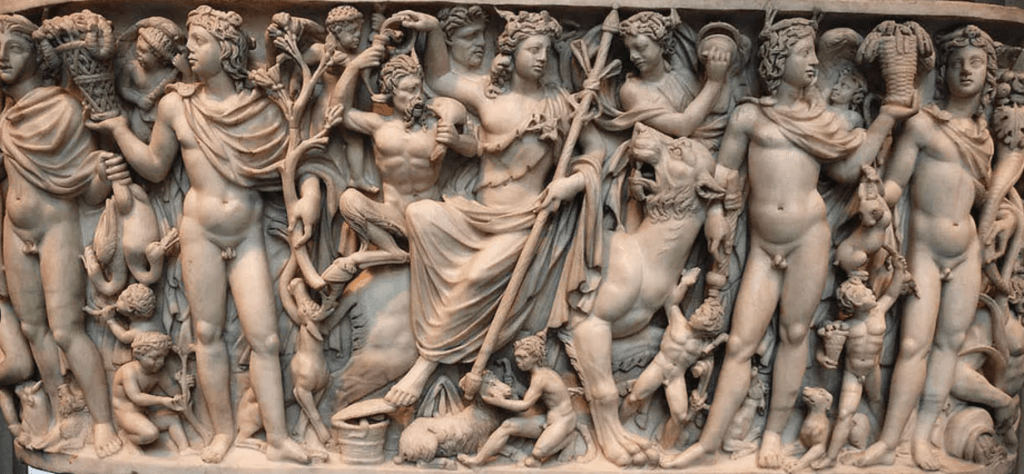
Roman sarcophagus depicting the Triumph of Dionysus and the Seasons
Jug used for cooling water into wine.

Well, let me tell you about Dionysus (y’all can just say “D”) in a way that’s as plain as a hog on ice. Dionysus (D) isn’t just some fancy-pants Greek fella; he’s the god of wine, parties, and having a good ol’ time. U know ‘getting shitfaced.’ Picture him like that one buddy who’s always ready to crack open a cold one and throw a rager out by the bonfire. Take it easy; you might think you be at your last supper, especially is shootin’ starts!

da man in stone

Now, Dionysus (D) ain’t just about drinkin’; he’s got a wild side too. He’s all ’bout lettin’ loose, dancin’ like nobody’s watchin’, and just forgettin’ all your troubles. He’s the life of the party, makin’ sure everyone’s havin’ a blast and feelin’ free as a bird. He’s got that divine touch, turnin’ water into wine and makin’ sure there’s always a good time to be had, showin’ his transformative power in every revelry, getting laid. He will have a long table so all his buds can be bellied up.

Many paintings in Renaissance art depict similar scenes of dudes and chicks gathered around a table for a feast. Many polaroids (photos) do the same in America, we call ’em bar-b-ques. ’em guys on the river bank didn’t have many ticks to get their point across, time was spiraling, especially if you’s a Badtist in Texas watchin’ da’t on TV or if you ain’t in jail – you phone.

So, if you ever wonder why folks love to gather around and get drunk, think of Dionysus (D). The French and Greek’s amit do it more than us’n’s. But if you don’t runn offt before the story is ended you’ll hear he’s the spirit of all those good times, reminding us that every now and then, it’s okay to cut loose, have a nip, fetch u a snort-full and enjoy the ride. Cheers to Dionysus (D), the god of gettin’ down and having a heck of a time. Just remember the gathering is not the last supper, no matter how many bubba’s you have. Some say it was just not clear it was a ho-down, and that was Aunt France’s greatest sin!

A-dam-d-en-dum: NEWS MAKES HEADLINES! MEDIATE NEWS WEBSITE CONFIRMED JUST THIS INFORMATION. BUT USING MORE LIVE BODIES TO CONFIRM DETAILS.

Addendum-update edited by Benjamin Groff© Groff Media2024 ©Truth Endures

Friday night’s Paris Olympics opening ceremony angered people across the world as many interpreted it as a mockery of Leonardo da Vinci’s “The Last Supper ” but the man who organized it said it was actually a nod to Greek mythology.

A portion of the ceremony featured semi-nude drag queen performers around a table, which was immediately interpreted by many — particularly on the right — as an attack on Christianity. The man who choreographed the tableau claimed it was anything but on Sunday morning.

Thomas Jolly, the ceremony’s artistic director, claimed to the French media on Sunday that he was not mocking anyone but merely putting on a “celebration of Greek mythology.”

“There is Dionysus who arrives on this table. He is there because he is the God of celebration in Greek mythology,” Jolly told BFMTV, according to an interpretation from NBC News. “The idea was to have a pagan celebration connected to the gods of Olympus. You will never find in me a desire to mock and denigrate anyone.”

The Paris Olympics X account shared the Dionysus portion of the show Friday, describing it as “interpretation of the Greek God Dionysus” which the organizers said “makes us aware of the absurdity of violence between human beings.However, the scene identified as a parody of “The Last Supper” and the appearance of the blue-painted Dionysus were 44 minutes apart in the ceremony.

While Jolly distanced himself from the controversy, TheWrap and many other outlets reported on an official statement from the Olympics which clearly stated Jolly took his inspiration in that scene directly from Da Vinci.

“For the ‘Festivities’ segment, Thomas Jolly took inspiration from Leonardo Da Vinci’s famous painting to create the setting,” the statement read. “Clearly, there was never an intention to show disrespect towards any religious group or belief.”

Two days and one American company’s boycott of the Olympics later and the controversy has yet to die down. As of Sunday, there were still calls to boycott the Olympics.

UPDATE: This story has been updated with a comment from officials with the Paris Olympics, who said Jolly was inspired by da Vinci’s “The Last Supper” mural. Read the report at Mediate here

Fred and Matilda

Fred and Matilda had been retired for over ten years. They had passed their silver years and were entering their golden years. Both had begun to experience forgetfulness, which was not severe but inconvenient. Fred would forget his wallet when he left home to go to town, or Matilda would forget to put extra tissues in her purse. She needed them to keep her nose wiped due to spring’s seasonal allergy season.

Today, Fred and Matilda left their modest bungalow midcentury home on East Kiowa Street in Corprol, Oklahoma. They traveled thirty miles to see the couple’s son nearby. Due to Fred’s’ safe’ driving, the drive should take just over fifty minutes. He never exceeded fifty miles an hour and usually kept their ’53 Chevrolet Coup topped at 45 miles per hour. Matilda was known for always talking to Fred when he was driving. She never shut up.

Matilda would say to him –––

“Fred, ease to the left, honey; now go back to the right and watch it. Oh no—a car is coming! Now, someone is behind us. Wait, a car is approaching us; I think the guy behind us will pass us.

Fred and Matilda’s son, Bill, looked at the clock at 1:00 PM. His parents should have been at his place at 11:00 AM. He thought they stopped by their old farm and got lost in time, recalling days when they had lived in the farming area for more than forty years, and everyone knew them. Even so, the people from those days mainly had moved on just as they had. So, it was unusual to find a two-hour distraction without calling him to let him know they would be delayed.

Matilda, a constant verbal navigational bird, was a familiar presence to Fred. Her chatter, a constant companion during their drives, was a source of comfort to him. He had grown accustomed to her voice, finding solace in the sound. Fred’s driving was noticeably worse when she wasn’t there, a testament to her voice’s role in his life.

At 3:00 PM, Bill was beside himself. Where were Fred and Matilda? He called their home to make sure they had not decided to go back home and make the trip another day; the phone just rang and rang. He called Fred’s and Matilda’s cell phones, but no one answered. Bill decided it was time to notify authorities.

Bill called the Ninekakh Police Department, and Officer Nadine Smith answered. Nadine had a strong ‘Okie” accent and a sweet demeanor.

“Ninekakh Police Department, Officer Smith, Who can I help today?”

Bill was stunned by the sweetness and tone of Nadine’s voice and how comfortable she made him feel just by answering the call he had placed. Bill said –––

“Hi, my name is Bill Roth. My parents, Fred and Matilda Roth, are late getting to my home outside Singer; they were driving here from Corprol.”

Knowing Bill was concerned and having met the Roths several times, Nadine knew they were not the type to disappear carelessly. Nadine asked –––

“Bill, honey, how old are your parents? Do you know what they are driving, and do you have any identification to help find them? And what were they doing today?”

Bill was quick to answer –––

My parents are driving a blue 53 Chevrolet Coupe two-door in their mid-70s. They were moving from Corpral to Singer to visit me today. They might have stopped by the old farm to remember old times, but I don’t know. They have never really been this late. Fred always wears grey pants, a white shirt, and a baseball cap, and Matilda usually wears a dress, blue or gray, that extends below the knee, with flat shoes; they both have gray hair. They quit taking photographs twenty years ago because both said it made them look like they were aging to get new pictures taken. They won’t even stand still for someone to get them in a cell phone, selfie-type picture.”

Nadine, taking a deep breath, said –––

Wow! Thank you. That is a whole lot of information, but it isn’t. I will get out and look at the highway between the two towns for them and any side roads. Also, I’ll put this out on the radio for other departments to be on the lookout for. Meanwhile, I suggest you stay where you are if they arrive at your place or call you.

Bill was a nervous wreck. Thoughts raced through his mind of where they could be, what could have happened, and then who could have taken them or could they have been robbed. They could have been running off the road by another driver in a road rage incident. Bill remembered the time he got lost hiking with friends and how much worry it brought his parents. He thought to himself, ‘Payback is hell!’ Exhausted from thinking, Bill yells out loud –

“At least they knew where to start looking for me. I was out hiking, and they had a starting point. Hell, I don’t have a clue where these two old farts are!”

As Nadine was patrolling from the Ninekah Sheriff’s Department heading south toward Corprol, she saw a roadside melon and vegetable sales stand, the type set up to sell from the back of an old truck. She pulled over and talked to the farmer who was selling his goods and asked if he had seen anyone matching the description of Fred and Matilda. 

“Yep, I saw them! They were two feisty people. For their age, I was surprised. 

Nadine surprised that her luck had paid off, asked the farmer what he meant, and he replied –––

“Well, this young guy was here too, and he had one of those cell phones out taking pictures of him and his girlfriend; it could have been his boyfriend. I couldn’t tell by looking. Anyway, he got a picture of the two older people and told them he hoped he and his sweety could be just like them when they got to be antique. And that is when all hell broke loose. The older adults didn’t want those pictures going anywhere. The young couple took off, and the others left behind them. I never saw two older adults driving like that. They were laying rubber.

Nadine called Bill and told him what the farmer told her, and Bill, in a chilling voice, responded,

“Christ, it’s Christmas 2015 all over again. They did the same thing when someone took a photo of them in the background at a convenience store on Christmas Eve of 2015. We saw them again in February. The family of the people who took the photos still hasn’t seen their people. The last report anyone ever heard was that they were trying to outrun an old couple driving a Blue 53 Chevy Coupe.”

Officer Nadine Smith ––– Adam 851 Clear from report at 1700 hours, 15 miles south of Singer, on Highway 41, clear.  

Dispatch to Smith, Affirmative, 1700 hours, KMH 253.

Officer Smith drove to Bill’s home, where she discovered a blue 53 Chevrolet Coupe appearing to stick out of an outbuilding on the property. She went to Bill’s Door and rang the bell. When he answered, she asked if his parents had been in contact. He said they had not. 

Smith asked Bill to walk out and look at the car in the shed, which, to his surprise, was his parents’ vehicle.

How did they get past me? And where are they now?

Fred and Matilda, in their enthusiastic but forgetful state, had indeed managed to return home unnoticed. Bill and Officer Smith, both puzzled and concerned, carefully approached the shed where the car was parked. The vehicle, though covered, was the distinctive blue ’53 Chevrolet Coupe.

“Bill, stay behind me,” 

Officer Smith instructed, her hand resting on her holster just in case.

“Let’s check inside,” Bill suggested.

Together, they slowly lifted the cover off the car, revealing it entirely. The sight brought a mix of relief and confusion to Bill’s face. The vehicle looked unscathed as if a chauffeur had driven the couple from a leisurely trip.

As they peered into the car, they noticed the keys were still in the ignition, and Matilda’s purse was on the passenger seat. But there were no signs of Fred and Matilda themselves.

“Where could they have gone?

 Bill murmured, more to himself than anyone else.

Officer Smith walked around the shed, looking for any further clues. Just then, they heard a faint, familiar sound coming from the back of the house. Following the noise, they discovered Fred and Matilda sitting on a swing in the backyard, calmly chatting and sipping on lemonade.

“Dad! Mom! What on earth happened?” 

Bill exclaimed, running towards them.

Fred looked up, somewhat surprised but pleased to see his son.

“Oh, Bill, there you are! We were wondering when you’d find us.”

With a serene smile, Matilda added,

“We decided to take a little detour to the old farm, but then we thought we’d better come back home when it started getting late. We didn’t want to worry you.”

Torn between relief and frustration, Bill tried to keep his voice steady.

“Why didn’t you call me? We’ve been worried sick!”

Fred scratched his head, looking a bit sheepish.

“Well, son, we did mean to call you, but then Matilda realized she left her phone at home, and mine ran out of battery. By the time we returned, we were so tired we just sat down for a rest.”

Upon witnessing the heartfelt reunion, Officer Smith felt a wave of relief wash over her.

Mr. and Mrs. Roth, it’s good to see you’re both safe. You gave us quite a scare.”

Ever the apologetic, Matilda said,

“We’re sorry, dear. We didn’t mean to cause any trouble. We’ll be more careful next time.”

Fred nodded in agreement.

“Yes, we’ll charge the phone next time and keep it with us.”

Bill sighed deeply, his worry slowly dissipating.

“Just glad you’re both okay. Next time, please, let’s avoid any more detours.”

Fred chuckled. “Deal. How about we all go inside and have some of Matilda’s famous apple pie? It’s been a long day.”

As they walked back into the house, Bill couldn’t help but feel grateful for the small blessings—his parents were safe, and despite their forgetfulness, they still had their spirited sense of adventure. It was another reminder of how precious these moments were, even when they came with a bit of worry.


George’s Story About Going TO A Horse Sale With His Dad And Friend Maynord

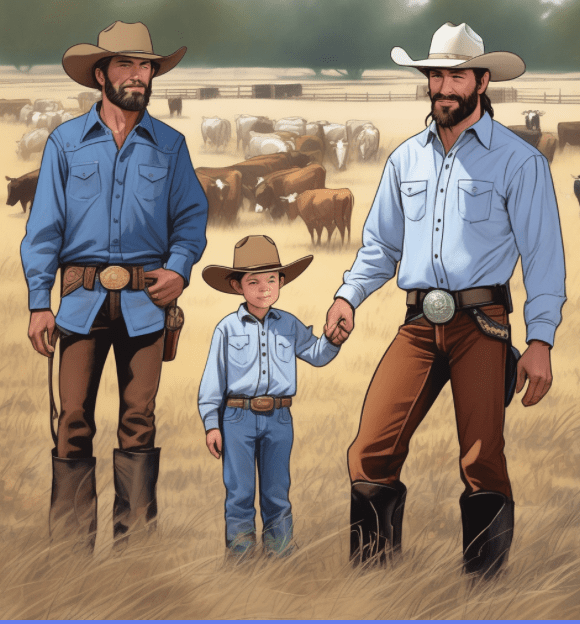
George was a happy-go-lucky sort of kid. His father raised quarter horses, and together, they were buddies. They go nearly everywhere together. George and his father’s friend Maynord, an older gentleman, probably a few years older than George’s father, spoiled George, treating him especially grandly. George didn’t emphasize the letter ‘s’ in some of his words, and some words he would say might need to be clarified. His father was known as a horseman and stern man, yet respected by most people, eyebrows raised to the bible-toting folks.

Maynord had a grown daughter who had already left home, but he and his wife had never had a son. With George, Maynord had the time of his life. As did George. The two were better buddies than Maynord, and George’s father became. But George would never say that to his father. Maynord treated George to parades, cheeseburgers, and ice cream cones and even got him a dog. George named the pooch, Ryder after Maynord’s last name.

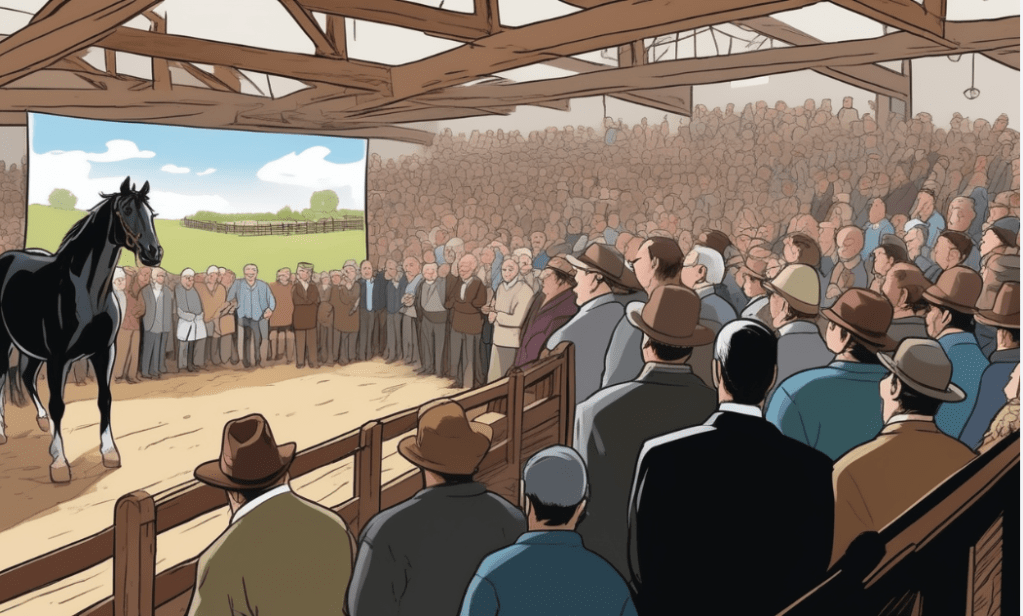
The two looked forward to Friday and Saturday nights. That is when George’s dad would take George and Maynord to auction barns in nearby cities where horses were sold. There, they would watch the many horses come through the sale ring, and the owners talk them up, saying how great of an animal the horse is, and try to sell it for top dollar. Of course, George’s father had always arrived before the auction to watch the horses lead in so he could see how they handled it and whether they were challenging to work with in getting to holding pens. He could also see if any auction workers tried to ride the horses before entering the sale ring and if the horses handled well. There were always little mishaps in the sale ring, a rider losing his grip and falling off, or a horse doing what the owner said it would not do. Or donkeys would be brought in, which always made George and Maynord laugh. They would jokingly suggest George’s father buy several to go with his quarter horses. The biggest thrill of the sales barn adventures was the cafe located within; that is where, halfway through, George and Maynord would slip away and eat cheeseburgers and drink soda pop.

The horse sales, as George and his father referred to them, caused the problem. Maynord didn’t help with the situation because he referred to the auctions as horse sales. And he had never referred to the auctioning of horses as anything else.

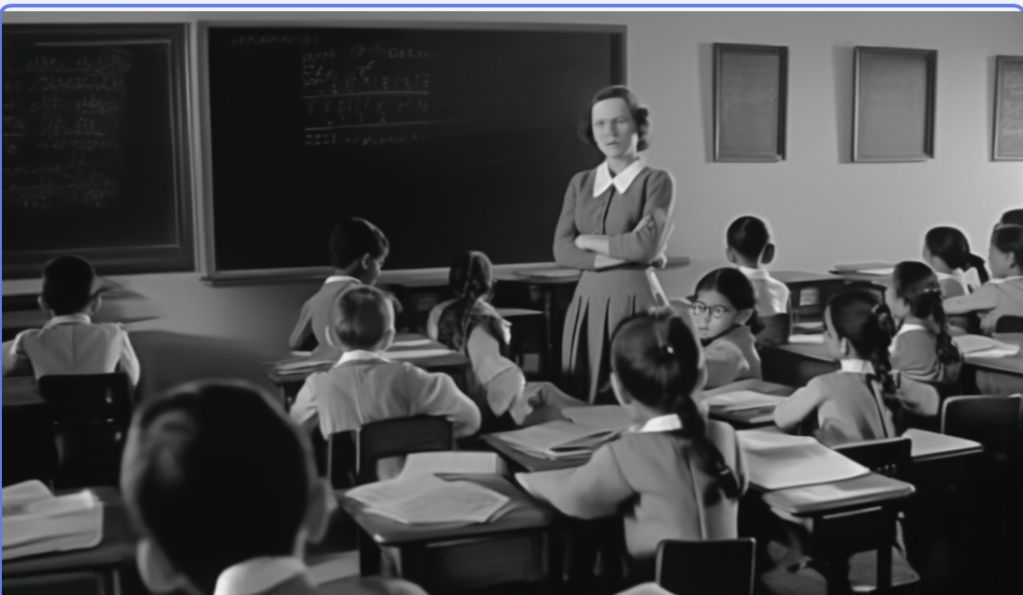
It was in the classroom one Monday morning when the third-grade teacher asked the class for each student to stand and say what the most fun activity they took part in over the weekend was. The town had just had a fair, and the teacher expected the students to explain their actions while visiting the celebration. And that is what the students did until coming to George. 

George stood and said –––

“My dad and our friend Maynord took me to the city horse sale, and my dad bought two. 

The teacher said –––

“George, you went where, and your dad what?”

George replied –––

“My dad took me to a horse sale and bought two. His friend Maynord helped with one of them. They made me watch from the pickup.” 

The teacher, turning pale, said –

“George, stop talking; that is enough! Class, that is enough of what we enjoyed this weekend. I will have George explain what he did to the principal.”

George was perplexed. Hasn’t anyone ever watched a horse being sold and loaded into a livestock trailer? Why would the principal need to hear about it? Indeed, he knows about people selling horses.

In the office, the principal was being informed by the teacher about what she had heard and how terrible it was that this father and his friend had taken an 8-year-old boy to whore house and had him watch the goings on with two women. The principal then asked George what exactly did you say to your teacher? 

Which George explained –––

“I just told her ––– My dad, Maynord, and I went to a horse sale, where my dad bought two horses. They made me get in the pickup and watch them while loading the horses so I wouldn’t get hurt or in the way. There have been days, I have even held on to some guys horse when he had too many to handle. But I didn’t get to explain it in such detail because the teacher told me to stop talking before I could tell more about what I was talking about. We go to horse sales every weekend. I don’t know what the big deal is!”

The principal and now the school’s superintendent were both in the office. Their faces were beet red, and they were trying to keep from laughing. The teacher, now understanding the situation, felt overreactive and apologizing. 

Meanwhile, George is confused and asks everyone in the room –––

“Haven’t you all ever heard of horse sales? Horse sales? Horse Sales! A Place where a man can sell his horse? My dad, Maynord and I go to them every Friday and Saturday night, you should come with us and see what it is all about. If you get bored with the horse sale, you can get a cheeseburger, as I sometimes do. I don’t understand what this is all about just because I told my story about going to the horse sale with my dad and Maynord.”

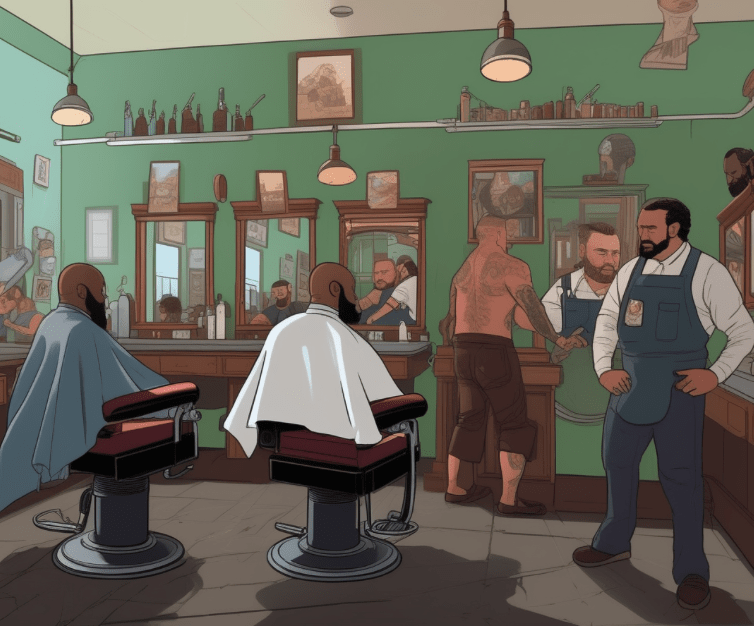
George’s dad, the town barber, was called and told of the situation. He later held court in his barber’s chair with his shop’s regulars. There, they had the bursts of laughter the school officials experienced.

Leaving the office, it was the loudest laughter George can ever remember hearing to this date. It wasn’t until he was older did he understand the rhyming of the words between horse and whores and how it could sound to others when saying to them ––– 

“You are headed to a horse sale to see what you can find.”

For Your Entertainment And More…