This piece is a beautiful reminder that there are countless reasons to smile and listen. No matter your language, its music will leave you yearning for more.
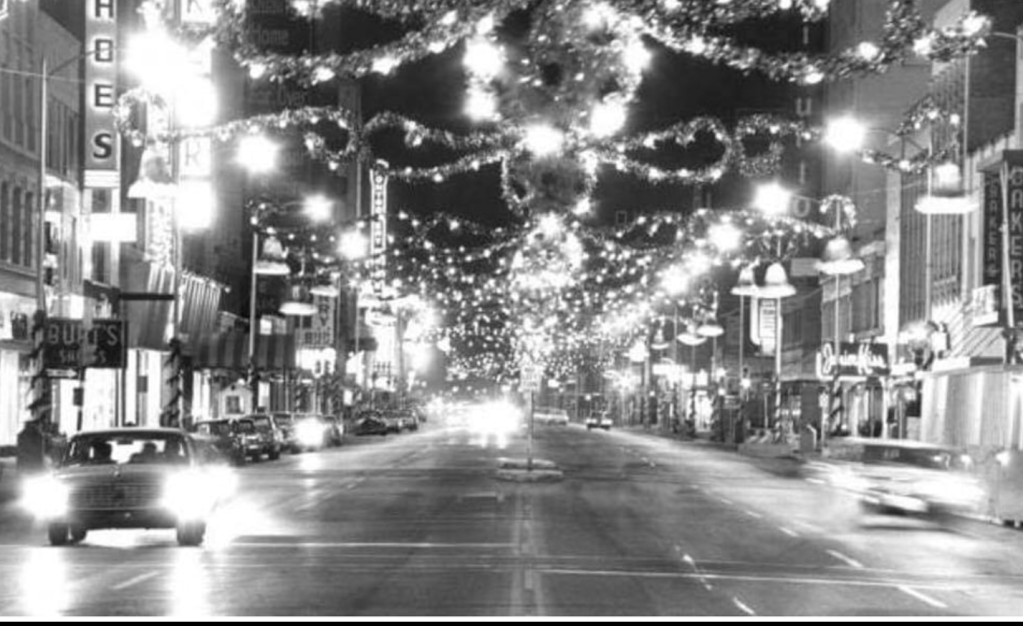

This piece is a beautiful reminder that there are countless reasons to smile and listen. No matter your language, its music will leave you yearning for more.
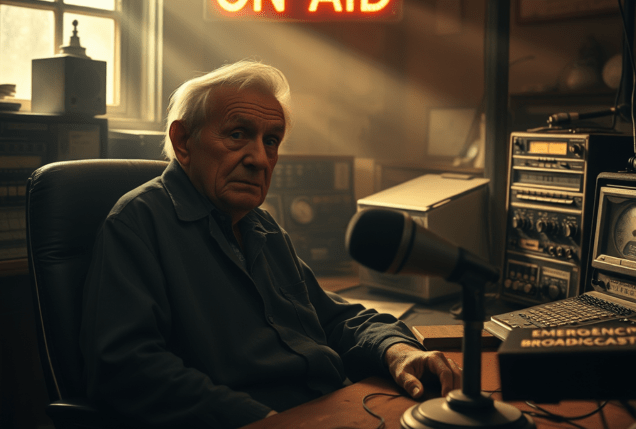
Sam Delaney had been a radio man his whole life. Station manager, on-air talent, janitor when needed—he had done it all. Now, in his seventies, he sat in the empty control room of what was once a bustling AM station. The place smelled of dust and warm circuitry. The walls hummed with silence.
Sam still knew every button by heart. Especially the one marked EBS—Emergency Broadcast System. Back in the day, the FCC’s rules were clear: tones were sacred. The piercing signal wasn’t just a sound; it was a promise. Tornado warnings. Flood alerts. The nation’s line of defense against panic. There had been rules—Title 47 of the CFR, etched into his memory like scripture.
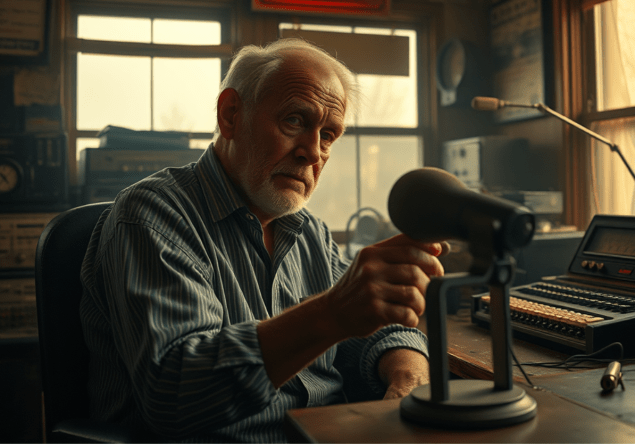
But things had changed. With each new administration, the guardrails loosened. The equal-time law that once kept political chatter balanced had vanished decades ago. A president erased it. He feared his old Hollywood reels would force TV stations to give airtime to his critics. One law changed, and suddenly the airwaves were open territory—bluster, bias, and one-sided noise pumping into homes unchallenged.

Now Sam watched as networks ran those same tones he once revered, but not for weather or disaster. They tested loyalty. They triggered crowds into a frenzy. They commanded obedience in ways he never imagined. Once, tones meant safety. Now, they meant control.
He rubbed the crease in his neck where headphones had rested for thirty years. Outside, the town he had called home was no longer united. Neighbors didn’t trust neighbors. Families split along the fault lines of which voice on the radio they listened to.
Sam leaned into the old microphone. The ON AIR light flickered.
“What if I told you,”
He began. His voice was gravel but steady.
“The lie isn’t in what you’re hearing. It’s in what you stopped questioning.”
He paused, finger hovering over the tone button.
For the first time in his career, he considered sending out a tone. This was not to warn people of a storm but to warn them of themselves.
By Benjamin GroffMedia© | benandsteve.com | ©2025
Presented by benandsteve.com By: Benjamin Groff II©
A Journey Through Words: For Everyone Who Has Liked My Stories Over Time!

Each day, I search the depths of memory for details that can shape a story. Sometimes, I draw inspiration from current events or pressing concerns that resonate with my readers. Usually, the stories I share come from personal experiences; they are events I lived through firsthand or about those close to me. Or, I was involved enough with a concern to know the details intimately.
As a child, I had a speech defect. It kept me from speaking up in crowds, around strangers, or in public settings. What seemed like a limitation at the time was a gift—it taught me to listen. I became an observer, absorbing conversations, secrets, and moments others have overlooked. I often teased my older relatives that I held onto some of the family’s best-kept secrets. Over time, those secrets became stories—carefully crafted to preserve history while protecting the people behind them. It also helped me to learn how to be invisible, in a sense. When you stay still and always stay quiet, people overlook the kid in the corner. Conversations happen, and they let their guard down. That was a gift of sorts I brought in my adult life.
There’s a line I often use when people ask what I’ve done in life. I tell them, half-jokingly:
“I’ve done damn near everything.”
And it’s true.
I started working on our farm at eight, feeding horses, cleaning barns, and doing chores. Later, I rode fences, helped my dad with his duties as a ranger, and ran errands. As a teenager, I worked at the camp he oversaw, mowing lawns and clearing brush. Once I got my driver’s license, I started hauling hay and peanuts with three friends. It was some of the most challenging work I’ve ever done.
I became a police officer and served in that role until retirement, after which I transitioned into radio broadcasting. I anchored newscasts for a five-state radio network before moving to a larger market as a news director. Eventually, I returned to law enforcement, working for the Department of Corrections, where I tracked down escaped prisoners. Tracking sometimes required undercover jobs—working at bakeries, hardware stores, magazine suppliers, or grocery stores—blending into communities to locate fugitives. I blend into the scenes, always becoming invisible, just as I did when I was younger. I was always successful, though I often found it hard to leave the undercover roles behind. The people I had met always became colleagues.
After the September 11th attacks, my spouse’s employer offered a transfer from Kansas to Phoenix, Arizona. The decision was easy. I left law enforcement behind. I found work with Ford-Volvo of North America. I became a vehicle test driver at the Arizona Proving Grounds. I assisted the Ford assembly group in the winter. In the summer, I tested the endurance of Volvo cars and SUVs in the Arizona heat.
In 2008, medical issues forced me to stop driving. That’s when I turned to writing—first with news articles and then by building news sites for small communities. The site you’re reading now was born from that transition. I created this space when I realized traditional employment was no longer a choice.
When I started using WordPress, it differed from the platforms I had worked with. I learned through trial and error, studying the work of others, adapting, and refining my skills. Over time, I explored your sites. I saw your creativity, dedication, and unique voices. I better understood how to navigate and thrive in this space.
I’ve always believed that you get back what you put into something. That’s why I make it a point to read the work of others—it broadens my perspective beyond my world. And for that, I’m grateful.
To all our followers, subscribers, and readers—thank you. Yesterday, I received a message from WordPress announcing that our site has reached **500 likes!** That’s an incredible milestone, especially since I don’t commercially promote these stories or actively drive traffic to them. This achievement is entirely because of your support, shares, and encouragement.
I truly appreciate every one of you for being part of this journey. It seems trivial to some. But, for someone who overcame a speech defect, getting 500 likes is a big deal. Thank you, indeed!
In Memoriam By: Benjamin H. Groff II© Groff Media 2024© Truth Endures
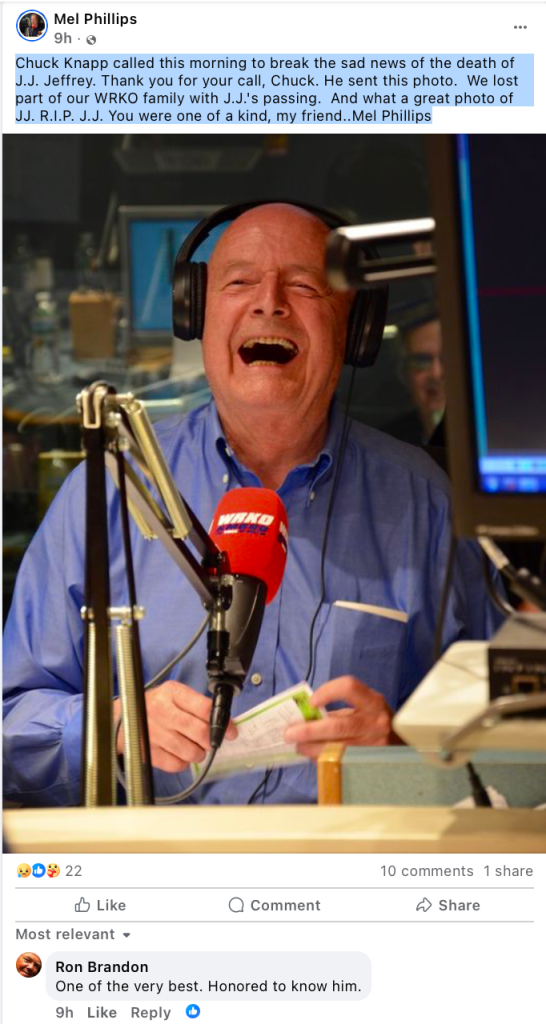
Joseph Noyes “J.J.” Jeffrey, a renowned DJ who became a respected station owner, passed away at the age of 84 following a brief battle with cancer. A native of Portland, ME, Jeffrey began his broadcasting career in his home state in the 1950s. His early career included stints at various local stations, where he honed his signature high-energy style and developed a deep passion for Top 40 radio.
Jeffrey’s career took off when he became the afternoon host at WRKO Boston, one of the nation’s premier Top 40 stations. His success in Boston led to similar roles at two of the biggest Top 40 powerhouses of the time: WFIL in Philadelphia and WLS in Chicago. Known for his vibrant personality and memorable catchphrases, Jeffrey quickly became a household name in each of these markets.

In 1975, Jeffrey transitioned from behind the mic to station ownership, partnering with Bob Fuller to launch Fuller-Jeffrey Broadcasting. Their first acquisition was 102.9 WBLM in Lewiston/Portland, ME. Over the next two decades, the company expanded its reach, owning clusters of stations across the country, including in Modesto, Sacramento, Santa Cruz, Santa Rosa, CA, and Des Moines, IA. Fuller-Jeffrey Broadcasting’s portfolio was sold to Citadel in 1999, forming what is now largely Townsquare Media’s clusters in Portland and Portsmouth, NH.
Not one to rest, Jeffrey and Fuller immediately launched Atlantic Coast Radio, building another prominent radio group in Portland, ME. Their stations included the Sports format “WEEI” on 95.5 WPPI Topsham and 95.9 WPEI Saco, “The Big Jab” 96.3 WJJB-FM Gray, and Conservative Talk 1310 WLOB.
J.J. Jeffrey will be remembered for his contributions to the radio industry, both as a beloved on-air talent and as a visionary station owner. He leaves behind a legacy of passion, innovation, and an enduring impact on the world of broadcasting.

David Davis, leader of the Warrior River Boys since 1984. David tragically lost his life due to injuries sustained in an automobile accident yesterday near Snead, AL, close to his home in Cullman. He was 63 years old.
David’s musical journey was a lifelong testament to his unwavering devotion to bluegrass, a genre that shaped his life from a young age. Born into a family steeped in musical tradition, David became influenced by his father, Leddell, a mandolin player and singer, and his uncle, Cleo, an early member of Bill Monroe’s iconic Blue Grass Boys. His maternal grandfather, J.H. Bailey, an old-time fiddler and banjo player, also played a significant role in his upbringing, filling their home with the rich sounds of traditional music.
David’s love for bluegrass deepened as a child, learning harmony in church and attending a life-changing performance by Bill Monroe at the age of 12. Which set him on a path of musical dedication, mastering the mandolin in Monroe’s style. In his early twenties, David began working with guitarist Gary Thurmond’s Warrior River Boys, eventually taking over the band in 1984 when Gary could no longer tour due to health issues.
Under David’s leadership, the Warrior River Boys toured extensively across the U.S. and signed with Rounder Records in 1989. Over the years, they recorded for Wango and Rebel Records, and in 2018, David returned to Rounder for a tribute album to Charlie Poole, Didn’t He Ramble. His contributions to bluegrass left an indelible mark on the genre, and his music, a source of inspiration for many, will continue to shape and influence future generations.
Our thoughts and prayers are with David’s wife, Cindy, who was also injured in the accident and is currently receiving treatment at a local hospital. We wish her a speedy recovery.
The loss of David Davis is a profound blow to the bluegrass community in Alabama and beyond. His absence, felt deeply, leaves a void that cannot be filled. His presence, leadership, and friendship touched countless lives, and family, friends, and fans will remember Davis not only as a brilliant musician and bandleader but also as a kind and generous spirit. In addition to his musical achievements, David also served his community by driving a school bus for Brewer High School, further exemplifying his commitment to those around him.
The passing of David Davis leaves a void in the hearts of all who knew him. His legacy, however, will continue to resonate through the music he loved and the many lives he touched. He will be deeply missed by the bluegrass community and beyond.
The True Legends: From Jimmie Rodgers to Willie Nelson

Country music, a genre deeply ingrained in the tapestry of American culture, draws its strength from the trials, joys, and heartaches of everyday life. From its modest beginnings to its monumental ascent, the narrative of country music is a tapestry woven with characters and stories that resonate with unwavering authenticity and passion. The true legends of country music—Jimmie Rodgers, Hank Williams, George Jones, Hank Locklin, Faron Young, and many others—have left an indelible mark on this genre, each contributing to its legacy with a unique and profound resilience.
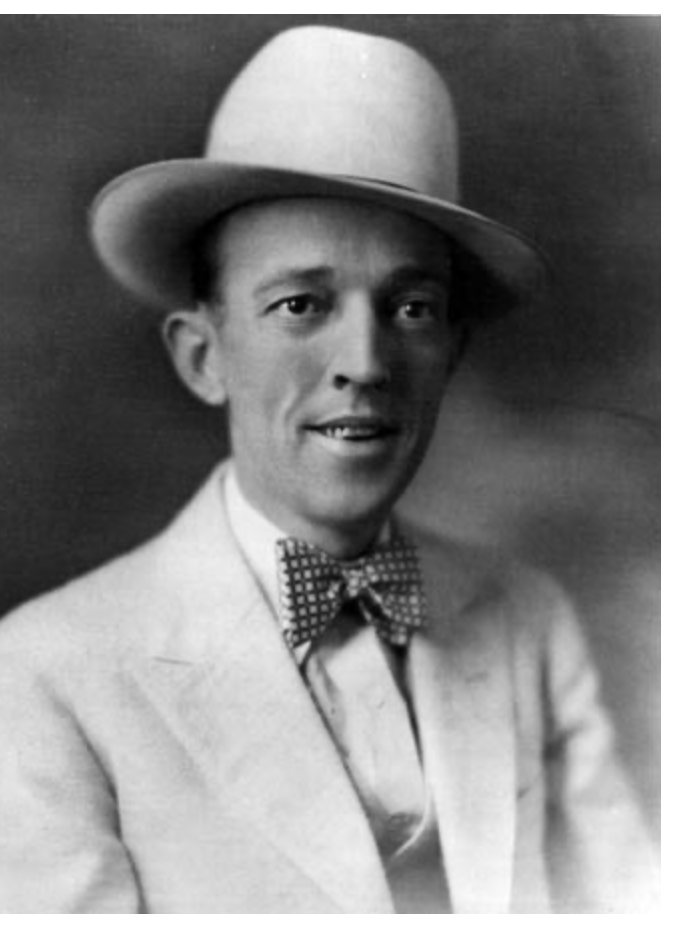
Jimmie Rodgers, known as the “Father of Country Music,” was one of the first to bring the genre into the national spotlight. Born in Meridian, Mississippi, Rodgers combined the sounds of rural southern blues with the yodeling of Swiss folk music, creating a distinctive style that captivated audiences. His songs, like “Blue Yodel” and “In the Jailhouse Now,” spoke to the struggles and stories of ordinary folk, setting the stage for future country artists to follow.
Hank Williams, often hailed as the “King of Country Music,” continued this tradition with his poignant lyrics and heartfelt delivery. Songs like “Your Cheatin’ Heart” and “I’m So Lonesome I Could Cry” became anthems of sorrow and longing, touching the hearts of millions. Williams’ influence is so profound that his music still echoes the work of contemporary country artists.
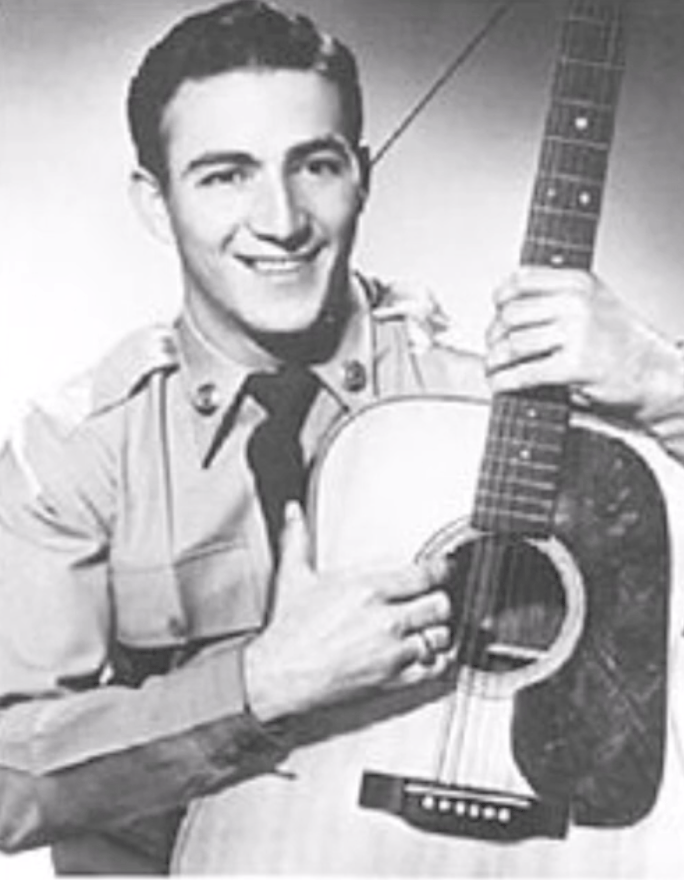
George Jones brought a new depth to country music with his rich, expressive voice. Known for his rollercoaster life and tumultuous relationships, Jones channeled his experiences into his music, producing forever hits like “He Stopped Loving Her Today” and “The Grand Tour.” His ability to convey raw emotion made him a beloved figure in country music, earning him the nickname “The Possum.”
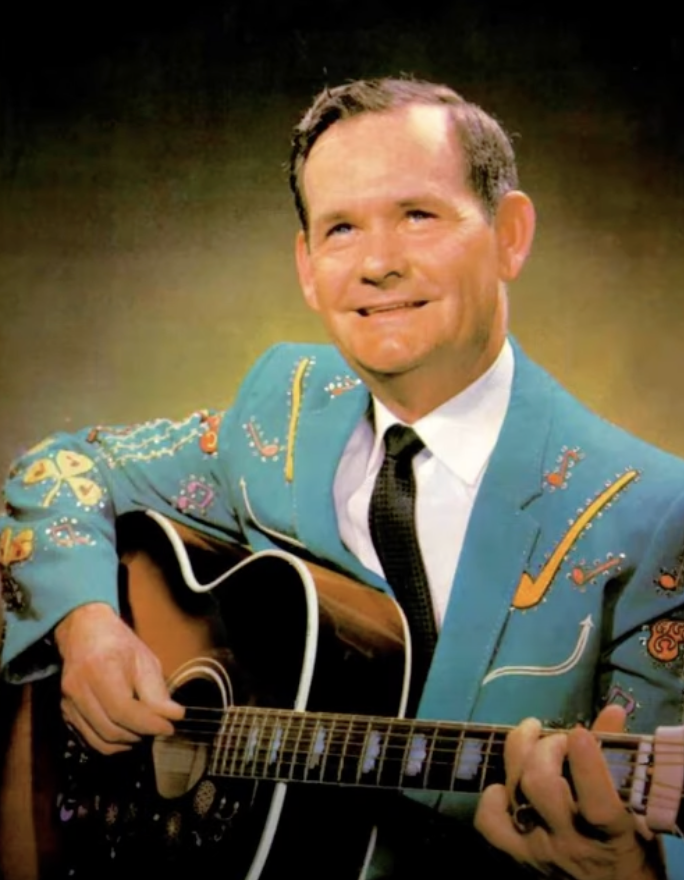
Hank Locklin and Faron Young also shaped the country music landscape. With his smooth tenor voice, Locklin was known for hits like “Please Help Me, I’m Falling” and “Send Me the Pillow You Dream On,” showcasing his unbelievable talents to blend traditional country with pop sensibilities. Young, on the other hand, brought a honky-tonk edge to his music with songs like “Hello Walls” and “Live Fast, Love Hard, Die Young,” capturing the rebellious spirit of the genre.
These legends performed everywhere—from the hills and hollows to the bustling streets of New York City. They sang in juke joints, honky-tonks, street corners, and county fairs, sharing their music with anyone who would listen. Their songs spoke of the heart and soul of America, touching on themes of love, loss, cheating, and redemption. They didn’t rely on flashy gimmicks or expletive-laden lyrics; their music and performances were a testament to their genuine connection with the audience. They thrived on the crowd’s energy, dressed to the nines, ready to pour their hearts out on stage.
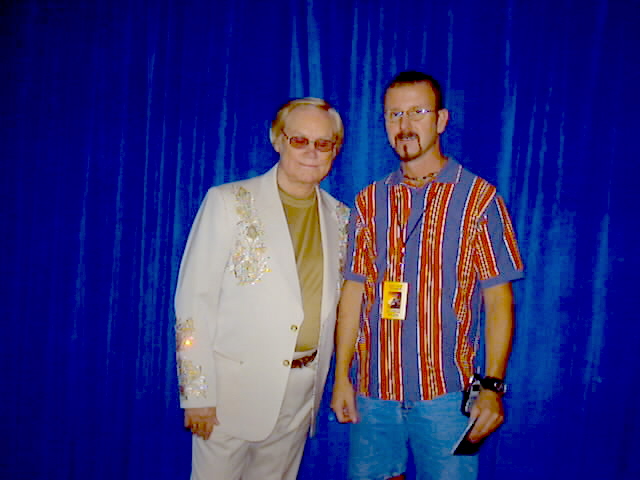
Having had the honor of spinning records at AM and FM stations nationwide and serving as a news reporter, I’ve witnessed firsthand how the magic of country music resonates with people. Unfortunately, today’s radio often fails to capture the essence of what made country music great. It has lost its way, drowned in a sea of commercialism and superficiality. As a devoted follower of country music, I find solace in satellite radio, particularly Willie’s Roadhouse, where the spirit of authentic country music lives.
Willie Nelson, one of the few remaining legends from the golden age of the country, continues to be a beacon of authenticity in the genre. His music, characterized by its sincerity and simplicity, reminds us of what country music once was and still can be. His influence and contributions are immeasurable, and I extend my best wishes to him and heartfelt thanks to everyone who has kept the spirit of country music alive.
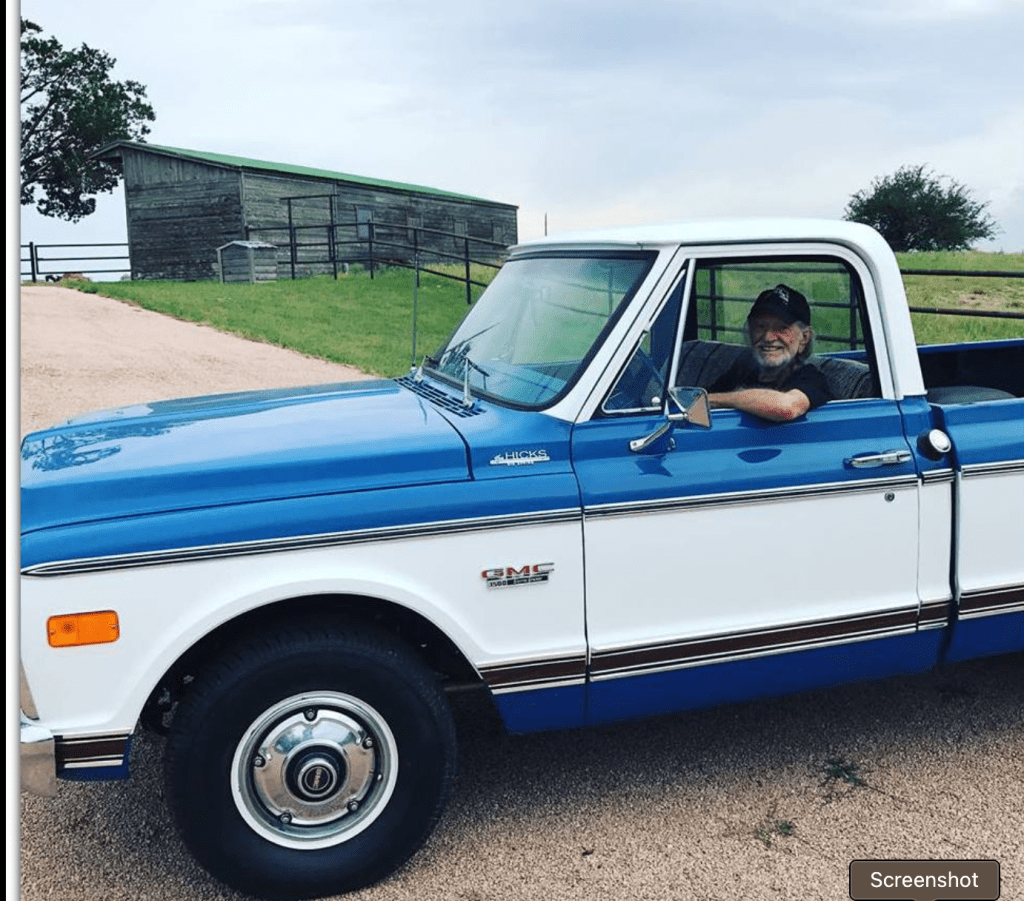
In conclusion, country music is not just a genre; it is a reflection of the American experience. The legends shaped it with their talent, integrity, and a deep connection to their audience. Their music continues to resonate because it speaks to the universal themes of life—love, heartache, joy, and sorrow. As we look to the future, let us remember and honor these true legends who paved the way. Let their legacy inspire a new generation of country artists to keep the heart and soul of this beloved genre alive, preserving its spirit for generations to come.


The day was unfolding as usual, with one of our regular radio programs in full swing. Suddenly, in the midst of a phone-in segment, a caller made a startling revelation –––
“Do you people know that there is a guy hanging from your radio tower west of town? He is just dangling there.”
The Host was surprised by the caller comment and replied
Sir, this is a live show. Please, this is not a time for pranks.
The caller shot back. – The caller’s voice was urgent, his words cutting through the airwaves.
‘This is not a joke,’ he insisted. ‘There’s a man, about three-fourths of the way up your middle tower, hanging upside down. You need to get him help.’
The Host, with urgency in his voice, told listeners
We take this seriously; our station manager and engineer are coming to the tower, and emergency responders are responding.
The Host then suggested that the caller should have notified 911 before calling the radio station first.
The man hanging upside down had been hired as a contractor to change the red blinking lights once a year to make sure that it met FCC requirements. On his way up, he experienced a fatal heart attack. He was tied off and had his safety gear on, which prevented him from falling when he could not continue climbing or descent. Due to how high he was, a specialized team of climbers had to be dispatched from over three hundred miles away to go to the scene and create a plan to lower him. It took over 24 hours to get the man to the ground safely.
 benandsteve.com