A Blinding Prank That Wasn’t FoolProof

A Story By Benjamin H Groff© Groff Media Copyright 2024©

In the small town of Havenbrook, two blind men, Al and Bert, were renowned for their cunning and mischievous antics. Despite their lack of sight, they possessed a sharp wit and an uncanny ability to navigate the world around them. They orchestrated elaborate practical jokes daily, relishing in the townspeople’s reactions.

Yesterday, Al and Bert made an unusual purchase: a driverless car. They had saved up for months, and now their latest scheme was about to unfold. The sleek, shiny vehicle arrived at their doorstep, and the two friends couldn’t contain their excitement.

“This is going to be legendary!” Al exclaimed, his face lighting up.

Bert nodded, grinning from ear to ear. “Let’s give Havenbrook a show they won’t forget.”

That morning, Al and Bert put on a show. They dressed in a deliberately disheveled manner, with their clothes inside out and their hair tousled. They staggered down the street, feigning confusion and disorientation. The townspeople looked on in bewilderment as the two blind men stumbled around, bumping into things and seeking directions.

“Excuse me, can you help us? We seem to have lost our way,” Bert asked a passerby, his voice trembling with fake desperation.

The kind-hearted woman pointed them in the right direction, her face filled with concern. Al and Bert thanked her profusely before stumbling off in the opposite direction, leaving the woman and the other townspeople in a state of amused bewilderment.

Their antics continued throughout the day, with Al and Bert putting on an Oscar-worthy performance. They wandered into shops, interrupted conversations, and generally caused chaos wherever they went. Each time someone offered help, the duo responded with exaggerated confusion, leaving the townspeople scratching their heads and bursting into laughter at the same time.

By midday, they decided it was time to unveil the pièce de résistance. Al and Bert climbed into their driverless car, pretending to argue about who should take the wheel.

“You drive, Al! I can’t see a thing!” Bert insisted, his voice rising in mock panic.

“Neither can I, you fool! We’re both blind!” Al shot back, throwing his hands up in frustration.

The car, programmed to respond to voice commands, smoothly pulled out of the driveway and began its route through town. The sight of two blind men driving a car sent shockwaves through Havenbrook. People gawked, some laughed, and others chased after the vehicle, shouting warnings and pleas for them to stop, adding to the chaotic and humorous scene.

Inside the car, Al and Bert were beside themselves with laughter. They marveled at the chaos unfolding outside, their faces aching from so much smiling.

“Look at them! They think we’re driving!” Al gasped, clutching his sides.

Bert nodded, tears of joy streaming down his cheeks. “Best prank ever!”

The car continued its journey, obediently following its pre-programmed path. Realizing they got duped again, the townspeople couldn’t help but chuckle at the elaborate ruse. Al and Bert’s reputation as the town’s resident tricksters became cemented even further.

As the day drew close, the car returned to their home, and the two friends climbed out, exhausted but exhilarated. They high-fived each other, basking in the success of their latest prank.

“Well, Bert, we’ve done it again,” Al said, a satisfied smile on his face.

Bert nodded in agreement. “Indeed we have, Al. Indeed we have.”

In the days that followed, the story of the blind men and their driverless car became the stuff of legend in Havenbrook. Al and Bert continued their daily pranks, always finding new ways to keep the townspeople on their toes. And though their sightless eyes never saw the results of their efforts, their hearts were full of the joy and laughter they brought to their beloved town.

Being Blindsided By Two Of The Craziest Drivers In Town ––– Leaves Everyone Jumping Out Of The Way.

A Story By Benjamin H Groff© Groff Media Copyright 2024©

In the quaint town of Willow Springs, the residents were known for their simple and predictable way of life. It was a place where everyone knew everyone, and the townspeople tended to accept change skeptically. That is, until the day Leonard and Frank, two elderly blind men, decided to shake things up with an adventure that would change the town forever.


Leonard and Frank, with their mischievous humor and lighthearted attitudes, had been best friends for decades, bonded by their shared experiences and a mutual love for adventure. Despite their blindness, they were known for their spirited attitudes and naughty humor. So, when they heard about the new self-driving car, they were immediately intrigued.


“Frank, can you believe it?”

Leonard exclaimed one morning over tea.

“A car that drives itself! Imagine the freedom it would give us!”


Frank, equally excited, nodded vigorously.

“Let’s do it, Leonard. Let’s buy one!”


The townsfolk of Willow Springs were accustomed to the sight of Leonard and Frank navigating the streets with their canes, always laughing and chatting animatedly. So, the entire town was curious when a shiny, futuristic self-driving car appeared in front of their modest home.


“Have you heard? Leonard and Frank got one of those new self-driving cars!”

Mrs. Thompson whispered to her neighbor.


“Those two? In a car? The two driving, I’ve got to see,”

her neighbor replied.


On a sunny Saturday morning, Leonard and Frank decided to take their new car, which they affectionately named “Freedom,” for its maiden voyage through town. As they settled into the plush seats, the car’s AI voice greeted them.


“Good morning, Leonard and Frank. Where would you like to go today?”


“To the park, please,”

Leonard said confidently.


As “Freedom” smoothly pulled away from the curb, the neighbors watched in a mix of astonishment and amusement. Some cheered, others gasped, and a few crossed themselves, praying for the safety of everyone involved. A dog barked, a child pointed, and a few people even dropped their groceries in shock.


The car moved gracefully through the streets, impeccably adhering to all traffic laws. Leonard and Frank laughed heartily, relishing the novelty of their adventure. They waved to passersby, who stared in disbelief at the sight of two blind men being chauffeured by a car without a driver.


However, things turned unexpectedly when “Freedom” encountered a detour due to road construction. The car, programmed to follow alternative routes, led Leonard and Frank on a scenic drive through the unfamiliar backstreets of Willow Springs. The residents, already on edge, began to panic.


“Where are they going? They don’t know those roads!”

Mr. Jenkins shouted, hopping on his bicycle to follow them.


As word spread, more townspeople joined the impromptu parade, trailing behind Leonard and Frank’s self-driving car. Some were on foot, others on bikes, and a few even in their cars, all trying to keep up with the unexpected journey.


Oblivious to the commotion behind them, Leonard and Frank were having the time of their lives. “Freedom” took them past the old mill, the blooming orchards, and even down the riverbank. It was a tour of Willow Springs like they had never experienced before.


Meanwhile, the crowd grew more extensive and more frantic. Children pointed and laughed, dogs barked, and a few people even attempted to flag the car down, worried about the safety of their beloved town characters. The mayor, Mr. Roberts, received dozens of calls and texts demanding he do something about the situation.


Finally, “Freedom” brought Leonard and Frank to the town square, where the weekly farmer’s market began. As the car came to a gentle stop, the two friends stepped out, greeted by a mixture of cheers, applause, and sighs of relief.


“What a ride!” Frank exclaimed, grinning from ear to ear.


Leonard nodded, equally ecstatic.

“I haven’t had this much fun in years!”


The mayor approached them, catching his breath from running to the square.

“Gentlemen, you certainly know how to cause a stir,”

he said, trying to suppress a smile.


Leonard and Frank looked at each other and burst into laughter.

“We didn’t mean to cause any trouble,”

Leonard said.

“We just wanted to explore a bit.”


“And explore you did,”

The mayor replied.

“But perhaps giving us a little warning would be appreciated next time.”


From that day on, Leonard and Frank became local legends. The story of the two blind men and their self-driving car spread far and wide, bringing a newfound sense of pride and unity to Willow Springs. Initially thrown into chaos, the community embraced the spirit of adventure and innovation, inspired by their two beloved residents.


And Leonard and Frank? They continued to explore, always ready for their next adventure, with “Freedom” leading the way and a town full of friends cheering them on.

Night Shift, And Getting Behind The Radio

A Story By Benjamin H Groff© Groff Media Copyright 2024©

It was time to begin his night shift, and now the boy known as the Comm Commander by the ladies he worked with and his Captain who worked the day shift was about to take the helm, operating the phones, radio, and teletype.

The Comm Commander’s mastery of the system was a feat that only a select few could achieve. He was among the elite, efficiently managing five or more radio cars and several county and state patrol units on different radio frequencies. His use of a foot pedal to operate the radio microphone set him apart, allowing him to handle phone calls and type information into the telecommunications system with his hands-free.

He could track information on vehicles that officers were making contact with and let them know if a car was stolen or not before they ever left their vehicle. A treatment they become spoiled by when he is on duty.

His ability to check vehicle registrations and local warrants, and his quick response to requests for driver’s license checks or background and warrant checks, was instrumental in providing critical information to officers in the field, significantly enhancing their operational efficiency and safety.

His experience and interactions with law enforcement agencies around where he grew up, which spanned years, were the foundation of his expertise. This was evident when officers would make vehicle stops, and he would send them back up before giving them a coded message of 10-48, an alert that the vehicle they were stopping in the National Crime Information Computer was a wanted felony subject.

He had volunteered as a youth in his hometown when the town was given an old radio and placed a short antenna outside their city hall. He would get his dad to drive him to town, where he’d sit in the evenings and dispatch calls from the phone to the local police unit. Sometimes, there would be no one call, but the interaction with the law enforcement community that came through would gift him with bits of information he stowed away. Later, during that Senior year of high school, when he went to work for the police department, he met the police chief, JR Toehay, at a gas well blowout he attended with an area police officer. The introduction led to the dispatching and jailing position. JR became a lifelong coach and confidant. He was a Kiowa Indian and Chief of a 9-man police department. His guidance and trust in the boy guided the way for the path that had led to the Comm Commander being in his seat operating so well.

The ladies he worked with had questions and wanted to know where he came from, who he was, and what brought him out west. Those stories were there to tell, and he had them; some, however, he wondered if it would be safe. Officers he had worked with told him to be careful; one of the stories could get him in a fix if the wrong people heard about it and wanted to settle any score they felt needed to be. He told them, I’ll let you know all about me, but first, it needs to be when this radio traffic slows down because you guys will be in for a story of your lives.

The Gorb Touch: Continuing the Tradition of Personalized Farewells in Elderton

A Story By Benjamin H Groff© Groff Media Copyright 2024©

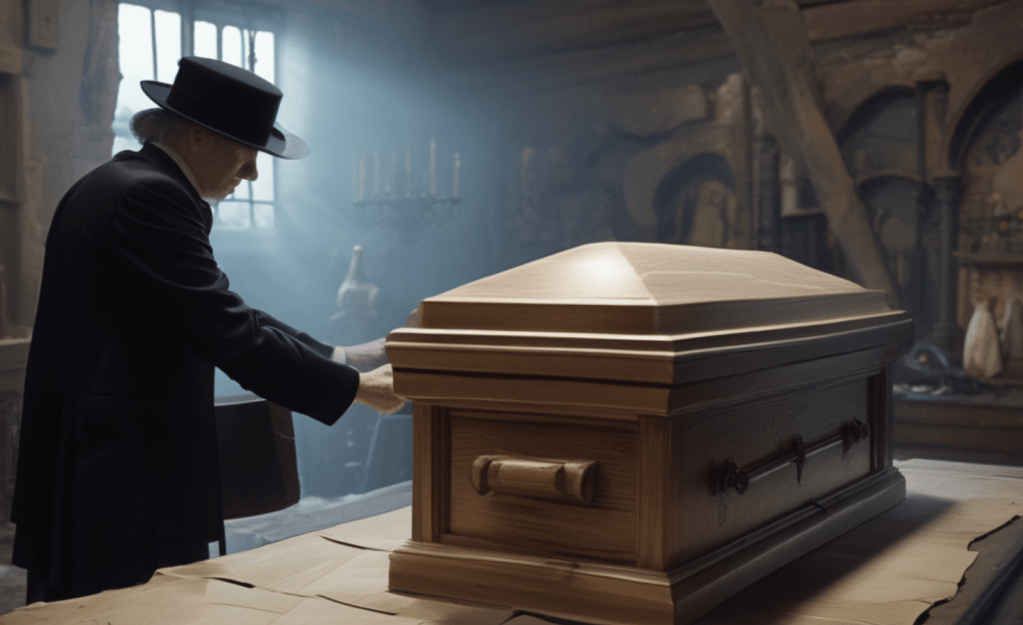
In the small town of Elderton, nestled between rolling hills and dense forests, there lived a man named Mr. Gorb. Mr. Gorb was a meticulous man, a perfectionist in every sense. His business dealings were unique, for Mr. Gorb was the town’s undertaker. However, unlike others in his profession, Mr. Gorb went above and beyond to ensure each client received a personal touch.


Although Mr. Gorb’s clients were all deceased, that didn’t mean they deserved any less care. He believed that everyone deserved a final sendoff that reflected who they were. This philosophy became known as the “Gorb Touch,” a term that resonated deeply within the community.


When someone in Elderton passed away, Mr. Gorb would embark on a journey to recreate their likeness as closely as possible to how they appeared when they last walked down Main Street. He would search the town for the most recent photographs of the deceased, often speaking with family members and friends to gather any images they had. He delved into the history of his clients, learning about their favorite outfits, their unique hairstyles, and any other defining features that made them who they were.

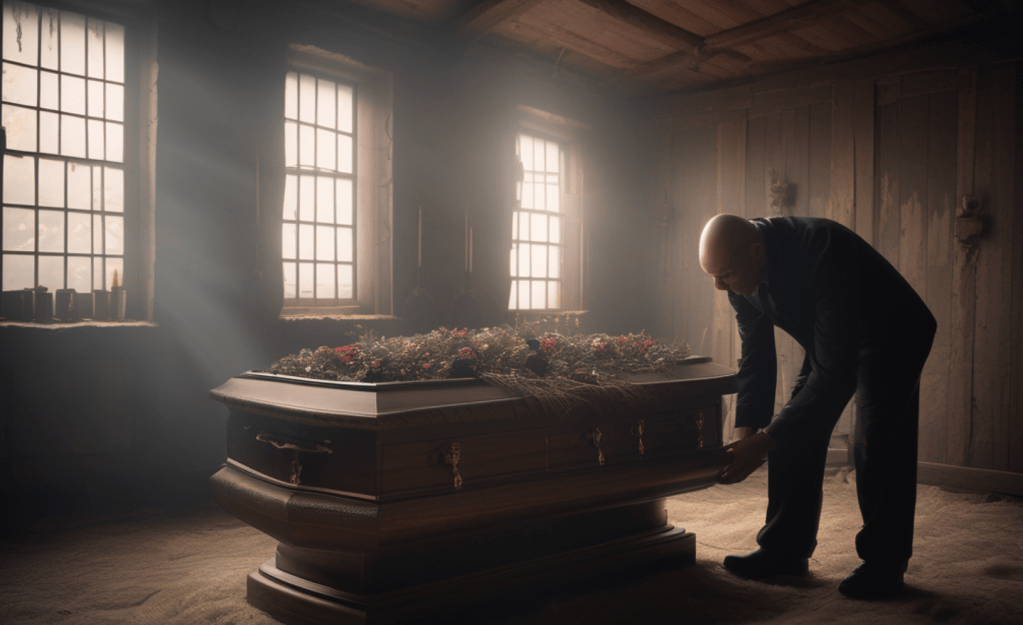
Mr. Gorb’s dedication was unparalleled. He would spend hours carefully applying makeup, arranging hair, and selecting the perfect attire for each individual. His attention to detail was astounding, and the results were always breathtaking. The people of Elderton loved Mr. Gorb for his personal touch and the comfort it brought them during their loss.


One crisp autumn morning, the townspeople awoke to shocking news. Mr. Gorb had passed away in his sleep. The entire town was at a loss. Who would now carry on the tradition of the Gorb Touch? Who would prepare Mr. Gorb himself for his final farewell?

Unbeknownst to the townspeople, Mr. Gorb had been quietly training an apprentice. A young man named Thomas had come to Elderton a few years prior, seeking guidance and a place to belong. Mr. Gorb had seen potential in Thomas and had taken him under his wing, teaching him everything he knew about the delicate art of caring for the deceased.


Thomas had learned well. He had absorbed every lesson, technique, and philosophy Mr. Gorb shared with him. And now, as the town mourned the loss of their beloved undertaker, Thomas stepped forward to fulfill his mentor’s legacy.


With a heavy heart, Thomas prepared Mr. Gorb for his final journey. He meticulously followed the same process Mr. Gorb taught, ensuring that every detail was perfect. The townspeople watched in awe and gratitude as Thomas recreated Mr. Gorb’s likeness with the same dedication and care that had become synonymous with the Gorb Touch.


The funeral was a beautiful tribute to Mr. Gorb’s life and work. As the townspeople gathered to say their final goodbyes, they saw the continuation of a tradition that had brought them so much comfort and peace in Thomas. They knew that Mr. Gorb’s legacy would live on through his apprentice and that the personal touch that had defined their community would never be lost.


Thomas continued to serve the people of Elderton with the same compassion and attention to detail that Mr. Gorb had instilled in him. As the years passed, the Gorb Touch remained a cherished tradition, a testament to the enduring impact of one man’s dedication to his craft and community.

The Discovery of Beeping Moon Rocks: Dr. Richard Campbell’s Journey

A Story By Benjamin H Groff© Groff Media Copyright 2024©

In the bustling halls of NASA’s Johnson Space Center, where scientific minds collaborated to unlock the mysteries of the universe, there was a man named Dr. Richard Campbell. An experienced geologist, Dr. Campbell spent decades studying lunar samples and meteorites. His colleagues revered him for his meticulous research and unyielding skepticism—a trait that earned him both admiration and exasperation.


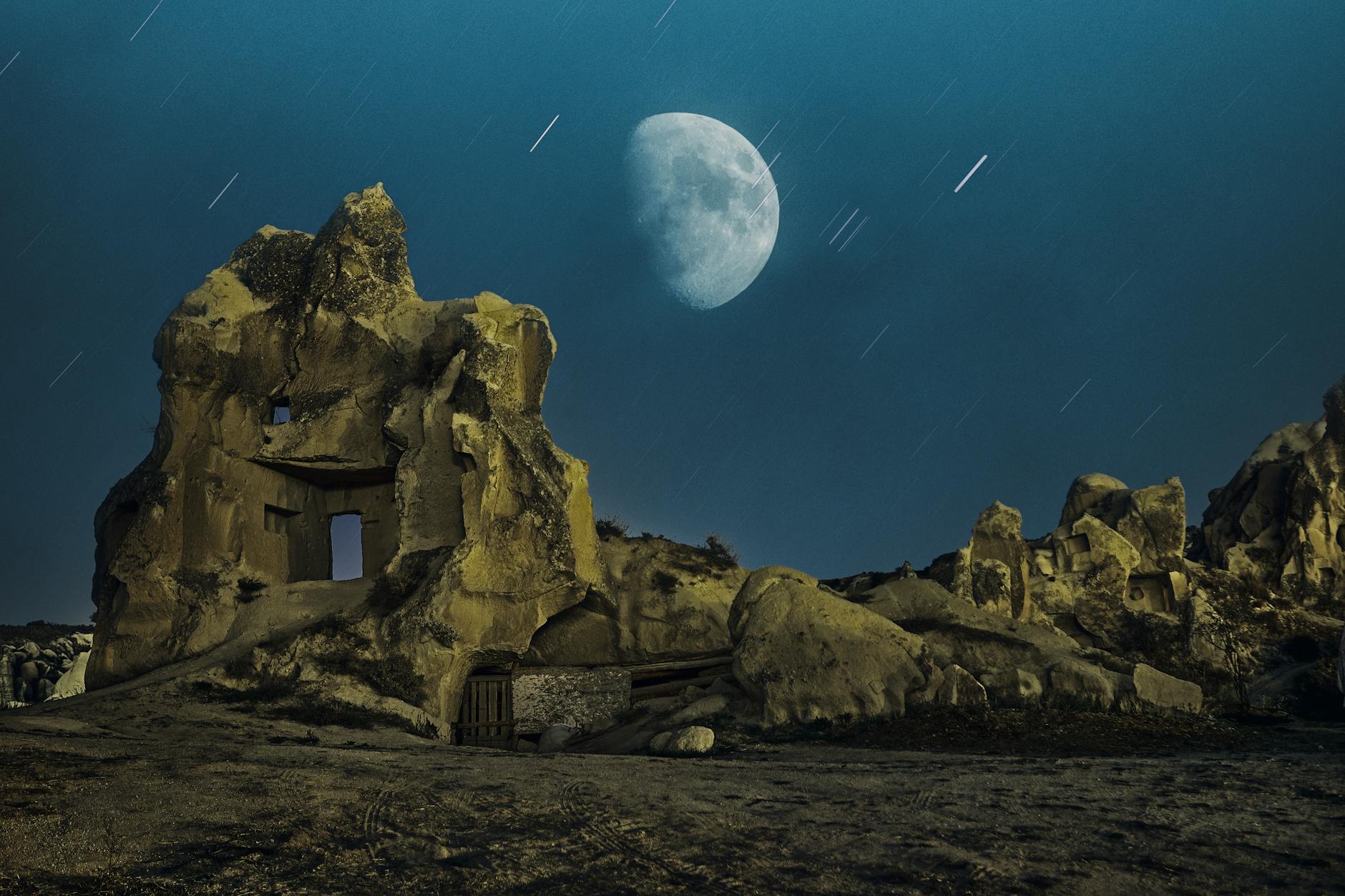
It all began one unassuming Wednesday morning when a rumor started circulating among the younger scientists—whispers of “moon rocks that beep” echoed through the labs, sparking excitement and curiosity. The story was that during a routine analysis, a peculiar sound echoed from one of the lunar samples hauled back to earth the Apollo missions.


Dr. Campbell dismissed these rumors as sheer nonsense. “Rocks don’t beep,” he asserted firmly whenever the topic arose. His logical mind couldn’t entertain the idea of lunar rocks emitting any sound, let alone beeping. He considered it a prank or, at best, a misinterpretation of data.


However, the buzz around the beeping moon rocks grew too loud to ignore. A young researcher named Dr. Emily Hayes, fresh out of her post-doc, approached Dr. Campbell with a determined look in her eyes. She respected his skepticism but believed there was something worth investigating.
“Dr. Campbell, I’d like you to see this for yourself,” she insisted, holding a tiny sample encased in a protective glass container. Reluctantly, he agreed to examine it in the lab.


Under the laboratory’s sterile white lights, they set up the sample on the analysis table. Dr. Hayes connected it to an array of sensors and amplifiers, the same setup that had reportedly detected the beeping. Dr. Campbell watched with skepticism and curiosity, arms crossed over his chest.


As the seconds ticked by in the sterile laboratory, a faint, almost imperceptible series of beeps reverberated through the speakers. Dr. Campbell’s eyes widened in disbelief. He leaned closer, adjusted his glasses, and listened again. There it was—a clear, rhythmic beeping sound emanating from the moon rock, a sound that defied his logical understanding of lunar geology.


“How is this possible?” he muttered, more to himself than to Dr. Hayes. His mind raced with potential explanations: electrical interference, experimental error, or even a practical joke. But, anticipating his doubts, Dr. Hayes showed him the logs of previous tests, all yielding the same results.


Driven by a newfound curiosity, Dr. Campbell embarked on a meticulous investigation of the phenomenon. He conducted a series of rigorous tests, eliminating every conceivable source of error. Days turned into weeks as he and Dr. Hayes worked tirelessly, scrutinizing every detail, leaving no stone unturned in their pursuit of scientific truth.


Their breakthrough came when they discovered a minute crystalline structure within the rock that had previously been overlooked. These crystals had piezoelectric properties, meaning they could create an electrical charge in response to mechanical stress. They theorized that the beeping was a result of tiny vibrations within the lunar environment that caused these crystals to emit electrical signals, which were then picked up as sound by their sensors.


Dr. Campbell’s initial skepticism gave way to a sense of awe and excitement. The discovery of the beeping moon rocks was not just a scientific breakthrough, but a leap toward our understanding of the moon’s geology and unique properties. He and Dr. Hayes co-authored a paper detailing their findings, a paper that was not just published, but widely celebrated in scientific journals worldwide.


The story of the beeping moon rocks became legendary at NASA, a testament to the importance of curiosity, skepticism, and collaboration in scientific discovery. Dr. Campbell, once the man who didn’t believe in beeping moon rocks, became their most passionate advocate, reminding everyone that the most extraordinary discoveries sometimes come from the most unlikely sources.

City Mice Max and Lily’s Countryside Picnic Adventure

In the summer of 2024, two city mice, Max and Lily, took a break from their bustling urban lives. Yearning for fresh air and tranquility, they planned a weekend getaway to the serene countryside. They packed a delightful picnic basket filled with cheese, bread, and a selection of berries and set off for the rolling hills and meadows.be

After a few hours of travel, they found the perfect spot—a grassy knoll overlooking a gentle river winding through the valley. The beauty of the countryside was breathtaking, with the sun casting a golden glow above the rolling hills. They laid out their blankets, unpacked their baskets, and enjoyed their feast under the warm sun, surrounded by the serene beauty of nature.

As the day went on, dark clouds began to gather on the horizon. Max, ever the cautious one, suggested they pack up and head back to the cottage they had rented. But Lily, captivated by the beauty of the countryside, convinced him to stay a bit longer. “It’s just a little rain, Max. We’ll be fine,” she said with a reassuring smile.

However, the little rain quickly turned into a torrential downpour. The river, once calm and serene, began to swell and rage. Realizing the severity of the situation, Max and Lily quickly gathered their belongings and started returning to the cottage. But the water rose faster than they could move, soon turning the meadow into a swirling expanse of water. The danger was palpable, and their hearts raced with fear as they struggled to reach safety.

They spotted an old, hollow oak tree on a small hill with nowhere to go and the floodwaters rising around them. “There!” shouted Max. “We can take shelter in that tree!” They waded through the water, which was now waist-deep, and climbed into the hollow trunk just as the floodwaters swept over their picnic spot.

Max and Lily huddled inside the tree, shivering from the cold and damp. The hours dragged on, and the rain showed no sign of letting up. They could hear the river’s roar and the crashing of debris being swept along by the flood.

Just as they were beginning to lose hope, the rain finally stopped. The relief was palpable, and they felt a surge of hope as the floodwaters started to recede, leaving a landscape transformed by the storm. Cautiously, Max and Lily emerged from their shelter. The meadow was a muddy mess, and their picnic spot was nowhere to be seen. But they were safe.

Determined to make the best of their situation, Max and Lily set to work. They used their city smarts to fashion a makeshift raft from fallen branches and debris, which they used to navigate the still-swollen river. Eventually, they reached the cottage, which had miraculously remained untouched by the flood.

Tired but relieved, Max and Lily dried off and warmed themselves by the fire. They reflected on their adventure and the dangers they had faced. “Maybe next time, we’ll check the weather forecast before our picnic,” Max joked, eliciting Lily’s tired but genuine laugh.

Their countryside picnic had turned into an unexpected adventure, strengthening their bond and reminding them of the importance of being prepared. As they settled in for the night, they were grateful for their safety and each other, ready to face whatever future adventures might bring.

Pride Parade Heroism: Bud and Jake’s Unbreakable Bond

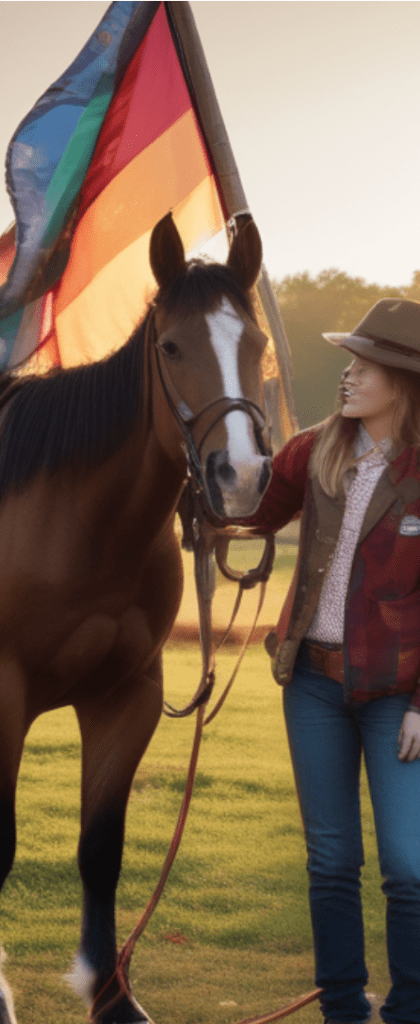
Bud and Jake, two inseparable friends since childhood, shared a bond that was as strong as the fields and stables of their small hometown. As the sun came up on a crisp Saturday morning, they loaded their old pickup truck with supplies and hitched up the horse trailer, ready for the adventure ahead. Inside the trailer, their beloved horses, Star and Blaze, stood patiently, saddled, and prepared for the parade in Cleo Springs.


The air was charged with anticipation as Bud and Jake embarked on their journey, the Pride Flag they’d carefully packed fluttering in the wind. This year, they were resolute in their decision to ride in the parade and demonstrate their unwavering support for equality and love in all its forms. The flag, a beacon of their indomitable spirit, symbolized their commitment to standing up for what they believed in, no matter the odds.


As they drove along the winding country roads, their conversation was light and full of laughter. They reminisced about past adventures and planned the day ahead. However, their joy was short-lived. Out of nowhere, a car screeched to a halt in front of them, forcing Bud to slam on the brakes. Before they could react, two men with hardened faces and a menacing air approached the truck, guns drawn.


“Out of the truck, now!”

One of the thugs barked, his voice rough and commanding. Bud and Jake exchanged a glance, understanding the gravity of the situation. They complied, stepping out slowly with their hands raised.


“We don’t want any trouble,” Jake said calmly, trying to diffuse the tension.

The second thug, his eyes cold and calculating, shoved Bud roughly against the truck.

“We need a ride, and this truck and trailer will do just fine, the first thug snarled.

“Get in the back, and don’t try anything funny.”


With their hands tied behind their backs, Bud and Jake were forced into the truck’s bed, their hearts pounding with fear and uncertainty. The thugs climbed into the cab, and the old pickup roared back to life, veering off the main road and onto a remote, deserted path.


As the miles stretched on, Bud and Jake’s minds raced, searching for a way out of their predicament. They knew they couldn’t let these criminals escape, especially not with their horses. Bud caught sight of the Pride Flag, still within reach in the truck bed. An idea began to form.

“Jake,”

Bud whispered, his voice barely audible over the engine’s rumble.

“When I give the signal, we need to act fast. Trust me.”


Jake nodded, his eyes filled with determination. As the truck slowed to navigate a particularly rough patch of road, Bud made his move. With a swift motion, he grabbed the flag and lunged at the nearest thug. Jake followed suit, using his body to knock the second thug off balance.
The struggle was fierce but fleeting. Bud and Jake, fueled by adrenaline and their unbreakable bond, managed to overpower the thugs and secure them tightly with the Pride Flag. Panting and bruised, they confined the criminals in the back of the truck, a testament to their courage and resilience.


Bud climbed into the driver’s seat, and Jake took a moment to check on the horses, who, though agitated, were unharmed. With renewed purpose, they headed back toward the main road, the thugs’ angry curses silenced by the engine’s roar.


As they neared Cleo Springs, the sight of the parade brought a wave of relief and triumph. They pulled up to the sheriff’s station, where sheriff’s deputies quickly took the thugs into custody. Hearing of their harrowing ordeal, the townspeople greeted Bud and Jake with cheers and admiration.


With the crisis behind them, Bud and Jake joined the parade, and their Pride Flag symbolized their resilience and courage. Riding side by side on Star and Blaze, they waved to the crowd, their hearts full of pride not just for who they were but for what they had overcome together. The parade continued to celebrate love, unity, and the indomitable spirit of friendship.

“A Second Chance: How a Scruffy Terrier Saved a Man From Despair”

Born in a county of less than 12,000 people in the southwest part of the state, Jason grew up in the shadow of his grandfather’s church. Papa Preacher, as he was known, was a fire and brimstone verse-thrower who would have been at home in the 1870s. He led the county revivals in a Save Your Soul from Satan telethon of services every Spring and Fall. Everyone showed up, or people’s names were trashed in the community. 

Jason had heard since the time he could walk how homosexuals would be sent straight to the pits of Hell, with the gnashing of teeth, torture the likes never seen, and burning forever more. From birth, he was scared to believe everything his grandfather said was true.

When Jason began to get older and experienced puberty, his reactions to life differed from those of other teenage boys. His attraction to girls was nonexistent. He had no desire to look at a girl in a way that would be sexual. He had many girls who were friends, but he never wanted to date one or have any relationship other than friendship with any of them. However, when it came to his male friends and older classmates, that was a different story—one he didn’t understand. Jason had never known a person who was gay. He had never been around any books, magazines, or pamphlets that contained gay content. Nor had Jason watched any movies concerning gays. The only thing he knew about gays or the LGBTQI+ Community was that they slept with the same sex and were going to Hell forever! 

Now, he was having intense feelings for other young men, and it was showing. In gym class, he began showing up late or not going at all to avoid going to the locker room. He got roughed up when showering once when he got an erection, and he didn’t mean to. He thought it was difficult enough just trying to hide his excitement walking through the hallways between classes. At least he could use his school books to cover up any problems that could arise. 

What Jason couldn’t cover up was the summer vacation when a foreign exchange student from Germany was staying with a local family, and he was discovered by the local police necking and nearly nude while parked in Jason’s four-wheel drive. They were both in college and of legal age to make their own decisions, but the local police ensured Jason’s grandfather heard about it. The officer then went to the local coffee shop and told the local crowd about it, and soon, the whole town was talking. The foreign exchange student didn’t understand what the big deal was after all, to him, it was well-accepted where he came from, and this upset was so uncalled for. But for Jason, it was the end of his life as he knew it. And, he began to shut down. He was withdrawing and ending communications with everyone. He holed up at home for weeks, sleeping nearly all the time. Then, he began staying awake for days at a time. Finally, he had established a plan to say goodbye. 

Jason sat in his dimly lit living room, the world’s weight pressing down on him. The gun in his hand felt heavy, not just physically but emotionally. His eyes, red from hours of crying, stared at the floor. The only sound was the steady ticking of the old grandfather clock in the corner, a reminder of the seconds slipping away.

He had tried an hour earlier. As he pulled the trigger, his body betrayed him, flinching just enough to send the bullet harmlessly through the open window. He had cursed himself for his cowardice, not knowing that his hesitation had saved a life outside. In the quiet street beyond, a small dog had narrowly missed getting hit, the sound of the shot startling it but not injuring it.

Now, Jason sat there, lost in his thoughts. He had tried to change, to conform to the expectations of his family, church, and society. But he couldn’t change who he was. The rejection, the whispers, the outright hostility—they had all taken their toll. He felt alone, unloved, and hopeless.

Unbeknownst to Jason, the small dog he had unknowingly spared was wandering through the neighborhood. The dog, a scruffy terrier mix with a keen sense of empathy, was drawn to the house. Jason left the door slightly ajar, leaving it open in desperation and distraction. The dog slipped inside, its little paws padding softly on the wooden floor.

Jason didn’t notice the dog at first. He, too, was wrapped up in his sorrow, the cold metal of the gun pressed against his temple. It wasn’t until he felt a soft nudge against his leg that he looked down. Sitting in front of him was the scruffy terrier, its eyes wide and filled with a kind of unconditional love that Jason had never experienced before.

The dog wagged its tail, its eyes never leaving Jason’s. It was as if the dog understood his pain and wanted to offer comfort. Jason lowered the gun, his hand trembling. He reached out hesitantly, and the dog nuzzled his hand, licking his fingers gently.

Tears welled up in Jason’s eyes. He hadn’t felt such warmth in so long. The dog climbed into his lap, curling up as if it was fate to find him in his darkest moment. Jason hugged the dog tightly, sobbing into its fur. The presence of the small, warm creature gave him a glimmer of hope, a reason to hold on.

Hours went by as Jason sat there with the dog in his arms. The sun began to rise, casting a gentle glow through the windows. The new day felt like a second chance, a new beginning. He didn’t know what the future held, but he knew he couldn’t give up.

The dog had saved him in more ways than one. It had given him a reason to keep going, a reminder that love and hope could come from the most unexpected places. Jason decided to name the dog Chance for the second chance it had given him. They would face whatever came next, knowing they had each other together.

In the following days, Jason began to reach out for help, reconnecting with supportive friends and finding solace in a community that accepted him for who he was. And through it all, Chance was by his side, a loyal companion who had come into his life when he needed it most. The love and companionship of his furry friend reminded him daily that he was worthy of love and happiness, just as he was.

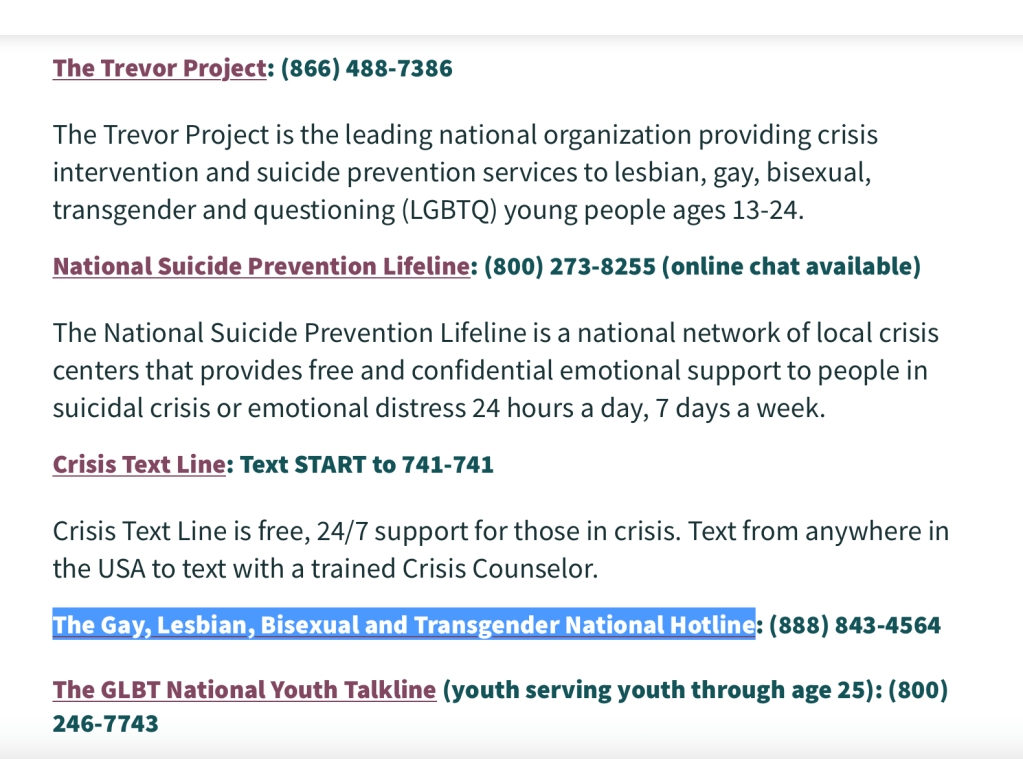
That evening, Jason turned his television off, the only channel he had been told he could watch and remain a good Christian and child of God. While flipping to another TV station, he came across a public service announcement about PFLAG and went to their website out of curiosity to learn more. It was there that Jason heard about the Trevor Project and The Gay, Lesbian, Bisexual, and Transgender National Hotline. He reached out for direction and soon became part of the most prominent family he knew. And he grew to be the happiest he ever had in life. Today – Jason isn’t going through Hell on Earth trying to stay out of a place many people question. And he wakes up with a rainbow in his life every day!

Resilience and Triumph: A Transgender Officer’s Inspiring Journey at Dalfton PD

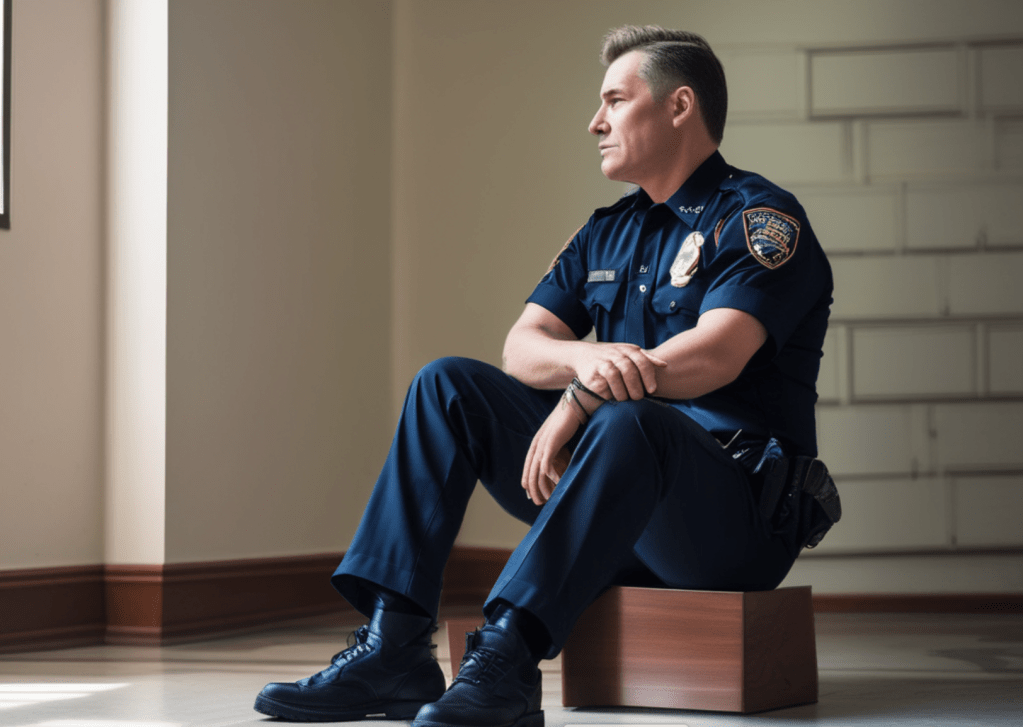
Sergeant Bill Johnson, 45, served in the patrol division of the Dalfton Police Department and held the position of Range Master at the department’s shooting range for the last twenty years. Dalfton was a small Oklahoma City metro area department, and the officers often assisted other departments.

Officer Johnson was single and also secretly transgender; that is, he is living his birth sexuality but slowly dying to live his real identity. The trouble being in his life, Johnson can’t bring himself to do so until his parents die. When he turned 46, his father and mother both passed away of old age within days of one another. Following their funerals and while on bereavement leave, Johnson takes an extended leave for more than one year. During that time, Bill went to another state and underwent the necessary procedures to become the person he always felt his body called him to be.

Her return to duty after turning 48 as Billie Johnson surprised many, especially because she was female. However, her colleagues had a mixed acceptance. Officers she had worked with for over twenty years, backed up in the most dangerous situations, gave her a cold shoulder. She had explained to her Chief of Police that she wouldn’t be alive another year if this didn’t happen. She had barely managed to live the life she had, saying each day it was torture to exist in a man’s body. But, to have tried to change while her parents were alive would have killed them because of their strict religious views, so she lived a tortured life until they died only for them. Now, thanks to their passing, she is freed from their prison; love has set her free.

Sargent Billie Johnson returned to duty with a mixture of anticipation and trepidation. As the Range Master, she had built a reputation for her expertise and dedication, but now she faced a different challenge. The Dalfton Police Department, though small, was a tight-knit community, and Billie knew that acceptance would vary widely among her colleagues.

On her first day back, Billie entered the station, her heart pounding. Chief Parker was first to greet her. He had always been a staunch supporter of her.

“Welcome back, Billie,”

He said warmly, shaking her hand firmly.

It’s good to have you here.”

Billie smiled, appreciating the genuine welcome. She took a deep breath and made her way to her office, passing by officers who gave her nods, smiles, and the occasional curious glance. She noticed some of her colleagues whispering among themselves, but she chose to focus on the supportive faces around her.

Photo by Gotta Be Worth It on Pexels.com

Her first real test came during her first day at the shooting range. She gathered the officers for a mandatory training session, a duty she had performed countless times before. This time, however, she could feel the tension in the air. Some officers were visibly uncomfortable, while others were neutral or encouraging.

Billie addressed the group with confidence.

“I know this is a change for all of us,” she began. “But my commitment to this department and to each of you has not changed. Let’s focus on what we do best—keeping our skills sharp and supporting each other.”

Throughout the session, Billie demonstrated her usual precision and expertise. Gradually, she noticed that the focus shifted from her identity to the training itself. Officer Morales, one of her long-time colleagues, approached her after the session.

“Hey, Billie,”

Morales said, his tone friendly.

“I just wanted to say that it’s good to have you back. You’ve always been a great Range Master, and that hasn’t changed.”

Billie felt a wave of relief.

“Thanks, Morales. That means a lot.”

Over the next few months, Billie worked tirelessly to prove herself as the skilled officer she had always been and as a supportive and reliable colleague. Slowly but surely, the initial tension began to fade. Some officers, Like Morales, were quick to accept her, while others took more time. A few remained distant, but Billie focused on building bridges where she could.

The turning point came during a high-stakes operation in collaboration with neighboring departments. Billie played a crucial role in planning and executing the operation, showcasing her leadership and tactical skills. The operation was a success, and her colleagues began to see her as Billie Johnson and as the capable and dedicated officer she had always been.
In the aftermath, Officer Simmons, one of the more skeptical officers, approached Billie.

“I have to admit, I had my doubts,”

Simmons said candidly.

“But you’ve proved you’re the same person—if not more vital. I respect that.”

Billie nodded, feeling a sense of accomplishment.

“Thanks, Simmons. We’re all in this together.”

As the months turned into years, Billie became a symbol of resilience and strength within the department. She continued to shine in her assignment, earning respect and admiration from those around her. While there were always challenges, Billie faced them head-on, knowing that living her truth had strengthened her.

Her journey inspired others in the department and the wider community. Billie began to advocate for greater awareness and support for transgender individuals within law enforcement and beyond. Her story became one of courage, acceptance, and the power of living authentically.

Photo by Anete Lusina on Pexels.com

Sargent Billie Johnson, now 50, stood tall, proud of her journey and the person she had become. She knew that while the road had been difficult, it was worth every step. She had found her true self and, in doing so, had made a lasting impact on those around her.

If your child just told you they are Transgender, what should you do? Maybe this site will help you…click here!

Embracing Differences: Robella’s Journey to Belonging

Robella, a woman with physical differences, was born into a world that seemed to reject her. Her hair grew out long and kinky on one side and short and stubby on the other, and she was nearly bald in the back. Her left leg was shorter than the right. The elbow on her right arm is three inches higher than the left. Her nose had a long mole on end, which, when she was in school, all the children nicknamed her ‘witchy-pooh.’ Her body had grown misshaped, and she had to wear specially-made clothes that she made since her parents had distanced themselves from her for being so embarrassing.

Robella, often misunderstood and feared, would rummage the town’s alleys for whatever she could find. She would growl feverishly at anyone who said hello to her or offered to help her, a response born out of years of rejection. However, even this didn’t stop the town’s nicest people from trying to help her. Mrs. Meyers, who ran the bakery, would make a point to set a hot loaf of bread out on the back steps of her store every Monday, knowing that Robella would soon be looking for items the store owners had discarded. Robella would rummage through the cans and junk in the alley until she got to the bread, every week she would sniff it and say out loud,

“Mrs. Myers Bakery always forgets and leaves a loaf of bread in the oven over the weekend. My gain!”

She proceeded down the alley, finding other items that store owners had carefully placed for her, knowing where she would look for them. Robella would find the goods, and she would let out a grunt and laugh and proceed on.

One cold winter day, as Robella made her usual rounds through the alley, she stumbled upon something unexpected. There was a small, wrapped package with a note attached among the carefully placed items. Curiosity piqued, and she hesitated before picking it up.

The note read:

“To Robella,
You are special and loved just as you are. Please join us at the town square tonight for a surprise.

With love,
Your Neighbors”

Robella frowned and grumbled to herself, unsure what to make of it. Despite her mistrust, a flicker of curiosity and hope stirred within her. She decided to see what kind of joke the townspeople might be playing on her.

As the evening approached, Robella made her way to the town square, staying in the shadows so she would not be seen. To her surprise, the square was transformed into a magical wonderland, filled with lights and decorations. The townspeople had gathered, and a large table was set with all kinds of delicious food. At the center of it all stood Mrs. Meyers, holding a beautifully decorated cake.

“Robella, we’ve been waiting for you,”

Mrs. Meyers called warmly, spotting her in the shadows. The crowd turned, and they all smiled at her, to her amazement.


“Come, join us, “
one of the townspeople said, extending a hand towards her.

“We’ve prepared a feast in your honor.”

Robella hesitated, unsure of what to make of this unexpected show of kindness. But Mrs. Meyers, sensing her hesitation, walked over and gently took her hand, leading her to the center of the square.

“This is for you, dear. We want you to know that we see you, we care about you, and we want you to be part of our community. Your differences are what make you special, and we celebrate them.”

Tears welled up in Robella’s eyes. For so long, she had felt nothing but rejection and loneliness. Now, faced with genuine kindness and acceptance, her hardened exterior began to crack. She felt a mix of emotions-disbelief, gratitude, and a glimmer of hope. Could it be that she was finally finding a place where she belonged?

“But I’m so different,”
she whispered, looking down.

“And that makes you unique and wonderful,”
Mrs. Meyers replied.

“We all have our differences, which makes our community rich and beautiful.”

The townspeople came forward one by one, each offering a word of kindness or a small gift. They shared stories of their struggles and how they had overcome them with the support of each other. Robella listened, her heart slowly warming with each tale.

As the night went on, Robella felt something she hadn’t felt in years: a sense of belonging. She realized that she didn’t have to be alone or angry anymore. These people truly cared for her, and they wanted her to be a part of their lives. Their kindness, their acceptance, had the power to transform her life.

From that day forward, Robella became an integral part of the community. She used her skills to help others, sewing clothes for those in need and sharing her resourcefulness. The townspeople, in turn, included her in their daily lives, and she formed deep, meaningful friendships. It was the collective acceptance and kindness of the community that had transformed her life, showing her that she was not alone and that her differences were not a barrier to belonging.

Robella’s heart softened, and her once harsh demeanor transformed into one of kindness and warmth. She learned to smile and laugh genuinely, and the townspeople celebrated her unique qualities, seeing the beauty in her differences. She became an integral part of the community, using her skills to help others, sewing clothes for those in need and sharing her resourcefulness. The townspeople, in turn, included her in their daily lives, and she formed deep, meaningful friendships.

New Haven: Rebuilding Humanity After the First Contact War

In 2147, the world was altered irrevocably by the catastrophic aftermath of the First Contact War, a conflict that erupted when humanity made its first contact with an alien civilization. This discovery, instead of being the peaceful meeting of cultures and ideas that many had hoped for, led to a devastating war that ravaged Earth, leaving it a shadow of its former self, with much of the planet in ruins.

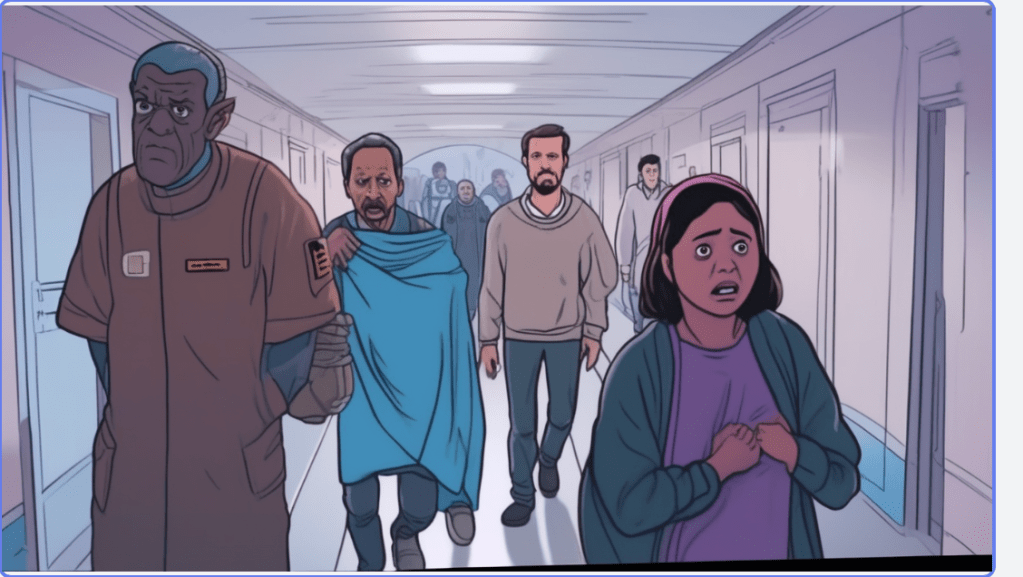
Amidst the desolation, small pockets of survivors, resilient and determined, tried to rebuild their lives. One such place was the settlement of New Haven, a converted underground research facility that provided refuge to humans and non-humans alike. In the dimly lit corridors of New Haven, it was here that a group of survivors, their spirits unbroken, made their way to the main meeting hall.

Leading the group was Dr. Rithian Torvak, a Xelorian biologist from a race that had formed a crucial alliance with humanity against the common enemy. The Xelorians, known for their green, textured skin, and elongated ears, were a race of peaceful scholars who had never engaged in warfare before. Despite the prosthetic arm—a reminder of the war’s brutal cost—he was a source of strength and wisdom, a testament to the unity forged in the face of adversity.

Anaya Patel, a young woman who had become a beacon of hope for many, closely followed Dr. Torvak’s research. Anaya had emerged as a natural leader, her compassionate heart and unyielding spirit rallying the survivors, united in their struggle, through their darkest days. Her parents had perished defending their home, but she had sworn to honor their memory by protecting those who remained.

Beside him, clutching a tattered blue blanket, was Samuel Grant, a former engineer who had lost his family in the initial invasion. Samuel’s eyes appeared haunted, but he found solace in aiding Dr. Torvak with his research, hoping their efforts might lead to a brighter future. His knowledge of pre-war technology was invaluable in keeping New Haven operational.

As they walked through the corridor, the walls echoed with the murmurs of the other residents, each carrying their own stories of loss and survival. The group was heading to a crucial meeting to discuss the latest developments in their efforts to reclaim the surface and search for other survivors.

The corridor opened into a large room filled with makeshift tables and chairs. On one wall, a digital display showed the map of their known world, with red zones marking areas still too dangerous to explore. These zones, remnants of the war, were filled with mutated creatures and unstable terrain, posing a constant threat to anyone who dared to venture into them. The air was thick with a mix of hope and desperation, as the survivors were acutely aware of the dangers that lurked just beyond their reach.

Dr. Torvak stepped forward to address the gathered crowd.

“We have received a transmission from what we believe to be another survivor enclave. This communication could mean there are more of us out there than we thought.”

The room buzzed with whispers. Anaya, her voice steady but filled with emotion, raised her hand, silencing the crowd.

“If there are more survivors, we must find them and bring them here. Every life matters, and together, we can rebuild.”

Her words, a testament to the hope that still burned within them, resonated with the survivors, filling the room with a renewed sense of purpose and determination.

Samuel nodded in agreement.

“We have the technology to send a team, but it will be dangerous. We must prepare for anything.”

Dr. Torvak glanced around the room, his eyes filled with determination.

“We have faced darkness and survived. Now, it is time to reclaim our world, to rebuild what we have lost, and to forge a future where all races can live in peace.”

His words, a rallying cry for the survivors, echoed in the room, filling them with a renewed sense of determination and unity.

As the meeting concluded, the survivors of New Haven felt a renewed sense of purpose. They knew the road ahead was perilous, but they believed, with a flicker of hope in their hearts, they could overcome any obstacle together. In the shadows of their broken world, they found the strength to hope, fight, and dream of a brighter, more peaceful tomorrow.

Despite their broken world, hope remained to rebuild even in the presence of a mixed culture of individuals—all who were put together not out of choice but out of a twist of fate!

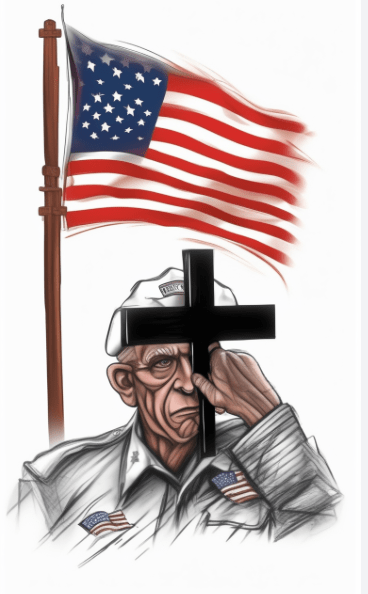
Solemn Reflections: Memorial Day and the Spirit of Sacrifice

As the sun rose over the small town of Oakwood, its warm rays illuminated the rows of white headstones in the Oakwood Cemetery. The city, steeped in a rich history of honoring fallen soldiers, had always observed Memorial Day with solemn pride. This day, originally known as Decoration Day, was established after the Civil War to commemorate the Union and Confederate soldiers who died in the war. It has since evolved to honor all Americans who have died in military service.

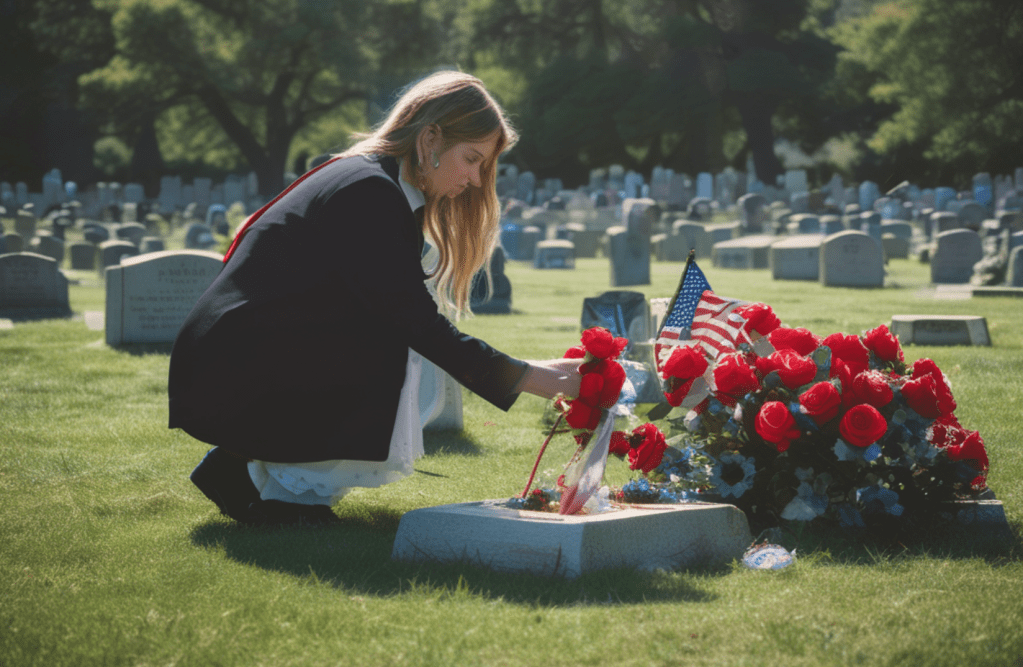
Sarah Thompson stood at the cemetery’s gate, holding a bouquet of red, white, and blue flowers. She was in her late thirties, her eyes reflecting sorrow and strength. Visiting the cemetery was her yearly ritual—a pilgrimage to visit the grave of her brother, Daniel, who had died in Afghanistan a decade ago.

As Sarah walked along the gravel path, she remembered the day they received the news. It had been a bright summer afternoon, much like today. Daniel had always been a source of light and joy in their family, with his infectious laughter and boundless energy. The knock on the door that day had shattered their world.

Sarah reached Daniel’s grave and knelt, gently placing the flowers in front of the headstone. She traced her fingers over his name etched in the cold stone and whispered a prayer. Memories flooded back—playing tag in the backyard, late-night talks about their dreams, and the tearful goodbye when he left for his final deployment.

The cemetery, a place of collective grief and remembrance, began to fill with others who had come to pay their respects. Families, friends, and fellow veterans moved among the graves, their shared sorrow palpable in the air. Some walked in silence, their thoughts a private tribute, while others shared stories, their voices a collective echo of the lives lost.

A familiar voice broke Sarah’s reverie. “Hey, Sarah.”

She turned to see Tom, one of Daniel’s best friends from high school, standing nearby. He held a small American flag, which he placed at the base of the headstone. Tom had served alongside Daniel and had been with him during his last moments.

“It’s good to see you, Tom,” Sarah said, her voice soft.

Tom nodded, his eyes filled with shared grief. “I come here every year. Feels like the least I can do.”

They stood in silence for a moment, their hearts heavy with the weight of their loss. Each lost in their thoughts, memories of Daniel flooding their minds. Then Tom began to speak, his voice steady but emotional, his words a testament to the bravery and selflessness of their fallen friend. ‘Daniel was the bravest person I knew,’ he said, his voice breaking with emotion. ‘He always put others before himself. Even in the end, he worried more about us than his safety.’

Sarah smiled through her tears. “That sounds like him.”

The morning wore on, and more people arrived, each carrying their own memories and gratitude. A group of children from the local school, accompanied by their teachers, placed flags on the graves of all the fallen soldiers, a symbol of their respect and understanding of the sacrifices made. The town’s mayor gave a short speech, his words echoing with the collective gratitude and remembrance of the community. A local choir sang ‘America the Beautiful,’ their voices a poignant reminder of the unity and strength that comes from shared values. The collective remembrance was a powerful testament to the sacrifices made by so many.

As the ceremony ended, Sarah and Tom lingered by Daniel’s grave a little longer. They shared stories, laughed, and cried, finding comfort in each other’s company.

“Thank you for being here,” Sarah said as they prepared to leave.

“Always,” Tom replied. “He was my brother, too.”

They returned to the cemetery gate together, the sun now high in the sky. As Sarah looked back one last time at the sea of white headstones, she felt a sense of peace. Memorial Day was not just about remembering the fallen; it was about celebrating their lives and the values they stood for.

Driving home, Sarah contemplated the significance of this day and how she would pass on its importance to her children. She understood that as long as they remembered, Daniel’s spirit would continue to live on. Every Memorial Day, she would return to this hallowed ground, ensuring that the memory of her brother and all those who had made the ultimate sacrifice for their country would never fade.

In checking references part of this story may include referencese similar to others found on the internet. The simularities are incidential and are not included intentional. You can find more these simularities RE: New York. Memorial Day. Monument. Dead Soldier. Wheelchair. Handicapped Boy. | Didier Ruef | Photography. https://www.didierruef.com/gallery-image/Aura/G0000Is39GN2Av9w/I0000aHlCvWVZLNc/C0000EU0LcXmMzWo/ 

The Heartwarming Story of Jello: From Community Beloved Dog to Honorary Mayor of Millbrook

Jello, a spirited dog with golden fur, floppy ears, and a tail that wagged like a metronome, lived in the quaint town of Millbrook. He was a free spirit, beloved by all, and a fixture of the community, embodying the warmth and unity of Millbrook.

Jello had his routines. Every morning, he would trot to the bakery where Mrs. Thompson would have a fresh scone waiting for him. Then, he’d visit the school playground, where children would shower him with affection and sneak him bits of their lunches. Jello often spent afternoons lounging in the sun outside the library, where Mr. Caldwell would read to him from the latest novels. By evening, he would make his rounds at the town square, greeting everyone with a joyful bark before curling up under the big oak tree for the night. The community’s love for Jello was palpable, creating a sense of unity and togetherness.

The townspeople adored Jello so much that someone humorously suggested nominating Jello for Mayor when the mayoral election came around. The idea quickly gained traction. “Who better to represent our town than Jello?” they said. “He’s loyal, kind, and brings everyone together.” And so, in an unprecedented turn of events, Jello’s name appeared on the ballot.

As the election drew near, excitement buzzed through Millbrook. Posters of Jello, donning a makeshift mayoral sash, adorned shop windows and bulletin boards. The slogan “A Mayor Who Cares” echoed through the streets. But a week before the election, something terrible happened: Jello went missing.

Panic spread like wildfire. Where could he be? The entire town, deeply concerned, rallied to search for him. Kids formed search parties, calling his name through the woods and fields. Shopkeepers closed early to join the search; even the local police were on high alert. There were flyers everywhere: ‘Missing: Jello. Our Town Hero. Please Help!’. The town’s reaction to Jello’s disappearance was a testament to their deep empathy and concern.

As days passed with no sign of Jello, whispers of foul play began to circulate. The thought was too dreadful to bear, but the town’s unity shone through their worry. They held candlelight vigils, their collective hope a beacon in the darkness, a testament to their resilience and unity.

On the eve of the election, a familiar bark echoed through the town square just as hope was waning. It was Jello, looking a bit dirty and tired but otherwise unharmed. The townspeople greeted Jello with cheers and tears of joy. Mr. Caldwell, who had been leading a search party near the old mill, found him trapped in an abandoned shed, likely having chased a squirrel inside and gotten stuck.

The town’s relief was palpable. Shopkeepers cleaned him up, fed him his favorite treats, and gave him more attention. Election day arrived, and with Jello safe and sound, the town celebrated their unusual but heartwarming choice for Mayor. After tallying the votes, it was no surprise that Jello won by a landslide. Although the title of Mayor was symbolic, the gesture embodied the spirit of Millbrook: a community united by love, kindness, and the belief that sometimes the best leaders remind us of the simple, unspoken bonds we share.

Jello, the dog who roamed freely but belonged to everyone, was now the honorary Mayor of Millbrook. His tale became a cherished legend, reminding all who heard it of the power of community and the unexpected ways in which leaders can emerge.

The Paradox of Charlie North

The man whose loving heart brought conflict and rift with unexpected rewards he showered on others.

Charlie North was a familiar figure in the small town of Millbrook, known for his heart as expansive as the sky. He would readily abandon his own tasks to assist a neighbor with a leaky roof or chauffeur an elderly friend to a medical appointment. His acts of kindness and warmth were unparalleled, and everyone who crossed paths with Charlie held a special place for him in their hearts.

Yet, Charlie’s well-intentioned nature had a flip side that often led to discord: he was overbearing. His eagerness to assist frequently transformed into a forceful insistence that his approach was superior, and his constant involvement in others’ lives often left them feeling suffocated. This dichotomy of love and overbearingness earned him a mixed reputation.

One sunny morning, Charlie decided to help Mrs. Henderson with her garden. The widow was grateful for the help but soon became overwhelmed by Charlie’s detailed plans and strict schedules. He dictated the type of flowers to plant, the precise soil mixture, and the exact watering schedule. Mrs. Henderson, who enjoyed gardening as a leisurely and personal hobby, felt her joy drained by Charlie’s micromanagement.

“I appreciate your help, Charlie, but I think I’d like to do some of this on my own,”

Mrs. Henderson said, trying to sound polite.

Charlie was taken aback. He wanted to help, but he needed help to see how his thorough plans were anything but beneficial.

“But, Mrs. Henderson, if we don’t follow the schedule, the flowers won’t thrive as they should,”

he insisted.

As the weeks went by, similar incidents unfolded. At the community bake sale, Charlie’s meticulous organization turned into a rigid control. Initially, the townsfolk appreciated his dedication, but soon they felt stifled and unappreciated. The once vibrant community events started to lose their charm, replaced by a silent resentment towards Charlie’s overbearing ways.

One evening, as Charlie sat on his porch, his lifelong friend, Tom, joined him. Tom was one of the few people who could speak candidly to Charlie.

“Charlie, I’ve known you forever,” Tom began gently. “You’ve got a heart of gold, but sometimes you don’t realize how you come across to others.”

Charlie frowned, puzzled. “I just want to help, Tom. I want everything to be perfect for everyone.”

“I know you do, and that’s what makes you so special,”

Tom said, choosing his words carefully.

“But people need space to make their own choices, even if things don’t turn out perfectly.”

Determined to change, Charlie began to pull back. He continued to offer his help, but he consciously tried to listen more and dictate less. Charlie volunteered at the next community event but let others take the lead. He bit his tongue when things didn’t go as he would have planned, learning to appreciate the different ways people approached problems.

It was a difficult adjustment for Charlie, and he often felt the urge to step in and take control. But slowly, he noticed a difference. Mrs. Henderson’s garden flourished in its way; it was not perfect, but vibrant and full of life. The bake sale was a chaotic success, filled with laughter and camaraderie. People began to welcome Charlie’s presence again without the undercurrent of tension that had once accompanied his help.

Over time, Charlie found a balance. He channeled his love and generosity in ways that empowered others rather than overshadowing them. He was still the same Charlie North—big-hearted and always ready to lend a hand—but had learned to temper his overbearing nature. This transformation made him not only loved but truly appreciated, a testament to the power of self-awareness and the enduring strength of a loving soul.

That night, Charlie lay awake, wrestling with Tom’s words. He reflected on the times his help had been more of a hindrance, the faces of his friends and neighbors flashing through his mind—grateful at first but then strained and unhappy.

And so, Charlie’s story became one of growth and redemption, a testament to the power of self-awareness and the enduring strength of a loving soul.

Riverton Police: A Night in the Life of Detectives Jake and Sam

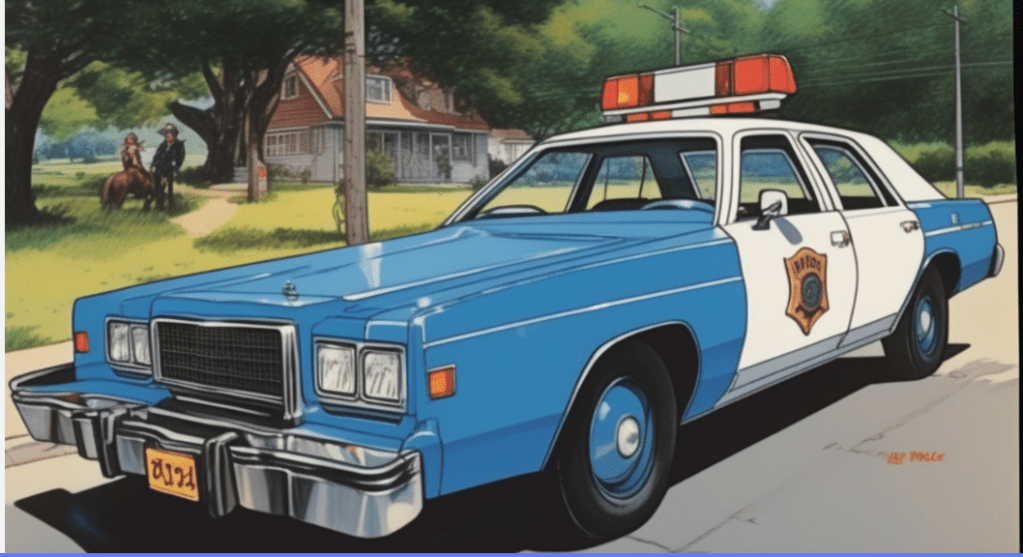
The city of Riverton never slept, nor did Detectives Jake Harris and Sam O’Reilly. Partners for over a decade roamed the nocturnal streets with the kind of synergy only best friends could muster. Their squad car, an unremarkable blue-and-white cruiser, was a beacon of hope for some and a symbol of fear for others.

Jake, with his gruff exterior and piercing blue eyes, was the kind of cop who could read a crime scene like a book. Sam, a lean figure with a quick wit and a knack for defusing tense situations, complemented Jake perfectly. Together, they led the department in felony arrests, arriving at calls faster than anyone else and building relationships with the community that others could only dream of.

One brisk autumn night, their radio crackled to life with a call that made their hearts race: an armed robbery in progress at the 24-hour diner on 5th and Maple. Without a word, Jake hit the lights and sirens, and they sped through the dimly lit streets. They arrived in just under three minutes, a record even for them.

The diner was eerily quiet as they approached, save for the distant hum of neon lights. Inside, a masked man brandished a gun, demanding cash from the terrified cashier. Jake motioned for Sam to flank the back entrance while he took the front.

Jake entered slowly, his voice calm but authoritative. ––––

“Riverton PD, drop the weapon and come out with your hands up.”

The gunman whipped around, eyes wide with panic.

From the rear, Sam’s voice cut through the tension.

“No, you won’t. You don’t want to hurt anyone. Put the gun down, and we can talk.”

The gunman’s grip on the weapon faltered. In that split second, Jake lunged forward, disarming him with a swift, practiced motion. Sam was at his side instantly, cuffing the man and guiding him to the squad car.

As they processed the scene, the cashier, a young woman named Maria, approached them with tears in her eyes.

“Thank you. I don’t know what would’ve happened if you hadn’t come.”

Jake gave her a reassuring nod. “Just doing our job, ma’am.”

The rest of the night was a blur of paperwork and patrols. But their most memorable interaction came just before dawn. While cruising through a quieter part of town, they spotted a boy sitting alone on a bench, clutching a backpack to his chest. They pulled over, and Sam approached him gently.

“Hey there, buddy. Everything alright?”

The boy, who couldn’t have been more than ten, looked up with tear-streaked cheeks.

“I ran away from home. My parents are always fighting.”

Sam sat next to him, listening with the patience of a father and says –––

“I get it, kid. Sometimes, home can be tough. But running away won’t solve anything. Let’s get you back home and see if we can help sort things out.”

Jake contacted the boy’s parents while Sam spoke with him. The sun was peeking over the horizon when they returned the boy home. Now more worried than angry, the parents hugged their son tightly and thanked the officers.

As they drove back to the station, Jake glanced over at Sam, sighs then says –––

“Another night, another set of stories, huh?”

Sam chuckled. “Wouldn’t have it any other way.”

In Riverton, one could become a legend in the shadows, and for Jake and Sam, every night was another chance to protect and serve, forging connections and fighting crime in ways that others could only admire.

Verdantia: The Rainbow City and the Festival of Lumina

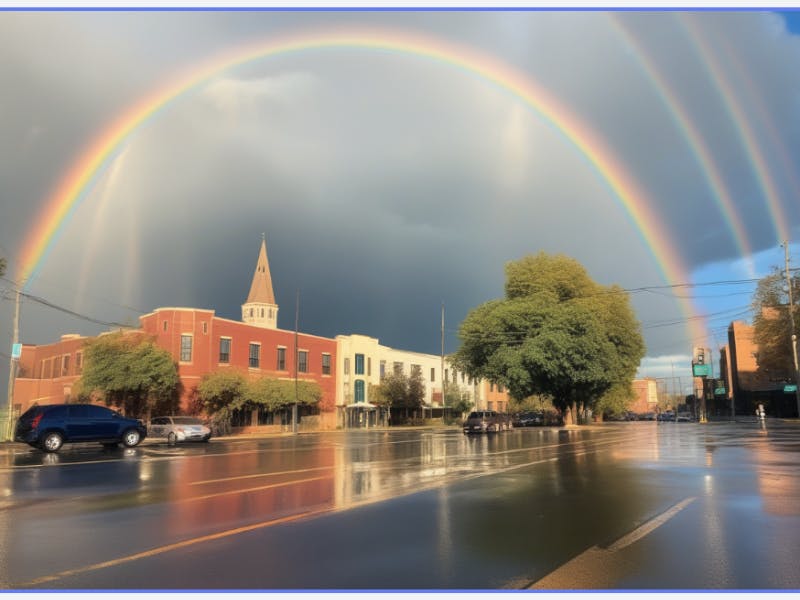
Once upon a time, in a small, unassuming town named Verdantia, an extraordinary phenomenon brought magic to the lives of its residents. Verdantia was known for its picturesque streets lined with red-brick buildings and verdant trees, but what truly set it apart was its ability to produce the most stunning rainbows anyone had ever seen.

One late afternoon, after a sudden downpour, the clouds parted, and the sun cast its golden rays across the wet streets. As the townsfolk went about their business, a magnificent rainbow began to form, arching over the town’s central square. It wasn’t just any rainbow; it was a double rainbow, with vibrant colors so vivid they seemed almost tangible.

The people of Verdantia, who had grown accustomed to the beauty of rainbows, stopped in their tracks, mesmerized by the sight. The rainbow appeared to touch down at two significant landmarks in the town—the spire of the old church and the ancient oak tree standing proudly at the intersection of Main Street and Elm.

As legend had it, Verdantia was a place where rainbows were believed to be portals to realms of wonder and enchantment. The townspeople knew this was no ordinary occurrence. The elders of the town, keepers of its history and secrets, gathered quickly. They had long awaited the appearance of such a rainbow, a sign foretold in their lore that marked the beginning of a special event known as the Festival of Lumina.

The Festival of Lumina was a rare celebration that took place once every hundred years, marked by a rainbow so grand that it stretched across the sky, connecting the past with the future, the ordinary with the extraordinary. This festival was a time when the boundaries between the human world and the world of magic blurred, allowing dreams and reality to intertwine.

As the double rainbow shimmered, a soft, melodic hum filled the air. Children giggled with delight, and adults felt a warm, nostalgic pull at their hearts. The air around the rainbow seemed to sparkle, and for a moment, time itself felt as if it had slowed down. From the base of the rainbow at the church, a figure emerged—a guardian of the ancient lore, known as Seraphina, the Keeper of Light.

Seraphina, with her radiant presence and flowing silver robes, held out a staff that glowed with the colors of the rainbow. She spoke in a voice that resonated like the soft chime of bells, “People of Verdantia, the time has come to celebrate the Festival of Lumina. Today, the veil between worlds is thin, and the magic of the rainbow is at your command.”

The town erupted in joyous celebration. Musicians played enchanting melodies, artisans displayed their finest crafts, and bakers offered sweet treats that seemed to shimmer with a magical glaze. Children ran around, chasing the elusive ends of the rainbow, hoping to find hidden treasures and secret wonders.

As evening fell, the rainbow’s glow intensified, casting a luminous light over Verdantia. The townspeople gathered under the ancient oak tree, where Seraphina led a ritual to honor the rainbow and its magic. She spoke of unity, hope, and the power of dreams, encouraging everyone to embrace the wonder within their hearts.

The Festival of Lumina continued through the night, with stories of old being shared around bonfires, and dances that seemed to weave through the very fabric of the rainbow’s light. As dawn approached, the double rainbow slowly faded, but the magic lingered in the hearts of the people.

Verdantia, forever touched by the beauty and enchantment of the rainbow, became a place where dreams were cherished, and the magic of the Festival of Lumina was remembered and celebrated in smaller ways every day. The rainbow city, as it came to be known, stood as a beacon of hope, joy, and the enduring power of wonder.
Midnight: Guardian of Secrets in Solstice Hollow

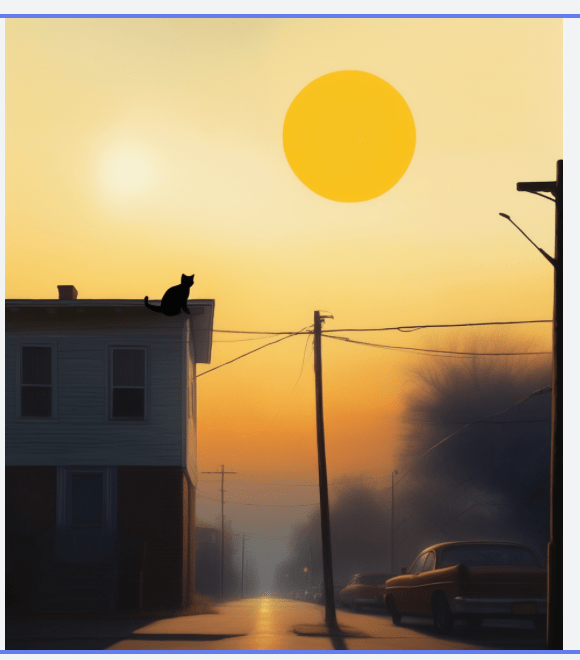
In the small, forgotten town of Solstice Hollow, days bled into each other with the relentless monotony of time. The sun hung heavy and perpetually on the horizon, a blazing sphere casting an otherworldly glow over the desolate streets. It was always twilight here, neither night nor day, as if the town existed in a pocket of suspended reality.

The alley in the photograph was known as Whispering Lane, a narrow pathway flanked by crumbling buildings that seemed to sigh with the weight of their own history. Shadows stretched long and lean across the cracked pavement, and the air was thick with the scent of old wood and dust. At the intersection of the lane and Main Street stood an old house, its paint peeling and windows dark, a silent sentinel in this forgotten part of the world.

On the roof of this house sat a black cat, its eyes glinting like emeralds in the perpetual twilight. The cat, known to the townsfolk as Midnight, had been there for as long as anyone could remember. Legend had it that Midnight was not an ordinary cat, but a guardian of secrets, a keeper of the town’s strange and sorrowful tales.

One such tale was that of Eleanor Weaver, a young woman who had lived in Solstice Hollow many decades ago. Eleanor was a spirited and curious soul, always wandering the boundaries of the town, seeking something beyond the endless dusk. She was fascinated by Whispering Lane, drawn to its eerie silence and the whispers that seemed to emanate from the very walls.

One evening, Eleanor ventured further down the lane than ever before. The sun, fixed in its eternal descent, bathed the alley in a warm, golden hue, casting long shadows that seemed to beckon her forward. As she walked, she heard faint murmurs, indistinct yet strangely comforting, as if the lane itself were sharing its secrets with her.

At the end of the lane, where the shadows were deepest, Eleanor discovered a hidden door set into the side of an old brick building. The door was ancient and weathered, its surface etched with cryptic symbols. With a mixture of trepidation and excitement, she pushed it open and stepped inside.

What Eleanor found beyond the door was a realm beyond her wildest imaginings—a place where time flowed differently, and the laws of reality were mere suggestions. She wandered through dreamlike landscapes, met beings of light and shadow, and learned the true nature of Solstice Hollow. She discovered that the town was a sanctuary, a refuge for those who had lost their way in the world. The perpetual twilight was a barrier, a protective veil that kept the town hidden from the rest of existence.

Days turned into weeks, and weeks into months, yet Eleanor felt no urge to return. She had found her place, her purpose, in this otherworldly dimension. But as with all who ventured too far into the unknown, a time came when she had to make a choice: remain in the dreamscape forever, or return to the world she had left behind.

Eleanor chose to return, carrying with her the knowledge and serenity she had gained. She emerged from the hidden door, back into the eternal twilight of Whispering Lane. The townsfolk noticed a change in her—a quiet wisdom in her eyes, a sense of peace that seemed to radiate from her very being. She never spoke of what she had seen, but Midnight, the ever-watchful cat, seemed to understand.

Years passed, and Eleanor’s tale became part of the whispered legends of Solstice Hollow. The hidden door was never found again, and some began to doubt it had ever existed. Yet, on still evenings when the sun cast its golden glow over Whispering Lane, the whispers could still be heard, faint but persistent, as if the alley itself remembered.

Midnight remained on the rooftop, a silent guardian, watching over the town and its secrets. And in the timeless twilight of Solstice Hollow, life continued, a delicate dance between reality and the unknown.

The WIndscreen Phenomenon

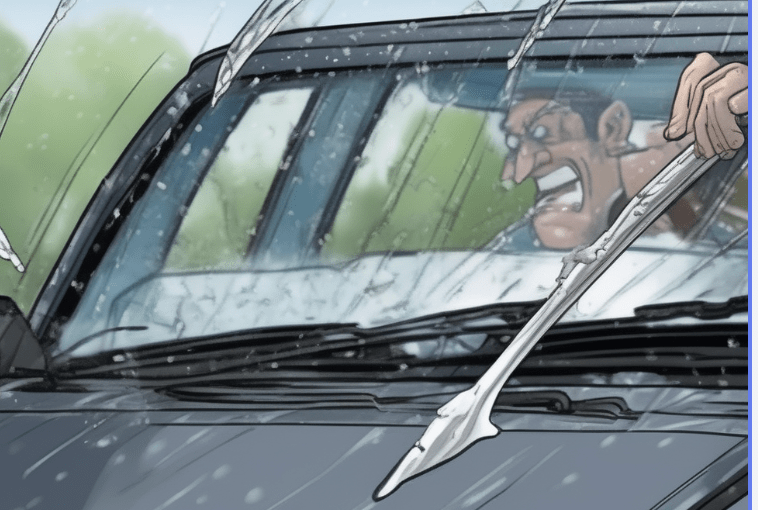
Earl’s Service Station was well known in town. It had to be. It was on the corner of Broadway and Main, downtown. Everybody in the city went to get their cars serviced, and the gasoline tank filled up there; they had to; it was the only gas station in the small town. Working in a gas station, Earl or his son Skip would wash the windows of cars while they were filling up. They would still be trying to scrub the bugs off the windshield on warm summer nights, long after the gas had clicked off.

Cars that didn’t need gas would pull in, and without being asked, he would get out to work on their windshield cleaning with squeegees and sponges. It was on the house because Earl had a “full service” operation. When you bought gasoline there, anytime you stopped in, you got service. Everyone knew that you didn’t have to purchase gasoline for the service. Earl provided the work because that was the reputation of his business.

It was the 1960s, and business ran steadily through the 1970s. However, as the 1980s crept in, a truckstop up the road near the big highway had put in giant tanks that held truckloads of fuel and could undersell Earl. It was self-serve, and the drivers had to clean their windshields. They’d have to check their oil and steering fluid, but now, all that didn’t matter. 

Earl still had enough local customers and monthly charge accounts to keep his business open; repairing flat tires and selling accessories like windshield wipers, fluid, and antifreeze would keep him afloat. And it did through to the time he retired and handed the business over to his son Skip, who had been working in his father’s station since he was out of high school. 

Skip noticed changes over the years, something more than people going to the big station up the road; the cars coming into the service station didn’t have bugs on the windshield. He had watched a television program a month or two earlier and remembered hearing about the windshield phenomenon. 

It had a more scientific explanation, but Skip explained it to a group of local coffee drinkers as locals began noticing changes in their community due to the unnecessary killing of insects using insecticides that are too potent for their intended uses. The next phase would change the growth of trees in the region, which could harbor diseases that would wipe out other natural grasses and trees known to the area. 

The coffee drinkers howled insults at Skip ––– 

Skip, you are the gasoline island science professor.

Another said,  

Yeah, just like the professor on Giggi’s Island or whatever they named that old show.

The coffee drinkers had a good laugh on Skip’s behalf and left it at that. Skip went on about his business, knowing he was on to something. A few days passed, and an agent from the county’s local university agriculture extension program came into the service station for refueling. Skip introduced himself and said ––

 Hey, do you have anything to do with bugs where you work?

The agent said –––

I do. I am responsible for a survey we do every Spring, Summer, Fall, and Winter. We have traps about twenty-five miles outside town and collect and count insects. See their type, how many, where they came from, and if they are locals or travelers. Why do you ask?

Skip replied –––

Windshields. There are hardly any bugs on windshields these days. When I was growing up, it took forever to scrub them off; now, there are hardly any. 

The Agent replied –––

It is because of insecticides. The bugs are getting killed off in masses, and they are not coming back. When they do, it kills everything down the line and up the line. It just goes on and on! 

The agent’s words hit Skip like a ton of bricks. The number of insects was plummeting drastically, and it was a catastrophe in the making. Without insects, entire food chains would collapse. No crops would get pollinated, leading to a scarcity of food for birds, amphibians, reptiles, and even us. The ripple effect was clear-as the frogs die off, the animals that feed on them would also perish, leading to a devastating impact on the entire ecosystem.

Skip said,

WOW! Such a chain of events is indeed a catastrophe; no one knows about it because all attention is focused on global warming.

The agent told Skip,

Well, only some of the attention. We are trying to educate farmers and homeowners living in rural areas about how to use insecticides and pleading with people not to kill off bee colonies. Plus, quit killing insects. We need them, ants and all, to survive. Remember, the insects will die off with global warming affecting them too; they can’t live where their habitat is changing and are no longer welcoming to their living conditions. It isn’t just the insecticides that we are dealing with. Some areas are turning into deserts; others are seeing floods, and others are experiencing storms like never before. These extreme weather events are all linked to global warming, which is also contributing to the decline of insects.

Skip told the agent that he had tried explaining the issue to his buddies at the coffee shop; however, they didn’t think he knew what he was talking about. The agent said you were right and good for you! I am interviewing with the local media. Tell your friends to watch for it this weekend.

On Sunday morning, Skip stopped at the local cafe for coffee with the crew. As he walked in, everyone began cheering. 

“There’s the man” There’s Mr Smarts!”

It wasn’t until Skip sat down that he learned that the Agriculture Agent had referred to him in the interview as what an alert citizen was representative of; he had noticed the changes in his environment and said something.

An ‘alert citizen’ is someone who is observant and proactive in reporting changes in their environment, like Skip. Something so great caused the local agency to alert farmers to stop using all level 1 and 2 pesticides.

At least until the Extension Service looked into the lack of insects in the region. The news article then explained the importance of insects to the livelihood of all living creatures, just as the agent and Skip had talked about.

Learn more about the windscreen phenomenon visit here!

Bella Saves The Day

Once upon a time, in the idyllic countryside of Cloverfield, there lived a milk cow named Bella. Bella, with her gentle eyes and a coat that was brown and white as snow, was the heart and soul of a small family farm nestled between rolling hills and vibrant meadows. Her reputation preceded her, known throughout the village for her abundant milk and her kind and serene demeanor.

Each day, Bella’s world would brighten with the first light of dawn. 

As the sun peeked over the horizon, Farmer Joe, a kind-hearted man with a weathered face and a perpetual twinkle in his eye, would greet Bella with a warm smile, his voice filled with affection,

“Good morning, Bella!”

Bella, in turn, would respond with a soft moo, her eyes sparkling with joy at the sight of her favorite human.

Farmer Joe would lead Bella to the milking shed, where she would stand patiently, chewing on sweet clover while Farmer Joe hummed old folk tunes. He had a gentle touch, and Bella never felt any discomfort. As the rhythmic sound of milk filling the pail echoed through the shed, Bella felt a deep sense of contentment, knowing her milk would soon nourish the family and their neighbors.

Bella’s milk was known for its rich and creamy texture. Every morning, Farmer Joe’s wife, Martha, would churn some of the milk into butter and cheese, filling their kitchen with delicious aromas. Martha’s dairy products were the talk of the town, and people from neighboring villages would come to buy them. But Martha always saved a special treat for Bella: a handful of fresh, juicy apples.

After her morning milking, Bella spent her day grazing in the lush pastures, enjoying the company of her fellow cows and the playful calves that bounded around. She had a special friend among the herd, a young and curious calf named Daisy. Daisy followed Bella everywhere, imitating her every move and looking up to her as a wise and gentle mentor.

One day, as Bella and Daisy were grazing near the forest’s edge, they heard a faint, distressed bleating. Bella’s ears perked up, and she looked around to find the source of the sound. It didn’t take long to spot a tiny lamb stuck in a thorny bush, its wool tangled and its eyes wide with fear.

Bella, with her calm and reassuring presence, approached the lamb slowly. Daisy watched in awe as Bella, displaying a courage that belied her gentle nature, gently used her nose to nudge the lamb free from the thorns. Once the lamb was free, it nuzzled Bella in gratitude before scampering to find its flock.

Daisy trotted up to Bella, eyes wide with admiration.

“Bella, you’re so brave!”

she exclaimed.

As the sun began to set, casting a golden glow over Cloverfield, Farmer Joe came to bring Bella and the other cows back to the barn. He noticed a new spring in Bella’s step and the proud look in Daisy’s eyes.

“Had an adventure today, did we?”

he asked, patting Bella affectionately. Bella responded with a contented moo, happy to be home and looking forward to another peaceful night.

Inside the barn, Bella settled into her cozy stall filled with fresh straw. As she lay down, she felt a deep sense of fulfillment. Bella had her family, friends, and the beautiful Cloverfield to call home. She closed her eyes, listening to the soft rustling of the barn and the distant hoot of an owl, grateful for the life she led and the small joys of each day. The tranquility of the night enveloped her, promising a peaceful sleep and a new day filled with possibilities.

And so, Bella the milk cow drifted off to sleep, dreaming of green pastures and new adventures, ready to face whatever the next day would bring with her steady heart and gentle spirit.

Fred and Matilda

Fred and Matilda had been retired for over ten years. They had passed their silver years and were entering their golden years. Both had begun to experience forgetfulness, which was not severe but inconvenient. Fred would forget his wallet when he left home to go to town, or Matilda would forget to put extra tissues in her purse. She needed them to keep her nose wiped due to spring’s seasonal allergy season.

Today, Fred and Matilda left their modest bungalow midcentury home on East Kiowa Street in Corprol, Oklahoma. They traveled thirty miles to see the couple’s son nearby. Due to Fred’s’ safe’ driving, the drive should take just over fifty minutes. He never exceeded fifty miles an hour and usually kept their ’53 Chevrolet Coup topped at 45 miles per hour. Matilda was known for always talking to Fred when he was driving. She never shut up.

Matilda would say to him –––

“Fred, ease to the left, honey; now go back to the right and watch it. Oh no—a car is coming! Now, someone is behind us. Wait, a car is approaching us; I think the guy behind us will pass us.

Fred and Matilda’s son, Bill, looked at the clock at 1:00 PM. His parents should have been at his place at 11:00 AM. He thought they stopped by their old farm and got lost in time, recalling days when they had lived in the farming area for more than forty years, and everyone knew them. Even so, the people from those days mainly had moved on just as they had. So, it was unusual to find a two-hour distraction without calling him to let him know they would be delayed.

Matilda, a constant verbal navigational bird, was a familiar presence to Fred. Her chatter, a constant companion during their drives, was a source of comfort to him. He had grown accustomed to her voice, finding solace in the sound. Fred’s driving was noticeably worse when she wasn’t there, a testament to her voice’s role in his life.

At 3:00 PM, Bill was beside himself. Where were Fred and Matilda? He called their home to make sure they had not decided to go back home and make the trip another day; the phone just rang and rang. He called Fred’s and Matilda’s cell phones, but no one answered. Bill decided it was time to notify authorities.

Bill called the Ninekakh Police Department, and Officer Nadine Smith answered. Nadine had a strong ‘Okie” accent and a sweet demeanor.

“Ninekakh Police Department, Officer Smith, Who can I help today?”

Bill was stunned by the sweetness and tone of Nadine’s voice and how comfortable she made him feel just by answering the call he had placed. Bill said –––

“Hi, my name is Bill Roth. My parents, Fred and Matilda Roth, are late getting to my home outside Singer; they were driving here from Corprol.”

Knowing Bill was concerned and having met the Roths several times, Nadine knew they were not the type to disappear carelessly. Nadine asked –––

“Bill, honey, how old are your parents? Do you know what they are driving, and do you have any identification to help find them? And what were they doing today?”

Bill was quick to answer –––

My parents are driving a blue 53 Chevrolet Coupe two-door in their mid-70s. They were moving from Corpral to Singer to visit me today. They might have stopped by the old farm to remember old times, but I don’t know. They have never really been this late. Fred always wears grey pants, a white shirt, and a baseball cap, and Matilda usually wears a dress, blue or gray, that extends below the knee, with flat shoes; they both have gray hair. They quit taking photographs twenty years ago because both said it made them look like they were aging to get new pictures taken. They won’t even stand still for someone to get them in a cell phone, selfie-type picture.”

Nadine, taking a deep breath, said –––

Wow! Thank you. That is a whole lot of information, but it isn’t. I will get out and look at the highway between the two towns for them and any side roads. Also, I’ll put this out on the radio for other departments to be on the lookout for. Meanwhile, I suggest you stay where you are if they arrive at your place or call you.

Bill was a nervous wreck. Thoughts raced through his mind of where they could be, what could have happened, and then who could have taken them or could they have been robbed. They could have been running off the road by another driver in a road rage incident. Bill remembered the time he got lost hiking with friends and how much worry it brought his parents. He thought to himself, ‘Payback is hell!’ Exhausted from thinking, Bill yells out loud –

“At least they knew where to start looking for me. I was out hiking, and they had a starting point. Hell, I don’t have a clue where these two old farts are!”

As Nadine was patrolling from the Ninekah Sheriff’s Department heading south toward Corprol, she saw a roadside melon and vegetable sales stand, the type set up to sell from the back of an old truck. She pulled over and talked to the farmer who was selling his goods and asked if he had seen anyone matching the description of Fred and Matilda. 

“Yep, I saw them! They were two feisty people. For their age, I was surprised. 

Nadine surprised that her luck had paid off, asked the farmer what he meant, and he replied –––

“Well, this young guy was here too, and he had one of those cell phones out taking pictures of him and his girlfriend; it could have been his boyfriend. I couldn’t tell by looking. Anyway, he got a picture of the two older people and told them he hoped he and his sweety could be just like them when they got to be antique. And that is when all hell broke loose. The older adults didn’t want those pictures going anywhere. The young couple took off, and the others left behind them. I never saw two older adults driving like that. They were laying rubber.

Nadine called Bill and told him what the farmer told her, and Bill, in a chilling voice, responded,

“Christ, it’s Christmas 2015 all over again. They did the same thing when someone took a photo of them in the background at a convenience store on Christmas Eve of 2015. We saw them again in February. The family of the people who took the photos still hasn’t seen their people. The last report anyone ever heard was that they were trying to outrun an old couple driving a Blue 53 Chevy Coupe.”

Officer Nadine Smith ––– Adam 851 Clear from report at 1700 hours, 15 miles south of Singer, on Highway 41, clear.  

Dispatch to Smith, Affirmative, 1700 hours, KMH 253.

Officer Smith drove to Bill’s home, where she discovered a blue 53 Chevrolet Coupe appearing to stick out of an outbuilding on the property. She went to Bill’s Door and rang the bell. When he answered, she asked if his parents had been in contact. He said they had not. 

Smith asked Bill to walk out and look at the car in the shed, which, to his surprise, was his parents’ vehicle.

How did they get past me? And where are they now?

Fred and Matilda, in their enthusiastic but forgetful state, had indeed managed to return home unnoticed. Bill and Officer Smith, both puzzled and concerned, carefully approached the shed where the car was parked. The vehicle, though covered, was the distinctive blue ’53 Chevrolet Coupe.

“Bill, stay behind me,” 

Officer Smith instructed, her hand resting on her holster just in case.

“Let’s check inside,” Bill suggested.

Together, they slowly lifted the cover off the car, revealing it entirely. The sight brought a mix of relief and confusion to Bill’s face. The vehicle looked unscathed as if a chauffeur had driven the couple from a leisurely trip.

As they peered into the car, they noticed the keys were still in the ignition, and Matilda’s purse was on the passenger seat. But there were no signs of Fred and Matilda themselves.

“Where could they have gone?

 Bill murmured, more to himself than anyone else.

Officer Smith walked around the shed, looking for any further clues. Just then, they heard a faint, familiar sound coming from the back of the house. Following the noise, they discovered Fred and Matilda sitting on a swing in the backyard, calmly chatting and sipping on lemonade.

“Dad! Mom! What on earth happened?” 

Bill exclaimed, running towards them.

Fred looked up, somewhat surprised but pleased to see his son.

“Oh, Bill, there you are! We were wondering when you’d find us.”

With a serene smile, Matilda added,

“We decided to take a little detour to the old farm, but then we thought we’d better come back home when it started getting late. We didn’t want to worry you.”

Torn between relief and frustration, Bill tried to keep his voice steady.

“Why didn’t you call me? We’ve been worried sick!”

Fred scratched his head, looking a bit sheepish.

“Well, son, we did mean to call you, but then Matilda realized she left her phone at home, and mine ran out of battery. By the time we returned, we were so tired we just sat down for a rest.”

Upon witnessing the heartfelt reunion, Officer Smith felt a wave of relief wash over her.

Mr. and Mrs. Roth, it’s good to see you’re both safe. You gave us quite a scare.”

Ever the apologetic, Matilda said,

“We’re sorry, dear. We didn’t mean to cause any trouble. We’ll be more careful next time.”

Fred nodded in agreement.

“Yes, we’ll charge the phone next time and keep it with us.”

Bill sighed deeply, his worry slowly dissipating.

“Just glad you’re both okay. Next time, please, let’s avoid any more detours.”

Fred chuckled. “Deal. How about we all go inside and have some of Matilda’s famous apple pie? It’s been a long day.”

As they walked back into the house, Bill couldn’t help but feel grateful for the small blessings—his parents were safe, and despite their forgetfulness, they still had their spirited sense of adventure. It was another reminder of how precious these moments were, even when they came with a bit of worry.