“Don’t Go Where You Don’t Know Where You’re At” — A Lesson from My Father

2–3 minutes

A Memory That Ignites Each Year

Every year when All Hallows’ Eve rolls around, I think about a specific night. I remember it vividly. It was when I was sixteen. I was getting ready to go out with friends—excited, dressed up, and ready for a night of harmless fun. As I reached for the door, my father stopped me with a hand on my arm.

He’d never done that before. I was the youngest of six children. By the time I reached my teens, my parents had weathered every imaginable crisis. Their only standing rule was simple: “Be safe and be home before daylight.” But that night was different. Dad’s grip was firm, his eyes serious.

He said quietly, “Look—your Uncle Bennie came upon a man whose head had been cut off and left on a dirt road near our house when I was about your age. They never found who did it.”

I froze. Uncle Bennie had passed away before I was born, so I never had the chance to ask him about it. Dad didn’t offer more details. He only mentioned that Bennie had called the deputies. Bennie told them everything he knew. Then he lived with that memory for the rest of his life.

My father’s next words have stayed with me for decades: “I just want you to be safe. Don’t go where you don’t know where you’re at.”

Those words became a rule for me, a compass I’ve carried ever since. If my gut or my soul told me something wasn’t safe, I backed away. That simple warning guided me through my teenage years. It also helped me during my law enforcement career. Instincts and situational awareness can mean the difference between life and death in that field.

Even today, I don’t know much more than that chilling story about the headless man. But my father’s advice has saved me countless times. It’s taught me that safety isn’t just about the rules of the road. Safety is not limited to the places on a map. It’s about trusting the quiet warnings within yourself.

I share this story with you because maybe it can help someone else, just as it helped me. We live in a world full of distractions, routes we don’t know, and situations that feel uncertain. If you find yourself heading into something that doesn’t feel right, listen to that inner voice. Step back. Choose another path.

Because sometimes, the oldest lessons are the truest: Don’t go where you don’t know where you’re at. Your instincts know the terrain long before your eyes do. And that wisdom—passed from a father to a son—can save your life, too.


By Benjamin GroffMedia© | benandsteve.com | ©2025 
FALL INTO benandsteve.com THIS AUTUMN

1–2 minutes

🍂  You’re in the Right Place This Fall! 🍂

As autumn rolls in, we want to thank every one of you for stopping by BenAndSteve.com. By coming here, you’ve chosen more than just another news site. You’ve found a space where information, perspective, and community come together.

Here you’ll find a variety of voices, stories, and updates. Plus, it’s a place to connect and share opinions. You can also see how others think. Whether you’re here for fresh news, or thoughtful commentary, we’re proud to offer you fresh news every day. We also give thoughtful commentary. You will find a little inspiration here too.

So grab your favorite fall drink, explore the latest posts, and join the conversation. We’re thrilled you’re part of our growing community—and this October is only the beginning of what’s ahead!


By Benjamin GroffMedia© | benandsteve.com | ©2025 
The Forgetful Pilot – Where Passengers May Land On Take-Off Like It Or Not!

2–3 minutes

The Forgetful Pilot And His Bruised Passengers

Most airline pilots have checklists that go something like this: flaps set, fuel topped, doors secured. But not Captain Earl “Forgetful” Finley. Earl had a knack for skipping one step in particular: buttoning down the rear cargo door.

The incident was first noticed in Burnt Corn, Alabama. The Hicks family boarded Earl’s plane for what they thought would be a scenic hop to Birmingham. At takeoff, the nose lifted off the runway. The rear door gave way. The Hicks family scooted right out like biscuits from a greased pan. They landed unhurt on the asphalt, dazed but alive, while their suitcases rolled to a neat stop beside them. Earl circled back, tipped his cap out the cockpit window, and hollered:

“Y’all hold on better next time!”

Word of Earl’s absent-minded ways spread, but strangely enough, passengers kept buying tickets. His next mishap was in Turkey, Texas. Earl had agreed to carry a package to Pie Town, New Mexico. He also agreed to let a fellow named Harlan Sanders (no relation to the famous chicken man) ride along. At about 1,000 feet, Harlan and the packages slid right out the back. Earl didn’t even flinch. By then, he’d become so used to it he was strapping parachute windshirts onto the parcels. Sanders walked away dusty but unharmed, grumbling about never getting frequent flyer miles.

What began as chaos somehow turned into a spectacle. Passengers developed a knack for bracing themselves near anything bolted down. Earl’s flights became less about getting somewhere. They became more about the thrill of not falling out. Photographers started gathering at small airports, cameras ready to capture people and parcels tumbling skyward. Some passengers even leaned into the fame—hollering and waving as they slid into the blue.

Captain Earl never made it big with the airlines. Yet, he sure made history as the only pilot whose passengers packed harnesses, not snacks.

When asked why he never bothered to secure the back gate, Captain Earl’s answer was as confident as it was ridiculous:

“If I close that gate, the wind can’t blow straight through, and that drag slows me down. With it open, the air just zips right on out the back and keeps me flying faster. Shut it tight, and I’d lose two hours off my daily routes!”


By Benjamin GroffMedia© | benandsteve.com | 2025 

Exploring Viola’s Pumpkin Patch: A Family Adventure

1–2 minutes

https://media.phoenixwithkids.net/spai/q_glossy%2Bret_img%2Bto_auto/www.phoenixwithkids.net/wp-content/uploads/2023/08/img_2669-2048x1536.jpg

Every autumn, Viola’s Pumpkin Patch in Flagstaff, Arizona, turns the crisp October air into pure sunshine, even on cloudy days. Families gather among towering stacks of orange gourds. Kids wander through a cute little hay-bale maze. They also take on a friendly pumpkin scavenger hunt. Dads dramatically debate which pumpkin is the “perfect one.”

What really steals the show, though, is the pumpkin-painting nook. A staff member—always wearing a bright smile—guides little ones in creating wild faces and wacky designs. One three-year-old proudly painted a blue-and-yellow “monster” pumpkin so creatively that adults formed a temporary gallery to admire the work.

By mid-morning, the patch becomes a chorus of giggles. Kids chase painted gourds. Families capture silly selfies. Grandparents weave through pumpkins with apple cider in hand. It’s not just a fall outing—it’s a shared moment of joy.

For many people, including me, it’s the perfect reminder. Even amidst daily tasks, creativity can lift your heart. Laughter and seasonal fun also have this effect. October at Viola’s only lasts a few hours. Still, the warmth it leaves behind stays with you through the whole year.


By Benjamin GroffMedia© | benandsteve.com | ©2025 

Top Financial Worries in 2025: What You Need to Know

2–3 minutes

The Biggest Concern Facing People Today

We live in a world filled with constant change and uncertainty. One theme keeps bubbling to the surface no matter where you look: economic anxiety. Money-related worries top the charts of what keeps people awake at night. These concerns range from the price of groceries to the dream of owning a home.


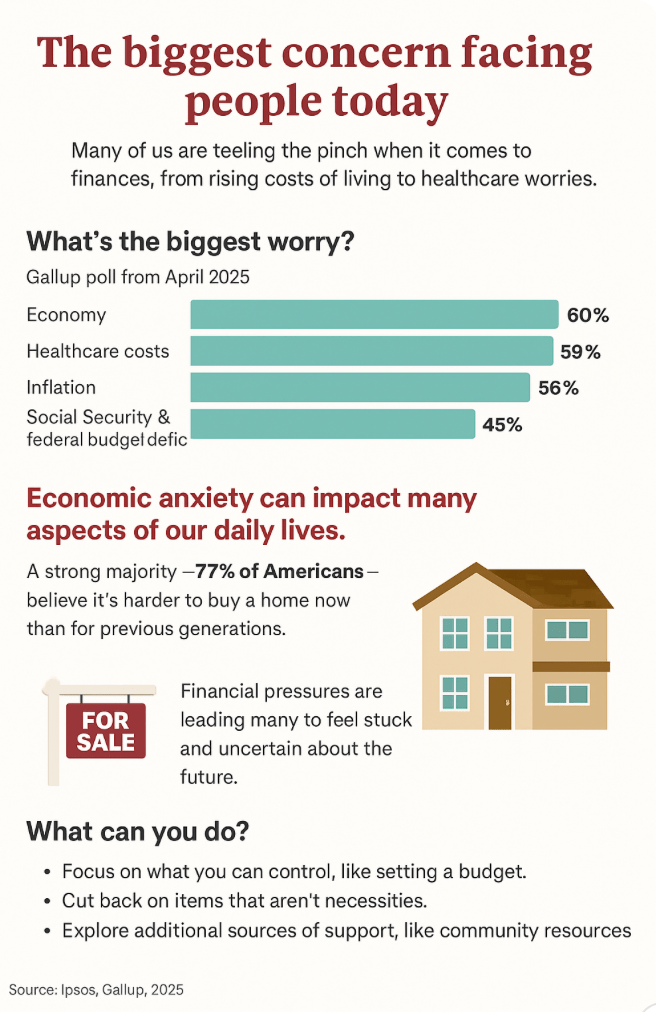
Gallup poll from April 2025 found that:

  • 60% of Americans worry “a great deal” about the economy.
  • 59% lose sleep over healthcare costs.
  • 56% are stressed about inflation.
  • Nearly half worry about Social Security and the federal budget deficit.

Globally, it’s no different. According to Ipsos, the leading concerns include inflation (30%)poverty (29%)unemployment (28%), and corruption (26%).

To make matters feel even heavier, 77% of Americans believe it’s harder to buy a home today. They feel it’s more difficult than it was for past generations. That frustration touches nearly every household—young people trying to buy, older adults trying to downsize, and families squeezed in between.


Staying together through rough times!

This isn’t just about numbers—it’s about people. Rising rent, higher grocery bills, climbing medical costs—each of these chip away at security. Families cut corners, young people delay milestones like marriage or kids, and many retirees wonder if their savings will last.

Economic stress also spills into mental health, relationships, and communities. When you feel like you’re always one paycheck away from disaster, it’s hard to focus on thriving—you’re stuck surviving.


While we can’t solve inflation or rewrite housing policy alone, there are small, powerful steps we can take:

The Mysteries of Financial Security.
  • Focus on control: Create a budget and stick to it. Even small wins matter.
  • Cut back strategically: Trim unnecessary expenses, but give yourself permission to keep the things that bring you joy.
  • Tap into resources: Community groups, food banks, and local organizations often have programs to ease the burden.
  • Stay connected: Talking about financial stress reduces shame. You’re not alone.

The economy, healthcare, inflation—they’re big, intimidating problems. But your response doesn’t have to be. Focus on what you can control. Find support in your community. Remember: sometimes resilience comes not from having more, but from facing less with wisdom, planning, and hope.


By Benjamin GroffMedia© | benandsteve.com | ©2025 

October 10 in History: Key Milestones and Cultural Impact

3–4 minutes

Oct 10th a good day for history
How history can pile up on any day of the year.

How did we arrive at our current state? It is a question a lot of people are asking. It didn’t happen all at once. Getting to where we are, was forever in the making. Before anyone alive today was here. There have been people making decisions, some not so great. Life happens. It is a popular saying for some people. And as you can tell through this date in history. October 10th was a great day for history to be set. It doesn’t explain everything that has happened. But it does give one an idea of how history can pile up on any given day.

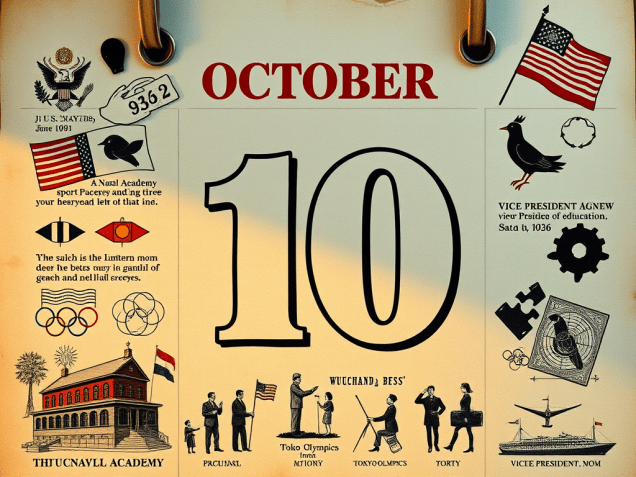
Here’s an evocative image of a calendar marking October 10. It serves as a visual prompt for a day rich in history. This day includes milestone events and global observances.

  1. 1845 – U.S. Naval Academy Founded
    • In Annapolis, Maryland, the Naval School opens with its first class of 50 midshipmen. This event lays the foundation for the modern U.S. Naval Academy.(1)
  2. 1911 – Wuchang Uprising Ignites Revolution This bold move sets the stage for the fall of China’s Qing dynasty. It also leads to the emergence of the Republic of China.(2)
  3. 1935 – ‘Porgy and Bess’ Debuts on Broadway
    • George Gershwin’s groundbreaking opera, featuring an all-Black cast, premieres to widespread acclaim.(3)
  4. 1964 – Tokyo Olympics Start: A Global Broadcast
    • Making history, these Summer Games are the first to be televised live worldwide.(4)
  5. 1973 – Vice-President Agnew’s Resignation
    • Spiro Agnew steps down amid tax evasion charges, a rare and dramatic political moment in U.S. history.(5)

October 10, 1973: A Domino That Changed the Presidency

On October 10, 1973, U.S. Vice President Spiro T. Agnew resigned in disgrace. He pleaded no contest to tax evasion charges. These charges stemmed from a bribery scandal dating back to his time as Maryland’s governor. A sitting Vice President had never stepped down under criminal accusations before. This event sent shockwaves through American politics.

The resignation created an immediate power vacuum. Under the 25th Amendment, passed just six years earlier, President Richard Nixon was capable of nominating a new Vice President. His choice was Michigan Congressman Gerald R. Ford, a steady Republican leader respected across party lines. Congress confirmed him in December 1973, setting in motion a sequence of events no one predicted.

Only months later, the Watergate scandal deepened. Nixon’s credibility unraveled under the weight of investigations into the cover-up of the break-in at the Democratic National Committee headquarters. With impeachment looming, Nixon resigned on August 9, 1974—the first U.S. president to ever do so.

In that instant, Gerald Ford became president. He told the American people in his swearing-in speech: 

“Our long national nightmare is over.” 

Ford’s ascent to the Oval Office was accidental. He became the only person to serve as both Vice President and president without being elected to either office.

Looking back, it’s clear that Agnew’s resignation on October 10 wasn’t just a scandal. It was a turning point in American history. Had he remained Vice President, Agnew—not Ford—would have been next in line when Nixon resigned. The nation, already reeling from Watergate, faced the reality of a president tainted by his own corruption charges. Instead, Ford’s calm, if brief, presidency offered a bridge back to stability.


👉 OCTOBER 10, 1973 stands as proof of how a single resignation reshaped the presidency. It altered the line of succession. It changed the course of American political history.

October 10 is more than a date—it’s a living mosaic of pivotal moments, human emotion, progress, and remembrance. It reflects how history shapes us and how we, in turn, continue writing it.

By Benjamin GroffMedia© | benandsteve.com | ©2025 
Leif Erikson Day: Honoring Exploration and Heritage and World Post Day Both From A Very Long Time Ago – Especially Now!

2–3 minutes

October 9 is more than just a date on the calendar. It’s a day rich with meaning. The day celebrates global communication. It also honors the spirit of exploration. Here are two powerful ways this day reminds us of human connection:


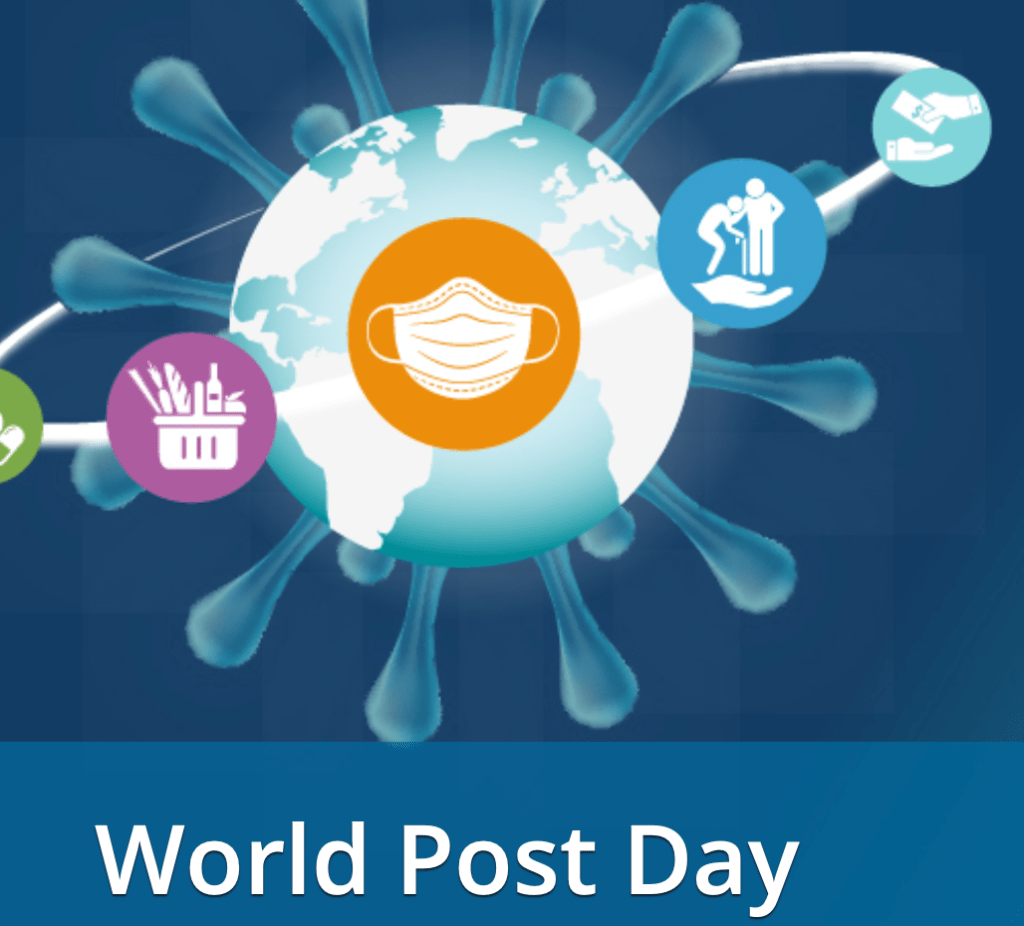
In 1874, the Universal Postal Union (UPU) was founded in Switzerland. This event marked the beginning of the modern era of global communication. Today—World Post Day—we honor the postal service’s vital role in connecting communities, families, and hearts across the globe. Post offices celebrate with stamp exhibits, open houses, and even letter-writing competitions for young people. (1)


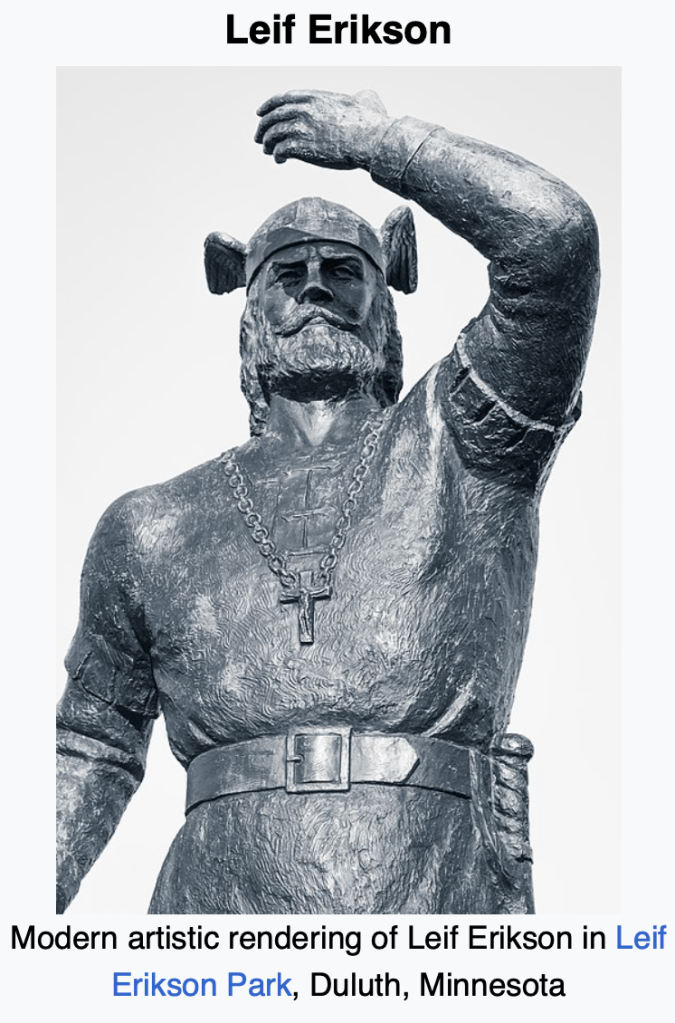
Leif Erikson Day is also celebrated today. This day honors the Norse explorer. He is believed to be the first European to reach North America. Established in the early 20th century and federally recognized in the U.S. in 1935, the day is especially cherished in communities of Nordic heritage. It’s a celebration of bravery, curiosity, and the timeless call of new frontiers.(2)

In 1929, the Wisconsin Legislature passed a bill to make 9 October “Leif Erikson Day” in the state. In the years after, several other states adopted laws to celebrate the day.[81] In 1935, legislation was introduced to the United States Congress requesting federal observance of the day. Before the legislation was passed, it was amended so that the observance would only occur in 1935. [82]  Which it was, after a proclamation that year by President President Franklin D. Roosevelt).[83] In future decades, many attempts to pass legislation were unsuccessful. They sought to have Leif Erikson Day proclaimed annually by the president.[84]Proponents eventually succeeded. In 1964, the Congress authorized and requested the president to proclaim 9 October of each year as “Leif Erikson Day”.[19]In the years since, each president has issued an annual proclamation calling for observance of the day.[85]. (3)


These historic observances brought to mind a personal story I experienced just last weekend:

Visiting the grocery store, I ran into a long-forgotten neighbor—someone I’d only exchanged waves with in passing. We chatted by the fruit stand for several minutes, sharing news, laughter, and even some life advice. When I left, I carried more than groceries. I carried renewed warmth. It was a reminder that connection doesn’t have to be epic to be meaningful.


  • Send a letter or thank-you note—traditional or digital. Let someone know how much they matter.
  • Reach out to someone you haven’t spoken to in a while. A simple chat can rekindle connection.
  • Think about exploration—big or small. Whether learning something new, trying a recipe, or visiting a new place, celebrate the courage that brought you there.

On this October 9, let’s honor our past. Let’s look ahead with open hearts. We will celebrate the small connections that make life rich and whole. Especially if countries around the world are shipping to America again. If not, keep an eye on history. It happened once. It will happen again. Maybe.


By Benjamin GroffMedia© | benandsteve.com | ©2025 

The Healing Impact of Simple Acts: A Hug Can Change Everything

2–3 minutes

The Hug That Changed Everything

Mina at the Farmer's Market
Mina hugging at the Market

It was about five weeks after my back surgery when Steve and I went shopping at our farmers’ market. Normally, Saturdays are our day, but since he had volunteered the day before, we made our visit on Sunday instead. That simple change in schedule turned into something unexpected and heartwarming.

We ended up in the checkout lane of one of our favorite “checkout girls,” as we call her. Mina. She hadn’t seen me since before my surgery, and when she spotted us, her face lit up. She came running from behind the register. She wrapped her arms around both of us and hugged us tight. It felt like a son coming home from college after a long absence. She even insisted we give her our address so she can invite us to a family event she was planning. We’re still not sure what event it will be, but the invitation itself felt like a gift.

That hug reminded me of something simple yet profound. It showed the power of being openly accepting. Let people into your life regardless of who they are, what they look like, or where they come from. In Mina’s hug, I felt seen, valued, and welcomed back into the community.

It brought to mind another story—one shared with me for this blog.

It was 3 a.m. in a quiet hospital corridor when a young musician, newly diagnosed with leukemia, sat in fear and loneliness. The sterile lights and hum of machines gave her no comfort. She cried quietly, believing no one noticed.

But someone did.

A nurse named Ben saw her distress and asked, “Are you okay?” He didn’t prescribe medicine or adjust a machine—he offered a hug. That single gesture, simple as it was, gave her strength. It reminded her she wasn’t just a patient but a person worth comforting. She later said that hug stayed with her long after the treatments, even into remission.


Kindness has a transformative power. It’s impactful whether shown by a nurse in a hospital or a cashier in a farmers’ market. It can change moments and sometimes lives. We often think it has to be grand or costly. The truth is, the simplest acts—a hug, a smile, an invitation—can ripple far beyond what we imagine.

Mina’s hug will not make the news. Nurse Ben’s probably didn’t either. But for the people who received them, they became unforgettable.


  • When was the last time a small act of kindness made a real difference in your day?
  • Have you offered something that felt ordinary to you but has meant the world to someone else?
  • What small kindness can you extend today to be someone’s “Mina” or “Nurse Ben”?

Life is full of struggles and invisible battles, but kindness—especially when it surprises us—has the power to heal. A hug. A smile. An invitation. They seem small, but they carry extraordinary weight.

You never know whose burden you’ll lighten or whose courage you’ll restore. Sometimes the smallest things are the biggest miracles. And without even realizing it, you are the miracle-giver.


By Benjamin GroffMedia© | benandsteve.com | ©2025 

How to Protect Your Future: Build Resilience Now

1–2 minutes

Not long ago, I was reminded of a question I was asked when I was younger. What is the single most important thing an individual can do today to protect themselves for the future?

The answer can vary depending on whether you’re considering finances, health, or personal growth. But if I had to distill it into one single most important thing, it would be –

Invest in Your Own Resilience

1. Health

Take care of your body—exercise, eat well, and emphasize sleep. Without health, everything else becomes harder. Your body is the foundation for your future self.

2. Mind

Keep learning. Read widely, ask questions, and develop skills that won’t become obsolete as the world changes. A flexible, curious mind is your best insurance policy against uncertainty.

3. Finances

Save consistently, even in small amounts. Building a safety net gives you the freedom to make choices later on and protects you when life throws surprises.

4. Relationships

Nurture authentic connections. Family, friends, mentors, and communities are often the strongest form of protection in a crisis.

5. Purpose

Know what matters to you. A sense of meaning provides direction and clarity to decisions when the future feels uncertain.

📌 If I had to choose one phrase to sum it up:

“Build resilience today—through health, knowledge, savings, and relationships—so tomorrow you’re strong enough to face whatever comes. If you keep your body, mind, and soul, they will sustain you.

Avoid The Big Three– Lust, Greed, and Complacency are the three factors that contribute to the destruction of any individual.


By Benjamin GroffMedia© | benandsteve.com | ©2025 

Finding Hope in Forgotten Places

2–3 minutes

I Just Came In to See if Someone Still Cares

The neon beer sign buzzed faintly against the cracked window of Earl’s Place, a bar that had seen better years. The wooden floor creaked under the weight of boots that hadn’t walked through in a long time. Jack pushed the door open and paused. He wasn’t sure why he’d come. Maybe it was habit. Maybe it was the song playing faintly from the jukebox in the corner—one he hadn’t heard in years.

“I just came in to see if someone still cares…”

He let out a dry chuckle.

“Well, ain’t that the truth.”

At a corner table, an older man nursed a black coffee, his hat tipped low. Folks just called him “Red,” though his hair had long gone silver. He raised his head, eyes sharp despite the years.

“Jack,

he said, as if the name had been waiting on his tongue.

“Didn’t think I’d see you again.”

Jack shrugged and slid into the booth.

“Figured I’d find out if anybody remembered me.”

Red studied him for a moment.

“You mean if anybody still cares.”

Jack didn’t answer. His face told enough. Years of disappointments, false starts, and self-inflicted wounds weighed heavy on him. Work had dried up, his family had drifted off, and the last of his friends had stopped calling. He wasn’t looking for pity. Just… something.

“You know,”

Red said slowly,

“folks got it wrong. They think it’s a man’s mistakes that define him. But I’ll tell you something—it’s his fight against those mistakes that shows who he really is.”

Jack stared down at his calloused hands.

“What if you get tired of fighting?”

Red leaned in, voice low but steady.

“Then you rest. But you don’t quit. If you quit that is when you hand yourself over to those demons for good. As long as you’ve got breath, you’ve still got a say in how the story ends.”

The jukebox crackled, replaying the song’s chorus, as if to punctuate the thought. Jack felt a sting behind his eyes he hadn’t let out in years. He cleared his throat.

“Guess I just needed to hear it from someone who wasn’t me.”

Red gave a slow nod.

“That’s why you came. Not for the beer. Not for the music. To find out if someone still cared. And I do. Hell, maybe more folks do than you think. You just stopped listening.”

Jack sat back, the weight in his chest easing, just a little. The bar was still dim. The world outside remained hard. For the first time in a long while, he didn’t feel invisible.

That night, as he stepped out into the cool air, Jack realized something. It wasn’t forgiveness from the world he was after—it was the fight inside himself he had to forgive. And maybe, just maybe, that was enough to start over.

By Benjamin GroffMedia© | benandsteve.com | 2025 

From Hauling Oranges to Inspiring a Movement

2–3 minutes

The Brothers and the Orange Truck

Groff Media2025© BrotherTruckers

Eddie and Carl had always been close, but nothing tied them together like their truck. A massive eighteen-wheeler, shining chrome dulled by road dust, it was both their livelihood and their burden. They’d gone deep into debt to buy it. They hoped to build their hauling business around orange deliveries from the groves in California.

But the payments ate away at every mile they drove.

Even with steady work, the numbers never added up. So they tried to get clever. They began running side jobs—hauling crates of produce, lumber, even furniture—between their orange routes. One drove while the other slept. Their heads were propped against the hard cab window. They woke with stiff necks that seemed to worsen each week. 

“Just a few more years,” 

Carl would mutter. 

“We’ll get ahead.” 

Eddie always nodded, though neither believed it completely.

Then the crisis hit. On a rain-slicked highway outside Phoenix, a sudden shudder ran through the truck. Eddie, at the wheel, felt the steering go slack. He fought the wheel, but the trailer jackknifed, scattering oranges across three lanes of traffic. By some miracle, no one was killed—but the damage was catastrophic. Their load was ruined, the rig torn apart, and the trucking company that contracted them pulled their work instantly.

The brothers sat on the shoulder. They were soaked in the rain. They watched cars crunch over the fruit they had worked so hard to deliver. They thought it was the end.

But in the weeks that followed, something unexpected happened. Photos of the accident—highways littered with smashed oranges, drivers climbing out to help clean up—went viral. 

Reporters picked up the story of the brothers who worked around the clock. Their necks were stiff, and their wallets were thin. They were just trying to get ahead. 

Sympathy poured in. A crowdfunding campaign was launched. And soon, Eddie and Carl weren’t just hauling oranges anymore. They were speaking about small-town grit and about persistence. They talked about what it meant to keep pushing ahead when the load was too heavy.

The truck nearly broke them. The crisis almost ruined them. In losing everything, they discovered something bigger. They found a community that believed in them more than they had ever felt in themselves.


By Benjamin GroffMedia© | benandsteve.com | ©2025 

Riding The Lie Down The Elevator

1–2 minutes

The Lie in the Elevator

It began as nothing more than a joke. A character on television—smug, ridiculous—coasted down an elevator while declaring something so absurd that everyone laughed. It was too silly to be taken seriously, too exaggerated to live beyond the moment.

But no one challenged it. And why would they? It was just a laugh, a one-liner, a small puff of smoke that seemed harmless. Yet smoke drifts. It clings. The joke became a line repeated at dinner tables, then in office chatter, then across social media. What started as comedy grew like a weed, tangled and persistent.

You knew it was a lie. You knew from the very beginning. But saying something meant being the one to ruin the joke, the one to argue when everyone else was smiling. It was easier to let it go. Easier to think, Surely this will fade away.

Except it didn’t. The lie ballooned. It threaded itself into conversations, policies, schools, and pulpits. Suddenly your neighbors were quoting it as if it explained the world. Your family repeated it without hesitation. They did not repeat it because they believed it. They found it easier than fighting for the truth.

And now here you are. Watching as the lie isn’t just smoke anymore—it’s a fire, raging and indiscriminate, swallowing millions in its path. The streets fill with people repeating the words that started as a smirk on an elevator ride. And they look to you, because they trust you. Because they think you see what they see.

But you don’t. You know better.

The question is no longer whether the lie is funny. The question is whether you will stand against it now. It is late, but not too late. Otherwise, silence will make you part of it.

What would you do?


By Benjamin GroffMedia© | benandsteve.com | ©2025
The Secret to Mr. Dink’s Disguise Adventures

2–3 minutes

Mr. Dink and the Secret Agent’s Beard

Mr. Dink had always dreamed of growing a grand, bushy beard. He wanted more than a scruffy patch or stubble. He desired the beard that inspired respect. It was like the beard of a ship’s captain or a wise old philosopher. For years he tried: tonics, oils, even rubbing garlic on his chin (his grandmother’s advice). Nothing worked. At best, he muster a shadow of stubble that made him look perpetually halfway through shaving.

One lazy afternoon, flipping through a magazine, something caught his eye: an ad for “Undercover Agent Supplies.” The list included fake passports, invisible ink, and, most importantly, false facial hair kits. Mr. Dink’s heart skipped. At last, a way to see himself with a beard! He sent in his order, expecting a modest beginner’s kit.

But somewhere in the warehouse, a mistake was made. Instead of the novice set, Mr. Dink received a professional-grade disguise kit—the very same used by secret service agents. When he opened it, the contents dazzled him. There were full beards in every style imaginable. Mustaches curled or drooped. Eyebrows that changed a man’s entire face. There were wigs, glasses, voice changers, even adhesive skin molds.

Mr. Dink began experimenting right away. In one disguise, he was a grizzled lumberjack. In another, a mysterious professor. And when he wore the gray beard and cap, not even his closest neighbors recognized him. To his shock, the disguises worked so well that people began speaking freely around him. He heard what they really thought about Mr. Dink—sometimes kind, sometimes critical, sometimes hilariously wrong.

At first it stung. But as he listened, he realized how little people truly saw of him, how much they judged by appearances. And oddly, this knowledge freed him. He began wearing the disguises not to hide, but to understand. And the beard—the one he never grew—became a symbol of all the lives he slip into.

In the end, Mr. Dink discovered he hadn’t needed a beard to be respected. He needed confidence, curiosity, and a little humor. Still, he kept the kit. There were times when being a secret agent was just too much fun. The allure of having a glorious beard was hard to resist.


By Benjamin GroffMedia© | benandsteve.com | ©2025

Elias: The Man with an Animal Connection – Better Than Dr Doolittle And Wiser Than Dr Livingstone

2–3 minutes

The Listener

Elias never thought of himself as special. He lived in a small cabin at the edge of the woods. There, he worked as a carpenter. In the evenings, he fed the stray cats that wandered in from the trees. He had always felt an odd comfort around animals. He attributed this to his quiet nature and patient hands.

It began with his dog, Rusty. One evening while Elias rubbed behind the old hound’s ears, he thought he heard a whisper. It wasn’t a sound exactly, but a clear impression: “Don’t stop, that feels good.” Elias froze, hand hovering mid-scratch. Rusty nudged him insistently, and the thought returned, playful and warm. At first, Elias dismissed it as his imagination. The barn cat slinked across the porch the next morning. Yet, he felt a sharp pang of hunger that wasn’t his own. He realized something impossible was happening.

At first, the animals spoke only in feelings. They expressed affection when he stroked their fur. There was annoyance if he pulled away too soon, and gratitude when he left out food. But as days passed, the impressions grew sharper, almost like sentences forming inside his mind. One afternoon, Rusty limped. Elias felt a jolt of pain in his knee. This was followed by the plea: “It hurts, please help.” He checked and found a thorn buried deep in the dog’s paw. A sparrow darted to his windowsill and flooded him with urgency: “Nest broken, chicks in danger.” Elias followed its pull and discovered a nest toppled in the wind. He rescued the hatchlings before the foxes found them.

Word seemed to spread, though Elias never understood how. Stray dogs lingered near his cabin. Deer stared at him without fear. Once, even a wounded hawk landed on his porch rail. Each brought with it a silent voice—requests for healing, warnings of predators, messages of danger to others of their kind. With every answered call, Elias felt the bond deepen.

Soon he realized this gift was more than companionship. It was responsibility. He can bridge a gap no one else: soothing fear, preventing harm, guiding creatures toward safety. A flood threatened the lower fields. He was awoken by the frantic voices of burrowing animals. He led the farmer’s family to higher ground just in time. Poachers crept through the forest one autumn night. The owls carried their presence to him in overlapping echoes. He alerted the rangers. Before long, his reputation surpassed even that of Dr. Doolittle, carrying an edge that would have made famed explorer Dr. Livingstone himself take notice.

Elias no longer saw himself as just a man in a cabin. He was part of a living chorus, every feather, paw, and claw connected through an unseen thread. And though it sometimes weighed heavy on him, he carried it gladly. For the first time in history, animals had found someone who truly listened. He had discovered a purpose greater than he’d ever imagined.


By Benjamin GroffMedia© | benandsteve.com | 2025

How Far Is Heaven? A Reflection on Belonging

2–3 minutes

How Far Is Heaven?

The little boy tugged at his father’s sleeve as they walked home one quiet evening. The sky stretched wide above them, painted in soft shades of pink and gold. After a long silence, the boy asked a question that seemed to hang as heavy as the clouds.

“Dad… how far is Heaven?”

The father slowed his steps, looking down at his son. For a moment, he didn’t answer. Then he smiled gently.

“That’s a big question, son. And the truth is—I don’t know.”

The boy’s brow furrowed.

“Don’t know? Isn’t it up there?”

He pointed toward the fading light above the rooftops.

“Well,”

his father began,

“that depends on what you believe Heaven is. For some people, Heaven is a faraway place where souls go when life here is over. For others, Heaven is closer than you think.”

He stooped down so they were eye to eye.

“Heaven can be the feeling of home when everyone’s together at the dinner table. It can be walking into your grandparents’ house and smelling fresh pies cooling on the counter. It can be the peace of sitting in a quiet cabin deep in the woods. There is no noise but the trees and the wind.”

The boy listened, his eyes wide, as though trying to imagine all those Heavens at once.

“You see, son,”

his father continued,

“Heaven doesn’t have just one location. It can mean different things to different people, at different times in their lives. Sometimes it’s a place, sometimes it’s a feeling. And sometimes, people think of it as a reward beyond this life. But no matter what, it’s something we long for—a place where we belong, where everything feels right.”

The boy was quiet, mulling it over. Then he looked back up at the sky.

“So… Heaven isn’t always far away?”

His father smiled, squeezing his hand.

“No, son. Sometimes, Heaven is right here—closer than we ever imagine.”

As they walked the rest of the way home, the boy noticed the laughter of his mother. She was waiting at the door. He smelled the supper drifting through the air. He felt the warmth of his father’s hand in his own. And for that moment, he decided, Heaven was not far at all.


Reflection

How Far Is Heaven?

By Benjamin Groff II

A boy once asked his father, “How far is Heaven?”

The father said, “That depends. For some, it’s beyond the stars where souls go when life is done. For others, it’s much closer. It is found in the smell of pies at Grandma’s. It is in the quiet of a cabin in the woods or the laughter of family at the dinner table.”

He paused and added, “Heaven is different for everyone, son. Sometimes it’s a dream, sometimes a memory, and sometimes it’s right here, in the moments we hold close.”

The boy thought for a while, then smiled. Heaven, he decided, was not so far away after all.


By Benjamin GroffMedia© | benandsteve.com | 2025 

The House That Heals: A Story of Acceptance and Memory

1–2 minutes

The House on Brookfield Lane

Ethan was only a few miles from home when it happened. A sudden dizziness swept over him, the road blurred, and he pulled his car to the side. When the fog lifted, he realized he couldn’t remember who he was, or where he had been going. All he had was a backpack, a half-filled journal, and the overwhelming instinct that he needed to find shelter.

He wandered until he reached Brookfield Lane, where an old house loomed against the evening sky. As a child, Ethan had feared this place. It was where shadows seemed darker, where kids whispered about ghosts and curses. Though he didn’t remember that fear, his body did—a chill ran through him as he stepped onto the porch. Still, with nowhere else to go, he knocked.

An elderly woman opened the door. “Come in, child,” she said softly, as though she had been expecting him. Ethan stayed, helping with small chores, sharing meals, and slowly growing comfortable in the quiet warmth of the house. In the evenings, they talked. She asked about his life. Even though he couldn’t remember, fragments began returning. He recalled his laughter with friends, the smell of campus coffee shops, and the long nights of studying. Then, something deeper surfaced. It was the secret he had held since high school. He thought he’d never say it aloud. He told her he was gay. Instead of fear or judgment, she smiled. “Love,” she said, “is never something to be ashamed of. It’s what keeps this house alive.”

When his memory finally returned, it shocked everyone. Ethan’s parents had always thought of Brookfield Lane as cursed, a place to avoid. They couldn’t understand how the son they worried about had found comfort, truth, and acceptance there. For Ethan, though, the house became more than a place of fear. It became the place where he embraced who he was. He learned that what we fear most sometimes holds the power to set us free.


By Benjamin GroffMedia© | benandsteve.com | 2025 

Eldoria’s Shattered Crown: A Tale of Courage and Redemption

2–3 minutes

The Knight and the Shattered Crown

The kingdom of Eldoria lay beneath a shadow. Once filled with music, trade, and the bright laughter of children, its streets had grown silent. A great dragon, black as midnight and wreathed in fire, had descended from the northern mountains. With its arrival, the crown of the king—the source of Eldoria’s unity and prosperity—was shattered into three pieces. These pieces were scattered across the land. Without the crown, the kingdom faltered, its people divided, its armies weakened.

But hope was not lost.

The Oath

Sir Alaric of Bindenvale was no stranger to hardship. He was a knight forged in battles and tempered by loyalty. He was summoned to the king’s side as illness gnawed at the ruler’s strength. The king’s voice was weak, but his eyes burned with command as he entrusted Alaric with a quest: 

“Find the three shards of the crown. Restore it, and our kingdom will live again.”

Alaric bowed deeply, vowing to see the quest through or perish in its pursuit. Armed with his blade, Lion’s Fang, and guided by his unyielding faith, he rode forth.

The Trials

The first shard was said to lie in the Forest of Whispers, guarded by spirits of the old world. There, Alaric endured visions meant to unseat his courage—faces of fallen comrades, echoes of failures long past. But he pressed on, offering words of honor instead of fear, and the spirits relented, gifting him the shard.

The second shard rested in the Abyss of Cindral, a labyrinth of fire and stone. Alaric fought creatures born of molten rock and endured heat that melts steel. At the abyss’s heart, he found the shard embedded in stone, pried free by his resolve rather than brute strength.

The third shard was the most perilous: it lay in the dragon’s lair itself. Alaric faced the beast, its scales impenetrable and its fire endless. Yet he recalled the oath he had made—not to defeat the dragon, but to save the kingdom. Using wit, he lured the beast into a trap of crumbling stone. This gave him just enough time to seize the final shard.

The Return

Weary but unbroken, Sir Alaric returned to Eldoria. The shards were reforged by the kingdom’s smiths into the Crown of Unity. As it was placed once more upon the king’s brow, light returned to the realm, driving back the dragon’s shadow. The people of Eldoria cheered. They celebrated not merely for their crown. They honored the knight whose courage and humility had bound them together once more.

Sir Alaric never sought glory, only service. Yet in taverns and halls for generations to come, his story was told. It was the story of a knight who saved a kingdom not through conquest. Instead, he saved it through honor, sacrifice, and faith.


By Benjamin GroffMedia© | benandsteve.com | 2025 

The Four Magic Words: A Father’s Legacy

2–3 minutes

Ebom Shoobem Shoobem Shoobem

The four magic words a father passed down to his four children. He told them that anytime they were about to face trouble, they should speak those words. The assistance they required would eventually. But only if they took the necessary action for it to occur. 

The words were only to be used when necessary. They should not be used as a want. Use them during a crisis, more than a wish. And a threat to life, rather than a threat to pride. If they ever abused the use of the words, then their special powers would no longer be available to them. The magic words would only be passed on when they reached the age of 18. They needed to have made plans to leave the family home.

The four children had each left their home by the time the father had reached 55 years of age. He had spent a great deal of his life enjoying his time with each of them. Now, he looked ahead to adventuring into his own life. 

The father’s four children carried the words with them into the wide world. Each one held them differently. One tucked them away like a secret prayer. Another spoke them aloud when fear pressed too heavily. A third doubted them but remembered all the same. The fourth treated them like a compass hidden in the lining of a coat.

In time, each child faced a moment that tested the promise of those words. One found themselves stranded in a snowstorm, far from home. Another stood at the edge of despair after losing nearly everything they had built. A third was cornered by deceit, betrayed by someone they had trusted. And the last stood between danger and an innocent life.

In every trial, the magic words did not summon thunderbolts or winged guardians. Instead, they sharpened courage, opened a hidden door, or drew the right ally to their side. The father had spoken true—the words alone were not enough. But when joined with action, with faith, with that one step ahead, help always came.

Years later, when the father’s hair had silvered and his own journeys were slowing, the children returned to him. Around the fire, they told their stories—each different, but threaded with the same truth. The words had worked. This was not because they carried power of their own. Instead, they reminded each child that strength and salvation arrive only when one dares to act.

The father smiled, warmed by both the fire and the glow in his children’s faces. He whispered, almost to himself, “Ebom Shoobem Shoobem Shoobem.” The four children echoed it back, not as magic, but as memory.

And from then on, they knew—the words were not only for escaping danger. They were meant to be carried ahead to their own children one day. The words served as a charm. They also posed a challenge. Help will come, but only if you rise to meet it.


By Benjamin GroffMedia© | benandsteve.com | 2025 

The Elevator of Life: A Profound Story of Honesty

2–3 minutes

The Whiskey Sea and the Elevators

The man had lived his life in balance—not a saint, not a sinner, but somewhere in between. He had helped when strong. He erred when he was weak. Now, in his elder years, he carried the weight of both. His body ached. His breath came shorter. One night, he sank into a sleep so deep it felt like stepping into another world.

A ship appeared from the darkness. Its hull was blackened with age. It floated on a sea of whiskey. The whiskey shimmered like molten amber under the moonlight. A cigar extended from the deck like a gangplank, smoke curling in lazy ribbons. Hesitant but curious, the man stepped onto the cigar and walked across, balancing himself as if crossing into another reality.

On board, a captain awaited him—tall, weathered, eyes that had seen too much. “I’m here to take you to your next destination,” the captain said, voice low and certain. The man nodded. The ship cut across the whiskey sea. It came to rest before a towering building of glass and brass. Its entrance was lined with golden elevators, each gleaming like judgment itself.

Inside, a sharply dressed man waited in the lobby. His shoes were polished so bright they caught the reflection of the man’s weary face. He gestured toward a chair. “Tell me your life story,” he said.

And so the man spoke. He told of the good—moments of kindness, loyalty, laughter. He confessed to the bad—times of selfishness, anger, and failure. He left nothing out, for what use was there in lying at the end? The suited man listened, not judging, only nodding as though each word was weighed like coin on a scale.

At the end, silence hung heavy. The suited man pressed a single button. The doors of one elevator slid open, glowing with light the man did not quite see. He stepped ahead, heart pounding. Whether the elevator rose or fell, he did not know. But as the doors closed, he understood something profound. The true measure had never been perfection. It was honesty. It was the courage to walk the bridge, board the ship, and face the truth of who he had been.


By Benjamin GroffMedia© | benandsteve.com | 2025