The neon beer sign buzzed faintly against the cracked window of Earl’s Place, a bar that had seen better years. The wooden floor creaked under the weight of boots that hadn’t walked through in a long time. Jack pushed the door open and paused. He wasn’t sure why he’d come. Maybe it was habit. Maybe it was the song playing faintly from the jukebox in the corner—one he hadn’t heard in years.
“I just came in to see if someone still cares…”
He let out a dry chuckle.
“Well, ain’t that the truth.”
At a corner table, an older man nursed a black coffee, his hat tipped low. Folks just called him “Red,” though his hair had long gone silver. He raised his head, eyes sharp despite the years.
“Jack,”
he said, as if the name had been waiting on his tongue.
“Didn’t think I’d see you again.”
Jack shrugged and slid into the booth.
“Figured I’d find out if anybody remembered me.”
Red studied him for a moment.
“You mean if anybody still cares.”
Jack didn’t answer. His face told enough. Years of disappointments, false starts, and self-inflicted wounds weighed heavy on him. Work had dried up, his family had drifted off, and the last of his friends had stopped calling. He wasn’t looking for pity. Just… something.
“You know,”
Red said slowly,
“folks got it wrong. They think it’s a man’s mistakes that define him. But I’ll tell you something—it’s his fight against those mistakes that shows who he really is.”
Jack stared down at his calloused hands.
“What if you get tired of fighting?”
Red leaned in, voice low but steady.
“Then you rest. But you don’t quit. If you quit – that is when you hand yourself over to those demons for good. As long as you’ve got breath, you’ve still got a say in how the story ends.”
The jukebox crackled, replaying the song’s chorus, as if to punctuate the thought. Jack felt a sting behind his eyes he hadn’t let out in years. He cleared his throat.
“Guess I just needed to hear it from someone who wasn’t me.”
Red gave a slow nod.
“That’s why you came. Not for the beer. Not for the music. To find out if someone still cared. And I do. Hell, maybe more folks do than you think. You just stopped listening.”
Jack sat back, the weight in his chest easing, just a little. The bar was still dim. The world outside remained hard. For the first time in a long while, he didn’t feel invisible.
That night, as he stepped out into the cool air, Jack realized something. It wasn’t forgiveness from the world he was after—it was the fight inside himself he had to forgive. And maybe, just maybe, that was enough to start over.
Eddie and Carl had always been close, but nothing tied them together like their truck. A massive eighteen-wheeler, shining chrome dulled by road dust, it was both their livelihood and their burden. They’d gone deep into debt to buy it. They hoped to build their hauling business around orange deliveries from the groves in California.
But the payments ate away at every mile they drove.
Even with steady work, the numbers never added up. So they tried to get clever. They began running side jobs—hauling crates of produce, lumber, even furniture—between their orange routes. One drove while the other slept. Their heads were propped against the hard cab window. They woke with stiff necks that seemed to worsen each week.
“Just a few more years,”
Carl would mutter.
“We’ll get ahead.”
Eddie always nodded, though neither believed it completely.
Then the crisis hit. On a rain-slicked highway outside Phoenix, a sudden shudder ran through the truck. Eddie, at the wheel, felt the steering go slack. He fought the wheel, but the trailer jackknifed, scattering oranges across three lanes of traffic. By some miracle, no one was killed—but the damage was catastrophic. Their load was ruined, the rig torn apart, and the trucking company that contracted them pulled their work instantly.
The brothers sat on the shoulder. They were soaked in the rain. They watched cars crunch over the fruit they had worked so hard to deliver. They thought it was the end.
But in the weeks that followed, something unexpected happened. Photos of the accident—highways littered with smashed oranges, drivers climbing out to help clean up—went viral.
Reporters picked up the story of the brothers who worked around the clock. Their necks were stiff, and their wallets were thin. They were just trying to get ahead.
Sympathy poured in. A crowdfunding campaign was launched. And soon, Eddie and Carl weren’t just hauling oranges anymore. They were speaking about small-town grit and about persistence. They talked about what it meant to keep pushing ahead when the load was too heavy.
The truck nearly broke them. The crisis almost ruined them. In losing everything, they discovered something bigger. They found a community that believed in them more than they had ever felt in themselves.
It began as nothing more than a joke. A character on television—smug, ridiculous—coasted down an elevator while declaring something so absurd that everyone laughed. It was too silly to be taken seriously, too exaggerated to live beyond the moment.
But no one challenged it. And why would they? It was just a laugh, a one-liner, a small puff of smoke that seemed harmless. Yet smoke drifts. It clings. The joke became a line repeated at dinner tables, then in office chatter, then across social media. What started as comedy grew like a weed, tangled and persistent.
You knew it was a lie. You knew from the very beginning. But saying something meant being the one to ruin the joke, the one to argue when everyone else was smiling. It was easier to let it go. Easier to think, Surely this will fade away.
Except it didn’t. The lie ballooned. It threaded itself into conversations, policies, schools, and pulpits. Suddenly your neighbors were quoting it as if it explained the world. Your family repeated it without hesitation. They did not repeat it because they believed it. They found it easier than fighting for the truth.
And now here you are. Watching as the lie isn’t just smoke anymore—it’s a fire, raging and indiscriminate, swallowing millions in its path. The streets fill with people repeating the words that started as a smirk on an elevator ride. And they look to you, because they trust you. Because they think you see what they see.
But you don’t. You know better.
The question is no longer whether the lie is funny. The question is whether you will stand against it now. It is late, but not too late. Otherwise, silence will make you part of it.
Mr. Dink had always dreamed of growing a grand, bushy beard. He wanted more than a scruffy patch or stubble. He desired the beard that inspired respect. It was like the beard of a ship’s captain or a wise old philosopher. For years he tried: tonics, oils, even rubbing garlic on his chin (his grandmother’s advice). Nothing worked. At best, he muster a shadow of stubble that made him look perpetually halfway through shaving.
One lazy afternoon, flipping through a magazine, something caught his eye: an ad for “Undercover Agent Supplies.” The list included fake passports, invisible ink, and, most importantly, false facial hair kits. Mr. Dink’s heart skipped. At last, a way to see himself with a beard! He sent in his order, expecting a modest beginner’s kit.
But somewhere in the warehouse, a mistake was made. Instead of the novice set, Mr. Dink received a professional-grade disguise kit—the very same used by secret service agents. When he opened it, the contents dazzled him. There were full beards in every style imaginable. Mustaches curled or drooped. Eyebrows that changed a man’s entire face. There were wigs, glasses, voice changers, even adhesive skin molds.
Mr. Dink began experimenting right away. In one disguise, he was a grizzled lumberjack. In another, a mysterious professor. And when he wore the gray beard and cap, not even his closest neighbors recognized him. To his shock, the disguises worked so well that people began speaking freely around him. He heard what they really thought about Mr. Dink—sometimes kind, sometimes critical, sometimes hilariously wrong.
At first it stung. But as he listened, he realized how little people truly saw of him, how much they judged by appearances. And oddly, this knowledge freed him. He began wearing the disguises not to hide, but to understand. And the beard—the one he never grew—became a symbol of all the lives he slip into.
In the end, Mr. Dink discovered he hadn’t needed a beard to be respected. He needed confidence, curiosity, and a little humor. Still, he kept the kit. There were times when being a secret agent was just too much fun. The allure of having a glorious beard was hard to resist.
Elias never thought of himself as special. He lived in a small cabin at the edge of the woods. There, he worked as a carpenter. In the evenings, he fed the stray cats that wandered in from the trees. He had always felt an odd comfort around animals. He attributed this to his quiet nature and patient hands.
It began with his dog, Rusty. One evening while Elias rubbed behind the old hound’s ears, he thought he heard a whisper. It wasn’t a sound exactly, but a clear impression: “Don’t stop, that feels good.” Elias froze, hand hovering mid-scratch. Rusty nudged him insistently, and the thought returned, playful and warm. At first, Elias dismissed it as his imagination. The barn cat slinked across the porch the next morning. Yet, he felt a sharp pang of hunger that wasn’t his own. He realized something impossible was happening.
At first, the animals spoke only in feelings. They expressed affection when he stroked their fur. There was annoyance if he pulled away too soon, and gratitude when he left out food. But as days passed, the impressions grew sharper, almost like sentences forming inside his mind. One afternoon, Rusty limped. Elias felt a jolt of pain in his knee. This was followed by the plea: “It hurts, please help.” He checked and found a thorn buried deep in the dog’s paw. A sparrow darted to his windowsill and flooded him with urgency: “Nest broken, chicks in danger.” Elias followed its pull and discovered a nest toppled in the wind. He rescued the hatchlings before the foxes found them.
Word seemed to spread, though Elias never understood how. Stray dogs lingered near his cabin. Deer stared at him without fear. Once, even a wounded hawk landed on his porch rail. Each brought with it a silent voice—requests for healing, warnings of predators, messages of danger to others of their kind. With every answered call, Elias felt the bond deepen.
Soon he realized this gift was more than companionship. It was responsibility. He can bridge a gap no one else: soothing fear, preventing harm, guiding creatures toward safety. A flood threatened the lower fields. He was awoken by the frantic voices of burrowing animals. He led the farmer’s family to higher ground just in time. Poachers crept through the forest one autumn night. The owls carried their presence to him in overlapping echoes. He alerted the rangers. Before long, his reputation surpassed even that of Dr. Doolittle, carrying an edge that would have made famed explorer Dr. Livingstone himself take notice.
Elias no longer saw himself as just a man in a cabin. He was part of a living chorus, every feather, paw, and claw connected through an unseen thread. And though it sometimes weighed heavy on him, he carried it gladly. For the first time in history, animals had found someone who truly listened. He had discovered a purpose greater than he’d ever imagined.
The little boy tugged at his father’s sleeve as they walked home one quiet evening. The sky stretched wide above them, painted in soft shades of pink and gold. After a long silence, the boy asked a question that seemed to hang as heavy as the clouds.
“Dad… how far is Heaven?”
The father slowed his steps, looking down at his son. For a moment, he didn’t answer. Then he smiled gently.
“That’s a big question, son. And the truth is—I don’t know.”
The boy’s brow furrowed.
“Don’t know? Isn’t it up there?”
He pointed toward the fading light above the rooftops.
“Well,”
his father began,
“that depends on what you believe Heaven is. For some people, Heaven is a faraway place where souls go when life here is over. For others, Heaven is closer than you think.”
He stooped down so they were eye to eye.
“Heaven can be the feeling of home when everyone’s together at the dinner table. It can be walking into your grandparents’ house and smelling fresh pies cooling on the counter. It can be the peace of sitting in a quiet cabin deep in the woods. There is no noise but the trees and the wind.”
The boy listened, his eyes wide, as though trying to imagine all those Heavens at once.
“You see, son,”
his father continued,
“Heaven doesn’t have just one location. It can mean different things to different people, at different times in their lives. Sometimes it’s a place, sometimes it’s a feeling. And sometimes, people think of it as a reward beyond this life. But no matter what, it’s something we long for—a place where we belong, where everything feels right.”
The boy was quiet, mulling it over. Then he looked back up at the sky.
“So… Heaven isn’t always far away?”
His father smiled, squeezing his hand.
“No, son. Sometimes, Heaven is right here—closer than we ever imagine.”
As they walked the rest of the way home, the boy noticed the laughter of his mother. She was waiting at the door. He smelled the supper drifting through the air. He felt the warmth of his father’s hand in his own. And for that moment, he decided, Heaven was not far at all.
Reflection
How Far Is Heaven?
By Benjamin Groff II
A boy once asked his father, “How far is Heaven?”
The father said, “That depends. For some, it’s beyond the stars where souls go when life is done. For others, it’s much closer. It is found in the smell of pies at Grandma’s. It is in the quiet of a cabin in the woods or the laughter of family at the dinner table.”
He paused and added, “Heaven is different for everyone, son. Sometimes it’s a dream, sometimes a memory, and sometimes it’s right here, in the moments we hold close.”
The boy thought for a while, then smiled. Heaven, he decided, was not so far away after all.
Ethan was only a few miles from home when it happened. A sudden dizziness swept over him, the road blurred, and he pulled his car to the side. When the fog lifted, he realized he couldn’t remember who he was, or where he had been going. All he had was a backpack, a half-filled journal, and the overwhelming instinct that he needed to find shelter.
He wandered until he reached Brookfield Lane, where an old house loomed against the evening sky. As a child, Ethan had feared this place. It was where shadows seemed darker, where kids whispered about ghosts and curses. Though he didn’t remember that fear, his body did—a chill ran through him as he stepped onto the porch. Still, with nowhere else to go, he knocked.
An elderly woman opened the door. “Come in, child,” she said softly, as though she had been expecting him. Ethan stayed, helping with small chores, sharing meals, and slowly growing comfortable in the quiet warmth of the house. In the evenings, they talked. She asked about his life. Even though he couldn’t remember, fragments began returning. He recalled his laughter with friends, the smell of campus coffee shops, and the long nights of studying. Then, something deeper surfaced. It was the secret he had held since high school. He thought he’d never say it aloud. He told her he was gay. Instead of fear or judgment, she smiled. “Love,” she said, “is never something to be ashamed of. It’s what keeps this house alive.”
When his memory finally returned, it shocked everyone. Ethan’s parents had always thought of Brookfield Lane as cursed, a place to avoid. They couldn’t understand how the son they worried about had found comfort, truth, and acceptance there. For Ethan, though, the house became more than a place of fear. It became the place where he embraced who he was. He learned that what we fear most sometimes holds the power to set us free.
The kingdom of Eldoria lay beneath a shadow. Once filled with music, trade, and the bright laughter of children, its streets had grown silent. A great dragon, black as midnight and wreathed in fire, had descended from the northern mountains. With its arrival, the crown of the king—the source of Eldoria’s unity and prosperity—was shattered into three pieces. These pieces were scattered across the land. Without the crown, the kingdom faltered, its people divided, its armies weakened.
But hope was not lost.
The Oath
Sir Alaric of Bindenvale was no stranger to hardship. He was a knight forged in battles and tempered by loyalty. He was summoned to the king’s side as illness gnawed at the ruler’s strength. The king’s voice was weak, but his eyes burned with command as he entrusted Alaric with a quest:
“Find the three shards of the crown. Restore it, and our kingdom will live again.”
Alaric bowed deeply, vowing to see the quest through or perish in its pursuit. Armed with his blade, Lion’s Fang, and guided by his unyielding faith, he rode forth.
The Trials
The first shard was said to lie in the Forest of Whispers, guarded by spirits of the old world. There, Alaric endured visions meant to unseat his courage—faces of fallen comrades, echoes of failures long past. But he pressed on, offering words of honor instead of fear, and the spirits relented, gifting him the shard.
The second shard rested in the Abyss of Cindral, a labyrinth of fire and stone. Alaric fought creatures born of molten rock and endured heat that melts steel. At the abyss’s heart, he found the shard embedded in stone, pried free by his resolve rather than brute strength.
The third shard was the most perilous: it lay in the dragon’s lair itself. Alaric faced the beast, its scales impenetrable and its fire endless. Yet he recalled the oath he had made—not to defeat the dragon, but to save the kingdom. Using wit, he lured the beast into a trap of crumbling stone. This gave him just enough time to seize the final shard.
The Return
Weary but unbroken, Sir Alaric returned to Eldoria. The shards were reforged by the kingdom’s smiths into the Crown of Unity. As it was placed once more upon the king’s brow, light returned to the realm, driving back the dragon’s shadow. The people of Eldoria cheered. They celebrated not merely for their crown. They honored the knight whose courage and humility had bound them together once more.
Sir Alaric never sought glory, only service. Yet in taverns and halls for generations to come, his story was told. It was the story of a knight who saved a kingdom not through conquest. Instead, he saved it through honor, sacrifice, and faith.
The four magic words a father passed down to his four children. He told them that anytime they were about to face trouble, they should speak those words. The assistance they required would eventually. But only if they took the necessary action for it to occur.
The words were only to be used when necessary. They should not be used as a want. Use them during a crisis, more than a wish. And a threat to life, rather than a threat to pride. If they ever abused the use of the words, then their special powers would no longer be available to them. The magic words would only be passed on when they reached the age of 18. They needed to have made plans to leave the family home.
The four children had each left their home by the time the father had reached 55 years of age. He had spent a great deal of his life enjoying his time with each of them. Now, he looked ahead to adventuring into his own life.
The father’s four children carried the words with them into the wide world. Each one held them differently. One tucked them away like a secret prayer. Another spoke them aloud when fear pressed too heavily. A third doubted them but remembered all the same. The fourth treated them like a compass hidden in the lining of a coat.
In time, each child faced a moment that tested the promise of those words. One found themselves stranded in a snowstorm, far from home. Another stood at the edge of despair after losing nearly everything they had built. A third was cornered by deceit, betrayed by someone they had trusted. And the last stood between danger and an innocent life.
In every trial, the magic words did not summon thunderbolts or winged guardians. Instead, they sharpened courage, opened a hidden door, or drew the right ally to their side. The father had spoken true—the words alone were not enough. But when joined with action, with faith, with that one step ahead, help always came.
Years later, when the father’s hair had silvered and his own journeys were slowing, the children returned to him. Around the fire, they told their stories—each different, but threaded with the same truth. The words had worked. This was not because they carried power of their own. Instead, they reminded each child that strength and salvation arrive only when one dares to act.
The father smiled, warmed by both the fire and the glow in his children’s faces. He whispered, almost to himself, “Ebom Shoobem Shoobem Shoobem.” The four children echoed it back, not as magic, but as memory.
And from then on, they knew—the words were not only for escaping danger. They were meant to be carried ahead to their own children one day. The words served as a charm. They also posed a challenge. Help will come, but only if you rise to meet it.
The man had lived his life in balance—not a saint, not a sinner, but somewhere in between. He had helped when strong. He erred when he was weak. Now, in his elder years, he carried the weight of both. His body ached. His breath came shorter. One night, he sank into a sleep so deep it felt like stepping into another world.
A ship appeared from the darkness. Its hull was blackened with age. It floated on a sea of whiskey. The whiskey shimmered like molten amber under the moonlight. A cigar extended from the deck like a gangplank, smoke curling in lazy ribbons. Hesitant but curious, the man stepped onto the cigar and walked across, balancing himself as if crossing into another reality.
On board, a captain awaited him—tall, weathered, eyes that had seen too much. “I’m here to take you to your next destination,” the captain said, voice low and certain. The man nodded. The ship cut across the whiskey sea. It came to rest before a towering building of glass and brass. Its entrance was lined with golden elevators, each gleaming like judgment itself.
Inside, a sharply dressed man waited in the lobby. His shoes were polished so bright they caught the reflection of the man’s weary face. He gestured toward a chair. “Tell me your life story,” he said.
And so the man spoke. He told of the good—moments of kindness, loyalty, laughter. He confessed to the bad—times of selfishness, anger, and failure. He left nothing out, for what use was there in lying at the end? The suited man listened, not judging, only nodding as though each word was weighed like coin on a scale.
At the end, silence hung heavy. The suited man pressed a single button. The doors of one elevator slid open, glowing with light the man did not quite see. He stepped ahead, heart pounding. Whether the elevator rose or fell, he did not know. But as the doors closed, he understood something profound. The true measure had never been perfection. It was honesty. It was the courage to walk the bridge, board the ship, and face the truth of who he had been.
On the edge of town, near a quiet creek, there’s an old willow tree. Beneath its sweeping branches sits a wooden bench—simple, weather-worn, and unremarkable to anyone passing by. Yet, for the people who live nearby, it has become something more: a gathering place of unexpected kindness.
It started with an elderly woman who came to rest her legs each morning. One day, a teenager walking his dog sat down beside her. They began talking. By the time the boy left, she was smiling in a way her neighbors hadn’t seen in years. The next day, the boy came back—with coffee in hand for her.
Word spread. Soon, others began stopping at the bench. A widower brought extra tomatoes from his garden. A young mom offered homemade muffins. A pair of joggers left fresh flowers tucked into the slats. Strangers became neighbors, and neighbors became friends—all because of an old bench no one ever noticed before.
The willow still stands, and so does the bench. It hasn’t been polished, painted, or rebuilt—it doesn’t need to be. Its gift is not in how it looks. Its gift is in what it holds: conversations, kindness, and the small reminders. Even in a world that feels divided, we can still find each other in the simplest of places.
✨ TheTakeaway: Sometimes hope and connection aren’t found in grand gestures. They aren’t always in perfect plans. Instead, these are found in an ordinary spot where people choose to show up for one another.
In our little town, back-to-school season wasn’t marked by glossy superstore aisles or online orders delivered in cardboard boxes. No, it happened right on Main Street. It was at the drug store tucked neatly between the barber shop and the movie theater.
That drug store was a place all its own. A long soda fountain stretched nearly the length of one wall. It had red-topped stools that spun in slow circles when you climbed onto them. Folks would stop in for a cherry Coke or a vanilla phosphate. The hum of the soda jerk’s mixer became as familiar as the sound of church bells on Sunday morning. On the north end of the store, up near the front window, stood a glass display case. Behind it sat neat stacks of paper bags. Each bag was carefully filled with the exact school supplies a child would need for a given grade.
Every August, families filed in, children buzzing with nervous excitement. You only needed to walk up to the counter. Puff out your chest and tell the lady behind it your grade number. With a kind smile, she’d hand over a brown paper bag with your future sealed inside. The bag contained pencils, crayons, rulers, and erasers. For the younger grades, it included that wide-lined treasure known as the Big Chief Tablet.
Kindergarten through third grade was the golden stretch, when opening that bag felt like Christmas morning in August. We’d tear into the packages of crayons. We tested the sharpness of new pencils. We imagined all the things we’d draw and write. But as the years went on, the thrill wore off. By fourth grade, the magic faded. We realized those paper bags didn’t just hold supplies. They carried us straight back into the dreaded routine of homework. There were also spelling tests and teachers who never gave you quite enough recess.
Still, that ritual mattered. The drug store had a soda fountain fizzing. Its shelves were lined with shiny notebooks. It gave us a sense of belonging. It tied the town together. The barber cut hair next door. The movie theater marquee changed weekly. Parents shepherded kids through one more milestone.
Every bag marked a fresh start, even if we grumbled about it. None of us would have admitted it then. Yet, there was comfort in knowing that behind that glass display case was a little brown sack of sharpened pencils. It was waiting for us every year with brand-new beginnings.
The morning was sunny on the golf course. A group of doctors noticed a team of nurses playing a round a few holes over. One of the doctors cupped his hands and hollered across the fairway:
“Hey! When you walked by the gate, the watchdog said WOOF! WOOF!”
The nurses froze, glaring back. One of them raised her club like a microphone and shouted,
“Oh yeah? When you all walked by the pond, the ducks went QUACK! QUACK!”
The golf course grew quiet. A couple of retirees nearby peeked out of their carts to see what the commotion was. The trash talk had officially begun.
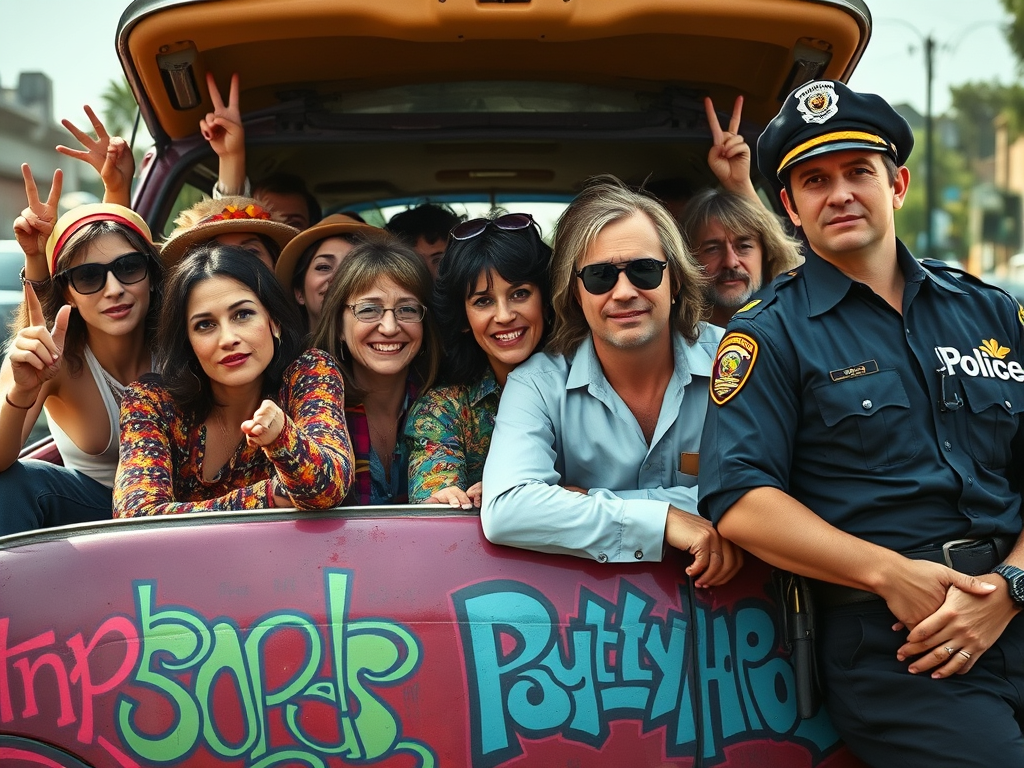
Just then, a police officer—off duty but still in uniform for reasons only he knew—wandered up and added his grievance.
“That’s nothing! I went into a restaurant today and a bunch of teenagers started going OINK! OINK! OINK! at me!”
Back in the day, the slur was meant to show resentment toward police officers by labeling them as pigs. Still, many officers suggested it represented [Pride Integrity and Guts]!
The doctors and nurses nodded sympathetically, but before long they were all laughing. It seemed no profession was safe from ridicule.
“Well,” said one of the nurses, grinning. “If we’re going to keep score, I went to a rock concert last week. The singer stopped mid-song, pointed straight at the crowd, and called us every name in the book. I felt like I’d paid extra for the insults.”
By now, the golfers had abandoned their shots. The officer had parked his cart. The conversation had spiraled into a full-blown “who got called what” competition. Farmers chimed in about “moo” jokes. Teachers griped about “boring” chants. A barber also complained about being called “clip-clop” at the horse races.
The sun dipped lower, balls went unhit, and nobody remembered the score of the game. One thing was certain: the Great Name-Calling Open had been played on that course. Every profession—dog, duck, pig, or otherwise—walked away laughing.
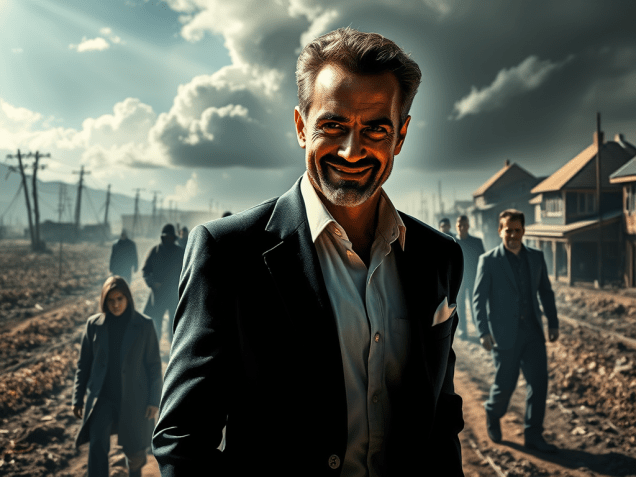
He wasn’t the strongest. He wasn’t the wisest. Yet, he fluttered about with enough charm and bluster. This convinced the people he belonged in power. They laughed at his antics, mistaking arrogance for confidence and confusion for brilliance. By the time they realized he had taken control of their trust, it was too late. He spoke, and they listened.
Whenever things went wrong, he had an answer ready: “It’s a hoax.” Crops failed? A hoax. Jobs vanished? A hoax. Storms swept through the land? A hoax. Even the things they see with their own eyes, he dismissed with a sneer. And they believed him, because it was easier than admitting they had been deceived.
Slowly, their lives unraveled. Families quarreled. Neighbors turned on one another. Their fields lay empty, their towns hollow, their hopes spent. Yet they clung to his words like a drowning man clings to driftwood. In truth, their downfall wasn’t his alone—it was their own. For had they stood up, had they questioned, had they said “enough,” they stopped him. Instead, their faith in his lies became the noose that choked their future.
Moral
A hoax repeated becomes a truth only in the minds of the foolish. To see clearly, one must dare to doubt the man who profits from your blindness.
Everywhere we look, the signs of division are clear. Our conversations have turned into shouting matches, our communities into factions, and even the smallest differences into battle lines. A nation divided can’t stand strong. But there is another path. It does not ask us to agree on everything. Instead, it asks us to bring ourselves into spaces that center peace and shared purpose.
The Power of a Centered Community
When we step away from division and enter a group that is centered and peaceful, something remarkable happens. The noise quiets down. Respect returns to the conversation. We start to see each other not as opponents. Instead, we see each other as fellow human beings. We recognize struggles, joys, and hopes that are more alike than different. These kinds of communities create an environment where empathy can thrive—and empathy is the root of unity.
A Call to Unite Around a Common Cause
Now more than ever, we need to reclaim what unites us. Not political slogans, not party lines—but a shared wish for dignity, fairness, and belonging. The call is simple: bring yourself, with open hands and an open heart, to a group that fosters peace. Choose to engage in a way that builds bridges instead of burning them. Let’s unite around the common cause of healing our communities, so that we can heal our nation.
Closing Thought
Division is loud, but peace is stronger. Every voice that chooses compassion over conflict adds weight to the side of unity. The choice begins with each of us—will we contribute to the noise, or to the harmony?
Long ago, in a village nestled between mountains and rivers, the people lived simple lives. They farmed, fished, and told stories by firelight. The outside world was a distant rumor; progress had passed them by like a river running around a stone.
One day, a man arrived carrying a strange box. He called it a television. The villagers had never heard such a word. When he told them it would show pictures that talked, they laughed and shook their heads. “You are a fool,” they said. “Only dreams speak, not boxes.”
But the man was prepared. He produced a car battery and some wires. With a flicker of static, light and sound filled the screen. A newsreader from a city hundreds of miles away appeared, his voice echoing across the quiet square. The villagers gasped. They fell to their knees. They did not see a machine—they saw a miracle. To them, this man had called forth visions from the air. He was no salesman. He was a god.
They showered him with gifts: food, gold, comforts he had never imagined. Women sang songs to him, elders bowed in reverence, and children followed him as though he were a prophet. The man, intoxicated by their devotion, stopped trying to sell televisions. Why would he? To share the secret would be to share his power. Instead, he worked to suppress progress, warning of curses should other machines arrive. If anyone else brought innovation to the village, his godhood would vanish.
But gods made of flesh will not stand forever. One day, another traveler arrived, carrying a radio. The villagers gathered again. They looked at the newcomer in awe. Their awe was just like when they revered their god of the television. Voices once poured from the box without wires or pictures. In that instant, the spell broke. The villagers realized the man was no deity, only a trickster who had hoarded knowledge.
The gifts stopped. The songs ended. He was left alone with his machine, just another man in a world where progress is not be-dammed forever.
Moral
Power built on ignorance never lasts. Sooner or later, truth finds a way to flicker into the light.
When most people think of phobias, the usual suspects come to mind: spiders, heights, flying, or public speaking. But the human mind is infinitely complex, and so are the fears it produces. Beyond the common anxieties, there are phobias so rare and oddly specific. They almost sound made up, yet they’re very real for those who experience them.
1. Arachibutyrophobia – Fear of Peanut Butter Sticking to the Roof of the Mouth
It sounds funny at first, but this phobia can cause genuine distress. For those who suffer from it, even the thought of peanut butter clinging to their mouth can spark panic. It often extends to sticky foods in general.
2. Nomophobia – Fear of Being Without a Cell Phone
A very modern fear, nomophobia describes the anxiety people feel when separated from their phones. This can occur when the battery dies, the signal drops, or when the device is misplaced. In an age where smartphones are lifelines, this phobia has become increasingly common.
3. Xanthophobia – Fear of the Color Yellow
While most associate yellow with warmth and cheer, some people experience overwhelming anxiety when exposed to the color. It can be triggered by objects, clothing, or even sunshine itself.
4. Papaphobia – Fear of the Pope
Unusual, yes, but historically documented. For those with papaphobia, even images or references to the Pope can cause panic. It’s believed to stem from a mix of religious trauma and authority-based fears.
5. Pogonophobia – Fear of Beards
In some cases, beards are more than just a fashion statement—they’re a trigger. This phobia can cause sufferers to avoid contact with people who have facial hair. This avoidance is rooted in past negative experiences or simply an overwhelming sense of discomfort.
6. Hippopotomonstrosesquipedaliophobia – Fear of Long Words
Ironically named, this phobia is real and involves anxiety around long, complex words. Sufferers feel uneasy in academic or professional settings where such terms are common.
7. Eisoptrophobia – Fear of Mirrors
This phobia goes beyond superstition. For some, looking into mirrors triggers deep anxiety. This anxiety is linked to fears of self-perception. It is also connected to superstition. There is also the uncanny feeling of seeing one’s reflection.
Why These Fears Matter
While some of these phobias sound absurd to outsiders, they are real, debilitating conditions for those who experience them. They highlight the diverse ways our minds process fear. These remind us that what seems laughable to one person feel life-altering to another.
When Weird Laws Get Real: Strange Rules That Actually Snagged People
We’ve all heard about oddball laws that lurk in dusty legal books. Some examples include bans on whistling at canaries or outlawing whale hunting in landlocked states. Most sound like punchlines, not punishments. But here’s the kicker: some of America’s strangest laws have actually been enforced. Real people have faced consequences because of them.
The “No Standing with a Drink” Rule
In Woburn, Massachusetts, city ordinances once required that bar patrons stay seated while drinking. Sounds silly? Local authorities enforced it. The rule came from strict licensing codes. Bar owners had to police their customers. A little too much standing around with a pint trigger fines or even a license suspension. Imagine being told to “sit down or get out” just for holding your beer upright!
Too Drunk for the Bar—Alaska Style
In Alaska, it’s illegal for someone who is intoxicated to stay in a bar. That’s right: you can’t be drunk in a place that exists to serve alcohol. Police actively enforce this law. They have arrested bar patrons. They have even fined bartenders for allowing visibly drunk people to hang around. It’s like a bouncer’s dream written into law, with teeth.
Civil Forfeiture: Losing Property Without Conviction
Here’s one that isn’t just quirky—it’s downright controversial. Civil forfeiture laws let police seize property, like cars or cash, without ever charging the owner with a crime. It’s happened across the country. Regular folks are stripped of thousands of dollars. They have to fight uphill battles in court just to get their property back. Technically legal, often enforced, and more than a little surreal.
Sovereign Citizens vs. Reality
Another group that bumps into odd laws are self-proclaimed “sovereign citizens.” These are individuals who claim they’re not bound by U.S. laws, often flooding courts with bizarre paperwork or filing fake liens on judges and officials. Sounds like a fringe hobby—until the arrests come down. Many sovereign citizens have faced jail time for fraud, impersonation, or obstruction. Turns out the government doesn’t take kindly to “opting out” of its authority.
The Chandler Roundup: Immigration Law Gone Awry
In 1997, Chandler, Arizona, became the stage for one of the strangest law enforcement crackdowns in modern memory. Police, alongside Border Patrol, conducted sweeps that targeted hundreds of people suspected of being undocumented immigrants. The problem? Many of those arrested were actually legal residents or citizens. What was meant to be law enforcement turned into a scandal over racial profiling and civil rights.
Why These Stories Matter
It’s easy to laugh at quirky laws about dogs’ hair or Sunday shopping bans. But when enforced, even the strangest rules can shape lives, communities, and freedoms. These cases remind us that laws, no matter how odd they sound, carry real consequences. Sometimes, the difference between comedy and tragedy is simply whether the rulebook is dusted off.
👉 Takeaway: The next time someone says, “Don’t worry, that law’s never enforced,” you want to think twice.
About the Author:
Benjamin Groff is a former police officer and radio news anchor. He has hosted programs for CNN and ABC News affiliates in Colorado and Wyoming. His career in law enforcement began in 1980 and lasted more than two decades. This gave him first hand insight into the criminal mind and public safety. Moreover, it provided him with an understanding of the human stories that often go untold. His writing draws on these experiences, blending street-level truth with a journalist’s eye for the bigger picture.
No one has been arrested for any of the silly laws on the books in various states around the country. I conducted a deep dive into the internet, exploring the latest trends in innovative computing, AI, and ChatGPT. This suggests that most of these laws include strict provisions for enforcement. Nevertheless, they seem to be purely regulatory. There are no documented arrests or prosecutions for violation.
There are no recorded cases of arrests for purchasing Silly String. Authorities also report no arrests for whistling to Canaries. Moreover, no one has been arrested for allowing someone to eat them. According to officials, these laws and their enforcement are purely regulatory. There are no documented arrests or prosecutions for violations, as I said above.
The law seems to exist mainly to deter careless purchases. It also aims to prevent property damage. It does not primarily encourage criminal enforcement against children. Still, there were more questions, and that led to today’s report.
Fundamental Laws That Still Raise Eyebrows (and Sometimes Cause Trouble)
1. Civil Forfeiture: The Law That Targets Your Stuff
This isn’t a fictional plot device—it’s real and deeply troubling. In the U.S., police can seize property—cars, cash—even without charging the owner with a crime. Imagine your gold crucifix being named as the defendant in a court case e.g., State v. One Gold Crucifix. The government confiscates nearly half a million dollars from travelers at airports. This happens despite no evidence of wrongdoing. These actions are legally permitted. Often, there are no arrests or convictions. Individuals must fight a labyrinthine process to reclaim their property. (1)
2. Sovereign Citizens: When Laws Are “Optional”
The sovereign citizen movement has seen people file frivolous court documents. They use homemade license plates and claim federal laws do not bind them. Authorities take it seriously. Some adherents have been arrested for filing fake liens, orchestrating “common law courts,” and engaging in wire fraud. One such case was deemed a racketeering enterprise, with convictions earning individuals lengthy prison sentences. (2)
3. Silly String Restrictions – Enforced for Safety Over Fun
In Meriden, Connecticut, silly string can’t be sold to anyone under 18 unless a parent is nearby. It must also be stored securely and can’t be sprayed in public spaces. There’s no record of teens being arrested. Retailers can face fines, up to $99, for violations. This means enforcement is real, even if narrowly targeted. (3)
Why These Laws Matter — Beyond the Weirdness
These aren’t costumes—these laws have tangible consequences. Civil forfeiture can strip people of property without due process. Sovereign citizen actions clog courts and sometimes spiral into criminal schemes. And yes—even silly string bans illustrate how enforcement can reach unexpected corners of daily life.
In the deep dive this is what the results showed –
Here’s what I found on whether anyone has ever been arrested for violating these odd laws:
Arrests? Not Really—But Enforcement Exists
Delaware: Selling Dog Hair
Delaware law prohibits selling or bartering dog or cat hair or fur. The penalties can be up to a Class B misdemeanor. There is also a fine around $2,500 (b). There are no documented cases of arrests or prosecutions solely for selling pet hair. This law appears more preventive than actively enforced.
Berkeley, CA: Whistling for Your Canary Before 7 AM
Berkeley’s noise ordinance indeed bars whistling for a lost canary before 7 a.m. (a). Still, there’s no evidence anyone has ever been arrested or cited for doing so. This one remains a quirky legal tidbit more than a prosecutable offense.
Idaho: Cannibalism
Idaho’s law criminalizes cannibalism, even if consensual, with penalties up to 14 years in prison. Despite its notoriety, there are no known prosecutions under this statute (2e).
Meriden, CT: Selling Silly String to Minors
Silly string in Meriden can’t be sold to anyone under 18 unless accompanied by a parent. It must be locked away. Violators can face a fine of up to $99 (1d). Yet there’s no record of minors ever being arrested or cited for this — enforcement applies to retailers, not children.
Baltimore: Scrubbing Sinks
Rumor has it you can’t scrub a sink in Baltimore – one of those strange local restrictions (1c). That said, there’s no credible record of enforcement or arrests, and the law is generally considered obsolete or never serious.
Utah: Whaling Ban
Utah doesn’t have whaling laws because it was a myth. Still, commercial whaling is prohibited federally via the Whaling Convention Act (1a). Enforcement takes place at the federal level. It does not occur at a state-specific level. Clearly, no one was ever arrested for whaling in landlocked Utah.
Bergen County, NJ: Blue Laws
Bergen County maintains strict blue laws. These laws prohibit retail sales of non-essential items on Sundays. The rules are still actively monitored (2a). Retailers have faced legal pushback for Sunday operations. Investigations, like those involving the mega American Dream mall, have occurred. Nonetheless, no high-profile criminal arrests are generally reported(2b)
Summary Table
Law
Arrests Reported?
Enforcement Notes
Delaware dog hair ban
No
Rarely enforced, no cases
Berkeley canary whistle ban
No
No known citations or arrests
Idaho cannibalism law
No
No reported prosecutions
Meriden silly string sale
No
Retailer fines possible; no youth arrests
Baltimore sink scrubbing prohibition
No
Mostly folklore, unenforced
Utah whaling myth
No
Federal whale protections apply nationwide
Bergen County blue laws
About the Author:
Benjamin Groff is a former police officer and radio news anchor. He has hosted programs for CNN and ABC News affiliates in Colorado and Wyoming. His career in law enforcement began in 1980 and lasted more than two decades. This gave him firsthand insight into the criminal mind and public safety. Moreover, it provided him with an understanding of the human stories that often go untold. His writing draws on these experiences, blending street-level truth with a journalist’s eye for the bigger picture.




















 benandsteve.com