Carney had no idea what his neighbor, Ted Ortiz, had done. Ted had recently purchased what everyone around here called a buffalo—though, technically, they were bison. His grand idea? Cross-breeding the massive bull with his cattle. What is there to go wrong?
That morning, Carney had spent hours plowing one of his fields. When he finally finished, he hopped down from his tractor. He stretched his back and pulled out his packed lunch—a simple sandwich and a thermos of water. After a few quick gulps, he was ready to tackle the next field.
He set off across the pasture, taking his usual shortcut. Halfway across, he heard a deep, rumbling snort behind him. At first, he figured it was just one of Ted’s cows and kept walking. But then he noticed something—the snorting sound was moving with him.
Carney turned around and froze.
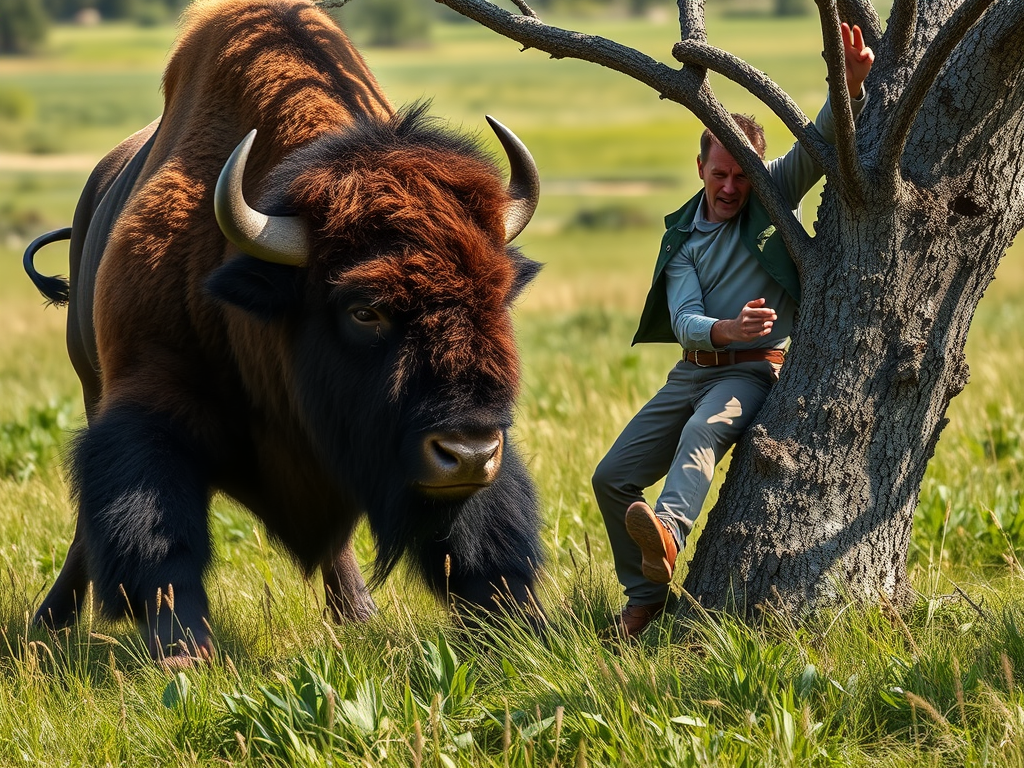
A massive, very annoyed bull bison stood just a few yards away. And Carney had unknowingly interrupted the beast’s afternoon of affection.
The bison pawed the ground, snorted louder, and locked eyes with Carney. He had seconds to decide—fall, play dead, or run like hell. He chose the latter.
Now, Carney was in his fifties. He was not exactly a sprinter, but he moved like an Olympic athlete when faced with a furious bison. His only hope was a nearby tree. He scrambled up, arms and legs flailing, barely reaching a branch as the bull slammed into the trunk below.
Unfortunately, Carney had picked the wrong tree.
It was dead.
The bison rammed it again. The whole thing groaned and wobbled. Carney had two choices—jump and run or ride the tree down like a doomed cowboy in a slow-motion disaster.
So he jumped. And ran.
And here’s where things took an unexpected turn.
Carney swears he made it to the fence, jumped over, and escaped without a scratch. But according to the newspaper, the story went a little differently.
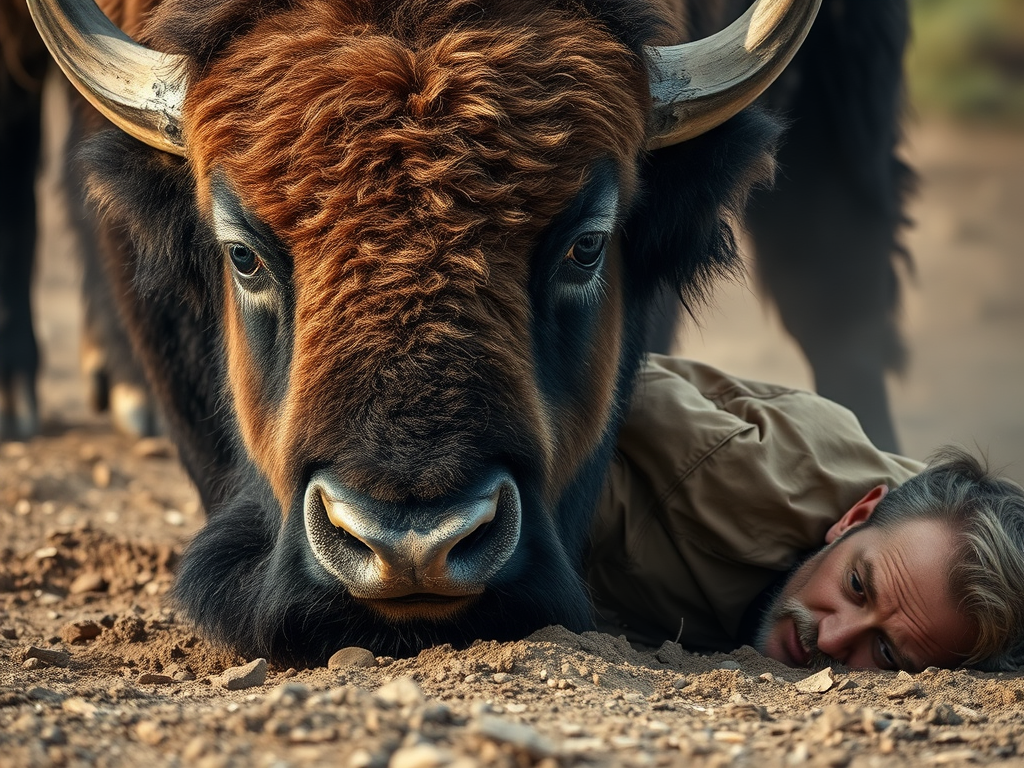
The article claimed that the bison knocked the tree over after Carney hit the ground. Then it turned its fury back on him. Carney had no other options. He did the only thing he thought possible. He dropped to the ground. His face was down in the dirt, and he played dead.
The bison approached, snorting, its heavy breath huffing across Carney’s back. It sniffed his head. His shoulders. His boots. Then, it reached his backside—and suddenly, something changed.
The bull gagged.
Its eyes watered, and its massive body trembled. The mighty beast gave a final snort of disgust. It turned its tail and bolted. The beast ran away as fast as its hooves carried it.
Carney, shaking but victorious, got to his feet and went to the other field. Before plowing, he had to detour into the nearest creek. He needed to scrub off whatever offended that bison so severely.
The newspaper never revealed its source for this version of events, but everyone had their suspicions. Most believed the town barber had something to do with it. After all, most of the town’s best stories started in his shop.
To this day, the Great Bison Incident resurfaces whenever the local men need a good laugh. It is a legendary reminder that sometimes survival comes down to sheer luck, including an unfortunate choice in lunch. It’s a tale that never fails to entertain.
This is a true story. The names have been changed to protect the privacy of those in real life.
Fred and Matilda had been retired for over ten years. They had passed their silver years and were entering their golden years. Both had begun to experience forgetfulness, which was not severe but inconvenient. Fred would forget his wallet when he left home to go to town, or Matilda would forget to put extra tissues in her purse. She needed them to keep her nose wiped due to spring’s seasonal allergy season.
Today, Fred and Matilda left their modest bungalow midcentury home on East Kiowa Street in Corprol, Oklahoma. They traveled thirty miles to see the couple’s son nearby. Due to Fred’s’ safe’ driving, the drive should take just over fifty minutes. He never exceeded fifty miles an hour and usually kept their ’53 Chevrolet Coup topped at 45 miles per hour. Matilda was known for always talking to Fred when he was driving. She never shut up.
Matilda would say to him –––
“Fred, ease to the left, honey; now go back to the right and watch it. Oh no—a car is coming! Now, someone is behind us. Wait, a car is approaching us; I think the guy behind us will pass us.“
Fred and Matilda’s son, Bill, looked at the clock at 1:00 PM. His parents should have been at his place at 11:00 AM. He thought they stopped by their old farm and got lost in time, recalling days when they had lived in the farming area for more than forty years, and everyone knew them. Even so, the people from those days mainly had moved on just as they had. So, it was unusual to find a two-hour distraction without calling him to let him know they would be delayed.
Matilda, a constant verbal navigational bird, was a familiar presence to Fred. Her chatter, a constant companion during their drives, was a source of comfort to him. He had grown accustomed to her voice, finding solace in the sound. Fred’s driving was noticeably worse when she wasn’t there, a testament to her voice’s role in his life.
At 3:00 PM, Bill was beside himself. Where were Fred and Matilda? He called their home to make sure they had not decided to go back home and make the trip another day; the phone just rang and rang. He called Fred’s and Matilda’s cell phones, but no one answered. Bill decided it was time to notify authorities.
Bill called the Ninekakh Police Department, and Officer Nadine Smith answered. Nadine had a strong ‘Okie” accent and a sweet demeanor.
“Ninekakh Police Department, Officer Smith, Who can I help today?”
Bill was stunned by the sweetness and tone of Nadine’s voice and how comfortable she made him feel just by answering the call he had placed. Bill said –––
“Hi, my name is Bill Roth. My parents, Fred and Matilda Roth, are late getting to my home outside Singer; they were driving here from Corprol.”
Knowing Bill was concerned and having met the Roths several times, Nadine knew they were not the type to disappear carelessly. Nadine asked –––
“Bill, honey, how old are your parents? Do you know what they are driving, and do you have any identification to help find them? And what were they doing today?”
Bill was quick to answer –––
My parents are driving a blue 53 Chevrolet Coupe two-door in their mid-70s. They were moving from Corpral to Singer to visit me today. They might have stopped by the old farm to remember old times, but I don’t know. They have never really been this late. Fred always wears grey pants, a white shirt, and a baseball cap, and Matilda usually wears a dress, blue or gray, that extends below the knee, with flat shoes; they both have gray hair. They quit taking photographs twenty years ago because both said it made them look like they were aging to get new pictures taken. They won’t even stand still for someone to get them in a cell phone, selfie-type picture.”
Nadine, taking a deep breath, said –––
Wow! Thank you. That is a whole lot of information, but it isn’t. I will get out and look at the highway between the two towns for them and any side roads. Also, I’ll put this out on the radio for other departments to be on the lookout for. Meanwhile, I suggest you stay where you are if they arrive at your place or call you.
Bill was a nervous wreck. Thoughts raced through his mind of where they could be, what could have happened, and then who could have taken them or could they have been robbed. They could have been running off the road by another driver in a road rage incident. Bill remembered the time he got lost hiking with friends and how much worry it brought his parents. He thought to himself, ‘Payback is hell!’ Exhausted from thinking, Bill yells out loud –
“At least they knew where to start looking for me. I was out hiking, and they had a starting point. Hell, I don’t have a clue where these two old farts are!”
As Nadine was patrolling from the Ninekah Sheriff’s Department heading south toward Corprol, she saw a roadside melon and vegetable sales stand, the type set up to sell from the back of an old truck. She pulled over and talked to the farmer who was selling his goods and asked if he had seen anyone matching the description of Fred and Matilda.
“Yep, I saw them! They were two feisty people. For their age, I was surprised.
Nadine surprised that her luck had paid off, asked the farmer what he meant, and he replied –––
“Well, this young guy was here too, and he had one of those cell phones out taking pictures of him and his girlfriend; it could have been his boyfriend. I couldn’t tell by looking. Anyway, he got a picture of the two older people and told them he hoped he and his sweety could be just like them when they got to be antique. And that is when all hell broke loose. The older adults didn’t want those pictures going anywhere. The young couple took off, and the others left behind them. I never saw two older adults driving like that. They were laying rubber.
Nadine called Bill and told him what the farmer told her, and Bill, in a chilling voice, responded,
“Christ, it’s Christmas 2015 all over again. They did the same thing when someone took a photo of them in the background at a convenience store on Christmas Eve of 2015. We saw them again in February. The family of the people who took the photos still hasn’t seen their people. The last report anyone ever heard was that they were trying to outrun an old couple driving a Blue 53 Chevy Coupe.”
Officer Nadine Smith ––– Adam 851 Clear from report at 1700 hours, 15 miles south of Singer, on Highway 41, clear.
Dispatch to Smith, Affirmative, 1700 hours, KMH 253.
Officer Smith drove to Bill’s home, where she discovered a blue 53 Chevrolet Coupe appearing to stick out of an outbuilding on the property. She went to Bill’s Door and rang the bell. When he answered, she asked if his parents had been in contact. He said they had not.
Smith asked Bill to walk out and look at the car in the shed, which, to his surprise, was his parents’ vehicle.
How did they get past me? And where are they now?
Fred and Matilda, in their enthusiastic but forgetful state, had indeed managed to return home unnoticed. Bill and Officer Smith, both puzzled and concerned, carefully approached the shed where the car was parked. The vehicle, though covered, was the distinctive blue ’53 Chevrolet Coupe.
“Bill, stay behind me,”
Officer Smith instructed, her hand resting on her holster just in case.
“Let’s check inside,” Bill suggested.
Together, they slowly lifted the cover off the car, revealing it entirely. The sight brought a mix of relief and confusion to Bill’s face. The vehicle looked unscathed as if a chauffeur had driven the couple from a leisurely trip.
As they peered into the car, they noticed the keys were still in the ignition, and Matilda’s purse was on the passenger seat. But there were no signs of Fred and Matilda themselves.
“Where could they have gone?“
Bill murmured, more to himself than anyone else.
Officer Smith walked around the shed, looking for any further clues. Just then, they heard a faint, familiar sound coming from the back of the house. Following the noise, they discovered Fred and Matilda sitting on a swing in the backyard, calmly chatting and sipping on lemonade.
“Dad! Mom! What on earth happened?”
Bill exclaimed, running towards them.
Fred looked up, somewhat surprised but pleased to see his son.
“Oh, Bill, there you are! We were wondering when you’d find us.”
With a serene smile, Matilda added,
“We decided to take a little detour to the old farm, but then we thought we’d better come back home when it started getting late. We didn’t want to worry you.”
Torn between relief and frustration, Bill tried to keep his voice steady.
“Why didn’t you call me? We’ve been worried sick!”
Fred scratched his head, looking a bit sheepish.
“Well, son, we did mean to call you, but then Matilda realized she left her phone at home, and mine ran out of battery. By the time we returned, we were so tired we just sat down for a rest.”
Upon witnessing the heartfelt reunion, Officer Smith felt a wave of relief wash over her.
“Mr. and Mrs. Roth, it’s good to see you’re both safe. You gave us quite a scare.”
Ever the apologetic, Matilda said,
“We’re sorry, dear. We didn’t mean to cause any trouble. We’ll be more careful next time.”
Fred nodded in agreement.
“Yes, we’ll charge the phone next time and keep it with us.”
Bill sighed deeply, his worry slowly dissipating.
“Just glad you’re both okay. Next time, please, let’s avoid any more detours.”
Fred chuckled. “Deal. How about we all go inside and have some of Matilda’s famous apple pie? It’s been a long day.”
As they walked back into the house, Bill couldn’t help but feel grateful for the small blessings—his parents were safe, and despite their forgetfulness, they still had their spirited sense of adventure. It was another reminder of how precious these moments were, even when they came with a bit of worry.
Harrison, a young boy with a mop of unruly hair, was not yet old enough to attend the local school with his siblings. For that, he was delighted. The thought of shuffling off to a gloomy classroom with many kids making noise and a teacher telling him what to do was a nightmare. He’d rather be where he was, in his dad’s bustling barber shop, sitting high on the shoeshine chair overlooking the men sitting and waiting for a haircut. His dad, a tall and burly man with a booming voice, had three barber chairs, but he was the lone barber in the shop and wanted to keep it that way. The two extra chairs were great for the overflow customers who missed their chance to sit in one of the chairs against the wall. Harrison, always curious, wanted to ask the group if they were getting haircuts for a Sunday funeral, which usually draws such a crowd to his dad’s shop. But he didn’t dare ask such a question, knowing his father would object.
An older gentleman sitting in one of the chairs waiting for his turn in the barber’s chair spoke up –––
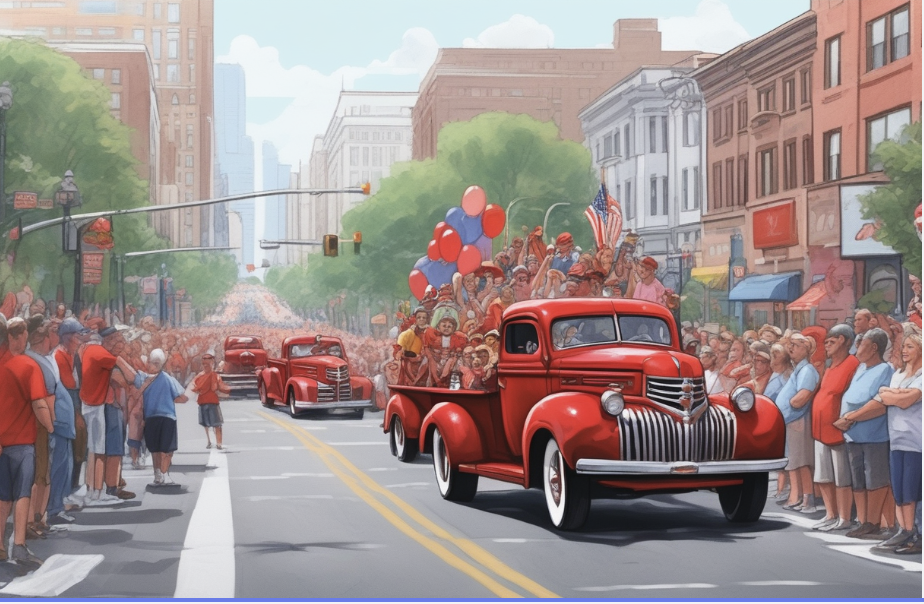
“There’s a grand parade coming down Main Street this afternoon, right in front of your shop, Harrison. The Governor and a Star Baseball Player from the Yankees are expected to ride in the banker’s convertible Cadillac. It’s going to be quite a spectacle,”
the man in the chair shared, his voice filled with anticipation.
Only Harrison’s dad remarked,
“I guess they’ll have to do it without my help; I have hair to cut.”
His dad’s voice was dry, and his humor was just as much, and the tone in which he laid out the line caused those waiting for a haircut to laugh. He pulled the towel from around the neck of the main sitting in his chair, removed the barber cape covering him, shook it out, and said –––
That’ll be a buck! Next!
Harrison watched as the man in the chair, a middle-aged man with a kind smile and a twinkle in his eye, smiled and handed his dad a crisp dollar bill. They exchanged pleasantries, their voices filled with warmth and familiarity, before the man stepped down from the chair, revealing a fresh, neatly trimmed haircut. As the man left the shop, the doorbell jingled behind him, the sound echoing in the empty space.
The following customer shuffled forward, settling into the vacated barber chair. He was a tall, lanky man with a worn-out cowboy hat perched atop his head, his face weathered and etched with lines of a life spent outdoors. Harrison recognized him as Mr. Jenkins, the ranch owner just outside town, a man known for his quiet wisdom and his love for his horses.
“Hey there, Mr. Jenkins,”
Harrison’s dad greeted warmly, draping the striped barber cape around his shoulders.
“What’ll it be today?”
Mr. Jenkins leaned back in the chair, adjusting his hat slightly.
“Well, I reckon I need a trim for the Missus’s birthday dinner tonight. Can’t be looking like a tumbleweed on such an occasion,”
He chuckled.
Harrison grinned from his perch on the shoeshine chair, enjoying the banter between his dad and Mr. Jenkins. As his dad began clipping away at Mr. Jenkins’ hair, the old rancher glanced over at Harrison with a twinkle in his eye.
“You excited about that parade, son?”
he asked, his voice carrying a hint of amusement.
Harrison nodded eagerly.
“Sure am, Mr. Jenkins! I heard the Governor and a Yankees player will be there.”
Mr. Jenkins chuckled, nodding in agreement.
“Yep, quite the spectacle, I reckon. But you know what they say, Harrison, sometimes the best show in town ain’t the one with the fanciest floats. There’s more to this parade than meets the eye,”
Mr. Jenkins said, his eyes twinkling with a hint of mystery. His words hung in the air, leaving Harrison with a sense of intrigue and a thousand questions.
Harrison furrowed his brow, intrigued by Mr. Jenkins’ cryptic comment. Before he could inquire further, his dad finished the haircut, removing the barber cape with a flourish.
“All set, Mr. Jenkins. That’ll be a buck,”
He said with a grin.
Mr. Jenkins handed over the payment with a tip, tipping his hat to Harrison and his dad before heading out the door confidently.
Harrison’s dad turned to him with a smile.
“Well, son, it’s your turn to shine. How about you polish those shoes while I tidy up here?”
Harrison’s heart raced with excitement as he reached for the Polish brush, his mind buzzing with anticipation for the parade and Mr. Jenkins’s mysterious words. He couldn’t help but wonder what the old rancher meant. Was there something more to this parade than just a grand spectacle? Little did he know, this ordinary day in the barbershop would soon become an extraordinary adventure he would never forget.
After Mr. Jenkins left the barber shop, Harrison’s dad glanced at the clock on the wall and realized it was almost time for the parade. With a quick sweep of the broom, he tidied up the shop and then turned to Harrison with a grin.
“Looks like we’ve got a front-row seat, son. Let’s go see what all the fuss is about,”
He said, grabbing his coat from the hook by the door.
Excitedly, Harrison followed his dad outside, his steps quick and light. He joined the growing crowd lining Main Street, his eyes scanning the area for the best view of the parade route. The air was charged with anticipation as people jostled for the best view of the parade route. Harrison’s heart raced with excitement as he tried to catch a glimpse of the Governor and the Yankees player, his eyes darting from one end of the street to the other.
Harrison’s eyes widened with wonder as the first drumbeats echoed in the distance, signaling the parade’s approach. The air was filled with the scent of freshly popped popcorn and cotton candy, and the sound of children’s laughter mingled with the lively tunes played by the marching bands. Colorful floats adorned with balloons and streamers rolled by in a kaleidoscope of colors. Marching bands played lively tunes, their music filling the air. Costumed performers danced along the street, their movements a blur of energy and excitement.
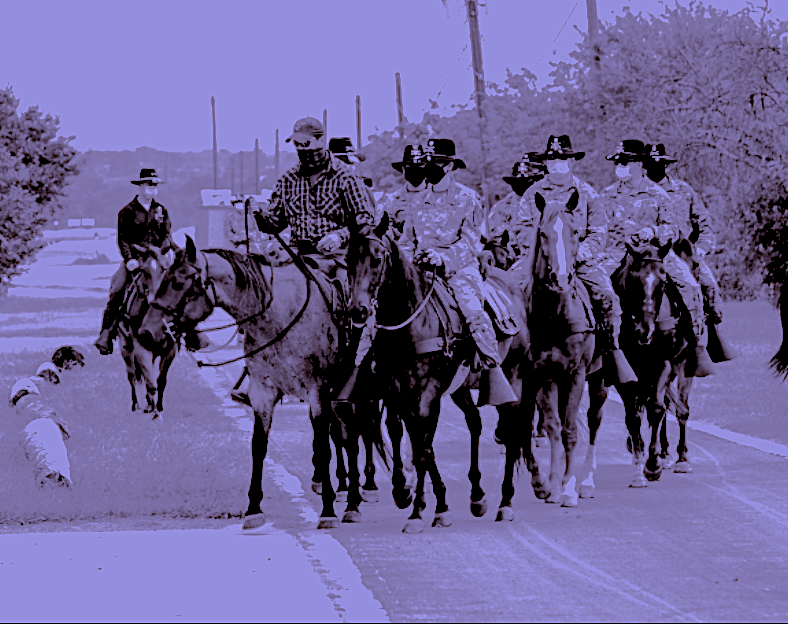
But amidst the fanfare, Harrison noticed something unusual. At the back of the parade, a group of riders on horseback trotted along, their faces obscured by bandanas, their horses sleek and powerful. They were followed by a wagon covered in a tarp, pulled by a team of sturdy horses. The air around them seemed to crackle with an energy different from the rest of the parade, a sense of mystery and intrigue. Harrison couldn’t help but wonder who they were and what they were doing in the parade.
Curiosity piqued, Harrison tugged on his dad’s sleeve.
Unable to suppress his curiosity, Harrison tugged on his dad’s sleeve, his eyes fixed on the enigmatic riders. His voice was filled with a mix of excitement and intrigue as he asked his dad about them.
He asked, pointing to the mysterious riders.
His dad frowned, scanning the procession.
“I’m not sure, son. They don’t look like part of the official parade.”
Just as the parade climaxed, a sudden turn of events caught Harrison’s attention. A wagon, covered in a mysterious tarp, veered off the parade route, rumbling down a side street.
Instinctively, Harrison’s dad grabbed his hand, his expression grave.
With a sense of foreboding, Harrison’s dad grabbed his hand, his expression grave.
“Stay close, Harrison. Something doesn’t seem right here,”
he said, his voice filled with concern.
With a sense of foreboding, Harrison and his dad followed the wagon, their footsteps echoing through the side streets and alleyways. The sound of the parade grew fainter with each turn, replaced by the distant hum of the town. Eventually, they emerged into a deserted square on the outskirts of town, where the wagon had come to a stop.
As they approached cautiously, they heard muffled voices and metal clinking. Peering around a corner, Harrison’s heart raced as he witnessed a group of masked figures unloading crates from the wagon, their faces twisted in sinister determination.
Harrison realized that the mysterious riders were thieves and were about to commit a robbery right under the town’s nose.
Harrison’s dad pulled him back into the shadows without hesitation, his eyes darting urgently.
“We need to get help, son. Stay here and stay quiet. I’ll be back as soon as I can.”
Harrison’s mind raced with fear and adrenaline as his dad sprinted into the night. Alone in the darkness, he knew he was the only one who could stop the thieves and save his town from disaster.
Summoning his courage, Harrison crept closer to the scene, his heart pounding. Little did he know, this chance encounter at his dad’s barbershop would thrust him into the heart of an adventure filled with danger, bravery, and the true meaning of heroism.
As Harrison watched the thieves unload their crates in the deserted square, he knew he had to act fast. With a steely resolve, he devised a plan to thwart the robbery and protect his town.
Silently, Harrison slipped through the shadows, keeping his movements as quiet as possible. Drawing upon the skills he had learned from listening to his dad’s stories of bravery and courage, he maneuvered closer to the thieves, carefully avoiding detection.
Harrison quickly glanced around the square and spotted a stack of crates nearby. Acting swiftly, he grabbed a handful of pebbles from the ground and began to hurl them toward the crates, creating a diversion.
The thieves, startled by the sudden noise, turned towards the sound, their hands instinctively reaching for their weapons. Seizing the opportunity, Harrison sprang into action, darting towards the wagon with lightning speed.
With a burst of adrenaline, Harrison leaped onto the back of the wagon, his heart pounding in his chest. Ignoring the shouts of the thieves behind him, he frantically searched for something to use as a weapon.
His eyes fell upon a coil of rope lying in the corner of the wagon. Without hesitation, Harrison grabbed the rope and began to lash out at the thieves, swinging it with all his might.
Caught off guard by Harrison’s unexpected attack, the thieves stumbled backward, their faces contorted with shock and surprise. Sensing their momentary confusion, Harrison seized the opportunity to disarm them, knocking their weapons out of their hands with well-aimed blows.
As the tide of the battle turned in his favor, Harrison felt a surge of triumph and adrenaline coursing through his veins. With a determined resolve, he fought with all his strength, refusing to back down in the face of danger.
In the end, it was Harrison’s bravery and quick thinking that saved the day. With the help of his dad and the townspeople, he apprehended the thieves and prevented the robbery from taking place.
As he stood victorious in the square, surrounded by cheers and applause from the grateful townsfolk, Harrison knew that he had discovered the true meaning of heroism. And though his adventure had been filled with danger and peril, it had also taught him the importance of courage, resilience, and the power of standing up for what is right.






 benandsteve.com