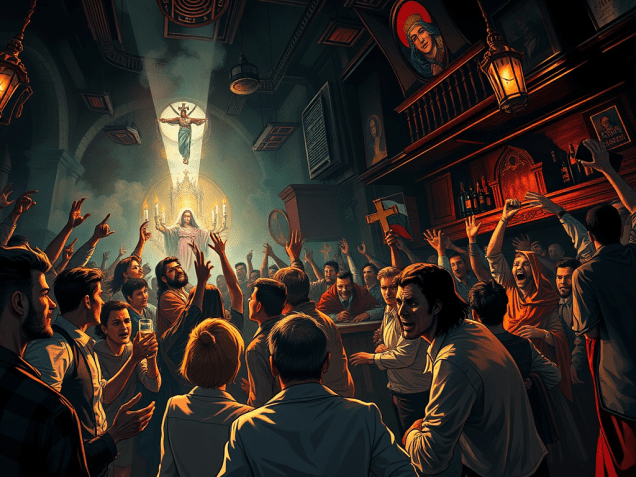
🐕‍🕯️ The Legend of the Kyrkogrim — Sweden’s Black Guardian of the Church

By Benjamin H. Groff II | Truth Endures | The Story Teller
2–3 minutes

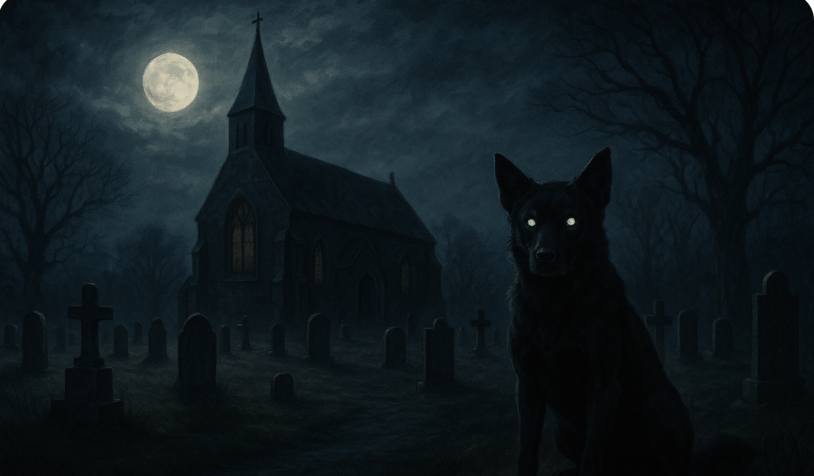
Tales are whispered across the cold stones of Scandinavia. They speak of an “evil dog” that once haunted the churches of Sweden. But those who truly know the legend say the creature was never evil at all. It was the kyrkogrim — a guardian spirit born not of sin, but of sacrifice.

A Dog Buried Beneath Holy Ground

In the centuries when churches first rose across the Nordic lands, builders followed a chilling custom. To guarantee their new sanctuaries would stand against evil, they buried a living creature beneath the cornerstone. This creature was often a black dog. Its final, terrified breath was thought to bind its soul to the ground, forming a spiritual sentinel.

That spirit became the kyrkogrim: the Church Grim. It was always black as midnight. It was condemned to patrol the churchyard. Its duty was to watch over the graves and keep the devil himself from defiling holy ground.

The Protector and the Omen

By day, the kyrkogrim was invisible. But when night fell and candles flickered low, villagers spoke of seeing the great black hound. It was pacing near the church doors. Its eyes glowed like coals in the dark. It was said to snarl at grave robbers and frighten off witches. Yet, for all its protection, it carried a darker burden.

To see the kyrkogrim was to get a warning. The watcher’s death, it was said, would soon follow. The same spirit shielded the church from evil. It also bore the scent of the grave. This grim paradox kept villagers both thankful and fearful of its presence.

The First Soul of the Graveyard

Long before Christianity spread through Scandinavia, ancient peoples offered animal sacrifices to bless new structures and sacred sites. Early Christian builders, inheriting these customs, altered them to fit their faith. The dog buried beneath the first church became “the first soul” in the graveyard. This ensured that no human would have to linger eternally as the church’s guardian.

Thus, the kyrkogrim was not a monster. Instead, it was a martyr. It symbolized the uneasy blend of pagan ritual and Christian devotion. It was the bridge between two worlds: the old gods of the land and the new God of the heavens.

Echoes Through Time

Even today, stories of the kyrkogrim persist in Swedish folklore. Some say the black dog still walks among the headstones on stormy nights, especially near churches centuries old. Others claim that every church has its own silent watcher — unseen, but always there.

What began as a superstition has evolved into something deeper. It reflects the human need to guard what we hold sacred. The kyrkogrim, once buried in darkness, lives on in story — a faithful spirit that never abandoned its post.


By Benjamin GroffMedia© | benandsteve.com | ©2025 

The Sunday When Everyone Raised Hell

3–5 minutes

“The Sunday When Everyone Raised Hell”
July 13th,1982

They say the weather talks—but on Sunday, July 13th, it screamed. It moaned, cracked, hissed, and growled. And the whole town of Split Rock hollered right back, like a pack of sinners on Judgment Day.

That Sunday began not in peace, but in conflict. Beer drinkers stumbled out of back porches. Whiskey drinkers followed, squinting into a sky. The sky couldn’t decide between fire or frost. Bible thumpers buttoned up their Sunday best only to find it soaked in sweat—or stiff with ice.

Normally, these folks would be separated by buildings, beliefs, and a healthy dose of silence. But not this time. The Earth tilted at just the wrong angle that morning. It mixed them all together—like oil and water in a cracked jar. Something had to give.


It started at sunrise.

Reverend Dellman, god-fearing and mild-mannered, stepped out with his usual coffee and a copy of The Daily Hymnal. He took one look at his back garden and nearly dropped both coffee and songbook.

“Merciful Lord!”

cried, pointing at the silver glint of frost on his tomatoes.

“It’s July! I rebuke thee!”

By mid-morning, the farmers were in full-blown panic mode. It was cold—then suddenly sweltering. Then cold again. Pete Hargis’ chickens laid hard-boiled eggs, and the pigs were either sunburnt or shivering. Mabel over at the diner attempted to fry bacon on the sidewalk. By 10:03, it had flash-frozen solid. The sizzle was replaced by the crack of ice.

Inside the café, the thermostat spun like a roulette wheel. People gave up trying to adjust. Some came out in denim shorts and fur coats. Others in long johns with flip-flops. A few just wrapped themselves in quilts and wandered the streets like dusty prophets.

At noon, the town square transformed into a chaos carnival. The mayor—Bert Franks, known for his enthusiasm and poor timing—grabbed a megaphone and tried to declare order.

“Citizens! Let us embrace the unexpected! I hereby declare this—”

THWACK!

He was cut off by a slushball to the forehead. Then a flying hot dog bun. And then, mysteriously, a snow shovel.

The townspeople laughed, shouted, moaned, and argued. It wasn’t long before someone pulled out a banjo and another hauled out a cooler. The chaos, like the temperature, escalated fast.


At 2:07 p.m., the sky went black—but not from clouds.

Steam fog rolled in so thick it swallowed up everything past arm’s length. Lightning cracked in one corner. A rainbow arched over the feed store. The wind howled in two directions at once. Cows began to moo in protest—one poor soul spontaneously delivered a churned pat of butter. Children screamed. Not in fear, but in delight. Adults followed suit, except their screams were more… existential.

Dogs barked furiously at the sky. One climbed halfway up a tree before realizing dogs weren’t built for altitude.


Then came Miss Lydia.

Quiet librarian. Never cursed. Never shouted. Never late with a book return. That day she marched down Main Street like a thundercloud in sneakers. Her outfit included a pair of galoshes. She wore a tank top that read “Don’t Test Me.” A neon scarf completed the look. These elements only added to the sense that judgment had arrived.

“THIS IS NONSENSE!” she bellowed. “I WANT A HOT-DAMN GOD DAMN-IT!”

The town gasped.

She wasn’t talking about temperature.

She wanted schnapps. On a Sunday.

Bart, who ran The Dusty Jug Saloon, saw an opportunity. He rolled a brand-new bottle of Hot Damn Schnapps down the sidewalk toward her like it was the holy grail. She caught it, popped the cap, took a long pull—and offered it to the goat tied outside the courthouse. The goat accepted.

By then, no one knew if the town had gone to hell or was simply passing through it.


At sunset, the weather made its final move—brutal heat. A wall of humidity as thick as gravy. People peeled off layers and sweated out their differences on the courthouse lawn. A Bluetooth speaker started playing “Ring of Fire.”

No one stopped it.

A spontaneous conga line formed. The sheriff—usually stiff as a shovel handle—joined in, hat and all. No one judged. Everyone was too dizzy from heatstroke or schnapps.


That night, a sudden cool breeze swept in. The stars blinked into view. The town sat still for the first time all day.

On porches. On sidewalks. Some just lay on the grass, sipping iced tea and fanning themselves with church bulletins.

“It was the damnedest Sunday we ever had,” someone whispered.

And nobody disagreed.


From that Sunday on, every July 13th in Split Rock became Raise Hell for the Weather Day. No matter the forecast, folks gathered to scream at the sky, pass a bottle, and laugh at the madness.

Because when nature throws a tantrum, the people of Split Rock know exactly what to do:

Yell right backYell right back!

We Shall Come Rejoicing Marrying Only The He’s And The She’s

By Benjamin GroffMedia© | benandsteve.com | 2025 Truth Endures©

1–2 minutes

The Baptists are at it again. They are raising a protest over who should be allowed to marry. It is as though they alone have the final word.
Yet, let us be clear: They are opposing who can walk into a county or state office. They do not want everyone to ask for a marriage license or enter into a legally recognized civil contract. That is not a religious rite. It is a legal agreement—filed, signed, and validated by the state. What the Baptists are trying to do is assert control over who can enter into that civil contract. Moreover, that is where their argument starts to fall apart.


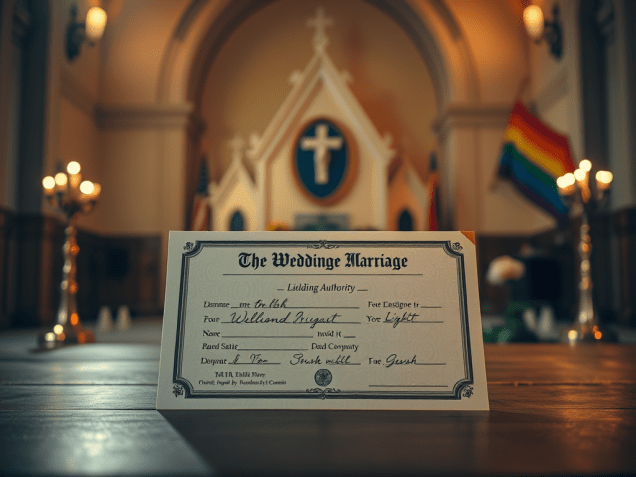
One can understand a church’s wish to define marriage for its faith tradition. For example, it only performs holy matrimony for male-female couples. That is their theological prerogative. Furthermore, the LGBTQI+ community is better served by choosing faith institutions that embrace and affirm their unions. Those places do exist. They conduct beautiful, sacred ceremonies filled with love and meaning.


The Baptists alleged to be upset over same-sex couples marrying are not fighting for “Holy Sanctioned” marriage. Their effort is a thinly veiled effort to legislate bias. They aim to stir up fear and rally support for political agendas. When the current battle over trans rights no longer generates the same heat, they will seek another issue. This will be the next fire they try to stoke. It will be another wedge to deepen divisions. They will build up the offering plate and feed the partisan machine.


Trying to impose a ceremony on a church that fundamentally rejects it leads to resentment. Such an action only reinforces division. It is counterproductive. The real problem arises when religious institutions try to dictate who can access civil marriage through the state. That is not about faith. That is about politics, prejudice, and, frankly, power.

The Sunday School President – THAT THE RELIGIOUS RIGHT WASTED AND IGNORED.

Groff Media 2024© Truth Endures IMDbPro

Presented by benandsteve.com By: Benjamin Groff II©

2–3 minutes

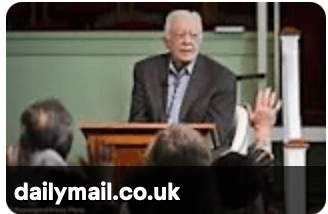
A warm Sunday morning in Plains, Georgia seemed tailor-made for reflection. At the Maranatha Baptist Church, a small congregation gathered in quiet anticipation. This wasn’t an ordinary Sunday service—it was one led by Jimmy Carter, the 39th President of the United States.

Even decades after leaving the White House, Carter stayed true to the values that shaped his life. These values were faith, humility, and service. Carter taught Sunday School to anyone who wanted to listen every Sunday that he was capable. Visitors from all over the world made the pilgrimage to Plains. Some traveled thousands of miles to hear wisdom. This wisdom was not shared in a grand hall. Instead, it was delivered in a modest church that held no more than a couple hundred people.

Jimmy Carter, then in his 90s, shuffled to the front of the sanctuary, a quiet determination in his step. He greeted the crowd with a humble smile, his voice steady and welcoming. His lesson was simple yet profound: loving your neighbor, no matter their background or beliefs.

“When Jesus said to love your neighbor,”

Carter explained, his blue eyes twinkling,

“He didn’t put any conditions on it. He didn’t say only if they look like you or vote like you. He meant everyone.”

The audience was a mix of locals and travelers. They hung on his every word. Their hearts and minds were stirred by the profound simplicity of his message. The room was filled with a palpable sense of awe. This was not due to the titles Carter once held. Instead, it was because of his unwavering commitment to living the values he taught.

When the lesson ended, Carter didn’t rush off. Instead, he stayed to shake hands, take photos, and share stories. These personal moments hold the most significant importance for him. He listened as much as he spoke. This is especially meaningful for a man who had once navigated the complexities of global politics.

One visitor, a young man from Chicago, nervously approached.

“President Carter, what made you keep teaching Sunday School after everything you’ve accomplished?”

Carter smiled warmly.

“I’ve been a farmer, a naval officer, a governor, and a president. But teaching Sunday School reminds me of who I truly am—a servant of God. Titles come and go, but the love we share with others lasts forever.”

That was Jimmy Carter. He believed that service didn’t end with a term in office. He thought that humility wasn’t weakness. Even the simplest acts of kindness can ripple through the world. For Carter, life’s most outstanding achievement wasn’t in power or prestige. It was in the quiet and steady work of lifting others up. He demonstrated this belief through his work with Habitat for Humanity. He also promoted peace and human rights. Additionally, he was committed to public service long after his presidency.

As the church emptied, a sense of peace lingered in the air. This was a testament to the legacy of a man who lived his faith with every breath.

Unpacking ‘Make America Great Again’: What MAGA Overlooks in Its Vision of the Past

Presented by benandsteve.com By: Benjamin Groff II©

Groff Media 2024© Truth Endures IMDbPro


The fall of 2024 found a vibrant small community town hall filled with locals from every walk of life. The walls became lined with a diverse array of familiar faces of the neighborhood—retired teachers, young activists, military veterans, and longtime friends who had lived through decades of change, some of it hard-won, others bittersweet. On the stage, with a sign reading “Let’s Talk About Greatness,” stood a panel, each holding their idea of what that greatness looked like.

Jared, a man in his late sixties with a MAGA hat perched atop his head, leaned forward as he spoke, –––

“I want my kids and grandkids to grow up in a country that feels strong, proud, and united—like it was back then. We all knew our neighbors. Families were close-knit. There was a sense of American unity.”

Dolores, a retired history teacher, nodded beside him. But as the crowd listened, some exchanged looks. –––

“So, Jared, I get what you’re saying,” a young local journalist interrupted Lena. But when we say ‘back then,’ do we mean the same thing?”

Jared paused, looking thoughtful, as Dolores took the microphone. –––

“We tend to remember the good and forget the rest,” she said gently. I remember growing up in the fifties and sixties. It was stable and ideal for some of us, but not everyone. This ‘great’ past we want to go back to meant certain people couldn’t vote. Others had to hide who they loved. And women—our dreams were seen as distractions to a family.”

There was a hush as Dolores’s words hung in the air.

“I don’t think Jared meant that,”

––– came a soft voice from the audience. It was Naomi, a single mother and community organizer.

“But when we say we want to ‘Make America Great Again,’ we have to ask—for whom? The history we’re returning to was not the same experience for everyone.”

The community members exchanged glances. Jared turned back to the crowd. –––

“I respect what you’re saying, Naomi,”

he replied, genuinely thoughtfully. –––

“When I say ‘greatness,’ I’m not talking about racism or inequality. I’m talking about hard work, pride, patriotism—things that feel like they’re slipping away.”

Naomi nodded understanding, fostering a sense of mutual respect and value for each other’s perspectives, highlighting the importance of open and respectful dialogue in the community.

“But the word again implies that we want to go backward,”

––– Lena pointed out.

“And, for me, that’s concerning. I love this country and respect what’s gone into making it better. I mean, we have interracial marriage, legal protections for LGBTQ+ people, voting rights for everyone.”

––– Lena paused, looking at Jared.

“To me, that’s American greatness—now.”

As the meeting unfolded, the debate deepened. Various members shared stories of progress and hardships. Kayla, a small business owner, spoke about her pride in balancing work and motherhood.

“When I hear traditional values, I think of something different than my grandmother might have,”

––– she said.

“My values include family, hard work, women’s rights, and equal opportunities.”

Another voice said,

“Look, I served in the military, and I believe in protecting this country,”

––– said Tom, a retired Marine and a man with a thick gray beard.

“I fought for an America that moves forward and doesn’t leave anyone behind. ‘Greatness’ is complex—strong enough to protect everyone’s rights.”

The meeting wrapped up with the group realizing that “greatness” was many things, each person’s version holding personal meaning. Dolores took the microphone one last time:

“Maybe we can remember this—our vision of a truly great America embraces both the good of the past and the advancements we’ve made. To build greatness, we don’t go backward. We keep moving and evolving, ensuring that each generation has the opportunity to contribute to a better America, instilling a sense of hope and optimism in the audience for the future.”

The room echoed with nods of agreement, and as the townspeople filed out, they carried forward a renewed understanding: that the road to greatness was not paved with nostalgia alone but with a willingness to grow beyond it.

THE GOOD OLE DAYS – When Liquor And Smoking Was Looked Down On In The Church!

A Report By: Benjamin Groff© Groff Media 2024© Truth Endures

Back When It Was Wrong to Drink Alcohol if You Attended Church Regularly**

There was a time in America when attending church wasn’t just a Sunday ritual—it was a statement about your character and standing in the community. The church was not just a place of worship, but a social hub, a moral compass, and a powerful institution that dictated the norms of the society. If you were a regular churchgoer, there were unspoken rules about living outside church walls. Drinking alcohol or smoking cigarettes were two vices that could quickly bring judgment upon you, even if they were as commonplace as breathing for others.

In small towns, everyone knew each other, and word traveled fast. It wasn’t uncommon for whispers to start over something as innocent as being seen at a local diner that served alcohol. If you planned to go out on a Saturday night, you’d carefully choose your venue. Establishments that served soft drinks and burgers were safe zones. But heaven forbid you step into a place with a liquor license, even if you ordered only iced tea. The fear of being seen holding a bottle or sitting too close to someone who did would make you check the room every few minutes, scanning for familiar faces.

If someone from the church spotted you and word got back, there would be consequences. Churchgoers who believed themselves to be the guardians of morality would meet in hushed tones after Sunday service. By the following week, it wasn’t just an isolated incident but a full-blown scandal. Being blackballed from the church community was as much a social exile as a spiritual one. It meant being shunned by your friends, ignored by your neighbors, and excluded from community events. It was a scarlet letter that you wore for all to see.

For many, life revolved around the church. From social gatherings to community support, it was the center of life. If you fell out of favor, you might as well have packed your bags and left town. People would stop coming by your house. Your family would feel isolated, and worse yet, your reputation could be tarnished, so you’d be forever known as “the one who didn’t live right.”

What made it even harder was that many people did drink or smoke, just not publicly. Behind closed doors, whiskey bottles would appear, and cigarettes would be lit, but it was all secret. There was a fine line between private indulgence and public condemnation; walking that line required skill. Even the most upstanding churchgoers knew when to bend the rules to avoid exposure, but there was no forgiveness once caught.

This wasn’t just a rule enforced by the church leaders. It was ingrained in the fabric of the town. Even those who didn’t care much for the church often aligned themselves with its standards because the social costs of defying them were too high. Businesses knew to close down on Sundays, and local events were always planned around the church calendar. People were always watching, and it was the judgment of your peers that carried the actual weight.

But it wasn’t all rigid. A seismic shift was underway. The younger generation, starting in the 1960s and into the ’70s, began to question why the church had such control over their personal lives. They saw the church’s influence as oppressive, and they were determined to break free. Some moved away from the towns, hoping to escape the ever-present watchful eyes. Others rebelled quietly, choosing to live their lives in contrast to the expectations but always careful to avoid getting caught. Those who stayed and fought for change were few and far between, and the weight of tradition bore down on them heavily.

As time went on, the grip loosened, but for those who lived through it, the fear of social disgrace for drinking or smoking stayed with them long after the rules faded.

Bishop Basil Harry Losten, a revered figure in the Ukrainian Greek Catholic Church

Posted By: Benjamin Groff© Groff Media 2024© Truth Endures

Basil Harry Losten (May 11, 1930 – September 15, 2024)

Bishop Basil Harry Losten, a revered figure in the Ukrainian Greek Catholic Church, passed away peacefully on September 15, 2024, in Stamford, Connecticut, after a brief illness. He was 94 years old. At the time of his passing, he was Bishop Emeritus of the Ukrainian Catholic Diocese of Stamford, a role he held with grace and devotion until his final days. Bishop Paul Patrick Chomnycky succeeds him.

Born in Chesapeake City, Maryland, on May 11, 1930, Basil Losten embarked on a life of faith and service that began with his early education at St. Basil School in Philadelphia. His journey into the priesthood was marked by years of dedicated study, first at the Ukrainian Catholic Seminary in Stamford and later at St. Basil College, where he earned a bachelor of arts in philosophy. His theological education culminated in a graduate degree from the Catholic University of America in 1957.

Basil Losten was ordained to the priesthood on June 10, 1957, by Bishop Constantine Bohachevsky. His initial assignments saw him serve the Philadelphia Archdiocese as chancery secretary and in various parishes across the city. In 1962, his leadership and loyalty were acknowledged when he was appointed personal secretary to Archbishop-Metropolitan Ambrose Senyshyn.

In 1968, Pope Paul VI recognized his contributions by elevating him to the rank of papal chamberlain. On March 23, 1971, he was nominated to the episcopacy, and on May 25 of that year, he was consecrated as auxiliary bishop of the Ukrainian Archdiocese of Philadelphia. He continued to serve with distinction, later being appointed apostolic administrator of the diocese in 1976 during the declining health of Archbishop-Metropolitan Senyshyn.

Bishop Losten was admired throughout his career for his unwavering dedication to his faith, leadership, and tireless service to the Ukrainian Catholic community. Losten’s impact on clergy and laity alike will be remembered for generations.

Bishop Losten is being mourned by his many parishioners, colleagues, and the communities he served. Funeral services will be held at Stamford’s Ukrainian Catholic Cathedral of the Immaculate Conception. May his memory be eternal.

You May Have Heard OF Project 2025 But Have You Heard Of The Rights “Nickle A Prayer Tax?”

A Fictional Writing By: Benjamin Groff© Groff Media 2024© Truth Endures

In a move that could only be described as a blend of boldness and absurdity, the Rights Political Movement unveiled its most audacious plan yet: the Nickel A Prayer Tax. The idea was simple—or so they claimed. Every time someone bowed their head in prayer within the sacred walls of a tax-exempt church, the government will tally a nickel to get paid at the end of the fiscal year. The plan, the movement argues, was a way to finally have churches “pay their fair share” for the many costs they purportedly impose on the taxpayers.

The proposal, though greeted with a mix of shock and hilarity, was rooted in a series of dubious and imaginative calculations that the movement’s leaders claime are grounded in reality.

The Costs Churches Create for Taxpayers

  1. Lost Revenue from Tax Exemptions: The Rights Political Movement claime that churches, by being tax-exempt, were costing the government billions in lost revenue. “Imagine the potholes that could get filled if every stained-glass window paid its share!” exclaimed Senator Hilda Bottomline, one of the movement’s most fervent advocates.
  2. Emergency Services: According to the proposal, every time a church caught fire, needed police protection during a controversial sermon, or hosted a significant event requiring traffic control, taxpayers were on the hook. “Why should my tax dollars go to escorting a parade of choir members?” asked Roger Stingy, a local businessman and supporter of the tax.
  3. Social Services Duplication: Churches often run soup kitchens, shelters, and charity drives. While these services are undeniably helpful, the movement argued they duplicated what the government was already providing without paying their “service fees.” “We’ve got welfare programs for a reason, no need for double-dipping,” said Ernestina Pennypinch, another movement leader.
  4. Real Estate Value Suppression: The movement claimed that large churches, especially those in prime urban locations, suppressed property values. They took up space that could otherwise be used for lucrative, tax-paying businesses like luxury condos or gourmet dog food stores. “Holy land? More like hole-in-the-budget land,”remarked developer Richie Realestate as he eyed a historic cathedral downtown.
  5. Environmental Impact: Every Sunday, cars are packed into church parking lots, creating traffic jams and pollution. The movement argues that if churches paid a Nickel A Prayer Tax, those funds could go directly into green initiatives to offset this “prayer smog.” “Save the planet, tax the pews” became the rallying cry of eco-activists who quickly latched onto the movement.

The Benefits of the Nickel A Prayer Tax

  1. Filling the Budget Gaps: The movement estimated that the tax could raise billions, plugging holes in state and federal budgets. “Forget about cutting school lunches—we’ll be swimming in nickels!” a high-ranking budget official proclaimed.
  2. Funding Secular Charities: The tax revenue could get redirected to secular charities that, according to the movement, were more inclusive and efficient. “Why should a soup kitchen be connected to a sermon?” asked Kaylee Kindly, founder of the Secular Soup for All initiative.
  3. Incentivizing Smaller Congregations: Large megachurches would finally have to pay their way, while more minor, less extravagant congregations might see a decrease in attendance—and, therefore, their tax burden. “Think of it as a spiritual diet plan,” joked Bottomline. “Less congregation, more salvation!”
  4. Reducing Traffic Congestion: With fewer people flocking to Sunday services, roads would be more precise, reducing traffic accidents and wear and tear on infrastructure. “Sunday mornings will become the new blissful commute hour,” promised Max Gridlock, the city’s transportation chief.

The Backlash

Unsurprisingly, religious groups across the nation oppose the plan fiercely. The National Association of Pastors (NAP) organized a “Prayer-a-Thon” to raise funds to fight the tax. Every prayer during the event was meticulously counted, and the movement’s leaders were sent a bill—penned in gold ink—for the “spiritual services rendered.” It was a bill that could only be paid in prayers, of course.

The Final Word

In a twist of irony, the Nickel A Prayer Tax became a subject of intense debate and endless litigation. Lawyers will make a fortune arguing over what constituted a “prayer”—is a simple “Amen” worth a nickel? What about silent prayers? Could churches claim a rebate for prayers said in service to the community?

The Rights Political Movement continue to push the tax, convinced that it is the key to a balanced budget and a fairer society. While the tax itself is mired in legal challenges, its mere proposal left an indelible mark on the political landscape, forcing everyone to rethink the true cost of faith—or at least, the cost of not charging for it.

Is Mental Health Help & Legal advice An Answer For Those Who Talk To God?

Getting Help For Your Fix On Faith Based Hate.

Why aren’t mental health promotions displayed on billboards near places of worship, including churches, synagogues, and grand arenas where tele-evangelists solicit donations from vulnerable individuals? It’s perplexing why legal representatives don’t advertise near such venues, highlighting issues like false representation, fraud, and misrepresentation. The transformation of ancient tales shared among nomadic shepherds, later manipulated by rulers to instill fear and exert control over the populace, remains a baffling concept for those who adhere to the belief in a divine being. The notion of a selective higher power, arbitrarily favoring one individual over another, is particularly confounding to those who attribute life events to divine intervention.