Lost in the Forest: A Night of Mystery

By Benjamin GroffMedia© | benandsteve.com | 2025 Truth Endures©

2–3 minutes

The Night Hunt

It was a night like any other in the deep woods outside Willow Creek. Forty years ago—give or take—a man and his dog set off for one of their usual late-night hunts. The man, grizzled and silent, kissed his wife on the forehead and muttered something about a long run. She barely looked up from her sewing. She was accustomed to his absences. He needed to run beneath the moonlight with only a rifle and his hound for company. She didn’t ask where he went. He never said.

The forest swallowed them quickly. Trees leaned in like eavesdropping strangers, and the undergrowth whispered beneath their boots and paws. The dog was a wiry black mutt with a white streak down its spine. It caught the scent of something just beyond the bend. It bolted. The man, cursing but grinning, gave chase.

They ran deeper and deeper into the overgrown trail for what felt like miles until the land suddenly disappeared.

The dog reached the edge of the cliff first. It barked, wild and electric, then dove headlong into the dark.

The man reached the edge just in time to see nothing at all. No bark. No rustle. There is just silence and blackness below. Without hesitation—without fear—he followed.

And that’s where the story ends, at least in the world we know.

The man awoke beside his dog in another place—somewhere between dream and fog. The stars above were fixed in unfamiliar constellations, and the air hummed with a silence too perfect to be real. He stood, brushed off dust that wasn’t dust, and called out.

No echo returned.

For years—or was it minutes?—he and the dog wandered this pale mirror of the forest they once knew. Sometimes, they saw flickers of their old lives. His wife was crying at the hearth. His brother was digging through the old footlocker for the will. But they couldn’t speak, they couldn’t reach, they only watched.

The man no longer aged. The dog’s coat remained pristine. Together, they waited—for what, neither capable of saying.

Then, one night, they heard something rustling through the brush ahead. They walked a trail that hadn’t been there before. The dog tensed. The man raised his hand. A shape moved—slowly, purposefully.
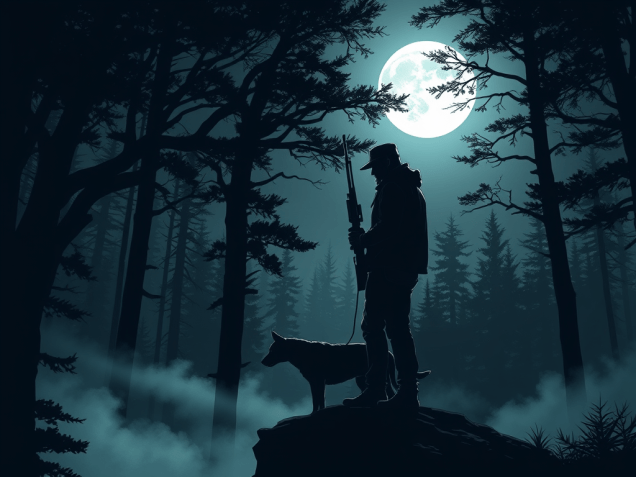
It was another hunter. Rifle slung over his shoulder. Dog at his side. Eyes vacant. He looked familiar.

The man called out. The hunter looked through him, then walked past.

The dog growled, uneasy.

And from the darkness behind them, a second pair of footsteps began to follow. They had found the lost forest of hunters who had died without a place to go.

The Man Who Walked in Circles: A Journey of Acceptance

GROFF MEDIA 2024© TRUTH ENDURES IMDBPRO

Presented by benandsteve.com By: Benjamin Groff II©s

2–3 minutes

The Man Who Walked in Circles

Everett Langston was trapped in a perpetual orbit. He had been walking in circles for as long as he remembered. It wasn’t a choice, but a fate that had befallen him. Seeing a circular object, even if insignificant, would betray his feet. This sight led him into an endless loop.

Doctors had puzzled over his condition. Some called it a compulsion, others a neurological disorder. But Everett knew the truth: it was a curse.

It started when he was a boy. One autumn afternoon, he saw a pumpkin on his grandmother’s porch. Without realizing it, he walked around it once. Then again. And again. His grandmother, amused at first, soon grew concerned when he wouldn’t stop. His father physically picked him up and carried him inside to break the spell.

As he grew older, the compulsion became more disruptive. A simple trip to the grocery store became an ordeal. Aisles stocked with oranges would catch his eye. The wheels on carts made him spin them in his mind. The bakery’s showcase of bagels would pull him into endless rotations. He learned to avoid certain places. He refused to go near playgrounds. Merry-go-rounds were his nemesis. He avoided tire shops. He walked with his head down in parking lots to keep from spotting hubcaps.

But the world was an entire circle.

One day, Everett found himself in the city’s heart, caught in a storm of misfortune. A coin flipped onto the pavement—a round-the-clock hanging above a storefront. A drain cover was embedded in the sidewalk. He circled each one, his breath coming faster, his steps quick and mechanical. Passersby stared. Some chuckled. Others whispered.

Then he saw it.

In the middle of the city square stood an enormous fountain, its base a perfect, unbroken circle. Panic gripped him. His legs moved before he resisted, pulling him into a slow, deliberate orbit—once, twice, ten times. A police officer approached, asking if he was lost. But Everett only mutter, “I just have to finish.”

The sun dipped below the skyline. His legs ached. His vision blurred. But still, he walked.

And then—just as exhaustion took hold, something remarkable happened.

For the first time in his life, he stopped.

In the fountain’s reflection, he saw the stars above, scattered across the sky in celestial loops, infinite and unending. A smile of understanding crept onto his face. The world had been walking in circles all along, and he was just a part of it.

And so, he kept walking—not because he had to.

He continued to walk. It was not out of compulsion but from a newfound understanding. He accepted his place in the world.

The Merman’s Transformation: Wally Askins’ Final Voyage

GROFF MEDIA 2024© TRUTH ENDURES IMDBPRO

Presented by benandsteve.com By: Benjamin Groff II©s

2–3 minutes

The Merman’s Final Voyage

The Mernan
Wally Askins – The Merman Groff Media©

Wally Askins had spent his life dreaming of the sea. He did not aspire to be a sailor or fisherman, but as something far more elusive—a merman. His belief in the sea was so strong that it seemed to shape his very being. He often spoke of the freedom of the water. It was a world unchained by the burdens of war. It was free from politics and human frailty. He believed neither in heaven nor hell. Still, he knew where he belonged if there was a way to pass into another existence.

His family and friends humored him over the years. They nodded along as he recounted legends of mermaids and mermen. These creatures swam in secret beneath the moonlit waves. Wally passed at seventy-eight. There was no question. His ashes would be scattered in the fabled river he had always spoken of.

On a misty morning, his loved ones gathered at the water’s edge. The river stretched before them like a silver ribbon. It dissolved into the fog. The air was thick, the kind that swallowed sound, leaving only the hush of lapping waves. They carried out his wish with solemn hands, releasing his ashes into the current.

At first, it was just water meeting dust. But then the river stirred.

The mist swirled, deepening, shifting into shapes that moved with intention. A ripple grew into a form—long, sinuous, and glistening like fish scales under moonlight. A figure emerged, half-man, half-sea creature, his eyes glowing with an otherworldly light. It was a sight that left the onlookers breathless, their hearts pounding with a mix of fear and wonder.

Wally Transitions Into A Merman After His Ashes Are Spread
The Merman – The Late Wally Askins Groff Media©

It was Wally.

His beard had turned to strands of seaweed, and his hands webbed like the legends foretold. A great, shining tail flicked behind him, disappearing beneath the water before rising again. The mourners gasped. Their hearts pounded in their chests. They stepped back in awe. Terror filled them at the sight of their beloved Wally transformed into a creature of the sea.

Then, through the thickening fog, a sound echoed—a ship’s bell, distant and struggling. The fog was too dense for a lighthouse beam to cut through. The boat would be lost.

Wally turned toward the river’s mouth, where the sea was called. Without hesitation, he dove ahead, his form shimmering as he swam into the mist. As he did, a soft glow spread in his wake. It was a beacon unlike any other. It guided the ship safely past the unseen dangers lurking in the fog. The sailors, their hearts filled with relief and gratitude, whispered of the merman who had saved them.

From that day on, sailors whispered of a presence in those waters. They spoke of a merman who led lost ships to safety. This happened when lighthouses failed. Some say the river was repaying him for his belief, others that he had found his way home.

His family and friends never spoke of what they saw. Yet, whenever they returned to the river, they would watch the mist. They waited for the shimmer of scales just beneath the surface.

Waiting for Wally.

The Great Dog Escape: A Story of Resourcefulness

GROFF MEDIA 2024© TRUTH ENDURES IMDBPRO

Presented by benandsteve.com By: Benjamin Groff II©s

2–3 minutes

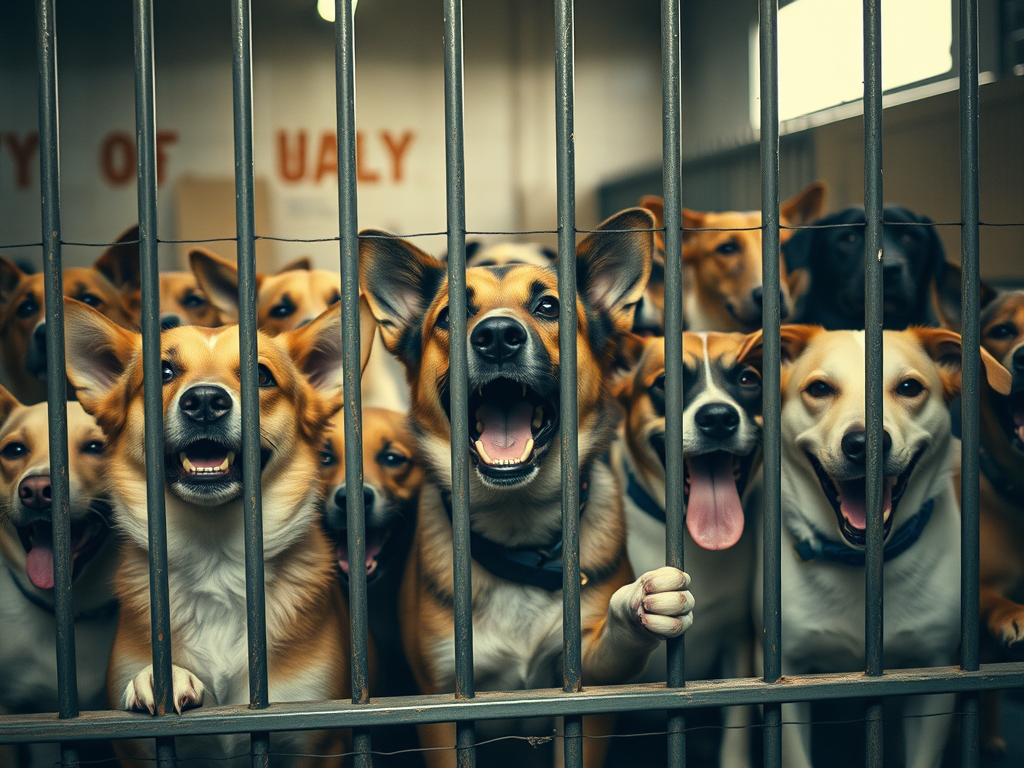
Huey sat in the corner of the kennel, ears perked, eyes darting toward the metal gate between them and freedom. Max, his trusted partner, paced back and forth, tail flicking with nervous energy. Around them, the others—Spike, Bella, and Rufus—pretended to be sleeping, but they were all listening, waiting for the signal.


“Tonight’s the night,”

Huey whispered.

“The screws turn in at nine. We give ’em an hour, then we move.”

Max nodded.

“Bella, you’re on distraction. Get that yapper down the row to start barking. When the guard checks on him, we make our move.”


Bella wagged her tail.

“Piece of kibble.”


Spike chimed in,

“I got the latch covered. I’ve been watching the humans do it for weeks. I think I can pop it.”


“Good,”

Huey said.

“Once we’re out, we head for the back gate. Rufus, you still got that big brute act down?”


Rufus grinned, his jowls flopping.

“One good growl and the yard mutt will scatter.”


The plan was perfect. They had worked out every detail. The humans thought they were dumb dogs, but they’d prove them wrong tonight.


The lights went out, and the night settled over the pound. A low growl rumbled from the cage at the far end. Right on cue, the little yapper started up. Bella joined in, then Spike, then the whole row. Sure enough, heavy boots clomped down the hall. The guard muttered something about “dumb mutts” and stomped off to quiet them down.


“Go time,”

Huey whispered.


Spike reached through the bars, jiggling the latch—a click. The gate swung open. One by one, they slipped out, moving fast and low, paws silent on the concrete. They were almost to the back gate when Max skidded to a stop.


“What is it?”

Huey hissed.


Max’s eyes gleamed in the dark. His tail quivered.

“Bone.”


Huey sighed.

“Forget it, we gotta—”


“Bone,”

Max repeated, but the others saw it, too. A big, juicy, perfectly gnawed bone, lying right there, almost like fate had placed it in their path.


Rufus whined.

“It’s beautiful.”


“No time!”

Huey barked.

“We gotta go!”


Max, still, had already lunged for it. Spike growled, trying to shove him aside. Bella snapped at them both. Chaos erupted. Snarls and yips filled the air.


Lights flicked on. A door slammed. The humans were coming.


“Run!”

Huey yelled, but it was too late.


A net came down over Rufus. Bella yelped as a leash snapped around her neck. Huey dodged left, but a firm hand grabbed his collar.


Max? He was still chewing.


The next day, they sat in their cages, tucked tails, watching the humans talk about “bad dogs” and “extra security.”


Max sighed, staring at the bone still sitting outside the fence.

“Worth it.”


Huey groaned.

“Next time, we leave you behind.”


But they all knew there would be a next time. Because a good dog never quits, and a great dog always has another plan.

The Last Drop: A Cowboy’s Journey of Sacrifice

GROFF MEDIA 2024© TRUTH ENDURES IMDBPRO

Presented by benandsteve.com By: Benjamin Groff II©s

2–4 minutes

The Last Drop

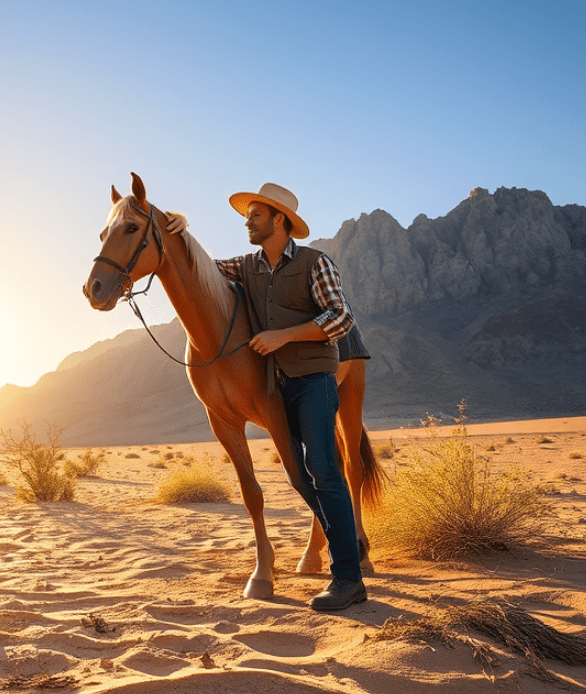
The desert stretched endlessly before him. A sea of golden sand and jagged rock shimmering under the merciless sun. Nathan Calloway, a weathered cowboy, pulled his bandanna higher over his nose. He squinted against the glare. Nathan’s loyal companion, Dusty, plodded steadily ahead, hooves sinking into the loose sand. It had been days since they left the last water hole. The journey across this godforsaken land felt like it would never end.

Nathan had one canteen slung across his saddle. He’d filled it to the brim at the last watering hole, which seemed a hundred miles behind them now. Each time Nathan drank, he made sure Dusty drank, too. He’d pour water into his old, sweat-stained hat, holding it steady while the horse lapped it.

Miles passed, the sun crawling toward the horizon without relief. Nathan should’ve run dry by now. His canteen weighted it, sloshing like he had just filled it. He didn’t question it—just kept pouring for Dusty, letting the horse drink before taking a sip himself.

By the time they reached the halfway mark, the world felt different. The heat played tricks on Nathan’s mind, distorting the horizon and bending the sky. The rhythmic clopping of Dusty’s hooves became a heartbeat against the silence.

Then, Dusty spoke.

“Thanks, partner,” 

The horse said, his voice deep and smooth as rolling thunder.

Nathan blinked hard, his throat tightening. 

“What was that?”

“For the water,”

Dusty said, shaking his mane. 

“I appreciate it.”

Nathan swallowed. He knew heat can make a man see things and hear things that weren’t real. But this felt different. He’d spent years with Dusty—maybe it just took this long to finally listen to him.

“You’re welcome, old boy,”

Nathan murmured, tipping the canteen over his hat again. Dusty drank, his dark eyes filled with something knowing, something grateful. The horse seemed to understand the sacrifice Nathan was making for him. Nathan, in turn, felt a deep sense of responsibility and care for his companion.

The two trudged on, man and horse, surviving together. The sun burned down. Their shadows stretched thin. The canteen never emptied as long as Nathan gave to Dusty first.

Then, just as the town rooftops shimmered into view, something changed.

Nathan stopped. His body ached, exhaustion weighing him down. The canteen felt lighter now. The end was so close—only a half-mile to go. He took a long, deep drink, the first he hadn’t shared. The water was warm but pure, sliding down his throat. Nathan’s hands trembled as he lowered the canteen.

Dusty faltered. The horse’s breath came shallow, his steps unsteady.

Nathan hesitated. He looked at the canteen, now feeling light as air. Nathan shook it—nothing.

The world spun. The last stretch of desert blurred. Nathan swayed in the saddle.

A mile outside town, they found him. The townsfolk rushed ahead, lifting the man from his horse, but Nathan Calloway was gone. Dusty stood by, head bowed, his sides heaving. The canteen dangled empty from the saddle, not a drop left inside.

“You almost made it,”

Someone whispered.

No one noticed Dusty raise his head slightly, his dark eyes glistening with something almost human. He looked toward where his rider lay, then toward the empty horizon.

Deep in the desert’s silence, a voice like rolling thunder whispered,

“We made it.”

The Legend of the Wishing Tree: A Magical Tale

GROFF MEDIA 2024© TRUTH ENDURES IMDBPRO

Presented by benandsteve.com By: Benjamin Groff II©s

1–2 minutes

Deep in the heart of the Whispering Wood stood an ancient oak known as the Wishing Tree. Its gnarled branches stretched toward the heavens. The tree’s roots twisted deep into the earth. The soil received whispering secrets from it.

The legend passed from generation to generation. It told of the tree’s magic. The tree would grant a single wish to those who truly believed.

Many travelers sought the Wishing Tree. Only a rare few with pure hearts and sincere desires ever found it. The forest guided them. The wind carried soft murmurs. These murmurs led them down winding paths until they stood before the towering oak. Beneath its emerald canopy, the air shimmered with an almost otherworldly glow.

One such seeker was a young girl named Elara. She had heard the tales from her grandmother, who had once made a wish upon the tree as a child. With hope in her heart, Elara ventured into the forest. She followed the rustling leaves and the whispering wind. Soon, she stood before the grand tree.

Kneeling upon the moss-covered roots, she closed her eyes, her heart beating with anticipation, and whispered her wish.

“I wish for our village never to go hungry again.”

Elara’s voice carried the hope. It also carried the love of her people.

The tree remained silent, its leaves barely stirring. But then, a single golden acorn dropped into Elara’s hands. She gasped as warmth spread through her fingers.

Understanding the tree’s silent message, she carried the acorn home and planted it in the center of her village.

Days turned to weeks, and soon, a miraculous tree sprouted. Its branches bore fruits of all kinds—apples, pears, oranges, and even wheat grains. The villagers rejoiced, their hearts filled with joy and relief, never knowing famine again. Elara knew, in her heart. Now a guardian of the magical grove, she understood that belief and kindness were the magic behind the Wishing Tree.

And so, the legend continued, whispered among the trees, waiting for the next believer to find their way.

Omar Vasquez: An American Veteran’s Deportation Nightmare

GROFF MEDIA 2024© TRUTH ENDURES IMDBPRO

Presented by benandsteve.com By: Benjamin Groff II©s

2–4 minutes

SENT BACK – OMAR’S STORY

(Fictional)

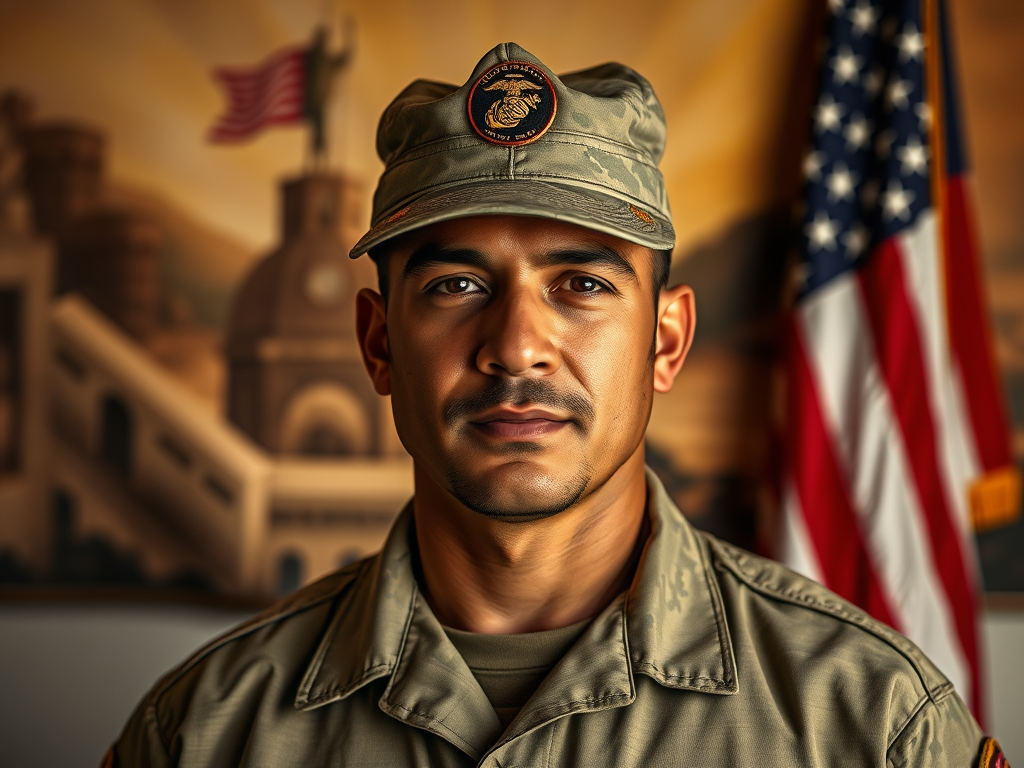
Omar Vasquez had never questioned his place in the United States. He was born in El Paso, Texas, to parents who traced their lineage back generations. His grandfather had fought in World War II. His father served in Vietnam. Omar himself had completed two tours in Iraq as a U.S. Marine. He had a college degree, a steady job, and a home he had just finished paying off.

But none of that mattered the day he was taken.

It happened suddenly, in the middle of an ordinary afternoon. Omar had just stepped out of a coffee shop when unmarked black SUVs screeched to a stop around him. Before he reacted, he was surrounded by men in tactical gear barking orders. Confused, he reached for his wallet to show his ID, but they were already on him. They forced his hands behind his back, zip-tied his wrists, and shoved him into a waiting vehicle. People on the sidewalk froze, watching in stunned silence.

“You got the wrong guy!”

He shouted.

“I’m a U.S. citizen! I was born here!”

His words went unheard.

Inside the detention center, the reality of his situation set in. The holding cells were packed with others—some looking just as confused as he was, others resigned to their fate. He saw fear in their eyes, exhaustion from what must have been days or weeks of uncertainty.

Guards ignored his questions, his demands for a phone call, and his requests to see an attorney. When he finally managed to speak with someone, they told him flatly:

“You’re undocumented. You are being processed for deportation.”

Omar laughed in disbelief.

“You’re joking, right? Check my records. My Social Security number. My military service. Call my family.”

The officer barely looked at him.

“If your family wants to go with you, they can do so. Otherwise, you’ll be deported alone.”

He was handed a packet of papers to sign. The papers were written in Spanish, a language he barely understood beyond a few pleasantries.

“I don’t speak Spanish. I only speak English,”

He said.

The officer raised an eyebrow.

“Sure you do.”

His family arrived with documents. They brought his birth certificate, his passport, his military discharge papers, and even photos of him in uniform. They pleaded, demanded, and argued, but every official they encountered dismissed them, saying the decision had been made.

“Mistakes happen,”

One agent told his mother.

“And mistakes can be corrected. But in this case, the process has already started. You can contest it from the other side.”

“The other side?”

His mother gasped.

“He has no other side. This is his home!”

His father, a quiet man who had seen combat and never flinched, broke down in helpless tears.

Despite everything, Omar was put on a plane.

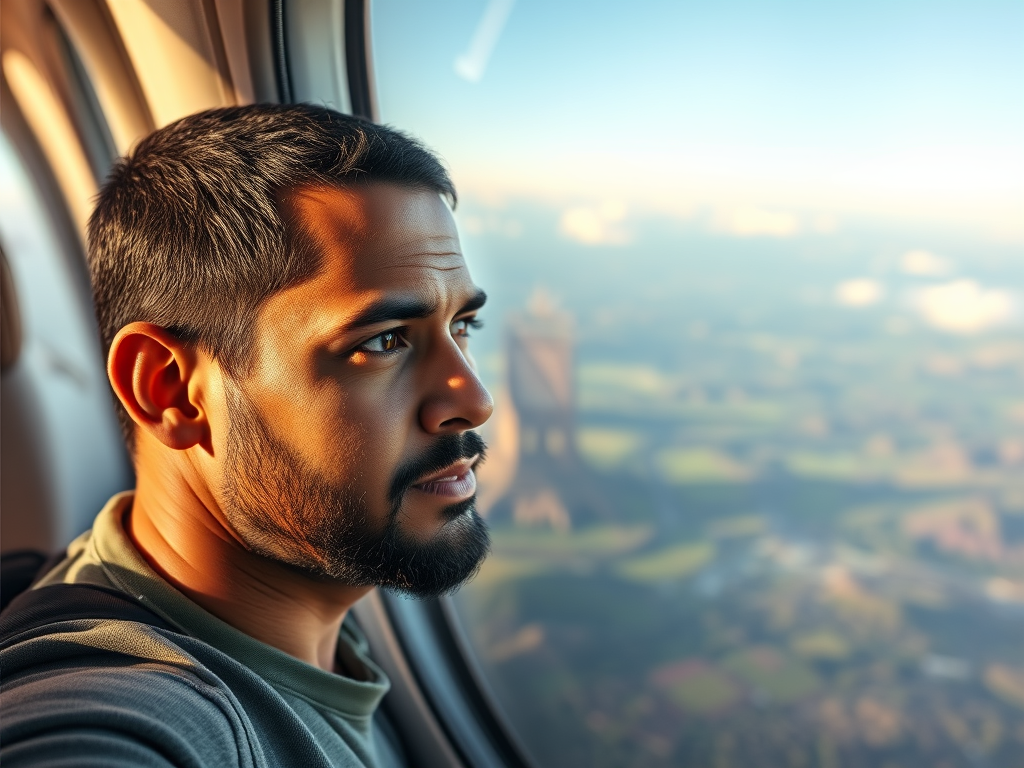
Destination: Guatemala. It was a country he had never set foot in. He knew no one there. He didn’t speak the language. As the plane lifted, he looked out the window at the land he had fought for. This was the country he had called home his entire life. He wondered how many others had disappeared into this system. They were erased by the stroke of a bureaucratic pen. Their American identity was stripped away by nothing more than suspicion.

How many would ever make it back?

When Time Stopped: A Tale from Briar Hollow

GROFF MEDIA 2024© TRUTH ENDURES IMDBPRO

Presented by benandsteve.com By: Benjamin Groff II©s

2–3 minutes

It happened at precisely 3:17 p.m. on a warm autumn afternoon. The town of Briar Hollow had always been a quiet place. The most exciting event of the week was the arrival of fresh pies at Millie’s Diner. But on this particular day, something changed. Time stopped.


No one saw it happen. There was no flash of light, and there was no tremor in the ground. One moment, the clock on the courthouse tower was ticking as usual, and the next, its hands were frozen. Birds hung motionless in the sky, leaves hovered mid-fall, and the wind seemed trapped.


At first, the townsfolk didn’t notice. Old Mr. Grady blinks in confusion halfway through handing change to a customer, as the coins refuse to drop from his fingers. Sarah Porter had been driving to the grocery store. She finds her car inexplicably locked in place. The engine still hums. Children at the playground hang in mid-swing, their laughter caught in their throats.


And then, they noticed each other. Wide eyes met, tentative steps were taken, and panicked voices rose into the still air. The world had paused, yet they remained unstuck, the only things moving in a town frozen in time.


The local librarian, Maggie Holcomb, was the first to suggest that something bigger was at play.

“This isn’t just a power outage,”

she murmured, staring at the unmoving second hand of her wristwatch.

“This is…impossible.”


Hours passed, though the sky did not change. The sun remained where it was, suspended in golden radiance. Some tried to leave town, only to find that the roads looped them back to the center. Others attempted to wake those frozen, but their efforts were in vain. The townsfolk, once filled with panic, began to feel a creeping sense of fear. Fear turned to despair, and then—acceptance. Their emotional journey mirrored the strange stillness that had befallen their town.


The people of Briar Hollow, despite the unchanging world around them, learned to adapt. They still spoke, ate, laughed, and cried. Days passed, though they had no real way to count them. And just when they resigned to this strange eternity, the clocks began to tick again. Their resilience in the face of the unknown was a testament to the human spirit.


It was as sudden as it had started. The coins fell from Mr. Grady’s hand, Sarah’s car lurched ahead, and the children’s laughter resumed mid-breath. The world snapped back into motion, unaware that it had ever paused.


Yet, the people of Briar Hollow knew. They would never forget that strange day when time stopped. It was an even stranger feeling that just, it had been watching them.

Juniper and Luma: A Tale of Unlikely Friendship

GROFF MEDIA 2024© TRUTH ENDURES IMDBPRO

Presented by benandsteve.com By: Benjamin Groff II©s

1–2 minutes

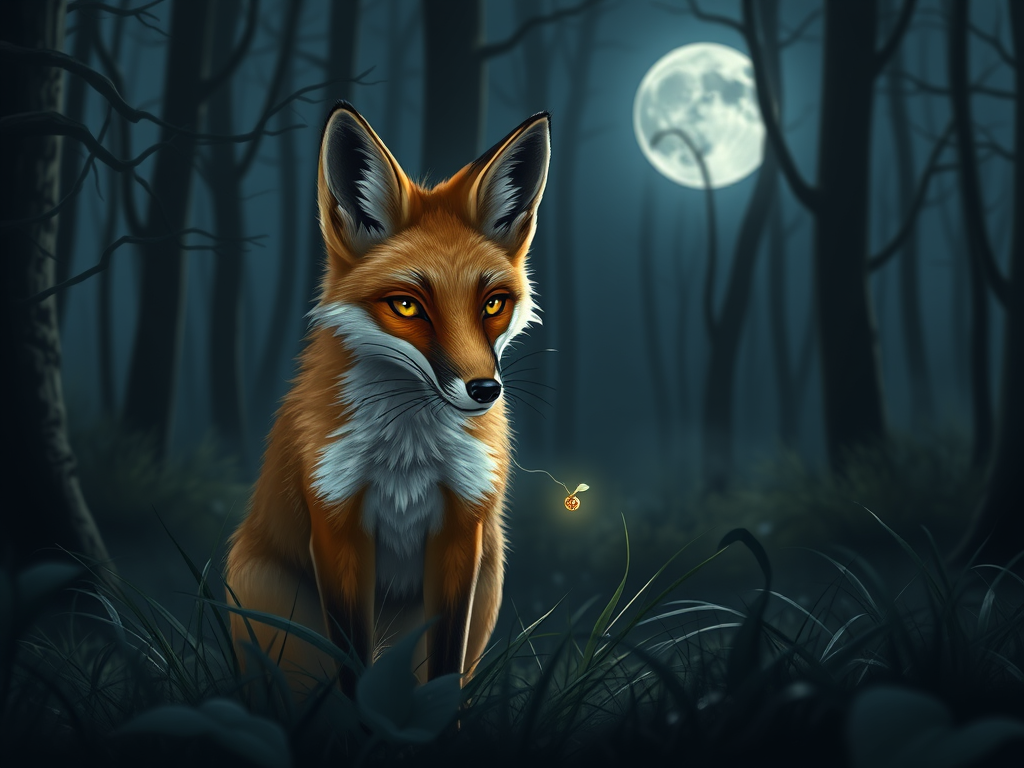
The Fox and the Firefly

The trees hummed with the wind in the Whispering Woods’s heart. The moon painted silver on the forest floor. There lived a fox named Juniper. She was sleek, clever, and always alone. Other animals whispered about her, calling her a trickster, a thief. She had learned that being alone was more manageable than fighting their expectations.

One evening, a tiny glow flickered near her nose as she padded along the riverbank. A firefly, tiny and trembling, hovered in the air.

“You’re in my way,”

Juniper said, flicking her tail.

“I’m lost,”

The firefly admitted its light dimming.

Juniper sighed.

“Lost? How do you lose your way when you can fly?”

The firefly hesitated.

“I followed my friends, but the wind carried me away.”

Juniper should have walked on. She wasn’t the type to help. She had grown used to being alone, and companionship was foreign to her. But something about the firefly’s quivering glow made her pause.

“Fine,”

She said,

“I’ll help you, but only because I know these woods better than anyone.”

The firefly buzzed with gratitude.

“Thank you! I’m called Luma.”

For the first time in a long while, Juniper felt a glimmer of companionship. As they traveled together, Luma lit the dark paths. She guided Juniper through the thickest parts of the forest. Juniper used her sharp nose to avoid danger.

They spent the night talking. Luma didn’t fear or expect her to be anything other than what she was.

By dawn, they reached a clearing filled with twinkling lights—Luma’s family.

“Stay,”

Luma said.

Juniper almost did. But she was a fox, a creature of the earth, and Luma belonged to the sky.

Still, as she turned to leave, Luma promised,

“Whenever you walk the woods at night, look for my light. You’ll never be alone.”

And so, every night, as Juniper wandered, a tiny flickering glow followed her—an unlikely friendship that lit the darkness forever.

The Great Bison Incident: A True Survival Story

GROFF MEDIA 2024© TRUTH ENDURES IMDBPRO

Presented by benandsteve.com By: Benjamin Groff II©s

3–4 minutes

The Great Bison Incident (A True Story)

Carney had no idea what his neighbor, Ted Ortiz, had done. Ted had recently purchased what everyone around here called a buffalo—though, technically, they were bison. His grand idea? Cross-breeding the massive bull with his cattle. What is there to go wrong?

That morning, Carney had spent hours plowing one of his fields. When he finally finished, he hopped down from his tractor. He stretched his back and pulled out his packed lunch—a simple sandwich and a thermos of water. After a few quick gulps, he was ready to tackle the next field.

He set off across the pasture, taking his usual shortcut. Halfway across, he heard a deep, rumbling snort behind him. At first, he figured it was just one of Ted’s cows and kept walking. But then he noticed something—the snorting sound was moving with him.

Carney turned around and froze.

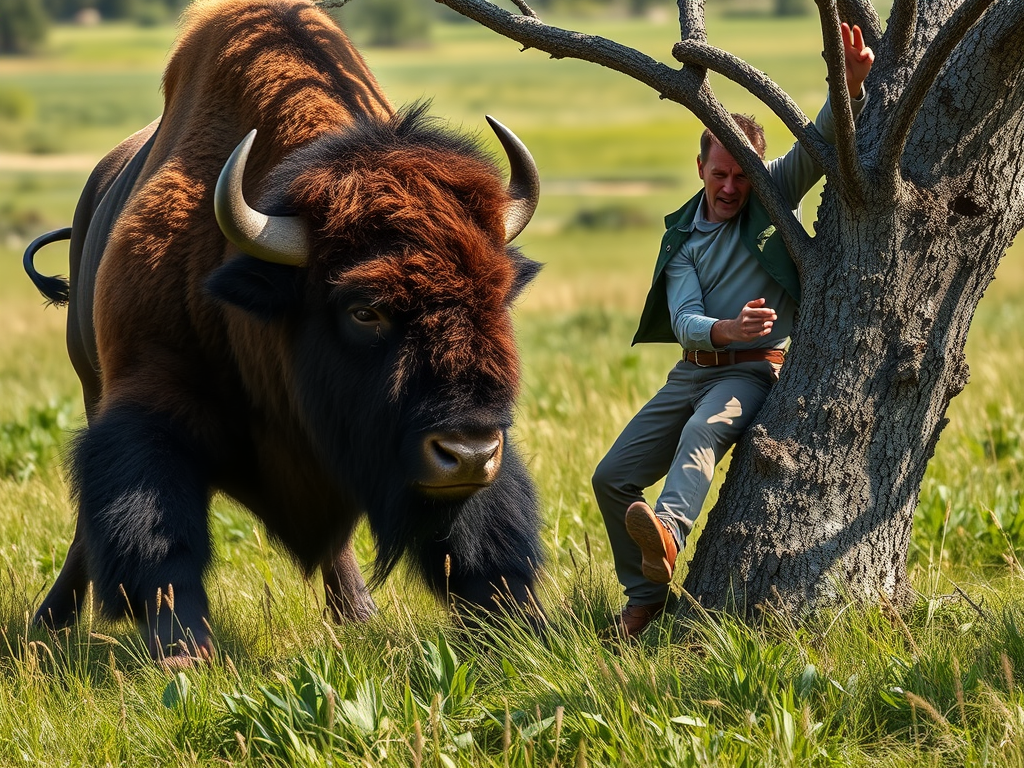
A massive, very annoyed bull bison stood just a few yards away. And Carney had unknowingly interrupted the beast’s afternoon of affection.

The bison pawed the ground, snorted louder, and locked eyes with Carney. He had seconds to decide—fall, play dead, or run like hell. He chose the latter.

Now, Carney was in his fifties. He was not exactly a sprinter, but he moved like an Olympic athlete when faced with a furious bison. His only hope was a nearby tree. He scrambled up, arms and legs flailing, barely reaching a branch as the bull slammed into the trunk below.

Unfortunately, Carney had picked the wrong tree.

It was dead.

The bison rammed it again. The whole thing groaned and wobbled. Carney had two choices—jump and run or ride the tree down like a doomed cowboy in a slow-motion disaster.

So he jumped. And ran.

And here’s where things took an unexpected turn.

Carney swears he made it to the fence, jumped over, and escaped without a scratch. But according to the newspaper, the story went a little differently.

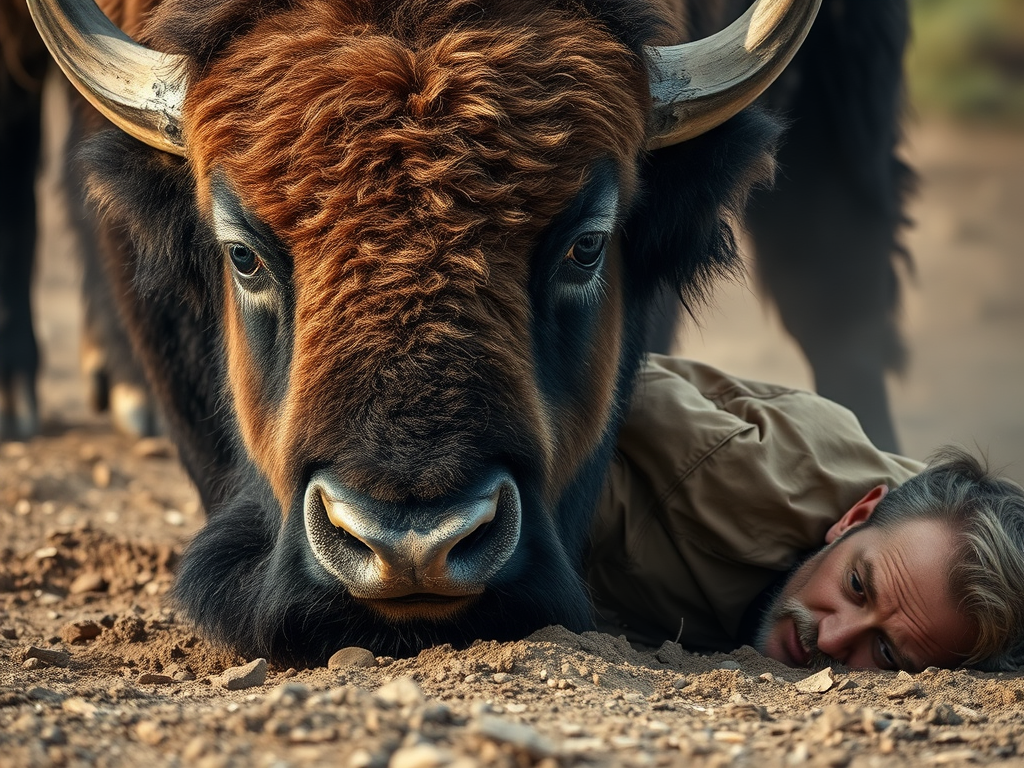
The article claimed that the bison knocked the tree over after Carney hit the ground. Then it turned its fury back on him. Carney had no other options. He did the only thing he thought possible. He dropped to the ground. His face was down in the dirt, and he played dead.

The bison approached, snorting, its heavy breath huffing across Carney’s back. It sniffed his head. His shoulders. His boots. Then, it reached his backside—and suddenly, something changed.

The bull gagged.

Its eyes watered, and its massive body trembled. The mighty beast gave a final snort of disgust. It turned its tail and bolted. The beast ran away as fast as its hooves carried it.

Carney, shaking but victorious, got to his feet and went to the other field. Before plowing, he had to detour into the nearest creek. He needed to scrub off whatever offended that bison so severely.

The newspaper never revealed its source for this version of events, but everyone had their suspicions. Most believed the town barber had something to do with it. After all, most of the town’s best stories started in his shop.

To this day, the Great Bison Incident resurfaces whenever the local men need a good laugh. It is a legendary reminder that sometimes survival comes down to sheer luck, including an unfortunate choice in lunch. It’s a tale that never fails to entertain.

This is a true story. The names have been changed to protect the privacy of those in real life.

Elmer’s Tough Ride: A Journey Through the Dust Bowl

GROFF MEDIA 2024© TRUTH ENDURES IMDBPRO

Presented by benandsteve.com By: Benjamin Groff II©s

4–6 minutes

Pa Elmer’s Ride

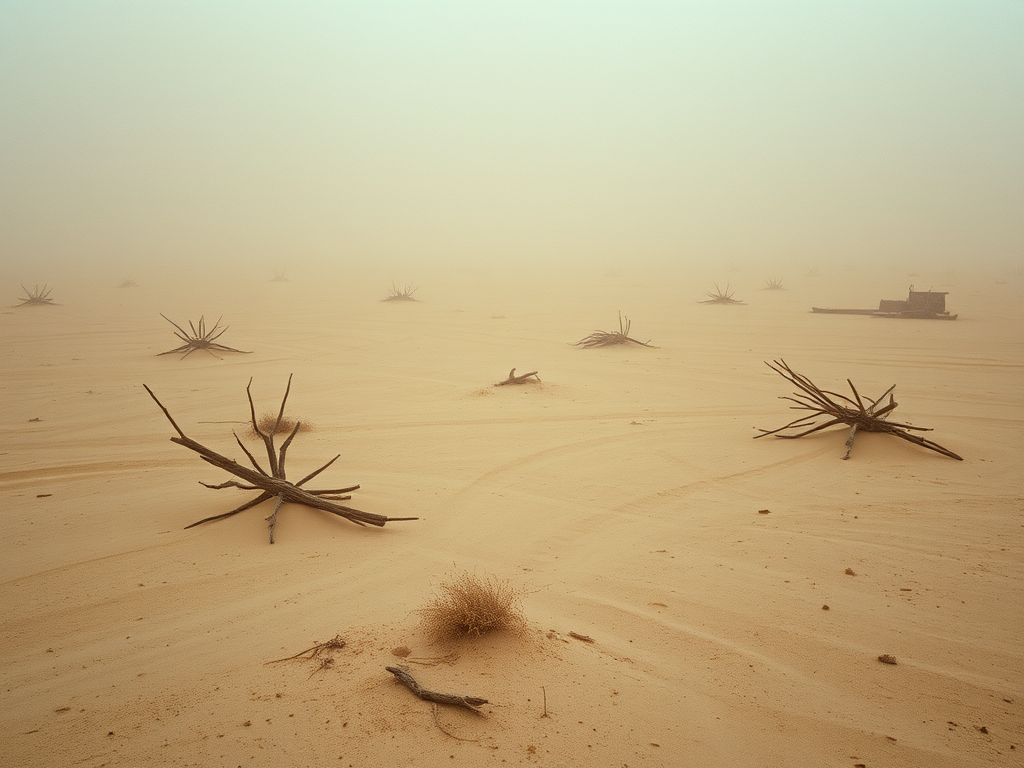
The winter had been relentless. The worst sandstorm in memory had swept through the region the year before. It buried the land in towering drifts of dust and sand. In some places, these drifts were waist-deep.

It marked the beginning of the Dust Bowl. This was a devastating era of dust storms. These storms crippled agriculture and reshaped life across the American and Canadian prairies in the 1930s.

Few families had stored enough food from the past year’s harvest. Even fewer were sure how long this disaster would last.

They say two things in life are certain: death and taxes. And for Elmer, tax time had come knocking. He had no choice but to ride nearly forty miles to the courthouse. He needed to pay his property taxes in person. He risked default if he didn’t. Despite the hard times, he had always kept his land in good standing. He intended to do so now, even with their dwindling savings. With three young children to feed, responsibility was heavily on his shoulders. His two sons and daughter were too young to fully grasp the hardship that had taken hold of the land. The struggle was real for Elmer and his wife, Ma Ma.

The night before his journey, Elmer told Ma Ma,

“I’ll be up by 3:30 and gone before sunrise. There’s no need to let anyone know I’m carrying money. Hard times make people desperate.”

While he trusted his neighbors, he wasn’t about to take unnecessary risks. He planned to make it halfway and camp near the Washita River before reaching the courthouse the next day.

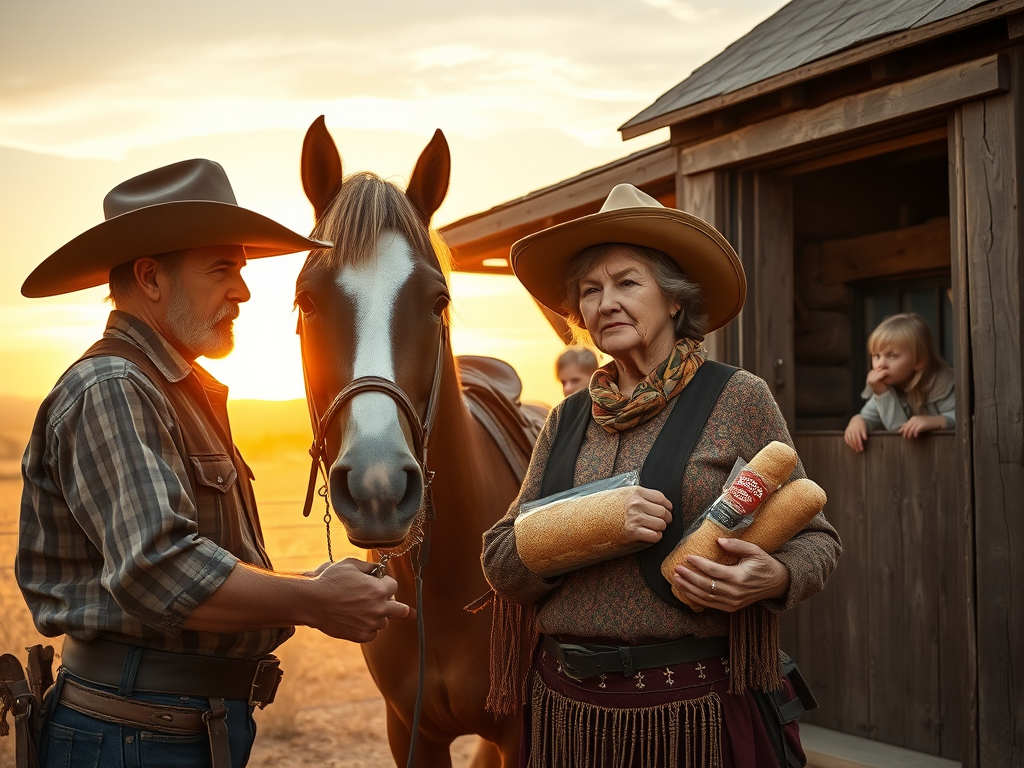
At dawn, Pa Elmer saddled his pony, Smokey. Ma Ma handed him a small bundle—a few slices of fresh bread and beef jerky from the smokehouse.

“It’s not much,”

she said, touching his knee as he mounted up,

“but it’ll hold you over till you’re back. Ride safe, and don’t take any risks. Smokey can outrun any trouble that comes your way.”

Pa Elmer bent down in the saddle and kissed her.

“Two days there, a day and a half back. I’ll be fine.”

The parents didn’t know it. Their three children watched from behind the screen door, their little faces pressed against the mesh. As Ma-Ma gave Smokey a firm slap on the hip, Pa clicked his tongue and hollered,

“Yaw!”

The journey had begun.

Back inside, Ma Ma found the children still watching. She shooed them back to bed. Then she settled into her rocking chair with the Bible. It was her source of comfort through times of uncertainty.

The Ride to Town

Pa made good time. Smokey, eager for the open trail, trotted strong beneath him. By evening, they had covered thirty miles. Elmer found a spot near the Washita River where the grass was matted down—a daytime swimming hole. He unsaddled Smokey. Then, he tied him to a long rope to graze. Elmer stretched out beneath a tree, using his saddle as a pillow.

Sleep took him fast; it was a blessing he had dozed off facing east. The first light of dawn warmed his face, stirring him awake. After a quick breakfast of beef jerky, he saddled Smokey and continued.

By mid-morning, he reached the county seat. He tied Smokey to the hitching rail and strode into the courthouse. The county clerk barely glanced up from her papers.

“You here to ask for an extension on your taxes like everyone else?”

she asked.

Elmer tipped his hat.

“No, ma’am. I’m here to pay my taxes for this year and next.”

The clerk blinked, then scribbled out a receipt, her expression unreadable.

Paid this date: $28.33 for two years of property taxes.

Elmer folded the receipt and tucked it into the same safe spot where his money had been. Simply saying ––––

“Thank you, Mam!”

Pa had finished his business.

Trouble in Town

As he walked back to Smokey, a man loitering nearby gave a slow nod.

“That’s a fine-looking horse you got there. I’d buy him off you for $25.”

Elmer stiffened.

“No, you wouldn’t.”

The man’s eyes darkened, and his tone shifted.

“Maybe I just take the horse for nothin’.”

Elmer didn’t flinch. He met the man’s stare with steely resolve.

“No, you’d be lyin’ dead if you tried.”

A tense silence hung between them before the man forced a crooked smile.

“Mister, I was just jokin’.” 

He backed away.

“You have yourself a nice day.”

Elmer wasted no time. He swung into the saddle and galloped out of town.

The Journey Home

The Journey Home

Elmer has made the ride back in a day. Still, he took his time. He stopped by a few relatives along the way. In this part of the country, it was tradition—when you passed by kin, you paid a visit.

Late in the afternoon, as he approached home, he saw Ma Ma and the kids waiting at the gate. The children ran to meet him, full of questions.

“Well, Pa? How’d it go?” 

Ma Ma asked, relief washing over her face.

Elmer grinned and swung down from Smokey.

“Would’ve been home sooner,” 

he said, stretching his legs,

“but I kept runnin’ out of pipe tobacco.”

Ma Ma shook her head with a chuckle. As the family led him inside, the weight of the journey melted away. Home had never felt so good.

A Journey Through Fields: Life Lessons from Uncle Neb

GROFF MEDIA 2024© TRUTH ENDURES IMDBPRO

Presented by benandsteve.com By: Benjamin Groff II©

2–3 minutes

An Uncle’s Field of Memories

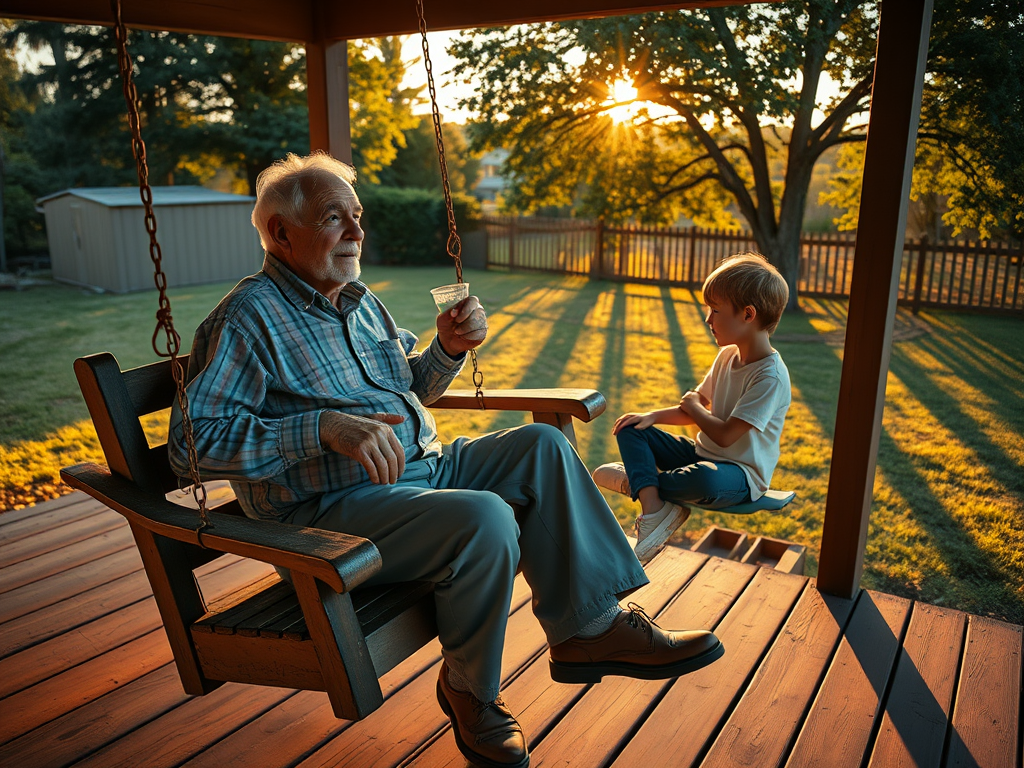
The older man rocked back and forth on the porch swing, the wood creaking under his weight. His nephew, Jake, sat cross-legged on the wooden planks, listening intently. The evening sun stretched its shadows long across the yard, the golden light flickering through the trees.

“You ever run through a plowed field, boy?” 

Uncle Neb asked, a slow grin spreading across his weathered face.

Jake wrinkled his nose. 

“Why would I do that?”

Ole Neb chuckled.

“Ah, you don’t know what you’re missin’. When I was your age, runnin’ through a fresh-plowed field was the best thing in the world. The dirt was soft, the furrows deep. Felt like jumpin’ across waves in the ocean—only, it was earth beneath your feet, not water.”

Jake smirked. 

“Sounds messy.”

“Sure was!”

Uncle Neb laughed. 

“And I’d get a good whuppin’ from your grandma for trackin’ mud in the house, too.”

He leaned back, sighing. 

“Every spring, my daddy plowed and prepared the land to plant maize and oats. That was our winter feed for the livestock. Down at the bottom of our place, we had an alfalfa field. Grew some of the best in the county, thanks to the floods from the neighbor’s lake.”

“Wait—you let your field flood on purpose?”

Jake asked, wide-eyed.

“Didn’t have a choice, boy! The heavy spring rains would swell that lake, and the water would just roll over into our land. But let me tell you, that soaked ground made the alfalfa thick and green. We never had to worry about our cattle goin’ hungry.”

Jake traced a knot in the porch wood with his finger. 

“You had cattle?”

“Sure did. Horses and chickens, guineas, goats—you name it. Had a big ol’ barn on the west side of the place where we kept ’em. But there was one animal I couldn’t go near—one of our milk cows. It is the meanest thing you have ever seen. That cow would lower her head and charge at me as soon as she spotted me.”

Jake grinned. 

“You were scared of a cow?”

Uncle Neb narrowed his eyes playfully. 

“You woulda been too, boy! Kids had tormented that cow before she came to us. Made her mad as a hornet. Your grandpa had to milk her himself ’cause she wouldn’t let nobody else close.”

Jake laughed. 

“Sounds like she had a grudge.”

“That she did. But that was life on the farm, son. You learned to work with what you had, respect the land, and steer clear of mad cows.”

Ole Neb winked. 

“Now come on, let’s go walk that field out back. Maybe you’ll see why runnin’ through dirt felt like flyin’ to a boy like me.”

Jake hesitated, then hopped up.

“Alright, Uncle Neb. But if I trip, you owe me ice cream.”

Neb laughed, his voice warm as the setting sun. 

“Deal, boy. Deal.”

And together, they walked toward the fields, the past and gift blending with every step.

Quiet Reflections: Harold Whitman’s Final Moments

GROFF MEDIA 2024© TRUTH ENDURES IMDBPRO

Presented by benandsteve.com By: Benjamin Groff II©

2–3 minutes

The Last Day

Harold Whitman woke before dawn, just as he had done for countless mornings. He stretched his aching limbs, feeling the stiffness permanently occupying his bones. The old house was quiet. Only the refrigerator’s soft hum and the occasional creak of settling wood were heard. This familiar symphony accompanied his every awakening.

He shuffled to the kitchen, brewed a pot of coffee, and sat at the window. He watched the sunrise paint the morning sky in shades of orange and pink. He savored the moment. The cup’s warmth was in his hands, and the faint aroma of the beans filled the air. His late wife had always loved those beans.

Today, he decided, would be a good day.

After breakfast, Harold walked to the park, as he had done for decades. He fed the ducks at the pond. He nodded to the joggers and dog walkers. They had become familiar faces over the years. These interactions, though brief, were like tiny rays of sunshine in his otherwise solitary life. A young boy, no older than six, waved at him from the swings. Harold smiled and waved back.

At the corner store, he bought a piece of his favorite caramel candy and an extra for the cashier. Marisol, a sweet girl, constantly reminded him of his granddaughter.

“You spoil me, Mr. Whitman,”

she said, laughing as she unwrapped the treat.

“Someone’s got to,”

he replied with a wink.

In the afternoon, he visited the cemetery. He sat on the bench beside his wife’s headstone, tracing her name with his fingers. The silence of the place soothed his soul. He felt a strange comfort thinking about joining his wife.

“I think I’ll be seeing you soon,”

he murmured.

“Maybe later tonight.”

There was no fear in him—just a quiet knowing.

Before heading home, he stopped by the diner, ordering a slice of apple pie and a cup of black coffee. The waitress, Lucy, patted his shoulder.

“You always get the same thing,”

she teased.

“Because I know what’s good,”

he said with a grin.

That evening, Harold sat in his favorite chair by the window, where the sunset bathed the room in golden light. He opened a book, though he barely read the words and content to hold it.

When sleep came, it was gentle, like slipping into a warm embrace.

Harold’s heart gave its final beat, and he sighed with quiet satisfaction. His last day had been good, a testament to the peace and acceptance that filled his heart.

Standing Watch At A Western Oklahoma Oil Well Blowout.

Groff Media 2024© Truth Endures IMDbPro

Presented by benandsteve.com By: Benjamin Groff II©

3–5 minutes

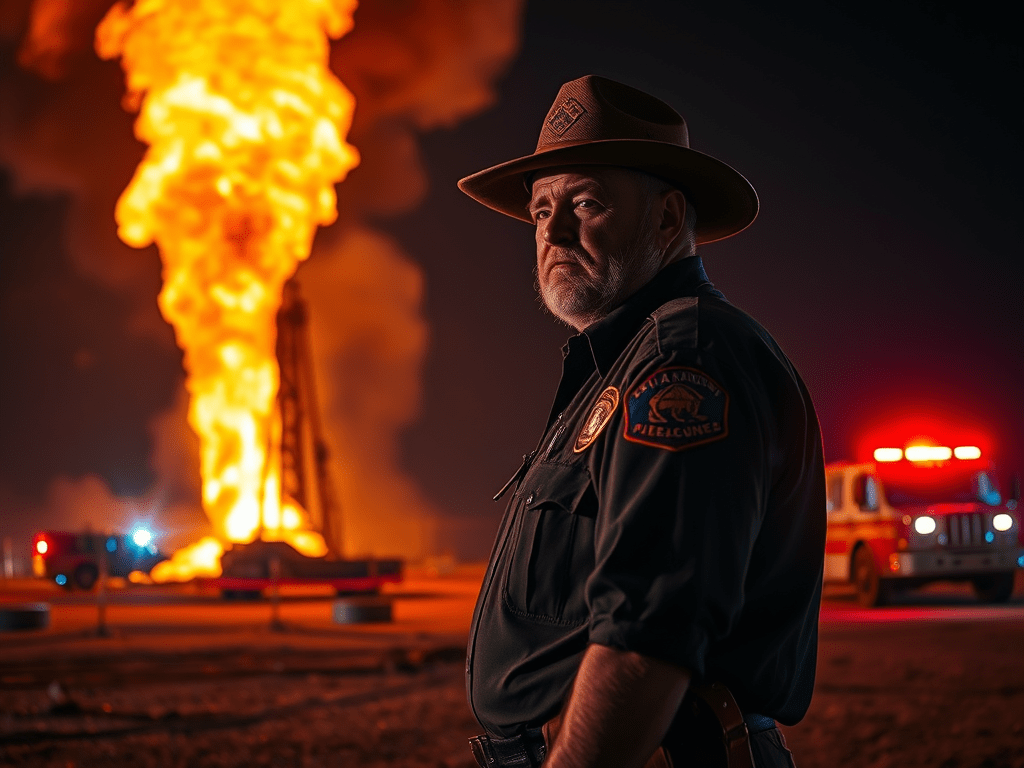
The midnight wind howled across the open plains of Elk City, Oklahoma. It carried with it the acrid stench of crude oil. Officer Ben Groff sensed the urgency of the situation. He adjusted his hat and squinted into the orange glow from the ruptured well. The blowout had sent a geyser of oil and gas roaring skyward earlier that evening. Now it loomed like a ticking time bomb. Nearby tanks, filled with thousands of gallons of oil, were dangerously close to the chaotic inferno.

Ben’s radio crackled to life.

“Unit 3, you still holding up out there?

Came Chief Smith’s voice, heavy with concern.

“Yeah, Chief,”

Ben replied, his tone steady but cautious.

“Still no sign of the fire spreading, but the pressure’s climbing. The oil company’s crew says it will be hours before they can cap this.”

“Good. Keep everyone clear. If those tanks go –– Well, you know.”

The Chief replied.

Ben glanced over his shoulder toward the blockade he’d set up a quarter-mile away. Emergency lights from firetrucks and patrol cars painted the dark sky red and blue. Despite the late hour, onlookers had gathered, their curiosity undeterred by the danger.

“Roger that,”

he said.

He turned back to the scene. Flames licked the blackened steel of the wellhead, dancing with reckless abandon. He felt the heat even from his position, a hundred yards away. His job was simple, yet it was a constant reminder of the imminent danger. He had to make sure no one came close enough to worsen things. Simple, but nerve-wracking.

Suddenly, a sharp sound pierced the night—a metallic creak followed by the unmistakable hiss of escaping gas. Ben’s heart raced as he angled his unit’s spotlight, sweeping it toward the tanks. One of the smaller storage units had started to swell, its walls bulging under the pressure.

“Unit 3 to Unit 1 – Chief, we’ve got a problem,”

Ben said on his radio.

“We see it,”

Smith replied.

“Fire team’s moving in to cool it down. Stay put, Groff.”

Stay put. The phrase echoed in Ben’s mind. It was his job, but standing watch over a potential explosion felt like waiting for lightning to strike. He tightened his grip on his duty belt and exhaled a long, steady breath.

Out of the corner of his eye, a sudden movement caught Ben’s attention. A shadow darted near the edge of the well site, and in that split second, Ben’s heart skipped a beat. The potential danger was now tangible.

“Hey!”

Ben shouted, drawing his sidearm.

“Who’s there?”

The figure froze, then turned toward him—a teenager, wide-eyed and terrified.

“My dad works out here!”

The boy yelled.

“I think he’s still at the tanks!”

Ben’s stomach sank. He knew most of the local oilfield workers and their families. If the boy was right, someone’s life was on the line.

“Stay back! You want to get blow’d up?”

Ben ordered, with his Okie drawl, sprinting toward the tanks. The boy tried to follow, but Ben’s stern glare stopped him.

Reaching the tanks, Ben shouted over the roar of the fire.

“Anybody here? Call out!”

A faint cough answered him. Ben scanned the area with his flashlight and spotted a man slumped near the base of one of the tanks. The man’s face smeared with soot.

“Hang on!”

Ben yelled, holstering his weapon and grabbing the man under the arms. The heat was nearly unbearable as he dragged the worker away, his boots slipping in the slick oil-coated ground.

Behind him, a loud bang split the air—a pressure-release valve venting gas. The flames flared brighter, hungrily reaching toward the tanks.

Ben hauled the man to safety, where fire crews took over, administering oxygen and checking for injuries. The teenager rushed ahead, tears streaming down his face as he embraced his father.

Ben stepped back, his breath coming in ragged gasps. He looked toward the wellhead, where firefighters were now dousing the tanks with foam. The danger wasn’t over; the worst had been averted thanks to the fire department. The relief was palpable, not just for Ben, but for the boy and his family.

“Good work, Guys,”

Smith’s voice crackled over the radio.

Ben waited to reply. He stood there, sweat mixing with the grime on his face. Watching the flames fight their losing battle against the relentless efforts of the fire crew. His role in the emergency response was crucial, and he acted bravely and quickly.

Another night in Elk City. Another close call.

Fight Today For A Better Tomorrow – Saving America – Coming Home

A Report By: Benjamin Groff© Groff Media 2024© Truth Endures

A Nation’s Call

It was the fall of 2024, and the country had never seemed more divided. Political upheaval had peaked, with protests echoing through city streets, harsh words hurled in homes, and debates erupting at family dinner tables. The election season had become more than just a contest of policies; it had morphed into a battle over the nation’s soul, pitting neighbor against neighbor.

At the heart of this turmoil was a young senator named Jacob Randall. A man of few words but deep conviction, he had saw firsthand the devastating effects of division. Randall had grown up in a small town where his mother and father, though from opposite sides of the political spectrum, had found common ground in their love for family, faith, and community. That shared foundation had always given him hope that unity was possible.

However, as he stood before Congress, he wondered if that hope had been misplaced. The chamber was restless, with representatives glaring at one another across the aisle, the tension palpable. Randall chose to speak at what many called a last-ditch effort—a desperate attempt to heal the nation before it tore apart.

Taking a deep breath, he began.

“Fellow citizens, colleagues, I stand before you not as a Democrat or a Republican but as an American. Our great nation is facing a challenge unlike any other. We have become so entrenched in our political camps that we no longer see each other as fellow countrymen. We see enemies where once we saw neighbors. And that division is killing the very fabric of our society.

“My parents did not always agree on politics. Mother was a staunch conservative, Father a proud progressive. But they understood something we have forgotten: that compromise is not a weakness but the cornerstone of democracy. They believed that every person, no matter how much they disagreed, had something valuable to contribute to the conversation.”

Randall’s words caught the attention of some. A few heads began to nod slowly. He pressed on, feeling the weight of the moment.

“Our founders, too, were divided. They had different visions for this country and ideas about what liberty and justice should look. Nevertheless, they knew that to create something lasting, they had to pull together to find common ground. And they did. That is the spirit that created America. Moreover, that is the spirit we need to rediscover today.”

As Randall continued, he saw a shift in the faces before him. Some were hard, unmoving, but others softened, listening with new ears. He was not offering easy solutions but calling for something more complicated: humility.

“When we look across the aisle, we must not see enemies but partners in this great American experiment. We have different ideas about achieving a better future, but we all want a better one. And if we cannot even agree on that, we have already lost.”

He paused, letting the gravity of his words settle in the room.

“In every crisis, there is opportunity, an opportunity to rise above the noise, the hatred, and the division. It is an opportunity to remember that we are bound together not just by the laws of this land but by the ideals it represents. Life, liberty, and the pursuit of happiness—for everyone. Not just for those who agree with us.”

Randall stepped away from the podium and glanced up at the gallery above. It was filled with citizens from across the country, watching with anxious eyes, waiting for anyone to bring clarity to the chaos. He saw young activists clutching signs, older veterans with tears in their eyes, and families holding hands.

“I am not asking you to abandon your beliefs. Listen to those who see the world differently. Not to argue but to understand a call for uniformity, but for unity because we cannot get found without uniting.”

The silence in the chamber was deafening. No one was shouting for the first time in what seemed like years. No one was trying to outdo the other with statistics or soundbites. They were listening.

Randall’s speech ended with a simple message: “America is not a perfect nation, but it is a nation built on the belief that we can pursue perfection together. Let us, as a people, return to that pursuit—not as adversaries, but as Americans.”

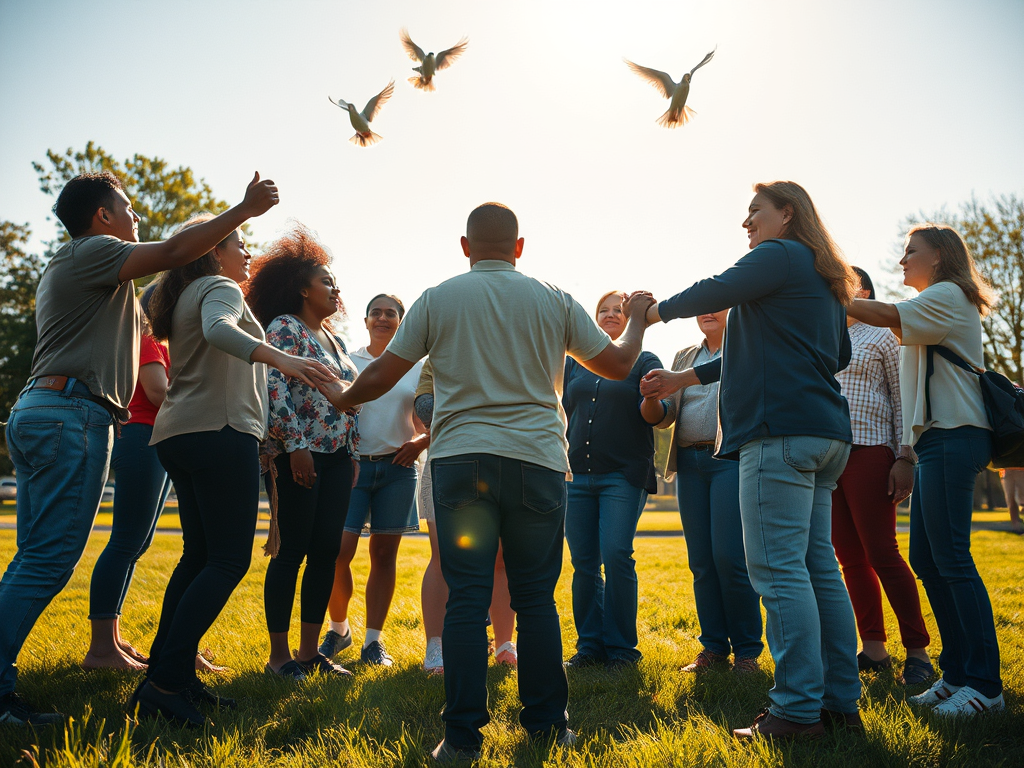
As he stepped away from the podium, the room erupted—not in protest, but in applause. Representatives stood on both sides of the aisle, clapping not just for Randall’s words but for what those words represented: a glimmer of hope that maybe, just maybe, the country could pull itself back from the brink.

It would take work. It would not happen overnight. But in that moment, something had shifted. For the first time in a long time, there was a shared sense of purpose— a belief that even in the darkest of times, unity was possible—and that together, the nation could find its way back to the light.