The Comfort of Routine: Breakfast in Mesa, Arizona

2–3 minutes

Breakfast, Community, and the Comfort of Routine
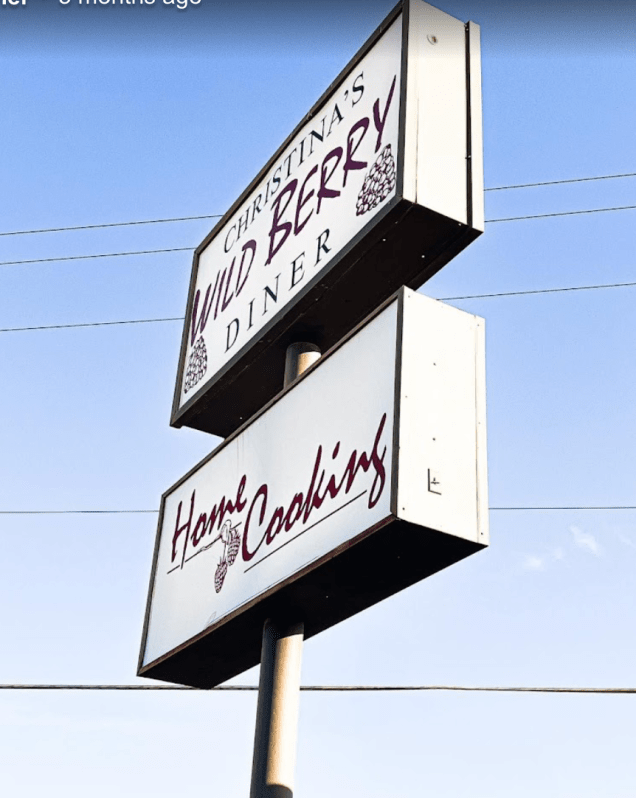
After weeks of rehab after my back surgery, I finally treated myself to breakfast at my favorite spot—Christina’s Wildberry Diner. It didn’t disappoint. It never does. The place is everything a diner should be. It’s a mix of friendly faces. The menu is full of home-cooked favorites. It has the atmosphere that makes first-timers wish they would come back again and again.

Of course, I ordered my usual. Our waitress Christine is our favorite server, not the owner. She knows my routine so well. She brings drinks to the table before we’ve even settled in. She’ll look at me with a grin and ask, “Having your normal with gravy this week?” And my answer is always the same: “Of course!”
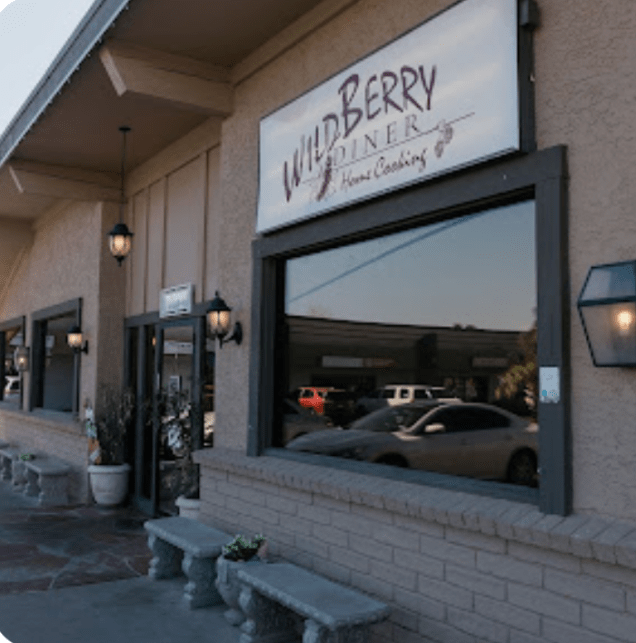
My better-half, Steve, makes his order. But it is never quite as predictable. Pancakes one week, toast the next—it keeps Christine on her toes. But no matter what we order, our glasses are never empty. That’s part of what makes this place special. Christine remembers. The staff notices. After four years of showing up on weekends, the diner has come to expect us. If we’re going to be out of town, we let them know. Here, being seen and known is part of belonging.

After breakfast comes the next stop in our routine: Superstition Ranch Market. It’s a no-frills produce market where farmers bring in fresh fruits and vegetables by the bulk. We’ve honed our shopping to an art. We’re in and out in under ten minutes. The savings are worth the trip. The produce is second to none. The clerks know us, too. One cashier in particular likes us at her lane, and when she’s there, that’s where we go. They check on our health. They also check on our recovery. This care says everything about the community we’re lucky to live in.

What makes it remarkable is this: Mesa, Arizona, isn’t a small town. It’s the second-largest city in the state, part of a metro area of more than five million people. And yet, somehow, in the middle of all that, we’ve found a community that feels small, familiar, and deeply connected.

For more than 24 years, we’ve lived in Arizona, and the last 12 in Mesa. Of all the places we’ve called home, this city is one of the most special. It has a blend of people from everywhere. It has a rhythm of routines and unexpected kindness.

By Benjamin GroffMedia© | benandsteve.com | 2025 

A Field Guide to Digshins (and Other Evenings Gone Sideways)

3–5 minutes

From The Greater County Backroads Dictionary, 3rd Edition (self-published, available only at Gus’s Feed & Seed):

Digshin (noun) — /ˈdig-shin/

  1. A lively social gathering resembles a shindig. It features more spirited dancing. It has more questionable music combinations. There is a higher probability of meeting your future ex-spouse.
  2. Any event where the crowd can dance on the floor. They will also dance on the tables.
  3. A party that starts like a potluck. It ends like a family reunion if your family includes a traveling accordion player. Imagine two cousins who know the cha-cha, and a guy named Larry who’s never without his washboard.

Origin: Exact origin unknown. The phrase was first recorded in County gossip circa 1974. Edna Lou Perkins was overheard saying, “That wasn’t no shindig, that was a full-blown digshin.”

Usage:

“We went to the barn dance. We thought it was a shindig, but they had an accordion. There was a conga line and three flavors of moonshine. It was definitely a digshin.”


Around here, folks talk about a shindig and a digshin like they’re just cousins. They are close enough to be in the same family photo. But, they are different enough to fight over who gets the last piece of pie.

A shindig, you probably already know. That’s your wholesome Saturday-night community gathering. Picnic tables sag under the weight of potato salad and baked beans. Music is played by somebody’s cousin on an acoustic guitar. The dancing doesn’t need a permission slip or a chiropractor afterward. Kids run wild between the hay bales. The mayor dances with the school librarian. There’s always that one guy who insists his chili is “just a little spicy.” It makes half the crowd break into a sweat.

A digshin, though? That’s a different animal. I didn’t know that until one fateful summer evening when I mixed the two up.

It started with an invitation. I’d heard the Johnson family was organizing “a big shindig out at the old barn.” Because the Johnson’s know how to cook, I didn’t ask too many questions. I shined up my boots. I wore my good hat. I brought along a peach cobbler. I was hoping it would make me a local legend.

First off, the music wasn’t just country and bluegrass. There was a fiddle in there. It was tangled up with a bass line. The rhythm made my boots twitch without asking permission. Someone had added a washboard player who looked like he’d just wandered in from a Mardi Gras parade. Halfway through the first song, a guy with an accordion joined in. It was as if he’d been waiting all year for this moment.

Second, the crowd was livelier than your average shindig bunch. At a normal shindig, folks will dance — polite, steady, maybe a do-si-do if the caller is feeling bossy. But here? People were spinning, stomping, and swinging their partners until their hats flew off. The mechanic from three towns over was leading a line dance. It kept changing every eight beats. Meanwhile, the feed store clerk had somehow ended up dancing with three partners at once.

See, at a shindig, you can leave anytime you want. Folks will wave, hand you a slice of pie for the road, and tell you to drive safe. At a digshin, you can’t leave without getting pulled into at least one dance. There will be one toast. And there is always one questionable story told by somebody who swears it happened “back in ’78.”

By the time I made it out, my boots were dusty. My cobbler dish was empty. My cheeks hurt from smiling. I still couldn’t tell you exactly what a digshin is, but I know this:

If you’re at a shindig, you’ll go home with a full belly.
If you’re at a digshin, you’ll go home with a full belly. You’ll also have a story you probably shouldn’t tell your grandmother.

If you are ever invited to a Shindig – Digshin crossover event, don’t pass up the chance to go. You will have the time of your life. Especially if you stay for the whole Digshin! (And remember it.)


Nostalgia and Popcorn: A Journey Through Memories

GROFF MEDIA 2024© TRUTH ENDURES IMDBPRO

Presented by benandsteve.com By: Benjamin Groff II©s

1–2 minutes

The Smell of Popcorn

Daniel stepped into the old movie theater, greeted by the warm, buttery aroma of freshly popped popcorn. It was the same scent from childhood when he remembered Saturday matinees with his father. His fingers were sticky from too much caramel corn. He heard the comforting rustle of a paper bag in his lap.

Tonight, the theater was nearly empty. A black-and-white classic was playing, something from Daniel’s father’s era. Daniel barely glanced at the screen. As he moved to the concession stand, the current blurred with the past in his mind.

“Large popcorn, extra butter,”

he said out of habit.

The teenage worker scooped the golden kernels into a striped bag, the scent thick and intoxicating. The warm, buttery aroma enveloped Daniel, transporting him back in time. He inhaled deeply. For a moment, he was seven years old again. He held his father’s hand as they walked down the carpeted aisles. They found their usual seats in the middle row.

“You always gotta have popcorn, kid,”

his father had said, grinning.

“It’s part of the experience.”

Daniel took his seat and set the bag beside him. His father should have been sitting there, too. The empty chair, a stark reminder of his absence, felt heavier than it should.

The smell of popcorn filled the air, wrapping around him like a familiar embrace. He closed his eyes, listening to the distant crackle of the projector. He almost heard his father’s voice, whispering about the film’s history like Daniel always did.

Daniel reached into the bag with a soft smile and tossed a handful of popcorn into his mouth. The taste was salty and warm, each kernel bursting with flavor. The theater didn’t feel so empty for the first time in years.

The Fall and Rise of David Caine

GROFF MEDIA 2024© TRUTH ENDURES IMDBPRO

Presented by benandsteve.com By: Benjamin Groff II©

2–3 minutes

David Caine was a man who seemed to have it all. His sprawling estate overlooked the city, a tangible reminder of his success. He owned a fleet of luxury cars. He mingled with the elite. He was celebrated as a visionary in the tech world. At 42, he had reached heights most can only dream of. But in a single day, it all crumbled.

It started with a phone call. A risky investment had failed spectacularly. The bank froze David’s accounts. His business partner vanished, taking what was left of their company’s assets. By the evening, creditors were knocking, and the media painted him as a cautionary tale of hubris.

Within weeks, David had lost everything—his mansion, cars, friends who had once hung on his every word. He was left with a single suitcase, crashing on the couch of a former employee who pitied him. But even in this dire situation, David’s resilience shone through.

David was once a figure of power and influence. Now, he walked the city streets for the first time in years without recognition. He bought coffee with coins from his pocket and scoured job boards at the local library. The life he had meticulously built felt like a distant dream, a stark contrast to his current reality.

But starting over gave David something he hadn’t had in years: clarity.

As he wandered the city one morning, he noticed a small bakery with a “Help Wanted” sign in the window. He stepped in, drawn by the scent of fresh bread. The owner, a kind woman named Maria, hired him on the spot. The work was simple—baking, cleaning, running deliveries. It was a far cry from the boardrooms he once commanded. But it was honest, grounding work. His days were filled with the aroma of freshly baked bread and the warmth of human connection.

David began to change. He rediscovered the joy of simplicity, the value of community, and the satisfaction of a hard day’s work. Baking bread was a simple act. The warmth of the oven comforted him. The laughter of the regulars at the bakery brought him a joy he had long forgotten.

Months turned into years. David saved enough to rent a modest apartment. Impressed by his dedication, Maria offered him a bakery partnership. Together, they expanded, opening two more locations. This time, David didn’t chase grandeur. He focused on creating jobs, helping others, and finding balance.

One crisp fall morning, David stood outside his bakery, watching customers laugh and chat as they sipped coffee. He had no mansion or luxury cars. His wealth was no longer measured in dollars but in smiles and connections.

David had lost everything, but he found what truly mattered in the process.

And for the first time in years, he felt rich beyond measure.

Thanksgiving At The Police Department

Groff Media 2024© Truth Endures IMDbPro

Presented by benandsteve.com By: Benjamin Groff II©

3–4 minutes

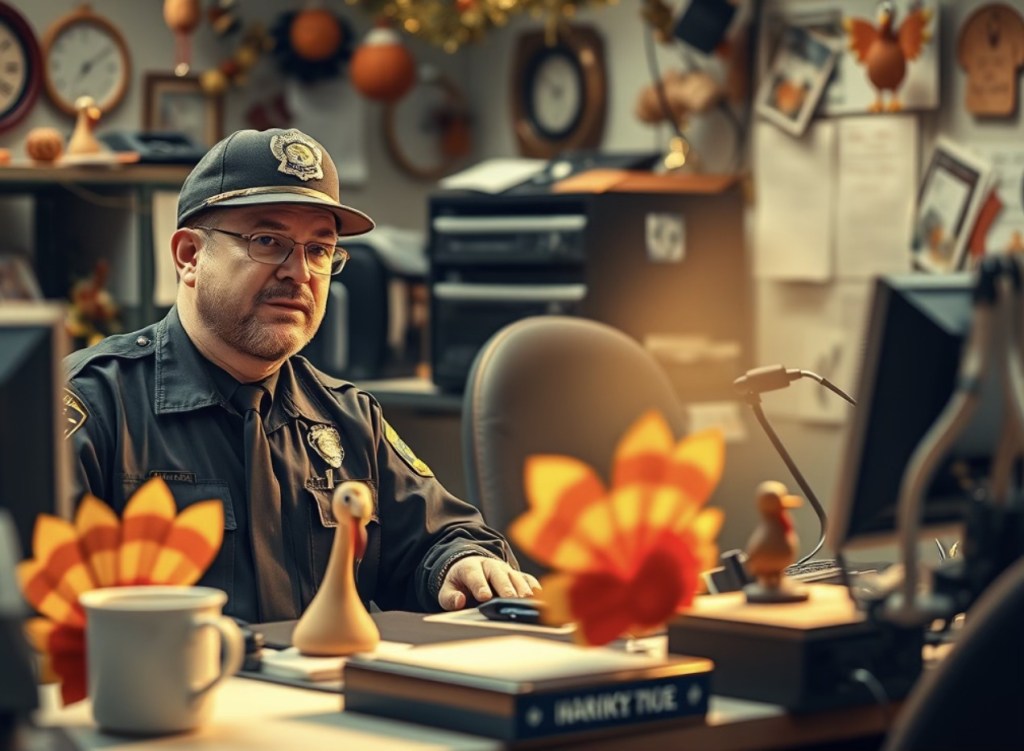
Thanksgiving at the Elk City Police Department was a paradox of warmth and chaos. While dispatchers decorated their consoles with paper turkeys and the smell of leftover pie filled the air, the holiday calls kept coming. It was supposed to be a day of gratitude and family, but for the officers on duty, it was one of their busiest days of the year.

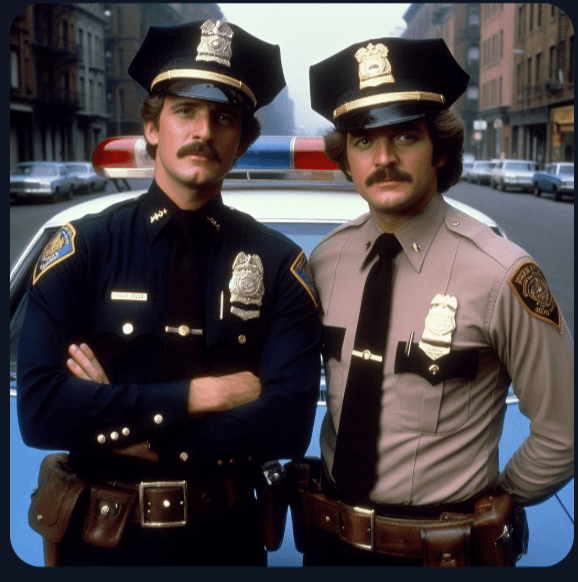
Officer Jim Layfette, a ten-year veteran of the force, leaned back in his chair and sipped lukewarm coffee.

“Thanksgiving,”

he muttered to his rookie partner, Dan Thomas.

“The one day everyone thinks they can play Jerry Springer.”

Their first call came just before 2 p.m., a disturbance at a modest home on Fourth Street. Two brothers were at each other’s throats over who was more entitled to the last slice of pumpkin pie. When Layfette and Thomnas arrived, the brothers were outside, yelling loud enough to drown out the TV playing the Cowboys game.

“Seriously?”

Thomas asked as they broke up the fight.

“Welcome to the holiday shift,”

Layfette replied. The brothers were separated and sent home with stern warnings and a firm reminder that family arguments weren’t worth a trip to jail.

“Unit 4, you’ve got a 10-16 on Elm Street. Argument over stuffing. Use caution—reporting party says it’s ‘too moist.'”

As the day wore on, the calls became more bizarre. At a small rental house on the edge of town, a woman had locked her husband out because he had insulted her mother’s green bean casserole. He stood in the front yard, arms crossed and shivering in a light jacket, refusing to apologize. Thomas handed him a blanket from the patrol car while Layfette gave him a brief lecture on tact.

“Is it that bad?”

The husband asked.

Layfette smirked.

“I’ve had worse. Just say sorry and move on.”

By evening, the call volume skyrocketed. In one house, a drunken uncle had tried to carve the turkey with a chainsaw. In another, two cousins had turned a friendly card game into a shouting match that ended with one flipping the table. When Layfette thought the shift couldn’t get weirder, the radio crackled with another call.

The dispatcher, Chris, kept things lively with dry humor.

“Unit 4, you’ve got a 10-16 on Elm Street. Argument over stuffing. Use caution—reporting party says it’s ‘too moist.'”

Layfette couldn’t suppress a laugh at the Elm Street house when the elderly matriarch opened the door.

“I didn’t call you,”

she said with a sigh.

“It was my daughter. She’s too sensitive. But if you could take the turkey with you.”

“No, ma’am, thanks for the offer,” 

Layfette replied.

Officers gathered at the station to share a potluck meal and stories of their day. Amidst the oddball arguments and creative resolutions, a sense of camaraderie and shared experience began to emerge. Thomas, who had started the shift apprehensive about the chaos, was beginning to see the humor in it all, feeling a part of the team.

“It’s like therapy,” 

Layfette told him as they sat in the patrol car during a lull.

“Families blow off steam, and we get to play referee. It beats the usual stuff.”

By the end of their shift, Layfette and Thomas had responded to a dozen calls. No one had been seriously hurt, and most of the disputes ended with hugs and laughter. This sense of accomplishment and the fact that they had kept the peace on a chaotic day filled them with a deep sense of fulfillment and pride.

As they handed off their patrol car to the next shift, Layfette gave Thomas a pat on the shoulder.

“Congratulations, rookie. You survived your first Thanksgiving shift.”

He grinned.

“And I thought holidays were supposed to be relaxing.”

“Not here,” 

Layfette said with a chuckle.

“Welcome to the Elk City PD.”

They left the station to find the night unusually quiet, as though the town had finally run out of steam. It was a well-spent Thanksgiving for the officers—keeping the peace one turkey-fueled feud at a time.

She Choked On A Prune – My First Call!

Groff Media 2024© Truth Endures IMDbPro

Presented by benandsteve.com By: Benjamin Groff II©

Time seemed to drag, yet it flew by in anticipation of the Chief’s order transferring me from Communications to Patrol. For years, I had taken complaints from the desk, booked prisoners, and processed bail. The routine had become second nature. The prospect of patrolling the streets promised a sense of freedom and a refreshing change of pace.

During my first month in Patrol, I was paired with Lieutenant Wheeler to acclimate to the policies and procedures specific to the division. Although I was already well-versed in most aspects of law enforcement, having spent significant time in the field, I understood the necessity of these transitional steps.

On October 25th, I reported for duty as usual, albeit in a different capacity. Lieutenant Wheeler adopted a methodical approach to the training, ensuring it was as instructive as possible. I kept an open mind, ready to absorb whatever new insights might come my way.

The shift started without delay. As we pulled out of the department gates, our first call came in from dispatch:

“Unit 5, respond to 305 East 1st Street. Signal 30 reported. Ambulance en route.”

Signal 30—a fatality. It was unusual for such a code to be broadcast if paramedics had not yet arrived. The ambiguity piqued our curiosity as we headed to the scene.

The address led us to an older neighborhood in the city’s central section. Upon arrival, we entered a modest single-family home and were met by a home healthcare worker. She explained, visibly shaken, that she had been sitting at the kitchen table with the 94-year-old female resident when the woman began choking on a prune. Despite her efforts to dislodge the obstruction, the victim had succumbed before she could call 911. The paramedics, now on-site, confirmed the death.

I radioed headquarters to notify the medical examiner (ME), who lived nearby and arrived within five minutes to officially pronounce the woman deceased.

Amid the formalities, the victim’s son, a doctor, arrived at the scene. Breaking the news to him was a somber task. I informed him that his mother had choked on a prune during dinner and that, despite all efforts, she had passed away. He asked to see her, and I assured him he could once the ME completed his assessment. The son was visibly displeased with the presence of the ME, which I understood; the clinical nature of such evaluations can be distressing, particularly for grieving family members.

Meanwhile, Lieutenant Wheeler assigned me an unexpected task. Puffing on his pipe, he directed me to document the incident as though it were a homicide investigation.

“For practice,” he said, “for when we have the real thing.”

So, I meticulously diagrammed the house, including the kitchen and living room, and wrote a detailed report as instructed. It was a somber start to my Patrol assignment—a reminder that, in this line of work, even the routine can take on unexpected gravity.

Japan’s Culinary Expert Yukio Hattori Dies 1945 – 2024

This Information Provided By: Benjamin Groff© Groff Media 2024© Truth Endures

Obituary: Yukio Hattori (1945 – 2024)

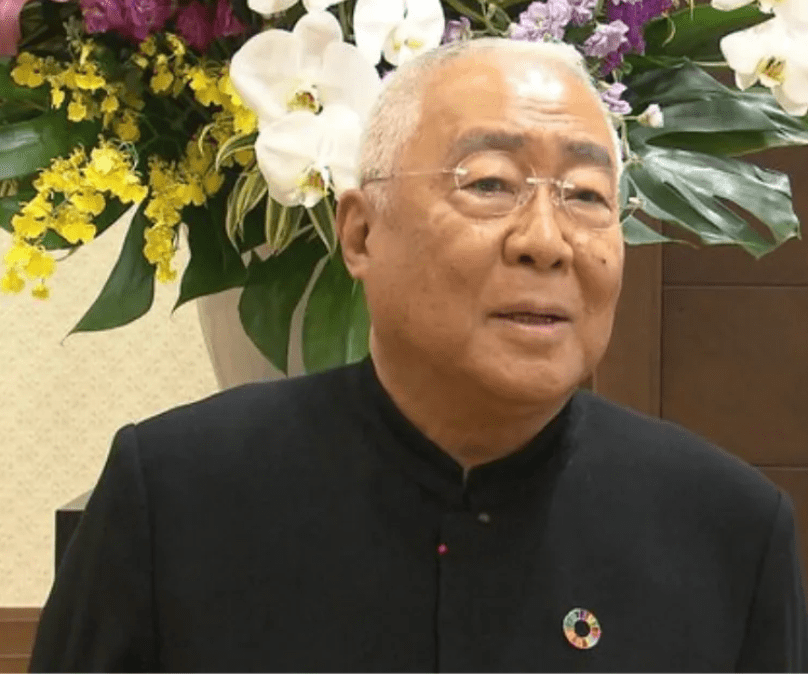
Yukio Hattori, beloved television personality, culinary expert, and educator, passed away on October 4, 2024, in Tokyo, Japan, at the age of 78. Best known as the insightful commentator on the popular Japanese cooking show Iron Chef, Hattori’s contributions to the world of food, nutrition, and culinary arts left an indelible mark on Japanese culture and beyond.

Born on December 16, 1945, in Tokyo, Hattori grew up in a family deeply rooted in the culinary tradition. He was inspired by his father’s work to pursue his passion for food and nutrition, eventually earning a PhD from Showa University. His profound understanding of both cooking and the science of nutrition shaped his career, which would extend far beyond the kitchen.

Hattori became the fifth president of Hattori Nutrition College, a prestigious institution founded by his father, known for its unique blend of culinary excellence and nutritional education. Under his leadership, the college trained thousands of chefs, nutritionists, and food critics, shaping the next generation of culinary professionals. His commitment to culinary education made him a pivotal figure in elevating the standards of both food preparation and healthy eating habits in Japan.

While his educational work was vital, Hattori was perhaps most recognizable for his television career. As a competitor, judge, and commentator on Iron Chef, Hattori’s sharp palate, deep culinary knowledge, and entertaining commentary endeared him to audiences across Japan and worldwide. His presence on the show not only lent credibility but also helped popularize Japanese cuisine internationally.

In addition to his work on television, Hattori appeared in films such as Aji ichi Monme (2011) and Mibu, and he continued to influence Japanese cuisine and public health through his numerous cookbooks, radio shows, and public health campaigns. He was a firm believer that good food should nourish both body and soul, a philosophy he called “Well Taste,” where flavor and health go hand in hand.

Yukio Hattori’s legacy will continue through his extensive contributions to culinary education, his influence on Japanese cuisine, and the students he mentored at Hattori Nutrition College. He is survived by his family, colleagues, and countless admirers who were inspired by his passion for food and nutrition.

Yukio Hattori’s memory will forever be cherished as one of the most prominent voices in Japan’s culinary world, whose life’s work brought taste and health together for the benefit of all.

How Ultra-Processed Foods Consumed the American Diet

A Story Posted By Benjamin Groff© Groff Media 2024© Truth Endures

Today, ultra-processed foods dominate the American food supply, making up over half of an American adult’s diet and two-thirds of an American child’s diet despite links to poor health. 

Even as those numbers are likely to increase, and food technology develops at lightning speed, U.S. agencies have seemed to lag behind in updating the rules that regulate these foods compared to other countries. 

CBS Reports examines why ultra-processed foods have become so pervasive in the American diet – and what filling the gaps in federal regulation can do to ensure Americans are fed and healthy. 

Watch Ultra Processed: How Food Tech Consumed the American Diet on CBS News, Paramount+ or by downloading the free CBS News App.

The Legend of Chuck McCready: The Philly Cheesesteak Incident

A Story By: Benjamin Groff© Groff Media 2024© Truth Endures

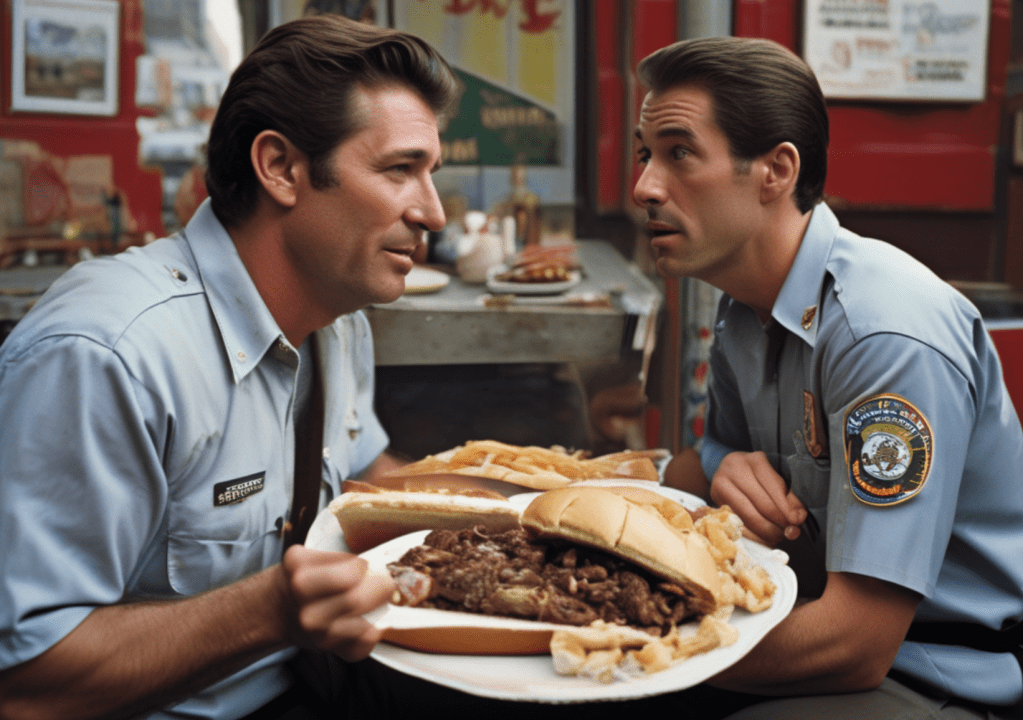
In the late 1980s, in the heart of Philadelphia, there was a small, hole-in-the-wall cheesesteak joint called “Tony’s Grub Hub.” The scent of sizzling beef and onions filled the air, and the line for a classic Philly cheesesteak often wrapped around the block. Among the regulars was a local character named Chuck McCready, a fierce, well-loved figure in the neighborhood known for his larger-than-life personality and his deep, almost spiritual love for Philadelphia’s favorite sandwich.

Chuck was a man of principle and passion who never took kindly to the concept of “rules,” especially those that got in the way of a good meal. One fateful evening, Chuck was seated at his usual spot in Tony’s, about to dig into his third cheesesteak of the night—a massive, dripping monster of a sandwich stuffed with extra meat, onions, and a double helping of cheese whiz.

But as Chuck was about to take his first bite, a group of police officers entered the establishment. They had received reports of someone fitting Chuck’s description causing a disturbance in the area earlier that day. They approached Chuck, asking him to step outside for questioning.

Not one to back down, Chuck looked up from his cheesesteak, his hands still clutching the sandwich, and growled, “What’s the charge? Eating a cheesesteak? A succulent Philly cheesesteak?”

The officers, taken aback by his unexpected response, insisted he come quietly. Now fully immersed in the moment, Chuck stood up, holding his half-eaten cheesesteak high like a wand. “This is America, baby!” he bellowed, “Home of the free, where a man can enjoy his meal in peace!”

What happened next was a chaotic scene of Chuck getting dragged out of the restaurant, still holding his cheesesteak, shouting about his rights, and demanding to know why a man couldn’t enjoy a simple meal without being harassed. As the officers tried to force him into the squad car, Chuck continued his tirade: “Is this how we treat a cheesesteak lover in Philly? America is a democracy! My actions are freedom manifest!”

The incident was caught on camera by a passerby and quickly went viral. With Chuck’s impassioned defense of his right to eat a cheesesteak, the video resonated with people across the country. Memes of Chuck McCready declaring “This is freedom manifest!” while clutching a cheesesteak became an overnight sensation.

Years later, Chuck McCready became a folk hero, a symbol of defiance and the right to enjoy life’s simple pleasures. His story was told and retold, often with embellishments, but always with the same core message: no one comes between a man and his cheesesteak in America. His iconic catchphrase, “What’s the charge? Eating a cheesesteak?” became a rallying cry for those who valued freedom and a good meal.

Chuck McCready, the man who stood up for his right to enjoy a succulent Philly cheesesteak, became a legend in the city of brotherly love and is forever remembered as the Cheesesteak Defender.

A Select Article from One of Our Trusted Sources ~ What Makes Chicken Noodle Soup the Ultimate Comfort Soup! ~

It’s not just the tender chicken, the perfectly cooked noodles, or the savory broth that make it special; it’s the way this humble soup stirs memories of cherished family moments, rainy days spent indoors, and the simple, comforting presence of loved ones.

Visit the Rise and Inspire Blog to learn more about this article click here!