The Christmas Eve Babbs Switch School Fire

This story is pulled from the archives as a celebration for the season edition.

Groff Media 2024© Truth Endures IMDbPro

Presented by benandsteve.com By: Benjamin Groff II©

3–5 minutes

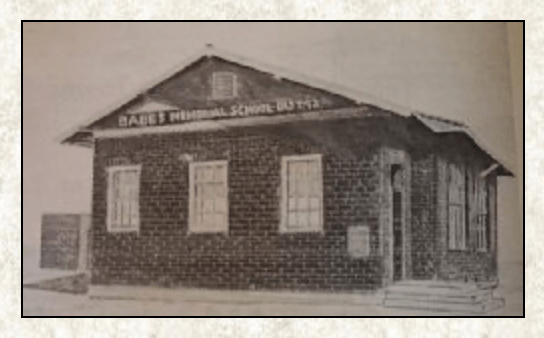
Every year at this time, I am reminded of a harrowing story. It is deeply etched into Oklahoma’s collective memory: the Babbs Switch School Fire of Christmas Eve, 1924. It stands as a tragic lesson in safety, humanity, and resilience.

The Fire

On that bitterly cold night, with heavy snow and sub-zero temperatures, 200 residents gathered. They met in Babbs Switch’s one-room schoolhouse for a Christmas Eve program. The school was tightly packed with engaged couples, grandparents, mothers, fathers, and children. The building’s windows were secured with wire mesh to deter intruders from the nearby railroad tracks. The sole exit—a door that opened inward—would soon become a deadly trap.

The program concluded with a teenage boy dressed as Santa Claus. He handed out toys and candy beneath a cedar Christmas tree. The tree was decorated with paper, tinsel, and lit candles. One of these candles brushed against the tree’s dry needles, igniting it instantly. Mrs. W.G. Boland, whose three children perished that night, later recounted the horror. 

“I tried to beat it out with a paper sack,”

she said, 

“but it did no good.” 

Initially, the crowd laughed, believing the small blaze was being contained. But within moments, the flames engulfed the tree, the ceiling, and the entire structure.

Panic erupted.

The sole exit became a bottleneck as the crowd surged toward the door. Those at the back pushed forward, while the unlucky at the front got crushed in the chaos. Some attempted to pry open the wired windows, but their efforts were futile. Trapped inside, children, parents, and neighbors succumbed to the smoke and flames. Witnesses recalled the horrifying scene of people clawing at the exit. Bodies piled atop one another, and the acrid stench of burning flesh.

The Survivors

Among those who escaped was Lillie Biggers. She crawled out from under a desk clutching a doll she had just received. Her mother, Margaret, managed to get out but suffered severe burns to her hands and arms. Tragically, Lillie’s brothers, William, 9, and Walter, 15, did not survive. The Biggers family’s grief mirrored that of the entire community, where 36 lives were lost—half of them children. The belongings later identified the bodies of William and Walter. They carried a toy gun and a belt buckle.
The injured and deceased were transported to Hobart, the nearest town, where makeshift morgues were set up. The community’s response, known as the “Hobart Spirit,” saw residents drop everything to give aid and comfort. Newspaper accounts likened this effort to the Oklahoma Standard that emerged decades later after the Oklahoma City bombing.

Julie Braun with Mother
Lillie’s Doll That Survived Fire

The Aftermath

The tragedy prompted a wave of reforms. Oklahoma legislators enacted fire safety laws requiring outward-opening doors, multiple exits, and accessible window screens in schools. Open flames were banned, and fire extinguishers became mandatory. The reforms eventually spread nationwide, though it would take more tragedies before they were fully adopted.

The morning after the Babbs Switch School Fire

A Missing Child

The story took a strange twist that turned it into a lingering mystery. Among the victims was three-year-old Mary Edens—or so it was believed. Her aunt, Alice Noah, escaped the building. She died days later. She claimed she had handed Mary to an unknown person outside the burning building. Mary’s body was never recovered, leading her family to hope she had survived.

In 1957, decades after the fire, a woman named Grace Reynolds came forth. She was from Barstow, California. She claimed to be the long-lost Mary. The Edens family reunited with her on Art Linkletter’s House Party television program, believing their prayers had been answered. Reynolds even wrote a book about her experiences. It is titled Mary, Child of Tragedy: The Story of the Lost Child of the 1924 Babbs Switch Fire.

But only some were convinced. A local newspaper editor who investigated the claim questioned its validity. 

Skeptics noted inconsistencies in Reynolds’s story, but no definitive evidence confirmed or debunked her identity. To this day, the truth remains elusive.

Legacy

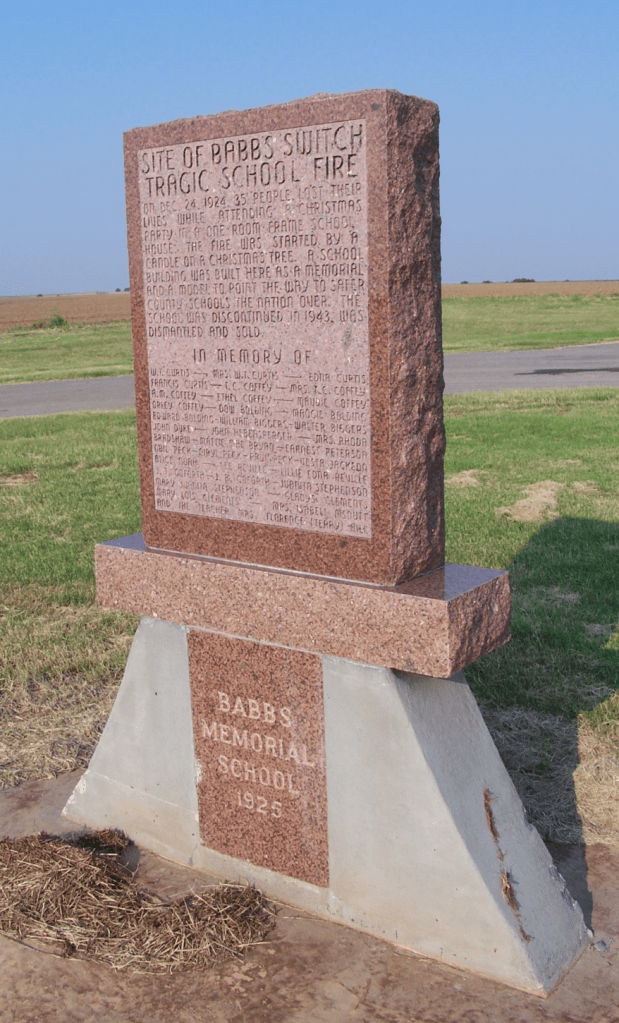
The Babbs Switch School Fire is remembered as one of the deadliest school fires in U.S. history. A stone monument now stands where the schoolhouse once stood, a quiet marker of lives lost and lessons learned. The physical scars of the tragedy have faded. Yet, its memory endures. It serves as a poignant reminder of the fragility of life and our enduring hope for safety and change.

References for this writing can be found at – 

https://blogoklahoma.us/place/394/kiowa/site-of-babbs-switch-tragic-school-fire

https://www.thesirenspodcast.com/post/case-files-babbs-christmas-fire

https://genealogytrails.com/oka/kiowa/babbsfire.html

https://en.wikipedia.org/wiki/Babbs_Switch_fire

Guardians of Memory: Writing Our Truth Before It’s Rewritten

© Benjamin H. Groff II — Truth Endures / benandsteve.com

1–2 minutes

Tell It Like It Is

There comes a time in every nation’s history when silence becomes more dangerous than speaking. We are living in such a time now. Books are being banned, lessons erased, and truths rewritten to serve new agendas. What once stood as collective memory is being scrubbed clean, leaving behind a shell of what was. But history, real history, lives in the people who lived it — and that means you.

If the history of your people, your town, your family, or your country is under attack, write it down. Don’t wait for permission. Don’t assume someone else will record it for you. Every letter and every diary is a piece of the truth. Every recollection of how life was is also a piece of the truth. This includes the food you ate and the songs that played on your street. This truth is something that no one can erase.

Print it. Bind it. Keep it in a box, a drawer, or a chest. Place it anywhere it can be found by those who come after you. Share copies among your family members. Hide one in a place that time itself will forget. Digital memories are fleeting; servers fail, passwords vanish, and what is “deleted” online is often gone forever. But paper endures.

We have the power, still, to protect the soul of a free people — not through politics, but through preservation. Keep the banned books. Read them. Understand why they were silenced. They are often the keys to liberty’s locked door. The stories, poems, and records we save are not only for nostalgia’s sake. They defend against those who claim freedom was always fragile. They made it seem that way to future generations.

When freedom falters, truth is what leads us back.
Write your book. Tell your story.
Save it as if your grandchildren’s liberty depends on it — because one day, it just will.


By Benjamin GroffMedia© | benandsteve.com | ©2025 

🩸 The Making of a Nightmare

When Progress Buried the Past Beneath Big Canyon Lake

By Benjamin Groff II | The Story Teller – benandsteve.com.

3–5 minutes

As The Story Goes –––

No one had seriously thought it would be real. They all thought what they were doing would be forgotten in only a few weeks. But what followed would go on, and on, and on. And not even those with the worst of intentions have predicted the outcome.

It was the summer of 1941, and spring had brought heavy rains to the Big Canyon, flooding the valley below. The farmers had not yet seen the completion of the WPA projects. These projects began in the late 1930s across most of the country. With those projects came new schools, highways, bridges, and community centers. The last of the projects here was the shoring up of valleys. This involved building dams to control runoff waters from creeks, rivers, and streams. When the heavy rains came, the floods were tamed through a spillway cut deep into the earth.

Now that summer was upon them, workers from the CCC and WPA joined forces. They were building what would be known as the Big Canyon Watershed Project. They used mules and draft horses. With these animals, they pulled wedges and plows. The team cleared the valley floor that would soon disappear beneath the rising water. Every blow of an axe and every groan of timber was heard in the thick air. These sounds seemed to signify progress—or so they thought.

The men bunked in rough-hewn cabins and ate in a mess hall that smelled of kerosene and sweat. They joked about ghosts that will one day swim through the drowned cottonwoods or the abandoned family homesteads. But there was one homestead no one wanted to talk about—the Miller place.


The Miller Mystery

The Millers had lived at the base of the canyon for as long as anyone remember. Their house sat crooked beside a spring-fed creek that never dried, even in the harshest drought. Locals said the spring was sacred to the Washita people long before white settlers arrived. When the government bought out the land for the dam, every family took the offered payment—except the Millers.

Old Henry Miller refused to leave. “This land don’t belong to the government,” he told the surveyors. “It don’t even belong to me. It belongs to the water, and she’ll take it back when she’s good and ready.”

They said he vanished one night in late October, just before the final clearing began. The official report listed him as relocated. But the men who worked the next week swore. They heard hammering at night. They saw a lantern flickering deep in the canyon where the Miller house had stood.

When the first rains came that winter, the spillway gates were opened. The lake began to rise. Within days, the Miller place—and whatever was left of it—was gone.


The Haunting of Big Canyon Lake

By the next summer, Big Canyon Lake became a local attraction. Families came from nearby towns to picnic along the shore and marvel at the engineering wonder. Fishermen swore the lake was bottomless. Divers who dared to explore near the old creek bed spoke of hearing faint knocking under the water. It sounded as if someone were still hammering boards together.

A maintenance crew was at the spillway in 1947. They were inspecting it by draining part of the spillway. During the inspection, they found something jammed in one of the lower gates. It was a section of cabin timber—weathered, darkened, with three hand-carved letters burned into it: H. M.

The lake was drained once more in the drought of 1954. When it receded far enough, the foundation of the old Miller place appeared, blackened but intact. And at its center, where the spring once bubbled up, was a hole—dark, deep, and breathing.

No one went near it. The Army Corps sealed the area, and within weeks, the water rose again.


The Nightmare Endures

Locals say Big Canyon Lake is cursed. On calm nights, when the moon hangs over the still water, you can see a lantern light. It flickers beneath the surface. Fishermen have reported hearing someone tapping on their boats, like a muffled warning.

The government calls it folklore.
The people who live nearby call it memory.

As for the Miller land, they say the water finally took it back. It also took the man who tried to keep it.


© Benjamin H. Groff II — Truth Endures / benandsteve.com

October 20th — A Day to Reflect on the Strength of Democracy in a Republic

1–2 minutes

October 20: A Day of Quiet Turning Points

Some days in history roar with drama. Others whisper their significance so softly we almost miss it. October 20 is one of those whispering days. Yet, it carries lessons about resilience. It also teaches about change and the long arc of progress.

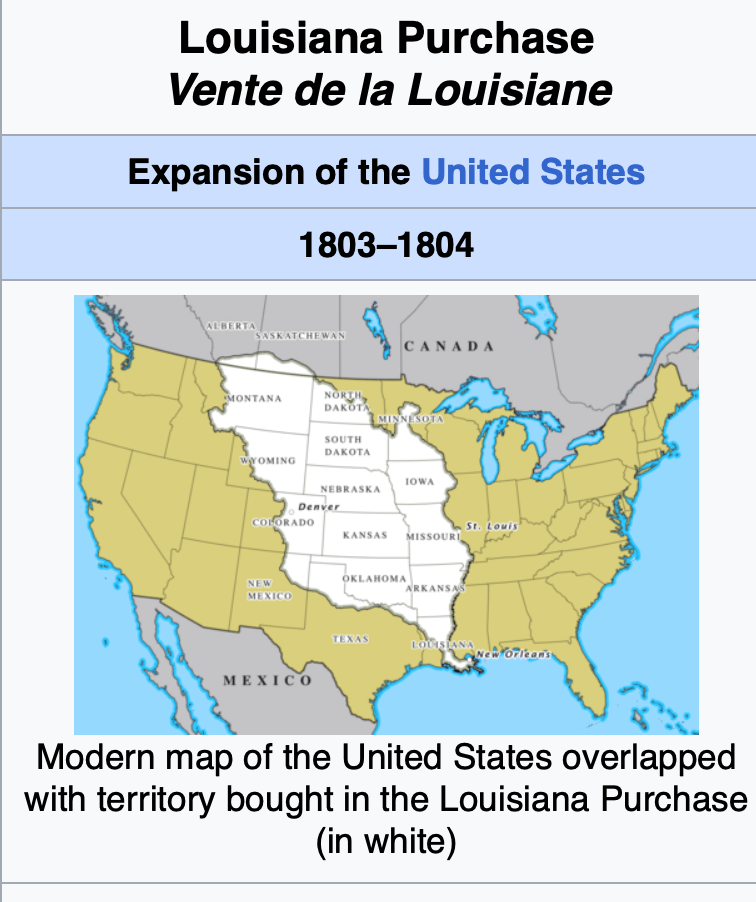
On October 20, 1803, the U.S. Senate ratified the Louisiana Purchase Treaty, doubling the size of a young America. It wasn’t just a land deal; it was a leap of faith in a still-unfolding national experiment. The deal shaped the destiny of millions who had not yet been born and transformed how people saw opportunity. That’s one perspective on October 20. It reminds us that big things often start quietly. They are inked onto paper while the world goes about its business.

Photo by Jacob Morch on Pexels.com

Fast-forward to October 20, 1973 — the “Saturday Night Massacre” during Watergate. The Attorney General and his deputy resigned rather than obey President Nixon’s order to fire the Watergate special prosecutor. It was a night of constitutional crisis, but also a night when individuals drew lines they would not cross. In retrospect, it became a defining moment of accountability, integrity, and public trust.

Even in culture, October 20 pops up. It’s the birthdate of artists, athletes, and ordinary people whose work changed lives. It’s also National Youth Confidence Day. It’s a chance to celebrate the courage of young people. They are forging their own paths, as each generation must.

Photo by Monstera Production on Pexels.com

So what does this all mean for us on October 20, 2025

Maybe it’s a nudge to honor the quiet decisions. It is about the unsigned papers and the moments of private courage. These shape our futures just as much as public fireworks. Maybe it’s a reminder to invest in tomorrow. Take the risk. Speak the truth. Double down on hope, even when nobody’s watching.

October 20 is not a “holiday” in the traditional sense. It is a hinge day. It is one of those unassuming points on the calendar. History reminds us that the choices we make today become the landmarks of tomorrow.


By Benjamin GroffMedia© | benandsteve.com | ©2025 

October 10 in History: Key Milestones and Cultural Impact

3–4 minutes

Oct 10th a good day for history
How history can pile up on any day of the year.

How did we arrive at our current state? It is a question a lot of people are asking. It didn’t happen all at once. Getting to where we are, was forever in the making. Before anyone alive today was here. There have been people making decisions, some not so great. Life happens. It is a popular saying for some people. And as you can tell through this date in history. October 10th was a great day for history to be set. It doesn’t explain everything that has happened. But it does give one an idea of how history can pile up on any given day.

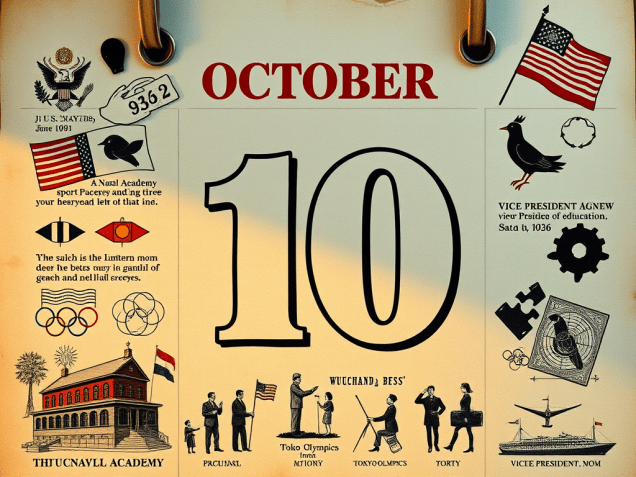
Here’s an evocative image of a calendar marking October 10. It serves as a visual prompt for a day rich in history. This day includes milestone events and global observances.

  1. 1845 – U.S. Naval Academy Founded
    • In Annapolis, Maryland, the Naval School opens with its first class of 50 midshipmen. This event lays the foundation for the modern U.S. Naval Academy.(1)
  2. 1911 – Wuchang Uprising Ignites Revolution This bold move sets the stage for the fall of China’s Qing dynasty. It also leads to the emergence of the Republic of China.(2)
  3. 1935 – ‘Porgy and Bess’ Debuts on Broadway
    • George Gershwin’s groundbreaking opera, featuring an all-Black cast, premieres to widespread acclaim.(3)
  4. 1964 – Tokyo Olympics Start: A Global Broadcast
    • Making history, these Summer Games are the first to be televised live worldwide.(4)
  5. 1973 – Vice-President Agnew’s Resignation
    • Spiro Agnew steps down amid tax evasion charges, a rare and dramatic political moment in U.S. history.(5)

October 10, 1973: A Domino That Changed the Presidency

On October 10, 1973, U.S. Vice President Spiro T. Agnew resigned in disgrace. He pleaded no contest to tax evasion charges. These charges stemmed from a bribery scandal dating back to his time as Maryland’s governor. A sitting Vice President had never stepped down under criminal accusations before. This event sent shockwaves through American politics.

The resignation created an immediate power vacuum. Under the 25th Amendment, passed just six years earlier, President Richard Nixon was capable of nominating a new Vice President. His choice was Michigan Congressman Gerald R. Ford, a steady Republican leader respected across party lines. Congress confirmed him in December 1973, setting in motion a sequence of events no one predicted.

Only months later, the Watergate scandal deepened. Nixon’s credibility unraveled under the weight of investigations into the cover-up of the break-in at the Democratic National Committee headquarters. With impeachment looming, Nixon resigned on August 9, 1974—the first U.S. president to ever do so.

In that instant, Gerald Ford became president. He told the American people in his swearing-in speech: 

“Our long national nightmare is over.” 

Ford’s ascent to the Oval Office was accidental. He became the only person to serve as both Vice President and president without being elected to either office.

Looking back, it’s clear that Agnew’s resignation on October 10 wasn’t just a scandal. It was a turning point in American history. Had he remained Vice President, Agnew—not Ford—would have been next in line when Nixon resigned. The nation, already reeling from Watergate, faced the reality of a president tainted by his own corruption charges. Instead, Ford’s calm, if brief, presidency offered a bridge back to stability.


👉 OCTOBER 10, 1973 stands as proof of how a single resignation reshaped the presidency. It altered the line of succession. It changed the course of American political history.

October 10 is more than a date—it’s a living mosaic of pivotal moments, human emotion, progress, and remembrance. It reflects how history shapes us and how we, in turn, continue writing it.

By Benjamin GroffMedia© | benandsteve.com | ©2025 

Leif Erikson Day: Honoring Exploration and Heritage and World Post Day Both From A Very Long Time Ago – Especially Now!

2–3 minutes

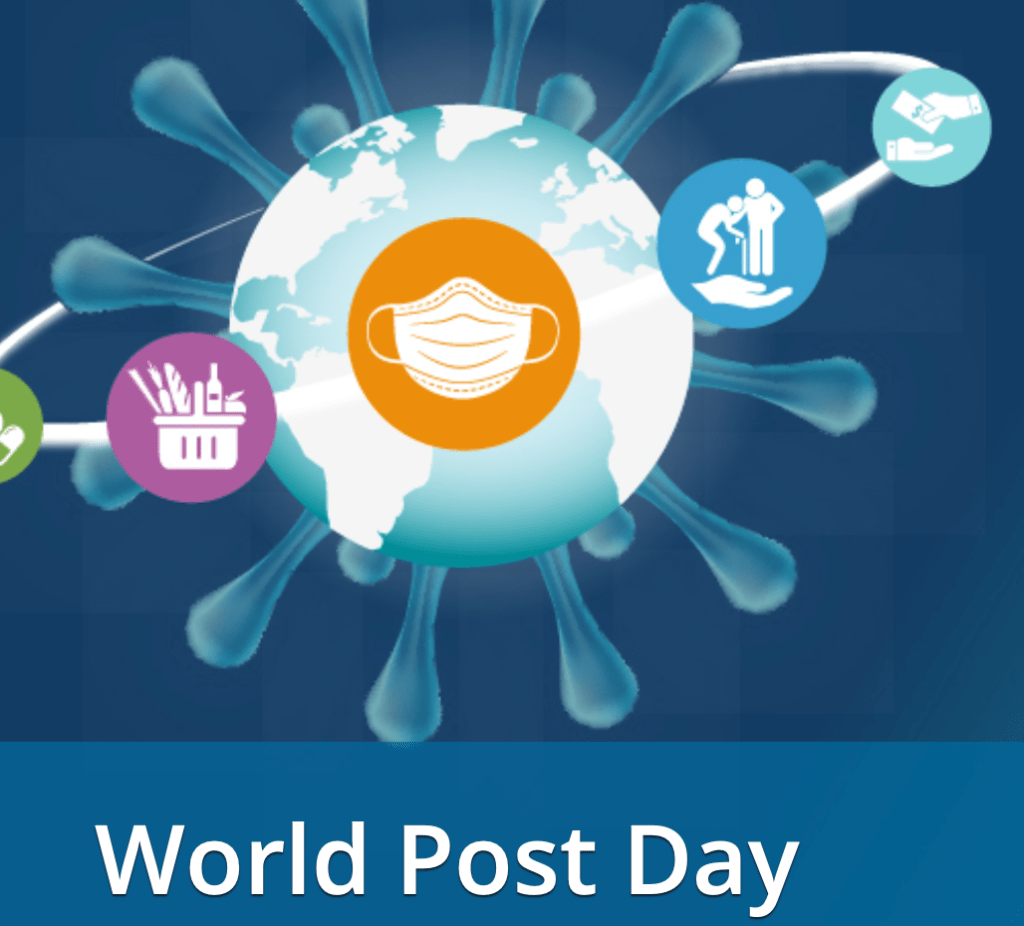
October 9 is more than just a date on the calendar. It’s a day rich with meaning. The day celebrates global communication. It also honors the spirit of exploration. Here are two powerful ways this day reminds us of human connection:


In 1874, the Universal Postal Union (UPU) was founded in Switzerland. This event marked the beginning of the modern era of global communication. Today—World Post Day—we honor the postal service’s vital role in connecting communities, families, and hearts across the globe. Post offices celebrate with stamp exhibits, open houses, and even letter-writing competitions for young people. (1)


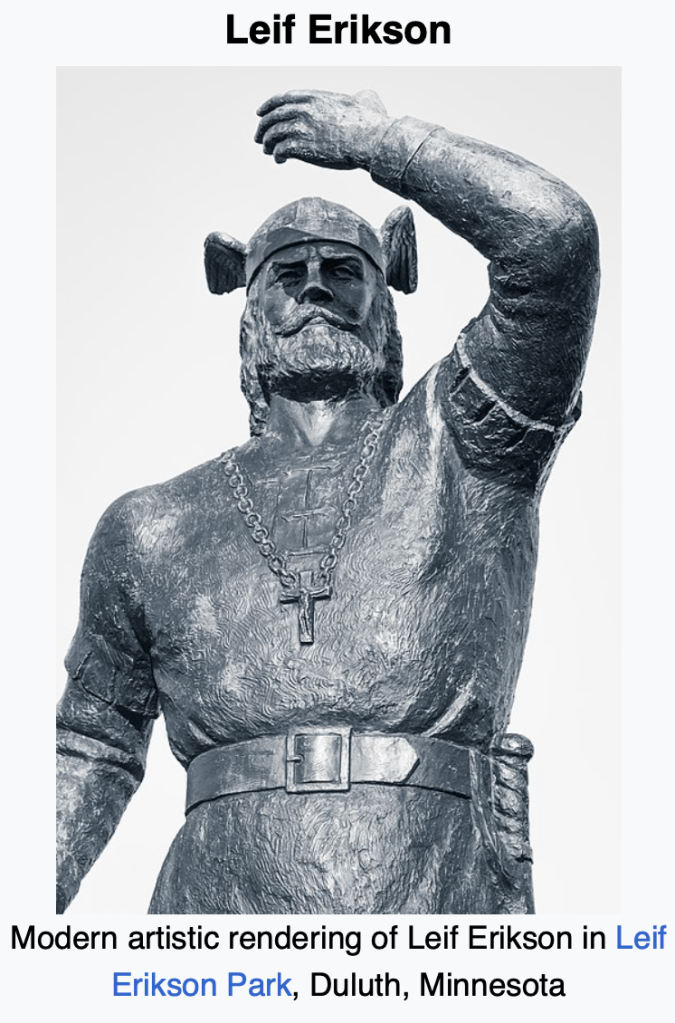
Leif Erikson Day is also celebrated today. This day honors the Norse explorer. He is believed to be the first European to reach North America. Established in the early 20th century and federally recognized in the U.S. in 1935, the day is especially cherished in communities of Nordic heritage. It’s a celebration of bravery, curiosity, and the timeless call of new frontiers.(2)

In 1929, the Wisconsin Legislature passed a bill to make 9 October “Leif Erikson Day” in the state. In the years after, several other states adopted laws to celebrate the day.[81] In 1935, legislation was introduced to the United States Congress requesting federal observance of the day. Before the legislation was passed, it was amended so that the observance would only occur in 1935. [82]  Which it was, after a proclamation that year by President President Franklin D. Roosevelt).[83] In future decades, many attempts to pass legislation were unsuccessful. They sought to have Leif Erikson Day proclaimed annually by the president.[84]Proponents eventually succeeded. In 1964, the Congress authorized and requested the president to proclaim 9 October of each year as “Leif Erikson Day”.[19]In the years since, each president has issued an annual proclamation calling for observance of the day.[85]. (3)


These historic observances brought to mind a personal story I experienced just last weekend:

Visiting the grocery store, I ran into a long-forgotten neighbor—someone I’d only exchanged waves with in passing. We chatted by the fruit stand for several minutes, sharing news, laughter, and even some life advice. When I left, I carried more than groceries. I carried renewed warmth. It was a reminder that connection doesn’t have to be epic to be meaningful.


  • Send a letter or thank-you note—traditional or digital. Let someone know how much they matter.
  • Reach out to someone you haven’t spoken to in a while. A simple chat can rekindle connection.
  • Think about exploration—big or small. Whether learning something new, trying a recipe, or visiting a new place, celebrate the courage that brought you there.

On this October 9, let’s honor our past. Let’s look ahead with open hearts. We will celebrate the small connections that make life rich and whole. Especially if countries around the world are shipping to America again. If not, keep an eye on history. It happened once. It will happen again. Maybe.


By Benjamin GroffMedia© | benandsteve.com | ©2025 

Back-to-School Memories at the Local Drug Store

2–3 minutes

Back-to-School at the Drug Store

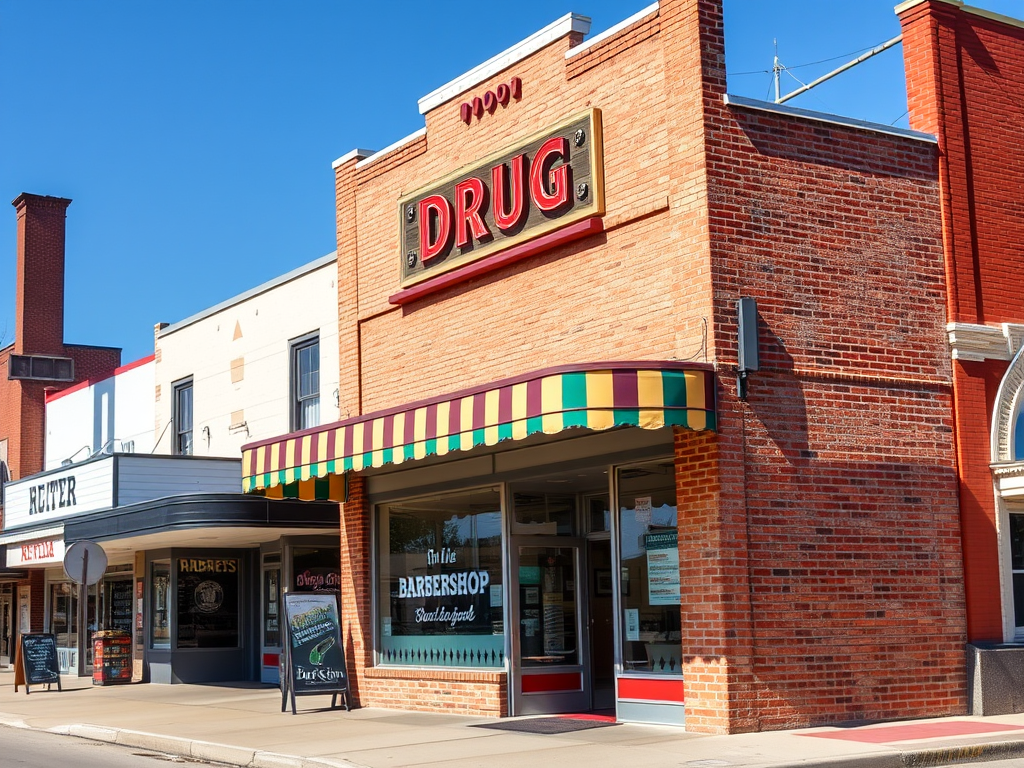
In our little town, back-to-school season wasn’t marked by glossy superstore aisles or online orders delivered in cardboard boxes. No, it happened right on Main Street. It was at the drug store tucked neatly between the barber shop and the movie theater.

That drug store was a place all its own. A long soda fountain stretched nearly the length of one wall. It had red-topped stools that spun in slow circles when you climbed onto them. Folks would stop in for a cherry Coke or a vanilla phosphate. The hum of the soda jerk’s mixer became as familiar as the sound of church bells on Sunday morning. On the north end of the store, up near the front window, stood a glass display case. Behind it sat neat stacks of paper bags. Each bag was carefully filled with the exact school supplies a child would need for a given grade.

Every August, families filed in, children buzzing with nervous excitement. You only needed to walk up to the counter. Puff out your chest and tell the lady behind it your grade number. With a kind smile, she’d hand over a brown paper bag with your future sealed inside. The bag contained pencils, crayons, rulers, and erasers. For the younger grades, it included that wide-lined treasure known as the Big Chief Tablet.

Kindergarten through third grade was the golden stretch, when opening that bag felt like Christmas morning in August. We’d tear into the packages of crayons. We tested the sharpness of new pencils. We imagined all the things we’d draw and write. But as the years went on, the thrill wore off. By fourth grade, the magic faded. We realized those paper bags didn’t just hold supplies. They carried us straight back into the dreaded routine of homework. There were also spelling tests and teachers who never gave you quite enough recess.

Still, that ritual mattered. The drug store had a soda fountain fizzing. Its shelves were lined with shiny notebooks. It gave us a sense of belonging. It tied the town together. The barber cut hair next door. The movie theater marquee changed weekly. Parents shepherded kids through one more milestone.

Every bag marked a fresh start, even if we grumbled about it. None of us would have admitted it then. Yet, there was comfort in knowing that behind that glass display case was a little brown sack of sharpened pencils. It was waiting for us every year with brand-new beginnings.


By Benjamin GroffMedia© | benandsteve.com | 2025 

Statues, Highways, and History: Keeping Hate Visible as a Warning

Statues and names aren’t just honors—they’re reminders. By keeping the names of hate in public view, we offer the right context. This turns symbols of division into warnings for the future.

2–3 minutes

Why We Should Keep the Names of Hate in the Public Eye

Photo by Germar Derron on Pexels.com

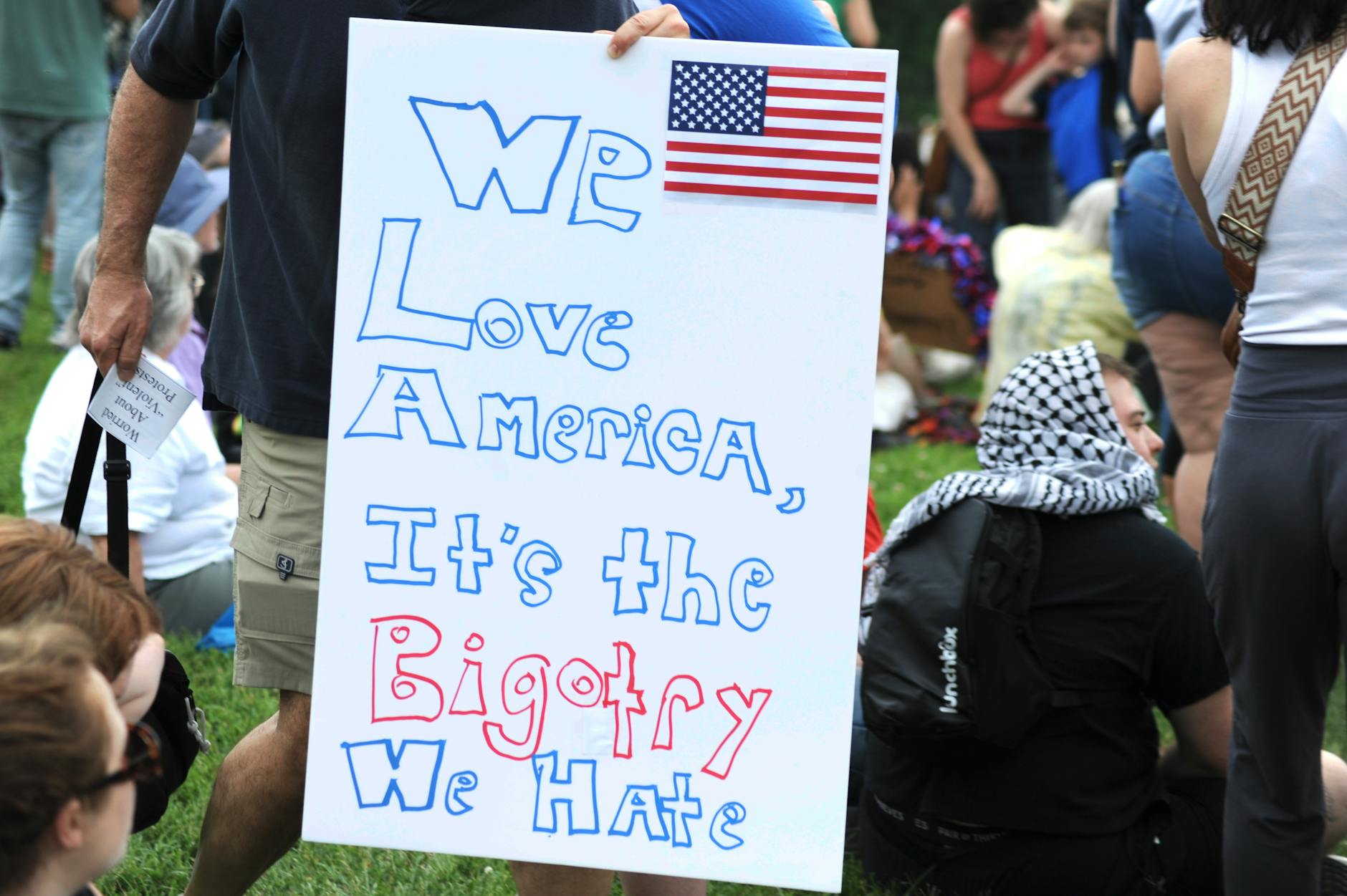
We’re living in a time of debate across the country. Communities are considering whether to remove statues and rename highways. There’s also discussion on erasing the public memory of people who promoted hate, bigotry, and division. It’s an understandable impulse: why honor those who harmed others? But erasure carries a hidden risk—forgetting.

History teaches us that forgetting the darkest chapters makes it easier for them to repeat. When names are scrubbed away, the context can be lost. Future generations will not know the full weight of what those people stood for. Worse still, without clear memory, others try to rehabilitate these messages. Some try to whitewash them. Others rebrand the hateful messages into something even more dangerous.

Keeping those names visible—in the right way—turns them from tributes into lessons. A highway named after a segregationist can become an outdoor museum. A statue of a tyrant can stand in a public square. A plaque can explain exactly what they did. It can also explain why it was wrong. By preserving their presence as warnings, not celebrations, we turn the symbols of hate into tools for education.

This is not about reverence. It’s about responsibility. Public memory should hold two things at once. First, the good we want to emulate. Second, the evil we must never repeat. We can’t do that if we pretend the evil never existed.

The Takeaway

We remember the names of those who promoted hate and division. By doing so, we deny them the chance to be rebranded as something they were not. Their actions stay tied to their identities. Their legacy becomes a constant, unavoidable reminder of how close we once came to tearing ourselves apart. If we truly want a brighter, more united future, we need both inspiration—and warning signs along the way.


By Benjamin GroffMedia© | benandsteve.com | ©2025 

The Undermining Of Civil Rights In 2025

2–4 minutes

QUESTION FROM READER

Will Americans loose more Civil Rights With Republicans In control? Mike Lee, Trump, and others are pushing the Project 2025 Playbook. It sure looks like the Constitution’s articles are under threat and today’s GOP will lead to its undoing. 

THE RESPONSE

You’ve raised a critical concern. The answer is: yes. Under a Republican administration, there is influence exerted through tools like Project 2025. Many observers, civil‑rights organizations, and news outlets warn of significant threats to civil liberties and democratic norms.


What Is Project 2025?

  • Project 2025 is a policy blueprint authored by The Heritage Foundation. Contributions from former Trump staffers are included. It advocates for a sweeping restructuring of the executive branch. The plan expands presidential control over key agencies like the DOJ, FBI, DHS, and Department of Education. It seeks to install ideologically vetted loyalists, dismantle agency independence, and extend power across the executive branch.(1)
  • Critics label it an authoritarian and Christian-nationalist roadmap. It threatens civil rights protections. It also endangers democratic checks and balances and the rule of law.(2)

Key Threats to Civil Rights

  1. Dismantling DEIA and Affirmative Action Safeguards
    • Executive Orders signed in January 2025 have abolished government DEI (Diversity, Equity, Inclusion, Accessibility) initiatives, rescinded affirmative action mandates (e.g., EO 11246), and set in motion mass firings of employees affiliated with DEIA roles.(3)
  2. Eroding Oversight of Discrimination
    • Project 2025 proposes ending the collection of race and gender data by the EEOC. This decision would cripple the government’s ability to detect and tackle employment discrimination. (4)
  3. Weakening Voting Rights and Census Equity
    • The plan promotes a citizenship question on the census, which will suppress representation and resources for immigrant and minority communities. It also proposes limiting the DOJs role in election protection. Additionally, it suggests reforms to the FEC that would shift power to politically appointed commissioners.(4a)
  4. Suppressing LGBTQ+, Black, Immigrant, and Other Communities’ Protections
    • Policies aim to curtail reproductive freedoms, strip LGBTQ rights, and dismantle educational protections—particularly in schools and public institutions. (5)
  5. Consolidating Executive Power and Undermining the Courts
    • Project 2025 advocates for weakening independent oversight, firing Inspectors General, and enforcing loyalty tests—subverting professional integrity and rule of law.(6)
  6. Shifting Federal Civil Rights Enforcement
  7. Politicizing Justice Leadership
    • Appointments like that of Pam Bondi raise concerns about fairness in civil and voting rights enforcement. Their lack of independence from political influence is particularly worrisome.(7)

Broader Repercussions Reported by News Sources

  • Project 2025 has already sparked real-world impacts, like:
    • Mississippi implementing stricter abortion bans, voting restrictions, education rollbacks, and book censorship—reflecting Project 2025’s influence.(8)
    • Cancellation of Latino cultural festivals due to intensified ICE enforcement, demonstrating an atmosphere of fear in immigrant communities.(9)
    • A marked rollback on civil rights enforcement and protections in education and beyond. (9a)

In Summary

  • There is clear, mounting evidence.Republicans are in positions of control. They are involved in Project 2025. This involvement poses an existential threat to several pillars of civil rights. Republicans are in positions of control. Project 2025 is a concern. There is a threat to several pillars of civil rights. This threat includes dismantling DEI programs. It involves undermining federal oversight. Additionally, it consolidates executive power and targets marginalized communities across voting, education, employment, and beyond.

What You Can Do

  • Support and amplify the work of:
    • Civil rights organizations: ACLU, NAACP LDF, Urban League—many are actively litigating (e.g., National Urban League v. Trump contesting anti-DEIA executive orders) (10).
    • Voting and immigrant rights groups tracking suppression and census issues.
    • Local advocacy and grassroots movements fostering solidarity and resistance.

By Benjamin GroffMedia© | benandsteve.com | 2025 

The Show Must Go ON! Miss Ethel Waters Leads First-Ever Screen Sing-Along

1–2 minutes

🎬 MEMORIES FROM MEMORY LANE — “ON WITH THE SHOW!” STRIKES A NEW NOTE 🎶
From Our Entertainment Desk — May 29, 1929

Ladies and gentlemen, the talkies have gone and done it again! Moving pictures with sound became a reality on August 6th, 1926. Just three short years later, Warner Bros. has given the public something new to hum about—literally.

This week, cinema-goers were treated to On with the Show!—a Technicolor extravaganza. It boasted the peerless pipes of Miss Ethel Waters. She delivered the lilting tune Am I Blue with such warmth that even the ushers were swooning. But here’s the rub: for the first time in motion picture history, audiences were invited to sing along!

That’s right, folks—words flashed upon the screen as Miss Waters crooned, urging patrons to join in from their seats. And join they did! Voices rang out from the front row to the peanut gallery. Some were as sweet as a songbird. Others were a touch off-key. All were in the spirit of merriment.

Picture it—gentlemen in their finest straw boaters. Ladies fanning themselves in the glow of the projector. Everyone is swept up in the chorus together. Why, one might call it the first karaoke moment in show business history. We’ve yet to invent such a word!

If this is the future of the pictures, we say—bring on the music! After all, the best part of a song is not just hearing it… it’s singing it together.

Before It Gets Ignored By Governing Bodies – History Should Be Reported Far And Wide – Like the Camp Logan Disgrace In Texas

Sharing the history that some would rather hide, destroy, or deny is important. This truth must be told. It’s the very principle on which these United States were founded.

4–5 minutes

Sixty-three black soldiers were represented by one lawyer in the
largest court martial in U.S. history, the first of three that followed
the Houston riot of 1917. In total, 110 men out of 118 were found
guilty, and nineteen were sentenced to death by hanging.

Red Paint, Red History: Camp Logan’s Vandalized Truth

In the wake of Hurricane Harvey’s devastation in September, Houston crews were still hauling out debris. They were drying soaked walls when they stumbled upon something different. Red paint was smeared in thick defiance across a freshly rededicated historical marker at the former site of Camp Logan.

The vandals knew what they were doing. The paint wasn’t random—it covered the part of the inscription that told the uncomfortable truth:

Jesse Moore (right), the
great uncle of Angela Holder

These men were not strangers to segregation; most had grown up in the Jim Crow South. But in uniform, with the eagle on their buttons and rifles in their hands, they expected something closer to equality. Houston didn’t see it that way.

White residents and police officers saw armed Black soldiers as a threat. They were considered a dangerous example. This can inspire local Black citizens to demand the same respect. The insults were constant. Slurs were shouted from sidewalks. “Whites Only” signs were on streetcars. There was harassment for daring to walk where white men didn’t think they should.

Tensions reached a breaking point on August 23, 1917. That is when police arrested a Black soldier for intervening in the arrest of a Black woman. A Black military policeman went to inquire about it. There was an argument, gunfire, and rumors. False ones—that he had been killed and that a white mob was heading for the camp.

In a world already wired with racial hostility, that was enough. Over 100 soldiers grabbed rifles and marched into Houston. Two hours later, sixteen white people were dead—five policemen among them-and four Black soldiers had been killed. It was one of the few riots in U.S. history where more white people died than Black people.

The army’s response was swift and merciless. Martial law. The unit was shipped back to New Mexico. Courts-martial—the first one, the largest in U.S. military history.

Of 118 indicted Black soldiers, 110 were found guilty. Nineteen men were hanged, fifty-three sentenced to life in prison. No white civilians were charged. Two white officers faced trial and were released.

Families have carried the weight for generations. Jason Holt still has a 100-year-old letter from his relative, Private Hawkins. It was written to his mother the night before his execution. In it, he tells her not to grieve. He claims his innocence. He also says he is ready to “take his seat in heaven.”

Charles Anderson spoke bluntly. His relative, Sergeant William Nesbit, was among the hanged. “They sent those soldiers into the most hostile environment imaginable. The riot was a problem that arose from community policing in such hostility.”

Even some descendants of those killed admitted the trial was a travesty. “I have no doubt that the men executed were innocent. They had nothing to do with the deaths,” says Sandra Hajtman, great-granddaughter of a policeman who died that night.

In Houston, the story was buried for decades. Newcomers often know nothing about it. That’s changing—slowly—thanks to historians, museums, and family members pushing for recognition, even pardons. Angela Holder, great-niece of Corporal Jesse Moore, has fought for marked graves and posthumous justice. “We tried during the Obama presidency for a pardon… we can try again.”

And then there’s the final image—December 11, 1917—thirteen ropes swaying from a scaffold. The condemned men were silent, unresisting. Nesbit, moments from death, calling to his men: “Not a word out of any of you men now!”

The red paint on that marker wasn’t just vandalism—it was an effort to silence history. But the truth doesn’t scrub away that easily.

If you strip away the paint, you’ll see the exact words that got buried for decades. It serves as a reminder that justice denied is never fully past. The lessons of 1917 are still waiting to be learned.

The Progressive Magazine originally published a report on this topic and in fact has an extended piece on this incident. You can learn more by visiting Progressive Magazine to read the entire report here.

A LAZY PORCH KIND OF AFTERNOON

By Benjamin GroffMedia© | benandsteve.com | 2025 Truth Endures©

1–2 minutes

A Lazy Porch on July 25, 1939

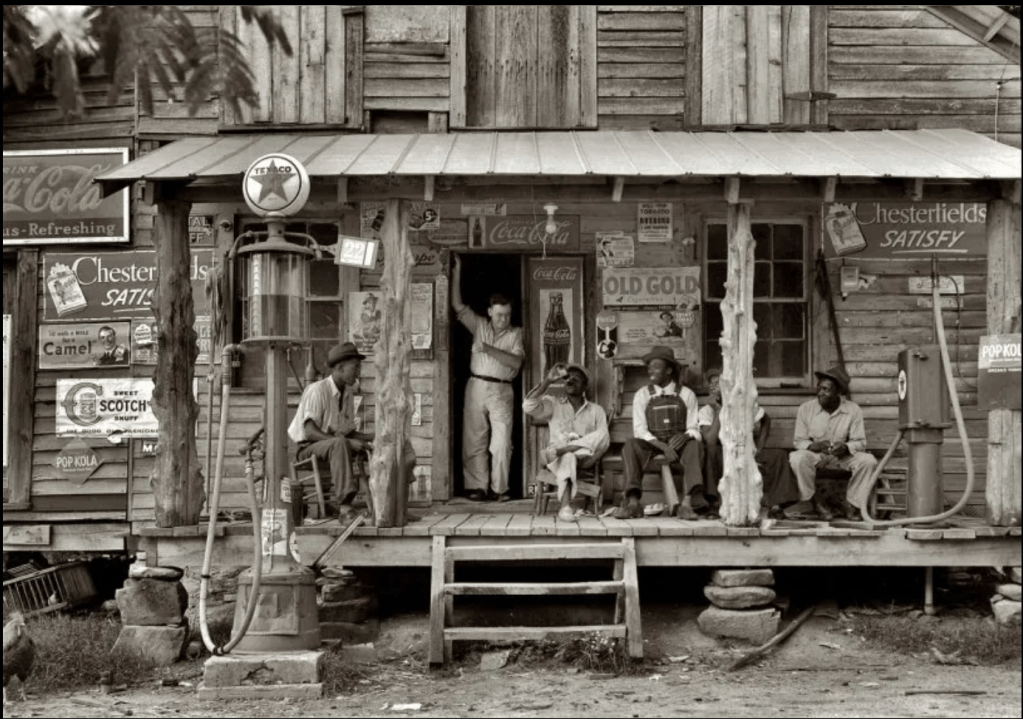
On July 25, 1939, Dorothea Lange was a renowned documentary photographer. She paused her busy travels across the American South. She stepped into a quiet moment just outside Gordonton, North Carolina. It was a humid summer Sunday. Through her lens, she discovered something golden: a rickety country store. Its wooden porch was dappled in shade. A few men sat comfortably in rocking chairs on it. The afternoon moved slowly around them.(1)

“Captured on July 25, 1939: a country store porch in rural North Carolina. Dorothea Lange found the perfect rendition of a lazy summer afternoon here. Let this moment remind you—it’s okay to choose rest today.”

Lange raised her camera and captured exactly what she saw: a peaceful summer tableau. The porch wasn’t staged—it was real life, real rest. The men lounged beside old kerosene and gas pumps, their chatter and quiet breaths blending with cicadas in the heat.

That moment—frozen in a gelatin silver print—became a small celebration of indolent joy. No agenda. No hurry. Just an afternoon spent doing exactly what summer begs you to do: nothing.

Reflections on the COVID-19 Pandemic and Its Legacy

By Benjamin GroffMedia© | benandsteve.com | 2025 Truth Endures©

3–4 minutes

A Note from the Pandemic

I was being driven to an appointment earlier this week when a reminder flashed on my phone. It was one of those “On This Day” memories—a flashback from five years ago. It was a note I had posted on social media during one of the darkest times I can remember.

It read:

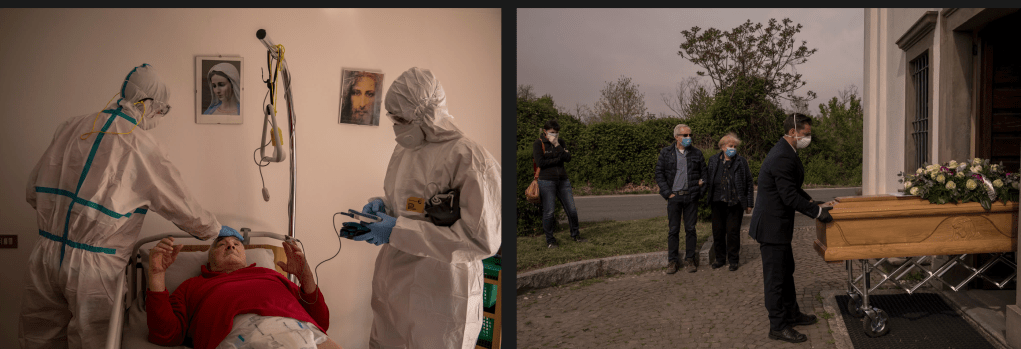
Today, the national death toll in the United States reached 80,000. In the state where I live, the deaths are many. They have brought in refrigerated trailers to hold the bodies. The mortuaries have more bodies than they can carry. The coroner’s office is over capacity. It is being reported that 100 people died in the city where I live yesterday alone.

People separated by COVID-19. Pinterest

That note was one of millions posted by people around the world that day. It was part of a collective cry for help. It was a shared testimony during a global crisis. The crisis tested the very core of our humanity. The COVID-19 pandemic wasn’t just a health emergency—it was a historical reckoning.

The novel coronavirus (SARS-CoV-2), first identified in late 2019, swept through cities and countries with terrifying speed. It took the lives of the elderly and the young. It didn’t care about borders or status. It wasn’t limited by language, ideology, or belief. It was an indiscriminate invader—silent, invisible, and merciless.

Pinterest

Hospitals filled to capacity. ICUs ran out of beds and ventilators. Nurses worked 12–16 hour shifts in full protective gear. They returned the next day knowing more patients would be gone. They feared coworkers would be gone too. Some had to reuse PPE, others never had proper protection at all. Entire medical teams were decimated. The faces behind the masks—so many of them never seen again by their loved ones.

In some areas, morgues overflowed, and refrigerated trucks became temporary storage for the deceased. Funeral homes struggled to keep up. Families said goodbye to loved ones through screens or from behind glass, incapable of touching them one last time.

Pinterest

Masks became a symbol—of protection, of politics, of protest. While many wore them out of care for others, others rejected them, fueled by fear, misinformation, or political agendas. What should have been a unified public health response fractured along ideological lines.

The spread of disinformation only made things worse. Some media personalities claimed the virus was “just a flu.” Other public figures suggested it was a hoax designed for political or financial gain. Some of those very same people later contracted the virus. A few died from it—some reportedly urging others to take it seriously with their final breaths.

Pinterest

For me, it was personal. I knew approximately twenty—or more—people I had known for most of my life who died from COVID-19. Every day brought another notice: a friend from childhood, a neighbor, someone from church, a former coworker. Sometimes I would hear from relatives who lost someone. Other times, I’d check news from back home and learn that yet another familiar name had been claimed. In places I had once lived, people I had once shared moments and memories with—gone. The virus wasn’t abstract. It carved itself into the story of my life, my family, my friends, and their families.

Pinterest

Vaccines would eventually arrive, faster than any in modern history. But by then, millions had died, and countless others were left with long-term effects—some still suffering today. As of mid-2025, more than 1.1 million Americans have died from COVID-19. Globally, the death toll has surpassed 7 million, though some estimates suggest the real numbers were even higher.

That reminder on my phone was more than just a memory. It was a marker—a scar from a time we lived through together, yet each experienced in our own way.

Pinterest

Let it be said clearly: the virus was real. The loss was real. And for many, the grief still is.

Let that note stand as a record not just of tragedy, but of resilience. Of what we went through—and of what we must remember. Because forgetting invites the risk of repeating it all over again.

Leaving A Writing That Opens A Window To Their Souls

By Benjamin GroffMedia© | benandsteve.com | 2025 Truth Endures©

2–3 minutes

In Their Own Hand: How Handwriting Revealed the Soul of My Ancestors

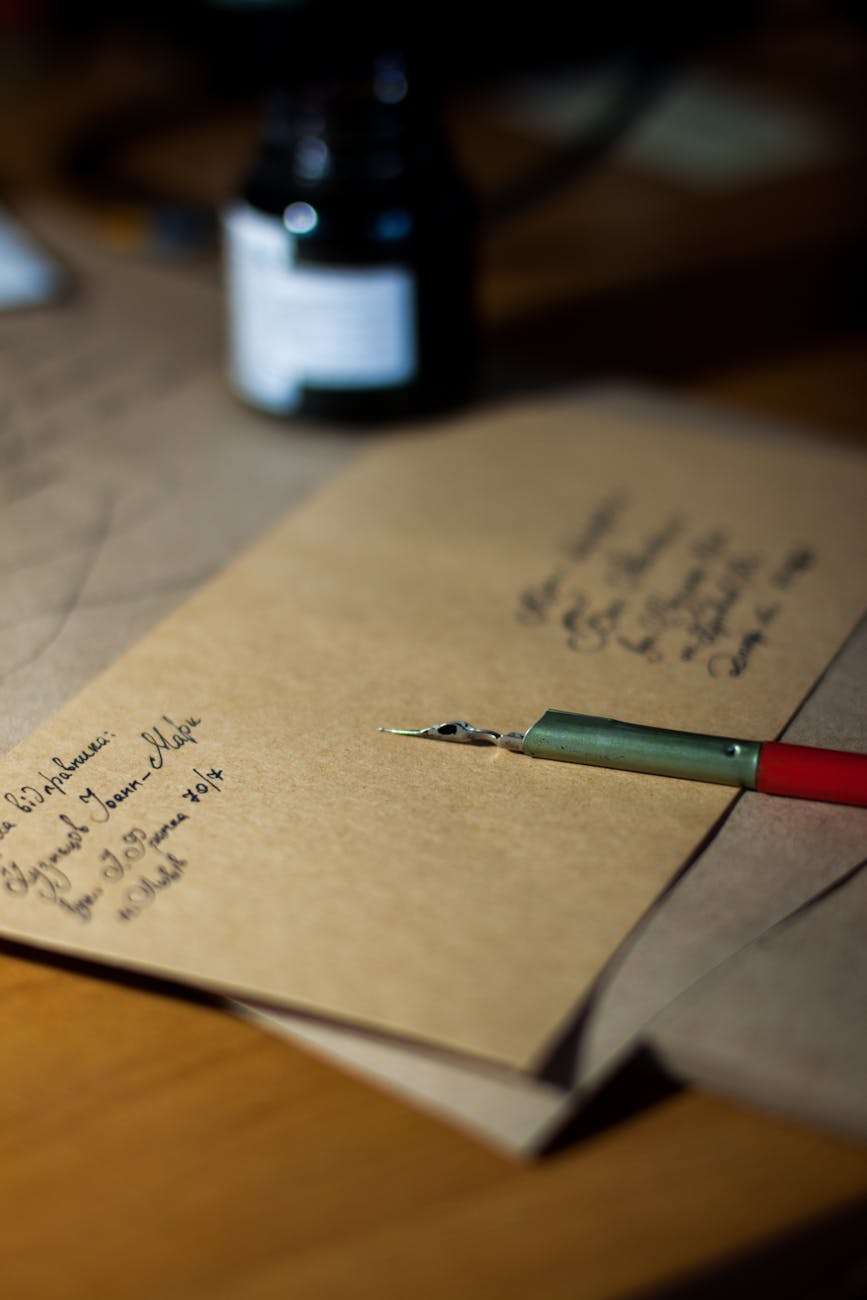
I’ve been tracing my family tree for years, patiently tracking each lead and clue like breadcrumbs through time. Some discoveries came through census records, others through photographs or whispered family legends. But nothing has stirred my spirit more deeply than the sight of my great-grandparents’ handwriting—elegant, looping, unmistakably human.

The moment I first held a document written in their own hand, I felt something shift. Their penmanship, carefully practiced and beautifully formed, didn’t just tell me who they were—it revealed how they lived. It was a window to their character, their care, and their time.

The Lost Art of Penmanship

In the 19th and early 20th centuries, good handwriting was a matter of pride, discipline, and social standing. Penmanship was taught rigorously in schools. Techniques like the Spencerian script dominated in the mid-1800s. This was followed by the Palmer Method in the early 1900s. These systems weren’t just about communication—they emphasized grace, control, and personality in each letter’s curve and flow. A person’s handwriting was part of their reputation.

To write beautifully was to show respect: for the reader, for the message, and for oneself. That’s something we’ve largely lost in today’s age of keyboards and quick texts.

A Personal Connection

As I sorted through old family papers—birth certificates, letters, recipe cards—I found myself lingering over the handwriting. There was something intimate about it, something tender. These weren’t just names on a tree or dates on a ledger. These were real people, and here they were, writing. Their fingers once held that pen, their thoughts shaped these lines.

My great-grandmother’s cursive was especially elegant, delicate yet confident. Her capital “L” swept like a violin bow, and her lowercase “r” curled just so. She had taken her time. Her writing carried weight. And somehow, through the shape of her letters, I felt like I knew her.

Handwriting as Legacy

Before voice recordings or home videos, handwriting was how our ancestors captured themselves. They wrote love letters, grocery lists, prayers, and goodbyes. They signed their names to marriage licenses and land deeds, wills and war drafts—leaving behind a fingerprint of the soul.

Today, when we stumble across those scraps, they don’t just offer genealogical evidence. They give us a bridge—a real, living connection to the people who came before us. As the world moves faster, something sacred arises. It comes from slowing down to read their words in their own hand.

Preserving the Past

If you’ve begun your own family history search, don’t overlook the handwritten notes. Scan them, preserve them, study them. Teach younger generations about their significance. They may not understand the loops and flourishes right away—but they’ll feel the legacy behind them.

Because sometimes, a single line of cursive can carry more emotion than a thousand digital files.


Have you come across your ancestors’ handwriting? Share your story in the comments below—or better yet, share an image of it. Let’s celebrate the quiet beauty of those who came before us, one pen stroke at a time.

From the Pages of History: July 11, 1955 — “Nightfall Over Wichita”

By Benjamin GroffMedia© | benandsteve.com | 2025 Truth Endures©

1–2 minutes

Wichita, Kansas – July 11, 1955

The heat had been unrelenting for days. By the evening of July 11th, something darker than the weather was brewing in the Kansas sky. Just after 6:30 p.m., local news reports began buzzing with concern. A fast-moving system was developing west of the city. Radar, still new technology for military meteorologists, was showing rotation in those days it wasn’t shared like it is now.

At 7:04 p.m., a Category F4 tornado touched down near the town of Udall, Kansas. It was the same town that had been devastated just two months earlier in the deadliest tornado in state history. This one skirted the more populated areas. Still, damage was widespread. Barns were flattened, power lines twisted, and wheat fields scraped bare. Miraculously, only minor injuries were reported. Many locals said they were prepared this time, keeping radios on and basements cleared after the trauma of May 25.

The Wichita Eagle published a late edition the next morning. The headline read

“Twister Brushes Wichita – City Spared, Farms Not So Lucky.” 

File Photo

A black-and-white photo captured a twisted silo lying like a crushed can under a red-orange sunrise.

Looking back, July 11, 1955, was a reminder that in the American Midwest, nature rarely knocks. It kicks in the door, and you learn to be ready.

The Rebirth of Santa Barbara: From Ruin to Renewal

By Benjamin GroffMedia© | benandsteve.com | 2025 Truth Endures©

1–2 minutes

Dawn of Ruin and Renewal

The early morning calm in Santa Barbara was shattered at 6:23 a.m. when the earth quaked mightily beneath the coastal city. Buildings shuddered, bricks rained from rooftops, and the streets trembled underfoot. In those precious dawn hours, life had yet to stir—and that spared many. By daybreak, the death toll stood at a modest 13 souls, considering the scale of devastation (1).

Amid the wreckage, sailors from the USS Arkansas joined local workers to dig for survivors. They waded through rubble, their uniforms dusty and stained, hauling beams and calling out names. Looters probed the ruins for valuables, but guards—both Navy and civilian—kept vigilant watch (2).

Yet even as remnants of the old city lay in ruin, a vision for rebirth emerged. Spearheaded by Pearl Chase and other civic leaders, a movement to rebuild in a unified Spanish Colonial style began. The reconstruction led to enduring landmarks. It produced the iconic Santa Barbara County Courthouse, soon hailed as among America’s most beautiful public buildings (3).


Santa Barbara’s quiet elegance faced destruction in one fateful dawn. But the very next dawn laid the foundations of something more beautiful. The earthquake didn’t just shake buildings—it awakened a city’s spirit, forging an architectural legacy that stands to this day.

What Used To Be Considered Contents Of A Friendly Letter To Relatives And Friends – Sent Via The Postal Service!

Once common, a letter like this is no longer sent, a quiet casualty of how communication has evolved.

By Benjamin GroffMedia© | benandsteve.com | 2025 Truth Endures©

4–6 minutes

Photo by John-Mark Smith on Pexels.com

Otis the Protector & the Blessing of Good Friends

Dear Lawrence and Matilda,

Summer is the season when friendly faces return. Over the last two days, we’ve been lucky to welcome four dear friends into our lives again. One of them we hadn’t seen in nearly twenty years.

Our friend David moved away long ago in pursuit of new opportunities. We kept in touch online, and about a year ago, we sold his mother one of our cars. He trusted our word that the car was solid and dependable—and that trust meant a lot.

David and his spouse Josh flew into town Thursday. We already had our plans set. We planned to have dinner at our favorite Main Street spot, Christina’s Wildberry Restaurant. The food there is so good you’ll want to order extra sides. (And I do.)

We caught up on everything. David had moved on from California and now lives in Seattle, working as a film producer for Amazon. We had once caught a glimpse of him in a movie. We wondered if acting was his calling. Yet, he ended up behind the camera instead. The conversation flowed easily as we shared stories of the past twenty years. We talked about loved ones we’d lost. We discussed the changes in our lives. We even shared our various health battles. It was a wonderful reunion.

Back at home, yet, Otis—our ever-vigilant dog—was not quite as enthusiastic. He’s fiercely protective of our home, and new visitors throw his routine into chaos. He needed time to warm up: slow approaches, sniffing, backing off. Growling. Barking. Panting. It was a whole process. After a solid half-hour of cautious interaction, Otis finally accepted David and Josh. But his window of friendliness only lasted about five to ten minutes—just in time for them to leave.

And then came Saturday morning.

Otis had barely recovered from his last round of introductions. Then our friends Angie and Sasha showed up for breakfast—again at Christina’s Wildberry. But this time, Otis escalated. He was in full protection mode from the moment they approached the door. We strapped him into his safety vest. I controlled his lunges. As soon as the door opened, he exploded into noise. Growls, barks, lunges—the works. He reared on his hind legs like a wild stallion, roaring from the depths of his protective instincts. I had to scoop him up just so our friends was allowed to come inside.

We finally decided the best move was to leave for breakfast and give Otis a break. I would be the last one out. I unhooked his leash and bent down to reassure him.

“You’re in charge now,”

I said.

“Watch the house, and you’re free to bite anyone who tries to get in.”

His ears perked. Head tilted. Tail wagging. He jumped up with glee, clearly proud to be entrusted with such an important task. I locked the door and set the alarm—knowing full well that no burglar was getting past Commander Otis.

At the restaurant, our regular waitress Christine (no relation to the owner) greeted us with a smile. We always sit in her section. The service is consistently wonderful, and the food never disappoints. As we enjoyed our meal, we caught up on recent happenings. We also discussed the month ahead. We talked about my upcoming surgery in July. Not the easiest topic, but one that matters deeply among close friends. Angie and Sasha have supported us immensely. We rely on them more than words can express.

After breakfast, we walked next door to the wholesale closeout auction warehouse. It’s a local gem filled with Amazon returns and overstock items. It’s a weekly stop for us, and we nearly always walk out with a treasure or two. This time was no exception—we all left holding bags of bargains from the $10, $5, and $3 tables. The outer walls of the warehouse show moderately priced goods under $50. These include cooking gear, tools, and musical equipment.

But that’s where I had to call it a day. My legs gave out—one of the symptoms tied to my spinal disc issue. It’s why surgery is coming. I was brought home to rest in my easy chair while Steve, Angie, and Sasha continued the shopping mission.

They headed to the local children’s home thrift store. Steve found me a kitchen stool. It was a fantastic find that will make cooking much easier. It allows me to sit while preparing meals. He also scored a new cutting board, which we’ve been sorely needing. The one we’ve been using is over twenty years old and has clearly done its time.

Later, the crew returned home, showing off their finds and bragging about their deals. We laughed, relaxed, and soaked in the joy of good company.

It’s been a full couple of days, and yes, I’m tired—but I’m also grateful. Sharing time with friends is a blessing, whether we saw them last week or haven’t seen them in decades. Add a protective dog with a dramatic flair. Include a few great meals and a handful of discount treasures. You’ve got the makings of a truly memorable summer weekend.

Talk again soon. Say hello to the folks.

With love,

Benjamin, Steven and Otis

What the world needs now? Is Love Sweet Love! It isn’t too late for the United States?

By Benjamin GroffMedia© | benandsteve.com | 2025 Truth Endures©

2–3 minutes

The most significant cultural threat to occur in my lifetime is occurring as I write today. It deals with our nations stability. The threat to our democracy doesn’t come from a single event—it happens every day. It happens when we ignore what’s unfolding in our city councils, our state legislatures, and in the halls of Congress. It happens when we assume that honorable people are safeguarding our federal institutions.

That complacency is how we arrived at the crisis point we face in 2025.


In the early 1970s, President Richard Nixon was implicated in one of the greatest political scandals in U.S. history: Watergate. His aides admitted to orchestrating a break-in at the Democratic National Committee headquarters. They attempted to steal information to sabotage a political opponent. The House of Representatives held impeachment hearings. Nixon was on the brink of being impeached. He resigned before the Senate took up the case. He was never prosecuted—pardoned instead by his successor, Gerald Ford. That decision set a precedent: presidents commit crimes without real consequence.


Had Nixon faced justice, we wouldn’t be watching the unraveling of the United States today. In 2025, we are witnessing a troubling surge of pro-white nationalist influence within our government. Supremacist ideologies are fueling misinformation campaigns and choking the truth that help heal and unite our country. This is one of the most perilous chapters in our nation’s history. It spells the end of the United States as we have known it.

Ulrich Groff I.


Ironically, the Groff family once fled an oppressive regime in the 1850s, seeking liberty and justice in America. Now, in a cruel twist of history, a direct descendant of Ulrich Groff I —faces a difficult consideration. Will he see himself returning to the very region his ancestors left in search of freedom. Or hope for a miracle. We must not allow the hard-won promises of our democracy to slip away through silence and inaction.

What the world—and especially the United States—needs now is love, sweet love. Not the kind that’s fleeting or sentimental. It should be the steady, courageous kind that listens more than it lectures. It seeks understanding over dominance. Our nation was once bound together by a shared belief in the promise of unity. Now, it is splintered by division. Mistrust and fear further divide us. Political rage, social distrust, and cultural isolation have made enemies of neighbors and strangers of friends.

But love, in its truest form, has the power to mend what anger tears apart. It begins with kindness in daily life—treating others with respect, even when they disagree with us. It grows in empathy—stepping into anothers shoes rather than judging them from afar. If we can choose love over fear, we can start to heal this fractured country. Hope must prevail over hate. Connection should be preferred over separation. This healing won’t happen overnight. It will occur heart by heart, one act at a time.

Understanding U.S. Immigration Raids: Obama vs. Trump

By Benjamin GroffMedia© | benandsteve.com | 2025 Truth Endures©

2–4 minutes

I received a question yesterday about the United States. They asked why so many people are up in arms over the current immigration raids taking place across the country. Especially after President Obama, during his term in office, removed over 3 million undocumented individuals. Many of whom they claimed never had a hearing. 

I wanted to conduct some research to learn more about it for myself. 

Understanding Immigration Enforcement: Obama vs. Trump

During his eight years in office (2009–2017), President Barack Obama led an administration that deported over 3 million noncitizens. These deportations were conducted through formal removal proceedings. A formal removal involves a legal process. This process results in a court order for deportation from the United States.

If we include “returns”, the total number of departures exceeds 5 million under the Obama administration. These returns are cases where individuals either voluntarily left the country or were denied entry at the border. They agreed to withdraw their application to enter. Many of those individuals were turned away at the border before ever entering the U.S. Because they were not formally admitted into the country, they were not entitled to a court hearing. These actions, while recorded as enforcement events, differ significantly from deportations after internal apprehensions.

It’s important to note that Obama’s enforcement focused heavily on border security. It prioritized the removal of individuals with serious criminal records. Despite this, he faced criticism from immigrant rights advocates for the high number of deportations. At the same time, Republicans attacked him for not doing enough to secure the border.

In contrast, the Trump administration adopted a far more aggressive and indiscriminate approach. Immigration and Customs Enforcement (ICE) agents under Trump routinely apprehended individuals from homes. They were also taken from workplaces, schools, churches, or even while walking with family. Many were detained without prompt access to legal counsel. They were transferred long distances from their communities. In some cases, they were deported without ever appearing before a judge. This represented a sharp departure from the enforcement priorities of earlier administrations.

It’s worth remembering that President Obama did not pursue mass interior deportations without due process. He implemented programs like DACA (Deferred Action for Childhood Arrivals). These programs offer relief to specific undocumented individuals who were brought to the U.S. as children.

Obama never had to use the military. He deported nearly 8 million non-documented individuals. This includes those he sent back and others never allowed in through customs at airports, ports of entry and borders. He used the border patrol and immigration officials on a budget provided by Congress. Trump has spent more on advertising. He talks about what he is going to do or what he has done. This spending is more than any earlier administration spent deporting a person. He has had to send in the National Guard and Marines. As of this report, 118 immigrants have been apprehended in Los Angeles. It is true they will not get a hearing if their incarceration follows the path of others.

I want to thank the person who asked to stay anonymous for bringing this issue to our attention. It’s vital to understand the differences in immigration enforcement approaches. While no administration is perfect, how a President handles immigration reflects not just policy but a nation’s values.

There has to be a better way!

The True Meaning of Memorial Day: A Time for Reflection

By Benjamin GroffMedia© | benandsteve.com | 2025 Truth Endures©

2–3 minutes

Memorial Day: A Call for Deeper Understanding of a Sacred American Tradition

May 26, 2025 — Americans across the country gather for cookouts, beach trips, and retail sales this Memorial Day. Veterans and historians urge the public to remember the true meaning of the holiday. It is a solemn day of remembrance for those who died while serving in the United States Armed Forces.

Originally known as Decoration Day, Memorial Day was first widely observed in 1868. This was after the Civil War. Citizens and soldiers alike placed flowers on the graves of the fallen. Today, it is often confused with Veterans Day. Veterans Day honors all who served. Memorial Day is for those who made the ultimate sacrifice.

For many, the long weekend signals the unofficial start of summer. For Gold Star families—those who have lost a loved one in service—it’s a day marked by grief. It is also a time for reflection and pride.

Photo by Brett Sayles on Pexels.com

“We don’t want people to stop enjoying their freedom,”

said Angela Cruz, whose son died in Afghanistan in 2011.

“But we hope they understand that someone paid for it.”

Surveys reveal a worrying trend. A growing number of Americans are unaware of the distinction between Memorial Day and Veterans Day. This is especially true for younger generations. A 2024 Pew Research poll found that nearly 40% of adults under 30 were unclear about Memorial Day’s purpose.

Historians warn that this disconnect risks eroding public understanding of military sacrifice.

“When people forget the meaning of Memorial Day, they forget about those who gave their lives in service. They overlook their sacrifice,”

said Dr. Robert Ellis, a military historian at Georgetown University.

“It’s not just a history lesson—it’s a civic responsibility.”

Efforts are underway to restore the day’s original intent. Many veterans’ organizations are promoting the National Moment of Remembrance, a voluntary pause at 3 p.m. local time on Memorial Day to think in silence. Schools and communities across the country are bringing back traditions. They are visiting cemeteries and laying wreaths. They are also reading the names of fallen service members.

“We want people to barbecue, to be with family, to enjoy America,”

Photo by Chris F on Pexels.com

said retired Army Sergeant Major Tyrese Bennett.

“But we also want them to take a moment—just a moment—to remember why they can.”

The nation marks another Memorial Day. Veterans and families hope that Americans will go beyond the sales. They want people to go beyond the celebrations. They wish everyone would take time to honor the names, stories, and legacies of those who never made it home.