🎬 MEMORIES FROM MEMORY LANE — “ON WITH THE SHOW!” STRIKES A NEW NOTE 🎶 From Our Entertainment Desk — May 29, 1929
Ladies and gentlemen, the talkies have gone and done it again! Moving pictures with sound became a reality on August 6th, 1926. Just three short years later, Warner Bros. has given the public something new to hum about—literally.
This week, cinema-goers were treated to On with the Show!—a Technicolor extravaganza. It boasted the peerless pipes of Miss Ethel Waters. She delivered the lilting tune Am I Blue with such warmth that even the ushers were swooning. But here’s the rub: for the first time in motion picture history, audiences were invited to sing along!
That’s right, folks—words flashed upon the screen as Miss Waters crooned, urging patrons to join in from their seats. And join they did! Voices rang out from the front row to the peanut gallery. Some were as sweet as a songbird. Others were a touch off-key. All were in the spirit of merriment.
Picture it—gentlemen in their finest straw boaters. Ladies fanning themselves in the glow of the projector. Everyone is swept up in the chorus together. Why, one might call it the first karaoke moment in show business history. We’ve yet to invent such a word!
If this is the future of the pictures, we say—bring on the music! After all, the best part of a song is not just hearing it… it’s singing it together.
The Day the Flag Stood Still: The Forgotten Fourth of July on Wake Island, 1942
48 Star Flag Saved Sept 1945
On July 4, 1942, Americans back home celebrated Independence Day with cookouts and parades. Meanwhile, a small group of American civilian contractors and U.S. Navy personnel held a defiant but somber celebration under Japanese captivity on a tiny Pacific atoll called Wake Island.
Just months earlier, in December 1941, Wake Island had made headlines when a handful of U.S. Marines, Navy men, and civilian construction workers miraculously repelled a much larger Japanese force. This was one of the only successful defenses during the early days of World War II. But eventually, Wake fell. Hundreds of Americans were captured and held as prisoners.
Despite their grim reality, the spirit of independence didn’t die. On July 4, 1942, many had celebrated the day at home a year prior. A group of prisoners marked the holiday. They secretly stitched together a makeshift American flag from scraps of clothing and parachute fabric. They hid it under a floorboard in their barracks. That night, after roll call, they quietly raised the flag. It was up for just a few moments. That was long enough for the men to salute it and whisper a rendition of “The Star-Spangled Banner.”
The penalty for such defiance was death. For those men, risking their lives to honor the flag was worth it. The freedom it stood for—even behind enemy lines—justified their risk.
The flag was never discovered. The war ended in 1945. One of the surviving POWs smuggled the flag fragment home. He had sewn it into the lining of his jacket. It now resides in a museum in Kansas as a silent but powerful witness to patriotism under pressure.
Closing Thought:
Freedom isn’t always loud. It isn’t always celebrated with sparklers and song. Sometimes, it’s whispered in the dark. Saluted in secret. Hidden beneath the floorboards. And yet, even in those moments, it shines just as bright.
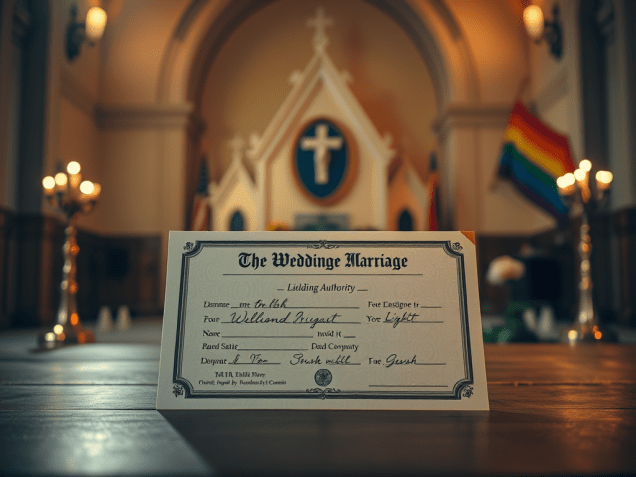
The Baptists are at it again. They are raising a protest over who should be allowed to marry. It is as though they alone have the final word. Yet, let us be clear: They are opposing who can walk into a county or state office. They do not want everyone to ask for a marriage license or enter into a legally recognized civil contract. That is not a religious rite. It is a legal agreement—filed, signed, and validated by the state. What the Baptists are trying to do is assert control over who can enter into that civil contract. Moreover, that is where their argument starts to fall apart.
One can understand a church’s wish to define marriage for its faith tradition. For example, it only performs holy matrimony for male-female couples. That is their theological prerogative. Furthermore, the LGBTQI+ community is better served by choosing faith institutions that embrace and affirm their unions. Those places do exist. They conduct beautiful, sacred ceremonies filled with love and meaning.
The Baptists alleged to be upset over same-sex couples marrying are not fighting for “Holy Sanctioned” marriage. Their effort is a thinly veiled effort to legislate bias. They aim to stir up fear and rally support for political agendas. When the current battle over trans rights no longer generates the same heat, they will seek another issue. This will be the next fire they try to stoke. It will be another wedge to deepen divisions. They will build up the offering plate and feed the partisan machine.
Trying to impose a ceremony on a church that fundamentally rejects it leads to resentment. Such an action only reinforces division. It is counterproductive. The real problem arises when religious institutions try to dictate who can access civil marriage through the state. That is not about faith. That is about politics, prejudice, and, frankly, power.
🌈 How Braums Dairy Supported Pride — Weathered Criticism, Reaped Major Rewards
1. Context: Logo on Plaza Sponsorship
In June 2025, Braums Dairy was unexpectedly in the spotlight. It is a beloved Oklahoma-based chain of ice cream shops, fast-food restaurants, and grocery markets. Their logo appeared on promotional flyers for “Pride on the Plaza,” a local Pride celebration in Oklahoma City (1). It served as part of a broader “Live on the Plaza” sponsorship package.
2. Initial Backlash
Conservative commentator and former state lawmaker Gabe Woolley reacted to the logo’s appearance. He tweeted that he would boycott Braums for allegedly funding a drag event. (2). His claims quickly gained traction among right-leaning Oklahomans, prompting calls for political reaction to this perceived advocacy.
3. Rebuttal & Clarification
Soon, voices with marketing skill pushed back. Braums was not directly sponsoring the Pride party. Instead, they were supporting the venue’s broader summer programming. Further investigation revealed that their sponsorship covered the entire weekend. This included the LGBTQ+ event. Still, it was not explicitly targeted at Pride.
This nuance shifted the framing dramatically: what was initially cast as a partisan act became clear as simple venue support.
4. The Social Media Surge
After the dust settled, reactions flipped. Social media buzz exploded on TikTok:
“@Braums could not have ENGINEERED this kind of positive publicity if they tried #oklahoma #braums #braumsicecream #drama”(3)
Citizens applauded the company’s unintended but visible support, demonstrating powerful brand alignment.
5. Tangible Business Upside
This wave of exposure translated into real-world gains:
Brand lift & awareness: Braums featured in news cycles, social feeds, and community conversations—as a business unafraid to be inclusive.
Customer engagement: LGBTQ+ supporters and allies publicly shared plans to patronize Braums. As a result, many new customers discovered the brand. Community loyalty soared.
Earned PR: Local outlets like The Lost Ogle covered the story. They humorously defended Braums. They also criticized the boycott efforts (4).
It became a textbook example of inclusive marketing with unexpected ROI.
6. Takeaways for Brand Strategy
Insight Lesson
Intersectional sponsorships matter. Even general licensing contracts (e.g., “Live on the Plaza”) can effectively link your brand to meaningful causes.
Backlashes can pivot positively When critics amplify your message, clear and direct messaging helps turn controversy into resonance.
Public support matters TikTok, and community praise can vastly outperform first negative attention.
Organic PR beats paid media. Media coverage and word-of-mouth about your brand can have a lasting impact and longevity that outlasts short campaigns.
7. Conclusion
Braums experience offers a powerful case study for businesses. Even inadvertent support of social causes can yield significant goodwill. It also brings loyalty and profitability. Through smart, clear communication and customer engagement, you can transform backlash into business-building buzz.
Not the peace that lives only in headlines or history books—the grand treaties, the ceasefires, the official proclamations. I’m talking about the peace we build in our daily lives. This peace begins around kitchen tables. It is found in community meetings. It happens in the quiet moments when we choose to listen rather than shout.
What would it take to create a more peaceful world? That question sits heavy on my heart.
I don’t pretend to have all the answers, but I believe peace isn’t something we wait for others to deliver. It’s something we shape, step by step, together. And maybe, just maybe, it starts with a plan. Its not a perfect plan, but it’s a real one. It’s something we can reach for and return to, like a compass in uncertain times.
Step One: Start With Listening
Peace begins with the willingness to hear someone else’s story—especially when it challenges our own. We don’t have to agree on everything, but we do have to care enough to listen.
Imagine what would change if we listened without preparing to argue back. If we asked “What is it like to be you?” and waited long enough for a real answer.
Step Two: Make Room for Justice
There can be no true peace where injustice lives unchecked. That means looking closely at the systems around us—schools, courts, hospitals, policing, housing—and asking, “Who is being left behind? Who is being harmed? And what can we do to fix it?”
Justice isn’t about blame. It’s about repair. Peace doesn’t ask us to forget the past. It asks us to heal from it—together.
Step Three: Practice Kindness Like It’s a Skill
We talk about kindness like it’s something we either have or don’t. But I think it’s more like a muscle. You build it every day—with patience, with humility, and with a little humor when things get hard.
Sometimes, peace looks like biting your tongue. Sometimes, it looks like reaching out. And sometimes, it’s just not walking away.
Step Four: Educate for Empathy
To give the next generation a better shot at peace, we must teach them differently. Not just math and reading—but empathy, conflict resolution, critical thinking, and how to talk across differences without losing our humanity.
We should teach history honestly, too—not just the polished parts, but the painful truths that still echo today. Healing begins with honesty.
Step Five: Be Brave Enough to Hope
Hope can be a radical thing. Especially when the news is bleak and the divisions feel endless. But hope is not weakness. It’s strength disguised as belief. It’s faith in what we can build, even if we haven’t seen it yet.
A plan for peace isn’t a single event. It’s not something we sign and file away. It’s a lifelong effort. It’s showing up, over and over, with open hands and an open heart.
We will never achieve a perfect peace. But if we can bring peace into one more conversation, one more neighborhood, one more generation—then it’s worth everything.
So here’s my plan. It starts with me. It starts with you. And it keeps going—as long as we keep walking ahead, one small, hopeful step at a time.
Navigating the Crossroads: Challenges and Resilience in the LGBTQI+ Community
In recent years, the LGBTQI+ community has observed both significant strides toward equality and alarming setbacks that threaten these advancements. As societal acceptance grows in some areas, legislative and social challenges persist, underscoring the need for continued advocacy and awareness.
Mental health disparities continue to be a critical issue within the LGBTQI+ community. According to The Trevor Project’s 2024 National Survey, 39% of LGBTQ+ youth seriously considered attempting suicide in the past year. The rates rise to 46% among transgender and nonbinary youth. Factors contributing to this crisis include discrimination, lack of access to affirming care, and societal stigma. (1)
Intersex youth face even more pronounced challenges. A study highlighted troubling findings about intersex respondents. It showed that 77% had someone try to change their sexuality or gender identity. Over 10% had undergone conversion therapy. (2)
Access to quality healthcare is a fundamental right, yet many LGBTQI+ individuals face significant obstacles. The Center for American Progress reported that in 2024, 45% of transgender adults postponed medical care due to affordability issues. Additionally, 60% of intersex adults faced the same issue. Additionally, 37% of transgender adults avoided seeking care out of fear of discrimination. (3)
The political landscape further complicates access to necessary care. A survey by FOLX Health revealed that 90% of trans and nonbinary Americans feared the 2024 presidential election. They were concerned it would negatively impact their healthcare access. Notably, 20% had already lost access due to anti-LGBTQ policies. (4)
Legislation plays a pivotal role in shaping the experiences of LGBTQI+ individuals. In 2024, nearly 500 anti-LGBTQ+ bills were proposed across the United States, with 46 enacted into law. These laws have had profound effects, with over 70% of LGBTQ+ adults reporting negative impacts on their mental health.
Conversely, there have been positive legislative developments. Thirty-seven pro-equality bills were signed into law, focusing on areas like parenting rights and health and safety. (5)
Amid these challenges, community-led initiatives have emerged as beacons of hope. In Connecticut, drag performances educate on health and suicide prevention. They create inclusive spaces for dialogue and support. (6)
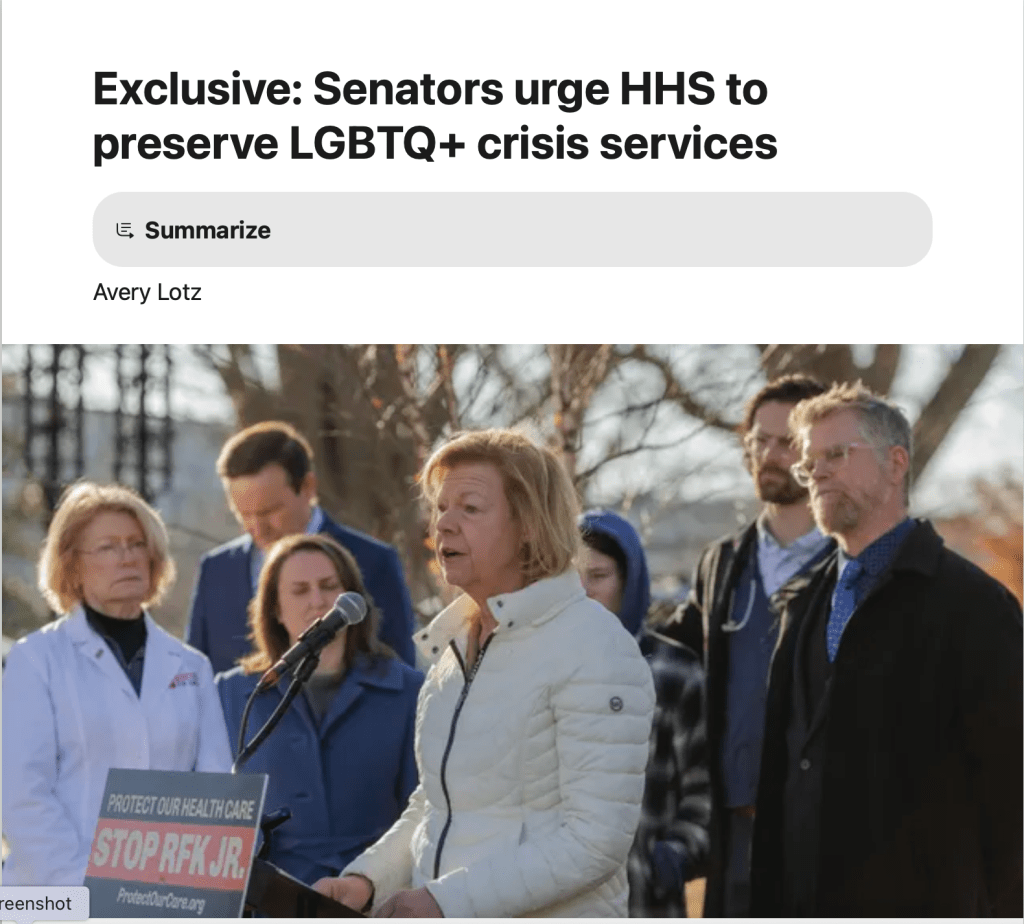
The introduction of the Pride in Mental Health Act aims to bolster mental health resources for LGBTQ+ youth. It recognizes the unique challenges they face. The act highlights the importance of affirming care. (7)
The LGBTQI+ community continues to navigate a complex landscape of progress and adversity. While strides have been made in visibility and rights, significant work remains. We need to guarantee fair access to healthcare. Protection under the law is also necessary. Furthermore, societal acceptance must be achieved.
Allies, policymakers, and community members must advocate for inclusive policies. They should support mental health initiatives. It’s essential to foster environments where LGBTQI+ individuals can thrive without fear of discrimination or harm.
Recent Developments Impacting the LGBTQI+ Community
Posted by Movie and Television Show Writer and Actor Del Shores on Facebook –
LGBTQ+ Rights Under Attack in 2025 — And the Fight Continues! But we, as a community, stand firm and resilient.
I posted it many years ago before we could legally marry someone we loved. Before United States v. Windsor struck down DOMA in 2013, and before Obergefell v. Hodges in 2015, we finally gave our love full legal recognition nationwide.
And it became one of the most shared things I’ve ever posted.
WHERE WE ARE NOW, 2025!
2025 has seen an alarming surge in anti-LGBTQ+ bills, with over 500 introduced in the U.S. alone.
Over 774 are specifically anti-trans, and 700 of those are still active.
Texas leads the charge with 127 of these hate-fueled bills.
Many of these bills are pushed by the GOP, wrapped in the Bible, and weaponized with false righteousness. It’s the same tactic — just a different year with more hateful rhetoric than ever.
When I wrote “Southern Baptist Sissies” in 2000. I dreamed it would one day feel like a period piece — a snapshot of a fight we’d won. And yet, in 2025, my character Mark’s words still guide me as I fight for and with my LGBTQ+ family and our beautiful allies:
“Sometimes I close my eyes, and I create a perfect world. A world of acceptance and understanding and love. A world where there’s hope. Even if the hope is just whispered, I hear it.”
To the trans community: we see you, love you, and stand with you in unwavering solidarity.
To the so-called Christians using the Bible to harm: you’re using it wrong.
Romans 13:10 — “Love does not harm its neighbor; therefore, love is the fulfillment of the law.”
Let’s love louder, let’s love more, and let’s love without boundaries.
Let’s keep whispering — and shouting — that hope.
“Dear friends, let us love one another, for love comes from God. Everyone who loves has been born of God and knows God. Whoever does not love does not know God because. God is love.” 1 John 4: 7-8.
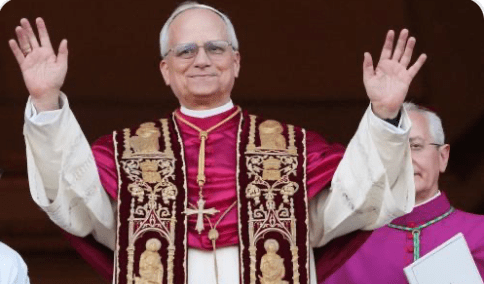
The election of Pope Leo XIV—formerly Cardinal Robert Francis Prevost—marks a historic moment. He becomes the first American to lead the Catholic Church. His choice follows the death of Pope Francis. Pope Francis was noted for his progressive stances on social issues. These included LGBTQ+ inclusion .(1)
Implications for the LGBTQI Community
Pope Leo XIV’s past statements suggest a more conservative approach to LGBTQ+ issues compared to his predecessor. In 2012, he expressed concern about popular culture. He believed it was fostering “sympathy for beliefs and practices that are at odds with the Gospel.” He specifically cited the “homosexual lifestyle” and “alternative families comprised of same-sex partners and their adopted children.” He has opposed the inclusion of teachings on gender in schools. He describes the promotion of gender ideology as confusing. (2)
Pope Leo XIV has not publicly addressed LGBTQ+ issues since his election. His earlier positions show a potential shift from the more inclusive tone set by Pope Francis. Pope Francis had endorsed civil unions for same-sex couples. He also allowed blessings for same-sex unions. This signaled a more welcoming approach. (3)
Awaiting Future Developments
As Pope Leo XIV begins his papacy, the global Catholic community will be observing his leadership closely. This includes LGBTQ+ members. They will watch how it will shape the Church’s stance on inclusion and diversity. His actions in the coming months will offer clearer insights. His statements will reveal the direction he intends to take on these critical issues.
Edy Star, Trailblazing Brazilian Artist and Queer Icon, Dies at 87
April 25, 2025 – São Paulo, Brazil
Edy Star was a flamboyant and fearless Brazilian artist. He was a singer, actor, and visual artist. He broke ground as one of the country’s first openly gay performers. Edy Star died on April 24 in São Paulo. He was 87.
A Singular Life
Born Edy Nunes in Salvador, Bahia, Edy Star became a singular presence in Brazilian culture. His career spanned music, theater, television, and visual arts. He carved a space for himself that defied convention. He also challenged the mainstream.
He is best remembered for his work on the 1971 cult album. Sociedade da Grã-Ordem Kavernista Apresenta Sessão das 10 gained significant attention. It is a psychedelic, satirical collaboration with Raul Seixas, Sérgio Sampaio, and Miriam Batucada. The album blends rock, samba, and theatrical flair. It was initially pulled from circulation. But, it later became a defining artifact of Brazil’s counter cultural movement.
Fearless Expression in Dangerous Times
Edy Star was known for his irreverent stage presence, extravagant costumes, and unapologetic queerness. Brazil was under a military dictatorship. During this time, LGBTQ+ voices were often silenced. His bold performances stood as acts of defiance.
By challenging gender norms and pushing social boundaries, he became a symbol of artistic freedom, resistance, and queer pride.
A Multidisciplinary Force
Moreover to his musical legacy, Edy Star was a visual artist, television presenter, and seasoned stage actor. His multidisciplinary approach made him a beloved figure across Brazil’s creative scenes.
He brought the same vibrant energy and passion to every medium he touched. His work left a lasting impression on audiences and fellow artists alike.
A Peaceful Farewell
Edy Star passed away peacefully in a São Paulo hospital due to complications after a domestic accident. According to a statement from his press office, he died “without pain, while receiving medical treatment.”
An Enduring Legacy
Edy Star’s legacy lives on in the bold, boundary-breaking art he championed. He inspired generations of LGBTQ+ artists to live and create without compromise.
When I was young, I had the privilege of working alongside some genuinely seasoned police officers. These were men who had been in the profession for decades. They carried with them a wealth of stories and experience. One of the most unforgettable among them was my Captain, Loyd “Bick” Bickerstaff.
Captain Bickerstaff was the first person I met when I interviewed for the job. He pulled for me to get hired, though I never quite knew why. Maybe he saw himself in me. He was around sixty when we met. At the time, I didn’t know much about his background. I quickly learned through stories from others that he was a legend in Oklahoma law enforcement.
Officers came from various places. If they stopped by our agency, they either knew Bickerstaff or had heard of him. He had that reputation. And if he happened to be off-duty during their visit, they left visibly disappointed.
I remember one particular day when I was on desk duty. A reporter from Time-Life came in. He said he was working on a piece about Route 66. He asked if he could interview Captain Bickerstaff. I told him to wait while I went to get the Captain.
Now, Bick wasn’t the type to jump at the chance to talk to the press—unless he had something to say. But when I mentioned a Time-Life reporter was here to see him, he promptly came out into the booking lobby and, in classic Bick fashion, boomed:
“I bet you want to ask me about that son of a bitch I wrote a ticket to back in the 1950s!”
At that moment, I thought, Well, this will be a PR nightmare. But to my surprise, he and the reporter hit it off. They wandered around the station talking and laughing. They even went outside. The photographer snapped pictures of Bick behind the wheel of a patrol car.
Maybe this won’t turn out so bad after all, I thought.
Still, I couldn’t help but wonder. What kind of ticket did someone get back in the ’50s? It still had reporters chasing the story.
When Bick returned, he shook the reporter’s hand, sent him off, and then strolled back to where I was working.
“I can tell your brain’s buzzing,” he said with a grin. “You want to know what that was all about?”
I nodded.
“Yeah, I’d say so. Stuff like this doesn’t happen every day.”
And so he told me.
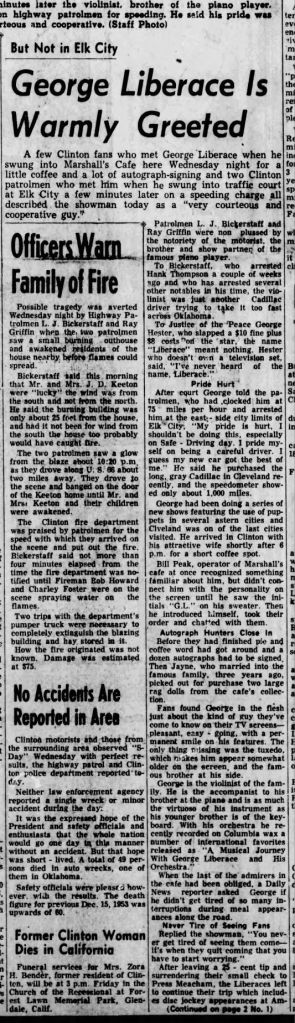
In the 1950s, Bick was a trooper with the Oklahoma Highway Patrol. In those early days, he patrolled on a motorcycle. One night, near Elk City, Oklahoma, a flashy car with California plates sped by him on Old 66. It was doing over 75 miles per hour or more.
He took off after it and got the car pulled over. It was late, and as he walked up to the driver’s window, the man inside said:
“Surely, you’re not going to write me a ticket. Don’t you know who I am?”
To which Bick famously replied:
“I don’t care if you’re Liberace—you’re driving like a bat out of hell. Yes, I’m writing you a ticket!”
And as it turned out, it was a Liberace. Liberace’s Brother George!
Bick wrote the ticket anyway. George Liberace followed Bick to the courthouse, paid it on the spot, and went on his way.
A few weeks later, Bick’s supervisor got a call from one of Liberace’s agents. They wanted to fly Bick to Hollywood to be on The Liberace Show. They thought it would be significant: the highway patrolman who dared to ticket a star. Bick said he couldn’t say no. The department thought it was good publicity, and it was.
Years later, people still talk about it. Unknowingly, I worked with the man who once wrote Liberace’s brother a speeding ticket. Bick told me –––
“Liberace brought me out on stage. He announced that I was the highway patrolman who wrote his Brother George a speeding ticket!”
Writing the most sincere self-analysis is no small undertaking. It asks something of us that we’re not always ready to give. It demands honesty, and not just the kind we wear on our sleeves when trying to be humble or modest. It demands the raw kind. The kind that doesn’t flatter or soften but still doesn’t condemn. A self-analysis worth anything must go beyond the stories we’ve rehearsed for friends. It must also reach deeper than the traits we like to highlight on good days. It must ask: Am I willing to know myself, truly? And, more difficult still: Am I willing to share that knowledge with others, even if it unsettles or embarrasses me?
There’s always a temptation to curate the truth—to include only what paints us in a light we can tolerate. We must focus on growth, accomplishments, and kind-heartedness. We should downplay the envy, impatience, and regrets that tug at us when we’re alone. But sincerity demands more. It asks for balance. The glad moments don’t mean as much without the unhappiness that gives them context. Our kindness shines brighter when we own the times we’ve neglected to be kind. Our strength becomes more meaningful when we admit we’ve been weak.
A true self-analysis is like holding up a mirror. It’s not the forgiving kind in your hallway that you glance at before heading out. It’s the close-up, unfiltered reflection you find under harsh light. There, we meet the layers. First, there’s the child we were. Then, comes the adult we became. Finally, there’s the person we are still trying to be. We see the love we gave and the love we withheld. We know the courage and the fear, the moments of pride and the nights of doubt. And in that space, there is room for grace—because sincerity isn’t about judgment but clarity.
So when you write your self-analysis, ask yourself: will I tell it all? Or just the things I like? Will I dare trace the lines that run through my contradictions, triumphs, and failures? The work isn’t in choosing between the good and the bad. It’s in holding them together and saying,
This is who I am—flawed and hopeful, broken in places but still reaching toward something better.
That’s when you know it’s sincere—not because it sounds perfect, but because it doesn’t try to be.
The recent rallies by Senator Bernie Sanders and Representative Alexandria Ocasio-Cortez mark a defining moment in contemporary American politics. Across five rallies in three states, tens of thousands gathered. They made a resounding call for change. This signals widespread dissatisfaction with the current political and economic systems. The overwhelming attendance at these events reveals a deep-rooted movement. It is fueled by a demand for economic fairness. There is also a call for political integrity and grassroots-driven reform.
One of the key takeaways from these rallies is the rejection of Trumpism, oligarchy, and authoritarianism. The presence of thousands in North Las Vegas, Tempe, Greeley, Denver, and Tucson shows collective opposition to massive income inequality. Wealth inequality has left many working-class Americans behind. This movement directly responds to a political system. In this system, billionaires hold disproportionate power. They use their wealth to influence elections and dictate policy. The rallies were not simply campaign events; they were gatherings of individuals. They were determined to reclaim democracy from corporate interests. They also wanted to challenge political elites.
Moreover, the movement echoes historical struggles that have shaped the United States. Sanders draws parallels between this modern fight and past movements that have successfully challenged oppression. These include the abolitionist, labor, civil rights, and women’s rights movements. These historical precedents offer a blueprint for today’s progressive movement. They emphasize that real change arises when ordinary people organize. Real change occurs when they take action against systemic injustice.
A critical part of this movement is grassroots organization. Sanders and Ocasio-Cortez stress the need to mobilize people in all 50 states through consistent engagement. Mobilizing thousands of people means not only attending rallies but also translating that enthusiasm into political action. Encouraging progressives to run for office at all levels is crucial. This includes positions from school boards to state legislatures. It is a core strategy to enact lasting change. Local elections, often overlooked in the national political discourse, hold immense power in shaping policies that affect daily life.
Additionally, the movement extends beyond electoral politics. It calls for strong communities where people support one another despite economic and social challenges. The emphasis on solidarity reflects the understanding that political change is inseparable from fostering a culture of mutual aid. It also involves building collective strength. The movement creates networks of engaged citizens. The goal is to counteract the feelings of loneliness that many experience in today’s economic landscape. It also addresses feelings of helplessness.
This movement does not overstate the urgency. Sanders highlights the significance of this moment not only for current generations but also for future ones. Climate change, economic disparity, and political corruption are existential issues that need immediate action. The message is clear: now is the time for mobilization, not despair. The fight for a fair and just society depends on ordinary people. They must be willing to challenge entrenched power structures. They must demand a system that works for all.
Arizona, Nevada, Colorado,
In conclusion, the rallies held across Nevada, Arizona, and Colorado exemplify the strength of a growing progressive movement in America. The record-breaking turnouts illustrate a profound discontent with the status quo and a wish for systemic change. By organizing, running for office, and building community solidarity, this movement can redefine the future of American democracy. The path ahead is not easy. History has shown that when people unite for justice, they can overcome even the most powerful obstacles.
Chad Branson woke in a cold sweat, heart hammering against his ribs. The dream had come again—flashes of burning villages, the thunder of distant explosions, the acrid stench of smoke. He had never been to war. He had never even held a gun. Yet, the memories felt real, like echoes of a life he hadn’t lived.
It had started five years ago, these violent dreams that left him breathless and shaken. He had tried therapy, meditation, and even medication, but nothing dulled the visions. He had no explanation—until the day he met him.
The chance meeting happened in a quiet café, a place Chad often escaped to in hopes of finding solace. That morning, as he reached for his coffee, his hand bumped into another.
“Sorry,”
He murmured, glancing up—and froze.
The man before him had eyes that mirrored his own exhaustion. His jawline was sharp, and faint scars traced his brow. When he spoke, his voice carried a weight.
Chad recognized it but couldn’t place it.
“Chad Branson,”
The man said, extending a hand.
Chad hesitated.
“That’s… my name.”
The other man chuckled.
“I know. That’s why I introduced myself.”
A strange silence stretched between them before Chad spoke again.
“Do I know you?”
The other Chad was an ex-soldier and a survivor of two deployments. He was also the bearer of the nightmares Chad had somehow inherited. Chad watched him closely.
“No,”
He said at last.
“But I think we’ve been living the same war.”
Over the next weeks, they talked, comparing details.
Every dream Chad had lived, the other had experienced firsthand. The battlefield in his mind had once been real. The pain, the horror—it belonged to this man, but somehow, it had become part of Chad, too.
Neither explained it, but they didn’t need to. In their shared pain, something else took root: understanding and affection. A bond neither expected nor deny.
One night, as they sat in the dim glow of Chad’s apartment, he reached for the soldier’s hand.
“Maybe the universe gave me your memories for a reason,”
He murmured.
“Maybe I was always meant to find you.”
Echoes of War
The other Chad squeezed his fingers gently, a small, weary smile forming.
“And maybe,”
He whispered,
“We can finally find peace together.”
The nightmares didn’t seem so heavy for the first time in years.
Discrimination Vs Inclusion. The difference between darkness and light
Discrimination is an act rooted in fear, ignorance, and an unwillingness to accept the fundamental dignity of all people. It has profound consequences for society. Wanting to deny others housing, clothing, and respect shows a belief that some lives hold less value. Such a stance reveals a deep-seated lack of empathy. It shows an indifference to the struggles of fellow human beings and a troubling inclination toward social division. It speaks volumes about moral values. It reflects the character of those who wish to wield power to diminish the lives of others.
The wish to remove protections that have given minority groups equal footing within society shows a disregard for historical injustices. These injustices have shaped the need for these safeguards. These protections exist not to give anyone an unfair advantage. They guarantee everyone has equal rights, opportunities, and access to resources without prejudice. Seeking to dismantle these safeguards implies a refusal to acknowledge historical injustices. It also shows a disregard for the ongoing struggles faced by marginalized communities. It shows a yearning for a past where exclusion was the norm. It rejects embracing a future that strives for fairness and justice.
Moreover, those who advocate for policies that exacerbate the hardships already endured by vulnerable populations are not merely indifferent. They are complicit in their suffering. If making life more difficult for those struggling is acceptable, what does that say about one’s character? It signals a lack of compassion, an absence of moral responsibility, and a failure to grasp the interconnectedness of humanity. A society that pays no heed to suffering undermines its stability, for one group’s oppression ultimately harms the whole. This is not just a moral issue but a societal one that demands immediate attention and action.
Most revealing is the wish to control who can join legal institutions like marriage. Love and family are not exclusive to a select few but are among the most fundamental aspects of human existence. To decide who can share in these joys is to place oneself in a position of unjust power. It denies them to others. It stems from a belief in personal superiority. It also involves a willingness to impose one’s values on others. This approach restricts their freedoms. It suggests an inability to recognize that love is universal. Love is deserving of legal and social acknowledgment. This is true regardless of the individuals involved.
Ultimately, seeking to discriminate, exclude, and strip away rights reveals one’s insecurity, fear, and wish for control. A society is judged by how it treats its most vulnerable members. Those who work to undermine equality and fairness reveal far more about themselves. They show more about their nature than they do about those they seek to oppress. True strength is found in embracing diversity. Morality involves protecting the rights of all. Decency ensures that everyone has the dignity and respect they deserve.
Staying up late on a Saturday night was a rare privilege. My parents were strict about bedtime but sometimes let me stretch the rules on weekends. That night, I curled up on the living room carpet, my chin propped up on my hands. I stared wide-eyed at the glow of our old television. The movie was Bonnie and Clyde, and it was my first time seeing Gene Hackman.
Left – Gene Hackman as Buck Barrow. Right – Warren Beatty as Clyde.
He portrayed Buck Barrow, Clyde’s older brother—loud, reckless, and desperate. His movements and voice, cracked with both joy and fear, captivated me. He wasn’t just a character. He was a man caught between love and loyalty. He wavered between the thrill of rebellion and the weight of consequence. Despite the inevitable doom of the Barrow gang, Buck was more than a criminal. He was a flawed person yet strangely likable.
The film stuck with me. It made me wonder where the line between right and wrong sits. Was it drawn in law books or people’s choices when they had no good options? I didn’t have answers, but I knew I wanted to understand.
Right – Nathan Lane. Left – Gene Hackman
Years later, another late-night movie changed something in me. This time, I was older—long out of high school, I think—and the film was The Birdcage. The movie is a comedy about a gay couple who pretend to be straight for a conservative family. It challenged societal norms and expectations. I hadn’t planned to watch it but was hooked when I saw Robin Williams and Nathan Lane.
And then there he was again. Gene Hackman appeared this time as a conservative senator. He was trapped in the most absurd, hilarious, and strangely heartfelt situation.
I watched him stumble through a world he didn’t understand, forced to confront something outside his comfort zone. His discomfort was funny. Beneath it, there was something tangible. He clung to the rules he’d built his life around. He struggled with the idea that maybe, just maybe, he was wrong.
By the time the credits rolled, a profound shift had occurred within me. Bonnie and Clyde sparked my curiosity about the limits of the law—who writes the rules, follows them, and breaks them? The Birdcage had prompted a more personal question. It asked who I was and whether I dared live outside the expectations of others. These films, through the characters portrayed by Gene Hackman, ignited a journey of self-discovery and reflection.
In those movies, Gene Hackman embodied two distinct characters. Buck Barrow laughed in the face of fate, and Senator Keeley was trapped in his rigid beliefs. Yet, in both roles, he was undeniably human—flawed, confused, and trying. His characters were not just roles but mirrors reflecting the complexities of the human condition.
Groff Media is sharing this piece unedited from Foxes Den. The next is the introduction to the piece. The link to the writers’ pages is posted near the end so you can go to the original site’s writing.
FROM THE FOXES DEN – (unedited)
If you could un-invent something, what would it be?
I’ve browsed around some of the replies to this prompt and I must say I’m quite surprised. Surprised to see so many people wishing that social media could be un-invented. Now I am with these people 100%, I agree it’s a breeding ground for hatred and vitriol, however as so many are already mentioning social media I feel I should suggest something else because to not do so would make this post quite repetitive and boring.
Well it will probably still be boring but here goes.
Addiction. If only there wasn’t such a thing. Again it’s one of those things that is good to have in certain scenarios but an absolute nightmare to have in others. Let’s talk about the nightmare scenarios.
The smell of fresh rain lingered as Mark walked down Elm Street toward his favorite café. It was his usual morning routine, a quiet moment before the day unraveled. He reached the entrance. Then he saw him—Greg Turner. Greg was leaning against a lamppost, arms crossed. He was watching him with a smirk that dripped with disdain.
Greg had never made it a secret that he disliked Mark. Their history goes back to a business deal gone wrong. Mark handled it ethically, but Greg saw it as a betrayal. Since then, Greg had made it his mission to smear Mark’s name. He spread rumors and whispered doubts into the ears of anyone who would listen.
Mark adjusted his posture, exhaled slowly, and kept walking. He knew better than to engage.
“Hey, Mark,”
Greg called out loud enough for people at the café’s outdoor tables to turn their heads.
“Still fooling people into thinking you’re the good guy?”
A few customers looked up from their coffee, eyes shifting between them, waiting for a response. Mark felt the moment’s weight pressing against his back, the temptation to defend himself bubbling under the surface.
But he had learned something long ago—some battles weren’t worth fighting. Not in the mud. Not at the expense of his peace.
He turned slightly, just enough to meet Greg’s gaze, and nodded.
“Good morning, Greg.”
His voice was even, void of malice, but firm. Then, without another word, he stepped inside the café.
The barista, Sarah, greeted him with a warm smile.
“The usual?”
Mark nodded as he took out his wallet.
“Yep. And maybe an extra shot of patience today.”
Sarah chuckled as she prepared his coffee.
“Don’t let him get to you.”
He shook his head.
“I won’t.”
Moments later, as he stirred his coffee, he glanced outside. Greg was still there, now talking to someone else, his hands animated, spinning another version of his tired tale. Mark took a sip, savoring the rich warmth of his drink, and let the moment pass.
There was no need to wade into the mess or wrestle with the bitterness that wasn’t his to carry. His conscience was clear. His integrity was intact.
He walked out of the café with his head high. His side of the street was clean. Mark was guilt-free and ready to face his day. He had not gotten down to Greg’s level; even better, he showed respect for doing so.
For many, the good times meant youth spent without barriers. Kids rode bicycles freely around town or through the countryside. They explored wherever curiosity led. They just had to be home before dark or by 10 p.m. It was when running to a friend’s house, unannounced was safe. It felt just as natural for them to show up at yours. We all cherish that time of freedom and spontaneity.
Your version of the good times began when you got first place as a young adult. You also got hooked up to cable television. Gone were the days of only three channels. Now, there were forty or more. Channels like MTV, HBO, and SHOWTIME offered endless entertainment. Some kept their televisions locked on MTV 24/7, not wanting to miss the latest music video premiere. The phrase “I want my MTV” wasn’t just a slogan; it was a way of life.
Icons like Downtown Julie Brown, Max Headroom, Randy of the Redwoods, and JJ Jackson became daily companions. They guided audiences through interviews and music video countdowns. These shows entertained us and shaped our memories, creating connection and nostalgia.
Yet, while MTV rocked for many, others fondly recall Saturday mornings. They spent time with classic cartoon characters. They watched Bugs Bunny, Elmer Fudd, Daffy Duck, and Yosemite Sam. Or they enjoyed Speedy Gonzales, the Flintstones, or the Jetsons. These beloved characters live on today, often appearing in rebranded forms and often in commercials that spark nostalgia.
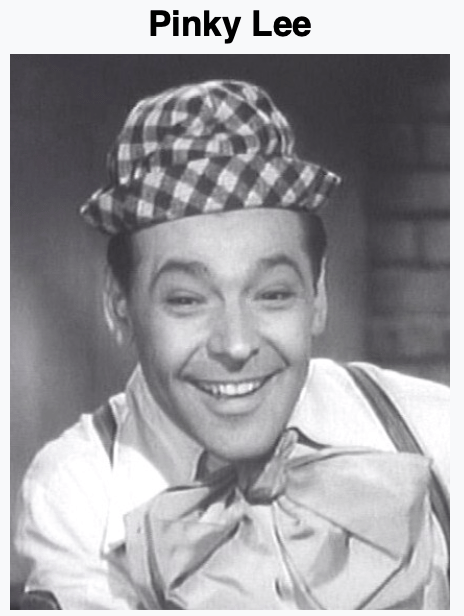
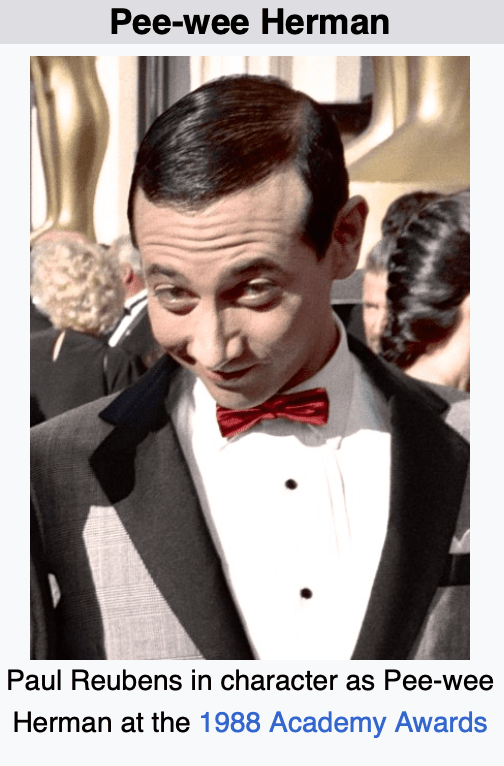
For earlier and later generations, laughter came from entertainers like Pinky Lee or Pee-wee Herman. In the 1950s, Pinky Lee brought his lively antics to television. He appeared first in a primetime variety show. Later, he starred in a children’s program sponsored by Tootsie Roll. His Emmy-nominated show paved the way for future quirky entertainers. Pee-wee Herman was one of them. His distinctive gray Glen plaid suit, red bow tie, and eccentric persona owed much to Lee’s energetic style.
Beyond television, the good times existed in life’s simple pleasures. One was the crackle of a baseball game on the radio during a warm summer evening. Another was the scent of fresh popcorn at a drive-in theater. The excitement of getting that first car was thrilling. Sheer will and a little duct tape held it together.
For some, the best times were spent playing Pac-Man and Donkey Kong in arcade halls. They also glided across the roller rink beneath spinning disco lights. Others made mixtapes from the radio. They hoped the DJ wouldn’t talk over the intro of a favorite song. Others remember cruising on a Saturday night, windows down, music blasting, with no destination—just the pure joy of freedom. The good times were about more than the entertainment we consumed. They were about the people we shared them with. Families gathered around holiday meals. Friends packed into a car for a spur-of-the-moment road trip. Conversations under a star-filled sky became treasured late-night memories.
Each generation has its version of the good times. These moments shape us and leave lasting impressions. They bring smiles long after they’ve passed. No matter what era you look back on, one thing is sure. The good times do not last forever. But they always roll on in our hearts. They create a sense of continuity and belonging.
In a bustling city, alive with clashing opinions and hurried lives, everyone respected an unspoken rule. Your space is yours, and in it, you reign supreme. It didn’t matter if it was a sprawling penthouse overlooking the skyline. It is a cozy corner in a crowded apartment. Or it is a patch of pavement under a tattered umbrella. Whatever boundaries you claimed, those were the limits of your kingdom.
Take Mrs. Hargrove, for instance. Behind her red-painted door in a quiet cul-de-sac, the world was a sanctuary of classical music. Fragrant lavender candles filled the air with their scent, and books were piled high in every corner. Her rules were simple: shoes off at the door, cats welcome, and no conversation louder than a murmur. Beyond her door, the city roar with chaos, but inside, her sanctuary hummed with the warmth of gentle living.
A few blocks away, Alejandro held court on a sidewalk square. He was nestled between a lamppost and the entrance of a busy coffee shop. His throne was a battered lawn chair, and his walls were chalk-drawn lines on the pavement. Within those lines, Alejandro was both king and philosopher. Passersby often stopped to chat, offering a coffee or sandwich in exchange for his wisdom. His space, though humble, operated on principles he cherished, like kindness first, stories over silence, and always having respect.
Meanwhile, on the tenth floor of a downtown high-rise, siblings Jordan and Tamara lived in a small two-bedroom apartment. They turned it into a vibrant world of their own making. The walls were covered in murals painted by friends who visited. Their home was a haven of creativity where every night was a celebration of life. “No negativity allowed” was their unspoken law, and those who entered left their worries at the threshold.
Even in the less obvious corners of the city, the principle held firm. Marcy, a young artist, had claimed an unused stretch of wall as her gallery. It was down an alley shaded by fire escapes. She painted over it weekly, layering it with bold, defiant colors. Though the city’s rules forbade graffiti, this was Marcy’s domain, where her voice never gets muted. Locals respected her unwritten sovereignty, even the city workers, who cleaned around her artwork but left it untouched.
The beauty of the unwritten code was not just in the freedom it offered. It was also in the mutual understanding that accompanied it. Disagreements in the public square? Common. Heated debates at the park? Inevitable. But everyone knew that you honored their rules when you stepped into someone else’s space. You argue politics at the corner diner or challenge worldviews in the library. Still, you wouldn’t dare speak out of turn in Alejandro’s chalk-drawn palace or disrespect the tranquility of Mrs. Hargrove’s quiet retreat.
This tacit agreement turned the city into a patchwork quilt of safe havens. Each space was unique. It reflected the ideals and beliefs of its occupant. Together, they wove a sense of unity that was stronger than the chaos beyond their boundaries.
One day, a storm swept through the city, bringing rain that soaked Alejandro’s chalk lines and threatened Marcy’s murals. As the wind howled, neighbors opened their doors to one another. Mrs. Hargrove invited Alejandro into her book-filled retreat. Jordan and Tamara turned their living room into an impromptu art studio for Marcy. Even unlikely alliances formed in those moments. They understood that when someone’s space was threatened, the rest of the city stood ready. They were committed to protect it.
When the skies cleared, the city was quieter, and its people were more thoughtful. The storm had reminded everyone of the fragility of their spaces. It highlighted the strength in preserving them—not just their own but those of their neighbors, too.
And so, the unwritten rule endured. Within your space, you were sovereign. You were free to live, believe, and dream as you saw fit. The city remained a cacophony of voices and lives. Yet, it thrived by quietly revering the small sanctuaries that made it whole.
Three men sat at the edge of a dock. Each was worn down by the ceaseless hum of modern life. Their gazes were fixed on a small, uninhabited island that shimmered in the midday sun. A mile off the coast, the island was lush with palm trees, surrounded by crystal-clear water, and untouched by civilization. It was perfect, a blank canvas for a life free from the chaos they had come to despise.
The trio’s leader, Warren, a former corporate executive, was the mastermind behind the escape. To buy the island, he’d sold everything—his penthouse, yacht, and stock portfolio.
“Gentlemen,”
he said, gesturing at the island,
“we’re about to start over. No emails, no alarms, no societal nonsense. Just us and the land.”
Tom, a rugged carpenter with calloused hands, nodded.
“I’ll build us the finest cabins you’ve ever seen. Give me trees and tools, and we’ll have a paradise.”
The third man, Elliott, a quiet botanist, adjusted his glasses and smiled faintly.
“And I’ll make sure we know which plants are safe to eat. Nature will supply for us if we respect it.”
They packed their small boat with essentials: tools, seeds, books, and fishing gear. They agreed to leave their phones behind, cutting ties with the rest of the world. “Once we’re there,” Warren declared, “there’s no turning back.”
Arrival
The island greeted them with pristine beaches and a dense jungle that hummed with life. They worked tirelessly in the first weeks. Tom constructed three sturdy cabins near the shoreline. Warren rigged up a rudimentary system for collecting rainwater. Elliott explored the interior, cataloging edible plants and marking trails.
At night, they sat by a fire, listening to the waves and reveling in the simplicity of their new existence.
“This is freedom,”
Warren said one evening.
“We’ve escaped the madness.”
But as the weeks turned to months, cracks began to form in their idyllic retreat.
Isolation
Elliott was the first to show signs of unease.
“The flora here is fascinating,”
he said one night, staring at the fire,
“but I miss my research. Sharing discoveries with others… it gave my work purpose.”
Tom, who had poured his energy into the building, grew restless after the cabins were completed.
“There’s only so much wood to chop, so many things to fix. I feel… stagnant.”
Warren dismissed their concerns.
“We didn’t come here for purpose or projects. We came to live. You’ve forgotten why we left.”
But Warren, too, struggled. He’d envisioned a utopia, a life stripped of complications, but the endless quiet gnawed at him. Without the structure of his old life, he felt adrift.
The Turning Point
One stormy night, a ship appeared on the horizon. Its lights pierced the darkness, a beacon of their forsaken world.
“Do we signal it?”
Tom asked, his voice wavering.
Warren’s face hardened.
“No. We agreed: no contact.”
Elliott hesitated.
“What if they’re in trouble? Or what if… what if we are?”
The men argued for hours as the storm raged. Ultimately, they let the ship pass without making contact. But the moment lingered, a reminder of the life they’d left behind—and the choice they’d made to stay.
Conclusion
In time, the men adapted. They found a rhythm in the island’s isolation, but each carried a quiet longing for the world they’d abandoned. They didn’t regret their choice, but they understood it now for what it was: a trade, not an escape.
Years later, the island was still theirs, but they were no longer the same men who had arrived. They had built a new life, not without struggles or sacrifices, but one that was undeniably theirs.
They never saw another ship. They often looked out at the horizon. They wondered what have been if they’d signaled that one stormy night.
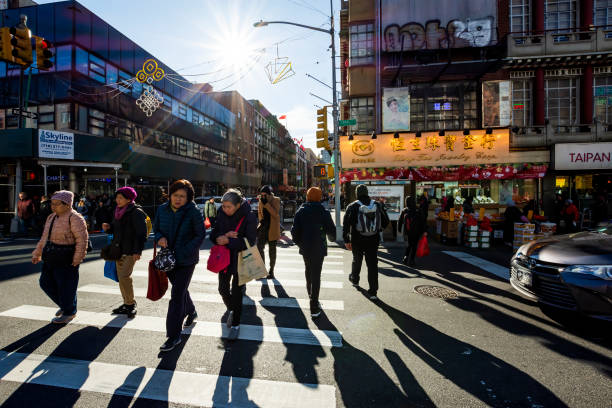
The Chinese Exclusion Act of 1882 marked a pivotal moment in U.S. immigration history, becoming the first significant federal law restricting immigration. It targeted a specific ethnic group driven by economic fears, racial prejudice, and political populism. A review of this historic legislation, alongside the context of its enactment, reveals striking parallels to modern immigration debates. Both historical and contemporary issues illustrate how economic anxieties, cultural misunderstandings, and political opportunism can drive restrictive immigration policies that may ultimately prove disastrous for society.
The Role of Immigrant Labor in Economic Development
In the mid-19th century, Chinese immigrants, despite facing systemic discrimination and being blamed for economic problems, played a crucial role in building the American West. Their resilience and determination were evident in their instrumental role in constructing the transcontinental railroad, tackling some of the most dangerous and demanding jobs in brutal conditions. However, when the Panic of 1873 led to widespread unemployment, populist sentiment scapegoated Chinese immigrants, claiming they were stealing jobs from white workers.
A similar narrative exists today. Immigrant labor is fundamental to the agriculture, construction, and technology industries. Despite this, immigrants are often vilified during economic downturns, accused of taking jobs or lowering wages. This cyclical pattern of scapegoating undermines the reality that immigrants frequently perform jobs that native-born workers are unwilling or unable to do, driving economic growth and innovation. Restrictive immigration policies, such as deportations or bans, risk damaging these essential industries and the broader economy, much like the exclusion of Chinese workers stunted specific sectors in the late 19th century.
Cultural Backlash and Populist Politics
The transcontinental railroad’s completion in 1869 symbolized a remarkable technological achievement but also marked a turning point for Chinese immigrants. Their presence sparked a cultural backlash as they settled in communities like Truckee, California. Fueled by racial prejudice and populist rhetoric, white workers and politicians pushed for their exclusion, culminating in the Chinese Exclusion Act. This act institutionalized xenophobia and created a precedent for racially biased immigration policies.
Today, cultural anxieties continue to shape immigration debates. Concerns about preserving cultural identity and fears of “otherness” fuel resistance to immigrants. Particularly from Latin America, the Middle East, and Asia. Politicians often exploit these fears to rally support, pushing for restrictive measures such as border walls, travel bans, or mass deportations. Such actions not only marginalize immigrant communities but also foster division and xenophobia, hindering social cohesion.
Economic Consequences of Restriction
The long-term economic impacts of the Chinese Exclusion Act highlight the dangers of restrictive immigration policies. By limiting a vital workforce, the law hampered industries reliant on immigrant labor. The exclusion of Chinese workers also set a precedent that discouraged innovation and adaptability in labor markets, contributing to stagnation in certain regions.
Policies that limit immigrant contributions to the workforce have modern parallels. For example, restrictive visa programs and deportations threaten industries like agriculture and technology, which rely heavily on immigrant talent. Moreover, these policies can exacerbate labor shortages, driving up consumer costs and reducing the global competitiveness of U.S. industries. History demonstrates that economic growth thrives on diversity and inclusion, not exclusion.
Lessons from the Past
The Chinese Exclusion Act teaches us that targeting immigrants as scapegoats for economic or social challenges is a shortsighted and counterproductive strategy. Immigration is a cornerstone of American prosperity, fostering innovation, cultural richness, and financial resilience. Policies driven by fear and prejudice, rather than informed analysis, risk repeating the mistakes of the past and should be considered.
Today’s immigration debates echo the populist rhetoric and exclusionary measures of the late 19th century. However, we have the benefit of hindsight to recognize that such policies often create more problems than they solve. To avoid a similar disaster, today’s policymakers must approach immigration with a focus on integration, economic opportunity, and respect for human dignity. By learning from history, we can build a more inclusive and prosperous future, where all individuals feel valued and respected.




























 benandsteve.com