The Day He Lost The Ability To Speak English

By Benjamin GroffMedia© | benandsteve.com | ©2025 

3–4 minutes

Arthur P. Calloway had built a reputation for saying exactly what he thought — and what he thought was rarely kind. He had campaigned against “outsiders.” He railed at city council meetings. He spoke with a confidence born not of wisdom, but volume. English, he often boasted, was the only language this country should ever need.

Arthur opened his mouth one Tuesday morning. He heard flawless Portuguese spill into the quiet of his kitchen. He thought it must be a joke. He assumed it was a trick of the television. It was a dream he had not yet shaken. He tried again. Perfect Mandarin. Then French. Then something that sounded like Arabic, rolling and melodic and utterly foreign to his ears.

“Stop this nonsense,” he commanded himself — only it came out in rapid German, sharp and precise. His heartbeat climbed into his throat.

“Hört auf mit diesem Unsinn!”

Arthur spent the day marching through town in bewilderment, attempting to explain his crisis to clerks, police officers, and neighbors. Every word that escaped him was eloquent and unfamiliar. Some laughed. Some filmed him. A few shook their heads and muttered that he was finally “losing it.”

By afternoon, humiliated and exhausted, he wandered into the small international grocery store he had once tried to shut down. A young woman stood behind the counter. He recognized her instantly. It was Marisol Reyes. She was one of the very people he had publicly accused of “changing the town.” She watched him carefully as he stammered in perfect Spanish.

Her eyes widened. “You never spoke to us before,” she said quietly. “Now you talk like you were born somewhere else.”

“Nunca antes nos habías hablado, ahora hablas como si hubieras nacido en otro lugar.”

Arthur understood.

Arthur’s face burned, but for the first time in years, something softer stirred beneath his anger. Through a strange miracle or curse, he explained everything. He shared his confusion and his fear. He talked about his inability to produce even a single English syllable.

Marisol listened. Not because she owed him kindness, but because she chose it.

Word spread quickly. People from other communities began visiting Arthur, testing his strange gift. He spoke Tagalog with nurses, Swahili with truck drivers, Italian with the old baker whose accent now made perfect sense. Each conversation chipped quietly at the fortress he had built around himself.

Weeks later, as suddenly as it had come, the spell broke. Arthur awoke to find English restored, sitting comfortably on his tongue like an old coat.

But something within him no longer fit.

He returned to Marisol’s store, this time with a hesitant smile and a humility unfamiliar even to himself.

I don’t deserve it,” he said, at last understanding the weight and privilege of those simple words. “But I want to learn. Not just the words. The people.”

Marisol nodded once. Then she gestured to a small bulletin board near the door. It displayed community language classes, cultural nights, and shared meals.

Arthur signed up for every one of them.

The town never quite knew what had caused his transformation. Some called it divine intervention. Others laughed it off as a nervous breakdown. Arthur never explained. He listened more. He spoke less. He walked daily past a world he once hated. Now he heard it. He truly heard it. He listened in every language he had once refused to respect.

And for the first time in his life, he found peace not in being understood… but in understanding.


By Benjamin GroffMedia© | benandsteve.com | ©2025 

The Silence About Straight Shooters

2–3 minutes

Double Standards – Plain Prejudices!

When a massacre occurs, we rush to ask why. We sift through social media posts, interviews, and histories, desperate for something that explains the unexplainable. But what’s telling is not just the reasons we find—it’s the reasons we don’t look for.

The overwhelming majority of mass shooters in the United States are heterosexual men. That’s not speculation; it’s data. Yet how often do you see headlines dissecting a killer’s heterosexuality as the cause of their violence? How often do pundits rush online? They demand to see if the shooter once posted about a girlfriend or wore a wedding ring. They use that as “proof” that straight men are dangerous by design. The answer is simple: never.

And yet, when a shooter identifies as LGBTQ+, or is even rumored to, it suddenly becomes fair game for speculation. Sexuality or gender identity—factors with no proven connection to violence—are treated as the smoking gun. It’s as if identity itself becomes a scapegoat, a convenient villain for people already inclined to mistrust it.

This double standard reveals a lot about our cultural biases. Straight people are allowed complexity. They can be troubled, mentally ill, politically radicalized, or angry at the world. They can also be a hundred other things. But LGBTQ+ people are flattened into caricatures, their entire identities blamed for tragedies they commit. Violence is driven by opportunity, ideology, and access to weapons. It is also driven by often untreated pain—not by who someone loves or how they define themselves.

Maybe the question isn’t why people commit atrocities. Instead, we should ask why we frame some people’s motives through the lens of prejudice. Meanwhile, we let others keep their humanity. Until we answer that honestly, we’ll keep mistaking bigotry for truth—and keep missing the real reasons behind the violence.

Benjamin Groff is a former police officer and radio news anchor. He has hosted programs for CNN and ABC News affiliates in Colorado and Wyoming. His career in law enforcement began in 1980 and lasted more than two decades. This gave him firsthand insight into the criminal mind and public safety. Moreover, it provided him with an understanding of the human stories that often go untold. His writing draws on these experiences, blending street-level truth with a journalist’s eye for the bigger picture.

By Benjamin GroffMedia© | benandsteve.com | 2025 

How Western Movies Perpetuate Harmful Stereotypes of Indigenous Peoples

By Benjamin GroffMedia© | benandsteve.com | 2025 Truth Endures©

3–4 minutes

I was watching an old Western on television this past weekend. You know, the kind—cowboys and Indians. Or, as we might say today, American Ranchers and Indigenous Peoples.

The film, likely made in the 1950s, had the signature gloss of that era’s post-war cinema. Still, something about it suggested it was possibly shot even earlier, maybe in the 1940s. It was only later spliced, refitted, and packaged for the screen. The costumes, dialogue, and scenery all hinted at a time when the stereotypes were deeply ingrained in the script. They weren’t even questioned.

I probably watched that movie as a kid. I was sitting next to my father, not giving it a second thought. Back then, it was just another Western. But this time around, with a different set of eyes, what I saw was jarring.

It followed the predictable narrative: the cavalry riding in to tame the West and keep the “Indians” under control. Two delicately dressed white heroines were caught in the middle of a brewing conflict. A white doctor stood out as the lone character who dared to see Native people as human beings. He was mocked and ostracized for his compassion. This was especially true when a malaria outbreak swept through the tribe. He insisted they deserved treatment.

At one point, he stood in a room full of fellow whites. He asked,

“Do you think Indians are not human beings? Human beings like you and me, who deserve to live and be healthy?”

And one of the prim ladies, her hair perfect and her face untouched by empathy replied:

“I don’t know… how could they be?”

To which others in the room nodded and added, 

“That’s right.”

“Of course, they’re not!”

“No way, in God’s name.”

I sat there stunned, wondering:

“How did a line like that ever make it into a movie script?”

Even more troubling:

“How did it get past editors, producers, censors—only to be broadcast, repeated, and absorbed by generations?”

It wasn’t just offensive. It was abusive. And it made me sad.

Is there a historical context to such language? Possibly. But what would a young Native American child feel sitting in front of that screen? Would they see their life reflected as something lesser—something not worthy of protection or dignity? Listening to the white characters, it certainly felt that way.

And it took me back to where I grew up.

I’m from the Kiowa and Comanche Counties area in Oklahoma—Caddo County, specifically. I was raised alongside Native American children, many of whom I called friends.

Later in life, I worked in law enforcement and came to know tribal members through both personal and professional relationships. I learned a great deal from them—about their culture, their pride, their pain.

When I started in law enforcement, the department had an initiation ritual. It involved arresting a man nicknamed Fifteen Thousand. He was a Native man, around 50 years old, who’d been detained countless times—hence the name. His real name was Thomas Kamaulty Sr.

He was the first person I ever arrested as an officer. 

And, in time, Thomas became the first person I ever saw get sober. That meant something.

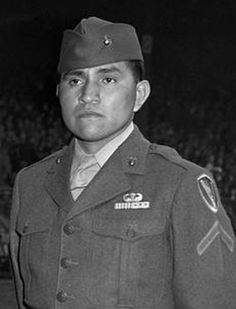
Ira Hayes

I also think about people like Ira Hayes. He was a Pima Indian from Arizona. Ira helped raise the flag at Iwo Jima during World War II. A hero by every standard. And yet, like Thomas, Ira suffered. Both carried the scars of discrimination and trauma. Both turned to alcohol as a way to numb the soul-deep wounds this country handed them.

We often ask why these cycles exist—but we rarely admit the truth: it’s because we’ve designed them to. We’ve placed people like Thomas, like Ira, into roles and systems. Their suffering can be managed. Their voices are diminished. Their lives are controlled. That was always the plan. And until we stop pretending it wasn’t, the script will keep playing—over and over again.

Jeremiah’s Bridge – A Location Of Tragedy

GROFF MEDIA 2024© TRUTH ENDURES IMDBPRO

Presented by benandsteve.com By: Benjamin Groff II©s

3–5 minutes

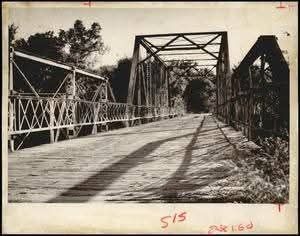
Jeremiah’s Bridge

In the early 1900s, a modest bridge spanned the Washita River just west of Anadarko, Oklahoma. Locally known as Jeremiah’s Bridge, it was a vital crossing point. Over time, it became the center of chilling tales whispered among townsfolk.

A popular legend spoke of a grieving mother. She lost her infant son, Jeremiah, to the river’s relentless currents while traversing the bridge. Each night at midnight, a mist reportedly rose from the waters. It embodied the mother’s spirit as she searched and called out for her lost child. This spectral vision drew curious onlookers, solidifying the bridge’s eerie reputation.

However, beneath this sanitized tale lay a darker, harrowing truth. On June 13, 1913, the bridge bore witness to a brutal act of racial violence. Bennie Simmons, an African American man, was accused of raping and murdering 16-year-old Susie Church. He had allegedly done so on Caddo land north of Anadarko.

The Sheriff had gotten word that trouble was expected in town. He reportedly rode his horse to Apache, southwest of the jail. At sundown, a group of horsemen rode into town. A mob, without a fair trial, seized Bennie from his jail cell. They dragged him to a cottonwood tree near the bridge. There, he was doused in coal oil and set ablaze.

As flames consumed him, Bennie’s agonized prayers and screams were drowned out by the mob’s jeers. Unsatisfied, they riddled his body with bullets, ending his life in laughter and ridicule. This atrocity was reported in local newspapers, yet none of the perpetrators faced justice. The riders had all returned home before sunrise and never identified one another. You can verify the hanging by searching the name Bennie Simmons in search engines.

In the mid-1970s, I was still very young when a customer in my dad’s barbershop told him a story. I sat quietly, listening to him tell the story, confessing to being one of the riders. Over the years, pieces of the story have come together. Gradually, I fully understood the gravity of what the man was saying.

In the aftermath, the community took action. They sought to mask the bridge’s gruesome history. This allowed the legend of the mourning mother to overshadow the actual events. Over time, the name “Jeremiah” became associated not with the lost infant of folklore. Instead, it became a distorted remembrance of Bennie Simmons himself. The bridge stood as a silent testament to the fabricated legend. It also represented the suppressed memory of a man’s unjust death.

Another legend about the bridge carried an even more ominous warning. Folklore said that calling out the bridge’s name while standing on it would cause a family member to die. They believed this would happen without fail. Though dismissed as mere superstition, those who dared test the legend often regretted it.

I was one such witness. As a high school student, I accompanied a group of friends to Jeremiah’s Bridge late one night. We had heard the stories and wanted to test our courage. One of my friends, laughing, boldly called out the bridge’s name. The moment was filled with nervous chuckles and unease, but we eventually left, shaking off the eerie tension.

An hour later, everything changed. We stopped by my home. My parents told us that my friend needed to go home right away. His family had been trying to find him. The message was chilling—a relative was near death in a nearby hospital, and the family was being called in. The coincidence was too striking to ignore. That night, we left the bridge with a different fear. It was not just of ghosts. We also felt the weight of history and the unexplainable forces that seemed to linger over the river.

In 1994, decades later, a fertilizer truck caused the collapse of Jeremiah’s Bridge. This event marked the end of its physical presence. Yet, the stories persist. Both the haunting legend and the grim reality urge reflection on the past. They push for recognition of the truths that history often seeks to bury.

Word is they have replaced the structure with a new bridge. I haven’t returned to those parts in many years. The place only holds memories that I choose to keep safely tucked away.

There is also this conversation about the bridge on YouTube.

The Opinionated Gentleman: “I used to like him before I heard what he had to say.”

GROFF MEDIA 2024© TRUTH ENDURES IMDBPRO

Presented by benandsteve.com By: Benjamin Groff II©

2–3 minutes

Richard Pearce considered himself a fair man, a gentleman of discernment. His friendships were plentiful, his network expansive, and his reputation as a conversationalist well-earned.

He had a knack for summing people up with a single statement, a phrase he used so often it had become a trademark:

“I used to like him before I heard what he had to say.”

It wasn’t meant to be cruel—at least, Richard didn’t think so. It was his way of assessing character, of sorting wheat from chaff. But those who knew him best saw it differently.

One sunny afternoon, Richard found himself at a small café in the park. A friend of a friend, Henry Townsend, joined him unexpectedly. Henry, a boisterous man with a ready laugh, was a newcomer to their social circle.

“I hear you’re a man of strong opinions, Richard,”

Henry said as he stirred his coffee.

Richard tilted his head, amused.

“I suppose you can say that. I have a good read on people.”

“Well, let’s see then. What do you think of me?”

Richard smiled politely, his eyes narrowing.

“You’re affable, sharp-witted… but prone to over-explanation.”

Henry laughed heartily.

“Fair enough! And what do you think about James Potter?”

Richard leaned back, swirling his tea.

“Ah, James. I used to like him before I heard what he had to say.”

Henry’s smile faltered.

“What did he say?”

“Oh, something about how he sees charity as a personal failing in those who accept it. Can you imagine? A man with such shallow views.”

Henry’s brows furrowed.

“Did you ask him why he thought that? Maybe he has a deeper story.”

Richard waved the thought away.

“One’s words show their heart, Henry. Why dig further?”

~

Months passed, and Richard’s circle seemed to shrink. The people he dismissed began avoiding him, and conversations grew shorter. Henry, nevertheless, remained a steadfast presence. One day, Richard couldn’t help but ask.

“Why do you stay, Henry? Surely, I’ve said something to offend you by now.”

Henry grinned.

“Oh, plenty of times! But if I left, you would not get the chance to hear what you haven’t heard yet.”

Richard frowned.

“What do you mean?”

“You write people off after hearing one thing. But people aren’t books you can skim, Richard. They’re libraries. If you only read one page, you miss the whole story.”


That evening, as Richard walked home alone, Henry’s words lingered. The café, once bustling with friendly faces, seemed quieter now. For the first time, Richard wondered if he’d been too quick with his judgment, too harsh with his words. He couldn’t help but think, —-

And he couldn’t help but think, ––––

And he couldn’t help but think, that he had been too quick to judge, too eager to dismiss. He couldn’t help but think ––––

I used to like myself before I heard what I had to say.

And, before I realized the impact of my words and the depth of my own biases.

THE DAY YOU DECIDED…

We will take care of our sins. You tend to yours…

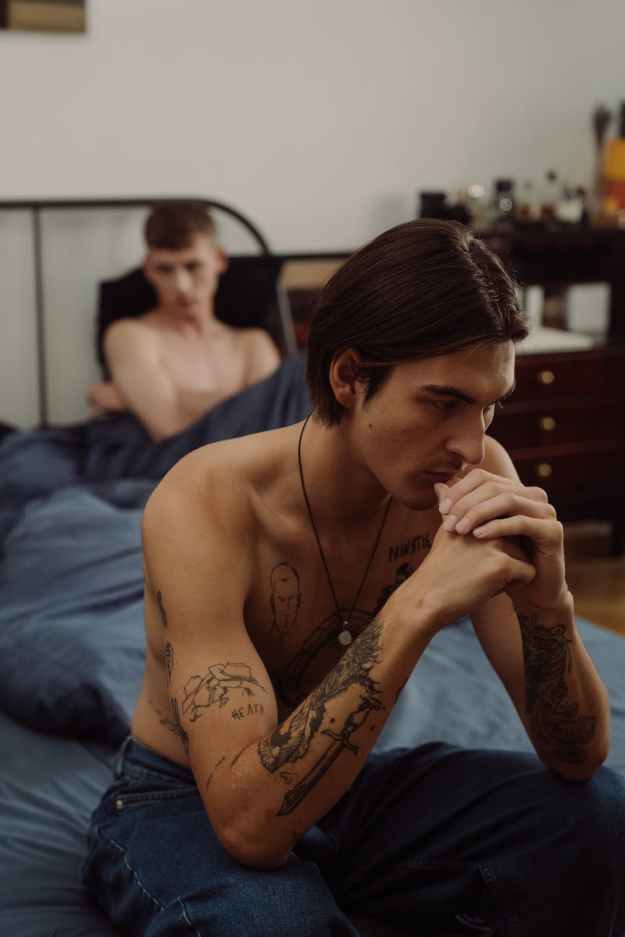
About Gays And Why Laws, Book Bans, School Boards, And Other Restrictions Attempting To Bash And Attempted Genocide Against Queer Peoples Won’t Stop More People From Increasing The Populations In The LGBTQI Community!

The Day You Decided Who You Are
Photo by cottonbro studio on Pexels.com

We all remember that day. It may be a Spring afternoon following a light rain shower, with flowers peaking from beneath their winter hiding place for a first glimpse of the season’s sun. There we sit. We were pondering between the two choices. Will we be straight or gay? Surely everyone remembers that day, for if it is a choice, everyone faces the same options. You can choose both, they say. That needs to be clarified.


To be or not to be, when we were teens, first discovering who we were, for some, it was challenging to accept, and it took years for those who grew up in communities that were closed-minded and set to one way of life to finally get into their head that they were who they are and not who others expected them to be. They had tried to take the path of least resistance and attempted to take the straight route, not given another choice. But every piece of their biological body screamed at them, telling them something wasn’t right. They were misleading others, lying every minute of their life, and never being their true selves. They either had to leave and be their authentic self or die. Some tried to marry, but after a period, the inner madness kept them from carrying on, and their either killed themselves, came out and took the hell and damnation from the small communities in which they lived, or packed up and disappeared. Many may have turned to alcohol or drugs, appearing to believe it was better to be an addict than what they felt was their true self. If they were lucky, they met their soul mate and were rescued from the prison that so many are forced into by a society that is cruel and judgmental of others. Fortunately for others, they meet their lifemates just out of high school. They seem to know how to manage the world around them and find a world to live and operate in a life they would have otherwise missed out on, creating long-term relationships and being grateful things turned out as they do. They would not have wished to miss on so much love and so many adventures.


Forty-one years later, another couple still see simple rights afforded to their neighbors, rights that are threatened to be stripped from them by bigoted and power-hungry maga-republicans. So a question is asked to these groups suggesting they can kill off the gays. When did they choose to be straight? And, why is allowing this couple to live in peace so bad?

Photo by Joshua Mcknight on Pexels.com

All the books, movies, and internet sites in the world may get banned; however, that will not stop the same amount of new homosexual and bisexual men and women from populating the earth each year. Some evil act does not make them. They are born, just like the couple you are reading about. Just like you!

One couple originates from small towns in Western Oklahoma. Growing up, they were never acquainted with gay anything. Both were church-attending, straight-laced lads all the way. Still, each began slowly dying from living in a suppressive community that had conditioned them to believe they were the worst people on the earth and were going to Hell. That worked until they met after high school and finally began to breathe life through one another. It took a lifetime to overcome the damage God-fearing sermons placed on them. They chose to move to a larger city and begin to grow privately, not making themselves the center attraction of life, but their community knew they coupled. As life continued, so did their love and energy, and now they live in a retirement community. But their rights are under threat daily. Because their property, retirement, and physical and fiscal security are in danger by daily threats of changing laws and bigotry. Research has discovered there should be signs on every front door of any religious establishment reading “for entertainment purposes only, because it does not produce a benefit for the community as a whole, just for the few!”

So When Did You Choose Your Sexual Preference?

And To Screw With It Would Cause Extinction!

This passionate talk from Dr. James O’Keefe, MD, gives us a deeply personal and fascinating insight into why homosexuality is a necessary and instrumental cog in nature’s perfection.

Research shows those making up the LGBTQI Communities are responsible for keeping the human race alive.

So When Did You Decide? When Did You Make Your Decision On Who To Be?

LGBTQI? It Is Natures Response To Maintaining The Magic Balance In Life – And To Screw With It Would Cause Extinction.

Maintaining The Magic Balance In Life

For those desiring more proof that the existence of gays is “born” to history and that the members of the LGBTQI Community do not simply choose to be Gay, this history lesson may help if you are an individual with a mind with enough room to learn new and factual information. 

Another way to arrive at the understanding of whether LGBTQI members are born or are made of people choosing a lifestyle, ask yourself when you decided to be heterosexual (straight). What day did you choose between the options available and determine what life you wanted? Then consider who would ever pick a life where their being would face prejudices, denial of employment, housing, and services if they had a choice not to have to face the constant bigotry bashing them daily. 

If you believe in a Higher Authority, a God. If this is your premise and you still object to these beings walking the earth, take it up with Him. When you do, if you believe scripture, consider Genesis 1:26-28, which announces that human beings are unique and all are in the image of God.

§Then God said, 'Let us make man in our image, according to our likeness, and let them rule over the fish of the sea and the birds of the sky and the cattle and over all the earth.  Genesis 1:26-28

IF HE IS TRUE. AND THERE IS AN ALMIGHTY. AND HE DID SOMETHING WRONG IN DESIGNING CERTAIN INDIVIDUALS TO BE DIFFERENT. THEN YOU SHOULD TELL HIM HE IS WRONG!


Viewing the windows to the right will allow the Facebook Posting to open so the original content can be read.

Remember It…The Day You Decided!

This Is Not A Paid Advertisement

If you are God Fearing, then this message is for you! Our supposed sins will not send you to Hell. But God will ask about yours, i.e., judging others, planting seeds of strife. So the sins you commit are the only ones you should be concerned with. We are fine in answering to the top, should there be anything to comment on. You take care of your side of the street. We will tend to ours!

The Reverend Groff