October 10 in History: Key Milestones and Cultural Impact

3–4 minutes

Oct 10th a good day for history
How history can pile up on any day of the year.

How did we arrive at our current state? It is a question a lot of people are asking. It didn’t happen all at once. Getting to where we are, was forever in the making. Before anyone alive today was here. There have been people making decisions, some not so great. Life happens. It is a popular saying for some people. And as you can tell through this date in history. October 10th was a great day for history to be set. It doesn’t explain everything that has happened. But it does give one an idea of how history can pile up on any given day.

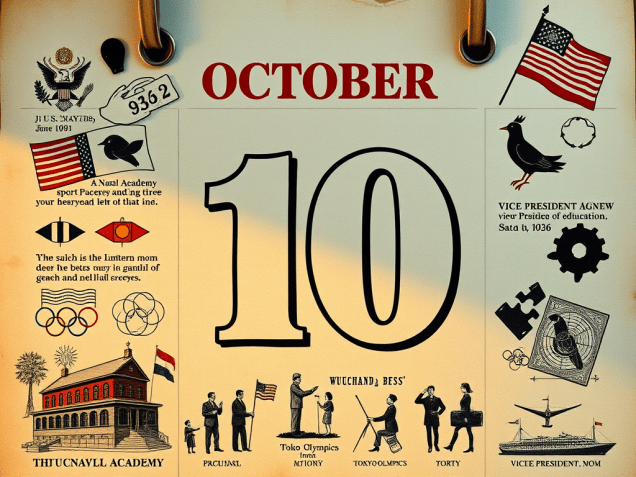
Here’s an evocative image of a calendar marking October 10. It serves as a visual prompt for a day rich in history. This day includes milestone events and global observances.

  1. 1845 – U.S. Naval Academy Founded
    • In Annapolis, Maryland, the Naval School opens with its first class of 50 midshipmen. This event lays the foundation for the modern U.S. Naval Academy.(1)
  2. 1911 – Wuchang Uprising Ignites Revolution This bold move sets the stage for the fall of China’s Qing dynasty. It also leads to the emergence of the Republic of China.(2)
  3. 1935 – ‘Porgy and Bess’ Debuts on Broadway
    • George Gershwin’s groundbreaking opera, featuring an all-Black cast, premieres to widespread acclaim.(3)
  4. 1964 – Tokyo Olympics Start: A Global Broadcast
    • Making history, these Summer Games are the first to be televised live worldwide.(4)
  5. 1973 – Vice-President Agnew’s Resignation
    • Spiro Agnew steps down amid tax evasion charges, a rare and dramatic political moment in U.S. history.(5)

October 10, 1973: A Domino That Changed the Presidency

On October 10, 1973, U.S. Vice President Spiro T. Agnew resigned in disgrace. He pleaded no contest to tax evasion charges. These charges stemmed from a bribery scandal dating back to his time as Maryland’s governor. A sitting Vice President had never stepped down under criminal accusations before. This event sent shockwaves through American politics.

The resignation created an immediate power vacuum. Under the 25th Amendment, passed just six years earlier, President Richard Nixon was capable of nominating a new Vice President. His choice was Michigan Congressman Gerald R. Ford, a steady Republican leader respected across party lines. Congress confirmed him in December 1973, setting in motion a sequence of events no one predicted.

Only months later, the Watergate scandal deepened. Nixon’s credibility unraveled under the weight of investigations into the cover-up of the break-in at the Democratic National Committee headquarters. With impeachment looming, Nixon resigned on August 9, 1974—the first U.S. president to ever do so.

In that instant, Gerald Ford became president. He told the American people in his swearing-in speech: 

“Our long national nightmare is over.” 

Ford’s ascent to the Oval Office was accidental. He became the only person to serve as both Vice President and president without being elected to either office.

Looking back, it’s clear that Agnew’s resignation on October 10 wasn’t just a scandal. It was a turning point in American history. Had he remained Vice President, Agnew—not Ford—would have been next in line when Nixon resigned. The nation, already reeling from Watergate, faced the reality of a president tainted by his own corruption charges. Instead, Ford’s calm, if brief, presidency offered a bridge back to stability.


👉 OCTOBER 10, 1973 stands as proof of how a single resignation reshaped the presidency. It altered the line of succession. It changed the course of American political history.

October 10 is more than a date—it’s a living mosaic of pivotal moments, human emotion, progress, and remembrance. It reflects how history shapes us and how we, in turn, continue writing it.

By Benjamin GroffMedia© | benandsteve.com | ©2025 

THE LAST RIDE FOR THE MAN FROM PLAINS GEORGIA

Groff Media 2024© Truth Endures IMDbPro

Presented by benandsteve.com By: Benjamin Groff II©

2–3 minutes

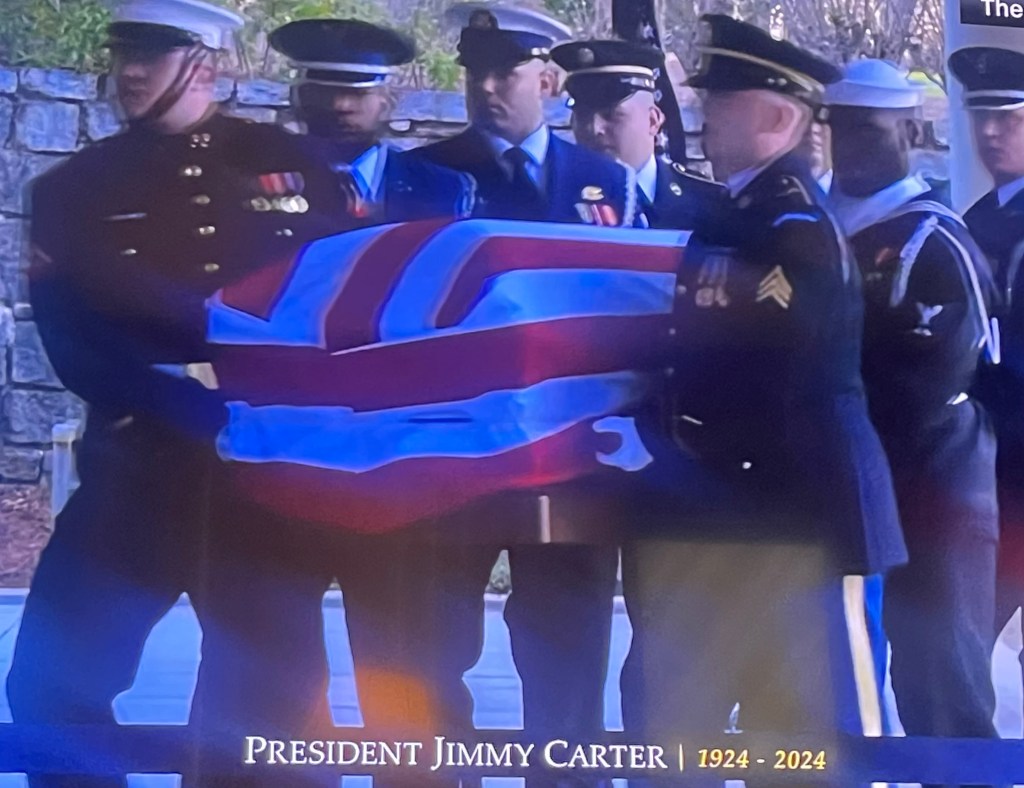
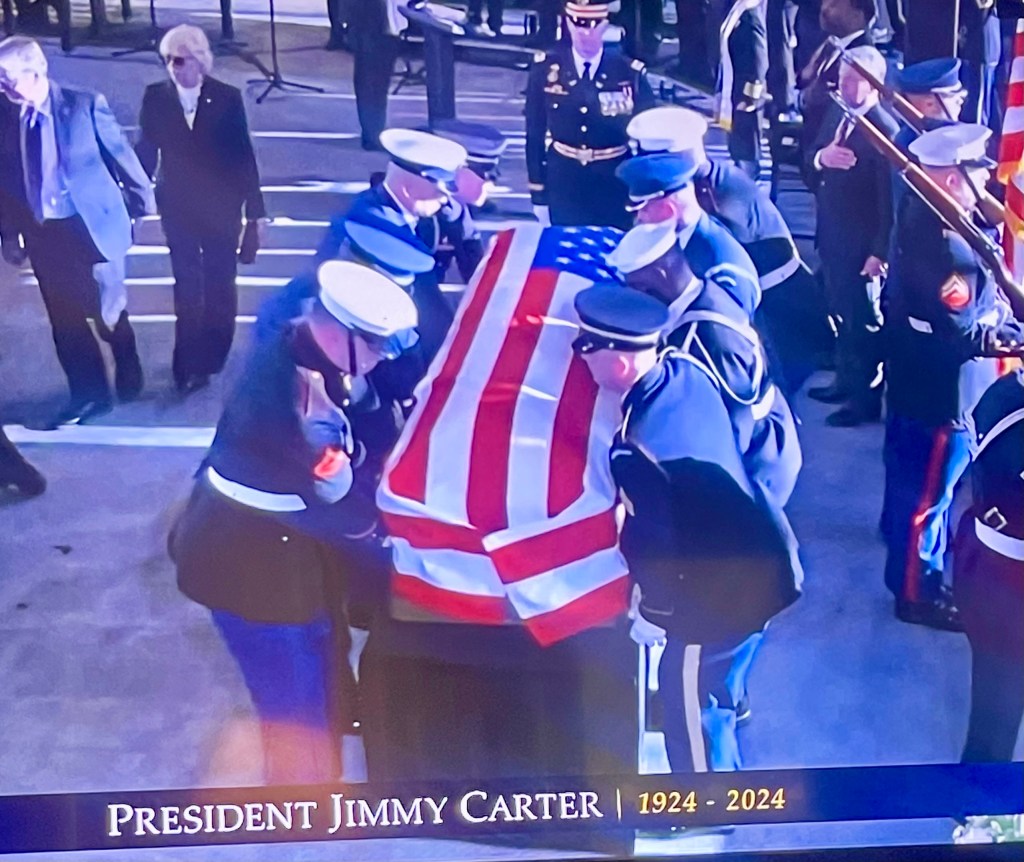
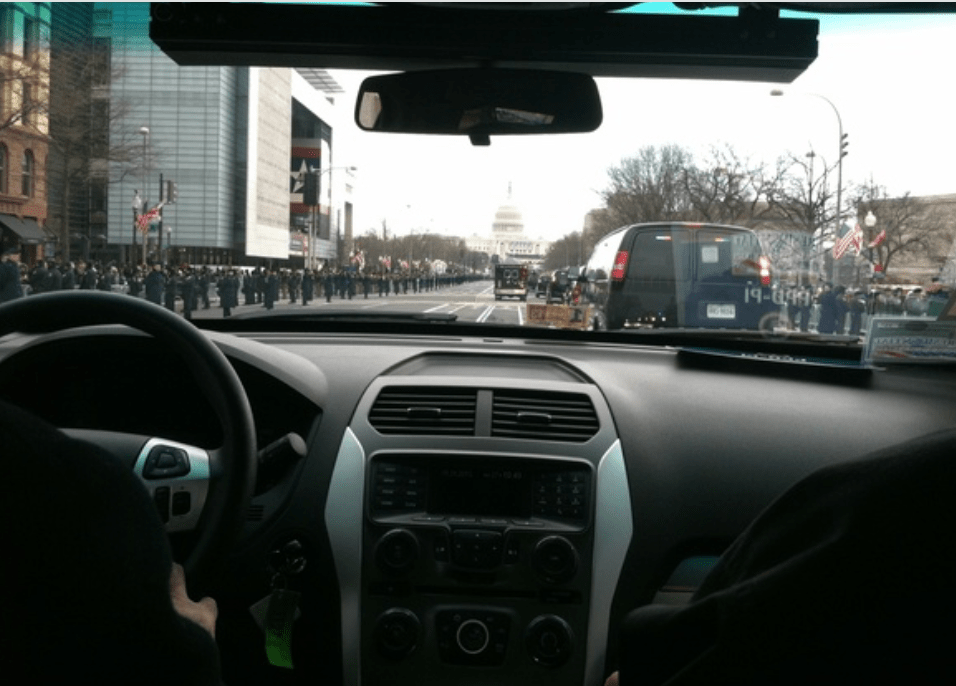
In the early hours of January 4, 2025, a somber hush fell over the rolling plains of Georgia. The sun shone gently over the landscape. A motorcade departed from Phoebe Sumter Medical Center in Americus. It bore the flag-draped casket of the 39th President of the United States, Jimmy Carter. The journey marked the start of a six-day tribute. It honored a man who dedicated his life to service, peace, and humanity.

The procession moved through Carter’s hometown of Plains, passing by his boyhood home in Archery. Here, the old farm bell tolled 39 times. Each chime resonated with the years he had served as the nation’s leader. It symbolized each year of his presidency. Family members, including his children, grandchildren, and great-grandchildren, accompanied the casket, their faces reflecting both sorrow and pride. Former Secret Service agents had once protected him. They now served as pallbearers. They honored their final duty to the man they had revered.

Along the route, admirers gathered. Some held flowers. Others wore commemorative pins. They were all united in their wish to pay homage to a beloved figure. The motorcade continued to Atlanta. There, Carter’s body would lie in repose at the Carter Presidential Center. This arrangement provided the public with the opportunity to offer their respects. 

On January 7, the casket will be transported to Washington, D.C., where President Carter will lie in state at the U.S. Capitol. A state funeral is scheduled for January 9 at the Washington National Cathedral. Dignitaries will honor his legacy there, including President Joe Biden. The funeral will be a solemn event. There will be a military honor guard. A close family member will deliver a eulogy.

Carter’s journey will reach its conclusion after the national ceremonies. He will return to Plains, Georgia, for a private funeral service at Maranatha Baptist Church. He will be laid to rest beside his beloved wife, Rosalynn. This is the place where his remarkable journey began. It would now conclude there.  

As the week unfolds, the nation will ponder on the life of a president who remained a humble servant. Jimmy Carter’s final ride is not just a passage from life to death. It is a testament to a legacy that will endure in the hearts of the people he has touched. This marks the end of a remarkable journey.

The Nation Honors Former President and man Jimmy Carter!

References:

New York Post

Former President Jimmy Carter’s funeral procession begins in Georgia

Today

Politico

Jimmy Carter’s 6-day state funeral begins with a motorcade through south Georgia

Today

AP News

Jimmy Carter’s flag-draped casket is on its way to Atlanta as the 39th president’s state funeral begins

Today

Jimmy Carter and the Little Peanut Stand

Groff Media 2024© Truth Endures IMDbPro

Presented by benandsteve.com By: Benjamin Groff II©

2–3 minutes

Earl Carter and Children

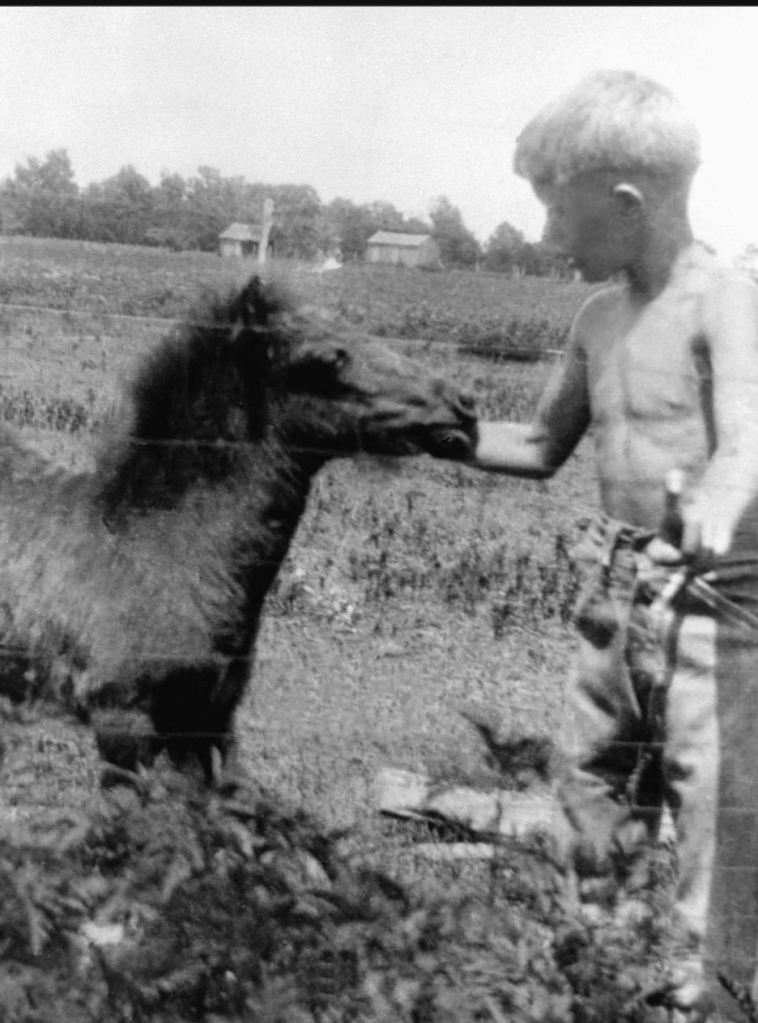
The summer in Plains, Georgia, was hot and humid. Young Jimmy Carter, no more than ten years old, sat under the shade of an old pecan tree. Beside him stood a makeshift wooden stand crafted from spare planks his father had discarded. A hand-painted sign read, “Peanuts 5¢ a Bag.”

Jimmy’s father, Earl, suggested selling peanuts after the latest harvest.

“You’ll learn the value of hard work,”

Earl had said, his weathered hand resting on Jimmy’s shoulder.

“And how to talk to people. That’s important.”

Jimmy Carter

Jimmy took the advice seriously. He woke early each morning to bag the peanuts. He carefully measured each part to guarantee every customer got their money’s worth. Then he’d march down the dirt road to the little stand. He would sit there until the sun dipped low in the sky.

On this particular day, business was slow. The air was thick with the buzz of cicadas, and Jimmy’s mind wandered as he stared down the empty road. He thought about the world beyond Plains. It was a world he’d only glimpsed in books. Travelers passing through town also told him stories about it.

As he mused, a car sputtered to a stop nearby. It was an old Ford, its green paint faded and dust-caked. A man stepped out, dressed in overalls and a straw hat. He approached the stand with a friendly smile.

“Afternoon, young man,”

the stranger said, his voice tinged with a twang.

“How much for a bag of those peanuts?”

“Five cents, sir,”

Jimmy replied, standing up straight.

The man chuckled.

“You drive a hard bargain, but I reckon it’s worth it.”

He handed Jimmy a shiny nickel, and Jimmy passed him a bag of peanuts in return.

The man lingered, munching on the peanuts as he leaned against the car.

“You’re Earl Carter’s boy, ain’t ya?”

“Yes, sir.”

“Well, you got his knack for business. Ever think about what you wanna do when you’re older?”

Jimmy hesitated, then spoke with quiet determination.

“I think I’d like to help people. Maybe be a farmer like my dad, or –– maybe even something bigger. Like a teacher or someone who solves problems.”

The man nodded thoughtfully.

Jimmy Carter was a teenager then. He was number 10 in a group portrait of the Plains High School basketball team. The photo was taken in Plains, Georgia, around 1940.

“That’s a fine ambition. Keep that kindness in your heart, boy. The world can use more folks like you.”

Jimmy smiled, his youthful confidence bolstered by the stranger’s words.

Years later, as President of the United States, Jimmy Carter often recalled that summer by the peanut stand. There, under the pecan tree, he first learned the value of hard work. He also learned humility and the simple power of connecting with others. These were lessons that would guide him throughout his life.

The stand was long gone. But, the spirit of that little boy with big dreams remained. It was forever rooted in the red soil of Plains.

Learn more about Jimmy Carter in photos. Got to the source for photos used in this writing by clicking here.

The Campaign Flare That Saved the First Lady and the Candidate for President

A FICTIONAL Story By: Benjamin Groff© Groff Media 2024© Truth Endures

In a time of intense political enthusiasm, the nation’s largest city braced for the Democratic National Convention. The convention was monumental, drawing over 200,000 people, including fervent supporters, passionate protestors, and those harboring darker intentions. The city’s population swelled, and the number of people and calls for service pushed authorities’ abilities, as law enforcement officers from seven neighboring states were called to ensure the safety of all in attendance.

The Convention Management needed two massive arenas to accommodate the influx of attendees, all eager to witness the nomination of their party’s candidate. Security was tight, with officers meticulously screening everyone entering the venues. Despite the thorough checks, the atmosphere was tense; no one knew what might happen as the evening unfolded.

As the convention began, volunteers handed out bracelets and necklaces designed to light up in vibrant shades of blue and pink. These accessories, when activated, blinked with a strobe-like effect, adding to the electric atmosphere. However, as the lights flashed rapidly, the joy turned into panic. For some, the blinking lights triggered seizures, turning the arena into a scene of chaos as over five hundred attendees began convulsing.

The sudden medical emergency overwhelmed the official responders. But amid the turmoil, a few quick-thinking attendees with first responder training stepped in, helping to manage the situation. They guided others in assisting the stricken, and together, they stabilized the crisis without needing additional outside help.

Realizing the cause of the seizures, the speaker at the podium urged the crowd to switch their bracelets and necklaces to a steady glow or to turn them off altogether. As the crowd complied, the flashing lights faded, and calm returned to the arena.

But a new and more sinister threat emerged just as the situation seemed to be under control. An embittered and desperate opposing candidate had managed to slip into the venue through a back door. Claiming he had a scheduled meeting with his Democratic opponent, he bypassed security and found his way to a room intended for the candidate.

Unbeknownst to him, the candidate wasn’t there that evening. Instead, a former First Lady entered the room, unaware of the intruder’s presence. As she closed the door behind her, the man, believing he was facing his political rival, prepared to attack. But before he could strike, the former First Lady, trained in Krav Maga, swiftly neutralized him. In a matter of seconds, the would-be attacker was subdued, left crying, and defeated on the floor.

He didn’t know the incident was captured on a security camera, complete with audio. The footage revealed his violent intentions, his use of racist slurs, and his plan to kill who he thought was his opponent. The video also showed the failure of both his and her security teams to prevent the breach, highlighting the danger she faced.

Despite the overwhelming evidence, the authorities neither arrested nor questioned the intruder. Instead, the former First Lady, a Black woman, was detained and interrogated as if she were the aggressor. It wasn’t until the security footage was reviewed that the truth was undeniable: she had acted in self-defense against a deliberate attack.

A week later, authorities showed the video to the public. The opposing campaign scrambled to make excuses, suggesting that the former First Lady should have chosen a different dressing room and their candidate had every right to be where he was. But the damage was done. The public, especially the supporters of the former First Lady and her candidate, were galvanized. They were more determined than ever to prevent such evil from reaching the Oval Office.

Ultimately, what began as a night of political celebration became a defining moment in the campaign. One woman’s bravery, coupled with the quick thinking of ordinary citizens, may have saved her life and the nation’s future.

The Last President: A Tale of Democracy’s Demise

The Last President

It was the end of October, and the nation seemed to be in a state of distraction, unaware of the critical choice before them. Two men were vying for the highest office in the land, each bringing with him a starkly different vision for the future. The contrast between their characters and intentions was as clear as day, yet the people’s attention was elsewhere. The urgency of the situation was palpable, but the people were yet to realize the gravity of their decision.

The first candidate was an elder statesman, a man whose career in public service spanned decades. He had held nearly every elected position imaginable, from local government to the halls of Congress. His dedication to the country was unwavering, a testament to his deep-seated patriotism. His life’s work, a reflection of his commitment to protecting the essence of the country he loved, was a beacon of trust and reliability for the nation.

In stark contrast stood the second candidate, a man whose motives were as transparent as they were troubling. Self-serving and careless, he made no secret of his intentions. He openly declared that, if elected, he would rule with an iron fist, punishing his enemies and consolidating power from day one. His rhetoric was filled with hate, yet the people, weary of the same old political games, dismissed his threats as mere bluster. This transparency, however, should have been a warning sign, a call for vigilance in the face of such extremism.

The campaign’s intensity grew as the days turned into weeks, yet the nation’s focus remained elsewhere. Perhaps it was the fatigue of constant political turmoil or the distractions of everyday life, but the electorate seemed indifferent, almost numb. They laughed off the second candidate’s tirades, convinced that such extremism could never take root in their democracy.

Election day arrived, and with it, a shocking outcome. The self-serving, hateful man had won. The people who had laughed at his threats now watched in stunned silence as he took the oath of office. His promises of dictatorship were not idle threats; they were his blueprint for governance, a reality that had suddenly come to pass. This was not just the result of one man’s ambition, but a collective decision made by the electorate.

From the very first day, the new President began to reshape the government to suit his whims. He targeted his opponents with a vengeance, using the full power of his office to silence dissent. Civil liberties and democratic institutions were eroded and undermined. The press, once the people’s watchdog, was muzzled. The judiciary, a bulwark against tyranny, was co-opted. His actions, such as [specific actions], tightened his authoritarian grip and spread fear like wildfire.

The oldest-ever President, now retired, watched in horror as the nation he had served so faithfully became dismantled piece by piece. His warnings had gone unheeded, his life’s work seemingly undone in months. Once so dismissive of the threat, the people found themselves powerless to stop the descent into chaos. The retired President, too, felt the weight of his powerlessness, a stark contrast to his years of service and influence.

It was the end of the nation, an Ending which the country could have avoided.nation. An Ending that could have been avoided.

Biden’s Time In Office VS. Trump’s.

Question on Quora –

Joe Biden has taken 382 vacation days off to date. That equates to over one full year on vacation out of 3 years as US president. Is he the most ineffective US president in history?

Answered by Benjamin via benandsteve.com 

We take your word it was 382. I need President Biden’s schedule to confirm such details. Since the job is 24/7, 365 days a year, you never have any privacy, nor a day without less than twenty interruptions, even when on vacation. The vacation days alone don’t necessarily reflect a president’s effort. Being president is a demanding job that comes with its own set of challenges and responsibilities. While the president must take breaks and maintain a work-life balance, one should consider the number of vacation days in the broader context of one president over another president’s performance, decision-making, and leadership.

Every presidency has challenges and circumstances, and comparing one president’s vacation days to another does not give a comprehensive view of their effectiveness. When evaluating a presidency’s effectiveness, it’s also essential to consider the accomplishments, policies enacted, and challenges faced.

The information provided may be more accurate or presented better to portray a specific narrative. It’s always a good idea to fact-check information and consider multiple perspectives before forming an opinion.

For a fact, here’s what Biden didn’t do:

  • He never only started his work days around 11 am or 11:3AM, crisis or not.
  • Never made an ass out of himself on a global stage.
  • Never has had disregards to promises made during his campaign.
  • He Never has been impeached.
  • Biden didn’t get impeached a second time.
  • Biden never had to survive a Senate trial that most senators later – admit that they should’ve voted and should’ve been guilty.
  • Biden didn’t get indicted – FOUR TIMES.
  • It wasn’t Biden who tried overturning the People’s Will in the 2020 *Election by inciting an insurrection!
  • No Biden didn’t call the Georgia Secretary of State and attempt to *Strong arm him into creating 12,000 more votes in his favor.
  • Biden didn’t take papers from the national archives and refuse to return them to the United States Government. Going as far as to tell employees to hide the location of the boxes that contained them from authorities. Then, he agreed to return them and never did so. Then, having the stated allegations recorded on the video camera and denying it was real, lying to the FBI (also a crime.)

The list of things President Biden never did could go on, but it would be easier if you tuned into Court TV Monday through Friday.

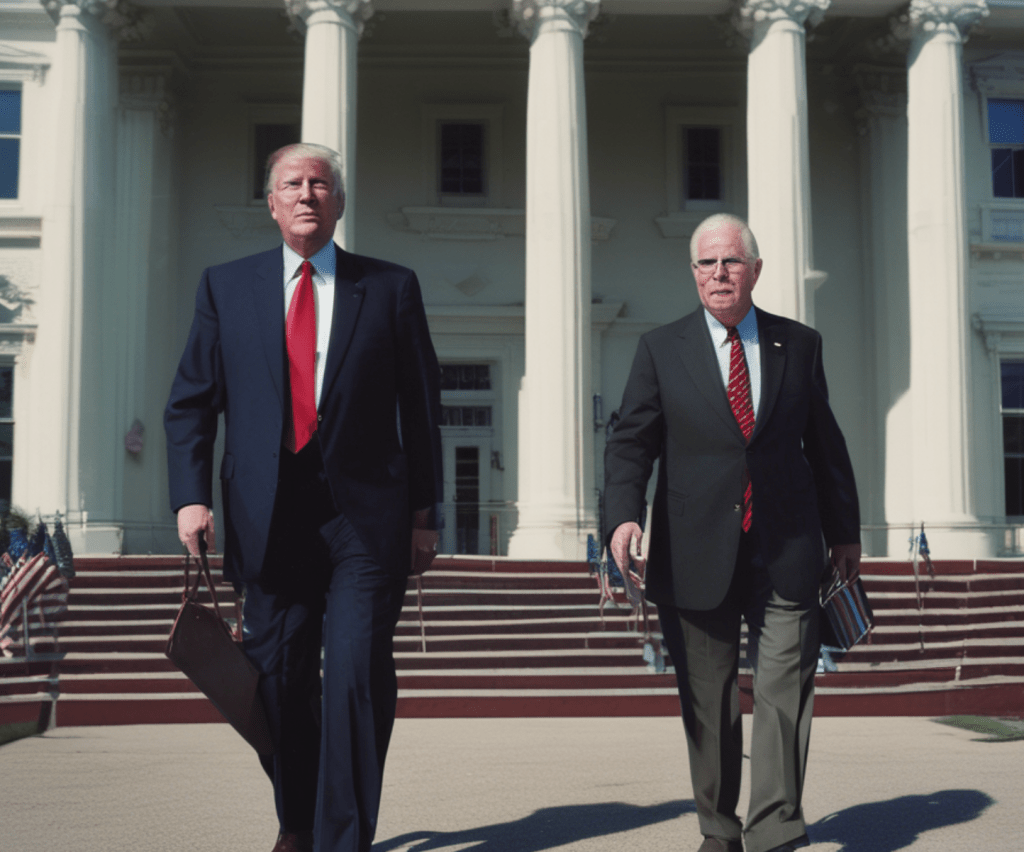
Those are the differences you can make between Biden and Trump, which is just the start!