You have chosen to follow my work. I’ve found my way to yours. Or we’ve somehow crossed paths through shared stories and curiosity. Regardless, I’m grateful you’re here. benandsteve.com is a place built on memory and reflection. We believe every life has value. Every voice deserves to be heard.
Here you’ll find personal stories, history, observations, tributes, and occasional wanderings into humor or wonder. Some pieces are quiet. Some are reflective. Some surprise you. All are written with intention and respect for the human experience we share.
benandsteve.com is a storytelling space built on memory, curiosity, and the belief that ordinary lives carry extraordinary meaning. Here you’ll find personal essays, family and local history, tributes, reflections, and observations drawn from lived experience.
This site isn’t about perfection or performance—it’s about honesty, connection, and preserving moments that otherwise be lost. Stories are shared not to impress. They are shared to remember and think. They remind us that we’re not alone in what we carry.
You’re invited to read, wander, think, and return whenever something calls you back.
Thank you for taking the time to read, follow, and engage. I hope something here resonates with you. It can steady you. Or if it reminds you that you’re not alone in this wide, complicated world. You’re always welcome back—and I’m glad you found your way here.
A Warm Welcome to New Subscribers
If you’re new here—welcome. Several reasons you are here. (1.) You have subscribed by choice. (2.) You discovered this site through a shared story. (3.) We have found one another through mutual curiosity. Regardless, I’m genuinely glad you’re here.
benandsteve.com is a place for storytelling in many forms. These include personal reflections, family and local history, and tributes. It also encompasses observations and the occasional moment of humor or wonder. Some posts are quiet and reflective. Others lean into memory, loss, resilience, or simple human connection. All are written with care and intention.
Thank you for reading, subscribing, and spending your time here. I hope something you find steadies you, sparks a memory, or reminds you that stories—especially ordinary ones—still matter. You’re always welcome back.
Writing the most sincere self-analysis is no small undertaking. It asks something of us that we’re not always ready to give. It demands honesty, and not just the kind we wear on our sleeves when trying to be humble or modest. It demands the raw kind. The kind that doesn’t flatter or soften but still doesn’t condemn. A self-analysis worth anything must go beyond the stories we’ve rehearsed for friends. It must also reach deeper than the traits we like to highlight on good days. It must ask: Am I willing to know myself, truly? And, more difficult still: Am I willing to share that knowledge with others, even if it unsettles or embarrasses me?
There’s always a temptation to curate the truth—to include only what paints us in a light we can tolerate. We must focus on growth, accomplishments, and kind-heartedness. We should downplay the envy, impatience, and regrets that tug at us when we’re alone. But sincerity demands more. It asks for balance. The glad moments don’t mean as much without the unhappiness that gives them context. Our kindness shines brighter when we own the times we’ve neglected to be kind. Our strength becomes more meaningful when we admit we’ve been weak.
A true self-analysis is like holding up a mirror. It’s not the forgiving kind in your hallway that you glance at before heading out. It’s the close-up, unfiltered reflection you find under harsh light. There, we meet the layers. First, there’s the child we were. Then, comes the adult we became. Finally, there’s the person we are still trying to be. We see the love we gave and the love we withheld. We know the courage and the fear, the moments of pride and the nights of doubt. And in that space, there is room for grace—because sincerity isn’t about judgment but clarity.
So when you write your self-analysis, ask yourself: will I tell it all? Or just the things I like? Will I dare trace the lines that run through my contradictions, triumphs, and failures? The work isn’t in choosing between the good and the bad. It’s in holding them together and saying,
This is who I am—flawed and hopeful, broken in places but still reaching toward something better.
That’s when you know it’s sincere—not because it sounds perfect, but because it doesn’t try to be.
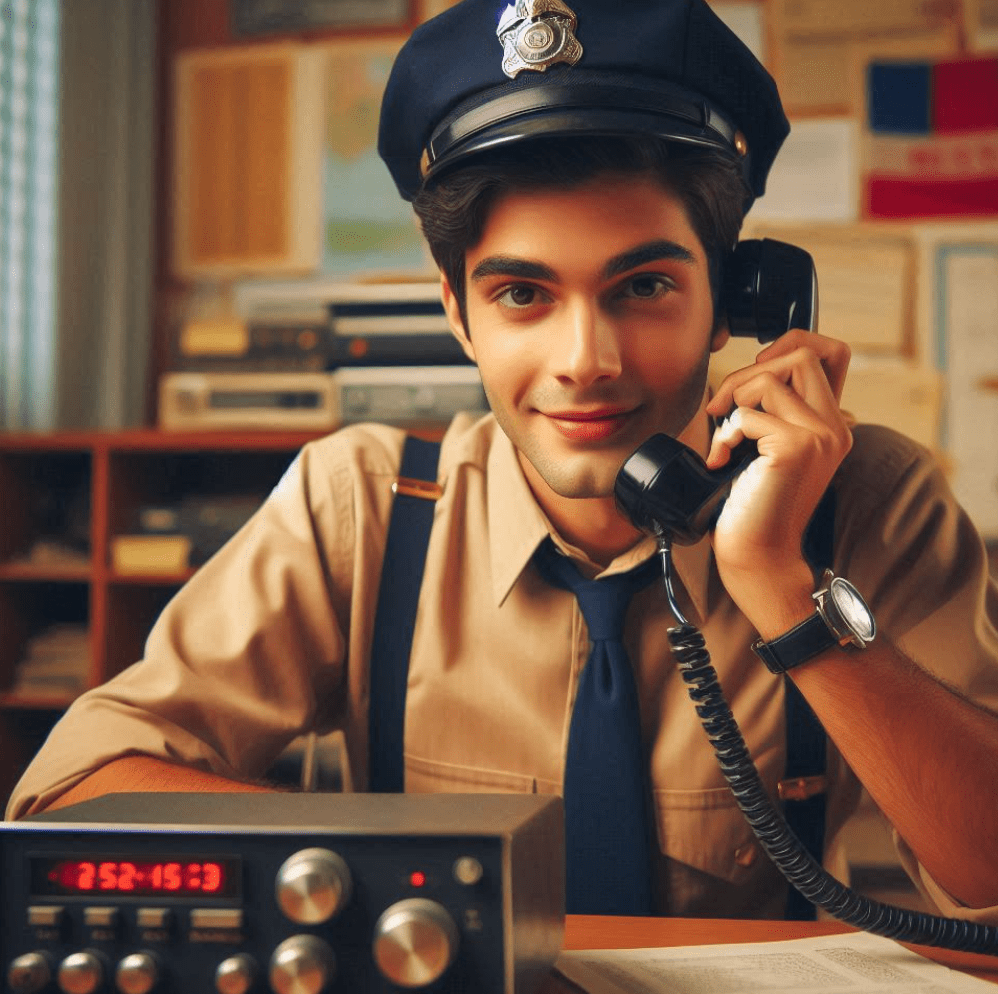
In his senior year of high school, he went to work at a neighboring police department thirty miles from where they lived. He worked as a jailer-dispatcher. He had just turned 17 years old, and His dad provided authorization from the school and local city government to go to work. Once he had been hired, there was no stopping his progress. He had listened to the police scanner for years and even volunteered at our local police department as a dispatcher and ambulance driver. He was only 16 then. This, to him, was the big time he was getting paid—the town at a rough character about it. A man had been killed behind the police department in the alley not too long before I went to work there. The killer was still at large.
He excelled in his duties. The chief appreciated his attendance record and punctual arrival to shifts. The assistant chief requested he be the only dispatcher assigned to his shift. He gained a reputation throughout the western state for His broadcasting style and etiquette—application of the police 10-code and professional stature that he applied in the tone of his broadcast. He was known as a no-nonsense type of communications officer. If he gave a call, the information was correct, and the officers could be sure he would stay with them through their response. If they needed help and he lost contact with them, neighboring agencies knew he could pull back up out of the blue. And they respected the ability.
Change is inevitable, and when he graduated high school, a neighboring agency offered me a position that would allow me to broaden his skills. It allowed him to gain telecommunication abilities and work with a county-wide agency, and he still had contact with his old pals at the smaller agency, just less often. The training opportunity exposed him to new experiences, and he was closer to home, but he lacked a feeling of being fulfilled. Something was missing that he couldn’t place my finger on. The period was during the oil boom in Oklahoma, and there was a flurry of activity everywhere. It was not uncommon that he held down employment in other adventures while working for these agencies. One had to. The pay needed to be better for making a serious living. He got offers from colleges and employers the first month after graduating high school. I had planned to work through school, so he planned to keep working at one of my jobs. Plans change. One hundred miles away, a city was beaming on the horizon. They had put a notice out they were hiring a crew of new communication officers and would be building a new administration building to host the center. It appeared intriguing. A visit to their department one morning caused further interest.
When a very experienced face met me at the door and asked how they could help me, He recognized it immediately from a statewide broadcast when he heard the voice. As soon as he spoke, they recognized mine. He explained he had word that they were hiring and that he wanted to spread his wings, move away from home, and get out on his own. The boy was also looking for a larger organization with which to become affiliated. The Captain had an application in the boy’s hand and sat in the chief office within thirty minutes. He accepted an offer within the hour and left town within two hours of arriving, trying to think of how to express my two-week notice to his current employer. Even worse, the boy was working out how he would tell my mom and dad he would be moving out. Not that he had not been gone most of the time with my jobs, but it is the idea that their youngest child was moving out and going on his own.
He went to work the following day. Things changed rapidly in law enforcement, now as they did then. The chief had quit after a heated argument with the mayor over funding, and in his boyish manner, he thought it was as good a time as any to throw his hat in the ring to make a statement. Knowing he already had a job made it much easier, so the boy gave his notice. Now, he just had Mother and Dad to tell. He told my dad first. It wasn’t the worst news Pop had by the mood he was already in, but it may have come close. After he went for a ride on his horse and came back in, he said to wait to tell the boy’s mother for a few days and catch her in a good mood. The kid’s mother reminded him of Eunice, off the Carol Burnett show. Or was it that Eunice reminded him of his mother? She always made him laugh doing the funniest of things.
Today, we briefly describe his first year of official employment in law enforcement and how the boy got started. Each stage is more detailed, and there are many more incidental stories about events that would take place in each department. The writer may tell you the stories in a different order, but as they are related to other incidents, those are coming soon.
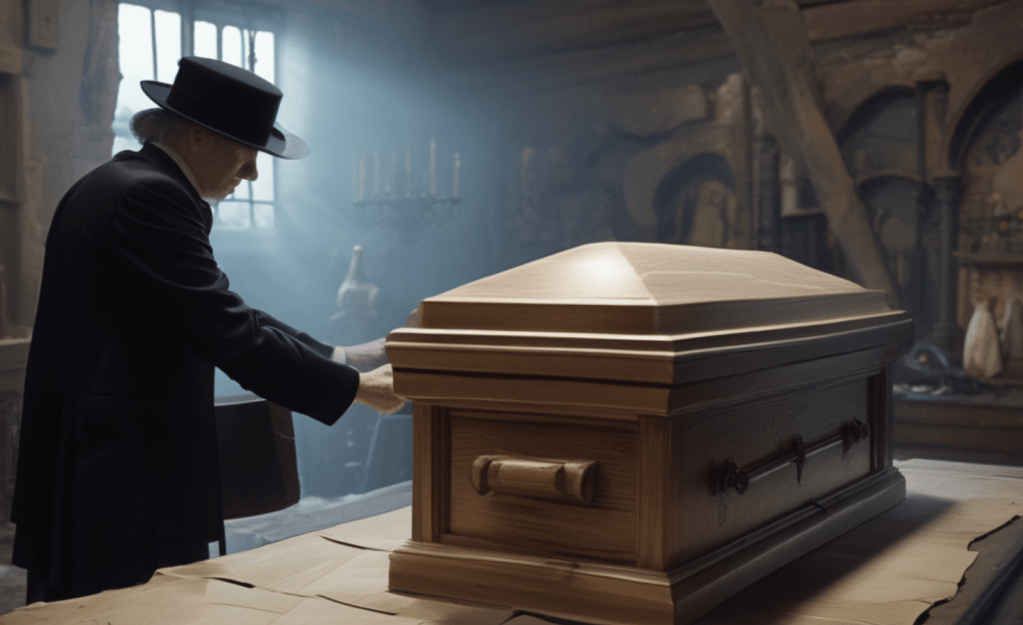
In the small town of Elderton, nestled between rolling hills and dense forests, there lived a man named Mr. Gorb. Mr. Gorb was a meticulous man, a perfectionist in every sense. His business dealings were unique, for Mr. Gorb was the town’s undertaker. However, unlike others in his profession, Mr. Gorb went above and beyond to ensure each client received a personal touch.
Although Mr. Gorb’s clients were all deceased, that didn’t mean they deserved any less care. He believed that everyone deserved a final sendoff that reflected who they were. This philosophy became known as the “Gorb Touch,” a term that resonated deeply within the community.
When someone in Elderton passed away, Mr. Gorb would embark on a journey to recreate their likeness as closely as possible to how they appeared when they last walked down Main Street. He would search the town for the most recent photographs of the deceased, often speaking with family members and friends to gather any images they had. He delved into the history of his clients, learning about their favorite outfits, their unique hairstyles, and any other defining features that made them who they were.
Mr. Gorb’s dedication was unparalleled. He would spend hours carefully applying makeup, arranging hair, and selecting the perfect attire for each individual. His attention to detail was astounding, and the results were always breathtaking. The people of Elderton loved Mr. Gorb for his personal touch and the comfort it brought them during their loss.
One crisp autumn morning, the townspeople awoke to shocking news. Mr. Gorb had passed away in his sleep. The entire town was at a loss. Who would now carry on the tradition of the Gorb Touch? Who would prepare Mr. Gorb himself for his final farewell?
Unbeknownst to the townspeople, Mr. Gorb had been quietly training an apprentice. A young man named Thomas had come to Elderton a few years prior, seeking guidance and a place to belong. Mr. Gorb had seen potential in Thomas and had taken him under his wing, teaching him everything he knew about the delicate art of caring for the deceased.
Thomas had learned well. He had absorbed every lesson, technique, and philosophy Mr. Gorb shared with him. And now, as the town mourned the loss of their beloved undertaker, Thomas stepped forward to fulfill his mentor’s legacy.
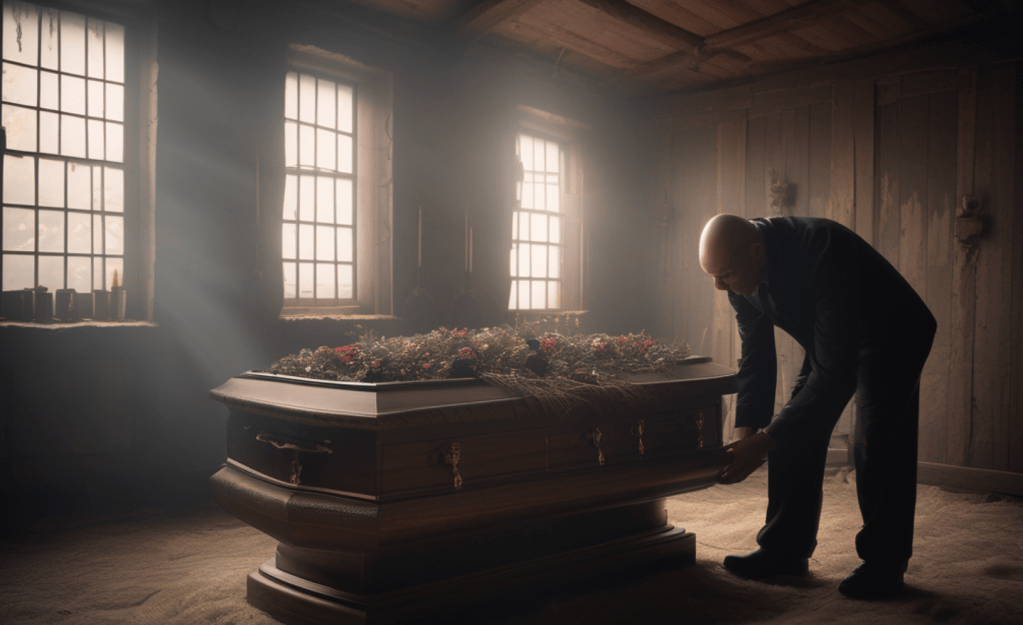
With a heavy heart, Thomas prepared Mr. Gorb for his final journey. He meticulously followed the same process Mr. Gorb taught, ensuring that every detail was perfect. The townspeople watched in awe and gratitude as Thomas recreated Mr. Gorb’s likeness with the same dedication and care that had become synonymous with the Gorb Touch.
The funeral was a beautiful tribute to Mr. Gorb’s life and work. As the townspeople gathered to say their final goodbyes, they saw the continuation of a tradition that had brought them so much comfort and peace in Thomas. They knew that Mr. Gorb’s legacy would live on through his apprentice and that the personal touch that had defined their community would never be lost.
~ THE GORB TOUCH WILL LIVE ON ~
Thomas continued to serve the people of Elderton with the same compassion and attention to detail that Mr. Gorb had instilled in him. As the years passed, the Gorb Touch remained a cherished tradition, a testament to the enduring impact of one man’s dedication to his craft and community.
In the summer of 2024, two city mice, Max and Lily, took a break from their bustling urban lives. Yearning for fresh air and tranquility, they planned a weekend getaway to the serene countryside. They packed a delightful picnic basket filled with cheese, bread, and a selection of berries and set off for the rolling hills and meadows.be
After a few hours of travel, they found the perfect spot—a grassy knoll overlooking a gentle river winding through the valley. The beauty of the countryside was breathtaking, with the sun casting a golden glow above the rolling hills. They laid out their blankets, unpacked their baskets, and enjoyed their feast under the warm sun, surrounded by the serene beauty of nature.
As the day went on, dark clouds began to gather on the horizon. Max, ever the cautious one, suggested they pack up and head back to the cottage they had rented. But Lily, captivated by the beauty of the countryside, convinced him to stay a bit longer. “It’s just a little rain, Max. We’ll be fine,” she said with a reassuring smile.
However, the little rain quickly turned into a torrential downpour. The river, once calm and serene, began to swell and rage. Realizing the severity of the situation, Max and Lily quickly gathered their belongings and started returning to the cottage. But the water rose faster than they could move, soon turning the meadow into a swirling expanse of water. The danger was palpable, and their hearts raced with fear as they struggled to reach safety.
They spotted an old, hollow oak tree on a small hill with nowhere to go and the floodwaters rising around them. “There!” shouted Max. “We can take shelter in that tree!” They waded through the water, which was now waist-deep, and climbed into the hollow trunk just as the floodwaters swept over their picnic spot.
Max and Lily huddled inside the tree, shivering from the cold and damp. The hours dragged on, and the rain showed no sign of letting up. They could hear the river’s roar and the crashing of debris being swept along by the flood.
Just as they were beginning to lose hope, the rain finally stopped. The relief was palpable, and they felt a surge of hope as the floodwaters started to recede, leaving a landscape transformed by the storm. Cautiously, Max and Lily emerged from their shelter. The meadow was a muddy mess, and their picnic spot was nowhere to be seen. But they were safe.
Determined to make the best of their situation, Max and Lily set to work. They used their city smarts to fashion a makeshift raft from fallen branches and debris, which they used to navigate the still-swollen river. Eventually, they reached the cottage, which had miraculously remained untouched by the flood.
Tired but relieved, Max and Lily dried off and warmed themselves by the fire. They reflected on their adventure and the dangers they had faced. “Maybe next time, we’ll check the weather forecast before our picnic,” Max joked, eliciting Lily’s tired but genuine laugh.
Their countryside picnic had turned into an unexpected adventure, strengthening their bond and reminding them of the importance of being prepared. As they settled in for the night, they were grateful for their safety and each other, ready to face whatever future adventures might bring.
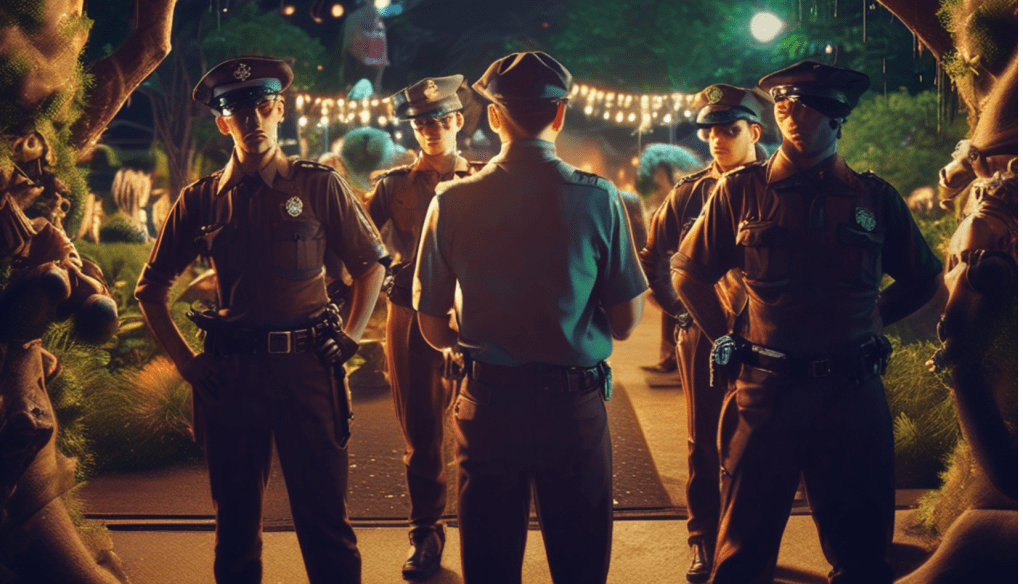
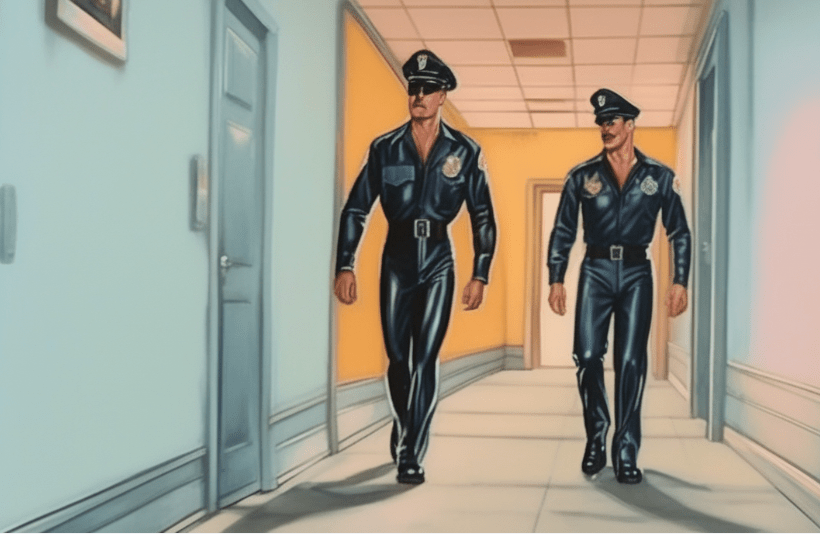
In the bustling city of Gigglewood, a place known for its vibrant nightlife and quirky inhabitants, the streets came alive at night, lit up not just by neon signs but also by the laughter and antics of its most beloved, albeit unconventional, police team: the Midnight Squad, comprised of six dazzlingly attractive officers, their presence was always a spectacle. They donned the sexiest, tight-fitting uniforms that accentuated their gym-sculpted bodies, causing heads to turn and hearts to flutter.
Officer Mia Valentine, the squad’s fearless leader, was known for her killer curves and unrelenting determination. A bisexual dynamo with a wicked sense of humor, Mia could easily switch from laying down the law to cracking up her team. Her second-in-command, Officer Alex Steel, was a trans man with the charm of a movie star and the strength of a superhero. Alex’s journey inspired the whole team, and his quick wit often saved them from the trickiest of situations. “Hey, Alex, ready to save the day again?” Mia would often tease, to which Alex would reply with a smirk, “Always, boss.”
Officers Jen and Lily were inseparable, both on and off duty. The two women, partners in every sense, had a knack for getting themselves into and out of ridiculous predicaments. Jen’s tech skills and Lily’s strategic mind made them a formidable duo, though their constant banter often left their colleagues in stitches.
Then there were Officers Mark and Kyle, whose bromance blossomed into a full-fledged romance. Their goofy camaraderie and over-the-top displays of affection often lightened the mood during tense moments. With his boyish charm and impressive physique, Mark was the team’s undercover expert, able to blend in with any crowd. Meanwhile, Kyle, a former gymnast, was their go-to for anything requiring agility and acrobatics, often using his skills to distract the bad guys during high-stakes operations.
One balmy night, the Midnight Squad faced their most absurd challenge yet. A call came in about a mysterious disturbance at the Gigglewood Zoo. “Looks like we’ve got a situation with the animals,” Mia said, raising an eyebrow. “Let’s roll, team!” The absurdity of the situation was not lost on the squad, and it only served to heighten their determination and sense of humor.
The squad arrived at the zoo to find it eerily quiet. As the officers cautiously approached the entrance, a peacock suddenly strutted by wearing a tiny police hat. “This is definitely not part of the zoo’s usual dress code,” Mia whispered, her hand on her holster.
“I have a bad feeling about this,”
Alex muttered, his eyes scanning the shadows.
Jen and Lily, always up for a challenge, split off to check the reptile house. They soon discovered that all the snakes had somehow gotten loose and were now tangled together in a giant, writhing ball. The sight was both terrifying and strangely mesmerizing, like a scene from a horror movie directed by a clown.
“Why does it always have to be snakes?”
Jen groaned.
Lily just shook her head, pulling out a bag of marshmallows.
“Let’s lure them back with something they can’t resist,”
She said, handing Jen a stick.
They proceeded to toast marshmallows and lure the snakes back into their enclosure with the sugary treats.
“You know, Jen, this is probably the weirdest thing we’ve ever done,”
Lily said, trying to stifle a laugh.
“And that’s saying something,”
Jen replied, a mischievous twinkle in her eye.
Meanwhile, Mark and Kyle headed to the primate exhibit, only to find that the monkeys had broken into the zookeeper’s bananas and energy drinks stash.
“Looks like they’re planning a wild night,”
Mark joked, as they watched the monkeys swing wildly from tree to tree, their fur standing on end from the caffeine rush.
“Monkey rave,”
Kyle exclaimed as they watched the primates swing wildly from tree to tree.
“We need to tire them out,”
Mark suggested, grabbing a nearby boom box. Moments later, the air filled with the sounds of the latest dance hits, and Mark and Kyle led the monkeys in an impromptu dance-off until the exhausted primates fell asleep in a heap.
Back at the central plaza, Mia and Alex stumbled upon the mastermind behind the chaos: a rogue parrot with a flair for mischief.
“Polly wants a key to the city,”
It screeched, perched atop the mayor’s statue.
Mia rolled her eyes.
“Not tonight, featherbrain,”
She said, brandishing a net.
The parrot led them on a merry chase through the zoo, but Alex, with his agility and speed, cornered it in the butterfly house.
“Nice try,”
He said, gently capturing the bird.
“But you’re coming with us.”
With the zoo back in order, the Midnight Squad regrouped.
“Another night, another crisis averted,”
Mia said, looking at her team with pride.
“And another story for the ages,”
Mark added, wrapping an arm around Kyle.
As they returned to the station, the team couldn’t help but laugh at the absurdity of it all. They were a ragtag bunch, each with their quirks and charms, but together, they were unstoppable. The Midnight Squad wasn’t just a team; they were a family, united by their love for each other and their city, ready to face whatever craziness the night would bring next. The audience is invited to share in this sense of belonging and unity, making them feel a part of the Midnight Squad’s unique world.
In 2147, the world was altered irrevocably by the catastrophic aftermath of the First Contact War, a conflict that erupted when humanity made its first contact with an alien civilization. This discovery, instead of being the peaceful meeting of cultures and ideas that many had hoped for, led to a devastating war that ravaged Earth, leaving it a shadow of its former self, with much of the planet in ruins.
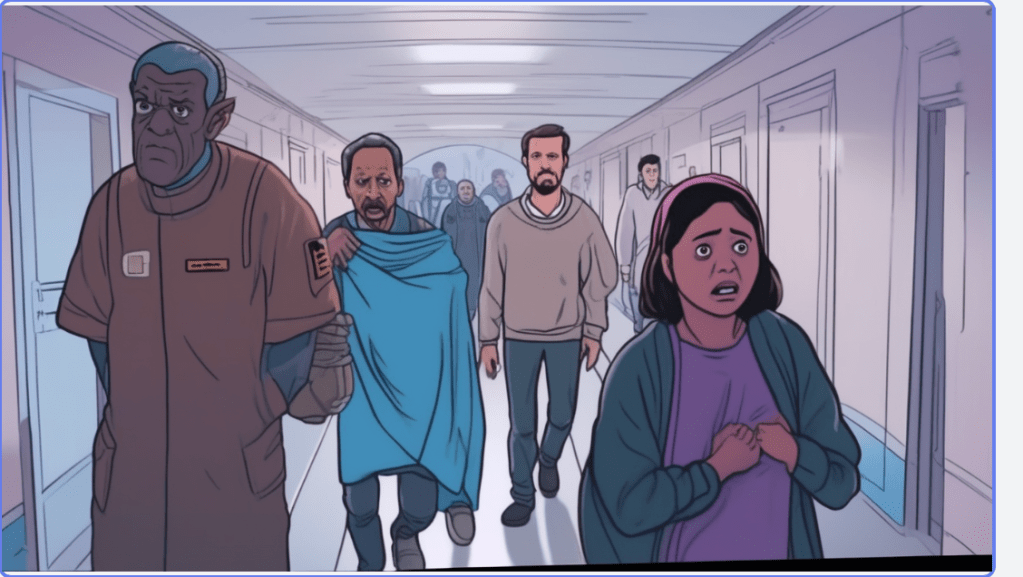
Amidst the desolation, small pockets of survivors, resilient and determined, tried to rebuild their lives. One such place was the settlement of New Haven, a converted underground research facility that provided refuge to humans and non-humans alike. In the dimly lit corridors of New Haven, it was here that a group of survivors, their spirits unbroken, made their way to the main meeting hall.
Leading the group was Dr. Rithian Torvak, a Xelorian biologist from a race that had formed a crucial alliance with humanity against the common enemy. The Xelorians, known for their green, textured skin, and elongated ears, were a race of peaceful scholars who had never engaged in warfare before. Despite the prosthetic arm—a reminder of the war’s brutal cost—he was a source of strength and wisdom, a testament to the unity forged in the face of adversity.
Anaya Patel, a young woman who had become a beacon of hope for many, closely followed Dr. Torvak’s research. Anaya had emerged as a natural leader, her compassionate heart and unyielding spirit rallying the survivors, united in their struggle, through their darkest days. Her parents had perished defending their home, but she had sworn to honor their memory by protecting those who remained.
Beside him, clutching a tattered blue blanket, was Samuel Grant, a former engineer who had lost his family in the initial invasion. Samuel’s eyes appeared haunted, but he found solace in aiding Dr. Torvak with his research, hoping their efforts might lead to a brighter future. His knowledge of pre-war technology was invaluable in keeping New Haven operational.
As they walked through the corridor, the walls echoed with the murmurs of the other residents, each carrying their own stories of loss and survival. The group was heading to a crucial meeting to discuss the latest developments in their efforts to reclaim the surface and search for other survivors.
The corridor opened into a large room filled with makeshift tables and chairs. On one wall, a digital display showed the map of their known world, with red zones marking areas still too dangerous to explore. These zones, remnants of the war, were filled with mutated creatures and unstable terrain, posing a constant threat to anyone who dared to venture into them. The air was thick with a mix of hope and desperation, as the survivors were acutely aware of the dangers that lurked just beyond their reach.
Dr. Torvak stepped forward to address the gathered crowd.
“We have received a transmission from what we believe to be another survivor enclave. This communication could mean there are more of us out there than we thought.”
The room buzzed with whispers. Anaya, her voice steady but filled with emotion, raised her hand, silencing the crowd.
“If there are more survivors, we must find them and bring them here. Every life matters, and together, we can rebuild.”
Her words, a testament to the hope that still burned within them, resonated with the survivors, filling the room with a renewed sense of purpose and determination.
Samuel nodded in agreement.
“We have the technology to send a team, but it will be dangerous. We must prepare for anything.”
Dr. Torvak glanced around the room, his eyes filled with determination.
“We have faced darkness and survived. Now, it is time to reclaim our world, to rebuild what we have lost, and to forge a future where all races can live in peace.”
His words, a rallying cry for the survivors, echoed in the room, filling them with a renewed sense of determination and unity.
As the meeting concluded, the survivors of New Haven felt a renewed sense of purpose. They knew the road ahead was perilous, but they believed, with a flicker of hope in their hearts, they could overcome any obstacle together. In the shadows of their broken world, they found the strength to hope, fight, and dream of a brighter, more peaceful tomorrow.
Despite their broken world, hope remained to rebuild even in the presence of a mixed culture of individuals—all who were put together not out of choice but out of a twist of fate!
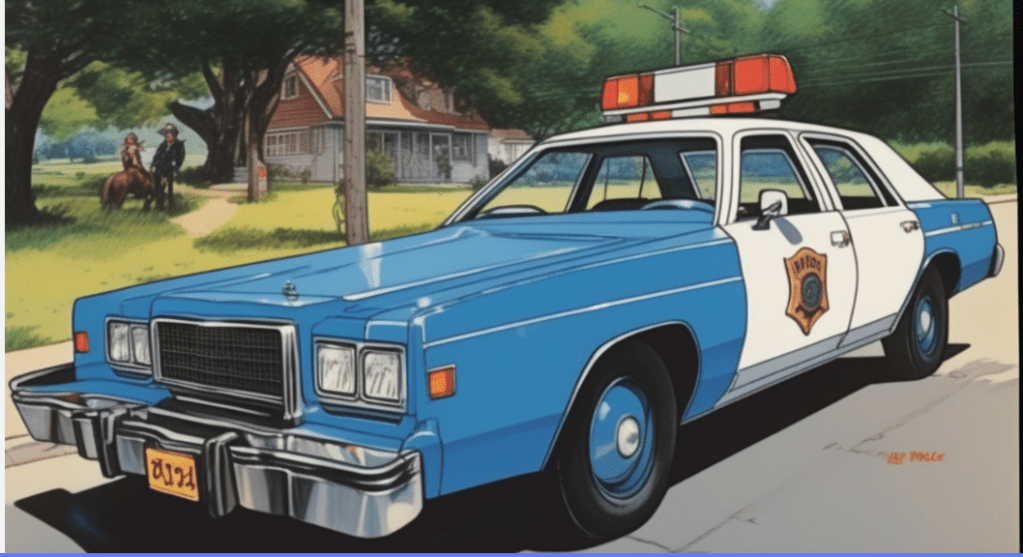
The city of Riverton never slept, nor did Detectives Jake Harris and Sam O’Reilly. Partners for over a decade roamed the nocturnal streets with the kind of synergy only best friends could muster. Their squad car, an unremarkable blue-and-white cruiser, was a beacon of hope for some and a symbol of fear for others.
Jake, with his gruff exterior and piercing blue eyes, was the kind of cop who could read a crime scene like a book. Sam, a lean figure with a quick wit and a knack for defusing tense situations, complemented Jake perfectly. Together, they led the department in felony arrests, arriving at calls faster than anyone else and building relationships with the community that others could only dream of.
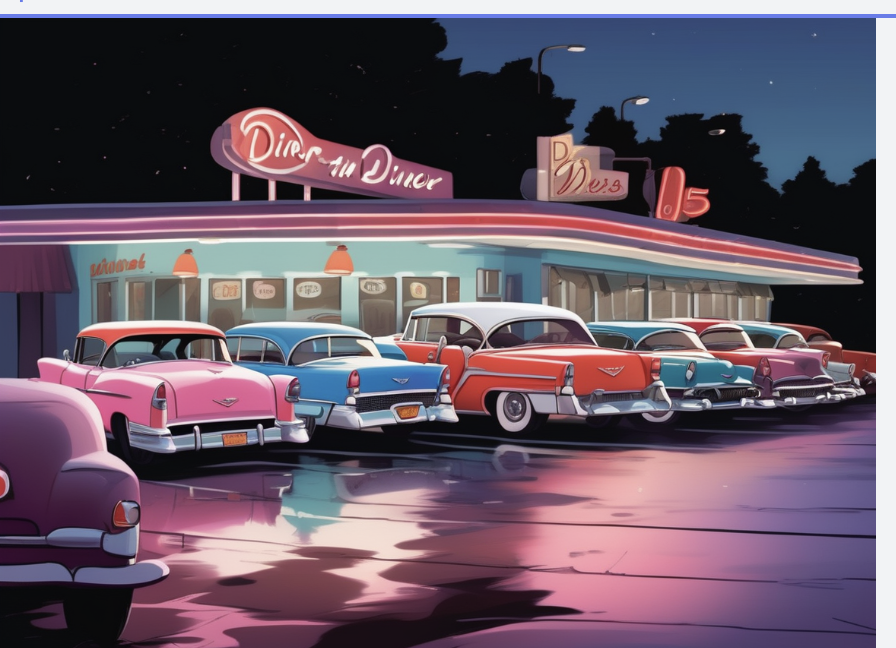
One brisk autumn night, their radio crackled to life with a call that made their hearts race: an armed robbery in progress at the 24-hour diner on 5th and Maple. Without a word, Jake hit the lights and sirens, and they sped through the dimly lit streets. They arrived in just under three minutes, a record even for them.
The diner was eerily quiet as they approached, save for the distant hum of neon lights. Inside, a masked man brandished a gun, demanding cash from the terrified cashier. Jake motioned for Sam to flank the back entrance while he took the front.
Jake entered slowly, his voice calm but authoritative. ––––
“Riverton PD, drop the weapon and come out with your hands up.”
The gunman whipped around, eyes wide with panic.
“Stay back! I’ll shoot!”
From the rear, Sam’s voice cut through the tension.
“No, you won’t. You don’t want to hurt anyone. Put the gun down, and we can talk.”
The gunman’s grip on the weapon faltered. In that split second, Jake lunged forward, disarming him with a swift, practiced motion. Sam was at his side instantly, cuffing the man and guiding him to the squad car.
As they processed the scene, the cashier, a young woman named Maria, approached them with tears in her eyes.
“Thank you. I don’t know what would’ve happened if you hadn’t come.”
Jake gave her a reassuring nod. “Just doing our job, ma’am.”
The rest of the night was a blur of paperwork and patrols. But their most memorable interaction came just before dawn. While cruising through a quieter part of town, they spotted a boy sitting alone on a bench, clutching a backpack to his chest. They pulled over, and Sam approached him gently.
“Hey there, buddy. Everything alright?”
The boy, who couldn’t have been more than ten, looked up with tear-streaked cheeks.
“I ran away from home. My parents are always fighting.”
Sam sat next to him, listening with the patience of a father and says –––
“I get it, kid. Sometimes, home can be tough. But running away won’t solve anything. Let’s get you back home and see if we can help sort things out.”
Jake contacted the boy’s parents while Sam spoke with him. The sun was peeking over the horizon when they returned the boy home. Now more worried than angry, the parents hugged their son tightly and thanked the officers.
As they drove back to the station, Jake glanced over at Sam, sighs then says –––
“Another night, another set of stories, huh?”
Sam chuckled. “Wouldn’t have it any other way.”
In Riverton, one could become a legend in the shadows, and for Jake and Sam, every night was another chance to protect and serve, forging connections and fighting crime in ways that others could only admire.











 benandsteve.com