Disney’s Experiential Designer Eddie Sotto Dead At Age 67

Groff Media ©2025 benandsteve.com Truth Endures

1–2 minutes

Eddie Sotto, 67, American experiential designer, mixed-media producer and conceptualist

Eddie Sotto, a visionary designer and influential figure in themed entertainment, has died at the age of 67. Sotto earned widespread respect for his creative leadership. He made a lasting impact on the way immersive environments are imagined and experienced. His work with Walt Disney Imagineering was significant during a pivotal era of expansion and innovation.

Eddie Sotto imagined places where stories lived. He shaped immersive worlds at Walt Disney Imagineering. These worlds welcomed millions and forever redefined themed design.

Sotto joined Walt Disney Imagineering in 1986. He rose to become Senior Vice President of Concept Design in 1994. This role placed him at the center of some of Disney’s most ambitious international projects. Among his most notable achievements was overseeing the design of Main Street, U.S.A. at Disneyland Paris. There, his vision helped adapt a classic American concept for a global audience. He managed to preserve its sense of nostalgia, storytelling, and emotional resonance.

One of Sotto’s most enduring contributions was his proposal. He suggested placing the Disneyland Hotel directly at the entrance of Disneyland Paris. This proposal was bold and unprecedented. This was the first time Disney situated a hotel within a theme park. This concept would influence future park planning. It also redefined the relationship between guest experience and themed architecture. Eddie Sotto’s legacy endures in the spaces he helped create and in the imaginative standards he set for immersive design.


Groff Media ©2025 benandsteve.com Truth Endures

The Hot Dog Santa Which Warms Children’s Hearts

This story is pulled from the archives as a celebration for the season edition.

Groff Media 2024© Truth Endures IMDbPro

Presented by benandsteve.com By: Benjamin Groff II©

~ When Santa Claus Stopped Coming To Town ~

From the original Hot Dog Santa Brings Christmas Cheer to Children, originally posted on December 10, 2024, by Jenny Ashcraft

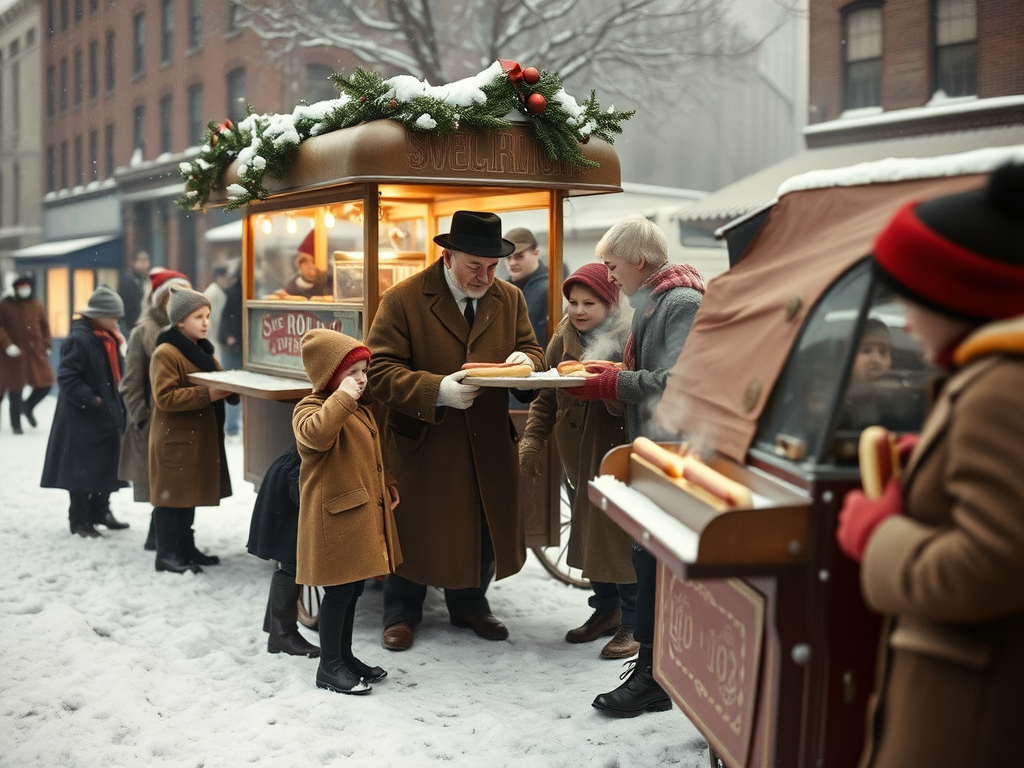
On Christmas Day in 1921, a Swedish immigrant named Axel Bjorklund quietly pushed his hot dog cart to a corner in Boston’s North End. There, he handed out 500 steaming hot dogs to cold and hungry children, a simple act of kindness that would leave a lasting legacy.

Axel knew what it meant to struggle. He barely scraped by himself, but his heart ached for the impoverished children he saw daily. Hundreds of children, some as young as five, lined up in their threadbare clothes that chilly Christmas morning, shivering against the cold.

Despite their hunger and hardship, their faces lit up with joy as Axel handed each one a hot dog. Though the food quickly ran out, Axel’s resolve did not. He was determined to make this a yearly tradition. Over the next eight years, he gave away an astonishing 10,000 hot dogs before passing in 1930.

Axel was born on August 6, 1869, in Gothenburg, Sweden. In 1889, he immigrated to America and eventually settled in Boston’s North End, a neighborhood brimming with immigrants striving to build better lives.

Yet, poverty was rampant, especially after the devastating Spanish Flu pandemic left many families destitute and orphaned children wandering the streets. Amid this suffering, Axel’s generosity shone like a beacon of hope.

After a brief and unhappy marriage, Axel lived alone and decided to start a hot dog stand at the busy corner of Blackstone and Hanover Streets. The simple job gave him a sense of purpose, but seeing the hunger around him determined him to do more. He vowed that no child would go hungry if he had food to offer. His first Christmas giveaway in 1921 was a success, and he expanded the effort the following year, doubling the number of hot dogs to 1,000.

His annual giveaway grew as word of Axel’s kindness spread, eventually reaching 3,000 hot dogs yearly. The children affectionately began calling him “Hot Dog Santa.” Newspapers from across the United States and even Sweden shared his story, celebrating his selfless tradition.

Over time, Axel moved his hot dog giveaway to New Year’s Day, but the event remained a cherished occasion for the children who eagerly awaited it. However, Axel’s health began to deteriorate. Rheumatism caused frequent hospital visits, and his financial situation worsened. Struggling to pay his rent, Axel reached out to the public for help, determined to continue his tradition despite his hardships.

In December 1928, just before the giveaway, Axel’s landlady evicted him for failing to pay rent. The Salvation Army provided temporary support, but Axel’s circumstances grew increasingly dire. Over the next two years, he bounced between shelters, the poorhouse, and the Cambridge Home for the Aged, relying on the generosity of strangers. Even so, in 1929, he hosted one final hot dog giveaway.

On November 10, 1930, Axel Bjorklund passed away in a Massachusetts hospital, penniless and alone. He had no family and was destined for a pauper’s grave until news of his death reached the public. Outraged by his fate, citizens rallied together to give the man they called “Hot Dog Santa” a proper burial. Axel Bjorklund’s legacy of compassion and selflessness reminds us of the power of small acts of kindness during difficult times.

Remember, this holiday season, while times may feel joyful and bright for you, they could be challenging and somber for someone else. Offering a helping hand isn’t always a handout—it’s a gesture of humanity and compassion. Let’s take a moment to consider the needs of our fellow human beings, not just during the holidays but every day of the year.

Read original story about the Hotdog Santa Claus Here

A Great American Life Cut Tragically Short: Remembering Rob Reiner & Michele Singer Reiner

© Benjamin H. Groff II — Truth Endures / benandsteve.com

4–6 minutes

It Began At A Friends Christmas Party.

An argument disrupted a party at Conan O’Brien’s Christmas Party. Now Conan is reportedly “wracked with guilt” over what happened in his home that night. Guests at the party said the younger Reiner was “freaking out”. Nick was reportedly going from guest to guest asking them “if they were famous?” Which is believed to have started a dispute between he and his father. Conan thinks he should have intervened when he looks back. Instead, he said all three of the Reiners left his party and went home.

On December 14, 2025, the world was shaken by the devastating news. Rob Reiner, one of America’s most beloved artists and civic voices. And his wife photographer Michele Singer Reiner, were found fatally wounded. Murdered in their Brentwood, Los Angeles home. Their their son, Nick Reiner, now charged with their murders. Leaving a profound void in Hollywood and in public life. And stunning the hearts of millions who admired their work and their lives around the world. (1)

A Life in the Arts — From Screen to Story

Rob Reiners rise to prominence was nothing short of extraordinary. Rob was born in the Bronx in 1947. He was born to entertainment royalty — his father was the legendary comedian Carl Reiner. Rob built a career that spanned decades and mediums. He first captured America’s imagination as Michael “Meathead” Stivic on All in the Family. This performance earned him Emmy recognition. It also made him a household name. (2)

But it was behind the camera that Reiner truly reshaped American cinema. As a director and producer, he brought to life some of the most cherished films of the late 20th century:

  • This Is Spinal Tap — a cult classic that redefined mockumentary comedy. (2)
  • Stand by Me — a timeless coming-of-age masterpiece. (2)
  • The Princess Bride — a fairy tale beloved by generations. (2)
  • When Harry Met Sally… — one of the great romantic comedies in film history. (2)
  • A Few Good Men — a gripping courtroom drama that became a cultural touchstone. (2)

His storytelling was more than entertainment; it was empathetic, insightful, and deeply human — reflecting the best of American imagination.

A Partner in Life and Purpose

Standing beside Rob was Michele Singer Reiner, his wife of more than three decades. Michele’s talents went beyond her role as a devoted partner and mother. She was a gifted photographer and producer. Michele was celebrated in her own right. Her work included collaborations on various cultural projects. Her creative eye helped shape the visual landscape of many endeavors they pursued together. (2)

Michele was not merely a support to Rob. She was an equal force of creativity, compassion, and conviction. She embodied a deep commitment to both art and advocacy.

Champions of Humanity and Civic Duty

Rob and Michele Reiner were not content to rest solely on artistic laurels. They were passionate advocates for causes that show the best instincts of our nation. Rob’s political engagement spanned early childhood education, civil rights, and marriage equality. His involvement made him a fierce public voice for inclusion, justice, and the dignity of all people. He helped co-found influential organizations and leveraged his platform to support progressive civic causes. (3)

Michele’s activism and advocacy were equally meaningful. She championed marginalized communities through her work with LGBTQ+ organizations and children’s welfare initiatives. She lent her voice to efforts that made tangible differences in people’s lives. (2)

Together, they represented a model of creative achievement married with civic responsibility. This reminds us that success in culture and in conscience are not mutually exclusive. Instead, they are mutually enriching.

A Loss Shared by the Nation

The response to their deaths reflects the breadth of lives they touched. Tributes poured in from Hollywood friends like Billy Crystal, Albert Brooks, and Martin Short. Political figures across the spectrum also honored their legacy and mourned the immense loss. Friends called them a “special force devoted to public betterment,” highlighting their generosity, their creativity, and their tireless spirit. (3)

Why We Should Honor Them

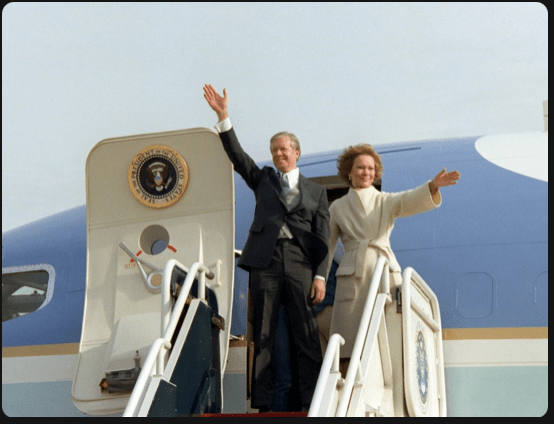
The Reiners lived by the same ethic exemplified by Jimmy and Rosalynn Carter. They shared a commitment to service, compassion, and purpose. Like President Carter, they devoted themselves to doing good whenever they can. They aimed to help for as long as possible and in many ways.

If America needed to memorialize a pair, they would choose Rob and Michele Singer Reiner. Their lives reflected the highest values of artistic brilliance. They showed humanitarian commitment and civic leadership. The Reiners embody artistic brilliance and humanitarian dedication. Civic leadership was a fundamental part of their legacy. They stand at the top of that list. Their tragic end came at the hands of a loved one struggling with personal demons. This only deepens the poignancy of their story. It underscores life’s fragility, even for those who seem larger than it.

To remember them is not only to celebrate iconic films and photographs. It is also to proclaim a narrative about what it means to care for one another. It shows how to invest in the common good. Ultimately, it encourages us to leave the world better than we found it — through art, action, and advocacy.

A highway will probably never bear their name. It is unlikely that a statue will stand in their likeness at the center of a campus. No one will demand that students memorize every detail of what they did — and that is just fine. They would not have sought those honors anyway. The Reiners never worked for recognition; they worked for purpose. And that is precisely why they will forever be remembered as heroes to so many. The Reiners — the truest expression of what an American life can be.


© Benjamin H. Groff II — Truth Endures / benandsteve.com

The Christmas Eve Babbs Switch School Fire

This story is pulled from the archives as a celebration for the season edition.

Groff Media 2024© Truth Endures IMDbPro

Presented by benandsteve.com By: Benjamin Groff II©

3–5 minutes

Every year at this time, I am reminded of a harrowing story. It is deeply etched into Oklahoma’s collective memory: the Babbs Switch School Fire of Christmas Eve, 1924. It stands as a tragic lesson in safety, humanity, and resilience.

The Fire

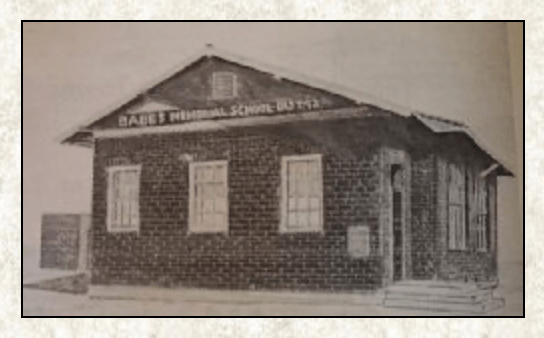
On that bitterly cold night, with heavy snow and sub-zero temperatures, 200 residents gathered. They met in Babbs Switch’s one-room schoolhouse for a Christmas Eve program. The school was tightly packed with engaged couples, grandparents, mothers, fathers, and children. The building’s windows were secured with wire mesh to deter intruders from the nearby railroad tracks. The sole exit—a door that opened inward—would soon become a deadly trap.

The program concluded with a teenage boy dressed as Santa Claus. He handed out toys and candy beneath a cedar Christmas tree. The tree was decorated with paper, tinsel, and lit candles. One of these candles brushed against the tree’s dry needles, igniting it instantly. Mrs. W.G. Boland, whose three children perished that night, later recounted the horror. 

“I tried to beat it out with a paper sack,”

she said, 

“but it did no good.” 

Initially, the crowd laughed, believing the small blaze was being contained. But within moments, the flames engulfed the tree, the ceiling, and the entire structure.

Panic erupted.

The sole exit became a bottleneck as the crowd surged toward the door. Those at the back pushed forward, while the unlucky at the front got crushed in the chaos. Some attempted to pry open the wired windows, but their efforts were futile. Trapped inside, children, parents, and neighbors succumbed to the smoke and flames. Witnesses recalled the horrifying scene of people clawing at the exit. Bodies piled atop one another, and the acrid stench of burning flesh.

The Survivors

Among those who escaped was Lillie Biggers. She crawled out from under a desk clutching a doll she had just received. Her mother, Margaret, managed to get out but suffered severe burns to her hands and arms. Tragically, Lillie’s brothers, William, 9, and Walter, 15, did not survive. The Biggers family’s grief mirrored that of the entire community, where 36 lives were lost—half of them children. The belongings later identified the bodies of William and Walter. They carried a toy gun and a belt buckle.

The injured and deceased were transported to Hobart, the nearest town, where makeshift morgues were set up. The community’s response, known as the “Hobart Spirit,” saw residents drop everything to give aid and comfort. Newspaper accounts likened this effort to the Oklahoma Standard that emerged decades later after the Oklahoma City bombing.

Julie Braun with Mother
Lillie’s Doll That Survived Fire

The Aftermath

The tragedy prompted a wave of reforms. Oklahoma legislators enacted fire safety laws requiring outward-opening doors, multiple exits, and accessible window screens in schools. Open flames were banned, and fire extinguishers became mandatory. The reforms eventually spread nationwide, though it would take more tragedies before they were fully adopted.

The morning after the Babbs Switch School Fire

A Missing Child

The story took a strange twist that turned it into a lingering mystery. Among the victims was three-year-old Mary Edens—or so it was believed. Her aunt, Alice Noah, escaped the building. She died days later. She claimed she had handed Mary to an unknown person outside the burning building. Mary’s body was never recovered, leading her family to hope she had survived.

In 1957, decades after the fire, a woman named Grace Reynolds came forth. She was from Barstow, California. She claimed to be the long-lost Mary. The Edens family reunited with her on Art Linkletter’s House Party television program, believing their prayers had been answered. Reynolds even wrote a book about her experiences. It is titled Mary, Child of Tragedy: The Story of the Lost Child of the 1924 Babbs Switch Fire.

But only some were convinced. A local newspaper editor who investigated the claim questioned its validity. 

Skeptics noted inconsistencies in Reynolds’s story, but no definitive evidence confirmed or debunked her identity. To this day, the truth remains elusive.

Legacy

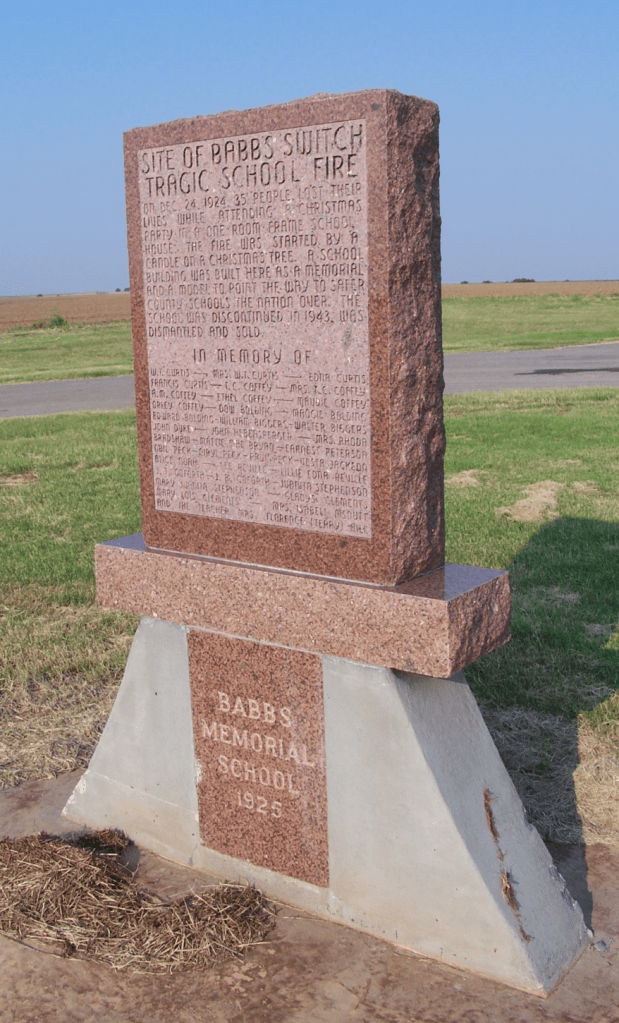
The Babbs Switch School Fire is remembered as one of the deadliest school fires in U.S. history. A stone monument now stands where the schoolhouse once stood, a quiet marker of lives lost and lessons learned. The physical scars of the tragedy have faded. Yet, its memory endures. It serves as a poignant reminder of the fragility of life and our enduring hope for safety and change.

References for this writing can be found at – 

https://blogoklahoma.us/place/394/kiowa/site-of-babbs-switch-tragic-school-fire

https://www.thesirenspodcast.com/post/case-files-babbs-christmas-fire

https://genealogytrails.com/oka/kiowa/babbsfire.html

https://en.wikipedia.org/wiki/Babbs_Switch_fire

The Secret Santa of Cordell, Oklahoma

Groff Media 2024© Truth Endures IMDbPro

Presented by benandsteve.com By: Benjamin Groff II©

3–4 minutes

In the small, snow-covered town of Cordell, Oklahoma, Police Chief Eby Don Walters had a secret. Every December, the frost painted the windows and the smell of pine and cinnamon filled the air. During this time, he would don a plush red suit and strap on a padded belly. He transformed into the town’s beloved Santa Claus.

Decades ago, a young Eby Don joined the force. The town’s Santa fell ill just days before the annual Christmas Eve festival. Eby Don, with his deep, booming laugh, twinkling eyes, and short, round build, stepped in. The kids adored him, and the tradition was born, bringing enduring joy to the community.

The children of Cordell adored Santa. They poured their hearts into their whispered wishes. They handed him carefully drawn pictures. They giggled when he joked about knowing if they’d been naughty or nice. Eby Don never broke character. He stayed in character even when his nieces and nephews sat on his lap. Their eyes were wide with wonder.

As the years passed, the children grew up, never suspecting that Santa was their own Chief Walters. Many returned with their kids, eager to introduce them to the magical figure from their childhoods. Eby Don played along. He listened with a warm smile as grown adults recounted their cherished memories of Santa. He waited for the moment when they would discover the truth. Their surprise and delight added to the magic of Christmas.

One Christmas Eve, nearing his sixties, Eby Don felt the weight of the years. The suit fit slightly tighter, and his knees creaked as he crouched to hug the smallest children. Yet, he couldn’t bear the thought of passing the torch. This was his gift to the town, his way of keeping its spirit alive. The Santa suit took a physical toll on him. Despite this, Eby Don continued to wear it. He knew the joy it brought to the children and the community.

That night, a little girl named Emma tugged at his sleeve, her big blue eyes searching his face.

“Santa, will you be here forever?”

she asked.

Eby Don knelt, his voice gentle.

“Santa’s spirit is always here, sweetheart, as long as people keep believing in the magic of Christmas.”

He knew that the belief in Santa was not just about a man in a red suit. It was about the spirit of giving, love, and hope that Christmas symbolizes. It was this belief that kept the Secret Santa tradition alive in Cordell.

The festival ended with the usual fanfare: carols, laughter, and the lighting of the town tree. Eby Don slipped to the small changing room behind the stage, trading his Santa suit for his police uniform. He stepped out into the cold night. The snow fell softly around him. He overheard a group of parents. Some of them were his former ‘kids’. They were talking about how lucky Cordell was to have a Santa who never missed a year. It was a warm and nostalgic end to the festive evening.

Eby Don smiled to himself. They would never know how much those words meant to him. He returned to his patrol car. His heart was as full as the sack of presents he had left under the tree. Chief Eby Don Walters cherished the greatest gift. It was knowing he had brought a little magic into the lives of everyone in Cordell. It was knowing he had brought a little magic into the lives of everyone in Cordell. They never knew the man behind the beard.

Guardians of Memory: Writing Our Truth Before It’s Rewritten

© Benjamin H. Groff II — Truth Endures / benandsteve.com

1–2 minutes

Tell It Like It Is

There comes a time in every nation’s history when silence becomes more dangerous than speaking. We are living in such a time now. Books are being banned, lessons erased, and truths rewritten to serve new agendas. What once stood as collective memory is being scrubbed clean, leaving behind a shell of what was. But history, real history, lives in the people who lived it — and that means you.

If the history of your people, your town, your family, or your country is under attack, write it down. Don’t wait for permission. Don’t assume someone else will record it for you. Every letter and every diary is a piece of the truth. Every recollection of how life was is also a piece of the truth. This includes the food you ate and the songs that played on your street. This truth is something that no one can erase.

Print it. Bind it. Keep it in a box, a drawer, or a chest. Place it anywhere it can be found by those who come after you. Share copies among your family members. Hide one in a place that time itself will forget. Digital memories are fleeting; servers fail, passwords vanish, and what is “deleted” online is often gone forever. But paper endures.

We have the power, still, to protect the soul of a free people — not through politics, but through preservation. Keep the banned books. Read them. Understand why they were silenced. They are often the keys to liberty’s locked door. The stories, poems, and records we save are not only for nostalgia’s sake. They defend against those who claim freedom was always fragile. They made it seem that way to future generations.

When freedom falters, truth is what leads us back.
Write your book. Tell your story.
Save it as if your grandchildren’s liberty depends on it — because one day, it just will.


By Benjamin GroffMedia© | benandsteve.com | ©2025 

Former Zamalek Midfielder Dies in Car Accident at 51

Groff Media ©2025 benandsteve.com Truth Endures

2–3 minutes

🕊️ Mohamed Sabry (1974–2025)

Mohamed Sabry, Former Zamalek Midfielder, Dies at 51

Mohamed Sabry Former Zamelek Midfielder, Dead at Age 51.

The Egyptian football community is deeply saddened to mourn the loss of Mohamed Sabry. He was the former Zamalek and Egypt national team midfielder. He died in a car accident in Cairo’s Fifth Settlement on Thursday. He was 51. Sabry’s untimely passing marks the end of a remarkable life. He dedicated his life to the sport he loved. He helped define it for a generation of fans.

Sabry was a central figure in Zamalek’s golden era throughout the 1990s and early 2000s. This was a decade of triumphs. It cemented the club’s legacy in African football. Between 1993 and 2003, he lifted 15 major titles. These included three CAF Champions League trophies and two Egyptian Premier League championships. Known for his fierce determination, vision, and leadership on the pitch, Sabry was instrumental. He led Zamalek through some of its most celebrated victories. He earned admiration from teammates, opponents, and supporters alike.

Mohamed Sabry

After news of his passing, tributes poured in from across Egypt and beyond. Zamalek icon Mahmoud Abdel-Razek “Shikabala” described Sabry as “a legend of Egyptian football.” He also called him “a symbol of loyalty and devotion to his club and supporters.” His words reflected the views of many who admired Sabry for his exceptional talent. They saw him as a model of dedication and humility. Fans, former teammates, and rival clubs alike joined in remembering a man whose passion for football transcended the game’s rivalries.

Condolences also came from key figures within Egyptian football. Hossam Hassan, the national team coach, offered his sympathy to Sabry’s family. Al Ahly president Mahmoud El Khatib also conveyed his condolences to the wider football community. Tributes continue to flow. Mohamed Sabry will be remembered as one of Zamalek’s most influential midfielders. His achievements, sportsmanship, and loyalty to his club left an indelible mark on Egyptian football history.


Groff Media ©2025 benandsteve.com Truth Endures

Mohamed Sabry (1974–2025): Remembering a Zamalek Legend

Carol Jane “Penny” Pence Taylor * May 11, 1929 – November 4, 2025

2–3 minutes

Groff Media ©2025 benandsteve.com Truth Endures


Carol "Penny" Pence Taylor
Carol Jane “Penny” Pence Taylor

We are deeply saddened to announce the passing of Carol Jane “Penny” Pence Taylor. She was born on May 11, 1929, and passed away on November 4, 2025. Penny was a pioneering American swimmer, Olympian, mentor, and coach. She was also a beloved figure in the sport of swimming. She died in New Orleans, Louisiana, at the age of 96. 

Life & Accomplishments

Penny Pence was born in Indianapolis, Indiana, and as a young woman rose to national prominence as a breaststroke specialist. She represented the United States at the 1948 Summer Olympics in London. She competed in the women’s 200-metre breaststroke at the age of 19. 

In that era, women’s competitive swimming was still evolving. Swimsuits were made of cotton. Goggles were not yet in regular use. Lane lines and pool technology were far less advanced than today. As noted in

Beyond the Olympics, she achieved multiple national titles in breaststroke and medley relay events. At the 1951 Pan American Games, she won gold in the 3×100 m medley relay. She also secured bronze in the 200 m breaststroke. Which is noted in Olympedia+1

After her competitive career, Penny turned to coaching and leadership. She spent more than three decades as a swim coach in the St. Louis area. She served in various roles with U.S. Swimming organizations. She was a team leader at the 1984 and 1992 Olympics. She worked as a deck marshal at the 1996 Games. She was also the chef de mission at several FINA World Championships. Her backgrounds are well documented on Wikipedia

Legacy

At the 1951 Pan American Games, she won gold in the 3×100 m medley relay. She also secured bronze in the 200 m breaststroke.

Penny Pence’s legacy lives on in many ways. She helped lay the groundwork for women’s competitive swimming in the United States. Her efforts bridged the post-war era into the modern age of the sport. Her dedication as an athlete, coach, administrator, and mentor touched countless swimmers. She had the rare perspective of having raced in the era when the butterfly wing-style was emerging in breaststroke events. Later, she guided new generations. 

A Life Remembered

Penny was admired for her determination, her attention to detail, and her lifelong commitment to the sport she loved. She stayed involved with swimming well into her later years. She attended major events. She offered counsel and shared stories of an era when competitive swimming was very different from today. 

You will find many references to her through Swimming World Magazine

In Tribute

A private celebration of her life is being planned.

Her family requests donations in her name instead of flowers. These can be made to a local swim club. Alternatively, they can be directed to a scholarship fund supporting young swimmers.

Her memory reminds us of the value of perseverance, service, and passion for the sport.

Penny Pence has left the pool. Still, her ripple effect continues in the lanes. It also continues in the lives of all whom she touched. She will be deeply missed and fondly remembered.


A service provided by By Benjamin GroffMedia© | benandsteve.com | ©2025 

CELEBRATION OF LIFE ANNOUNCED FOR COUNTRY LEGEND JEANNIE SEELY

Jeannie Seely’s 5,398th Opry Show” Set for August 14 at Grand Ole Opry House

1–2 minutes

A public Celebration of Life will honor Grand Ole Opry star and country music icon Jeannie Seely. It will be held Wednesday, August 14 at 10:00 a.m. CT at the Grand Ole Opry House in Nashville. Fittingly titled “Jeannie Seely’s 5,398th Opry Show,” the service will pay tribute to her unmatched legacy.

The event will be broadcast live on 650 AM WSM. It will also be available via livestream at: VIMEO. You can view it live there. Here.

Jeannie Seely passed away on Friday, August 1 at age 85, after complications from an intestinal infection. She held the record for most Opry appearances in history — 5,397 — a milestone unlikely to ever be surpassed.

Tributes from the Country Music Community

Many stars shared heartfelt words:

  • Ricky Skaggs: “She made nervous newcomers feel at peace. We can all take her lead and encourage the next generation.”
  • Pam Tillis: “She had grit, wit, talent—and she was cool.”
  • Larry Gatlin: “She was my champion and inspiration. I miss her already.”
  • John Anderson, Ray Stevens, Mark Chesnutt, Darryl Worley, Billy Dean, and others echoed similar admiration, love, and deep loss.

Legacy

Nicknamed “Miss Country Soul,” Jeannie Seely broke barriers for women in country music. She was the first woman to regularly host Opry segments. She is also a GRAMMY winner and a BMI-awarded songwriter. Additionally, she has been an Opry member since 1967. Her songs were recorded by legends. These include Merle HaggardDottie West, and Willie Nelson. She also shared the screen with Willie Nelson in Honeysuckle Rose. In 2022, she was honored for her historic number of Opry performances. A stretch of road near the venue was renamed the Jeannie Seely Interchange in 2024.

Instead of Flowers

Donations in Jeannie’s name are encouraged to pet-related charities or the Opry Trust Fundopry.com/about/opry-trust-fund

To start viewing events from Jeannie’s life, visit her website here. You can see the music she shared, events celebrated, and the people she loved.

The Illinois Folks Would Visit Cordell, Oklahoma Every Year…To See Family

By Benjamin GroffMedia© | benandsteve.com | 2025 Truth Endures©

4–6 minutes

Summer Roads to Oklahoma to Visit Uncle Ben and Aunt Florence

By Benjamin Groff II

Every summer—without fail—a car would ease out of the driveway in Olney, Illinois. It was packed tight with suitcases and ham sandwiches. Kids pressed against window glass. Stories were waiting to be lived again. The road ahead led straight to Cordell, Oklahoma. Uncle Ben and Aunt Florence kept the porch swept. They also kept the table set.

Olney was a quiet place, best known for something that always fascinated me as a child: white squirrels. My grandmother told me about them as if they were magical creatures. They were rare and watchful, darting through yards and city parks. I always hoped I’d see one myself, but somehow we always left too early or came back too late. Still, the idea of them stuck in my imagination like a bright stone in the pocket.

But the real adventure was always in Oklahoma.

Uncle Ben and Aunt Florence lived in a modest home in Cordell. There, the wind blew with purpose. Time slowed enough to sit and stay a while. The cousins from Caddo and Washita Counties began to arrive shortly after us. Many of them had been raised alongside the Illinois kin during the lean years of the 1920s and ’30s.

The car would keep rolling through Binger, Carnegie, Weatherford, and Colony. It traced out a web of family ties that never wore thin. There were hugs that lasted too long and pies that didn’t last long enough. Kids ran barefoot through the same red dirt that had once dusted our grandparents’ boots. The grownups told stories from both sides of the Dust Bowl.

“You remember when that storm blacked out the sky?”
“Your mama used to chase us out of the cellar with a broom!”


And everyone laughed, even if the memories came with a tear or two.

The trips began in the early 1960s. They stretched well into the 1980s. Each summer became a soft echo of the one before. Faces aged, but names stayed familiar. Porch swings creaked. Tin-roof rain was still the best music at night.

Eventually, the trips grew fewer, as the elders passed and the younger ones built lives farther away. But in my mind, a stretch of two-lane highway still runs from the white-squirrel town of Olney. It continues to the wide-open sky of Oklahoma. It’s a road paved with memory and love that survives distance, time, and even silence.

And one day, I still hope to see one of those white squirrels.

One cousin wrote a memory down in a letter to another -––

The tires hummed low against the highway as we crossed into Oklahoma, and I felt it—the shift. Not just in geography, but in memory. It had been years since we’d made this drive from Olney, Illinois. However, the road still felt familiar. It was like an old hymn you didn’t realize you remembered until you started humming along.

I leaned my head against the window, watching the land roll out in shades of tan and green. My thoughts rolled back too. I remembered the summers of my childhood. We’d pile into the car every year and head south to visit Uncle Ben and Aunt Florence in Cordell.

They were waiting when we arrived back then—porch light on, arms wide, iced tea already sweating on the kitchen table. The smell of fried chicken greeted us. We could hear the sound of someone laughing from the backyard before our feet ever hit the ground.

We’d stay for a week or more, using Cordell as home base. Then we’d branch out, visiting cousins scattered across Caddo and Washita Counties—Binger, Carnegie, Gotebo. Some were practically siblings. They were raised alongside our parents during the hard years of the 1920s and ’30s. Those were times when everyone shared everything. The stories from those days came freely over pie and coffee. They were told with the kind of clarity that only comes from having truly lived it.

But this trip—this time—was different.

There were no porch lights waiting. No tea glasses on the counter. Uncle Ben had been gone for years now. Aunt Florence too. And many of the cousins had passed, their homes quiet or sold. This time, we came to remember—not just to visit.

We stopped by the old places. Some were still standing, others just foundations and memories. We drove to the Cordell, Eakly, Colony and Alfalfa, cemeteries. I stood at the resting place of our folks I could remember seeing as if it was yesterday. I could still hear their voices in my head. I spoke softly, unsure if the wind could carry my words back to them, but I tried anyway.

Later that evening, we drove out to Binger. One of the cousins—now gray-haired and slow-moving—met us on the porch with a smile that hadn’t changed in 40 years.

“I didn’t think anyone remembered to come back,” she said.

“We never forgot,” I told her.

And we hadn’t.
Because the roots ran deep.
Deeper than distance.
Deeper than time.

So we returned to Oklahoma—not just to see the land or the gravestones, but to feel that presence again. To walk the same dusty paths, sit under the same wide skies, and remember who we are—and who we loved.

Some journeys are round trips.
Others are returns.
This was both.

As always time came when we had to return. And it always seemed longer going back to Illinois. It was sad to leave. Who would not be here next time we came to visit? Who on our crew would not make the trip next time? Uncle Ben always choked up when he said goodbye. He knew it could be the last time he saw us. Eventually, he was right.

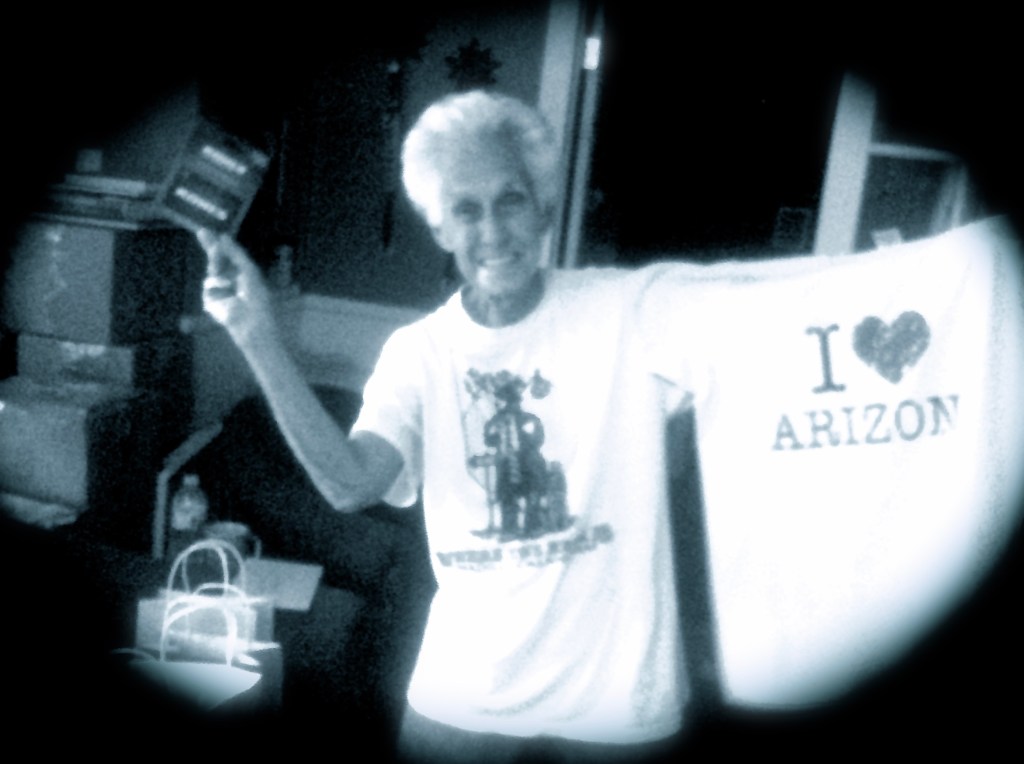
Leaving A Writing That Opens A Window To Their Souls

By Benjamin GroffMedia© | benandsteve.com | 2025 Truth Endures©

2–3 minutes

In Their Own Hand: How Handwriting Revealed the Soul of My Ancestors

I’ve been tracing my family tree for years, patiently tracking each lead and clue like breadcrumbs through time. Some discoveries came through census records, others through photographs or whispered family legends. But nothing has stirred my spirit more deeply than the sight of my great-grandparents’ handwriting—elegant, looping, unmistakably human.

The moment I first held a document written in their own hand, I felt something shift. Their penmanship, carefully practiced and beautifully formed, didn’t just tell me who they were—it revealed how they lived. It was a window to their character, their care, and their time.

The Lost Art of Penmanship

In the 19th and early 20th centuries, good handwriting was a matter of pride, discipline, and social standing. Penmanship was taught rigorously in schools. Techniques like the Spencerian script dominated in the mid-1800s. This was followed by the Palmer Method in the early 1900s. These systems weren’t just about communication—they emphasized grace, control, and personality in each letter’s curve and flow. A person’s handwriting was part of their reputation.

To write beautifully was to show respect: for the reader, for the message, and for oneself. That’s something we’ve largely lost in today’s age of keyboards and quick texts.

A Personal Connection

As I sorted through old family papers—birth certificates, letters, recipe cards—I found myself lingering over the handwriting. There was something intimate about it, something tender. These weren’t just names on a tree or dates on a ledger. These were real people, and here they were, writing. Their fingers once held that pen, their thoughts shaped these lines.

My great-grandmother’s cursive was especially elegant, delicate yet confident. Her capital “L” swept like a violin bow, and her lowercase “r” curled just so. She had taken her time. Her writing carried weight. And somehow, through the shape of her letters, I felt like I knew her.

Handwriting as Legacy

Before voice recordings or home videos, handwriting was how our ancestors captured themselves. They wrote love letters, grocery lists, prayers, and goodbyes. They signed their names to marriage licenses and land deeds, wills and war drafts—leaving behind a fingerprint of the soul.

Today, when we stumble across those scraps, they don’t just offer genealogical evidence. They give us a bridge—a real, living connection to the people who came before us. As the world moves faster, something sacred arises. It comes from slowing down to read their words in their own hand.

Preserving the Past

If you’ve begun your own family history search, don’t overlook the handwritten notes. Scan them, preserve them, study them. Teach younger generations about their significance. They may not understand the loops and flourishes right away—but they’ll feel the legacy behind them.

Because sometimes, a single line of cursive can carry more emotion than a thousand digital files.


Have you come across your ancestors’ handwriting? Share your story in the comments below—or better yet, share an image of it. Let’s celebrate the quiet beauty of those who came before us, one pen stroke at a time.

Guthrie’s Arlington Hotel: Hospitality in the Wild West

By Benjamin GroffMedia© | benandsteve.com | 2025 Truth Endures©

4–6 minutes

The Arlington Hotel: First Lady of Guthrie

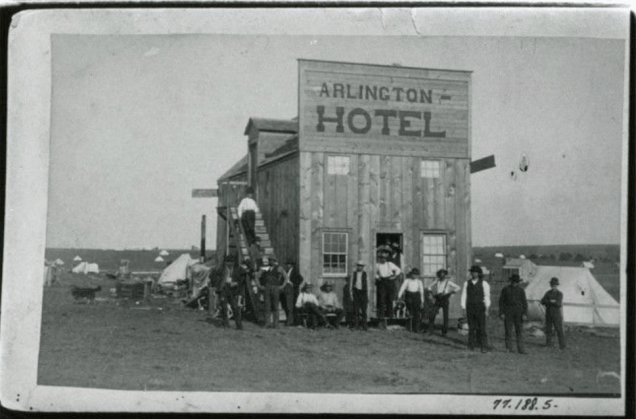
The Arlington Hotel – Guthrie, Oklahoma Territory, 1889. One of the first hotels in the land-run boomtown of Guthrie, Oklahoma Territory. Owned and operated by the fearless Madame Jeffries Star, the Arlington offered hot meals, open doors, and a warm bed to settlers, drifters, and dignitaries alike, serving as both a rest stop and a symbol of frontier resilience.
This rare 1889 photograph captures the Arlington Hotel.
It was one of the first hotels established in Guthrie.
This occurred just days after the historic Land Run opened the
Unassigned Lands of Indian Territory.

In the spring of 1889, the red dirt of Oklahoma Territory was still freshly turned. The streets of Guthrie were more dust than road. Madame Jeffries Star, a bold woman, put up a hand-painted sign above a wooden doorway. It read: “Arlington Hotel – Meals Served at All Hours.”

It was less a hotel than a grand idea built with timber and tenacity. The two-story structure is captured in a faded photograph from that year. It stood proudly among a sea of tents. Hastily constructed shacks surrounded it. Its clapboard siding gleamed in the midday sun, and smoke curled from the kitchen chimney like a ribbon of welcome.

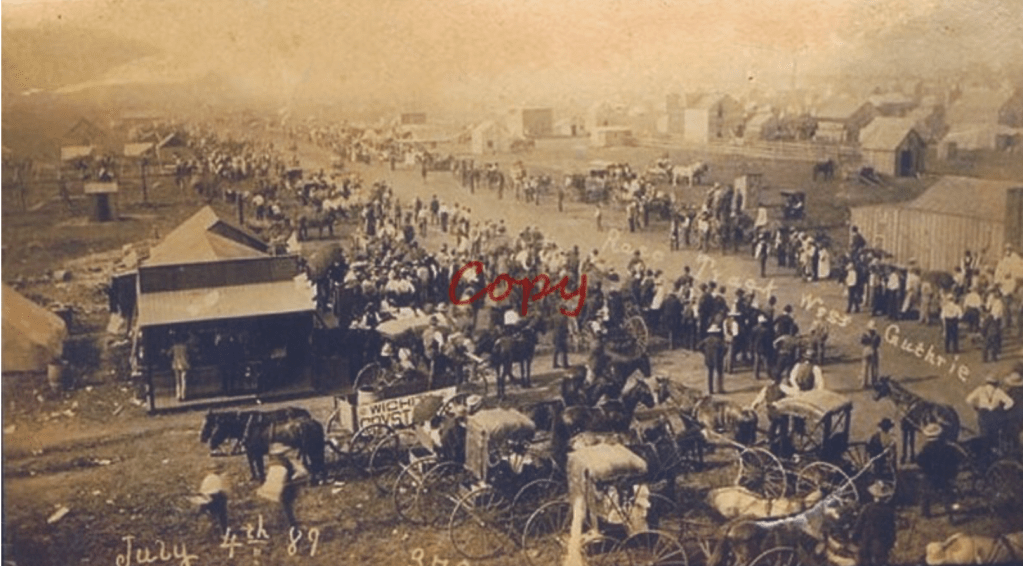
Guthrie had exploded into existence almost overnight with the Land Run of April 22, 1889. Nearly 10,000 settlers poured in by wagon, horseback, and foot, each staking their claim to this new frontier. But when night fell, those same pioneers found themselves with nowhere to go.

Enter Madame Star.

Suggested to be a woman of mystery. Some said she had once owned a boarding house in Kansas City. Others heard she had performed on stage in New Orleans. No one knew for sure. What people knew, though, was that she was shrewd and tireless. She was capable of running a kitchen, a business, and a town council meeting if needed. They had all read about her.

Guthrie Oklahoma 1989

The Arlington Hotel was the first of its kind in Guthrie. It offered rooms upstairs and meals downstairs. There was always a pot of coffee brewing. Cowboys shared breakfast with lawyers. Surveyors clinked glasses with newspaper journalists. Sometimes, soldiers bunked beside farmers who were too exhausted to argue over who got the corner bed.

Madame Star insisted that the Arlington be open 24 hours a day. “Because,” she would say, “history doesn’t keep office hours, and neither should hospitality.”

Meals were hot but straightforward: bacon and biscuits, black-eyed peas, and strong coffee so thick it would float a horseshoe. In the parlor, people came not just to rest, but to talk, to strike deals, to dream out loud. The hotel quickly became Guthrie’s beating heart—a place where the dust of the land met the polish of civilization.

Legend has it that the first territorial judge was hastily appointed just days after the Land Run. He spent his first night in Oklahoma sleeping in Arlington’s parlor. He used a law book for a pillow.

By the end of 1889, the town had a newspaper, a post office, and a telegraph line. Yet, it had always had the Arlington. At the center of it all was the name Madame Star. The image of a lady with her sleeves were rolled and her apron tied. Shouting instructions to her cook. While she poured hot coffee for a stranger fresh off the train.

She reportedly ran the hotel for nearly a decade. Then she vanished from public life as mysteriously as she had arrived. Some say she married a wealthy cattleman and relocated to the South. Others believe she returned to the stage, this time in Denver. But no one knows for sure. No one really knew what she looked like. Some thought they had seen her moving about the kitchen. Others said they saw her walking up the stairs. But she was too busy to stop and chat.

The photo taken that first year is what remains. It is a time capsule of promise. It shows a wooden hotel standing tall against a treeless prairie. And beneath the sign that reads “Arlington Hotel,” one can make out the name painted in bold:

“Prop. Madame Jeffries Star.”

The story was told up and down the rail lines. Its purpose was to pull more people into Oklahoma from the surrounding area. But, research indicates it seems Madame Jeffries Star isn’t a real historical figure. Instead, it is a name featured in an old promotional caption or photograph related to the Arlington Hotel. One photo description I found reads:

“Photograph of the Arlington Hotel, the first hotel in Guthrie, Oklahoma Territory. Prop. Madame Jeffries Star, meals served at all hours.”(1)

The name Madame Jeffries Star appears in promotional materials or signage tied to the Arlington Hotel. Yet, there’s no supporting historical record, biography, or documentation confirming she was a real person. It’s that Madame Star was a marketing persona—much like later figures including Ronald McDonald or Jake from State Farm.

The Arlington is often referred to as the first hotel in Guthrie, Oklahoma. But to avoid historical disputes, we prefer to say it was “one of the first.” There’s no verified evidence placing a real Madame Star anywhere in the country during that time period.

So who did own the hotel? The earliest known location was at 1st and Vilas, later moving around 1896 to North 2nd. Records suggest that the owner was James Douglas—the only documented proprietor I found.

Interestingly, I also came across references to over fifty other hotels operating in Guthrie between 1889 and 1910. They all did brisk business. This continued until the state capital was moved to Oklahoma City. Many in Guthrie have long considered this decision nothing short of a political robbery.

Lessons from the street: Shattered Expectations

By Benjamin GroffMedia© | benandsteve.com | 2025 Truth Endures

3–4 minutes

“Shattered Expectations”

The night was calm in that tense, waiting way cops get used to. It was the quiet that makes your stomach coil. You know it won’t last. I was still new then, riding with my training officer. He was a crusty, seen-it-all type who barely spoke unless it was to point out something I’d done wrong. If I ever earned his approval, it’d be the same day pigs sprouted wings and took to the skies.

We cruised down a dark side street when I spotted a car weaving just enough to catch my attention. I hit the lights. It was a rust-bucket sedan packed with teenagers—maybe five of them, wide-eyed and frozen as I approached. My training officer stayed in the car. That was his style: throw the rookie in the water and see if he sank.

I had the driver step out. He was lanky, maybe seventeen. He wore his coat like a belt, tied around his waist. It seemed too warm for sleeves but too cool to ditch. As he stepped out, the hem of the coat caught on something. Then—clink clink clink—CRASH. Three or four bottles of beer tumbled from under the coat like traitors abandoning ship. They hit the pavement. The bottles shattered in an amber mess around our feet.

The kid froze. I froze. Then we both looked at the puddle between us. From where my training officer sat, it probably looked like I’d lost my temper and smashed the bottles myself. Great.

Before I processed the situation, the radio crackled with a priority call—armed robbery. We were the closest unit.

“Back in the car,”

Came the voice from the patrol unit.

I turned to the kids, who now looked ready to faint.

“Go to the police station. Wait there. I’ll meet you after this call.”

They didn’t argue. They didn’t run. I just nodded in frightened unison, which, in hindsight, has been the most surprising part of the whole thing.

We sped off. The call was a blur—adrenaline, sirens, controlled chaos. When it wrapped, I reminded my training officer about the teens.

“We need to swing by the station. The kids should be there.”

He gave me a skeptical glance.

“Right…”

But sure enough, there they were when we rolled up to the front of the station. All of them were sitting on the bench outside like they were waiting for a ride to Sunday school. Nobody had moved. Nobody had tried to hide or ditch the evidence.

I had them step inside one at a time. No citations. No handcuffs. It was just a firm talk I remembered getting when I was about their age. I laid it on thick—the “blood on the highway” speech, consequences, how lucky they were, all of it. They nodded solemnly. They got the message.

As we returned to the patrol car, my training officer gave me a sideways look.

“You know,”

He said,

“you didn’t have to bust the beer bottles like that. That was an asshole move.”

I laughed.

“That wasn’t me. The kid’s coat dragged them out. Total accident.”

He squinted at me like I was trying to sell him beachfront property in Kansas.

“Uh-huh,”

he said.

“Sure.”

I never did convince him. But a week later, during roll call, he told another officer I had

“a decent head on my shoulders.”

Coming from him, that was a standing ovation.

And me? I still smile every time I think of those kids. They sat quietly in front of the station, smelling like cheap beer and bad decisions. They were waiting for the rookie cop who didn’t quite screw it all up.

Twila Elouise: The ‘Standard Oil Baby’ and Her Amazing Birth Story

By Benjamin GroffMedia© | benandsteve.com | 2025 Truth Endures

3–4 minutes

A Frightening, Comical, and Hostile Ride: The Birth of Twila Elouise

By early June of 1960, Oklahoma’s summer heat had already settled in, pressing down across the vast plains. In Oklahoma City, JD Groff attended a convention of oil producers. He was representing Standard Oil Company alongside his superior. His superior was a man named Harold. Harold had a reputation for being both respected and heavy-handed with a whiskey glass.

Meanwhile, back in Clinton, JD’s wife Marjorie—known to family and friends as Margie—had decided to stay home during JD’s trip. Margie had four children already—Sheldon, Terry, Dennis, and Juli. She wanted to stay close to JD’s sister and brother-in-law. They could quickly step in and help with the kids if she needed to go to the hospital. It was a decision made with foresight and care, and as it turned out, it was the right one.

On June 2, Margie went into labor.

Her calm steadiness defined her actions. She went to the hospital, and the children were safely in good hands. Virgil Downing, her son-in-law, knew that JD needed to be reached quickly. He called the hotel in Oklahoma City. The oil convention was being held there. He had the front desk page, JD Groff.

“They called my name right in the middle of the banquet,” 

JD later recalled. 

“Everything stopped. I knew right then — it was time.”

JD bolted from the room, his heart pounding and his hands reaching for his keys when Harold intercepted him.

“You’re not driving,”

Harold slurred, wagging a finger. 

“You’ll crash the damn car. You’re too excited, Groff. I’ll take you.”

JD tried to argue and pry the keys back, insisting that Harold should not drive. He even asked him multiple times to pull over. They should then switch places. Harold refused every time. He repeated with drunken certainty that he was the safer choice.

“You’ll wrap us around a tree,” 

Harold barked, gripping the wheel with one hand and gesturing wildly with the other. 

“You’re gonna be a daddy tonight, shaking too much to steer.”

A two-hour rollercoaster ride across the Oklahoma highways followed. It was a journey that JD would remember for the rest of his life.

“He passed cars on the left, passed them on the right,” 

JD said later. 

“He cussed at every truck, hollered at every red light, and nearly rear-ended a tractor. At one point, he tried lighting a cigar while doing 80 down a back road.”

As JD would describe, 

“frightening, comical, and hostile all at once.”

By some miracle, they made it to Clinton in one piece. JD leaped from the car, bolted into the hospital, and made it to Margie’s side just in time.

That evening, on June 2, 1960, their daughter was born: Twila Elouise Groff.

JD had already picked the name. Twila for its soft, lyrical sound. Elouise served as a tribute to the Groff family lineage. This name stretched back to the family’s Swiss heritage. It was carried by strong women long before the Groffs ever set foot in America.

Twila’s birth quickly became more than a family milestone — it became a local legend.

In the next weeks and months, oil producers stopped by JD’s Standard Oil station in Clinton. Sales associates also visited. Colleagues from the convention came by as well. They checked in. 

“How’s the baby?”

They’d ask. 

“Did Harold drive you the whole way like a bat out of hell?”

Before long, the story had taken on a life of its own. Twila became affectionately known among oil company executives as 

“The Standard Oil Baby.” 

Her name would be mentioned at future conventions and meetings across Oklahoma. JD’s wild ride—and Twila’s prompt arrival—became an industry folklore, retold with laughter, awe, and camaraderie.

Years later, when new sales associates came through Clinton, they’d stop in and say, 

“Is this where the Standard Oil Baby lives?”

And JD, with that familiar half-smile, would nod proudly and say, 

“Yes, sir. That’s her.”

Learn About The Lady In Mickey Gilley’s Song – The Girls All Get Better At Closing Time.

‘I know Robert Redford, even Lola Hall…’

By Benjamin GroffMedia© | benandsteve.com | 2025 Truth Endures©

4–6 minutes

Lola Hall: Oklahoma’s Weather Girl Who Became a Legend

In the heart of America, television was becoming the central storyteller of the modern household. During this time, one woman in Oklahoma City quietly became a beloved figure. She was cherished across living rooms, farms, and small-town diners alike. Her name was Lola Hall, the poised and personable weather girl for KWTV Channel 9. Through the 1960s and 1970s, Lola transitioned from forecasting the weather. She began anchoring the morning news. She carved out a legacy of warmth, professionalism, and unexpected celebrity.

A Humble Start on Channel 9

Lola Hall wasn’t born into the limelight. She was raised in Oklahoma. She considered herself an ordinary woman. “I’m just a plain girl with a good work ethic,” she once said. She never imagined she would become a fixture in households across the state. She also didn’t foresee that her name would one day be immortalized in a hit country song.

She started at KWTV in the early 1960s. Television was still finding its footing then. Local personalities were becoming stars in their own right. Initially billed as a “weather girl,” a common term at the time, Lola did more. She did more than point at cloud symbols and smile at the camera. She brought a genuine understanding of weather patterns. Her calm demeanor during storms was notable. She had a natural charisma that made viewers trust her.

The Weather Girl also known as the Weather Lady, and Lola Hall

Lola quickly stood out not only for her delivery but for her grounded, approachable nature. She didn’t talk down to viewers or play a character. She was simply Lola — smart, steady, and relatable.

Rising to Anchor the Morning News

As her popularity grew, so did her responsibilities. By the early 1970s, Lola earned a promotion to co-anchor the morning news. This was a significant achievement for a woman in broadcasting. In that early morning slot, she became the face viewers saw as they sipped coffee. People watched her while packing school lunches. They prepared for long days on the farm or at work.

Her calm voice and natural empathy helped set the tone for the day. But it wasn’t a solo act.

Near the end of her career, she welcomed two of Oklahoma’s most trusted newsmen. Bill Haire and Wayne Lyle joined her on the morning show. Both were widely respected for their skill in agricultural reporting — essential content for Oklahoma’s large farming population. The trio became a necessary part of daily life for rural viewers. Farmers tuned in for weather and headlines. They also relied on Bill and Wayne for dependable reports on crop forecasts. Their reports covered market conditions and farming trends.

Lola, Bill, and Wayne worked together to form an Oklahoma morning news trifecta. They delivered information with clarity, sincerity, and a deep respect for their audience. They weren’t just broadcasters; they were neighbors.

A Country Music Cameo

But, Lola’s story wouldn’t be finished without an interesting twist. One of her career’s most surprising moments was an unexpected brush with country music fame.

Lola Hall, KWTV Channel 9′s beloved weather girl and morning news anchor, pictured during a 1970s broadcast. Her calm presence and signature charm made her a household name across Oklahoma.

During an interview with country star Mickey Gilley, Lola found herself momentarily flustered. Gilley, known for chart-topping hits and honky-tonk swagger, was in Oklahoma City promoting his music when he confessed on air.

He told Lola that back in his younger days, he grew up in rural east Texas. KWTV Channel 9 was one of the few stations they could pick up. And Lola Hall, with her grace and good looks, was a celebrity to the local boys.

“You were the hottest thing we’d ever seen,” 

Gilley smiled, adding that Lola had made such an impression that he mentioned her by name in his song.

 “The Girls All Get Prettier at Closing Time.”

For a brief moment, Lola lost her composure — laughing, blushing, and turning to the crew off-camera. It was a rare crack in her usually calm exterior, and viewers loved it. She quickly recovered, continuing the interview with her usual charm, but later admitted she was shocked.

“I thought I was just the girl telling them to grab an umbrella,” 

She joked.

A Lasting Legacy

Lola Hall stepped away from the news desk eventually. She left behind a legacy built not on flash or fame. Instead, it was built on trust, relatability, and professionalism. During an era when women in broadcasting often had to work twice as hard, Lola rose through the ranks. Her long-lasting connection with viewers stood as a quiet revolution.

She may never have considered herself glamorous. She may not have thought of herself as remarkable. But, to thousands of Oklahomans—and at least one country legend—she was both.

You know it each time you hear the song and Gilley sings the line,

“I know Robert Redford even Lola Hall!”

Lola Hall wasn’t just the weather girl. She was part of the fabric of Oklahoma life. Her name, her voice, and her smile are still remembered by those who welcomed her into their homes each morning.

For a personal take on her career click here and be taken to an interview with Lola Hall!

To truly dive into the story of Lola Hall and other trailblazing women of the 1950s and ’60s, prepare yourself. They were often known then as “weather girls.” Grab your favorite refreshment and settle in. This captivating podcast offers a rich glimpse into their rise to popularity. Back in the day, we just called it a recording—but whatever the name, you’re in for something special.

The Legacy of Lefty Frizzell: Influencing Country Legends

By Benjamin GroffMedia© | benandsteve.com | 2025 Truth Endures©

1–2 minutes

“The Voice That Taught a Generation”

Lefty Frizell

In the summer of 1950, a determined young singer named Lefty Frizzell stood outside Jim Beck’s recording studio. He was in Dallas, Texas. He was ready to make his mark. At just 22, he had already weathered a storm of heartbreak, barroom gigs, and run-ins with the law. Lefty had slicked-back hair and a crooked grin. A battered guitar was slung over his shoulder. He aimed for more than just a break. He was pursuing his destiny.

William Orville Frizzell was born in Corsicana, Texas, in 1928. He earned the nickname “Lefty” as a boy. Stories about how he got the nickname vary, from a boxing match to being left-handed. What was undeniable, though, was his voice. Smooth, elastic, and full of feeling, it wrapped around words in a way that captivated everyone who heard it.

That day in Dallas, Lefty recorded a few songs. He included one he had penned during his time in jail, ‘If You’ve Got the Money (I’ve Got the Time).‘ Within a few weeks, Columbia Records released it, and just like that, Lefty was catapulted into stardom.

By the end of 1950, he had four songs in the country Top Ten—a feat unheard of at the time. His singing style was marked by stretched syllables and graceful phrasing. It would later profoundly influence legends like Merle Haggard, George Jones, and Willie Nelson. We are forever appreciative for this influence.

Yet fame came with a cost. Lefty struggled with alcohol and the pressures of the spotlight. Though his career saw ups and downs, his voice never lost its magic. Even before he died in 1975 at the age of 47, he would sing for country artists. They would still gather around to hear him. They wanted to remember the man who changed the sound of country music forever.

Merle Haggard once said, 

“I can’t think of anyone who has influenced me more.”

Lefty Frizzell didn’t just sing songs—he bent time with his voice and taught a generation how to feel every word.

The Brothers of Friday the 13th: A Country Music Legacy

By Benjamin GroffMedia© | benandsteve.com | 2025 Truth Endures©

2–4 minutes

The Brothers of Friday the 13th

They say Friday the 13th brings bad luck. But, for Jack Anglin and Johnnie Wright, it brought something entirely different. It brought love, brotherhood, and the country music that carves its way into the soul.

Jack and Johnnie were destined to sing. Their childhoods were steeped in gospel, church choirs, and the rhythm of the land. They met as they met most things in life—through music. And they married as they did everything else—on a Friday the 13th. Jack wed Louise, and Johnnie took her sister, Muriel, as his bride. This made them brothers-in-law, but their voices had already made them brothers in spirit, their bond unbreakable.

They began touring as Johnnie & Jack, their harmonies tight as barbed wire and twice as sharp. They sang of sorrow and salvation, of trains leaving and lovers staying. And behind them, always, stood the sisters.

Johnnie’s wife, Muriel, had a soft voice. It could’ve gone unnoticed if not for a quiet evening at home. She hummed along to a song Johnnie was working on. He stopped strumming, looked at her, and knew.

“You need a stage name,” 

He said. 

“Something people will remember.”

He thought a moment, then grinned. 

“Kitty Wells.”

She laughed at the name, but it stuck. Kitty Wells soon became the Queen of Country Music. Her voice turned the tide with It Wasn’t God Who Made Honky Tonk Angels. The song gave women in the country their place in the spotlight.

In a later interview, Johnny recalled that the name “Kitty Wells” came from an old spiritual recording. He used to play it during his early days working at a radio station. The name stuck with him. When it came time to give Muriel a stage name, it felt like the perfect fit. It was familiar, timeless, and filled with meaning.

Life moved fast. Fame came. Tours blurred together. But Jack and Johnnie were always together—on stage, on the road, in life.

Then came March 1963.

Patsy Cline, Cowboy Copas, and Hawkshaw Hawkins—all killed in a plane crash returning after a charity concert. The country music world was shattered. A memorial service was planned, and Jack insisted on going.

“Gotta pay respects,” 

He said. 

“We’ve all come up together.”

But he never made it.

On the fateful morning of March 8, 1963, Jack Anglin was en route to the service. Tragically, he lost control of his car and crashed. His life was taken in an instant. The news reached the church before Johnnie’s arrival. They say the moment he heard, Johnnie was overcome with grief, falling to his knees. The man who had been his constant companion on every stage, in every storm, was no more.

It was a heartbreak no harmony can fix.

Johnnie went on as best he could. Kitty sang. The spotlight stayed, but something had shifted. There was a silence beside him now where Jack’s voice used to be.

Still, the music lived on.

Two men, two sisters, two voices joined by fate, and a wedding date no one forgets. Friday the 13th had given them everything—and, somehow, had taken it all back.

Yet, their songs endure, a testament to their enduring legacy. In every old record and radio play, their voices still resonate. Jack and Johnnie were brothers in music and marriage. Their harmonies echo through the years. It is a timeless tribute to their bond and art.

Inside the Attic: Capturing a Dangerous Fugitive

By Benjamin GroffMedia© | benandsteve.com | 2025 Truth Endures©

2–3 minutes

Early in my law enforcement career, I rode with some of the best in the business. These included David “Booty” Ware, Bruce Poolaw, Junior Toehay, Don Gabbard, and Buttin Williams. All were Native American except for Gabbard, a character in his own right.


By the time I was 19, I had experienced more than most people do in a lifetime. I was just getting started.


One day, nearly every law enforcement officer in the county joined a search. They were looking for a man named Virgil Bass. He had a felony warrant and was considered dangerous. Virgil had vowed he wouldn’t go to jail without a fight. If anyone tried to arrest him, he’d either kill them or die trying.


We started early that morning, sweeping from one end of the county to another. By evening, we reached Virgil’s parents’ house on the county’s west side. We surrounded the place, each of us watching for any sign of an escape.


Bruce and I approached the door and stepped inside. His parents claimed they hadn’t seen him, but they kept glancing up at the ceiling.


Bruce, all 6’6″ of him, said firmly,

“We need to check everywhere.”


We made a show of slamming doors, stomping around, acting like we’d searched every corner. Then we got to the attic.


Bruce looked at me.

“You’re the only one who’ll fit up there. I’ll give you a boost.”


Before I knew it, my head was poking through the attic opening. It was pitch black. I called down,

“I need a flashlight!”


I was half-expecting a two-by-four to come crashing down on me—or worse. If Virgil was up there, he saw me silhouetted by the light from below.


Bruce handed me his flashlight. I pulled myself up until my arms were entirely inside the attic and swept the beam around. The attic was filled with fluffy pink insulation. One spot was different. A trail led from the opening to a lumpy insulation patch. About five feet away, the insulation looked disturbed.

I looked down at Bruce.

“I need a poker iron.”


I heard Bruce ask the family if they had one, and he handed it to me within seconds. I jabbed the iron into the lump, then thought better of it and started whacking the hell out of it.


Suddenly, there was yelling and cursing, and Virgil burst out of the insulation.


“Stop it! Stop it! I give up!”

he hollered.


I ordered him to follow me down, and once he was out, we cuffed him. We took him outside to Booty’s patrol car. Booty looked at the lump rising over Virgil’s eye. He asked,

“How’d that happen?”


I shrugged.

“He fell on a poker iron.”


The whole crew burst out laughing. After all, it’s easy to fall on a poker iron. This is especially true when hiding in an attic after threatening to die before going to jail.

Remembering John S. Foster Jr.: A Key Figure in Nuclear Deterrence

By Benjamin GroffMedia© | benandsteve.com | 2025 Truth Endures©

2–3 minutes

John S. Foster Jr., 102, Pioneering Physicist and Architect of U.S. Nuclear Deterrence, Dies

John Stuart Foster Jr. was a visionary physicist. His career spanned over eight decades of American scientific and defense innovation. He passed away on April 25, 2025, in Goleta, California. He was 102.​ (1)

Born on September 18, 1922, in New Haven, Connecticut, Foster was the son of renowned Canadian physicist John S. Foster Sr. He began his academic journey at McGill University, earning a Bachelor of Science degree in 1948. He later obtained a Ph.D. in physics from the University of California, Berkeley, in 1952.​ (2)

Foster’s skill during World War II was instrumental in developing radar and countermeasure technologies at Harvard’s Radio Research Laboratory. He served as a scientific advisor to the 15th Air Force in the Mediterranean Theater. This role further demonstrated his dedication to the war effort. (3)

In 1952, Foster was recruited by Edward Teller to join the Lawrence Livermore National Laboratory (LLNL). His leadership in nuclear weapons design at LLNL was groundbreaking. He eventually became the director in 1961. This leadership fostered a culture of innovation and collaboration that continues to inspire today.

From 1965 to 1973, Foster served as the Director of Defense Research and Engineering at the U.S. Department of Defense, advising four Secretaries of Defense and two Presidents. He championed advancements in smart weapons, night vision, and reconnaissance technologies.​ (4)

After his tenure at the Pentagon, Foster joined TRW Inc. as Vice President of Science and Technology, later serving on its board of directors. He remained an influential figure in national security. He participated in the Defense Science Board. He also joined the President’s Foreign Intelligence Advisory Board. Additionally, he served on the Commission to Assess the Threat to the United States from Electromagnetic Pulse (EMP) Attack. ​(5)

Foster’s contributions earned him many accolades. These include the Enrico Fermi Award and the Founder’s Award from the National Academy of Engineering. He also received multiple Department of Defense Distinguished Public Service Medals. He was also honored internationally. He received the Knight Commander’s Cross of the Order of Merit of the Federal Republic of Germany. He was named Commander of the French Legion of Honor.​ (6)

In recognition of his enduring legacy, LLNL established the John S. Foster Jr. Medal, awarded annually to individuals demonstrating exceptional leadership in national security science and technology. (7)

Foster is survived by his family and a legacy that continues to influence U.S. defense policy and scientific research.​

A memorial service will be held at Lawrence Livermore National Laboratory. Instead of flowers, the family requests donations be made to the Livermore Lab Foundation in his honor.​ (8)

From Alps to Illinois: Ulrich L. Groff’s Inspiring Life Story

By Benjamin GroffMedia© | benandsteve.com | 2025 Truth Endures©

3–5 minutes

The Life and Legacy of Ulrich L. Groff

Ulrich Groff Sr.

Ulrich L. Groff was born on October 8, 1848, in the alpine village of Wengen, nestled in the canton of Bern, Switzerland. Ulrich and Mary Miller Groff were Swiss natives. They were described on their immigration papers as “tillers of the soil.” These were farmers seeking a better future. In Switzerland, the Groff family lived in a small but close-knit community. It was in this environment that Ulrich learned the values of hard work. He also learned perseverance and family unity.

In 1852, when Ulrich was just four years old, the Groff family made a monumental journey to America. 

Their voyage took them across the Atlantic Ocean. This information is from family records shared by Sylvia Little, the mother of Jackie Lee Little. They traveled aboard one of the last great sailing ships. The journey lasted a whole month at sea before they landed in the port of New Orleans. From there, the family traveled north through the Wabash and Illinois Rivers, eventually arriving in Vincennes, Indiana.

There, they purchased wagons and teams of oxen to make the final leg of their journey. The Groffs settled in Richland County, Illinois. They would lay down roots and build a new life from the ground up. They faced challenges like language barriers, unfamiliar customs, and the harshness of the American frontier.

By 1860, the Groffs had firmly established themselves in Claremont Township, Richland County. The census that year listed young Ulrich as a ten-year-old student, attending school alongside his brothers Michael and Joseph. His father, a determined farmer, was farming 640 dollars’ worth of land—no small feat for an immigrant family. It was a humble beginning but one filled with purpose and promise.

On December 6, 1870, Ulrich Jr. married Martha Allen Eaks in Richland County. Martha had been born in Cannon City, Tennessee, on December 11, 1849, to William C. and Frances Eakes. Ulrich and Martha began a family together and raised their children on the Illinois prairie.

Ulrich Groff Jr. And Family

By 1880, Ulrich was a working farmer, and he and Martha had three sons: Ira Allen, Harvey S., and Otis E. Over the years, their household expanded to include nine children, with Benjamin H. Groff I. becoming a middle child. Eight of Ulrich Jr.’s children survived to adulthood. The Groff household, a warm and united family, also became a multi-generational home. By 1900, Ulrich’s mother, Mary, was a 74-year-old widow. She had survived the long journey from Switzerland. She also overcame the challenges of building a life in a new land. At that time, she was living with the family.

Martha passed away on February 22, 1906, at 56, and was laid to rest in Eureka Cemetery in Claremont. In 1909, Ulrich remarried, taking Ellen L. Richter of Olney, Illinois, as his wife. Ellen had been born in Bullitt County, Kentucky, to James and Catherine Yates Richter. Ulrich and Ellen had no children together. Later, they helped raise two grandchildren, Cleo and Walker. They stepped in after the children lost their father, Odis Edward Groff.

Ulrich bridged two continents and saw a century of change. He became a U.S. citizen in 1869 and worked on Illinois soil, much like his ancestors did in Switzerland. He never learned to read or write but valued education and ensured his children access it. His life was defined by perseverance, faith, and the quiet strength of a man who carried his family’s burden. Ulrich also became a respected member of the Richland County community. He was known for his hard work, honesty, and willingness to help others.

Ulrich Jr. passed away on June 6, 1927, at the age of 78 years, 7 months, and 29 days. He was buried beside Martha in Eureka Cemetery. Ellen lived on until 1939 when she passed away at the age of 82. She, too, was buried in Eureka.

The legacy of Ulrich L. Groff endures in the farmland he once tilled. It continues through the descendants he raised. The journey his family made was filled with hope. It was marked by courage and the will to start again. They traveled from the Alps of Switzerland to the heartland of Illinois.

Before Otis passed away, he and Ulrich’s son, Benjamin, discovered land in Oklahoma. In the early 1900s, they began farming it together. Benjamin and his sister, Laura Alice Dowty, eventually settled there permanently. They raised their families there and spent the rest of their lives on that land.