That just about does it, don’t it?Step Right up Come On In!
The Honorable Judge Bledsoe peered over his glasses, clearly unimpressed. “Mr. Rawlins, you understand this is a legal proceeding, not the Grand Ole Opry?”
“Yes, Your Honor,”
Said Henry Rawlins. He stood tall in his dusty boots and bolo tie. One hand rested on a weathered Bible. The other clutched a crumpled lyric sheet.
Across the courtroom, his soon-to-be ex-wife, Sherry Lynn, sat rigid in her seat, her lawyer whispering furiously in her ear. Henry’s lawyer had already given up and was sitting down, his face red, wiping his forehead with a handkerchief.
Henry cleared his throat.
“But if the court will allow, I’d like to offer my final statement in my own words. I would also like to include the words of a few gentlemen. They helped me understand what went wrong.”
A murmur passed through the courtroom.
Judge Bledsoe sighed.
“Mr. Rawlins, continue—briefly.”
Henry nodded, unfolding the page.
“Your Honor, I ain’t a lawyer. But I know pain, regret, and how a man can lose his way. And those feelings are best told not in legal briefs but in country songs. So I offer my case—in three verses and a broken heart.”
He stepped ahead.
“First, Vern Gosdin said it best: ‘That just about does it. That’ll just about kill it, won’t it?’ That’s what I said the day Sherry left. I came home to an empty house and a note by the coffee pot. Ten years of marriage, and it ended in one quiet goodbye.”
He turned to Sherry Lynn.
“I didn’t fight. I figured I’d already lost. And I didn’t blame her—not entirely. I hadn’t been easy to love.”
The courtroom was silent. Even the bailiff looked up from his crossword.
“Then,” Henry continued,
“I walked through what George Jones called ‘The Grand Tour.’ I opened the closet and saw her dresses hangin’ like ghosts. Our baby’s room still had the mobile spinnin’ slow. The smell of her perfume lingered like a memory that didn’t know how to leave.”
Judge Bledsoe adjusted in his seat, then motioned for him to finish.
“But, Your Honor, here’s the thing. I almost didn’t show up here today. I nearly signed the papers and walked away. But then I heard Randy Travis singing. He was singing ‘On the Other Hand… there’s a golden band.’ It reminded me of someone who would not understand.”
Henry looked again at Sherry Lynn, softer now.
“On one hand, I messed up. I got too comfortable. I stopped listening. I stopped holding her when she needed to be held. But on the other hand, I still believe in us. That golden band still means something to me. Maybe I’m a fool for sayin’ this here in court. I’d rather fight to fix it. I won’t stand here and let it all go to hell while quoting country songs.”
He folded the paper, tucked it into his jacket, and looked down.
“I rest my case.”
A pause. Then Judge Bledsoe leaned back in his chair.
“Well,”
he said slowly,
“I’ve been on this bench for twenty-three years. I’ve heard lawyers argue using everything from scripture to Shakespeare. But, I’ve never heard anyone use Vern Gosdin.”
The judge turned to Sherry Lynn.
“Mrs. Rawlins, do you still wish to continue with the divorce?”
She was silent for a moment. Her expression softened as she looked at Henry—looked at him—for the first time in months.
“I… I don’t know,”
She said, her voice barely above a whisper.
“But maybe we should talk. Not here. Somewhere real.”
Judge Bledsoe smiled faintly.
But, on the other hand…The George, Vern and Randy Plea.
Earl and Edna had been married for fifty-two years. In those five decades, they had developed a comfortable rhythm, like an old song they both knew by heart. Lately, the lyrics were getting harder to remember.
It all started on a Tuesday morning when Earl stood in the living room, scratching his head.
“Edna,”
He called,
“have you seen my glasses?”
“They’re on your head, Earl,”
Edna replied from the kitchen, her voice tinged with amusement.
Earl patted his scalp and chuckled.
“Well, I’ll be. Guess I’ve been wearing ‘em this whole time.”
But later that day, Edna forgot to turn off the iron. This left a suspicious scorch mark on Earl’s good slacks. That evening, Earl nearly brushed his teeth with muscle ointment. The next morning, Edna scheduled a doctor’s appointment—for both of them.
At Dr. Preston’s office, they sat side by side, holding hands, looking like two nervous schoolchildren awaiting their report cards.
“Doctor,”
Edna began,
“we’re both starting to forget things. Little things, mostly, but…”
Dr. Preston smiled kindly.
“That’s perfectly normal as we get older. One strategy that helps is to write things down. Keep a notepad handy, leave little notes where you’ll see them. It makes a world of difference.”
Earl snorted.
“Write things down? My memory’s just fine. It’s Edna’s that needs the fixing.”
Dr. Preston gave them both a knowing look.
“Just try it. You’ll thank me.”
When they got home, Edna felt a nap coming on and settled into her recliner with a cozy blanket. Earl switched on the TV, flipping channels, landing on a baseball game he wasn’t really watching.
After a while, Edna sat up.
“Earl, dear, would you go to the kitchen and get me a dish of ice cream?”
Earl muted the TV.
“Sure thing, sweetheart.”
“And write it down, so you don’t forget.”
Earl waved her off.
“Nonsense, Edna. It’s a dish of ice cream. I’ve got it.”
“But I’d like strawberries on it too,”
She added.
“And whipped cream.”
Earl tapped his temple confidently.
“Ice cream, strawberries, whipped cream. No problem.”
Edna gave him a skeptical look.
“You sure you don’t want to write it down?”
Earl shook his head and marched into the kitchen.
For the next fifteen minutes, Edna listened as pots clanged. Cabinet doors creaked. The microwave beeped, and something—was that the blender?—whirred loudly.
Finally, Earl returned, triumphant, a plate in his hands.
“Here you go!”
He declared, setting the plate on her lap.
Edna stared at the plate. Bacon. Eggs. A sprig of parsley.
She looked up at him with an exasperated sigh.
“Earl, where’s the toast I asked for?”
Earl blinked, confused.
“Toast?”
Edna shook her head, laughing despite herself.
“Looks like we’re both making notes from now on.”
Earl sat down beside her, rubbing his chin thoughtfully.
“Maybe we should just order takeout.”
And together, they chuckled, holding hands, as the baseball game played softly in the background.
After a moment, Earl squinted at the screen.
“Edna… do you know who’s winning? I can’t tell.”
Edna grinned slyly.
“That’s because, Earl… you’re on first base.”
Earl frowned.
“I’m on first base?”
“No, no,”
Edna said, shaking her head with mock seriousness,
“Who’s on first.”
Earl’s eyes widened.
“Who’s on first?”
Edna corrected, her eyes twinkling.
“No, Who’s on third,”
They both burst out laughing. They cackled until they were wiping tears from their eyes. The baseball game was long forgotten. Their memories were momentarily lost, but their joy was perfectly intact.
Grief is one of the most powerful and complex emotions we can experience. Yet, it’s often the least talked about, especially in front of children. But we must do it. Parents, grandparents, uncles, aunts, caregivers—everyone has a role in helping younger generations understand and process loss in healthy, open ways.
Why This Matters Now Is More Important Than Ever
I recently came across a meaningful article on the Modern Parenting Hub. The article offered guidance on how to talk to children. It also included advice on discussing grief with other family members. This instantly struck a chord with me. These conversations are difficult, yes, but incredibly important. This topic has come up often in my family. My father’s death nearly forty years ago has brought it up many times over the decades.
Despite the passage of time, some of my relatives are still coping with the ripple effects of that loss. It’s a reminder that unspoken grief doesn’t simply go away—it lingers, often silently, until we confront it.
The First Time I Saw My Father Cry
I’ll never forget the first time I saw my father cry. It wasn’t during a national tragedy or a close friend’s funeral. It was when we got the call that my grandmother, his mother, had passed away.
He and I were the first to arrive at my grandparents’ home. My grandfather sat slumped in his favorite chair, overcome with sorrow. My father leaned down and embraced him. Through his sobs, my grandfather whispered:
“We lost Ma Ma.”
My father’s tears came swiftly—tears of deep, unfiltered grief. Until then, I had only seen him cry from laughing too hard at his jokes. This was something entirely different. Something raw. And it changed the way I viewed him.
Grief in Unexpected Places
Years later, when my uncle died in a tragic car and train accident, I saw my parents overwhelmed again. It wasn’t until my father’s funeral that I fully grasped the impact grief can have. Children must witness honest expressions of grief.
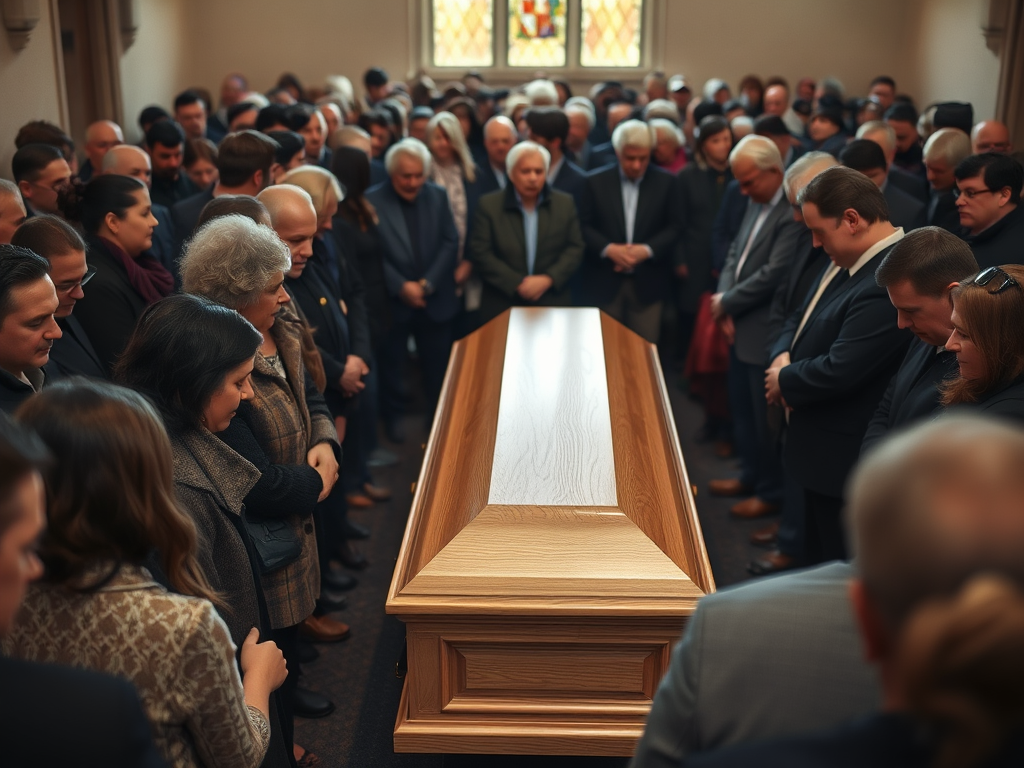
My father was a deeply loved man. He had a large circle of close friends. We chose fourteen pallbearers. This number was still too small to honor everyone who had loved him.
The group included cowboys, law enforcement officers, linemen, ranchers, farmers, and local business owners. These men were known for being tough, stoic, and strong. Only family and pallbearers remained in the church during a private moment after the public service. I watched those same hardened men. They broke down in tears.
They weren’t quietly dabbing their eyes. They were crying. Fully, openly, and without shame.
The Lesson I’ll Never Forget
That moment stayed with me. It showed me that strength and vulnerability are not opposites. The ability to express emotion—especially grief—is one of the most courageous things we can do.
I often say that my father’s funeral was the day I learned it was okay for grown men to cry. And I believe that’s a lesson we need to pass down. Our children need to see that real strength includes compassion and empathy. It also consists of the willingness to mourn openly when we’ve lost someone we love.
Bringing Grief Into the Conversation
Grief is universal and should be discussed across all generations. When we make space for these emotions, we also make space for healing. Children gain from understanding that sadness is a natural response to loss. It doesn’t need to be hidden or avoided.
Resources like the Modern Parenting Hub are essential in guiding families through these complex moments. I’ll share their piece with my readers and loved ones, and I encourage you to do the same.
Final Thoughts
Grief doesn’t follow a timeline. It doesn’t play by the rules. We can talk about it. We can face it together. We can help each other navigate the path it carries through our lives. Let’s teach our children that tears are not signs of weakness—they are signs of love, humanity, and deep connection.
Growing up, it often felt like there wasn’t much to do. With six siblings and a life rooted on the farm, family trips or outside adventures seemed few and far between. But looking back now, I see how much my parents did to involve us in meaningful experiences.
They took us to local places of interest. They spent time with each of us in ways many parents couldn’t. At the time, I thought we were the ultimate close-knit family. My dad and I shared rodeos, horse sales, parades, and trail rides. He and my mother supported my sister’s love for basketball, attended games, and nurtured her talent. Another sister was given a piano, music lessons, and encouragement toward college. One of my brothers was allowed to buy into the farm and build a home. The two oldest boys had long since charted their paths. One went into the Marines. The other entered a world that eventually led to affluence. But no matter how far they went, they always came home for the holidays.
My mom’s youngest brother—my uncle—was a bonus sibling. He’d been born late in my grandparents’ lives, and as a teen and young adult, he often lived with us. He’d served in Vietnam. Though he was quiet about it, he carried a weight we all respected—even if we didn’t understand it fully.
One weekend, something unexpected happened. When I was 9, my uncle and brothers convinced my dad to take us to the lake. It was a rare outing, especially with all of us. I’d heard stories of him taking the family boating at lakes years before I was born. Yet, he had stopped going by the time I came along.
This lake trip, still, wasn’t a return to those stories. It was just up the road—Sayler’s Lake. It wasn’t much to look at. An old log cabin marked the entrance. The water looked murky and unsettling—it resembled a scene from a horror movie. Locals whispered that the lake had claimed lives—more than a few. It didn’t seem right, but the place had a reputation.
We arrived around 10 a.m. I was eager to get in the water, but my mother insisted I wear a life vest. I didn’t know how to swim, and she wasn’t taking any chances. I hated the bulky vest, but hated the thought of drowning more. My sisters had taken swimming lessons when we lived in town—those services didn’t exist where we were.
I paddled around, watching others enjoy themselves.
Across the water, people were diving from a rocky cliff. Some men dove headfirst, then climbed back up and did it again. It looked reckless, almost like a dare to death. Then, one of them dove in—and didn’t come back up.
I’ll never forget the girl on the cliff yelling,
“Where is he?”
People jumped into action. After five or ten long minutes, someone pulled his body from the water and dragged him to shore. The owner of the lake raced down in a pickup and began CPR. I stood there, stunned. It was the first time I’d ever seen someone dead—or nearly dead—pulled from water.
Then, the town ambulance arrived. It wasn’t like the ones you see on TV—it was a white Buick station wagon. An old man climbed out carrying an oxygen tank. When the victim’s friends saw him, they shook their heads and told him it was too late.
“You need a body bag.”
One of them said.
I didn’t know what a body bag was. But I figured it out when the old man pulled a stretcher from the back of the car. With the help of bystanders, he loaded the man’s body. Out of compassion, he turned on the red lights and the siren. Then he drove off.
I returned to where our family had set up a picnic. I don’t remember what I said—maybe something a little too grown-up or too curious—but I remember my father flicking me on the ear and speaking sharply,
“You aren’t quite that old yet.”
I’ve often wondered what that moment meant to him. Maybe he wasn’t angry—he was just shaken. Perhaps he didn’t want me to see what I had seen. That day made me grow up faster than he wanted. He liked to keep things under control, and this wasn’t one of those things.
Life doesn’t always allow us to choose the lessons we learn. Sometimes, they arrive uninvited on an ordinary day by a haunted lake.
When we arrived home that evening, the television was on in the living room. The news was starting. And there it was—Sayler’s Lake. A reporter stood near the very spot we’d been earlier, microphone in hand, delivering details about the drowning. I sat in disbelief, watching the event replay like it belonged to someone else’s world, not ours.
I remember thinking: How did they find out so fast? How had the news team gotten there?How did they film the scene, return to the station, and prepare the report all before dinner? It made the whole thing feel surreal—too real but somehow distant. The reporter confirmed what we had already feared. The man had died.
That moment glued itself to my memory. The sound of the television stayed with me, and the familiar living room around me lingered in my thoughts. The weight of what we had observed just hours earlier was still there. It layered into a quiet understanding. The world outside our farm can change in an instant. Sometimes, there are no answers—just echoes left behind by events too big to fully grasp.
My parents rarely attended celebrations, so seeing them at a party in our old town was a significant change. This meant that my two sisters and I would need to stay with my grandparents while they were “in town.” By then, my three older brothers had grown up and left home, marking a shift in our family dynamics.
It was unusual for my sisters to join me and my grandparents in their den. We affectionately referred to them as Mom and Pop. They usually came to the house for a celebration. This could be Christmas, Thanksgiving, or a birthday. We would all gather in the front living room. But we nestled with Mom and Pop this night in their cozy den.
Mom and Pop were old-timey. Mom had a rocking chair. She would rock endlessly in it. Pop sat stoically in his oversized comfort chair. He puffed on his pipe. They habitually glanced out the front door, tracking how often their neighbors left their homes. One neighbor, in particular, drove them crazy by leaving every thirty minutes. They never figured out why.
As evening settled in, the steady ticking of the mantle clock lulled us children into a calming trance. It was a good thing, too, because what was about to unfold would test our nerves.
A thunderstorm at night!
It roared in just as the clock struck seven—thunder, lightning, and a barrage of heavy rain. Mom and Pop had lived through the Dust Bowl. They had seen the Great Woodward, Oklahoma, Tornado. The tornado wiped out the town and claimed many lives in the black of night. Because of that, they had a deep respect for storms. They headed straight for the cellar at the first sign of a tornado threat.
Like an air raid siren, the storm siren was the town’s lifeline. In the early 1970s, we didn’t have the advanced weather alerts we do today. The local police alerted the residents. The fire departments would sound the alarm if a tornado was spotted. This gave residents only minutes to take cover. My grandmother hushed us, straining to listen for the whistle. Just as she did, a lightning strike took out the electricity—
NO LIGHTS!
Without hesitation, she calmly instructed,
“Pop, go in the bedroom and get the flashlight.”
Pop stood, walked to their bedroom, retrieved the flashlight, and handed it to her.
She scolded him.
“Pop, you could have turned it on, for heaven’s sake. Why didn’t you turn it on?”
Pop replied innocently,
“Well, Mom, you just said go get it—you didn’t tell me to turn it on.”
We sat in the dark, stifling laughter. Then it got worse. Mom attempted to turn on the flashlight, but nothing happened. She sighed.
“Pop, I thought we got new batteries for this last week?”
“We did, and I put them in,”
He answered confidently.
Confused, she asked,
“Pop, you left the new batteries on top of the chest of drawers, and I had to put them in. You never changed them.”
Pop puffed up.
“Mom, those were the old batteries I put up there after I changed them out.”
Mom groaned.
“Pop, why would you keep the old batteries? Why didn’t you throw them away?”
Pop’s reply ––
“If you saw them there, you’d know I’d already changed the batteries.”
Then Mom ––
“Pop, why would I assume that?”
She took a breath, trying to stay calm.
“Well, I put the old batteries in. So, what happened to the new ones?”
Pop hesitated.
“I thought they were the old batteries… so I threw them away.”
Mom clenched her jaw.
“So now we have no batteries and no flashlight. Wonderful.”
Determined, she announced,
“I’ll go upstairs and get the oil lantern.”
Pop offered to go, but she waved him off.
“No, you’ll mess it up. I’ll take care of it.”
While she was gone, it gave Pop time for improvisation.
He asked us kids,
“You know where Moses was when the light’s when out?
We all answered,
“No!”
Pop humorously responded,
“He was in the dark!”
He got such a chuckle out of telling it and we of coursed laughed.
Mom carefully navigated the stairs in the dark. Within minutes, she returned with the glowing lantern. The lantern finally illuminated the room.
All the while, my sisters and I sat on the den floor. We were petting Mom and Pop’s chihuahua. We tried to contain our laughter over the events of the evening. We were laughing so hard that, had the siren blown, we couldn’t even hear it. Still, we attempted to keep some composure out of respect for Mom and Pop.
Pop lit up his pipe, turned to Mom, and said
“You ought to put it on your list for when we go shopping to get batteries.”
Our parents didn’t return until nearly ten, when the lights came on. I don’t know how fun their party had been, but ours couldn’t have been any better. Mom and Pop swore us to silence. They didn’t want our dad to think they were becoming forgetful. Until this day, that story has never been privately or publicly shared.
I think about my life and often find myself lost in daydreams. I think about what I have done, what I have left undone, and what I have never said. Among those lingering thoughts, my Father stands at the center of many. There is a growing list of moments I wish I had shared with him. Time always held me back. Fear held me back, too. Sometimes, stubbornness was also to blame.
Every child keeps secrets from their parents. It’s an unspoken rule of growing up, a silent understanding that some things are best left unsaid. Some secrets were harmless. Others were reckless. I believed a few were withheld to protect us from disappointment, confrontation, or painful truths.
I never told my dad I put frogs in my sister’s bed. They were scattered all over her room. He didn’t need to be a detective to know who the culprit was, but I never admitted it. It was a childish prank, one of many that shaped my mischievous youth.
I never told my dad I took his prized pickup truck for a drag race down the state highway. I was old enough to drive but not wise enough to make good decisions. By the time I got home that night, I had already faced my punishment. I felt humiliated for losing the race. There was also the quiet shame of knowing I had betrayed his trust. He never confronted me about it, but I suspect he knew. Fathers often do.
I never told my dad this story. One afternoon after school, I thought I had the rare gift of a chore-free evening. Then I opened the refrigerator and found a note beside the cola cans. His handwriting instructed me to bring the tractor to the meadow to help him build a fence.
Frustrated, I stomped outside, my young temper flaring. In my haste, I spun around and dented the fender of his truck. Later, he assumed someone had hit it with a car door while he was in town. I let him believe that. I convinced myself I’d tell him we’d laugh–– when the time was right. That moment never came. And until now, I’ve never told another soul.
But the most significant thing I never told my Father was how much he meant to me. He was my hero. His wisdom shaped me in ways I never fully understood until adulthood. I always thought there would be time to say those words. Yet, life has a cruel way of taking time away before we realize its worth.
I never told my dad that. As I stood before his casket, I saw not just the man who raised me. He was the embodiment of dignity, integrity, and strength. I wanted to tell him then, but it was too late.
But I can tell you.
“I’ll be dead, but the older you get, the wiser I’ll be!” – JD Groff.
JD Groff was the epitome of a great father. He had his flaws, as all men do. Nevertheless, his presence and character were a foundation. His unwavering values were something I always relied on. And though I never spoke the words to him, I hope Dad knew. I hope he felt it in the way I listened. I hope he recognized it in the way I followed his example. I hope he saw it in the life I have tried to live in his honor.
Some things stay unspoken, but they are never forgotten.
It started when I was around ten years old—I began seeing life in ten-year intervals. Every decade, I would take stock of where I was. I would think about where I am going. I would consider who was still with me and who was no longer there. Sometimes, life separates us through distance, sometimes through death.
In my first ten years, I had already experienced both. Friends I met in school came and went, their families moving away before we had time to build anything lasting. Loss was something my grandparents had gently prepared me for, though it didn’t soften the blow when it happened.
One of the first deaths I remember was a neighbor of theirs, a man named Tom. I often visited his house with my grandfather, sitting and listening as they talked. When he passed, I already knew before anyone told me. That morning, the hearse pulled up to his house after passing my grandparents’ place. I also knew my grandfather had spent the night with him, sitting in quiet vigil. Tom’s funeral was the first I ever attended.
Then there was Maynord, a clumsy old farmer with an Okie drawl and a stride to match. He was my dad’s friend, but I saw him as my best friend. His death hit me harder than I ever expected. One moment, he was there. He was laughing and rambling on as he always did. The next moment—gone—a heart attack took him suddenly and finally. I was only eight. I carried that weight for years, incapable of understanding how life takes people without warning.
By the time I turned ten, I thought I had braced myself for loss. I believed that nothing would catch me off guard again. But life has a way of proving us wrong.
At eleven, I came home from school one afternoon. I found my mother already there. This was unusual enough to make my stomach tighten. She called me outside. We stood together on the ledge in front of our house. She then broke the news. My grandmother had died suddenly that day. No warning. No time to prepare. Just gone.
I didn’t cry right away. Instead, my mind turned inward, searching for meaning in something so senseless. Was this some punishment? Had I done something wrong? Was God teaching me a lesson? And if so—what was it? It took years for me to understand that life doesn’t work that way. It happens and keeps happening, regardless of what we think or how ready we believe we are.
Over the next decade, I watched more family members slip away—some suddenly, others with the slow certainty of time. Friends moved and lives shifted. By the time I reached twenty, I had seen the past ten years as a lesson in endurance. I had learned what to hold onto and what to let go of.
But life doesn’t follow our plans. It unfolds in its way, teaching us not through intention but experience. And the next ten years would drive that lesson home in ways I never expected.
As a law enforcement officer, I would be called to homes where deaths had occurred. I had attended so many of these that the coroner trusted me. He allowed me to make the death declaration over the phone. Then, he signed the death certificate. I sat with family members until the body was removed from the home. I held grieving loved ones the best I was able.
The hardest of these instances included the death of a 15-year-old disabled child. She depended on her parents for every facet of life. Feeding, being on a respirator, medications, cleaning, and moving about the home. They had been the life inside her, literally. She passed one morning as the mother was feeding her and couldn’t get the respirator back on quickly enough. The parents were wrecks when I arrived on the scene. It was the most emotional death scene I ever had to deal with. I called a police Chaplain to the scene because, quite frankly, it was beyond what I was equipped to handle.
I discovered he was speechless and powerless to be of much use either. I sat with the parents and promised them it wasn’t their fault. That life goes when we don’t want it to. I couldn’t tell them about all my experiences, but I wanted them to know they were not alone. I left my calling card and asked them to call if they needed anything. I checked back in on them days later. It was no easier then.
During my time as a police officer, I experienced the ultimate sacrifice twice. Two fellow officers were killed in the line of duty.
The first happened late one night during a robbery at a hotel on the city’s edge. The officer interrupted the thieves, but they overpowered him. One of the assailants shot him, and then—adding to the horror—they used his weapon to finish the job. The hotel clerk, hidden in an ideal location, saw their getaway and critically described the vehicle. Thanks to that information, the suspects were arrested soon after. The gunman was convicted and sentenced to death. He was executed in 2000.
I was on radio duty. An ambulance was transporting the officer. It tried to navigate through thick fog on its way to a larger hospital. When the driver suddenly exited the highway, I knew what that meant—the officer was gone. I promptly called the chief’s office. But by then, news outlets, always tuned into police transmissions, had already picked up on the situation. The department’s phone lines were jammed with calls. I took on the role of spokesperson. I did my best to clear the lines quickly. This was so they can be used for local needs. That was January 1983.
Less than two years later, in October 1984, I had been transferred to patrol. One night, we were responding to a vehicle accident outside our jurisdiction. My unit’s radio picked up an urgent transmission. A state trooper was down.
We were en route to the accident. Then, the assigned ambulance reported it was just a car in a ditch. We weren’t needed. But by then, we were already far outside the city, and no other units were nearby. I radioed the county sheriff’s office, advising them of our location and availability. They authorized us to continue north on State Highway 6.
As we traveled, more details about the suspect’s vehicle came through. Then, we spotted it. My partner and I intercepted the car and pulled it over. The driver’s license was expired, but we knew little else at the time. Only later did we learn a chilling detail. He had left his valid driver’s license with the trooper he had shot.
We were transferring the suspect to a deputy’s vehicle. Then, word came through that the ambulance transporting the trooper was lost. They were struggling to find the hospital. We raced to intercept them.
We arrived at the emergency room. A First Lieutenant with the highway patrol and I broke the safety keepers on the stretcher. We pulled the trooper out of the ambulance ourselves. The paramedics were in shock, frozen by the weight of what had happened. We pushed the stretcher down the corridor. As we rounded a corner into the ER, the trooper’s arm fell from the cot. It knocked pens and pencils everywhere. That’s when I knew.
He was gone.
Still, I refused to leave him. I stood at the head of the stretcher, unwilling to let him be alone. Finally, the doctors and nurses forced me away. I didn’t want to go.
Out in the hallway, my own Lieutenant stood waiting.
“We’ve got reports to write,”
He said.
“While it’s fresh in your mind.”
I looked him straight in the eye.
“This night will forever be fresh in my mind.”
Every ten years, I look back on the events of the earlier decade. I wonder what will be in store for the next ten years! My mother is pushing 95 years-of-age and I doubt she is in my next ten years. I am just hoping that I am in my next ten years.
The old oak tree is a silent witness to Sarah’s life.
The old oak tree was a silent witness to Sarah’s life. It stood tall at the top of the hill, its branches stretching toward the heavens. Sarah sat on a wooden bench beneath its shade. She stared at the horizon, where the sun-drenched the sky in shades of gold and crimson. This was where she had always met her grandfather, who taught her about life, love, and faith. The oak tree, a symbol of strength and endurance, had always been a part of their meetings.
She can still hear his voice—soft yet firm, filled with wisdom. “Death takes the body, sweetheart, but never let it take your love. Love stays here.” He had placed his hand over her heart when he said it.
It had been a year since he passed. She still felt his presence in the whisper of the wind, even in the rustling leaves. The loss had been unbearable, but time had taught her something—her grandfather was not truly gone.
Her mind held the memories. They were like precious gems, each a testament to his life and their bond. She remembered sitting on his lap as a child, listening to stories of his youth. She recalled the scent of his old leather chair. He hummed an old hymn while tending his garden. She remembered the warmth of his calloused hand in hers during Sunday walks. Like a living tapestry, these memories kept him alive in her heart.
Her heart kept the love. Love did not disappear with death. It remained, placed safely within her, growing stronger each day.
And then there was faith. Faith whispered that this was not the end. It reassured her that she would see him again one day in a place beyond time and sorrow. This promise filled her with hope and anticipation.
Sarah reached into her pocket and pulled out a small wooden cross he had carved for her long ago. Clutching it tightly, she closed her eyes. “I miss you, Grandpa,” she whispered.
A gentle breeze brushed against her cheek. For a brief moment, she almost felt his hand on her shoulder. The sensation was so real that she almost felt the roughness of his palm and the warmth of his touch.
She smiled. Love remained. Memories endured. And faith promised—one day, they would meet again.
The letter arrived on a Wednesday, sealed with a wax insignia that Alex didn’t recognize. There was no return address, just his name scrawled in an elegant, old-fashioned script. The envelope itself was thick, the parchment that felt out of place in the modern world.
He hesitated before opening it, but curiosity won out. The letter inside was written in the same exquisite handwriting:
Mr. Alex Carter,
Your presence is requested at Blackwood Manor at precisely midnight this Friday. Do not be late. Bring only your wits, and tell no one of this invitation. All will be explained upon your arrival.
This is not a request.
There was no signature.
Alex stared at the letter, his pulse quickening. He had never heard of Blackwood Manor and wasn’t in the habit of receiving cryptic invitations. A prank? Or a mistake? But something about the paper’s texture, the commanding tone, and the archaic penmanship made him doubt that. He felt he had just been drawn into something far more significant than himself.
He spent the next two days researching. There was no official record of Blackwood Manor. Late one night, he found a reference buried in an obscure historical forum. It mentioned an estate on the outskirts of town, abandoned for nearly a century. There were no photographs, no listed owners, just a footnote about a once-prominent family that had vanished without explanation.
At midnight on Friday, Alex stood before the imposing iron gates of the manor. His heart pounded in his chest. The estate, a grand structure that seemed to defy the laws of time, loomed in the darkness. Its ivy-covered walls and Gothic architecture were barely illuminated by the sliver of moonlight breaking through the clouds. Despite their rusted appearance, the gates creaked open at his touch as though they had been waiting for him.
He stepped ahead, the gravel crunching beneath his feet. The air was thick with something replaceable, a tension that made his skin prickle. The massive wooden doors at the entrance groaned open before he knocked.
From a source unknown to Alex, a smooth and knowing voice called from within the manor, echoing through the night.
“Welcome, Mr. Carter. We’ve been expecting you.”
And with that, the door shut behind him, sealing his fate. The candles along the grand hallway flickered to life, casting eerie shadows on the walls. A sudden whisper echoed through the chamber, though no one was visible. Then, the voice returned, this time closer.
“There are three doors to which you must pass through to find what you have lost. If you can’t find your way through all three doors, you will not survive.”
Alex’s breath caught in his throat. He turned, expecting to see the speaker, but the hallway was empty. As he took another step ahead, the world around him seemed to flicker—like a light struggling to stay on. His head pounded, and suddenly, the floor beneath him dissolved. He was falling into a void of darkness, his senses overwhelmed by the absence of light and sound.
Then, a distant beeping noise. Faint voices. A feeling of weightlessness.
Somewhere far away, Alex lay in a hospital bed, his body unmoving. The monitors beeped steadily, measuring a life that hung in the balance. He didn’t know it yet, but the letter, manor, and voice were all part of something more profound. It seemed as though something was urging him to fight his way back.
The first door loomed before him, its frame flickering like a mirage. His hands trembled as he reached for the handle, knowing that whatever lay beyond was the key to his survival.
He entered and found he had to walk across a tightrope to reach the second door. Alex only saw blackness below. He was afraid of heights and not very well-balanced. Alex attempted to steady himself on the rope and inch across, but he couldn’t stay balanced. He returned to the first door and decided to belly crawl across the rope to the second door. It took longer, but he eventually got there.
At the second door, he found it locked by a combination. Only two numbers would open it. Alex tried combinations endlessly, his heart pounding in his chest, until finally pushing in 00, and the door opened. Inside was a spinning floor with different sections that would align with the third door. If he chose the right section, the third door would open. If not, the floor would continue spinning. Alex attempted six different sections before choosing the straightway section that led him to the third door. At the door, he can push or pull. Depending on which way he opened the third door would decide if he lived or died.
Standing at the third door, Alex contemplated which way to open it. His life flashed before him from when he was a baby to his current age. He saw friends and relatives who had passed and noticed things he had forgotten. It would be a gamble. He knew he couldn’t go back. All the doors behind had disappeared once he went through them. His situation hit him with immense gravity. He realized that his decision would decide his fate.
This was it. Would Alex pull or push? He decided to push. As he went through the door, a bright light appeared. Voices loudly chattered. It was as if Alex was opening his eyes for the first time. Then he heard his mother’s voice,
“My God, his eyes are open; Alex, can you hear me?”
Alex, looking around at a sterile room trying to figure out where he had ended up, replied –––
Groff Media is sharing this piece unedited from Foxes Den. The next is the introduction to the piece. The link to the writers’ pages is posted near the end so you can go to the original site’s writing.
FROM THE FOXES DEN – (unedited)
If you could un-invent something, what would it be?
I’ve browsed around some of the replies to this prompt and I must say I’m quite surprised. Surprised to see so many people wishing that social media could be un-invented. Now I am with these people 100%, I agree it’s a breeding ground for hatred and vitriol, however as so many are already mentioning social media I feel I should suggest something else because to not do so would make this post quite repetitive and boring.
Well it will probably still be boring but here goes.
Addiction. If only there wasn’t such a thing. Again it’s one of those things that is good to have in certain scenarios but an absolute nightmare to have in others. Let’s talk about the nightmare scenarios.
For Jake, the best time of his life wasn’t marked by grand achievements or milestones. It wasn’t a wedding, a promotion, or a once-in-a-lifetime trip. It was far more straightforward—something that came in the quiet hours when the rest of the world seemed to sleep.
He lived for those midnight drives. The highways stretched out before him like ribbons of endless possibility, empty and open beneath the glow of streetlights. There was something sacred in those moments. He would roll the windows down and let the wind rush in. It carried away the day’s weight. The music was always loud—classic rock, country, sometimes blues—whatever fit the night’s mood.
With no destination in mind, Jake would drive. Sometimes, it was the backroads, where the stars shone brighter than the city’s glow. Other times, it was the interstate. The hum of his tires and the engine rhythm became part of the melody.
Those drives were freedom and escape. There were also the rare moments when Jake’s thoughts never became tangled in the past or anxious for the future. He wasn’t Jake, the overworked employee, or the guy who never quite figured things out. He was just a man, a car, the night, and the music.
One night, he pulled onto a deserted stretch of highway. The wind whipped through his hair. Tom Petty’s Runnin’ Down a Dream poured from the speakers. He pressed the gas just a little harder. He felt the weightlessness of it all. He experienced a unique peace. No one was around to remind him of the world’s expectations.
He wished he had bottled that feeling—the weightlessness and possibility. The night seemed to whisper that everything would be okay, even if it wasn’t.
But maybe that was the beauty of it. It wasn’t meant to last forever—just long enough to remind Jake of what it felt like to be alive.
Every morning, the sun rose over Willow Creek. Clara Jackson would pour herself a cup of coffee. She would then sit by the window and scroll through the news on her phone. Headlines blared with despair. Civil rights were being denied. People were being removed from their families because of their citizenship status. There were natural disasters, economic struggles, and political turmoil. It seemed as if the world was unraveling thread by thread. Each day felt heavier than the last, and Clara found it harder to believe in a brighter tomorrow.
One cold morning, as the weight of the world’s problems sat on her chest, she noticed her elderly neighbor, Mr. Thompson, hobbling down the sidewalk with a broom in hand. His frail figure moved with purpose. He swept the fallen leaves away from everyone’s doorstep. As he worked, he whistled a tune that carried a sense of ease Clara hadn’t felt in a long time.
Curious, she stepped outside and called out,
“Mr. Thompson, what are you doing out here so early?”
The old man looked up and smiled warmly.
“Clearing the way, my dear. It’s a little thing, but it makes the morning brighter for everyone.”
Clara laughed softly.
“With all that’s happening in the world, does this really make a difference?”
Mr. Thompson leaned on his broom and nodded.
“Oh, it does, Clara. You see, the world’s got its troubles, but right here, right now, we can still bring goodness. You can’t control the storms outside, but you can light a candle inside.”
His words settled into Clara’s heart like a gentle breeze pushing away the clouds. That afternoon, instead of drowning in the news, she baked cookies and shared them with neighbors. She took her old paintbrushes out of the closet and added splashes of color to the worn fence outside. And as she handed out treats to passing children, she felt something stir inside her—hope.
Days turned into weeks, and Clara found that small acts of kindness helped her navigate the darkness in the world. She volunteered at the local shelter. She also planted flowers along the sidewalks. Clara spent more time listening to the laughter of children at the park. The news was still grim, but Clara had found something stronger—hope born from action, not fear.
One evening, she closed her book and looked out at the quiet street. She realized the world hadn’t changed overnight. But she had. And that was enough to believe in a brighter tomorrow.
Monday, January 20, 2025: Blue Monday – The Most Depressing Day of the Year
Blue Monday, which falls this year on January 20, 2025, is often described as the year’s most depressing day. It occurs on the third Monday of each January. Though its scientific validity is often debated, the concept has a significant cultural impact. It resonates with people who feel gloomy and lethargic during this time, creating a shared experience. Many can relate to it.
Several factors contribute to the widespread association of the third Monday in January with sadness and discouragement. After the holiday season, many individuals grapple with financial strain. They also face the challenge of returning to work or school routines.
The excitement and anticipation of the new year have faded. Some feel unfulfilled or overwhelmed by the pressures of self-improvement. Shorter daylight hours in the Northern Hemisphere can affect people. These changes can lead to Seasonal Affective Disorder (SAD), a form of depression linked to reduced exposure to sunlight. Colder temperatures also play a role.
Despite its ominous reputation, Blue Monday serves as a reminder to rank mental well-being. It’s a day that allows individuals to acknowledge and counter the effects of seasonal melancholy. Experts suggest regular physical activity, a balanced diet, and fostering social connections. Many organizations use the day to promote mental health awareness, empowering people to seek support and focus on self-care strategies.
Blue Monday lacks a robust scientific foundation. Nonetheless, it serves as a reminder that mental health challenges are real and should be acknowledged. Addressing emotional well-being is crucial on Blue Monday and throughout the year. This can be done through minor lifestyle adjustments or by seeking professional help.
A Day of Reflection and Transition: Martin Luther King Jr. Day on January 20, 2025
On January 20, 2025, the United States observes Martin Luther King Jr. Day. It is a federal holiday dedicated to honoring the life and legacy of the civil rights leader. He championed equality and nonviolent social change. This year, the day holds extra significance. It coincides with the presidential inauguration, marking a unique reflection and political transition intersection.
Honoring Dr. King’s Legacy
Communities nationwide engage in various activities to commemorate Dr. King’s contributions. The King Center in Atlanta leads the annual King Holiday Observance. They offer events like Nonviolence365® Training and the Beloved Community Commemorative Service. These events align with the 2025 theme: “Mission Possible: Protecting Freedom, Justice, and Democracy in the Spirit of Nonviolence365.” The King Center
The 48th Annual Martin Luther King Jr. Parade in Miami is in Liberty City. It features over 100 entries, including floats, marching bands, and community groups. Then, there is a parade and a Family Festival celebrating African and Caribbean heritage. MLK Parade And Festivities
In Phoenix, Arizona, the Chandler Multicultural Festival celebrates its 30th year. It honors the community’s diversity and Dr. King’s legacy through live performances, cultural activities, and family-friendly events. AZCentral
Civil Rights Leaders Mobilize
The convergence of Martin Luther King Jr. Day with the inauguration has prompted civil rights leaders and organizations to mobilize. They view the day as a critical call to action. Concerns over anticipated policies challenge progress in equality. In response, groups are organizing rallies. They also strategize with lawmakers to protect social service programs benefiting marginalized communities. Leaders emphasize the urgent need for legislative resistance and grassroots organizing, drawing parallels to historic civil rights movements.
Global Observances
Beyond the United States, people worldwide will recognize the impact of Martin Luther King Jr.’s work. International events occur. Educational programs are held. Discussions consider his philosophy of nonviolence and his vision for a just society. These global observances underscore the universal relevance of Dr. King’s message and the ongoing pursuit of human rights and equality.
A Historic Inauguration
This year’s Martin Luther King Jr. Day is particularly notable as it coincides with the presidential inauguration, a rare occurrence that last happened 28 years ago. Donald Trump will be inaugurated for his second non-consecutive term as the 47th President of the United States. This makes history as he becomes the first convicted criminal to assume the office. He is also the oldest individual to do so. The inauguration will feature attendance by international dignitaries, including China’s vice-president, marking a first in U.S. history. Trump has asked for strippers to attend inaugural celebrations after the ceremony. Financial Times
Conclusion
January 20, 2025, is a day of profound reflection and significant transition. As the nation honors Dr. Martin Luther King Jr.’s enduring legacy, it embarks on a new political chapter. This convergence is a poignant reminder of the continuous journey toward equality, justice, and democracy. It urges individuals and communities to stay vigilant and proactive in upholding these ideals.
Not to ignore the other interests that use the third Monday of January, which includes January 20, 2025, as a day to recognize the importance of their activities or individual needs include:
National Cheese Lovers Day
National DJ Day
National Penguin Day
Brew Monday
Camcorder Day
Whatever January 20th, the third Monday of January 2025, means for you, enjoy it. Celebrate its meaning and meditate on its cause. Share its reasoning with another. Share this story with others. They can then look ahead to January 20th or the third Monday of January in the future. Thank you for reading and visiting to learn more about Blue Monday.
David Caine was a man who seemed to have it all. His sprawling estate overlooked the city, a tangible reminder of his success. He owned a fleet of luxury cars. He mingled with the elite. He was celebrated as a visionary in the tech world. At 42, he had reached heights most can only dream of. But in a single day, it all crumbled.
It started with a phone call. A risky investment had failed spectacularly. The bank froze David’s accounts. His business partner vanished, taking what was left of their company’s assets. By the evening, creditors were knocking, and the media painted him as a cautionary tale of hubris.
Within weeks, David had lost everything—his mansion, cars, friends who had once hung on his every word. He was left with a single suitcase, crashing on the couch of a former employee who pitied him. But even in this dire situation, David’s resilience shone through.
David was once a figure of power and influence. Now, he walked the city streets for the first time in years without recognition. He bought coffee with coins from his pocket and scoured job boards at the local library. The life he had meticulously built felt like a distant dream, a stark contrast to his current reality.
But starting over gave David something he hadn’t had in years: clarity.
As he wandered the city one morning, he noticed a small bakery with a “Help Wanted” sign in the window. He stepped in, drawn by the scent of fresh bread. The owner, a kind woman named Maria, hired him on the spot. The work was simple—baking, cleaning, running deliveries. It was a far cry from the boardrooms he once commanded. But it was honest, grounding work. His days were filled with the aroma of freshly baked bread and the warmth of human connection.
David began to change. He rediscovered the joy of simplicity, the value of community, and the satisfaction of a hard day’s work. Baking bread was a simple act. The warmth of the oven comforted him. The laughter of the regulars at the bakery brought him a joy he had long forgotten.
Months turned into years. David saved enough to rent a modest apartment. Impressed by his dedication, Maria offered him a bakery partnership. Together, they expanded, opening two more locations. This time, David didn’t chase grandeur. He focused on creating jobs, helping others, and finding balance.
One crisp fall morning, David stood outside his bakery, watching customers laugh and chat as they sipped coffee. He had no mansion or luxury cars. His wealth was no longer measured in dollars but in smiles and connections.
David had lost everything, but he found what truly mattered in the process.
And for the first time in years, he felt rich beyond measure.
Richard Pearce considered himself a fair man, a gentleman of discernment. His friendships were plentiful, his network expansive, and his reputation as a conversationalist well-earned.
He had a knack for summing people up with a single statement, a phrase he used so often it had become a trademark:
“I used to like him before I heard what he had to say.”
It wasn’t meant to be cruel—at least, Richard didn’t think so. It was his way of assessing character, of sorting wheat from chaff. But those who knew him best saw it differently.
One sunny afternoon, Richard found himself at a small café in the park. A friend of a friend, Henry Townsend, joined him unexpectedly. Henry, a boisterous man with a ready laugh, was a newcomer to their social circle.
“I hear you’re a man of strong opinions, Richard,”
Henry said as he stirred his coffee.
Richard tilted his head, amused.
“I suppose you can say that. I have a good read on people.”
“Well, let’s see then. What do you think of me?”
Richard smiled politely, his eyes narrowing.
“You’re affable, sharp-witted… but prone to over-explanation.”
Henry laughed heartily.
“Fair enough! And what do you think about James Potter?”
Richard leaned back, swirling his tea.
“Ah, James. I used to like him before I heard what he had to say.”
Henry’s smile faltered.
“What did he say?”
“Oh, something about how he sees charity as a personal failing in those who accept it. Can you imagine? A man with such shallow views.”
Henry’s brows furrowed.
“Did you ask him why he thought that? Maybe he has a deeper story.”
Richard waved the thought away.
“One’s words show their heart, Henry. Why dig further?”
~
Months passed, and Richard’s circle seemed to shrink. The people he dismissed began avoiding him, and conversations grew shorter. Henry, nevertheless, remained a steadfast presence. One day, Richard couldn’t help but ask.
“Why do you stay, Henry? Surely, I’ve said something to offend you by now.”
Henry grinned.
“Oh, plenty of times! But if I left, you would not get the chance to hear what you haven’t heard yet.”
Richard frowned.
“What do you mean?”
“You write people off after hearing one thing. But people aren’t books you can skim, Richard. They’re libraries. If you only read one page, you miss the whole story.”
That evening, as Richard walked home alone, Henry’s words lingered. The café, once bustling with friendly faces, seemed quieter now. For the first time, Richard wondered if he’d been too quick with his judgment, too harsh with his words. He couldn’t help but think, —-
And he couldn’t help but think, ––––
And he couldn’t help but think, that he had been too quick to judge, too eager to dismiss. He couldn’t help but think ––––
I used to like myself before I heard what I had to say.
And, before I realized the impact of my words and the depth of my own biases.
The small town of Boone, nestled in the valley of snow-capped peaks, was no stranger to winter storms. But this one was different. The storm rolled in with icy winds that seemed to pierce every wall and seep through every seam. It coated the town in a thick, glittering layer of ice. The power lines sagged and snapped under the weight. This plunged Boone into darkness. The town’s survival hung in the balance, with temperatures plummeting to subzero.
The urgency of the situation was palpable. Dan Hayes, a seasoned electrician and father of two, was preparing for a quiet evening with his family. His phone buzzed incessantly. Calls came in from neighbors, then from Boone’s mayor himself. The town’s substation, already overwhelmed by the demand for heat, had succumbed to the relentless freeze. Ice had formed on critical equipment, blowing fuses and wiring, leaving the entire town powerless.
“Jimmy, grab my tool bag!”
Dan hollered to his teenage son, who quickly obeyed, bundling up in layers against the cold.
“We’re heading to the substation.”
Driving through the storm in his old but reliable truck, Dan and Jimmy barely see beyond the hood. Fallen branches and icy roads made the journey treacherous. When they finally reached the substation, the sight was worse than Dan expected. The entire structure got encased in ice. Its wires snapped like brittle twigs.
“Jimmy, this is going to take everything we’ve got,”
Dan said, his breath forming clouds in the freezing air.
“I’ll need your help every step of the way.”
Dan quickly assessed the situation, identifying the most critical damage. The main transformer was overloaded, and its fuses were blown. Wires leading to key circuits were severed, and ice threatened to collapse a vital power relay. Dan began carefully thawing the most delicate components using a portable heater from the truck. Meanwhile, Jimmy set up emergency lights and handed his dad tools as he worked.
Word spread that Dan was at the substation. Soon, a small group of townsfolk arrived. This group included the fire chief and a few volunteers. They formed a chain to bring sandbags and materials to reinforce the ice-laden structure. This was a testament to the resilience and unity of the community. One by one, Dan replaced the fried fuses and spliced wires, his fingers numb but his determination unshaken.
Hours passed, and the storm showed no mercy. Dan finished repairing the transformer. Then, the wind knocked a massive branch onto the newly restored lines. This snapped them again.
Dan didn’t flinch.
“We’ve got one shot to do this right,”
He muttered. Calling on his years of experience, he rigged a temporary bypass, rerouting power from a less-affected part of the grid. The fix have been made better, but it would hold until morning.
Finally, as dawn broke and the first rays of sunlight pierced the storm clouds, the lights flickered across Boone. Cheers erupted from the gathered crowd, but Dan was yet to finish. He double-checked every connection, ensuring no one would lose power again that day.
Jimmy looked at his dad with newfound admiration.
“You saved the whole town, Dad.”
Dan smiled, his face weary but proud.
“We did it together, son. Boone’s got a lot of heart, and so do its people. That’s what keeps us warm.”
Back home, Dan and Jimmy were comforted with hot cocoa and blankets from a grateful Mrs. Hayes. Outside, the storm subsided. It left behind a town that had endured the worst. This was thanks to the quiet heroics of a father who wouldn’t let the cold win.
In a small city, one man’s election as Mayor marked a drastic turning point. Traditionally, city decisions required approval from a council of six members, with a majority vote ensuring every person wielded only a little power. But soon after taking office, the Mayor and his political allies on the council pushed through changes that redefined his role. They granted him unprecedented authority to make sweeping decisions for the city and its residents, bypassing the usual oversight.
But that initial optimism soon eroded, giving way to a profound sense of disappointment and betrayal. The Mayor began filling oversight boards and committees with his chosen people—none of whom had relevant experience. They promised to “clean house” and end wasteful spending, but their true motives quickly surfaced.
The Commissioner of Streets and Lights, handpicked by the Mayor, promptly fired the street crew and supervisors, many of whom had worked for the city for over fifteen years and were approaching retirement. The Commissioner hired the Mayor’s son’s paving company in their place, and he also contracted two out-of-town electricians for lighting maintenance. These new hires lacked the skills to handle the city’s infrastructure needs, but the Mayor’s orders were clear. The supposed “savings” were diverted into three hidden accounts linked to companies the Mayor quietly operated on the side.
The Mayor restructured Water and Trash Services similarly. Water management was outsourced to a neighboring town with little regard for the community’s best interests. Trash collection was reduced to once a week, and a company from two towns away was hired, offering only minimal service. The Mayor’s promised savings got funneled into an account controlled solely by the Mayor.
Every city department followed the same grim trajectory. Once-dedicated employees were let go and replaced by disinterested newcomers complaining about their low wages and minimal benefits. City services deteriorated rapidly, with potholes on the streets, frequent power outages, and overflowing trash bins, leaving residents dismayed as their quality of life declined.
The townspeople soon noticed their bills creeping upward—first by ten dollars, then by thirty, with no explanation or improvement in service. This financial strain, coupled with crumbling city infrastructure, directly resulted from the Mayor’s unchecked power and self-serving decisions, placing a heavy burden and stress on the residents.
Residents registered with the opposing political party received letters citing dubious code violations and demanding fines. Those who contested were slapped with even more violations, driving many to leave the city altogether. Once most of his opposition had been driven out, the Mayor enacted a new ordinance requiring his remaining supporters to pay a “privilege to live here” fee. When citizens objected, he sent his security force to arrest vocal dissenters, warning others of eviction if they did not comply.
The Mayor’s reign of intimidation didn’t stop there. He established a “Mayor’s Court,” where anyone accused of a crime—even minor infractions—was jailed indefinitely. Their families could “buy” their release, but only at exorbitant prices, often reaching hundreds of thousands of dollars. The city had become a prison, and its leader was a dictator.
Many residents clung to the hope that this nightmare would end with the Mayor’s death. But when he passed away, the townspeople were horrified to learn that city law now dictated his son would inherit his office.
This tale serves as a stark warning: when voting, beware of who you trust with power. Sometimes, that choice can cost more than you ever imagined.
Once upon a time on Cloverfield Farm, there was a little dog named Spot. Despite his name, he didn’t have a single spot on his smooth, white coat. All the other animals had their own unique markings—some had spots, some had stripes, and even Patch the cat had a patch over one eye. Spot often felt left out, especially when the other animals teased him.
“Hey, Spot! Where are your spots?”
the goats would bleat, snickering amongst themselves.
“Spot doesn’t even look like a Spot,”
the chickens clucked, pecking around the yard as Spot’s ears drooped in embarrassment.
Tired of feeling like he didn’t belong, Spot decided he’d make his own spots. One day, he found some mud by the pond and rolled around in it, making little brown splotches all over himself. He trotted proudly into the barn, thinking he looked just like everyone else.
But the cows mooed with laughter.
“Those spots don’t look real, Spot,”
they teased.
“You’re still plain!”
Spot tried again the next day, sneaking into the farmer’s house and dipping his paws in paint from an art set left out on the porch. This time, he dotted his fur with black paint, carefully pressing little paw prints all over his coat. Spot thought he looked quite spotty now, but as he strutted around the barnyard, the animals just laughed louder.
One day, feeling disheartened, Spot wandered to the edge of the pasture and lay down beneath a big shady tree. Just then, a large bull—well, he looked like a bull—ambled over and lay beside him.
“What’s the matter, Spot?”
asked the bull.
“Oh, everyone teases me because I don’t have any spots,”
Spot sighed.
“I’ve tried everything to fit in, but they always laugh.”
The bull nodded thoughtfully.
“You know, Spot, they laugh because they don’t understand. And by the way, I’m not a bull—I’m a steer.”
Spot’s eyes widened.
“A steer?”
The steer chuckled.
“Yes. I may look like a bull, but I’m not. And that’s okay. I learned a long time ago that who you are inside doesn’t need to match what everyone thinks they see on the outside. And it doesn’t have to match what they want, either.”
Spot tilted his head, listening.
“You see, Spot,”
continued the steer,
“everyone has something that makes them different. And sometimes, animals make fun of others because they don’t want their own differences noticed. It’s easier for them to point at you than to face their own insecurities. But those differences are what make each of us unique.”
Spot thought about this for a moment.
“So… you think it’s okay that I don’t have spots?”
“More than okay,”
said the steer with a warm smile.
“You don’t need spots to be special. Being you is what matters. When you’re proud of who you are, those who tease you may just stop because they’ll see that you don’t need their approval.”
Spot felt something warm and happy inside. For the first time, he realized that maybe being himself was enough.
After that, Spot didn’t roll in mud or try to paint on spots. Instead, he ran and played with the animals, joining in with confidence. He still got a few teasing remarks, but now he just wagged his tail and smiled.
And little by little, the other animals started to see Spot differently. The cows noticed how fast he could run, the goats admired his cleverness, and even Patch the cat stopped by to share stories with him under the big shady tree. Spot was no longer “the dog without spots”—he was simply Spot, the friend who was comfortable being himself.
And from then on, Cloverfield Farm was a happier place for everyone.
It was a quiet Sunday morning. A knock came at the door as the man leafed through the morning paper. He answered it, and there stood a stranger, looking road-worn but determined. ––––
“Is this where Benjamin Groff lives?”
the stranger asked.
“Yes, it is,”
the man replied, studying the stranger’s face.
“You must be his father,”
the stranger ventured his smile kind and knowing.
“Yes, I am,”
the man replied, both curious and wary.
The stranger introduced himself.
“My name is Samuel Johnson. I’ve driven over seventy miles to meet you, sir. You must have been one remarkable man to raise a son like Benjamin.”
The father, his heart swelling with pride, felt a mix of emotions.
“Thank you, Samuel,”
he said.
“But, please, how do you know my son?”
Samuel nodded as though expecting the question.
“I met Ben at the Oklahoma State Fair last fall. I was just there to do a job—keeping an eye on one of the old buildings. Some local boys had been giving me trouble, but Ben stepped in. Out of all the things he could have done at the fair, he chose to sit down and talk with me. We spoke for hours. Your son has a way of making people feel seen, of looking out for folks. He even asked me if anyone was bothering me, and from that moment on, I felt I wasn’t just working the fair—I was spending time with a friend.”
The father listened, deeply touched.
“That sounds like Ben,”
he said softly, gesturing for Samuel to take a seat.
“Let me wake him—he’ll want to know you’re here.”
Ben’s father went to his son’s room and gently shook him awake.
“Ben, you’ll never guess who’s here to see you,”
he said.
Still half-asleep, Ben slowly got up and followed his father into the living room. To his surprise, there sat Samuel, his old buddy from the State Fair. A smile of joy spread across Ben’s face as memories flooded back.
On that day at the fair, Ben had already taken in the sights, ridden the rides, and wandered through the livestock shows, which, to his surprise, had lost their charm despite his upbringing on a farm. He was winding down, simply walking, when he happened upon Samuel’s post.
Samuel was friendly, the kind of person who seemed to carry his life’s story in the lines of his face. Ben had sensed the man’s kindness right away, trusting him instinctively. They talked for hours, sharing stories. Samuel had offered him cold water from the employee stash and even let him use the private restroom in the back, which felt like a luxury compared to the crowded ones across the fairgrounds. Ben could still recall their easy camaraderie, even though much of what they’d discussed had faded over time.
Before parting, Ben had written down his number and directions to their home, saying,
“If you’re ever in town and need anything, look us up.”
Now, here was Samuel, having made good on that invitation.
After they caught up for a while, Ben suggested a tour of the campground where his father worked as a Ranger. The sprawling property had over 350 acres, six cabins, and a large recreation hall. As they rode around, they laughed about old times and marveled at the twists and turns that brought two unlikely friends together again.
Finally, as the afternoon sun started to wane, Samuel turned to Ben with a smile.
“I’d better head back to the city,”
he said, patting Ben on the shoulder.
“I’m grateful to have met your folks and seen your home—it’s even better than I’d imagined.”
He climbed into his Lincoln Continental, waved as he pulled away, and drove down the dusty road until he was out of sight. That was the last time Ben saw Samuel. But in the years that followed, he often recalled the kindness they’d shared, proof that a simple act of friendship could reach far beyond the boundaries of a single day.
Benjamin stood on the porch as Samuel drove off, watching the dust settle behind the Lincoln. He thought about how Samuel’s visit had bridged two worlds—a fact that didn’t escape him in a town where Black residents were often confined to the southwest corner, seen more as a separate community than as neighbors.
Growing up, Benjamin noticed the prejudices that ran through many families in town but never took root in his heart. His father, a man who saw people for who they were, not where they came from, profoundly influenced him. Samuel’s visit was a powerful reminder of how simple kindness could defy those boundaries, how a shared afternoon at a fair could lead to a journey across miles.
Though he never saw Samuel again, Benjamin often recalled those two encounters. They left him with a lesson he carried into adulthood and his career—a quiet but powerful truth about compassion. Samuel had come to honor Benjamin’s father. Still, Benjamin always remembered Samuel for showing him how friendship and decency could surpass any divide, leaving an enduring mark on his life.
In a way, Samuel had gifted him a legacy of his own: the reminder that sometimes, the connections we make in unexpected places leave the most enduring marks on our lives.
Growing up, my trips to see my grandparents were always a highlight. We had moved to a farm about forty miles east of where they lived, and at least one weekend a month, I’d take a trip west on the Trailways bus. The bus, winding through the state highways, carried passengers to towns large and small, connecting lives along the way.
Fridays were my day of escape. School let out promptly at 3 PM, and I’d head straight to Mills Cafe to buy my bus ticket for $1. That single dollar bought me a ride and a weekend of stories, comfort, and understanding from my grandparents. After securing my ticket, I’d walk down the street to my dad’s barber shop, four doors from the cafe, to wait. Watching for the bus was a serious affair for me. I kept my eyes trained on the road, anxious I might miss it if I blinked. No bathroom breaks, no distractions. I had a mission: get to my grandparents.
Sometimes, folks in the barbershop would try to chat with me, but I was reserved, even standoffish. Sensing my focus, my dad would beam with pride as he explained to his customers,–––
“He’s waiting on the bus. He’s off to check on his grandparents for the weekend, ensuring they’re okay!”
The shop patrons would smile and nod, giving me a knowing look and sometimes adding, –––
“Well, you can’t interrupt a man on a mission.”
But there was another reason I didn’t engage in those conversations. I had a speech impediment that followed me until I was nearly twelve. My words tumbled out wrong, twisted by a thick Eastern accent that stood out in our small Oklahoma town. I’d say “Wooster” instead of rooster or “wise” instead of raise. It sounded right to me, but I was hard to understand to everyone else. My trips to my grandparents were a refuge from the teasing I often faced. They spoke like me, with the same accent, and they took the time to listen.
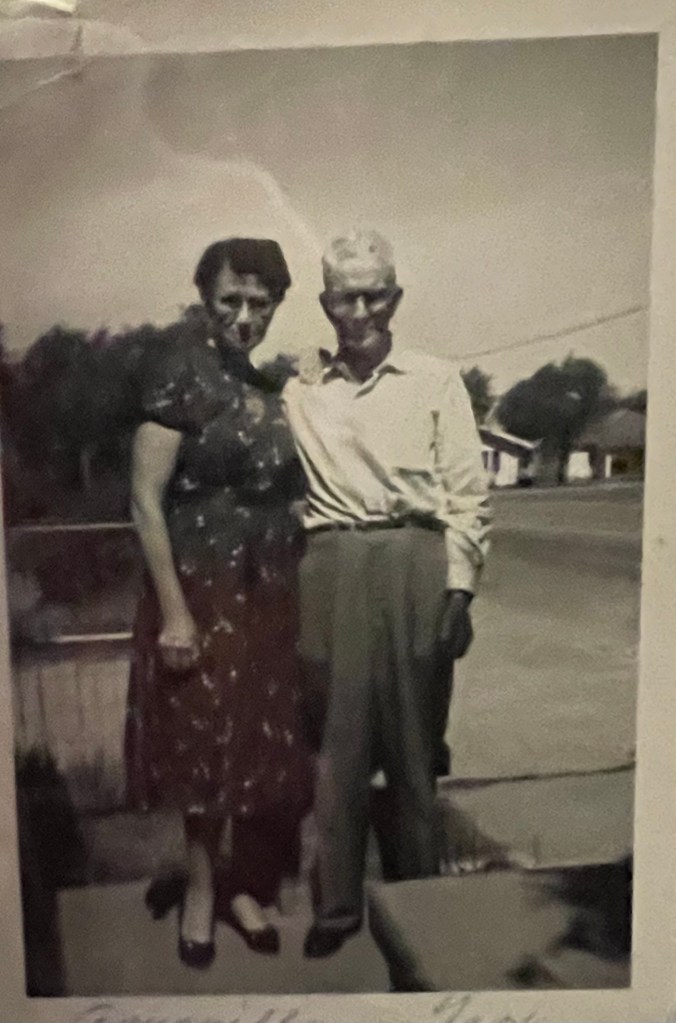
Bedtime with my grandmother always meant stories—real ones. One of my favorites was her early days with my grandfather when they lived on a farm in Illinois with his family. Not long after their wedding, my grandfather bartered with a neighbor, offering to harvest an acre of corn for a pig and a cow. The pig was young, newly weaned, and just learning to eat regular feed. The neighbor’s wife, however, was a bit unstable, though harmless—or so everyone thought.
One afternoon, while my grandfather and his brothers were out in the fields, my grandmother saw the neighbor’s wife marching down the road toward their home. In one hand, she held a knife, her face twisted in rage as she screamed, –––
“I want my pig!”
My grandmother was still young, not much older than a teenager, and alone in the house. Thinking quickly, she grabbed the little pig, rushed inside, and locked the door behind her. Huddling under the kitchen table, she threw a cloth over the pig, praying it would stay quiet. Outside, the woman’s footsteps grew closer, and her voice turned from angry to menacing.
“I’m going to kill you! I want my pig! Give me my pig!”
The door rattled under the force of the knife stabbing into it, and my grandmother could hear the woman’s curses, slurred with madness. Terrified, she clutched the pig tighter, knowing there was no way she’d give it up—not after my grandfather had worked so hard for it. The pig squirmed in her arms, and she whispered a desperate deal, promising it that if it stayed silent, it would never end up on the dinner table.
The minutes they stretched on like hours. It was sweltering in the kitchen, and my grandmother and the pig were sweaty. The woman outside kept up her assault, pounding on the door and shrieking threats. But the pig, to its credit, didn’t make a sound.
Finally, after an eternity, the woman’s husband happened by in his horse and buggy. He saw her crazed state and managed to coax her away, pulling her back home. My grandmother never saw her again, but for years afterward, she went out of her way to avoid passing that house. And as for the pig? It kept its end of the bargain—staying quiet—and lived to see another day, far from the breakfast table.
Hearing that story as a child gave me courage. Just as my grandmother had faced her fear, hiding under a table with a pig, I could face my challenges, too. Whenever I struggled with my speech, I thought of her and that pig. It gave me the strength to keep pushing forward, knowing that silence—and resilience—could sometimes be the best defense.





















 benandsteve.com