“Buying Warner Bros: The GoFundMe Heard ’Round the World”

2–3 minutes

by Benjamin Groff II – this is a fictional story. It was created by the space in my head. In this space, various ideas loom when I read news articles. This makes them more enjoyable.


A GOFUNDME to buy Warner Brothers?

It started as a joke. It was one of those offhand remarks tossed out online. You’ve had just enough coffee and cable-news frustration to believe you do better than a billion-dollar studio.

“Why don’t we just buy Warner Bros.?” I said. “We’ll start a GoFundMe.”

Within minutes, the idea took on a life of its own. A few shares, a few memes, and by nightfall, the campaign had raised $437.17 — most of it from people who thought they were donating to rescue Bugs Bunny.

Of course, the real Warner Bros. — now a corporate hydra known as Warner Bros. Discovery — is valued somewhere north of $20 billion, give or take a Batman sequel. That means we’d need approximately 500 million people donating $40 each to make an offer. A few folks online said that it was doable “if we all skipped Starbucks for a month.”

I’m not saying I was confident, but I did start designing logos: “People’s Pictures Presents…” and “A Groff–Swint Production.” I figured we’d restore Saturday morning cartoons. We would bring back The Bugs Bunny/Road Runner Show. We should stop rebooting the same superhero franchise every six months.

Within days, the comments on the GoFundMe page turned into a movement. Someone pledged $10 and demanded we greenlight Smokey and the Bandit 2: The Electric Pontiac. Another offered $25 “if y’all promise to fire whoever keeps canceling good shows after one season.”

The campaign hit $3,000. Then I got my first call from a lawyer. Apparently, corporate takeovers by crowdfunding are “not standard procedure.” I told him, “Neither is releasing Space Jam 2, but that didn’t stop you.”

Before long, our story went viral. CNN called it “the most optimistic hostile takeover in entertainment history.” One late-night host joked that Americans had finally united. They did not unite to choose a president. Instead, they united to save Looney Tunes.

We never got close to $20 billion. We didn’t even reach the amount needed for one Warner Bros. parking pass. But something magical happened. Fans from around the world flooded the comments. They shared memories of Saturday morning cereal and cartoons that made them laugh before school. For a moment, it wasn’t about money. It was about taking back a piece of joy that corporations can’t own.

So no, we didn’t buy Warner Bros. But in a way, we did something better. We reminded the world who really owns the stories. They are owned by the people who remember them.

As for me, I left the GoFundMe page up. In case Elon or Oprah feels nostalgic.

Still I have a question. If Fans Owned Hollywood — What Would Change First?


By Benjamin GroffMedia© | benandsteve.com | ©2025 

🎬 The Emperor of the North (1973)

By Benjamin GroffMedia© | benandsteve.com | ©2025 

2–3 minutes

Original title: Emperor of the North Pole

Running time: 1h :58m Rating: PG Genre: Period Drama / Thriller

Director: Robert Aldrich Writers: Christopher Knopf, inspired by the works of Jack London

A Ride Through the Great Depression — and Through Human Grit

The film is set in 1933. The Emperor of the North takes place against the backdrop of the Great Depression. During this time, the rails served as a lifeline for the desperate. They also became a battlefield for survival. Ernest Borgnine plays Shack. He is a brutal railroad conductor. Shack rules his train—the Number 19—with an iron fist and a hammer to match. His sworn enemy is the legendary hobo A No. 1, portrayed by Lee Marvin. A No. 1 rides the rails with the confidence of a man. He is cunning and refuses to be beaten by either poverty or authority.

The story becomes a symbolic duel between two men: the enforcer of order and the champion of freedom. Their rivalry becomes a metaphor for a country divided. Some cling to what little control they have. Others have lost everything but their pride.

A Director Who Keeps the Train on Track

Director Robert Aldrich (The Dirty DozenWhatever Happened to Baby Jane?) gives the film a muscular rhythm—every whistle blast and rattling wheel pulse with tension. When you think the film will slow, Aldrich revs it up with a fight. He adds a chase or introduces a moment of quiet resolve. His pacing keeps Emperor of the North from ever running off the rails. It balances moments of raw brutality with haunting glimpses of camaraderie among the downtrodden.

A Cast as Strong as Steel

Lee Marvin and Ernest Borgnine headline a powerhouse ensemble. The cast also includes a young Keith Carradine as Cigarette. He plays the eager, inexperienced hobo who idolizes A No. 1 but still has much to learn about survival and respect. The supporting cast, featuring Malcolm Atterbury, Simon Oakland, Sid Haig, Matt Clark, Elisha Cook Jr., and others, adds authenticity to the Depression-era world. Each actor feels carved from the same rough wood as the era itself—grimy, determined, and vividly alive.

A Story About Class, Pride, and the Price of Survival

Though marketed as an adventure, the movie is a study in pride and power. Shack’s tyranny is born out of fear and obsession; A No. 1’s rebellion comes from principle. The screenplay is inspired by Jack London’s tales of survival and the human spirit. It weaves geography and movement into a dance. This dance stretches across boxcars, over bridges, and into the soul of a broken nation.

“Only one man rides the rails — the other rules them.”

By the film’s climax, we’re left asking who truly wins. Is it the man who guards the system, or the man who defies it? Both emerge scarred by the journey. That’s the real message of Emperor of the North. Survival during desperate times demands both strength and sacrifice.

Verdict: ★★★★☆

A rugged, violent, and beautifully shot Depression-era thriller. Borgnine and Marvin deliver performances as fierce as the clanging of the rails themselves. It’s a story about pride and power. It also explores the peril of trying to be “Emperor” when the world has nothing left to give.


By Benjamin GroffMedia© | benandsteve.com | ©2025 

The Show Must Go ON! Miss Ethel Waters Leads First-Ever Screen Sing-Along

1–2 minutes

🎬 MEMORIES FROM MEMORY LANE — “ON WITH THE SHOW!” STRIKES A NEW NOTE 🎶
From Our Entertainment Desk — May 29, 1929

Ladies and gentlemen, the talkies have gone and done it again! Moving pictures with sound became a reality on August 6th, 1926. Just three short years later, Warner Bros. has given the public something new to hum about—literally.

This week, cinema-goers were treated to On with the Show!—a Technicolor extravaganza. It boasted the peerless pipes of Miss Ethel Waters. She delivered the lilting tune Am I Blue with such warmth that even the ushers were swooning. But here’s the rub: for the first time in motion picture history, audiences were invited to sing along!

That’s right, folks—words flashed upon the screen as Miss Waters crooned, urging patrons to join in from their seats. And join they did! Voices rang out from the front row to the peanut gallery. Some were as sweet as a songbird. Others were a touch off-key. All were in the spirit of merriment.

Picture it—gentlemen in their finest straw boaters. Ladies fanning themselves in the glow of the projector. Everyone is swept up in the chorus together. Why, one might call it the first karaoke moment in show business history. We’ve yet to invent such a word!

If this is the future of the pictures, we say—bring on the music! After all, the best part of a song is not just hearing it… it’s singing it together.

Remembering Gordon Faith: A Legacy in Acting and Voice Coaching

Benjamin GroffMedia© | benandsteve.com | 2025 Truth Endures©

1–2 minutes

Gordan Faith
Gordon Faith

Gordon Faith, a distinguished actor and voice coach, has passed away at 94 in Tyne, England. Gordon was born in 1931. His passion for the performing arts led him to a successful career on stage and screen. He also held a respected position as an educator in voice and speech.​

Gordon’s acting career spanned several decades, with notable performances in London’s West End productions. 

He appeared as a Neighbor in “Bye Bye Birdie” in 1961. He portrayed the Cantor in “Bar Mitzvah Boy” in 1978.  His television credits were extensive. He took roles in “Doctor Who,” “The Liver Birds,” and “War and Peace.” He also acted in “When the Boat Comes In,” “Z Cars,” “Crossroads,” and “Colditz.” ​

Beyond his acting accomplishments, Gordon was deeply committed to the art of voice and speech. He studied under Cicely Berry. She was the esteemed voice coach for the Royal Shakespeare Company. He furthered his skills with phonetics specialist Greta Colson. Gordon shared his knowledge through teaching positions at several institutions. These included the Guildford School of Acting, the Webber Douglas Academy, Rose Bruford College, and Mountview Drama School. He was Head of Voice at the London Academy of Performing Arts and London’s Method Studio. 

Gordon’s dedication to voice coaching extended to private clients. He offered guidance in interview techniques, vocal projection, elocution, and stage confidence. His students included aspiring actors, business professionals, and individuals seeking to enhance their communication skills.

Colleagues and students remember Gordon for his exceptional ability to convey the importance of bodily support in voice production. Actress and playwright Naomi Willis remarked,

“Gordon is brilliant at conveying how every part of the body must support the voice for it to be strong.” 

Gordon Faith’s legacy in the performing arts is invaluable. Those who had the privilege of learning from him will cherish his influence in voice coaching communities. Those who worked with him will also hold his influence dear.​

Lessons from Gene Hackman’s Powerful Characters

GROFF MEDIA 2024© TRUTH ENDURES IMDBPRO

Presented by benandsteve.com By: Benjamin Groff II©s

2–3 minutes

Late-Night Lessons with Gene Hackman

Staying up late on a Saturday night was a rare privilege. My parents were strict about bedtime but sometimes let me stretch the rules on weekends. That night, I curled up on the living room carpet, my chin propped up on my hands. I stared wide-eyed at the glow of our old television. The movie was Bonnie and Clyde, and it was my first time seeing Gene Hackman.

Left – Gene Hackman as Buck Barrow. Right – Warren Beatty as Clyde.

He portrayed Buck Barrow, Clyde’s older brother—loud, reckless, and desperate. His movements and voice, cracked with both joy and fear, captivated me. He wasn’t just a character. He was a man caught between love and loyalty. He wavered between the thrill of rebellion and the weight of consequence. Despite the inevitable doom of the Barrow gang, Buck was more than a criminal. He was a flawed person yet strangely likable.

The film stuck with me. It made me wonder where the line between right and wrong sits. Was it drawn in law books or people’s choices when they had no good options? I didn’t have answers, but I knew I wanted to understand.

Right – Nathan Lane. Left – Gene Hackman

Years later, another late-night movie changed something in me. This time, I was older—long out of high school, I think—and the film was The Birdcage. The movie is a comedy about a gay couple who pretend to be straight for a conservative family. It challenged societal norms and expectations. I hadn’t planned to watch it but was hooked when I saw Robin Williams and Nathan Lane. 

And then there he was again. Gene Hackman appeared this time as a conservative senator. He was trapped in the most absurd, hilarious, and strangely heartfelt situation.

I watched him stumble through a world he didn’t understand, forced to confront something outside his comfort zone. His discomfort was funny. Beneath it, there was something tangible. He clung to the rules he’d built his life around. He struggled with the idea that maybe, just maybe, he was wrong.

By the time the credits rolled, a profound shift had occurred within me. Bonnie and Clyde sparked my curiosity about the limits of the law—who writes the rules, follows them, and breaks them? The Birdcage had prompted a more personal question. It asked who I was and whether I dared live outside the expectations of others. These films, through the characters portrayed by Gene Hackman, ignited a journey of self-discovery and reflection.

In those movies, Gene Hackman embodied two distinct characters. Buck Barrow laughed in the face of fate, and Senator Keeley was trapped in his rigid beliefs. Yet, in both roles, he was undeniably human—flawed, confused, and trying. His characters were not just roles but mirrors reflecting the complexities of the human condition.

And maybe so was I.

Childhood Memories and Roberta Flack’s Influence

GROFF MEDIA 2024© TRUTH ENDURES IMDBPRO

Presented by benandsteve.com By: Benjamin Groff II©s

2–3 minutes

The First Time I Ever Saw Your Face, It Was Killing Me Softly

I was between six and eight years old. That was the first time I heard The First Time I Saw Your Face. I also heard Killing Me Softly with His Song for the first time then. My oldest sister, Julie, adored those songs. She was taking piano lessons at that time. She often attempted to play them. Her fingers hesitantly found their way across the keys.

I still remember the old upright piano my parents got for her from a family friend. It was massive and heavy as a full-grown ox. My brothers struggled to carry it to the front wall of our living room. That’s where it stayed for years. Some of the keys stuck, while others refused to make a sound. But a piano tuner visited us. Afterward, the old instrument came to life. It was ready to echo through the house with Julie’s music.

Those long summer days when school was out were filled with Roberta Flack’s voice drifting through our home. Julie played her albums endlessly, the lyrics weaving into my young mind. I remember watching Play Misty for Me. It was my first real brush with suspense. I was more worried about Roberta Flack than I was about Clint Eastwood’s character. My parents had to reassure me that it was just a movie and that no one was in danger.

The First Time I Saw Your Face became inseparable from that film in my memory. In the same way, Killing Me Softly with His Song later found its way into About a Boy. I saw that one at the old Caddo Theater on Main Street in Binger, Oklahoma. My parents never let Julie go to the movies alone, so I was always sent as her reluctant chaperon. At the time, I was too small to protect her from anything. Still, I suppose my presence was enough to keep her out of trouble. At least that’s what my parents hoped.

All these years later, those songs still surface in my mind, uninvited but always welcome. They sneak in when I try to fall asleep while studying and when I need to concentrate. They echo my childhood memories. They replay in the corners of my mind. They are tethered to the days when Julie sat at that old upright piano. She tried to master the melodies.

And for that, I owe it all to Roberta Flack. Shall she rest in peace.

Nostalgia and Popcorn: A Journey Through Memories

GROFF MEDIA 2024© TRUTH ENDURES IMDBPRO

Presented by benandsteve.com By: Benjamin Groff II©s

1–2 minutes

The Smell of Popcorn

Daniel stepped into the old movie theater, greeted by the warm, buttery aroma of freshly popped popcorn. It was the same scent from childhood when he remembered Saturday matinees with his father. His fingers were sticky from too much caramel corn. He heard the comforting rustle of a paper bag in his lap.

Tonight, the theater was nearly empty. A black-and-white classic was playing, something from Daniel’s father’s era. Daniel barely glanced at the screen. As he moved to the concession stand, the current blurred with the past in his mind.

“Large popcorn, extra butter,”

he said out of habit.

The teenage worker scooped the golden kernels into a striped bag, the scent thick and intoxicating. The warm, buttery aroma enveloped Daniel, transporting him back in time. He inhaled deeply. For a moment, he was seven years old again. He held his father’s hand as they walked down the carpeted aisles. They found their usual seats in the middle row.

“You always gotta have popcorn, kid,”

his father had said, grinning.

“It’s part of the experience.”

Daniel took his seat and set the bag beside him. His father should have been sitting there, too. The empty chair, a stark reminder of his absence, felt heavier than it should.

The smell of popcorn filled the air, wrapping around him like a familiar embrace. He closed his eyes, listening to the distant crackle of the projector. He almost heard his father’s voice, whispering about the film’s history like Daniel always did.

Daniel reached into the bag with a soft smile and tossed a handful of popcorn into his mouth. The taste was salty and warm, each kernel bursting with flavor. The theater didn’t feel so empty for the first time in years.

Star trek – Space The Final Frontier – A Five Year Mission – Bonds That Did And Didn’t Last A Lifetime

Reposted By: Benjamin Groff© Groff Media 2024© Truth Endures

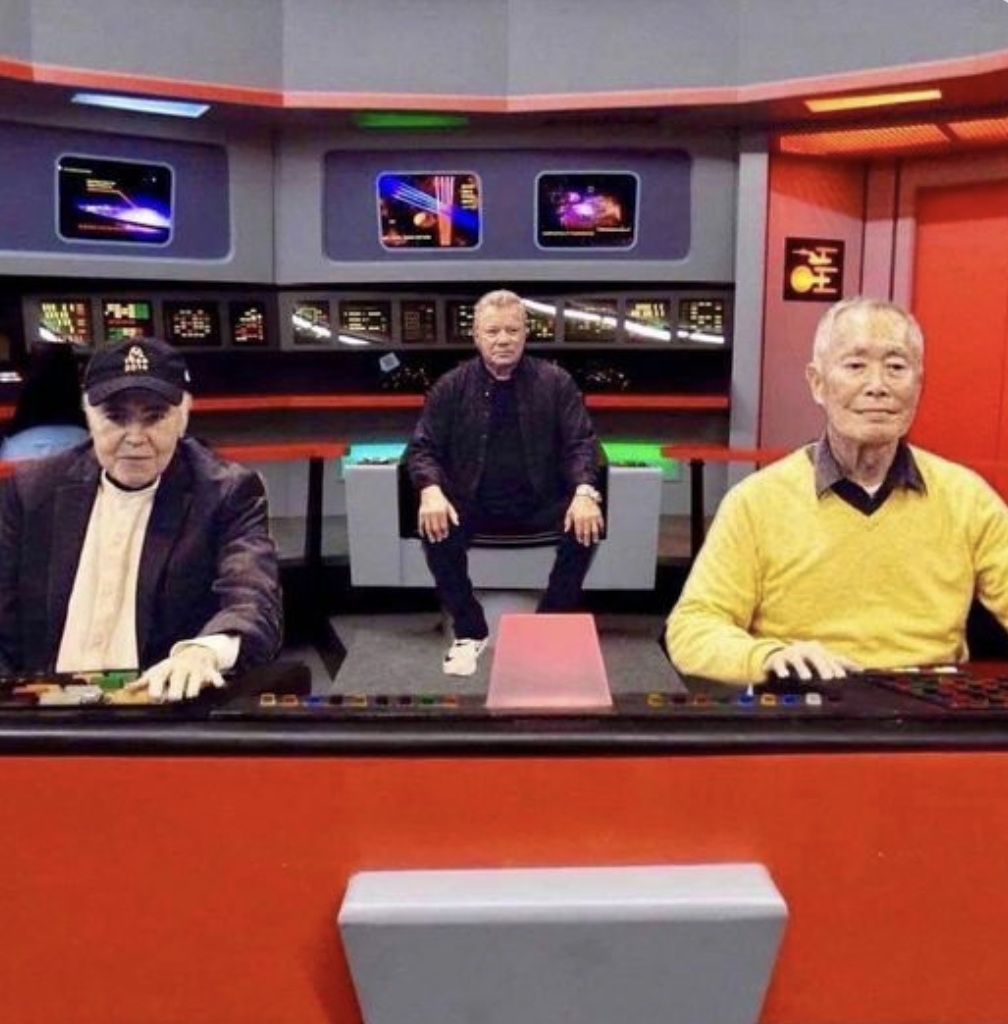
In the storied annals of the Star Trek universe, what began as a television series in the 1960s blossomed into a cultural phenomenon, giving birth to a vision of a harmonious future that fans continue to embrace. Behind the scenes, however, the camaraderie portrayed on screen did not always extend to real life. The tensions between certain cast members, notably William Shatner (Captain Kirk) and George Takei (Hikaru Sulu), became a topic of public interest, casting a shadow over the show’s legacy.

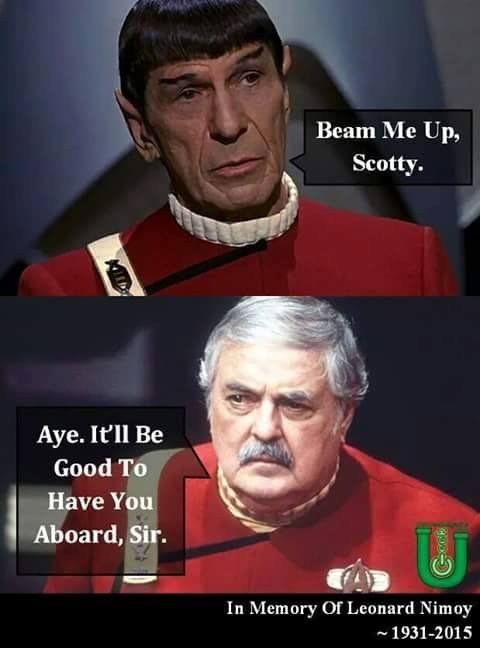
Though these actors became involved in personal feuds for decades, their occasional joint appearances remain momentous for fans. Alongside Walter Koenig, who portrayed Pavel Chekov, these three actors are the last surviving members of the original cast, each representing a connection to the show’s storied past. Koenig, notably, has managed to stay above the fray, providing a calm contrast to his costars’ more public disagreements.

A particularly memorable gathering took place at the 2016 Destination: Star Trek Convention in Birmingham, England. Here, a faithful recreation of the Enterprise Bridge set the stage for a rare photo featuring Shatner, Takei, and Koenig. Unlike what some may have assumed, this gathering was going to be a gathering of friends celebrating their accomplished successes, which created such longevity. Instead, it was a simple yet significant moment—a testament to the enduring bond, however complicated, between them.

For fans, this image was a bittersweet reminder of a time when the entire cast of the original series still walked among us. With Nichelle Nichols (Uhura) still alive at the time, the photo symbolized the resilience of these iconic figures and the passage of time. It was a moment captured not as an epitaph but as a celebration of survival, legacy, and the stories that continue to bring joy to generations.

As the years pass and opportunities for such reunions grow less likely, this photograph—and the event it commemorates—becomes even more meaningful. While the on-screen unity may not always have reflected real-life relationships, the lasting impact of Star Trek remains undeniable. Even with its complexities, the shared history of these actors continues to evoke nostalgia and appreciation for the universe they helped to create.

The World Of One

A Story By Benjamin Groff© Groff Media 2024© Truth Endures

Tom Richardson awoke one ordinary morning with an extraordinary conviction: he was the sole individual of significance. He did not consider himself to be isolated—others still surrounded him. However, in his perception, they were merely silhouettes, existing solely to fulfill his desires, frustrations, and caprices. The needs, emotions, and experiences of all others were simply ambient noise, inconsequential to the grand narrative of his existence. In this self-centered realm, Tom stood as the sole inhabitant, a solitary monarch in a realm of his own creation.

Tom was entitled, cutting to the front of lines, talking over people in meetings, and driving through red lights without hesitation. He believed the world should move at his pace, bulldozing through daily interactions with unchecked arrogance.

At work, Tom’s behavior was incredibly disruptive. His coworkers noticed how he monopolized conversations during meetings, often interrupting others and steering the discussions towards his own agenda. He frequently dismissed ideas he did not like, making it challenging for his colleagues to express their opinions freely. Additionally, Tom had a habit of taking credit for work he had not done, which created a toxic environment of mistrust and resentment among the team. His colleague Melissa, in particular, had spent months pouring her energy and creativity into a project, only to watch Tom take the spotlight during the presentation without acknowledging her contributions. Her face burned with frustration and disappointment, but Tom was already basking in the praise, completely unaware—or uncaring—of the hurt he had caused. As a result of his actions, the morale of the team suffered, productivity decreased, and valuable talent began seeking opportunities elsewhere. The tangible consequences of Tom’s behavior were felt deeply by those around him, and the weight of his actions continued to impact the work environment.

  • Outside the office, Tom’s interactions were just as callous. In a crowded coffee shop, he snapped at the barista for taking too long with his order. When the woman in front of him politely asked if she could move ahead to grab her drink, Tom scoffed and said, “Wait your turn, like the rest of us.” It never occurred to him that her child was crying in the car outside or that her day might unravel.

In relationships, Tom’s selfishness is all-consuming. His girlfriend, Kate, was initially patient, excusing his behavior as stress. However, as time passed, she realized that Tom’s wants and needs dictated every conversation, every plan, and every moment they shared.

“Can we ever do something I want?”

she asked one evening. Tom shrugged, dismissing her words as if they were background noise.

“It is not that important,”

he replied, flipping through the TV channels as she sat beside him, feeling smaller every second.

The world began to push back.

  • At work, Melissa and other colleagues stopped inviting Tom to meetings. His input was more a hindrance than a help. Projects moved more smoothly without his constant interruptions. The team thrived in his absence, but Tom remained blissfully unaware, believing that his exclusion was a sign of jealousy or resentment, never his behavior.
  • On the streets, strangers grew cold. People who once offered pleasantries started to avoid him. The barista, usually polite despite his rudeness, began greeting him with silent, stony indifference. Tom, of course, assumed they were having bad days.
  • “Not my problem,” ––– he muttered each time.

At home, Kate left. Her final words echoed through their now-empty apartment:

“You do not see me, Tom. Tom, never will you see me!.”

Tom stood in the doorway, confused and angry, unable to comprehend why she was so upset. As far as he was concerned, everything had been fine—because everything had always been about him.

However, despite the growing distance between him and the world, Tom did not connect the dots. The problem, as far as he was concerned, was not him. It was everyone else. Why didn’t people understand that he was in charge of his life? Why didn’t they see that his needs were urgent, his time valuable, his presence essential? His self-centeredness was creating a chasm between him and the rest of the world, a gap that was widening with each passing day.

The final straw came one quiet evening. Tom sat in a restaurant, dining alone —–– a common occurrence now. He waved the waiter over impatiently, complaining about the wait for his meal. The waiter, a man in his late fifties with graying hair and tired eyes, looked at Tom and sighed.

“You are not the only person in the world, you know,” the waiter said softly, his voice edged with exhaustion. “You act like we are all here just for you, but we are not.”

Tom bristled at the remark, ready to retort with something biting to remind the man of his place. However, the waiter’s words hung in the air momentarily, their truth unsettled. The weight of his words, heavy with truth, began to sink in, stirring something deep within Tom.

For the first time in a long time, Tom looked around. The restaurant was filled with people—couples sharing meals, families laughing, servers rushing between tables. Each of them had their own stories, struggles, and lives. They were not shadows. They were not here for him. They were living their own lives, just as vivid and real as his.

The weight of it settled on Tom like a cold wave. For years, he had moved through the world as if it were his stage, oblivious to the people around him. He had interrupted their lives, stepped over their feelings, and demanded their attention without a second thought. He had bulldozed his way through, never considering the damage he left behind.

And then, in a moment that would change his life, he saw it. For the first time, Tom indeed saw the world around him, not as a stage for his performance, but as a rich tapestry of lives, each as important as his own.

Tom left the restaurant without finishing his meal, the waiter’s words echoing in his mind. As he walked down the street, past people he had never noticed, a strange feeling stirred in him—something akin to humility, though he would not have called it that. It was a shift in his attitude and his perception of the world.

The world did not revolve around him—it never had. Perhaps, for the first time in his life, Tom realized just how much he had lost because of it.

As just as he did, not expecting for it to happen, Jesus Christ popped in and said he is going to vote for Kamala Harris!

The End

Riverton Police: A Night in the Life of Detectives Jake and Sam

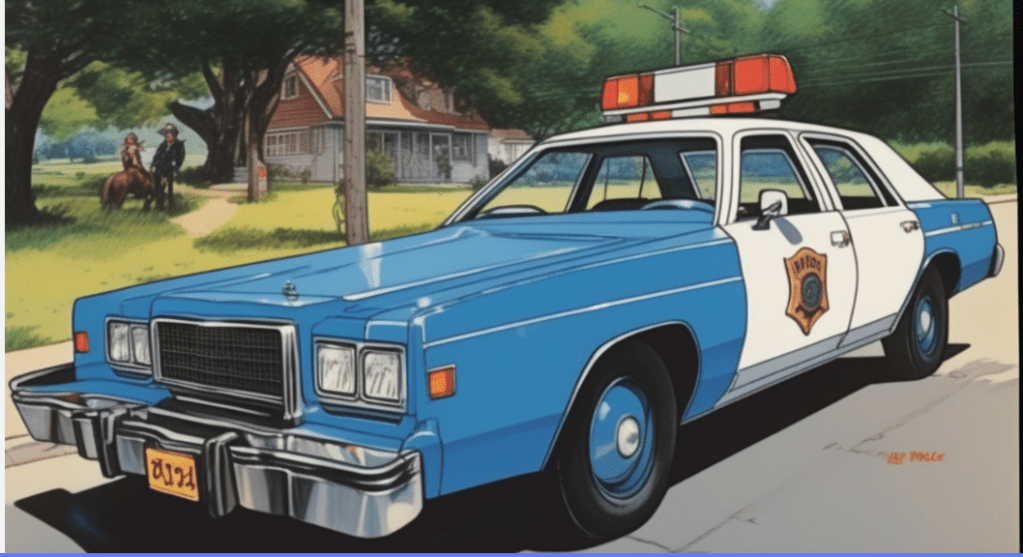
The city of Riverton never slept, nor did Detectives Jake Harris and Sam O’Reilly. Partners for over a decade roamed the nocturnal streets with the kind of synergy only best friends could muster. Their squad car, an unremarkable blue-and-white cruiser, was a beacon of hope for some and a symbol of fear for others.

Jake, with his gruff exterior and piercing blue eyes, was the kind of cop who could read a crime scene like a book. Sam, a lean figure with a quick wit and a knack for defusing tense situations, complemented Jake perfectly. Together, they led the department in felony arrests, arriving at calls faster than anyone else and building relationships with the community that others could only dream of.

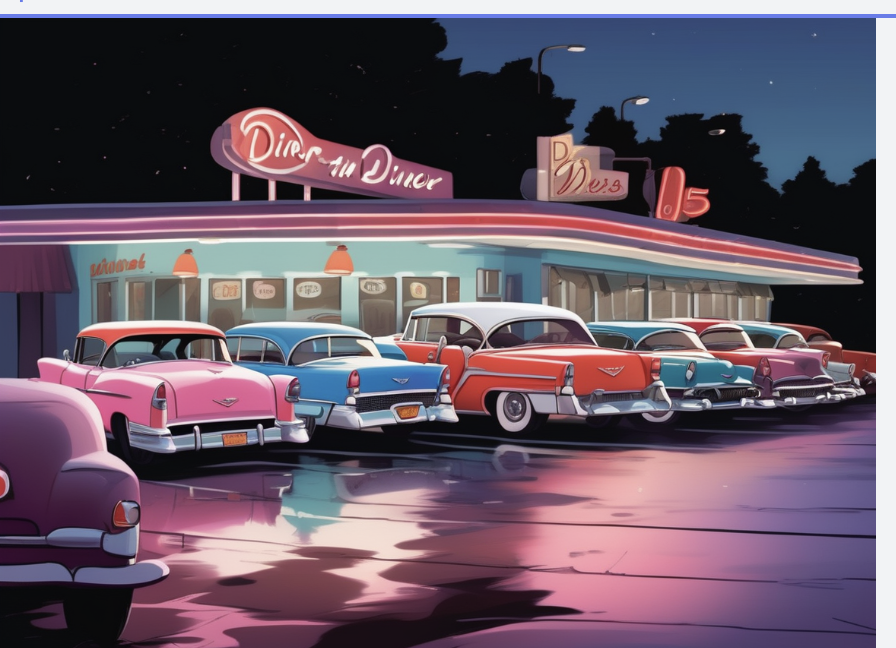
One brisk autumn night, their radio crackled to life with a call that made their hearts race: an armed robbery in progress at the 24-hour diner on 5th and Maple. Without a word, Jake hit the lights and sirens, and they sped through the dimly lit streets. They arrived in just under three minutes, a record even for them.

The diner was eerily quiet as they approached, save for the distant hum of neon lights. Inside, a masked man brandished a gun, demanding cash from the terrified cashier. Jake motioned for Sam to flank the back entrance while he took the front.

Jake entered slowly, his voice calm but authoritative. ––––

“Riverton PD, drop the weapon and come out with your hands up.”

The gunman whipped around, eyes wide with panic.

From the rear, Sam’s voice cut through the tension.

“No, you won’t. You don’t want to hurt anyone. Put the gun down, and we can talk.”

The gunman’s grip on the weapon faltered. In that split second, Jake lunged forward, disarming him with a swift, practiced motion. Sam was at his side instantly, cuffing the man and guiding him to the squad car.

As they processed the scene, the cashier, a young woman named Maria, approached them with tears in her eyes.

“Thank you. I don’t know what would’ve happened if you hadn’t come.”

Jake gave her a reassuring nod. “Just doing our job, ma’am.”

The rest of the night was a blur of paperwork and patrols. But their most memorable interaction came just before dawn. While cruising through a quieter part of town, they spotted a boy sitting alone on a bench, clutching a backpack to his chest. They pulled over, and Sam approached him gently.

“Hey there, buddy. Everything alright?”

The boy, who couldn’t have been more than ten, looked up with tear-streaked cheeks.

“I ran away from home. My parents are always fighting.”

Sam sat next to him, listening with the patience of a father and says –––

“I get it, kid. Sometimes, home can be tough. But running away won’t solve anything. Let’s get you back home and see if we can help sort things out.”

Jake contacted the boy’s parents while Sam spoke with him. The sun was peeking over the horizon when they returned the boy home. Now more worried than angry, the parents hugged their son tightly and thanked the officers.

As they drove back to the station, Jake glanced over at Sam, sighs then says –––

“Another night, another set of stories, huh?”

Sam chuckled. “Wouldn’t have it any other way.”

In Riverton, one could become a legend in the shadows, and for Jake and Sam, every night was another chance to protect and serve, forging connections and fighting crime in ways that others could only admire.

QUESTIONING AND REEVALUATING LONG-HELD BELIEFS AND ENCOURAGING DIALOGUE, UNDERSTANDING AND ACCEPTANCE?

The documentary “1946: The Mistranslation That Shifted a Culture” delves into a controversial and thought-provoking topic that challenges conventional beliefs about the Bible and homosexuality. Directed by Sharon “Rocky” Roggio, the film examines the claim that the Bible originally did not mention homosexuality and that references to it were added due to mistranslation and misunderstanding of ancient Greek terms.

The film highlights the work of Christian scholars who delve into forgotten archives at Yale University to uncover the origins of this mistranslation. It argues that conservative Christians began to propagate this mistranslation in the 1970s to scapegoat the LGBTQ+ community and oppose their growing liberation movement.

Roggio, who identifies as a lesbian and is the daughter of an evangelical minister, engages in dialogues with her father throughout the film, attempting to find common ground and challenge his beliefs about homosexuality being a sin. This personal narrative adds depth and emotion to the documentary, as it explores the complexities of faith, identity, and acceptance within a family divided by differing views on sexuality and religion.

The documentary sheds light on the potential harm caused by misunderstandings and misinterpretations of religious texts, highlighting the real-world consequences faced by LGBTQ+ individuals who have been marginalized, discriminated against, and even persecuted due to these beliefs.

Overall, “1946: The Mistranslation That Shifted a Culture” offers a compelling perspective on a contentious issue, urging viewers to question and reevaluate long-held beliefs and encouraging dialogue, understanding, and acceptance.


Photo by Alexander Grey on Pexels.com

Gay, Lesbian, Bisexual and Transgender National Hotline 1-888-843-4564. “The Gay, Lesbian, Bisexual and Transgender National Hotline provide telephone and email peer-counseling, as well as factual information and local resources for cities and towns across the United States.