The World Of One

A Story By Benjamin Groff© Groff Media 2024© Truth Endures

Tom Richardson awoke one ordinary morning with an extraordinary conviction: he was the sole individual of significance. He did not consider himself to be isolated—others still surrounded him. However, in his perception, they were merely silhouettes, existing solely to fulfill his desires, frustrations, and caprices. The needs, emotions, and experiences of all others were simply ambient noise, inconsequential to the grand narrative of his existence. In this self-centered realm, Tom stood as the sole inhabitant, a solitary monarch in a realm of his own creation.

Tom was entitled, cutting to the front of lines, talking over people in meetings, and driving through red lights without hesitation. He believed the world should move at his pace, bulldozing through daily interactions with unchecked arrogance.

At work, Tom’s behavior was incredibly disruptive. His coworkers noticed how he monopolized conversations during meetings, often interrupting others and steering the discussions towards his own agenda. He frequently dismissed ideas he did not like, making it challenging for his colleagues to express their opinions freely. Additionally, Tom had a habit of taking credit for work he had not done, which created a toxic environment of mistrust and resentment among the team. His colleague Melissa, in particular, had spent months pouring her energy and creativity into a project, only to watch Tom take the spotlight during the presentation without acknowledging her contributions. Her face burned with frustration and disappointment, but Tom was already basking in the praise, completely unaware—or uncaring—of the hurt he had caused. As a result of his actions, the morale of the team suffered, productivity decreased, and valuable talent began seeking opportunities elsewhere. The tangible consequences of Tom’s behavior were felt deeply by those around him, and the weight of his actions continued to impact the work environment.

  • Outside the office, Tom’s interactions were just as callous. In a crowded coffee shop, he snapped at the barista for taking too long with his order. When the woman in front of him politely asked if she could move ahead to grab her drink, Tom scoffed and said, “Wait your turn, like the rest of us.” It never occurred to him that her child was crying in the car outside or that her day might unravel.

In relationships, Tom’s selfishness is all-consuming. His girlfriend, Kate, was initially patient, excusing his behavior as stress. However, as time passed, she realized that Tom’s wants and needs dictated every conversation, every plan, and every moment they shared.

“Can we ever do something I want?”

she asked one evening. Tom shrugged, dismissing her words as if they were background noise.

“It is not that important,”

he replied, flipping through the TV channels as she sat beside him, feeling smaller every second.

The world began to push back.

  • At work, Melissa and other colleagues stopped inviting Tom to meetings. His input was more a hindrance than a help. Projects moved more smoothly without his constant interruptions. The team thrived in his absence, but Tom remained blissfully unaware, believing that his exclusion was a sign of jealousy or resentment, never his behavior.
  • On the streets, strangers grew cold. People who once offered pleasantries started to avoid him. The barista, usually polite despite his rudeness, began greeting him with silent, stony indifference. Tom, of course, assumed they were having bad days.
  • “Not my problem,” ––– he muttered each time.

At home, Kate left. Her final words echoed through their now-empty apartment:

“You do not see me, Tom. Tom, never will you see me!.”

Tom stood in the doorway, confused and angry, unable to comprehend why she was so upset. As far as he was concerned, everything had been fine—because everything had always been about him.

However, despite the growing distance between him and the world, Tom did not connect the dots. The problem, as far as he was concerned, was not him. It was everyone else. Why didn’t people understand that he was in charge of his life? Why didn’t they see that his needs were urgent, his time valuable, his presence essential? His self-centeredness was creating a chasm between him and the rest of the world, a gap that was widening with each passing day.

The final straw came one quiet evening. Tom sat in a restaurant, dining alone —–– a common occurrence now. He waved the waiter over impatiently, complaining about the wait for his meal. The waiter, a man in his late fifties with graying hair and tired eyes, looked at Tom and sighed.

“You are not the only person in the world, you know,” the waiter said softly, his voice edged with exhaustion. “You act like we are all here just for you, but we are not.”

Tom bristled at the remark, ready to retort with something biting to remind the man of his place. However, the waiter’s words hung in the air momentarily, their truth unsettled. The weight of his words, heavy with truth, began to sink in, stirring something deep within Tom.

For the first time in a long time, Tom looked around. The restaurant was filled with people—couples sharing meals, families laughing, servers rushing between tables. Each of them had their own stories, struggles, and lives. They were not shadows. They were not here for him. They were living their own lives, just as vivid and real as his.

The weight of it settled on Tom like a cold wave. For years, he had moved through the world as if it were his stage, oblivious to the people around him. He had interrupted their lives, stepped over their feelings, and demanded their attention without a second thought. He had bulldozed his way through, never considering the damage he left behind.

And then, in a moment that would change his life, he saw it. For the first time, Tom indeed saw the world around him, not as a stage for his performance, but as a rich tapestry of lives, each as important as his own.

Tom left the restaurant without finishing his meal, the waiter’s words echoing in his mind. As he walked down the street, past people he had never noticed, a strange feeling stirred in him—something akin to humility, though he would not have called it that. It was a shift in his attitude and his perception of the world.

The world did not revolve around him—it never had. Perhaps, for the first time in his life, Tom realized just how much he had lost because of it.

As just as he did, not expecting for it to happen, Jesus Christ popped in and said he is going to vote for Kamala Harris!

The End

Why Hasn’t Kamala Harris Delivered on Her Promises? It Is Simple -A Pip Squeak!

By: Benjamin Groff© Groff Media 2024© Truth Endures

The GOP, particularly their latest pick as Trump’s potential successor, keeps asking why Kamala Harris hasn’t accomplished everything she claims she’ll do if elected.

As Vice President, Harris’s role isn’t to set policy but to support the President’s mission. Over the past four years, that mission has centered on recovering from Trump’s administration’s chaos. Trump’s mishandling of the COVID-19 pandemic blindsided the nation, but despite these challenges, the Biden-Harris administration has worked tirelessly to put Americans back to work and rebuild neglected institutions.

It’s important to understand that any proposed initiatives by the President or Vice President require funding and legislation, which starts in the GOP-controlled House. Bipartisan cooperation is crucial, but the current House struggles to agree on leadership, let alone budgeting and legislation. The GOP’s track record in these areas is questionable at best. Blaming someone and then withholding their ability is classic GOP.

It is why many of Harris’s proposed measures are likely to gain traction during the first two years of her potential administration when a Democratic majority in both the Senate and House is more likely.

If critics want to question what Harris should have already accomplished, they should first focus on sponsoring and passing the necessary legislation. Only then can Harris take the steps needed to fulfill her promises.

The Campaign Flare That Saved the First Lady and the Candidate for President

A FICTIONAL Story By: Benjamin Groff© Groff Media 2024© Truth Endures

In a time of intense political enthusiasm, the nation’s largest city braced for the Democratic National Convention. The convention was monumental, drawing over 200,000 people, including fervent supporters, passionate protestors, and those harboring darker intentions. The city’s population swelled, and the number of people and calls for service pushed authorities’ abilities, as law enforcement officers from seven neighboring states were called to ensure the safety of all in attendance.

The Convention Management needed two massive arenas to accommodate the influx of attendees, all eager to witness the nomination of their party’s candidate. Security was tight, with officers meticulously screening everyone entering the venues. Despite the thorough checks, the atmosphere was tense; no one knew what might happen as the evening unfolded.

As the convention began, volunteers handed out bracelets and necklaces designed to light up in vibrant shades of blue and pink. These accessories, when activated, blinked with a strobe-like effect, adding to the electric atmosphere. However, as the lights flashed rapidly, the joy turned into panic. For some, the blinking lights triggered seizures, turning the arena into a scene of chaos as over five hundred attendees began convulsing.

The sudden medical emergency overwhelmed the official responders. But amid the turmoil, a few quick-thinking attendees with first responder training stepped in, helping to manage the situation. They guided others in assisting the stricken, and together, they stabilized the crisis without needing additional outside help.

Realizing the cause of the seizures, the speaker at the podium urged the crowd to switch their bracelets and necklaces to a steady glow or to turn them off altogether. As the crowd complied, the flashing lights faded, and calm returned to the arena.

But a new and more sinister threat emerged just as the situation seemed to be under control. An embittered and desperate opposing candidate had managed to slip into the venue through a back door. Claiming he had a scheduled meeting with his Democratic opponent, he bypassed security and found his way to a room intended for the candidate.

Unbeknownst to him, the candidate wasn’t there that evening. Instead, a former First Lady entered the room, unaware of the intruder’s presence. As she closed the door behind her, the man, believing he was facing his political rival, prepared to attack. But before he could strike, the former First Lady, trained in Krav Maga, swiftly neutralized him. In a matter of seconds, the would-be attacker was subdued, left crying, and defeated on the floor.

He didn’t know the incident was captured on a security camera, complete with audio. The footage revealed his violent intentions, his use of racist slurs, and his plan to kill who he thought was his opponent. The video also showed the failure of both his and her security teams to prevent the breach, highlighting the danger she faced.

Despite the overwhelming evidence, the authorities neither arrested nor questioned the intruder. Instead, the former First Lady, a Black woman, was detained and interrogated as if she were the aggressor. It wasn’t until the security footage was reviewed that the truth was undeniable: she had acted in self-defense against a deliberate attack.

A week later, authorities showed the video to the public. The opposing campaign scrambled to make excuses, suggesting that the former First Lady should have chosen a different dressing room and their candidate had every right to be where he was. But the damage was done. The public, especially the supporters of the former First Lady and her candidate, were galvanized. They were more determined than ever to prevent such evil from reaching the Oval Office.

Ultimately, what began as a night of political celebration became a defining moment in the campaign. One woman’s bravery, coupled with the quick thinking of ordinary citizens, may have saved her life and the nation’s future.

Who Is Tim Walz?

By: Heather Cox Richardson From Substack – Reposted By: Benjamin Groff© Groff Media 2024© Truth Endures

On August 6, 2024 Heather Cox Richardson wrote on Substack the following entry, it was to the point and told exactly what people should know about Tim Walz. He is a decent human being. Who has done a number of things in life. Some of those things came at making human decisions. Fallible to a point, he may be. Who isn’t? Heather’s writing begins next –––

Today Vice President Kamala Harris named her choice for her vice presidential running mate: Governor Tim Walz of Minnesota. Walz grew up in rural Nebraska. He enlisted in the Army National Guard when he was 17 and served for 24 years, retiring in 2005 as a command sergeant major, making him the highest-ranking enlisted soldier ever to serve in Congress, according to the House Committee on Veterans’ Affairs.  

He went to college with the educational benefits afforded him thanks to his service in the Army, and graduated from Chadron (Nebraska) State College. From 1989 to 1990, he taught at a high school in China, then became a social studies teacher in Alliance, Nebraska, where he met fellow teacher Gwen Whipple, who became his wife. They moved to Minnesota, where they both continued teaching and had two children, Hope and Gus, through IVF. 

Walz became the faculty advisor for the school’s gay-straight alliance organization at the same time that he coached the high-school football team from a 0–27 record to a state championship. The advisor “really needed to be the football coach, who was the soldier and was straight and was married,” Walz said in 2018. 

Walz ran for Congress in 2005 after some of his students were asked to leave a rally for George W. Bush because one of them had a sticker for Democratic presidential nominee John Kerry. Walz won and served in Congress for twelve years, sitting on the House Agriculture Committee, the Transportation and Infrastructure Committee, and the Committee on Veterans’ Affairs.

Voters elected Walz to the Minnesota state house in 2018, and in his second term they gave him a slim majority in the state legislature. With that support, Walz signed into law protections for abortion rights, supported gender-affirming care, and legalized the recreational use of marijuana. He signed into law gun safety legislation and protections for voting rights, and pushed for action to combat climate change and to promote renewable energy. 

Strong tax revenues and spending cuts gave the state a $17.6 billion surplus, and the Democrats under Walz used the money not to cut taxes, as Republicans wanted, but to invest in education, fund free breakfast and lunch for schoolchildren, make tuition free at the state’s public colleges for students whose families earned less than $80,000 a year, and invest in paid family and medical leave and health insurance coverage regardless of immigration status. 

While MAGA Republicans are already trying to define Walz as “far left,” his votes in Congress put him pretty squarely in the middle.  His work with Lieutenant Governor Peggy Flanagan to expand technology production and infrastructure funding in the state was rewarded in 2023, when Minnesota knocked Texas out of the top five states for business. The CNBC rating looked at 86 indicators in 10 categories, including the workforce, infrastructure, health, and business friendliness. 

Walz checks a number of boxes for the 2024 election, most notably that he hails from near the battleground states of Wisconsin, Michigan, and Pennsylvania and comes across as a normal, nice guy. He favors unions, workers’ rights, and a $15 minimum wage. He is also the person who coined the phrase that took away the dangerous overtones of today’s MAGA Republicans by dubbing them “weird.” As a student of his said: “In politics he’s good at calling out B.S. without getting nasty or too down in the dirt…. It’s the kind of common sense he showed as a coach: practical and kinda goofy.”

Walz is also a symbol of an important resetting of the Democratic Party. He has been unapologetic about his popular programs. On Sunday, July 28, when CNN’s Jake Tapper listed some of Walz’s policies and asked if they made Walz vulnerable to Trump calling him a “big government liberal,” Walz joked that he was, indeed, a “monster.” 

“Kids are eating and having full bellies so they can go learn, and women are making their own health care decisions, and we’re a top five business state, and we also rank in the top three of happiness…. The fact of the matter is,” where Democratic policies are implemented, “quality of life is higher, the economies are better…educational attainment is better. So yeah, my kids are going to eat here, and you’re going to have a chance to go to college, and you’re going to have an opportunity to live where we’re working on reducing carbon emissions. Oh, and by the way, you’re going to have personal incomes that are higher, and you’re going to have health insurance. So if that’s where they want to label me, I’m more than happy to take the label.” 

Right-wing reactionary politicians have claimed to represent ordinary Americans since the time of the passage of the Voting Rights Act—on August 6, 1965, exactly 59 years ago today—by insisting that a government that works for communities is a “socialist” plan to elevate undeserving women and racial, ethnic, and gender minorities at the expense of hardworking white men. 

Historically, though, rural America has quite often been the heart of the country’s progressive politics, and the Midwest has had a central place in that progressivism. Walz reintegrates that history with today’s Democratic Party. 

That reintegration has left the Republicans flatfooted. Trump and J.D. Vance expected to continue their posturing as champions of the common man, but on that front the credentials of a New York real estate developer who inherited millions of dollars and of a Yale-educated venture capitalist pale next to a Nebraska-born schoolteacher. Bryan Metzger, politics reporter at Business Insider, pointed out that J.D. Vance tried to hit Walz as a “San Francisco-style liberal,” but while Vance lived in San Francisco as a venture capitalist between 2013 and 2017, Walz went to San Francisco for the first time just last month. 

Head writer and producer of A Closer Look at Late Night with Seth Meyers Sal Gentile summed up Walz’s progressive politics and community vibe when he wrote on social media: “Tim Walz will expand free school lunches, raise the minimum wage, make it easier to unionize, fix your [carburetor], replace the old wiring in your basement, spray that wasp’s nest under the deck, install a new spring for your garage door and put a new chain on your lawnmower.” 

Vice President Harris had a very deep bench from which to choose a running mate, but her choice of Walz seems to have been widely popular. Representatives Alexandria Ocasio-Cortez of New York and Joe Manchin of West Virginia, who are usually on opposite sides of the party, both praised the choice, prompting Ocasio-Cortez to post: “Dems in disconcerting levels of array.” 

Harris and Walz held their first rally together tonight in Philadelphia, where Pennsylvania governor Josh Shapiro, who had been a top contender for the vice presidential slot, fired up the crowd. “Each of us has a responsibility to get off the sidelines, to get in the game, and to do our part,” he said. “Are you ready to do your part? Are you ready to form a more perfect union? Are you ready to build an America where no matter what you look like, where you come from, who you love, or who you pray to, that this will be a place for you? And are you ready to look the next president of the United States in the eye and say, ‘Hello, Madam President?’ I am too, so let’s get to work!”

Pennsylvania is a crucial state, and Shapiro issued a statement offering his “enthusiastic support” to the ticket. He pledged “to work to unite Pennsylvanians behind my friends Kamala Harris and Tim Walz and defeat Donald Trump.”

Political Mission Set In Fictional future Yet Sparks Of Reality Shines Through!

A Story By Benjamin H Groff© Groff Media Copyright 2024©

The tides of change swept through every street, home, and heart in the nation’s heart. It was an era marked by uncertainty and tension as a rising conservative movement began to reshape the very fabric of society. The once-balanced scales of politics now tipped heavily in favor of those who believed in tradition, order, and a return to what they called “the good old days.”

~
Emma Caldwell, a liberal activist and journalist, sat in her small apartment, the glow of her laptop illuminating her worried face. She had spent years fighting for progress—campaigning for equal rights, environmental protection, and social justice. But now, every headline seemed to bring another blow to the causes she held dear, intensifying the urgency of her mission.

~


The latest news was the most disturbing yet: a proposed amendment to the constitution that would severely restrict freedom of speech and assembly, effectively silencing dissent and opposition. Emma’s fingers flew across the keyboard as she typed out an article, her words mixing passion and desperation. She knew that getting the truth out was more important than ever.


Across town, in a grand office overlooking the city, Senator Marcus Reid, a leading figure in the conservative movement, reviewed the day’s agenda. He believed sincerely in his cause, convinced the country had lost its way in a maze of liberal policies and needed to return to its core values. To him, the changes were necessary, even if they were painful.


As the days passed, protests erupted across the nation. Streets filled with a sea of faces—young and old, united by a shared fear of losing their rights. Emma was among them, her camera capturing the raw emotions of the crowd. She interviewed people from all walks of life: the single mother worried about her children’s future, the college student anxious about the loss of academic freedom, the elderly couple who had fought for civil rights decades ago and now saw history repeating itself.


Despite the growing unrest, the conservative agenda pushed forward relentlessly. The lawmakers passed laws at a dizzying pace, each chipping away at the freedoms many had taken for granted. These laws included [specific laws], which directly affected [specific groups of people]. The country seemed to be spiraling into a new era of authoritarianism, and the hope that once burned brightly in the hearts of liberals began to dim.


Emma found herself at a crossroads. Her work was censored, and her voice was stifled by the very government she had once trusted to protect her freedoms. But she refused to give up. Gathering a small group of like-minded individuals, she formed an underground network dedicated to preserving and disseminating information. Their determination was a silent but powerful force, inspiring others with their unwavering resolve.


Senator Reid, now one of the most powerful men in the country, began to sense the growing resistance. He dismissed it at first, confident that his vision was the right path. However, as the underground movement gained momentum, Senator Reid realized that silencing dissent was more complex than passing laws. The human spirit, he discovered, was not so quickly subdued.
One evening, Emma received a message from an anonymous source—a high-ranking government official who had grown disillusioned with the conservative regime. The source provided her with classified documents detailing the administration’s plans to tighten their grip on power further.

These documents revealed [specific details], a dangerous revelation, but Emma knew it was the spark needed to ignite a more significant movement.


She leaked the documents to the public with the help of her network. The revelations shook the country, and the streets again filled with protesters. This time, their numbers were more significant, and their resolve was more robust, demonstrating the potential impact of collective action. The conservative government, facing unprecedented pressure, began to falter.


Senator Reid watched as the country he had tried to reshape slipped from his grasp. He had underestimated the people’s power and ability to unite and fight for their rights. As the conservative movement began to crumble, a new era of political awakening dawned.


Emma stood on the capitol’s steps, her camera in hand, capturing the momentous events unfolding before her. She knew the battle was far from over, but she felt a glimmer of hope for the first time in a long while. The changing times had tested the nation’s spirit, but in the end, its people’s resilience and determination prevailed.

The Last President: A Tale of Democracy’s Demise

The Last President

It was the end of October, and the nation seemed to be in a state of distraction, unaware of the critical choice before them. Two men were vying for the highest office in the land, each bringing with him a starkly different vision for the future. The contrast between their characters and intentions was as clear as day, yet the people’s attention was elsewhere. The urgency of the situation was palpable, but the people were yet to realize the gravity of their decision.

The first candidate was an elder statesman, a man whose career in public service spanned decades. He had held nearly every elected position imaginable, from local government to the halls of Congress. His dedication to the country was unwavering, a testament to his deep-seated patriotism. His life’s work, a reflection of his commitment to protecting the essence of the country he loved, was a beacon of trust and reliability for the nation.

In stark contrast stood the second candidate, a man whose motives were as transparent as they were troubling. Self-serving and careless, he made no secret of his intentions. He openly declared that, if elected, he would rule with an iron fist, punishing his enemies and consolidating power from day one. His rhetoric was filled with hate, yet the people, weary of the same old political games, dismissed his threats as mere bluster. This transparency, however, should have been a warning sign, a call for vigilance in the face of such extremism.

The campaign’s intensity grew as the days turned into weeks, yet the nation’s focus remained elsewhere. Perhaps it was the fatigue of constant political turmoil or the distractions of everyday life, but the electorate seemed indifferent, almost numb. They laughed off the second candidate’s tirades, convinced that such extremism could never take root in their democracy.

Election day arrived, and with it, a shocking outcome. The self-serving, hateful man had won. The people who had laughed at his threats now watched in stunned silence as he took the oath of office. His promises of dictatorship were not idle threats; they were his blueprint for governance, a reality that had suddenly come to pass. This was not just the result of one man’s ambition, but a collective decision made by the electorate.

From the very first day, the new President began to reshape the government to suit his whims. He targeted his opponents with a vengeance, using the full power of his office to silence dissent. Civil liberties and democratic institutions were eroded and undermined. The press, once the people’s watchdog, was muzzled. The judiciary, a bulwark against tyranny, was co-opted. His actions, such as [specific actions], tightened his authoritarian grip and spread fear like wildfire.

The oldest-ever President, now retired, watched in horror as the nation he had served so faithfully became dismantled piece by piece. His warnings had gone unheeded, his life’s work seemingly undone in months. Once so dismissive of the threat, the people found themselves powerless to stop the descent into chaos. The retired President, too, felt the weight of his powerlessness, a stark contrast to his years of service and influence.

It was the end of the nation, an Ending which the country could have avoided.nation. An Ending that could have been avoided.

Biden’s Victory Speech: Uniting America for Progress | Biden Wins

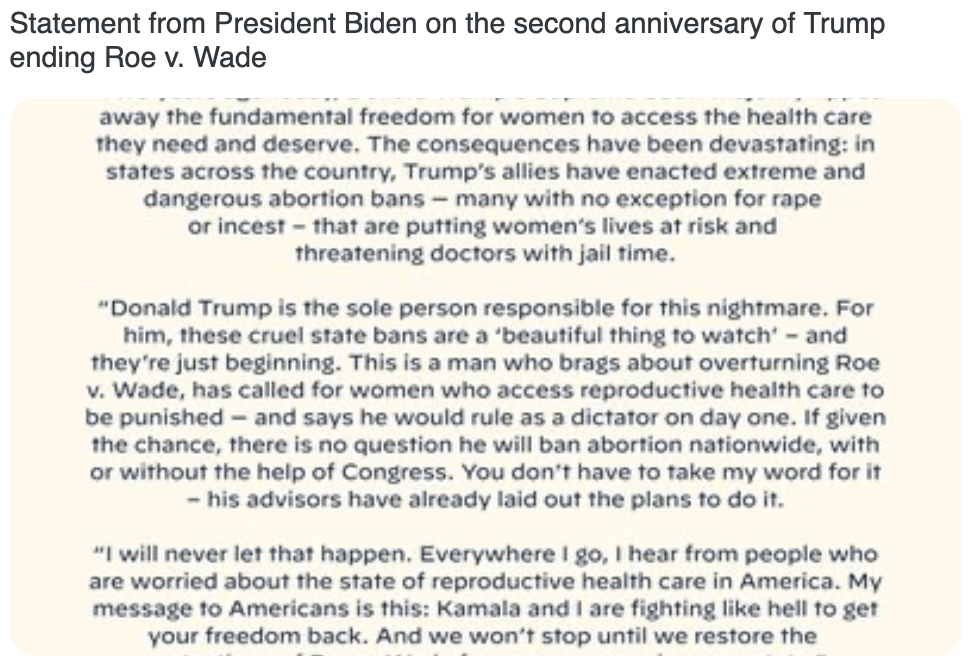
Before the presidential debates on Thursday, posts from supporters of President Biden are getting noticed. President Biden is getting noticed for his comment on the second anniversary of the revocation of ROE vs. Wade, a process that he says is caused by Donald Donald Trump.

    Three Presidents Who Are Respected Around The World
    There Is A Giant Difference Between The Two. When You Vote – It Is For Freedom!

    Former President Donald Trump was widely mocked after claiming to a crowd of supporters that he has “wounds all over my body” that they could see if he took his shirt off.

    Trump delivered the keynote address at the “Road to Majority” conference in Washington, D.C., organized by the conservative Christian political advocacy group, Faith and Freedom Coalition, on Saturday.

    For example, Presidents Abraham Lincoln, James Garfield, William McKinley, and John F. Kennedy were assassinated while still in office.

    Notably, Ronald Reagan was the victim of an attempted assassination in 1981 when a bullet fired by John Hinckley Jr. shot him in the underarm, broke one of his ribs, and punctured one of his lungs, causing significant internal bleeding. Reagan went on to serve two terms in office.

    In one of the more oddball moments in American history, Andrew Jackson in 1835 was attacked by an unemployed house painter whose pistols misfired—and promptly beat his failed assassin with his walking cane.

    And it is perhaps darkly comic that Theodore Roosevelt survived a 1912 assassination attempt after the assassin’s bullet became lodged in a folded copy of a speech Roosevelt was carrying in his breast pocket at the time.

    By contrast, Trump has never been in a similar position. Nor has he ever served in combat or sustained any wounds whatsoever considering he infamously dodged the Vietnam War draft by claiming he had bone spurs in his foot (a fact he has periodically downplayed).

    See the full report here!

    Winning at Any Cost: The Deterioration of Political Ethics

    Mudslinging, once the most reprehensible act a political contestant could commit, was a behavior that branded the perpetrator as untrustworthy, someone respectable voters would never support. These were the days when community bonds were robust. Neighbors were familiar faces, and the widow down the street was always checked on. People went out of their way to support a friend’s business, driven by loyalty and the value of relationships.

    Courtesy was not just a virtue, it was a way of life. You didn’t honk at the car ahead for hesitating at a stop sign, and everyone, regardless of race, was treated with respect. You honored their facilities at sporting events in neighboring towns, expecting the same respect in return during your homecoming games. These were the values that held our society together, and their erosion is a cause for concern.

    Winning an election was once a sign of trust in the democratic process. It meant the elected individual would represent the community, county, state, or nation for their term. There was no need for your parents to rally the neighbors, seeking to punish those who voted differently or to overturn the results. They trusted the process and the enduring truth. However, today, this trust has seemingly eroded, and the need for reflection and change in our political and social interactions is more pressing than ever.

    Today, it seems that the aim is not just to win, but to annihilate the opponent’s life and reputation.

    Riverton Police: A Night in the Life of Detectives Jake and Sam

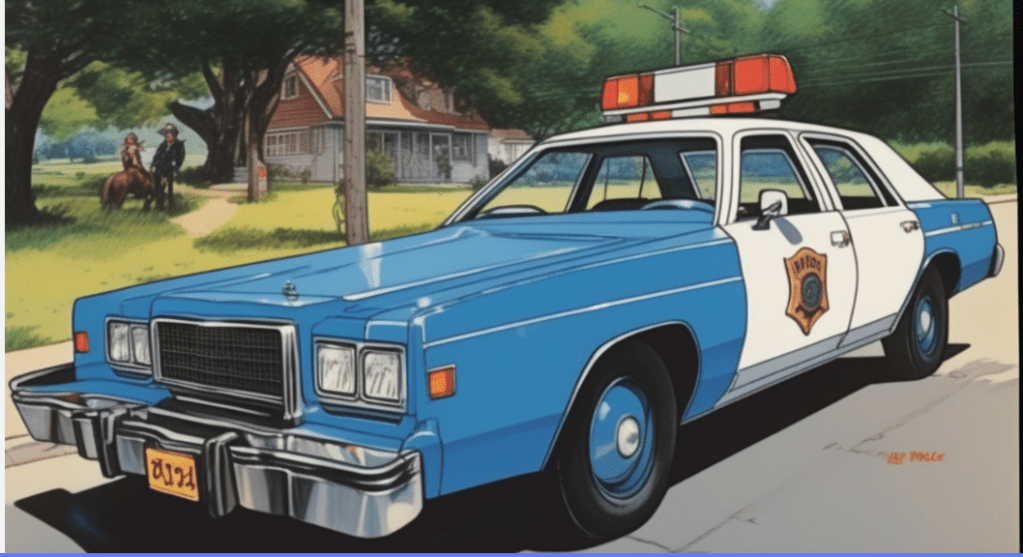
    The city of Riverton never slept, nor did Detectives Jake Harris and Sam O’Reilly. Partners for over a decade roamed the nocturnal streets with the kind of synergy only best friends could muster. Their squad car, an unremarkable blue-and-white cruiser, was a beacon of hope for some and a symbol of fear for others.

    Jake, with his gruff exterior and piercing blue eyes, was the kind of cop who could read a crime scene like a book. Sam, a lean figure with a quick wit and a knack for defusing tense situations, complemented Jake perfectly. Together, they led the department in felony arrests, arriving at calls faster than anyone else and building relationships with the community that others could only dream of.

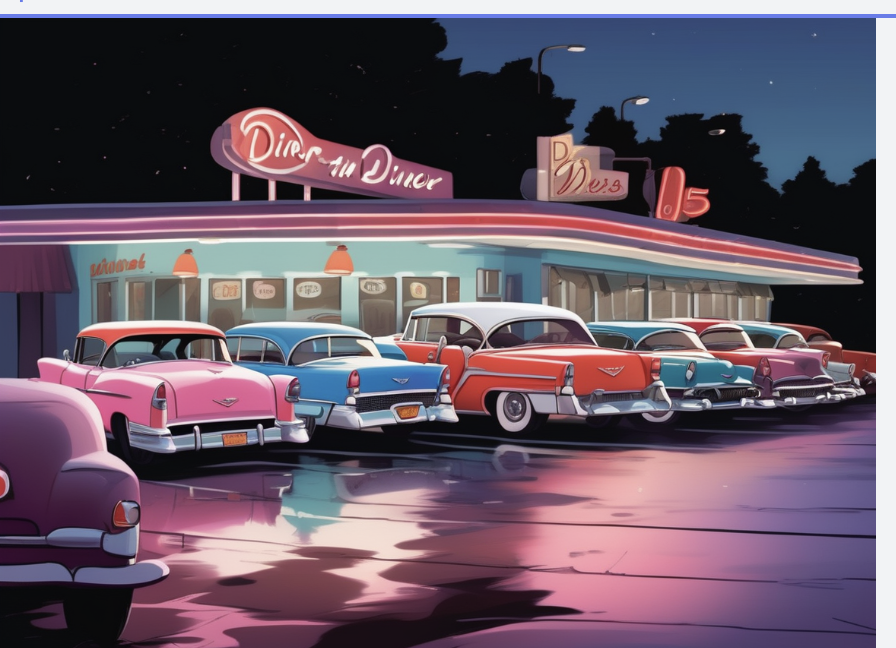
    One brisk autumn night, their radio crackled to life with a call that made their hearts race: an armed robbery in progress at the 24-hour diner on 5th and Maple. Without a word, Jake hit the lights and sirens, and they sped through the dimly lit streets. They arrived in just under three minutes, a record even for them.

    The diner was eerily quiet as they approached, save for the distant hum of neon lights. Inside, a masked man brandished a gun, demanding cash from the terrified cashier. Jake motioned for Sam to flank the back entrance while he took the front.

    Jake entered slowly, his voice calm but authoritative. ––––

    “Riverton PD, drop the weapon and come out with your hands up.”

    The gunman whipped around, eyes wide with panic.

    From the rear, Sam’s voice cut through the tension.

    “No, you won’t. You don’t want to hurt anyone. Put the gun down, and we can talk.”

    The gunman’s grip on the weapon faltered. In that split second, Jake lunged forward, disarming him with a swift, practiced motion. Sam was at his side instantly, cuffing the man and guiding him to the squad car.

    As they processed the scene, the cashier, a young woman named Maria, approached them with tears in her eyes.

    “Thank you. I don’t know what would’ve happened if you hadn’t come.”

    Jake gave her a reassuring nod. “Just doing our job, ma’am.”

    The rest of the night was a blur of paperwork and patrols. But their most memorable interaction came just before dawn. While cruising through a quieter part of town, they spotted a boy sitting alone on a bench, clutching a backpack to his chest. They pulled over, and Sam approached him gently.

    “Hey there, buddy. Everything alright?”

    The boy, who couldn’t have been more than ten, looked up with tear-streaked cheeks.

    “I ran away from home. My parents are always fighting.”

    Sam sat next to him, listening with the patience of a father and says –––

    “I get it, kid. Sometimes, home can be tough. But running away won’t solve anything. Let’s get you back home and see if we can help sort things out.”

    Jake contacted the boy’s parents while Sam spoke with him. The sun was peeking over the horizon when they returned the boy home. Now more worried than angry, the parents hugged their son tightly and thanked the officers.

    As they drove back to the station, Jake glanced over at Sam, sighs then says –––

    “Another night, another set of stories, huh?”

    Sam chuckled. “Wouldn’t have it any other way.”

    In Riverton, one could become a legend in the shadows, and for Jake and Sam, every night was another chance to protect and serve, forging connections and fighting crime in ways that others could only admire.

    The WIndscreen Phenomenon

    Earl’s Service Station was well known in town. It had to be. It was on the corner of Broadway and Main, downtown. Everybody in the city went to get their cars serviced, and the gasoline tank filled up there; they had to; it was the only gas station in the small town. Working in a gas station, Earl or his son Skip would wash the windows of cars while they were filling up. They would still be trying to scrub the bugs off the windshield on warm summer nights, long after the gas had clicked off.

    Cars that didn’t need gas would pull in, and without being asked, he would get out to work on their windshield cleaning with squeegees and sponges. It was on the house because Earl had a “full service” operation. When you bought gasoline there, anytime you stopped in, you got service. Everyone knew that you didn’t have to purchase gasoline for the service. Earl provided the work because that was the reputation of his business.

    It was the 1960s, and business ran steadily through the 1970s. However, as the 1980s crept in, a truckstop up the road near the big highway had put in giant tanks that held truckloads of fuel and could undersell Earl. It was self-serve, and the drivers had to clean their windshields. They’d have to check their oil and steering fluid, but now, all that didn’t matter. 

    Earl still had enough local customers and monthly charge accounts to keep his business open; repairing flat tires and selling accessories like windshield wipers, fluid, and antifreeze would keep him afloat. And it did through to the time he retired and handed the business over to his son Skip, who had been working in his father’s station since he was out of high school. 

    Skip noticed changes over the years, something more than people going to the big station up the road; the cars coming into the service station didn’t have bugs on the windshield. He had watched a television program a month or two earlier and remembered hearing about the windshield phenomenon. 

    It had a more scientific explanation, but Skip explained it to a group of local coffee drinkers as locals began noticing changes in their community due to the unnecessary killing of insects using insecticides that are too potent for their intended uses. The next phase would change the growth of trees in the region, which could harbor diseases that would wipe out other natural grasses and trees known to the area. 

    The coffee drinkers howled insults at Skip ––– 

    Skip, you are the gasoline island science professor.

    Another said,  

    Yeah, just like the professor on Giggi’s Island or whatever they named that old show.

    The coffee drinkers had a good laugh on Skip’s behalf and left it at that. Skip went on about his business, knowing he was on to something. A few days passed, and an agent from the county’s local university agriculture extension program came into the service station for refueling. Skip introduced himself and said ––

     Hey, do you have anything to do with bugs where you work?

    The agent said –––

    I do. I am responsible for a survey we do every Spring, Summer, Fall, and Winter. We have traps about twenty-five miles outside town and collect and count insects. See their type, how many, where they came from, and if they are locals or travelers. Why do you ask?

    Skip replied –––

    Windshields. There are hardly any bugs on windshields these days. When I was growing up, it took forever to scrub them off; now, there are hardly any. 

    The Agent replied –––

    It is because of insecticides. The bugs are getting killed off in masses, and they are not coming back. When they do, it kills everything down the line and up the line. It just goes on and on! 

    The agent’s words hit Skip like a ton of bricks. The number of insects was plummeting drastically, and it was a catastrophe in the making. Without insects, entire food chains would collapse. No crops would get pollinated, leading to a scarcity of food for birds, amphibians, reptiles, and even us. The ripple effect was clear-as the frogs die off, the animals that feed on them would also perish, leading to a devastating impact on the entire ecosystem.

    Skip said,

    WOW! Such a chain of events is indeed a catastrophe; no one knows about it because all attention is focused on global warming.

    The agent told Skip,

    Well, only some of the attention. We are trying to educate farmers and homeowners living in rural areas about how to use insecticides and pleading with people not to kill off bee colonies. Plus, quit killing insects. We need them, ants and all, to survive. Remember, the insects will die off with global warming affecting them too; they can’t live where their habitat is changing and are no longer welcoming to their living conditions. It isn’t just the insecticides that we are dealing with. Some areas are turning into deserts; others are seeing floods, and others are experiencing storms like never before. These extreme weather events are all linked to global warming, which is also contributing to the decline of insects.

    Skip told the agent that he had tried explaining the issue to his buddies at the coffee shop; however, they didn’t think he knew what he was talking about. The agent said you were right and good for you! I am interviewing with the local media. Tell your friends to watch for it this weekend.

    On Sunday morning, Skip stopped at the local cafe for coffee with the crew. As he walked in, everyone began cheering. 

    “There’s the man” There’s Mr Smarts!”

    It wasn’t until Skip sat down that he learned that the Agriculture Agent had referred to him in the interview as what an alert citizen was representative of; he had noticed the changes in his environment and said something.

    An ‘alert citizen’ is someone who is observant and proactive in reporting changes in their environment, like Skip. Something so great caused the local agency to alert farmers to stop using all level 1 and 2 pesticides.

    At least until the Extension Service looked into the lack of insects in the region. The news article then explained the importance of insects to the livelihood of all living creatures, just as the agent and Skip had talked about.

    Learn more about the windscreen phenomenon visit here!

    Fred and Matilda

    Fred and Matilda had been retired for over ten years. They had passed their silver years and were entering their golden years. Both had begun to experience forgetfulness, which was not severe but inconvenient. Fred would forget his wallet when he left home to go to town, or Matilda would forget to put extra tissues in her purse. She needed them to keep her nose wiped due to spring’s seasonal allergy season.

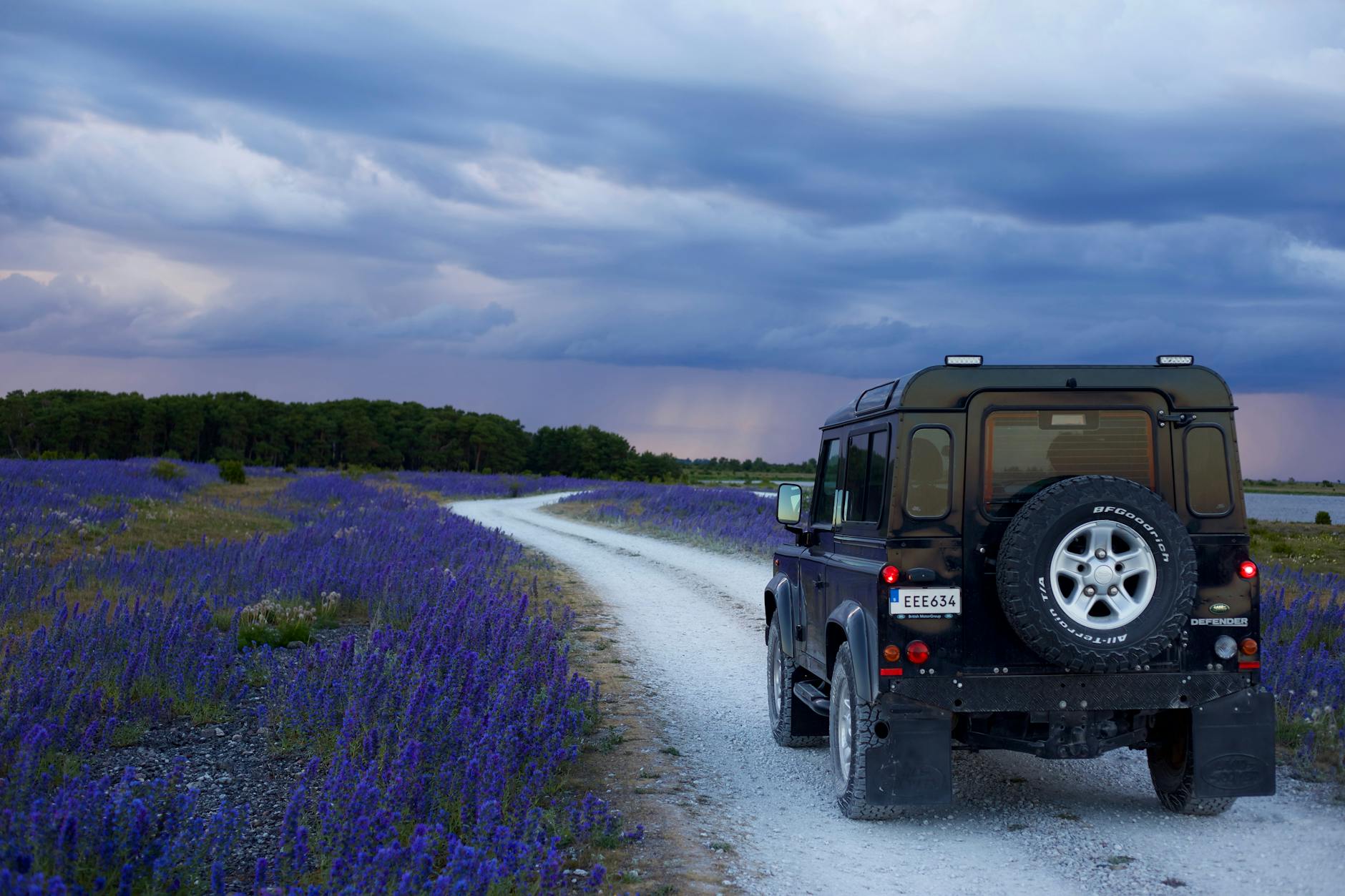
    Today, Fred and Matilda left their modest bungalow midcentury home on East Kiowa Street in Corprol, Oklahoma. They traveled thirty miles to see the couple’s son nearby. Due to Fred’s’ safe’ driving, the drive should take just over fifty minutes. He never exceeded fifty miles an hour and usually kept their ’53 Chevrolet Coup topped at 45 miles per hour. Matilda was known for always talking to Fred when he was driving. She never shut up.

    Matilda would say to him –––

    “Fred, ease to the left, honey; now go back to the right and watch it. Oh no—a car is coming! Now, someone is behind us. Wait, a car is approaching us; I think the guy behind us will pass us.

    Fred and Matilda’s son, Bill, looked at the clock at 1:00 PM. His parents should have been at his place at 11:00 AM. He thought they stopped by their old farm and got lost in time, recalling days when they had lived in the farming area for more than forty years, and everyone knew them. Even so, the people from those days mainly had moved on just as they had. So, it was unusual to find a two-hour distraction without calling him to let him know they would be delayed.

    Matilda, a constant verbal navigational bird, was a familiar presence to Fred. Her chatter, a constant companion during their drives, was a source of comfort to him. He had grown accustomed to her voice, finding solace in the sound. Fred’s driving was noticeably worse when she wasn’t there, a testament to her voice’s role in his life.

    At 3:00 PM, Bill was beside himself. Where were Fred and Matilda? He called their home to make sure they had not decided to go back home and make the trip another day; the phone just rang and rang. He called Fred’s and Matilda’s cell phones, but no one answered. Bill decided it was time to notify authorities.

    Bill called the Ninekakh Police Department, and Officer Nadine Smith answered. Nadine had a strong ‘Okie” accent and a sweet demeanor.

    “Ninekakh Police Department, Officer Smith, Who can I help today?”

    Bill was stunned by the sweetness and tone of Nadine’s voice and how comfortable she made him feel just by answering the call he had placed. Bill said –––

    “Hi, my name is Bill Roth. My parents, Fred and Matilda Roth, are late getting to my home outside Singer; they were driving here from Corprol.”

    Knowing Bill was concerned and having met the Roths several times, Nadine knew they were not the type to disappear carelessly. Nadine asked –––

    “Bill, honey, how old are your parents? Do you know what they are driving, and do you have any identification to help find them? And what were they doing today?”

    Bill was quick to answer –––

    My parents are driving a blue 53 Chevrolet Coupe two-door in their mid-70s. They were moving from Corpral to Singer to visit me today. They might have stopped by the old farm to remember old times, but I don’t know. They have never really been this late. Fred always wears grey pants, a white shirt, and a baseball cap, and Matilda usually wears a dress, blue or gray, that extends below the knee, with flat shoes; they both have gray hair. They quit taking photographs twenty years ago because both said it made them look like they were aging to get new pictures taken. They won’t even stand still for someone to get them in a cell phone, selfie-type picture.”

    Nadine, taking a deep breath, said –––

    Wow! Thank you. That is a whole lot of information, but it isn’t. I will get out and look at the highway between the two towns for them and any side roads. Also, I’ll put this out on the radio for other departments to be on the lookout for. Meanwhile, I suggest you stay where you are if they arrive at your place or call you.

    Bill was a nervous wreck. Thoughts raced through his mind of where they could be, what could have happened, and then who could have taken them or could they have been robbed. They could have been running off the road by another driver in a road rage incident. Bill remembered the time he got lost hiking with friends and how much worry it brought his parents. He thought to himself, ‘Payback is hell!’ Exhausted from thinking, Bill yells out loud –

    “At least they knew where to start looking for me. I was out hiking, and they had a starting point. Hell, I don’t have a clue where these two old farts are!”

    As Nadine was patrolling from the Ninekah Sheriff’s Department heading south toward Corprol, she saw a roadside melon and vegetable sales stand, the type set up to sell from the back of an old truck. She pulled over and talked to the farmer who was selling his goods and asked if he had seen anyone matching the description of Fred and Matilda. 

    “Yep, I saw them! They were two feisty people. For their age, I was surprised. 

    Nadine surprised that her luck had paid off, asked the farmer what he meant, and he replied –––

    “Well, this young guy was here too, and he had one of those cell phones out taking pictures of him and his girlfriend; it could have been his boyfriend. I couldn’t tell by looking. Anyway, he got a picture of the two older people and told them he hoped he and his sweety could be just like them when they got to be antique. And that is when all hell broke loose. The older adults didn’t want those pictures going anywhere. The young couple took off, and the others left behind them. I never saw two older adults driving like that. They were laying rubber.

    Nadine called Bill and told him what the farmer told her, and Bill, in a chilling voice, responded,

    “Christ, it’s Christmas 2015 all over again. They did the same thing when someone took a photo of them in the background at a convenience store on Christmas Eve of 2015. We saw them again in February. The family of the people who took the photos still hasn’t seen their people. The last report anyone ever heard was that they were trying to outrun an old couple driving a Blue 53 Chevy Coupe.”

    Officer Nadine Smith ––– Adam 851 Clear from report at 1700 hours, 15 miles south of Singer, on Highway 41, clear.  

    Dispatch to Smith, Affirmative, 1700 hours, KMH 253.

    Officer Smith drove to Bill’s home, where she discovered a blue 53 Chevrolet Coupe appearing to stick out of an outbuilding on the property. She went to Bill’s Door and rang the bell. When he answered, she asked if his parents had been in contact. He said they had not. 

    Smith asked Bill to walk out and look at the car in the shed, which, to his surprise, was his parents’ vehicle.

    How did they get past me? And where are they now?

    Fred and Matilda, in their enthusiastic but forgetful state, had indeed managed to return home unnoticed. Bill and Officer Smith, both puzzled and concerned, carefully approached the shed where the car was parked. The vehicle, though covered, was the distinctive blue ’53 Chevrolet Coupe.

    “Bill, stay behind me,” 

    Officer Smith instructed, her hand resting on her holster just in case.

    “Let’s check inside,” Bill suggested.

    Together, they slowly lifted the cover off the car, revealing it entirely. The sight brought a mix of relief and confusion to Bill’s face. The vehicle looked unscathed as if a chauffeur had driven the couple from a leisurely trip.

    As they peered into the car, they noticed the keys were still in the ignition, and Matilda’s purse was on the passenger seat. But there were no signs of Fred and Matilda themselves.

    “Where could they have gone?

     Bill murmured, more to himself than anyone else.

    Officer Smith walked around the shed, looking for any further clues. Just then, they heard a faint, familiar sound coming from the back of the house. Following the noise, they discovered Fred and Matilda sitting on a swing in the backyard, calmly chatting and sipping on lemonade.

    “Dad! Mom! What on earth happened?” 

    Bill exclaimed, running towards them.

    Fred looked up, somewhat surprised but pleased to see his son.

    “Oh, Bill, there you are! We were wondering when you’d find us.”

    With a serene smile, Matilda added,

    “We decided to take a little detour to the old farm, but then we thought we’d better come back home when it started getting late. We didn’t want to worry you.”

    Torn between relief and frustration, Bill tried to keep his voice steady.

    “Why didn’t you call me? We’ve been worried sick!”

    Fred scratched his head, looking a bit sheepish.

    “Well, son, we did mean to call you, but then Matilda realized she left her phone at home, and mine ran out of battery. By the time we returned, we were so tired we just sat down for a rest.”

    Upon witnessing the heartfelt reunion, Officer Smith felt a wave of relief wash over her.

    Mr. and Mrs. Roth, it’s good to see you’re both safe. You gave us quite a scare.”

    Ever the apologetic, Matilda said,

    “We’re sorry, dear. We didn’t mean to cause any trouble. We’ll be more careful next time.”

    Fred nodded in agreement.

    “Yes, we’ll charge the phone next time and keep it with us.”

    Bill sighed deeply, his worry slowly dissipating.

    “Just glad you’re both okay. Next time, please, let’s avoid any more detours.”

    Fred chuckled. “Deal. How about we all go inside and have some of Matilda’s famous apple pie? It’s been a long day.”

    As they walked back into the house, Bill couldn’t help but feel grateful for the small blessings—his parents were safe, and despite their forgetfulness, they still had their spirited sense of adventure. It was another reminder of how precious these moments were, even when they came with a bit of worry.

    The Parade Day Bandits

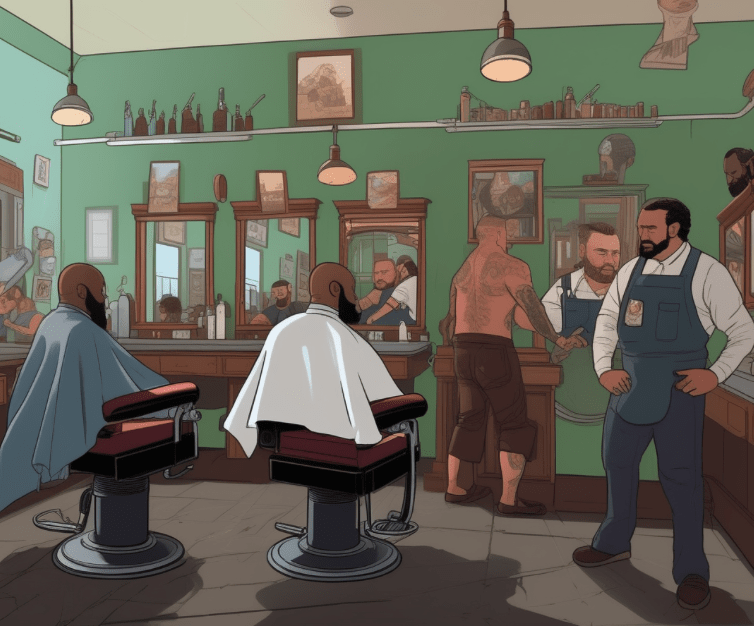
    Harrison, a young boy with a mop of unruly hair, was not yet old enough to attend the local school with his siblings. For that, he was delighted. The thought of shuffling off to a gloomy classroom with many kids making noise and a teacher telling him what to do was a nightmare. He’d rather be where he was, in his dad’s bustling barber shop, sitting high on the shoeshine chair overlooking the men sitting and waiting for a haircut. His dad, a tall and burly man with a booming voice, had three barber chairs, but he was the lone barber in the shop and wanted to keep it that way. The two extra chairs were great for the overflow customers who missed their chance to sit in one of the chairs against the wall. Harrison, always curious, wanted to ask the group if they were getting haircuts for a Sunday funeral, which usually draws such a crowd to his dad’s shop. But he didn’t dare ask such a question, knowing his father would object.

    An older gentleman sitting in one of the chairs waiting for his turn in the barber’s chair spoke up –––  

    “There’s a grand parade coming down Main Street this afternoon, right in front of your shop, Harrison. The Governor and a Star Baseball Player from the Yankees are expected to ride in the banker’s convertible Cadillac. It’s going to be quite a spectacle,”

    the man in the chair shared, his voice filled with anticipation.  

    Only Harrison’s dad remarked, 

    “I guess they’ll have to do it without my help; I have hair to cut.”  

    His dad’s voice was dry, and his humor was just as much, and the tone in which he laid out the line caused those waiting for a haircut to laugh. He pulled the towel from around the neck of the main sitting in his chair, removed the barber cape covering him, shook it out, and said –––  

    That’ll be a buck! Next!

    Harrison watched as the man in the chair, a middle-aged man with a kind smile and a twinkle in his eye, smiled and handed his dad a crisp dollar bill. They exchanged pleasantries, their voices filled with warmth and familiarity, before the man stepped down from the chair, revealing a fresh, neatly trimmed haircut. As the man left the shop, the doorbell jingled behind him, the sound echoing in the empty space.

    The following customer shuffled forward, settling into the vacated barber chair. He was a tall, lanky man with a worn-out cowboy hat perched atop his head, his face weathered and etched with lines of a life spent outdoors. Harrison recognized him as Mr. Jenkins, the ranch owner just outside town, a man known for his quiet wisdom and his love for his horses.

    “Hey there, Mr. Jenkins,” 

    Harrison’s dad greeted warmly, draping the striped barber cape around his shoulders. 

    “What’ll it be today?”

    Mr. Jenkins leaned back in the chair, adjusting his hat slightly. 

    “Well, I reckon I need a trim for the Missus’s birthday dinner tonight. Can’t be looking like a tumbleweed on such an occasion,” 

    He chuckled.

    Harrison grinned from his perch on the shoeshine chair, enjoying the banter between his dad and Mr. Jenkins. As his dad began clipping away at Mr. Jenkins’ hair, the old rancher glanced over at Harrison with a twinkle in his eye.

    “You excited about that parade, son?”

     he asked, his voice carrying a hint of amusement.

    Harrison nodded eagerly.

     “Sure am, Mr. Jenkins! I heard the Governor and a Yankees player will be there.”

    Mr. Jenkins chuckled, nodding in agreement. 

    “Yep, quite the spectacle, I reckon. But you know what they say, Harrison, sometimes the best show in town ain’t the one with the fanciest floats. There’s more to this parade than meets the eye,” 

    Mr. Jenkins said, his eyes twinkling with a hint of mystery. His words hung in the air, leaving Harrison with a sense of intrigue and a thousand questions.

    Harrison furrowed his brow, intrigued by Mr. Jenkins’ cryptic comment. Before he could inquire further, his dad finished the haircut, removing the barber cape with a flourish.

    “All set, Mr. Jenkins. That’ll be a buck,” 

    He said with a grin.

    Mr. Jenkins handed over the payment with a tip, tipping his hat to Harrison and his dad before heading out the door confidently.

    Harrison’s dad turned to him with a smile. 

    “Well, son, it’s your turn to shine. How about you polish those shoes while I tidy up here?”

    Harrison’s heart raced with excitement as he reached for the Polish brush, his mind buzzing with anticipation for the parade and Mr. Jenkins’s mysterious words. He couldn’t help but wonder what the old rancher meant. Was there something more to this parade than just a grand spectacle? Little did he know, this ordinary day in the barbershop would soon become an extraordinary adventure he would never forget.

    After Mr. Jenkins left the barber shop, Harrison’s dad glanced at the clock on the wall and realized it was almost time for the parade. With a quick sweep of the broom, he tidied up the shop and then turned to Harrison with a grin.

    “Looks like we’ve got a front-row seat, son. Let’s go see what all the fuss is about,” 

    He said, grabbing his coat from the hook by the door.

    Excitedly, Harrison followed his dad outside, his steps quick and light. He joined the growing crowd lining Main Street, his eyes scanning the area for the best view of the parade route. The air was charged with anticipation as people jostled for the best view of the parade route. Harrison’s heart raced with excitement as he tried to catch a glimpse of the Governor and the Yankees player, his eyes darting from one end of the street to the other.

    Harrison’s eyes widened with wonder as the first drumbeats echoed in the distance, signaling the parade’s approach. The air was filled with the scent of freshly popped popcorn and cotton candy, and the sound of children’s laughter mingled with the lively tunes played by the marching bands. Colorful floats adorned with balloons and streamers rolled by in a kaleidoscope of colors. Marching bands played lively tunes, their music filling the air. Costumed performers danced along the street, their movements a blur of energy and excitement.

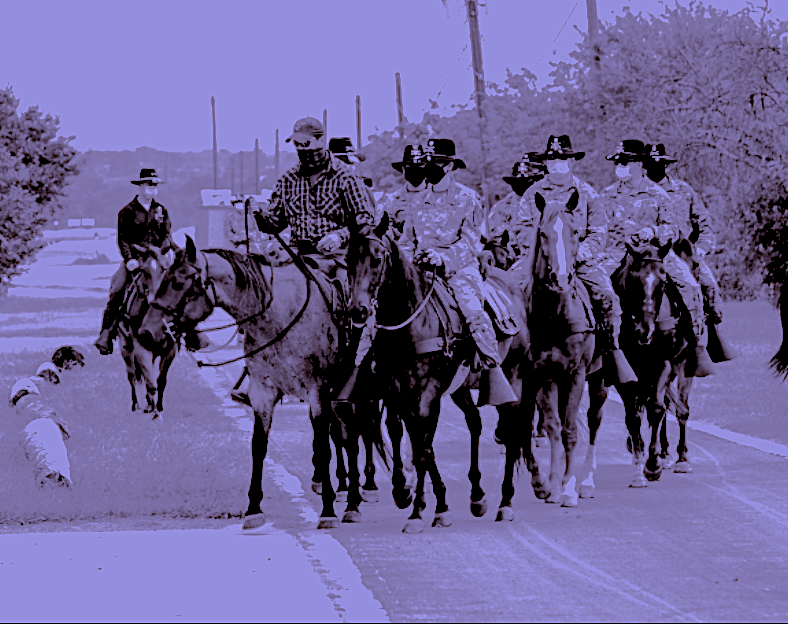
    But amidst the fanfare, Harrison noticed something unusual. At the back of the parade, a group of riders on horseback trotted along, their faces obscured by bandanas, their horses sleek and powerful. They were followed by a wagon covered in a tarp, pulled by a team of sturdy horses. The air around them seemed to crackle with an energy different from the rest of the parade, a sense of mystery and intrigue. Harrison couldn’t help but wonder who they were and what they were doing in the parade.

    Curiosity piqued, Harrison tugged on his dad’s sleeve. 

    Unable to suppress his curiosity, Harrison tugged on his dad’s sleeve, his eyes fixed on the enigmatic riders. His voice was filled with a mix of excitement and intrigue as he asked his dad about them.

     He asked, pointing to the mysterious riders.

    His dad frowned, scanning the procession.

     “I’m not sure, son. They don’t look like part of the official parade.”

    Just as the parade climaxed, a sudden turn of events caught Harrison’s attention. A wagon, covered in a mysterious tarp, veered off the parade route, rumbling down a side street.

    Instinctively, Harrison’s dad grabbed his hand, his expression grave. 

    With a sense of foreboding, Harrison’s dad grabbed his hand, his expression grave.

    “Stay close, Harrison. Something doesn’t seem right here,”

    he said, his voice filled with concern.

    With a sense of foreboding, Harrison and his dad followed the wagon, their footsteps echoing through the side streets and alleyways. The sound of the parade grew fainter with each turn, replaced by the distant hum of the town. Eventually, they emerged into a deserted square on the outskirts of town, where the wagon had come to a stop.

    As they approached cautiously, they heard muffled voices and metal clinking. Peering around a corner, Harrison’s heart raced as he witnessed a group of masked figures unloading crates from the wagon, their faces twisted in sinister determination.

    Harrison realized that the mysterious riders were thieves and were about to commit a robbery right under the town’s nose.

    Harrison’s dad pulled him back into the shadows without hesitation, his eyes darting urgently.

     “We need to get help, son. Stay here and stay quiet. I’ll be back as soon as I can.”

    Harrison’s mind raced with fear and adrenaline as his dad sprinted into the night. Alone in the darkness, he knew he was the only one who could stop the thieves and save his town from disaster.

    Summoning his courage, Harrison crept closer to the scene, his heart pounding. Little did he know, this chance encounter at his dad’s barbershop would thrust him into the heart of an adventure filled with danger, bravery, and the true meaning of heroism.

    As Harrison watched the thieves unload their crates in the deserted square, he knew he had to act fast. With a steely resolve, he devised a plan to thwart the robbery and protect his town.

    Silently, Harrison slipped through the shadows, keeping his movements as quiet as possible. Drawing upon the skills he had learned from listening to his dad’s stories of bravery and courage, he maneuvered closer to the thieves, carefully avoiding detection.

    Harrison quickly glanced around the square and spotted a stack of crates nearby. Acting swiftly, he grabbed a handful of pebbles from the ground and began to hurl them toward the crates, creating a diversion.

    The thieves, startled by the sudden noise, turned towards the sound, their hands instinctively reaching for their weapons. Seizing the opportunity, Harrison sprang into action, darting towards the wagon with lightning speed.

    With a burst of adrenaline, Harrison leaped onto the back of the wagon, his heart pounding in his chest. Ignoring the shouts of the thieves behind him, he frantically searched for something to use as a weapon.

    His eyes fell upon a coil of rope lying in the corner of the wagon. Without hesitation, Harrison grabbed the rope and began to lash out at the thieves, swinging it with all his might.

    Caught off guard by Harrison’s unexpected attack, the thieves stumbled backward, their faces contorted with shock and surprise. Sensing their momentary confusion, Harrison seized the opportunity to disarm them, knocking their weapons out of their hands with well-aimed blows.

    As the tide of the battle turned in his favor, Harrison felt a surge of triumph and adrenaline coursing through his veins. With a determined resolve, he fought with all his strength, refusing to back down in the face of danger.

    In the end, it was Harrison’s bravery and quick thinking that saved the day. With the help of his dad and the townspeople, he apprehended the thieves and prevented the robbery from taking place.

    As he stood victorious in the square, surrounded by cheers and applause from the grateful townsfolk, Harrison knew that he had discovered the true meaning of heroism. And though his adventure had been filled with danger and peril, it had also taught him the importance of courage, resilience, and the power of standing up for what is right.

    George’s Story About Going TO A Horse Sale With His Dad And Friend Maynord

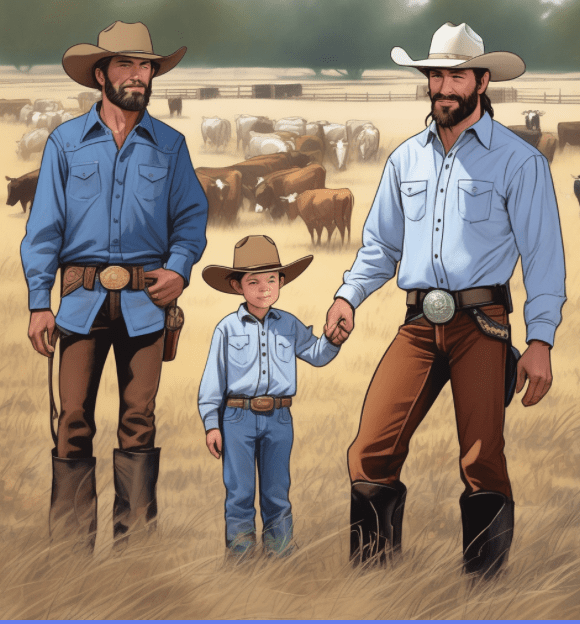
    George was a happy-go-lucky sort of kid. His father raised quarter horses, and together, they were buddies. They go nearly everywhere together. George and his father’s friend Maynord, an older gentleman, probably a few years older than George’s father, spoiled George, treating him especially grandly. George didn’t emphasize the letter ‘s’ in some of his words, and some words he would say might need to be clarified. His father was known as a horseman and stern man, yet respected by most people, eyebrows raised to the bible-toting folks.

    Maynord had a grown daughter who had already left home, but he and his wife had never had a son. With George, Maynord had the time of his life. As did George. The two were better buddies than Maynord, and George’s father became. But George would never say that to his father. Maynord treated George to parades, cheeseburgers, and ice cream cones and even got him a dog. George named the pooch, Ryder after Maynord’s last name.

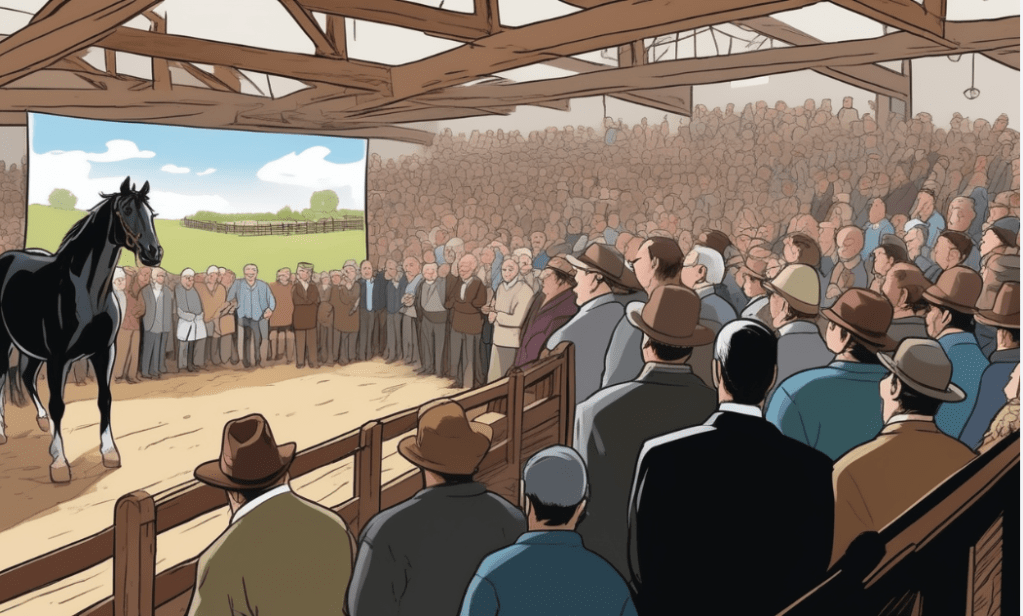
    The two looked forward to Friday and Saturday nights. That is when George’s dad would take George and Maynord to auction barns in nearby cities where horses were sold. There, they would watch the many horses come through the sale ring, and the owners talk them up, saying how great of an animal the horse is, and try to sell it for top dollar. Of course, George’s father had always arrived before the auction to watch the horses lead in so he could see how they handled it and whether they were challenging to work with in getting to holding pens. He could also see if any auction workers tried to ride the horses before entering the sale ring and if the horses handled well. There were always little mishaps in the sale ring, a rider losing his grip and falling off, or a horse doing what the owner said it would not do. Or donkeys would be brought in, which always made George and Maynord laugh. They would jokingly suggest George’s father buy several to go with his quarter horses. The biggest thrill of the sales barn adventures was the cafe located within; that is where, halfway through, George and Maynord would slip away and eat cheeseburgers and drink soda pop.

    The horse sales, as George and his father referred to them, caused the problem. Maynord didn’t help with the situation because he referred to the auctions as horse sales. And he had never referred to the auctioning of horses as anything else.

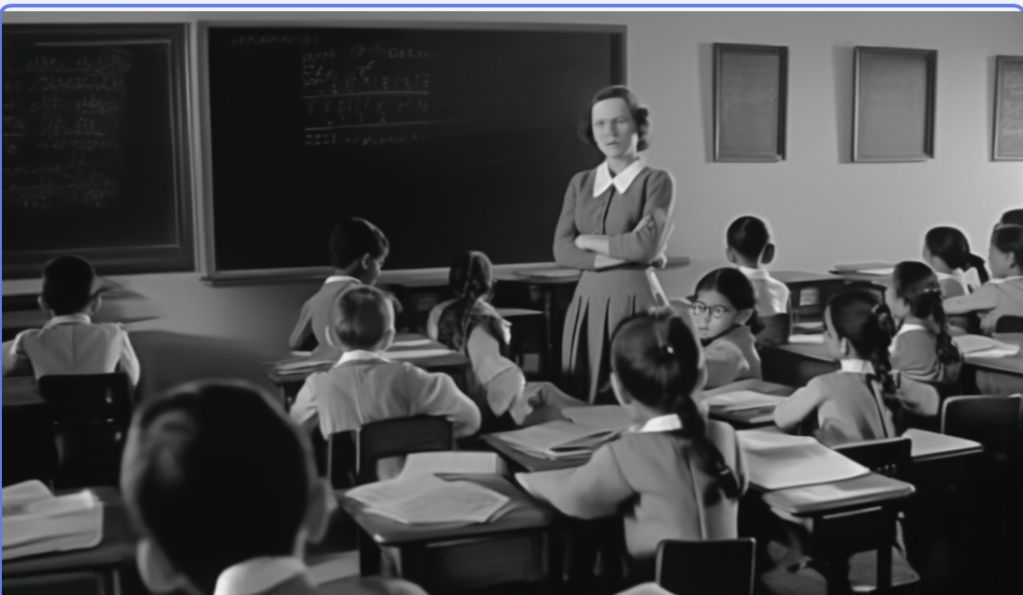
    It was in the classroom one Monday morning when the third-grade teacher asked the class for each student to stand and say what the most fun activity they took part in over the weekend was. The town had just had a fair, and the teacher expected the students to explain their actions while visiting the celebration. And that is what the students did until coming to George. 

    George stood and said –––

    “My dad and our friend Maynord took me to the city horse sale, and my dad bought two. 

    The teacher said –––

    “George, you went where, and your dad what?”

    George replied –––

    “My dad took me to a horse sale and bought two. His friend Maynord helped with one of them. They made me watch from the pickup.” 

    The teacher, turning pale, said –

    “George, stop talking; that is enough! Class, that is enough of what we enjoyed this weekend. I will have George explain what he did to the principal.”

    George was perplexed. Hasn’t anyone ever watched a horse being sold and loaded into a livestock trailer? Why would the principal need to hear about it? Indeed, he knows about people selling horses.

    In the office, the principal was being informed by the teacher about what she had heard and how terrible it was that this father and his friend had taken an 8-year-old boy to whore house and had him watch the goings on with two women. The principal then asked George what exactly did you say to your teacher? 

    Which George explained –––

    “I just told her ––– My dad, Maynord, and I went to a horse sale, where my dad bought two horses. They made me get in the pickup and watch them while loading the horses so I wouldn’t get hurt or in the way. There have been days, I have even held on to some guys horse when he had too many to handle. But I didn’t get to explain it in such detail because the teacher told me to stop talking before I could tell more about what I was talking about. We go to horse sales every weekend. I don’t know what the big deal is!”

    The principal and now the school’s superintendent were both in the office. Their faces were beet red, and they were trying to keep from laughing. The teacher, now understanding the situation, felt overreactive and apologizing. 

    Meanwhile, George is confused and asks everyone in the room –––

    “Haven’t you all ever heard of horse sales? Horse sales? Horse Sales! A Place where a man can sell his horse? My dad, Maynord and I go to them every Friday and Saturday night, you should come with us and see what it is all about. If you get bored with the horse sale, you can get a cheeseburger, as I sometimes do. I don’t understand what this is all about just because I told my story about going to the horse sale with my dad and Maynord.”

    George’s dad, the town barber, was called and told of the situation. He later held court in his barber’s chair with his shop’s regulars. There, they had the bursts of laughter the school officials experienced.

    Leaving the office, it was the loudest laughter George can ever remember hearing to this date. It wasn’t until he was older did he understand the rhyming of the words between horse and whores and how it could sound to others when saying to them ––– 

    “You are headed to a horse sale to see what you can find.”

    ~ SHARING IN THE PRIDE ~

    NewFest Pride

    Navigate this page

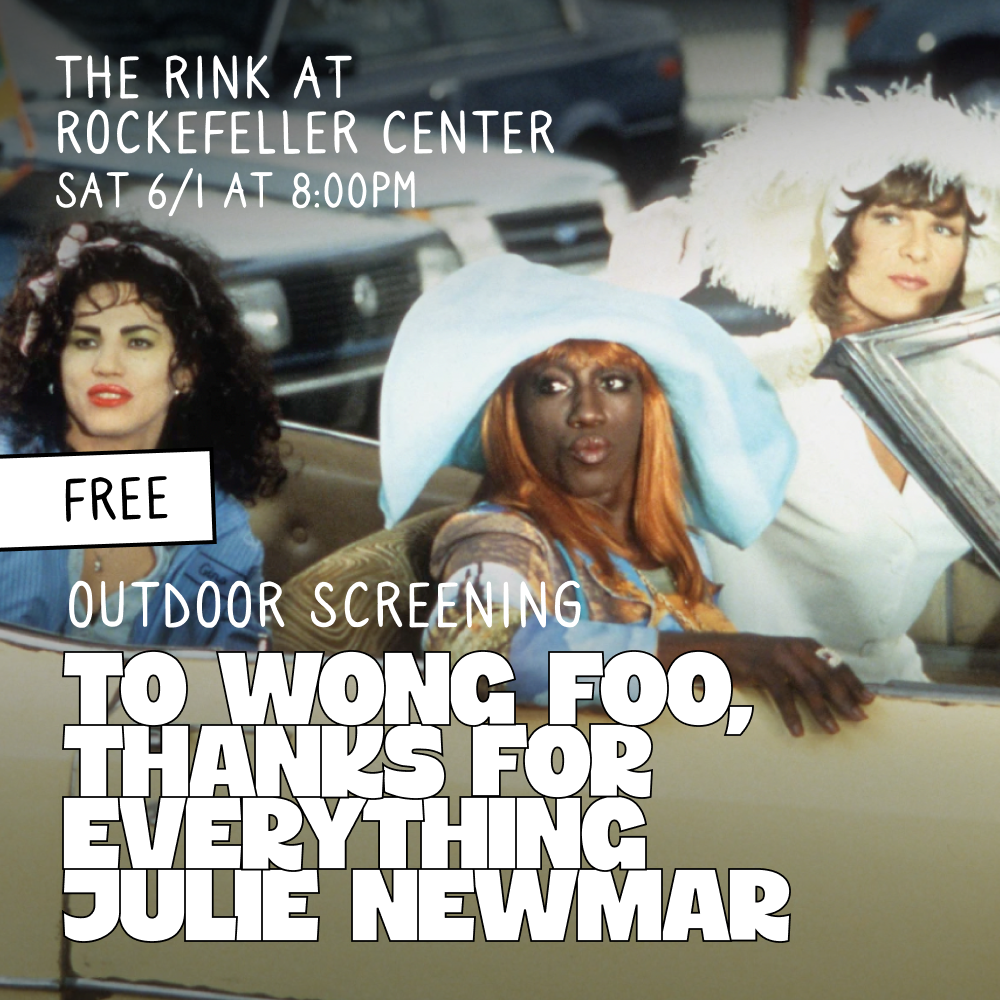
    NewFest Pride has it all — premieres of the year’s most anticipated queer films, conversations, parties and outdoor screenings! Check out the full lineup below. 

    Get A Pass

    Membership Plus Members + above get free Virtual Passes.


    Learn more about becoming a NewFest Member 💖

    LINEUP

    A HOUSE IS NOT A DISCO (Opening Night Film & Party)

    Dir. Brian J. Smith

    MY OLD ASS

    Dir. Megan Park

    In this fresh coming-of-age story, an 18th birthday mushroom trip brings free-spirited Elliott (Maisy Stella) face-to-face with her wisecracking 39-year-old self (Aubrey Plaza).

    HAZE

    Dir. Matthew Fifer

    A young journalist returns home to investigate the unsolved deaths at an abandoned psychiatric center in this eerie, evocative psychological thriller from writer/director Matthew Fifer (CICADA)

    CLOSE TO YOU

    Dir. Dominic Savage

    Producer and co-writer Elliot Page stars in this emotionally observant drama about returning home as yourself and finding hope in potentially rekindled relationships

    FANTASMAS (Episodes 1 & 2)

    Dir. Julio Torres

    A delightfully wry new series from the imagination of creator, star, writer, and director Julio Torres (LOS ESPOOKYS, PROBLEMISTA)

    THE QUEEN OF MY DREAMS

    Dir. Fawzia Mirza

    Grad student Azra feels worlds apart from her seemingly rigid mother yet uncovers their unexpected connections on a trip to Pakistan in this vibrant festival favorite (TIFF, SXSW) from writer/director Fawzia Mirza. Ticket comes with entrance to Women’s Afternoon Out pre-screening reception

    SEBASTIAN

    Dir. Mikko Mäkelä

    A freelance writer and aspiring novelist on his way to ostensible success in London’s cultural spheres finds a different kind of exhilaration as a sex worker in this Sundance sensation.

    Dir. Sandra Itäinen

    Dir. Peter LoGreco

    IN-PERSON + STREAMING
    VIP All Access Pass — $185
    Discount for NewFest Members
    All in-person screenings and events (including Opening Night Film & Party, and Women’s Afternoon Out) and virtual screenings. Early access to theater and reserved seats. Learn how to fulfill passes here.


    IN–PERSON
    Individual Film Ticket – $19.50
    Discount for NewFest Members
    In-Person access to a single screening. Does not include A HOUSE IS NOT A DISCO or Women’s Afternoon Out Tickets.

    Opening Night Film + Party Ticket – $50
    Discount for NewFest Members
    In-Person access to the Opening Night Film A HOUSE IS NOT A DISCO and the following party. 

    Women’s Afternoon Out + THE QUEEN OF MY DREAMS Ticket – $30
    Discount for NewFest Members
    In-Person access to Women’s Afternoon Out Brunch prior to the screening of THE QUEEN OF MY DREAMS.

    In-Person All Access Pass — $115
    Discount for NewFest Members
    Includes all in-person screenings, including Opening Night Film & Party, and Women’s Afternoon Out. Learn how to fulfill passes here.


    STREAMING
    Virtual Pass — $30
    Discount for NewFest Members
    Virtual access to select screenings. Does not include in-person Q&A’s, however there are a select number of virtual Q&A’s available. All films screening virtually are available May 30 at 12 PM EST through June 3 at 11:59 PM EST. Streaming anywhere in the United States. Individual tickets are only available for WE’RE HERE and TRIXIE MOTEL: DRAG ME HOME.

    * Virtual passes and individual tickets are discounted for NewFest Members. Haven’t joined yet? Become a member today!

    A Cure For Monday Blues

    Not too long ago, in the quaint town of Willowbrook, there were three inseparable friends: Alex, Maya, and Jake. They worked at the same bustling marketing firm, where Mondays were universally dreaded. However, these three had a secret pact to evade the Monday blues.

    On Monday morning, as the sun peeked through the curtains, Alex, the creative genius of the trio, concocted a plan over breakfast. “Guys, I’ve got it! Let’s go on a spontaneous road trip!” Alex exclaimed, a mischievous glint in their eyes.

    Maya, the adventurous spirit, beamed with liberation. “Yes! Let’s break free from the chains of mundane Mondays and create unforgettable memories instead!”

    “Guys, I’ve got it! Let’s go on a spontaneous road trip!”

    Jake, the pragmatic one, hesitated momentarily before a smile spread across his face. “Alright, but let’s make it epic.”

    With that, they hastily packed their bags, loaded the car, and set off on an impromptu adventure. They drove through winding country roads, the sun’s golden rays filtering through the lush green trees, belting out their favorite tunes, stopping only for roadside attractions and delectable diners.

    As they reached the picturesque town of Willow Grove, they stumbled upon a quaint bed and breakfast nestled amidst rolling hills. The owner, an eccentric but kind-hearted elderly lady named Mrs. Maple, welcomed them with open arms. “You must be tired from your journey,” she said, her eyes twinkling with warmth. “Come in, I’ve prepared some fresh lemonade.”

    “We’re on the run from Mondays,” Maya confessed with a wink, and Mrs. Maple chuckled knowingly. “Well then, you’ve come to the right place, my dears. Here, every day feels like a Sunday.”

    Their days were filled with laughter, exploration, and newfound friendships. They hiked through lush forests, discovering hidden waterfalls and secret clearings. They picnicked by sparkling streams, the sound of the water providing a soothing backdrop to their conversations. And they shared stories under the starry night sky, the twinkling lights above mirroring the joy in their hearts.

    Meanwhile, back at the office, their absence raised eyebrows, but their colleagues couldn’t help but envy their spontaneous escapade. As they stepped back into the familiar hustle and bustle, a mix of nostalgia and determination filled their hearts. They were ready to face the challenges of the week, armed with the memories of their adventure and the strength of their friendship.

    As the sun dipped below the horizon on Friday evening, painting the sky in hues of orange and pink, Alex, Maya, and Jake reluctantly bid farewell to Willow Grove. With hearts full of memories and souls rejuvenated, they returned home just in time for the weekend.

    And though Monday morning loomed on the horizon, they faced it with a newfound resilience, bolstered by the strength of their friendship. They knew that with friendship and adventure, they could conquer anything—even the dreaded Mondays.

    Hank and The Little Red Fire Truck

    By: Helena

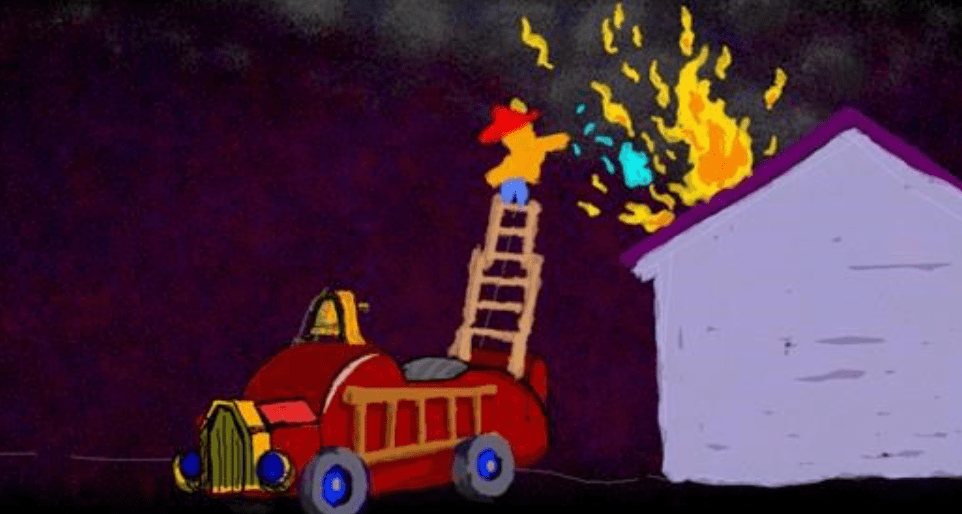
    Fire Station 12 stood proudly in the heart of the bustling city, a symbol of protection and service. Named in honor of the fusion of Fire Stations 1 and 2, it held a legacy of bravery and dedication within its walls. At its helm was Hank, the seasoned veteran who had witnessed the evolution of firefighting firsthand.

    Hank’s connection to the station ran deep, rooted in the early days when he and the Little Red Fire Truck epitomized heroism. Together, they had faced the fiercest blazes and emerged victorious, earning the community’s admiration. But as time passed, the dynamics shifted, and modernization took hold.

    The Little Red Fire Truck, once a beacon of hope, now stood relegated to parades and backup duty. Hank, too, found himself on the sidelines more often, overshadowed by the younger firefighters and their state-of-the-art equipment. Yet, his dedication to the station never wavered.

    Fate intervened on a warm afternoon when grass fires raged, and the station buzzed with activity. A desperate call for help echoed through the halls, signaling a mother and child trapped in a burning home. Hank knew he had to act swiftly with the other firefighters tied up on distant calls.

    Without hesitation, he usurped the Little Red Fire Truck, a solitary figure against the backdrop of chaos. Ignoring protocol, he raced through the streets, the vintage engine roaring with renewed purpose. Upon Hank’s arrival at the scene, flames licked at the sky, and a crowd gathered, helpless.

    Undeterred, Hank sprang into action, orchestrating a daring rescue. With precision born of experience, he deployed the aging truck’s capabilities, tapping into its reservoir of courage and resilience. Hank ventured into the inferno as the flames danced menacingly, emerging triumphant with the mother and child in tow.

    The neighborhood erupted in cheers, and the world took notice, captivated by the spectacle of one man and his faithful companion defying the odds. Unbeknownst to Hank, his courage had transcended local acclaim, sparking a global wave of admiration.

    But amidst the accolades, Hank remained grounded, his focus unwavering. As he extinguished the last embers of the blaze, a familiar figure approached – the Fire Chief, a mix of pride and relief etched on his face.

    In a candid moment, the Chief revealed the bureaucratic hurdles that had hindered the station’s effectiveness, expressing a wish for more like Hank and his beloved Little Red Fire Truck. Yet, Hank, ever humble, pondered the Chief’s words, grappling with the shifting landscape of firefighting.

    In the quiet moments that followed, as Hank bid farewell to another day of service, he found solace in the familiar embrace of the Little Red Fire Truck. With a promise to uphold its legacy, he embarked on the journey home, the echoes of the day’s heroics lingering in his heart.

    For Hank, retirement loomed on the horizon, a bittersweet inevitability. But as long as the Little Red Fire Truck stood by his side, he knew their legacy would endure, a testament to the timeless virtues of courage, camaraderie, and unwavering resolve.

    Mother Comes To The Rescue

    When a child gets lost in the forest a mother’s wisdom saves the day!

    Once upon a time, in a small town located far away from the big cities between rolling hills and lush forests, there lived a young child named Alex. With their adventurous spirit, Alex was always eager to explore the world around them. But one sunny day, their curiosity led them into a problematic situation.

    Alex ventured into the woods near their home on a warm summer afternoon. The air was thick with the scent of pine and earth, and the sunlight filtered through the canopy, casting a dappled pattern on the forest floor. With a sense of excitement bubbling inside them, they wandered deeper and deeper into the dense foliage, chasing after the fluttering wings of butterflies and the rustling of unseen creatures.

    As the hours passed, Alex became utterly lost in the enchanting beauty of the forest. But as the sun began to dip below the horizon, panic started to set in. They realized they had strayed too far from home and had no idea which direction to go.

    Frightened and alone, Alex’s heart raced in their chest. They called for help, their voice echoing through the trees. But there was no response, just the eerie silence of the forest at dusk. Tears welled up in their eyes as they sank to the ground, feeling a mix of hopelessness and fear.

    Meanwhile, in the town, Sarah’s worry had transformed into a fierce determination. When her child didn’t return home at their usual time, she didn’t hesitate. She rallied a group of neighbors and friends, her unwavering love for Alex fueling their efforts.

    With flashlights and determination in their hearts, they combed through the woods, calling out Alex’s name. Hours passed with no sign of the lost child, and fear gnawed at Sarah’s heart. Her worry turned into a desperate ache, her determination fueling her every step.

    Just as she was beginning to lose hope, Sarah heard a faint cry in the distance. With renewed energy, she followed the sound, pushing through the underbrush until she stumbled upon a clearing where Alex sat, trembling and exhausted.

    Relief washed over Sarah like a tidal wave as she rushed to her child’s side, her heart bursting with joy. Tears of happiness streamed down her cheeks as she whispered words of comfort and love, her voice a soothing balm to Alex’s trembling form.

    Wrapped in their mother’s arms, Alex felt safe and protected, knowing that no matter their adventures, their mother would always be there to guide them home. And on that fateful day, Sarah’s unwavering love and determination saved Alex’s life, proving that a mother’s love knows no bounds. In the aftermath, they both learned the importance of staying close and the strength of their bond.

    A MOTHER’S DAY REUNION


    In a secluded cabin, nestled far from the clamor of the town, lived a gentle old soul, known to few but revered by those who understood her quiet strength. Her days were marked by solitude, yet she celebrated holidays and cherished moments as if surrounded by a bustling family. Her resilience was legendary, a testament to the indomitable spirit that dwelled within her.

    Despite her solitude, the townsfolk viewed her with a mixture of curiosity and bemusement, dismissing her as a bit eccentric but harmless nonetheless. It wasn’t until a bashful young boy crossed paths with her that her story began to unfold.

    In hushed tones, she confided in the boy, recounting a past filled with love, loss, and unspoken. She spoke of a time when her life brimmed with joy, her husband and sons by her side, their laughter echoing through the valley. But the ravages of war tore her family asunder, leaving her to weather the storms of sorrow alone.

    With tears glistening in her eyes, she revealed the heart-wrenching fate of each beloved member lost to the cruel whims of fate. Her husband, called to duty in the Great War, her two sons spirited away by the tempest of World War II, and finally, her youngest, whose untimely demise on a desolate road robbed her of closure.

    As the boy listened, his heart heavy with empathy, he dared to pose a question that lingered unspoken in the air. What if there was another, a grandson perhaps, who carried the legacy of her lost kin?

    The old lady’s incredulous gaze met his, disbelief mingling with hope in her weary eyes. And then, like a beacon in the darkness, came the revelation – the grandson, lost to her for decades, now stood before her, a living link to the family she had mourned for so long.

    With trembling hands and a heart brimming with emotion, she embraced the truth that had eluded her for years. In that moment, amidst tears of joy and disbelief, the lonely cabin was transformed into a haven of love and reunion.

    As the boy revealed his identity, a grandson born from the ashes of tragedy and hope, the old lady’s heart swelled with a newfound sense of belonging. For in him, she found not just a descendant, but a beacon of love and remembrance, a testament to the enduring bonds of family.

    And so, on that hallowed Mother’s Day, amidst the whispers of the past and the promise of the future, the little old lady found solace in the embrace of her newfound kin, her lost loved ones forever immortalized in the cherished memories they had left behind.

    She told the boy the story of the little old lady who lived in a secluded cabin far from the bustling road. Few in the town knew she had her people, for she seemed self-sufficient. She would celebrate alone on holidays and special occasions, just as if she had a house full of family. Her resilience was a sight to behold, a testament to the strength of her spirit. 

    The townspeople thought she was a bit looney. But she didn’t bother a soul, so they let her be. One day, a shy young boy befriended the lady, and they began to talk. The lady told the boy about a world before when she had a husband and three sons. Her husband had brought her to the valley and began a farm here; she had helped toil the soil. Soon, she gave birth to a son, then another, and by year six, there would be a third son on the farm. Their happiness halted when the Government called the husband away to fight in World War I; she said she got letters from him up until the day she didn’t. 

    “He got killed somewhere over there. They never told me exactly where just in France on a battlefield.

    The boys took care of the farming and made a good go of it, helping take care of the livestock and bringing income in that would pay for living expenses and build savings for the family, the little old lady explained to the boy. Then, when everything was going so well again, the Government called again and took two of my boys; it was World War II. They were gung-ho to go over there, promising me they would be back and bring a wife with them. Kidding me, they were going to share the wife. Sadly, I got the news on the same day they both died. Iwo Jima, why did they send them both into there? Didn’t they know? Didn’t someone care? I guess not!”  

    –– the little old lady said, still wiping tears away after all this time.

    The young boy wondered why she was alone and thought maybe the last son had grown up and gone away and never returned. He didn’t want to ask. But the little old lady continued talking. 

    “My last son, the last one I had to hold on to, was working the farm and doing well, and I thought maybe he would be what we had dreamed of making this place be. But he was driving home from town and saw a young couple who appeared to have broken down on the side of the road. They were miles away from anyone, and if he didn’t stop, they could have died out there alone, so he stopped to help. As he was giving them a hand, they shot and robbed him, taking a One Dollar bill from his wallet, one that he carried for good luck, and a buckeye that he kept in his left pocket. Then, he rolled him over in a ditch like trash and took off in both cars.”

    The young boy had tears in his eyes, thinking of the little old lady’s pain. She continued her story, ––– 

    “He never came home. I knew something was wrong. I called the sheriff, and he came out and said he didn’t come home. Days later, they found his car in another state. A man on a tractor discovered his body about a month later. They said it was his. I never got to see him. Not one of my men got a decent send-off because of the way they died. I don’t know if I deserve one, either. I have stayed here, hoping that maybe everything they told me was wrong. And maybe someday, my husband and boys would come back to me. But no one has ever shown up.”

    The young man quietly asked the little old lady, ‘ What if a grandson showed up? ‘ The little old lady, stunned, asked, ‘What you say?’ The young man said, ‘What if a grandson appeared instead?’ 

    The little old lady replied, “I’d be damned because not one of my boys had been with a woman!” 

    The young man told the little old lady, “Well, one of them had, and you just found out about it now! One of your boys in the war that disappeared also had just married his sweetheart way ‘over there.’ She happened to be carrying his child when he had to go to Iwo Jima and got killed. And, he was going to call and tell you that if it weren’t for that battle getting him killed, you would have known about being a grandmother more than 20 years ago. After my mother died, I found pictures and details about my dad and where he is from and tracked him to you, so I know now that you are my family.

    With a tear rolling down her cheek, the little old lady quietly says ––– 

    “Well, one of them found a way to return on Mother’s Day.”

    ~ The Hardest Decision ~

    In the quiet corners of her home, Sarah sat her mind adrift in a sea of conflicting emotions. Her mother, once vibrant and robust, now frail and in need of constant care, sat in the living room, a mere shadow of her former self. It had been a long and arduous journey, filled with sleepless nights and endless worry. But now, Sarah faced the most challenging decision of all – the decision to place her mother in a nursing home.

    “Mom, I need to talk to you about something important!”

    “What is it Dear” Her Mother Asked?

    The idea had lingered in Sarah’s mind for months, whispered in hushed tones by concerned family members and well-meaning friends. Each time, she pushed it away, unwilling to confront the reality of the situwation. But as her mother’s needs grew more demanding, Sarah knew she could no longer ignore the inevitable.

    With a heavy heart, Sarah approached her mother, her hands trembling with uncertainty. “Mom,” she began softly, “I need to talk to you about something important.”

    Her mother looked up, her eyes clouded with confusion. “What is it, dear?” she asked, her voice tinged with worry.

    Taking a deep breath, Sarah explained the situation as gently as possible. She spoke of the challenges they faced and the toll it was taking on them. She spoke of the nursing home – a place where her mother could receive the round-the-clock care she needed, where she would be safe and well looked after.

    Her mother listened quietly, her expression unreadable. When Sarah finished, there was a long silence, broken only by the clock ticking on the wall.

    Finally, her mother spoke, her voice barely above a whisper. “I understand, dear,” she said, her words heavy with resignation. “I know you’re doing what’s best for me.”

    Tears welled up in Sarah’s eyes as she embraced her mother tightly. “I love you, Mom,” she whispered, her voice choked with emotion.

    “I love you too, dear,” her mother replied, returning the embrace with feeble arms.

    In the following days, Sarah worked tirelessly to find the perfect nursing home for her mother. She visited countless facilities, asking questions, taking notes, and carefully weighing her options. When she finally found the right one—a place that felt warm and inviting, with caring staff and a peaceful atmosphere—she knew she had made the right choice.

    On the day of the move, Sarah held her mother’s hand tightly as they walked through the doors of the nursing home together. There were tears and moments of doubt, but through it all, Sarah remained steadfast in her decision.

    As she watched her mother settle into her new surroundings, Sarah felt a sense of relief wash over her. It wasn’t an easy decision, nor one she had ever imagined having to make, but in the end, it was the right one – for both her and her mother.

    And as she kissed her mother goodbye, promising to visit often and never forget her, Sarah knew that, even though their journey had taken an unexpected turn, they would face it together, with love and understanding guiding their way.

    IT WAS JUST ANOTHER DAY, UNTIL THE PHONE CALL!

    Photo by Anthony ud83dude42 on Pexels.com
    • For all anyone knew, it was just another day. The sun was rising and appeared to be sunny, with average temperatures warming to 75 degrees by midafternoon, with a light wind from the south. That was the weather forecast everyone heard to start the day, as it echoed from speakers in the downtown square broadcasting from the local radio station KBAD. Topping the news from KBAD included a report concerning a house fire, two auto accidents, and a lost dog report. The station did not broadcast national news because the management felt it included more divisive material for the community and the station’s audience. KBAD’s motto promoted the station and its fans as * Kindhearted * Brilliant * Ambitious and * Devoted! It had a unique frequency on the AM Dial at 1000.0khz AM and 100.0mhz FM. The frequency identifier permitted those who wish to find it an easy way to remember its location on the radio dial. Operating by remote control authorization from the Federal Communications Commission, KBAD’s radio tower stood in two separate locations. The FM Broadcast Transmitter and Antenna broadcast on the same tower as many of the local television stations’ antenna services towers near the edge of town. The AM Broadcast Transmitter was with three directional towers west of the city on a hill that permitted the station to fluctuate power between sunrise – sunset – sunrise hours. The AM station reduced power during the daytime, and the signal with increased power would reach a different area than at night. The night signal could reach several states.
    Photo by Mwabonje Ringa on Pexels.com

           The day was unfolding as usual, with one of our regular radio programs in full swing. Suddenly, in the midst of a phone-in segment, a caller made a startling revelation –––

    “Do you people know that there is a guy hanging from your radio tower west of town? He is just dangling there.”

    The Host was surprised by the caller comment and replied

     Sir, this is a live show. Please, this is not a time for pranks.

    The caller shot back. – The caller’s voice was urgent, his words cutting through the airwaves.

    ‘This is not a joke,’ he insisted. ‘There’s a man, about three-fourths of the way up your middle tower, hanging upside down. You need to get him help.’

    The Host, with urgency in his voice, told listeners

    We take this seriously; our station manager and engineer are coming to the tower, and emergency responders are responding.

    The Host then suggested that the caller should have notified 911 before calling the radio station first.

    The man hanging upside down had been hired as a contractor to change the red blinking lights once a year to make sure that it met FCC requirements. On his way up, he experienced a fatal heart attack. He was tied off and had his safety gear on, which prevented him from falling when he could not continue climbing or descent. Due to how high he was, a specialized team of climbers had to be dispatched from over three hundred miles away to go to the scene and create a plan to lower him. It took over 24 hours to get the man to the ground safely.