Midnight Drives: A Journey of Freedom and Reflection

GROFF MEDIA 2024© TRUTH ENDURES IMDBPRO

Presented by benandsteve.com By: Benjamin Groff II©

1–2 minutes

The Open Road at Midnight

For Jake, the best time of his life wasn’t marked by grand achievements or milestones. It wasn’t a wedding, a promotion, or a once-in-a-lifetime trip. It was far more straightforward—something that came in the quiet hours when the rest of the world seemed to sleep.

He lived for those midnight drives. The highways stretched out before him like ribbons of endless possibility, empty and open beneath the glow of streetlights. There was something sacred in those moments. He would roll the windows down and let the wind rush in. It carried away the day’s weight. The music was always loud—classic rock, country, sometimes blues—whatever fit the night’s mood.

With no destination in mind, Jake would drive. Sometimes, it was the backroads, where the stars shone brighter than the city’s glow. Other times, it was the interstate. The hum of his tires and the engine rhythm became part of the melody.

Those drives were freedom and escape. There were also the rare moments when Jake’s thoughts never became tangled in the past or anxious for the future. He wasn’t Jake, the overworked employee, or the guy who never quite figured things out. He was just a man, a car, the night, and the music.

One night, he pulled onto a deserted stretch of highway. The wind whipped through his hair. Tom Petty’s Runnin’ Down a Dream poured from the speakers. He pressed the gas just a little harder. He felt the weightlessness of it all. He experienced a unique peace. No one was around to remind him of the world’s expectations.

He wished he had bottled that feeling—the weightlessness and possibility. The night seemed to whisper that everything would be okay, even if it wasn’t.

But maybe that was the beauty of it. It wasn’t meant to last forever—just long enough to remind Jake of what it felt like to be alive.

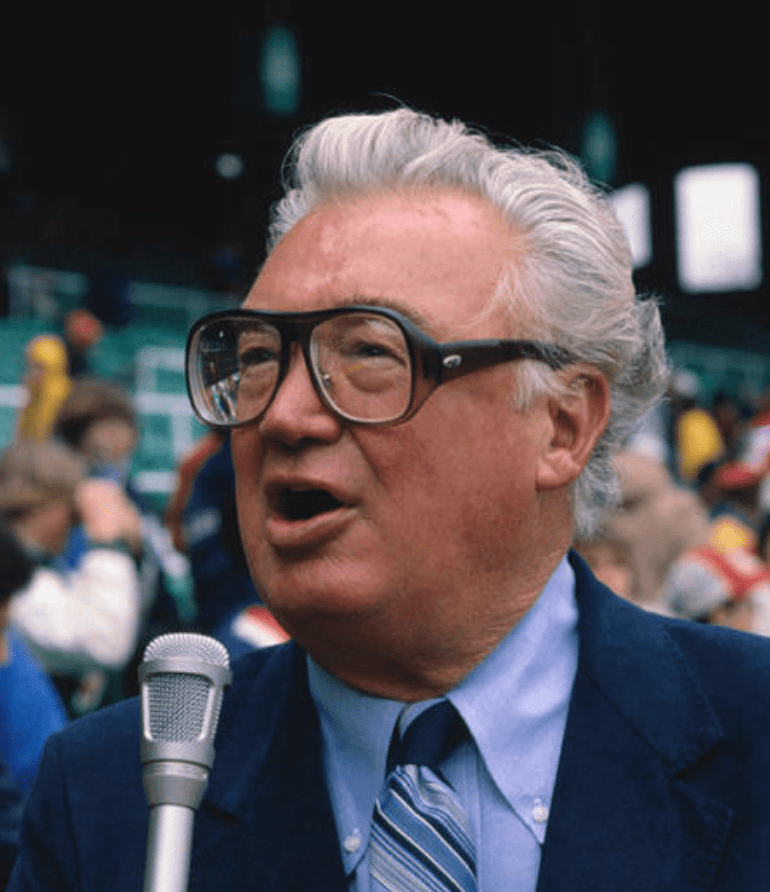
Reliving Harry Caray’s Magic: A Cubs Story

GROFF MEDIA 2024© TRUTH ENDURES IMDBPRO

Presented by benandsteve.com By: Benjamin Groff II©

2–3 minutes

My Afternoons with Harry Caray

The sun beat down outside. The heat rolled in waves off the pavement. Inside my living room, the air was incredible, and the beer was ice-cold. It was that time of day again—my afternoons with Harry Caray.

The ritual was sacred. A six-pack, fresh from the ice chest, sat beside my recliner, already dripping with condensation. The TV crackled to life. There he was—Harry Caray, larger than life. His voice boomed through the speakers like an old friend stepping through the door.

“Holy cow! It’s a beautiful day for baseball!”

It didn’t matter where the Cubs were playing—Wrigley Field, St. Louis, Los Angeles—Harry brought the game home. The crack of the bat and the crowd’s screaming made each moment vivid. The agony of a blown lead and the thrill of a rally were more alive because Harry was calling it.

I took a long sip of my beer as the game unfolded, Harry’s voice rising and falling with every pitch.

“Ahhh, folks, that one just missed!”

he’d groan after a close ball.

“Boy, oh boy, you gotta be kiddin’ me!”

when the ump made a call against the Cubs. And when a fan made a barehanded grab in the stands?

“Let me tell ya, that guy deserves a contract!”

But no moment was more sacred than the seventh-inning stretch.

The organ at Wrigley Field fired up, and Harry’s voice slurred just enough to let you know he was enjoying the day as much as I was, belted out those legendary words:

“All right, Cubs fans, lemme hear ya! A one! A two! A three!”

And then it began:

“Take me out to the ballgame…”

I stood up from my chair, beer in hand, and sang along like I was in the bleachers. My voice didn’t hold a candle to Harry’s, but that didn’t matter. Our tradition was a shared experience that connected me to every other Cubs fan.

For those few moments, nothing else existed—just me, Harry, and the game.

When the ninth inning came, the excitement peaked. Whether the Cubs had pulled off a miracle or suffered another heartbreak, I lifted my beer. I then raised it one last time toward the screen.

“To you, Harry. Your legacy lives on in every Cubs fan. Holy cow, what a ride.”

A Journey Through Fields: Life Lessons from Uncle Neb

GROFF MEDIA 2024© TRUTH ENDURES IMDBPRO

Presented by benandsteve.com By: Benjamin Groff II©

2–3 minutes

An Uncle’s Field of Memories

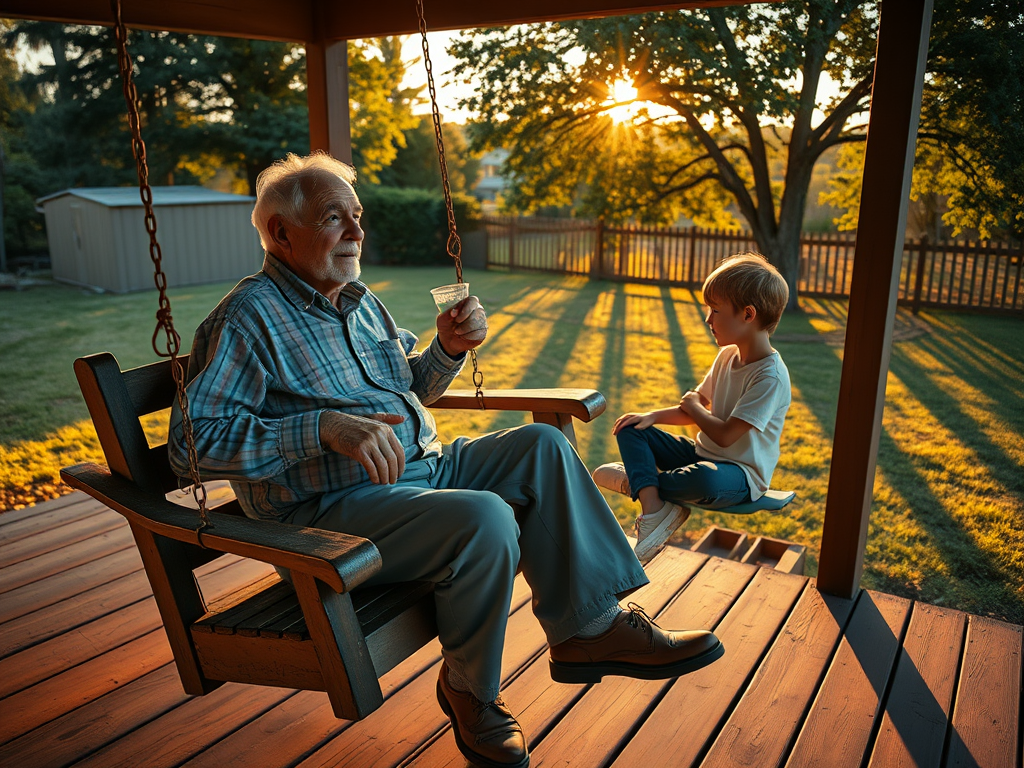
The older man rocked back and forth on the porch swing, the wood creaking under his weight. His nephew, Jake, sat cross-legged on the wooden planks, listening intently. The evening sun stretched its shadows long across the yard, the golden light flickering through the trees.

“You ever run through a plowed field, boy?” 

Uncle Neb asked, a slow grin spreading across his weathered face.

Jake wrinkled his nose. 

“Why would I do that?”

Ole Neb chuckled.

“Ah, you don’t know what you’re missin’. When I was your age, runnin’ through a fresh-plowed field was the best thing in the world. The dirt was soft, the furrows deep. Felt like jumpin’ across waves in the ocean—only, it was earth beneath your feet, not water.”

Jake smirked. 

“Sounds messy.”

“Sure was!”

Uncle Neb laughed. 

“And I’d get a good whuppin’ from your grandma for trackin’ mud in the house, too.”

He leaned back, sighing. 

“Every spring, my daddy plowed and prepared the land to plant maize and oats. That was our winter feed for the livestock. Down at the bottom of our place, we had an alfalfa field. Grew some of the best in the county, thanks to the floods from the neighbor’s lake.”

“Wait—you let your field flood on purpose?”

Jake asked, wide-eyed.

“Didn’t have a choice, boy! The heavy spring rains would swell that lake, and the water would just roll over into our land. But let me tell you, that soaked ground made the alfalfa thick and green. We never had to worry about our cattle goin’ hungry.”

Jake traced a knot in the porch wood with his finger. 

“You had cattle?”

“Sure did. Horses and chickens, guineas, goats—you name it. Had a big ol’ barn on the west side of the place where we kept ’em. But there was one animal I couldn’t go near—one of our milk cows. It is the meanest thing you have ever seen. That cow would lower her head and charge at me as soon as she spotted me.”

Jake grinned. 

“You were scared of a cow?”

Uncle Neb narrowed his eyes playfully. 

“You woulda been too, boy! Kids had tormented that cow before she came to us. Made her mad as a hornet. Your grandpa had to milk her himself ’cause she wouldn’t let nobody else close.”

Jake laughed. 

“Sounds like she had a grudge.”

“That she did. But that was life on the farm, son. You learned to work with what you had, respect the land, and steer clear of mad cows.”

Ole Neb winked. 

“Now come on, let’s go walk that field out back. Maybe you’ll see why runnin’ through dirt felt like flyin’ to a boy like me.”

Jake hesitated, then hopped up.

“Alright, Uncle Neb. But if I trip, you owe me ice cream.”

Neb laughed, his voice warm as the setting sun. 

“Deal, boy. Deal.”

And together, they walked toward the fields, the past and gift blending with every step.

Quiet Reflections: Harold Whitman’s Final Moments

GROFF MEDIA 2024© TRUTH ENDURES IMDBPRO

Presented by benandsteve.com By: Benjamin Groff II©

2–3 minutes

The Last Day

Harold Whitman woke before dawn, just as he had done for countless mornings. He stretched his aching limbs, feeling the stiffness permanently occupying his bones. The old house was quiet. Only the refrigerator’s soft hum and the occasional creak of settling wood were heard. This familiar symphony accompanied his every awakening.

He shuffled to the kitchen, brewed a pot of coffee, and sat at the window. He watched the sunrise paint the morning sky in shades of orange and pink. He savored the moment. The cup’s warmth was in his hands, and the faint aroma of the beans filled the air. His late wife had always loved those beans.

Today, he decided, would be a good day.

After breakfast, Harold walked to the park, as he had done for decades. He fed the ducks at the pond. He nodded to the joggers and dog walkers. They had become familiar faces over the years. These interactions, though brief, were like tiny rays of sunshine in his otherwise solitary life. A young boy, no older than six, waved at him from the swings. Harold smiled and waved back.

At the corner store, he bought a piece of his favorite caramel candy and an extra for the cashier. Marisol, a sweet girl, constantly reminded him of his granddaughter.

“You spoil me, Mr. Whitman,”

she said, laughing as she unwrapped the treat.

“Someone’s got to,”

he replied with a wink.

In the afternoon, he visited the cemetery. He sat on the bench beside his wife’s headstone, tracing her name with his fingers. The silence of the place soothed his soul. He felt a strange comfort thinking about joining his wife.

“I think I’ll be seeing you soon,”

he murmured.

“Maybe later tonight.”

There was no fear in him—just a quiet knowing.

Before heading home, he stopped by the diner, ordering a slice of apple pie and a cup of black coffee. The waitress, Lucy, patted his shoulder.

“You always get the same thing,”

she teased.

“Because I know what’s good,”

he said with a grin.

That evening, Harold sat in his favorite chair by the window, where the sunset bathed the room in golden light. He opened a book, though he barely read the words and content to hold it.

When sleep came, it was gentle, like slipping into a warm embrace.

Harold’s heart gave its final beat, and he sighed with quiet satisfaction. His last day had been good, a testament to the peace and acceptance that filled his heart.

A Love That Endures

GROFF MEDIA 2024© TRUTH ENDURES IMDBPRO

Presented by benandsteve.com By: Benjamin Groff II©

2–3 minutes

Anna sat on the edge of her porch swing, the crisp autumn air wrapping around her like a familiar shawl. She cradled a weathered photo album filled with snapshots of a life well-lived with her husband, Thomas. Though he had passed a year ago, his presence lingered in every corner of their home. She noticed the faint scent of his aftershave in the closet. The carved wooden birdhouse he made hung by the garden. The laughter seemed to echo from the walls.

The sun dipped below the horizon. It painted the sky in hues of orange and violet. Anna whispered, “Death have taken your body, Thomas, but you’re still here.”

In the quiet, she remembered the words their pastor had spoken at his funeral: *Death takes the body. God takes the soul. Our minds hold the memories. Our hearts holds on to the love. Our spiritual beliefs let us know we will meet again.

Her memories of Thomas were not just memories, they were vibrant, living moments. They replayed in her mind like a cherished movie. She saw how his eyes crinkled when he smiled. She heard his deep belly laugh. She felt the strength of his hand in hers as they danced in the kitchen.

Though grief often pressed against her chest, her heart was not empty. It was full of love—a love that hadn’t dimmed with time. She placed a hand over her chest and smiled. She knew it was where Thomas still resided. He was a glowing ember that would never go out.

Every Sunday, Anna would visit the little white church where they had exchanged vows so long ago. She found not just solace, but peace there, her faith bridging the earthly and the divine. She believed Thomas was in God’s care now, his soul at peace, waiting patiently for her.

One evening, as she closed the photo album, she noticed the first star twinkling in the sky. She gazed upward and whispered, “I’ll see you again, Thomas. Until then, I’ll carry you here.” She touched her head. “Here.” She placed her hand on her chest. “And here.” She folded her hands in prayer.

At that moment, Anna felt a warmth envelop her. It seemed like Thomas himself was reminding her. Real, enduring love that never truly is separated by time or space.

She smiled and rocked gently on the swing, humming the melody of their favorite song. The stars above her were a quiet witness to the eternal connection between two hearts.

A Last Breath in Elk City –– An Emergency Calls Impact

Groff Media 2024© Truth Endures IMDbPro

Presented by benandsteve.com By: Benjamin Groff II©

2–4 minutes

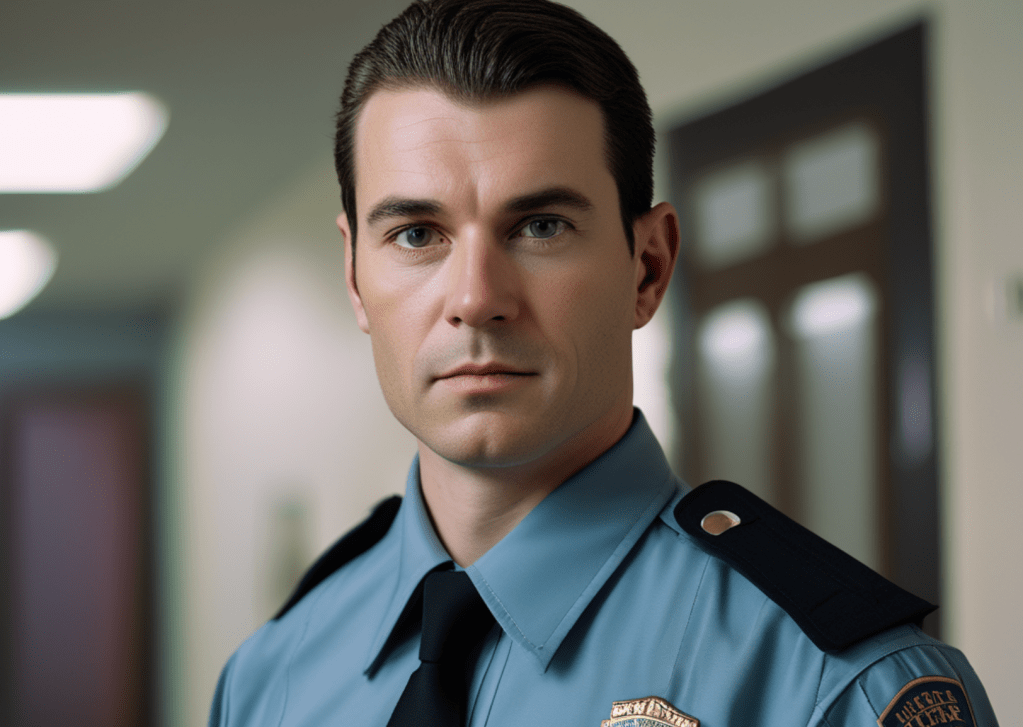
Officer Ben Groff was sipping his coffee when the dispatcher’s voice crackled over the radio:

Ben’s heart sank. Unresponsive calls rarely ended well, but there was no time for speculation. He flipped on his patrol car’s lights, the urgency of the situation palpable, and sped through Elk City’s quiet streets.

Pulling up to the modest brick house, upon arrival, Ben was met by the frantic figure of a woman waving her arms. Her cries cut through the crisp evening air.

“Help him! Please, he’s not breathing!” 

She screamed, her voice thick with terror and desperation, cutting through the crisp evening air.

Ben rushed through the backyard gate to find a man sprawled on the grass. His skin had a bluish tinge, his lips ashen. A can of tobacco lay spilled nearby, and the faint, acrid scent of chewing tobacco lingered in the air. Without hesitation, Ben dropped to his knees and began chest compressions.

“Stay with me, buddy!” 

He muttered, counting each press. He tilted the man’s head back and prepared for rescue breaths. As his lips met the man’s, the bitter taste of tobacco hit him like a punch. He pushed past the revulsion, determined to do everything he could.

Minutes felt like hours as he alternated compressions and breaths. The wife, clutching her robe, sobbed uncontrollably nearby.

The wail of the Elk City Fire Department’s engine announced the arrival of help. Firefighters and paramedics streamed into the backyard, their calm precision contrasting with the chaos. The wife’s sobs turned into hopeful gasps as they quickly took over, attaching monitors and preparing to transport the man.

Ben stood back, his chest heaving, sweat mixing with the cool night air. The lead paramedic gave him a somber shake of the head. “We’ll do what we can on the way.”

The wife collapsed to her knees.

“He can’t be gone! He just can’t!” 

She cried, clutching at Ben’s uniform. He knelt beside her, steadying her trembling shoulders.

“Ma’am, listen to me,”

He said gently.

“Let’s get you to the hospital. I’ll take you.”

Ben helped her into his patrol car and jumped into the driver’s seat. With lights and sirens blazing, he circled Elk City’s streets, his mind racing. This kind of call never left you—the taste of desperation as real as the tobacco on his tongue, the weight of every life lost or saved resting heavily on your shoulders.

As they reached the hospital, Ben parked and helped the woman inside. She stumbled into the emergency room, her cries echoing in the sterile space. He stayed close, quietly offering whatever comfort he could, the uncertainty of the man’s fate hanging heavy in the air.

“Thank you for trying,” 

The medical team wheeled the man into the ER, leaving Ben and the man’s wife in a stark, quiet waiting room. She gripped his arm as though it were a lifeline.

She whispered between sobs.

Ben nodded, feeling the weight of her words. In a job where victories were rare, and heartbreak was plenty, sometimes all you could do was try. And for this woman, in her darkest hour, his effort mattered. Officer Groff remained with the lady until her family arrived to hear the news and begin to support her grieving. The heartbreaking call was not the first for Groff and would not be the last!

Navigating Ethics in Law Enforcement

Groff Media 2024© Truth Endures IMDbPro

Presented by benandsteve.com By: Benjamin Groff II©


4–5 minutes

After completing my training, I got assigned to a two-person unit for part of my shift. Unfortunately, this arrangement led to the exposure of my partner’s extramarital affair with a young woman who worked at a nightclub on the city’s east side. His behavior was hard to ignore. Night after night, he would leave the patrol unit to spend hours inside the club, leaving me alone to monitor radio calls. Each absence grew longer and my frustration deeper.


The city grappled with a surge in burglaries targeting vehicles, garages, homes, and businesses. As crime reports piled up, the department needed to be closer to solving the problem. Sitting in the patrol car logging incidents while my partner dallied at the bar weighed heavily on me. Worse, my delayed response times to calls had begun to draw attention, placing me in a difficult position.

Addressing the issue felt like navigating a minefield. On one hand, I had a duty to uphold the integrity of our patrol duties. On the other, reporting my concerns to a sergeant or lieutenant risked exposing my partner’s personal life, which I preferred to avoid. Going over their heads to the Captain or Major felt equally precarious. However, during my travels to pistol shooting competitions, I established a good rapport with the Chief of Police. I decided to take a chance.


One afternoon, I invited the Chief for coffee to discuss an upcoming qualification event. Once seated, I confessed my more profound concerns. I told him about my partner’s absences, the nightclub, and the woman I suspected was involved. I explained why I had yet to go through the chain of command and emphasized that my primary concern was the integrity of our patrol duties. To my relief, the Chief not only understood but also reassured me that I had made the right choice. His promise to handle the situation discreetly was a weight off my shoulders.


A week later, the schedule was released, and to my disappointment, I again got paired with the same partner. The pattern continued, with him vanishing into the nightclub and leaving me to manage radio calls alone. Frustration mounted, but I stayed focused on my responsibilities.
At the following briefing, Lieutenant Wheeler announced a significant change: I would get assigned to a solo unit. My former partner, now in a solo unit, would no longer work with me. Other patrol officers, except the K9 unit, were paired up. The decision felt like a small but meaningful vindication, a recognition of my commitment to upholding the integrity of our patrol duties.


Working solo was a challenge. Within my first three days, I responded to two fatal calls—more than many officers encounter in a month. However, I was not alone. I appreciated the support of my fellow officers, who often checked in during traffic stops or guided me through the intricacies of field reporting. Their support was a testament to the camaraderie in law enforcement and the importance of teamwork.


One night, around 1:00 AM, I intercepted a burglary alarm call at a sporting goods store. I was close to the location and informed dispatch I would respond. Oddly, my former partner claimed the call, though he was across town. Dispatch redirected him to return to headquarters instead. I only thought of it once I reached the station later.


The pieces fell into place. The Chief observed my partner’s behavior, noting how long his patrol unit lingered at the nightclub each night. The Chief orchestrated a fake alarm call to confirm his suspicions and monitored my partner’s response time. This thorough investigation led to the end of my partner’s career; he resigned the following day.


The aftermath was messy. My former partner left town with the barmaid and her four children, abandoning his wife of many years. She was devastated and began calling the department, requesting me by name to visit her. I got met with her anguish and accusations each time: “Why didn’t you tell me?” At just 21 years old, I struggled to understand why she held me responsible for policing her husband’s fidelity.


While I tried to console her, the experience left a deep impression. It wasn’t just a lesson about personal integrity and the far-reaching consequences of a lack of it. From then on, I made it a point to know my partners better, ensuring they had solid personal ethics or no attachments that could spill into their professional lives.


This early chapter of my career shaped my approach to law enforcement. It reminded me that while we wear a badge to uphold the law, we also carry the weight of trust—not just from the public but from those who depend on us, on and off duty. The importance of personal integrity in law enforcement cannot be overstated. It is not just about following the rules, but about the impact of our actions on the lives of others.

Pehr Gustaf Gyllenhammar, Former CEO and Chairman of VOLVO –––– ––– April 28, 1935 – November 2024 ––– 

Groff Media 2024© Truth Endures IMDbPro

Presented by benandsteve.com By: Benjamin Groff II©


2–3 minutes

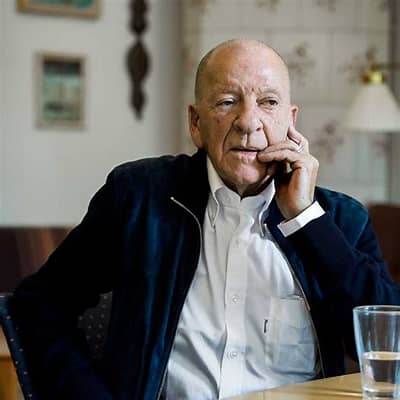
Pehr Gustaf Gyllenhammar, a visionary Swedish businessman whose leadership and influence extended across industries and continents, passed away in November 2024 at 89. Born in Gothenburg, Sweden, on April 28, 1935, to Pehr Gyllenhammar Sr. and Aina (née Kaplan), Pehr G. Gyllenhammar was a man of profound intellect, ambition, and a global vision that inspired many. 

Gyllenhammar is best remembered for his transformative tenure as CEO and chairman of Volvo from 1970 to 1994, during which time he led the company through a period of dynamic growth and innovation, leaving an indelible mark on the automotive and industrial sectors. His bold attempt to merge Volvo with Renault in the 1990s exemplified his forward-thinking, even as it marked the end of his career with the company.  

Beyond Volvo, Gyllenhammar’s career spanned various leadership roles, including Aviva’s chairman and Rothschild Europe’s vice chairman. A fervent advocate for European industrial collaboration, he co-founded the European Round Table of Industrialists, promoting cooperation among the continent’s leading companies.  

His contributions were recognized with numerous accolades, including France’s *Ordre National du Mérite* in 1980 and the *Legion of Honour* in 1987. In 2001, he was named an Honorary Master of the Bench of the Inner Temple in London.  

Gyllenhammar’s intellectual curiosity and political engagement made him a public figure beyond the boardroom. An early proponent of social liberalism, he championed the Scandinavian model of governance and was a vocal advocate for European unity. His political views and engagement with social issues often influenced his business decisions, making him a unique and influential figure in both the political and business spheres. At one point, he was even considered a potential leader of Sweden’s Liberal People’s Party.  

He balanced his professional endeavors with a rich personal life. He married Christina Engellau, the daughter of Volvo’s former CEO, in 1959 and shared nearly five decades with her until her passing in 2008. Together, they raised four children—Cecilia, Charlotte, Sophie, and Oscar—each of whom carved out successful paths in the arts, business, and design. Later in life, Gyllenhammar found love again, marrying Lee Welton Croll in 2013, with whom he welcomed a child in 2016.  

A man of deep conviction, Gyllenhammar exemplified leadership and resilience, leaving an indelible mark on the business world and the communities he served. His resilience in the face of challenges is a testament to his character and the impact of his legacy. He is survived by his wife, Lee, his five children, and a legacy that will inspire future generations.  

A private family service will honor his memory. The service, which will be held at a private memorial, and will be a time for family and close friends to share their memories of Gyllenhammar and celebrate his life. In place of flowers, the family requests donations to causes reflecting Gyllenhammar’s dedication to innovation, education, and European unity.

Remembering Henderikus “Pim” Sierks (10 March 1932 – 7 November 2024) The Brave Pilot

Groff Media 2024© Truth Endures IMDbPro

Presented by benandsteve.com By: Benjamin Groff II©

Henderikus “Pim” Sierks, a Dutch aviator known for his bravery and unwavering dedication both in military and civilian aviation, passed away on 7 November 2024, at the age of 92. Born in Haren, Groningen, on 10 March 1932, Sierks devoted his life to the skies, first serving with distinction in the Royal Netherlands Air Force before transitioning to a celebrated career as a commercial airline captain with Transavia.

Sierks trained with the Royal Canadian Air Force, where he gained experience on various aircraft, including the Airspeed Horsa, Auster AOP.6, and Avro 626. Back in the Netherlands, he became one of the foremost pilots of the Hawker Hunter fighter jet, serving over 11 years in the Royal Netherlands Air Force and solidifying his reputation as a skilled and disciplined aviator.

In 1974, Captain Sierks’ legacy was cemented during the infamous French Embassy hostage crisis in The Hague. When three Japanese Red Army members stormed the French Embassy and demanded a French aircraft to facilitate their escape, Sierks bravely volunteered to captain the flight. He skillfully negotiated with the hostage takers, gaining their assurance for the safety of his crew and the hostages, then flew them from Amsterdam to Damascus, Syria, with a critical refueling stop in Aden, Yemen. Sierks’ calm courage in this tense, unpredictable situation was hailed as exemplary, and he returned safely to deliver both the money and weapons back to the French Embassy in Damascus.

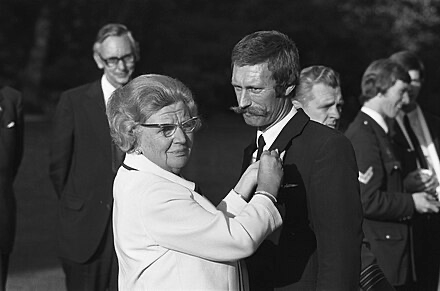
For his heroism, Sierks was awarded the Knight Grand Cross of the Order of Orange-Nassau by Queen Juliana, in addition to the Order of the Netherlands Lion and the Airman’s Cross. His actions that day made him a national hero and exemplified his lifelong dedication to duty, courage, and peace.

Following his career, Sierks moved to West Sussex, England, where he enjoyed a quiet life in retirement. He is remembered as a loving father, devoted friend, and a gentleman whose life and career left a mark on Dutch aviation history.

The world is going to POT, and we are watching it go!

A view of the world as it is today by: Benjamin Groff II© Groff Media 2024© Truth Endures IMDbPro

My dad and grandfather are gone now, but neither would support a liar, cheat, rapist, insurrectionist, dictator, or someone who supports one, or generally speaking, a creep or ‘weirdo.’ 

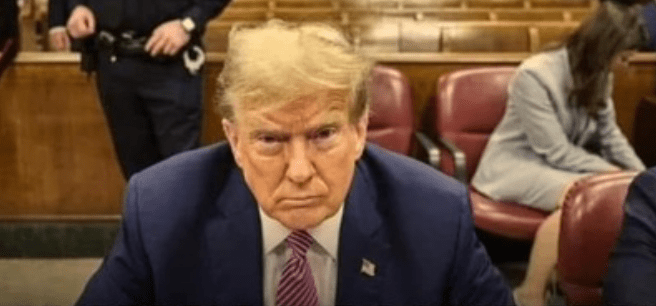
There are other reasons you can look at as well. For instance, a candidate such has a sexual offense judgment against him, and he is under indictment for countless federal crimes; in the last year, one of the candidates was in the air, flying, on their way to being arrested, just as much as he was campaigning at one point. 

One or more of those reasons would have been reason enough to consider looking into the person’s background. And three to four, would have been reason enough to reject a person all together. Someone who was strongly running for public office would have been rejected. Now, the GOP considers it a qualification required for all Republican candidates.

The candidates have endorsements from KKK members. They boast about, a presidential politician having endorsements from dictators. They wallow in such markings, and candidates publicly brag about laws they will violate first, if elected. And this makes them the most qualified candidate. Going as far as boasting about becoming a dictator. Going about telling people this is the last election they will have to worry about voting in. 

Why? Does that mean the Constitution is going to get ripped apart, shredded, and there will no longer be a United States where the people choose its leaders? It appears it doesn’t matter to the people who are numb and following this character. They appear to have zoned out of reality. 

My grandfather, father, uncles, aunts, and even a few dogs and horses I’ve had would not have allowed the goings on to persist. The greatest generation has died chiefly off; fewer of them now than ever are living, which sadly shows in our world. They were the ones who knew what happens when the world that falls to fascism. When reality hits and the world dies. It is beginning as America will turn grey; it will become a black-and-white construct of anything anyone remembers of its being, if these destructionists are permitted to have their way with the country. We only hope enough voters come to the polls and and vote, and save our America!

My dad had a favorite saying: the older I got, the wiser he’d get. And he was right; I wish he were here to help us out of this madness!

JD Groff At Rest And Getting Wiser Every Day!

The Impact Of Loss: Remembering A Childhood Best Friend For Life

A True Story By: Benjamin Groff II© Groff Media 2024© Truth Endures

When I was just eight years old, death was a concept that I hadn’t fully grasped. The only time it touched my life was when my grandparents’ neighbor, a gentleman named Tom, passed away. I was only seven then, and it happened so quickly that it didn’t leave a deep mark. My grandfather had sat up with Tom the night before he passed, a tradition people followed back then—sitting with the dying. It was a tradition, and my dad would continue the practice as I grew up, sitting with many men in our small town of 750 souls. I always wondered why he was asked to do that.

That night, when Pop, my name for my grandfather, went to sit with Tom, it was just my grandmother and me alone in their big, quiet house. It felt different without him there. Early the following day, around 6:00 AM, my grandmother and I were preparing breakfast when Pop came in through the backdoor. He quietly spoke to her, and I suspected what had happened. Mom, my grandmother, suggested I open the dining room door to let the morning light in. As I did, I overheard their conversation growing louder, and when I looked outside, I saw a hearse slowly pulling up to Tom’s house. I knew Tom had passed.

A few days later, my grandmother took me to his funeral, and Pop was one of the pallbearers. It was the first time I ever saw a person in a casket, and Tom still looked like Tom. After the service, my grandmother praised me to my father, saying I behaved so well—sitting quietly and respectfully. I thought I was just being myself. In those days, grandparents didn’t need to ask permission to take their grandchildren anywhere—funerals, courthouses, doctors’ offices, or even jails. The places they took me were some of the most fascinating.

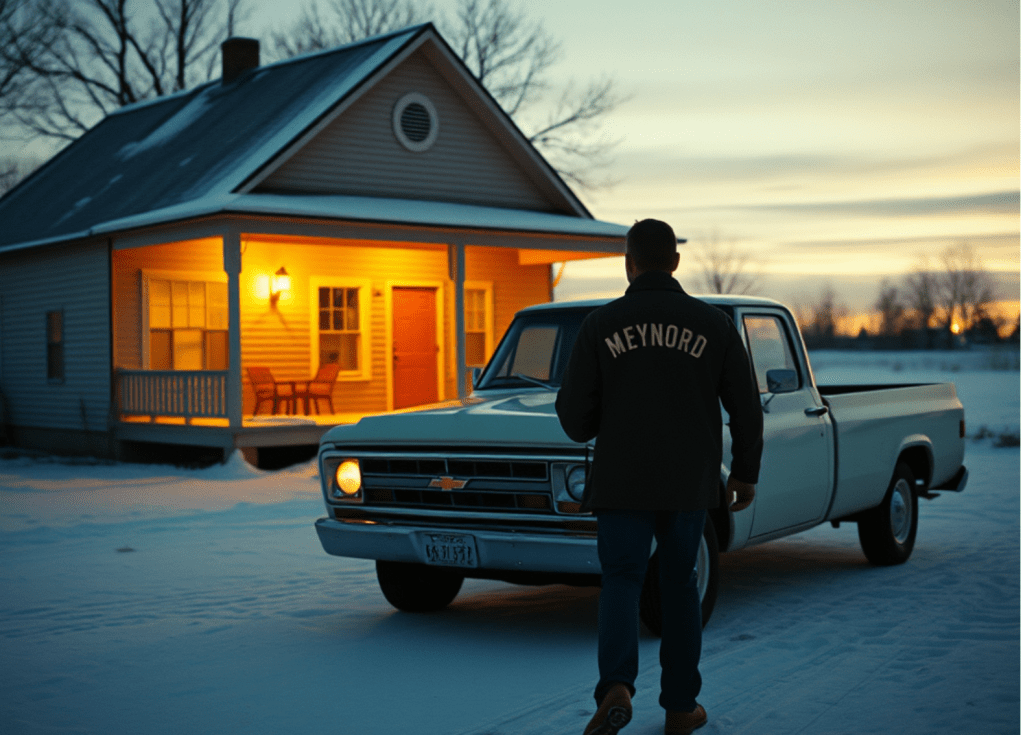
But this story isn’t about Tom. It’s about someone much closer to my heart, a man named Maynord Rider, one of my dad’s dearest friends. Maynord often accompanied us to horse sales on Friday and Saturday nights, and I thought the world of him. He lived two miles south of our farm, a farmer like many others in our area. One cold winter night, our water well froze, and my dad had to drive out over the pasture to fix it. When his headlights passed over Maynord’s bedroom windows, Maynord, instinctively knowing we were in trouble, got out of bed, climbed into his old white Chevrolet pickup, and drove to our house. He pulled up with a five-gallon water thermos and asked if our well had frozen. My mother was surprised—how could he have known? When my dad returned, he asked,

“Maynord, what are you doing here?”

They talked, and it turned out Maynord had guessed right. My dad told him there was no use in fixing it in the dark, and they’d work on it the next day. My dad promised to let Maynord help him the following morning to get him to leave.

There were many stories about Maynord, but they all ended one Thursday in September 1971.

It was the start of a four-day weekend from school due to a statewide teachers’ meeting. The day was beautiful for September in Oklahoma—warm with the usual breeze. I had been pestering my oldest sister, who was tasked with watching me and my other sister. It was just after noon, and the day felt perfect—no school, no bus to catch, just freedom. Then the phone rang. My oldest sister answered, and I could hear her voice change as she said,

“Oh no!” followed by, “I’m not telling him. You should.”

A moment later, she said,

“Mother wants to talk to you.”

I ran to the phone, stretched the cord as far as it would go, and answered.

“Yes, Mother!”

I said, but I could hear a siren approaching in the background. My mother’s voice was calm but direct,

“Benji, Maynord Rider just dropped dead.”

The words hit me like a punch, and I dropped the phone, screaming.

The news hit me like a physical blow, and I dropped the phone, screaming. The rest of the day is a blur, but I remember Ryder, the dog Maynord had given me, howling at the front door, leaning against it as if he, too, understood what had happened. None of the other dogs made a sound—just Ryder, the one I had named after Maynord’s last name.

I wouldn’t see my dad for hours, but I learned the whole story when I did. Maynord had come in from working on the farm for lunch. He ate, felt a bit of indigestion, and decided to lie down for a nap. While his wife, Bonnie, worked in the kitchen, she heard a moan, and when she went to check on him, she found him unresponsive. Panicked, she called my dad at the barbershop, where he cut hair. When he got the call, he told her to call the ambulance and that he’d be there immediately. He told the customers in his shop what had happened, leaving the man in his chair and the shop open as he rushed out.

Driving his Buick Le Sabre station wagon, my dad said the speedometer hit 120 miles per hour as he raced to Maynord’s farm, hoping to get there in time. Hearing this story comforted me, knowing that my dad did everything he could, even though we had lost one of the best men I had ever known.

That Friday night, my parents took me to see Maynord at the funeral home. It was more complicated than when I had seen Tom in his casket. The grief was overwhelming, and I couldn’t contain my tears. It felt like the worst day of my life. For years after Maynord’s death, I would look up at the sky, hoping for some way to talk to him again, but that day never came.

Eventually, I learned that, in life, there would be days harder than that one—the loss of my grandparents and my dad—, but somehow, we keep going, hoping that one day, someone will see our headlights coming over the hill and come to help us, just like Maynord did for us.

Reminiscences

A True Story By: Benjamin Groff© Groff Media 2024© Truth Endures

When the youngest officer on duty is the only resource available, the weight of responsibility rests heavily on his shoulders, underscoring the significance of his role.

Our town’s police force was small, with just twelve officers. Eight were assigned to the streets, patrolling, responding to calls, controlling traffic, and maintaining visibility. The remaining four worked in the office, answering phones, dispatching calls over the radio, and managing the jail’s inmates. The officers rotated between desk and patrol duties, ensuring they stayed sharp and well-versed in all aspects of the job.

Most shifts saw only one officer on patrol and one in the office. This lean staffing was the backdrop when I first joined the police department and met Chief Marion Toehay Jr., known to me simply as Junior or Chief.

Junior and I formed a friendship that spanned over fifty years. Together, we witnessed the stark realities of life and death, often arriving too late to save those in peril. The helplessness we felt in those moments was crushing, made worse by the accusing stares of grieving families who saw us as their last hope.

One such event took place at a State Park east of the City. We arrived in a secluded area and noticed a boat stalled in the middle of the lake. The people onboard were waving and shouting, but their words got lost in the distance. As we waved back, trying to assess the situation, it became clear the boat was sinking.

We shouted for them to stay with the boat, realizing quickly that we couldn’t reach them from where we stood. We jumped back into the car and raced toward the dam, sirens blaring and lights flashing. Junior was on the radio, desperately calling for the Lake Patrol or anyone with a boat to respond. But the only way to reach the sinking boat was to drive fifteen miles around the lake on rural roads.

When we arrived, only the boat’s nose remained visible, bobbing on the water. A man clung to it, the sole survivor. He told us that a father and his two children had drowned, trying to swim to shore instead of staying with the boat.

At that time, the Oklahoma Lake Patrol was often assigned to different lakes, a reality dictated by tight state budgets. Law enforcement presence on lakes was inconsistent, as it may still be today in some areas. The Lake Patrol recovered the bodies of the father and his children that night and the following day.

Junior and I found ourselves witnessing several drownings, often by tragic coincidence, whenever we were near the lake or river. It seemed almost inevitable.

The department was also where I encountered my first homicide—a brutal murder-suicide that has stayed with me. A couple going through a divorce ended their marriage in violence. The husband had hidden in their home, and when his wife returned to gather belongings, he slipped up behind her and shot her in the back of the head. She crumpled to the floor, unaware of his presence or intent.

He then went to the bedroom, entered the ensuite, and used a shotgun loaded with double-ought buckshot to end his own life. The blast obliterated his face, leaving a gruesome scene with skull fragments embedded in the ceiling and blood splattered across the walls. Fingerprints confirmed his identity, but everyone in town knew who he was.

That was my first assignment at 18, in a department stretched thin. A pow-wow was happening in town, and every officer was working overtime. The City’s ambulance had to transport a critically ill prisoner to a hospital 50 miles away, and someone had to accompany them. It fell to me. Despite having just finished a 12-hour shift, I boarded the ambulance at 7:00 AM, the roads shrouded in fog as we responded to Code 3. The nurse was upset that I’d handcuffed the combative prisoner to the stretcher, and the driver got lost on the way. It was chaotic, but in many ways, it was one of the best times of my life.