The Mayor Who Helped Kill Women

GROFF MEDIA 2024© TRUTH ENDURES IMDBPRO

Presented by benandsteve.com By: Benjamin Groff II©s

6–8 minutes

Jethro’s patrol car rounded the corner in the middle of the night. He had been around the block once before. His patrol practices always involved retracing where he had been. Burglars would often wait for a police car to pass and then start their craft. This practice by Jethro helped him lead the department in felony arrests for two years. 

Half-dressed a week earlier, he had come across the Town’s Mayor. The Mayor, Tim Awning, was running across the front lawn of a residence. Jethro had to calm him down. He then heard a story that the Mayor had been a victim of a holdup. Reportedly, a group of thugs had taken his car. The Mayor’s story was in bits and disoriented. Oddly, Mayor Awning said he only wanted to go home. He didn’t want to file a report. 

While driving the Mayor to his home, they came upon his car less than a block away, and Mayor Awning said –

“Stop here; I have an extra set of keys; I will drive it home myself.”

Jethro thought it odd that the Mayor didn’t want to file a report. Even more suspicious, the Mayor insisted that looking inside was useless. He said whatever the hooligans may have done was not an issue. Mayor Awning went even further, insisting Officer Jethro not look into his vehicle. The Mayor claimed his right to privacy through search and seizure rights. 

Now, Jethro was patrolling the same area. He cruised slowly. His patrol car’s lights were turned off, and the windows were rolled down so he hear. Near where Jethro had come upon the Mayor a week earlier, he went to a near stop. The hair on his neck started to rise; his sixth instinct was telling him something, but what? He crept his patrol unit further when he heard a lady screaming. He stopped and tried to find where the screams were coming from.

He looked over his right shoulder. He saw a lady in night clothes running across the front lawn of a home. The same home he had come across the Mayor. He radioed his headquarters his location and told the operator he was out with a distressed resident. The operator sent an extra unit as a precautionary measure. As Jethro exited his unit, he turned on his overhead red and blues, and the lady ran to him screaming –––

“Officer, it isn’t good. I can’t believe it. I just got home and changed for the night. I went in to say goodnight to my roommates. They are all dead. Blood is everywhere!”

Officer Jethro wasn’t sure what to make of the hysterics. But he asked her to catch her breath. And told her another unit was responding. Understanding that whatever she sees is in the house was dramatic he told her they are safe outside. He made sure she had a seat in his unit. Then, he waited for the backup officer to go into the home to see what she had reported. 

The backup arrived. Her name was Officer Jilly. Jethro and she worked together in the South Division for over a year. As they entered the home with their weapons drawn, they went from room to room, securing it. Finally, in the back of the house, they came to the bedroom where the carnage was found. Three women were found slashed to death.

Jethro’s gut twisted at the sight before him. Blood filled the room with a metallic stench. The dim light from the bedside lamp cast eerie shadows over the bodies. The women sprawled across the bed and floor, their nightclothes soaked in deep crimson. Jilly covered her mouth, swallowing the bile rising in her throat.

Jethro took a deep breath and turned to Jilly. 

“Call it in. We need the homicide unit and CSU here now.”

Jilly nodded and stepped into the hallway to radio for assistance. Jethro scanned the room, taking in every detail. There were no signs of forced entry. The door had been unlocked, and there was no shattered glass or overturned furniture. This wasn’t a robbery gone wrong. This was something else—something far more sinister.

Then, he noticed it: A single business card on the nightstand, smeared with blood. He pulled out a glove from his belt, careful not to contaminate any evidence, and picked it up. 

The card read:

Timothy Awning – Mayor

Jethro’s jaw tightened. His mind flashed back to the Mayor’s bizarre behavior a week earlier. He remembered the frantic running across the lawn. There was also the refusal to report the car theft. The Mayor insisted that Jethro does not look inside.

Jethro was a thorough officer. He made notes of everything, time-stamped his reports, and carried a voice-activated tape recorder in his patrol unit. Anything said inside the vehicle was considered public, and Officer Jethro had recorded the entire meeting with Mayor Awning. Now, he had a reason to review it.

“Jilly!” 

He called.

She reentered the room, her face pale. 

“What is it?”

Jethro held up the card. 

“We need to talk to the Mayor. Now.”

——

Mayor Tim Awning sat in his lavish den when Jethro and Jilly arrived. He held a tumbler of whiskey in his hand. 

His eyes flicked toward them, momentarily startled, before he forced a grin.

“Well, Officers, this is a surprise,” he said, shifting in his chair. “What brings you to my home at this hour?”

Jethro stepped ahead, tossing the bloodied business card onto the coffee table. 

“We just left a crime scene. Three women were murdered in the same house where we found you last week.”

Awning’s face paled, but he quickly regained his composure. 

“That’s—terrible. But I don’t see what that has to do with me.”

Jilly folded her arms. 

“Your business card was found at the scene.”

Awning scoffed. 

“I’ve given out thousands of those over the years. That proves nothing.”

Jethro leaned in.

“Your behavior last week was unusual. You were running half-dressed across the lawn. You claimed your car was stolen but refused to file a report. What happened that night, Mayor?”

Awning’s grip on the tumbler tightened. 

“I told you what happened.”

Jethro’s voice dropped. 

“No, you told me a story. But the real story is that you were at that house that night. You saw or did something that made you run. And I think whatever happened, it’s connected to what we found tonight.”

Awning’s jaw clenched. Beads of sweat formed at the Mayor Awning’s temples. Jilly took a step closer. 

“Where were you tonight, Mayor?”

Awning exhaled sharply and downed the rest of his whiskey. He set the glass down with a sharp clink. 

“At home. Alone.”

Jethro exchanged a glance with Jilly. They had him.

——
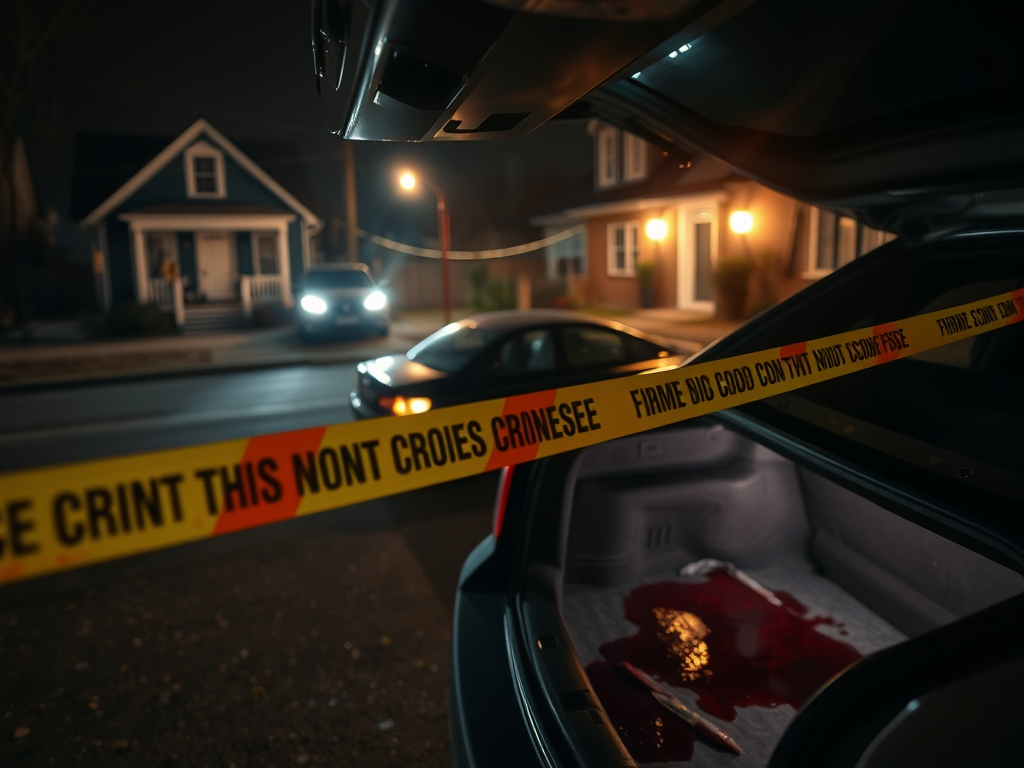
The crime scene investigators recovered more evidence. Fibers from the Mayor’s vehicle matched traces found in the victims’ home. Security footage showed his car in the vicinity the night of the murders. And then there was the most damning piece of evidence—blood found in the trunk of his car.

Faced with overwhelming proof, Mayor Awning finally broke. He confessed that he had been involved in a secret arrangement with influential figures in town. The house was where illegal dealings occurred—deals that had gone wrong. That night a week ago, he had seen a gruesome execution. He panicked and fled, leaving behind his car. The killers, nonetheless, had unfinished business.

By the time Jethro and Jilly had put the pieces together, it was too late for the three women. But it wasn’t too late for justice.

Tim Awning was arrested, and his political career ended in disgrace. As he got led out of his mansion in handcuffs, the weight of his crimes hung heavy in the air. Jethro knew this case would haunt him. Nonetheless, at least now, the Mayor would finally pay for his sins. This Mayor had helped kill women.


Killed Walking Along The Highway – How A Killer Is Captured –– By Two Keen Deputies!

Groff Media 2024© Truth Endures IMDbPro

Presented by benandsteve.com By: Benjamin Groff II©

On a dark, silent night in 1980, the highways through Caddo County near the rural communities of Gracemont and Binger, Oklahoma, were deserted. Residents had long settled in their homes, leaving the quiet stretches of U.S. Highway 281 nearly void of movement. It was a time when law enforcement in rural Oklahoma had limited resources and technology, making cases like this all the more challenging to solve.

That night, an Indigenous man, Jasper Williams, had set out on foot from his home, heading south along a dirt road that eventually led to the pavement of Highway 281. It was common for community members to walk from one home to another, no matter the distance, and Jasper was going to a friend’s house. The night was pitch black, with no moonlight or streetlights to guide him, save for the faint outline of the highway stretching before him.

As Jasper walked, visibility was almost nonexistent. The road was shrouded in darkness, with no nearby lights to help him stay clear of the highway’s center. At some point, as he walked around six miles north of Gracemont—almost midway between there and Binger—tragedy struck. Jasper was hit by a passing vehicle, which left him severely injured on the side of the road. By daylight, he was found deceased, having bled to death, with no car in sight and no immediate reports of an accident.

Upon closer inspection, deputies discovered fragments of evidence scattered on Jasper’s clothing and body: broken glass, bits of chrome, a hubcap, and remnants of a car’s signal light and headlight assembly, as well as traces of paint. With these clues, investigators determined the incident might not be an ordinary accident but potentially a case of vehicular homicide.

Deputy Hamilton drove a
Ford Ranchero

The case was assigned as a homicide due to the absence of witnesses, the lack of any report from the driver, and the fact that the vehicle fled the scene. Caddo County Deputies Hamilton and Ware—both of whom have since passed—took on the painstaking task of finding the person responsible. Armed with the physical evidence, they began an exhaustive search of autobody shops across the county and surrounding areas, hoping to find a vehicle with damage matching the debris at the scene.

After several weeks, their search finally paid off. The deputies located a damaged vehicle that matched the evidence they’d collected. The owner was identified and subsequently interviewed, leading to the arrest of a man named Larry Johnson.

During questioning, Johnson admitted he had left a bar in Binger around 2 a.m. on the night Jasper was killed. On his drive home, he confessed to drifting in and out of sleep, initially thinking he had hit an animal, possibly a dog. However, he chose not to stop. Later, after hearing news of the fatal accident, he realized he was likely the driver involved but continued to hope he was wrong.

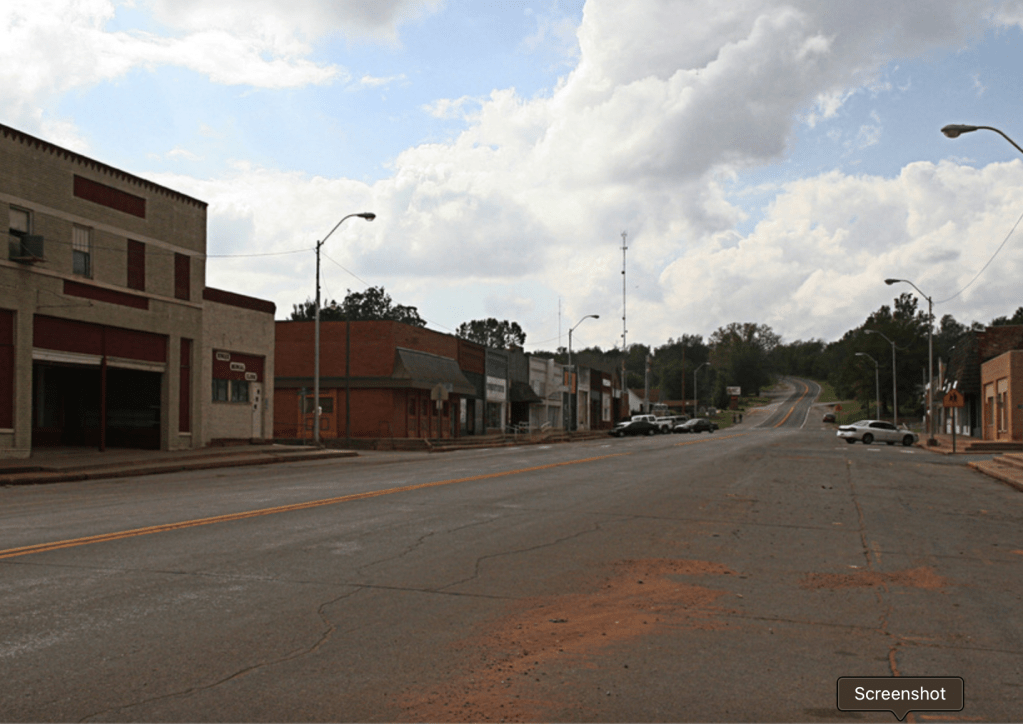
Binger Main St. There Were
Bars On Both Sides of Street.

Johnson was later tried in Caddo County, where a jury found him guilty of manslaughter. He was sentenced to serve 15 years at Oklahoma’s Granite Reformatory.

Note: Some names, dates, and details have been altered to protect individuals’ privacy.

“I AM AN INNOCENT MAN!” Did Missouri Kill An Innocent MAN? Was It Murder?

A Report By: Benjamin Groff© Groff Media 2024© Truth Endures

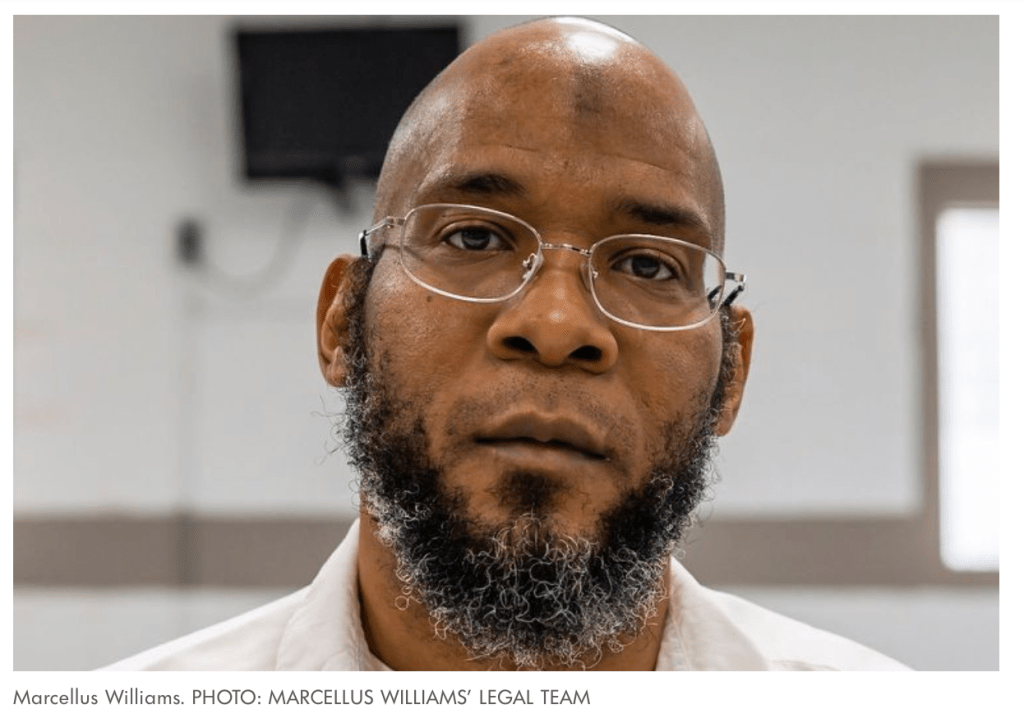
In September 2024, Missouri executed Marcellus Williams despite significant evidence casting doubt on his guilt. Williams was convicted for the 1998 murder of Lisha Gayle, a former St. Louis Post-Dispatch reporter, but recent DNA tests excluded him as the source of evidence found on the murder weapon. While Williams’ legal team sought a stay of execution, and even the prosecution expressed doubts, Missouri proceeded with the lethal injection after Governor Mike Parson dissolved a previous inquiry. His execution sparked widespread outrage, igniting debates on the reliability and ethics of the death penalty.

Williams’ final words were, “All praise be to Allah in every situation,” reflecting his unwavering faith. His attorneys argued that the DNA evidence should have been sufficient to overturn his conviction, but the courts dismissed this claim. In 2017, then-Governor Eric Greitens halted his execution and established a board to review the case, but this effort was reversed by Governor Parson, sealing Williams’ fate.

Even Gayle’s family had called for clemency, asking for Williams’ sentence to be commuted to life without parole. Despite their pleas, the state moved forward with the execution, leading to questions about whether justice had truly been served. The case has raised concerns about rushing death penalty cases and highlighted the dangers of executing potentially innocent individuals.

Williams’ case continues to fuel national debates over capital punishment and the failures of the justice system, particularly when substantial evidence suggests wrongful conviction. His death has become a rallying point for advocates pushing for reforms in the death penalty process, as critics argue that his execution may have been a tragic mistake. Was this mistake a murder carried out by the state of Missouri, and those who had the responsibility to stop it ––– the killers?

Reminiscences

A True Story By: Benjamin Groff© Groff Media 2024© Truth Endures

When the youngest officer on duty is the only resource available, the weight of responsibility rests heavily on his shoulders, underscoring the significance of his role.

Our town’s police force was small, with just twelve officers. Eight were assigned to the streets, patrolling, responding to calls, controlling traffic, and maintaining visibility. The remaining four worked in the office, answering phones, dispatching calls over the radio, and managing the jail’s inmates. The officers rotated between desk and patrol duties, ensuring they stayed sharp and well-versed in all aspects of the job.

Most shifts saw only one officer on patrol and one in the office. This lean staffing was the backdrop when I first joined the police department and met Chief Marion Toehay Jr., known to me simply as Junior or Chief.

Junior and I formed a friendship that spanned over fifty years. Together, we witnessed the stark realities of life and death, often arriving too late to save those in peril. The helplessness we felt in those moments was crushing, made worse by the accusing stares of grieving families who saw us as their last hope.

One such event took place at a State Park east of the City. We arrived in a secluded area and noticed a boat stalled in the middle of the lake. The people onboard were waving and shouting, but their words got lost in the distance. As we waved back, trying to assess the situation, it became clear the boat was sinking.

We shouted for them to stay with the boat, realizing quickly that we couldn’t reach them from where we stood. We jumped back into the car and raced toward the dam, sirens blaring and lights flashing. Junior was on the radio, desperately calling for the Lake Patrol or anyone with a boat to respond. But the only way to reach the sinking boat was to drive fifteen miles around the lake on rural roads.

When we arrived, only the boat’s nose remained visible, bobbing on the water. A man clung to it, the sole survivor. He told us that a father and his two children had drowned, trying to swim to shore instead of staying with the boat.

At that time, the Oklahoma Lake Patrol was often assigned to different lakes, a reality dictated by tight state budgets. Law enforcement presence on lakes was inconsistent, as it may still be today in some areas. The Lake Patrol recovered the bodies of the father and his children that night and the following day.

Junior and I found ourselves witnessing several drownings, often by tragic coincidence, whenever we were near the lake or river. It seemed almost inevitable.

The department was also where I encountered my first homicide—a brutal murder-suicide that has stayed with me. A couple going through a divorce ended their marriage in violence. The husband had hidden in their home, and when his wife returned to gather belongings, he slipped up behind her and shot her in the back of the head. She crumpled to the floor, unaware of his presence or intent.

He then went to the bedroom, entered the ensuite, and used a shotgun loaded with double-ought buckshot to end his own life. The blast obliterated his face, leaving a gruesome scene with skull fragments embedded in the ceiling and blood splattered across the walls. Fingerprints confirmed his identity, but everyone in town knew who he was.

That was my first assignment at 18, in a department stretched thin. A pow-wow was happening in town, and every officer was working overtime. The City’s ambulance had to transport a critically ill prisoner to a hospital 50 miles away, and someone had to accompany them. It fell to me. Despite having just finished a 12-hour shift, I boarded the ambulance at 7:00 AM, the roads shrouded in fog as we responded to Code 3. The nurse was upset that I’d handcuffed the combative prisoner to the stretcher, and the driver got lost on the way. It was chaotic, but in many ways, it was one of the best times of my life.

Riverton Police: A Night in the Life of Detectives Jake and Sam

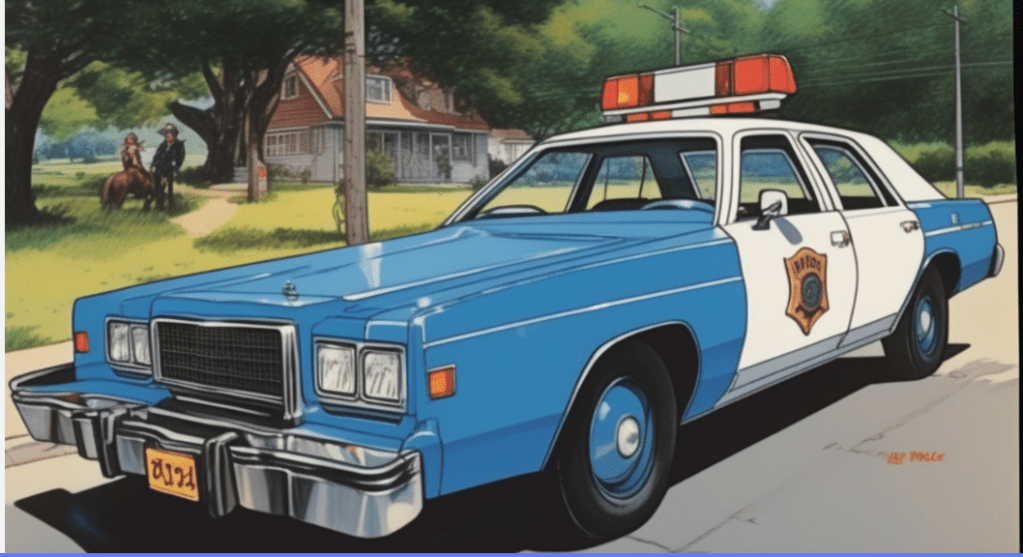
The city of Riverton never slept, nor did Detectives Jake Harris and Sam O’Reilly. Partners for over a decade roamed the nocturnal streets with the kind of synergy only best friends could muster. Their squad car, an unremarkable blue-and-white cruiser, was a beacon of hope for some and a symbol of fear for others.

Jake, with his gruff exterior and piercing blue eyes, was the kind of cop who could read a crime scene like a book. Sam, a lean figure with a quick wit and a knack for defusing tense situations, complemented Jake perfectly. Together, they led the department in felony arrests, arriving at calls faster than anyone else and building relationships with the community that others could only dream of.

One brisk autumn night, their radio crackled to life with a call that made their hearts race: an armed robbery in progress at the 24-hour diner on 5th and Maple. Without a word, Jake hit the lights and sirens, and they sped through the dimly lit streets. They arrived in just under three minutes, a record even for them.

The diner was eerily quiet as they approached, save for the distant hum of neon lights. Inside, a masked man brandished a gun, demanding cash from the terrified cashier. Jake motioned for Sam to flank the back entrance while he took the front.

Jake entered slowly, his voice calm but authoritative. ––––

“Riverton PD, drop the weapon and come out with your hands up.”

The gunman whipped around, eyes wide with panic.

From the rear, Sam’s voice cut through the tension.

“No, you won’t. You don’t want to hurt anyone. Put the gun down, and we can talk.”

The gunman’s grip on the weapon faltered. In that split second, Jake lunged forward, disarming him with a swift, practiced motion. Sam was at his side instantly, cuffing the man and guiding him to the squad car.

As they processed the scene, the cashier, a young woman named Maria, approached them with tears in her eyes.

“Thank you. I don’t know what would’ve happened if you hadn’t come.”

Jake gave her a reassuring nod. “Just doing our job, ma’am.”

The rest of the night was a blur of paperwork and patrols. But their most memorable interaction came just before dawn. While cruising through a quieter part of town, they spotted a boy sitting alone on a bench, clutching a backpack to his chest. They pulled over, and Sam approached him gently.

“Hey there, buddy. Everything alright?”

The boy, who couldn’t have been more than ten, looked up with tear-streaked cheeks.

“I ran away from home. My parents are always fighting.”

Sam sat next to him, listening with the patience of a father and says –––

“I get it, kid. Sometimes, home can be tough. But running away won’t solve anything. Let’s get you back home and see if we can help sort things out.”

Jake contacted the boy’s parents while Sam spoke with him. The sun was peeking over the horizon when they returned the boy home. Now more worried than angry, the parents hugged their son tightly and thanked the officers.

As they drove back to the station, Jake glanced over at Sam, sighs then says –––

“Another night, another set of stories, huh?”

Sam chuckled. “Wouldn’t have it any other way.”

In Riverton, one could become a legend in the shadows, and for Jake and Sam, every night was another chance to protect and serve, forging connections and fighting crime in ways that others could only admire.

Florida The Land Of Detention

Florida has a new law that is designed to fill prisons.

Commercial Incarceration Facilities Prospering In Florida. Investments in private prisons contracted with Florida show favor with new laws designed to provide continous population on a rotational basis.

Photo by RDNE Stock project on Pexels.com

The growth and prosperity of commercial incarceration facilities in Florida have been a topic of debate and concern for many. Investments in private prisons have indeed increased in recent years, and this growth can be attributed to several factors, including new laws and policies that aim to maintain a steady population within these facilities.

One of the key issues often raised regarding private prisons is the potential conflict of interest that arises when profit motives intersect with the administration of justice. Critics argue that the financial incentives associated with running a for-profit prison may lead to practices that prioritize cost-cutting over the well-being and rehabilitation of inmates.

Photo by RDNE Stock project on Pexels.com

Proponents of private prisons, on the other hand, argue that these facilities can operate more efficiently than their public counterparts, potentially saving taxpayer money. They also point to contractual agreements that often include occupancy guarantees, ensuring a consistent revenue stream for investors.

However, concerns persist about the quality of care and services provided in private prisons, as well as the potential for abuse and neglect. Reports of overcrowding, inadequate medical care, and safety issues have raised alarm bells among advocates for criminal justice reform.

In Florida, the state has entered into contracts with private prison companies to house a portion of its inmate population. With new laws designed to ensure a continuous flow of inmates into these facilities, investors in private prisons may see this as a lucrative opportunity for growth.

Photo by RDNE Stock project on Pexels.com

It’s essential to approach the topic of private prisons with a critical lens, considering both the potential benefits and drawbacks associated with their operation. As the debate continues, policymakers, advocates, and stakeholders must work together to ensure that any expansion of private prisons prioritizes public safety, justice, and the well-being of inmates.

After Spewing Hate In A Rant – A White Supremist On A Shooting Spree Killed Her Dad. Now The GOP Is Using The Same Hate Speech

www.huffpost.com/entry/el-paso-shooting-anti-immigrant-rhetoric_n_65bbe7a2e4b0102bd2d84f24

THE DAY YOU DECIDED…

We will take care of our sins. You tend to yours…

About Gays And Why Laws, Book Bans, School Boards, And Other Restrictions Attempting To Bash And Attempted Genocide Against Queer Peoples Won’t Stop More People From Increasing The Populations In The LGBTQI Community!

The Day You Decided Who You Are
Photo by cottonbro studio on Pexels.com

We all remember that day. It may be a Spring afternoon following a light rain shower, with flowers peaking from beneath their winter hiding place for a first glimpse of the season’s sun. There we sit. We were pondering between the two choices. Will we be straight or gay? Surely everyone remembers that day, for if it is a choice, everyone faces the same options. You can choose both, they say. That needs to be clarified.


To be or not to be, when we were teens, first discovering who we were, for some, it was challenging to accept, and it took years for those who grew up in communities that were closed-minded and set to one way of life to finally get into their head that they were who they are and not who others expected them to be. They had tried to take the path of least resistance and attempted to take the straight route, not given another choice. But every piece of their biological body screamed at them, telling them something wasn’t right. They were misleading others, lying every minute of their life, and never being their true selves. They either had to leave and be their authentic self or die. Some tried to marry, but after a period, the inner madness kept them from carrying on, and their either killed themselves, came out and took the hell and damnation from the small communities in which they lived, or packed up and disappeared. Many may have turned to alcohol or drugs, appearing to believe it was better to be an addict than what they felt was their true self. If they were lucky, they met their soul mate and were rescued from the prison that so many are forced into by a society that is cruel and judgmental of others. Fortunately for others, they meet their lifemates just out of high school. They seem to know how to manage the world around them and find a world to live and operate in a life they would have otherwise missed out on, creating long-term relationships and being grateful things turned out as they do. They would not have wished to miss on so much love and so many adventures.


Forty-one years later, another couple still see simple rights afforded to their neighbors, rights that are threatened to be stripped from them by bigoted and power-hungry maga-republicans. So a question is asked to these groups suggesting they can kill off the gays. When did they choose to be straight? And, why is allowing this couple to live in peace so bad?

Photo by Joshua Mcknight on Pexels.com

All the books, movies, and internet sites in the world may get banned; however, that will not stop the same amount of new homosexual and bisexual men and women from populating the earth each year. Some evil act does not make them. They are born, just like the couple you are reading about. Just like you!

One couple originates from small towns in Western Oklahoma. Growing up, they were never acquainted with gay anything. Both were church-attending, straight-laced lads all the way. Still, each began slowly dying from living in a suppressive community that had conditioned them to believe they were the worst people on the earth and were going to Hell. That worked until they met after high school and finally began to breathe life through one another. It took a lifetime to overcome the damage God-fearing sermons placed on them. They chose to move to a larger city and begin to grow privately, not making themselves the center attraction of life, but their community knew they coupled. As life continued, so did their love and energy, and now they live in a retirement community. But their rights are under threat daily. Because their property, retirement, and physical and fiscal security are in danger by daily threats of changing laws and bigotry. Research has discovered there should be signs on every front door of any religious establishment reading “for entertainment purposes only, because it does not produce a benefit for the community as a whole, just for the few!”

So When Did You Choose Your Sexual Preference?

And To Screw With It Would Cause Extinction!

This passionate talk from Dr. James O’Keefe, MD, gives us a deeply personal and fascinating insight into why homosexuality is a necessary and instrumental cog in nature’s perfection.

Research shows those making up the LGBTQI Communities are responsible for keeping the human race alive.

So When Did You Decide? When Did You Make Your Decision On Who To Be?

LGBTQI? It Is Natures Response To Maintaining The Magic Balance In Life – And To Screw With It Would Cause Extinction.

Maintaining The Magic Balance In Life

For those desiring more proof that the existence of gays is “born” to history and that the members of the LGBTQI Community do not simply choose to be Gay, this history lesson may help if you are an individual with a mind with enough room to learn new and factual information. 

Another way to arrive at the understanding of whether LGBTQI members are born or are made of people choosing a lifestyle, ask yourself when you decided to be heterosexual (straight). What day did you choose between the options available and determine what life you wanted? Then consider who would ever pick a life where their being would face prejudices, denial of employment, housing, and services if they had a choice not to have to face the constant bigotry bashing them daily. 

If you believe in a Higher Authority, a God. If this is your premise and you still object to these beings walking the earth, take it up with Him. When you do, if you believe scripture, consider Genesis 1:26-28, which announces that human beings are unique and all are in the image of God.

§Then God said, 'Let us make man in our image, according to our likeness, and let them rule over the fish of the sea and the birds of the sky and the cattle and over all the earth.  Genesis 1:26-28

IF HE IS TRUE. AND THERE IS AN ALMIGHTY. AND HE DID SOMETHING WRONG IN DESIGNING CERTAIN INDIVIDUALS TO BE DIFFERENT. THEN YOU SHOULD TELL HIM HE IS WRONG!


Viewing the windows to the right will allow the Facebook Posting to open so the original content can be read.

Remember It…The Day You Decided!

This Is Not A Paid Advertisement

If you are God Fearing, then this message is for you! Our supposed sins will not send you to Hell. But God will ask about yours, i.e., judging others, planting seeds of strife. So the sins you commit are the only ones you should be concerned with. We are fine in answering to the top, should there be anything to comment on. You take care of your side of the street. We will tend to ours!

The Reverend Groff