The Power of Actuality Reporting in Journalism

1–2 minutes

I came across this news report and was genuinely impressed by its craftsmanship. The reporter doesn’t just tell the story. They show it. They use actuality reporting and a wraparound technique that gives the piece depth and authenticity. It’s the type of journalism that doesn’t just inform—it immerses you. This level of storytelling should be seen and appreciated by more people.

A LAZY PORCH KIND OF AFTERNOON

By Benjamin GroffMedia© | benandsteve.com | 2025 Truth Endures©

1–2 minutes

A Lazy Porch on July 25, 1939

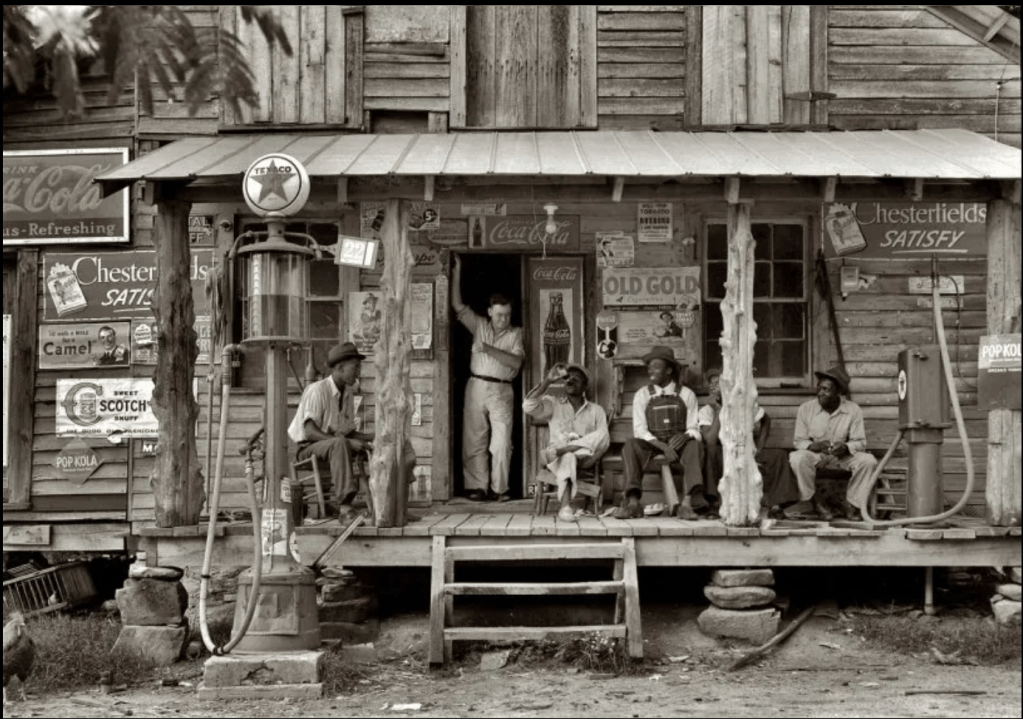
On July 25, 1939, Dorothea Lange was a renowned documentary photographer. She paused her busy travels across the American South. She stepped into a quiet moment just outside Gordonton, North Carolina. It was a humid summer Sunday. Through her lens, she discovered something golden: a rickety country store. Its wooden porch was dappled in shade. A few men sat comfortably in rocking chairs on it. The afternoon moved slowly around them.(1)

“Captured on July 25, 1939: a country store porch in rural North Carolina. Dorothea Lange found the perfect rendition of a lazy summer afternoon here. Let this moment remind you—it’s okay to choose rest today.”

Lange raised her camera and captured exactly what she saw: a peaceful summer tableau. The porch wasn’t staged—it was real life, real rest. The men lounged beside old kerosene and gas pumps, their chatter and quiet breaths blending with cicadas in the heat.

That moment—frozen in a gelatin silver print—became a small celebration of indolent joy. No agenda. No hurry. Just an afternoon spent doing exactly what summer begs you to do: nothing.

How Western Movies Perpetuate Harmful Stereotypes of Indigenous Peoples

By Benjamin GroffMedia© | benandsteve.com | 2025 Truth Endures©

3–4 minutes

I was watching an old Western on television this past weekend. You know, the kind—cowboys and Indians. Or, as we might say today, American Ranchers and Indigenous Peoples.

The film, likely made in the 1950s, had the signature gloss of that era’s post-war cinema. Still, something about it suggested it was possibly shot even earlier, maybe in the 1940s. It was only later spliced, refitted, and packaged for the screen. The costumes, dialogue, and scenery all hinted at a time when the stereotypes were deeply ingrained in the script. They weren’t even questioned.

I probably watched that movie as a kid. I was sitting next to my father, not giving it a second thought. Back then, it was just another Western. But this time around, with a different set of eyes, what I saw was jarring.

It followed the predictable narrative: the cavalry riding in to tame the West and keep the “Indians” under control. Two delicately dressed white heroines were caught in the middle of a brewing conflict. A white doctor stood out as the lone character who dared to see Native people as human beings. He was mocked and ostracized for his compassion. This was especially true when a malaria outbreak swept through the tribe. He insisted they deserved treatment.

At one point, he stood in a room full of fellow whites. He asked,

“Do you think Indians are not human beings? Human beings like you and me, who deserve to live and be healthy?”

And one of the prim ladies, her hair perfect and her face untouched by empathy replied:

“I don’t know… how could they be?”

To which others in the room nodded and added, 

“That’s right.”

“Of course, they’re not!”

“No way, in God’s name.”

I sat there stunned, wondering:

“How did a line like that ever make it into a movie script?”

Even more troubling:

“How did it get past editors, producers, censors—only to be broadcast, repeated, and absorbed by generations?”

It wasn’t just offensive. It was abusive. And it made me sad.

Is there a historical context to such language? Possibly. But what would a young Native American child feel sitting in front of that screen? Would they see their life reflected as something lesser—something not worthy of protection or dignity? Listening to the white characters, it certainly felt that way.

And it took me back to where I grew up.

I’m from the Kiowa and Comanche Counties area in Oklahoma—Caddo County, specifically. I was raised alongside Native American children, many of whom I called friends.

Later in life, I worked in law enforcement and came to know tribal members through both personal and professional relationships. I learned a great deal from them—about their culture, their pride, their pain.

When I started in law enforcement, the department had an initiation ritual. It involved arresting a man nicknamed Fifteen Thousand. He was a Native man, around 50 years old, who’d been detained countless times—hence the name. His real name was Thomas Kamaulty Sr.

He was the first person I ever arrested as an officer. 

And, in time, Thomas became the first person I ever saw get sober. That meant something.

Ira Hayes

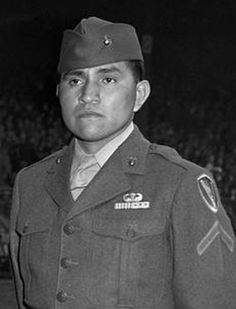
I also think about people like Ira Hayes. He was a Pima Indian from Arizona. Ira helped raise the flag at Iwo Jima during World War II. A hero by every standard. And yet, like Thomas, Ira suffered. Both carried the scars of discrimination and trauma. Both turned to alcohol as a way to numb the soul-deep wounds this country handed them.

We often ask why these cycles exist—but we rarely admit the truth: it’s because we’ve designed them to. We’ve placed people like Thomas, like Ira, into roles and systems. Their suffering can be managed. Their voices are diminished. Their lives are controlled. That was always the plan. And until we stop pretending it wasn’t, the script will keep playing—over and over again.

An Update to My Loyal Supporters, Readers, Friends, Family, and Followers…

By Benjamin GroffMedia© | benandsteve.com | 2025 Truth Endures©

1–2 minutes

Benjamin
Benjamin “I’m Cutting Outta
Here For Surgery!”

From Benjamin – Thursday, July 24 – 7:30 AM


This post is going live as I am entering surgery. The surgery is for an Anterior Lumbar Interbody Fusion. I want to thank all of you for your support, prayers, and encouragement. Your kindness truly means the world to me.

During my recovery, you’ll still see new posts here on the blog. I’ve prepared content in advance. You can continue to enjoy the same quality stories and information. This is what you’ve come to expect from the benandsteve.com blog.

Thanks again for being part of this journey. I look forward to rejoining you soon. Another update will post later today to keep you informed.

I Will Be Back…Or So They Tell Me – A Note Before Surgery

By Benjamin GroffMedia© | benandsteve.com | 2025 Truth Endures©

2–3 minutes

A Note From Benjamin Before Surgery

Benjamin

By the time this post appears, I’ll be less than twenty-four hours from checking into the hospital. I have a scheduled lower back surgery. This operation was first approved in 2020. It was postponed due to the overwhelming strain COVID-19 placed on hospitals at the time.

Now, five years later, the time has come. The need for the surgery has grown unavoidable. It has reached a point where it significantly impacts not just my own quality of life. It also affects those around me—including our ever-faithful dog, Otis. After careful planning and the support of some very good people, the time feels right.

To keep the blog active, I’ve written and scheduled daily posts in advance. These will post – daily over the coming weeks as planned. Once I’m fully back to writing day-to-day pieces again, I’ll let everyone know. That said, if something urgent comes up, I will post an update. If it is of national interest and inspires me, I will do so before then. This is, of course, recovery allowing.

In the meantime, I’m grateful for the many kind gestures, well-wishes, and thoughtful messages already sent. That encouragement has made all the difference. I’m especially mindful of my partner, Steven. He will be holding down the fort. This will be happening while I’m in the care of a trusted medical team. He’ll be shuttling between the hospital and home, making sure Otis gets fresh air, snacks, and his favorite TV channel. We’ve jokingly planned it like a household awaiting a newborn—minus the diapers, thank goodness.

Dr. Christopher Yeung

The procedure itself will be performed by Dr. Christopher Yeung, a well-regarded spine surgeon whose experience includes working with multiple professional sports teams. After an in-depth consultation, I felt confident in both his knowledge and his approach. The surgery, known as an Anterior Lumbar Interbody Fusion, involves accessing the lower spine through the abdomen. An access surgeon helps to safely move internal structures aside. It’s a careful, technical procedure. The recovery is long. It begins with just a few steps on day one and builds slowly through physical therapy. This process continues in the weeks and months ahead.

So for now, I’m focused on the first step: getting checked in and moving ahead. I’m hoping for deep sedation, steady hands, and a smooth path to healing.

Thanks again for walking alongside me, even if just in spirit. I’ll be back in touch when the fog begins to lift.

Embracing the Constant of Change

By Benjamin GroffMedia© | benandsteve.com | 2025 Truth Endures©

2–3 minutes

“The Constant of Change”

There are stories worth telling—stories shaped by the countless experiences we collect in life. In mine, there have been unforgettable moments. I visited with friends, shared laughter, and exchanged hugs. Then I returned home—only to learn the next day that they were gone. No warning. No signs. One moment, they were part of my world; the next, they had vanished from it.

Those moments taught me a truth that often goes unspoken: nothing in life is definite.

Even when it feels like we’re stuck—repeating the same routines, going through the same motions—life is still moving. The world shifts beneath our feet, often without our awareness, certainly without our consent. Change is not something we invite; it’s something that happens. It shows itself in every breath we take. It appears with every face that enters or leaves our lives. It influences every decision made far beyond our control—from government chambers to hospital rooms.

Change is the only constant.

Sometimes, a change is so small it goes unnoticed—until its effects stretch across history. On February 2, 1959, Waylon Jennings gave up his seat on a chartered airplane to the Big Bopper, J.P. Richardson, who was feeling ill. The plane also carried Buddy Holly and Ritchie Valens. It crashed in an Iowa field just minutes after takeoff. Everyone aboard died.

Waylon Jennings

That one seat swap—an act of kindness, -–– saved Jennings’s life. No one was at fault. But that simple moment, that ordinary change in plan, altered the course of music history and Jennings’s own future. He carried the weight of that change for the rest of his life. And yet, that change gave him more years, more music, more life.

That is how change works. Quiet. Sudden. Unfair. Unpredictable. But real.

When everything feels bleak, we must remember: change is still at work. When loss feels unbearable or the path ahead seems hidden, we must remember: change is still at work. What feels like the end today reveals itself as the beginning of something new tomorrow.

Time moves. People change. Life adapts. Always.

And in that, we find our only real choice: acceptance.

Accepting change—no matter how painful—does not mean surrendering to it. It means choosing to live with eyes open, hearts ready, and spirits willing to grow from what has been lost. We don’t have to like every change. But by accepting it, we start to transform with it—and even rise because of it.


Postscript:

After a tragic 1991 plane crash claimed the lives of several members of Reba McEntire’s band, it was Waylon Jennings—haunted by his own near-miss decades earlier—who offered her a few words she never forgot:

“Reba, you’ll never get over it, but you’ll get through it.”

And that’s the final truth about change. We don’t get over it—we live through it. And somehow, life keeps going.

Reflections on the COVID-19 Pandemic and Its Legacy

By Benjamin GroffMedia© | benandsteve.com | 2025 Truth Endures©

3–4 minutes

A Note from the Pandemic

I was being driven to an appointment earlier this week when a reminder flashed on my phone. It was one of those “On This Day” memories—a flashback from five years ago. It was a note I had posted on social media during one of the darkest times I can remember.

It read:

Today, the national death toll in the United States reached 80,000. In the state where I live, the deaths are many. They have brought in refrigerated trailers to hold the bodies. The mortuaries have more bodies than they can carry. The coroner’s office is over capacity. It is being reported that 100 people died in the city where I live yesterday alone.

People separated by COVID-19. Pinterest

That note was one of millions posted by people around the world that day. It was part of a collective cry for help. It was a shared testimony during a global crisis. The crisis tested the very core of our humanity. The COVID-19 pandemic wasn’t just a health emergency—it was a historical reckoning.

The novel coronavirus (SARS-CoV-2), first identified in late 2019, swept through cities and countries with terrifying speed. It took the lives of the elderly and the young. It didn’t care about borders or status. It wasn’t limited by language, ideology, or belief. It was an indiscriminate invader—silent, invisible, and merciless.

Pinterest

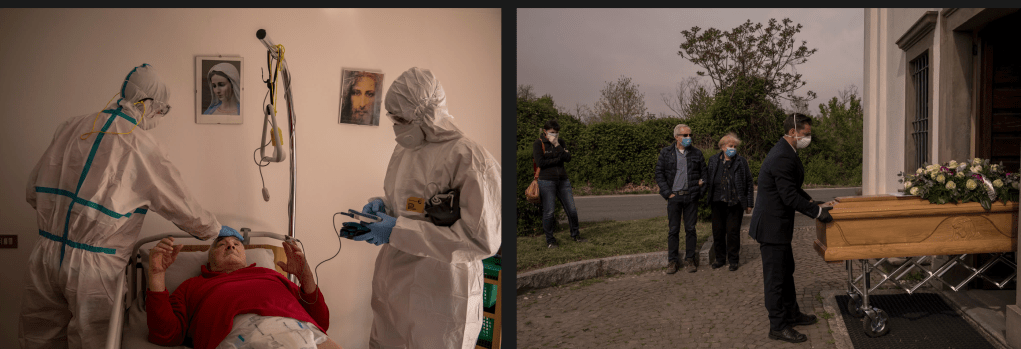
Hospitals filled to capacity. ICUs ran out of beds and ventilators. Nurses worked 12–16 hour shifts in full protective gear. They returned the next day knowing more patients would be gone. They feared coworkers would be gone too. Some had to reuse PPE, others never had proper protection at all. Entire medical teams were decimated. The faces behind the masks—so many of them never seen again by their loved ones.

In some areas, morgues overflowed, and refrigerated trucks became temporary storage for the deceased. Funeral homes struggled to keep up. Families said goodbye to loved ones through screens or from behind glass, incapable of touching them one last time.

Pinterest

Masks became a symbol—of protection, of politics, of protest. While many wore them out of care for others, others rejected them, fueled by fear, misinformation, or political agendas. What should have been a unified public health response fractured along ideological lines.

The spread of disinformation only made things worse. Some media personalities claimed the virus was “just a flu.” Other public figures suggested it was a hoax designed for political or financial gain. Some of those very same people later contracted the virus. A few died from it—some reportedly urging others to take it seriously with their final breaths.

Pinterest

For me, it was personal. I knew approximately twenty—or more—people I had known for most of my life who died from COVID-19. Every day brought another notice: a friend from childhood, a neighbor, someone from church, a former coworker. Sometimes I would hear from relatives who lost someone. Other times, I’d check news from back home and learn that yet another familiar name had been claimed. In places I had once lived, people I had once shared moments and memories with—gone. The virus wasn’t abstract. It carved itself into the story of my life, my family, my friends, and their families.

Pinterest

Vaccines would eventually arrive, faster than any in modern history. But by then, millions had died, and countless others were left with long-term effects—some still suffering today. As of mid-2025, more than 1.1 million Americans have died from COVID-19. Globally, the death toll has surpassed 7 million, though some estimates suggest the real numbers were even higher.

That reminder on my phone was more than just a memory. It was a marker—a scar from a time we lived through together, yet each experienced in our own way.

Pinterest

Let it be said clearly: the virus was real. The loss was real. And for many, the grief still is.

Let that note stand as a record not just of tragedy, but of resilience. Of what we went through—and of what we must remember. Because forgetting invites the risk of repeating it all over again.

Man From MRI Accident – Update

A sad update, the man in a report here a few days ago has died.


61‑year‑old Keith McAllister died after being violently pulled into the MRI scanner at Nassau Open MRI in Westbury, Long Island. He entered the MRI room on Wednesday, July 16, while his wife was undergoing a knee scan. McAllister wore a heavy-weight-training chain (~9–20 lb/4–9 kg) around his neck. Despite prior discussions about the chain with staff, he was allowed in.

When he approached the machine, the strong magnetic field latched onto the chain, yanking him into the scanner. His wife and the technician attempted to free him, but he collapsed in her arms. She recounted shouting, “Turn this damn thing off! Call 911!”.

McAllister was rushed to the hospital, where he suffered multiple heart attacks and was pronounced dead on Thursday, July 17. His wife emotionally described the moment: “He went limp in my arms… I can’t wrap my head around it”.

The Nassau County Police Department is investigating the incident, and experts are emphasizing the critical need for strict MRI safety protocols, especially regarding metal screening. Past tragedies—including a 2001 case involving a child and an oxygen tank—highlight the grave risks of metallic objects around MRI machines.

Summary of key points:

Victim: Keith McAllister, 61

Date of incident: July 16, 2025 (MRI room event)

Date of death: July 17, 2025 (hospital)

Cause: Pulled into MRI by heavy metal chain (~9–20 lb)

Response: Wife and technician tried to assist; police are now investigating

Safety concern: Highlights critical importance of enforcing metal screening protocols

www.cnn.com/2025/07/20/health/mri-machine-death-long-island

The Illinois Folks Would Visit Cordell, Oklahoma Every Year…To See Family

By Benjamin GroffMedia© | benandsteve.com | 2025 Truth Endures©

4–6 minutes

Summer Roads to Oklahoma to Visit Uncle Ben and Aunt Florence

By Benjamin Groff II

Every summer—without fail—a car would ease out of the driveway in Olney, Illinois. It was packed tight with suitcases and ham sandwiches. Kids pressed against window glass. Stories were waiting to be lived again. The road ahead led straight to Cordell, Oklahoma. Uncle Ben and Aunt Florence kept the porch swept. They also kept the table set.

Olney was a quiet place, best known for something that always fascinated me as a child: white squirrels. My grandmother told me about them as if they were magical creatures. They were rare and watchful, darting through yards and city parks. I always hoped I’d see one myself, but somehow we always left too early or came back too late. Still, the idea of them stuck in my imagination like a bright stone in the pocket.

But the real adventure was always in Oklahoma.

Uncle Ben and Aunt Florence lived in a modest home in Cordell. There, the wind blew with purpose. Time slowed enough to sit and stay a while. The cousins from Caddo and Washita Counties began to arrive shortly after us. Many of them had been raised alongside the Illinois kin during the lean years of the 1920s and ’30s.

The car would keep rolling through Binger, Carnegie, Weatherford, and Colony. It traced out a web of family ties that never wore thin. There were hugs that lasted too long and pies that didn’t last long enough. Kids ran barefoot through the same red dirt that had once dusted our grandparents’ boots. The grownups told stories from both sides of the Dust Bowl.

“You remember when that storm blacked out the sky?”
“Your mama used to chase us out of the cellar with a broom!”


And everyone laughed, even if the memories came with a tear or two.

The trips began in the early 1960s. They stretched well into the 1980s. Each summer became a soft echo of the one before. Faces aged, but names stayed familiar. Porch swings creaked. Tin-roof rain was still the best music at night.

Eventually, the trips grew fewer, as the elders passed and the younger ones built lives farther away. But in my mind, a stretch of two-lane highway still runs from the white-squirrel town of Olney. It continues to the wide-open sky of Oklahoma. It’s a road paved with memory and love that survives distance, time, and even silence.

And one day, I still hope to see one of those white squirrels.

One cousin wrote a memory down in a letter to another -––

The tires hummed low against the highway as we crossed into Oklahoma, and I felt it—the shift. Not just in geography, but in memory. It had been years since we’d made this drive from Olney, Illinois. However, the road still felt familiar. It was like an old hymn you didn’t realize you remembered until you started humming along.

I leaned my head against the window, watching the land roll out in shades of tan and green. My thoughts rolled back too. I remembered the summers of my childhood. We’d pile into the car every year and head south to visit Uncle Ben and Aunt Florence in Cordell.

They were waiting when we arrived back then—porch light on, arms wide, iced tea already sweating on the kitchen table. The smell of fried chicken greeted us. We could hear the sound of someone laughing from the backyard before our feet ever hit the ground.

We’d stay for a week or more, using Cordell as home base. Then we’d branch out, visiting cousins scattered across Caddo and Washita Counties—Binger, Carnegie, Gotebo. Some were practically siblings. They were raised alongside our parents during the hard years of the 1920s and ’30s. Those were times when everyone shared everything. The stories from those days came freely over pie and coffee. They were told with the kind of clarity that only comes from having truly lived it.

But this trip—this time—was different.

There were no porch lights waiting. No tea glasses on the counter. Uncle Ben had been gone for years now. Aunt Florence too. And many of the cousins had passed, their homes quiet or sold. This time, we came to remember—not just to visit.

We stopped by the old places. Some were still standing, others just foundations and memories. We drove to the Cordell, Eakly, Colony and Alfalfa, cemeteries. I stood at the resting place of our folks I could remember seeing as if it was yesterday. I could still hear their voices in my head. I spoke softly, unsure if the wind could carry my words back to them, but I tried anyway.

Later that evening, we drove out to Binger. One of the cousins—now gray-haired and slow-moving—met us on the porch with a smile that hadn’t changed in 40 years.

“I didn’t think anyone remembered to come back,” she said.

“We never forgot,” I told her.

And we hadn’t.
Because the roots ran deep.
Deeper than distance.
Deeper than time.

So we returned to Oklahoma—not just to see the land or the gravestones, but to feel that presence again. To walk the same dusty paths, sit under the same wide skies, and remember who we are—and who we loved.

Some journeys are round trips.
Others are returns.
This was both.

As always time came when we had to return. And it always seemed longer going back to Illinois. It was sad to leave. Who would not be here next time we came to visit? Who on our crew would not make the trip next time? Uncle Ben always choked up when he said goodbye. He knew it could be the last time he saw us. Eventually, he was right.

Going Into A Restricted Area While Wearing Metal – An MRI Nightmare

A Man Entered An MRI Room That He Was Not Approved To Enter. It Nearly Killed Him.

By Benjamin GroffMedia© | benandsteve.com | 2025 Truth Endures©

2–3 minutes

“Do you have any metal on your body?”

It’s a question you’ve probably heard before entering a medical imaging room. It might sound routine—almost too simple to matter. But as one man in Westbury, New York, learned the hard way, ignoring that question can be deadly.

Earlier this week, a 61-year-old man walked into an MRI suite at Nassau Open MRI. He wasn’t a patient—he was a visitor. And according to reports, he entered without permission, unaware (or perhaps unconcerned) about the danger waiting behind the door.

Around his neck hung a heavy metal necklace.

That necklace would soon become a missile.

As the MRI machine powered up, the magnetic field—a force thousands of times stronger than Earth’s natural magnetism—ripped the necklace forward, pulling the man violently toward the magnet. The result was catastrophic. He suffered critical injuries and was rushed to the hospital.

You can read the full report here from the Miami Herald:

🔗 Visitor wearing necklace critically injured inside New York MRI room

MRI machines are marvels of modern medicine. They allow doctors to see deep into the body without needing to cut it open. Yet, the science that powers them relies on an immense magnetic force.

That’s why medical staff ask the same questions again and again:

  • Do you have any metal implants?
  • Are you wearing jewelry?
  • Have you removed your belt, watch, or hairpin?

These aren’t suggestions. They’re essential precautions to prevent precisely what happened in Westbury.

The necklace that injured this man was an everyday item—something many of us wear without a second thought. 

But in the MRI room, it was anything but ordinary.

This tragic incident serves as a sobering reminder:

Always follow MRI safety guidelines. Always respect warning signs. Never assume a machine like this can be taken lightly.

The man who wore the necklace didn’t mean to cause harm. The laws of physics don’t care about intent. In an MRI suite, metal is never safe unless it’s been declared and cleared.

So next time someone asks you,

“Do you have any metal on your body?”

Don’t shrug it off.

Your answer will save your life!

You can read the full report here from the Miami Herald:

In The City Of Echoes Finding Where You Are Going Can Be Elusive

By Benjamin GroffMedia© | benandsteve.com | 2025 Truth Endures©

2–3 minutes

The City of Echoes

They told him Newvale was easy to navigate—just a grid of neatly intersecting streets, all named with letters and numbers. A1 to Z26, crosscut by 1st to 99th. Clean. Logical. Unmistakable.

That’s what made it so disorienting when Jonah realized he was lost.

He turned down H12 Street, or maybe it was H21. The signage shimmered under a weak afternoon sun. Every block held the same slate-gray buildings with mirrored windows. Every corner had a coffee shop called “BeanSync,” identical inside and out. The same barista. The same music looping—something jazzy and off-tempo that made his nerves vibrate.

He pulled out his phone to get his bearings. No signal.

No GPS. No bars. Just a cheerful little message:
“Welcome to Newvale! You are here.”
The map spun in place, mocking him.

He asked a woman passing by, dressed in a green trench coat.

“Excuse me, which way to Central Station?”

She stopped, smiled with blank politeness, and said,

“Just follow H Street until you reach 12.”

“I’ve already passed twelve blocks.”

She nodded, like that made perfect sense, then walked off.

He turned the corner again—there was “BeanSync,” again. The same man spilled his coffee at the same outside table. The same dog barked twice, then ran to the same hydrant.

Jonah checked the street sign: H12.

He spun around.

So was the last corner.

He began to walk faster, then jog. He changed directions at random—A Street to W Street to Q16. All the same buildings. Same people, repeating like shadows in a broken projector.

Finally, panting, he stopped inside yet another BeanSync.

“Do you serve anything besides Americano?”

He asked the barista.

She smiled.

“Just follow H Street until you reach 12.”

His heart sank.

Behind the counter, a door creaked open. A man stepped out—rumpled, eyes twitching, holding a half-empty cup.

“You’re new?”

the man said.

“Lost?”

“Yes! How do I get out of here?”

The man leaned close.

“You don’t.”

Jonah backed away.

“What do you mean?”

“The city loops. It doesn’t end. It just resets.”

“That’s not possible.”

“Neither is ten identicalbaristas named Kira.”

Jonah turned to look. The barista waved cheerfully.

Back outside, he ran. He tried screaming. No one noticed. Or rather, they all noticed in the same way—heads turned in perfect rhythm, brows raised identically, disinterest coordinated like choreography.

It was dark by the time Jonah found a bench.

Across the street, a woman in a green trench coat asked a passerby,

“Excuse me, which way to Central Station?”

Jonah watched the man smile politely and answer,

“Just follow H Street until you reach 12.”

The woman nodded and walked off.

The bench creaked beside him.

A man sat down. Rumpled. Cup half-full.

“You’re new?”

he asked.

Jonah nodded slowly.

The man sighed, sipping.

“It’s not a city. It’s a maze. It just wears the mask of civilization.”

Jonah looked up. Above the buildings, a flickering billboard blinked to life:

“Welcome to Newvale! You are here.”

Still. Always. Unchanging.

And somewhere, jazz played again.

Looping. Forever.

Professor Incredible: The Accidental Peacemaker

By Benjamin GroffMedia© | benandsteve.com | 2025 Truth Endures©

2–3 minutes

Professor Incredible and the Formula of All Things

Nobody paid much attention to Professor Incredible.

He was a quiet, peculiar man with wild hair and socks that rarely matched. He taught chemistry at the Third-Rate University of Northern Something. His lectures were confusing. His labs were explosive. His office smelled faintly of lemon cake and regret.

One Tuesday afternoon, Professor Incredible was mixing compounds to cure hiccups in parakeets (don’t ask). He tripped over his cat and accidentally spilled three unlabeled vials into a teacup. When he came to after the small puff of smoke cleared, he sipped the tea. Of course, he did. He then scribbled down what he felt was a rather pleasant aftertaste.

That night, he slept peacefully for the first time in years. His arthritis vanished. So did his neighbor’s yappy dog’s aggression. So did the neighborhood’s potholes. So did his runny nose. Something was… different.

The next day, two bickering students visited his office arguing over which was better—crunchy or creamy peanut butter. Absentmindedly, the professor handed them a flask of the leftover formula and said,

“Here. Split this and shake hands.”

They did.

Instantly, they blinked, smiled, and calmly agreed that both were wonderful in different ways. Then they shared a sandwich.

The formula, it turned out, only worked if applied by two people in conflict—who disagreed with equal passion. It didn’t pick a side. It didn’t declare a winner. Instead, it softened anger, lifted empathy, and melted stubbornness into understanding. It didn’t erase problems; it made people care enough to solve them together.

Soon, world leaders were sipping the formula while discussing borders. Rival fans hugged at sporting events. Siblings divided closets in peace. Traffic moved smoother. Even social media got a little less… cruel.

Professor Incredible was offered a Nobel Prize, but declined.

“The formula was an accident,”

he said.

“What matters is what people do with it.”

And so, the world changed—not because the formula was magic, but because people finally heard one another. Understood each other. Worked side by side.

All it took was a little chemistry—and two people willing to try.

The Sunday When Everyone Raised Hell

3–5 minutes

“The Sunday When Everyone Raised Hell”
July 13th,1982

They say the weather talks—but on Sunday, July 13th, it screamed. It moaned, cracked, hissed, and growled. And the whole town of Split Rock hollered right back, like a pack of sinners on Judgment Day.

That Sunday began not in peace, but in conflict. Beer drinkers stumbled out of back porches. Whiskey drinkers followed, squinting into a sky. The sky couldn’t decide between fire or frost. Bible thumpers buttoned up their Sunday best only to find it soaked in sweat—or stiff with ice.

Normally, these folks would be separated by buildings, beliefs, and a healthy dose of silence. But not this time. The Earth tilted at just the wrong angle that morning. It mixed them all together—like oil and water in a cracked jar. Something had to give.


It started at sunrise.

Reverend Dellman, god-fearing and mild-mannered, stepped out with his usual coffee and a copy of The Daily Hymnal. He took one look at his back garden and nearly dropped both coffee and songbook.

“Merciful Lord!”

cried, pointing at the silver glint of frost on his tomatoes.

“It’s July! I rebuke thee!”

By mid-morning, the farmers were in full-blown panic mode. It was cold—then suddenly sweltering. Then cold again. Pete Hargis’ chickens laid hard-boiled eggs, and the pigs were either sunburnt or shivering. Mabel over at the diner attempted to fry bacon on the sidewalk. By 10:03, it had flash-frozen solid. The sizzle was replaced by the crack of ice.

Inside the café, the thermostat spun like a roulette wheel. People gave up trying to adjust. Some came out in denim shorts and fur coats. Others in long johns with flip-flops. A few just wrapped themselves in quilts and wandered the streets like dusty prophets.

At noon, the town square transformed into a chaos carnival. The mayor—Bert Franks, known for his enthusiasm and poor timing—grabbed a megaphone and tried to declare order.

“Citizens! Let us embrace the unexpected! I hereby declare this—”

THWACK!

He was cut off by a slushball to the forehead. Then a flying hot dog bun. And then, mysteriously, a snow shovel.

The townspeople laughed, shouted, moaned, and argued. It wasn’t long before someone pulled out a banjo and another hauled out a cooler. The chaos, like the temperature, escalated fast.


At 2:07 p.m., the sky went black—but not from clouds.

Steam fog rolled in so thick it swallowed up everything past arm’s length. Lightning cracked in one corner. A rainbow arched over the feed store. The wind howled in two directions at once. Cows began to moo in protest—one poor soul spontaneously delivered a churned pat of butter. Children screamed. Not in fear, but in delight. Adults followed suit, except their screams were more… existential.

Dogs barked furiously at the sky. One climbed halfway up a tree before realizing dogs weren’t built for altitude.


Then came Miss Lydia.

Quiet librarian. Never cursed. Never shouted. Never late with a book return. That day she marched down Main Street like a thundercloud in sneakers. Her outfit included a pair of galoshes. She wore a tank top that read “Don’t Test Me.” A neon scarf completed the look. These elements only added to the sense that judgment had arrived.

“THIS IS NONSENSE!” she bellowed. “I WANT A HOT-DAMN GOD DAMN-IT!”

The town gasped.

She wasn’t talking about temperature.

She wanted schnapps. On a Sunday.

Bart, who ran The Dusty Jug Saloon, saw an opportunity. He rolled a brand-new bottle of Hot Damn Schnapps down the sidewalk toward her like it was the holy grail. She caught it, popped the cap, took a long pull—and offered it to the goat tied outside the courthouse. The goat accepted.

By then, no one knew if the town had gone to hell or was simply passing through it.


At sunset, the weather made its final move—brutal heat. A wall of humidity as thick as gravy. People peeled off layers and sweated out their differences on the courthouse lawn. A Bluetooth speaker started playing “Ring of Fire.”

No one stopped it.

A spontaneous conga line formed. The sheriff—usually stiff as a shovel handle—joined in, hat and all. No one judged. Everyone was too dizzy from heatstroke or schnapps.


That night, a sudden cool breeze swept in. The stars blinked into view. The town sat still for the first time all day.

On porches. On sidewalks. Some just lay on the grass, sipping iced tea and fanning themselves with church bulletins.

“It was the damnedest Sunday we ever had,” someone whispered.

And nobody disagreed.


From that Sunday on, every July 13th in Split Rock became Raise Hell for the Weather Day. No matter the forecast, folks gathered to scream at the sky, pass a bottle, and laugh at the madness.

Because when nature throws a tantrum, the people of Split Rock know exactly what to do:

Yell right backYell right back!

A July Truth: Heat Has a Way of Stripping Us Down to the Basics

By Benjamin GroffMedia© | benandsteve.com | 2025 Truth Endures©

1–2 minutes

Today, the sun feels closer than usual. The heat presses in like a truth we’ve been avoiding—no politics, no noise, just sweat and breath and reality. July does that. It slows everything down, strips away distractions, and leaves us standing face-to-face with ourselves.

Across the country, people are pausing. People stop to wipe their brow. They take a drink of water or just breathe. There’s a strange unity in the stillness that heat brings. We complain, but the heat has a way of making us kinder, more patient. It reminds us we’re all in this together.

Today is a good day to check on a neighbor. Forgive something petty. Laugh with a stranger. Be the breeze someone needs.

Because on days like this, what matters most isn’t the temperature—it’s the connection.

The Wisdom of Old Trees: A Tale of Drought and Survival

By Benjamin GroffMedia© | benandsteve.com | 2025 Truth Endures©

2–3 minutes

“Whispers from the Cottonwood”

Old Man Teller always said, “You don’t need a weather app when the trees are talkin’.” Most folks in town rolled their eyes. They dismissed the words as just another tale from a man with more years behind him than teeth. But Maggie believed him—always had.

Each morning, before the sun stretched across the Oklahoma horizon, Maggie walked down to the creek behind her farmhouse. The tall cottonwood trees stood like ancient guardians. She’d place her hand on the bark and close her eyes. She’d listen. She listened not just with her ears, but with her skin, her breath, her bones.

One autumn, the cottonwoods began shedding their leaves earlier than usual. Not the vibrant yellow fall kind, but pale and crisp, like they’d been drained of color. The crickets were fewer, and the frogs that usually croaked a lullaby at dusk had gone strangely silent. A stillness settled in the evenings—not peaceful, but hollow, like a breath being held too long.

Teller nodded solemnly when Maggie brought it up. “Means drought’s comin’. The earth’s tightening its belt.”

Sure enough, by December the ponds were cracked at the edges and even the cattle seemed quieter. Yet it wasn’t just the drought. Coyotes started howling at midday. Raccoons were foraging in broad daylight. Wild plum bushes flowered in January—six weeks early.

Nature, it seemed, was shouting.

In spring, the winds changed direction. Not from the south like usual, but from the east—harsh, dry, and persistent. That’s when Teller warned the town council: “There’s fire in that wind. Better get ready.” They didn’t listen. But when the wildfires crept dangerously close in May, only Maggie’s house stood untouched. She’d cleared brush months ago, just as the cottonwoods had told her to.

The next year, people started listening more. They noticed the ants building their hills higher before rain. The deer migrating sooner. Even the sky’s color at dusk began to carry meaning again.

Nature doesn’t send memos or push notifications. But it tells you everything—if you’re willing to sit still, pay attention, and speak its language.

And as Old Man Teller liked to remind them, with a wink, “The land was here long before you. Trust it to know what’s comin’.”

The Last Chair: A Story of Loss and Recovery

By Benjamin GroffMedia© | benandsteve.com | 2025 Truth Endures©

1–2 minutes

“The Last Chair at the Table”

There used to be four chairs at the table.
Every Sunday, without fail, they were filled.

Anna always brought the rolls.
George never remembered the salad.
And Michael, the youngest, made them laugh so hard someone usually spilled something.
Then there was Claire. The one who set the table. Who kept the tradition.

But life doesn’t ask for permission when it starts rearranging things.

Anna moved three states away for a job that offered better pay and less time.
George passed unexpectedly—just one late afternoon in September, gone with no goodbyes.
Michael, grief-stricken and incapable of facing the silence, stopped coming.

And Claire… she kept setting the table. All four chairs. Every Sunday.

It felt foolish at first—preparing a meal for no one. But over time, the quiet stopped being so loud. She began to remember George’s voice not as an echo of absence, but as a smile in her thoughts. She started writing letters to Anna and cooking Michael’s favorite dish, just in case he came.

And one Sunday, he did.

He didn’t say much—just sat in his chair like it had never been empty.
They ate. They laughed. No one mentioned the salad.

Recovery isn’t about replacing what’s lost.
It’s about honoring it enough to keep living.

Even if all you do is keep setting the table.

The Friendship of Happy and Sorrow: A Heartwarming Tale

By Benjamin GroffMedia© | benandsteve.com | 2025 Truth Endures©

2–4 minutes

“The Curious Friendship of Happy Goines and Sorrow Downs”

Happy Goines and Sorrow Downs

There once was a boy named Happy Goines. Not a soul could understand why he was always so terribly sad. His name sparkled like sunshine, but his face wore clouds. He dragged his feet to school. He sighed during recess. He stared out windows like he was watching for something that never came.

No one knew what made Happy so downcast. His parents loved him. His teachers were kind. But he always seemed to carry some invisible weight.

That is, until the day he met Sorrow Downs.

Sorrow was a new kid, just moved to town from a place no one could pronounce. He had the kind of grin that made your face smile back before you even realized it. His laugh was sudden and contagious. Even his freckles looked cheerful.

The teacher introduced him to the class. She said his name aloud—“Class, this is Sorrow Downs”. Everyone waited for a gloomy face or quiet voice. But instead, Sorrow waved both hands and said, “Nice to meet you! I love your shoes!” even though he hadn’t looked at anyone’s feet.

The kids chuckled. Except for Happy, who simply blinked.

At lunch, Sorrow sat across from Happy. Sorrow plopped a jelly sandwich on the table. It looked like a gold trophy.

“You look sad,” Sorrow said matter-of-factly.

“I am,” Happy replied.

Sorrow tilted his head. “But your name’s Happy.”

“I didn’t choose it,” Happy said with a shrug.

Sorrow grinned. “Well, I didn’t choose mine either. Imagine being named Sorrow and feeling like I do! Every day feels like a birthday to me!”

Happy cracked the tiniest smile.

“Tell you what,” Sorrow said, pulling a folded paper from his pocket. “Wanna try trading names for a day?”

Happy blinked. “We can’t just—”

“Why not? Who’s stopping us?” Sorrow stood on his chair and declared, “I am Happy Goines today! And this,” he said pointing down, “is Sorrow Downs!”

Some kids giggled. One clapped.

From that moment, something began to shift.

All day long, “Happy” Sorrow told jokes, made up songs, and danced down the hall. And “Sorrow” Happy, for the first time in ages, felt joy in laughing with someone. It was a different experience from laughing at something.

The two became inseparable.

They swapped shoes, lunches, and names whenever they felt like it. One day they were “Joy and Misery.” Another day, “Up and Down.” They learned that feelings didn’t always have to match what people expected.

One day Happy asked, “Aren’t you ever sad, Sorrow?”

Sorrow thought for a moment. “Sometimes. But I don’t stay there. I just let the sad walk beside me until it’s ready to go.”

And Happy nodded like it was the truest thing he’d ever heard.

As the months passed, Happy wasn’t always happy, and Sorrow wasn’t always cheerful. But together they built a friendship where feelings were safe. Names didn’t define you. A good laugh could turn an ordinary Tuesday into something extraordinary.

You might hear two boys shouting new names if you walk past the old schoolyard now. They could be called Sunshine and Thunder, or Giggles and Grumps. They laugh like the whole world belongs to them.

And maybe, in a way, it does.

There Are Different Ways To Preserve America’s Freedom – We Are Taught Lessons From The Past

The Day the Flag Stood Still: The Forgotten Fourth of July on Wake Island, 1942


48 Star Flag Saved Sept 1945

On July 4, 1942, Americans back home celebrated Independence Day with cookouts and parades. Meanwhile, a small group of American civilian contractors and U.S. Navy personnel held a defiant but somber celebration under Japanese captivity on a tiny Pacific atoll called Wake Island.

Just months earlier, in December 1941, Wake Island had made headlines when a handful of U.S. Marines, Navy men, and civilian construction workers miraculously repelled a much larger Japanese force. This was one of the only successful defenses during the early days of World War II. But eventually, Wake fell. Hundreds of Americans were captured and held as prisoners.

Despite their grim reality, the spirit of independence didn’t die. On July 4, 1942, many had celebrated the day at home a year prior. A group of prisoners marked the holiday. They secretly stitched together a makeshift American flag from scraps of clothing and parachute fabric. They hid it under a floorboard in their barracks. That night, after roll call, they quietly raised the flag. It was up for just a few moments. That was long enough for the men to salute it and whisper a rendition of “The Star-Spangled Banner.”

The penalty for such defiance was death. For those men, risking their lives to honor the flag was worth it. The freedom it stood for—even behind enemy lines—justified their risk.

The flag was never discovered. The war ended in 1945. One of the surviving POWs smuggled the flag fragment home. He had sewn it into the lining of his jacket. It now resides in a museum in Kansas as a silent but powerful witness to patriotism under pressure.


Closing Thought:

Freedom isn’t always loud. It isn’t always celebrated with sparklers and song. Sometimes, it’s whispered in the dark. Saluted in secret. Hidden beneath the floorboards. And yet, even in those moments, it shines just as bright.

The Broken and the Blessed: Understanding the Depth of Leonard Cohen’s Hallelujah

By Benjamin GroffMedia© | benandsteve.com | 2025 Truth Endures©

2–3 minutes

The True Meaning of Leonard Cohen’s Hallelujah

Leonard Cohen

Leonard Cohen’s Hallelujah has become one of the most widely recognized and performed songs in modern music history. It’s played at weddings, funerals, church services, and talent shows. But in all the repetition and repurposing, something essential has been lost.

Cohen never intended Hallelujah to be simply beautiful. He intended it to be rawComplexHuman.

The song is not a hymn of praise in the traditional sense. Instead, it’s a poem set to music, a confession wrapped in biblical language and erotic undertones. It’s about a man watching a woman undress from a rooftop. He watches not in an act of love, but of longing and helpless craving. He stands in his kitchen, overwhelmed and isolated. The “hallelujah” he utters is not holy—at least not in the religious sense. It is a broken hallelujah. It is born from the ache of wanting and not having. It is the result of touching something divine through deeply human hunger.

Cohen interweaves the sacred and the sensual because, for him, they were never far apart. Verses reference King DavidBathshebaSamson and Delilah—figures whose passions brought them into both ecstatic heights and tragic ruin. Cohen wanted to explore this contradiction. He wanted to understand how love, lust, faith, betrayal, and surrender all live side by side in the human soul.

“There’s a blaze of light in every word. It doesn’t matter which you heard. It could be the holy or the broken hallelujah.”

The tension in Hallelujah is not just between sacred and profane, but between understanding and mystery. Why do we feel what we feel? Why do we cry out “hallelujah” even when we are lost or ashamed?

Later in life, Cohen was said to feel some regret. He was unhappy over how the song had been turned into a feel-good anthem. It was stripped of its edge and stripped of its truth. Many of the popular covers—Jeff Buckley’s, John Cale’s, even k.d. lang’s—choose only a few of the verses, removing the darker or more explicitly sexual lines. What’s left is haunting, but incomplete.

Cohen reportedly wrote over 80 verses for Hallelujah. The versions we know today are fragments—reflections of reflections. But they carry within them that strange, shimmering truth: that pain and praise can live in the same breath.

In one interview, Cohen said:

“This world is full of conflicts and full of things that can’t be reconciled. But there are moments when we can… and the song ‘Hallelujah’ is about those moments.”

Those moments—the mingling of joy and sorrow, flesh and spirit, light and shadow—are what make Hallelujah more than a song. They make it a mirror.

We don’t all shout our hallelujahs from rooftops. Some of us whisper them from the corners of our kitchens, alone, longing, and unsure. But that doesn’t make them any less true.

That’s the Hallelujah Leonard Cohen wrote.

The Legend of Ghost Mound: A Heartfelt Tale

By Benjamin GroffMedia© | benandsteve.com | 2025 Truth Endures©

3–5 minutes

The Story of Ghost Mound

There’s a story my dad loved to tell. It was one of his favorites. He told it often to friends, family, and customers in his barber shop. He shared it with anyone who needed a good tale. He and his friend GH rode out on horseback one afternoon. They went to a little rise in northern Caddo County called Ghost Mound.

Ghost Mound – Caddo County – Oklahoma

Ghost Mound is one of those landmarks that doesn’t quite belong to any one town. It’s south of Hydro, north of Eakly, east of Colony, and west of the Sickles community. It’s a rocky, oddly-shaped hill. It looks like a miniature volcano. It is steep on one side and more gradual on the other. Back in the 1930s, it was open country. Kids would ride or walk out there on lazy afternoons. They climbed the rocks, explored the cracks, and wasted time in the best way.

On that particular day, my dad, JD, and GH set out. They had nothing more in mind than a good ride. They were also looking for a little adventure. GH had just celebrated a birthday and was proudly carrying a brand-new wallet in his back pocket. Before they saddled up, he showed JD the five-dollar bill. It was tucked inside and was quite a lot of money for a kid in those days.

Once they reached the Mound, the boys began to climb, making a show of how tough it was. About halfway up, GH lagged behind. Suddenly, he shouted:

“HELP! I’ve lost it!”

JD turned and saw GH crouched down, peering into a narrow crack in the rocks. Sliding back to him, he asked what was going on.

GH pointed. He said his birthday wallet had slipped out of his pocket and fallen deep into the crack. The wallet was whole with the five-dollar bill. The boys tried everything to retrieve it. They rolled up their sleeves, dug around, tried moving rocks, even tried widening the gap—but nothing worked. The wallet was gone.

From that moment on, the story of the wallet lost in Ghost Mound became family legend. I grew up hearing about it. Over and over, my dad would retell the tale. Sometimes it was a quick story; other times it grew with detail. Always, it ended the same way. The wallet was still there. It was wedged in the rocks with a crisp 1930s five-dollar bill, waiting to be discovered. He told it with such conviction, I was sure it had to be true. Dad told people whose hair he cut. Keeping an entire room of waiting customers spellbound. Sometimes GH would be there to re-enforce what dad was telling.

The day of my father’s funeral arrived. It was deeply emotional. The house was full of people who had known and loved him. Among them was GH. I had a chance to sit with him, and naturally, I asked him about the wallet. He threw his head back and laughed.

“Yeah,” he said, “the wallet did fall out of my pocket. But your dad was the only one with arms skinny enough to reach in and get it. We got it back that same day.”

I was stunned.

“Then why did you say it was still up there?” I asked.

GH grinned and said, “Because your dad was the biggest joker in the world. He made me promise not to tell anyone the truth. After that, we’d ride our horses out. We would just sit back and watch folks climb all over that Mound looking for that five-dollar bill. We’d laugh and laugh. If anyone had found it, they wouldn’t have brought it back to us anyway!”

And suddenly, a memory clicked. Every time we’d drive past Ghost Mound, we’d see someone out there climbing. It was usually someone who had been in my dad’s barber chair just days before. My dad would start laughing to himself. I never understood why. Not until GH let me in on the real story.

So maybe there’s no wallet up there after all. But the legend my dad spun from that day? That’s still very real. And just like Ghost Mound itself, it’s stuck with me for good.