The Man Who Fell Asleep One Night-Dreaming He Became A Sheriff In The Wild West.

He awakes the next morning to find he is still there.

2–3 minutes

Sheriff Without a Gun

Harold was an ordinary man living in a small house on the edge of town. He spent most of his evenings quietly—reading, cooking for one, and watching old Western movies before bed. One night, after drifting off in his recliner, Harold dreamed he was a cowboy riding across the dusty plains.

When he awoke the next morning, he nearly fell out of bed. The world outside his window was no longer his quiet backyard—it was a wild west frontier town. And tied right outside his kitchen door stood a horse named Gus, saddled and ready. Harold blinked twice, rubbed his eyes, and muttered,

“Well… this is new.”

Stepping outside, he was greeted by the townsfolk calling him Sheriff. Sheriff Harold, that is. The twist? He wore no gun.

“Best sheriff we ever had,”

they cheered,

“because you don’t bring trouble.”

But soon, trouble found them anyway. A group of gunslingers rolled into town, looking to cause mayhem.

Harold had no firearm to fight back. Thinking fast, he filled the pockets of his vest with smooth river rocks. When the gunslingers strutted down Main Street, Harold let fly. Whack—right in the shin—crack—one to the forehead. Pebbles rained down like hail until the bandits doubled over, tears streaming, too humiliated to continue.

Harold yelled –

“You get the hell out of here and don’t come back!”

They scrambled for their horses, chased out of town by the rock-throwing Sheriff himself.

From that day on, Sheriff Harold became a legend. The townsfolk swore he was the greatest Sheriff they’d ever known. This wasn’t because he outgunned the bad guys. It was because he outsmarted them. Every morning, Harold would pat Gus on the neck and tip his hat. He remembered that sometimes the simplest tools—a rock, a clever mind, and a little courage—are enough to keep the peace.

But somewhere else, in another world, Harold lay still. His daughter sat quietly at his bedside, holding his hand, eyes brimming with worry.

“Do you think he’ll ever regain consciousness?” 

She asked the doctor softly.

The doctor shook his head. 

“I don’t know. Stroke victims sometimes choose to stay where they are. Maybe Harold is better off living where he is. In that other place, he’s strong and needed. He is riding tall as Sheriff.”

His daughter squeezed his hand, whispering through tears, 

“Then I hope he knows we’ll always be proud of him—here, or there.”

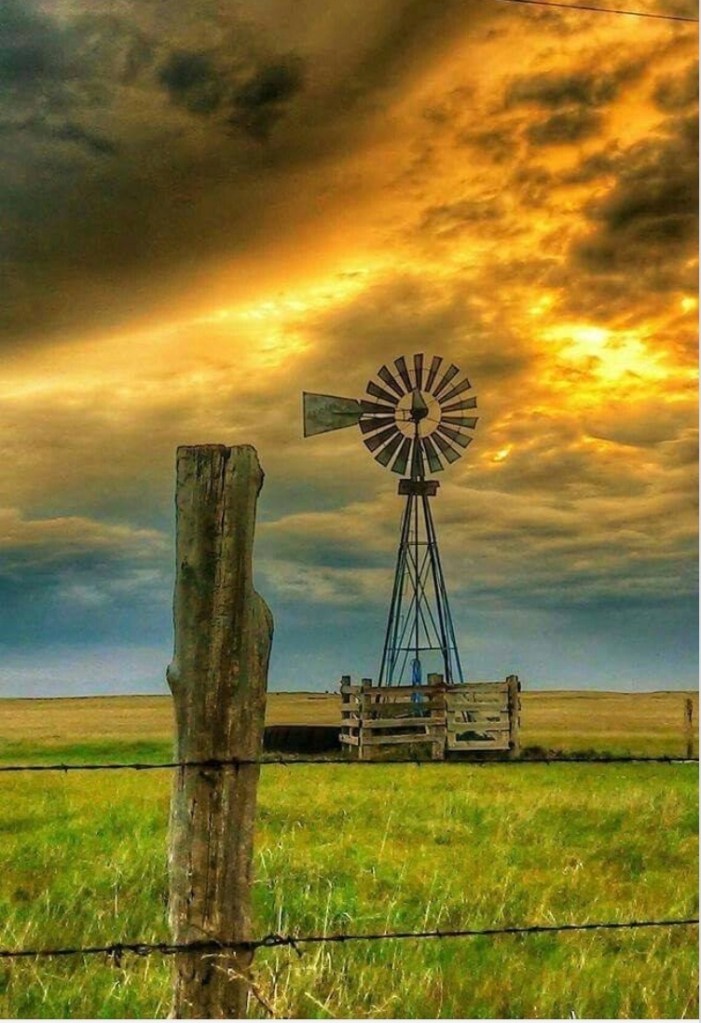
And in the world of his dreams, Sheriff Harold tipped his hat, smiled, and rode Gus into the golden horizon.


By Benjamin GroffMedia© | benandsteve.com | ©2025 

The Healing Impact of Simple Acts: A Hug Can Change Everything

2–3 minutes

The Hug That Changed Everything

Mina at the Farmer's Market
Mina hugging at the Market

It was about five weeks after my back surgery when Steve and I went shopping at our farmers’ market. Normally, Saturdays are our day, but since he had volunteered the day before, we made our visit on Sunday instead. That simple change in schedule turned into something unexpected and heartwarming.

We ended up in the checkout lane of one of our favorite “checkout girls,” as we call her. Mina. She hadn’t seen me since before my surgery, and when she spotted us, her face lit up. She came running from behind the register. She wrapped her arms around both of us and hugged us tight. It felt like a son coming home from college after a long absence. She even insisted we give her our address so she can invite us to a family event she was planning. We’re still not sure what event it will be, but the invitation itself felt like a gift.

That hug reminded me of something simple yet profound. It showed the power of being openly accepting. Let people into your life regardless of who they are, what they look like, or where they come from. In Mina’s hug, I felt seen, valued, and welcomed back into the community.

It brought to mind another story—one shared with me for this blog.

It was 3 a.m. in a quiet hospital corridor when a young musician, newly diagnosed with leukemia, sat in fear and loneliness. The sterile lights and hum of machines gave her no comfort. She cried quietly, believing no one noticed.

But someone did.

A nurse named Ben saw her distress and asked, “Are you okay?” He didn’t prescribe medicine or adjust a machine—he offered a hug. That single gesture, simple as it was, gave her strength. It reminded her she wasn’t just a patient but a person worth comforting. She later said that hug stayed with her long after the treatments, even into remission.


Kindness has a transformative power. It’s impactful whether shown by a nurse in a hospital or a cashier in a farmers’ market. It can change moments and sometimes lives. We often think it has to be grand or costly. The truth is, the simplest acts—a hug, a smile, an invitation—can ripple far beyond what we imagine.

Mina’s hug will not make the news. Nurse Ben’s probably didn’t either. But for the people who received them, they became unforgettable.


  • When was the last time a small act of kindness made a real difference in your day?
  • Have you offered something that felt ordinary to you but has meant the world to someone else?
  • What small kindness can you extend today to be someone’s “Mina” or “Nurse Ben”?

Life is full of struggles and invisible battles, but kindness—especially when it surprises us—has the power to heal. A hug. A smile. An invitation. They seem small, but they carry extraordinary weight.

You never know whose burden you’ll lighten or whose courage you’ll restore. Sometimes the smallest things are the biggest miracles. And without even realizing it, you are the miracle-giver.


By Benjamin GroffMedia© | benandsteve.com | ©2025 

The Man Who Saved Himself The Day All Odds Were Against Him

1–2 minutes

Excerpt: The Man Who Saved Himself

Digital Illustration

I often go back through the archives and reread old stories I reported on. Some are small, dusty pieces that barely made a ripple. Others grab you by the collar and refuse to let go. This is one of those stories.

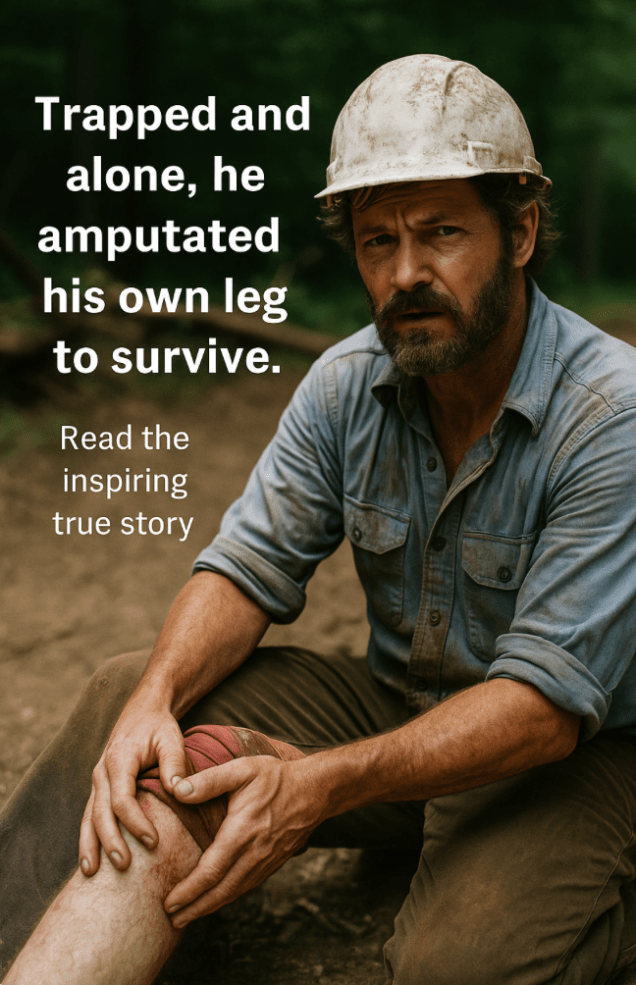
On a summer day in 1993, construction worker Donald Wyman, 37, found himself trapped. He was in the woods of Jefferson County, Pennsylvania. A fallen tree had crushed his leg so severely that he couldn’t free himself. After an hour of pain and helpless screaming, Wyman realized time was running out.

With no other choice, he made a tourniquet out of a shoelace and a wrench from his power saw. Then, with a courage most of us can barely imagine, he amputated his own leg. Using a seven-inch pocketknife—cutting through muscle, skin, and nerves to seize his survival.

Digital Illustration

Badly wounded, he dragged himself to his bulldozer, and drove—bleeding—to his pickup. Once in his truck he managed to reach a neighbor’s farm half a mile away. The neighbor, John Huber, called rescuers, who later found Wyman’s leg still pinned under the tree, boot and all. Thanks to his grit and quick medical response, Wyman survived and was upgraded from critical to stable within days.

Had he hesitated, his story would have been reduced to a one-paragraph obituary in his hometown paper. But Wyman wasn’t a victim—he was a survivor. He did what had to be done.

And that’s the lesson. You may never face a tree crushing your leg. Yet, you may face toxic relationships. You might meet negative influences or habits that hold you back. Sometimes survival means cutting away the very thing that’s dragging you down. You may face a country that has appeared to have turned against you. It won’t be easy. It may hurt. But in the long run, it can save your life—so you can live fully with those you love.

Be your own Wyman. Write your own survival story.


By Benjamin GroffMedia© | benandsteve.com | ©2025 

Uncommon Phobias That Sound Made Up

2–3 minutes

The Strangest Phobias You’ve Never Heard Of

When most people think of phobias, the usual suspects come to mind: spiders, heights, flying, or public speaking. But the human mind is infinitely complex, and so are the fears it produces. Beyond the common anxieties, there are phobias so rare and oddly specific. They almost sound made up, yet they’re very real for those who experience them.


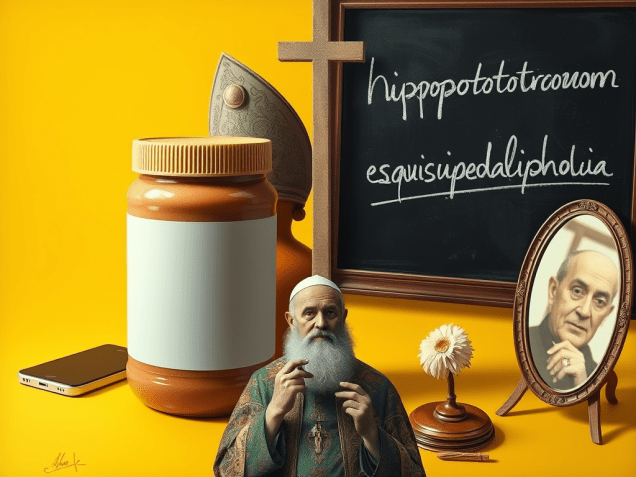
1. Arachibutyrophobia – Fear of Peanut Butter Sticking to the Roof of the Mouth

It sounds funny at first, but this phobia can cause genuine distress. For those who suffer from it, even the thought of peanut butter clinging to their mouth can spark panic. It often extends to sticky foods in general.


2. Nomophobia – Fear of Being Without a Cell Phone

A very modern fear, nomophobia describes the anxiety people feel when separated from their phones. This can occur when the battery dies, the signal drops, or when the device is misplaced. In an age where smartphones are lifelines, this phobia has become increasingly common.


3. Xanthophobia – Fear of the Color Yellow

While most associate yellow with warmth and cheer, some people experience overwhelming anxiety when exposed to the color. It can be triggered by objects, clothing, or even sunshine itself.


4. Papaphobia – Fear of the Pope

Unusual, yes, but historically documented. For those with papaphobia, even images or references to the Pope can cause panic. It’s believed to stem from a mix of religious trauma and authority-based fears.


5. Pogonophobia – Fear of Beards

In some cases, beards are more than just a fashion statement—they’re a trigger. This phobia can cause sufferers to avoid contact with people who have facial hair. This avoidance is rooted in past negative experiences or simply an overwhelming sense of discomfort.


6. Hippopotomonstrosesquipedaliophobia – Fear of Long Words

Ironically named, this phobia is real and involves anxiety around long, complex words. Sufferers feel uneasy in academic or professional settings where such terms are common.


7. Eisoptrophobia – Fear of Mirrors

This phobia goes beyond superstition. For some, looking into mirrors triggers deep anxiety. This anxiety is linked to fears of self-perception. It is also connected to superstition. There is also the uncanny feeling of seeing one’s reflection.


Why These Fears Matter

While some of these phobias sound absurd to outsiders, they are real, debilitating conditions for those who experience them. They highlight the diverse ways our minds process fear. These remind us that what seems laughable to one person feel life-altering to another.

By Benjamin GroffMedia© | benandsteve.com | 2025 

Some Memories Are Best Left Unchanged

By Benjamin GroffMedia© | benandsteve.com | 2025 Truth Endures©

3–4 minutes

Some Memories Are Best Left Unchanged

At 62, I’ve lived through six decades of friendships. Every ten years or so, there’s an evolution. New people come into your life. A few stay, and most eventually move on. In that revolving cycle, we come to appreciate each other’s company, character, talents, and sometimes, our usefulness. Life seems to have been designed this way for me. Over time, I’ve even developed an instinct for craving these transitions. Maybe it’s self-preservation. It’s growth.

Recently, I came across a post that stopped me in my tracks. It said, 

“There’s a heavy emotional toll that comes with holding on to dead relationships. They fill your life with noise—unanswered messages, awkward small talk, the guilt of obligation just because something once meant something.” 

That struck a chord.

Because the truth is—life isn’t a museum of past connections. It’s meant to be lived peering ahead, with people who show who you are now, not who you once were.

Outgrowing someone isn’t betrayal. It’s growth. Letting go doesn’t mean you never loved them. Instead, it means you love yourself enough to protect your peace.

That’s how I feel about many past connections. Some, I miss dearly. Others, I’ve outgrown. And a few? I had to run for my survival.

One thing I’ve learned about long-term relationships—whether with people, places, or versions of ourselves—is the importance of taking regular inventory. What am I still carrying? What deserves to come with me into the future, and what needs to be laid to rest?

For me, I try to leave behind no unfinished business where love, sincerity, or kindness once lived. If you hope to rekindle old ties after a long silence, I offer this gentle caution. Some memories are best left untouched. If you plan to relive the past, go ahead. But please, go without me. We survived it once. I’m not eager to tempt fate with a rerun.

These days, I want to do something different. If there’s something we always talked about doing—some dream we never dared to chase—let’s talk about that. Let’s look ahead, not backward.

Getting older has made me clearer about what I want—and what I refuse to carry. It’s also made me think about my father. I remember him telling stories from the war, from his school days, from the old neighborhoods we lived in. He’d speak fondly of his buddies, show me their photos, and share their shenanigans. But he kept them in their place. He never tried to drag them ahead into the current day. He understood something I now understand: some memories belong to a time and place that can’t—and should not—be reentered.

I still get news from “back home,” as I call it. From the town I left 44 years ago. Many of the people I grew up with never left it. And I can’t return there—not fully—without recalling the world I chose to leave behind.

Of the 25 classmates I graduated with, at least eight are gone now. Some were lost to murder, some to accidents, and others to illness. I came from a small farming town where everyone knew everyone. If the death toll isn’t sobering enough, something even more surprising is how many of us turned out differently. This is more than anyone would’ve guessed. Five of my classmates have since come out as gay. A revelation that would have stunned our small-town sensibilities back then.

Interestingly, it’s not the ones who stayed close to home who thrived—it’s the ones who left. Who dared to change? Who moved ahead?

And maybe that’s the lesson.

Some memories deserve our respect—but not our resurrection.

Some people, our gratitude—but not our return.

Because the past has its place—and so do we.

And some memories…

are best left unchanged.

I Will Be Back…Or So They Tell Me – A Note Before Surgery

By Benjamin GroffMedia© | benandsteve.com | 2025 Truth Endures©

2–3 minutes

A Note From Benjamin Before Surgery

Benjamin

By the time this post appears, I’ll be less than twenty-four hours from checking into the hospital. I have a scheduled lower back surgery. This operation was first approved in 2020. It was postponed due to the overwhelming strain COVID-19 placed on hospitals at the time.

Now, five years later, the time has come. The need for the surgery has grown unavoidable. It has reached a point where it significantly impacts not just my own quality of life. It also affects those around me—including our ever-faithful dog, Otis. After careful planning and the support of some very good people, the time feels right.

To keep the blog active, I’ve written and scheduled daily posts in advance. These will post – daily over the coming weeks as planned. Once I’m fully back to writing day-to-day pieces again, I’ll let everyone know. That said, if something urgent comes up, I will post an update. If it is of national interest and inspires me, I will do so before then. This is, of course, recovery allowing.

In the meantime, I’m grateful for the many kind gestures, well-wishes, and thoughtful messages already sent. That encouragement has made all the difference. I’m especially mindful of my partner, Steven. He will be holding down the fort. This will be happening while I’m in the care of a trusted medical team. He’ll be shuttling between the hospital and home, making sure Otis gets fresh air, snacks, and his favorite TV channel. We’ve jokingly planned it like a household awaiting a newborn—minus the diapers, thank goodness.

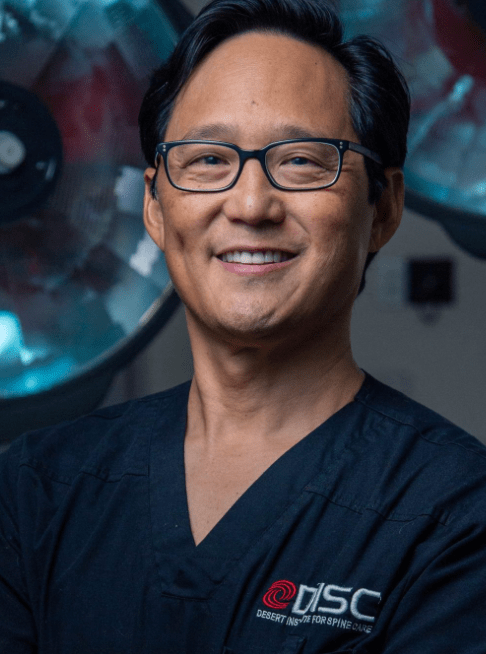
Dr. Christopher Yeung

The procedure itself will be performed by Dr. Christopher Yeung, a well-regarded spine surgeon whose experience includes working with multiple professional sports teams. After an in-depth consultation, I felt confident in both his knowledge and his approach. The surgery, known as an Anterior Lumbar Interbody Fusion, involves accessing the lower spine through the abdomen. An access surgeon helps to safely move internal structures aside. It’s a careful, technical procedure. The recovery is long. It begins with just a few steps on day one and builds slowly through physical therapy. This process continues in the weeks and months ahead.

So for now, I’m focused on the first step: getting checked in and moving ahead. I’m hoping for deep sedation, steady hands, and a smooth path to healing.

Thanks again for walking alongside me, even if just in spirit. I’ll be back in touch when the fog begins to lift.

Reflections on the COVID-19 Pandemic and Its Legacy

By Benjamin GroffMedia© | benandsteve.com | 2025 Truth Endures©

3–4 minutes

A Note from the Pandemic

I was being driven to an appointment earlier this week when a reminder flashed on my phone. It was one of those “On This Day” memories—a flashback from five years ago. It was a note I had posted on social media during one of the darkest times I can remember.

It read:

Today, the national death toll in the United States reached 80,000. In the state where I live, the deaths are many. They have brought in refrigerated trailers to hold the bodies. The mortuaries have more bodies than they can carry. The coroner’s office is over capacity. It is being reported that 100 people died in the city where I live yesterday alone.

People separated by COVID-19. Pinterest

That note was one of millions posted by people around the world that day. It was part of a collective cry for help. It was a shared testimony during a global crisis. The crisis tested the very core of our humanity. The COVID-19 pandemic wasn’t just a health emergency—it was a historical reckoning.

The novel coronavirus (SARS-CoV-2), first identified in late 2019, swept through cities and countries with terrifying speed. It took the lives of the elderly and the young. It didn’t care about borders or status. It wasn’t limited by language, ideology, or belief. It was an indiscriminate invader—silent, invisible, and merciless.

Pinterest

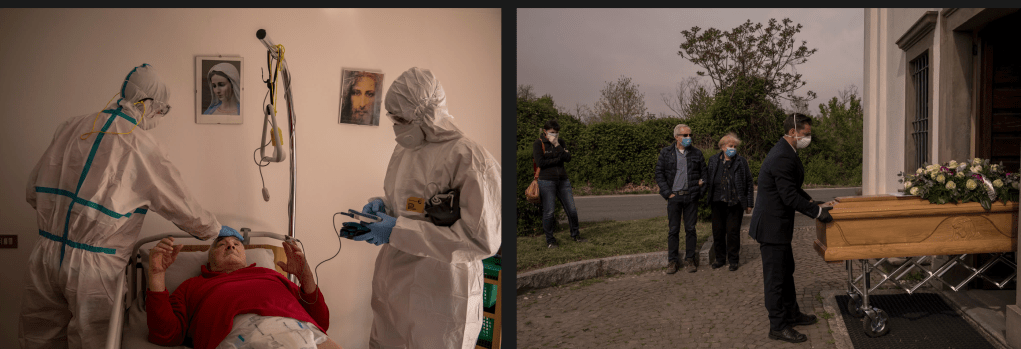
Hospitals filled to capacity. ICUs ran out of beds and ventilators. Nurses worked 12–16 hour shifts in full protective gear. They returned the next day knowing more patients would be gone. They feared coworkers would be gone too. Some had to reuse PPE, others never had proper protection at all. Entire medical teams were decimated. The faces behind the masks—so many of them never seen again by their loved ones.

In some areas, morgues overflowed, and refrigerated trucks became temporary storage for the deceased. Funeral homes struggled to keep up. Families said goodbye to loved ones through screens or from behind glass, incapable of touching them one last time.

Pinterest

Masks became a symbol—of protection, of politics, of protest. While many wore them out of care for others, others rejected them, fueled by fear, misinformation, or political agendas. What should have been a unified public health response fractured along ideological lines.

The spread of disinformation only made things worse. Some media personalities claimed the virus was “just a flu.” Other public figures suggested it was a hoax designed for political or financial gain. Some of those very same people later contracted the virus. A few died from it—some reportedly urging others to take it seriously with their final breaths.

Pinterest

For me, it was personal. I knew approximately twenty—or more—people I had known for most of my life who died from COVID-19. Every day brought another notice: a friend from childhood, a neighbor, someone from church, a former coworker. Sometimes I would hear from relatives who lost someone. Other times, I’d check news from back home and learn that yet another familiar name had been claimed. In places I had once lived, people I had once shared moments and memories with—gone. The virus wasn’t abstract. It carved itself into the story of my life, my family, my friends, and their families.

Pinterest

Vaccines would eventually arrive, faster than any in modern history. But by then, millions had died, and countless others were left with long-term effects—some still suffering today. As of mid-2025, more than 1.1 million Americans have died from COVID-19. Globally, the death toll has surpassed 7 million, though some estimates suggest the real numbers were even higher.

That reminder on my phone was more than just a memory. It was a marker—a scar from a time we lived through together, yet each experienced in our own way.

Pinterest

Let it be said clearly: the virus was real. The loss was real. And for many, the grief still is.

Let that note stand as a record not just of tragedy, but of resilience. Of what we went through—and of what we must remember. Because forgetting invites the risk of repeating it all over again.

Going Into A Restricted Area While Wearing Metal – An MRI Nightmare

A Man Entered An MRI Room That He Was Not Approved To Enter. It Nearly Killed Him.

By Benjamin GroffMedia© | benandsteve.com | 2025 Truth Endures©

2–3 minutes

“Do you have any metal on your body?”

It’s a question you’ve probably heard before entering a medical imaging room. It might sound routine—almost too simple to matter. But as one man in Westbury, New York, learned the hard way, ignoring that question can be deadly.

Earlier this week, a 61-year-old man walked into an MRI suite at Nassau Open MRI. He wasn’t a patient—he was a visitor. And according to reports, he entered without permission, unaware (or perhaps unconcerned) about the danger waiting behind the door.

Around his neck hung a heavy metal necklace.

That necklace would soon become a missile.

As the MRI machine powered up, the magnetic field—a force thousands of times stronger than Earth’s natural magnetism—ripped the necklace forward, pulling the man violently toward the magnet. The result was catastrophic. He suffered critical injuries and was rushed to the hospital.

You can read the full report here from the Miami Herald:

🔗 Visitor wearing necklace critically injured inside New York MRI room

MRI machines are marvels of modern medicine. They allow doctors to see deep into the body without needing to cut it open. Yet, the science that powers them relies on an immense magnetic force.

That’s why medical staff ask the same questions again and again:

  • Do you have any metal implants?
  • Are you wearing jewelry?
  • Have you removed your belt, watch, or hairpin?

These aren’t suggestions. They’re essential precautions to prevent precisely what happened in Westbury.

The necklace that injured this man was an everyday item—something many of us wear without a second thought. 

But in the MRI room, it was anything but ordinary.

This tragic incident serves as a sobering reminder:

Always follow MRI safety guidelines. Always respect warning signs. Never assume a machine like this can be taken lightly.

The man who wore the necklace didn’t mean to cause harm. The laws of physics don’t care about intent. In an MRI suite, metal is never safe unless it’s been declared and cleared.

So next time someone asks you,

“Do you have any metal on your body?”

Don’t shrug it off.

Your answer will save your life!

You can read the full report here from the Miami Herald:

Where am I going? In July I will be going places…So watch for me here!

By Benjamin GroffMedia© | benandsteve.com | 2025 Truth Endures©

2–3 minutes

A Little Heads-Up About July

Next month, you will notice I won’t be posting daily. Don’t worry—some content will still show up, thanks to the magic of pre-scheduled posts. The reason for the slowdown? I’m finally getting a long-overdue back surgery.

It’s not a procedure I’m exactly excited about. There’s a good chance it’ll knock me off my usual rhythm for a while. That is, of course, if everything goes according to plan. But, there are plenty of ways it not happening:

  • I can experience a sudden, miraculous recovery and cancel the whole thing.
  • My insurance will decide it’s a luxury item and deny the claim.
  • The orderly will wheel me into the wrong operating room.
  • The doctor disappears right before showtime.
  • Or, I will be the one who disappears—just as the doctor walks in, ready to go.
  • Or, the operating table goes missing on the day of the surgery.
Benjamin’s Profile

My hope is that the surgery will go as planned. If so it will ease the constant, gnawing pain I feel. It affects me whether I’m walking, sitting, standing, or trying to sleep. The sharp, stabbing, burning sensations mostly travel down my left leg. Though, they sometimes jump to the right when they get bored. They’ve also been known to zap my arms and hands. This happens especially in the middle of the night. It leaves a tingling, numbing wake.

I still manage to write here and there. I try to sound semi-coherent. I cook the occasional meal. I do my best to avoid going completely coo-coo. This journey has been a slow burn, building over more than fifteen years of other health concerns.

Until then, I’ll keep doing what I do—telling stories, filing reports, and generally pretending everything is completely under control. I’ll keep you posted on the surgery prep as it unfolds. Yes, I’m still obsessively checking my doctors’ reviews on Healthgrades.com. So far, there are no red flags. There are just a few mildly worrying Yelp comments about cold hands and questionable playlist choices in the OR. 

1753360200

  days

  hours  minutes  seconds

until

Ben’s Surgery!

Moving Forward: Finding Stability in a Changing World

Groff Media 2024© Truth Endures IMDbPro

Presented by benandsteve.com By: Benjamin Groff II©

As the sun rises on another day, many Americans face questions about navigating a future that feels uncertain and, at times, challenging. With new policies, social shifts, and changes in government practices, it’s natural to wonder: How can we make peace with what tomorrow might bring?

Embracing Life as It Is

The journey forward begins by accepting life as it is. This acceptance isn’t about resigning ourselves to every challenge but acknowledging what is beyond our control. By shifting our focus inward, we can cultivate a balanced and manageable life, regardless of external circumstances.

This approach involves creating a routine—a set of daily habits and practices that we control and are structured to ensure Stability. When we establish a routine that aligns with our values and goals, we take ownership of our lives, making our days feel fulfilling and predictable, even when the world around us may feel anything but. This sense of control and predictability can empower us to face the uncertainties of the future with confidence.

Designing a Routine that Works for you. Focusing on what matters most to us individually will be essential to develop this routine. By centering our lives around personal choices and needs, we shape a daily rhythm whose influences aren’t getting pushed by the ever-shifting demands of society or government policies. Here are vital aspects to consider:

  1. Personal Autonomy: Build a day-to-day lifestyle that allows for independence. This involves selecting tasks, schedules, and activities that feel true to who you are and are within your control.
  2. Stability Through Simplicity: Keep routines simple and consistent. External events can derail complex plans; simplicity provides a foundation for adaptability and peace of mind.
  3. Harmony with Society: While focusing on our lives, aligning our activities with society’s laws and norms is essential. By following guidelines and remaining respectful of others, we minimize the risk of disruption and interference.

Living Without Unnecessary Interference

By developing a sustainable, uncontroversial, and law-abiding routine, we create space for ourselves to live relatively unaffected by the broader tides of political or social change. This sense of security and peace of mind allows us to focus on our personal growth and well-being, even in the face of external uncertainties.

Moving Forward Together

Ultimately, as individuals adopt this mindset, communities also benefit. When people find Stability within themselves, they become pillars of support to others, fostering collective resilience. In times of uncertainty, this shared calm, mutual respect, and individual responsibility can carry Americans forward together, one day at a time. This sense of community and shared responsibility can provide a strong support system in times of uncertainty.

In this approach, tomorrow’s challenges become more manageable, and with a foundation of self-guided routine, we discover that moving forward is not only possible but peaceful.

Providing Pivotal Role For Family Members In Runup To Election Day! How Family Matters…

A Report By: Benjamin Groff II© Groff Media 2024© Truth Endures IMDbPro

During the run-up to any election, families play a pivotal role in supporting and understanding one another. This period, filled with political debates, media coverage, and public discourse, can stir emotions and create an intensely charged atmosphere. The emotional toll of election season can affect even the most resilient individuals, making the support of one’s family crucial and invaluable. Families are the core unit, providing a comforting and reassuring presence. It is essential that the role model (be it a father, older sibling, uncle, or aunt,) when possible, show support, care, and empathy. Doing so should be cultivated, and providing emotional backing and physical presence can help members navigate the turmoil of an upcoming election.

Election seasons amplify the daily stressors people face. Whether it is work pressure, financial struggles, or personal challenges, these become compounded by the uncertainty of political outcomes. Each family member may carry their political convictions, hopes, and anxieties, and these can sometimes clash with those of others. This emotional burden often deepens as people speculate about the possible outcomes—who they hope will win, who they fear will lose, and how the results will shape their future. The thought of losing an election can become so overwhelming that it leads to despair, disappointment, or even anger. For some, this emotional strain can develop into mental health issues, making it vital for families to remain vigilant about one another’s well-being during this time and to seek professional help if needed.

In the most extreme cases, the stress associated with an election’s outcome can drive individuals to become a threat to themselves or others. This is especially true when political messaging often stokes fear, resentment, and division. Individuals who place too much faith in a particular candidate or political party may feel personally attacked when that candidate loses. The sense of loss may not just be political; it can be internalized as a personal failure, leaving individuals feeling disillusioned or even desperate. Families must observe signs of distress, such as prolonged periods of sadness or withdrawal, recognize potential harmful behavior, like verbal or physical aggression, and intervene when necessary. It is crucial to remain proactive, offering emotional support and, if needed, involving professionals or authorities to prevent escalation.

The role of misinformation and campaigns lies in discussing election-induced emotional volatility. Many political campaigns thrive on pushing false narratives, spreading misleading information to sway voters. Misinformation, which includes false or inaccurate information that is spread deliberately to deceive, can reinforce individuals’ beliefs to dangerous levels. The spread of misinformation fuels emotional intensity and gives people a sense of justification for actions that, under normal circumstances, would seem unreasonable or extreme. When individuals have been repeatedly exposed to incorrect information, their convictions can become so ingrained that they believe their behavior—whether confrontation, violence, or drastic action—is justified.

In such situations, the line between reason and irrationality blurs. What may begin as passionate support for a candidate can spiral into dangerous behavior if an individual believes they are defending a “truth” that is, in fact, built on lies. This is why it is imperative for families to communicate openly about politics, encouraging fact-checking and critical thinking. Recognizing when a loved one’s emotional engagement has become unhealthy is not just crucial, but empowering. In these moments, reporting potentially dangerous behavior to the appropriate authorities is not an act of betrayal but one of care and protection for the individual and others around them, reinforcing the sense of responsibility and control within the family.

As elections approach, the pressure intensifies, with it, the emotional strain on families. However, families can also be a force for positive change, weathering the storm of political tension together by staying connected, offering support, and observing each other’s mental health. It is essential to create a space where emotions can be expressed freely but responsibly and where misinformation is challenged rather than accepted at face value. In doing so, families not only protect one another but also contribute to a more balanced and less volatile society during the electoral process, fostering a sense of hope and optimism for a brighter future.