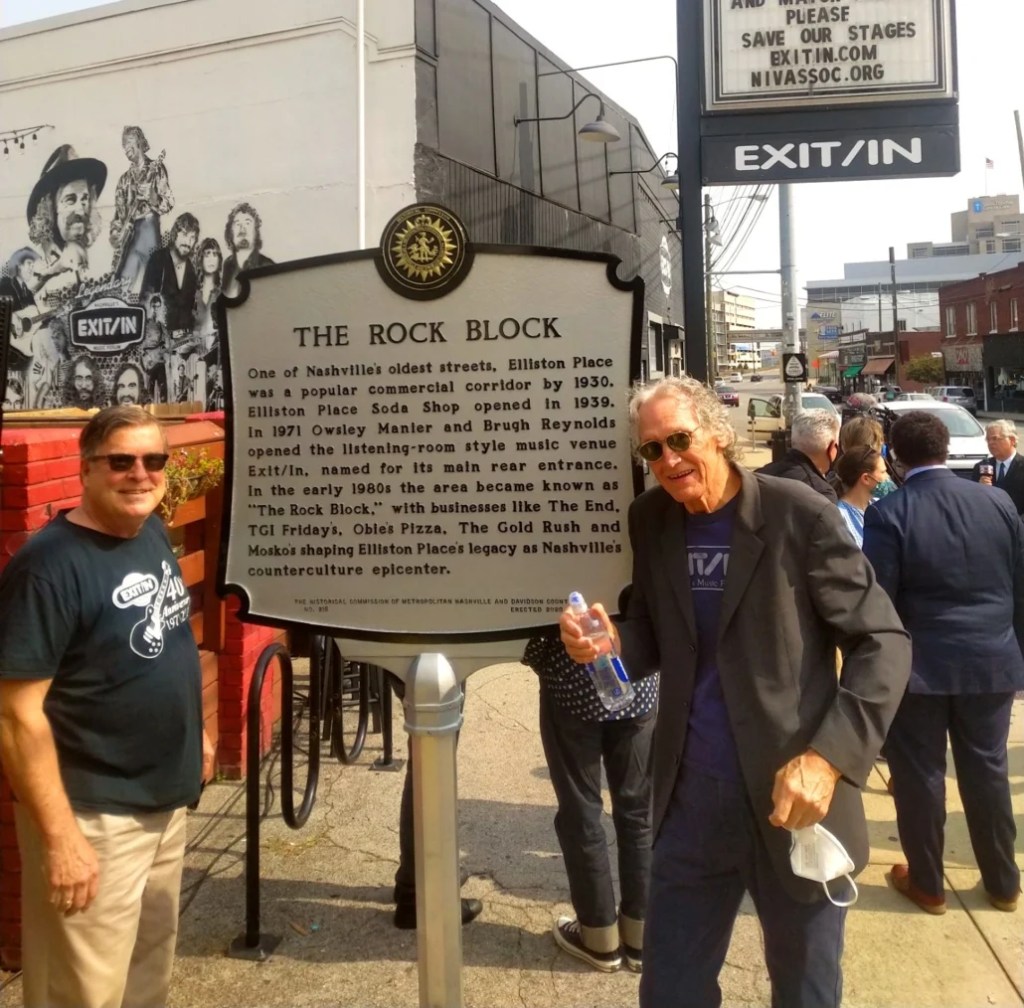
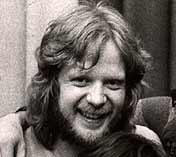
John Owsley Manier, a beloved figure in the Nashville music scene and co-founder of the legendary Elliston Place nightclub, The Exit/In, passed away at his home in Dowelltown, Tennessee, on Friday, October 1. He was 77.
A native of Nashville, Owsley’s passion for music was evident from an early age.
In the 1960s, he was a member of the rock band The Lemon Charade, but his entrepreneurial spirit left an inerasable mark on the city’s cultural landscape.
In 1971, alongside Brugh Reynolds, he co-founded The Exit/In, a venue that would become one of Nashville’s most iconic music clubs. What began as a small listening room for local songwriters soon transformed into a celebrated 500-person capacity rock venue in the 1980s.
The Exit/In was not just a stage, but a platform for both local talent and global superstars, hosting a diverse array of artists over its 50-plus years. From The Red Hot Chili Peppers to Etta James, Johnny Cash to R.E.M., The Allman Brothers to Willie Nelson, Linda Ronstadt, and many more, the venue welcomed all, fostering a sense of inclusivity and diversity in Nashville’s music scene.
It was also the site of numerous memorable moments, such as comedian Steve Martin leading the crowd into the streets for a parade or the venue’s feature in Robert Altman’s 1975 film Nashville.
Over the years, The Exit/In solidified its place in Nashville’s music history and became the anchor of the city’s “Rock Block” on Elliston Place. In 2023, it became listed on the National Register of Historic Places, proof of its enduring cultural significance.
While the club has seen over 25 owners throughout its history, its influence on the local music scene has remained constant, a testament to its enduring legacy.
Owsley is survived by his son, Aaron Manier, sisters Cynthia Barbour and Helen Bryan, and niece McKeen Butler. A Celebration of Life will be held at The Exit/In on Sunday, October 13, at 3:00 PM, honoring his legacy with the music and stories that shaped his life and career.
This event is a fitting tribute to a man who has left an indelible mark on Nashville’s music scene.
John Owsley Manier’s contributions to Nashville’s music community will not be forgotten. His enduring legacy continues to reverberate through the legends of artists and enthusiasts passing through the entrances of The Exit/In, leaving a lasting impression that commands respect and admiration.
A Tribute to Kris Kristofferson by Marion Toehay Jr., Friend and Former Chief of Police
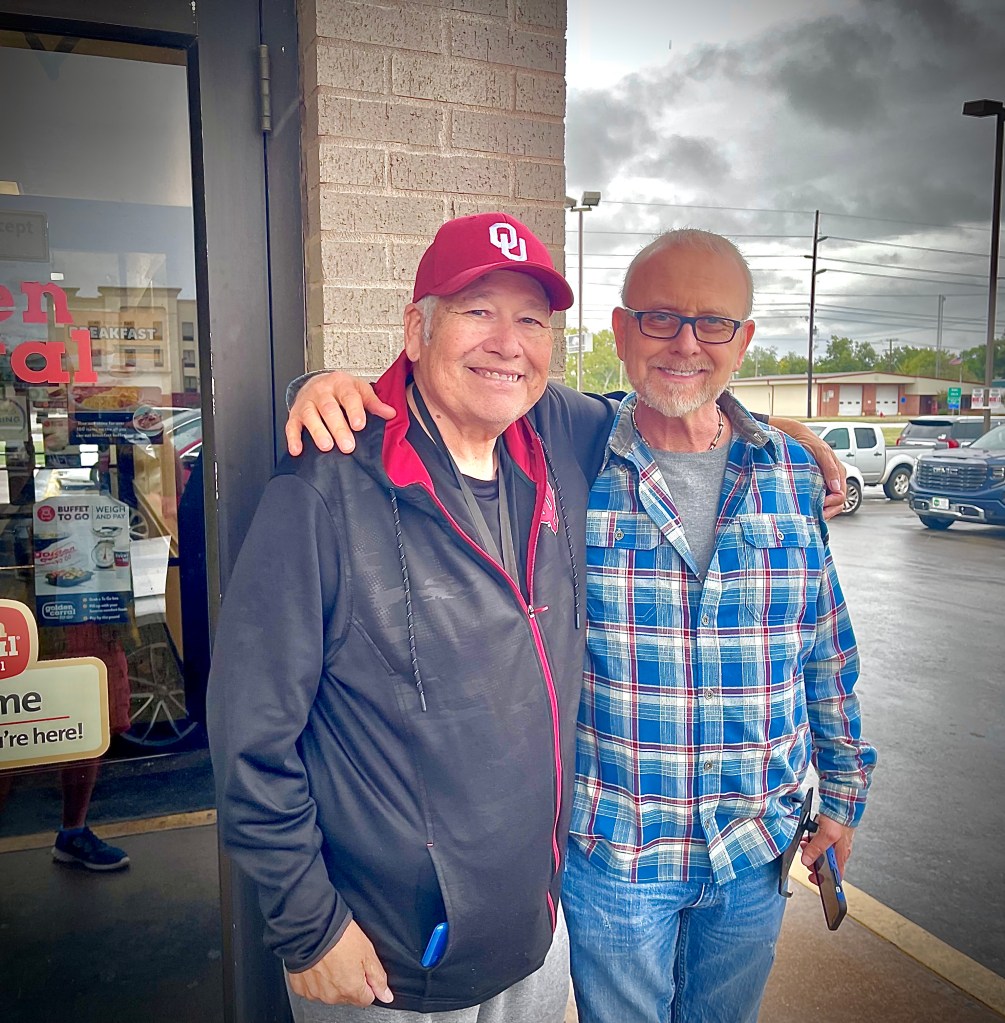
Marion Toehay JR. (Left) Benjamin Groff (Right)
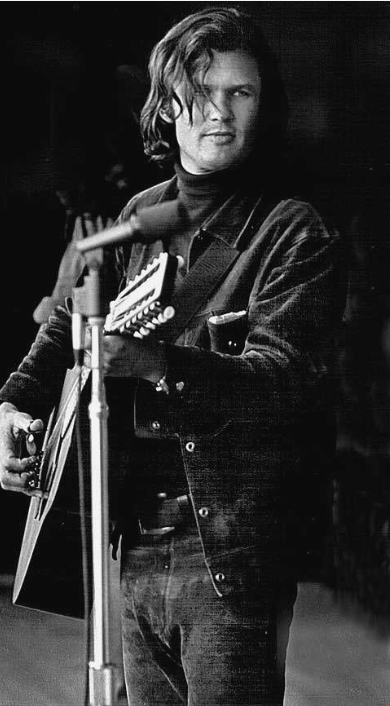
Marion Toehay Jr., a close friend of Benjamin Groff II, who typically authors this page, shares his heartfelt memories today as the world mourns the passing of Kris Kristofferson. The legendary singer-songwriter passed away on Saturday at age 88 in Hawaii. Marion met Kris in the summer of 1968, during the early days of Kristofferson’s career, at the Silver Dollar Saloon in Phoenix, Arizona.
In 1980, Marion became Benjamin’s first Chief of Police in Oklahoma, and today, he reflects on the unforgettable encounter he had with Kris all those years ago:
Kris Kristofferson was one of a kind. I had the chance to meet him when I was just 13 years old, working with my stepdad during the summer of 1968. We were selling produce to bars around Phoenix, Tucson, and the mining towns in the White Mountains. On our last stop in Phoenix, at a place called the Silver Dollar Saloon in what was known as Cowtown, we went inside—and there he was.
I remember seeing Kris Kristofferson stand up from a table and walk right over to us. He greeted my stepdad like an old friend, saying, “Y’all come sit down and have a beer.” At the table with him were none other than Johnny Cash and Waylon Jennings.
My stepdad had always told me he knew Kristofferson, Cash, and Jennings, but up until then, I hadn’t met them myself. Every time we passed through, they just weren’t there. I was starting to think I’d never get the chance to meet them. But that evening, out of nowhere, they were larger than life. It was like a dream come true for me—a 14-year-old kid with a love for country life.
We spent the evening laughing, sharing stories, and, yes, drinking some beer. When we finally headed home, my mom awaited us, wondering why it had taken so long. I told her about meeting Kris, Johnny, and Waylon, and she just smiled and said, “Oh, okay,” as if it was no big deal. She’d met them before, too, thanks to my stepdad. But for me, it was the highlight of the summer—and a memory I’ll never forget.
Hearing about Kris Kristofferson’s passing is sad for everyone who admires him. My family and I send our deepest condolences and hope he rests in peace.
Roger Palm, a revered Swedish drummer whose beats helped define some of ABBA’s most iconic hits, passed away on September 21st., 2024 at the age of 75 due to complications from suffering from Alzheimer’s disease.
Born on March 31, 1949, in Kyrktåsjö, Sweden, Palm showed an early passion for music and began his professional drumming career at seventeen. His talent quickly garnered attention, leading him to become a member of the Swedish bands The Gimmicks and later The Beatmakers. By 1970, Palm had cemented himself as a highly sought-after session musician.
Roger Palm’s association with ABBA began in 1971 when he played on a session for a Frida single produced by Benny Andersson. A year later, in 1972, he laid down the drums for “Rock’n’Roll Band,” marking his first contribution to the ABBA sound. Though Ola Brunkert was the primary drummer for the band, Palm’s unmistakable rhythms enriched many of ABBA’s greatest hits, including “Mamma Mia,” “Dancing Queen,” “Take A Chance On Me,” and “Thank You For The Music.”
A studio musician of prodigious skill and vast discography, Palm was instrumental in creating timeless tracks that resonated around the world. His legacy, particularly his contributions to ABBA’s musical tapestry, will live on in the hearts of fans and music lovers worldwide.
He is survived by a loving family, friends galore and fans worldwide. Private services will be held at a later date.
One has undoubtedly heard the story about the great voodoo queen Marie Laveau from down in Louisiana. Bobby Bare sang about her in his hit song from 1973. The Lyrics were –––
The most famous of the voodoo queens that ever existed
Is Marie Laveau, down in Louisiana
There’s a lot of weird ungodly tales about Marie
She’s supposed to have a lot of magic potions, spells and curses
Down in Louisiana, where the black trees grow
Lives a voodoo lady named Marie Laveau
She got a black cat’s tooth and a Mojo bone
And anyone who wouldn’t leave her alone
She’d go-, another man done gone
She lives in a swamp in a hollow log
With a one-eyed snake and a three-legged dog
She’s got a bent, bony body and stringy hair
And if she ever seen why y’all messing ’round there
She’d go-, another man done gone
And then one night when the moon was black
Into the swamp come handsome Jack
A no good man like you all know
He was looking around for Marie Laveau
He said, “Marie Laveau, you handsome witch
Give me a little a little charm that’ll make me rich
Give me a million dollars and I tell you what I’ll do
This very night, I’m gonna marry you”
Then it’ll be, hmm, another man done gone
So Marie done some magic, and she shook a little sand
Made a million dollars and she put it in his hand
Then she giggled and she wiggled, and she said, “Hey, Hey
I’m getting ready for my wedding day”
But old handsome Jack, he said, “Goodbye Marie
You’re too damned ugly for a rich man like me”
Then Marie started mumbling, her fangs started gnashing
Her body started trembling and her eyes started flashing
And she went-, another man done gone
Oh, if you ever get down where the black trees grow
And meet a voodoo lady named Marie Laveau
If she ever asks you to make her your wife. Man, you better stay with her for the rest of your life
Alternatively, it will be another man done and gone.
Hell! Bobby Bare is taking off on his 1973 Hit Marie Laveau, courtesy of a YouTube posting. Following this sing-a-long, learn the factual story about the real Marie Laveau. As close as what people have been able to trace.
THE STORY ABOUT THE SONG ORIGINS – Supposedly…
On September 10, 2024, her 240th birthday is recognized, and while this will get published the day after it is getting done, so with the notion that it will get a presented avoiding any voo doo spells that could be associated with the partaking of celebrating a late witches birthday. There is more to the story than the song. The lyrics had a backstory that contained information about a man who was about to go on trial in New Orleans for murder. He was a wealthy business owner and had the means to buy the best attorney. However, the case appeared airtight, and his life looked to be going to the gallow. He visited a witch named Marie Laveau, who was known to cast spells on people and could control them. He told her he would give her his earnings for a year and even agreed to marry her if she could sway the jury to find him innocent. She collected items like a black cat’s tooth, a Mojo bone, and other questionable items from around the woods, placed them into a tobacco pouch, buried them beneath a tree for three nights, and then dug them up and gave them to the man. She told them not to go to court without them, and he would be found innocent. Sure enough, when the trial was over, despite the eyewitness’s murder weapon and even the man’s confession, the jury returned an innocent verdict. The man refused to pay Marie Laveau and refused to marry her and laughed at her when she told him he would die by the end of the week if he did not change his mind. It was Monday. On Friday, the man had not returned to pay Marie and was in a local tavern, bragging about his innocent verdict and how he got away with not paying the old lady. As he left his table to go to the bar for a drink, a chandelier fell from the ceiling and hit him, killing him instantly. Whether or not that story is true is still being determined. However, history has recorded Marie Laveau in other areas, has a lengthy record, and she appears to have had a healthy marital life. Bobby Bare has told a similar story during interviews. There have been similar accounts from people in New Orleans. However, fact-finders looked for records, and this is what they found for Ms. Laveau.
Marie Laveau
An Articleby Frank Schneider
The enigmatic Marie Laveau (September 10, 1794 – June 15, 1881), the most famous voodoo queen in the South, has a background that still seems to be vastly under-researched. Her story of resilience begins with her grandmother, Catherine Henry, who, after a long procession of different owners, was finally emancipated by her last one, a free woman of color. Catherine’s original master was the white Creole Henry Roche Belaire, whom Catherine later took his name as her surname. Catherine’s daughter and Marie’s mother, Marguerite, remained with Roche until his death and was sold to another owner who then gave her freedom. After gaining independence, Marguerite became the placéeof the Frenchman Henri D’Arcantel. The exact date that marks Marguerite’s relationship with Charles Laveaux is unknown, but the result of this couple was the birth of a daughter, Marie. On September 10, 1801, Marie was born as a ‘free mulatto.’ Her father, Charles Laveaux, is sometimes referred to as a wealthy white planter, but leaders had discovered he was a free person of color (gen de couleur libre) whose mother’s name was also Marie Laveaux. Nothing is certain of Marie’s childhood, but she may have lived in the St. Ann Street cottage with her maternal grandmother, Catherine Henry.
Marie was a striking figure dressed like a gypsy with a bandana on her head, flashy rings on her fingers and ear, and gold bracelets on her wrists. Her dress was always dark, long, and complete, hanging gracefully from her shoulders. Her eyes, which were large and hazel, sparked like emeralds against her dark skin. This unique appearance, along with her charming personality, contributed to her mystique and influence in New Orleans.
Archival records show that Marie Laveau entered into a marriage contract with Jacques Paris on July 27, 1819. They were married on August 4, 1819. It is widely believed and affirmed that no children came to the marriage. However, some discoveries suggest that two daughters were born of this union; these claims lack concrete verification. The fate of Jacques Paris remains unknown, and his death was never documented. Whatever truly happened to her husband, Marie was still officially known as the “widow Paris.” The marriage mass was performed by Father Antonio De Sadella, the Capuchin priest known as Pere Antonio. After becoming a widow, Laveau became a hairdresser who catered to wealthy white families.
After Jacques Paris, Marie began a relationship with Louis Christophe Dominic Duminy de Glapion that lasted until he died in 1885. All credible records indicate that he was born in Louisiana as the legitimate son of white parents and the descendant of an aristocratic French family. Christophe Glapion was a veteran of the Battle of New Orleans, which occurred below the city at Chalmette on January 8, 1815. It is unclear when or how these two met. Christophe Glapion died on June 26, 1855, and the cause of his death is unknown. Marie Laveau and Christophe Glapion were a together for nearly thirty years. Marie lived for another twenty-six years and is not known to have taken another partner. It is widely thought that fifteen children came from this union, but there is only records to confirm that there were seven. Marie and Christophe’s first child, Marie Heloise, was born on February 2, 1827. She is the daughter who became known as Marie II. At a young age, Marie II entered a relationship with Pierre Crokere, a free man of color. Pierre was a commission broker, builder, and architect. Pierre was twenty-four years older than Marie and died in 1857 at fifty-six.
Voodoo thrived in Haiti and Louisiana, and over the years, it absorbed influences from French and Spanish Catholicism, American Indian spiritual practices, and even Masonic tradition. Voodoo is not just a religion. It is about finding ways to survive conflict and has yet to be verified. Voodoo involved singing, dancing, chanting, and drumming. Voodoo comes from enslaved people who brought it to the Americas from West Africa. Marie began her Voodoo (sometimes spelled Voudou) career sometime in the 1820s, and she is sometimes said to be a descendant of a long line of Voodoo priestesses, all named Marie Laveau. Marie is said to have given private consultations and made and sold gris-gris. Later in life, Marie turned away from her Voodoo practices to dedicate her life to the Church and charitable works, a decision that commands respect. However, it is affirmed by the scholarly community that Marie Laveau was a devout Catholic her entire life.
Marie continued her charitable work during her final years and surrounded herself with her family. One was her youngest daughter, Marie Philomene Glapion, and her children. Philomene entered a relationship with a white man, Emile Alexandre Legendre, who was thirty-two years older than her and married. Philomene and Emile had seven children together, all classified as “colored,” they remained a couple until he died in 1872. Marie died at home in her sleep on June 15, 1881, in her cottage on St. Ann Street, where she had spent more than half a century. Marie’s daughter Philomene made funeral arrangements for the following evening. Her funeral performance provided guidelines to the dignified structure of the Catholic Church without sign of any voodooist demonstration.
We are glad you found benandsteve.com —- this post brings you to a site where you can learn more about different individuals born into this world trying to find normalcy. I often call it “Being Straight In A Gay World!” For so many, they are forced not to live their true selves. And lies are sometimes fatal.
For hoots and to offer you relief from the hard-hitting info and news, we sometimes find pieces to keep a chuckle in the heart from deep inside the benandsteve.com files.
Live on!
Benjamin
You know why I am Gay? Because God Made Me That Way, or That’s The Way The Genes Flow. And It’s NObody’s Damn Business But Mind. You HEAR!
SCOOBY DOO! Looks Like Someone Is Going To Get A Scooby Snack!
A poster of Demi Lovato wearing a black colored bondage-style outfit and lying on a crucifix-shaped bed is being banished for causing offenseiveness to Christians.
The title of the singer’s new album clearly alluded to a swear word and, together with the image, linked sexuality to a sacred symbol, the UK’s advertising watchdog found.
Polydor Records said it was artwork designed to promote the album and did not believe it to be offensive.
The poster received four complaints. And, now days that is all it takes!
READ ALL ABOUT IT! Visit the original posting for this report by visiting this website by clicking here!




 A Note From Benjamin







 benandsteve.com