When 20,000 Americans Held a Pro-Nazi Rally in Madison Square Garden in 1939 – Now It’s Happening Again…

Information Produced and Presented By Organizations Other Than Groff Media 2024


Above, two-time Academy Award nominee Marshall Curry presents A Night at The Garden, a film that revisits a night in February 1939 when “20,000 Americans rallied in New York’s Madison Square Garden to celebrate the rise of Nazism — an event largely forgotten from U.S. history.” As we described it back in 2017, the film documents the following scene:

What you’re looking at is the 1939 “Pro-American Rally” (aka Pro-Nazi Rally) sponsored by the German American Bund at Madison Square Garden on George Washington’s 207th Birthday. Banners emblazoned with such slogans as “Stop Jewish Domination of Christian Americans,” “Wake Up America. Smash Jewish Communism,” and “1,000,000 Bund Members by 1940” decorated the great hall.

New York City Mayor Fiorello LaGuardia—an Episcopalian with a Jewish mother—considered canceling the event, but ultimately he, along with the American Jewish Committee and the American Civil Liberties Committee decreed that the Bund was exercising its right to free speech and free assembly.

A crowd of 20,000 filled the famous sports venue in mid-town Manhattan to capacity. 1,500 police officers were present to render the Garden “a fortress impregnable to anti-Nazis.” An estimated 100,000 counter-demonstrators were gathering outside.…

The most disturbing moment in the short film comes at the 3:50 mark, when another security force—the Bund’s Ordnungsdienst or “Order Service” pile on Isidore Greenbaum, a 26-year-old Jewish worker who rushed the podium where bundesführer Fritz Julius Kuhn was fanning the flames of hatred. Valentine’s men eventually pulled them off, just barely managing to save the “anti-Nazi” from the vicious beating he was undergoing.

Made entirely from archival footage filmed that night, A Night at The Garden “transports audiences to this chilling gathering and shines a light on the power of demagoguery and anti-Semitism in the United States.” You can learn more about the film and the 1939 rally at Marshall Curry’s web site.

Any similarity to actual persons, living or dead, or other xenophobic rallies being held this weekend in Madison Square Garden is purely coincidental, of course.

Related Content 

Yale Professor Jason Stanley Identifies 10 Tactics of Fascism: The “Cult of the Leader,” Law & Order, Victimhood and More

Toni Morrison Lists the 10 Steps That Lead Countries to Fascism (1995)

Fascism!: The US Army Publishes a Pamphlet in 1945 Explaining How to Spot Fascism at Home and Abroad

Over a century ago, the United States grappled with a political movement that closely resembled today’s MAGA (Make America Great Again) movement, a populist uprising spearheaded by former President Donald Trump. Like MAGA, this earlier movement thrived on populist discontent, nativist sentiments, and rejection of the established order. If not kept in check, it could have reshaped American democracy in ways that might have undermined its democratic institutions, a peril we must remain vigilant against.

One of the most significant instances was during Theodore Roosevelt’s presidency, a man with intricate political loyalties. In 1912, Roosevelt’s Bull Moose Party brought populist elements into the political mainstream, appealing to working-class voters who felt marginalized by the two major parties. While Roosevelt was not anti-democratic, his charismatic leadership style and his ability to rally crowds around a strongman image set a precedent for future political movements that would seek to undermine democratic norms.

Simultaneously, the rise of the “America First” movement and the Ku Klux Klan spanning the 1920s showed how easily populist rhetoric could veer into exclusionary nationalism and nativism. The Klan’s widespread influence reached local, state, and federal government levels, promoting an agenda that sought to disenfranchise non-white citizens, immigrants, and anyone considered “un-American.” This movement found an audience among rural and working-class Americans who felt left behind by the rapid industrialization and modernization of the country.

At the heart of these movements was a profound distrust of the government, elites, and institutions—just like the anti-establishment fervor that fueled the rise of MAGA. These movements aimed to “restore” a vision of America rooted in racial and social hierarchies, often using violent rhetoric and intimidation to achieve their goals. Had these populist forces gained more traction, they could have severely damaged the democratic foundation of the country, ushering in a more authoritarian regime.

It took concerted efforts from citizens and political leaders to resist these dangerous movements and restore democratic norms. In some ways, the lessons from over a century ago echo loudly today: unchecked populism, especially when it flirts with nativism and authoritarianism, can bring democracy to the brink of collapse. However, this history also reminds us of our power to shape the future of our democracy, offering hope and inspiration for positive change.

Today, as MAGA remains a force in American politics, it is crucial to remember that the battle to preserve democracy requires vigilance. While populism can express legitimate grievances of people who feel left behind, it must not be allowed to erode the institutions enabling democracy to function. History teaches us that democracy’s survival depends on our ability to balance widespread anger with reasoned leadership and respect for the rule of law. We all have a role to play in this ongoing struggle, and our vigilance is required to maintain a true Republic of the People!

“A Letter From An American!”

POSTED BY Benjamin Groff© GROFF MEDIA 2024© TRUTH ENDURES

Written By: Heather Cox Richardson

September 14, 2024

Five years ago, on September 15, 2019, after about a six-week hiatus during the summer, I wrote a Facebook post that started:

“Many thanks to all of you who have reached out to see if I’m okay. I am, indeed (aside from having been on the losing end of an encounter with a yellow jacket this afternoon!). I’ve been moving, setting up house, and finishing the new book. Am back and ready to write, but now everything seems like such a dumpster fire it’s very hard to know where to start. So how about a general overview of how things at the White House look to me, today….” 

I wrote a review of Trump’s apparent mental decline amidst his faltering presidency, stonewalling of investigations of potential criminal activity by him or his associates, stacking of the courts, and attempting to use the power of the government to help his 2020 reelection. 

Then I noted that the chair of the House Intelligence Committee, Representative Adam Schiff (D-CA), had written a letter to the acting director of national intelligence, Joseph Maguire, on Friday, September 13, telling Maguire he knew that a whistleblower had filed a complaint with the inspector general of the intelligence community, who had deemed the complaint “credible” and “urgent.” This meant that the complaint was supposed to be sent on to the House Intelligence Committee. But, rather than sending it to the House as the law required, Maguire had withheld it. Schiff’s letter told Maguire that he’d better hand it over. Schiff speculated that Maguire was covering up evidence of crimes by the president or his closest advisors.

And I added: “None of this would fly in America if the Senate, controlled by Majority Leader Mitch McConnell of Kentucky, were not aiding and abetting him.”

“This is the story of a dictator on the rise,” I wrote, “taking control of formerly independent branches of government, and using the power of his office to amass power.”

Readers swamped me with questions. So I wrote another post answering them and trying to explain the news, which began breaking at a breathtaking pace. 

And so these Letters from an American were born.

In the five years since then, the details of the Ukraine scandal—the secret behind the whistleblower complaint in Schiff’s letter—revealed that then-president Trump was running his own private foreign policy to strong-arm Ukraine into helping his reelection campaign. That effort brought to light more of the story of Russian support for Trump’s 2016 campaign, which until Russia’s February 2022 invasion of Ukraine seemed to be in exchange for lifting sanctions the Obama administration imposed against Russia after Russia invaded Ukraine in 2014. 

The February 2022 invasion brought renewed attention to the Mariupol Plan, confirmed by Trump’s 2016 campaign advisor Paul Manafort, that Russia expected a Trump administration to permit Russian president Vladimir Putin to take over eastern Ukraine. 

The Ukraine scandal of 2019 led to Trump’s first impeachment trial for abuse of power and obstruction of Congress, then his acquittal on those charges and his subsequent purge of career government officials, whom he replaced with Trump loyalists. 

Then, on February 7, just two days after Senate Republicans acquitted him, Trump picked up the phone and called veteran journalist Bob Woodward to tell him there was a deadly new virus spreading around the world. It was airborne, he explained, and was five times “more deadly than even your strenuous flus.” “This is deadly stuff,” he said. He would not share that information with other Americans, though, continuing to play down the virus in hopes of protecting the economy.

More than a million of us did not live through the ensuing pandemic.

We have, though, lived through the attempts of the former president to rig the 2020 election, the determination of American voters to make their voices heard, the Black Lives Matter protests after the murder of George Floyd, the election of Democrat Joe Biden and Vice President Kamala Harris, and the subsequent refusal of Trump and his loyalists to accept Biden’s win. 

And we have lived through the unthinkable: an attack on the U.S. Capitol by a mob determined to overrule the results of an election and install their own candidate in the White House. For the first time in our history, the peaceful transfer of power was broken. Republican senators saved Trump again in his second impeachment trial, and rather than disappearing after the inauguration of President Biden, Trump doubled down on the Big Lie that he had been the true winner of the 2020 presidential election. 

We have seen the attempts of Biden and the Democratic-controlled Congress to move America past this dark moment by making coronavirus vaccines widely available and passing landmark legislation to rebuild the economy. The American Rescue Plan, the Bipartisan Infrastructure Law, the CHIPS and Science Act, and the Inflation Reduction Act spurred the economy to become the strongest in the world, proving that the tested policy of investing in ordinary Americans worked far better than post-1980 neoliberalism ever did. After Republicans took control of the House in 2023, we saw them paralyze Congress with infighting that led them, for the first time in history, to throw out their own speaker, Kevin McCarthy (R-CA). 

We have watched as the Supreme Court, stacked by Trump with religious extremists, has worked to undermine the proven system in place before 1981. It took away the doctrine that required courts to defer to government agencies’ reasonable regulations and opened the way for big business to challenge those regulations before right-wing judges. It ended affirmative action in colleges and universities, and it overturned the 1973 Roe v. Wade decision recognizing the constitutional right to abortion. 

And then we watched the Supreme Court hand down the stunning decision of July 1, 2024, that overturned the fundamental principle of the United States of America that no one is above the law. In Donald J. Trump v. U.S., the Supreme Court ruled that a president could not be prosecuted for crimes committed as part of his official duties.

We saw the reactionary authoritarianism of the former president’s supporters grow stronger. In Republican-dominated states across the country, legislatures passed laws to suppress Democratic voting and to put the counting of votes into partisan hands. Trump solidified control over the Republican Party and tightened his ties to far-right authoritarians and white supremacists. Republicans nominated him to be their presidential candidate in 2024 to advance policies outlined in Project 2025 that would concentrate power in the president and impose religious nationalism on the country. Trump chose as his running mate religious extremist Ohio senator J.D. Vance, putting in line for the presidency a man whose entire career in elected office consisted of the eighteen months he had served in the Senate.

In that first letter five years ago, I wrote: “So what do those of us who love American democracy do? Make noise. Take up oxygen…. Defend what is great about this nation: its people, and their willingness to innovate, work, and protect each other. Making America great has never been about hatred or destruction or the aggregation of wealth at the very top; it has always been about building good lives for everyone on the principle of self-determination. While we have never been perfect, our democracy is a far better option than the autocratic oligarchy Trump is imposing on us.” 

And we have made noise, and we have taken up oxygen. All across the country, people have stepped up to defend our democracy from those who are open about their plans to destroy it and install a dictator. Democrats and Republicans as well as people previously unaligned, we have reiterated why democracy matters, and in this election where the issue is not policy differences but the very survival of our democracy, we are working to elect Democratic presidential nominee Kamala Harris and her running mate, Minnesota governor Tim Walz.

If you are tired from the last five years, you have earned the right to be.

And yet, you are still here, reading. 

I write these letters because I love America. I am staunchly committed to the principle of human self-determination for people of all races, genders, abilities, and ethnicities, and I believe that American democracy could be the form of government that comes closest to bringing that principle to reality. And I know that achieving that equality depends on a government shaped by fact-based debate rather than by extremist ideology and false narratives. 

And so I write.

But I have come to understand that I am simply the translator for the sentiments shared by millions of people who are finding each other and giving voice to the principles of democracy. Your steadfast interest, curiosity, critical thinking, and especially your kindness—to me and to one another—illustrate that we have not only the power, but also the passion, to reinvent our nation.

To those who read these letters, send tips, proofread, criticize, comment, argue, worry, cheer, award medals (!), and support me and one another: I thank you for bringing me along on this wild, unexpected, exhausting, and exhilarating journey.

— Heather Cox Richardson

Notes:

https://www.nbcnews.com/politics/donald-trump/trump-told-bob-woodward-he-knew-february-covid-19-was-n1239658

https://ourworldindata.org/coronavirus

Share

Heather Cox Richardson is an American historian. She is a professor of history at Boston College, where she teaches courses on the American Civil War, the Reconstruction Era, the American West, and the Plains Indians.[1] She previously taught history at MIT and the University of Massachusetts Amherst.[2]

Richardson has authored seven books on history and politics. In 2019, Richardson started publishing Letters from an American, a nightly newsletter that chronicles current events in the larger context of American history.[3] The newsletter accrued over one million subscribers, making her, as of December 2020, the most successful individual author of a paid publication on Substack.[4 (see more click here)

Who Is Tim Walz?

By: Heather Cox Richardson From Substack – Reposted By: Benjamin Groff© Groff Media 2024© Truth Endures

On August 6, 2024 Heather Cox Richardson wrote on Substack the following entry, it was to the point and told exactly what people should know about Tim Walz. He is a decent human being. Who has done a number of things in life. Some of those things came at making human decisions. Fallible to a point, he may be. Who isn’t? Heather’s writing begins next –––

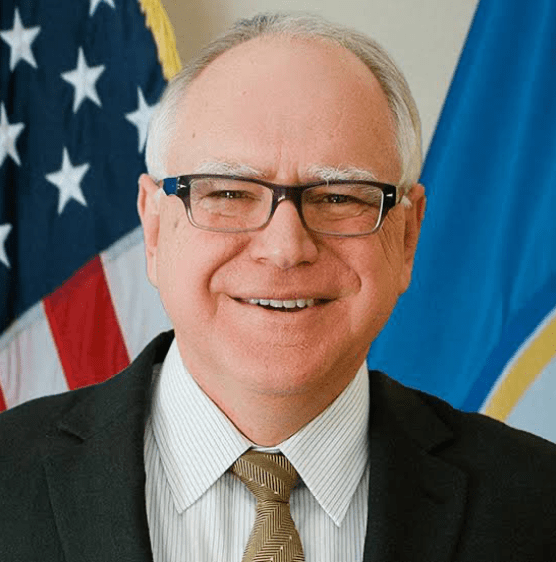
Today Vice President Kamala Harris named her choice for her vice presidential running mate: Governor Tim Walz of Minnesota. Walz grew up in rural Nebraska. He enlisted in the Army National Guard when he was 17 and served for 24 years, retiring in 2005 as a command sergeant major, making him the highest-ranking enlisted soldier ever to serve in Congress, according to the House Committee on Veterans’ Affairs.  

He went to college with the educational benefits afforded him thanks to his service in the Army, and graduated from Chadron (Nebraska) State College. From 1989 to 1990, he taught at a high school in China, then became a social studies teacher in Alliance, Nebraska, where he met fellow teacher Gwen Whipple, who became his wife. They moved to Minnesota, where they both continued teaching and had two children, Hope and Gus, through IVF. 

Walz became the faculty advisor for the school’s gay-straight alliance organization at the same time that he coached the high-school football team from a 0–27 record to a state championship. The advisor “really needed to be the football coach, who was the soldier and was straight and was married,” Walz said in 2018. 

Walz ran for Congress in 2005 after some of his students were asked to leave a rally for George W. Bush because one of them had a sticker for Democratic presidential nominee John Kerry. Walz won and served in Congress for twelve years, sitting on the House Agriculture Committee, the Transportation and Infrastructure Committee, and the Committee on Veterans’ Affairs.

Voters elected Walz to the Minnesota state house in 2018, and in his second term they gave him a slim majority in the state legislature. With that support, Walz signed into law protections for abortion rights, supported gender-affirming care, and legalized the recreational use of marijuana. He signed into law gun safety legislation and protections for voting rights, and pushed for action to combat climate change and to promote renewable energy. 

Strong tax revenues and spending cuts gave the state a $17.6 billion surplus, and the Democrats under Walz used the money not to cut taxes, as Republicans wanted, but to invest in education, fund free breakfast and lunch for schoolchildren, make tuition free at the state’s public colleges for students whose families earned less than $80,000 a year, and invest in paid family and medical leave and health insurance coverage regardless of immigration status. 

While MAGA Republicans are already trying to define Walz as “far left,” his votes in Congress put him pretty squarely in the middle.  His work with Lieutenant Governor Peggy Flanagan to expand technology production and infrastructure funding in the state was rewarded in 2023, when Minnesota knocked Texas out of the top five states for business. The CNBC rating looked at 86 indicators in 10 categories, including the workforce, infrastructure, health, and business friendliness. 

Walz checks a number of boxes for the 2024 election, most notably that he hails from near the battleground states of Wisconsin, Michigan, and Pennsylvania and comes across as a normal, nice guy. He favors unions, workers’ rights, and a $15 minimum wage. He is also the person who coined the phrase that took away the dangerous overtones of today’s MAGA Republicans by dubbing them “weird.” As a student of his said: “In politics he’s good at calling out B.S. without getting nasty or too down in the dirt…. It’s the kind of common sense he showed as a coach: practical and kinda goofy.”

Walz is also a symbol of an important resetting of the Democratic Party. He has been unapologetic about his popular programs. On Sunday, July 28, when CNN’s Jake Tapper listed some of Walz’s policies and asked if they made Walz vulnerable to Trump calling him a “big government liberal,” Walz joked that he was, indeed, a “monster.” 

“Kids are eating and having full bellies so they can go learn, and women are making their own health care decisions, and we’re a top five business state, and we also rank in the top three of happiness…. The fact of the matter is,” where Democratic policies are implemented, “quality of life is higher, the economies are better…educational attainment is better. So yeah, my kids are going to eat here, and you’re going to have a chance to go to college, and you’re going to have an opportunity to live where we’re working on reducing carbon emissions. Oh, and by the way, you’re going to have personal incomes that are higher, and you’re going to have health insurance. So if that’s where they want to label me, I’m more than happy to take the label.” 

Right-wing reactionary politicians have claimed to represent ordinary Americans since the time of the passage of the Voting Rights Act—on August 6, 1965, exactly 59 years ago today—by insisting that a government that works for communities is a “socialist” plan to elevate undeserving women and racial, ethnic, and gender minorities at the expense of hardworking white men. 

Historically, though, rural America has quite often been the heart of the country’s progressive politics, and the Midwest has had a central place in that progressivism. Walz reintegrates that history with today’s Democratic Party. 

That reintegration has left the Republicans flatfooted. Trump and J.D. Vance expected to continue their posturing as champions of the common man, but on that front the credentials of a New York real estate developer who inherited millions of dollars and of a Yale-educated venture capitalist pale next to a Nebraska-born schoolteacher. Bryan Metzger, politics reporter at Business Insider, pointed out that J.D. Vance tried to hit Walz as a “San Francisco-style liberal,” but while Vance lived in San Francisco as a venture capitalist between 2013 and 2017, Walz went to San Francisco for the first time just last month. 

Head writer and producer of A Closer Look at Late Night with Seth Meyers Sal Gentile summed up Walz’s progressive politics and community vibe when he wrote on social media: “Tim Walz will expand free school lunches, raise the minimum wage, make it easier to unionize, fix your [carburetor], replace the old wiring in your basement, spray that wasp’s nest under the deck, install a new spring for your garage door and put a new chain on your lawnmower.” 

Vice President Harris had a very deep bench from which to choose a running mate, but her choice of Walz seems to have been widely popular. Representatives Alexandria Ocasio-Cortez of New York and Joe Manchin of West Virginia, who are usually on opposite sides of the party, both praised the choice, prompting Ocasio-Cortez to post: “Dems in disconcerting levels of array.” 

Harris and Walz held their first rally together tonight in Philadelphia, where Pennsylvania governor Josh Shapiro, who had been a top contender for the vice presidential slot, fired up the crowd. “Each of us has a responsibility to get off the sidelines, to get in the game, and to do our part,” he said. “Are you ready to do your part? Are you ready to form a more perfect union? Are you ready to build an America where no matter what you look like, where you come from, who you love, or who you pray to, that this will be a place for you? And are you ready to look the next president of the United States in the eye and say, ‘Hello, Madam President?’ I am too, so let’s get to work!”

Pennsylvania is a crucial state, and Shapiro issued a statement offering his “enthusiastic support” to the ticket. He pledged “to work to unite Pennsylvanians behind my friends Kamala Harris and Tim Walz and defeat Donald Trump.”

“Why do you back Joe Biden if you advocate for more young people in office?”

A Reanalysis by Benjamin G. benandsteve.com

This election isn’t about pitting the young against the old. It’s about ensuring that Gen Z and Millennials, who constitute a significant third of our nation’s population, have representation that mirrors their presence.

David Hogg Leaders We Deserve
PBS Interview

Although remembered as older, numerous influential leaders initiated their activism in their youth. We aim to support these leaders—like John Lewis, who embarked on a mission for vital change at a young age and became one of our country’s most pivotal and influential leaders.

Our goal is straightforward: elect more youthful leaders capable of introducing fresh perspectives into our government. 

Numerous barriers have historically prevented young people from entering public service and achieving the representation they deserve. Those who support America for all should make every effort to assist young candidates in overcoming these obstacles.

Visit Leaders We Deserve

After the setbacks of 2016, the 2018 blue wave brought the Democratic Party a renewed recognition of the influence young voters wield. In 2020, Joe Biden’s election, which was largely driven by the substantial turnout from Millennial and Gen Z voters, showcased the power of youthful participation. Your voice matters, and your vote can shape the course of our nation.

Vist The Post On Leaders We Deserve Winning!

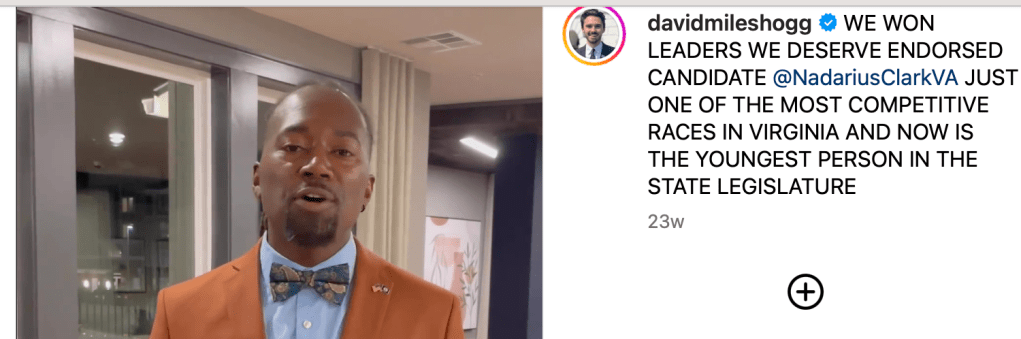
In 2022, young voters reaffirmed their electoral influence, thwarting the anticipated “red wave.” Emerging young leaders like Justin Jones in Tennessee and Maxwell Frost in Florida gained prominence. Groups like “Leaders We Deserve” also celebrated their first endorsement success with Nadarius Clark’s election in Virginia.

Listen To Interview of radio interview

The benefits of electing young leaders extend beyond Gen Z and Millennials; they enrich the nation and shape our future. Commencing political involvement at a young age capitalizes on time, making it a potent political ally. Gen Z’s potential longevity in Capitol Hill eclipses many, underscoring the urgency of their ascent to power. The time to act is now.

If you resonate with a mission and aspire to bolster the election of deserving leaders in 2024 and beyond, please act to support feasible campaigns like “Leaders We Deserve” to support their endeavors or find a campaign that will help elect a Democratic Candidate to office.

Challenges and Solutions for Homelessness in America

Photo by MART PRODUCTION on Pexels.com
Photo by Timur Weber on Pexels.com

My household has always maintained a relatively liberal understanding of the country’s homeless situation. We disagree with outlawing their right to exist and have a place to live and shelter. They are, after all, doing the best they can with the current housing, employment, transportation, or other issues they face. Let them be!

Photo by Rosemary Ketchum on Pexels.com

That is what our stance has been all along, until we went out to breakfast this past weekend and the police department was herding a group along the main boulevard we take to our restaurant. They appeared to be the characters you don’t want to run into in a dark alley at night—or daytime, for that matter. For Christ’s sake, were they planning to put roots down behind our neighborhood. We have a wall around the place, but salespeople always jump in and try to knock on doors. We have security but are not the type that can handle these characters. Every winter, we have a homeless troupe that typically arrives and camps near a river, but they are the same people every year, and they are like the snowbirds who flow in and out of the area from the north. These new homeless characters were of a family we never experienced before. 

And that is what is scaring so many in America. The police found a suitable place for the troupe to travel on to, and there were no more sights of them after that initial spotting. But that is different for many in the country. These homeless populations inundate their communities, and it is an issue they have never before had to face. What if they are following suit? How many more will come? What problems will they bring with them? Will the property values deflate wherever they plant a stake? Jesus, are they diseased? 

California has spent billions of dollars trying to fix its homeless problem and has failed to find a solution. The issue is greater there now than ever. Affordable housing remains unobtainable to those needing it. California is asking people to build tiny homes in their backyards, garages, wherever there is space, and make them available to house people. The problem is, if folks don’t want them in their alleys, will they want them in their garages?

Locally in Phoenix, Arizona. My husband hired an unhoused person years ago and knew she was, although she had not disclosed so on her introduction form. He worked with her schedule to make sure she kept her employment, and within six months, she was able to get a studio apartment, moving from her car. She then told him. He said he knew all along, and that is why he had worked so hard to keep her going, and she turned out to be one of the best employees. Such an example may not be the case with every person, but it is an example of how we can attribute ourselves to improving the situation one person at a time.

While feeling uneasy about sudden changes in your community is natural, it’s important to remember that homelessness is not a choice for many people. They often face a variety of challenges, including mental health issues, substance abuse, lack of affordable housing, and unemployment, which can contribute to their situation.

As for the broader issue of homelessness, it’s clear that a comprehensive and compassionate approach is needed to address the root causes and provide effective solutions. This approach may include increasing access to affordable housing, expanding mental health and addiction services, and providing job training and employment opportunities for homeless individuals.

The Supreme Court now has the issue, and the Lord only knows what they will come up with. But no doubt Texas will pass a law ordering the execution of all homeless people after 30 days of being homeless. 


The Difference Between Scranton Joe And Don The Con. A Whole Lot!

You’ve undoubtedly heard a comprehensive debate about the economic situation during the transition from Trump to Biden.

Photo by Andrew Neel on Pexels.com

Indeed, the economic conditions at the end of Trump’s term were challenging due to the pandemic, and Biden inherited an economy facing significant headwinds. The pandemic’s impact on the economy was unprecedented, affecting employment, consumption, and global demand.

However, public perception and political narratives often prioritize certain aspects of an administration’s performance while downplaying others. People’s opinions become shaped by various factors, including media coverage, partisan affiliation, personal experiences, and messaging from political leaders.

Photo by Jozemara Friorili Lemes on Pexels.com

Trump had shut down the United States of America, a fact that nearly every American forgets today. They need to remember the closed stores, the empty shelves, the closed restaurants, the doctor’s office that had to refuse patients, hospitals that were so full no one could visit, and nursing homes where loved ones had to stand outside and wave to loved ones from the street, and Funeral Homes so full they were using rental refrigerator trucks to store bodies—the toilet paper shortages. That was Trump’s Administration. Biden had to clean it up. He received much blame for what must occur to get the nation back on track. But he got to work, and the country got back to life.

Here are a few points to consider when thinking about why public opinion might differ between Trump and Biden regarding the economy:

  1. Partisan Bias: Political affiliations can heavily influence people’s views on the economy. Republicans may be more inclined to credit Trump for positive economic developments during his term and blame external factors like the pandemic for any downturns. Conversely, Democrats may be more critical of Trump’s handling of the economy and more forgiving of the challenges Biden faced upon taking office.
  2. Messaging and Framing: Political leaders and media outlets shape public opinion. How economic data and policies get reported can influence people’s perceptions of the economy’s performance. Trump was known for touting positive economic indicators during his term, influencing public perception despite the broader challenges.
  3. Another significant factor that shapes public opinion on the economy is personal experience. People’s direct economic situations, such as job loss, financial hardship, or financial gains, can profoundly impact their views. For instance, someone who experienced a job loss or financial hardship during Trump’s term might have a negative view of his economic policies. Conversely, if someone benefited from tax cuts or saw their investments grow, they might have a more positive perception. Complexity of Economic Issues: Economic conditions are influenced by a multitude of factors, including global trends, monetary policy, fiscal policy, and more. It can be challenging for the average person to parse through these complexities and assign credit or blame to a particular administration accurately.
Photo by Anna Tarazevich on Pexels.com

In conclusion, public opinion on the economy is multifaceted, and partisan biases could dominate messaging, personal experiences, and the complexity of economic issues. While the data presented paints a challenging economic picture at the end of Trump’s term, public perception is by broader factors. And it is conveniently forgotten!