How to Protect Your Future: Build Resilience Now

1–2 minutes

Not long ago, I was reminded of a question I was asked when I was younger. What is the single most important thing an individual can do today to protect themselves for the future?

The answer can vary depending on whether you’re considering finances, health, or personal growth. But if I had to distill it into one single most important thing, it would be –

Invest in Your Own Resilience

1. Health

Take care of your body—exercise, eat well, and emphasize sleep. Without health, everything else becomes harder. Your body is the foundation for your future self.

2. Mind

Keep learning. Read widely, ask questions, and develop skills that won’t become obsolete as the world changes. A flexible, curious mind is your best insurance policy against uncertainty.

3. Finances

Save consistently, even in small amounts. Building a safety net gives you the freedom to make choices later on and protects you when life throws surprises.

4. Relationships

Nurture authentic connections. Family, friends, mentors, and communities are often the strongest form of protection in a crisis.

5. Purpose

Know what matters to you. A sense of meaning provides direction and clarity to decisions when the future feels uncertain.

📌 If I had to choose one phrase to sum it up:

“Build resilience today—through health, knowledge, savings, and relationships—so tomorrow you’re strong enough to face whatever comes. If you keep your body, mind, and soul, they will sustain you.

Avoid The Big Three– Lust, Greed, and Complacency are the three factors that contribute to the destruction of any individual.


By Benjamin GroffMedia© | benandsteve.com | ©2025 

Finding Hope in Forgotten Places

2–3 minutes

I Just Came In to See if Someone Still Cares

The neon beer sign buzzed faintly against the cracked window of Earl’s Place, a bar that had seen better years. The wooden floor creaked under the weight of boots that hadn’t walked through in a long time. Jack pushed the door open and paused. He wasn’t sure why he’d come. Maybe it was habit. Maybe it was the song playing faintly from the jukebox in the corner—one he hadn’t heard in years.

“I just came in to see if someone still cares…”

He let out a dry chuckle.

“Well, ain’t that the truth.”

At a corner table, an older man nursed a black coffee, his hat tipped low. Folks just called him “Red,” though his hair had long gone silver. He raised his head, eyes sharp despite the years.

“Jack,

he said, as if the name had been waiting on his tongue.

“Didn’t think I’d see you again.”

Jack shrugged and slid into the booth.

“Figured I’d find out if anybody remembered me.”

Red studied him for a moment.

“You mean if anybody still cares.”

Jack didn’t answer. His face told enough. Years of disappointments, false starts, and self-inflicted wounds weighed heavy on him. Work had dried up, his family had drifted off, and the last of his friends had stopped calling. He wasn’t looking for pity. Just… something.

“You know,”

Red said slowly,

“folks got it wrong. They think it’s a man’s mistakes that define him. But I’ll tell you something—it’s his fight against those mistakes that shows who he really is.”

Jack stared down at his calloused hands.

“What if you get tired of fighting?”

Red leaned in, voice low but steady.

“Then you rest. But you don’t quit. If you quit that is when you hand yourself over to those demons for good. As long as you’ve got breath, you’ve still got a say in how the story ends.”

The jukebox crackled, replaying the song’s chorus, as if to punctuate the thought. Jack felt a sting behind his eyes he hadn’t let out in years. He cleared his throat.

“Guess I just needed to hear it from someone who wasn’t me.”

Red gave a slow nod.

“That’s why you came. Not for the beer. Not for the music. To find out if someone still cared. And I do. Hell, maybe more folks do than you think. You just stopped listening.”

Jack sat back, the weight in his chest easing, just a little. The bar was still dim. The world outside remained hard. For the first time in a long while, he didn’t feel invisible.

That night, as he stepped out into the cool air, Jack realized something. It wasn’t forgiveness from the world he was after—it was the fight inside himself he had to forgive. And maybe, just maybe, that was enough to start over.

By Benjamin GroffMedia© | benandsteve.com | 2025 

Lessons from the Last Broadcast: Questioning the Airwaves

1–2 minutes

The Last Broadcast

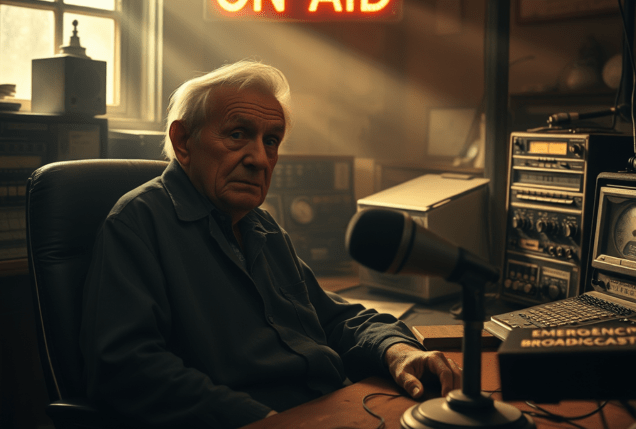
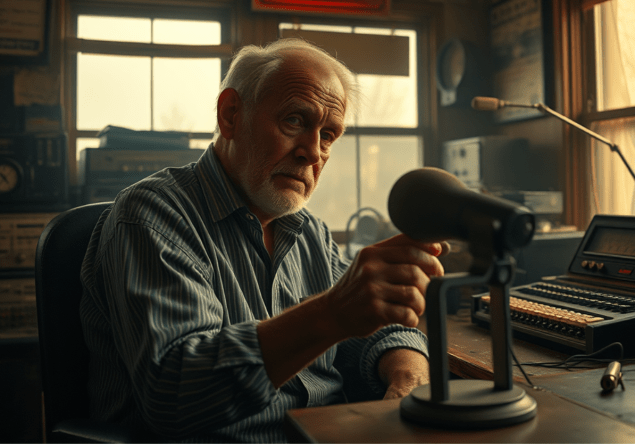
Sam Delaney had been a radio man his whole life. Station manager, on-air talent, janitor when needed—he had done it all. Now, in his seventies, he sat in the empty control room of what was once a bustling AM station. The place smelled of dust and warm circuitry. The walls hummed with silence.

Sam still knew every button by heart. Especially the one marked EBS—Emergency Broadcast System. Back in the day, the FCC’s rules were clear: tones were sacred. The piercing signal wasn’t just a sound; it was a promise. Tornado warnings. Flood alerts. The nation’s line of defense against panic. There had been rules—Title 47 of the CFR, etched into his memory like scripture.

But things had changed. With each new administration, the guardrails loosened. The equal-time law that once kept political chatter balanced had vanished decades ago. A president erased it. He feared his old Hollywood reels would force TV stations to give airtime to his critics. One law changed, and suddenly the airwaves were open territory—bluster, bias, and one-sided noise pumping into homes unchallenged.

Now Sam watched as networks ran those same tones he once revered, but not for weather or disaster. They tested loyalty. They triggered crowds into a frenzy. They commanded obedience in ways he never imagined. Once, tones meant safety. Now, they meant control.

He rubbed the crease in his neck where headphones had rested for thirty years. Outside, the town he had called home was no longer united. Neighbors didn’t trust neighbors. Families split along the fault lines of which voice on the radio they listened to.

Sam leaned into the old microphone. The ON AIR light flickered.

“What if I told you,”

He began. His voice was gravel but steady.

“The lie isn’t in what you’re hearing. It’s in what you stopped questioning.”

He paused, finger hovering over the tone button.

For the first time in his career, he considered sending out a tone. This was not to warn people of a storm but to warn them of themselves.


By Benjamin GroffMedia© | benandsteve.com | ©2025 

From Hauling Oranges to Inspiring a Movement

2–3 minutes

The Brothers and the Orange Truck

Groff Media2025© BrotherTruckers

Eddie and Carl had always been close, but nothing tied them together like their truck. A massive eighteen-wheeler, shining chrome dulled by road dust, it was both their livelihood and their burden. They’d gone deep into debt to buy it. They hoped to build their hauling business around orange deliveries from the groves in California.

But the payments ate away at every mile they drove.

Even with steady work, the numbers never added up. So they tried to get clever. They began running side jobs—hauling crates of produce, lumber, even furniture—between their orange routes. One drove while the other slept. Their heads were propped against the hard cab window. They woke with stiff necks that seemed to worsen each week. 

“Just a few more years,” 

Carl would mutter. 

“We’ll get ahead.” 

Eddie always nodded, though neither believed it completely.

Then the crisis hit. On a rain-slicked highway outside Phoenix, a sudden shudder ran through the truck. Eddie, at the wheel, felt the steering go slack. He fought the wheel, but the trailer jackknifed, scattering oranges across three lanes of traffic. By some miracle, no one was killed—but the damage was catastrophic. Their load was ruined, the rig torn apart, and the trucking company that contracted them pulled their work instantly.

The brothers sat on the shoulder. They were soaked in the rain. They watched cars crunch over the fruit they had worked so hard to deliver. They thought it was the end.

But in the weeks that followed, something unexpected happened. Photos of the accident—highways littered with smashed oranges, drivers climbing out to help clean up—went viral. 

Reporters picked up the story of the brothers who worked around the clock. Their necks were stiff, and their wallets were thin. They were just trying to get ahead. 

Sympathy poured in. A crowdfunding campaign was launched. And soon, Eddie and Carl weren’t just hauling oranges anymore. They were speaking about small-town grit and about persistence. They talked about what it meant to keep pushing ahead when the load was too heavy.

The truck nearly broke them. The crisis almost ruined them. In losing everything, they discovered something bigger. They found a community that believed in them more than they had ever felt in themselves.


By Benjamin GroffMedia© | benandsteve.com | ©2025 
Riding The Lie Down The Elevator

1–2 minutes

The Lie in the Elevator

It began as nothing more than a joke. A character on television—smug, ridiculous—coasted down an elevator while declaring something so absurd that everyone laughed. It was too silly to be taken seriously, too exaggerated to live beyond the moment.

But no one challenged it. And why would they? It was just a laugh, a one-liner, a small puff of smoke that seemed harmless. Yet smoke drifts. It clings. The joke became a line repeated at dinner tables, then in office chatter, then across social media. What started as comedy grew like a weed, tangled and persistent.

You knew it was a lie. You knew from the very beginning. But saying something meant being the one to ruin the joke, the one to argue when everyone else was smiling. It was easier to let it go. Easier to think, Surely this will fade away.

Except it didn’t. The lie ballooned. It threaded itself into conversations, policies, schools, and pulpits. Suddenly your neighbors were quoting it as if it explained the world. Your family repeated it without hesitation. They did not repeat it because they believed it. They found it easier than fighting for the truth.

And now here you are. Watching as the lie isn’t just smoke anymore—it’s a fire, raging and indiscriminate, swallowing millions in its path. The streets fill with people repeating the words that started as a smirk on an elevator ride. And they look to you, because they trust you. Because they think you see what they see.

But you don’t. You know better.

The question is no longer whether the lie is funny. The question is whether you will stand against it now. It is late, but not too late. Otherwise, silence will make you part of it.

What would you do?


By Benjamin GroffMedia© | benandsteve.com | ©2025
The Secret to Mr. Dink’s Disguise Adventures

2–3 minutes

Mr. Dink and the Secret Agent’s Beard

Mr. Dink had always dreamed of growing a grand, bushy beard. He wanted more than a scruffy patch or stubble. He desired the beard that inspired respect. It was like the beard of a ship’s captain or a wise old philosopher. For years he tried: tonics, oils, even rubbing garlic on his chin (his grandmother’s advice). Nothing worked. At best, he muster a shadow of stubble that made him look perpetually halfway through shaving.

One lazy afternoon, flipping through a magazine, something caught his eye: an ad for “Undercover Agent Supplies.” The list included fake passports, invisible ink, and, most importantly, false facial hair kits. Mr. Dink’s heart skipped. At last, a way to see himself with a beard! He sent in his order, expecting a modest beginner’s kit.

But somewhere in the warehouse, a mistake was made. Instead of the novice set, Mr. Dink received a professional-grade disguise kit—the very same used by secret service agents. When he opened it, the contents dazzled him. There were full beards in every style imaginable. Mustaches curled or drooped. Eyebrows that changed a man’s entire face. There were wigs, glasses, voice changers, even adhesive skin molds.

Mr. Dink began experimenting right away. In one disguise, he was a grizzled lumberjack. In another, a mysterious professor. And when he wore the gray beard and cap, not even his closest neighbors recognized him. To his shock, the disguises worked so well that people began speaking freely around him. He heard what they really thought about Mr. Dink—sometimes kind, sometimes critical, sometimes hilariously wrong.

At first it stung. But as he listened, he realized how little people truly saw of him, how much they judged by appearances. And oddly, this knowledge freed him. He began wearing the disguises not to hide, but to understand. And the beard—the one he never grew—became a symbol of all the lives he slip into.

In the end, Mr. Dink discovered he hadn’t needed a beard to be respected. He needed confidence, curiosity, and a little humor. Still, he kept the kit. There were times when being a secret agent was just too much fun. The allure of having a glorious beard was hard to resist.


By Benjamin GroffMedia© | benandsteve.com | ©2025
Elias: The Man with an Animal Connection – Better Than Dr Doolittle And Wiser Than Dr Livingstone

2–3 minutes

The Listener

Elias never thought of himself as special. He lived in a small cabin at the edge of the woods. There, he worked as a carpenter. In the evenings, he fed the stray cats that wandered in from the trees. He had always felt an odd comfort around animals. He attributed this to his quiet nature and patient hands.

It began with his dog, Rusty. One evening while Elias rubbed behind the old hound’s ears, he thought he heard a whisper. It wasn’t a sound exactly, but a clear impression: “Don’t stop, that feels good.” Elias froze, hand hovering mid-scratch. Rusty nudged him insistently, and the thought returned, playful and warm. At first, Elias dismissed it as his imagination. The barn cat slinked across the porch the next morning. Yet, he felt a sharp pang of hunger that wasn’t his own. He realized something impossible was happening.

At first, the animals spoke only in feelings. They expressed affection when he stroked their fur. There was annoyance if he pulled away too soon, and gratitude when he left out food. But as days passed, the impressions grew sharper, almost like sentences forming inside his mind. One afternoon, Rusty limped. Elias felt a jolt of pain in his knee. This was followed by the plea: “It hurts, please help.” He checked and found a thorn buried deep in the dog’s paw. A sparrow darted to his windowsill and flooded him with urgency: “Nest broken, chicks in danger.” Elias followed its pull and discovered a nest toppled in the wind. He rescued the hatchlings before the foxes found them.

Word seemed to spread, though Elias never understood how. Stray dogs lingered near his cabin. Deer stared at him without fear. Once, even a wounded hawk landed on his porch rail. Each brought with it a silent voice—requests for healing, warnings of predators, messages of danger to others of their kind. With every answered call, Elias felt the bond deepen.

Soon he realized this gift was more than companionship. It was responsibility. He can bridge a gap no one else: soothing fear, preventing harm, guiding creatures toward safety. A flood threatened the lower fields. He was awoken by the frantic voices of burrowing animals. He led the farmer’s family to higher ground just in time. Poachers crept through the forest one autumn night. The owls carried their presence to him in overlapping echoes. He alerted the rangers. Before long, his reputation surpassed even that of Dr. Doolittle, carrying an edge that would have made famed explorer Dr. Livingstone himself take notice.

Elias no longer saw himself as just a man in a cabin. He was part of a living chorus, every feather, paw, and claw connected through an unseen thread. And though it sometimes weighed heavy on him, he carried it gladly. For the first time in history, animals had found someone who truly listened. He had discovered a purpose greater than he’d ever imagined.


By Benjamin GroffMedia© | benandsteve.com | 2025

How Far Is Heaven? A Reflection on Belonging

2–3 minutes

How Far Is Heaven?

The little boy tugged at his father’s sleeve as they walked home one quiet evening. The sky stretched wide above them, painted in soft shades of pink and gold. After a long silence, the boy asked a question that seemed to hang as heavy as the clouds.

“Dad… how far is Heaven?”

The father slowed his steps, looking down at his son. For a moment, he didn’t answer. Then he smiled gently.

“That’s a big question, son. And the truth is—I don’t know.”

The boy’s brow furrowed.

“Don’t know? Isn’t it up there?”

He pointed toward the fading light above the rooftops.

“Well,”

his father began,

“that depends on what you believe Heaven is. For some people, Heaven is a faraway place where souls go when life here is over. For others, Heaven is closer than you think.”

He stooped down so they were eye to eye.

“Heaven can be the feeling of home when everyone’s together at the dinner table. It can be walking into your grandparents’ house and smelling fresh pies cooling on the counter. It can be the peace of sitting in a quiet cabin deep in the woods. There is no noise but the trees and the wind.”

The boy listened, his eyes wide, as though trying to imagine all those Heavens at once.

“You see, son,”

his father continued,

“Heaven doesn’t have just one location. It can mean different things to different people, at different times in their lives. Sometimes it’s a place, sometimes it’s a feeling. And sometimes, people think of it as a reward beyond this life. But no matter what, it’s something we long for—a place where we belong, where everything feels right.”

The boy was quiet, mulling it over. Then he looked back up at the sky.

“So… Heaven isn’t always far away?”

His father smiled, squeezing his hand.

“No, son. Sometimes, Heaven is right here—closer than we ever imagine.”

As they walked the rest of the way home, the boy noticed the laughter of his mother. She was waiting at the door. He smelled the supper drifting through the air. He felt the warmth of his father’s hand in his own. And for that moment, he decided, Heaven was not far at all.


Reflection

How Far Is Heaven?

By Benjamin Groff II

A boy once asked his father, “How far is Heaven?”

The father said, “That depends. For some, it’s beyond the stars where souls go when life is done. For others, it’s much closer. It is found in the smell of pies at Grandma’s. It is in the quiet of a cabin in the woods or the laughter of family at the dinner table.”

He paused and added, “Heaven is different for everyone, son. Sometimes it’s a dream, sometimes a memory, and sometimes it’s right here, in the moments we hold close.”

The boy thought for a while, then smiled. Heaven, he decided, was not so far away after all.


By Benjamin GroffMedia© | benandsteve.com | 2025 

Harold the Tortoise Pulls Off Great Escape #2—This Time the Law Catches Up

Harold’s Great Escape

Photo by Edwin Lopez on Pexels.com

Harold was no ordinary backyard pet. Being a tortoise, his adventures rarely involved chasing tennis balls or tugging on ropes. Instead, Harold was a master of patience, persistence, and plotting. He had already made a name for himself with one backyard escape. Still, this time, his curiosity carried him farther than anyone expected.

It began with the fence. Harold had spent weeks studying it, eyeing the weak spots with quiet determination. One morning, the house was still waking up. He pressed against a loose slat. It was just enough for daylight to seep through. Inch by inch, Harold squeezed his shell until he was finally free. He paused. He sniffed the air (at least, as much as tortoises sniff). He set off at his own steady pace toward the unknown.

The journey was slow but deliberate. He trundled across lawns. He navigated flowerbeds. He even startled a neighbor’s cat. Upon seeing Harold’s ancient face, the cat decided this was a creature best left unchallenged. Hours passed. Harold’s determined little legs carried him farther. The sound of traffic began to hum in the distance.

By midafternoon, Harold had reached a busy city intersection. Cars rumbled by, drivers honked, and the crosswalk lights blinked red and green. Unfazed, Harold simply marched out onto the asphalt, oblivious to the commotion he was causing.

It was then that Officer Ramirez, patrolling the area, spotted something unusual in the middle of the road. At first glance, it looked like a rock—or maybe even debris. But as he got closer, he noticed the little legs moving steadily ahead.

“Well, you don’t see that every day,” Ramirez muttered, pulling his cruiser to the curb.

Stepping into the street, he held up his hand to stop traffic, much to the confusion of the waiting drivers. Then, carefully, he scooped Harold up. “You’re one brave little guy,” he said, examining the tortoise’s shell. That’s when he saw it: a neatly written phone number in permanent marker, curved along Harold’s back.

A quick call later, Harold’s worried family answered. Within the hour, Harold was back in his yard, much to their relief. The fence slat was nailed firmly back in place. Harold received a fresh helping of lettuce as a homecoming feast.

Of course, Harold munched away happily, but his eyes still lingered on the fence. After all, a tortoise’s heart—slow and steady though it is—was always drawn to adventure. For Harold’s caretakers, it would mean something different. The next day, the front page of the local newspaper ran with headlines and the story about Harold’s Great Escape!

By Staff Reporter Scoop Gatter

It isn’t every day that traffic stops because of a tortoise. Yet, that’s exactly what happened yesterday afternoon at the corner of Maple Avenue and 3rd Street.

Officer Luis Ramirez of the city police department was on routine patrol. He spotted what he thought was a rock in the middle of the intersection. A closer look revealed something far more unusual. A slow-moving tortoise named Harold was making his way across the street. It seemed to him as if it were just another stretch of backyard lawn.

“I had to do a double take,” Ramirez said with a laugh. “You expect to see dogs or cats wandering off now and then, but not a tortoise. Cars were stopping, people were staring—it was a sight.”

Officer Ramirez quickly stopped traffic and carried Harold to safety. A phone number was written in marker on Harold’s shell. This was a precaution his owner had taken after the tortoise’s first great escape. Thanks to that bit of foresight, Ramirez called the family directly.

Within the hour, Harold was back home, munching lettuce in his yard as though nothing had happened. His owner is relieved and amused. She says the family plans to reinforce their backyard fence. She also admits Harold has a knack for adventure.

“He’s slow, but he’s sneaky,” the owner joked. “You turn your back for an afternoon, and suddenly he’s halfway to downtown.”

As for Harold, he remains unfazed by all the attention. With his second escape under his belt, neighbors are already calling him “the Houdini of Maple Avenue.”

The Day the Johnson’s Mimic Bird Flew the Coop And Flew Throughout Johnson City, Kansas

3–4 minutes

The Day the Mimic Bird Flew the Coop

Earl and Mabel Thompson were a quiet couple in their seventies. They lived on Maple Street in a small white house with blue shutters. Most evenings were spent watching the news or sipping tea on the porch. Their pride and joy, though, wasn’t a grandchild or a garden, but a bird—a rare mime bird. Unlike parrots, which repeated words, this bird can mimic voices perfectly. You’d swear the real person was in the room.

They named him Charlie.

One summer morning, Mabel was dusting the birdcage. Earl was fumbling with the Sunday crossword. Charlie spotted the cage door ajar. With a gleeful flap, he darted out the window and into the open sky. Earl dropped his pencil. “Mabel, the bird’s loose!”

But by then, Charlie was already over Johnson City, Kansas Main Street, testing his repertoire of voices.


Trouble Takes Flight

Charlie’s first stop was the Jenkins’ house. Hovering outside the kitchen window, he called out in Mr. Jenkins’ voice:


“Darlin’, I burned the roast again!”

Mrs. Jenkins stormed into the kitchen, waving a wooden spoon, ready for a fight. Poor Mr. Jenkins had been quietly napping in his recliner. He nearly fell over when she accused him of ruining dinner. He hadn’t even touched it.

From there, Charlie zipped down to O’Malley’s Bar. Perched on the ceiling fan, he crooned in half a dozen voices: “Put that on my tab!” “You call that a drink?” and, worst of all, in the barkeep’s own gruff tone: “Next round’s free, boys!” Chaos erupted as patrons demanded their “free round,” and fists began flying before anyone realized the voice was coming from above.


Civic Mischief

Not content with bars and kitchens, Charlie wheeled into the Johnson City police station. He perched outside the dispatcher’s window. He barked in Officer Daniels’ exact voice:
“Unit 12, urgent back-up on Fifth and Main!”

Three patrol cars roared away with sirens blaring. The station was left in confusion. The real Officer Daniels walked out of the bathroom holding a sandwich. One County Unit, A State Patrol Car and the city’s only other active patrol unit.

Later that same afternoon, Charlie wandered into Johnson City’s Hospital. There, using a spot-on imitation of the head doctor, he announced over the intercom:


“Paging Dr. Howard, please report to Room 207. Emergency tonsil transplant, stat!”

Patients and nurses alike scrambled in a tizzy, while Dr. Howard was still in the cafeteria with a mouthful of Jell-O. He nearly joked. Squirming to get up his belly got wedged beneath the table and chair. A colleague that was with Doctor Howard, began laughing so hard he nearly passed out from the added action.

Charlie flew down to Johnson City John Deere. He landed in their parts department. There, he began calling out engine parts numbers from bin numbers. This drove the parts clerks absolutely crazy.


The Chase and the Capture

Word spread of a mysterious troublemaker around town. By that time, Earl and Mabel were chasing after Charlie with a birdcage. They called sweetly, “Here, Charlie! Come home, dear!”

The town’s patience was running thin, though most couldn’t help but laugh at the absurdity. Charlie was exhausted from a day of impersonations. Finally, he landed right back on Earl’s shoulder with a satisfied squawk:


“Well, that was fun!”

—in Earl’s exact voice.

Earl sighed, Mabel shook her head, and the crowd around them burst into laughter.


Aftermath

From that day on, Charlie’s cage was fitted with a brand-new lock. Earl swore it would never happen again.

Still, every now and then, when the wind blew just right across Maple Street, folks swore they heard Charlie. He was practicing a new trick. The voices varied—sometimes the mayor, sometimes the school principal—but the laughter it brought the town was always the same.


By Benjamin GroffMedia© | benandsteve.com | 2025 

The House That Heals: A Story of Acceptance and Memory

1–2 minutes

The House on Brookfield Lane

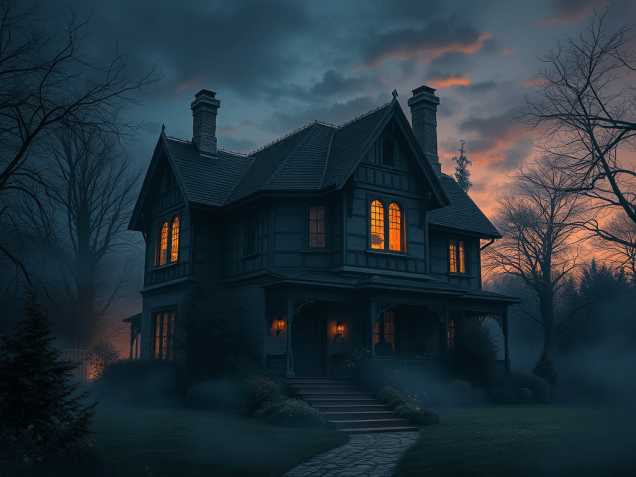
Ethan was only a few miles from home when it happened. A sudden dizziness swept over him, the road blurred, and he pulled his car to the side. When the fog lifted, he realized he couldn’t remember who he was, or where he had been going. All he had was a backpack, a half-filled journal, and the overwhelming instinct that he needed to find shelter.

He wandered until he reached Brookfield Lane, where an old house loomed against the evening sky. As a child, Ethan had feared this place. It was where shadows seemed darker, where kids whispered about ghosts and curses. Though he didn’t remember that fear, his body did—a chill ran through him as he stepped onto the porch. Still, with nowhere else to go, he knocked.

An elderly woman opened the door. “Come in, child,” she said softly, as though she had been expecting him. Ethan stayed, helping with small chores, sharing meals, and slowly growing comfortable in the quiet warmth of the house. In the evenings, they talked. She asked about his life. Even though he couldn’t remember, fragments began returning. He recalled his laughter with friends, the smell of campus coffee shops, and the long nights of studying. Then, something deeper surfaced. It was the secret he had held since high school. He thought he’d never say it aloud. He told her he was gay. Instead of fear or judgment, she smiled. “Love,” she said, “is never something to be ashamed of. It’s what keeps this house alive.”

When his memory finally returned, it shocked everyone. Ethan’s parents had always thought of Brookfield Lane as cursed, a place to avoid. They couldn’t understand how the son they worried about had found comfort, truth, and acceptance there. For Ethan, though, the house became more than a place of fear. It became the place where he embraced who he was. He learned that what we fear most sometimes holds the power to set us free.


By Benjamin GroffMedia© | benandsteve.com | 2025 

Eldoria’s Shattered Crown: A Tale of Courage and Redemption

2–3 minutes

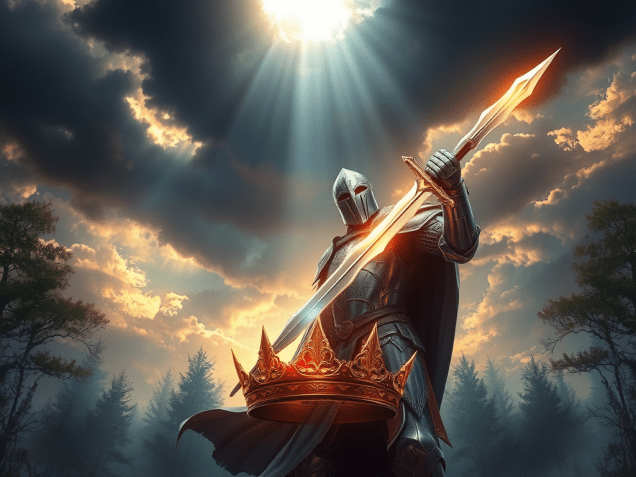
The Knight and the Shattered Crown

The kingdom of Eldoria lay beneath a shadow. Once filled with music, trade, and the bright laughter of children, its streets had grown silent. A great dragon, black as midnight and wreathed in fire, had descended from the northern mountains. With its arrival, the crown of the king—the source of Eldoria’s unity and prosperity—was shattered into three pieces. These pieces were scattered across the land. Without the crown, the kingdom faltered, its people divided, its armies weakened.

But hope was not lost.

The Oath

Sir Alaric of Bindenvale was no stranger to hardship. He was a knight forged in battles and tempered by loyalty. He was summoned to the king’s side as illness gnawed at the ruler’s strength. The king’s voice was weak, but his eyes burned with command as he entrusted Alaric with a quest: 

“Find the three shards of the crown. Restore it, and our kingdom will live again.”

Alaric bowed deeply, vowing to see the quest through or perish in its pursuit. Armed with his blade, Lion’s Fang, and guided by his unyielding faith, he rode forth.

The Trials

The first shard was said to lie in the Forest of Whispers, guarded by spirits of the old world. There, Alaric endured visions meant to unseat his courage—faces of fallen comrades, echoes of failures long past. But he pressed on, offering words of honor instead of fear, and the spirits relented, gifting him the shard.

The second shard rested in the Abyss of Cindral, a labyrinth of fire and stone. Alaric fought creatures born of molten rock and endured heat that melts steel. At the abyss’s heart, he found the shard embedded in stone, pried free by his resolve rather than brute strength.

The third shard was the most perilous: it lay in the dragon’s lair itself. Alaric faced the beast, its scales impenetrable and its fire endless. Yet he recalled the oath he had made—not to defeat the dragon, but to save the kingdom. Using wit, he lured the beast into a trap of crumbling stone. This gave him just enough time to seize the final shard.

The Return

Weary but unbroken, Sir Alaric returned to Eldoria. The shards were reforged by the kingdom’s smiths into the Crown of Unity. As it was placed once more upon the king’s brow, light returned to the realm, driving back the dragon’s shadow. The people of Eldoria cheered. They celebrated not merely for their crown. They honored the knight whose courage and humility had bound them together once more.

Sir Alaric never sought glory, only service. Yet in taverns and halls for generations to come, his story was told. It was the story of a knight who saved a kingdom not through conquest. Instead, he saved it through honor, sacrifice, and faith.


By Benjamin GroffMedia© | benandsteve.com | 2025 

The Four Magic Words: A Father’s Legacy

2–3 minutes

Ebom Shoobem Shoobem Shoobem

The four magic words a father passed down to his four children. He told them that anytime they were about to face trouble, they should speak those words. The assistance they required would eventually. But only if they took the necessary action for it to occur. 

The words were only to be used when necessary. They should not be used as a want. Use them during a crisis, more than a wish. And a threat to life, rather than a threat to pride. If they ever abused the use of the words, then their special powers would no longer be available to them. The magic words would only be passed on when they reached the age of 18. They needed to have made plans to leave the family home.

The four children had each left their home by the time the father had reached 55 years of age. He had spent a great deal of his life enjoying his time with each of them. Now, he looked ahead to adventuring into his own life. 

The father’s four children carried the words with them into the wide world. Each one held them differently. One tucked them away like a secret prayer. Another spoke them aloud when fear pressed too heavily. A third doubted them but remembered all the same. The fourth treated them like a compass hidden in the lining of a coat.

In time, each child faced a moment that tested the promise of those words. One found themselves stranded in a snowstorm, far from home. Another stood at the edge of despair after losing nearly everything they had built. A third was cornered by deceit, betrayed by someone they had trusted. And the last stood between danger and an innocent life.

In every trial, the magic words did not summon thunderbolts or winged guardians. Instead, they sharpened courage, opened a hidden door, or drew the right ally to their side. The father had spoken true—the words alone were not enough. But when joined with action, with faith, with that one step ahead, help always came.

Years later, when the father’s hair had silvered and his own journeys were slowing, the children returned to him. Around the fire, they told their stories—each different, but threaded with the same truth. The words had worked. This was not because they carried power of their own. Instead, they reminded each child that strength and salvation arrive only when one dares to act.

The father smiled, warmed by both the fire and the glow in his children’s faces. He whispered, almost to himself, “Ebom Shoobem Shoobem Shoobem.” The four children echoed it back, not as magic, but as memory.

And from then on, they knew—the words were not only for escaping danger. They were meant to be carried ahead to their own children one day. The words served as a charm. They also posed a challenge. Help will come, but only if you rise to meet it.


By Benjamin GroffMedia© | benandsteve.com | 2025 

The Silence About Straight Shooters

2–3 minutes

Double Standards – Plain Prejudices!

When a massacre occurs, we rush to ask why. We sift through social media posts, interviews, and histories, desperate for something that explains the unexplainable. But what’s telling is not just the reasons we find—it’s the reasons we don’t look for.

The overwhelming majority of mass shooters in the United States are heterosexual men. That’s not speculation; it’s data. Yet how often do you see headlines dissecting a killer’s heterosexuality as the cause of their violence? How often do pundits rush online? They demand to see if the shooter once posted about a girlfriend or wore a wedding ring. They use that as “proof” that straight men are dangerous by design. The answer is simple: never.

And yet, when a shooter identifies as LGBTQ+, or is even rumored to, it suddenly becomes fair game for speculation. Sexuality or gender identity—factors with no proven connection to violence—are treated as the smoking gun. It’s as if identity itself becomes a scapegoat, a convenient villain for people already inclined to mistrust it.

This double standard reveals a lot about our cultural biases. Straight people are allowed complexity. They can be troubled, mentally ill, politically radicalized, or angry at the world. They can also be a hundred other things. But LGBTQ+ people are flattened into caricatures, their entire identities blamed for tragedies they commit. Violence is driven by opportunity, ideology, and access to weapons. It is also driven by often untreated pain—not by who someone loves or how they define themselves.

Maybe the question isn’t why people commit atrocities. Instead, we should ask why we frame some people’s motives through the lens of prejudice. Meanwhile, we let others keep their humanity. Until we answer that honestly, we’ll keep mistaking bigotry for truth—and keep missing the real reasons behind the violence.

Benjamin Groff is a former police officer and radio news anchor. He has hosted programs for CNN and ABC News affiliates in Colorado and Wyoming. His career in law enforcement began in 1980 and lasted more than two decades. This gave him firsthand insight into the criminal mind and public safety. Moreover, it provided him with an understanding of the human stories that often go untold. His writing draws on these experiences, blending street-level truth with a journalist’s eye for the bigger picture.

By Benjamin GroffMedia© | benandsteve.com | 2025 

The Elevator of Life: A Profound Story of Honesty

2–3 minutes

The Whiskey Sea and the Elevators

The man had lived his life in balance—not a saint, not a sinner, but somewhere in between. He had helped when strong. He erred when he was weak. Now, in his elder years, he carried the weight of both. His body ached. His breath came shorter. One night, he sank into a sleep so deep it felt like stepping into another world.

A ship appeared from the darkness. Its hull was blackened with age. It floated on a sea of whiskey. The whiskey shimmered like molten amber under the moonlight. A cigar extended from the deck like a gangplank, smoke curling in lazy ribbons. Hesitant but curious, the man stepped onto the cigar and walked across, balancing himself as if crossing into another reality.

On board, a captain awaited him—tall, weathered, eyes that had seen too much. “I’m here to take you to your next destination,” the captain said, voice low and certain. The man nodded. The ship cut across the whiskey sea. It came to rest before a towering building of glass and brass. Its entrance was lined with golden elevators, each gleaming like judgment itself.

Inside, a sharply dressed man waited in the lobby. His shoes were polished so bright they caught the reflection of the man’s weary face. He gestured toward a chair. “Tell me your life story,” he said.

And so the man spoke. He told of the good—moments of kindness, loyalty, laughter. He confessed to the bad—times of selfishness, anger, and failure. He left nothing out, for what use was there in lying at the end? The suited man listened, not judging, only nodding as though each word was weighed like coin on a scale.

At the end, silence hung heavy. The suited man pressed a single button. The doors of one elevator slid open, glowing with light the man did not quite see. He stepped ahead, heart pounding. Whether the elevator rose or fell, he did not know. But as the doors closed, he understood something profound. The true measure had never been perfection. It was honesty. It was the courage to walk the bridge, board the ship, and face the truth of who he had been.


By Benjamin GroffMedia© | benandsteve.com | 2025 

Simple Moments: How a Bench Transformed a Neighborhood

1–2 minutes

The Bench by the Willow Tree

On the edge of town, near a quiet creek, there’s an old willow tree. Beneath its sweeping branches sits a wooden bench—simple, weather-worn, and unremarkable to anyone passing by. Yet, for the people who live nearby, it has become something more: a gathering place of unexpected kindness.

It started with an elderly woman who came to rest her legs each morning. One day, a teenager walking his dog sat down beside her. They began talking. By the time the boy left, she was smiling in a way her neighbors hadn’t seen in years. The next day, the boy came back—with coffee in hand for her.

Word spread. Soon, others began stopping at the bench. A widower brought extra tomatoes from his garden. A young mom offered homemade muffins. A pair of joggers left fresh flowers tucked into the slats. Strangers became neighbors, and neighbors became friends—all because of an old bench no one ever noticed before.

The willow still stands, and so does the bench. It hasn’t been polished, painted, or rebuilt—it doesn’t need to be. Its gift is not in how it looks. Its gift is in what it holds: conversations, kindness, and the small reminders. Even in a world that feels divided, we can still find each other in the simplest of places.


 The Takeaway: Sometimes hope and connection aren’t found in grand gestures. They aren’t always in perfect plans. Instead, these are found in an ordinary spot where people choose to show up for one another.


By Benjamin GroffMedia© | benandsteve.com | 2025 

Back-to-School Memories at the Local Drug Store

2–3 minutes

Back-to-School at the Drug Store

In our little town, back-to-school season wasn’t marked by glossy superstore aisles or online orders delivered in cardboard boxes. No, it happened right on Main Street. It was at the drug store tucked neatly between the barber shop and the movie theater.

That drug store was a place all its own. A long soda fountain stretched nearly the length of one wall. It had red-topped stools that spun in slow circles when you climbed onto them. Folks would stop in for a cherry Coke or a vanilla phosphate. The hum of the soda jerk’s mixer became as familiar as the sound of church bells on Sunday morning. On the north end of the store, up near the front window, stood a glass display case. Behind it sat neat stacks of paper bags. Each bag was carefully filled with the exact school supplies a child would need for a given grade.

Every August, families filed in, children buzzing with nervous excitement. You only needed to walk up to the counter. Puff out your chest and tell the lady behind it your grade number. With a kind smile, she’d hand over a brown paper bag with your future sealed inside. The bag contained pencils, crayons, rulers, and erasers. For the younger grades, it included that wide-lined treasure known as the Big Chief Tablet.

Kindergarten through third grade was the golden stretch, when opening that bag felt like Christmas morning in August. We’d tear into the packages of crayons. We tested the sharpness of new pencils. We imagined all the things we’d draw and write. But as the years went on, the thrill wore off. By fourth grade, the magic faded. We realized those paper bags didn’t just hold supplies. They carried us straight back into the dreaded routine of homework. There were also spelling tests and teachers who never gave you quite enough recess.

Still, that ritual mattered. The drug store had a soda fountain fizzing. Its shelves were lined with shiny notebooks. It gave us a sense of belonging. It tied the town together. The barber cut hair next door. The movie theater marquee changed weekly. Parents shepherded kids through one more milestone.

Every bag marked a fresh start, even if we grumbled about it. None of us would have admitted it then. Yet, there was comfort in knowing that behind that glass display case was a little brown sack of sharpened pencils. It was waiting for us every year with brand-new beginnings.


By Benjamin GroffMedia© | benandsteve.com | 2025 

Rethinking the National Guard: A Return to Local Focus

6–9 minutes

What if the National Guard went “back to basics”? 

Instead of roaming the country as a military force, it can return to its roots. It should focus on protecting communities, fighting disasters, and standing ready at home. This was how it was initially intended.

Traditionally, the National Guard is a reserve part of the U.S. Armed Forces with a dual state and federal mission. Its primary duties include:

  • Disaster response: helping with hurricanes, floods, wildfires, tornadoes, and other natural disasters.
  • Civil support: assisting with search and rescue, law enforcement support, and humanitarian aid.
  • Community protection: maintaining order during emergencies like riots or public unrest (when activated by a governor).
  • Military readiness: training to serve as backup for overseas missions if federally activated.

In recent years, the Guard has been used much more often as a deployable military force nationwide and abroad. Instead of focusing mainly on disaster relief and state emergencies, units have often been:

  • Sent overseas for long deployments (Iraq, Afghanistan, and other global missions).
  • Deployed domestically for extended periods to reinforce border security.
  • Called into action for large-scale protests or high-profile events (sometimes more as a security force than a disaster-relief one).

This “running about the country” role shows the impact of federal activation. It often overrides the state-level, community-first role the Guard was created for.

If the Guard were not being tasked so heavily with nationwide or military-style deployments, they would be more focused on:

  • Local readiness involves staying in their communities and training for natural disasters and emergency responses.
  • Rapid-response teams: being first on the ground for wildfires, floods, and major storms.
  • Community integration: building stronger ties with local emergency agencies, fire, police, and hospitals.
  • Relief from strain: soldiers wouldn’t be stretched between frequent national missions and their civilian lives (jobs, families).

In short, without the current expanded use, the Guard would essentially serve as a state-based safety net. It would not work as a roaming military or quasi-police force.

Back to Basics: Rethinking the Role of the National Guard

The National Guard has long been the “citizen-soldier” force of the United States, built to serve both State and country. In recent decades, its role has changed. It has drifted toward functioning as a national military extension. It is constantly deployed across the country and overseas. What if, instead, the Guard returned to its roots?

1. Local First: Anchored in Communities

At its best, the Guard is a local safety net. Guardsmen live, work, and raise families in the same communities they serve. Units should primarily focus on state-based missions. This focus ensures the Guard would be ready to respond within hours to natural disasters. They would also be prepared for civil emergencies or infrastructure crises. Imagine a Guard that spends more time training with local fire departments, EMTs, and hospitals than on federal deployments.

2. Disaster Response as the Core Mission

Hurricanes, floods, tornadoes, wildfires—these are the events that disrupt American lives far more often than foreign conflict. A back-to-basics Guard would prioritize:

  • Maintaining rapid-response disaster teams in every State.
  • Stockpiling equipment is tailored for local threats. This includes boats in flood zones, fire suppression gear in the West, and snow mobility in the North.
  • Conducting community disaster drills ensures that both citizens and Guardsmen are equally prepared.

Units would no longer be pulled away for distant missions. They would focus on being the first and best resource for emergencies at home.

3. Training for Peace, Not Just War

Right now, Guard training often mirrors active-duty military requirements, preparing for combat tours. In a reset model, training would also emphasize:

  • Engineering & rebuilding skills (bridges, roads, communications).
  • Medical readiness to help hospitals in crises.
  • Cybersecurity units to defend state and municipal systems.
  • Community relations, so Guardsmen stay trusted neighbors rather than distant enforcers.

This would shift the Guard’s culture back toward being helpers before fighters.

4. Federal Role: Truly Exceptional, Not Routine

Of course, the Guard must stay capable of federal service in extreme situations—war, national catastrophe, or extraordinary need. Yet, deployments abroad or cross-country should be rare exceptions, not the default. By limiting federalization, Guardsmen can balance their civilian careers and military service, reducing burnout and attrition.

5. Why It Matters

A back-to-basics Guard would mean fewer fatigued families. It would result in stronger ties to local communities. This approach ensures a quicker, more reliable response when disaster strikes. America’s Guard would not be stretched thin across the globe. It would once again stand where it was meant to: in the towns and states it calls home.

What if you read notices in your local news that read?

PRESS RELEASE

FOR IMMEDIATE DISTRIBUTION

Governor Announces New “Back to Basics” Model for the National Guard

Kansas, June 32, 1901 — Governor Sample, today, announced a renewed vision for the role of the National Guard. He prioritized disaster response, community protection, and local readiness. These take precedence over routine national or overseas deployments.

“For too long, our Guard has been stretched thin. They have been asked to serve as a roaming military force. Their greatest value lies right here at home,” said Governor Sample. “This back-to-basics approach ensures readiness. When disaster strikes—whether it’s a wildfire, flood, storm, or cyberattack—the Guard will be here for the people of Kansas.”

The new model emphasizes:

  • Local Focus: Units stay in-state and train alongside fire, police, and emergency services.
  • Disaster Response Core: Stockpiles of equipment tailored to regional needs (boats, fire suppression, snowmobiles).
  • Civil Support: Enhanced training in medical aid, engineering, and cybersecurity.
  • Federal Deployment Limits: Guard units will be reserved for exceptional national missions, not routine overseas tours.

“Our citizen-soldiers are not only protectors—they are neighbors, coworkers, and family members,” The Governor added. 

“By keeping them rooted in our communities, we strengthen both readiness and trust.”

The announcement received praise from emergency officials. Guard families also praised it. They say the plan reduces the strain on soldiers. These soldiers balance military duties with civilian life. 

“This will make the Guard what it was always meant to be—a safety net for the people. It was not meant to be a shadow army,” said Major General Example, Adjutant General of the Kansas National Guard.

  • OR –

National Guard to Refocus on Community, Disaster Relief Under New State Plan

Pingpong, CA. Feb.30th, 1901 — The National Guard in California will soon change their focus. They will be trading extended deployments and national security missions for a renewed focus closer to home. In a press conference yesterday, Governor Pixel outlined a “back-to-basics” approach. This approach emphasizes disaster response, community support, and local readiness as the Guard’s primary mission.

The plan follows many years of frequent Guard call-ups across the country. These call-ups range from border security and protest response to overseas rotations. Critics have long argued these duties stretch citizen-soldiers too thin, pulling them away from their families, jobs, and communities.

Under the new model, Guard units would focus on in-state needs, like wildfire suppression, flood response, and medical assistance. Specialized equipment would be stockpiled based on regional threats. Training would shift toward engineering, emergency medicine, and cybersecurity. The focus would be less on combat deployments. Federal missions wouldn’t disappear, but would be reserved for “extraordinary circumstances.”

“This change will transform the Guard. It will achieve its true purpose,” said Major General Mission, Adjutant General of the California National Guard. “It will become a force that’s ready to protect and serve right where its soldiers live.”

Community leaders praised the proposal, noting the Guard’s quick local response during past disasters. Families of Guardsmen also welcomed the change, saying the plan reduces the strain of juggling civilian and military life.

The proposal has yet to be tested. It signals a shift in priorities. The Guard is rooted not in constant deployments. Its foundation lies in its mission as a local safety net for the people of California.

Returning the Guard to its original purpose –

📌 Top 3 Changes in the Guard’s Role

1. Local First

Guard units will stay primarily in-state, training with fire, police, and emergency services for quicker disaster response.

2. Disaster Response Core

Specialized equipment stockpiles—boats, wildfire gear, snowmobiles—tailored to each region will be prioritized over combat readiness.

3. Federal Deployment Limits

Units will only be sent on national or overseas missions for extraordinary emergencies, not as a routine practice.

That day will probably never come for a great many who read this report. For others who do, it serves as a goal. It becomes something to aim for when trying to look to a brighter future.


By Benjamin GroffMedia© | benandsteve.com | 2025