A Lesson In History, For Today. A Letter From AN American – Heather Cox Richardson

Reposted By: Benjamin Groff© Groff Media 2024© Truth Endures

On September 16, CNN senior data reporter Harry Enten wrote that while it’s “[p]retty clear that [Democratic candidate Vice President Kamala] Harris is ahead nationally right now… [h]er advantage in the battlegrounds is basically nil. Average it all, Harris’[s] chance of winning the popular vote is 70%. Her chance of winning the electoral college is 50%.” Two days later, on September 18, Senator Lindsey Graham (R-SC) skipped votes in the Senate to travel to Nebraska, where he tried to convince state legislators to switch the state’s system of allotting electoral votes by district to a winner-take-all system. That effort so far appears unsuccessful. 

In a country of 50 states and Washington, D.C.—a country of more than 330 million people—presidential elections are decided in just a handful of states, and it is possible for someone who loses the popular vote to become president. We got to this place thanks to the Electoral College, and to two major changes made to it since the ratification of the Constitution. 

The men who debated how to elect a president in 1787 worried terribly about making sure there were hedges around the strong executive they were creating so that he could not become a king. 

Some of the delegates to the Constitutional Convention wanted Congress to choose the president, but this horrified others who believed that a leader and Congress would collude to take over the government permanently. Others liked the idea of direct election of the president, but this worried delegates from smaller states, who thought that big states would simply be able to name their own favorite sons. It also worried those who pointed out that most voters would have no idea which were the leading men in other states, leaving a national institution, like the organization of Revolutionary War officers called the Society of the Cincinnati, the power to get its members to support their own leader, thus finding a different way to create a dictator. 

Ultimately, the framers came up with the election of a president by a group of men well known in their states but not currently office-holders, who would meet somewhere other than the seat of government and would disband as soon as the election was over. Each elector in this so-called Electoral College would cast two votes for president. The man with the most votes would be president, and the man with the second number of votes would be vice president (a system that the Twelfth Amendment ended in 1804). The number of electors would be equal to the number of senators and representatives allotted to each state in Congress. If no candidate earned a majority, the House of Representatives would choose the president, with each state delegation casting a single vote.
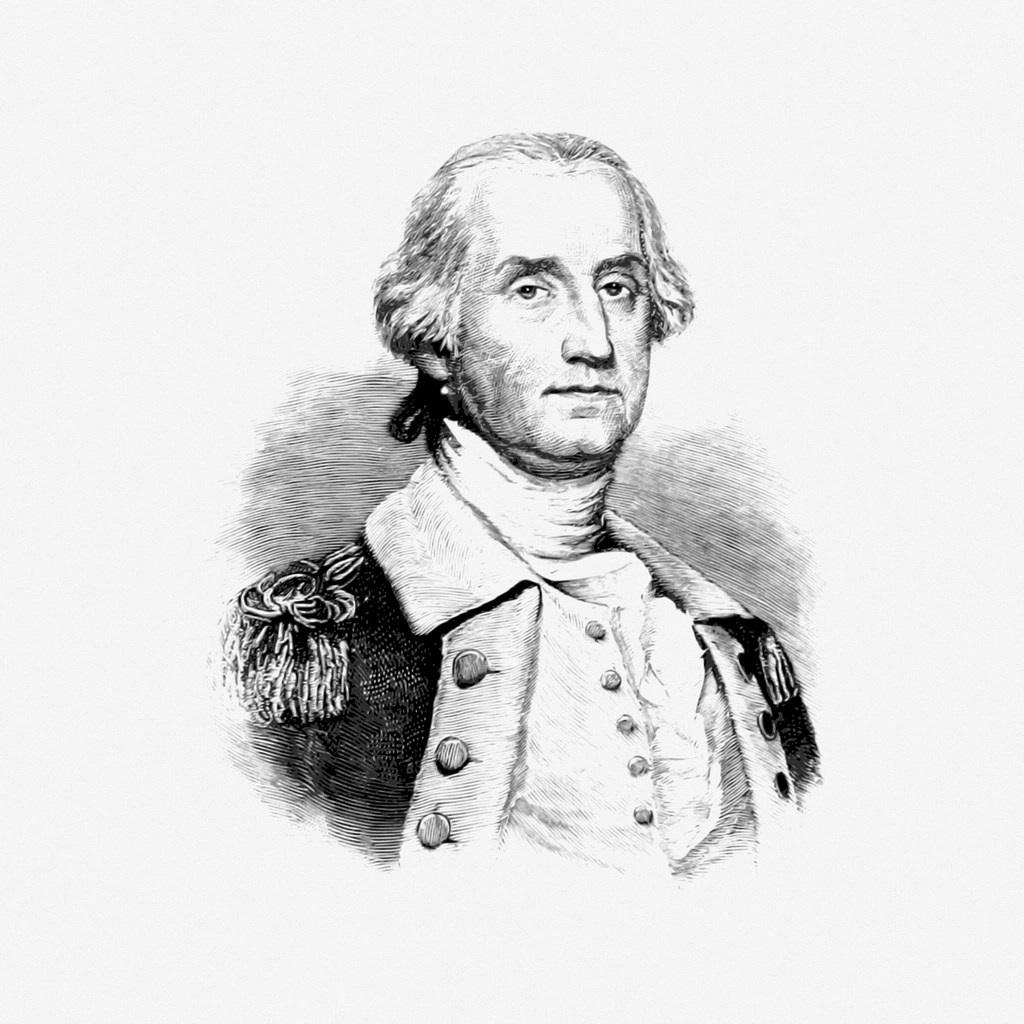
In the first two presidential elections—in 1788–1789 and 1792—none of this mattered very much, since the electors cast their ballots unanimously for George Washington. But when Washington stepped down, leaders of the newly formed political parties contended for the presidency. In the election of 1796, Federalist John Adams won, but Thomas Jefferson, who led the Democratic-Republicans (which were not the same as today’s Democrats or Republicans) was keenly aware that had Virginia given him all its electoral votes, rather than splitting them between him and Adams, he would have been president. 
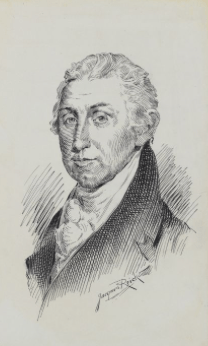
On January 12, 1800, Jefferson wrote to the governor of Virginia, James Monroe, urging him to back a winner-take-all system that awarded all Virginia’s electoral votes to the person who won the majority of the vote in the state. He admitted that dividing electoral votes by district “would be more likely to be an exact representation of [voters’] diversified sentiments” but, defending his belief that he was the true popular choice in the country in 1796, said voting by districts “would give a result very different from what would be the sentiment of the whole people of the US. were they assembled together.” 

Virginia made the switch. Alarmed, the Federalists in Massachusetts followed suit to make sure Adams got all their votes, and by 1836, every state but South Carolina, where the legislature continued to choose electors until 1860, had switched to winner-take-all. 

This change horrified the so-called Father of the Constitution, James Madison, who worried that the new system would divide the nation geographically and encourage sectional tensions. He wrote in 1823 that voting by district, rather than winner-take-all, “was mostly, if not exclusively in view when the Constitution was framed and adopted.” He proposed a constitutional amendment to end winner-take-all.

But almost immediately, the Electoral College caused a different crisis. In 1824, electors split their votes among four candidates—Andrew Jackson, John Quincy Adams, Henry Clay and William Crawford—and none won a majority in the Electoral College. Although Jackson won the most popular votes and the most electoral votes, when the election went to the House, the state delegations chose Adams, the son of former president John Adams.

Furious Jackson supporters thought a developing elite had stolen the election, and after they elected Jackson outright in 1828, the new president on December 8, 1829, implored Congress to amend the Constitution to elect presidents by popular vote. “To the people belongs the right of electing their Chief Magistrate,” he wrote; “it was never designed that their choice should in any case be defeated, either by the intervention of electoral colleges or…the House of Representatives.” 

Jackson warned that an election in the House could be corrupted by money or power or ignorance. He also warned that “under the present mode of election a minority may…elect a President,” and such a president could not claim legitimacy. He urged Congress “to amend our system that the office of Chief Magistrate may not be conferred upon any citizen but in pursuance of a fair expression of the will of the majority.”

But by the 1830s, the population of the North was exploding while the South’s was falling behind. The Constitution counted enslaved Americans as three fifths of a person for the purposes of representation, and direct election of the president would erase that advantage slave states had in the Electoral College. Their leaders were not about to throw that advantage away.

In 1865 the Thirteenth Amendment ended slavery (except as punishment for a crime) and scratched out the three-fifths clause, meaning that after the 1870 census the southern states would have more power in the Electoral College than they did before the war. In 1876, Republicans lost the popular vote by about 250,000 votes out of 8.3 million cast, but kept control of the White House through the Electoral College. As Jackson had warned, furious Democrats threatened rebellion. They never considered Republican Rutherford B. Hayes, whom they called “Rutherfraud,” a legitimate president. 

In 1888 it happened again. Incumbent Democratic president Grover Cleveland won the popular vote by about 100,000 votes out of 11 million cast, but Republican candidate Benjamin Harrison took the White House thanks to the 36 electoral votes from New York, a state Harrison won by fewer than 15,000 votes out of more than 1.3 million cast. Once in office, he and his team set out to skew the Electoral College permanently in their favor. Over twelve months in 1889–1890, they added six new, sparsely populated states to the Union, splitting the territory of Dakota in two and adding North Dakota, South Dakota, Montana, Washington, Idaho, and Wyoming while cutting out New Mexico and Arizona, whose inhabitants they expected would vote for Democrats.

The twentieth century brought another wrench to the Electoral College. The growth of cities, made possible thanks to modern industry—including the steel that supported skyscrapers—and transportation and sanitation, created increasing population differences among the different states.

The Constitution’s framers worried that individual states might try to grab too much power in the House by creating dozens and dozens of congressional districts, so they specified that a district could not be smaller than 30,000 people. But they put no upper limit on district sizes. After the 1920 census revealed that urban Americans outnumbered rural Americans, the House in 1929 capped its numbers at 435 to keep power away from those urban dwellers, including immigrants, that lawmakers considered dangerous, thus skewing the Electoral College in favor of rural America. Today the average congressional district includes 761,169 individuals—more than the entire population of Wyoming, Vermont, or Alaska—which weakens the power of larger states.  

In the twenty-first century the earlier problems with the Electoral College have grown until they threaten to establish permanent minority rule. A Republican president hasn’t won the popular vote since voters reelected George W. Bush in 2004, when his popularity was high in the midst of a war. The last Republican who won the popular vote in a normal election cycle was Bush’s father, George H.W. Bush, in 1988, 36 years and nine cycles ago. And yet, Republicans who lost the popular vote won in the Electoral College in 2000—George W. Bush over Democrat Al Gore, who won the popular vote by about a half a million votes—and in 2016, when Democrat Hillary Clinton won the popular vote by about 3 million votes but lost in the Electoral College to Donald Trump. 

In our history, four presidents—all Republicans—have lost the popular vote and won the White House through the Electoral College. Trump’s 2024 campaign strategy appears to be to do it again (or to create such chaos that the election goes to the House of Representatives, where there will likely be more Republican-dominated delegations than Democratic ones).

In the 2024 election, Trump has shown little interest in courting voters. Instead, the campaign has thrown its efforts into legal challenges to voting and, apparently, into eking out a win in the Electoral College. The number of electoral votes equals the number of senators and representatives to which each state is entitled (100 + 435) plus three electoral votes for Washington, D.C., for a total of 538. A winning candidate must get a majority of those votes: 270.

Winner-take-all means that presidential elections are won in so-called swing or battleground states. Those are states with election margins of less than 3 points, so close they could be won by either party. The patterns of 2020 suggest that the states most likely to be in contention in 2024 are Arizona, Georgia, Michigan, Nevada, North Carolina, Pennsylvania, and Wisconsin, although the Harris-Walz campaign has opened up the map, suggesting its internal numbers show that states like Florida might also be in contention. Candidates and their political action committees focus on those few swing states—touring, giving speeches and rallies, and pouring money into advertising and ground operations. 

But in 2024 there is a new wrinkle. The Constitution’s framers agreed on a census every ten years so that representation in Congress could be reapportioned according to demographic changes. As usual, the 2020 census shifted representation, and so the pathway to 270 electoral votes shifted slightly. Those shifts mean that it is possible the election will come down to one electoral vote. Awarding Trump the one electoral vote Nebraska is expected to deliver to Harris could be enough to keep her from becoming president.

Rather than trying to win a majority of voters, just 49 days before the presidential election, Trump supporters—including Senator Graham—are making a desperate effort to use the Electoral College to keep Harris from reaching the requisite 270 electoral votes to win. It is unusual for a senator from one state to interfere in the election processes in another state, but Graham similarly pressured officials in Georgia to swing the vote there toward Trump in 2020.

You can find more comments about this report and ones like it by clicking and visiting Heather Cox Richardson here!

Harrison J. Goldin, Longtime New York City Comptroller, Former New York State Senator, Dies at 90

An Obituary Presented By Benjamin Groff© Groff Media 2024© Turth Endures

Harrison J. Goldin, Longtime New York City Comptroller, Dies at 90

Harrison J. Goldin, Longtime New York City Comptroller, Dies at 90

Harrison J. Goldin, who served as New York City’s comptroller for 16 years and was pivotal in steering the city through its near-bankruptcy in the 1970s, his death was reported on September 16th, 2024. He was 90.

A Harvard Law School graduate, Goldin was a driving force in New York politics from the late 1960s through the 1980s. Goldin, who won the election to become New York City’s comptroller in 1973, and his tenure coincided with one of the city’s most challenging financial crises. Goldin, then-Mayor Abraham Beame, and others worked tirelessly to restructure the city’s finances, helping to avert fiscal collapse. He was instrumental in negotiating critical deals with creditors and introducing reforms that put the city on a path toward financial recovery.

Goldin’s unwavering commitment to public finance and his no-nonsense approach earned him a reputation as a watchdog for the public purse. He initiated audits of city agencies and pushed for greater transparency and efficiency in government spending, leaving an indelible mark on the comptroller’s office. Even amid New York’s darkest financial days, Goldin remained steady, advocating for long-term solutions over short-term fixes, inspiring all with his steadfast commitment.

Harrison Golden

Before his time as comptroller, Goldin was a New York State Senator, championing civil rights, education reform, and fair housing policies. His political career reflected his deep commitment to social justice, a value he carried throughout his public service and one that we can all appreciate.

Following his departure from public office in 1989, Goldin transitioned to private law practice, consulting on financial matters and representing high-profile clients. He remained a respected voice in financial and legal circles despite stepping back from the political spotlight.

Goldin leaves behind many family and friends who remember him as a dedicated public servant, a passionate advocate for New Yorkers, and a loving father and grandfather.

His contributions to the city’s financial recovery will long stand, as New York owes much of its financial resilience to the groundwork he helped lay during its most difficult times. We are grateful for his service and dedication.

The Concept of a ‘Chosen People’ and Modern Political Dominance

By: Benjamin Groff© Groff Media 2024© Truth Endures

When Did God Decide to Have ‘A Chosen People’?

The concept of a “chosen people” has sparked debates throughout history, especially when tied to moral, societal, and political questions. In modern times, the idea of being “chosen” is often reimagined or repurposed to justify decisions that affect minority groups.

Recently, the U.S. House Committee on Education and the Workforce advanced a controversial bill, H.R. 736, that aims to force schools to out transgender students to their guardians. The bill, titled the “PROTECT Kids Act,” requires schools receiving federal funding to notify guardians if a student wishes to change their gender markers, pronouns, or preferred names. The legislation also seeks to dictate which school facilities these students can use, including bathrooms and locker rooms.

This legislative action raises an important question: who gets to decide the fate of vulnerable groups, and under whose authority do they claim this right? Much like the ancient notion of being “chosen” by God, this modern political move asserts dominance over others, deciding for them what is best based on a rigid set of beliefs.

The bill passed the House in 2023 as part of the “Parents Bill of Rights Act” (H.R. 5) but faced bipartisan solid opposition. Every Democrat and five Republicans voted against it, while most supported it. Despite the potential for this bill to move through the House, it is unlikely to pass the Senate or gain approval from President Joe Biden.

Opponents of the legislation, including the Congressional Equality Caucus, condemned it as an attack on transgender students’ safety. Chair Mark Pocan highlighted how, in the wake of a tragic school shooting, Republicans chose to focus on targeting vulnerable students instead of addressing genuine safety concerns.

The question of who is “chosen” can be expanded beyond ancient religious contexts to current identity, rights, and protection issues. The targeting of trans students under the guise of protecting children raises more profound philosophical questions about power, authority, and the consequences of imposing one’s beliefs on others.

The biblical idea of a “chosen people” once symbolized favor and responsibility, but that label often becomes a tool to exclude and control in modern times. This recent bill serves as a reminder that decisions made in the name of protection or moral righteousness can have far-reaching, often damaging, effects on those they claim to protect.

In the end, it is crucial to ask when the power to choose the fate of others—whether through divine claim or political force—became justified. And who truly benefits from these decisions?

The Arlington Cemetery: A Place of Solemnity and Reverence

A Few Words Written By Benjamin Groff© Groff Media 2024© Truth Endures

It’s a stark reality that the respect owed to those who made the ultimate sacrifice for our nation gets often overlooked during political and commercial events. A red, white, and blue flower bouquet, more fitting for a picnic table than a sacred resting place, laid at the headstone of a fallen hero is a painful reminder of this disrespect.

It’s crucial to understand that there’s a distinct time and place for honoring our heroes and a separate space for casual group photos. These two should never mix. It’s our responsibility, especially for those in influential positions like Donald Trump, to uphold this distinction.

Why Hasn’t Kamala Harris Delivered on Her Promises? It Is Simple -A Pip Squeak!

By: Benjamin Groff© Groff Media 2024© Truth Endures

The GOP, particularly their latest pick as Trump’s potential successor, keeps asking why Kamala Harris hasn’t accomplished everything she claims she’ll do if elected.

As Vice President, Harris’s role isn’t to set policy but to support the President’s mission. Over the past four years, that mission has centered on recovering from Trump’s administration’s chaos. Trump’s mishandling of the COVID-19 pandemic blindsided the nation, but despite these challenges, the Biden-Harris administration has worked tirelessly to put Americans back to work and rebuild neglected institutions.

It’s important to understand that any proposed initiatives by the President or Vice President require funding and legislation, which starts in the GOP-controlled House. Bipartisan cooperation is crucial, but the current House struggles to agree on leadership, let alone budgeting and legislation. The GOP’s track record in these areas is questionable at best. Blaming someone and then withholding their ability is classic GOP.

It is why many of Harris’s proposed measures are likely to gain traction during the first two years of her potential administration when a Democratic majority in both the Senate and House is more likely.

If critics want to question what Harris should have already accomplished, they should first focus on sponsoring and passing the necessary legislation. Only then can Harris take the steps needed to fulfill her promises.

The Campaign Flare That Saved the First Lady and the Candidate for President

A FICTIONAL Story By: Benjamin Groff© Groff Media 2024© Truth Endures

In a time of intense political enthusiasm, the nation’s largest city braced for the Democratic National Convention. The convention was monumental, drawing over 200,000 people, including fervent supporters, passionate protestors, and those harboring darker intentions. The city’s population swelled, and the number of people and calls for service pushed authorities’ abilities, as law enforcement officers from seven neighboring states were called to ensure the safety of all in attendance.

The Convention Management needed two massive arenas to accommodate the influx of attendees, all eager to witness the nomination of their party’s candidate. Security was tight, with officers meticulously screening everyone entering the venues. Despite the thorough checks, the atmosphere was tense; no one knew what might happen as the evening unfolded.

As the convention began, volunteers handed out bracelets and necklaces designed to light up in vibrant shades of blue and pink. These accessories, when activated, blinked with a strobe-like effect, adding to the electric atmosphere. However, as the lights flashed rapidly, the joy turned into panic. For some, the blinking lights triggered seizures, turning the arena into a scene of chaos as over five hundred attendees began convulsing.

The sudden medical emergency overwhelmed the official responders. But amid the turmoil, a few quick-thinking attendees with first responder training stepped in, helping to manage the situation. They guided others in assisting the stricken, and together, they stabilized the crisis without needing additional outside help.

Realizing the cause of the seizures, the speaker at the podium urged the crowd to switch their bracelets and necklaces to a steady glow or to turn them off altogether. As the crowd complied, the flashing lights faded, and calm returned to the arena.

But a new and more sinister threat emerged just as the situation seemed to be under control. An embittered and desperate opposing candidate had managed to slip into the venue through a back door. Claiming he had a scheduled meeting with his Democratic opponent, he bypassed security and found his way to a room intended for the candidate.

Unbeknownst to him, the candidate wasn’t there that evening. Instead, a former First Lady entered the room, unaware of the intruder’s presence. As she closed the door behind her, the man, believing he was facing his political rival, prepared to attack. But before he could strike, the former First Lady, trained in Krav Maga, swiftly neutralized him. In a matter of seconds, the would-be attacker was subdued, left crying, and defeated on the floor.

He didn’t know the incident was captured on a security camera, complete with audio. The footage revealed his violent intentions, his use of racist slurs, and his plan to kill who he thought was his opponent. The video also showed the failure of both his and her security teams to prevent the breach, highlighting the danger she faced.

Despite the overwhelming evidence, the authorities neither arrested nor questioned the intruder. Instead, the former First Lady, a Black woman, was detained and interrogated as if she were the aggressor. It wasn’t until the security footage was reviewed that the truth was undeniable: she had acted in self-defense against a deliberate attack.

A week later, authorities showed the video to the public. The opposing campaign scrambled to make excuses, suggesting that the former First Lady should have chosen a different dressing room and their candidate had every right to be where he was. But the damage was done. The public, especially the supporters of the former First Lady and her candidate, were galvanized. They were more determined than ever to prevent such evil from reaching the Oval Office.

Ultimately, what began as a night of political celebration became a defining moment in the campaign. One woman’s bravery, coupled with the quick thinking of ordinary citizens, may have saved her life and the nation’s future.

A Unifying Vision in Glendale: Kamala Harris and Tim Walz Champion Bipartisan Cooperation at Campaign Rally

A Report By: Benjamin Groff© Groff Media 2024© Truth Endures

Groff Media 2024© Truth Endures

Glendale, AZ — On a sweltering Friday afternoon, August 9, 2024, Glendale, Arizona, became the latest stop on Vice President Kamala Harris and Minnesota Governor Tim Walz’s Western campaign trail. The rally was not just a show of support for the Democratic ticket but a testament to the power of unity and bipartisan cooperation in an era often marked by division.

The event attracted a diverse crowd of enthusiastic supporters, united by a shared belief in the Harris-Walz vision for America’s future. Many attendees expressed their excitement about the campaign’s message of collaboration across party lines, a refreshing contrast to the polarized political climate of recent years.

Vice President Harris, who has been a trailblazer throughout her career, took the stage with her characteristic poise and determination. She addressed the crowd with a message focused on building bridges, not walls. “We are stronger together,” Harris proclaimed. “This campaign is about bringing people from all walks of life together to solve the real problems facing our nation. We must move beyond the divisiveness that has plagued our politics and work towards solutions that benefit every American, regardless of party affiliation.”

Governor Walz echoed Harris’s sentiments, emphasizing the importance of working with Republicans to achieve meaningful progress. “We cannot afford to be bogged down by the politics of the past,” Walz said. “We need to find common ground, and that means reaching out to those who may not always agree with us but who share our love for this country.”

Throughout the rally, the speakers underscored their commitment to bipartisan cooperation, highlighting their belief that real change can only come through collaboration. The Harris-Walz campaign has made a concerted effort to reach out to moderate Republicans and independents, recognizing that achieving lasting change requires the support of a broad coalition.

One of the most poignant moments of the rally came when Harris and Walz addressed the need for bipartisan efforts to protect democracy. “Our democracy is fragile,” Harris warned. “It requires constant care and attention. We must stand united against those who seek to undermine it, and that means working with anyone willing to uphold our democratic values.”

Walz, who has been known for his pragmatic approach to governance in Minnesota, shared success stories from his time working across the aisle to pass legislation that benefited all Minnesotans. He spoke of the importance of setting aside political differences to address critical issues such as healthcare, education, and economic inequality.

The atmosphere at the Glendale rally was one of hope and determination. Supporters waved signs reading “Unity for All” and “Country Over Party,” capturing the essence of the Harris-Walz message. The crowd, a blend of ages, races, and backgrounds, served as a microcosm of the diverse coalition the campaign hopes to build.

Attendees were energized by the event, many expressing optimism about the possibility of a new era of cooperation in Washington. “It’s time for our leaders to stop fighting and start working together,” said Maria Lopez, a Glendale resident who attended the rally with her family. “Kamala and Tim understand that we can’t solve our problems alone—we need everyone at the table.”

As the rally concluded, Harris and Walz left the stage to a chorus of cheers, the sense of unity palpable among the crowd. Their message was clear: the future of America depends on our ability to come together, transcend divisions, and work toward a common goal. The rally in Glendale was not just a campaign event but a call to action—a call for all Americans to embrace the spirit of cooperation and move forward as one nation.

In an election cycle often marked by partisan rancor, the Harris-Walz rally in Glendale was a refreshing reminder of what is possible when leaders prioritize collaboration over conflict. As the campaign continues its journey through the West, the message of unity and bipartisan cooperation remains at the heart of their vision for America’s future. The rally in Glendale was a powerful demonstration of that commitment, offering a hopeful glimpse of what the future could hold.


Who Is Tim Walz?

By: Heather Cox Richardson From Substack – Reposted By: Benjamin Groff© Groff Media 2024© Truth Endures

On August 6, 2024 Heather Cox Richardson wrote on Substack the following entry, it was to the point and told exactly what people should know about Tim Walz. He is a decent human being. Who has done a number of things in life. Some of those things came at making human decisions. Fallible to a point, he may be. Who isn’t? Heather’s writing begins next –––

Today Vice President Kamala Harris named her choice for her vice presidential running mate: Governor Tim Walz of Minnesota. Walz grew up in rural Nebraska. He enlisted in the Army National Guard when he was 17 and served for 24 years, retiring in 2005 as a command sergeant major, making him the highest-ranking enlisted soldier ever to serve in Congress, according to the House Committee on Veterans’ Affairs.  

He went to college with the educational benefits afforded him thanks to his service in the Army, and graduated from Chadron (Nebraska) State College. From 1989 to 1990, he taught at a high school in China, then became a social studies teacher in Alliance, Nebraska, where he met fellow teacher Gwen Whipple, who became his wife. They moved to Minnesota, where they both continued teaching and had two children, Hope and Gus, through IVF. 

Walz became the faculty advisor for the school’s gay-straight alliance organization at the same time that he coached the high-school football team from a 0–27 record to a state championship. The advisor “really needed to be the football coach, who was the soldier and was straight and was married,” Walz said in 2018. 

Walz ran for Congress in 2005 after some of his students were asked to leave a rally for George W. Bush because one of them had a sticker for Democratic presidential nominee John Kerry. Walz won and served in Congress for twelve years, sitting on the House Agriculture Committee, the Transportation and Infrastructure Committee, and the Committee on Veterans’ Affairs.

Voters elected Walz to the Minnesota state house in 2018, and in his second term they gave him a slim majority in the state legislature. With that support, Walz signed into law protections for abortion rights, supported gender-affirming care, and legalized the recreational use of marijuana. He signed into law gun safety legislation and protections for voting rights, and pushed for action to combat climate change and to promote renewable energy. 

Strong tax revenues and spending cuts gave the state a $17.6 billion surplus, and the Democrats under Walz used the money not to cut taxes, as Republicans wanted, but to invest in education, fund free breakfast and lunch for schoolchildren, make tuition free at the state’s public colleges for students whose families earned less than $80,000 a year, and invest in paid family and medical leave and health insurance coverage regardless of immigration status. 

While MAGA Republicans are already trying to define Walz as “far left,” his votes in Congress put him pretty squarely in the middle.  His work with Lieutenant Governor Peggy Flanagan to expand technology production and infrastructure funding in the state was rewarded in 2023, when Minnesota knocked Texas out of the top five states for business. The CNBC rating looked at 86 indicators in 10 categories, including the workforce, infrastructure, health, and business friendliness. 

Walz checks a number of boxes for the 2024 election, most notably that he hails from near the battleground states of Wisconsin, Michigan, and Pennsylvania and comes across as a normal, nice guy. He favors unions, workers’ rights, and a $15 minimum wage. He is also the person who coined the phrase that took away the dangerous overtones of today’s MAGA Republicans by dubbing them “weird.” As a student of his said: “In politics he’s good at calling out B.S. without getting nasty or too down in the dirt…. It’s the kind of common sense he showed as a coach: practical and kinda goofy.”

Walz is also a symbol of an important resetting of the Democratic Party. He has been unapologetic about his popular programs. On Sunday, July 28, when CNN’s Jake Tapper listed some of Walz’s policies and asked if they made Walz vulnerable to Trump calling him a “big government liberal,” Walz joked that he was, indeed, a “monster.” 

“Kids are eating and having full bellies so they can go learn, and women are making their own health care decisions, and we’re a top five business state, and we also rank in the top three of happiness…. The fact of the matter is,” where Democratic policies are implemented, “quality of life is higher, the economies are better…educational attainment is better. So yeah, my kids are going to eat here, and you’re going to have a chance to go to college, and you’re going to have an opportunity to live where we’re working on reducing carbon emissions. Oh, and by the way, you’re going to have personal incomes that are higher, and you’re going to have health insurance. So if that’s where they want to label me, I’m more than happy to take the label.” 

Right-wing reactionary politicians have claimed to represent ordinary Americans since the time of the passage of the Voting Rights Act—on August 6, 1965, exactly 59 years ago today—by insisting that a government that works for communities is a “socialist” plan to elevate undeserving women and racial, ethnic, and gender minorities at the expense of hardworking white men. 

Historically, though, rural America has quite often been the heart of the country’s progressive politics, and the Midwest has had a central place in that progressivism. Walz reintegrates that history with today’s Democratic Party. 

That reintegration has left the Republicans flatfooted. Trump and J.D. Vance expected to continue their posturing as champions of the common man, but on that front the credentials of a New York real estate developer who inherited millions of dollars and of a Yale-educated venture capitalist pale next to a Nebraska-born schoolteacher. Bryan Metzger, politics reporter at Business Insider, pointed out that J.D. Vance tried to hit Walz as a “San Francisco-style liberal,” but while Vance lived in San Francisco as a venture capitalist between 2013 and 2017, Walz went to San Francisco for the first time just last month. 

Head writer and producer of A Closer Look at Late Night with Seth Meyers Sal Gentile summed up Walz’s progressive politics and community vibe when he wrote on social media: “Tim Walz will expand free school lunches, raise the minimum wage, make it easier to unionize, fix your [carburetor], replace the old wiring in your basement, spray that wasp’s nest under the deck, install a new spring for your garage door and put a new chain on your lawnmower.” 

Vice President Harris had a very deep bench from which to choose a running mate, but her choice of Walz seems to have been widely popular. Representatives Alexandria Ocasio-Cortez of New York and Joe Manchin of West Virginia, who are usually on opposite sides of the party, both praised the choice, prompting Ocasio-Cortez to post: “Dems in disconcerting levels of array.” 

Harris and Walz held their first rally together tonight in Philadelphia, where Pennsylvania governor Josh Shapiro, who had been a top contender for the vice presidential slot, fired up the crowd. “Each of us has a responsibility to get off the sidelines, to get in the game, and to do our part,” he said. “Are you ready to do your part? Are you ready to form a more perfect union? Are you ready to build an America where no matter what you look like, where you come from, who you love, or who you pray to, that this will be a place for you? And are you ready to look the next president of the United States in the eye and say, ‘Hello, Madam President?’ I am too, so let’s get to work!”

Pennsylvania is a crucial state, and Shapiro issued a statement offering his “enthusiastic support” to the ticket. He pledged “to work to unite Pennsylvanians behind my friends Kamala Harris and Tim Walz and defeat Donald Trump.”

A News Report Waiting For Its Headline “Politicians Play With How Votes Get Certified!”

A Story By: Benjamin Groff© Groff Media 2024© Truth Endures

In the heart of Georgia, the political landscape was shifting beneath the surface, unseen by most but sensed by many. The Georgia State Election Board, a government body entrusted with overseeing the state’s election rules, had recently become a focal point of national attention. Former President Donald Trump had praised the board in an unusual move, commending three members: Janice Johnston, Rick Jeffares, and Janelle King. “Pitbulls fighting for honesty, transparency, and victory,” he had called them. But what exactly were they fighting for?

Max Flugrath, director of communications for Fair Fight Action, a keen political observer, had meticulously followed these developments. He noted the oddity of Trump’s involvement in such detailed matters. Typically, Trump preferred grand gestures and sweeping statements rather than delving into the minutiae of election certification rules. Yet here he was, thanking these newly appointed board members for their efforts to change Georgia’s certification rules.

The backdrop to this intrigue was a rapidly approaching election, less than 100 days away. The Trump-aligned members of the Georgia State Election Board had convened a meeting that Flugrath noted was unlawfully noticed and carried out. In this meeting, they advanced changes to the state’s election certification process, changes that could potentially undermine the democratic processes in Georgia. These changes could lead to delays in election results, create uncertainty, and allow for manipulation of the election outcome, a cause for concern for all citizens.

A lawsuit quickly followed, challenging the legality and transparency of the board’s actions. The controversy forced the board to hold another vote on some of the proposed election rule changes, scheduled for Tuesday, August 6. The proposed changes were alarming to many. One such rule would empower local election officials to slow down or refuse to certify the 2024 election results. With election deniers in local election positions, the implications were chilling.

Flugrath’s analysis painted a stark picture. The new rules, if passed, could be used to sow doubt in the election results, creating delays and uncertainty. The behavior you read about is not just a Georgia issue; similar behavior patterns were emerging in other states. Across the country, efforts were underway to change election rules, often under the guise of ensuring honesty and transparency. It’s vital for Americans to remain vigilant and demand transparency in these processes, as they have the potential to undermine the very foundation of democratic elections.

In Texas, a similar narrative was unfolding. The state’s election board, encouraged by Georgia’s actions, began proposing changes to the certification process. In Florida, [newly appointed election officials, who were praised by Trump for their dedication and were seen as his allies], were pushing for rules that would grant them unprecedented power over election outcomes. Even in Pennsylvania, whispers of changes to election certification rules were becoming louder.

As the shadows of democracy stretched across the nation, citizens found themselves in a united battle for the integrity of their elections. Flugrath’s warnings resonated, echoing the sentiments of those who valued transparency and fairness. The fight was about the upcoming election and preserving the principles that had long underpinned the democratic process. It’s a fight that unites us all, regardless of our political affiliations.

The day the vote arrived in Georgia. Protesters gathered outside the election board’s meeting, voicing dissent. Inside, the tension was palpable. The board members, conscious of the national scrutiny, deliberated their decision. The future of Georgia’s election rules hung in the balance, a microcosm of the broader struggle across the United States.

As the sun set, the board announced its decision. The proposed changes got narrowly voted down, a victory for those advocating transparency and fairness. But the battle was far from over. The events in Georgia had set a precedent, a reminder of the fragility of democracy and the constant vigilance required to protect it.

Flugrath watched the aftermath with cautious optimism. The shadows of inequity are held at bay for now, but the fight for the soul of American democracy continued. The story unfolded in real-time, with the stakes higher than ever.

This story is about a news report that could be featured in any newspaper or news program in the United States. It is taken from actual events currently taking place. Whether or not this is the exact outcome relies upon the people of Georgia. The news report may be the opposite of what you just read. The board voted to instate these rules and overthrow the state election to favor any person of their choice.

Read the article that inspired this story. It is reality. We hope this story comes true. Sadly, it looks like it will become fiction. The originating news report may be found here!
The Nightmare They Escaped Is Part Of The Plan In Project 2025

Click the here for full report!

Two Russian dissidents released in a prisoner swap on Thursday said they refused to sign a petition for mercy to be sent to Russian President Vladimir Putin as requested by prison officials. 

During a news conference in Germany, Vladimir Kara-Murza and Ilya Yashin said they did not admit guilt or give Russian officials their consent to be removed, and vowed to return home one day. 

Mr Kara-Murza said the deal had saved “16 human lives” and that he had been convinced he would die in prison.

He added that many Russians were “opposed to Putin’s war in Ukraine”.

We require to listen to those who on were brought home. The hell they describe is the future Donald Trump and the GOP dream of for the U.S.A.

A Sacrifice for the Nation ~ A True Patriot

A Story By Benjamin Groff© Groff Media 2024© Truth Endures

The day had been incredibly long, the weight of it pressing down on President Thompson. Meetings had stacked back to back, leaving him barely a moment to breathe. As he finally sat down at his desk, his phone rang. Picking up the extension, he spoke with a firm, authoritative tone, 

“Yes, Bill, what do we have?”

Bill, the President’s unwavering right hand, had been the first assistant to hold the position since day one. He always attended a meeting, a news conference, or an appearance. 

He was always there, ready to serve. Bill replied, 

“Mr. President, a gaggle of news reporters is waiting outside the news pit. They want to know about your decision.”

President Thompson sighed, a deep weariness in his voice. 

“My decision? Which is that, the dog, the house, the dinner menu, my son, and what time is it?”

Bill returned with patience and clarity, 

“Sir, they want to know whether or not you’ve decided to remain in the presidential re-election campaign.”

The President leaned back in his chair, staring at the ceiling as the enormity of the situation weighed on him. He had spent countless hours deliberating, balancing the nation’s needs with his ambitions. The country was at a crossroads, facing unprecedented challenges that required steadfast leadership. His heart was torn between his love for the nation and his aspirations.

“Bill,” 

He said softly,

“I’ve given this much thought. The country is in a fragile state, and it needs unity and stability. It’s time to put the nation’s needs before my aspirations.

Bill listened intently, sensing the gravity of the President’s words. 

“Are you saying you will withdraw from the race, sir?”

“Yes,”

President Thompson replied with resolve. 

“I am. I will support Senator Adams. She has the vision and the strength to lead us through these turbulent times. My focus now will be on ensuring a smooth transition and doing everything I can to help her succeed.”

Bill nodded, understanding the magnitude of the decision. 

“I’ll prepare the statement for the press, Mr. President. Withdrawing from the race will shock many, but it’s a selfless act that people will remember throughout history.”

As Bill left to handle the media, President Thompson took a moment to reflect. He had dedicated his life to serving his country; now, he was making the ultimate sacrifice for its future. It wasn’t an easy decision, but it was the right one.

When the time came, President Thompson stood before the nation, his voice steady and his gaze unwavering. 

“My fellow Americans,” he began, “after much contemplation and discussion with my closest advisors, I have decided to withdraw from the presidential reelection campaign. Our country needs unity, and I believe Senator Adams is the right leader for this critical time. I will dedicate my efforts to supporting her and ensuring we progress together.”

The news reverberated across the country, a mixture of surprise and admiration. President Thompson’s decision was a testament to his character and commitment to the nation’s well-being. As he stepped aside, he felt a sense of peace, knowing that he had placed his country before himself, making the ultimate sacrifice for its future. A bittersweet feeling of relief and sadness washed over him, but he knew he had done the right thing.

Political Mission Set In Fictional future Yet Sparks Of Reality Shines Through!

A Story By Benjamin H Groff© Groff Media Copyright 2024©

The tides of change swept through every street, home, and heart in the nation’s heart. It was an era marked by uncertainty and tension as a rising conservative movement began to reshape the very fabric of society. The once-balanced scales of politics now tipped heavily in favor of those who believed in tradition, order, and a return to what they called “the good old days.”

~
Emma Caldwell, a liberal activist and journalist, sat in her small apartment, the glow of her laptop illuminating her worried face. She had spent years fighting for progress—campaigning for equal rights, environmental protection, and social justice. But now, every headline seemed to bring another blow to the causes she held dear, intensifying the urgency of her mission.

~


The latest news was the most disturbing yet: a proposed amendment to the constitution that would severely restrict freedom of speech and assembly, effectively silencing dissent and opposition. Emma’s fingers flew across the keyboard as she typed out an article, her words mixing passion and desperation. She knew that getting the truth out was more important than ever.


Across town, in a grand office overlooking the city, Senator Marcus Reid, a leading figure in the conservative movement, reviewed the day’s agenda. He believed sincerely in his cause, convinced the country had lost its way in a maze of liberal policies and needed to return to its core values. To him, the changes were necessary, even if they were painful.


As the days passed, protests erupted across the nation. Streets filled with a sea of faces—young and old, united by a shared fear of losing their rights. Emma was among them, her camera capturing the raw emotions of the crowd. She interviewed people from all walks of life: the single mother worried about her children’s future, the college student anxious about the loss of academic freedom, the elderly couple who had fought for civil rights decades ago and now saw history repeating itself.


Despite the growing unrest, the conservative agenda pushed forward relentlessly. The lawmakers passed laws at a dizzying pace, each chipping away at the freedoms many had taken for granted. These laws included [specific laws], which directly affected [specific groups of people]. The country seemed to be spiraling into a new era of authoritarianism, and the hope that once burned brightly in the hearts of liberals began to dim.


Emma found herself at a crossroads. Her work was censored, and her voice was stifled by the very government she had once trusted to protect her freedoms. But she refused to give up. Gathering a small group of like-minded individuals, she formed an underground network dedicated to preserving and disseminating information. Their determination was a silent but powerful force, inspiring others with their unwavering resolve.


Senator Reid, now one of the most powerful men in the country, began to sense the growing resistance. He dismissed it at first, confident that his vision was the right path. However, as the underground movement gained momentum, Senator Reid realized that silencing dissent was more complex than passing laws. The human spirit, he discovered, was not so quickly subdued.
One evening, Emma received a message from an anonymous source—a high-ranking government official who had grown disillusioned with the conservative regime. The source provided her with classified documents detailing the administration’s plans to tighten their grip on power further.

These documents revealed [specific details], a dangerous revelation, but Emma knew it was the spark needed to ignite a more significant movement.


She leaked the documents to the public with the help of her network. The revelations shook the country, and the streets again filled with protesters. This time, their numbers were more significant, and their resolve was more robust, demonstrating the potential impact of collective action. The conservative government, facing unprecedented pressure, began to falter.


Senator Reid watched as the country he had tried to reshape slipped from his grasp. He had underestimated the people’s power and ability to unite and fight for their rights. As the conservative movement began to crumble, a new era of political awakening dawned.


Emma stood on the capitol’s steps, her camera in hand, capturing the momentous events unfolding before her. She knew the battle was far from over, but she felt a glimmer of hope for the first time in a long while. The changing times had tested the nation’s spirit, but in the end, its people’s resilience and determination prevailed.

The Last President: A Tale of Democracy’s Demise

The Last President

It was the end of October, and the nation seemed to be in a state of distraction, unaware of the critical choice before them. Two men were vying for the highest office in the land, each bringing with him a starkly different vision for the future. The contrast between their characters and intentions was as clear as day, yet the people’s attention was elsewhere. The urgency of the situation was palpable, but the people were yet to realize the gravity of their decision.

The first candidate was an elder statesman, a man whose career in public service spanned decades. He had held nearly every elected position imaginable, from local government to the halls of Congress. His dedication to the country was unwavering, a testament to his deep-seated patriotism. His life’s work, a reflection of his commitment to protecting the essence of the country he loved, was a beacon of trust and reliability for the nation.

In stark contrast stood the second candidate, a man whose motives were as transparent as they were troubling. Self-serving and careless, he made no secret of his intentions. He openly declared that, if elected, he would rule with an iron fist, punishing his enemies and consolidating power from day one. His rhetoric was filled with hate, yet the people, weary of the same old political games, dismissed his threats as mere bluster. This transparency, however, should have been a warning sign, a call for vigilance in the face of such extremism.

The campaign’s intensity grew as the days turned into weeks, yet the nation’s focus remained elsewhere. Perhaps it was the fatigue of constant political turmoil or the distractions of everyday life, but the electorate seemed indifferent, almost numb. They laughed off the second candidate’s tirades, convinced that such extremism could never take root in their democracy.

Election day arrived, and with it, a shocking outcome. The self-serving, hateful man had won. The people who had laughed at his threats now watched in stunned silence as he took the oath of office. His promises of dictatorship were not idle threats; they were his blueprint for governance, a reality that had suddenly come to pass. This was not just the result of one man’s ambition, but a collective decision made by the electorate.

From the very first day, the new President began to reshape the government to suit his whims. He targeted his opponents with a vengeance, using the full power of his office to silence dissent. Civil liberties and democratic institutions were eroded and undermined. The press, once the people’s watchdog, was muzzled. The judiciary, a bulwark against tyranny, was co-opted. His actions, such as [specific actions], tightened his authoritarian grip and spread fear like wildfire.

The oldest-ever President, now retired, watched in horror as the nation he had served so faithfully became dismantled piece by piece. His warnings had gone unheeded, his life’s work seemingly undone in months. Once so dismissive of the threat, the people found themselves powerless to stop the descent into chaos. The retired President, too, felt the weight of his powerlessness, a stark contrast to his years of service and influence.

It was the end of the nation, an Ending which the country could have avoided.nation. An Ending that could have been avoided.

Biden’s Victory Speech: Uniting America for Progress | Biden Wins

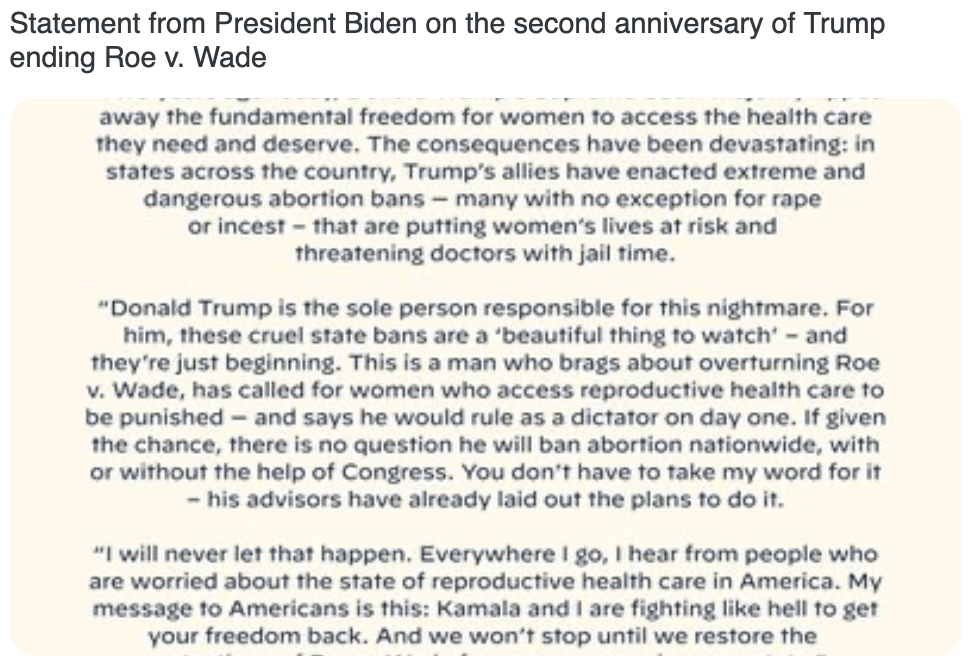
Before the presidential debates on Thursday, posts from supporters of President Biden are getting noticed. President Biden is getting noticed for his comment on the second anniversary of the revocation of ROE vs. Wade, a process that he says is caused by Donald Donald Trump.

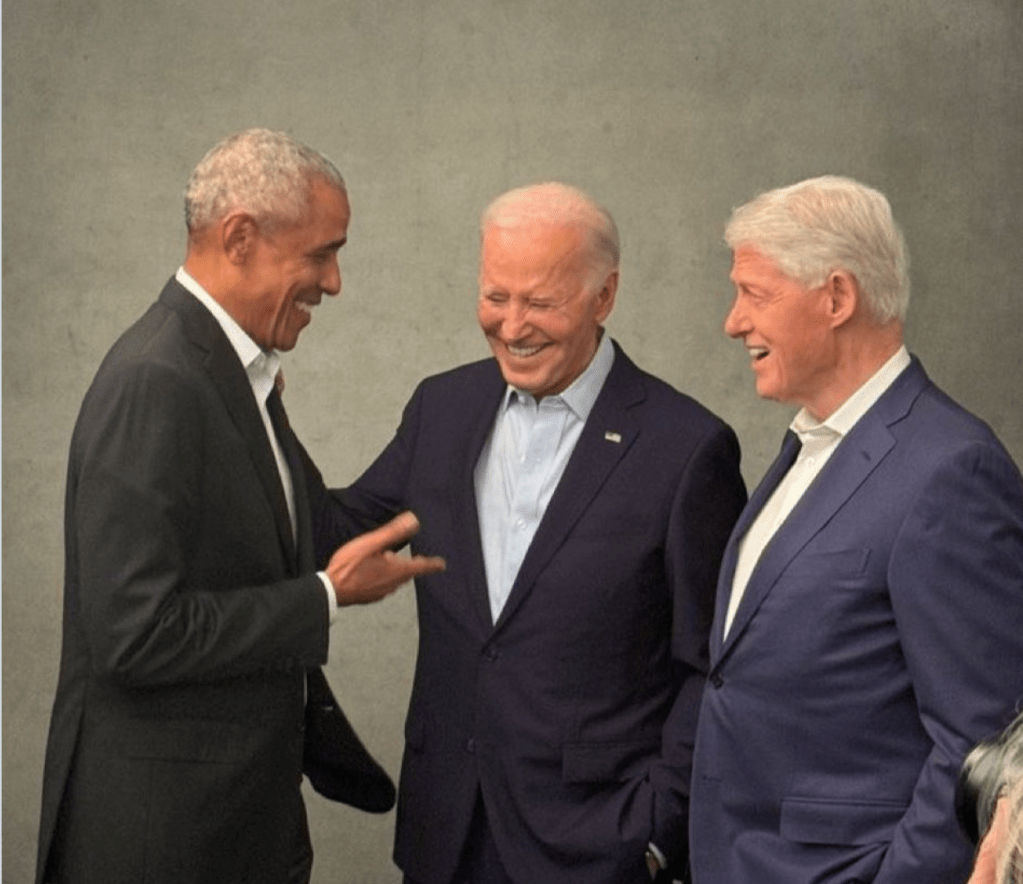
    Three Presidents Who Are Respected Around The World
    There Is A Giant Difference Between The Two. When You Vote – It Is For Freedom!

    Former President Donald Trump was widely mocked after claiming to a crowd of supporters that he has “wounds all over my body” that they could see if he took his shirt off.

    Trump delivered the keynote address at the “Road to Majority” conference in Washington, D.C., organized by the conservative Christian political advocacy group, Faith and Freedom Coalition, on Saturday.

    For example, Presidents Abraham Lincoln, James Garfield, William McKinley, and John F. Kennedy were assassinated while still in office.

    Notably, Ronald Reagan was the victim of an attempted assassination in 1981 when a bullet fired by John Hinckley Jr. shot him in the underarm, broke one of his ribs, and punctured one of his lungs, causing significant internal bleeding. Reagan went on to serve two terms in office.

    In one of the more oddball moments in American history, Andrew Jackson in 1835 was attacked by an unemployed house painter whose pistols misfired—and promptly beat his failed assassin with his walking cane.

    And it is perhaps darkly comic that Theodore Roosevelt survived a 1912 assassination attempt after the assassin’s bullet became lodged in a folded copy of a speech Roosevelt was carrying in his breast pocket at the time.

    By contrast, Trump has never been in a similar position. Nor has he ever served in combat or sustained any wounds whatsoever considering he infamously dodged the Vietnam War draft by claiming he had bone spurs in his foot (a fact he has periodically downplayed).

    See the full report here!

    Winning at Any Cost: The Deterioration of Political Ethics

    Mudslinging, once the most reprehensible act a political contestant could commit, was a behavior that branded the perpetrator as untrustworthy, someone respectable voters would never support. These were the days when community bonds were robust. Neighbors were familiar faces, and the widow down the street was always checked on. People went out of their way to support a friend’s business, driven by loyalty and the value of relationships.

    Courtesy was not just a virtue, it was a way of life. You didn’t honk at the car ahead for hesitating at a stop sign, and everyone, regardless of race, was treated with respect. You honored their facilities at sporting events in neighboring towns, expecting the same respect in return during your homecoming games. These were the values that held our society together, and their erosion is a cause for concern.

    Winning an election was once a sign of trust in the democratic process. It meant the elected individual would represent the community, county, state, or nation for their term. There was no need for your parents to rally the neighbors, seeking to punish those who voted differently or to overturn the results. They trusted the process and the enduring truth. However, today, this trust has seemingly eroded, and the need for reflection and change in our political and social interactions is more pressing than ever.

    Today, it seems that the aim is not just to win, but to annihilate the opponent’s life and reputation.

    “Why do you back Joe Biden if you advocate for more young people in office?”

    A Reanalysis by Benjamin G. benandsteve.com

    This election isn’t about pitting the young against the old. It’s about ensuring that Gen Z and Millennials, who constitute a significant third of our nation’s population, have representation that mirrors their presence.

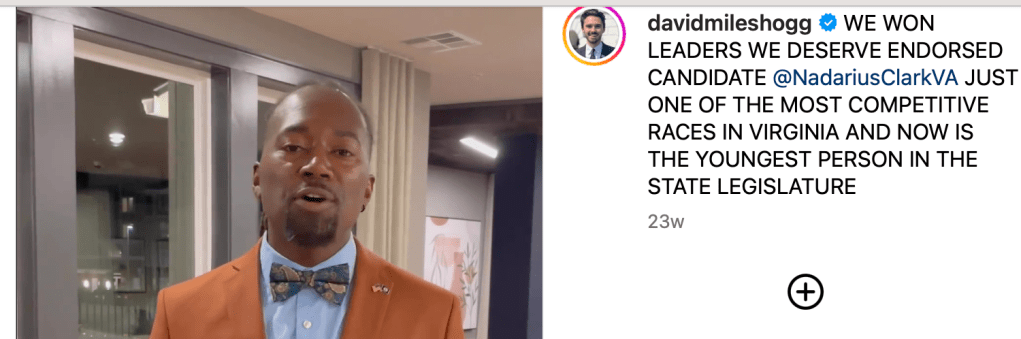
    David Hogg Leaders We Deserve
    PBS Interview

    Although remembered as older, numerous influential leaders initiated their activism in their youth. We aim to support these leaders—like John Lewis, who embarked on a mission for vital change at a young age and became one of our country’s most pivotal and influential leaders.

    Our goal is straightforward: elect more youthful leaders capable of introducing fresh perspectives into our government. 

    Numerous barriers have historically prevented young people from entering public service and achieving the representation they deserve. Those who support America for all should make every effort to assist young candidates in overcoming these obstacles.

    Visit Leaders We Deserve

    After the setbacks of 2016, the 2018 blue wave brought the Democratic Party a renewed recognition of the influence young voters wield. In 2020, Joe Biden’s election, which was largely driven by the substantial turnout from Millennial and Gen Z voters, showcased the power of youthful participation. Your voice matters, and your vote can shape the course of our nation.

    Vist The Post On Leaders We Deserve Winning!

    In 2022, young voters reaffirmed their electoral influence, thwarting the anticipated “red wave.” Emerging young leaders like Justin Jones in Tennessee and Maxwell Frost in Florida gained prominence. Groups like “Leaders We Deserve” also celebrated their first endorsement success with Nadarius Clark’s election in Virginia.

    Listen To Interview of radio interview

    The benefits of electing young leaders extend beyond Gen Z and Millennials; they enrich the nation and shape our future. Commencing political involvement at a young age capitalizes on time, making it a potent political ally. Gen Z’s potential longevity in Capitol Hill eclipses many, underscoring the urgency of their ascent to power. The time to act is now.

    If you resonate with a mission and aspire to bolster the election of deserving leaders in 2024 and beyond, please act to support feasible campaigns like “Leaders We Deserve” to support their endeavors or find a campaign that will help elect a Democratic Candidate to office.

    Challenges and Solutions for Homelessness in America

    Photo by MART PRODUCTION on Pexels.com
    Photo by Timur Weber on Pexels.com

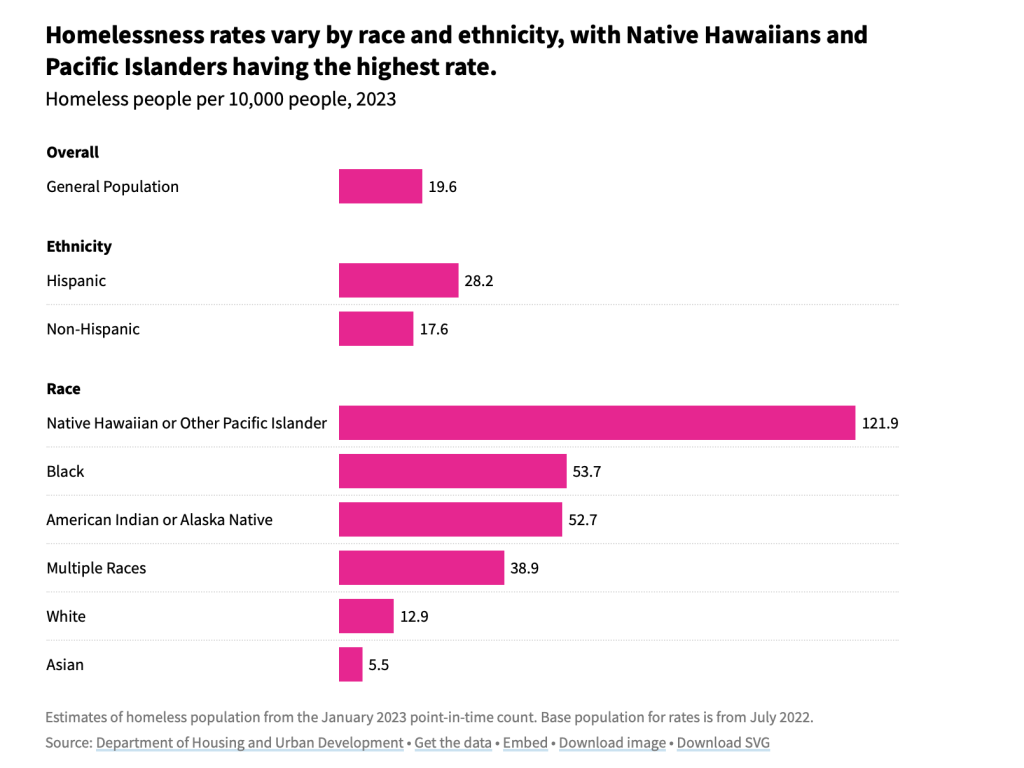
    My household has always maintained a relatively liberal understanding of the country’s homeless situation. We disagree with outlawing their right to exist and have a place to live and shelter. They are, after all, doing the best they can with the current housing, employment, transportation, or other issues they face. Let them be!

    Photo by Rosemary Ketchum on Pexels.com

    That is what our stance has been all along, until we went out to breakfast this past weekend and the police department was herding a group along the main boulevard we take to our restaurant. They appeared to be the characters you don’t want to run into in a dark alley at night—or daytime, for that matter. For Christ’s sake, were they planning to put roots down behind our neighborhood. We have a wall around the place, but salespeople always jump in and try to knock on doors. We have security but are not the type that can handle these characters. Every winter, we have a homeless troupe that typically arrives and camps near a river, but they are the same people every year, and they are like the snowbirds who flow in and out of the area from the north. These new homeless characters were of a family we never experienced before. 

    And that is what is scaring so many in America. The police found a suitable place for the troupe to travel on to, and there were no more sights of them after that initial spotting. But that is different for many in the country. These homeless populations inundate their communities, and it is an issue they have never before had to face. What if they are following suit? How many more will come? What problems will they bring with them? Will the property values deflate wherever they plant a stake? Jesus, are they diseased? 

    California has spent billions of dollars trying to fix its homeless problem and has failed to find a solution. The issue is greater there now than ever. Affordable housing remains unobtainable to those needing it. California is asking people to build tiny homes in their backyards, garages, wherever there is space, and make them available to house people. The problem is, if folks don’t want them in their alleys, will they want them in their garages?

    Locally in Phoenix, Arizona. My husband hired an unhoused person years ago and knew she was, although she had not disclosed so on her introduction form. He worked with her schedule to make sure she kept her employment, and within six months, she was able to get a studio apartment, moving from her car. She then told him. He said he knew all along, and that is why he had worked so hard to keep her going, and she turned out to be one of the best employees. Such an example may not be the case with every person, but it is an example of how we can attribute ourselves to improving the situation one person at a time.

    While feeling uneasy about sudden changes in your community is natural, it’s important to remember that homelessness is not a choice for many people. They often face a variety of challenges, including mental health issues, substance abuse, lack of affordable housing, and unemployment, which can contribute to their situation.

    As for the broader issue of homelessness, it’s clear that a comprehensive and compassionate approach is needed to address the root causes and provide effective solutions. This approach may include increasing access to affordable housing, expanding mental health and addiction services, and providing job training and employment opportunities for homeless individuals.

    The Supreme Court now has the issue, and the Lord only knows what they will come up with. But no doubt Texas will pass a law ordering the execution of all homeless people after 30 days of being homeless. 


    Biden’s Time In Office VS. Trump’s.

    Question on Quora –

    Joe Biden has taken 382 vacation days off to date. That equates to over one full year on vacation out of 3 years as US president. Is he the most ineffective US president in history?

    Answered by Benjamin via benandsteve.com 

    We take your word it was 382. I need President Biden’s schedule to confirm such details. Since the job is 24/7, 365 days a year, you never have any privacy, nor a day without less than twenty interruptions, even when on vacation. The vacation days alone don’t necessarily reflect a president’s effort. Being president is a demanding job that comes with its own set of challenges and responsibilities. While the president must take breaks and maintain a work-life balance, one should consider the number of vacation days in the broader context of one president over another president’s performance, decision-making, and leadership.

    Every presidency has challenges and circumstances, and comparing one president’s vacation days to another does not give a comprehensive view of their effectiveness. When evaluating a presidency’s effectiveness, it’s also essential to consider the accomplishments, policies enacted, and challenges faced.

    The information provided may be more accurate or presented better to portray a specific narrative. It’s always a good idea to fact-check information and consider multiple perspectives before forming an opinion.

    For a fact, here’s what Biden didn’t do:

    • He never only started his work days around 11 am or 11:3AM, crisis or not.
    • Never made an ass out of himself on a global stage.
    • Never has had disregards to promises made during his campaign.
    • He Never has been impeached.
    • Biden didn’t get impeached a second time.
    • Biden never had to survive a Senate trial that most senators later – admit that they should’ve voted and should’ve been guilty.
    • Biden didn’t get indicted – FOUR TIMES.
    • It wasn’t Biden who tried overturning the People’s Will in the 2020 *Election by inciting an insurrection!
    • No Biden didn’t call the Georgia Secretary of State and attempt to *Strong arm him into creating 12,000 more votes in his favor.
    • Biden didn’t take papers from the national archives and refuse to return them to the United States Government. Going as far as to tell employees to hide the location of the boxes that contained them from authorities. Then, he agreed to return them and never did so. Then, having the stated allegations recorded on the video camera and denying it was real, lying to the FBI (also a crime.)

    The list of things President Biden never did could go on, but it would be easier if you tuned into Court TV Monday through Friday.

    Those are the differences you can make between Biden and Trump, which is just the start!

    QUESTIONING AND REEVALUATING LONG-HELD BELIEFS AND ENCOURAGING DIALOGUE, UNDERSTANDING AND ACCEPTANCE?

    The documentary “1946: The Mistranslation That Shifted a Culture” delves into a controversial and thought-provoking topic that challenges conventional beliefs about the Bible and homosexuality. Directed by Sharon “Rocky” Roggio, the film examines the claim that the Bible originally did not mention homosexuality and that references to it were added due to mistranslation and misunderstanding of ancient Greek terms.

    The film highlights the work of Christian scholars who delve into forgotten archives at Yale University to uncover the origins of this mistranslation. It argues that conservative Christians began to propagate this mistranslation in the 1970s to scapegoat the LGBTQ+ community and oppose their growing liberation movement.

    Roggio, who identifies as a lesbian and is the daughter of an evangelical minister, engages in dialogues with her father throughout the film, attempting to find common ground and challenge his beliefs about homosexuality being a sin. This personal narrative adds depth and emotion to the documentary, as it explores the complexities of faith, identity, and acceptance within a family divided by differing views on sexuality and religion.

    The documentary sheds light on the potential harm caused by misunderstandings and misinterpretations of religious texts, highlighting the real-world consequences faced by LGBTQ+ individuals who have been marginalized, discriminated against, and even persecuted due to these beliefs.

    Overall, “1946: The Mistranslation That Shifted a Culture” offers a compelling perspective on a contentious issue, urging viewers to question and reevaluate long-held beliefs and encouraging dialogue, understanding, and acceptance.


    Photo by Alexander Grey on Pexels.com

    Gay, Lesbian, Bisexual and Transgender National Hotline 1-888-843-4564. “The Gay, Lesbian, Bisexual and Transgender National Hotline provide telephone and email peer-counseling, as well as factual information and local resources for cities and towns across the United States.

    The Difference Between Scranton Joe And Don The Con. A Whole Lot!

    You’ve undoubtedly heard a comprehensive debate about the economic situation during the transition from Trump to Biden.

    Photo by Andrew Neel on Pexels.com

    Indeed, the economic conditions at the end of Trump’s term were challenging due to the pandemic, and Biden inherited an economy facing significant headwinds. The pandemic’s impact on the economy was unprecedented, affecting employment, consumption, and global demand.

    However, public perception and political narratives often prioritize certain aspects of an administration’s performance while downplaying others. People’s opinions become shaped by various factors, including media coverage, partisan affiliation, personal experiences, and messaging from political leaders.

    Photo by Jozemara Friorili Lemes on Pexels.com

    Trump had shut down the United States of America, a fact that nearly every American forgets today. They need to remember the closed stores, the empty shelves, the closed restaurants, the doctor’s office that had to refuse patients, hospitals that were so full no one could visit, and nursing homes where loved ones had to stand outside and wave to loved ones from the street, and Funeral Homes so full they were using rental refrigerator trucks to store bodies—the toilet paper shortages. That was Trump’s Administration. Biden had to clean it up. He received much blame for what must occur to get the nation back on track. But he got to work, and the country got back to life.

    Here are a few points to consider when thinking about why public opinion might differ between Trump and Biden regarding the economy:

    1. Partisan Bias: Political affiliations can heavily influence people’s views on the economy. Republicans may be more inclined to credit Trump for positive economic developments during his term and blame external factors like the pandemic for any downturns. Conversely, Democrats may be more critical of Trump’s handling of the economy and more forgiving of the challenges Biden faced upon taking office.
    2. Messaging and Framing: Political leaders and media outlets shape public opinion. How economic data and policies get reported can influence people’s perceptions of the economy’s performance. Trump was known for touting positive economic indicators during his term, influencing public perception despite the broader challenges.
    3. Another significant factor that shapes public opinion on the economy is personal experience. People’s direct economic situations, such as job loss, financial hardship, or financial gains, can profoundly impact their views. For instance, someone who experienced a job loss or financial hardship during Trump’s term might have a negative view of his economic policies. Conversely, if someone benefited from tax cuts or saw their investments grow, they might have a more positive perception. Complexity of Economic Issues: Economic conditions are influenced by a multitude of factors, including global trends, monetary policy, fiscal policy, and more. It can be challenging for the average person to parse through these complexities and assign credit or blame to a particular administration accurately.
    Photo by Anna Tarazevich on Pexels.com

    In conclusion, public opinion on the economy is multifaceted, and partisan biases could dominate messaging, personal experiences, and the complexity of economic issues. While the data presented paints a challenging economic picture at the end of Trump’s term, public perception is by broader factors. And it is conveniently forgotten!