As the sun rose over the small town of Oakwood, its warm rays illuminated the rows of white headstones in the Oakwood Cemetery. The city, steeped in a rich history of honoring fallen soldiers, had always observed Memorial Day with solemn pride. This day, originally known as Decoration Day, was established after the Civil War to commemorate the Union and Confederate soldiers who died in the war. It has since evolved to honor all Americans who have died in military service.
Sarah Thompson stood at the cemetery’s gate, holding a bouquet of red, white, and blue flowers. She was in her late thirties, her eyes reflecting sorrow and strength. Visiting the cemetery was her yearly ritual—a pilgrimage to visit the grave of her brother, Daniel, who had died in Afghanistan a decade ago.
As Sarah walked along the gravel path, she remembered the day they received the news. It had been a bright summer afternoon, much like today. Daniel had always been a source of light and joy in their family, with his infectious laughter and boundless energy. The knock on the door that day had shattered their world.
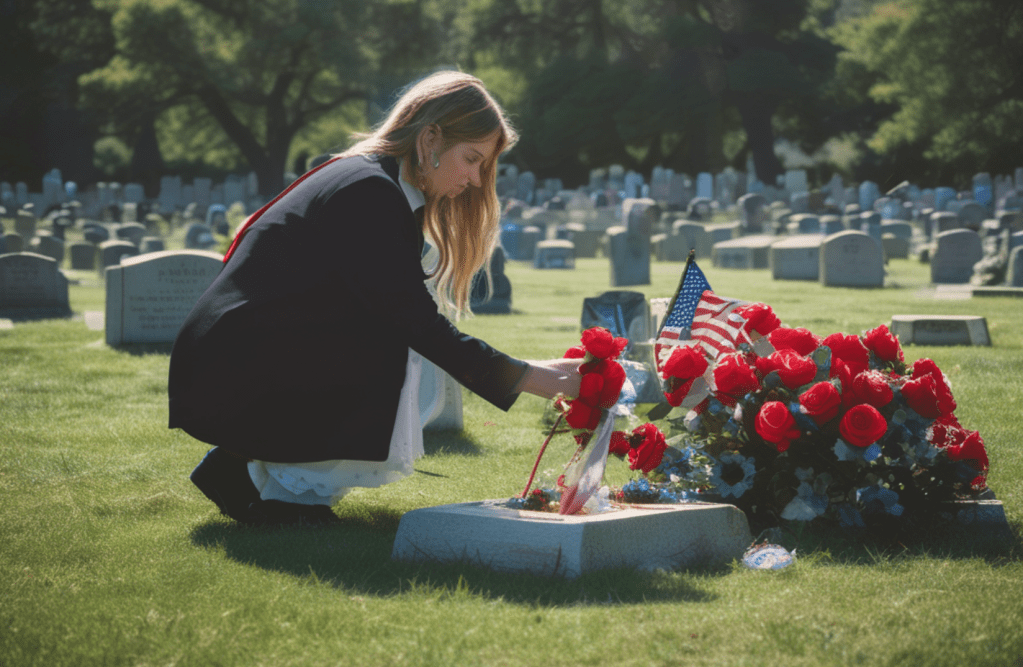
Sarah reached Daniel’s grave and knelt, gently placing the flowers in front of the headstone. She traced her fingers over his name etched in the cold stone and whispered a prayer. Memories flooded back—playing tag in the backyard, late-night talks about their dreams, and the tearful goodbye when he left for his final deployment.
The cemetery, a place of collective grief and remembrance, began to fill with others who had come to pay their respects. Families, friends, and fellow veterans moved among the graves, their shared sorrow palpable in the air. Some walked in silence, their thoughts a private tribute, while others shared stories, their voices a collective echo of the lives lost.
A familiar voice broke Sarah’s reverie. “Hey, Sarah.”
She turned to see Tom, one of Daniel’s best friends from high school, standing nearby. He held a small American flag, which he placed at the base of the headstone. Tom had served alongside Daniel and had been with him during his last moments.
“It’s good to see you, Tom,” Sarah said, her voice soft.
Tom nodded, his eyes filled with shared grief. “I come here every year. Feels like the least I can do.”
They stood in silence for a moment, their hearts heavy with the weight of their loss. Each lost in their thoughts, memories of Daniel flooding their minds. Then Tom began to speak, his voice steady but emotional, his words a testament to the bravery and selflessness of their fallen friend. ‘Daniel was the bravest person I knew,’ he said, his voice breaking with emotion. ‘He always put others before himself. Even in the end, he worried more about us than his safety.’
Sarah smiled through her tears. “That sounds like him.”
The morning wore on, and more people arrived, each carrying their own memories and gratitude. A group of children from the local school, accompanied by their teachers, placed flags on the graves of all the fallen soldiers, a symbol of their respect and understanding of the sacrifices made. The town’s mayor gave a short speech, his words echoing with the collective gratitude and remembrance of the community. A local choir sang ‘America the Beautiful,’ their voices a poignant reminder of the unity and strength that comes from shared values. The collective remembrance was a powerful testament to the sacrifices made by so many.
As the ceremony ended, Sarah and Tom lingered by Daniel’s grave a little longer. They shared stories, laughed, and cried, finding comfort in each other’s company.
“Thank you for being here,” Sarah said as they prepared to leave.
“Always,” Tom replied. “He was my brother, too.”
They returned to the cemetery gate together, the sun now high in the sky. As Sarah looked back one last time at the sea of white headstones, she felt a sense of peace. Memorial Day was not just about remembering the fallen; it was about celebrating their lives and the values they stood for.
Driving home, Sarah contemplated the significance of this day and how she would pass on its importance to her children. She understood that as long as they remembered, Daniel’s spirit would continue to live on. Every Memorial Day, she would return to this hallowed ground, ensuring that the memory of her brother and all those who had made the ultimate sacrifice for their country would never fade.
In checking references part of this story may include referencese similar to others found on the internet. The simularities are incidential and are not included intentional. You can find more these simularities RE: New York. Memorial Day. Monument. Dead Soldier. Wheelchair. Handicapped Boy. | Didier Ruef | Photography. https://www.didierruef.com/gallery-image/Aura/G0000Is39GN2Av9w/I0000aHlCvWVZLNc/C0000EU0LcXmMzWo/
Jello, a spirited dog with golden fur, floppy ears, and a tail that wagged like a metronome, lived in the quaint town of Millbrook. He was a free spirit, beloved by all, and a fixture of the community, embodying the warmth and unity of Millbrook.
Jello had his routines. Every morning, he would trot to the bakery where Mrs. Thompson would have a fresh scone waiting for him. Then, he’d visit the school playground, where children would shower him with affection and sneak him bits of their lunches. Jello often spent afternoons lounging in the sun outside the library, where Mr. Caldwell would read to him from the latest novels. By evening, he would make his rounds at the town square, greeting everyone with a joyful bark before curling up under the big oak tree for the night. The community’s love for Jello was palpable, creating a sense of unity and togetherness.
The townspeople adored Jello so much that someone humorously suggested nominating Jello for Mayor when the mayoral election came around. The idea quickly gained traction. “Who better to represent our town than Jello?” they said. “He’s loyal, kind, and brings everyone together.” And so, in an unprecedented turn of events, Jello’s name appeared on the ballot.
As the election drew near, excitement buzzed through Millbrook. Posters of Jello, donning a makeshift mayoral sash, adorned shop windows and bulletin boards. The slogan “A Mayor Who Cares” echoed through the streets. But a week before the election, something terrible happened: Jello went missing.
Panic spread like wildfire. Where could he be? The entire town, deeply concerned, rallied to search for him. Kids formed search parties, calling his name through the woods and fields. Shopkeepers closed early to join the search; even the local police were on high alert. There were flyers everywhere: ‘Missing: Jello. Our Town Hero. Please Help!’. The town’s reaction to Jello’s disappearance was a testament to their deep empathy and concern.
As days passed with no sign of Jello, whispers of foul play began to circulate. The thought was too dreadful to bear, but the town’s unity shone through their worry. They held candlelight vigils, their collective hope a beacon in the darkness, a testament to their resilience and unity.
On the eve of the election, a familiar bark echoed through the town square just as hope was waning. It was Jello, looking a bit dirty and tired but otherwise unharmed. The townspeople greeted Jello with cheers and tears of joy. Mr. Caldwell, who had been leading a search party near the old mill, found him trapped in an abandoned shed, likely having chased a squirrel inside and gotten stuck.
The town’s relief was palpable. Shopkeepers cleaned him up, fed him his favorite treats, and gave him more attention. Election day arrived, and with Jello safe and sound, the town celebrated their unusual but heartwarming choice for Mayor. After tallying the votes, it was no surprise that Jello won by a landslide. Although the title of Mayor was symbolic, the gesture embodied the spirit of Millbrook: a community united by love, kindness, and the belief that sometimes the best leaders remind us of the simple, unspoken bonds we share.
Jello, the dog who roamed freely but belonged to everyone, was now the honorary Mayor of Millbrook. His tale became a cherished legend, reminding all who heard it of the power of community and the unexpected ways in which leaders can emerge.
The man whose loving heart brought conflict and rift with unexpected rewards he showered on others.
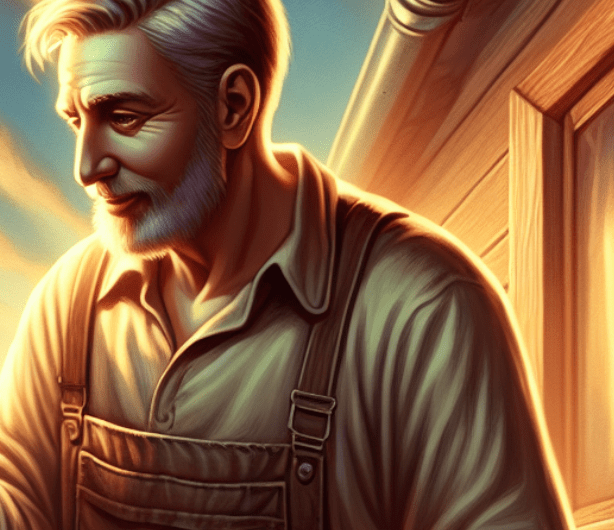
Charlie North was a familiar figure in the small town of Millbrook, known for his heart as expansive as the sky. He would readily abandon his own tasks to assist a neighbor with a leaky roof or chauffeur an elderly friend to a medical appointment. His acts of kindness and warmth were unparalleled, and everyone who crossed paths with Charlie held a special place for him in their hearts.
Yet, Charlie’s well-intentioned nature had a flip side that often led to discord: he was overbearing. His eagerness to assist frequently transformed into a forceful insistence that his approach was superior, and his constant involvement in others’ lives often left them feeling suffocated. This dichotomy of love and overbearingness earned him a mixed reputation.
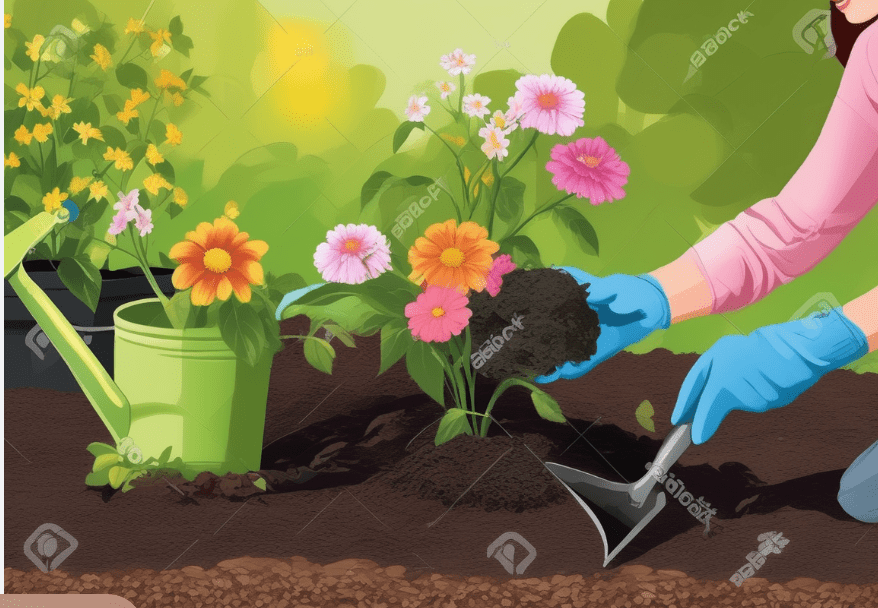
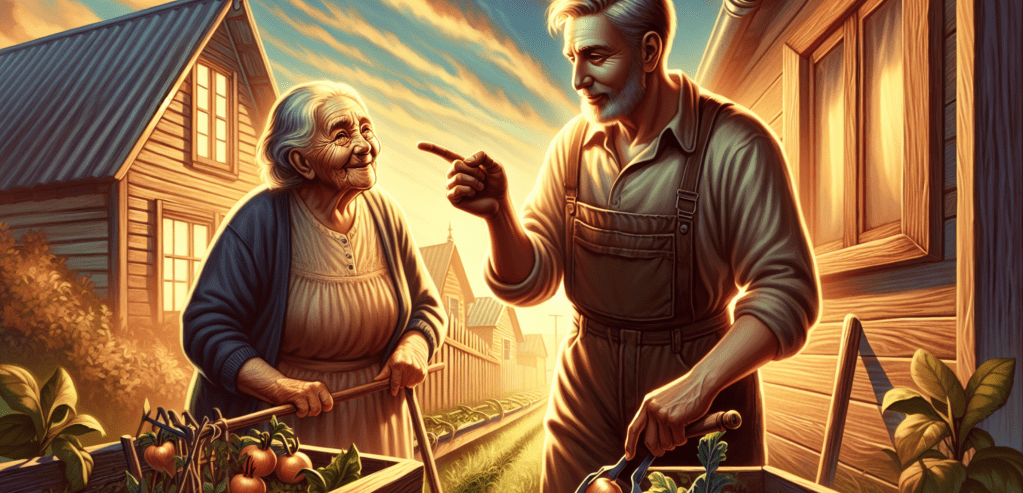
One sunny morning, Charlie decided to help Mrs. Henderson with her garden. The widow was grateful for the help but soon became overwhelmed by Charlie’s detailed plans and strict schedules. He dictated the type of flowers to plant, the precise soil mixture, and the exact watering schedule. Mrs. Henderson, who enjoyed gardening as a leisurely and personal hobby, felt her joy drained by Charlie’s micromanagement.
“I appreciate your help, Charlie, but I think I’d like to do some of this on my own,”
Mrs. Henderson said, trying to sound polite.
Charlie was taken aback. He wanted to help, but he needed help to see how his thorough plans were anything but beneficial.
“But, Mrs. Henderson, if we don’t follow the schedule, the flowers won’t thrive as they should,”
he insisted.
As the weeks went by, similar incidents unfolded. At the community bake sale, Charlie’s meticulous organization turned into a rigid control. Initially, the townsfolk appreciated his dedication, but soon they felt stifled and unappreciated. The once vibrant community events started to lose their charm, replaced by a silent resentment towards Charlie’s overbearing ways.
One evening, as Charlie sat on his porch, his lifelong friend, Tom, joined him. Tom was one of the few people who could speak candidly to Charlie.
“Charlie, I’ve known you forever,” Tom began gently. “You’ve got a heart of gold, but sometimes you don’t realize how you come across to others.”
Charlie frowned, puzzled. “I just want to help, Tom. I want everything to be perfect for everyone.”
“I know you do, and that’s what makes you so special,”
Tom said, choosing his words carefully.
“But people need space to make their own choices, even if things don’t turn out perfectly.”
Determined to change, Charlie began to pull back. He continued to offer his help, but he consciously tried to listen more and dictate less. Charlie volunteered at the next community event but let others take the lead. He bit his tongue when things didn’t go as he would have planned, learning to appreciate the different ways people approached problems.
It was a difficult adjustment for Charlie, and he often felt the urge to step in and take control. But slowly, he noticed a difference. Mrs. Henderson’s garden flourished in its way; it was not perfect, but vibrant and full of life. The bake sale was a chaotic success, filled with laughter and camaraderie. People began to welcome Charlie’s presence again without the undercurrent of tension that had once accompanied his help.
Over time, Charlie found a balance. He channeled his love and generosity in ways that empowered others rather than overshadowing them. He was still the same Charlie North—big-hearted and always ready to lend a hand—but had learned to temper his overbearing nature. This transformation made him not only loved but truly appreciated, a testament to the power of self-awareness and the enduring strength of a loving soul.
That night, Charlie lay awake, wrestling with Tom’s words. He reflected on the times his help had been more of a hindrance, the faces of his friends and neighbors flashing through his mind—grateful at first but then strained and unhappy.
And so, Charlie’s story became one of growth and redemption, a testament to the power of self-awareness and the enduring strength of a loving soul.
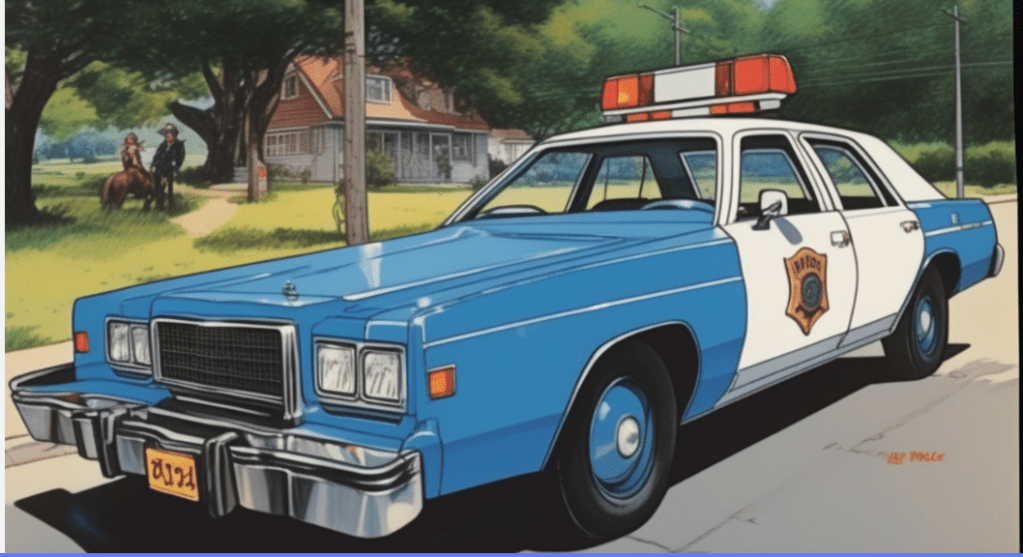
The city of Riverton never slept, nor did Detectives Jake Harris and Sam O’Reilly. Partners for over a decade roamed the nocturnal streets with the kind of synergy only best friends could muster. Their squad car, an unremarkable blue-and-white cruiser, was a beacon of hope for some and a symbol of fear for others.
Jake, with his gruff exterior and piercing blue eyes, was the kind of cop who could read a crime scene like a book. Sam, a lean figure with a quick wit and a knack for defusing tense situations, complemented Jake perfectly. Together, they led the department in felony arrests, arriving at calls faster than anyone else and building relationships with the community that others could only dream of.
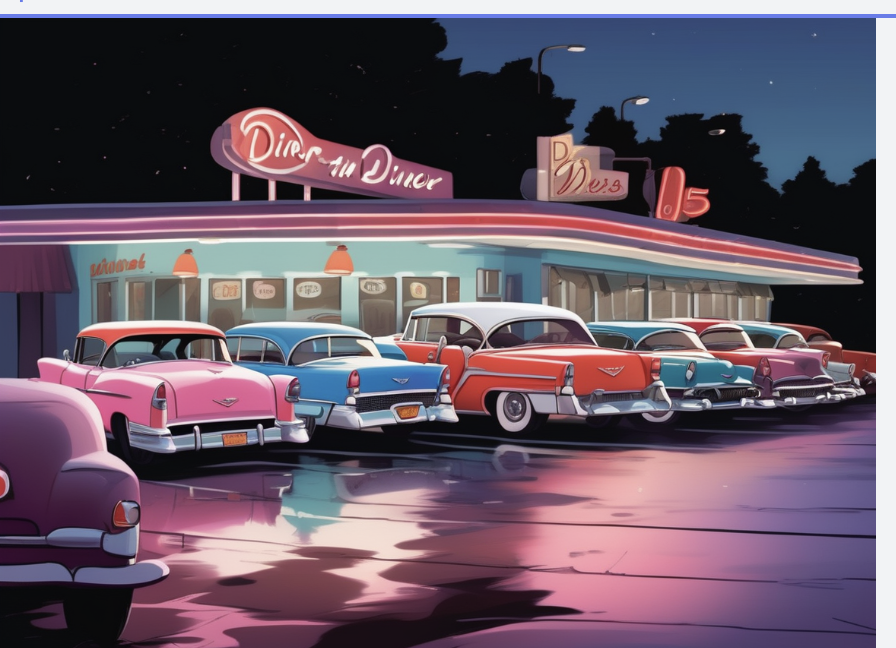
One brisk autumn night, their radio crackled to life with a call that made their hearts race: an armed robbery in progress at the 24-hour diner on 5th and Maple. Without a word, Jake hit the lights and sirens, and they sped through the dimly lit streets. They arrived in just under three minutes, a record even for them.
The diner was eerily quiet as they approached, save for the distant hum of neon lights. Inside, a masked man brandished a gun, demanding cash from the terrified cashier. Jake motioned for Sam to flank the back entrance while he took the front.
Jake entered slowly, his voice calm but authoritative. ––––
“Riverton PD, drop the weapon and come out with your hands up.”
The gunman whipped around, eyes wide with panic.
“Stay back! I’ll shoot!”
From the rear, Sam’s voice cut through the tension.
“No, you won’t. You don’t want to hurt anyone. Put the gun down, and we can talk.”
The gunman’s grip on the weapon faltered. In that split second, Jake lunged forward, disarming him with a swift, practiced motion. Sam was at his side instantly, cuffing the man and guiding him to the squad car.
As they processed the scene, the cashier, a young woman named Maria, approached them with tears in her eyes.
“Thank you. I don’t know what would’ve happened if you hadn’t come.”
Jake gave her a reassuring nod. “Just doing our job, ma’am.”
The rest of the night was a blur of paperwork and patrols. But their most memorable interaction came just before dawn. While cruising through a quieter part of town, they spotted a boy sitting alone on a bench, clutching a backpack to his chest. They pulled over, and Sam approached him gently.
“Hey there, buddy. Everything alright?”
The boy, who couldn’t have been more than ten, looked up with tear-streaked cheeks.
“I ran away from home. My parents are always fighting.”
Sam sat next to him, listening with the patience of a father and says –––
“I get it, kid. Sometimes, home can be tough. But running away won’t solve anything. Let’s get you back home and see if we can help sort things out.”
Jake contacted the boy’s parents while Sam spoke with him. The sun was peeking over the horizon when they returned the boy home. Now more worried than angry, the parents hugged their son tightly and thanked the officers.
As they drove back to the station, Jake glanced over at Sam, sighs then says –––
“Another night, another set of stories, huh?”
Sam chuckled. “Wouldn’t have it any other way.”
In Riverton, one could become a legend in the shadows, and for Jake and Sam, every night was another chance to protect and serve, forging connections and fighting crime in ways that others could only admire.
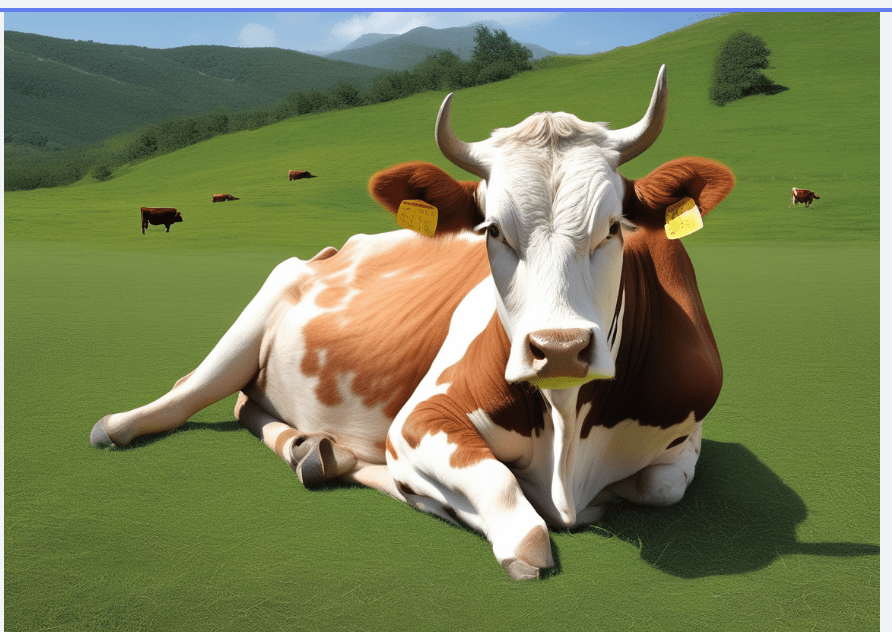
Once upon a time, in the idyllic countryside of Cloverfield, there lived a milk cow named Bella. Bella, with her gentle eyes and a coat that was brown and white as snow, was the heart and soul of a small family farm nestled between rolling hills and vibrant meadows. Her reputation preceded her, known throughout the village for her abundant milk and her kind and serene demeanor.
Each day, Bella’s world would brighten with the first light of dawn.
As the sun peeked over the horizon, Farmer Joe, a kind-hearted man with a weathered face and a perpetual twinkle in his eye, would greet Bella with a warm smile, his voice filled with affection,
“Good morning, Bella!”
Bella, in turn, would respond with a soft moo, her eyes sparkling with joy at the sight of her favorite human.
Farmer Joe would lead Bella to the milking shed, where she would stand patiently, chewing on sweet clover while Farmer Joe hummed old folk tunes. He had a gentle touch, and Bella never felt any discomfort. As the rhythmic sound of milk filling the pail echoed through the shed, Bella felt a deep sense of contentment, knowing her milk would soon nourish the family and their neighbors.
Bella’s milk was known for its rich and creamy texture. Every morning, Farmer Joe’s wife, Martha, would churn some of the milk into butter and cheese, filling their kitchen with delicious aromas. Martha’s dairy products were the talk of the town, and people from neighboring villages would come to buy them. But Martha always saved a special treat for Bella: a handful of fresh, juicy apples.
After her morning milking, Bella spent her day grazing in the lush pastures, enjoying the company of her fellow cows and the playful calves that bounded around. She had a special friend among the herd, a young and curious calf named Daisy. Daisy followed Bella everywhere, imitating her every move and looking up to her as a wise and gentle mentor.
One day, as Bella and Daisy were grazing near the forest’s edge, they heard a faint, distressed bleating. Bella’s ears perked up, and she looked around to find the source of the sound. It didn’t take long to spot a tiny lamb stuck in a thorny bush, its wool tangled and its eyes wide with fear.
Bella, with her calm and reassuring presence, approached the lamb slowly. Daisy watched in awe as Bella, displaying a courage that belied her gentle nature, gently used her nose to nudge the lamb free from the thorns. Once the lamb was free, it nuzzled Bella in gratitude before scampering to find its flock.
Daisy trotted up to Bella, eyes wide with admiration.
“Bella, you’re so brave!”
she exclaimed.
As the sun began to set, casting a golden glow over Cloverfield, Farmer Joe came to bring Bella and the other cows back to the barn. He noticed a new spring in Bella’s step and the proud look in Daisy’s eyes.
“Had an adventure today, did we?”
he asked, patting Bella affectionately. Bella responded with a contented moo, happy to be home and looking forward to another peaceful night.
Inside the barn, Bella settled into her cozy stall filled with fresh straw. As she lay down, she felt a deep sense of fulfillment. Bella had her family, friends, and the beautiful Cloverfield to call home. She closed her eyes, listening to the soft rustling of the barn and the distant hoot of an owl, grateful for the life she led and the small joys of each day. The tranquility of the night enveloped her, promising a peaceful sleep and a new day filled with possibilities.
And so, Bella the milk cow drifted off to sleep, dreaming of green pastures and new adventures, ready to face whatever the next day would bring with her steady heart and gentle spirit.
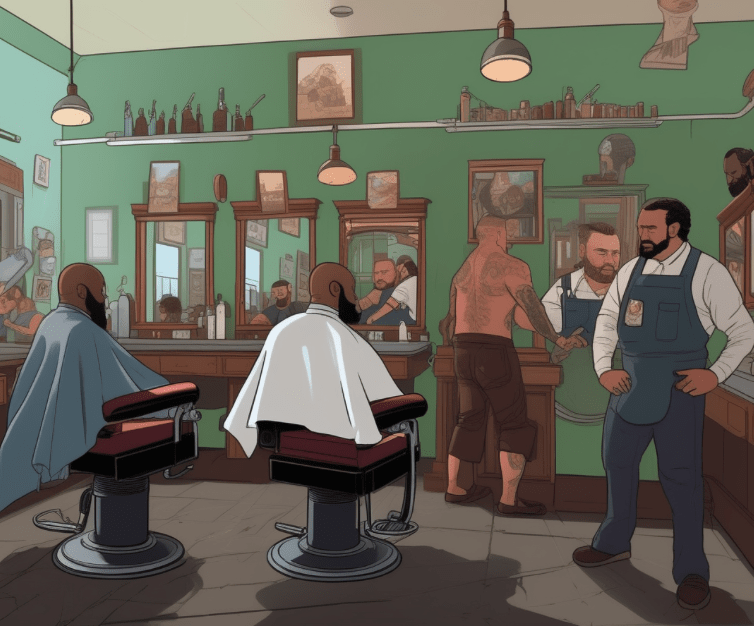
Harrison, a young boy with a mop of unruly hair, was not yet old enough to attend the local school with his siblings. For that, he was delighted. The thought of shuffling off to a gloomy classroom with many kids making noise and a teacher telling him what to do was a nightmare. He’d rather be where he was, in his dad’s bustling barber shop, sitting high on the shoeshine chair overlooking the men sitting and waiting for a haircut. His dad, a tall and burly man with a booming voice, had three barber chairs, but he was the lone barber in the shop and wanted to keep it that way. The two extra chairs were great for the overflow customers who missed their chance to sit in one of the chairs against the wall. Harrison, always curious, wanted to ask the group if they were getting haircuts for a Sunday funeral, which usually draws such a crowd to his dad’s shop. But he didn’t dare ask such a question, knowing his father would object.
An older gentleman sitting in one of the chairs waiting for his turn in the barber’s chair spoke up –––
“There’s a grand parade coming down Main Street this afternoon, right in front of your shop, Harrison. The Governor and a Star Baseball Player from the Yankees are expected to ride in the banker’s convertible Cadillac. It’s going to be quite a spectacle,”
the man in the chair shared, his voice filled with anticipation.
Only Harrison’s dad remarked,
“I guess they’ll have to do it without my help; I have hair to cut.”
His dad’s voice was dry, and his humor was just as much, and the tone in which he laid out the line caused those waiting for a haircut to laugh. He pulled the towel from around the neck of the main sitting in his chair, removed the barber cape covering him, shook it out, and said –––
That’ll be a buck! Next!
Harrison watched as the man in the chair, a middle-aged man with a kind smile and a twinkle in his eye, smiled and handed his dad a crisp dollar bill. They exchanged pleasantries, their voices filled with warmth and familiarity, before the man stepped down from the chair, revealing a fresh, neatly trimmed haircut. As the man left the shop, the doorbell jingled behind him, the sound echoing in the empty space.
The following customer shuffled forward, settling into the vacated barber chair. He was a tall, lanky man with a worn-out cowboy hat perched atop his head, his face weathered and etched with lines of a life spent outdoors. Harrison recognized him as Mr. Jenkins, the ranch owner just outside town, a man known for his quiet wisdom and his love for his horses.
“Hey there, Mr. Jenkins,”
Harrison’s dad greeted warmly, draping the striped barber cape around his shoulders.
“What’ll it be today?”
Mr. Jenkins leaned back in the chair, adjusting his hat slightly.
“Well, I reckon I need a trim for the Missus’s birthday dinner tonight. Can’t be looking like a tumbleweed on such an occasion,”
He chuckled.
Harrison grinned from his perch on the shoeshine chair, enjoying the banter between his dad and Mr. Jenkins. As his dad began clipping away at Mr. Jenkins’ hair, the old rancher glanced over at Harrison with a twinkle in his eye.
“You excited about that parade, son?”
he asked, his voice carrying a hint of amusement.
Harrison nodded eagerly.
“Sure am, Mr. Jenkins! I heard the Governor and a Yankees player will be there.”
Mr. Jenkins chuckled, nodding in agreement.
“Yep, quite the spectacle, I reckon. But you know what they say, Harrison, sometimes the best show in town ain’t the one with the fanciest floats. There’s more to this parade than meets the eye,”
Mr. Jenkins said, his eyes twinkling with a hint of mystery. His words hung in the air, leaving Harrison with a sense of intrigue and a thousand questions.
Harrison furrowed his brow, intrigued by Mr. Jenkins’ cryptic comment. Before he could inquire further, his dad finished the haircut, removing the barber cape with a flourish.
“All set, Mr. Jenkins. That’ll be a buck,”
He said with a grin.
Mr. Jenkins handed over the payment with a tip, tipping his hat to Harrison and his dad before heading out the door confidently.
Harrison’s dad turned to him with a smile.
“Well, son, it’s your turn to shine. How about you polish those shoes while I tidy up here?”
Harrison’s heart raced with excitement as he reached for the Polish brush, his mind buzzing with anticipation for the parade and Mr. Jenkins’s mysterious words. He couldn’t help but wonder what the old rancher meant. Was there something more to this parade than just a grand spectacle? Little did he know, this ordinary day in the barbershop would soon become an extraordinary adventure he would never forget.
After Mr. Jenkins left the barber shop, Harrison’s dad glanced at the clock on the wall and realized it was almost time for the parade. With a quick sweep of the broom, he tidied up the shop and then turned to Harrison with a grin.
“Looks like we’ve got a front-row seat, son. Let’s go see what all the fuss is about,”
He said, grabbing his coat from the hook by the door.
Excitedly, Harrison followed his dad outside, his steps quick and light. He joined the growing crowd lining Main Street, his eyes scanning the area for the best view of the parade route. The air was charged with anticipation as people jostled for the best view of the parade route. Harrison’s heart raced with excitement as he tried to catch a glimpse of the Governor and the Yankees player, his eyes darting from one end of the street to the other.
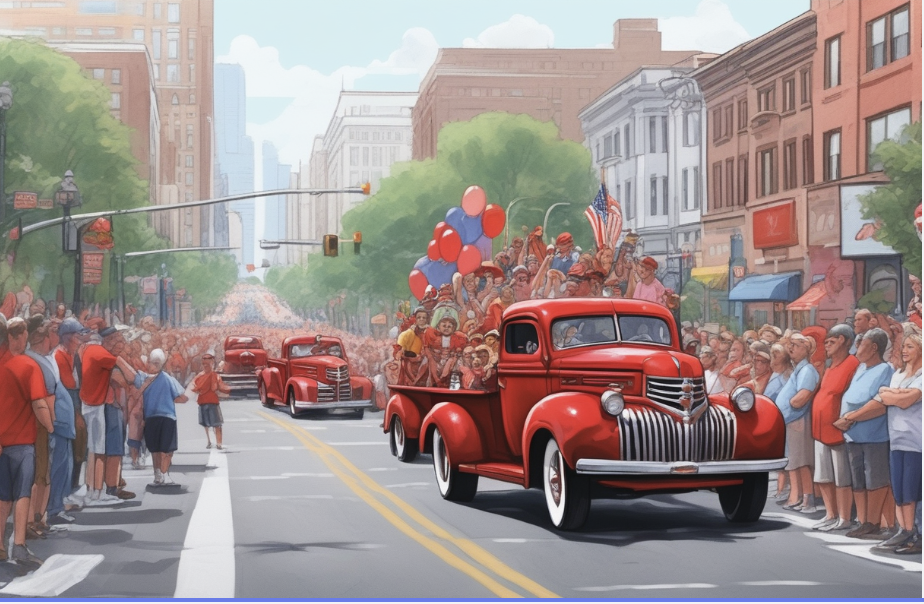
Harrison’s eyes widened with wonder as the first drumbeats echoed in the distance, signaling the parade’s approach. The air was filled with the scent of freshly popped popcorn and cotton candy, and the sound of children’s laughter mingled with the lively tunes played by the marching bands. Colorful floats adorned with balloons and streamers rolled by in a kaleidoscope of colors. Marching bands played lively tunes, their music filling the air. Costumed performers danced along the street, their movements a blur of energy and excitement.
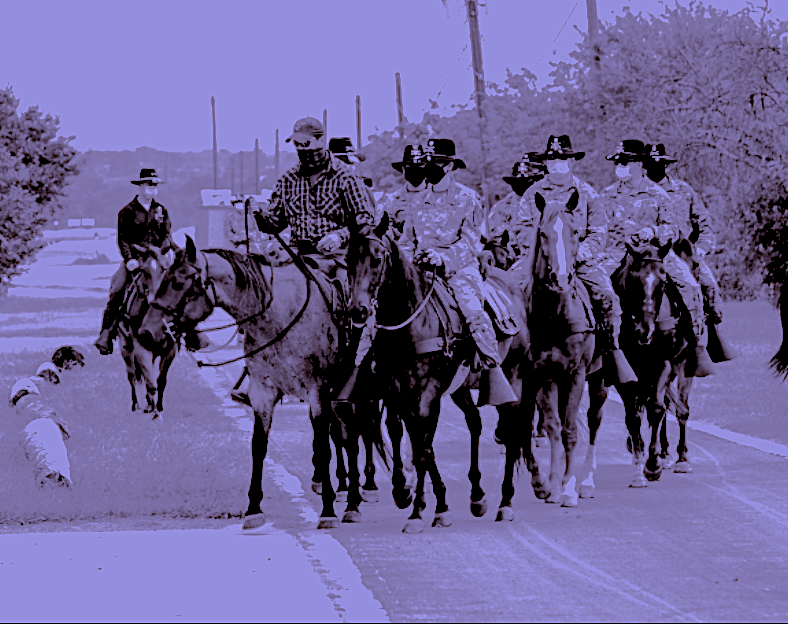
But amidst the fanfare, Harrison noticed something unusual. At the back of the parade, a group of riders on horseback trotted along, their faces obscured by bandanas, their horses sleek and powerful. They were followed by a wagon covered in a tarp, pulled by a team of sturdy horses. The air around them seemed to crackle with an energy different from the rest of the parade, a sense of mystery and intrigue. Harrison couldn’t help but wonder who they were and what they were doing in the parade.
Curiosity piqued, Harrison tugged on his dad’s sleeve.
Unable to suppress his curiosity, Harrison tugged on his dad’s sleeve, his eyes fixed on the enigmatic riders. His voice was filled with a mix of excitement and intrigue as he asked his dad about them.
He asked, pointing to the mysterious riders.
His dad frowned, scanning the procession.
“I’m not sure, son. They don’t look like part of the official parade.”
Just as the parade climaxed, a sudden turn of events caught Harrison’s attention. A wagon, covered in a mysterious tarp, veered off the parade route, rumbling down a side street.
Instinctively, Harrison’s dad grabbed his hand, his expression grave.
With a sense of foreboding, Harrison’s dad grabbed his hand, his expression grave.
“Stay close, Harrison. Something doesn’t seem right here,”
he said, his voice filled with concern.
With a sense of foreboding, Harrison and his dad followed the wagon, their footsteps echoing through the side streets and alleyways. The sound of the parade grew fainter with each turn, replaced by the distant hum of the town. Eventually, they emerged into a deserted square on the outskirts of town, where the wagon had come to a stop.
As they approached cautiously, they heard muffled voices and metal clinking. Peering around a corner, Harrison’s heart raced as he witnessed a group of masked figures unloading crates from the wagon, their faces twisted in sinister determination.
Harrison realized that the mysterious riders were thieves and were about to commit a robbery right under the town’s nose.
Harrison’s dad pulled him back into the shadows without hesitation, his eyes darting urgently.
“We need to get help, son. Stay here and stay quiet. I’ll be back as soon as I can.”
Harrison’s mind raced with fear and adrenaline as his dad sprinted into the night. Alone in the darkness, he knew he was the only one who could stop the thieves and save his town from disaster.
Summoning his courage, Harrison crept closer to the scene, his heart pounding. Little did he know, this chance encounter at his dad’s barbershop would thrust him into the heart of an adventure filled with danger, bravery, and the true meaning of heroism.
As Harrison watched the thieves unload their crates in the deserted square, he knew he had to act fast. With a steely resolve, he devised a plan to thwart the robbery and protect his town.
Silently, Harrison slipped through the shadows, keeping his movements as quiet as possible. Drawing upon the skills he had learned from listening to his dad’s stories of bravery and courage, he maneuvered closer to the thieves, carefully avoiding detection.
Harrison quickly glanced around the square and spotted a stack of crates nearby. Acting swiftly, he grabbed a handful of pebbles from the ground and began to hurl them toward the crates, creating a diversion.
The thieves, startled by the sudden noise, turned towards the sound, their hands instinctively reaching for their weapons. Seizing the opportunity, Harrison sprang into action, darting towards the wagon with lightning speed.
With a burst of adrenaline, Harrison leaped onto the back of the wagon, his heart pounding in his chest. Ignoring the shouts of the thieves behind him, he frantically searched for something to use as a weapon.
His eyes fell upon a coil of rope lying in the corner of the wagon. Without hesitation, Harrison grabbed the rope and began to lash out at the thieves, swinging it with all his might.
Caught off guard by Harrison’s unexpected attack, the thieves stumbled backward, their faces contorted with shock and surprise. Sensing their momentary confusion, Harrison seized the opportunity to disarm them, knocking their weapons out of their hands with well-aimed blows.
As the tide of the battle turned in his favor, Harrison felt a surge of triumph and adrenaline coursing through his veins. With a determined resolve, he fought with all his strength, refusing to back down in the face of danger.
In the end, it was Harrison’s bravery and quick thinking that saved the day. With the help of his dad and the townspeople, he apprehended the thieves and prevented the robbery from taking place.
As he stood victorious in the square, surrounded by cheers and applause from the grateful townsfolk, Harrison knew that he had discovered the true meaning of heroism. And though his adventure had been filled with danger and peril, it had also taught him the importance of courage, resilience, and the power of standing up for what is right.
George was a happy-go-lucky sort of kid. His father raised quarter horses, and together, they were buddies. They go nearly everywhere together. George and his father’s friend Maynord, an older gentleman, probably a few years older than George’s father, spoiled George, treating him especially grandly. George didn’t emphasize the letter ‘s’ in some of his words, and some words he would say might need to be clarified. His father was known as a horseman and stern man, yet respected by most people, eyebrows raised to the bible-toting folks.
Maynord had a grown daughter who had already left home, but he and his wife had never had a son. With George, Maynord had the time of his life. As did George. The two were better buddies than Maynord, and George’s father became. But George would never say that to his father. Maynord treated George to parades, cheeseburgers, and ice cream cones and even got him a dog. George named the pooch, Ryder after Maynord’s last name.
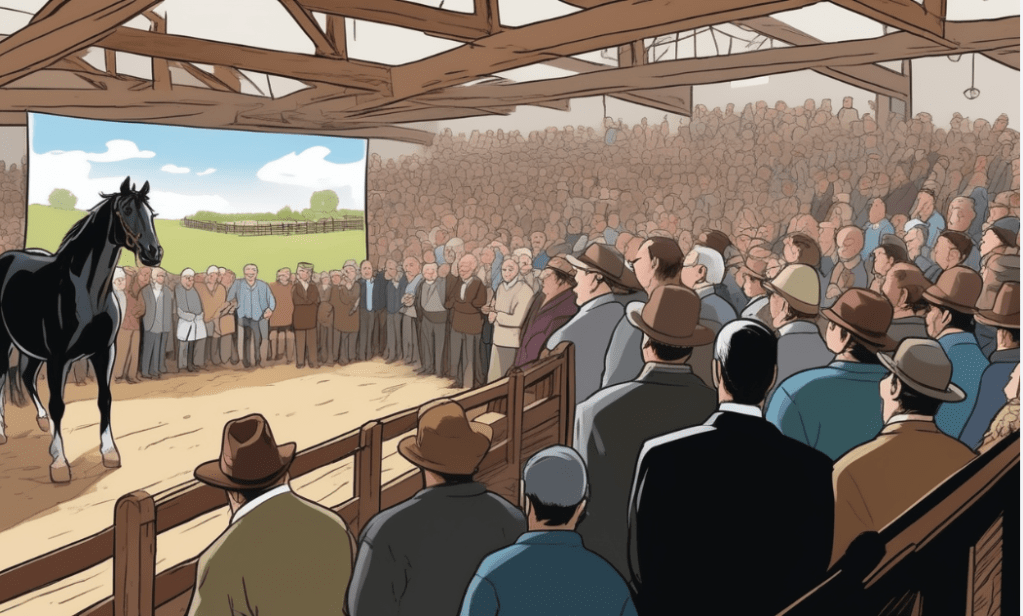
The two looked forward to Friday and Saturday nights. That is when George’s dad would take George and Maynord to auction barns in nearby cities where horses were sold. There, they would watch the many horses come through the sale ring, and the owners talk them up, saying how great of an animal the horse is, and try to sell it for top dollar. Of course, George’s father had always arrived before the auction to watch the horses lead in so he could see how they handled it and whether they were challenging to work with in getting to holding pens. He could also see if any auction workers tried to ride the horses before entering the sale ring and if the horses handled well. There were always little mishaps in the sale ring, a rider losing his grip and falling off, or a horse doing what the owner said it would not do. Or donkeys would be brought in, which always made George and Maynord laugh. They would jokingly suggest George’s father buy several to go with his quarter horses. The biggest thrill of the sales barn adventures was the cafe located within; that is where, halfway through, George and Maynord would slip away and eat cheeseburgers and drink soda pop.
The horse sales, as George and his father referred to them, caused the problem. Maynord didn’t help with the situation because he referred to the auctions as horse sales. And he had never referred to the auctioning of horses as anything else.
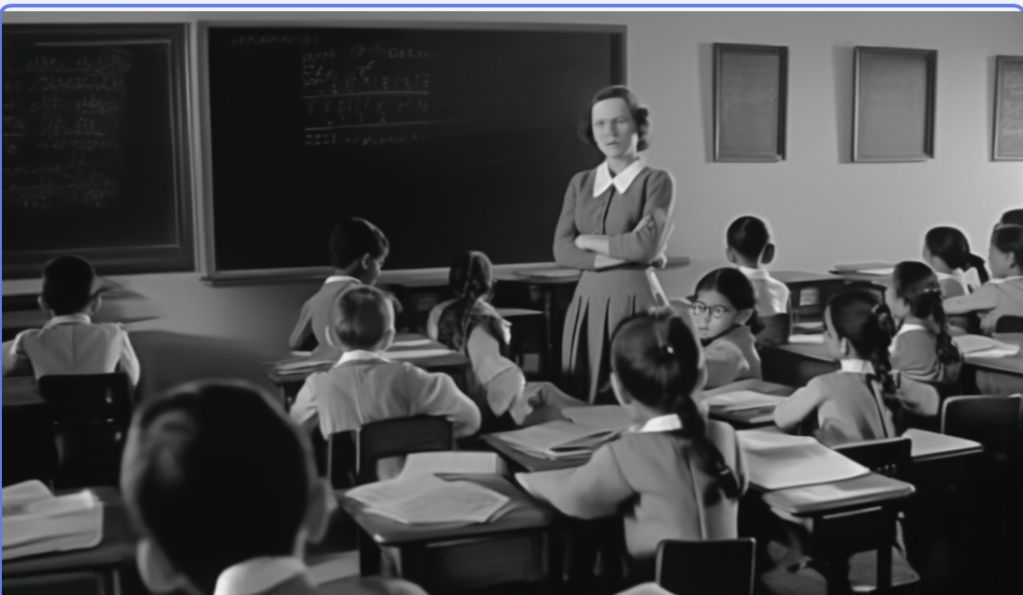
It was in the classroom one Monday morning when the third-grade teacher asked the class for each student to stand and say what the most fun activity they took part in over the weekend was. The town had just had a fair, and the teacher expected the students to explain their actions while visiting the celebration. And that is what the students did until coming to George.
George stood and said –––
“My dad and our friend Maynord took me to the city horse sale, and my dad bought two.
While George was speaking about horses, the teacher heard ‘whore sale.’
The teacher said –––
“George, you went where, and your dad what?”
George replied –––
“My dad took me to a horse sale and bought two. His friend Maynord helped with one of them. They made me watch from the pickup.”
The teacher, turning pale, said –
“George, stop talking; that is enough! Class, that is enough of what we enjoyed this weekend. I will have George explain what he did to the principal.”
George was perplexed. Hasn’t anyone ever watched a horse being sold and loaded into a livestock trailer? Why would the principal need to hear about it? Indeed, he knows about people selling horses.
In the office, the principal was being informed by the teacher about what she had heard and how terrible it was that this father and his friend had taken an 8-year-old boy to whore house and had him watch the goings on with two women. The principal then asked George what exactly did you say to your teacher?
Which George explained –––
“I just told her ––– My dad, Maynord, and I went to a horse sale, where my dad bought two horses. They made me get in the pickup and watch them while loading the horses so I wouldn’t get hurt or in the way. There have been days, I have even held on to some guys horse when he had too many to handle. But I didn’t get to explain it in such detail because the teacher told me to stop talking before I could tell more about what I was talking about. We go to horse sales every weekend. I don’t know what the big deal is!”
The principal and now the school’s superintendent were both in the office. Their faces were beet red, and they were trying to keep from laughing. The teacher, now understanding the situation, felt overreactive and apologizing.
Meanwhile, George is confused and asks everyone in the room –––
“Haven’t you all ever heard of horse sales? Horse sales? Horse Sales! A Place where a man can sell his horse? My dad, Maynord and I go to them every Friday and Saturday night, you should come with us and see what it is all about. If you get bored with the horse sale, you can get a cheeseburger, as I sometimes do. I don’t understand what this is all about just because I told my story about going to the horse sale with my dad and Maynord.”
George’s dad, the town barber, was called and told of the situation. He later held court in his barber’s chair with his shop’s regulars. There, they had the bursts of laughter the school officials experienced.
Leaving the office, it was the loudest laughter George can ever remember hearing to this date. It wasn’t until he was older did he understand the rhyming of the words between horse and whores and how it could sound to others when saying to them –––
“You are headed to a horse sale to see what you can find.”
Kick off Pride month with a 5-day festival celebrating our community’s legacy and exciting contemporary stories Showcasing film premieres, filmmaker Q&A’s, and social events May 30 – June 3, 2024
NewFest Pride has it all — premieres of the year’s most anticipated queer films, conversations, parties and outdoor screenings! Check out the full lineup below.
Get A Pass
Membership Plus Members + above get free Virtual Passes.
A HOUSE IS NOT A DISCO (Opening Night Film & Party)
Dir. Brian J. Smith
A compelling, lovingly-captured portrait of Fire Island as queer paradise that sees past and present blur within the iconic beach town as it celebrates its collective legacy and redefines itself for a modern era.
Ticket includes entrance to Opening Night Party at Slate.
MY OLD ASS
Dir. Megan Park
In this fresh coming-of-age story, an 18th birthday mushroom trip brings free-spirited Elliott (Maisy Stella) face-to-face with her wisecracking 39-year-old self (Aubrey Plaza).
HAZE
Dir. Matthew Fifer
A young journalist returns home to investigate the unsolved deaths at an abandoned psychiatric center in this eerie, evocative psychological thriller from writer/director Matthew Fifer (CICADA)
CLOSE TO YOU
Dir. Dominic Savage
Producer and co-writer Elliot Page stars in this emotionally observant drama about returning home as yourself and finding hope in potentially rekindled relationships
FANTASMAS (Episodes 1 & 2)
Dir. Julio Torres
A delightfully wry new series from the imagination of creator, star, writer, and director Julio Torres (LOS ESPOOKYS, PROBLEMISTA)
THE QUEEN OF MY DREAMS
Dir. Fawzia Mirza
Grad student Azra feels worlds apart from her seemingly rigid mother yet uncovers their unexpected connections on a trip to Pakistan in this vibrant festival favorite (TIFF, SXSW) from writer/director Fawzia Mirza. Ticket comes with entrance to Women’s Afternoon Out pre-screening reception
SEBASTIAN
Dir. Mikko Mäkelä
A freelance writer and aspiring novelist on his way to ostensible success in London’s cultural spheres finds a different kind of exhilaration as a sex worker in this Sundance sensation.
AM I OK?
Dirs. Tig Notaro & Stephanie Allynne
Dakota Johnson stars in this uplifting comedy from co-directors Tig Notaro & Stephanie Allynne about self-discovery, life changes, and friendship.
BLACK QUEER PRIDE SHORTS WITH VIMEO
Join NewFest & Vimeo for a celebratory short film showcase by and about Black LGBTQ+ lives, joys, and experiences.
COMING AROUND
Dir. Sandra Itäinen
A young queer woman stands at a crossroads with her devout Muslim mother in a clash between identity and tradition.
THE SUMMER WITH CARMEN
Dir. Zacharias Mavroeidis
While enjoying a day at a clothing-optional queer beach, an aspiring filmmaker and their handsome friend collaborate on a screenplay in this whimsical summer treat.
WE’RE HERE (Season 4 Finale)
Dir. Peter LoGreco
Join NewFest and HBO for an advance screening of the Season Four finale, followed by an exclusive virtual conversation with creators and cast.
TRIXIE MOTEL: DRAG ME HOME (Series Premiere)
Tune in for an advance screening + exclusive virtual Q&A as Trixie and her partner David explore and design a dream home fit for two!
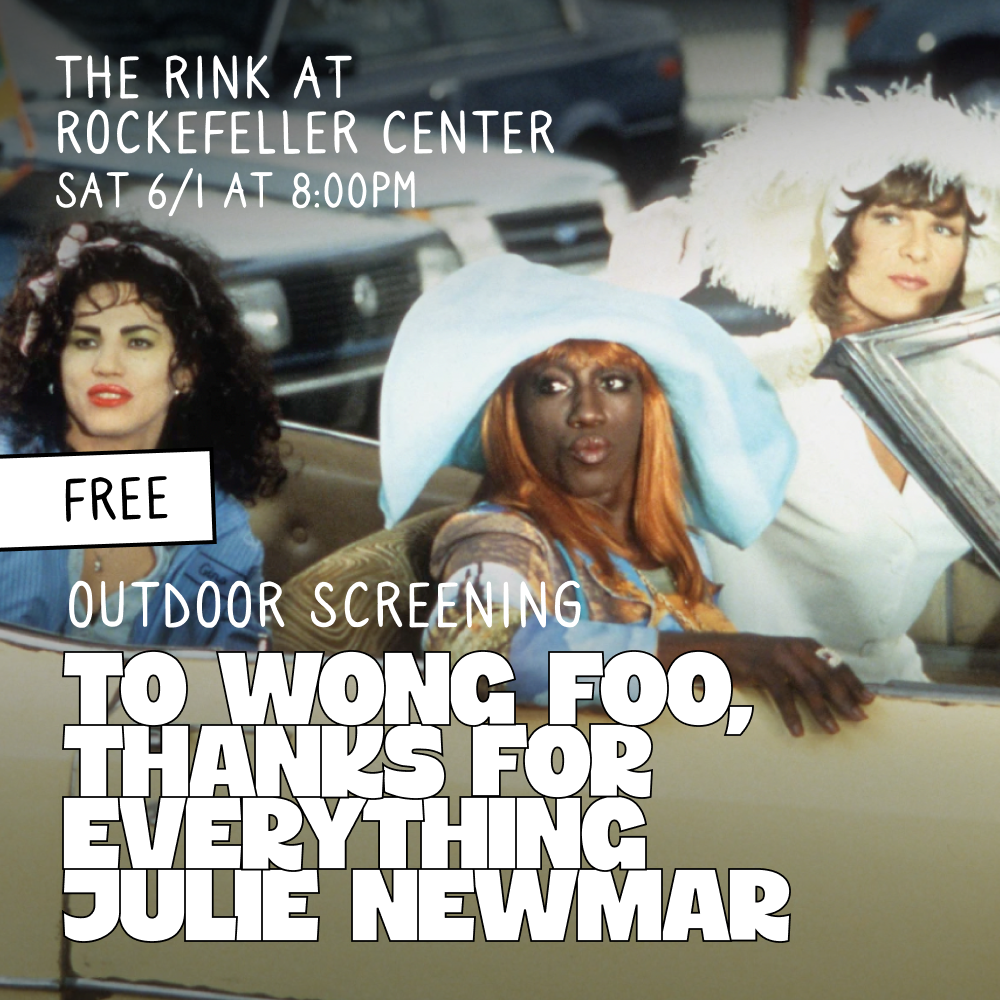
TO WONG FOO, THANKS FOR EVERYTHING! JULIE NEWMAR (Outdoor Screening)
Kick off NewFest’s new partnership with Universal Pictures – “Pride Summer Movie Nights at Rockefeller Center”
IN-PERSON + STREAMING VIP All Access Pass — $185 Discount for NewFest Members All in-person screenings and events (including Opening Night Film & Party, and Women’s Afternoon Out) and virtual screenings. Early access to theater and reserved seats. Learn how to fulfill passes here.
IN–PERSON Individual Film Ticket – $19.50 Discount for NewFest Members In-Person access to a single screening. Does not include A HOUSE IS NOT A DISCO or Women’s Afternoon Out Tickets.
Opening Night Film + Party Ticket – $50 Discount for NewFest Members In-Person access to the Opening Night Film A HOUSE IS NOT A DISCO and the following party.
In-Person All Access Pass — $115 Discount for NewFest Members Includes all in-person screenings, including Opening Night Film & Party, and Women’s Afternoon Out. Learn how to fulfill passes here.
STREAMING Virtual Pass — $30 Discount for NewFest Members Virtual access to select screenings. Does not include in-person Q&A’s, however there are a select number of virtual Q&A’s available. All films screening virtually are available May 30 at 12 PM EST through June 3 at 11:59 PM EST. Streaming anywhere in the United States. Individual tickets are only available for WE’RE HERE and TRIXIE MOTEL: DRAG ME HOME.
Not too long ago, in the quaint town of Willowbrook, there were three inseparable friends: Alex, Maya, and Jake. They worked at the same bustling marketing firm, where Mondays were universally dreaded. However, these three had a secret pact to evade the Monday blues.
On Monday morning, as the sun peeked through the curtains, Alex, the creative genius of the trio, concocted a plan over breakfast. “Guys, I’ve got it! Let’s go on a spontaneous road trip!” Alex exclaimed, a mischievous glint in their eyes.
Maya, the adventurous spirit, beamed with liberation. “Yes! Let’s break free from the chains of mundane Mondays and create unforgettable memories instead!”
“Guys, I’ve got it! Let’s go on a spontaneous road trip!”
Jake, the pragmatic one, hesitated momentarily before a smile spread across his face. “Alright, but let’s make it epic.”
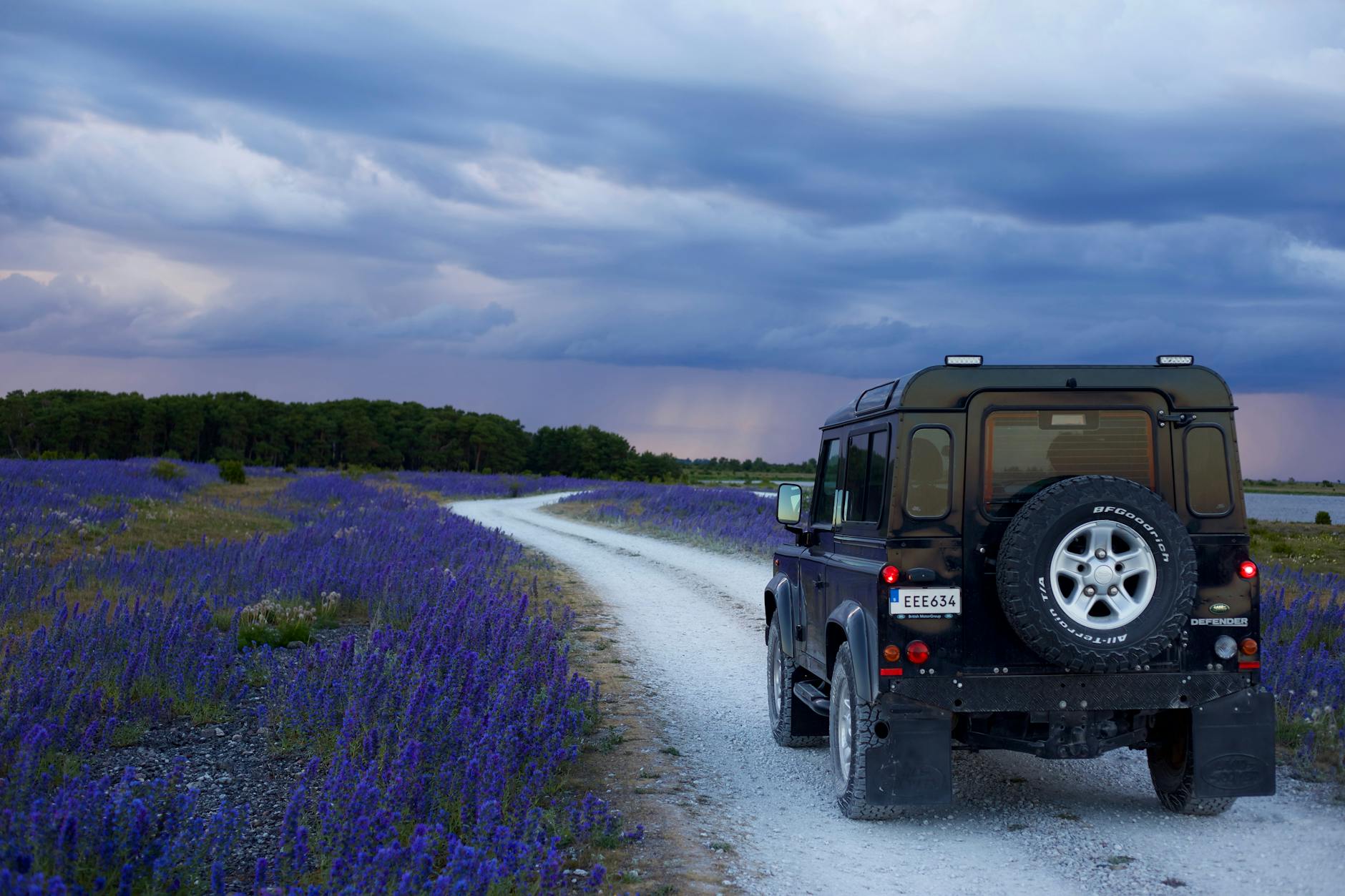
With that, they hastily packed their bags, loaded the car, and set off on an impromptu adventure. They drove through winding country roads, the sun’s golden rays filtering through the lush green trees, belting out their favorite tunes, stopping only for roadside attractions and delectable diners.
As they reached the picturesque town of Willow Grove, they stumbled upon a quaint bed and breakfast nestled amidst rolling hills. The owner, an eccentric but kind-hearted elderly lady named Mrs. Maple, welcomed them with open arms. “You must be tired from your journey,” she said, her eyes twinkling with warmth. “Come in, I’ve prepared some fresh lemonade.”
“We’re on the run from Mondays,” Maya confessed with a wink, and Mrs. Maple chuckled knowingly. “Well then, you’ve come to the right place, my dears. Here, every day feels like a Sunday.”
Their days were filled with laughter, exploration, and newfound friendships. They hiked through lush forests, discovering hidden waterfalls and secret clearings. They picnicked by sparkling streams, the sound of the water providing a soothing backdrop to their conversations. And they shared stories under the starry night sky, the twinkling lights above mirroring the joy in their hearts.
Meanwhile, back at the office, their absence raised eyebrows, but their colleagues couldn’t help but envy their spontaneous escapade. As they stepped back into the familiar hustle and bustle, a mix of nostalgia and determination filled their hearts. They were ready to face the challenges of the week, armed with the memories of their adventure and the strength of their friendship.
As the sun dipped below the horizon on Friday evening, painting the sky in hues of orange and pink, Alex, Maya, and Jake reluctantly bid farewell to Willow Grove. With hearts full of memories and souls rejuvenated, they returned home just in time for the weekend.
And though Monday morning loomed on the horizon, they faced it with a newfound resilience, bolstered by the strength of their friendship. They knew that with friendship and adventure, they could conquer anything—even the dreaded Mondays.
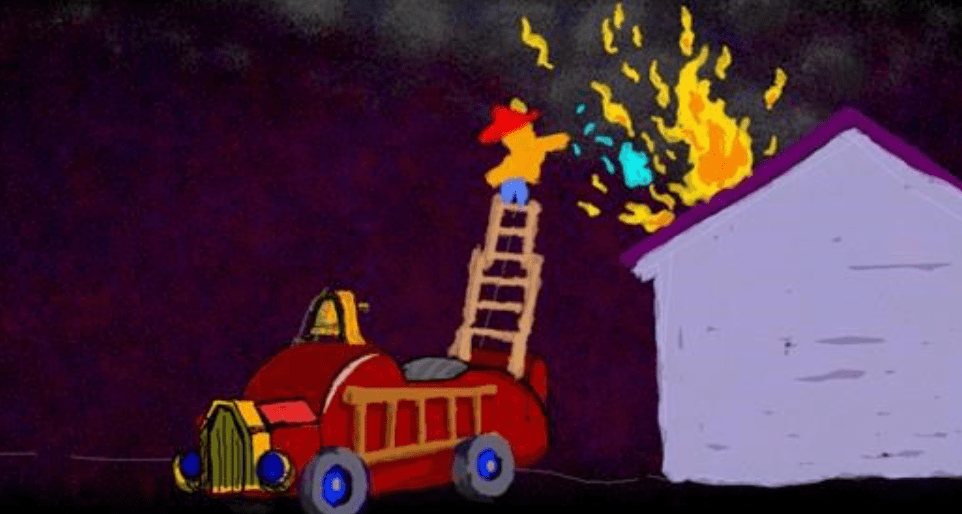
Fire Station 12 stood proudly in the heart of the bustling city, a symbol of protection and service. Named in honor of the fusion of Fire Stations 1 and 2, it held a legacy of bravery and dedication within its walls. At its helm was Hank, the seasoned veteran who had witnessed the evolution of firefighting firsthand.
Hank’s connection to the station ran deep, rooted in the early days when he and the Little Red Fire Truck epitomized heroism. Together, they had faced the fiercest blazes and emerged victorious, earning the community’s admiration. But as time passed, the dynamics shifted, and modernization took hold.
The Little Red Fire Truck, once a beacon of hope, now stood relegated to parades and backup duty. Hank, too, found himself on the sidelines more often, overshadowed by the younger firefighters and their state-of-the-art equipment. Yet, his dedication to the station never wavered.
Fate intervened on a warm afternoon when grass fires raged, and the station buzzed with activity. A desperate call for help echoed through the halls, signaling a mother and child trapped in a burning home. Hank knew he had to act swiftly with the other firefighters tied up on distant calls.
Without hesitation, he usurped the Little Red Fire Truck, a solitary figure against the backdrop of chaos. Ignoring protocol, he raced through the streets, the vintage engine roaring with renewed purpose. Upon Hank’s arrival at the scene, flames licked at the sky, and a crowd gathered, helpless.
Undeterred, Hank sprang into action, orchestrating a daring rescue. With precision born of experience, he deployed the aging truck’s capabilities, tapping into its reservoir of courage and resilience. Hank ventured into the inferno as the flames danced menacingly, emerging triumphant with the mother and child in tow.
The neighborhood erupted in cheers, and the world took notice, captivated by the spectacle of one man and his faithful companion defying the odds. Unbeknownst to Hank, his courage had transcended local acclaim, sparking a global wave of admiration.
But amidst the accolades, Hank remained grounded, his focus unwavering. As he extinguished the last embers of the blaze, a familiar figure approached – the Fire Chief, a mix of pride and relief etched on his face.
In a candid moment, the Chief revealed the bureaucratic hurdles that had hindered the station’s effectiveness, expressing a wish for more like Hank and his beloved Little Red Fire Truck. Yet, Hank, ever humble, pondered the Chief’s words, grappling with the shifting landscape of firefighting.
In the quiet moments that followed, as Hank bid farewell to another day of service, he found solace in the familiar embrace of the Little Red Fire Truck. With a promise to uphold its legacy, he embarked on the journey home, the echoes of the day’s heroics lingering in his heart.
For Hank, retirement loomed on the horizon, a bittersweet inevitability. But as long as the Little Red Fire Truck stood by his side, he knew their legacy would endure, a testament to the timeless virtues of courage, camaraderie, and unwavering resolve.
When a child gets lost in the forest a mother’s wisdom saves the day!
Once upon a time, in a small town located far away from the big cities between rolling hills and lush forests, there lived a young child named Alex. With their adventurous spirit, Alex was always eager to explore the world around them. But one sunny day, their curiosity led them into a problematic situation.
Alex ventured into the woods near their home on a warm summer afternoon. The air was thick with the scent of pine and earth, and the sunlight filtered through the canopy, casting a dappled pattern on the forest floor. With a sense of excitement bubbling inside them, they wandered deeper and deeper into the dense foliage, chasing after the fluttering wings of butterflies and the rustling of unseen creatures.
As the hours passed, Alex became utterly lost in the enchanting beauty of the forest. But as the sun began to dip below the horizon, panic started to set in. They realized they had strayed too far from home and had no idea which direction to go.
Frightened and alone, Alex’s heart raced in their chest. They called for help, their voice echoing through the trees. But there was no response, just the eerie silence of the forest at dusk. Tears welled up in their eyes as they sank to the ground, feeling a mix of hopelessness and fear.
Meanwhile, in the town, Sarah’s worry had transformed into a fierce determination. When her child didn’t return home at their usual time, she didn’t hesitate. She rallied a group of neighbors and friends, her unwavering love for Alex fueling their efforts.
With flashlights and determination in their hearts, they combed through the woods, calling out Alex’s name. Hours passed with no sign of the lost child, and fear gnawed at Sarah’s heart. Her worry turned into a desperate ache, her determination fueling her every step.
Just as she was beginning to lose hope, Sarah heard a faint cry in the distance. With renewed energy, she followed the sound, pushing through the underbrush until she stumbled upon a clearing where Alex sat, trembling and exhausted.
Relief washed over Sarah like a tidal wave as she rushed to her child’s side, her heart bursting with joy. Tears of happiness streamed down her cheeks as she whispered words of comfort and love, her voice a soothing balm to Alex’s trembling form.
Wrapped in their mother’s arms, Alex felt safe and protected, knowing that no matter their adventures, their mother would always be there to guide them home. And on that fateful day, Sarah’s unwavering love and determination saved Alex’s life, proving that a mother’s love knows no bounds. In the aftermath, they both learned the importance of staying close and the strength of their bond.
In the quiet corners of her home, Sarah sat her mind adrift in a sea of conflicting emotions. Her mother, once vibrant and robust, now frail and in need of constant care, sat in the living room, a mere shadow of her former self. It had been a long and arduous journey, filled with sleepless nights and endless worry. But now, Sarah faced the most challenging decision of all – the decision to place her mother in a nursing home.
“Mom, I need to talk to you about something important!”
“What is it Dear” Her Mother Asked?
The idea had lingered in Sarah’s mind for months, whispered in hushed tones by concerned family members and well-meaning friends. Each time, she pushed it away, unwilling to confront the reality of the situwation. But as her mother’s needs grew more demanding, Sarah knew she could no longer ignore the inevitable.
With a heavy heart, Sarah approached her mother, her hands trembling with uncertainty. “Mom,” she began softly, “I need to talk to you about something important.”
Her mother looked up, her eyes clouded with confusion. “What is it, dear?” she asked, her voice tinged with worry.
Taking a deep breath, Sarah explained the situation as gently as possible. She spoke of the challenges they faced and the toll it was taking on them. She spoke of the nursing home – a place where her mother could receive the round-the-clock care she needed, where she would be safe and well looked after.
Her mother listened quietly, her expression unreadable. When Sarah finished, there was a long silence, broken only by the clock ticking on the wall.
Finally, her mother spoke, her voice barely above a whisper. “I understand, dear,” she said, her words heavy with resignation. “I know you’re doing what’s best for me.”
Tears welled up in Sarah’s eyes as she embraced her mother tightly. “I love you, Mom,” she whispered, her voice choked with emotion.
“I love you too, dear,” her mother replied, returning the embrace with feeble arms.
In the following days, Sarah worked tirelessly to find the perfect nursing home for her mother. She visited countless facilities, asking questions, taking notes, and carefully weighing her options. When she finally found the right one—a place that felt warm and inviting, with caring staff and a peaceful atmosphere—she knew she had made the right choice.
On the day of the move, Sarah held her mother’s hand tightly as they walked through the doors of the nursing home together. There were tears and moments of doubt, but through it all, Sarah remained steadfast in her decision.
As she watched her mother settle into her new surroundings, Sarah felt a sense of relief wash over her. It wasn’t an easy decision, nor one she had ever imagined having to make, but in the end, it was the right one – for both her and her mother.
And as she kissed her mother goodbye, promising to visit often and never forget her, Sarah knew that, even though their journey had taken an unexpected turn, they would face it together, with love and understanding guiding their way.
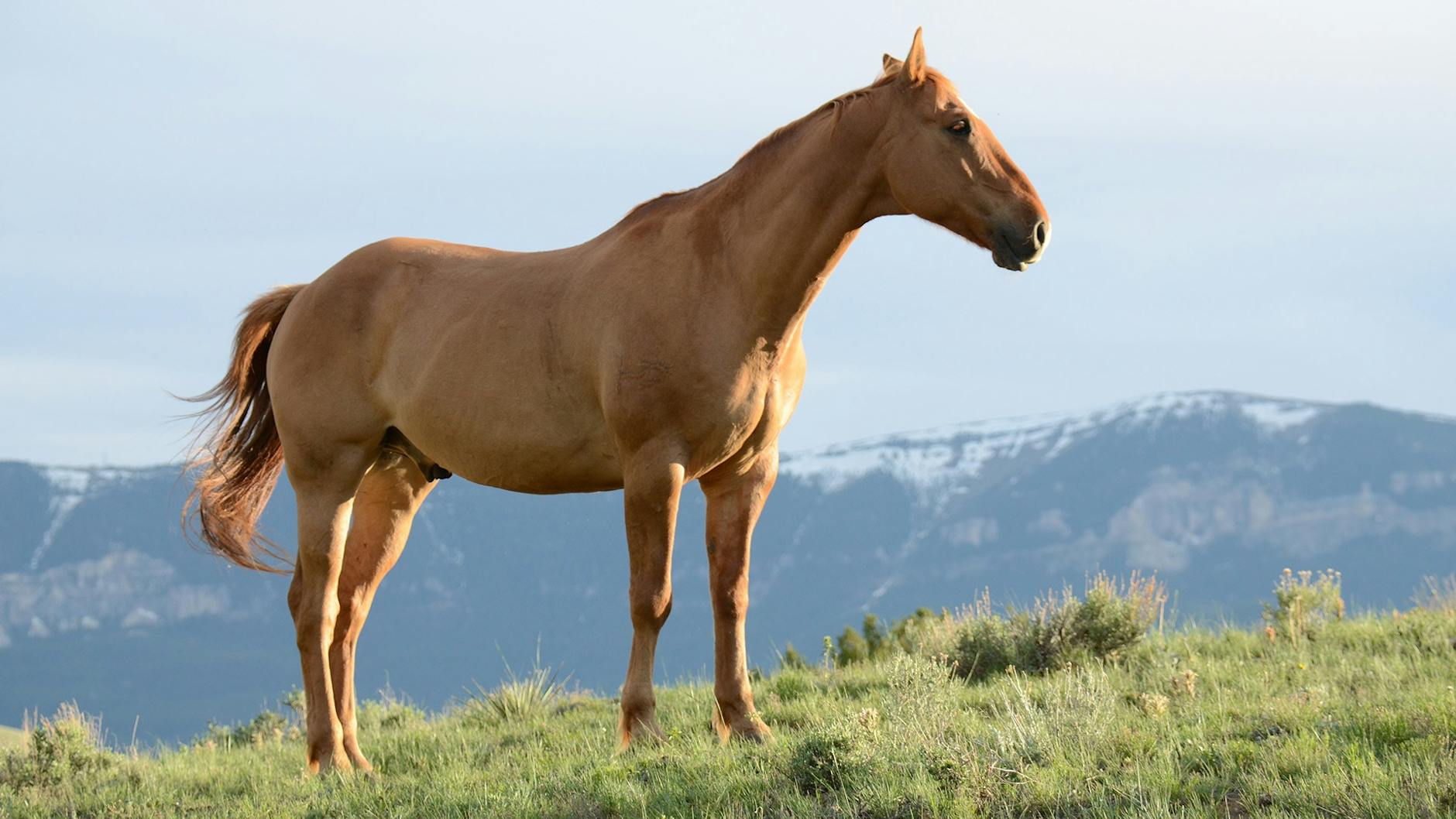
Bud was only 14 when he first met what would become his best friend for the summer. She had never been around people running wild in a pasture since birth. A 3-year-old Dunn filly, a horse commonly referred to in the region as a Red-River-Dunn for its color, a reddish tint coat with black stockings, mane, and tail. She had darker red hair around her mane and ears, slicked down her jacket, and features made for a beautiful horse.
Bud’s dad bought her at a horse auction, and he and Bud went to load Rose; she had never been touched. Getting a rope to place a halter on her was a rodeo of itself in the lots behind the auction house. Getting her loaded into a trailer was a site to see. She reared and fought, tearing the trailer’s tail lights, clearance lights, and various fixtures off the trailer before finally getting into the trailer, most likely tiring from repeated attempts to load. No whips or harsh attempts were made to get Rose into the trailer; she never saw such strange things and was frightened by their appearance.
After a ride home, Bud wondered if the new horse would still be standing; it was long after midnight when they arrived back at the farm. As they pulled into the barnyard, Bud’s dad backed the trailer into an empty pen and unloaded the horse. The father and son gave the horse some hay and water and a gallon of oats. Then, the two went to the house; it had been a long night.
A technique known as plow-driving or plow-reining
A few hours later, which most people would describe as the following day, Bud and his father were up with sunrise. That is the way you work on a farm. They went to do their chores. By the time Bud got to the barn where the new horse was, he was shocked to see his dad had a saddle on it and was behind it, plow-driving it. Plow-driving is a process where one runs a rope from each side of the bridal through the stirrups of a saddle to about ten feet behind the horse to teach it reign before mounting it and training it at riding; it is very similar to what you would see a farmer doing to guide his draw-horse behind a plow on a farm.
Bud had always heard of how his dad had a magic touch with horses but never witnessed the gift so many spoke about. What happened next would deepen the mystery even greater.
Bud’s dad saw him entering the pen and said,
“I am glad you are here; it is time for you to get on her. I think we will call her Rose.”
The father then proceeded to gather the reigns in his hands and walked up to steady the bridal and hold the horse steady. As he did, he angled the horse’s head, and Bud could see his father quietly speaking into the horse’s ear. Then his father said,
“It is ok now. You can get on.”
Bud stood there thinking that not 8 hours earlier, they had watched this horse, which a human had never touched, nearly destroy an endgate on a stock trailer, taking over an hour to load from a dock where it usually takes five minutes for the most problematic cases. But Bud trusted his dad and knew he would never place him in danger, so he went up. He was expecting to be going for an 8-second Bronco ride.
After Bud settled in the saddle, he first experienced what he would describe to friends and family as the Cadillac ride. Using just two leather reins from a halter and not a bridle, he clicked his mouth for Rose to go, and she began walking. He reigned her using the plow-rein system; he gradually began using neck touch reining by letting the rein on the neck tell the horse which direction you wanted it to go. Rose was incredibly talented, a fast learner, and became acquainted with people fast. On the first day, the father and son had the horse performing levels of training that typically take weeks or months for other horses.
Bud’s dad said, as the day progressed,
“Rose will be yours for the summer. We sold Sam, which was your horse, so I wanted to buy this green horse to get you something to work on.”
A green horse needs training in horsemanship, riding, leading, mannerisms, and behavior. Bud feared Rose would be a challenge if she had any flashbacks and wanted to return to her before human days.
The next day, Bud’s biggest concern was the end of school before Summer break. He had fourth-quarter tests to pass. Rose would have to hold until he had his schooling squared away, but he knew she’d be waiting for the summer that was about to come.
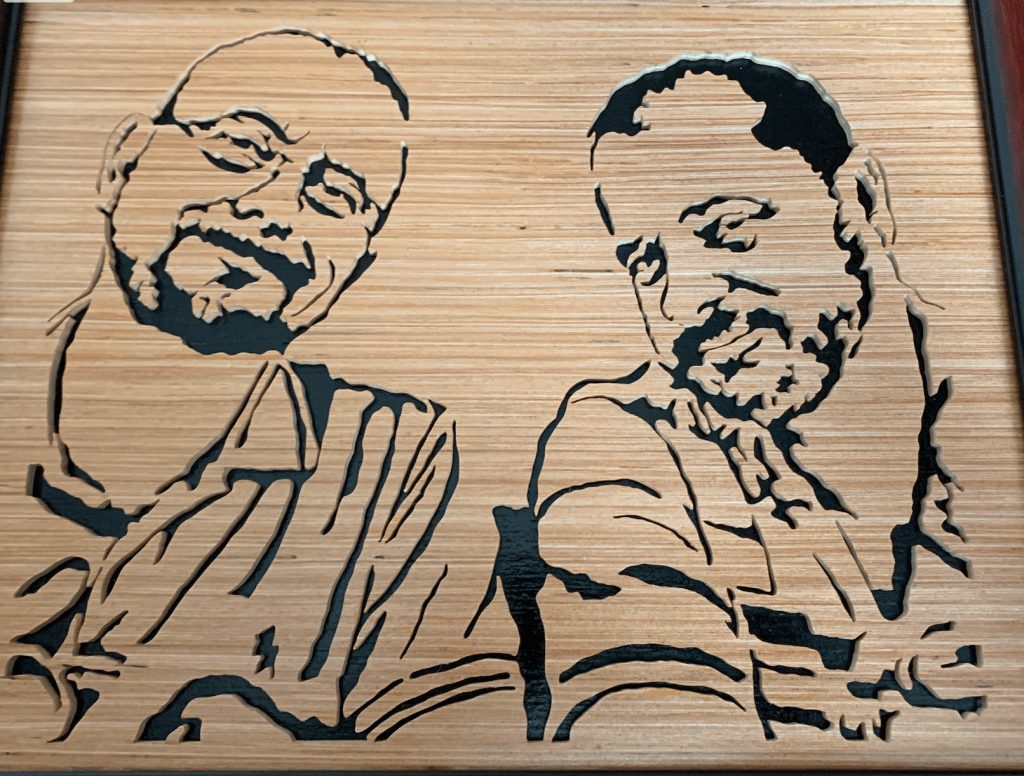
In the picturesque fusion of a town that captures the charm of Mayberry and the boundless frontier of Star Trek, two hearts found a love that defies time and space. Meet Ben and Steve, a couple whose love story is as enchanting as it is enduring—a beacon of hope and resilience that inspires all who witness it.
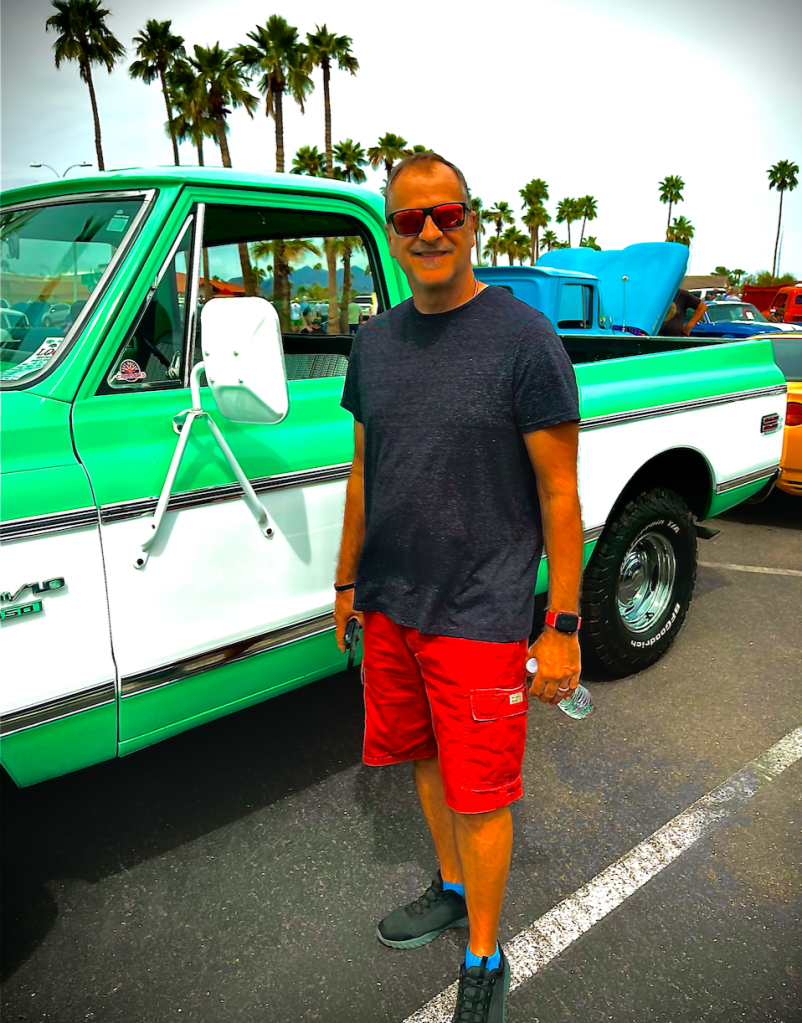
Ben and Steve
Steve, whose eyes sparkle like the constellations he admires, has always been a dreamer, casting his gaze toward the heavens with wonder and curiosity. On the other hand, Ben embodies justice and bravery, fearlessly chasing down thieves and reclaiming stolen cars. His badge shines brightly as a symbol of his commitment to protecting others.
Their worlds may seem galaxies apart, with Steve whispering messages to the cosmos through his microphone and Ben upholding the law with unwavering dedication. Still, these very differences make their love story so captivating. United by a love transcending boundaries, they lean on each other, their bond unbreakable, and their passion ever-growing.
Their love story began over four decades ago, a chance encounter that set the stage for a lifetime of shared dreams and unwavering commitment. Fourteen years ago, they leaped into matrimony, not just as a legal union but as a testament to their enduring love and resilience. In the face of uncertainty, it was a promise that their love would remain steadfast and accurate, and no matter what challenges lay ahead or rights that might be under threat, they would forever be united.
As the years have passed, their love has only grown stronger. They still greet each day with breakfast together, their laughter and companionship a testament to their enduring friendship and love. When future generations look back, marveling at how they managed to keep the flame of love alive for so long, the answer will be simple: it’s because of Ben and Steve and their unwavering passion and commitment to each other.
So, here’s to the kisses shared and the laughter exchanged, the dreams dreamed, and the challenges overcome. Their happiness is a daily reminder of the power of love, a beautiful reality that reminds us all to believe in the magic of true love. Cheers to Ben and Steve, whose love story inspires and enchants us all, proving that true love is timeless and everlasting.
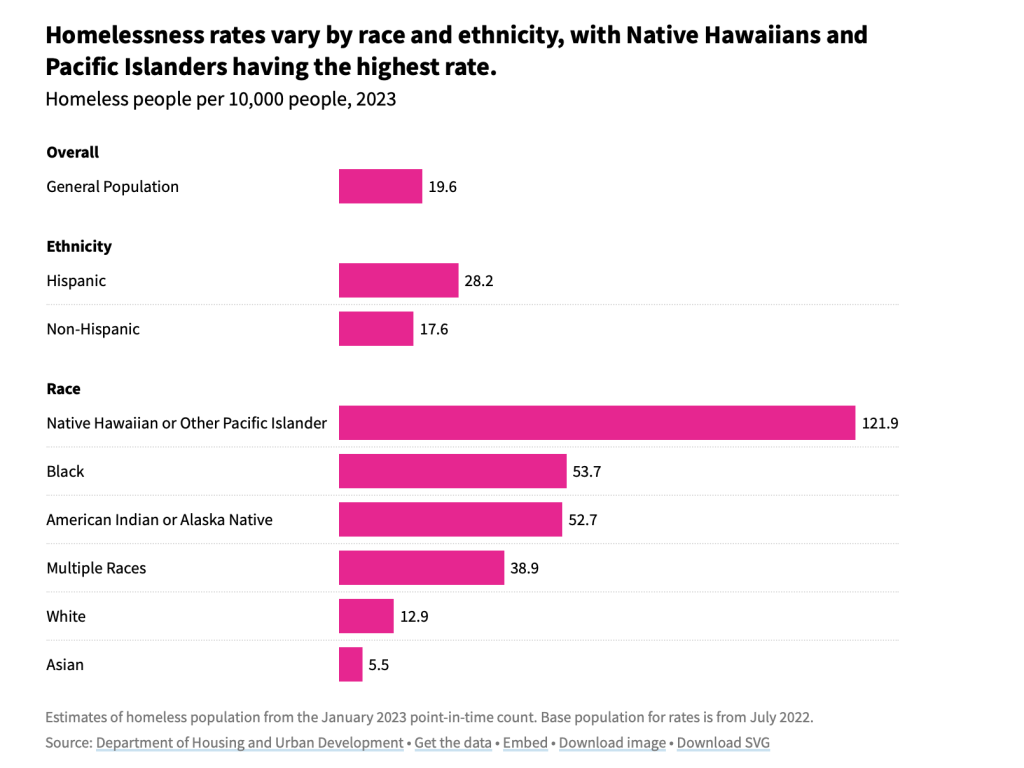
My household has always maintained a relatively liberal understanding of the country’s homeless situation. We disagree with outlawing their right to exist and have a place to live and shelter. They are, after all, doing the best they can with the current housing, employment, transportation, or other issues they face. Let them be!
That is what our stance has been all along, until we went out to breakfast this past weekend and the police department was herding a group along the main boulevard we take to our restaurant. They appeared to be the characters you don’t want to run into in a dark alley at night—or daytime, for that matter. For Christ’s sake, were they planning to put roots down behind our neighborhood. We have a wall around the place, but salespeople always jump in and try to knock on doors. We have security but are not the type that can handle these characters. Every winter, we have a homeless troupe that typically arrives and camps near a river, but they are the same people every year, and they are like the snowbirds who flow in and out of the area from the north. These new homeless characters were of a family we never experienced before.
And that is what is scaring so many in America. The police found a suitable place for the troupe to travel on to, and there were no more sights of them after that initial spotting. But that is different for many in the country. These homeless populations inundate their communities, and it is an issue they have never before had to face. What if they are following suit? How many more will come? What problems will they bring with them? Will the property values deflate wherever they plant a stake? Jesus, are they diseased?
California has spent billions of dollars trying to fix its homeless problem and has failed to find a solution. The issue is greater there now than ever. Affordable housing remains unobtainable to those needing it. California is asking people to build tiny homes in their backyards, garages, wherever there is space, and make them available to house people. The problem is, if folks don’t want them in their alleys, will they want them in their garages?
Locally in Phoenix, Arizona. My husband hired an unhoused person years ago and knew she was, although she had not disclosed so on her introduction form. He worked with her schedule to make sure she kept her employment, and within six months, she was able to get a studio apartment, moving from her car. She then told him. He said he knew all along, and that is why he had worked so hard to keep her going, and she turned out to be one of the best employees. Such an example may not be the case with every person, but it is an example of how we can attribute ourselves to improving the situation one person at a time.
While feeling uneasy about sudden changes in your community is natural, it’s important to remember that homelessness is not a choice for many people. They often face a variety of challenges, including mental health issues, substance abuse, lack of affordable housing, and unemployment, which can contribute to their situation.
As for the broader issue of homelessness, it’s clear that a comprehensive and compassionate approach is needed to address the root causes and provide effective solutions. This approach may include increasing access to affordable housing, expanding mental health and addiction services, and providing job training and employment opportunities for homeless individuals.
The Supreme Court now has the issue, and the Lord only knows what they will come up with. But no doubt Texas will pass a law ordering the execution of all homeless people after 30 days of being homeless.
Joe Biden has taken 382 vacation days off to date. That equates to over one full year on vacation out of 3 years as US president. Is he the most ineffective US president in history?
Answered by Benjamin via benandsteve.com
We take your word it was 382. I need President Biden’s schedule to confirm such details. Since the job is 24/7, 365 days a year, you never have any privacy, nor a day without less than twenty interruptions, even when on vacation. The vacation days alone don’t necessarily reflect a president’s effort. Being president is a demanding job that comes with its own set of challenges and responsibilities. While the president must take breaks and maintain a work-life balance, one should consider the number of vacation days in the broader context of one president over another president’s performance, decision-making, and leadership.
Every presidency has challenges and circumstances, and comparing one president’s vacation days to another does not give a comprehensive view of their effectiveness. When evaluating a presidency’s effectiveness, it’s also essential to consider the accomplishments, policies enacted, and challenges faced.
The information provided may be more accurate or presented better to portray a specific narrative. It’s always a good idea to fact-check information and consider multiple perspectives before forming an opinion.
For a fact, here’s what Biden didn’t do:
He never only started his work days around 11 am or 11:3AM, crisis or not.
Never made an ass out of himself on a global stage.
Never has had disregards to promises made during his campaign.
He Never has been impeached.
Biden didn’t get impeached a second time.
Biden never had to survive a Senate trial that most senators later – admit that they should’ve voted and should’ve been guilty.
Biden didn’t get indicted – FOUR TIMES.
It wasn’t Biden who tried overturning the People’s Will in the 2020 *Election by inciting an insurrection!
No Biden didn’t call the Georgia Secretary of State and attempt to *Strong arm him into creating 12,000 more votes in his favor.
Biden didn’t take papers from the national archives and refuse to return them to the United States Government. Going as far as to tell employees to hide the location of the boxes that contained them from authorities. Then, he agreed to return them and never did so. Then, having the stated allegations recorded on the video camera and denying it was real, lying to the FBI (also a crime.)
The list of things President Biden never did could go on, but it would be easier if you tuned into Court TV Monday through Friday.
Those are the differences you can make between Biden and Trump, which is just the start!
The documentary “1946: The Mistranslation That Shifted a Culture” delves into a controversial and thought-provoking topic that challenges conventional beliefs about the Bible and homosexuality. Directed by Sharon “Rocky” Roggio, the film examines the claim that the Bible originally did not mention homosexuality and that references to it were added due to mistranslation and misunderstanding of ancient Greek terms.
The film highlights the work of Christian scholars who delve into forgotten archives at Yale University to uncover the origins of this mistranslation. It argues that conservative Christians began to propagate this mistranslation in the 1970s to scapegoat the LGBTQ+ community and oppose their growing liberation movement.
Roggio, who identifies as a lesbian and is the daughter of an evangelical minister, engages in dialogues with her father throughout the film, attempting to find common ground and challenge his beliefs about homosexuality being a sin. This personal narrative adds depth and emotion to the documentary, as it explores the complexities of faith, identity, and acceptance within a family divided by differing views on sexuality and religion.
The documentary sheds light on the potential harm caused by misunderstandings and misinterpretations of religious texts, highlighting the real-world consequences faced by LGBTQ+ individuals who have been marginalized, discriminated against, and even persecuted due to these beliefs.
Overall, “1946: The Mistranslation That Shifted a Culture” offers a compelling perspective on a contentious issue, urging viewers to question and reevaluate long-held beliefs and encouraging dialogue, understanding, and acceptance.
Gay, Lesbian, Bisexual and Transgender National Hotline 1-888-843-4564. “The Gay, Lesbian, Bisexual and Transgender National Hotline provide telephone and email peer-counseling, as well as factual information and local resources for cities and towns across the United States.
Indeed, the economic conditions at the end of Trump’s term were challenging due to the pandemic, and Biden inherited an economy facing significant headwinds. The pandemic’s impact on the economy was unprecedented, affecting employment, consumption, and global demand.
However, public perception and political narratives often prioritize certain aspects of an administration’s performance while downplaying others. People’s opinions become shaped by various factors, including media coverage, partisan affiliation, personal experiences, and messaging from political leaders.
Trump had shut down the United States of America, a fact that nearly every American forgets today. They need to remember the closed stores, the empty shelves, the closed restaurants, the doctor’s office that had to refuse patients, hospitals that were so full no one could visit, and nursing homes where loved ones had to stand outside and wave to loved ones from the street, and Funeral Homes so full they were using rental refrigerator trucks to store bodies—the toilet paper shortages. That was Trump’s Administration. Biden had to clean it up. He received much blame for what must occur to get the nation back on track. But he got to work, and the country got back to life.
Here are a few points to consider when thinking about why public opinion might differ between Trump and Biden regarding the economy:
Partisan Bias: Political affiliations can heavily influence people’s views on the economy. Republicans may be more inclined to credit Trump for positive economic developments during his term and blame external factors like the pandemic for any downturns. Conversely, Democrats may be more critical of Trump’s handling of the economy and more forgiving of the challenges Biden faced upon taking office.
Messaging and Framing: Political leaders and media outlets shape public opinion. How economic data and policies get reported can influence people’s perceptions of the economy’s performance. Trump was known for touting positive economic indicators during his term, influencing public perception despite the broader challenges.
Another significant factor that shapes public opinion on the economy is personal experience. People’s direct economic situations, such as job loss, financial hardship, or financial gains, can profoundly impact their views. For instance, someone who experienced a job loss or financial hardship during Trump’s term might have a negative view of his economic policies. Conversely, if someone benefited from tax cuts or saw their investments grow, they might have a more positive perception. Complexity of Economic Issues: Economic conditions are influenced by a multitude of factors, including global trends, monetary policy, fiscal policy, and more. It can be challenging for the average person to parse through these complexities and assign credit or blame to a particular administration accurately.
In conclusion, public opinion on the economy is multifaceted, and partisan biases could dominate messaging, personal experiences, and the complexity of economic issues. While the data presented paints a challenging economic picture at the end of Trump’s term, public perception is by broader factors. And it is conveniently forgotten!
Florida has a new law that is designed to fill prisons.
‘We will catch you and we will prosecute you’: Florida Gov. Ron DeSantis is cracking down on retail theft – how he’ll ‘distinguish’ the state from ‘lawless jurisdictions’ https://t.co/ksBOXG9D7V via @flipboard
— benandstevecom Galaxy8News (@benandstevecom) April 17, 2024
Commercial Incarceration Facilities Prospering In Florida. Investments in private prisons contracted with Florida show favor with new laws designed to provide continous population on a rotational basis.
The growth and prosperity of commercial incarceration facilities in Florida have been a topic of debate and concern for many. Investments in private prisons have indeed increased in recent years, and this growth can be attributed to several factors, including new laws and policies that aim to maintain a steady population within these facilities.
One of the key issues often raised regarding private prisons is the potential conflict of interest that arises when profit motives intersect with the administration of justice. Critics argue that the financial incentives associated with running a for-profit prison may lead to practices that prioritize cost-cutting over the well-being and rehabilitation of inmates.
Proponents of private prisons, on the other hand, argue that these facilities can operate more efficiently than their public counterparts, potentially saving taxpayer money. They also point to contractual agreements that often include occupancy guarantees, ensuring a consistent revenue stream for investors.
However, concerns persist about the quality of care and services provided in private prisons, as well as the potential for abuse and neglect. Reports of overcrowding, inadequate medical care, and safety issues have raised alarm bells among advocates for criminal justice reform.
In Florida, the state has entered into contracts with private prison companies to house a portion of its inmate population. With new laws designed to ensure a continuous flow of inmates into these facilities, investors in private prisons may see this as a lucrative opportunity for growth.
It’s essential to approach the topic of private prisons with a critical lens, considering both the potential benefits and drawbacks associated with their operation. As the debate continues, policymakers, advocates, and stakeholders must work together to ensure that any expansion of private prisons prioritizes public safety, justice, and the well-being of inmates.














































 benandsteve.com