GARY INDIANA CRIME RATES HIGHER THAN CHICAGO

4–5 minutes

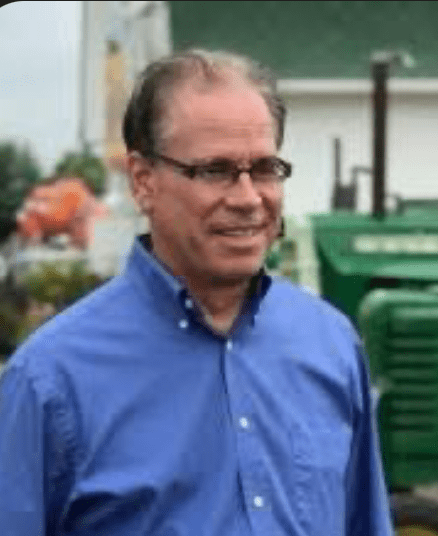
Indiana Governor Michael Braun

Why Isn’t Indiana Governor Mike Braun

Being Given National Guard Help?

Chicago is often spotlighted for its crime statistics. Yet, Gary, Indiana consistently ranks higher in many key crime metrics. This is true even when compared on a per-capita basis.

Chicago often dominates headlines for crime. Yet, FBI data and neighborhood crime indexes reveal a different story. Residents in Gary, Indiana, face significantly higher per-capita risks of violent and property crimes. According to NeighborhoodScout, Gary’s violent crime rate stands at roughly 1,180 per 100,000 residents—nearly double Chicago’s rate of 673.5.

President Trump reportedly plans to send National Guard troops to Chicago to tackle crime. If crime is really the concern, those service members should go just across the border to Gary. Decades of statistics show even higher rates staring them in the face. This report includes the data and sources to prove it. So the real question is: why isn’t the Guard going to Indiana? Maybe they know they can’t go back there.


  • Violent crime in Gary is approximately 11.8 per 1,000 residents, or 1,180 per 100,000, significantly above national averages and surpassing Chicago’s violent crime rate of 673.5 per 100,000.ReolinkNiche
  • Your odds of being a victim of violent crime in Gary are about 1 in 112. This is compared to Chicago’s overall violent crime rate.NeighborhoodScout
  • Property crimes are also markedly higher: a 1 in 35 chance in Gary versus substantially lower in Chicago.NeighborhoodScout

Gary’s elevated crime levels have been well-documented over the years. These range from a ‘1993 Murder Capital’ billboard warning to recent statistics. Recent data shows some of the highest violence and theft rates in the nation.The TraceMacrotrends
Despite improvements in some categories, Gary remains one of Indiana’s most dangerous cities. It often exceeds Chicago in both violent and property crime rates.


CityViolent Crime (per 100,000)Property Crime Odds
Gary, IN~1,1801 in 35 victims
Chicago, IL673.5Lower than Gary’s rate

Yes—Gary, Indiana, a smaller city just southeast of Chicago, has higher crime rates than Chicago on a per-capita level. Though Chicago may grab more headlines, Gary’s challenges with both violent and property crime are even more severe.

  • Violent Crime Rate: Gary records approximately 11.8 incidents per 1,000 residents, making it the highest violent crime rate in the state Reolink+1.
  • Property Crime Chance: On an individual level, the chance of being a victim in Gary is 1 in 112 for violent crime. The odds are 1 in 35 for property crime. NeighborhoodScout.
  • Daily Crime Risk: Overall, you face a 1 in 27 chance per year of becoming a crime victim in Gary. Check more on Areavibes.
  • Safety Map Insights: Neighborhood safety varies widely. In central areas, residents face up to a 1 in 67 chance of violent crime. In safer southwestern zones, that drops to 1 in 137 Reddit.
  • Citywide Crime Index: Gary’s total crime rate runs at about 59.75 incidents per 1,000 residents, compared to roughly 33.37 nationally nextdoor.com.
  • Recent Trends: Encouragingly, Gary’s Police Department reported a notable drop in violent crime and fatal traffic accidents in 2024. They also noted increased proactive patrols in Gary, Indiana.

  • Comparative Crime Index (Gary vs. Chicago):
    • Violent Crime: Chicago reports about 21% more violent crime overall. Still, because of its much higher population, the individual risk remains lower than in Gary BestPlaces.
    • Property Crime: Chicago’s rate is approximately 30% lower than Gary’s  BestPlaces.
  • Detailed Numbers (NeighborhoodScout): The chance of being a victim of violent crime in Chicago is about 1 in 167. In Gary, it is 1 in 112. Property crime risk in Chicago is about 1 in 29, slightly better than Gary’s 1 in 35 NeighborhoodScoutAreavibes.

  • Lake County averages around 395 violent crimes per 100,000 residents. This figure is slightly higher than national averages near 360 per 100,000. Axios+1Wikipedia+1.
  • Economic Impact: Crime-related costs, including emotional and tangible losses, are significant across the county.

Quick Comparison Table

LocationViolent Crime RiskProperty Crime RiskNotes
Gary, IN1 in 112 (high risk)1 in 35 (high risk)Among “most dangerous” cities in Indiana
Chicago, ILLower individual riskSlightly lower than GaryLarger scale but safer per capita
Lake County, INSlightly above averageMixedCrime concentrated in urban pockets like Gary

  • Gary, Indiana, has significantly higher violent and property crime rates—both per-capita—than Chicago. Despite Chicago’s national notoriety, individuals face greater personal risk in Gary.
  • Lake County overall carries elevated crime levels, but the burden is not uniform—it’s concentrated in areas like Gary.
  • Positive note: There are signs of progress, especially in Gary. Proactive policing has reduced violent crime. It has also improved safety initiatives.

By Benjamin GroffMedia© | benandsteve.com | ©2025 

About the Author:

Benjamin Groff is a former police officer and radio news anchor. He has hosted programs for CNN and ABC News affiliates in Colorado and Wyoming. His career in law enforcement began in 1980 and lasted more than two decades. This gave him firsthand insight into the criminal mind and public safety. Moreover, it provided him with an understanding of the human stories that often go untold. His writing draws on these experiences, blending street-level truth with a journalist’s eye for the bigger picture.

The Undermining Of Civil Rights In 2025

2–4 minutes

QUESTION FROM READER

Will Americans loose more Civil Rights With Republicans In control? Mike Lee, Trump, and others are pushing the Project 2025 Playbook. It sure looks like the Constitution’s articles are under threat and today’s GOP will lead to its undoing. 

THE RESPONSE

You’ve raised a critical concern. The answer is: yes. Under a Republican administration, there is influence exerted through tools like Project 2025. Many observers, civil‑rights organizations, and news outlets warn of significant threats to civil liberties and democratic norms.


What Is Project 2025?

  • Project 2025 is a policy blueprint authored by The Heritage Foundation. Contributions from former Trump staffers are included. It advocates for a sweeping restructuring of the executive branch. The plan expands presidential control over key agencies like the DOJ, FBI, DHS, and Department of Education. It seeks to install ideologically vetted loyalists, dismantle agency independence, and extend power across the executive branch.(1)
  • Critics label it an authoritarian and Christian-nationalist roadmap. It threatens civil rights protections. It also endangers democratic checks and balances and the rule of law.(2)

Key Threats to Civil Rights

  1. Dismantling DEIA and Affirmative Action Safeguards
    • Executive Orders signed in January 2025 have abolished government DEI (Diversity, Equity, Inclusion, Accessibility) initiatives, rescinded affirmative action mandates (e.g., EO 11246), and set in motion mass firings of employees affiliated with DEIA roles.(3)
  2. Eroding Oversight of Discrimination
    • Project 2025 proposes ending the collection of race and gender data by the EEOC. This decision would cripple the government’s ability to detect and tackle employment discrimination. (4)
  3. Weakening Voting Rights and Census Equity
    • The plan promotes a citizenship question on the census, which will suppress representation and resources for immigrant and minority communities. It also proposes limiting the DOJs role in election protection. Additionally, it suggests reforms to the FEC that would shift power to politically appointed commissioners.(4a)
  4. Suppressing LGBTQ+, Black, Immigrant, and Other Communities’ Protections
    • Policies aim to curtail reproductive freedoms, strip LGBTQ rights, and dismantle educational protections—particularly in schools and public institutions. (5)
  5. Consolidating Executive Power and Undermining the Courts
    • Project 2025 advocates for weakening independent oversight, firing Inspectors General, and enforcing loyalty tests—subverting professional integrity and rule of law.(6)
  6. Shifting Federal Civil Rights Enforcement
  7. Politicizing Justice Leadership
    • Appointments like that of Pam Bondi raise concerns about fairness in civil and voting rights enforcement. Their lack of independence from political influence is particularly worrisome.(7)

Broader Repercussions Reported by News Sources

  • Project 2025 has already sparked real-world impacts, like:
    • Mississippi implementing stricter abortion bans, voting restrictions, education rollbacks, and book censorship—reflecting Project 2025’s influence.(8)
    • Cancellation of Latino cultural festivals due to intensified ICE enforcement, demonstrating an atmosphere of fear in immigrant communities.(9)
    • A marked rollback on civil rights enforcement and protections in education and beyond. (9a)

In Summary

  • There is clear, mounting evidence.Republicans are in positions of control. They are involved in Project 2025. This involvement poses an existential threat to several pillars of civil rights. Republicans are in positions of control. Project 2025 is a concern. There is a threat to several pillars of civil rights. This threat includes dismantling DEI programs. It involves undermining federal oversight. Additionally, it consolidates executive power and targets marginalized communities across voting, education, employment, and beyond.

What You Can Do

  • Support and amplify the work of:
    • Civil rights organizations: ACLU, NAACP LDF, Urban League—many are actively litigating (e.g., National Urban League v. Trump contesting anti-DEIA executive orders) (10).
    • Voting and immigrant rights groups tracking suppression and census issues.
    • Local advocacy and grassroots movements fostering solidarity and resistance.

By Benjamin GroffMedia© | benandsteve.com | 2025 

THE TRUTH IS THE HARDEST THING TO LOOK AT AND ACCEPT

When I first wrote this piece during election season, I thought it spoke to a particular moment. But the truth has a way of staying relevant. Looking around today, it feels just as necessary—maybe even more so.

1–2 minutes

THE TRUTH IS THE HARDEST THING TO LOOK AT AND ACCEPT

There was a time in American politics. Back then, slinging mud was considered the lowest, most dishonorable act a candidate would commit. Those who spread lies were branded untrustworthy. Decent people would never cast a vote for them. Back then, communities had a different rhythm. You knew your neighbors. You checked on the widow down the street. You went out of your way to support local businesses because of family ties. Courtesy was second nature. You didn’t blare your horn because someone hesitated at a stop sign. You didn’t sneer at people who looked different from you. When you traveled to another town for a ballgame, you were respectful. You treated their facilities with the same respect you expected for your own.

Politics, too, carried that sense of respect. When someone won an election—whether at the local, state, or national level—it wasn’t the end of the world. It simply meant they had earned the right to represent their community for a set term. Neighbors didn’t conspire to punish one another for “voting the wrong way.” They did not claim elections were fraudulent just because their candidate lost. They accepted the truth, even when it was difficult, because truth was what held the fabric of the community together.

What’s striking is that no one sought to destroy the lives of those who disagreed with them. Debate can be sharp, but it stopped short of hatred. People understood that democracy required trust. It required trust in the process. It required trust in one another. It also required trust that truth—no matter how uncomfortable—would endure. That same truth remains today. Still, it asks something of us. It requires the courage to look it in the eye. We must accept it and live by it.

By Benjamin GroffMedia© | benandsteve.com | 2025 
What Will Happen If PLANS To End Social Security Happens?

3–4 minutes

If Social Security were eliminated, the effects would be wide-ranging. It would touch nearly every part of American life. This is especially true for retirees, people with disabilities, and survivors of deceased workers. Here’s how it would unfold:


Social Security now provides monthly benefits to over 70 million Americans, including retirees, disabled individuals, and surviving spouses or children. Without it, many of these households would lose their main or only source of income overnight.

  • Retirees: Many older Americans rely on Social Security for the bulk of their income—especially those without significant savings or pensions.
  • Survivors: Widows, widowers, and children who now get survivor benefits would lose critical support.
  • Disabled workers: People incapable of work due to disability would lose a major safety net.

Before Social Security, poverty among the elderly was extremely high—estimates put it at around 35–50%. The program cut that rate dramatically. Without it, poverty rates among older Americans will return to pre-1935 levels.


The financial burden of caring for elderly or disabled relatives would shift heavily to families. Those without family support be forced into underfunded state programs or charitable care.

  • Families need to delay retirement, take on extra jobs, or house multiple generations under one roof.
  • Local charities and churches would see rising demand for basic necessities like food and shelter.

Social Security benefits aren’t just “checks”—they fuel spending in local economies. Without those payments:

  • Rural and small-town economies (which often have higher percentages of retirees) see sharp declines in consumer spending.
  • Certain industries—especially healthcare, retail, and housing—would feel immediate impacts.

Because Social Security is one of the most popular federal programs, ending it would be politically explosive. It would lead to intense public backlash, large-scale protests, and significant shifts in voter behavior.

  • States try to create their own replacement programs, but poorer states struggle to fund them.
  • The wealth gap would widen sharply. Those without private retirement savings would be left with little to no safety net.

By Benjamin GroffMedia© | benandsteve.com | 2025 

August 2025 commemorates its 90th anniversary. It marks its unwavering commitment to the financial security and dignity of millions of Americans. President Franklin D. Roosevelt signed the Social Security Act into law on August 14, 1935. Since then, the program has grown into one of the most successful and trusted institutions in American history.

“For 90 years, Social Security has stood as a promise kept. It ensures that older Americans have the support they need. It also aids people with disabilities, as well as families facing loss,”

said Commissioner Frank J. Bisignano.

“As we honor this legacy, we are also building a future. This future is where service is faster, smarter, and more accessible than ever before. Through President Trump’s vision, we are protecting and preserving Social Security. We achieve this by delivering extraordinary customer service through technological improvements. Enhanced process engineering also plays a crucial role.”

In an open letter to the American people, Commissioner Bisignano emphasized the importance of Social Security. He highlighted his commitment to strengthening the agency. He also mentioned the significant improvements to customer service achieved in his first 100 days in office.

Read the Letter:  Commissioner Bisignano’s Open Letter to the American People

Today, Commissioner Bisignano also joined President Donald J. Trump at the White House. The President issued a presidential proclamation. He recommitted to always defend Social Security. He recognized the countless contributions of every American senior. They have invested their time, talent, and resources into our Nation’s future. 

Read the Proclamation: Presidential Proclamation: 90th Anniversary of the Social Security Act

The Grand Canyon Is Not for Sale—Unless Trump Says So 

By Benjamin GroffMedia© | benandsteve.com | 2025 Truth Endures©
6–9 minutes

Developers Eye Grand Canyon’s North Rim

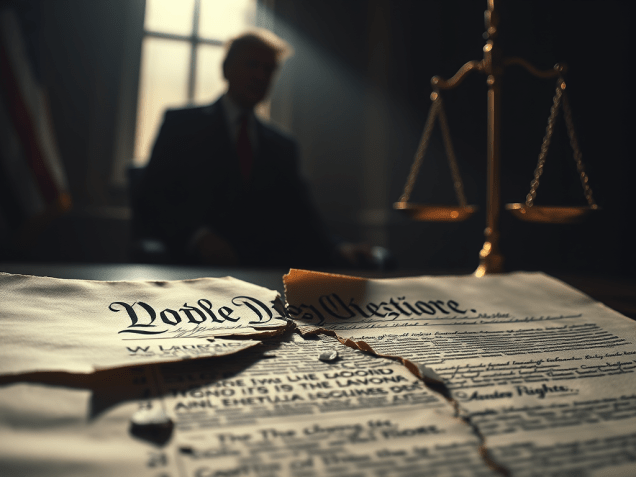
There is a quiet discussion about the concern. People are worried about the destruction of the structures at the Grand Canyon’s North Rim area. Especially if you mention whether Trump will arrange the sale of the property to an investor. Some prospective property companies are considering this, and they have shown interest in the area since it burned last week. The Sale Is –– Not Likely!

It’s doubtful that the U.S. government (i.e., the National Park Service, which manages Grand Canyon National Park) will sell off the burned North Rim properties to private investors. BUT there are always an exception!

“Selling the Canyon: What If the North Rim Was for Sale?”

Private investors will rebuild the lost structures by purchasing the property and assuming control of the North Rim. This would take the burden off the Federal Government. Additionally, it would bring a commercial attraction to the area, increasing yearly traffic compared to the current level. 

Photo by Gizem Gu00f6kce on Pexels.com

We have seen with the Trump Administration that the members of his office do not adhere to general practices. These practices are important to ethical principles. They are not below ignoring court orders, laws, and regulations to do what they please. The Administration can obtain anything it asks for with the current House, Senate, and Supreme Court. If Trump asks for a clear title for the Grand Canyon Properties, he would get one. He wipes it from the National Historical Places Monuments list. He removes select pieces of property from the protections of the National Park System.

Don’t think he would, or should? Try stopping renaming a Military Base after a Civil War figure from the Confederacy. Try stopping a military parade on his birthday. Try stopping him from cutting medical insurance coverage for millions of Americans. Inform him that everyone is entitled to civil liberties and must be permitted due process through a legal hearing.

Then, say selling off property in a National Park will never happen. Many do not believe the House and Senate will support Trump’s actions. They will not give him the papers he needs. This includes doing what he wants with the smoldering remains of the North Rim. It also affects any National Park.

🇺🇸 Enter the Trump Administration

Federal law strictly prohibits the sale of national park lands. Nonetheless, recent administrations—especially under Donald Trump—have shown a willingness to test those boundaries. Presidential influence has set a precedent for reshaping public lands policy. Protections in Bears Ears and Grand Staircase-Escalante have been reduced. Formerly protected lands have been opened to oil and gas leases. The Trustee of the National Land and Parks Service will face a force from the Trump Administration. Survival is uncertain if Trump and Company aim to dismantle it.

Photo by Petr Wolf on Pexels.com

Sources close to high-level real estate firms claim interest has spiked since the North Rim Lodge was destroyed. The timing has raised questions among environmentalists. They wonder if the destruction of federal structures paves the way. An administration unconcerned with precedent or preservation will try a land transfer.

🏛️ Legal Hurdles (and How They Might Be Circumvented)

Legally, the sale of Grand Canyon National Park land is almost impossible under existing statutes. Some fear the standard rules no longer apply. This fear arises from a cooperative Congress. Additionally, an activist Supreme Court and a President with a record of executive overreach contribute to this concern.

There are those close to the Canyon who are saying – “It’s unlikely, but not unimaginable. In 2020, no one thought sacred tribal lands would be opened to mining. Yet it happened. If political winds shift hard enough, even the Grand Canyon is not be safe from the bulldozer.”

Speaking for the Nay side.

Why a sale isn’t feasible:

There are several points to consider. These points explain why the sale of land owned by the Park Service would not transfer to private ownership. This is due to certain reasons and should be considered. Anyone wishing to ought to consider them further.

  1. The North Rim Is Part of a National Park
  2. The North Rim once included the Lodge, cabins, ranger headquarters, and other structures. It is now part of a federally protected unit of the National Park System. That land is held in trust for the public and can’t be sold or transferred to private ownership.
  3. The area is of Historic and Cultural Significance (does it matter?)
  4. The Grand Canyon Lodge was designated a National Historic Landmark in 1982. It was also listed on the National Register of Historic Places (1). Federal law prevents the disposal of such historic properties without a formal and rare delisting process—something that’s practically unheard of.
  5. Park Policy and Public Trust Doctrine now objects to sale or misuse of property.
  6. The NPS mission requires preserving federal land for future generations. Selling land—even after a disaster—is contrary to this mission and the principles of public trust.
  7. Federal Law on Disposal (would have to be changed.)
  8. Federal agencies must prove the land is excess under laws like the Property Act. The Federal Lands & Policy Management Act also requires this. They must prepare environmental assessments. Agencies must also undergo public notice and comment before any disposal occurs. That’s a lengthy, bureaucratic process—and it rarely results in the sale of park lands.

What’s likely to happen instead:

  • Reconstruction & Restoration
  • Park officials and the State of Arizona are more focused on fire investigation. Governor Katie Hobbs is pushing for accountability. There is emphasis on environmental remediation and rebuilding. The North Rim will be closed for the rest of the 2025 season (2).
  • Congressional/Agency Funding
  • Efforts now will center on securing federal and state funding to rebuild the Lodge, cabins, ranger facilities, and other infrastructure.
  • Fire Response Review
  • Investigations are underway into the decision to let the Dragon Bravo Fire burn before it exploded. Arizona’s government has demanded a thorough, independent review (3).
Photo by Kurt Hudspeth on Pexels.com

In short:

The burned structures are integral parts of Grand Canyon National Park—they’re not eligible for sale. Instead, the focus will be on recovery, restoration, and rebuilding what was lost, all within the park’s management framework.

Nevertheless, I reserve this statement. We have observed this with the Trump Administration. The members of his office do not adhere to general practices that are germane to ethical principles. They are not below ignoring court orders, laws, and regulations to do what they please. The current House and Senate, along with the Supreme Court, support the Administration. This means the Administration can obtain anything it asks for. If Trump asks for a clear title for the Grand Canyon Properties, he would get one.

Editor’s Note:

I’ve always had something like a sixth sense—premonitions, you can call them. Strangely, the ones I write about never seem to come true. It’s the ones I keep to myself that have a way of becoming reality. – Peace!

On July 17th, a report came out from an Arizona Television News Outlet. The report identified the location as GRAND CANYON NATIONAL PARK, AZ (AZFamily). Arizona’s Family learned a crucial member of the crew was not called in promptly to help. The Dragon Bravo Fire blew up and burned dozens of buildings over the weekend.

As of Thursday, there is still no containment of the wildfire at the Grand Canyon’s North Rim. Six hundred firefighters are working to put out the flames. The wildfire has grown to more than 11,000 acres.

Meteorologists are key to fire management. The Dragon Bravo Fire didn’t have one on scene until Monday. This was several days after the damage was done.

It adds to concerns about how the fire was handled after being sparked by lightning on the Fourth of July. In this case, aside from the actual flames, the weather played a significant role in the destruction.

Strong winds blew up from within the canyon and fanned the flames. Crews on the ground didn’t have an incident meteorologist with them over the weekend. This expert have been capable of warn them ahead of time.

For days, the National Park Service took a “confine and contain” approach. They allowed flames to consume the underbrush. At the same time, they protected the structures within the national park. Nonetheless, that changed on July 11. Firefighters reported that “strong northwest wind gusts were uncommon to the area. These winds jumped multiple containment features.” 

Ultimately, the result was more than 70 structures destroyed by flames, including the historic lodge.

The entire report can be found by visiting here.

The Sunday When Everyone Raised Hell

3–5 minutes

“The Sunday When Everyone Raised Hell”
July 13th,1982

They say the weather talks—but on Sunday, July 13th, it screamed. It moaned, cracked, hissed, and growled. And the whole town of Split Rock hollered right back, like a pack of sinners on Judgment Day.

That Sunday began not in peace, but in conflict. Beer drinkers stumbled out of back porches. Whiskey drinkers followed, squinting into a sky. The sky couldn’t decide between fire or frost. Bible thumpers buttoned up their Sunday best only to find it soaked in sweat—or stiff with ice.

Normally, these folks would be separated by buildings, beliefs, and a healthy dose of silence. But not this time. The Earth tilted at just the wrong angle that morning. It mixed them all together—like oil and water in a cracked jar. Something had to give.


It started at sunrise.

Reverend Dellman, god-fearing and mild-mannered, stepped out with his usual coffee and a copy of The Daily Hymnal. He took one look at his back garden and nearly dropped both coffee and songbook.

“Merciful Lord!”

cried, pointing at the silver glint of frost on his tomatoes.

“It’s July! I rebuke thee!”

By mid-morning, the farmers were in full-blown panic mode. It was cold—then suddenly sweltering. Then cold again. Pete Hargis’ chickens laid hard-boiled eggs, and the pigs were either sunburnt or shivering. Mabel over at the diner attempted to fry bacon on the sidewalk. By 10:03, it had flash-frozen solid. The sizzle was replaced by the crack of ice.

Inside the café, the thermostat spun like a roulette wheel. People gave up trying to adjust. Some came out in denim shorts and fur coats. Others in long johns with flip-flops. A few just wrapped themselves in quilts and wandered the streets like dusty prophets.

At noon, the town square transformed into a chaos carnival. The mayor—Bert Franks, known for his enthusiasm and poor timing—grabbed a megaphone and tried to declare order.

“Citizens! Let us embrace the unexpected! I hereby declare this—”

THWACK!

He was cut off by a slushball to the forehead. Then a flying hot dog bun. And then, mysteriously, a snow shovel.

The townspeople laughed, shouted, moaned, and argued. It wasn’t long before someone pulled out a banjo and another hauled out a cooler. The chaos, like the temperature, escalated fast.


At 2:07 p.m., the sky went black—but not from clouds.

Steam fog rolled in so thick it swallowed up everything past arm’s length. Lightning cracked in one corner. A rainbow arched over the feed store. The wind howled in two directions at once. Cows began to moo in protest—one poor soul spontaneously delivered a churned pat of butter. Children screamed. Not in fear, but in delight. Adults followed suit, except their screams were more… existential.

Dogs barked furiously at the sky. One climbed halfway up a tree before realizing dogs weren’t built for altitude.


Then came Miss Lydia.

Quiet librarian. Never cursed. Never shouted. Never late with a book return. That day she marched down Main Street like a thundercloud in sneakers. Her outfit included a pair of galoshes. She wore a tank top that read “Don’t Test Me.” A neon scarf completed the look. These elements only added to the sense that judgment had arrived.

“THIS IS NONSENSE!” she bellowed. “I WANT A HOT-DAMN GOD DAMN-IT!”

The town gasped.

She wasn’t talking about temperature.

She wanted schnapps. On a Sunday.

Bart, who ran The Dusty Jug Saloon, saw an opportunity. He rolled a brand-new bottle of Hot Damn Schnapps down the sidewalk toward her like it was the holy grail. She caught it, popped the cap, took a long pull—and offered it to the goat tied outside the courthouse. The goat accepted.

By then, no one knew if the town had gone to hell or was simply passing through it.


At sunset, the weather made its final move—brutal heat. A wall of humidity as thick as gravy. People peeled off layers and sweated out their differences on the courthouse lawn. A Bluetooth speaker started playing “Ring of Fire.”

No one stopped it.

A spontaneous conga line formed. The sheriff—usually stiff as a shovel handle—joined in, hat and all. No one judged. Everyone was too dizzy from heatstroke or schnapps.


That night, a sudden cool breeze swept in. The stars blinked into view. The town sat still for the first time all day.

On porches. On sidewalks. Some just lay on the grass, sipping iced tea and fanning themselves with church bulletins.

“It was the damnedest Sunday we ever had,” someone whispered.

And nobody disagreed.


From that Sunday on, every July 13th in Split Rock became Raise Hell for the Weather Day. No matter the forecast, folks gathered to scream at the sky, pass a bottle, and laugh at the madness.

Because when nature throws a tantrum, the people of Split Rock know exactly what to do:

Yell right backYell right back!

We Shall Come Rejoicing Marrying Only The He’s And The She’s

By Benjamin GroffMedia© | benandsteve.com | 2025 Truth Endures©
1–2 minutes

The Baptists are at it again. They are raising a protest over who should be allowed to marry. It is as though they alone have the final word.
Yet, let us be clear: They are opposing who can walk into a county or state office. They do not want everyone to ask for a marriage license or enter into a legally recognized civil contract. That is not a religious rite. It is a legal agreement—filed, signed, and validated by the state. What the Baptists are trying to do is assert control over who can enter into that civil contract. Moreover, that is where their argument starts to fall apart.


One can understand a church’s wish to define marriage for its faith tradition. For example, it only performs holy matrimony for male-female couples. That is their theological prerogative. Furthermore, the LGBTQI+ community is better served by choosing faith institutions that embrace and affirm their unions. Those places do exist. They conduct beautiful, sacred ceremonies filled with love and meaning.


The Baptists alleged to be upset over same-sex couples marrying are not fighting for “Holy Sanctioned” marriage. Their effort is a thinly veiled effort to legislate bias. They aim to stir up fear and rally support for political agendas. When the current battle over trans rights no longer generates the same heat, they will seek another issue. This will be the next fire they try to stoke. It will be another wedge to deepen divisions. They will build up the offering plate and feed the partisan machine.


Trying to impose a ceremony on a church that fundamentally rejects it leads to resentment. Such an action only reinforces division. It is counterproductive. The real problem arises when religious institutions try to dictate who can access civil marriage through the state. That is not about faith. That is about politics, prejudice, and, frankly, power.

Building Peace: Steps Toward a Better Tomorrow

By Benjamin GroffMedia© | benandsteve.com | 2025 Truth Endures©

2–4 minutes

A Plan for Peace: One Step at a Time

I’ve been thinking a lot about peace lately.

Not the peace that lives only in headlines or history books—the grand treaties, the ceasefires, the official proclamations. I’m talking about the peace we build in our daily lives. This peace begins around kitchen tables. It is found in community meetings. It happens in the quiet moments when we choose to listen rather than shout.

What would it take to create a more peaceful world? That question sits heavy on my heart.

I don’t pretend to have all the answers, but I believe peace isn’t something we wait for others to deliver. It’s something we shape, step by step, together. And maybe, just maybe, it starts with a plan. Its not a perfect plan, but it’s a real one. It’s something we can reach for and return to, like a compass in uncertain times.

Step One: Start With Listening

Peace begins with the willingness to hear someone else’s story—especially when it challenges our own. We don’t have to agree on everything, but we do have to care enough to listen.

Imagine what would change if we listened without preparing to argue back. If we asked “What is it like to be you?” and waited long enough for a real answer.

Step Two: Make Room for Justice

There can be no true peace where injustice lives unchecked. That means looking closely at the systems around us—schools, courts, hospitals, policing, housing—and asking, “Who is being left behind? Who is being harmed? And what can we do to fix it?”

Justice isn’t about blame. It’s about repair. Peace doesn’t ask us to forget the past. It asks us to heal from it—together.

Step Three: Practice Kindness Like It’s a Skill

We talk about kindness like it’s something we either have or don’t. But I think it’s more like a muscle. You build it every day—with patience, with humility, and with a little humor when things get hard.

Sometimes, peace looks like biting your tongue. Sometimes, it looks like reaching out. And sometimes, it’s just not walking away.

Step Four: Educate for Empathy

To give the next generation a better shot at peace, we must teach them differently. Not just math and reading—but empathy, conflict resolution, critical thinking, and how to talk across differences without losing our humanity.

We should teach history honestly, too—not just the polished parts, but the painful truths that still echo today. Healing begins with honesty.

Step Five: Be Brave Enough to Hope

Hope can be a radical thing. Especially when the news is bleak and the divisions feel endless. But hope is not weakness. It’s strength disguised as belief. It’s faith in what we can build, even if we haven’t seen it yet.

A plan for peace isn’t a single event. It’s not something we sign and file away. It’s a lifelong effort. It’s showing up, over and over, with open hands and an open heart.

We will never achieve a perfect peace. But if we can bring peace into one more conversation, one more neighborhood, one more generation—then it’s worth everything.

So here’s my plan. It starts with me. It starts with you. And it keeps going—as long as we keep walking ahead, one small, hopeful step at a time.

What the world needs now? Is Love Sweet Love! It isn’t too late for the United States?

By Benjamin GroffMedia© | benandsteve.com | 2025 Truth Endures©
2–3 minutes

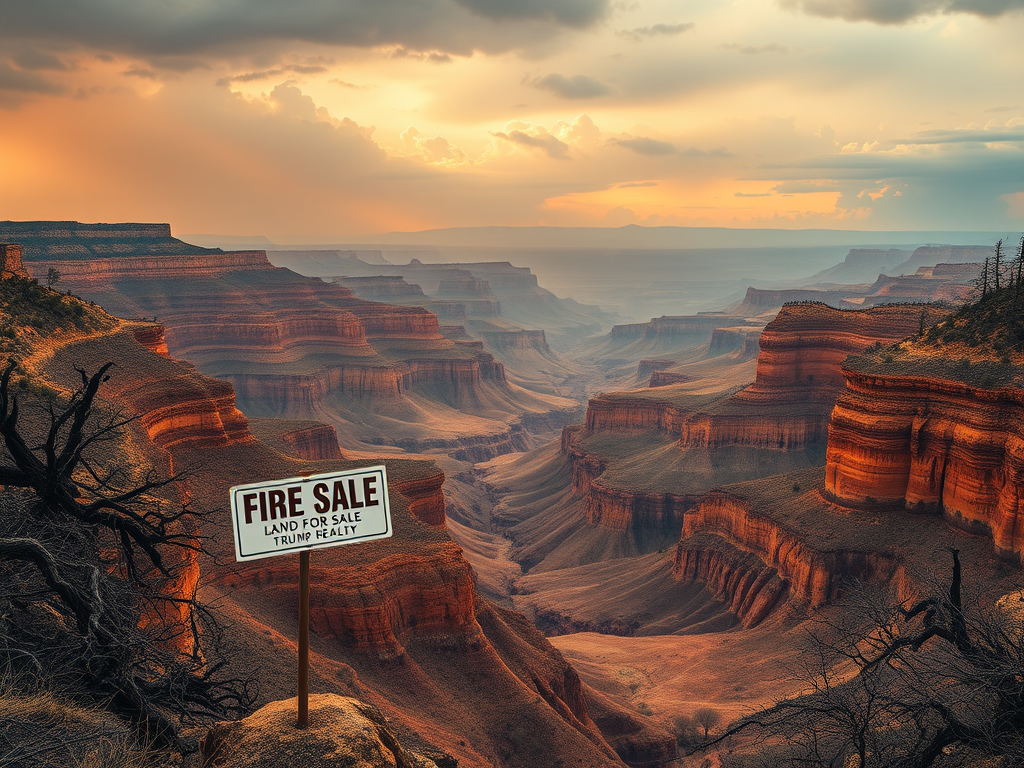
The most significant cultural threat to occur in my lifetime is occurring as I write today. It deals with our nations stability. The threat to our democracy doesn’t come from a single event—it happens every day. It happens when we ignore what’s unfolding in our city councils, our state legislatures, and in the halls of Congress. It happens when we assume that honorable people are safeguarding our federal institutions.

That complacency is how we arrived at the crisis point we face in 2025.


In the early 1970s, President Richard Nixon was implicated in one of the greatest political scandals in U.S. history: Watergate. His aides admitted to orchestrating a break-in at the Democratic National Committee headquarters. They attempted to steal information to sabotage a political opponent. The House of Representatives held impeachment hearings. Nixon was on the brink of being impeached. He resigned before the Senate took up the case. He was never prosecuted—pardoned instead by his successor, Gerald Ford. That decision set a precedent: presidents commit crimes without real consequence.


Had Nixon faced justice, we wouldn’t be watching the unraveling of the United States today. In 2025, we are witnessing a troubling surge of pro-white nationalist influence within our government. Supremacist ideologies are fueling misinformation campaigns and choking the truth that help heal and unite our country. This is one of the most perilous chapters in our nation’s history. It spells the end of the United States as we have known it.

Ulrich Groff I.


Ironically, the Groff family once fled an oppressive regime in the 1850s, seeking liberty and justice in America. Now, in a cruel twist of history, a direct descendant of Ulrich Groff I —faces a difficult consideration. Will he see himself returning to the very region his ancestors left in search of freedom. Or hope for a miracle. We must not allow the hard-won promises of our democracy to slip away through silence and inaction.

What the world—and especially the United States—needs now is love, sweet love. Not the kind that’s fleeting or sentimental. It should be the steady, courageous kind that listens more than it lectures. It seeks understanding over dominance. Our nation was once bound together by a shared belief in the promise of unity. Now, it is splintered by division. Mistrust and fear further divide us. Political rage, social distrust, and cultural isolation have made enemies of neighbors and strangers of friends.

But love, in its truest form, has the power to mend what anger tears apart. It begins with kindness in daily life—treating others with respect, even when they disagree with us. It grows in empathy—stepping into anothers shoes rather than judging them from afar. If we can choose love over fear, we can start to heal this fractured country. Hope must prevail over hate. Connection should be preferred over separation. This healing won’t happen overnight. It will occur heart by heart, one act at a time.

The True Meaning of Memorial Day: A Time for Reflection

By Benjamin GroffMedia© | benandsteve.com | 2025 Truth Endures©
2–3 minutes

Memorial Day: A Call for Deeper Understanding of a Sacred American Tradition

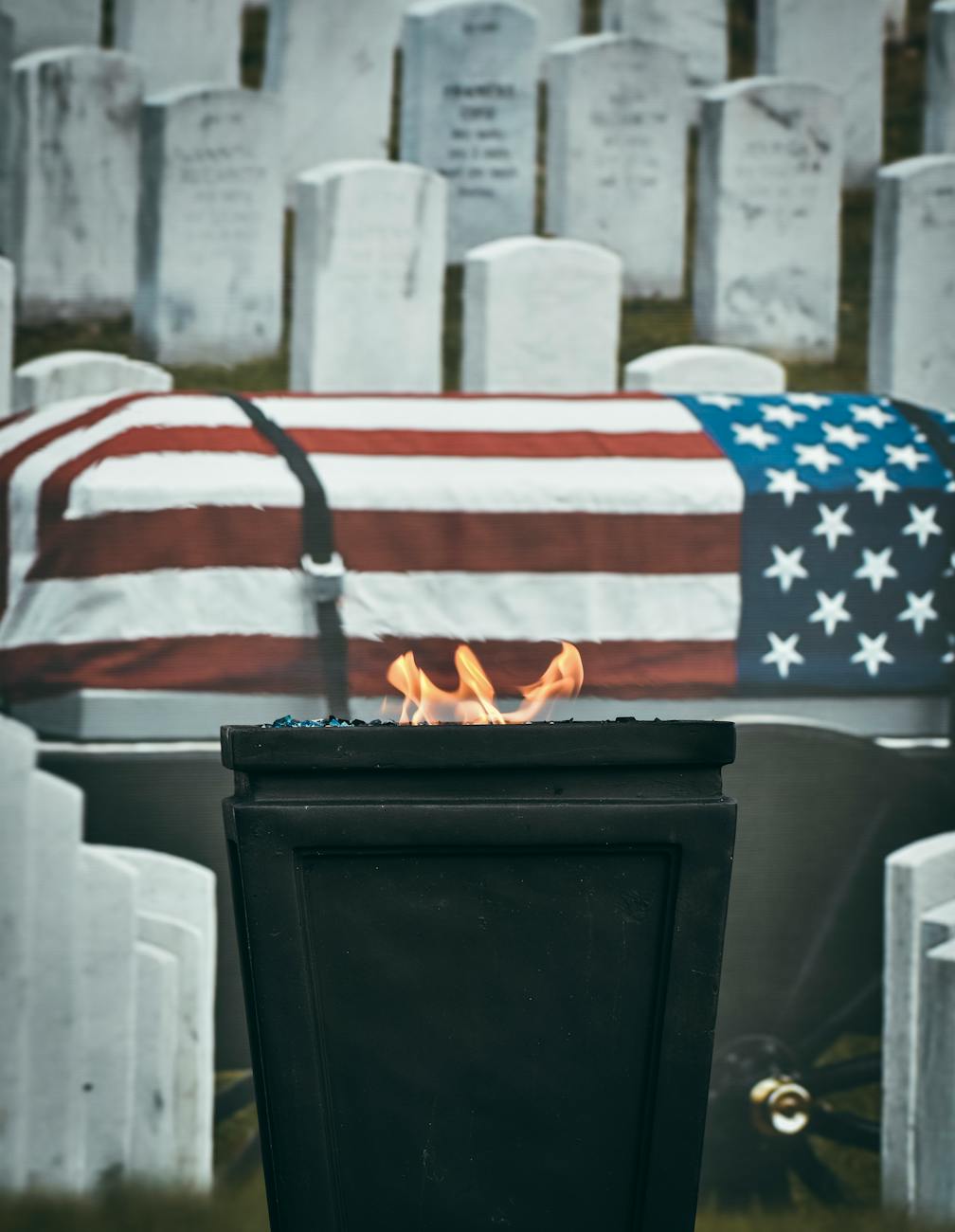
May 26, 2025 — Americans across the country gather for cookouts, beach trips, and retail sales this Memorial Day. Veterans and historians urge the public to remember the true meaning of the holiday. It is a solemn day of remembrance for those who died while serving in the United States Armed Forces.

Originally known as Decoration Day, Memorial Day was first widely observed in 1868. This was after the Civil War. Citizens and soldiers alike placed flowers on the graves of the fallen. Today, it is often confused with Veterans Day. Veterans Day honors all who served. Memorial Day is for those who made the ultimate sacrifice.

For many, the long weekend signals the unofficial start of summer. For Gold Star families—those who have lost a loved one in service—it’s a day marked by grief. It is also a time for reflection and pride.

Photo by Brett Sayles on Pexels.com

“We don’t want people to stop enjoying their freedom,”

said Angela Cruz, whose son died in Afghanistan in 2011.

“But we hope they understand that someone paid for it.”

Surveys reveal a worrying trend. A growing number of Americans are unaware of the distinction between Memorial Day and Veterans Day. This is especially true for younger generations. A 2024 Pew Research poll found that nearly 40% of adults under 30 were unclear about Memorial Day’s purpose.

Historians warn that this disconnect risks eroding public understanding of military sacrifice.

“When people forget the meaning of Memorial Day, they forget about those who gave their lives in service. They overlook their sacrifice,”

said Dr. Robert Ellis, a military historian at Georgetown University.

“It’s not just a history lesson—it’s a civic responsibility.”

Efforts are underway to restore the day’s original intent. Many veterans’ organizations are promoting the National Moment of Remembrance, a voluntary pause at 3 p.m. local time on Memorial Day to think in silence. Schools and communities across the country are bringing back traditions. They are visiting cemeteries and laying wreaths. They are also reading the names of fallen service members.

“We want people to barbecue, to be with family, to enjoy America,”

Photo by Chris F on Pexels.com

said retired Army Sergeant Major Tyrese Bennett.

“But we also want them to take a moment—just a moment—to remember why they can.”

The nation marks another Memorial Day. Veterans and families hope that Americans will go beyond the sales. They want people to go beyond the celebrations. They wish everyone would take time to honor the names, stories, and legacies of those who never made it home.

From Cotton Fields to Sheriff: The Story of Jess Bowling

By Benjamin GroffMedia© | benandsteve.com | 2025 Truth Endures©

4–5 minutes

Sheriff Jess “Pooch” Bowling, Jr.: From Cotton Fields to County Leader

Jess ‘Pooch’ Bowling

Jess Bowling, Jr. was born in Binger, Oklahoma, on August 23, 1924. At just 11 years old, he left behind half his family. He also left the dusty plains of Oklahoma. He sought a new beginning in California. With his father and brother, young Jess traveled west in a weathered 1929 Buick. They finally settled in the small agricultural town of Dos Palos. His mother, two sisters, and another brother stayed behind in Oklahoma—a family split by circumstance but not by love.

Life in California was anything but easy. Jess Jr. rose with the sun. He toiled in the cotton fields until it set. He contributed what he could to help his family survive. It was hard work—grueling and endless—but there was resilience in the struggle. Sheriff later joked, “We did live in the biggest tent in Dos Palos!”

His father, Jess Sr., quickly became a cornerstone of the growing town. He opened a grocery store, invested in rental properties, and became active in local politics. His leadership and business savvy earned him a seat on the city council and, eventually, the title of Mayor.

Jess Jr. worked in the family store while attending school. He graduated from Dos Palos High School with a reputation for dependability and quiet strength. Not long after, fate stepped in when he met Darlene, a young woman from Iowa visiting relatives. The two married in 1945 and raised three children—Sharlynn, Shirley, and Michael.

The Badge and the Beat

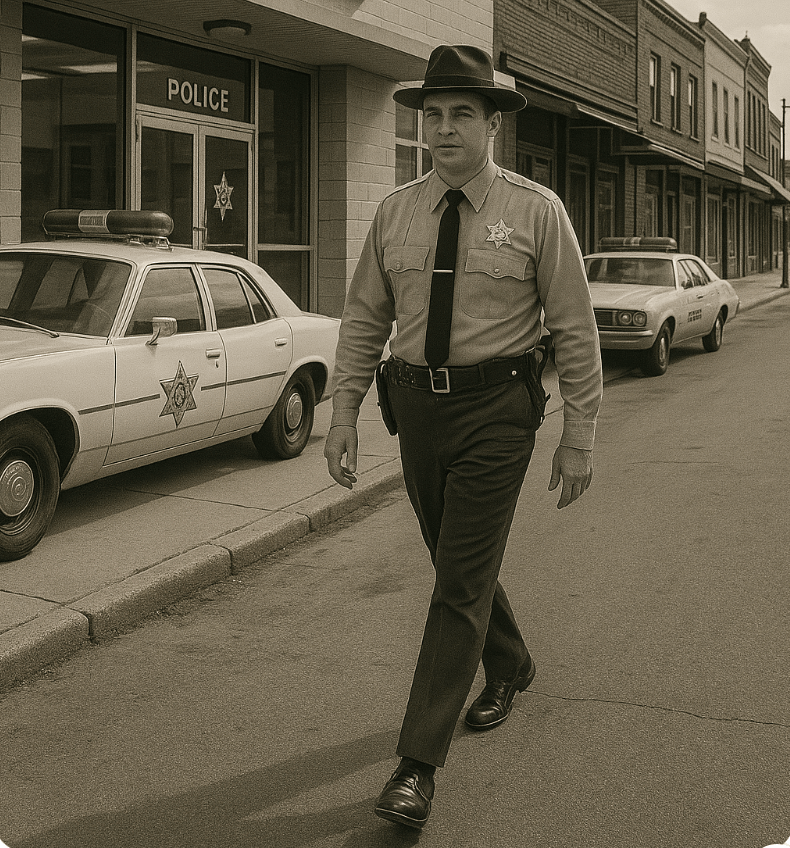
Simulated Photo

Jess Bowling’s journey into law enforcement began in 1953 when he joined the Dos Palos Police Department. His first assignment? Tackling the town’s parking problem. Officer Bowling issued dozens of citations, doing so with a steady hand and a sense of duty. He even issued one to his father, the Mayor. Years later, he found that very ticket among his father’s possessions, a keepsake of humor and integrity.

Although that first stint in law enforcement was brief, it planted a seed. After returning to the family store, Bowling joined the Atwater Police Department in 1956. In 1958, he made the move that would define his career: joining the Merced County Sheriff’s Department.

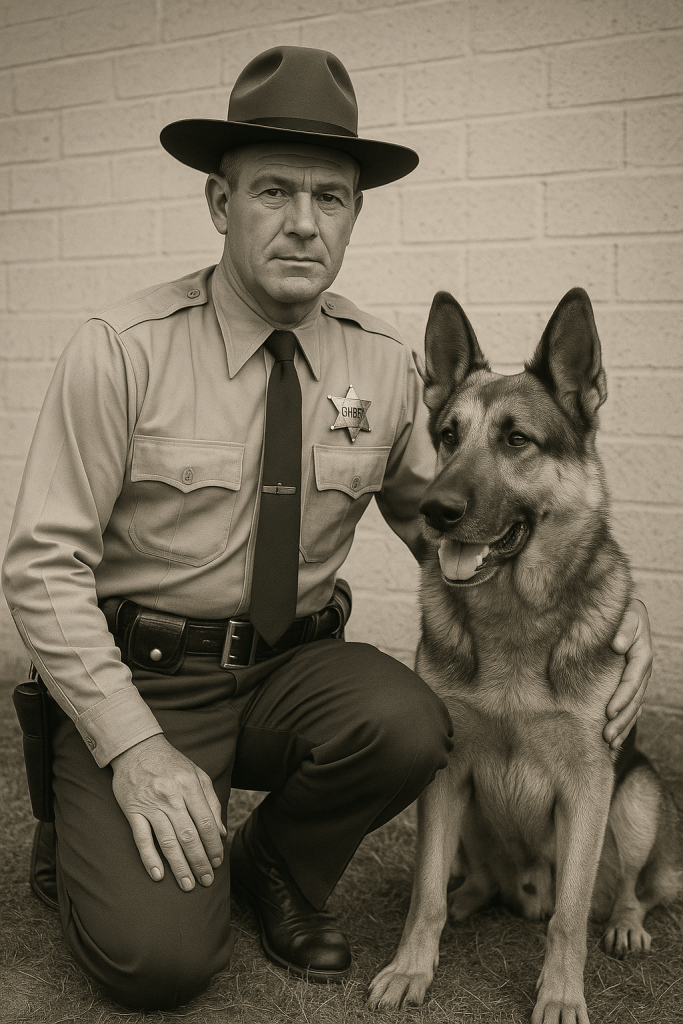
Simulated Photo

In 1963, Bowling became the department’s first-ever canine handler, partnered with a large, loyal German Shepherd named Jim. Together, they helped pioneer a new era of policing.

By 1974, Jess Bowling had risen to the rank of Lieutenant when tragedy struck—the sudden passing of Sheriff Earl McKeown. In the aftermath, Bowling was appointed interim Sheriff. The people had already decided by the time the special election rolled around in May 1975. Bowling’s steady leadership and quiet competence earned him the Sheriff’s badge in his own right.

Reformer, Leader, Trailblazer

Sheriff Bowling led the department through six transformative years. He spearheaded major innovations that professionalized law enforcement in Merced County. Under his administration:

  • The Corrections Division was established, moving jail staffing from deputies to trained corrections officers.
  • Dispatch services were assigned to civilian professionals, freeing up sworn deputies for fieldwork.
  • He launched the county’s first-ever 24-hour patrol, marking the end of the “resident deputy” model.
  • He hired Merced’s first female deputy, breaking gender barriers in local law enforcement.
  • The department acquired its first handheld radios, enabling Bowling to reintroduce the classic “walking beat cop” in areas like Winton.

These weren’t just administrative changes but foundational shifts that shaped the Sheriff’s Department into a modern, responsive force.

His achievements were not only admired—they were preserved. Jess “Pooch” Bowling’s remarkable career is documented in a collection. His family lovingly maintains it as a tribute to a life of service.

Legacy and Final Salute

I had the privilege of knowing the Bowling family. One of my sisters even married Jess’s nephew. Every time he returned to town, Sheriff Bowling brought a yearbook from the department he once led. He proudly pointed out the growth and accomplishments of his former team. The department’s scope, the number of divisions, and the professionalism he helped instill always struck me, as did his accomplishments.

1974 – The first female deputy was sworn in

1974 – First portable transceivers issued to deputies

1974 – The first 24-hour patrol begins

1977 – First Special Emergency Response Team (SERT) organized

1977 – Marshal’s Office established

1980 – Hostage negotiators were trained and included on the SERT team

Merced County Sheriff’s Office, California

But behind the badge was a man who never forgot where he came from. Before the titles and the accolades, Jess “Pooch” Bowling was a boy in a Buick. He was a cotton picker working under the sun. He was a young man doing what he could to help his family survive.

After a doctor advised him to retire due to a serious heart condition, Sheriff Bowling stepped down in 1980. He lived to celebrate his 80th birthday during Merced County’s 150th anniversary in 2005. This honor was fitting for a man who helped shape its modern history.

Jess “Pooch” Bowling passed away on April 18, 2007. He was laid to rest beside his beloved Darlene in Dos Palos Cemetery.

His story is one of grit, integrity, and service. It is a journey from the cotton fields to the highest badge in the county.

Grassroots Movement Transforms American Politics

GROFF MEDIA 2024© TRUTH ENDURES IMDBPRO

Presented by benandsteve.com By: Benjamin Groff II©s

3–4 minutes

The Grassroots Movement for Economic and Political Justice

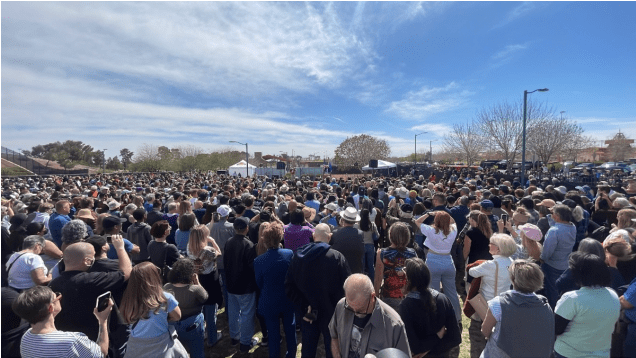
Arizona Rally March 2025

Senator Bernie Sanders and Representative Alexandria Ocasio-Cortez mark a defining moment in American politics. Tempe, Arizona Rally 2025 Groff Media©

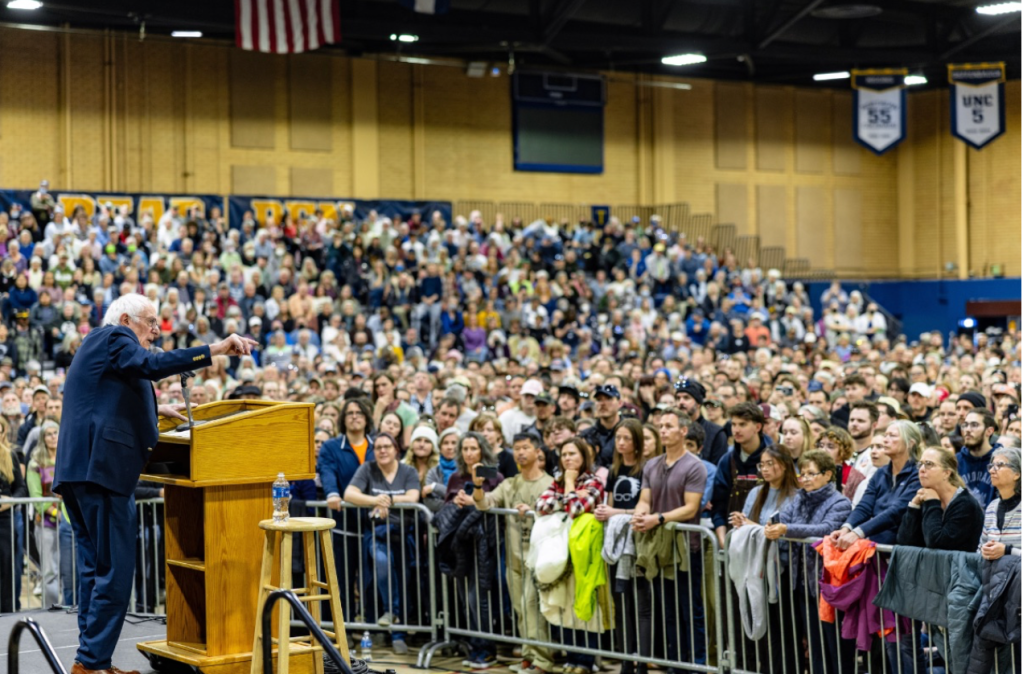
The recent rallies by Senator Bernie Sanders and Representative Alexandria Ocasio-Cortez mark a defining moment in contemporary American politics. Across five rallies in three states, tens of thousands gathered. They made a resounding call for change. This signals widespread dissatisfaction with the current political and economic systems. The overwhelming attendance at these events reveals a deep-rooted movement. It is fueled by a demand for economic fairness. There is also a call for political integrity and grassroots-driven reform.

Greeley Colorado, Groff Media©

One of the key takeaways from these rallies is the rejection of Trumpism, oligarchy, and authoritarianism. The presence of thousands in North Las Vegas, Tempe, Greeley, Denver, and Tucson shows collective opposition to massive income inequality. Wealth inequality has left many working-class Americans behind. This movement directly responds to a political system. In this system, billionaires hold disproportionate power. They use their wealth to influence elections and dictate policy. The rallies were not simply campaign events; they were gatherings of individuals. They were determined to reclaim democracy from corporate interests. They also wanted to challenge political elites.

Tucson, Arizona, Groff Media©

Moreover, the movement echoes historical struggles that have shaped the United States. Sanders draws parallels between this modern fight and past movements that have successfully challenged oppression. These include the abolitionist, labor, civil rights, and women’s rights movements. These historical precedents offer a blueprint for today’s progressive movement. They emphasize that real change arises when ordinary people organize. Real change occurs when they take action against systemic injustice.

A critical part of this movement is grassroots organization. Sanders and Ocasio-Cortez stress the need to mobilize people in all 50 states through consistent engagement. Mobilizing thousands of people means not only attending rallies but also translating that enthusiasm into political action. Encouraging progressives to run for office at all levels is crucial. This includes positions from school boards to state legislatures. It is a core strategy to enact lasting change. Local elections, often overlooked in the national political discourse, hold immense power in shaping policies that affect daily life.

Denver, Colorado, Groff Media©

Additionally, the movement extends beyond electoral politics. It calls for strong communities where people support one another despite economic and social challenges. The emphasis on solidarity reflects the understanding that political change is inseparable from fostering a culture of mutual aid. It also involves building collective strength. The movement creates networks of engaged citizens. The goal is to counteract the feelings of loneliness that many experience in today’s economic landscape. It also addresses feelings of helplessness.

This movement does not overstate the urgency. Sanders highlights the significance of this moment not only for current generations but also for future ones. Climate change, economic disparity, and political corruption are existential issues that need immediate action. The message is clear: now is the time for mobilization, not despair. The fight for a fair and just society depends on ordinary people. They must be willing to challenge entrenched power structures. They must demand a system that works for all.

The rallies led by Senator Bernie Sanders and Representative Alexandria Ocasio-Cortez signify a pivotal moment in U.S. politics, reflecting widespread dissatisfaction with inequality and a demand for economic justice.
Arizona, Nevada, Colorado,

In conclusion, the rallies held across Nevada, Arizona, and Colorado exemplify the strength of a growing progressive movement in America. The record-breaking turnouts illustrate a profound discontent with the status quo and a wish for systemic change. By organizing, running for office, and building community solidarity, this movement can redefine the future of American democracy. The path ahead is not easy. History has shown that when people unite for justice, they can overcome even the most powerful obstacles.

US Aid to Ukraine: A $114 Billion Commitment

GROFF MEDIA 2024© TRUTH ENDURES IMDBPRO

Presented by benandsteve.com By: Benjamin Groff II©s

2–4 minutes

As of February 2025, the United States has committed approximately $114 billion in bilateral aid to Ukraine. This commitment has been made since the onset of Russia’s invasion in February 2022. This figure encompasses military assistance, financial support, and humanitarian aid. 

statista.com

It’s important to note that reported aid amounts have been discrepant. This is due to differing accounting methodologies and the inclusion of various assistance categories. For instance, President Trump claimed that the US provided $350 billion in aid to Ukraine. Yet, official figures do not support this assertion. 

wsj.com

The European Union and its member countries have collectively provided approximately €132 billion in aid to Ukraine. This surpasses the US contribution. 

statista.com

The US aid includes funds allocated for replenishing American weapon stockpiles and supporting defense manufacturing across multiple US cities. 

cfr.org

In summary, estimates vary slightly based on accounting practices. Still, the US has committed approximately $114 billion in aid. This aid supports Ukraine’s defense against Russian aggression.

Since Russia invaded Ukraine in 2022, Ukrainian President Volodymyr Zelenskyy and his representatives have consistently expressed profound gratitude. They are thankful for the United States’ unwavering support. 

Many news media estimate that Zelenskyy made as many as 33 public appearances during wartime. He aimed to show his appreciation for the United States financial and equipment support. 

While it is challenging to enumerate every instance of appreciation, several notable expressions stand out:

  1. December 2022 Speech to the US Congress: President Zelenskyy addressed a joint session of the US Congress. This was his first foreign visit since the war began. He thanked “every American” and highlighted Ukraine’s resilience, stating, “Against all odds, Ukraine still stands.” apnews.com
  2. December 2022 Joint Press Conference with President Biden: Zelenskyy expressed gratitude for a new defense package. He stressed its prompt importance for Ukrainian soldiers during this visit. ua.usembassy.gov
  3. July 2023 NATO Summit in Vilnius: Zelenskyy expressed his appreciation for US and NATO support before meeting with President Biden. He acknowledged the challenges faced by Ukrainians. Zelenskyy thanked Biden for standing “shoulder to shoulder” with Ukraine. bloomingtonian.com
  4. February 2025 Post-Meeting Statement: The meeting with President Trump was contentious. Zelenskyy reaffirmed his gratitude toward the American people and Congress. He also expressed gratitude toward the President. Zelenskyy emphasized Ukraine’s pursuit of a just and lasting peace. en.wikipedia.org
  5. March 2025 London Summit: Zelenskyy expressed “unwavering gratitude” for US military and financial support after a summit with European leaders. He underscored its critical role in Ukraine’s defense. nypost.com

These instances highlight the deep appreciation expressed by Ukrainian leadership. They value the United States’ financial assistance, military aid, and moral support throughout the conflict.

Zelenskyy’s Expressions of Gratitude Midst Diplomatic Tensions

The information stands in contrast to a description made by some. They called it two thugs attacking a robbery victim after he had already been beaten down. It is a sad portrayal. This is a betrayal of the executive office on show in the White House on February 28th, 2025. 

The information referenced here documents that 350 billion dollars were not given to the Ukrainian government, contradicting what was claimed. Sadly, the United States Congress knows this. They approved the funding. They should make sure that factual statements involving tax dollars are presented to the public.

Sources:

nypost.com

Ukraine’s Volodymyr Zelensky says he still wants US minerals deal after explosive Trump talks

Today

people.com

Volodymyr Zelenskyy Cancels D.C. Appearances After He’s Called ‘Disrespectful”‘” by Trump, Expresses Gratitude to Americans

Today

barrons.com

Zelensky Says Ukraine Is Ready to Sign Minerals Deal but Needs ‘Security Guarantees’

Today

Chester’s Revolution: A Fight Against Government Oppression

GROFF MEDIA 2024© TRUTH ENDURES IMDBPRO

Presented by benandsteve.com By: Benjamin Groff II©s

4–6 minutes

When the world turns against you, what do you do? This question had boiled under Chester’s contempt for days. He had watched the nation he loved become the opposite of everything it had ever stood for. The people appeared powerless to stop the crazed leaders who were taking control of the institutions and destroying them.

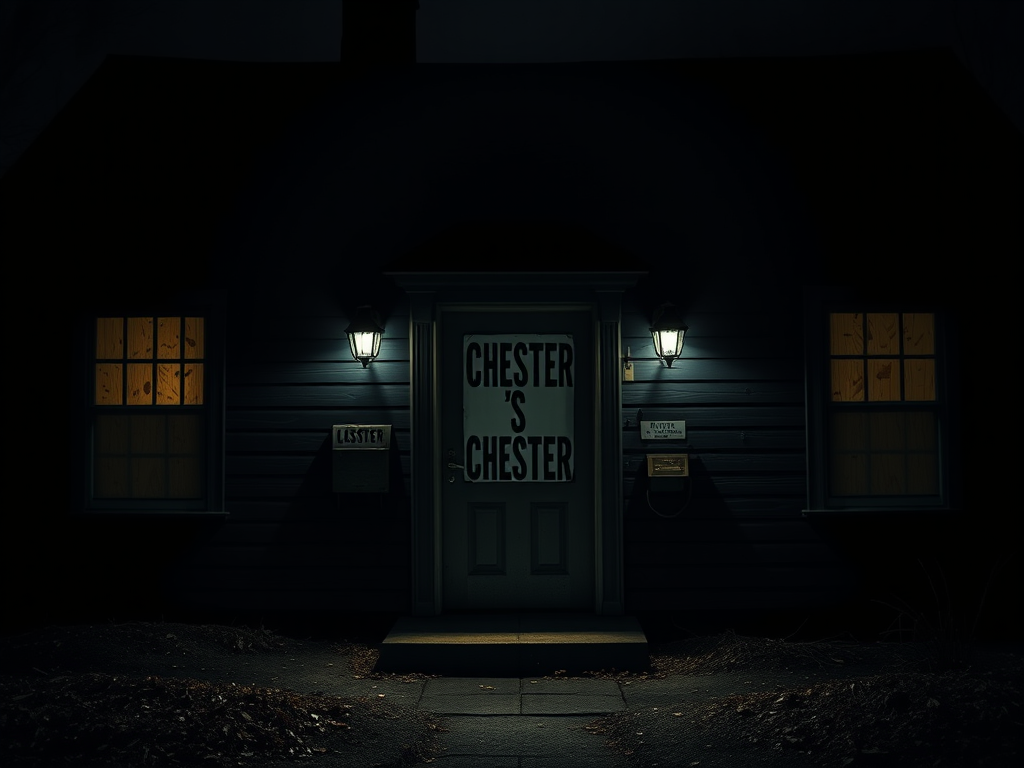
Chester became so incensed that he quit his job. He took about three hundred dollars, bought as many canned food items as possible, and stored them in his home. Chester then purchased one hundred dollars’ worth of bottled water. He had planned for the loss of electricity and home heating petroleum. Chester had medical supplies he thought would handle any matter related to his health. Then, he went and nailed his doors and windows shut. He placed a sign on the outside of his home stating:

I AM HOME – ALIVE – I DO NOT WANT CONTACT WITH THE OUTSIDE WORLD OR ITS DISTURBING GOVERNMENT. THIS HOUSE IS OFF LIMITS TO EVERYONE. PLEASE DO NOT ENTER!

Then, in chalk, on a board that slid in and out from the interior of the home, it read:

DATE – 2-16-2025

Chester planned to update the date every night to let the outside world know he was still alive.

Chester planned to live without listening to what was happening around him. He believed it was the only way he survived. Chester wanted to help others but had no solution, power, or ability. For Chester, this was all he thought he would do.

His home was significant. It had five bedrooms, four bathrooms, two living areas, two kitchens, and a mother-in-law suite. He had inherited it from his parents after they passed. It was paid for, and he had taken control of their Trust. He didn’t have any financial issues.

Every morning, Chester would visit the mother-in-law’s suite. It offered a view of a once-lively park. The government has now abandoned the park. He often spotted young figures lurking behind the trees, their presence a haunting mystery. Why were they there? Why were they hiding? And most puzzling of all, why did they seem to have nowhere else to go?

One day, curiosity got the best of him. He grabbed his hammer. He pulled the nails out around the suite’s window. He cracked it open, trying to hear their conversations.

Two young girls and two young men were hiding behind a tree, whispering urgently. Chester leaned in closer and heard them say:

“Look, it won’t hurt, and we will be free of this world. If we stay any longer, it will only get worse. They will kill us if we don’t beat them to it!”

Chester’s blood ran cold. What in the world were they talking about? Was this some game? Or were they seriously considering group suicide? And was the government truly hunting these kids?

He had heard about new policies stripping rights from the LGBTQI+ community and disenfranchising people of color. But had it escalated to mass executions? Chester had to find out.

He rummaged through an old trunk in his father’s Hollywood memorabilia. It contained all sorts of disguises: wigs, glasses, vintage clothing. Chester dressed as an older, disheveled homeless man and prepared to venture outside for the first time in weeks.

What he would learn would be devastating.

The streets were eerily quiet, yet tension hung in the air like a brewing storm. Checkpoints had been set up at major intersections, where government enforcers—men in military gear with no insignias—patrolled with assault rifles.

Posters were plastered everywhere, declaring:

 “FOR THE SAFETY OF OUR NATION, COMPLIANCE IS MANDATORY.”

 Others simply stated: 

“NON-CONFORMISTS WILL BE RELOCATED.”

Chester approached a group of homeless people warming their hands over a fire in a rusted oil drum. They regarded him warily but allowed him into their circle.

“What’s happening?” 

Chester asked, playing the role of a lost drifter.

A man with hollowed-out cheeks and weary eyes responded,

“They’re rounding people up. Anyone who resists, anyone different. They disappear.”

Chester asked quickly,

“Disappear where?”

The man shook his head.

“No one knows. Some say camps. Others say execution sites.”

Chester’s stomach twisted into knots. The government wasn’t just oppressing people; it was actively erasing them. The kids in the park weren’t paranoid—they were running for their lives.

He couldn’t stay hidden anymore. He had to act.

That night, under the cover of darkness, Chester snuck back to his house and removed the sign from his door. He pried open his windows, unlocked the doors, and gathered supplies. With his home’s ample space and well-stocked provisions, he offered sanctuary to those with nowhere else to go.

The next day, he returned to the park and approached the young people cautiously.

“Come with me,” he whispered. “You don’t have to run anymore.”

At first, they hesitated, but the desperation in their eyes mirrored his determination. One by one, they followed him back to his home. Chester had spent weeks barricading himself from the world, convinced that isolation was the only way to survive. But now, he understood—survival was not just about enduring. It was about resisting.

And Chester was ready to fight back.


“LGBT people are some of the bravest and most potent change agents and leaders I have encountered. They are the most forceful defenders of the vulnerable and voiceless because they know what it’s like to be there.” 

-–– Ronan Farrow -–– a journalist known for his investigative work with the New Yorker and member of the LGBTQI+ Community


No More Tomorrow’s Forever

GROFF MEDIA 2024© TRUTH ENDURES IMDBPRO

Presented by benandsteve.com By: Benjamin Groff II©

2–4 minutes

Javier stood at the edge of the city park. Staring out at the bustling streets of his new home in America. The golden autumn leaves danced in the wind, starkly contrasting the memories of his war-torn homeland. Javier had come to the United States to find refuge and hope. Yet, the events unfolding around him now gave him an unsettling sense of déjà vu.

Back in his home country—a place he no longer dared to name aloud—Javier had watched the slow unraveling of society. It had once been a proud nation. Families like his owned small businesses. Children played freely in the streets. Communities were bound together by tradition and trust. Corruption spread throughout the country. Drug lords rose to power. Oligarchs infiltrated and bought influence with cold, hard cash. They sowed fear and discord, and before long, even the police and the government served their interests alone. The people were left with nothing but fear and silence.

He had fled that darkness, believing that America would offer something different. And for a time, it did. He found work, made friends, and even started to dream again. 

But the cracks were showing. The unchecked greed was too familiar. The political maneuvering was too familiar. The way drugs crept into the neighborhoods under the guise of prosperity was too familiar. He watched politicians make promises while corporations tightened their grip on the economy. He saw his neighbors losing faith, their voices drowned out by the same wealth-driven forces he had left behind.

“No more tomorrows forever,” 

Javier muttered under his breath, a phrase his grandfather used to say when hope felt like an illusion. He feared that history was repeating itself, that this land of opportunity was sliding down the same treacherous path.

One evening, Javier visited a local diner. He often met with his friend Michael there. Michael was an old war veteran who deeply loved the country he had served. Javier shared his concerns over cups of bitter coffee, finding solace in Michael’s understanding and wisdom.

“I’ve seen this before, amigo. Back home. The greed, the power, the division. It starts small, but it grows until there’s nothing left.”

Michael nodded, his tired eyes scanning the newspaper headlines. 

“You ain’t wrong, son. This country’s got its problems. But we fight. We speak up. That’s the difference.”

Javier wasn’t so sure. He thought of his own country. There, people had fought and lost. Bullets and bribes had silenced voices for freedom. Yet, deep down, Javier wanted to believe Michael. He tried to think that this place still had a chance, that people could push back against the tide.

Javier left the diner. He looked around at the city skyline. The shining towers and the streets were filled with life. The battle wasn’t over yet, and maybe—just maybe—he could do something to help stop history from repeating itself.

The next day, he enrolled in a local community initiative to support struggling neighborhoods. Passionate individuals like himself led this initiative. They aimed to give resources and support to those most affected by the societal issues he had observed. He would share his story. He shared a warning and his hope. He believed past mistakes didn’t have to define the future. America still had tomorrow’s worth fighting for.

But deep inside, a lingering voice whispered, 

No more tomorrow’s forever!”

Should You Stay on Facebook? Weighing the Pros and Cons

GROFF MEDIA 2024© TRUTH ENDURES IMDBPRO

Presented by benandsteve.com By: Benjamin Groff II©

3–4 minutes

To Stay or Go: Evaluating the Benefits of Remaining on Facebook in Light of Controversial Changes

Social media platforms have become integral to modern life, offering communication, connection, and community building avenues. Nevertheless, as these platforms evolve, so do their policies and practices, often sparking debate about their social and ethical implications. Facebook, a leading social media giant, has recently faced criticism. This criticism is due to changes in its policies on hate speech, bigotry, and LGBTQI support. For individuals making the decision about staying on or leaving Facebook, they hold the power to be informed. Weighing the benefits of both options is essential for this empowerment.

The Case for Staying on Facebook

  1. Maintaining Connections: Facebook remains a vital tool for staying in touch with family. It also helps keep connections with friends and acquaintances, particularly those spread across different regions or countries. For many, it is a lifeline to relationships that would otherwise be difficult to nurture.
  2. Community and Advocacy Opportunities: Despite policy changes, Facebook still hosts several groups and communities that support marginalized voices. These include LGBTQI organizations, social justice movements, and local advocacy efforts. By staying, individuals can continue amplifying positive messages and supporting important causes.
  3. Access to Events and Local Updates: Facebook excels as a hub for event coordination and news dissemination. Whether it’s discovering community gatherings, charity events, or public discussions, the platform enables users to stay engaged with their surroundings.
  4. Platform for Countering Negativity: Staying active on Facebook allows users to directly challenge hate speech and bigotry. Individuals can use their presence to make a positive impact through reporting mechanisms, creating supportive content, and fostering constructive dialogues.
  5. Professional Networking and Opportunities: Beyond personal connections, Facebook provides professional opportunities through networking, business pages, and advertising. Leaving the platform will limit exposure to these tools, which can be crucial for entrepreneurs, freelancers, or small business owners.

The Case for Leaving Facebook

  1. Moral and Ethical Stance: Users can take a stand by leaving Facebook. They do this against policies they perceive as harmful or contrary to their values. This protest can send a powerful message to the platform and its advertisers, influencing change.
  2. Reducing Exposure to Toxic Content: With the relaxation of hate speech policies, users face more harmful content. They become increasingly exposed to offensive material. Removing oneself from the platform eliminates the mental and emotional toll of encountering such material.
  3. Privacy and Data Concerns: Facebook has faced ongoing scrutiny over its handling of user data. Leaving the platform reduces one’s vulnerability to data misuse, targeted advertising, and potential privacy breaches.
  4. Encouraging Other Platforms: Exiting Facebook can prompt individuals to explore different social media platforms that better align with their values. Platforms like Mastodon, MeWe, or local community forums offer a more supportive environment.
  5. Reclaiming Time and Focus: Many users realize an unexpected advantage when they leave Facebook. They find they have more time for hobbies, personal growth, and face-to-face interactions. The departure can foster a sense of liberation from the constant pull of notifications and algorithm-driven content.

Finding a Middle Ground

For those hesitant to make a definitive choice, there are ways to balance the benefits of staying and leaving. Users can regain a sense of control over their Facebook experience by reducing engagement. They can also limit time spent on the platform. Unfollowing toxic pages or users and curating a positive feed helps as well. Additionally, prioritizing different platforms for personal or professional connections while maintaining a minimal Facebook presence can further enhance this control.

Conclusion

The decision to stay on or leave Facebook is very personal. It depends on one’s values, priorities, and tolerance for the platform’s evolving policies. Staying permits individuals to keep connections. They can use their presence for positive change. Leaving can signify a powerful ethical stance. It can lead to personal growth. Regardless of one’s choice, it is essential to evaluate Facebook’s role in one’s life. People should make a decision that aligns with their values and well-being.

President Carter’s Memorial Service IN D.C.

GROFF MEDIA 2024© TRUTH ENDURES IMDBPRO

Presented by benandsteve.com By: Benjamin Groff II©

2–3 minutes

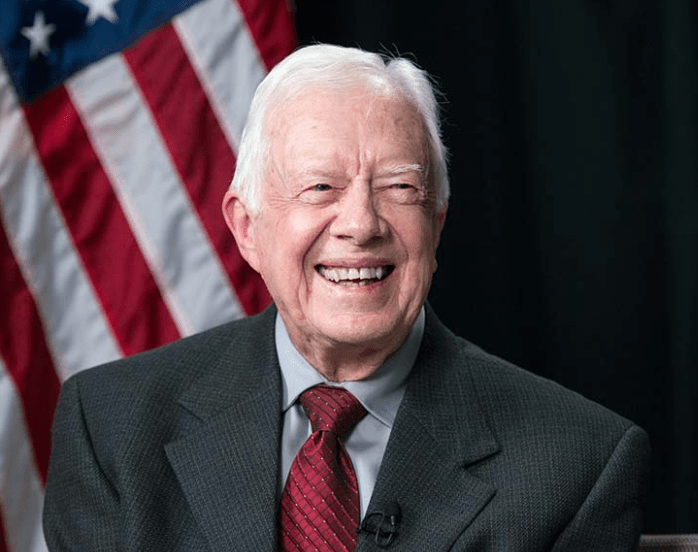
Former President Jimmy Carter’s state funeral was held today at the Washington National Cathedral in Washington, D.C., honoring his legacy as the 39th President of the United States and his extensive humanitarian work. Carter passed away on December 29, 2024, at the age of 100. He was remembered by dignitaries, family, and friends for his dedication to public service. He also made significant global peace efforts.

President Joe Biden delivered an emotional eulogy, highlighting Carter’s unwavering character and lifelong commitment to improving the lives of others. Biden was one of the first senators to endorse Carter’s presidential candidacy. He reflected on their shared values. Carter had a profound impact on the nation. CBS News

All five living U.S. presidents attended the service, including President-elect Donald Trump, who will be inaugurated on January 20, 2025. Trump engaged in a brief but cordial conversation with former President Barack Obama. This marked a rare moment of civility between the two. Reuters

The ceremony featured heartfelt tributes from Carter’s family. His grandson, Jason Carter, praised him as the nation’s “first Millennial,” acknowledging his progressive-thinking approach and enduring legacy. The Sun

Steven Ford, son of the late President Gerald Ford, read his father’s letter for Carter. This action underscored the deep friendship between the two men despite their political rivalry. New York Post

Musical performances added to the solemnity of the occasion. Phyllis Adams, a longtime Delta flight attendant, had earlier performed for the Carters. She delivered a moving rendition of “Amazing Grace.” This fulfilled a special demand made by the late President. CBS News

Security measures were notably heightened for the event, reflecting concerns over potential threats. Despite this, the service proceeded without incident, allowing attendees to focus on honoring Carter’s life and legacy. The Sun

Carter’s remains will be transported to his hometown of Plains, Georgia, after the national ceremony. There, a private service and burial will be held according to his wishes. The Times

From 1977 to 1981, Carter’s presidency was marked by significant achievements. These included the Camp David Accords between Israel and Egypt. They also involved the establishment of diplomatic relations with China. His post-presidential years were equally impactful. He dedicated himself to human rights and diplomacy. This dedication earned him the Nobel Peace Prize in 2002. The Times

The state funeral poignantly reminded us of Carter’s enduring contributions to the nation and the world. It celebrated a life dedicated to service, peace, and the betterment of humanity.

Highlights from Jimmy Carter’s State Funeral

Sources

People

Trump Doesn’t Stand for Obama but Then Chats with Him as All 5 Living Presidents Reunite at Jimmy Carter’s Funeral

Today

The Sun

Biden gets emotional in Jimmy Carter’s funeral speech as grandson Jason praises 39th prez as nation’s ‘first Millennial’

Today

Reuters

Trump shakes hands with Pence, engages Obama at Carter funeral

Today

Special Air Mission 39: A Tribute to President Carter

Groff Media 2024© Truth Endures IMDbPro

Presented by benandsteve.com By: Benjamin Groff II©

3–4 minutes

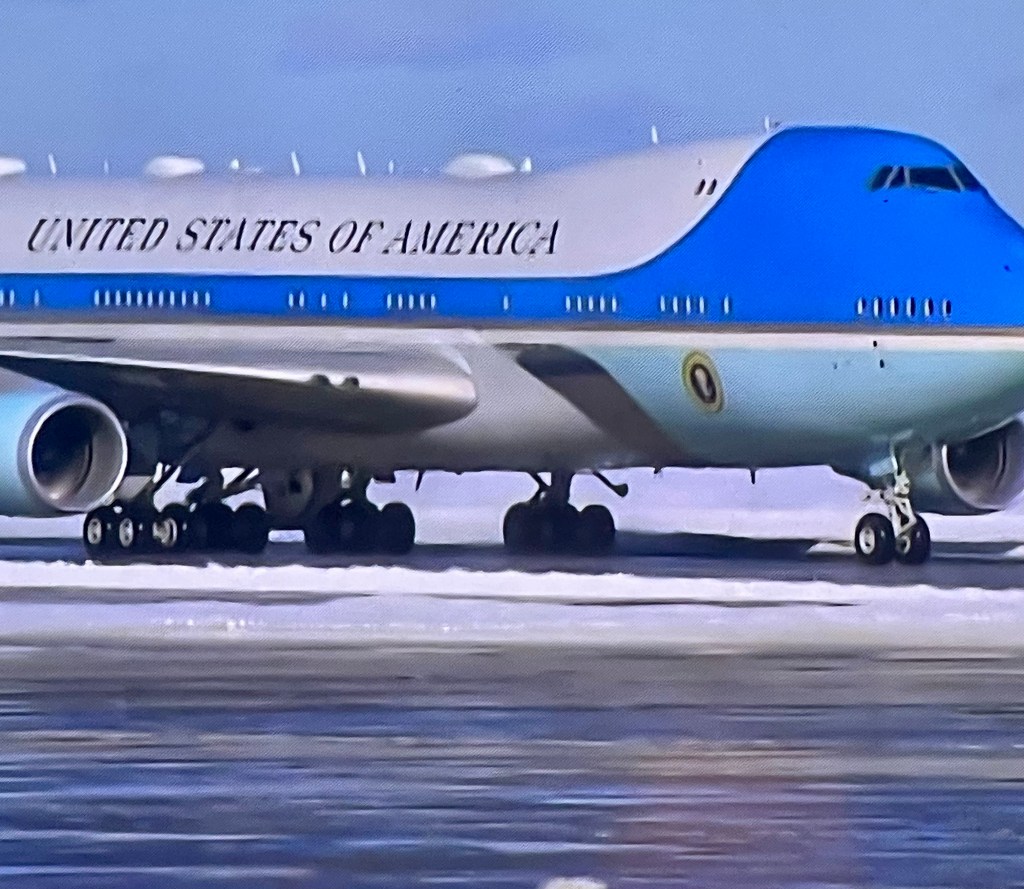
The sun broke over the Air Force Base in Atlanta, Georgia. It cast golden hues across the tarmac as Special Air Mission 39 waited. Its polished surface gleamed in the light. The presidential seal on its side served as a solemn reminder of the journey it was about to undertake. Inside, a reverent hush filled the cabin. The crew prepared for their most crucial passenger. It was a man whose life had been dedicated to service, humility, and unwavering commitment—President Jimmy Carter.

From his earliest days at the Naval Academy, James Earl Carter Jr. was shaped by discipline, honor, and an unrelenting drive to do his best. Those who knew him often remarked on his quiet determination. His former Navy colleagues remember him as a man of integrity, always putting the welfare of his team first. Carter navigated the complexities of submarine systems in the Navy with steady resolve. He also tackled global issues from the Oval Office with the same determination.

The engines roared to life for Special Air Mission 39. This was what President Carter had once known as Air Force One. At that moment, the memory of his long journey sharpened. Memories of his enduring journey came into sharp focus. Here was a man who had never sought power for power’s sake but had wielded it to uplift others. In the years after his presidency, Carter’s service reverberated across communities. He built homes for people experiencing homelessness. He mediated peace in war-torn nations. Additionally, he battled disease through the Carter Center. His legacy was not confined to history books but lived on in the lives he had touched.

The flight crew gathered for a moment of silence before departure. Captain Emily Harrington, a seasoned pilot who had long admired Carter, addressed her team.

“Today, we honor not just a president but a man who believed in the power of service. Let’s give him the journey he deserves.”

As the plane ascended, the passengers—family, close friends, and select members of his administration—reflected on his unwavering faith and commitment. Rosalynn, his beloved late wife, was his partner for more than seven decades. She was waiting for him at their Plains, Georgia home. She also waited in Jimmy’s heart, where their journey had begun. Jimmy would be back. He had business in D.C. to take care of first. President Carter would fly there with the family. He would lay in state at the Capital Rotunda. He would attend a state memorial service. Later in the week, he would return to Plains, Georgia. He would be laid next to Rosalynn at their place of burial.

The flight path traced the arc of his life. It went over the rural farmlands of Georgia. The soil there had nurtured his love for community and the values of hard work and compassion. The Naval Academy in Annapolis, where young Jimmy had set the course for a lifetime of service. Over Washington, D.C., where he had walked into the presidency with a promise to lead with integrity.

As SAM 39 descended, the crowd gathered below to pay their respects. They came not just to honor a president. They came to honor a man who had reminded the world that authentic leadership lies in humility. True leadership also involves an unwavering commitment to doing what is right.

The plane touched down with grace, its engines whispering to a stop. The door opened, and the honor guard stepped ahead to carry Carter to the Rotunda. The air was heavy with gratitude, sorrow, and pride. A man who had given so much of himself had completed the second leg of his journey. There was only one more leg left in the final part of his last journey.

In the quiet stillness of that moment, a quote from Carter’s own words have echoed in the hearts of all there: 

“My faith demands that I do whatever I can, wherever I can, whenever I can, for as long as I can, with whatever I have, to try to make a difference.”

Quote Reference: Congratulations Jimmy Carter – Bryan Strawser. http://bryanstrawser.com/2002/10/congratulations-jimmy-c/

The Guitar from Jimmy Carter’s Grove

Groff Media 2024© Truth Endures IMDbPro

Presented by benandsteve.com By: Benjamin Groff II©

3–4 minutes

Long after leaving the White House, Jimmy Carter found solace in the quiet rhythms of nature. On a sunny morning in Plains, Georgia, Jimmy stood at the edge of a grove. He had planted these trees decades ago. These trees—mahogany, maple, and spruce—weren’t native to the region. Carter had brought their seeds home from his travels. He envisioned them growing tall and strong in the fertile Georgian soil.

Jimmy called what others saw as an unusual hobby his “living legacy.” Each tree had a purpose, and he dreamed of turning their wood into something meaningful. One day, while strumming his old guitar on the porch, the idea struck him: 

What if I made a guitar from the trees I grew with my own hands?

The Craft

Years passed before the time was right. Jimmy carefully chose a mahogany tree for the body. He selected a maple tree for the neck. He also picked spruce for the soundboard. He contacted a local luthier, Sam Wainwright, who had a reputation for crafting instruments with heart and precision.

Sam, skeptical at first, raised an eyebrow when Jimmy proposed the project.

“You’re telling me you’ve been growing trees for years just for this?”

Jimmy chuckled.

“A good guitar starts with good wood. I figured, why not grow my own?”

Sam couldn’t argue with the sentiment. They spent hours examining the wood, carefully cutting it, and shaping it to perfection. Jimmy insisted on being part of every step, from sanding the pieces to carving the intricate rosette around the soundhole.

As they worked, Jimmy shared stories—about his childhood in the rural South, his presidency, and his humanitarian efforts. Sam listened intently, realizing the guitar wasn’t just an instrument but a symbol of patience, purpose, and creativity.

The First Song

Months later, the guitar was finished. Its finish glowed like amber honey. Its tone was warm and resonant. It carried the richness of the wood’s decades-long journey. Jimmy held it in his hands. He marveled at how the trees he had nurtured now sang harmoniously. They created a sound that was not just music. It was a testament to the beauty of nature.

During a warm summer evening, friends and family gathered. Jimmy sat on his porch with the guitar resting comfortably in his lap. He strummed the first chords, their notes floating into the peach-scented air.

The song he played was one he had written himself. It was a simple tune about the roots—both in the ground and in life. It spoke of time, care, and the beauty of watching something grow. The crowd swayed to the music. Their faces lit with admiration for the man who had turned trees into tunes. They felt a sense of nostalgia for the simple, yet profound, message of the song.

A Lasting Legacy

In the years that followed, the guitar became more than an instrument. Jimmy used it to teach music to children, play for visitors, and raise funds for Habitat for Humanity. Each time its strings vibrated, it told a story of persistence and hope.

When asked why he had gone to such lengths to make the guitar, Jimmy would smile and say,

“It reminds us that good things take time. The simplest gifts, like a tree or a song, can bring the most joy.”

The guitar from Jimmy Carter’s Grove wasn’t just a piece of wood strung together. It was a testament to a life rooted in purpose and patience. It symbolized the belief that even the smallest seeds can create something extraordinary.

An original report exists in Guitar World, which you can find here!

The Sunday School President – THAT THE RELIGIOUS RIGHT WASTED AND IGNORED.

Groff Media 2024© Truth Endures IMDbPro

Presented by benandsteve.com By: Benjamin Groff II©

2–3 minutes

A warm Sunday morning in Plains, Georgia seemed tailor-made for reflection. At the Maranatha Baptist Church, a small congregation gathered in quiet anticipation. This wasn’t an ordinary Sunday service—it was one led by Jimmy Carter, the 39th President of the United States.

Even decades after leaving the White House, Carter stayed true to the values that shaped his life. These values were faith, humility, and service. Carter taught Sunday School to anyone who wanted to listen every Sunday that he was capable. Visitors from all over the world made the pilgrimage to Plains. Some traveled thousands of miles to hear wisdom. This wisdom was not shared in a grand hall. Instead, it was delivered in a modest church that held no more than a couple hundred people.

Jimmy Carter, then in his 90s, shuffled to the front of the sanctuary, a quiet determination in his step. He greeted the crowd with a humble smile, his voice steady and welcoming. His lesson was simple yet profound: loving your neighbor, no matter their background or beliefs.

“When Jesus said to love your neighbor,”

Carter explained, his blue eyes twinkling,

“He didn’t put any conditions on it. He didn’t say only if they look like you or vote like you. He meant everyone.”

The audience was a mix of locals and travelers. They hung on his every word. Their hearts and minds were stirred by the profound simplicity of his message. The room was filled with a palpable sense of awe. This was not due to the titles Carter once held. Instead, it was because of his unwavering commitment to living the values he taught.

When the lesson ended, Carter didn’t rush off. Instead, he stayed to shake hands, take photos, and share stories. These personal moments hold the most significant importance for him. He listened as much as he spoke. This is especially meaningful for a man who had once navigated the complexities of global politics.

One visitor, a young man from Chicago, nervously approached.

“President Carter, what made you keep teaching Sunday School after everything you’ve accomplished?”

Carter smiled warmly.

“I’ve been a farmer, a naval officer, a governor, and a president. But teaching Sunday School reminds me of who I truly am—a servant of God. Titles come and go, but the love we share with others lasts forever.”

That was Jimmy Carter. He believed that service didn’t end with a term in office. He thought that humility wasn’t weakness. Even the simplest acts of kindness can ripple through the world. For Carter, life’s most outstanding achievement wasn’t in power or prestige. It was in the quiet and steady work of lifting others up. He demonstrated this belief through his work with Habitat for Humanity. He also promoted peace and human rights. Additionally, he was committed to public service long after his presidency.

As the church emptied, a sense of peace lingered in the air. This was a testament to the legacy of a man who lived his faith with every breath.