In the heart of a frosty December, Santa Claus sat in his workshop. His eyes scanning the pages of his magical list. It was a heavy year; kindness seemed scarce, and the world became fractured in ways he hadn’t seen before. One town in particular tugged at his heartstrings—Silver Pines, nestled in the Appalachian Mountains. Its beauty hid a darker reality. The LGBTQ+ community, especially gay individuals, faced judgment and outright abuse. Yet, in the face of such adversity, they showed remarkable courage. Letters from people in Silver Pines painted a picture of sorrow, isolation, and a longing yet to be seen.
Santa set down the list with a deep sigh. “No mistakes,” he whispered, stroking his snowy beard. It was a mantra he had held onto since the dawn of time. Every soul was crafted perfectly. Its existence was a thread in the fabric of humanity. His mission was to remind others of this truth.
The night of Christmas Eve was crisp, the air biting but alive with the hum of anticipation. Santa’s sleigh cut through the sky, its bells jingling softly. His bag was lighter than usual. It was not because he carried fewer gifts. His offerings weren’t wrapped in paper this year.
He landed in Silver Pines just past midnight, his boots crunching on the snow-covered streets. Despite the hour, the town was still. He began his journey with his signature magic. He quietly stepped into homes where letters had been written. He spread warmth and comfort to those who needed it most.
At the tiny home, Santa left a handwritten note. Liam and Paul were a gay couple who had faced the brunt of the town’s scorn. It read:
“You are seen. You are loved. You are perfect as you are.”
In another house, a young teen named Oliver found a shimmering snow globe under his tree. He had been wrestling with the fear of coming out. When he shook it, it revealed a rainbow that shimmered against the glass, and inside, a message:
“Your truth is your strength. The world needs your light.”
Throughout the night, Santa wove love into every corner of Silver Pines. He touched the hearts of allies, planting seeds of courage to stand against hatred. He left dreams of acceptance in the minds of those who harbored prejudice. His gifts weren’t toys or trinkets. They were powerful reminders of humanity’s shared essence. Each one carried the potential to transform hearts and minds.
By dawn, the town began to stir. Liam and Paul awoke to find the note, their hearts swelling with hope they hadn’t felt in years. Oliver clutched his snow globe, feeling a new resolve to embrace who he was. The day unfolded slowly. The spirit of Santa’s gifts began to ripple. This ripple ignited a wave of change. This wave would soon engulf the entire town.
People who had once turned away from their neighbors now questioned their biases. Conversations began, tentative at first but growing bolder with time. Acts of kindness, like inviting a marginalized individual to a community event, replaced judgment, and barriers began to crumble.
Santa watched from a distance, his eyes twinkling. The journey wasn’t over—true change would take time—but the seeds had been planted. As he climbed back into his sleigh, he whispered into the cold morning air:
“There are no mistakes in my Father’s design. Love is the gift I give, but it is also the gift you must carry ahead.”
And with that, Santa soared into the sky, his mission not finished but well underway.
They called it Eden’s Key — though nothing about what came next resembled paradise.
Five families pooled their fortunes to buy a remote private island. They were unrelated and united only by ideology. The island is miles from any shipping lane. Their goal was singular and chilling. They wanted to build a bloodline so ‘pure’ it would never produce what they considered deviation. This included homosexuality, bisexuality, transgender identity, or anything that threatened their narrow vision of human perfection.
These pilgrims to the island had checked and rechecked each other’s families. There had been no known, reported, or openly known LGBTQI+ members in any of the families. There had also been no mental healthcare admissions involving anyone belonging to the family trees going to the island. There would have been seven families in total but two families didn’t pass the bloodline background. The group was made up of a doctor, chemist, preacher, farmer, carpenter, and a dentist. The plan was for each profession and trade to pass these skills to children. Children who were to be born into families on the island.
They constructed homes of pale stone and imported perfect soil for perfect gardens. Children were raised with strict doctrine. They were taught that love came only in prescribed forms. Anything else was seen as a contamination from a broken world.
And for the first generation, it appeared to work.
The island thrived. Crops grew. Marriages were arranged. Babies were born. And the elders congratulated one another on their success, believing they had outwitted nature itself.
But nature is patient.
Subtle fractures began to surface by the time the third generation came of age. There were lingering glances. Forbidden letters were exchanged. Hands brushed too long in passing. Whispers floated through palm-lined walkways. A daughter cried in secret over feelings she did not understand. A son locked himself in his room for hours. He stared at the ocean, hoping it can answer questions no one else can.
The Council called it sickness.
They tightened rules. Curfews sharpened. Surveillance increased. Shame became the island’s true currency.
Each new generation revealed an undeniable truth. The same percentage of LGBTQI+ identities emerged as existed beyond their shores. The very diversity they sought to erase bloomed organically within their controlled experiment.
The elders gathered in panic, pouring over family trees and blood records, searching for a contaminant that did not exist. The realization crept in slowly and bitterly — they had not escaped the world. They had recreated it.
And worse, they had bred it themselves.
Years later, a young woman named Elia stood on the highest ridge of the island. She held the hand of another girl. Both were trembling. Both were defiant. They were not sick. They were not broken. They were simply human. The ocean wind tangled their hair as the sounds of distant arguments echoed below.
“We were never the disease,” Elia whispered. “Fear was.”
When the first boats began to arrive — outsiders, journalists, doctors, activists — the island’s mythology unraveled. The story of Eden’s Key became a caution whispered across the world. It reminds us that identity can’t be engineered out of humanity.
The families who once prized isolation now faced the same reckoning their ancestors had tried so desperately to avoid.
And from the ruins of control rose a new truth, written not in doctrine but in courage:
You can’t uproot what lives in the soul.
Somewhere on that windswept island, between salt air and forgiveness, a generation finally chose love over fear. In doing so, they found a freedom their founders never imagined possible.
🌈 How Braums Dairy Supported Pride — Weathered Criticism, Reaped Major Rewards
1. Context: Logo on Plaza Sponsorship
In June 2025, Braums Dairy was unexpectedly in the spotlight. It is a beloved Oklahoma-based chain of ice cream shops, fast-food restaurants, and grocery markets. Their logo appeared on promotional flyers for “Pride on the Plaza,” a local Pride celebration in Oklahoma City (1). It served as part of a broader “Live on the Plaza” sponsorship package.
2. Initial Backlash
Conservative commentator and former state lawmaker Gabe Woolley reacted to the logo’s appearance. He tweeted that he would boycott Braums for allegedly funding a drag event. (2). His claims quickly gained traction among right-leaning Oklahomans, prompting calls for political reaction to this perceived advocacy.
3. Rebuttal & Clarification
Soon, voices with marketing skill pushed back. Braums was not directly sponsoring the Pride party. Instead, they were supporting the venue’s broader summer programming. Further investigation revealed that their sponsorship covered the entire weekend. This included the LGBTQ+ event. Still, it was not explicitly targeted at Pride.
This nuance shifted the framing dramatically: what was initially cast as a partisan act became clear as simple venue support.
4. The Social Media Surge
After the dust settled, reactions flipped. Social media buzz exploded on TikTok:
“@Braums could not have ENGINEERED this kind of positive publicity if they tried #oklahoma #braums #braumsicecream #drama”(3)
Citizens applauded the company’s unintended but visible support, demonstrating powerful brand alignment.
5. Tangible Business Upside
This wave of exposure translated into real-world gains:
Brand lift & awareness: Braums featured in news cycles, social feeds, and community conversations—as a business unafraid to be inclusive.
Customer engagement: LGBTQ+ supporters and allies publicly shared plans to patronize Braums. As a result, many new customers discovered the brand. Community loyalty soared.
Earned PR: Local outlets like The Lost Ogle covered the story. They humorously defended Braums. They also criticized the boycott efforts (4).
It became a textbook example of inclusive marketing with unexpected ROI.
6. Takeaways for Brand Strategy
Insight Lesson
Intersectional sponsorships matter. Even general licensing contracts (e.g., “Live on the Plaza”) can effectively link your brand to meaningful causes.
Backlashes can pivot positively When critics amplify your message, clear and direct messaging helps turn controversy into resonance.
Public support matters TikTok, and community praise can vastly outperform first negative attention.
Organic PR beats paid media. Media coverage and word-of-mouth about your brand can have a lasting impact and longevity that outlasts short campaigns.
7. Conclusion
Braums experience offers a powerful case study for businesses. Even inadvertent support of social causes can yield significant goodwill. It also brings loyalty and profitability. Through smart, clear communication and customer engagement, you can transform backlash into business-building buzz.
Navigating the Crossroads: Challenges and Resilience in the LGBTQI+ Community
In recent years, the LGBTQI+ community has observed both significant strides toward equality and alarming setbacks that threaten these advancements. As societal acceptance grows in some areas, legislative and social challenges persist, underscoring the need for continued advocacy and awareness.
Mental health disparities continue to be a critical issue within the LGBTQI+ community. According to The Trevor Project’s 2024 National Survey, 39% of LGBTQ+ youth seriously considered attempting suicide in the past year. The rates rise to 46% among transgender and nonbinary youth. Factors contributing to this crisis include discrimination, lack of access to affirming care, and societal stigma. (1)
Intersex youth face even more pronounced challenges. A study highlighted troubling findings about intersex respondents. It showed that 77% had someone try to change their sexuality or gender identity. Over 10% had undergone conversion therapy. (2)
Access to quality healthcare is a fundamental right, yet many LGBTQI+ individuals face significant obstacles. The Center for American Progress reported that in 2024, 45% of transgender adults postponed medical care due to affordability issues. Additionally, 60% of intersex adults faced the same issue. Additionally, 37% of transgender adults avoided seeking care out of fear of discrimination. (3)
The political landscape further complicates access to necessary care. A survey by FOLX Health revealed that 90% of trans and nonbinary Americans feared the 2024 presidential election. They were concerned it would negatively impact their healthcare access. Notably, 20% had already lost access due to anti-LGBTQ policies. (4)
Legislation plays a pivotal role in shaping the experiences of LGBTQI+ individuals. In 2024, nearly 500 anti-LGBTQ+ bills were proposed across the United States, with 46 enacted into law. These laws have had profound effects, with over 70% of LGBTQ+ adults reporting negative impacts on their mental health.
Conversely, there have been positive legislative developments. Thirty-seven pro-equality bills were signed into law, focusing on areas like parenting rights and health and safety. (5)
Amid these challenges, community-led initiatives have emerged as beacons of hope. In Connecticut, drag performances educate on health and suicide prevention. They create inclusive spaces for dialogue and support. (6)
The introduction of the Pride in Mental Health Act aims to bolster mental health resources for LGBTQ+ youth. It recognizes the unique challenges they face. The act highlights the importance of affirming care. (7)
The LGBTQI+ community continues to navigate a complex landscape of progress and adversity. While strides have been made in visibility and rights, significant work remains. We need to guarantee fair access to healthcare. Protection under the law is also necessary. Furthermore, societal acceptance must be achieved.
Allies, policymakers, and community members must advocate for inclusive policies. They should support mental health initiatives. It’s essential to foster environments where LGBTQI+ individuals can thrive without fear of discrimination or harm.
Recent Developments Impacting the LGBTQI+ Community
Posted by Movie and Television Show Writer and Actor Del Shores on Facebook –
LGBTQ+ Rights Under Attack in 2025 — And the Fight Continues! But we, as a community, stand firm and resilient.
I posted it many years ago before we could legally marry someone we loved. Before United States v. Windsor struck down DOMA in 2013, and before Obergefell v. Hodges in 2015, we finally gave our love full legal recognition nationwide.
And it became one of the most shared things I’ve ever posted.
WHERE WE ARE NOW, 2025!
2025 has seen an alarming surge in anti-LGBTQ+ bills, with over 500 introduced in the U.S. alone.
Over 774 are specifically anti-trans, and 700 of those are still active.
Texas leads the charge with 127 of these hate-fueled bills.
Many of these bills are pushed by the GOP, wrapped in the Bible, and weaponized with false righteousness. It’s the same tactic — just a different year with more hateful rhetoric than ever.
When I wrote “Southern Baptist Sissies” in 2000. I dreamed it would one day feel like a period piece — a snapshot of a fight we’d won. And yet, in 2025, my character Mark’s words still guide me as I fight for and with my LGBTQ+ family and our beautiful allies:
“Sometimes I close my eyes, and I create a perfect world. A world of acceptance and understanding and love. A world where there’s hope. Even if the hope is just whispered, I hear it.”
To the trans community: we see you, love you, and stand with you in unwavering solidarity.
To the so-called Christians using the Bible to harm: you’re using it wrong.
Romans 13:10 — “Love does not harm its neighbor; therefore, love is the fulfillment of the law.”
Let’s love louder, let’s love more, and let’s love without boundaries.
Let’s keep whispering — and shouting — that hope.
“Dear friends, let us love one another, for love comes from God. Everyone who loves has been born of God and knows God. Whoever does not love does not know God because. God is love.” 1 John 4: 7-8.
The election of Pope Leo XIV—formerly Cardinal Robert Francis Prevost—marks a historic moment. He becomes the first American to lead the Catholic Church. His choice follows the death of Pope Francis. Pope Francis was noted for his progressive stances on social issues. These included LGBTQ+ inclusion .(1)
Implications for the LGBTQI Community
Pope Leo XIV’s past statements suggest a more conservative approach to LGBTQ+ issues compared to his predecessor. In 2012, he expressed concern about popular culture. He believed it was fostering “sympathy for beliefs and practices that are at odds with the Gospel.” He specifically cited the “homosexual lifestyle” and “alternative families comprised of same-sex partners and their adopted children.” He has opposed the inclusion of teachings on gender in schools. He describes the promotion of gender ideology as confusing. (2)
Pope Leo XIV has not publicly addressed LGBTQ+ issues since his election. His earlier positions show a potential shift from the more inclusive tone set by Pope Francis. Pope Francis had endorsed civil unions for same-sex couples. He also allowed blessings for same-sex unions. This signaled a more welcoming approach. (3)
Awaiting Future Developments
As Pope Leo XIV begins his papacy, the global Catholic community will be observing his leadership closely. This includes LGBTQ+ members. They will watch how it will shape the Church’s stance on inclusion and diversity. His actions in the coming months will offer clearer insights. His statements will reveal the direction he intends to take on these critical issues.
Discrimination Vs Inclusion. The difference between darkness and light
Discrimination is an act rooted in fear, ignorance, and an unwillingness to accept the fundamental dignity of all people. It has profound consequences for society. Wanting to deny others housing, clothing, and respect shows a belief that some lives hold less value. Such a stance reveals a deep-seated lack of empathy. It shows an indifference to the struggles of fellow human beings and a troubling inclination toward social division. It speaks volumes about moral values. It reflects the character of those who wish to wield power to diminish the lives of others.
The wish to remove protections that have given minority groups equal footing within society shows a disregard for historical injustices. These injustices have shaped the need for these safeguards. These protections exist not to give anyone an unfair advantage. They guarantee everyone has equal rights, opportunities, and access to resources without prejudice. Seeking to dismantle these safeguards implies a refusal to acknowledge historical injustices. It also shows a disregard for the ongoing struggles faced by marginalized communities. It shows a yearning for a past where exclusion was the norm. It rejects embracing a future that strives for fairness and justice.
Moreover, those who advocate for policies that exacerbate the hardships already endured by vulnerable populations are not merely indifferent. They are complicit in their suffering. If making life more difficult for those struggling is acceptable, what does that say about one’s character? It signals a lack of compassion, an absence of moral responsibility, and a failure to grasp the interconnectedness of humanity. A society that pays no heed to suffering undermines its stability, for one group’s oppression ultimately harms the whole. This is not just a moral issue but a societal one that demands immediate attention and action.
Most revealing is the wish to control who can join legal institutions like marriage. Love and family are not exclusive to a select few but are among the most fundamental aspects of human existence. To decide who can share in these joys is to place oneself in a position of unjust power. It denies them to others. It stems from a belief in personal superiority. It also involves a willingness to impose one’s values on others. This approach restricts their freedoms. It suggests an inability to recognize that love is universal. Love is deserving of legal and social acknowledgment. This is true regardless of the individuals involved.
Ultimately, seeking to discriminate, exclude, and strip away rights reveals one’s insecurity, fear, and wish for control. A society is judged by how it treats its most vulnerable members. Those who work to undermine equality and fairness reveal far more about themselves. They show more about their nature than they do about those they seek to oppress. True strength is found in embracing diversity. Morality involves protecting the rights of all. Decency ensures that everyone has the dignity and respect they deserve.
When the world turns against you, what do you do? This question had boiled under Chester’s contempt for days. He had watched the nation he loved become the opposite of everything it had ever stood for. The people appeared powerless to stop the crazed leaders who were taking control of the institutions and destroying them.
Chester became so incensed that he quit his job. He took about three hundred dollars, bought as many canned food items as possible, and stored them in his home. Chester then purchased one hundred dollars’ worth of bottled water. He had planned for the loss of electricity and home heating petroleum. Chester had medical supplies he thought would handle any matter related to his health. Then, he went and nailed his doors and windows shut. He placed a sign on the outside of his home stating:
I AM HOME – ALIVE – I DO NOT WANT CONTACT WITH THE OUTSIDE WORLD OR ITS DISTURBING GOVERNMENT. THIS HOUSE IS OFF LIMITS TO EVERYONE. PLEASE DO NOT ENTER!
Then, in chalk, on a board that slid in and out from the interior of the home, it read:
DATE – 2-16-2025
Chester planned to update the date every night to let the outside world know he was still alive.
Chester planned to live without listening to what was happening around him. He believed it was the only way he survived. Chester wanted to help others but had no solution, power, or ability. For Chester, this was all he thought he would do.
His home was significant. It had five bedrooms, four bathrooms, two living areas, two kitchens, and a mother-in-law suite. He had inherited it from his parents after they passed. It was paid for, and he had taken control of their Trust. He didn’t have any financial issues.
Every morning, Chester would visit the mother-in-law’s suite. It offered a view of a once-lively park. The government has now abandoned the park. He often spotted young figures lurking behind the trees, their presence a haunting mystery. Why were they there? Why were they hiding? And most puzzling of all, why did they seem to have nowhere else to go?
One day, curiosity got the best of him. He grabbed his hammer. He pulled the nails out around the suite’s window. He cracked it open, trying to hear their conversations.
Two young girls and two young men were hiding behind a tree, whispering urgently. Chester leaned in closer and heard them say:
“Look, it won’t hurt, and we will be free of this world. If we stay any longer, it will only get worse. They will kill us if we don’t beat them to it!”
Chester’s blood ran cold. What in the world were they talking about? Was this some game? Or were they seriously considering group suicide? And was the government truly hunting these kids?
He had heard about new policies stripping rights from the LGBTQI+ community and disenfranchising people of color. But had it escalated to mass executions? Chester had to find out.
He rummaged through an old trunk in his father’s Hollywood memorabilia. It contained all sorts of disguises: wigs, glasses, vintage clothing. Chester dressed as an older, disheveled homeless man and prepared to venture outside for the first time in weeks.
What he would learn would be devastating.
The streets were eerily quiet, yet tension hung in the air like a brewing storm. Checkpoints had been set up at major intersections, where government enforcers—men in military gear with no insignias—patrolled with assault rifles.
Posters were plastered everywhere, declaring:
“FOR THE SAFETY OF OUR NATION, COMPLIANCE IS MANDATORY.”
Others simply stated:
“NON-CONFORMISTS WILL BE RELOCATED.”
Chester approached a group of homeless people warming their hands over a fire in a rusted oil drum. They regarded him warily but allowed him into their circle.
“What’s happening?”
Chester asked, playing the role of a lost drifter.
A man with hollowed-out cheeks and weary eyes responded,
“They’re rounding people up. Anyone who resists, anyone different. They disappear.”
Chester asked quickly,
“Disappear where?”
The man shook his head.
“No one knows. Some say camps. Others say execution sites.”
Chester’s stomach twisted into knots. The government wasn’t just oppressing people; it was actively erasing them. The kids in the park weren’t paranoid—they were running for their lives.
He couldn’t stay hidden anymore. He had to act.
That night, under the cover of darkness, Chester snuck back to his house and removed the sign from his door. He pried open his windows, unlocked the doors, and gathered supplies. With his home’s ample space and well-stocked provisions, he offered sanctuary to those with nowhere else to go.
The next day, he returned to the park and approached the young people cautiously.
“Come with me,” he whispered. “You don’t have to run anymore.”
At first, they hesitated, but the desperation in their eyes mirrored his determination. One by one, they followed him back to his home. Chester had spent weeks barricading himself from the world, convinced that isolation was the only way to survive. But now, he understood—survival was not just about enduring. It was about resisting.
And Chester was ready to fight back.
“LGBT people are some of the bravest and most potent change agents and leaders I have encountered. They are the most forceful defenders of the vulnerable and voiceless because they know what it’s like to be there.”
-–– Ronan Farrow -–– a journalist known for his investigative work with the New Yorker and member of the LGBTQI+ Community
To Stay or Go: Evaluating the Benefits of Remaining on Facebook in Light of Controversial Changes
Social media platforms have become integral to modern life, offering communication, connection, and community building avenues. Nevertheless, as these platforms evolve, so do their policies and practices, often sparking debate about their social and ethical implications. Facebook, a leading social media giant, has recently faced criticism. This criticism is due to changes in its policies on hate speech, bigotry, and LGBTQI support. For individuals making the decision about staying on or leaving Facebook, they hold the power to be informed. Weighing the benefits of both options is essential for this empowerment.
The Case for Staying on Facebook
Maintaining Connections: Facebook remains a vital tool for staying in touch with family. It also helps keep connections with friends and acquaintances, particularly those spread across different regions or countries. For many, it is a lifeline to relationships that would otherwise be difficult to nurture.
Community and Advocacy Opportunities: Despite policy changes, Facebook still hosts several groups and communities that support marginalized voices. These include LGBTQI organizations, social justice movements, and local advocacy efforts. By staying, individuals can continue amplifying positive messages and supporting important causes.
Access to Events and Local Updates: Facebook excels as a hub for event coordination and news dissemination. Whether it’s discovering community gatherings, charity events, or public discussions, the platform enables users to stay engaged with their surroundings.
Platform for Countering Negativity: Staying active on Facebook allows users to directly challenge hate speech and bigotry. Individuals can use their presence to make a positive impact through reporting mechanisms, creating supportive content, and fostering constructive dialogues.
Professional Networking and Opportunities: Beyond personal connections, Facebook provides professional opportunities through networking, business pages, and advertising. Leaving the platform will limit exposure to these tools, which can be crucial for entrepreneurs, freelancers, or small business owners.
The Case for Leaving Facebook
Moral and Ethical Stance: Users can take a stand by leaving Facebook. They do this against policies they perceive as harmful or contrary to their values. This protest can send a powerful message to the platform and its advertisers, influencing change.
Reducing Exposure to Toxic Content: With the relaxation of hate speech policies, users face more harmful content. They become increasingly exposed to offensive material. Removing oneself from the platform eliminates the mental and emotional toll of encountering such material.
Privacy and Data Concerns: Facebook has faced ongoing scrutiny over its handling of user data. Leaving the platform reduces one’s vulnerability to data misuse, targeted advertising, and potential privacy breaches.
Encouraging Other Platforms: Exiting Facebook can prompt individuals to explore different social media platforms that better align with their values. Platforms like Mastodon, MeWe, or local community forums offer a more supportive environment.
Reclaiming Time and Focus: Many users realize an unexpected advantage when they leave Facebook. They find they have more time for hobbies, personal growth, and face-to-face interactions. The departure can foster a sense of liberation from the constant pull of notifications and algorithm-driven content.
Finding a Middle Ground
For those hesitant to make a definitive choice, there are ways to balance the benefits of staying and leaving. Users can regain a sense of control over their Facebook experience by reducing engagement. They can also limit time spent on the platform. Unfollowing toxic pages or users and curating a positive feed helps as well. Additionally, prioritizing different platforms for personal or professional connections while maintaining a minimal Facebook presence can further enhance this control.
Conclusion
The decision to stay on or leave Facebook is very personal. It depends on one’s values, priorities, and tolerance for the platform’s evolving policies. Staying permits individuals to keep connections. They can use their presence for positive change. Leaving can signify a powerful ethical stance. It can lead to personal growth. Regardless of one’s choice, it is essential to evaluate Facebook’s role in one’s life. People should make a decision that aligns with their values and well-being.
America is at a turning point, a moment so profound that many may not see the year’s end without facing life-altering consequences. These changes aren’t their fault. They stem from forces more significant than any single person or group—forces set in motion long ago.
The nation stands on the brink of challenges unseen in living memory. No vote, no leader, no hero can steer us away from what’s coming. The roots of our crisis lie in greed and unchecked ambition, planted by individuals we know and trust—people we’ll sit across from at holiday dinners, unaware they helped build the road to this moment.
As the months unfold, our choices are narrowing. The lives we’ve known, filled with freedom of association, laughter, and uninhibited conversation, are under siege. Soon, those liberties may be reshaped or stripped away entirely, dictated by legislation crafted by those who believe they know better.
Imagine a world where our words must align with an official narrative, where dissent is no longer tolerated. Our daily connections—jokes, debates, and chatter—become whispers of a bygone era. Communication will be monitored, censored, or stifled entirely. Freedom of thought, once a cornerstone of this great land, will be reduced to a memory.
And yet, it is worth remembering:
We let this happen.
Or rather, “they” did.
Those who wielded their votes, believing in promises that veiled agendas, have delivered us to this precipice.
It is “they” who must now reckon with what “they’ve” done to the “Land of the Free and Home of the Brave.”
But reckoning is not enough. As the storm looms, let us not resign ourselves to despair. Let us remember who we are and what we stand for. Even as the path ahead grows darker, there remains a flicker of the courage, resilience, and unity that built this nation. We must nurture that spark, which may guide us back to the light.
Information Produced and Presented By Organizations Other Than Groff Media 2024
Above, two-time Academy Award nominee Marshall Curry presents A Night at The Garden, a film that revisits a night in February 1939 when “20,000 Americans rallied in New York’s Madison Square Garden to celebrate the rise of Nazism — an event largely forgotten from U.S. history.” As we described it back in 2017, the film documents the following scene:
What you’re looking at is the 1939 “Pro-American Rally” (aka Pro-Nazi Rally) sponsored by the German American Bund at Madison Square Garden on George Washington’s 207th Birthday. Banners emblazoned with such slogans as “Stop Jewish Domination of Christian Americans,” “Wake Up America. Smash Jewish Communism,” and “1,000,000 Bund Members by 1940” decorated the great hall.
New York City Mayor Fiorello LaGuardia—an Episcopalian with a Jewish mother—considered canceling the event, but ultimately he, along with the American Jewish Committee and the American Civil Liberties Committee decreed that the Bund was exercising its right to free speech and free assembly.
A crowd of 20,000 filled the famous sports venue in mid-town Manhattan to capacity. 1,500 police officers were present to render the Garden “a fortress impregnable to anti-Nazis.” An estimated 100,000 counter-demonstrators were gathering outside.…
The most disturbing moment in the short film comes at the 3:50 mark, when another security force—the Bund’s Ordnungsdienst or “Order Service” pile on Isidore Greenbaum, a 26-year-old Jewish worker who rushed the podium where bundesführerFritz Julius Kuhn was fanning the flames of hatred. Valentine’s men eventually pulled them off, just barely managing to save the “anti-Nazi” from the vicious beating he was undergoing.
Made entirely from archival footage filmed that night, A Night at The Garden “transports audiences to this chilling gathering and shines a light on the power of demagoguery and anti-Semitism in the United States.” You can learn more about the film and the 1939 rally at Marshall Curry’s web site.
Any similarity to actual persons, living or dead, or other xenophobic rallies being held this weekend in Madison Square Garden is purely coincidental, of course.
MAGA Is Not The First To Attempt And Bring Down America. A Populist Movement Nearly Destroyed American Democracy Over 110 Years Ago, But Our Democracy Prevailed
Over a century ago, the United States grappled with a political movement that closely resembled today’s MAGA (Make America Great Again) movement, a populist uprising spearheaded by former President Donald Trump. Like MAGA, this earlier movement thrived on populist discontent, nativist sentiments, and rejection of the established order. If not kept in check, it could have reshaped American democracy in ways that might have undermined its democratic institutions, a peril we must remain vigilant against.
One of the most significant instances was during Theodore Roosevelt’s presidency, a man with intricate political loyalties. In 1912, Roosevelt’s Bull Moose Party brought populist elements into the political mainstream, appealing to working-class voters who felt marginalized by the two major parties. While Roosevelt was not anti-democratic, his charismatic leadership style and his ability to rally crowds around a strongman image set a precedent for future political movements that would seek to undermine democratic norms.
Simultaneously, the rise of the “America First” movement and the Ku Klux Klan spanning the 1920s showed how easily populist rhetoric could veer into exclusionary nationalism and nativism. The Klan’s widespread influence reached local, state, and federal government levels, promoting an agenda that sought to disenfranchise non-white citizens, immigrants, and anyone considered “un-American.” This movement found an audience among rural and working-class Americans who felt left behind by the rapid industrialization and modernization of the country.
At the heart of these movements was a profound distrust of the government, elites, and institutions—just like the anti-establishment fervor that fueled the rise of MAGA. These movements aimed to “restore” a vision of America rooted in racial and social hierarchies, often using violent rhetoric and intimidation to achieve their goals. Had these populist forces gained more traction, they could have severely damaged the democratic foundation of the country, ushering in a more authoritarian regime.
It took concerted efforts from citizens and political leaders to resist these dangerous movements and restore democratic norms. In some ways, the lessons from over a century ago echo loudly today: unchecked populism, especially when it flirts with nativism and authoritarianism, can bring democracy to the brink of collapse. However, this history also reminds us of our power to shape the future of our democracy, offering hope and inspiration for positive change.
Today, as MAGA remains a force in American politics, it is crucial to remember that the battle to preserve democracy requires vigilance. While populism can express legitimate grievances of people who feel left behind, it must not be allowed to erode the institutions enabling democracy to function. History teaches us that democracy’s survival depends on our ability to balance widespread anger with reasoned leadership and respect for the rule of law. We all have a role to play in this ongoing struggle, and our vigilance is required to maintain a true Republic of the People!
A recent news segment broadcasted by MSNBC-TV News says that former President Donald Trump reportedly made a controversial remark regarding the cost of burying a Hispanic woman he described as a “f–King Mexican” who had been killed and mutilated at a Texas Army base by a fellow soldier. The burial expenses reportedly amounted to approximately $80,000. Trump allegedly expressed frustration, saying it cost “too fucking much money” to provide the soldier with a proper burial.
This statement, if accurate, raises significant concerns about the former president’s attitude toward the treatment of military personnel, particularly those of Mexican heritage, as well as the costs associated with honoring fallen soldiers. The issue transcends one demographic and speaks to broader implications about how different groups—Mexicans, military members, and their families—are treated and respected within the national discourse.
John Kelly says Trump is a Fascist!”
In addition to this disturbing comment, the report also highlighted another alarming remark by Trump, where he expressed a desire for military generals akin to those in Nazi Germany under Adolf Hitler. Given its historical connotations, this remark should be receiving widespread attention in both mainstream and military-focused media, especially during a presidential election cycle.
However, despite their gravity, these statements have not dominated headlines in the way one might expect. The lack of focus on such inflammatory remarks is concerning, particularly given their implications for how a future Trump administration might handle military leadership and diverse communities.
These statements deserve heightened scrutiny from Spanish-speaking news outlets, military programs, and even women’s rights advocates, as they touch on crucial issues of race, leadership, and the treatment of soldiers. The implications of a leader aspiring to emulate Hitler’s generals, combined with dismissive comments about the costs of burying a soldier, suggest dangerous intentions for the future should Trump get re-elected.
The absence of widespread discussion on these matters is troubling, as the importance of holding political leaders accountable for their statements must be balanced, especially when they potentially foreshadow harmful policies.
The Damning Implications of Donald Trump’s Threat of Mass Deportations on Americans
Former President Donald Trump has once again put mass deportations at the forefront of his political agenda, threatening to implement a sweeping policy of deporting millions of undocumented immigrants if he gets re-elected. This proposal raises numerous concerns about the economic, social, and moral ramifications for the United States, with devastating consequences not only for immigrant communities but also for the country as a whole.
Economic Fallout
Mass deportations would have a profound negative impact on the U.S. economy. Undocumented immigrants contribute significantly to various sectors, including agriculture, construction, hospitality, and healthcare. Removing millions of workers from these industries would lead to severe labor shortages, driving up production costs and potentially creating inflationary pressures that affect all Americans. Businesses would need help filling vacancies, especially in labor-intensive jobs that many Americans are unwilling or unable to take on. The ripple effect would result in reduced productivity, increased costs for products and services, and a contraction in critical industries, including food production and construction.
Additionally, undocumented immigrants contribute billions of dollars to local and federal taxes each year, including sales and property taxes. Their removal would shrink this tax base, creating budgetary shortfalls for essential services like education, healthcare, and infrastructure. The cost of enforcing mass deportations—estimated to be in the hundreds of billions—would burden the federal government and taxpayers.
Social Impact
The human cost of mass deportations cannot be understated. Deportations would tear apart families, many of which include U.S. citizens. An estimated six million U.S.-born children live with at least one undocumented parent, and these children would face traumatic separations that could lead to long-term psychological harm. Communities, particularly those with large immigrant populations, would experience destabilization as families and social networks get disrupted, potentially altering the fabric of our society.
The fear and uncertainty generated by the threat of mass deportations would create a climate of mistrust between migrant communities and law enforcement, causing it to be more challenging for authorities to solve crimes or maintain order in immigrant-dense areas. Many undocumented individuals contribute to the community fabric by volunteering, attending schools, and participating in religious and civic organizations, and their forced removal would erode these social bonds.
Moral and Political Implications
Mass deportations also raise profound moral questions about America’s identity as a nation built on immigration. For centuries, the U.S. has stood as a beacon of hope and opportunity for people fleeing persecution, poverty, and violence. Deporting millions of people en masse, many of whom have resided in the U.S. for decades, sends a harsh message that contradicts these ideals. Such a policy risks deepening racial and ethnic divisions, stoking xenophobia, and inciting further polarization in an already divided political landscape, threatening the unity of our nation.
Politically, Trump’s plan for mass deportations is likely to galvanize opposition not just from immigrant rights groups but also from many sectors of society, including businesses, religious organizations, and community leaders who recognize the humanitarian and economic risks of such an approach. The request is likely to face legal challenges as well, potentially sparking a constitutional debate over due process, civil liberties, and the limits of executive power, offering a glimmer of hope for the preservation of our democratic principles.
Broader Impact on National Security and Foreign Relations
Mass deportations could also have negative consequences for national security. If immigrants are too afraid to report crimes or cooperate with law enforcement, it could undermine efforts to fight human trafficking, drug smuggling, or other criminal activities. Additionally, the U.S.’s standing in the global community could get tarnished as other nations criticize the harshness of the policy, straining diplomatic relationships with key allies, particularly in Latin America.
Conclusion
Donald Trump’s threat to implement mass deportations would have dire consequences for Americans. It would inflict severe economic damage, cause profound social harm, and challenge the nation’s moral fabric. Rather than solving immigration issues, such a policy would exacerbate existing problems while undermining the values of inclusivity and opportunity that the U.S. has long championed. The broader national and international fallout from this approach would have far-reaching effects on the country’s domestic stability and global reputation.
Levi grew up feeling different from his peers, struggling with his attraction towards boys amidst societal pressures. A formative encounter with Aaron led to a heartfelt kiss that marked a turning point for Levi. As they matured, their bond evolved into a deep friendship, helping Levi embrace his uniqueness throughout adulthood.
From a young age, Levi had always felt like there was something inside him that set him apart from the other boys. In grade school, while his friends chased girls, teased them, and laughed about crushes, Levi felt a quiet unease. He played along, trying to fit in, pretending to share the same interests. But deep down, something felt different, something he couldn’t quite put into words.
As Levi grew older and entered his teenage years, that difference became more defined. His friends would talk excitedly about the girls they liked—their eyes lighting up as they spoke of first dates, dances, and love letters. But Levi never shared in that excitement. He tried to force himself to like girls the way they did, to feel the same way, but no matter how hard he prayed, his feelings never changed. Levi would lie in bed at night, praying, asking God to make him normal. To take away the strange, confusing feelings he didn’t understand. His internal struggle was a constant companion, a silent battle that no one else could see.
But it wasn’t just his lack of attraction to girls that confused him. As Levi matured, he turned to dressing in modern menswear—sharp, tailored clothing, stylish undergarments, and the kinds of outfits no one in his small farming town ever discussed. His friends were indifferent to clothes, such as hand-me-downs or work overalls, but Levi found comfort in dressing differently. The way certain fabrics felt, the sleek designs, appealed to him in a way he couldn’t explain. He was terrified someone would find out about these thoughts, this quiet fascination, and mock him. But more than that, he didn’t know why it would matter so much to others. Why was his difference such a secret? Why did it feel dangerous to admit? The societal pressures to conform to a certain image were always there, lurking in the background, ready to pounce on any sign of deviation.
Deep inside, Levi knew he longed for something more than stylish clothes or acceptance. He yearned for a relationship with another boy—something that mirrored the love and companionship he saw between boys and girls. It wasn’t a desire he could fully explain, nor was it something anyone had ever taught him. It was natural to him, rising from some deep place in his heart. But even that natural feeling terrified him because he knew it wasn’t something people around him would accept.
One summer afternoon, when Levi was sixteen, a boy from a neighboring town came to visit the farm. His name was Aaron, and he was there with his father to discuss some work with Levi’s father. Aaron was taller than Levi, with a quiet confidence about him, and there was something about him that made Levi feel both nervous and excited. The two boys quickly became friendly, and after lunch, they decided to take a walk down to the lake that sat on the edge of Levi’s family’s land.
As they walked, the conversation flowed easily, and soon, they reached the clear, calm waters of the lake. The sun was hot, and Aaron suggested they go for a swim. Levi hesitated initially, feeling unsure, but the warmth of the day and Aaron’s easygoing nature won him over. Before long, they had stripped to nothing and jumped into the water, laughing and splashing like carefree children.
But as they swam and played, something unspoken hung between them. Levi could feel the subtle closeness of their glances at each other. They wrestled and splashed in the water, and then, almost without realizing it, they were close. The playful energy gave way to something more profound. Aaron’s hand lingered on Levi’s arm, and Levi felt his heartbeat quicken. In a moment that felt as natural as breathing, their lips met.
The kiss was soft and hesitant, but it felt right. For the first time in his life, Levi was clear-minded. This—this feeling—was what he had been searching for. It wasn’t wrong. It wasn’t strange. It was safe, it was natural, and it made perfect sense. The emotions welled up inside him, and before he could stop himself, tears began to fall down his cheeks. When he looked over, he saw Aaron was crying, too.
They both knew, in that quiet moment by the lake, that they had found something rare and precious in each other. But they also knew it would be fleeting. Their fathers’ farms were miles apart, and they would only see each other on rare occasions when their fathers met for work. It was a bittersweet realization, but it didn’t matter for the moment. They had found one another, and for the first time, Levi knew he wasn’t alone. As they dried off and dressed, the weight of the world seemed a little lighter on Levi’s shoulders. He felt a sense of peace and acceptance that he had never experienced before. The kiss had changed everything, and yet, it had changed nothing. They were still the same people, but now, they had a shared secret, a bond that transcended words.
As the years passed, Levi and Aaron grew older. They drifted apart romantically as life pulled them in different directions, but their bond remained strong. They stayed great friends, sharing the ups and downs of life and guiding one another through the challenges of adulthood. They never spoke about that summer kiss again, but it remained an unspoken memory that tied them together.
Levi never stopped feeling different, but he learned to embrace his uniqueness as he grew into adulthood. He found that love and connection could take many forms, and though his path wasn’t the same as others, it was his own. And he walked it proudly.
The End.
LGBT History Month is an annual month-long observance of lesbian, gay, bisexual and transgender history, and the history of the gay rights and related civil rights movements. It was founded in 1994 by Missouri high-school history teacher Rodney Wilson!
Amid political upheaval, the everyday American—who works a regular job, pays taxes, and seeks a life of routine and stability—may question their future in an increasingly polarized society. As extreme political movements push for agendas that center around ideas of “Project 25” or the return of Trump, advocating for a strict interpretation of Christianity, suppression of women’s rights, and an aggressive nationalistic framework, the real impact may be felt most by the “regular Joe”—the one who wants to live a quiet, predictable life.
For the average person, life may close in on them in such a scenario. The country may become unrecognizable, not in a dystopian fantasy, but in subtle, pervasive ways. It might start with the suppression of individual freedoms—targeting what people can say, wear, or how they worship. Religious dogma could permeate public life, not as a choice but as a mandate, affecting schools, workplaces, and government institutions. The Bible in every building might become symbolic and a requirement, with legal frameworks promoting a particular religious view while leaving others on the margins.
Erosion of Women’s Rights
Regular Americans might witness fundamental changes in the status of women while going about their daily lives. With growing pressure from ultra-conservative elements, efforts to curtail women’s autonomy could accelerate. The reversal of women’s rights, particularly reproductive rights, is already in motion. In this new political order, women might have even fewer choices about their bodies, careers, and participation in public life. For many, this will mark a turning point when personal freedom can no longer be taken for granted.
The Fear of the Unknown
Fear might become customary for those not part of this hard-right movement. The “regular Joe” will likely feel caught between competing narratives. On one side, there is the quiet desperation of wanting to hold on to their everyday life, and on the other, the nagging sense that the world is changing in ways that might soon render them powerless. Whether one is bisexual, straight, or simply someone with no interest in pushing their identity into the political arena, they might start feeling stalked by the system—monitored, judged, and left wondering if their way of life is still valid.
A New “American Dream?”
In this environment, the American Dream could become narrow. No longer about opportunity for all, it may become a dream only accessible to those who fit the suitable mold—racially, religiously, and socially. If one does not align with the ideals of whiteness or conservative sexuality, they could find themselves increasingly ostracized, with opportunities drying up. The path to success might depend less on hard work and more on conformity to ideals driven by far-right ideologues.
The reality could become darker for the person who comes home daily, pats their dog on the head, and watches the news. The content of that evening television might change, with media outlets pushing extreme viewpoints or censorship becoming the norm. Growing anxieties about what tomorrow holds could interrupt quiet moments of relaxation.
Where Do They Go?
If the country starts closing itself to all but those who align with this rigid agenda, the regular Joe may ask, “Where do I go?” It is hard to imagine a physical place for escape in a country that feels increasingly closed off to dissent. For many, the answer might not be in leaving the country but in finding a way to resist quietly—by forming communities with others who feel left behind, advocating for empathy and open-mindedness, and holding on to the idea that the heart of America lies not in exclusion but inclusion.
The danger is not just in the policies themselves but in the erosion of what makes America a place where people of all walks of life can live freely, with differences embraced rather than punished. When that idea is under attack, the question of “Where will you go?” takes on a much deeper meaning because the honest answer is about preserving a sense of home, not just for oneself but for everyone.
In this potential future, where does the regular Joe go? Perhaps they remain right where they are, standing in quiet defiance, continuing to pay their taxes, pat their dog, and live with the hope that balance will one day return to a nation at risk of losing itself.
Every day after school, the weight of the small, tightly-knit town in the heart of the Oklahoma hills seemed to press harder on Danny’s shoulders. The rumors, the whispers behind his back, and the constant need to mask who he was took a toll on him.
At sixteen, he was already an expert at blending in, concealing his true self beneath layers of false smiles and careful words. But the act drained him. In stark contrast, the woods were the only place where he could breathe and feel free, a sanctuary that beckoned him from behind his family’s modest home.
The woods were the only place where he could breathe and feel free. Nestled behind his family’s farmstyle home, the sprawling expanse of forest beckoned him like a sanctuary. It was his escape, a world where no one judged him or cared who he loved and where he could be.
Every day, as soon as the final school bell rang, Danny would hurry home, change out of his school clothes, and grab his two loyal companions—Scout, an energetic Border Collie, and Rusty, a golden retriever with a heart as big as the sky. The moment he stepped into the woods, the weight on his chest began to lift, with the dogs by his side, their presence adding to the sense of freedom.
He knew every trail like the back of his hand, each winding path, every hidden meadow, and the secret spots that felt like they belonged to him alone. He would venture deep into the canyons, where the towering cliffs seemed to embrace him, sheltering him from the outside world. The sound of the wind whispering through the trees and the rustling leaves underfoot became his symphony.
The lake, with its glassy surface reflecting the changing colors of the sky, was his favorite spot. Here, he could sit for hours, watching Scout and Rusty chase each other along the shore, their barks echoing off the canyon walls. The beauty and tranquility of the place calmed his restless heart. It was here, in the stillness, that he could let his thoughts wander freely.
He often imagined what it would be like to live without fear, to love whomever he chose openly. But such thoughts were dangerous in a town like his. The smallness of the place meant that everyone knew everyone, and secrets were as rare as rain in the summer. So, he kept his dreams tucked away, only allowing them to surface in these moments of solitude.
As the sun set in the western sky, casting long shadows across the landscape, Danny would reluctantly begin the journey home. Sensing his mood, the dogs would walk quietly beside him, their once energetic bounces replaced by a calm understanding. The return to reality was always bittersweet, but their silent support made it bearable.
But each day, the promise of the woods and the solace they offered kept him going. The hidden trails became his refuge, where he could escape the daily blues of school and the oppressive weight of his secret identity. In the forest, Danny was free, even if only for a few precious hours.
And so, the days passed, with each walk bringing him closer to understanding himself and finding the courage he needed. The woods were patient, waiting for the day Danny would no longer need to hide when he could step out from the shadows and into the light of his truth.
Until then, the hidden trails remained his sanctuary, where he could find peace and strength, one step at a time.
In the quiet town of Maplewood, where everyone knew each other’s business, Frank Henderson was known for his stern opinions and narrow views. A man set in his ways often muttered under his breath about the changing world, particularly about his new neighbor, Adam. Adam was young, openly gay, and unashamedly himself, much to Frank’s chagrin.
Frank had lived in Maplewood his whole life, where traditions ran deep. Frank’s meeting new people within the community gets resisted. He prided himself on his neat lawn, spotless car, and strict adherence to the values he had grown up with. He watched behind his curtains as Adam moved in, noting the rainbow flag that fluttered proudly from the porch. Frank scoffed, shaking his head. “Not in my neighborhood,” he muttered to himself.
Days turned into weeks, and Frank’s irritation only grew. He avoided Adam, never engaging in more than a curt nod if their paths crossed. He dismissed his wife, Martha, whenever she suggested they invite Adam over for dinner, insisting they didn’t need to associate with “those kinds of people.”
But everything changed one fateful night.
It was a typical summer evening when the sound of shattering glass pierced the stillness. Frank bolted upright from his recliner, his heart racing. He rushed to the window and saw flames licking the side of his garage. His car! Panic surged as he stumbled outside, yelling for Martha to call 911.
A voice called out from the darkness as he struggled with the garden hose, trying in vain to douse the growing flames. “Frank! Frank, let me help!” It was Adam, running toward him with a fire extinguisher in hand.
For a moment, Frank hesitated, pride and prejudice warring within him. But as the fire roared louder, he swallowed his pride. “Alright, over here!” he shouted, pointing to the source of the fire.
Together, they fought the flames, Adam’s quick thinking and calm demeanor providing the guidance Frank desperately needed. Within minutes, the fire was under control, and the garage and car were saved from destruction. As the fire trucks pulled up, Frank found himself leaning against the charred wall, breathing heavily.
“Thank you,” he said, turning to Adam. The words felt foreign on his tongue, but he meant them. “I… I don’t know what I would have done without you.”
“Thank you,” he said, turning to Adam. The words felt foreign on his tongue, but he meant them. “I… I don’t know what I would have done without you.”
Adam smiled, brushing ash from his hands.
“No problem, Frank. I’m just glad I can help.”
In the days that followed, Frank found himself reevaluating his views. He watched as Adam continued to go about his life, kind and friendly to everyone he met. Frank began to notice the little things—how Adam helped Mrs. Johnson with her groceries or how he always waved to the children playing in the street.
As the sun dipped below the horizon one evening, Frank made his way next door. He knocked hesitantly, feeling out of place. Adam opened the door, surprise flickering across his face.
“Frank, hi! What can I do for you?”
Frank shifted uncomfortably.
“I wanted to say thanks again for the other night. And ––– I was wondering if you’d like to come over for dinner. Martha makes a mean pot roast.”
Adam’s smile widened.
“I’d love to. Thank you, Frank.”
Over pot roast and mashed potatoes, a tentative friendship began forming that night. They talked about everything—life, love, and the struggles each had faced. Frank truly listened, and for the first time, he saw Adam as more than just his gay neighbor. He saw him as a person, someone who had shown him kindness when he needed it most.
As the months passed, Frank’s views continued to soften. He began to understand that love and kindness knew no boundaries and that people were more than the labels society placed on them. He found himself defending Adam when others in the town gossiped, challenging the bigotry he once held so dear.
In the end, it was a simple act of bravery and compassion that changed Frank’s heart. He learned that neighbors were more than just the people who lived next door; they were the ones who stood by you in times of need and who showed you the power of acceptance and love. And in that quiet town of Maplewood, Frank Henderson became a testament to the idea that it’s never too late to change, grow, and embrace the world with an open heart.
— benandstevecom Galaxy8News (@benandstevecom) July 20, 2024
TAKE A STAND AND VOTE BLUE ~ WHEREVER YOU ARE ~ REGARDLESS OF YOUR VIEW ~ SAVE AMERICA AND VOTE BLUE!
At Groff Media, we dedicate our efforts to making a statement and standing up for those less fortunate. Our mission is to provide a powerful voice for those who might otherwise go unheard, championing their stories and advocating for their rights. Through compassionate storytelling, fearless journalism, and an unwavering commitment to social justice, we strive to amplify marginalized voices, foster empathy, and drive meaningful change. We are optimistic about our goal to create a more inclusive and equitable society, and we appreciate your support in valuing and hearing everyone’s story.
Report on Legislative Threats to LGBTQ Equality in Congress
Recent legislative actions in Congress have raised significant concerns among proponents of LGBTQ equality. Extreme opponents of LGBTQ rights are using federal government funding bills to introduce harmful provisions, commonly referred to as “poison pills,” which specifically target the civil liberties of LGBTQ individuals, with a particular focus on the transgender community. These measures threaten to undermine the rights and dignity of LGBTQ people and restrict access to essential, life-saving care for trans individuals.
Current Legislative Landscape: In recent months, several bills that fund various federal government operations have included provisions that:
Ban access to gender-affirming healthcare for transgender individuals, which is recognized by major medical associations as life-saving and essential.
Introduce measures that broadly attack the rights and dignity of LGBTQ individuals, potentially reversing decades of progress in the fight for equality and civil rights.
Impact on Transgender People: The inclusion of these poison pills in government funding bills is particularly alarming for the transgender community. Gender-affirming care, which includes hormone therapy, mental health services, and surgical interventions, is critical for the well-being and survival of many transgender individuals. Banning access to this care not only jeopardizes the health of trans people but also exacerbates mental health issues, leading to higher rates of depression, anxiety, and suicidal ideation.
Broader Implications for LGBTQ Rights: Beyond the transgender community, these legislative measures threaten the broader LGBTQ population by:
Reinforcing stigma and discrimination, which can lead to increased rates of hate crimes and societal exclusion.
Undermining legal protections that have been established to ensure equal treatment and prevent discrimination based on sexual orientation and gender identity.
Sending a message that the rights and dignity of LGBTQ individuals are negotiable and can be sacrificed for political gain.
Call to Action: It is imperative that we, as concerned citizens, take a stand against these harmful legislative tactics. We must let our leaders in Congress know that we do not support efforts to undermine the civil liberties of LGBTQ individuals. Specifically, we urge members of Congress to:
Oppose any government funding bill that includes provisions attacking the rights and dignity of LGBTQ people.
Reject any measures that ban access to life-saving gender-affirming care for transgender individuals.
Stand firm in the commitment to equality and justice for all, ensuring that the rights of LGBTQ individuals are protected and upheld.
Conclusion: The fight for LGBTQ equality is far from over, and current legislative actions pose a serious threat to the progress that has been made. It is crucial for advocates, allies, and concerned citizens to remain vigilant and vocal in opposing these regressive measures. By urging our representatives to reject any government funding bills containing poison pills, we can help safeguard the rights and dignity of LGBTQ individuals and continue the march toward a more just and inclusive society.
TAKE A STAND AND VOTE BLUE ~ WHEREVER YOU ARE ~ REGARDLESS OF YOUR VIEW ~ SAVE AMERICA AND VOTE BLUE!
In the quaint town of Sudsville, population 700, lived Jon and Lester, the town’s two oldest gay men. They had been partners for over fifty years, and their love story is a beautiful testament to the endurance of true love. Every year, they led the pride parade, a tradition that had grown into the town’s most anticipated and celebrated event.
Jon and Lester, who met in their twenties at a small cafe in a neighboring town, were not just partners, but also symbols of courage and resilience. Their connection was instant and deep, and they soon became inseparable. As the years passed, they faced many challenges, but their love grew more assertive. They moved to Sudsville in their thirties, seeking a quieter life where they could be themselves without fear of judgment. Initially, their presence was met with curiosity and a hint of apprehension from the townsfolk, but Jon and Lester’s kindness and willingness to help their neighbors soon won everyone over.
Sudsville’s first pride parade was a modest affair. Jon and Lester walked hand in hand down the main street, accompanied by a handful of supportive friends and neighbors. The event was a small but significant step for the town, beginning a new era of acceptance and inclusivity.
Over the years, the parade grew in size and significance, mirroring the town’s growing acceptance and inclusivity. People from all around, including area towns and even distant cities started to flock to Sudsville to participate in the celebration. The parade became a symbol of love, unity, and pride, drawing thousands of participants each year. Local businesses thrived during the event, with hotels, restaurants, and shops bustling with activity and generating hundreds of thousands of dollars in revenue.
Jon and Lester, who became local celebrities, were not just a couple but a living testament to the power of love. Their love story inspired countless people. They would ride in a beautifully decorated vintage car at the front of the parade, waving to the crowd and blowing kisses. Their smiles radiated joy and pride, and their presence reminded them of the power of love and the importance of being true to oneself.
The townsfolk embraced the parade with open arms, and in doing so, they transformed Sudsville into a vibrant and welcoming place. The event featured colorful floats, lively music, and performances by talented artists. The streets became adorned with rainbow flags, and the atmosphere was emotive with excitement and celebration.
Each year, Jon and Lester would give a heartfelt speech at the end of the parade, thanking everyone for their support and sharing their hopes for a more inclusive future. Their words resonated deeply with the crowd, leaving many in tears and inspiring a renewed commitment to acceptance and love.
Jon and Lester grew older as the years went by, but their passion for the parade never waned. They continued to lead the event with the same enthusiasm and love, their bond as strong as ever. The pride parade became a beloved tradition, not just for Sudsville but for the entire region.
Jon and Lester’s legacy lived on. Their love story became etched into the hearts of everyone who had the privilege of knowing them. The parade they had started continued to flourish, a testament to their enduring love and the power of acceptance. Sudsville, once a quiet little town, had become a beacon of pride and inclusivity, all thanks to the love and courage of two extraordinary men.
Once upon a time, in a vibrant city filled with the hum of life and possibility, nine unique individuals found themselves drawn together by fate and a shared desire for community. They each came from different walks of life, each with their own story, but together, they formed an extraordinary family. They rented a grand, old house with enough room to fit all their needs and began a new chapter together.
Chapter 1: A Home for All
The Housemates
Jack and Ethan: Two gay men who had been friends since college. Jack, an art teacher, was known for his quick wit and infectious laughter. Ethan, a software developer, was the grounded, logical thinker of the two.
Lea and Dana: A lesbian couple who had been together for five years. Lea was a passionate chef with a love for experimenting in the kitchen, while Dana was a dedicated nurse with a calming presence.
Sam and Alex: Two transgender individuals who had met at a support group and quickly became close friends. Sam, a writer, was transitioning from female to male, while Alex, a photographer, was transitioning from male to female.
Casey: An asexual individual who worked as a librarian. Casey loved books more than people, but they had a kind heart and a gentle soul that drew others to them.
Jordan: A person who identified as queer. Jordan was an artist with a flair for the dramatic, always the life of the party with their bold fashion choices and vibrant personality.
Taylor: A nonbinary individual who worked as a graphic designer. Taylor’s calm demeanor and wise advice made them the glue that held the group together.
Riley: A bisexual individual who was a musician. Riley’s guitar playing filled the house with music, creating an atmosphere of joy and creativity.
Chapter 2: The Golden House
Their new home was a sprawling Victorian mansion with high ceilings, large windows, and enough bedrooms to give everyone their own space. The house had a warm, welcoming vibe, with cozy nooks perfect for reading, a large kitchen for communal meals, and a garden in the back where they could relax and enjoy the sunshine.
Chapter 3: Building a Family
The first few weeks were filled with unpacking, decorating, and getting to know each other’s quirks and habits. They quickly settled into a routine, finding comfort in each other’s company. Each night, they gathered for dinner, sharing stories and laughter around the table.
Jack and Ethan often collaborated on creative projects, combining Jack’s artistic skills with Ethan’s technical expertise. Lea and Dana brought everyone together with their delicious meals, hosting impromptu cooking classes and tasting sessions. Sam and Alex supported each other through their transitions, with the entire household offering love and encouragement.
Casey introduced everyone to the joy of a quiet afternoon spent reading, often organizing book club meetings where they would discuss their latest literary finds. Jordan’s art adorned the walls of the house, each piece a testament to their vibrant spirit. Taylor’s design skills transformed the house into a beautiful, functional space, while Riley’s music provided a constant soundtrack to their lives.
Chapter 4: Challenges and Triumphs
Of course, living together wasn’t always easy. There were disagreements and misunderstandings, but they learned to navigate them with patience and love. They celebrated each other’s victories and offered support during tough times, proving that family isn’t just about blood—it’s about the people who stand by you, no matter what.
Chapter 5: A Forever Home
Over time, the house became more than just a place to live; it became a sanctuary, a safe haven where they could be their true selves. They hosted community events, inviting friends and neighbors to join their extended family. Their home was filled with love, acceptance, and the unshakable belief that everyone deserves to belong.
In the end, they became the best of friends, each bringing something unique and irreplaceable to their little family. They lived their lives with the same spirit of joy, love, and humor that made the Golden Girls iconic, proving that true friendship knows no bounds.
And so, in their grand old house, this extraordinary group of individuals found their happily ever after, not in spite of their differences, but because of them. They showed the world that love, in all its forms, is what makes a house a home.
While sedated during surgery, Mark, who has a yearning desire to be proud member of the LGBTQI+ Community, started drifting slowly to sleep as he counted backward from 100. Mark could remember getting to 92 before the lights went out. Finally, Mark thought he could get finally rest. But relaxing wasn’t in store for Mark. He had a propensity to get upset over the most minor things, and this time, when he discovered that he was only dreaming and had to go to work where coworkers would look at him with stares and give verbal undertones of name-calling, he knew some of them. I have to go hear these slurs and think about what they are saying about me.
Mark blurted out, “I wished to the Gods, Heavens, and Earth that I had never been born – it’s not fair to always suffer being someone you didn’t ask to be! A member of the LGBTQI+ Community, huh? I don’t know if I am all that big of a member, the way I have to hide who I am from my family!” His voice trembled with a mix of anger and sadness, the weight of his secret becoming unbearable.
It was the beginning of Spring, and it so happened. Mark was Irish and had some luck in his corner; the powers of Gods, Heavens, and Earth joined together to help Mark never be born, something that they had arranged before to help people who had momentarily lost their way.
Mark was rushing around when he heard a knock at the door. He stopped, wondering who it could be. No one ever came to visit. Mark thought it could be a family member but then ruled that out; not a single person from his family ever asked where Mark lived, so how could they find him?
The knock came again; it couldn’t be someone he knew from town; he never brought anyone back to his place for any reason. There was no reason for someone to knock on his door. So he slowly eased up to the door and looked out of the peephole but didn’t see anyone. As he was looking – a swift KNOCK KNOCK KNOCK, it happened again! Which scared Mark nearly to death. His heart raced, his palms grew sweaty, and a knot formed in his stomach.
Who the hell could be out there? He swung the door open and in walked a little person. The person was no taller than Mark’s waist, with a mischievous twinkle in his eyes and a knowing smile on his face.
“Hi Ya Mark”
He said,
“My name is Charley, and I am here to talk about your never being born,”
he said, his voice calm and reassuring.
Mark’s mouth dropped open, and they stood in shock, not sure what to say. Other than to say ––
Did someone put you up to this?
Charley told him no one had put him up to anything and that he was there to show him the world without Mark. Mark blinked, still trying to process the bizarre situation unfolding before him. The small man named Charley stood confidently in the doorway, his eyes twinkling with a strange, knowing light.
“I must be dreaming,”
Mark muttered to himself, shaking his head.
“You’re not,”
Charley replied, stepping into the room.
“Close the door, Mark. We’ve got a lot to cover and not much time.”
Reluctantly, Mark shut the door, curiosity and fear mingling in his chest. He gestured for Charley to sit, and they both settled into the living room.
“Alright, Charley,”
Mark said, crossing his arms.
“Explain this whole ‘never being born’ thing.”
Charley nodded.
“Mark, you’ve been carrying a heavy burden for a long time. Feeling out of place, misunderstood, and unloved can make anyone wish they were never born. But before you decide that the world would be better off without you, let me show you what that world would look like.”
With a wave of his hand, Charley transformed the living room. The walls melted away, revealing a bustling small town square. The air was crisp, and the sound of children’s laughter filled the air. It was a place Mark recognized from his childhood, but it felt different—stranger, colder.
“Where are we?”
Mark asked, looking around.
“This is your hometown,”
Charley said.
“But it’s a version of it where you never existed.”
Mark noticed familiar faces among the crowd, but something was off. His childhood friends seemed distant, their laughter forced and hollow. He saw his parents, too, looking worn and weary, more so than he remembered.
“Why do they look so sad?”
Mark asked, a lump forming in his throat.
“Your presence, Mark, even if you didn’t realize it, brought light to many lives,”
Charley explained.
“Your compassion, your laughter, and even your struggles inspired others more than you know.”
They moved through the scenes of his life, showing how his absence left voids in the lives of those he knew. His best friend from school, who had confided in Mark during a dark time, now seemed lost and without support. His sister, who had looked up to him, now wandered aimlessly, lacking the guidance and love he had provided. The scenes were filled with a sense of emptiness, a stark contrast to the vibrant memories Mark had of these moments.
“I had no idea,”
Mark whispered, tears welling up in his eyes.
Charley nodded sympathetically.
“You may feel small, Mark, but the impact of your life is profound. Every kind word, every act of defiance against prejudice, every moment of being true to yourself ripples outwards.”
The scene changed again, this time to Mark’s workplace. He saw his coworkers, the ones who had often looked at him with disdain or made cruel remarks. However, without Mark’s quiet courage, the workplace culture would have become even more toxic. There was no one to challenge the status quo, no one to show strength in the face of bigotry.
“People can be cruel,”
Charley said,
“but your bravery gives others the courage to be better.”
Mark watched as the scenes shifted faster now, showing countless small moments where his existence had made a difference. A neighbor he had helped in passing, a stranger he had smiled at, a community event he had organized—all these moments seemed insignificant at the time, but together they painted a picture of a life well-lived.
Finally, they returned to Mark’s living room. He sat down, overwhelmed by the journey they had taken.
“I never realized,”
Mark said quietly, his voice filled with a mix of regret and understanding, as he looked at Charley.
“I thought I was just… there.”
His words hung in the air, heavy with the weight of his newfound self-awareness.
“You are much more than just there, Mark,”
Charley replied, his voice filled with warmth and encouragement.
“You are a vital part of the world, and your presence is a gift.”
Mark’s face softened, a glimmer of self-acceptance and understanding shining in his eyes.
As Charley spoke, Mark felt a warmth spread through him, a sense of peace he hadn’t felt in a long time. The weight of his struggles seemed a bit lighter, the pain of rejection a bit duller.
“So, what happens now?”
Mark asked.
Charley smiled.
“Now, you wake up. And remember, Mark, the world needs you just as you are.”
With that, the room began to blur, and Mark felt himself being pulled back to consciousness. He awoke in the hospital recovery room, the beeping of machines and the murmurs of nurses around him. He felt different—changed.
As he recovered and returned to his daily life, Mark carried the memories of his journey with Charley. He faced his challenges with renewed strength, knowing that his existence mattered deeply. He began to advocate more fiercely for himself and others, finding allies and building a community where acceptance thrived.
Mark found peace within himself, realizing that his identity was not a curse but a gift. He embraced his life fully, knowing that being true to himself was the greatest impact he could have on the world.
And so, Mark came full circle, from despair to understanding, from wishing to never exist to cherishing every moment. He lived his life with purpose, knowing that he was exactly where he was meant to be.
Under a potential Trump presidency in 2025, the LGBTQI community, known for its resilience, might face several challenges, considering Trump’s past policies and the positions of his administration. Here’s an overview of what could be expected and how the strong and determined members of the LGBTQI community can prepare:
Expected Policies and Actions
Reversal of Protections: Trump’s previous administration saw rollbacks on protections for LGBTQI individuals, especially in areas like healthcare, education, and employment. This trend might continue, with potential new policies aimed at:
Reversing anti-discrimination protections in healthcare.
Allowing religious exemptions that permit discrimination against LGBTQI people.
Rescinding guidelines that protect transgender students in schools.
Judicial Appointments: Trump is likely to appoint conservative judges who might be less supportive of LGBTQI rights. This could impact rulings on marriage equality, adoption rights, and discrimination cases.
Military Policies: Trump previously attempted to ban transgender individuals from serving in the military. The Trump Administration could reinstate a similar policy affecting LGBTQI service members.
Federal Funding and Grants: LGBTQI organizations and programs could see reduced federal funding and support. Such a move might impact HIV/AIDS programs, community health initiatives, and anti-bullying campaigns in schools.
Preparation Strategies for the LGBTQI Community
Legal Preparation:
Know Your Rights: Stay informed about your federal, state, and local legal rights. People Rights Groupssuch as the Human Rights Campaign (HRC) or the ACLU provide resources and legal assistance.
Legal Documents: Ensure legal papers (like wills, powers of attorney, and healthcare proxies) are in orderand up to date to protect relationships and rights, especially in states with less LGBTQI-friendly laws.
Advocacy and Community Engagement:
Support Advocacy Groups: Get involved with or support organizations that advocate for LGBTQI rights, such as GLAAD, Lambda Legal, and the National Center for Transgender Equality. These groups often lead efforts to fight discriminatory policies and provide resources.
Local Politics: Engage in local and state politics, where significant protections and policies often get enacted. Support candidates and initiatives that champion LGBTQI rights.
Healthcare and Mental Health:
Healthcare Providers: Seek out LGBTQI-friendly providers and ensure access to comprehensive, non-discriminatory healthcare services.
Mental Health Support: Access mental health resources and support networks, especially as policy changes can create stress and anxiety. Organizations like The Trevor Project offer crisis intervention and suicide prevention services for LGBTQI youth.
Education and Workplace Preparedness:
Workplace Rights: Familiarize yourself with workplace anti-discrimination policies and report discriminatory practices. The EEOC, Employment Opportunity Commission, may also be a resource for addressing workplace discrimination.
Education Resources: Support and advocate for inclusive policies in schools to ensure a safe, educational environment for LGBTQI students. Work with school boards and administrators to promote anti-bullying programs and inclusive curricula.
Community Solidarity:
Build Networks: Strengthen community networks and support systems. Local LGBTQI centers and online communities can provide vital support and resources.
Visibility and Awareness: Continue to raise awareness about LGBTQI issues through social media, public events, and community engagement. Visibility can help counteract hostile policies and promote acceptance.
Conclusion
While a potential Trump presidency in 2025 could pose significant challenges for the LGBTQI community, preparation, and proactive engagement, as outlined in this guide, can effectively mitigate some of the impacts. By staying informed, supporting advocacy efforts, and building strong community networks, LGBTQI individuals and allies can work together with confidence and empowerment to protect and advance their rights.
In the vibrant city of Rainbow Heights, where diversity and acceptance painted the streets with colors of pride, lived a superhero like no other. The Gay Tweedles, adorned in a dazzling costume of shimmering sequins and a cape that flowed like a river of rainbows, was both a protector and a symbol of love and unity.
Every day, The Gay Tweedles would soar above the city, not just as a protector, but as a friend to the LGBTQI community. Their charismatic charm and sparkling wit made them a beacon of hope and resilience, inspiring everyone to embrace their true selves.
One sunny morning, The Gay Tweedles decided to share some crucial safeguards with the community, ensuring everyone could live their lives with confidence and security. They gathered a crowd in the heart of Rainbow Heights, where the iconic Pride Fountain stood, its waters gleaming with all the rainbow colors.
“Good morning, my fabulous friends! Today, we will discuss how we can all protect ourselves daily. And remember, safety doesn’t have to be boring—it can be as fabulous as we are! Let’s take these steps together and make our community even stronger.”
The crowd cheered, eagerly anticipating the superhero’s advice. With a twirl of the hero’s cape, The Gay Tweedles began.
1. Stay Connected and Informed
“First things first, darlings—stay connected! Join local LGBTQI groups and online communities. Knowledge is power, and staying informed about your rights, resources, and support networks can make a difference. Plus, you’ll make fabulous friends along the way!”
2. Be Aware of Your Surroundings
“As much as we love to shine, we must be aware of our surroundings. Trust your instincts; if something doesn’t feel right, don’t hesitate to leave the area. Your safety comes first, always.”
3. Have a Safety Plan
“Create a safety plan, my lovelies. Ensure your family and friends know your whereabouts, especially when meeting new people. Set up emergency contacts and safe words—communication is key!”
4. Use Technology Wisely
“Technology can either be our best friend or one of our worst enemies. Use the privacy settings on social media, and be cautious about sharing your personal information online. Safety apps are also available that can alert your loved ones if you’re in danger.”
5. Advocate and Support Each Other
“Never underestimate the power of advocacy. Stand up for each other and support those who may be more vulnerable. We must lift each other, whether speaking out against discrimination or offering a listening ear.”
6. Self-Defense and Mental Health
“Consider taking self-defense classes—not only will you learn to protect yourself, but it’s also a great way to boost your confidence. Please remember that mental health is as important as physical safety. Seek support when you need it, and offer it when you can.”
With each piece of advice, The Gay Tweedles performed a little dance move, making the crowd laugh and cheer. They concluded with their signature motto,
“Stay fierce, fabulous, and safe!”
The Gay Tweedles’ message resonated deeply with the community. The practical tips and the sense of unity and support that filled the air empowered them. The superhero’s entertaining approach not only made the vital information memorable and engaging but also instilled a sense of confidence and security in the audience.
As the crowd dispersed, people chatted excitedly about the new safeguards they would implement in their lives. Rainbow Heights felt even more vibrant, with its residents armed with knowledge and a renewed sense of solidarity.
And so, The Gay Tweedles continued their mission, spreading joy, love, and wisdom wherever they went. Their legacy was not just one of protection but of empowerment and celebration of every individual’s right to live authentically and safely.




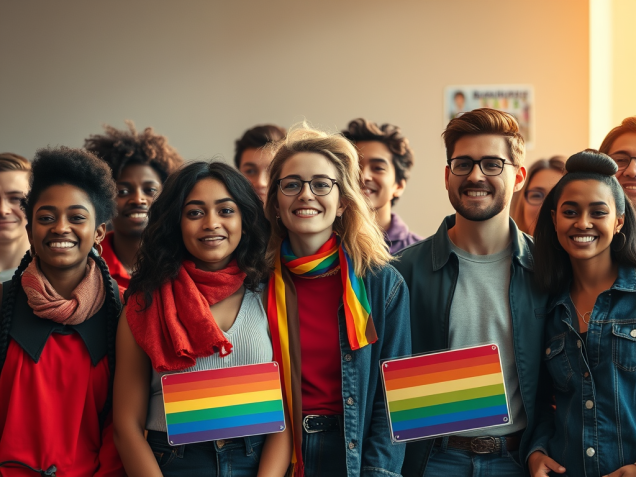
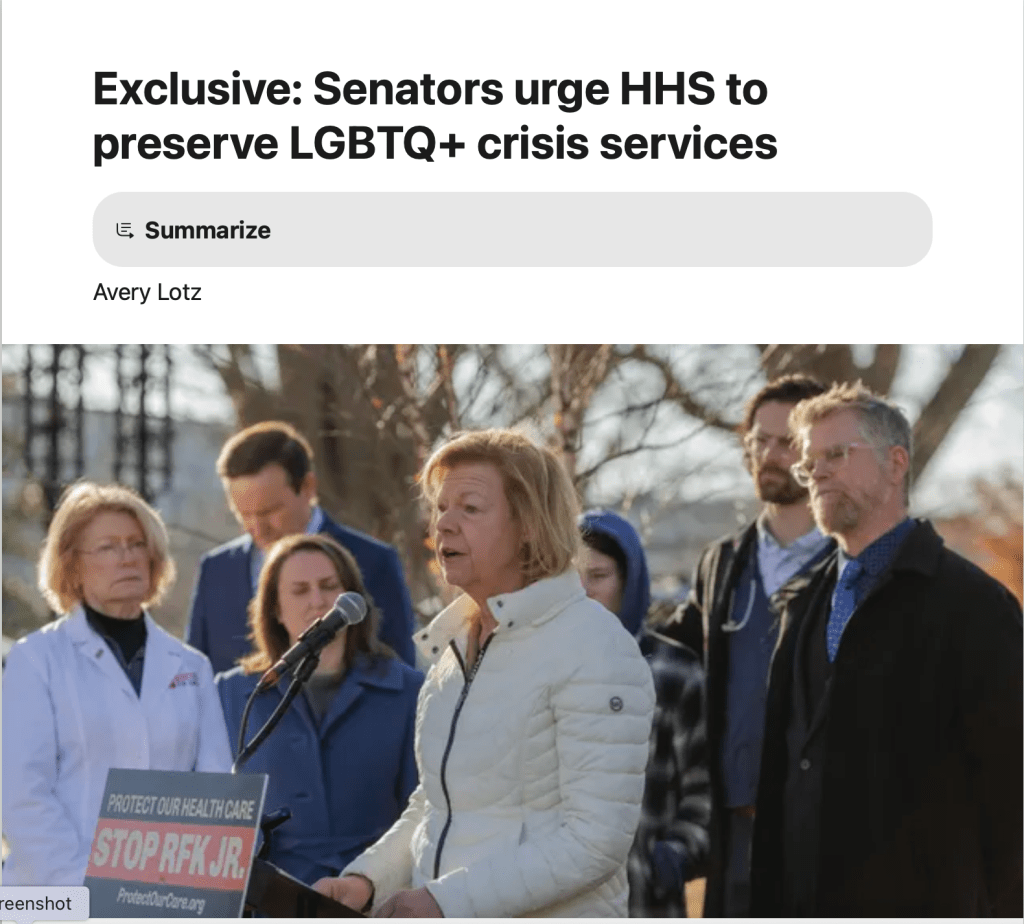


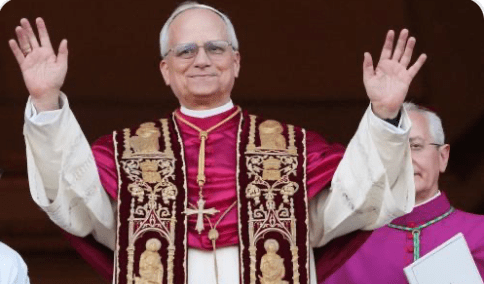

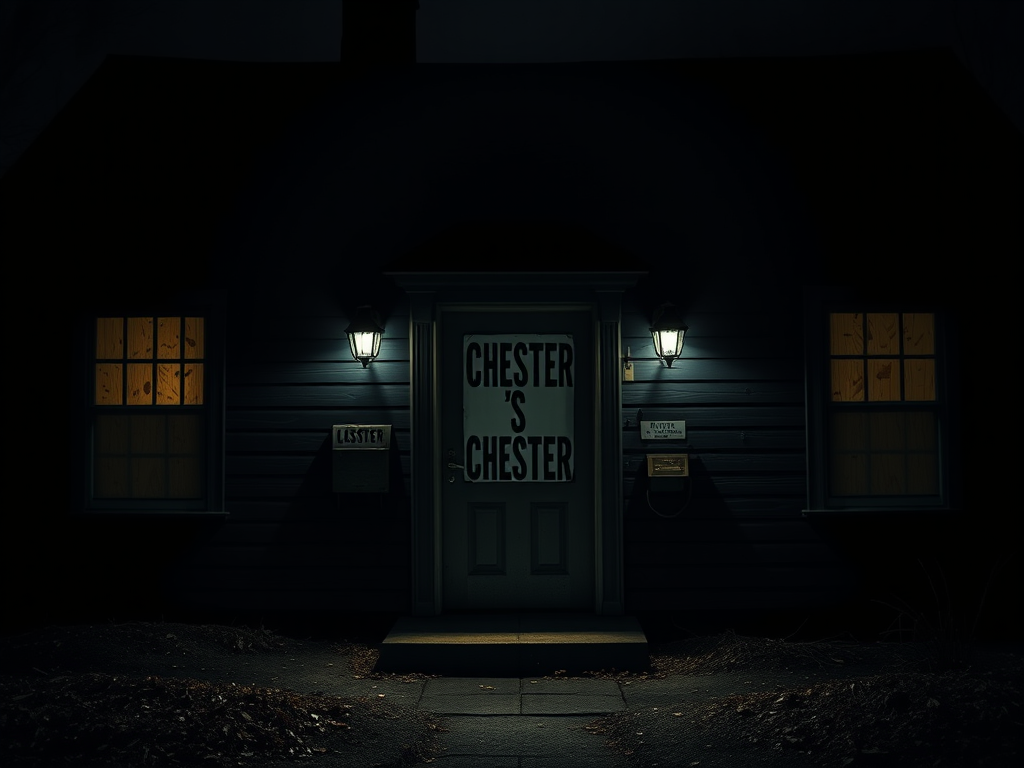








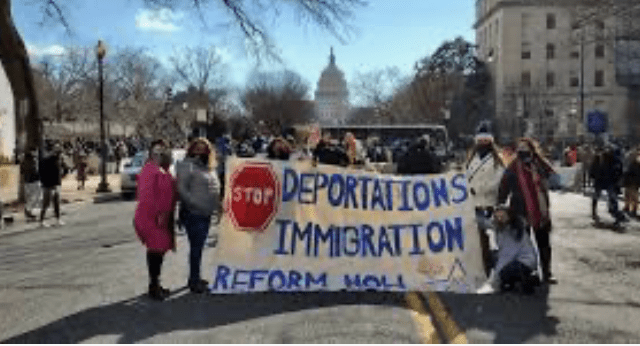







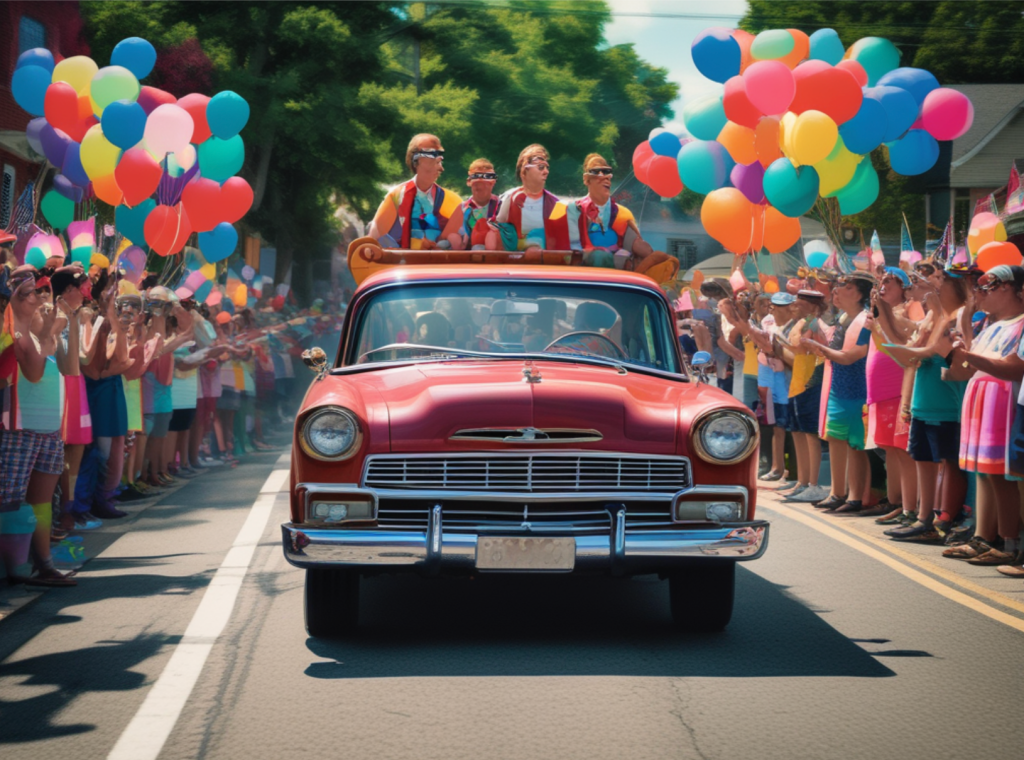
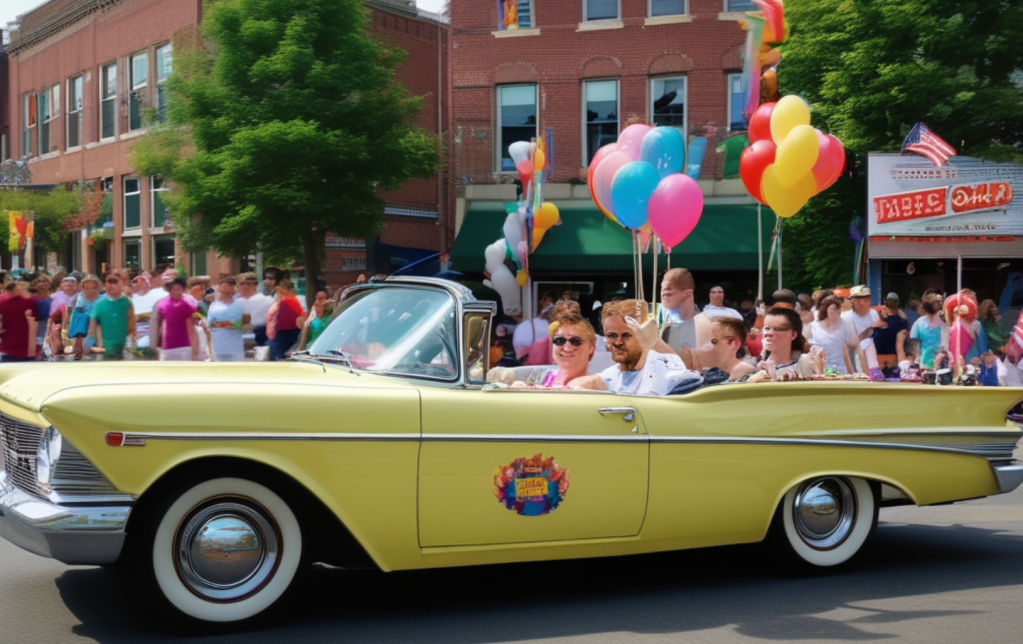
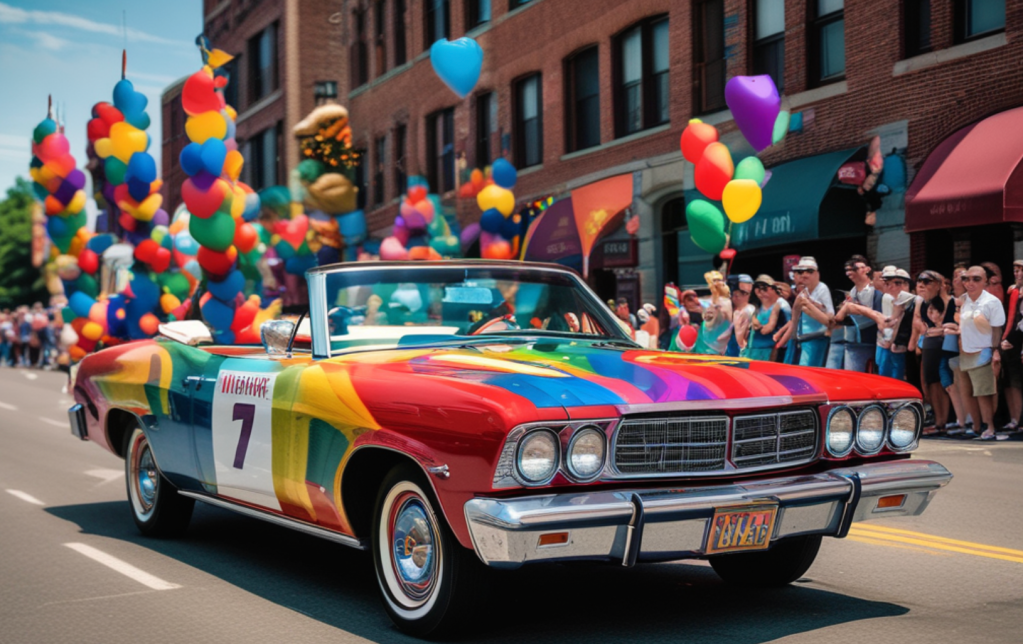





 benandsteve.com