Every year at this time, I am reminded of a harrowing story. It is deeply etched into Oklahoma’s collective memory: the Babbs Switch School Fire of Christmas Eve, 1924. It stands as a tragic lesson in safety, humanity, and resilience.
The Fire
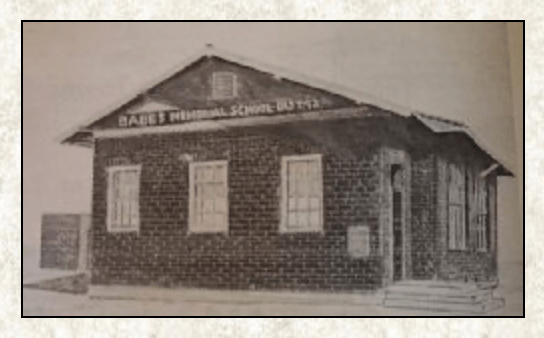
On that bitterly cold night, with heavy snow and sub-zero temperatures, 200 residents gathered. They met in Babbs Switch’s one-room schoolhouse for a Christmas Eve program. The school was tightly packed with engaged couples, grandparents, mothers, fathers, and children. The building’s windows were secured with wire mesh to deter intruders from the nearby railroad tracks. The sole exit—a door that opened inward—would soon become a deadly trap.
The program concluded with a teenage boy dressed as Santa Claus. He handed out toys and candy beneath a cedar Christmas tree. The tree was decorated with paper, tinsel, and lit candles. One of these candles brushed against the tree’s dry needles, igniting it instantly. Mrs. W.G. Boland, whose three children perished that night, later recounted the horror.
“I tried to beat it out with a paper sack,”
she said,
“but it did no good.”
Initially, the crowd laughed, believing the small blaze was being contained. But within moments, the flames engulfed the tree, the ceiling, and the entire structure.
Panic erupted.
The sole exit became a bottleneck as the crowd surged toward the door. Those at the back pushed forward, while the unlucky at the front got crushed in the chaos. Some attempted to pry open the wired windows, but their efforts were futile. Trapped inside, children, parents, and neighbors succumbed to the smoke and flames. Witnesses recalled the horrifying scene of people clawing at the exit. Bodies piled atop one another, and the acrid stench of burning flesh.
The Survivors
Among those who escaped was Lillie Biggers. She crawled out from under a desk clutching a doll she had just received. Her mother, Margaret, managed to get out but suffered severe burns to her hands and arms. Tragically, Lillie’s brothers, William, 9, and Walter, 15, did not survive. The Biggers family’s grief mirrored that of the entire community, where 36 lives were lost—half of them children. The belongings later identified the bodies of William and Walter. They carried a toy gun and a belt buckle.
The injured and deceased were transported to Hobart, the nearest town, where makeshift morgues were set up. The community’s response, known as the “Hobart Spirit,” saw residents drop everything to give aid and comfort. Newspaper accounts likened this effort to the Oklahoma Standard that emerged decades later after the Oklahoma City bombing.
Julie Braun with Mother Lillie’s Doll That Survived Fire
The Aftermath
The tragedy prompted a wave of reforms. Oklahoma legislators enacted fire safety laws requiring outward-opening doors, multiple exits, and accessible window screens in schools. Open flames were banned, and fire extinguishers became mandatory. The reforms eventually spread nationwide, though it would take more tragedies before they were fully adopted.
The morning after the Babbs Switch School Fire
A Missing Child
The story took a strange twist that turned it into a lingering mystery. Among the victims was three-year-old Mary Edens—or so it was believed. Her aunt, Alice Noah, escaped the building. She died days later. She claimed she had handed Mary to an unknown person outside the burning building. Mary’s body was never recovered, leading her family to hope she had survived.
In 1957, decades after the fire, a woman named Grace Reynolds came forth. She was from Barstow, California. She claimed to be the long-lost Mary. The Edens family reunited with her on Art Linkletter’s House Party television program, believing their prayers had been answered. Reynolds even wrote a book about her experiences. It is titled Mary, Child of Tragedy: The Story of the Lost Child of the 1924 Babbs Switch Fire.
But only some were convinced. A local newspaper editor who investigated the claim questioned its validity.
Skeptics noted inconsistencies in Reynolds’s story, but no definitive evidence confirmed or debunked her identity. To this day, the truth remains elusive.
Legacy
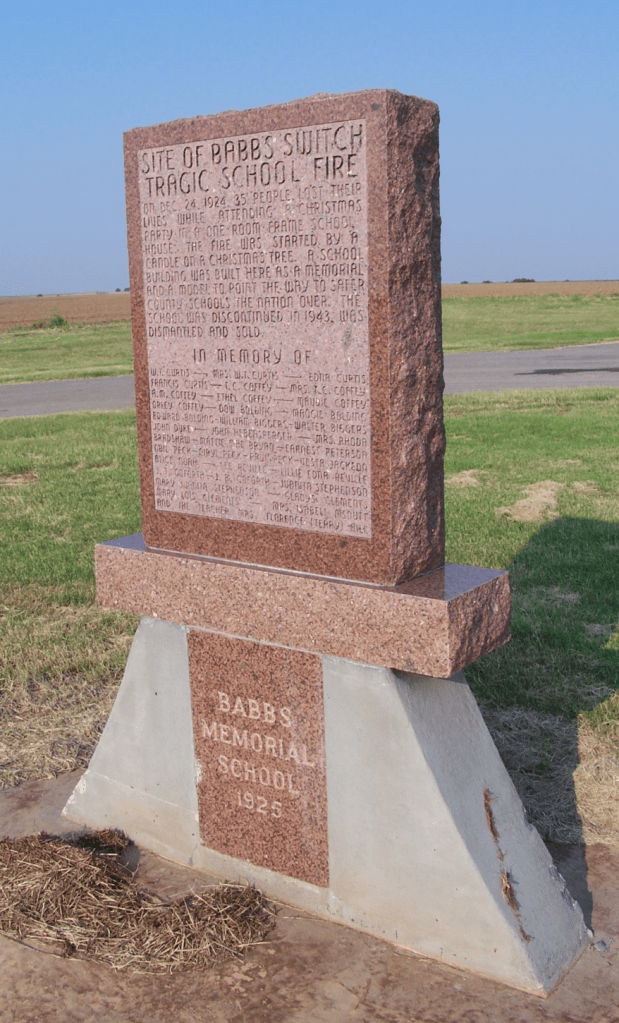
The Babbs Switch School Fire is remembered as one of the deadliest school fires in U.S. history. A stone monument now stands where the schoolhouse once stood, a quiet marker of lives lost and lessons learned. The physical scars of the tragedy have faded. Yet, its memory endures. It serves as a poignant reminder of the fragility of life and our enduring hope for safety and change.
Summer is the season when friendly faces return. Over the last two days, we’ve been lucky to welcome four dear friends into our lives again. One of them we hadn’t seen in nearly twenty years.
Our friend David moved away long ago in pursuit of new opportunities. We kept in touch online, and about a year ago, we sold his mother one of our cars. He trusted our word that the car was solid and dependable—and that trust meant a lot.
David and his spouse Josh flew into town Thursday. We already had our plans set. We planned to have dinner at our favorite Main Street spot, Christina’s Wildberry Restaurant. The food there is so good you’ll want to order extra sides. (And I do.)
We caught up on everything. David had moved on from California and now lives in Seattle, working as a film producer for Amazon. We had once caught a glimpse of him in a movie. We wondered if acting was his calling. Yet, he ended up behind the camera instead. The conversation flowed easily as we shared stories of the past twenty years. We talked about loved ones we’d lost. We discussed the changes in our lives. We even shared our various health battles. It was a wonderful reunion.
Back at home, yet, Otis—our ever-vigilant dog—was not quite as enthusiastic. He’s fiercely protective of our home, and new visitors throw his routine into chaos. He needed time to warm up: slow approaches, sniffing, backing off. Growling. Barking. Panting. It was a whole process. After a solid half-hour of cautious interaction, Otis finally accepted David and Josh. But his window of friendliness only lasted about five to ten minutes—just in time for them to leave.
And then came Saturday morning.
Otis had barely recovered from his last round of introductions. Then our friends Angie and Sasha showed up for breakfast—again at Christina’s Wildberry. But this time, Otis escalated. He was in full protection mode from the moment they approached the door. We strapped him into his safety vest. I controlled his lunges. As soon as the door opened, he exploded into noise. Growls, barks, lunges—the works. He reared on his hind legs like a wild stallion, roaring from the depths of his protective instincts. I had to scoop him up just so our friends was allowed to come inside.
We finally decided the best move was to leave for breakfast and give Otis a break. I would be the last one out. I unhooked his leash and bent down to reassure him.
“You’re in charge now,”
I said.
“Watch the house, and you’re free to bite anyone who tries to get in.”
His ears perked. Head tilted. Tail wagging. He jumped up with glee, clearly proud to be entrusted with such an important task. I locked the door and set the alarm—knowing full well that no burglar was getting past Commander Otis.
At the restaurant, our regular waitress Christine (no relation to the owner) greeted us with a smile. We always sit in her section. The service is consistently wonderful, and the food never disappoints. As we enjoyed our meal, we caught up on recent happenings. We also discussed the month ahead. We talked about my upcoming surgery in July. Not the easiest topic, but one that matters deeply among close friends. Angie and Sasha have supported us immensely. We rely on them more than words can express.
After breakfast, we walked next door to the wholesale closeout auction warehouse. It’s a local gem filled with Amazon returns and overstock items. It’s a weekly stop for us, and we nearly always walk out with a treasure or two. This time was no exception—we all left holding bags of bargains from the $10, $5, and $3 tables. The outer walls of the warehouse show moderately priced goods under $50. These include cooking gear, tools, and musical equipment.
But that’s where I had to call it a day. My legs gave out—one of the symptoms tied to my spinal disc issue. It’s why surgery is coming. I was brought home to rest in my easy chair while Steve, Angie, and Sasha continued the shopping mission.
They headed to the local children’s home thrift store. Steve found me a kitchen stool. It was a fantastic find that will make cooking much easier. It allows me to sit while preparing meals. He also scored a new cutting board, which we’ve been sorely needing. The one we’ve been using is over twenty years old and has clearly done its time.
Later, the crew returned home, showing off their finds and bragging about their deals. We laughed, relaxed, and soaked in the joy of good company.
It’s been a full couple of days, and yes, I’m tired—but I’m also grateful. Sharing time with friends is a blessing, whether we saw them last week or haven’t seen them in decades. Add a protective dog with a dramatic flair. Include a few great meals and a handful of discount treasures. You’ve got the makings of a truly memorable summer weekend.
Talk again soon. Say hello to the folks.
With love,
Benjamin, Steven and Otis
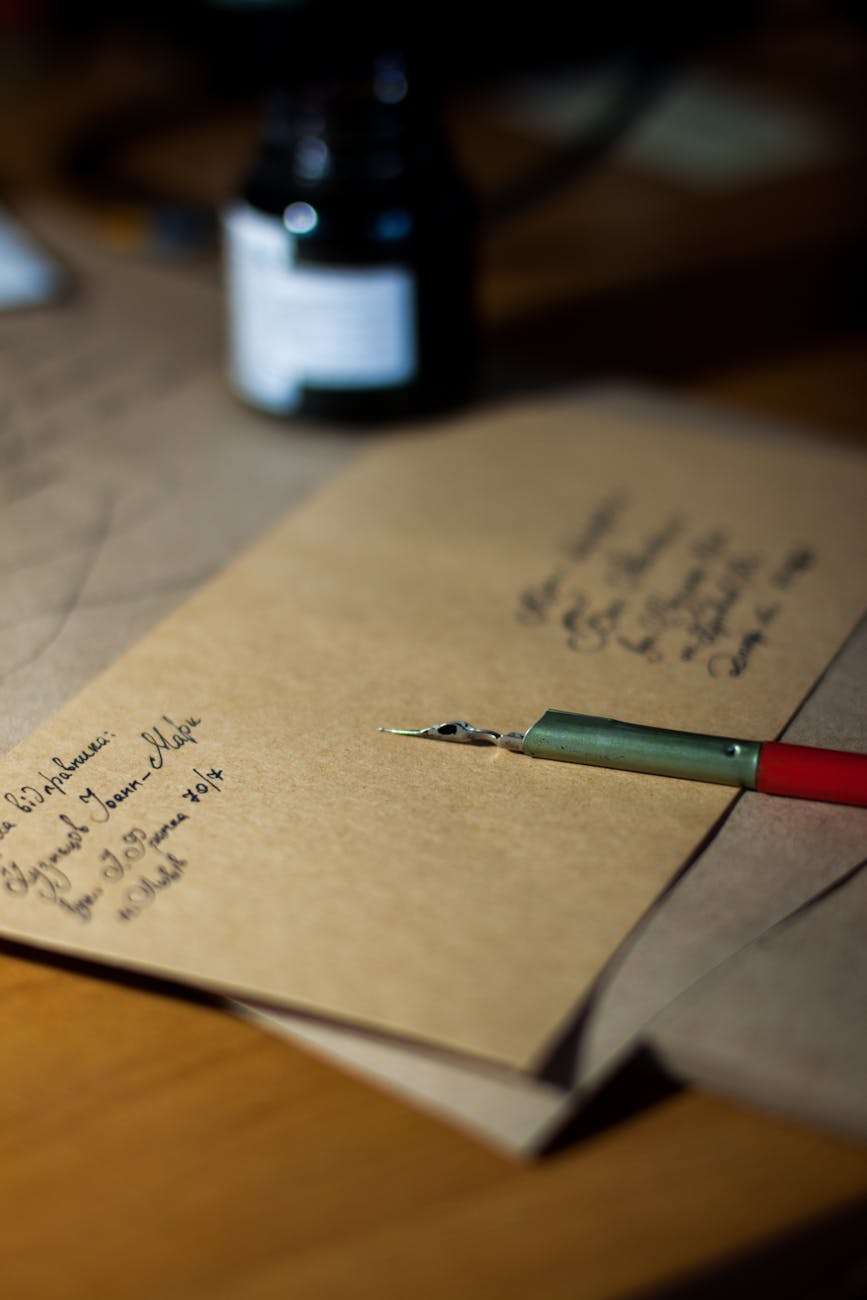
Friendly letters, once a cherished form of personal connection, have become increasingly rare in the U.S. Postal Service. Instant messaging, email, and social media have contributed to this shift. Handwritten notes and heartfelt letters have largely faded from everyday life. A stamped envelope once carried news, encouragement, or love across miles. Now, a quick text or emoji often takes its place. The art of letter writing has a personal touch and thoughtful pace. It has quietly slipped into nostalgia. It is an almost forgotten tradition in our fast-moving digital world.
A huge thank you to everyone who visited benandsteve.com and helped us surpass the incredible milestone of 5,000 visitors on Friday! We’re thrilled to see so many of you checking in, exploring what’s new, and sharing your support. Your enthusiasm and continued engagement mean the world to us, and we can’t wait to keep bringing you more exciting content.
In the small town of Fairview, the school principal, Mr. Harold Beasley, stood as a pillar of consistency and unwavering commitment. He wasn’t tall or short and carried a bit of a pot belly, always framed by his neatly pressed suits. His wire-rimmed glasses perched precariously on his nose, magnifying the keen intellect behind them.
Mr. Beasley was a whiz in math and science. He was often spotted in his office poring over the latest educational journals or solving complex equations just for fun. His passion for these subjects was palpable, spilling over into every interaction he had with his students and staff. But his brilliance in academia was matched by his unique sense of humor.
Mr. Beasley’s office was often filled with the sound of his hearty laughter, a testament to his unique sense of humor. His responses to students’ grumbles and grievances were always the same, laced with a touch of wit and understanding.
Rubbing his thumb and finger together and holding it up for a student to see after being asked for some special request he’d hold out his hand saying ––
“You know what that is? That is the world’s tiniest record player –– playing ‘My heart cries for you.”
He would then burst into hearty laughter, his belly shaking nearly busting the buttons on his shirt.
His responses to students’ grumbles and grievances were always the same.
“I can’t set up the schedule to please 250 students,”
He would say with a shrug.
And homework?
“It makes school days shorter.”
While his words might seem brusque, they were rooted in wisdom and fairness. Mr. Beasley knew that life wasn’t always about comfort; it was about learning and growing.
Over the decades, his straightforwardness and dedication earned him a mix of respect and frustration from students and fellow teachers alike. They might not always have liked his methods, but they couldn’t deny the results. Under his leadership, Fairview High consistently produced top-notch graduates who excelled in colleges and careers far beyond the town’s modest borders.
As the years passed, Mr. Beasley became a fixture at Fairview High, symbolizing stability in an ever-changing world. He celebrated countless graduations, always giving the same advice to departing seniors:
“Keep learning, keep questioning, and remember, the only limits are the ones you set for yourself.”
One crisp autumn morning, after fifty years of dedicated service, Mr. Beasley passed away peacefully. The news of his death spread quickly, casting a somber shadow over the town. The weight of his absence was felt by all who had been touched by his presence.
Even those who had butted heads with him over homework or school policies foun themselves reminiscing fondly about his impact on their lives.
Former students across the decades returned to Fairview, each carrying their treasured memory of Mr. Beasley. They spoke of his brilliant mind, quirky humor, and the lessons that had stayed with them long after leaving the school. John credited Mr. Beasley for his love of astronomy, and Maria credited him for inspiring him to become a mathematician because of his encouragement.
The school’s auditorium began filling with former students, teachers, and community members at the memorial service. As they shared their stories, one theme emerged: Mr. Beasley had not just been an educator but a mentor, guide, and friend. His legacy was not in the grades or the test scores but in the lives he had touched and the minds he had sparked.
In the end, Mr. Harold Beasley was remembered not just for his sharp mind and his tiny record player joke but also for his unwavering dedication to his students. He had spent his life teaching them not just about math and science but also about resilience, curiosity, and the importance of a good laugh. And that, more than anything, was his greatest lesson.
As the sun rose over the small town of Oakwood, its warm rays illuminated the rows of white headstones in the Oakwood Cemetery. The city, steeped in a rich history of honoring fallen soldiers, had always observed Memorial Day with solemn pride. This day, originally known as Decoration Day, was established after the Civil War to commemorate the Union and Confederate soldiers who died in the war. It has since evolved to honor all Americans who have died in military service.
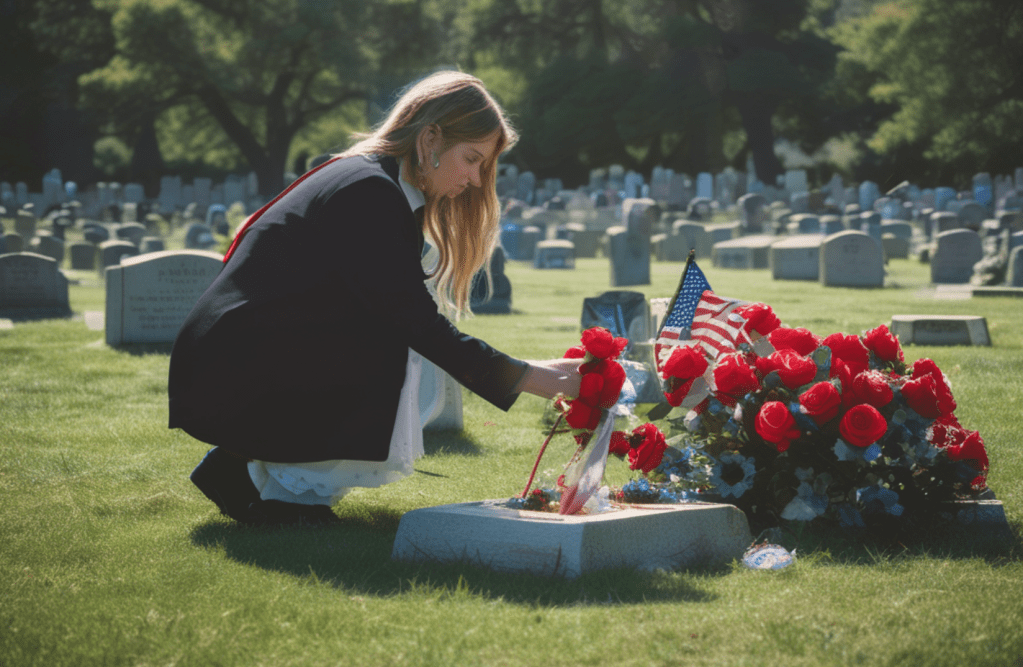
Sarah Thompson stood at the cemetery’s gate, holding a bouquet of red, white, and blue flowers. She was in her late thirties, her eyes reflecting sorrow and strength. Visiting the cemetery was her yearly ritual—a pilgrimage to visit the grave of her brother, Daniel, who had died in Afghanistan a decade ago.
As Sarah walked along the gravel path, she remembered the day they received the news. It had been a bright summer afternoon, much like today. Daniel had always been a source of light and joy in their family, with his infectious laughter and boundless energy. The knock on the door that day had shattered their world.
Sarah reached Daniel’s grave and knelt, gently placing the flowers in front of the headstone. She traced her fingers over his name etched in the cold stone and whispered a prayer. Memories flooded back—playing tag in the backyard, late-night talks about their dreams, and the tearful goodbye when he left for his final deployment.
The cemetery, a place of collective grief and remembrance, began to fill with others who had come to pay their respects. Families, friends, and fellow veterans moved among the graves, their shared sorrow palpable in the air. Some walked in silence, their thoughts a private tribute, while others shared stories, their voices a collective echo of the lives lost.
A familiar voice broke Sarah’s reverie. “Hey, Sarah.”
She turned to see Tom, one of Daniel’s best friends from high school, standing nearby. He held a small American flag, which he placed at the base of the headstone. Tom had served alongside Daniel and had been with him during his last moments.
“It’s good to see you, Tom,” Sarah said, her voice soft.
Tom nodded, his eyes filled with shared grief. “I come here every year. Feels like the least I can do.”
They stood in silence for a moment, their hearts heavy with the weight of their loss. Each lost in their thoughts, memories of Daniel flooding their minds. Then Tom began to speak, his voice steady but emotional, his words a testament to the bravery and selflessness of their fallen friend. ‘Daniel was the bravest person I knew,’ he said, his voice breaking with emotion. ‘He always put others before himself. Even in the end, he worried more about us than his safety.’
Sarah smiled through her tears. “That sounds like him.”
The morning wore on, and more people arrived, each carrying their own memories and gratitude. A group of children from the local school, accompanied by their teachers, placed flags on the graves of all the fallen soldiers, a symbol of their respect and understanding of the sacrifices made. The town’s mayor gave a short speech, his words echoing with the collective gratitude and remembrance of the community. A local choir sang ‘America the Beautiful,’ their voices a poignant reminder of the unity and strength that comes from shared values. The collective remembrance was a powerful testament to the sacrifices made by so many.
As the ceremony ended, Sarah and Tom lingered by Daniel’s grave a little longer. They shared stories, laughed, and cried, finding comfort in each other’s company.
“Thank you for being here,” Sarah said as they prepared to leave.
“Always,” Tom replied. “He was my brother, too.”
They returned to the cemetery gate together, the sun now high in the sky. As Sarah looked back one last time at the sea of white headstones, she felt a sense of peace. Memorial Day was not just about remembering the fallen; it was about celebrating their lives and the values they stood for.
Driving home, Sarah contemplated the significance of this day and how she would pass on its importance to her children. She understood that as long as they remembered, Daniel’s spirit would continue to live on. Every Memorial Day, she would return to this hallowed ground, ensuring that the memory of her brother and all those who had made the ultimate sacrifice for their country would never fade.
In checking references part of this story may include referencese similar to others found on the internet. The simularities are incidential and are not included intentional. You can find more these simularities RE: New York. Memorial Day. Monument. Dead Soldier. Wheelchair. Handicapped Boy. | Didier Ruef | Photography. https://www.didierruef.com/gallery-image/Aura/G0000Is39GN2Av9w/I0000aHlCvWVZLNc/C0000EU0LcXmMzWo/
The man whose loving heart brought conflict and rift with unexpected rewards he showered on others.
Charlie North was a familiar figure in the small town of Millbrook, known for his heart as expansive as the sky. He would readily abandon his own tasks to assist a neighbor with a leaky roof or chauffeur an elderly friend to a medical appointment. His acts of kindness and warmth were unparalleled, and everyone who crossed paths with Charlie held a special place for him in their hearts.
Yet, Charlie’s well-intentioned nature had a flip side that often led to discord: he was overbearing. His eagerness to assist frequently transformed into a forceful insistence that his approach was superior, and his constant involvement in others’ lives often left them feeling suffocated. This dichotomy of love and overbearingness earned him a mixed reputation.
One sunny morning, Charlie decided to help Mrs. Henderson with her garden. The widow was grateful for the help but soon became overwhelmed by Charlie’s detailed plans and strict schedules. He dictated the type of flowers to plant, the precise soil mixture, and the exact watering schedule. Mrs. Henderson, who enjoyed gardening as a leisurely and personal hobby, felt her joy drained by Charlie’s micromanagement.
“I appreciate your help, Charlie, but I think I’d like to do some of this on my own,”
Mrs. Henderson said, trying to sound polite.
Charlie was taken aback. He wanted to help, but he needed help to see how his thorough plans were anything but beneficial.
“But, Mrs. Henderson, if we don’t follow the schedule, the flowers won’t thrive as they should,”
he insisted.
As the weeks went by, similar incidents unfolded. At the community bake sale, Charlie’s meticulous organization turned into a rigid control. Initially, the townsfolk appreciated his dedication, but soon they felt stifled and unappreciated. The once vibrant community events started to lose their charm, replaced by a silent resentment towards Charlie’s overbearing ways.
One evening, as Charlie sat on his porch, his lifelong friend, Tom, joined him. Tom was one of the few people who could speak candidly to Charlie.
“Charlie, I’ve known you forever,” Tom began gently. “You’ve got a heart of gold, but sometimes you don’t realize how you come across to others.”
Charlie frowned, puzzled. “I just want to help, Tom. I want everything to be perfect for everyone.”
“I know you do, and that’s what makes you so special,”
Tom said, choosing his words carefully.
“But people need space to make their own choices, even if things don’t turn out perfectly.”
Determined to change, Charlie began to pull back. He continued to offer his help, but he consciously tried to listen more and dictate less. Charlie volunteered at the next community event but let others take the lead. He bit his tongue when things didn’t go as he would have planned, learning to appreciate the different ways people approached problems.
It was a difficult adjustment for Charlie, and he often felt the urge to step in and take control. But slowly, he noticed a difference. Mrs. Henderson’s garden flourished in its way; it was not perfect, but vibrant and full of life. The bake sale was a chaotic success, filled with laughter and camaraderie. People began to welcome Charlie’s presence again without the undercurrent of tension that had once accompanied his help.
Over time, Charlie found a balance. He channeled his love and generosity in ways that empowered others rather than overshadowing them. He was still the same Charlie North—big-hearted and always ready to lend a hand—but had learned to temper his overbearing nature. This transformation made him not only loved but truly appreciated, a testament to the power of self-awareness and the enduring strength of a loving soul.
That night, Charlie lay awake, wrestling with Tom’s words. He reflected on the times his help had been more of a hindrance, the faces of his friends and neighbors flashing through his mind—grateful at first but then strained and unhappy.
And so, Charlie’s story became one of growth and redemption, a testament to the power of self-awareness and the enduring strength of a loving soul.
The city of Riverton never slept, nor did Detectives Jake Harris and Sam O’Reilly. Partners for over a decade roamed the nocturnal streets with the kind of synergy only best friends could muster. Their squad car, an unremarkable blue-and-white cruiser, was a beacon of hope for some and a symbol of fear for others.
Jake, with his gruff exterior and piercing blue eyes, was the kind of cop who could read a crime scene like a book. Sam, a lean figure with a quick wit and a knack for defusing tense situations, complemented Jake perfectly. Together, they led the department in felony arrests, arriving at calls faster than anyone else and building relationships with the community that others could only dream of.
One brisk autumn night, their radio crackled to life with a call that made their hearts race: an armed robbery in progress at the 24-hour diner on 5th and Maple. Without a word, Jake hit the lights and sirens, and they sped through the dimly lit streets. They arrived in just under three minutes, a record even for them.
The diner was eerily quiet as they approached, save for the distant hum of neon lights. Inside, a masked man brandished a gun, demanding cash from the terrified cashier. Jake motioned for Sam to flank the back entrance while he took the front.
Jake entered slowly, his voice calm but authoritative. ––––
“Riverton PD, drop the weapon and come out with your hands up.”
The gunman whipped around, eyes wide with panic.
“Stay back! I’ll shoot!”
From the rear, Sam’s voice cut through the tension.
“No, you won’t. You don’t want to hurt anyone. Put the gun down, and we can talk.”
The gunman’s grip on the weapon faltered. In that split second, Jake lunged forward, disarming him with a swift, practiced motion. Sam was at his side instantly, cuffing the man and guiding him to the squad car.
As they processed the scene, the cashier, a young woman named Maria, approached them with tears in her eyes.
“Thank you. I don’t know what would’ve happened if you hadn’t come.”
Jake gave her a reassuring nod. “Just doing our job, ma’am.”
The rest of the night was a blur of paperwork and patrols. But their most memorable interaction came just before dawn. While cruising through a quieter part of town, they spotted a boy sitting alone on a bench, clutching a backpack to his chest. They pulled over, and Sam approached him gently.
“Hey there, buddy. Everything alright?”
The boy, who couldn’t have been more than ten, looked up with tear-streaked cheeks.
“I ran away from home. My parents are always fighting.”
Sam sat next to him, listening with the patience of a father and says –––
“I get it, kid. Sometimes, home can be tough. But running away won’t solve anything. Let’s get you back home and see if we can help sort things out.”
Jake contacted the boy’s parents while Sam spoke with him. The sun was peeking over the horizon when they returned the boy home. Now more worried than angry, the parents hugged their son tightly and thanked the officers.
As they drove back to the station, Jake glanced over at Sam, sighs then says –––
“Another night, another set of stories, huh?”
Sam chuckled. “Wouldn’t have it any other way.”
In Riverton, one could become a legend in the shadows, and for Jake and Sam, every night was another chance to protect and serve, forging connections and fighting crime in ways that others could only admire.
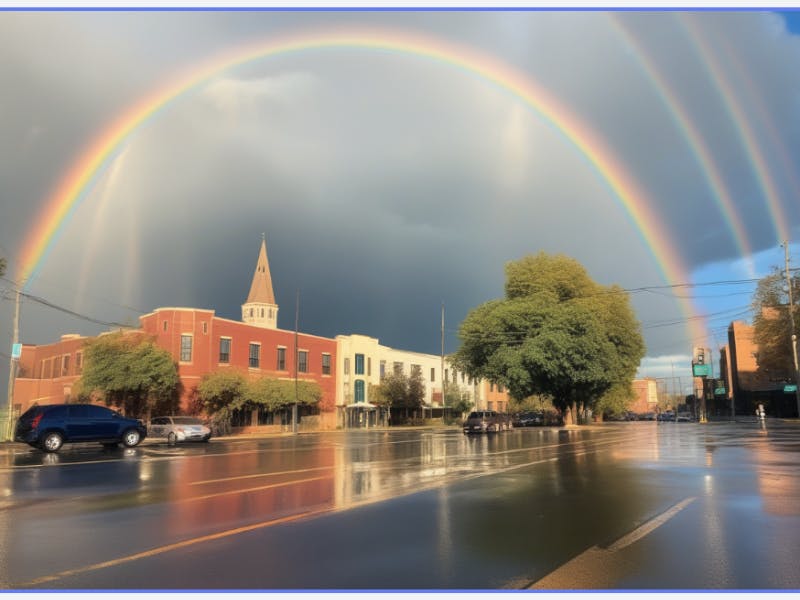
Once upon a time, in a small, unassuming town named Verdantia, an extraordinary phenomenon brought magic to the lives of its residents. Verdantia was known for its picturesque streets lined with red-brick buildings and verdant trees, but what truly set it apart was its ability to produce the most stunning rainbows anyone had ever seen.
One late afternoon, after a sudden downpour, the clouds parted, and the sun cast its golden rays across the wet streets. As the townsfolk went about their business, a magnificent rainbow began to form, arching over the town’s central square. It wasn’t just any rainbow; it was a double rainbow, with vibrant colors so vivid they seemed almost tangible.
The people of Verdantia, who had grown accustomed to the beauty of rainbows, stopped in their tracks, mesmerized by the sight. The rainbow appeared to touch down at two significant landmarks in the town—the spire of the old church and the ancient oak tree standing proudly at the intersection of Main Street and Elm.
As legend had it, Verdantia was a place where rainbows were believed to be portals to realms of wonder and enchantment. The townspeople knew this was no ordinary occurrence. The elders of the town, keepers of its history and secrets, gathered quickly. They had long awaited the appearance of such a rainbow, a sign foretold in their lore that marked the beginning of a special event known as the Festival of Lumina.
The Festival of Lumina was a rare celebration that took place once every hundred years, marked by a rainbow so grand that it stretched across the sky, connecting the past with the future, the ordinary with the extraordinary. This festival was a time when the boundaries between the human world and the world of magic blurred, allowing dreams and reality to intertwine.
As the double rainbow shimmered, a soft, melodic hum filled the air. Children giggled with delight, and adults felt a warm, nostalgic pull at their hearts. The air around the rainbow seemed to sparkle, and for a moment, time itself felt as if it had slowed down. From the base of the rainbow at the church, a figure emerged—a guardian of the ancient lore, known as Seraphina, the Keeper of Light.
Seraphina, with her radiant presence and flowing silver robes, held out a staff that glowed with the colors of the rainbow. She spoke in a voice that resonated like the soft chime of bells, “People of Verdantia, the time has come to celebrate the Festival of Lumina. Today, the veil between worlds is thin, and the magic of the rainbow is at your command.”
The town erupted in joyous celebration. Musicians played enchanting melodies, artisans displayed their finest crafts, and bakers offered sweet treats that seemed to shimmer with a magical glaze. Children ran around, chasing the elusive ends of the rainbow, hoping to find hidden treasures and secret wonders.
As evening fell, the rainbow’s glow intensified, casting a luminous light over Verdantia. The townspeople gathered under the ancient oak tree, where Seraphina led a ritual to honor the rainbow and its magic. She spoke of unity, hope, and the power of dreams, encouraging everyone to embrace the wonder within their hearts.
The Festival of Lumina continued through the night, with stories of old being shared around bonfires, and dances that seemed to weave through the very fabric of the rainbow’s light. As dawn approached, the double rainbow slowly faded, but the magic lingered in the hearts of the people.
Verdantia, forever touched by the beauty and enchantment of the rainbow, became a place where dreams were cherished, and the magic of the Festival of Lumina was remembered and celebrated in smaller ways every day. The rainbow city, as it came to be known, stood as a beacon of hope, joy, and the enduring power of wonder.
Earl’s Service Station was well known in town. It had to be. It was on the corner of Broadway and Main, downtown. Everybody in the city went to get their cars serviced, and the gasoline tank filled up there; they had to; it was the only gas station in the small town. Working in a gas station, Earl or his son Skip would wash the windows of cars while they were filling up. They would still be trying to scrub the bugs off the windshield on warm summer nights, long after the gas had clicked off.
Cars that didn’t need gas would pull in, and without being asked, he would get out to work on their windshield cleaning with squeegees and sponges. It was on the house because Earl had a “full service” operation. When you bought gasoline there, anytime you stopped in, you got service. Everyone knew that you didn’t have to purchase gasoline for the service. Earl provided the work because that was the reputation of his business.
It was the 1960s, and business ran steadily through the 1970s. However, as the 1980s crept in, a truckstop up the road near the big highway had put in giant tanks that held truckloads of fuel and could undersell Earl. It was self-serve, and the drivers had to clean their windshields. They’d have to check their oil and steering fluid, but now, all that didn’t matter.
Earl still had enough local customers and monthly charge accounts to keep his business open; repairing flat tires and selling accessories like windshield wipers, fluid, and antifreeze would keep him afloat. And it did through to the time he retired and handed the business over to his son Skip, who had been working in his father’s station since he was out of high school.
Skip noticed changes over the years, something more than people going to the big station up the road; the cars coming into the service station didn’t have bugs on the windshield. He had watched a television program a month or two earlier and remembered hearing about the windshield phenomenon.
It had a more scientific explanation, but Skip explained it to a group of local coffee drinkers as locals began noticing changes in their community due to the unnecessary killing of insects using insecticides that are too potent for their intended uses. The next phase would change the growth of trees in the region, which could harbor diseases that would wipe out other natural grasses and trees known to the area.
The coffee drinkers howled insults at Skip –––
Skip, you are the gasoline island science professor.
Another said,
Yeah, just like the professor on Giggi’s Island or whatever they named that old show.
The coffee drinkers had a good laugh on Skip’s behalf and left it at that. Skip went on about his business, knowing he was on to something. A few days passed, and an agent from the county’s local university agriculture extension program came into the service station for refueling. Skip introduced himself and said ––
Hey, do you have anything to do with bugs where you work?
The agent said –––
I do. I am responsible for a survey we do every Spring, Summer, Fall, and Winter. We have traps about twenty-five miles outside town and collect and count insects. See their type, how many, where they came from, and if they are locals or travelers. Why do you ask?
Skip replied –––
Windshields. There are hardly any bugs on windshields these days. When I was growing up, it took forever to scrub them off; now, there are hardly any.
The Agent replied –––
It is because of insecticides. The bugs are getting killed off in masses, and they are not coming back. When they do, it kills everything down the line and up the line. It just goes on and on!
The agent’s words hit Skip like a ton of bricks. The number of insects was plummeting drastically, and it was a catastrophe in the making. Without insects, entire food chains would collapse. No crops would get pollinated, leading to a scarcity of food for birds, amphibians, reptiles, and even us. The ripple effect was clear-as the frogs die off, the animals that feed on them would also perish, leading to a devastating impact on the entire ecosystem.
Skip said,
WOW! Such a chain of events is indeed a catastrophe; no one knows about it because all attention is focused on global warming.
The agent told Skip,
Well, only some of the attention. We are trying to educate farmers and homeowners living in rural areas about how to use insecticides and pleading with people not to kill off bee colonies. Plus, quit killing insects. We need them, ants and all, to survive. Remember, the insects will die off with global warming affecting them too; they can’t live where their habitat is changing and are no longer welcoming to their living conditions. It isn’t just the insecticides that we are dealing with. Some areas are turning into deserts; others are seeing floods, and others are experiencing storms like never before. These extreme weather events are all linked to global warming, which is also contributing to the decline of insects.
Skip told the agent that he had tried explaining the issue to his buddies at the coffee shop; however, they didn’t think he knew what he was talking about. The agent said you were right and good for you! I am interviewing with the local media. Tell your friends to watch for it this weekend.
On Sunday morning, Skip stopped at the local cafe for coffee with the crew. As he walked in, everyone began cheering.
“There’s the man” There’s Mr Smarts!”
It wasn’t until Skip sat down that he learned that the Agriculture Agent had referred to him in the interview as what an alert citizen was representative of; he had noticed the changes in his environment and said something.
An ‘alert citizen’ is someone who is observant and proactive in reporting changes in their environment, like Skip. Something so great caused the local agency to alert farmers to stop using all level 1 and 2 pesticides.
At least until the Extension Service looked into the lack of insects in the region. The news article then explained the importance of insects to the livelihood of all living creatures, just as the agent and Skip had talked about.
When a child gets lost in the forest a mother’s wisdom saves the day!
Once upon a time, in a small town located far away from the big cities between rolling hills and lush forests, there lived a young child named Alex. With their adventurous spirit, Alex was always eager to explore the world around them. But one sunny day, their curiosity led them into a problematic situation.
Alex ventured into the woods near their home on a warm summer afternoon. The air was thick with the scent of pine and earth, and the sunlight filtered through the canopy, casting a dappled pattern on the forest floor. With a sense of excitement bubbling inside them, they wandered deeper and deeper into the dense foliage, chasing after the fluttering wings of butterflies and the rustling of unseen creatures.
As the hours passed, Alex became utterly lost in the enchanting beauty of the forest. But as the sun began to dip below the horizon, panic started to set in. They realized they had strayed too far from home and had no idea which direction to go.
Frightened and alone, Alex’s heart raced in their chest. They called for help, their voice echoing through the trees. But there was no response, just the eerie silence of the forest at dusk. Tears welled up in their eyes as they sank to the ground, feeling a mix of hopelessness and fear.
Meanwhile, in the town, Sarah’s worry had transformed into a fierce determination. When her child didn’t return home at their usual time, she didn’t hesitate. She rallied a group of neighbors and friends, her unwavering love for Alex fueling their efforts.
With flashlights and determination in their hearts, they combed through the woods, calling out Alex’s name. Hours passed with no sign of the lost child, and fear gnawed at Sarah’s heart. Her worry turned into a desperate ache, her determination fueling her every step.
Just as she was beginning to lose hope, Sarah heard a faint cry in the distance. With renewed energy, she followed the sound, pushing through the underbrush until she stumbled upon a clearing where Alex sat, trembling and exhausted.
Relief washed over Sarah like a tidal wave as she rushed to her child’s side, her heart bursting with joy. Tears of happiness streamed down her cheeks as she whispered words of comfort and love, her voice a soothing balm to Alex’s trembling form.
Wrapped in their mother’s arms, Alex felt safe and protected, knowing that no matter their adventures, their mother would always be there to guide them home. And on that fateful day, Sarah’s unwavering love and determination saved Alex’s life, proving that a mother’s love knows no bounds. In the aftermath, they both learned the importance of staying close and the strength of their bond.
In a secluded cabin, nestled far from the clamor of the town, lived a gentle old soul, known to few but revered by those who understood her quiet strength. Her days were marked by solitude, yet she celebrated holidays and cherished moments as if surrounded by a bustling family. Her resilience was legendary, a testament to the indomitable spirit that dwelled within her.
Despite her solitude, the townsfolk viewed her with a mixture of curiosity and bemusement, dismissing her as a bit eccentric but harmless nonetheless. It wasn’t until a bashful young boy crossed paths with her that her story began to unfold.
In hushed tones, she confided in the boy, recounting a past filled with love, loss, and unspoken. She spoke of a time when her life brimmed with joy, her husband and sons by her side, their laughter echoing through the valley. But the ravages of war tore her family asunder, leaving her to weather the storms of sorrow alone.
With tears glistening in her eyes, she revealed the heart-wrenching fate of each beloved member lost to the cruel whims of fate. Her husband, called to duty in the Great War, her two sons spirited away by the tempest of World War II, and finally, her youngest, whose untimely demise on a desolate road robbed her of closure.
As the boy listened, his heart heavy with empathy, he dared to pose a question that lingered unspoken in the air. What if there was another, a grandson perhaps, who carried the legacy of her lost kin?
The old lady’s incredulous gaze met his, disbelief mingling with hope in her weary eyes. And then, like a beacon in the darkness, came the revelation – the grandson, lost to her for decades, now stood before her, a living link to the family she had mourned for so long.
With trembling hands and a heart brimming with emotion, she embraced the truth that had eluded her for years. In that moment, amidst tears of joy and disbelief, the lonely cabin was transformed into a haven of love and reunion.
As the boy revealed his identity, a grandson born from the ashes of tragedy and hope, the old lady’s heart swelled with a newfound sense of belonging. For in him, she found not just a descendant, but a beacon of love and remembrance, a testament to the enduring bonds of family.
And so, on that hallowed Mother’s Day, amidst the whispers of the past and the promise of the future, the little old lady found solace in the embrace of her newfound kin, her lost loved ones forever immortalized in the cherished memories they had left behind.
She told the boy the story of the little old lady who lived in a secluded cabin far from the bustling road. Few in the town knew she had her people, for she seemed self-sufficient. She would celebrate alone on holidays and special occasions, just as if she had a house full of family. Her resilience was a sight to behold, a testament to the strength of her spirit.
The townspeople thought she was a bit looney. But she didn’t bother a soul, so they let her be. One day, a shy young boy befriended the lady, and they began to talk. The lady told the boy about a world before when she had a husband and three sons. Her husband had brought her to the valley and began a farm here; she had helped toil the soil. Soon, she gave birth to a son, then another, and by year six, there would be a third son on the farm. Their happiness halted when the Government called the husband away to fight in World War I; she said she got letters from him up until the day she didn’t.
“He got killed somewhere over there. They never told me exactly where just in France on a battlefield.
The boys took care of the farming and made a good go of it, helping take care of the livestock and bringing income in that would pay for living expenses and build savings for the family, the little old lady explained to the boy. Then, when everything was going so well again, the Government called again and took two of my boys; it was World War II. They were gung-ho to go over there, promising me they would be back and bring a wife with them. Kidding me, they were going to share the wife. Sadly, I got the news on the same day they both died. Iwo Jima, why did they send them both into there? Didn’t they know? Didn’t someone care? I guess not!”
–– the little old lady said, still wiping tears away after all this time.
The young boy wondered why she was alone and thought maybe the last son had grown up and gone away and never returned. He didn’t want to ask. But the little old lady continued talking.
“My last son, the last one I had to hold on to, was working the farm and doing well, and I thought maybe he would be what we had dreamed of making this place be. But he was driving home from town and saw a young couple who appeared to have broken down on the side of the road. They were miles away from anyone, and if he didn’t stop, they could have died out there alone, so he stopped to help. As he was giving them a hand, they shot and robbed him, taking a One Dollar bill from his wallet, one that he carried for good luck, and a buckeye that he kept in his left pocket. Then, he rolled him over in a ditch like trash and took off in both cars.”
The young boy had tears in his eyes, thinking of the little old lady’s pain. She continued her story, –––
“He never came home. I knew something was wrong. I called the sheriff, and he came out and said he didn’t come home. Days later, they found his car in another state. A man on a tractor discovered his body about a month later. They said it was his. I never got to see him. Not one of my men got a decent send-off because of the way they died. I don’t know if I deserve one, either. I have stayed here, hoping that maybe everything they told me was wrong. And maybe someday, my husband and boys would come back to me. But no one has ever shown up.”
The young man quietly asked the little old lady, ‘ What if a grandson showed up? ‘ The little old lady, stunned, asked, ‘What you say?’ The young man said, ‘What if a grandson appeared instead?’
The little old lady replied, “I’d be damned because not one of my boys had been with a woman!”
The young man told the little old lady, “Well, one of them had, and you just found out about it now! One of your boys in the war that disappeared also had just married his sweetheart way ‘over there.’ She happened to be carrying his child when he had to go to Iwo Jima and got killed. And, he was going to call and tell you that if it weren’t for that battle getting him killed, you would have known about being a grandmother more than 20 years ago. After my mother died, I found pictures and details about my dad and where he is from and tracked him to you, so I know now that you are my family.
With a tear rolling down her cheek, the little old lady quietly says –––
“Well, one of them found a way to return on Mother’s Day.”
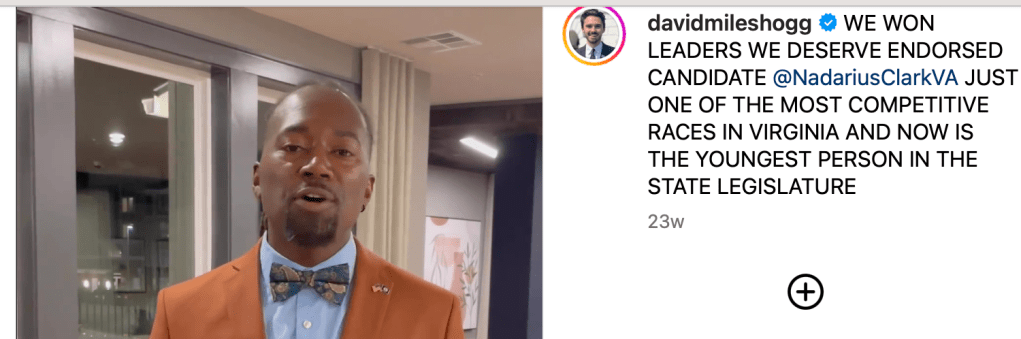
This election isn’t about pitting the young against the old. It’s about ensuring that Gen Z and Millennials, who constitute a significant third of our nation’s population, have representation that mirrors their presence.
David Hogg Leaders We Deserve PBS Interview
Although remembered as older, numerous influential leaders initiated their activism in their youth. We aim to support these leaders—like John Lewis, who embarked on a mission for vital change at a young age and became one of our country’s most pivotal and influential leaders.
Our goal is straightforward: elect more youthful leaders capable of introducing fresh perspectives into our government.
Numerous barriers have historically prevented young people from entering public service and achieving the representation they deserve. Those who support America for all should make every effort to assist young candidates in overcoming these obstacles.
Visit Leaders We Deserve
After the setbacks of 2016, the 2018 blue wave brought the Democratic Party a renewed recognition of the influence young voters wield. In 2020, Joe Biden’s election, which was largely driven by the substantial turnout from Millennial and Gen Z voters, showcased the power of youthful participation. Your voice matters, and your vote can shape the course of our nation.
Vist The Post On Leaders We Deserve Winning!
In 2022, young voters reaffirmed their electoral influence, thwarting the anticipated “red wave.” Emerging young leaders like Justin Jones in Tennessee and Maxwell Frost in Florida gained prominence. Groups like “Leaders We Deserve” also celebrated their first endorsement success with Nadarius Clark’s election in Virginia.
Listen To Interviewof radio interview
The benefits of electing young leaders extend beyond Gen Z and Millennials; they enrich the nation and shape our future. Commencing political involvement at a young age capitalizes on time, making it a potent political ally. Gen Z’s potential longevity in Capitol Hill eclipses many, underscoring the urgency of their ascent to power. The time to act is now.
If you resonate with a mission and aspire to bolster the election of deserving leaders in 2024 and beyond, please act to support feasible campaigns like “Leaders We Deserve” to support their endeavors or find a campaign that will help elect a Democratic Candidate to office.
A Vote For Trump Is A Vote Against Democracy! Remember, Vote Blue When You Do!
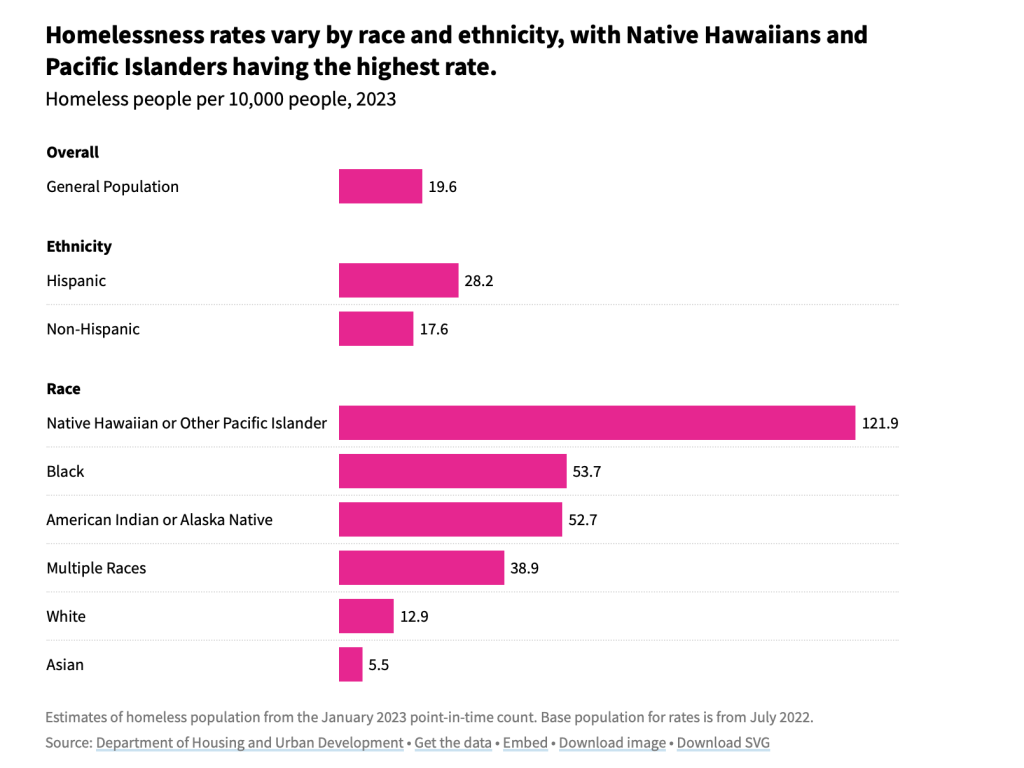
My household has always maintained a relatively liberal understanding of the country’s homeless situation. We disagree with outlawing their right to exist and have a place to live and shelter. They are, after all, doing the best they can with the current housing, employment, transportation, or other issues they face. Let them be!
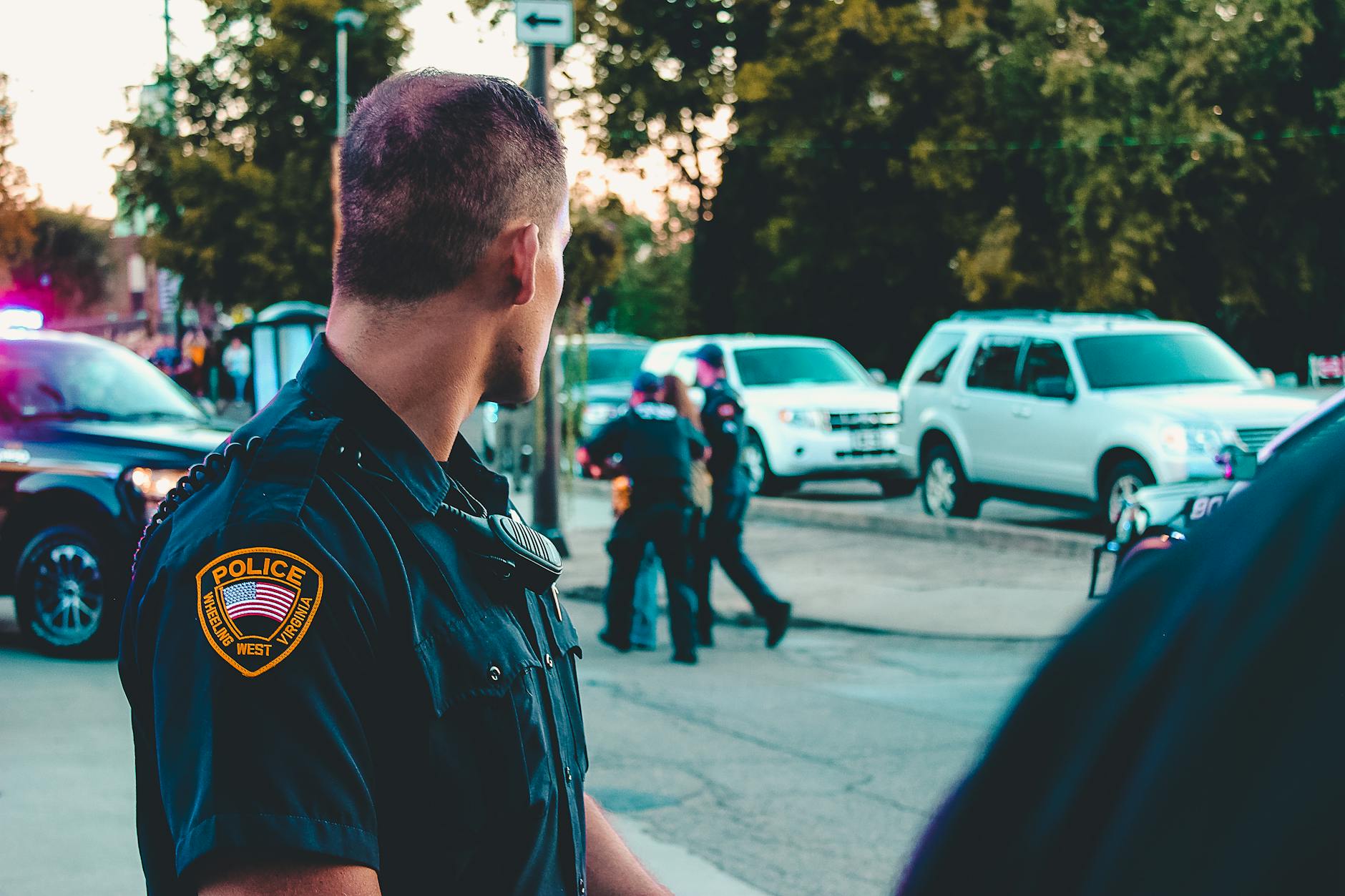
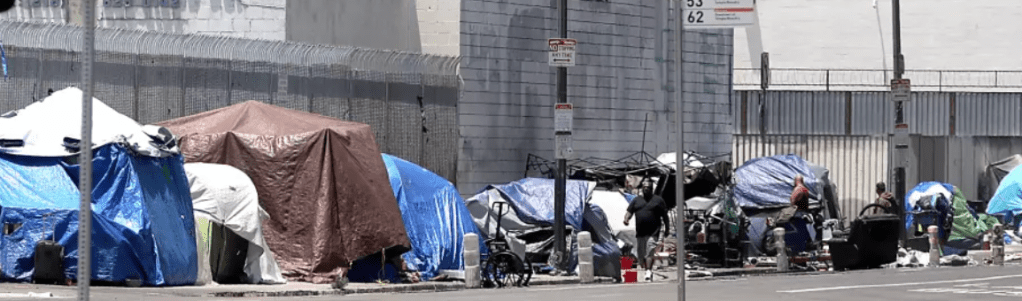
That is what our stance has been all along, until we went out to breakfast this past weekend and the police department was herding a group along the main boulevard we take to our restaurant. They appeared to be the characters you don’t want to run into in a dark alley at night—or daytime, for that matter. For Christ’s sake, were they planning to put roots down behind our neighborhood. We have a wall around the place, but salespeople always jump in and try to knock on doors. We have security but are not the type that can handle these characters. Every winter, we have a homeless troupe that typically arrives and camps near a river, but they are the same people every year, and they are like the snowbirds who flow in and out of the area from the north. These new homeless characters were of a family we never experienced before.
And that is what is scaring so many in America. The police found a suitable place for the troupe to travel on to, and there were no more sights of them after that initial spotting. But that is different for many in the country. These homeless populations inundate their communities, and it is an issue they have never before had to face. What if they are following suit? How many more will come? What problems will they bring with them? Will the property values deflate wherever they plant a stake? Jesus, are they diseased?
California has spent billions of dollars trying to fix its homeless problem and has failed to find a solution. The issue is greater there now than ever. Affordable housing remains unobtainable to those needing it. California is asking people to build tiny homes in their backyards, garages, wherever there is space, and make them available to house people. The problem is, if folks don’t want them in their alleys, will they want them in their garages?
Locally in Phoenix, Arizona. My husband hired an unhoused person years ago and knew she was, although she had not disclosed so on her introduction form. He worked with her schedule to make sure she kept her employment, and within six months, she was able to get a studio apartment, moving from her car. She then told him. He said he knew all along, and that is why he had worked so hard to keep her going, and she turned out to be one of the best employees. Such an example may not be the case with every person, but it is an example of how we can attribute ourselves to improving the situation one person at a time.
While feeling uneasy about sudden changes in your community is natural, it’s important to remember that homelessness is not a choice for many people. They often face a variety of challenges, including mental health issues, substance abuse, lack of affordable housing, and unemployment, which can contribute to their situation.
As for the broader issue of homelessness, it’s clear that a comprehensive and compassionate approach is needed to address the root causes and provide effective solutions. This approach may include increasing access to affordable housing, expanding mental health and addiction services, and providing job training and employment opportunities for homeless individuals.
The Supreme Court now has the issue, and the Lord only knows what they will come up with. But no doubt Texas will pass a law ordering the execution of all homeless people after 30 days of being homeless.
The documentary “1946: The Mistranslation That Shifted a Culture” delves into a controversial and thought-provoking topic that challenges conventional beliefs about the Bible and homosexuality. Directed by Sharon “Rocky” Roggio, the film examines the claim that the Bible originally did not mention homosexuality and that references to it were added due to mistranslation and misunderstanding of ancient Greek terms.
The film highlights the work of Christian scholars who delve into forgotten archives at Yale University to uncover the origins of this mistranslation. It argues that conservative Christians began to propagate this mistranslation in the 1970s to scapegoat the LGBTQ+ community and oppose their growing liberation movement.
Roggio, who identifies as a lesbian and is the daughter of an evangelical minister, engages in dialogues with her father throughout the film, attempting to find common ground and challenge his beliefs about homosexuality being a sin. This personal narrative adds depth and emotion to the documentary, as it explores the complexities of faith, identity, and acceptance within a family divided by differing views on sexuality and religion.
The documentary sheds light on the potential harm caused by misunderstandings and misinterpretations of religious texts, highlighting the real-world consequences faced by LGBTQ+ individuals who have been marginalized, discriminated against, and even persecuted due to these beliefs.
Overall, “1946: The Mistranslation That Shifted a Culture” offers a compelling perspective on a contentious issue, urging viewers to question and reevaluate long-held beliefs and encouraging dialogue, understanding, and acceptance.
Gay, Lesbian, Bisexual and Transgender National Hotline 1-888-843-4564. “The Gay, Lesbian, Bisexual and Transgender National Hotline provide telephone and email peer-counseling, as well as factual information and local resources for cities and towns across the United States.
Indeed, the economic conditions at the end of Trump’s term were challenging due to the pandemic, and Biden inherited an economy facing significant headwinds. The pandemic’s impact on the economy was unprecedented, affecting employment, consumption, and global demand.
However, public perception and political narratives often prioritize certain aspects of an administration’s performance while downplaying others. People’s opinions become shaped by various factors, including media coverage, partisan affiliation, personal experiences, and messaging from political leaders.
Trump had shut down the United States of America, a fact that nearly every American forgets today. They need to remember the closed stores, the empty shelves, the closed restaurants, the doctor’s office that had to refuse patients, hospitals that were so full no one could visit, and nursing homes where loved ones had to stand outside and wave to loved ones from the street, and Funeral Homes so full they were using rental refrigerator trucks to store bodies—the toilet paper shortages. That was Trump’s Administration. Biden had to clean it up. He received much blame for what must occur to get the nation back on track. But he got to work, and the country got back to life.
Here are a few points to consider when thinking about why public opinion might differ between Trump and Biden regarding the economy:
Partisan Bias: Political affiliations can heavily influence people’s views on the economy. Republicans may be more inclined to credit Trump for positive economic developments during his term and blame external factors like the pandemic for any downturns. Conversely, Democrats may be more critical of Trump’s handling of the economy and more forgiving of the challenges Biden faced upon taking office.
Messaging and Framing: Political leaders and media outlets shape public opinion. How economic data and policies get reported can influence people’s perceptions of the economy’s performance. Trump was known for touting positive economic indicators during his term, influencing public perception despite the broader challenges.
Another significant factor that shapes public opinion on the economy is personal experience. People’s direct economic situations, such as job loss, financial hardship, or financial gains, can profoundly impact their views. For instance, someone who experienced a job loss or financial hardship during Trump’s term might have a negative view of his economic policies. Conversely, if someone benefited from tax cuts or saw their investments grow, they might have a more positive perception. Complexity of Economic Issues: Economic conditions are influenced by a multitude of factors, including global trends, monetary policy, fiscal policy, and more. It can be challenging for the average person to parse through these complexities and assign credit or blame to a particular administration accurately.
In conclusion, public opinion on the economy is multifaceted, and partisan biases could dominate messaging, personal experiences, and the complexity of economic issues. While the data presented paints a challenging economic picture at the end of Trump’s term, public perception is by broader factors. And it is conveniently forgotten!
Florida has a new law that is designed to fill prisons.
‘We will catch you and we will prosecute you’: Florida Gov. Ron DeSantis is cracking down on retail theft – how he’ll ‘distinguish’ the state from ‘lawless jurisdictions’ https://t.co/ksBOXG9D7V via @flipboard
— benandstevecom Galaxy8News (@benandstevecom) April 17, 2024
Commercial Incarceration Facilities Prospering In Florida. Investments in private prisons contracted with Florida show favor with new laws designed to provide continous population on a rotational basis.
The growth and prosperity of commercial incarceration facilities in Florida have been a topic of debate and concern for many. Investments in private prisons have indeed increased in recent years, and this growth can be attributed to several factors, including new laws and policies that aim to maintain a steady population within these facilities.
One of the key issues often raised regarding private prisons is the potential conflict of interest that arises when profit motives intersect with the administration of justice. Critics argue that the financial incentives associated with running a for-profit prison may lead to practices that prioritize cost-cutting over the well-being and rehabilitation of inmates.
Proponents of private prisons, on the other hand, argue that these facilities can operate more efficiently than their public counterparts, potentially saving taxpayer money. They also point to contractual agreements that often include occupancy guarantees, ensuring a consistent revenue stream for investors.
However, concerns persist about the quality of care and services provided in private prisons, as well as the potential for abuse and neglect. Reports of overcrowding, inadequate medical care, and safety issues have raised alarm bells among advocates for criminal justice reform.
In Florida, the state has entered into contracts with private prison companies to house a portion of its inmate population. With new laws designed to ensure a continuous flow of inmates into these facilities, investors in private prisons may see this as a lucrative opportunity for growth.
It’s essential to approach the topic of private prisons with a critical lens, considering both the potential benefits and drawbacks associated with their operation. As the debate continues, policymakers, advocates, and stakeholders must work together to ensure that any expansion of private prisons prioritizes public safety, justice, and the well-being of inmates.
I recently sat down and tackled a project I had avoided for years. It involved a collection of hundreds of photos of my family. Photos, as far as I can tell, ever since the invention of the camera. Family members I knew, knew of, or who had died before I was born, all there staring back at me. I recollected many of the stories told to me by my grandparents, dad, and mother. So, with these stories, I want to begin sharing some photos with my regular mix of information. There are several already posted at benandsteve.com on the home page. You will also find updates on other pages on the site. ✌️🏼
Billy Idol was doing a cover of “Mony Mony“…a song written and performed originally by Tommy James and the Shondells in 1968. The meaning of MonyMony is simply…Mutual of New York Insurance Company. M-O-N-Y.
Tommy James explained in an interview: “Originally, we did the track without a song. And the idea was to create a party rock record; in 1968 that was pretty much of a throwback to the early ’60s. Nobody was making party rock records really in 1968, those big-drum-California-sun-what-I-sing-money-type songs. And so I wanted to do a party rock record.
And we went in the studio, and we pasted this thing together out of drums here, and a guitar riff here. It was called sound surgery, and we finally put it together in probably a month. We had most of the words to the song, but we still had no title. And it’s just driving us nuts, because we’re looking for like a ‘Sloopy’ or some crazy name – it had to be a two-syllable girl’s name that was memorable and silly and kind of stupid sounding. So we knew what kind of a word we had, it’s just that everything we came up with sounded so bad. So Ritchie Cordell, my songwriting partner and I, are up in my apartment up at 888 Eighth Avenue in New York. And finally we get disgusted, we throw our guitars down, we go out on the terrace, we light up a cigarette, and we look up into the sky. And the first thing our eyes fall on is the Mutual of New York Insurance Company. M-O-N-Y. True story. With a dollar sign in the middle of the O, and it gave you the time and the temperature.
I had looked at this thing for years, and it was sitting there looking me right in the face. We saw this at the same time, and we both just started laughing. We said, ‘That’s perfect! What could be more perfect than that?’ Mony, M-O-N-Y, Mutual of New York. And so we must have laughed for about ten minutes, and that became the title of the song.”
The Story Of My Grandparents May Hold Guiding Strengths For Us Today
(gifted clock)
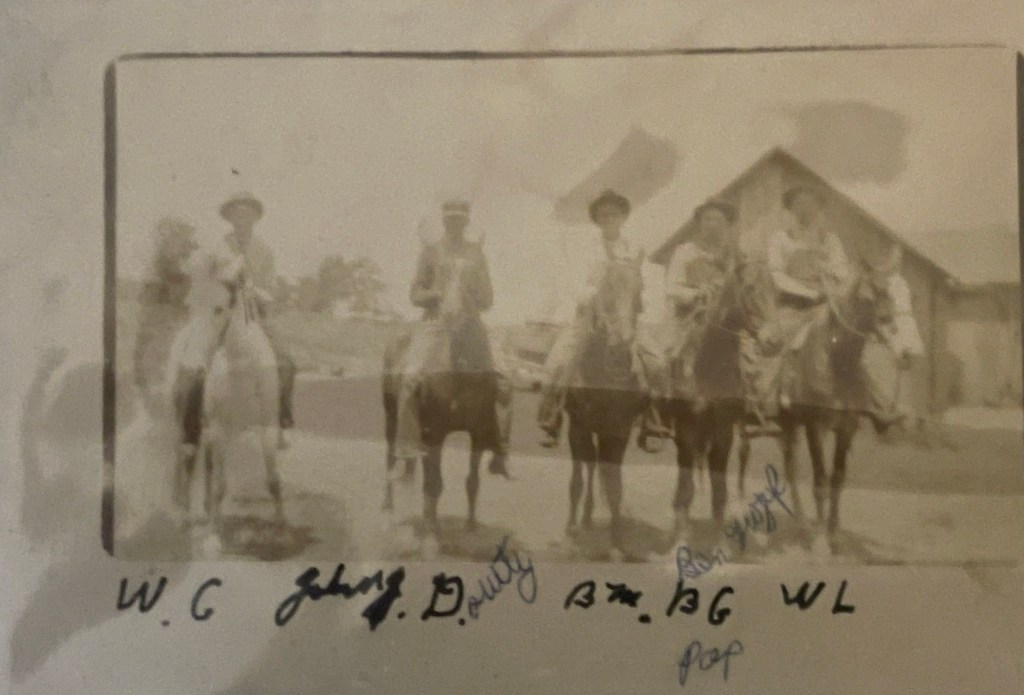
The story of my grandparents’ union goes back to August 10th, 1910. They wed on the Caddo and Washita County Line near where SH-152 is today, West of Cobb Creek. On that day, my grandfather, Benjamin Harrison Groff I., known as “Pop,” and my grandmother, Florence Lula McElroy, known as “Mom,” received a clock from Pop’s brother-in-law and sister, John and Laura Alice Groff Dowty. A piece of further history, Pop’s father was born in Switzerland, and Mom’s Father came into the world in Louisianna before its statehood.
It was in 1908 that Florence traveled with some of her siblings to the area to visit her brother Jim, who had married into the McLemore family. While visiting, she met Benjamin and fell in love; in those days, Ben was to ask her father for a hand in marriage before asking the bride. But Florence’s father was in that 3-state area of Texas, Oklahoma, and Arkansas and unable to travel due to his age. Economically, the to-be groom could not travel to the area. So, the agreement was that the bride’s oldest brother, John, would come to Eakly and consider Benjamin’s request for her hand in marriage. And John rode a horse from far southeast Oklahoma to Eakly, Oklahoma, for the request. The answer must have been yes because they wed.
Mom’s family lived in Southwest Arkansas, Southeast Oklahoma, and parts of Northeast Texas. They were within rock-throwing distance, and they never knew which state they were in. Her father was a Baptist preacher who led a fire and brimstone ministry and led by strict rule. He had fought in the Civil War, but on which side I never knew. The only answer I ever got was, “he fought on the right side.” There were twelve kids in the McElroy family. Some of them were dead by old age when I was born in 1963.
Groff BARN
The Groff family migrated from Illinois, where Pop’s father was a farmer. He was known for having a huge barn in the community. It is one of the only to have been built by his sons and stands without a single piece of iron or nail. The Groff Barn built by Ulrich Groff and his sons remained put together using carpentry skills Ulrich Groff’s father taught him from the old land as late as 2000.
Above a rowdy bunch together the Groff Brothers who built the all wood barn in Illinois, in the 1800s.
OTIS GROFF
in 1905 two sons, Otis and Benjamin, took advantage of the opening of land in Oklahoma and claimed property west of Cobb Creek, north of SH-152 and Highway 58. It was then known as 41 Highway and Alfalfa Road. The brothers built two homes; Benjamin’s was on the property where, over sixty-five years later, the baseball player from Eakly, Michael Moore, and his family would live. It is the same home where the couple, Mom and Pop, would later raise three children and adopt another unofficially, taking in others in need. The father of the boys, Ulrich, came to Oklahoma, but word was he was afraid of being attacked by Indians, so he went back to Illinois.
(Mom & Pop Wedding Day)
On the day of their wedding, sitting in a buggy along a dirt road west of Cobb Creek, a photographer was on hand to record an image of the couple, and then John Dowty handed them a new clock he had bought from a hardware store in Eakly. To keep their love from running out of time. The clock remained in their home, ticking every day since.
The couple had three children: Bennie Ulridge, Dortha Eliouse, and JD.
JD GROFF 14YOA. 1936
My dad, JD, is named after John Dowty. But the Mom and Pop wished to honor a man known as either Big John Dowty or Uncle John Dowty by using just the two initials, without an abbreviation. It sometimes appeared as a curse for my dad because he would go through life telling people who placed periods with J and D that they had incorrectly spelled his name. I have heard him say, “It’s two letters, and you mess it up!”
Ben H. ‘Pop’ Groff I
The Clock: Even after retiring from their farm and moving to town, they took the clock, which remained essential to their lives. It remained running, being cleaned at a clock repair once, only when Mom and Pop watched over the repair man like hawks. When they passed, it came to my parent’s home, where it sat on the fireplace mantel and went silent. When the day came for our family to sell our homeplace, I retrieved the clock and brought it to Arizona. My first task was to clean it. It keeps time great. It is picky and must be balanced, and its ticker has to be ‘set’ at just the right spot, or it will stop. It is picky about the key turning the spring up tight. The springs are old. So it is like an old violin and has to be handled with kid gloves. The wood is brittle and old, and the design is very ornate. It may not be to the liking of every modern setting. But, it is over one hundred years old and dear. And it holds many hours of memories of sitting at my grandparents, hearing its tick-tock, listening to their stories, worries, and hopes for the day.
Mom & Pop Groff
The older people were our glue. They would hold yearly family reunions after the harvest had ended. Celebrate every holiday grandly and make weekends and summers the most incredible escapes. Plus, they oozed with class and style. The character and morals they possessed are qualities sorely missed and that are needed today as we try to soar in this world of divided opinions.
When Good Guys And Gals Still Finished First. They Were Made To.
JD Groff & his Horse My Molly’s Reed
My dad was known for doing such things unselfishly. He had a reputation throughout Western Oklahoma as a trustworthy horseman and businessman. I found this article while going through clippings. I discovered that it had been stored in an attic at my parent’s home after my mother sold it to move in with relatives due to her age. I was born in 1963 and have never heard this story. I had listened to my grandmother speak of a story in national newspapers about my dad helping a man, but I thought it had something to do with his being in World War II. He never spoke much of the past and only looked to the future. Something that I became used to and have often found myself doing until I found boxes of memories that took me into the lives of my parents and grandparents and a life that I am proud of bragging about.
(The following piece was first presented on Quora when a question was poised by a Trump supporter.)
I’m a little perplexed by your attitude here – why does it need to be so adversarial?
Let’s be straight here, though: Democrats don’t want to stop you voting for whoever you please. That’s the nature of a democracy: everybody gets a voice, and you can use that voice as you see fit. If you want to vote for Donald Trump, go right ahead – just know that you’re telling us quite a bit about yourself when you make that choice, and it’s not a positive one.
This is the part, I suspect, that some Republicans don’t understand. Democrats largely wouldn’t want to stop you from voting, although we can’t say the same for Republicans, because they do want to stop people voting, judging by all the state-level attempts at voter suppression. What we want is for you to stop making such god-awful decisions when you do vote. We want you to pick someone that raises your aspirations and wants something better for you, rather than the lowest common denominator.
We get it: you want to “own the libs”, and you want someone that will aggressively go after those people who don’t agree with you. I can understand that: you guys don’t like your lifestyle or beliefs being challenged, and when you feel that way, you probably feel under threat, and the response some will take in that situation is to lash out. You’re letting people like Donald Trump do that on your behalf.
Problem is, when you make decisions like that, you’re only thinking about yourself or your local bubble, rather than what’s best for everyone. The United States isn’t a religious, social or political monoculture: it’s an inclusive society that has a diverse range of beliefs, opinions and choices. Any effective government exists not to promote just the well-being of a single group (e.g. white ‘conservative’ Christians), but rather to promote what’s best for everybody.
Your choices aren’t something I’d consider laudable: I won’t stop you making them, because you have to let people make mistakes in order to learn from them. But you’re out of your mind if you don’t think I won’t advocate better choices, or at least encourage you to see your mistakes for what they are.
So, by all means, vote for Donald Trump if you must, but recognise that I’ll disagree with your choice, and encourage you to make better ones. When I look at who to vote for, I’ll always aim for the person who has higher aspirations for the country, for who has a clear desire to break past partisan bickering and legislative logjam, and aim to do what’s best for everyone, including you. You and I both know that Donald Trump is mostly out there to do what’s best for himself, and that you’re okay with that provided he hurts those you don’t agree with.
Just remember that these things have a way of backfiring. You put an aggressive, adversarial and ignorant President into office, particularly one known for cheating, philandering and lying his ass off, and it’s only a matter of time before he turns against you, particularly if he doesn’t feel the need for you anymore.
I think you can do better. Actually, I think you must do better. That’s what being a “true American” is all about, after all: striving towards something that was better than what came before it. It’s rather worrying that too many Americans have forgotten that.
BENANDSTEVEDOTCOM THE INSTAGRAM.COM PAGE
INFORMATION AND MORE THAT MAY BE USEFUL IN DAILY LIFE.

































 benandsteve.com