A Cure For Monday Blues

Not too long ago, in the quaint town of Willowbrook, there were three inseparable friends: Alex, Maya, and Jake. They worked at the same bustling marketing firm, where Mondays were universally dreaded. However, these three had a secret pact to evade the Monday blues.

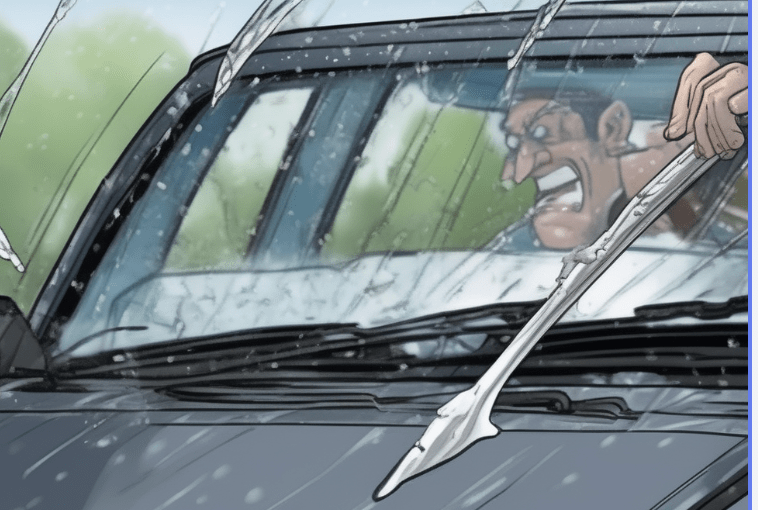
On Monday morning, as the sun peeked through the curtains, Alex, the creative genius of the trio, concocted a plan over breakfast. “Guys, I’ve got it! Let’s go on a spontaneous road trip!” Alex exclaimed, a mischievous glint in their eyes.

Maya, the adventurous spirit, beamed with liberation. “Yes! Let’s break free from the chains of mundane Mondays and create unforgettable memories instead!”

“Guys, I’ve got it! Let’s go on a spontaneous road trip!”

Jake, the pragmatic one, hesitated momentarily before a smile spread across his face. “Alright, but let’s make it epic.”

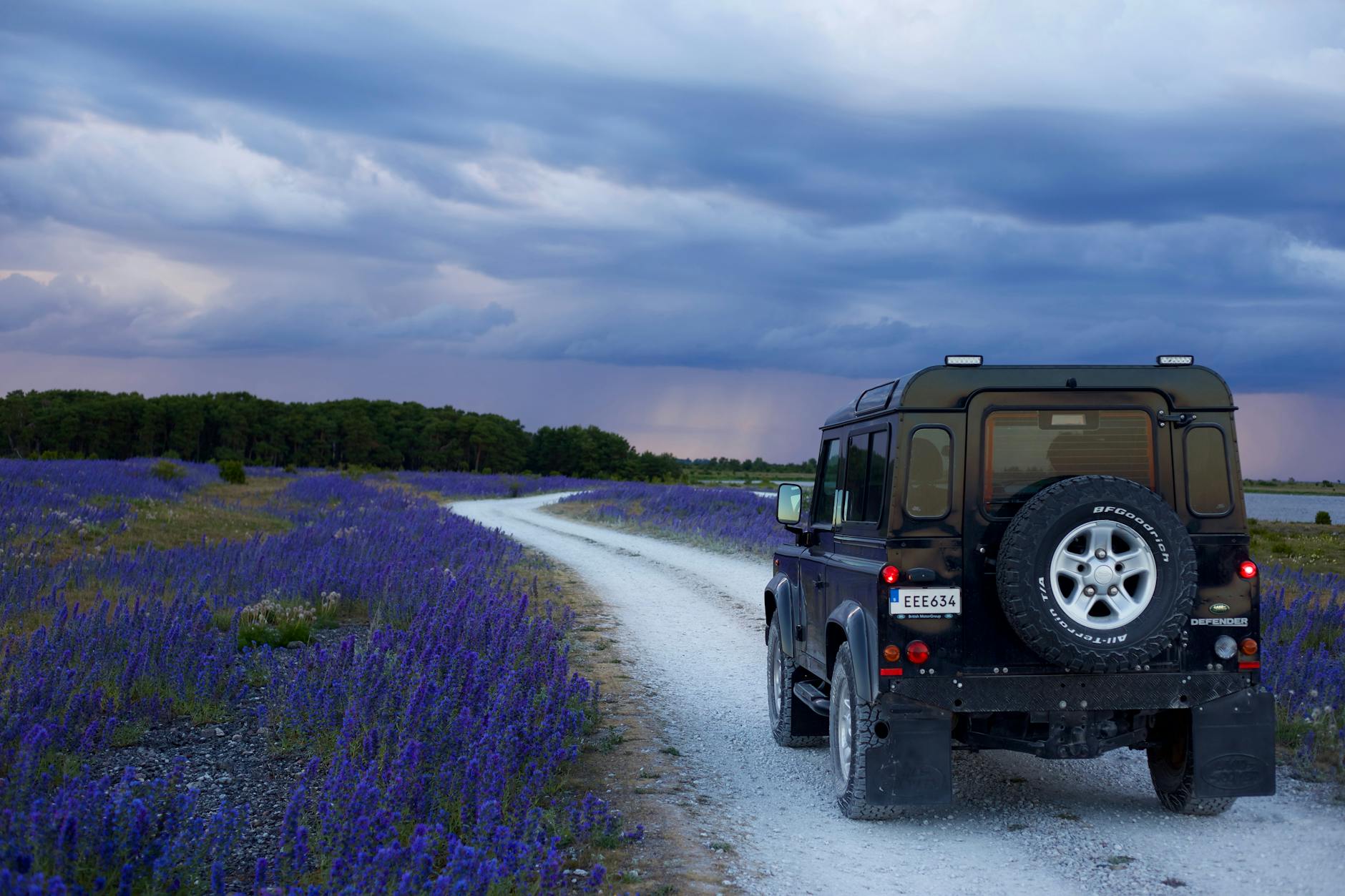
With that, they hastily packed their bags, loaded the car, and set off on an impromptu adventure. They drove through winding country roads, the sun’s golden rays filtering through the lush green trees, belting out their favorite tunes, stopping only for roadside attractions and delectable diners.

As they reached the picturesque town of Willow Grove, they stumbled upon a quaint bed and breakfast nestled amidst rolling hills. The owner, an eccentric but kind-hearted elderly lady named Mrs. Maple, welcomed them with open arms. “You must be tired from your journey,” she said, her eyes twinkling with warmth. “Come in, I’ve prepared some fresh lemonade.”

“We’re on the run from Mondays,” Maya confessed with a wink, and Mrs. Maple chuckled knowingly. “Well then, you’ve come to the right place, my dears. Here, every day feels like a Sunday.”

Their days were filled with laughter, exploration, and newfound friendships. They hiked through lush forests, discovering hidden waterfalls and secret clearings. They picnicked by sparkling streams, the sound of the water providing a soothing backdrop to their conversations. And they shared stories under the starry night sky, the twinkling lights above mirroring the joy in their hearts.

Meanwhile, back at the office, their absence raised eyebrows, but their colleagues couldn’t help but envy their spontaneous escapade. As they stepped back into the familiar hustle and bustle, a mix of nostalgia and determination filled their hearts. They were ready to face the challenges of the week, armed with the memories of their adventure and the strength of their friendship.

As the sun dipped below the horizon on Friday evening, painting the sky in hues of orange and pink, Alex, Maya, and Jake reluctantly bid farewell to Willow Grove. With hearts full of memories and souls rejuvenated, they returned home just in time for the weekend.

And though Monday morning loomed on the horizon, they faced it with a newfound resilience, bolstered by the strength of their friendship. They knew that with friendship and adventure, they could conquer anything—even the dreaded Mondays.

Hank and The Little Red Fire Truck

By: Helena

Fire Station 12 stood proudly in the heart of the bustling city, a symbol of protection and service. Named in honor of the fusion of Fire Stations 1 and 2, it held a legacy of bravery and dedication within its walls. At its helm was Hank, the seasoned veteran who had witnessed the evolution of firefighting firsthand.

Hank’s connection to the station ran deep, rooted in the early days when he and the Little Red Fire Truck epitomized heroism. Together, they had faced the fiercest blazes and emerged victorious, earning the community’s admiration. But as time passed, the dynamics shifted, and modernization took hold.

The Little Red Fire Truck, once a beacon of hope, now stood relegated to parades and backup duty. Hank, too, found himself on the sidelines more often, overshadowed by the younger firefighters and their state-of-the-art equipment. Yet, his dedication to the station never wavered.

Fate intervened on a warm afternoon when grass fires raged, and the station buzzed with activity. A desperate call for help echoed through the halls, signaling a mother and child trapped in a burning home. Hank knew he had to act swiftly with the other firefighters tied up on distant calls.

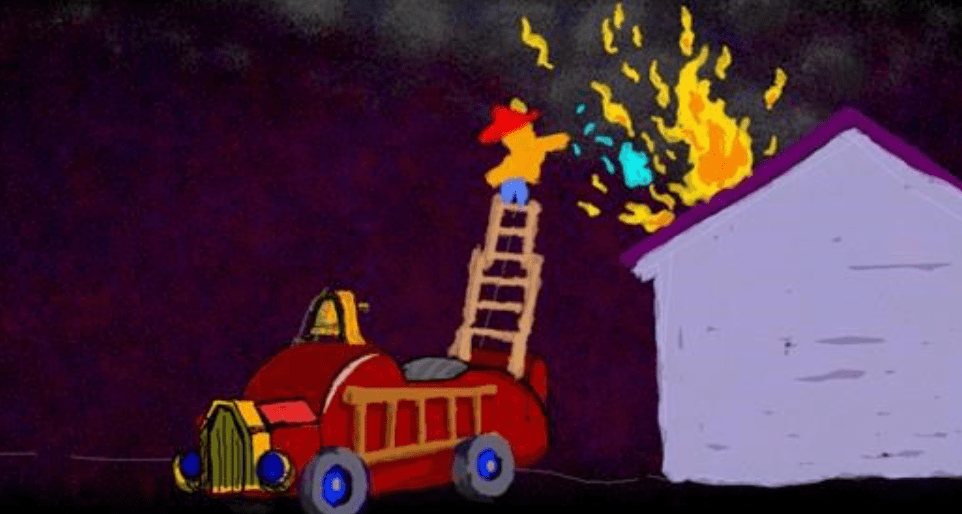
Without hesitation, he usurped the Little Red Fire Truck, a solitary figure against the backdrop of chaos. Ignoring protocol, he raced through the streets, the vintage engine roaring with renewed purpose. Upon Hank’s arrival at the scene, flames licked at the sky, and a crowd gathered, helpless.

Undeterred, Hank sprang into action, orchestrating a daring rescue. With precision born of experience, he deployed the aging truck’s capabilities, tapping into its reservoir of courage and resilience. Hank ventured into the inferno as the flames danced menacingly, emerging triumphant with the mother and child in tow.

The neighborhood erupted in cheers, and the world took notice, captivated by the spectacle of one man and his faithful companion defying the odds. Unbeknownst to Hank, his courage had transcended local acclaim, sparking a global wave of admiration.

But amidst the accolades, Hank remained grounded, his focus unwavering. As he extinguished the last embers of the blaze, a familiar figure approached – the Fire Chief, a mix of pride and relief etched on his face.

In a candid moment, the Chief revealed the bureaucratic hurdles that had hindered the station’s effectiveness, expressing a wish for more like Hank and his beloved Little Red Fire Truck. Yet, Hank, ever humble, pondered the Chief’s words, grappling with the shifting landscape of firefighting.

In the quiet moments that followed, as Hank bid farewell to another day of service, he found solace in the familiar embrace of the Little Red Fire Truck. With a promise to uphold its legacy, he embarked on the journey home, the echoes of the day’s heroics lingering in his heart.

For Hank, retirement loomed on the horizon, a bittersweet inevitability. But as long as the Little Red Fire Truck stood by his side, he knew their legacy would endure, a testament to the timeless virtues of courage, camaraderie, and unwavering resolve.

Mother Comes To The Rescue

When a child gets lost in the forest a mother’s wisdom saves the day!

Once upon a time, in a small town located far away from the big cities between rolling hills and lush forests, there lived a young child named Alex. With their adventurous spirit, Alex was always eager to explore the world around them. But one sunny day, their curiosity led them into a problematic situation.

Alex ventured into the woods near their home on a warm summer afternoon. The air was thick with the scent of pine and earth, and the sunlight filtered through the canopy, casting a dappled pattern on the forest floor. With a sense of excitement bubbling inside them, they wandered deeper and deeper into the dense foliage, chasing after the fluttering wings of butterflies and the rustling of unseen creatures.

As the hours passed, Alex became utterly lost in the enchanting beauty of the forest. But as the sun began to dip below the horizon, panic started to set in. They realized they had strayed too far from home and had no idea which direction to go.

Frightened and alone, Alex’s heart raced in their chest. They called for help, their voice echoing through the trees. But there was no response, just the eerie silence of the forest at dusk. Tears welled up in their eyes as they sank to the ground, feeling a mix of hopelessness and fear.

Meanwhile, in the town, Sarah’s worry had transformed into a fierce determination. When her child didn’t return home at their usual time, she didn’t hesitate. She rallied a group of neighbors and friends, her unwavering love for Alex fueling their efforts.

With flashlights and determination in their hearts, they combed through the woods, calling out Alex’s name. Hours passed with no sign of the lost child, and fear gnawed at Sarah’s heart. Her worry turned into a desperate ache, her determination fueling her every step.

Just as she was beginning to lose hope, Sarah heard a faint cry in the distance. With renewed energy, she followed the sound, pushing through the underbrush until she stumbled upon a clearing where Alex sat, trembling and exhausted.

Relief washed over Sarah like a tidal wave as she rushed to her child’s side, her heart bursting with joy. Tears of happiness streamed down her cheeks as she whispered words of comfort and love, her voice a soothing balm to Alex’s trembling form.

Wrapped in their mother’s arms, Alex felt safe and protected, knowing that no matter their adventures, their mother would always be there to guide them home. And on that fateful day, Sarah’s unwavering love and determination saved Alex’s life, proving that a mother’s love knows no bounds. In the aftermath, they both learned the importance of staying close and the strength of their bond.

A MOTHER’S DAY REUNION


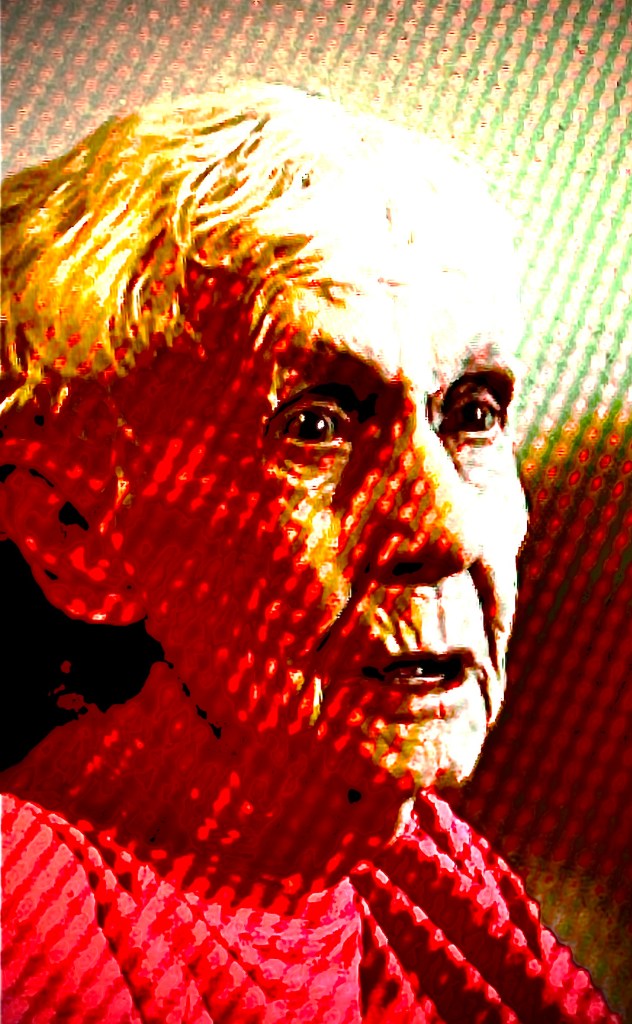
In a secluded cabin, nestled far from the clamor of the town, lived a gentle old soul, known to few but revered by those who understood her quiet strength. Her days were marked by solitude, yet she celebrated holidays and cherished moments as if surrounded by a bustling family. Her resilience was legendary, a testament to the indomitable spirit that dwelled within her.

Despite her solitude, the townsfolk viewed her with a mixture of curiosity and bemusement, dismissing her as a bit eccentric but harmless nonetheless. It wasn’t until a bashful young boy crossed paths with her that her story began to unfold.

In hushed tones, she confided in the boy, recounting a past filled with love, loss, and unspoken. She spoke of a time when her life brimmed with joy, her husband and sons by her side, their laughter echoing through the valley. But the ravages of war tore her family asunder, leaving her to weather the storms of sorrow alone.

With tears glistening in her eyes, she revealed the heart-wrenching fate of each beloved member lost to the cruel whims of fate. Her husband, called to duty in the Great War, her two sons spirited away by the tempest of World War II, and finally, her youngest, whose untimely demise on a desolate road robbed her of closure.

As the boy listened, his heart heavy with empathy, he dared to pose a question that lingered unspoken in the air. What if there was another, a grandson perhaps, who carried the legacy of her lost kin?

The old lady’s incredulous gaze met his, disbelief mingling with hope in her weary eyes. And then, like a beacon in the darkness, came the revelation – the grandson, lost to her for decades, now stood before her, a living link to the family she had mourned for so long.

With trembling hands and a heart brimming with emotion, she embraced the truth that had eluded her for years. In that moment, amidst tears of joy and disbelief, the lonely cabin was transformed into a haven of love and reunion.

As the boy revealed his identity, a grandson born from the ashes of tragedy and hope, the old lady’s heart swelled with a newfound sense of belonging. For in him, she found not just a descendant, but a beacon of love and remembrance, a testament to the enduring bonds of family.

And so, on that hallowed Mother’s Day, amidst the whispers of the past and the promise of the future, the little old lady found solace in the embrace of her newfound kin, her lost loved ones forever immortalized in the cherished memories they had left behind.

She told the boy the story of the little old lady who lived in a secluded cabin far from the bustling road. Few in the town knew she had her people, for she seemed self-sufficient. She would celebrate alone on holidays and special occasions, just as if she had a house full of family. Her resilience was a sight to behold, a testament to the strength of her spirit. 

The townspeople thought she was a bit looney. But she didn’t bother a soul, so they let her be. One day, a shy young boy befriended the lady, and they began to talk. The lady told the boy about a world before when she had a husband and three sons. Her husband had brought her to the valley and began a farm here; she had helped toil the soil. Soon, she gave birth to a son, then another, and by year six, there would be a third son on the farm. Their happiness halted when the Government called the husband away to fight in World War I; she said she got letters from him up until the day she didn’t. 

“He got killed somewhere over there. They never told me exactly where just in France on a battlefield.

The boys took care of the farming and made a good go of it, helping take care of the livestock and bringing income in that would pay for living expenses and build savings for the family, the little old lady explained to the boy. Then, when everything was going so well again, the Government called again and took two of my boys; it was World War II. They were gung-ho to go over there, promising me they would be back and bring a wife with them. Kidding me, they were going to share the wife. Sadly, I got the news on the same day they both died. Iwo Jima, why did they send them both into there? Didn’t they know? Didn’t someone care? I guess not!”  

–– the little old lady said, still wiping tears away after all this time.

The young boy wondered why she was alone and thought maybe the last son had grown up and gone away and never returned. He didn’t want to ask. But the little old lady continued talking. 

“My last son, the last one I had to hold on to, was working the farm and doing well, and I thought maybe he would be what we had dreamed of making this place be. But he was driving home from town and saw a young couple who appeared to have broken down on the side of the road. They were miles away from anyone, and if he didn’t stop, they could have died out there alone, so he stopped to help. As he was giving them a hand, they shot and robbed him, taking a One Dollar bill from his wallet, one that he carried for good luck, and a buckeye that he kept in his left pocket. Then, he rolled him over in a ditch like trash and took off in both cars.”

The young boy had tears in his eyes, thinking of the little old lady’s pain. She continued her story, ––– 

“He never came home. I knew something was wrong. I called the sheriff, and he came out and said he didn’t come home. Days later, they found his car in another state. A man on a tractor discovered his body about a month later. They said it was his. I never got to see him. Not one of my men got a decent send-off because of the way they died. I don’t know if I deserve one, either. I have stayed here, hoping that maybe everything they told me was wrong. And maybe someday, my husband and boys would come back to me. But no one has ever shown up.”

The young man quietly asked the little old lady, ‘ What if a grandson showed up? ‘ The little old lady, stunned, asked, ‘What you say?’ The young man said, ‘What if a grandson appeared instead?’ 

The little old lady replied, “I’d be damned because not one of my boys had been with a woman!” 

The young man told the little old lady, “Well, one of them had, and you just found out about it now! One of your boys in the war that disappeared also had just married his sweetheart way ‘over there.’ She happened to be carrying his child when he had to go to Iwo Jima and got killed. And, he was going to call and tell you that if it weren’t for that battle getting him killed, you would have known about being a grandmother more than 20 years ago. After my mother died, I found pictures and details about my dad and where he is from and tracked him to you, so I know now that you are my family.

With a tear rolling down her cheek, the little old lady quietly says ––– 

“Well, one of them found a way to return on Mother’s Day.”

~ The Hardest Decision ~

In the quiet corners of her home, Sarah sat her mind adrift in a sea of conflicting emotions. Her mother, once vibrant and robust, now frail and in need of constant care, sat in the living room, a mere shadow of her former self. It had been a long and arduous journey, filled with sleepless nights and endless worry. But now, Sarah faced the most challenging decision of all – the decision to place her mother in a nursing home.

“Mom, I need to talk to you about something important!”

“What is it Dear” Her Mother Asked?

The idea had lingered in Sarah’s mind for months, whispered in hushed tones by concerned family members and well-meaning friends. Each time, she pushed it away, unwilling to confront the reality of the situwation. But as her mother’s needs grew more demanding, Sarah knew she could no longer ignore the inevitable.

With a heavy heart, Sarah approached her mother, her hands trembling with uncertainty. “Mom,” she began softly, “I need to talk to you about something important.”

Her mother looked up, her eyes clouded with confusion. “What is it, dear?” she asked, her voice tinged with worry.

Taking a deep breath, Sarah explained the situation as gently as possible. She spoke of the challenges they faced and the toll it was taking on them. She spoke of the nursing home – a place where her mother could receive the round-the-clock care she needed, where she would be safe and well looked after.

Her mother listened quietly, her expression unreadable. When Sarah finished, there was a long silence, broken only by the clock ticking on the wall.

Finally, her mother spoke, her voice barely above a whisper. “I understand, dear,” she said, her words heavy with resignation. “I know you’re doing what’s best for me.”

Tears welled up in Sarah’s eyes as she embraced her mother tightly. “I love you, Mom,” she whispered, her voice choked with emotion.

“I love you too, dear,” her mother replied, returning the embrace with feeble arms.

In the following days, Sarah worked tirelessly to find the perfect nursing home for her mother. She visited countless facilities, asking questions, taking notes, and carefully weighing her options. When she finally found the right one—a place that felt warm and inviting, with caring staff and a peaceful atmosphere—she knew she had made the right choice.

On the day of the move, Sarah held her mother’s hand tightly as they walked through the doors of the nursing home together. There were tears and moments of doubt, but through it all, Sarah remained steadfast in her decision.

As she watched her mother settle into her new surroundings, Sarah felt a sense of relief wash over her. It wasn’t an easy decision, nor one she had ever imagined having to make, but in the end, it was the right one – for both her and her mother.

And as she kissed her mother goodbye, promising to visit often and never forget her, Sarah knew that, even though their journey had taken an unexpected turn, they would face it together, with love and understanding guiding their way.

A SMALL TOWN VOLUNTEER AMBULANCE TEENAGE DRIVER

BenG

AT 16 YEARS OLD I VOLUNTEERED AS A DISPATCHER FOR OUR POLICE DEPARTMENT AND AMBULANCE SERVICE. I DROVE HALF THE PEOPLE IN OUR TOWN TO THE HOSPITAL THIRTY MILES AWAY.


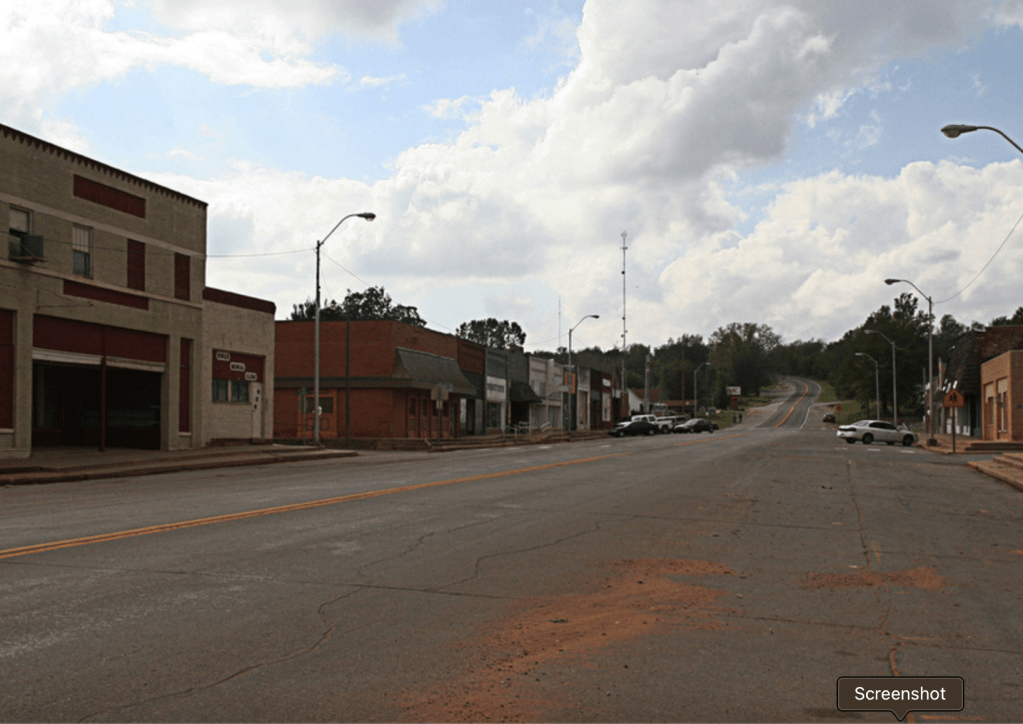
In the quaint town of Binger, nestled amidst rolling hills and whispering woods, life moved at its own unhurried pace. It was the 1970s, and I, at the tender age of sixteen, found myself immersed in the h.eart of the community as a volunteer dispatcher and ambulance driver.

Binger boasted a modest population of 850 souls, a close-knit tapestry of neighbors who looked out for one another. Our town’s medical emergencies were once tended to by the local undertaker, a man of solemn demeanor and a heart of gold. But as time marched on, age had caught up with his trusty driver, rendering him unable to steer the old ambulance through the town’s winding streets.

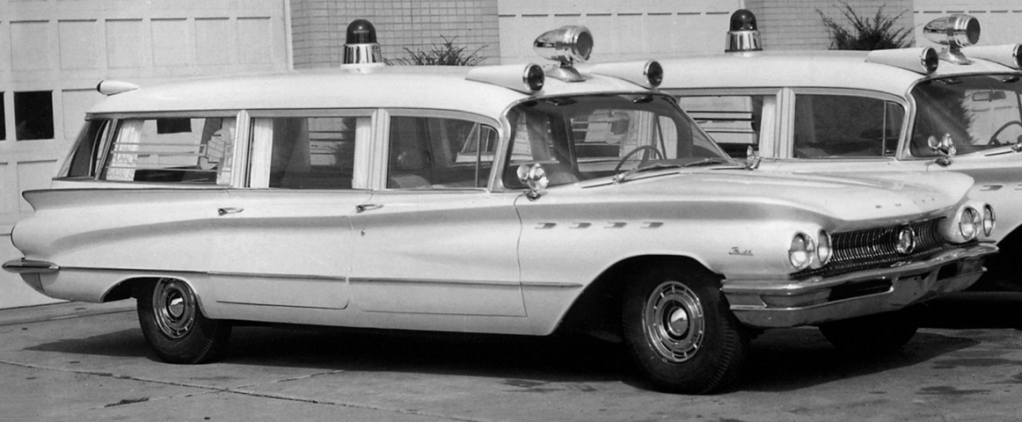
With a sense of duty and a touch of nostalgia, the undertaker donated his faithful 1962 Buick station wagon to serve as our makeshift ambulance. It was a relic of bygone days, rigged with flashing lights, a wailing siren, a sturdy stretcher, and a precious oxygen bottle. Thus, a new chapter unfolded in Binger’s history, with a rotating roster of ten volunteers, including myself, standing ready to answer the call of distress.

In those days, the rhythm of life was punctuated by the shrill ring of the telephone, summoning us into action. I would leap into the driver’s seat, adrenaline coursing through my veins, as I raced through the streets, navigating the twists and turns with practiced precision. The urgency of the situation would lend wings to my feet as I rushed to the aid of my fellow townsfolk.

The years rolled by, and Binger evolved. In 1978, the benevolent gesture of the Chevrolet dealer brought a gleaming new station wagon into our midst, a symbol of progress and prosperity. We felt like modern-day heroes, equipped with state-of-the-art technology to serve our community.

But as the 1980s dawned, change swept across the land. The state enacted stringent laws mandating EMT training and certification for ambulance attendants, a noble but burdensome requirement. Our volunteer organization, unable to meet the new standards, faced dissolution.

With heavy hearts, we bid farewell to an era marked by camaraderie and selflessness. The nearest ambulance service now lay twenty-eight miles away, a stark reminder of the passage of time and the inexorable march of progress.

Yet, amidst the bittersweet farewell, the spirit of Binger endured, a testament to the resilience of small-town values and the enduring bonds of community. And though our roles as volunteer dispatchers and ambulance drivers may have faded into memory, the echoes of our service reverberated through the annals of time, forever etched in the fabric of Binger’s history.

LOVE ENDURES THE TEST OF TIME ESPECIALLY DURING A TIME WHEN LOVE COULD BE CHALLENGED

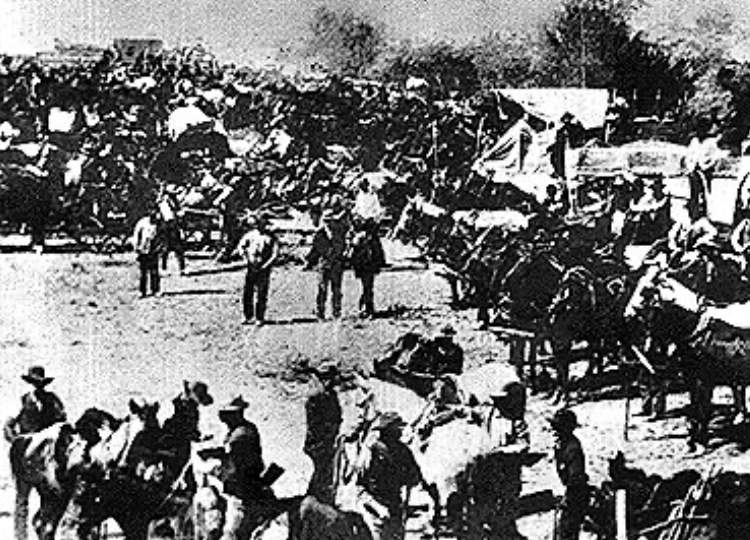
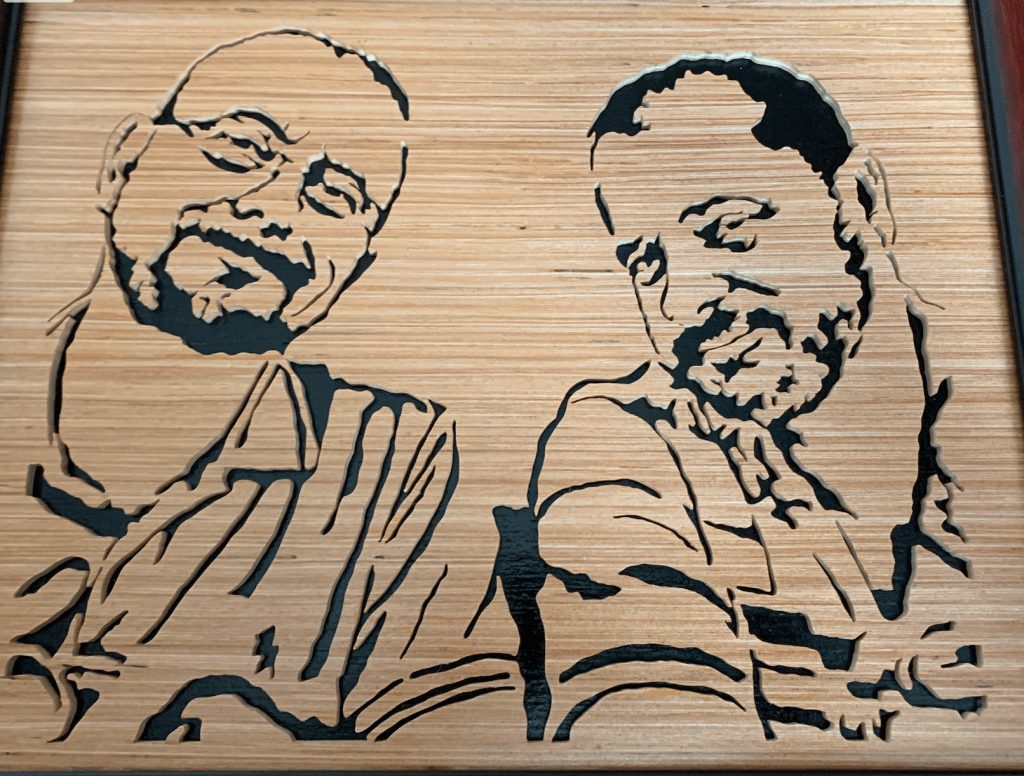
In the vast expanse of the Indian Territory, amidst the rugged terrain and the promise of new beginnings, two souls found each other amidst the chaos of land claims and dreams of prosperity. Vol Wilhelm Groff, a spirited young man with a penchant for adventure, and Joseph McElroy, a quiet and contemplative soul, crossed paths in the unforgiving landscape of Oklahoma in the year 1905.

The Indian Territory was a land of opportunity, where dreams clashed with harsh reality, and where individuals staked their claims in the hopes of carving out a future for themselves. Val and Joseph were among those brave souls, drawn to the promise of a better life on the frontier.

Their meeting was serendipitous, a chance encounter amidst the chaos of land rushes and bustling settlements. Val, with his infectious enthusiasm, captured Joseph’s attention from the moment they first locked eyes. Despite their differences in temperament, they found a deep connection that transcended words.

Val and Joesph
Photo Taken In Okarche Oklahoma

As they worked side by side, staking their claims and building their homesteads from the ground up, their bond grew stronger with each passing day. Amidst the challenges of frontier life, they found solace in each other’s presence, drawing strength from their shared dreams and aspirations.

But theirs was a love that dared not speak its name in the harsh reality of the early 20th century. In a world where societal norms dictated strict conformity, Val and Joseph had to tread carefully, concealing their love from prying eyes.

Yet, despite the obstacles they faced, their love endured, a beacon of hope in a world fraught with uncertainty. Through the trials and tribulations of frontier life, they remained steadfast in their devotion to each other, finding solace in the quiet moments shared beneath the starry Oklahoma sky.

As the years passed and the Indian Territory evolved into the state of Oklahoma, Val and Joseph’s love stood the test of time, a testament to the enduring power of love in the face of adversity. And though their names may have been forgotten by history, their love story lived on, a reminder that true love knows no bounds, not even the vast expanse of the American frontier.

George and The Bear, A Life Turned Around

By: Benjamin Groff

A new neighbor moved down the road. His name was George. He had two strong mules that could pull a plow, a milk cow, and a rooster, but no hens. It looked like he had just taken up living in an old hut abandoned by old farmers who once lived in the area and had gone on. Bill and Nora lived down the road, and further up the hill lived John and his wife, Laura.  

Bill, on his horse, was on his way to check on John and Laura when he passed George’s new living setup. Seeing George’s farming efforts, Bill decided to stop and extend a warm welcome. He introduced George to the rest of the neighbors, John, Laura, and his wife, Nora, and invited him to visit anytime. Bill emphasized the mutual reliance of neighbors and assured George that their door was always open, fostering a sense of community and support. 

Bill, after his brief encounter with George, continued his journey to John and Laura’s home. He shared the news of their new neighbor, George, and they all agreed on a plan. They decided to reach out to George and invite him for a warm community dinner on Sunday, a gesture that would help him feel welcomed to their little community.

That night, Bill fed his animals on his farm and locked his barn. He and his wife settled down in their home with a cozy fire flickering in the fireplace. They sat and thought about how lucky they were to have their little farm and life. It was to be a cool night but not cold, and Nora left their bedroom window cracked to let fresh air in as they slept. It must’ve been after midnight when Bill and Nora’s dog “Blue” started barking, and Bill yelled for him to lay down and go to sleep, saying to Blue,

“We’ll go hunting tomorrow, dog!”

The dog, looking miffed, he had heard something unusual but obeyed Bill and lay down, all the while staring out the door, watching for something to move.

The following day, Bill went out to feed his livestock and noticed hay, corn, and other items had gone missing from his barn. The back barn door swung open –– Bill recalled –– it had not been the night before. He saddled his horse and rode to John’s, and they, too, had been missing several things: pots and pans, a chicken, and a piece of meat from their smokehouse. Bill told John not to say anything to George until they knew the new neighbor had anything to do with the missing items. Just because George was new to the area didn’t mean he had taken anything.

On his way home, Bill stopped by to check on George. But, it looked like George was still asleep, and his wife, whom Bill hadn’t met, was timid and only waved through the door. So Bill rode his horse back home.

When he got home, Bill had a hunch and got some stiff bailing wire used to bundle hay. He stuck it into his corn cobs, which he stored in his feed storage bins. He then slid a small band onto a few of his best hens’ legs. That night, Bill and Nora went to bed and again had their window cracked open, and Blue was guarding them next to the bed. Sometime after midnight, Blue began barking and scratching at the door. And again, Bill told him to lie down. But this time, Bill knew why Blue was barking.

The following day, Bill went to his barn, and sure enough, the corncobs he had placed the wire on were gone. Some hay and the hens he had slipped the bans on their legs were gone. Bill returned to the house, had breakfast, and told Nora he was going over to Georges. When he arrived, the neighbor was out in his yard, and the two men met. And Bill asked George if he could see George’s mules. As they were looking at the mules, George saw a corncob and broke it open, and there was a wire. The wire he had stuck in it the night before.

Bill turned to George and said,

“George, this corncob is mine. I put this wire in there last night. I will find the same thing if I break open a few more corncobs. And, I have seen several hens you have today that you didn’t have yesterday, and they have a ban on their legs. I know because I placed it on them last night as well. John is also missing some meat and old pots and pans up the road, and I’ve heard talk from other neighbors about missing things around. We don’t do such things around here!”

George apologized and said that he would bring the items he took back before the day’s end.

At sundown the following day, Bill and John were talking, and they had not heard from George but knew he was at home. George had not returned anything. Other men who were missing items met Bill, and they said ––

“we need to teach George we don’t steal.”

They all agreed. The men went and hitched a team of horses up to a wagon and put an old whiskey barrel and some rope in it. They then went to George’s. When he came out onto his porch, the men surrounded him, tied him up, and put him in the wagon. Some of the men’s wives came to stay with George’s wife while the men took him out in the wagon. 

They climbed a tall, steep mountain that was clear of trees on one side. When they got to the top, they set the whiskey barrel out and told George to get inside. He did. Then they tacked on the top. George could only see one small hole in the side of the barrel.

The men told “George, this is your punishment for stealing from us. You are to be in this barrel overnight”, but they were interrupted.

A big ole bear came sniffing out of the woods, and the men jumped on the wagon and took off. Looking out of the hole, George couldn’t see what was going on, but the bear backed up to the barrel, sticking its tail in the hole. When it did, George grabbed it and scared the bear, causing it to run down the mountainside. As it did, the barrel rolled, banged, thumped, jumped, flew, hit, and jarred the barrel. Causing to fall to pieces when it hit the bottom of the mountain. George was beaten and bruised but alive, and the neighbor men in the wagon were all waiting on him. Two of them got on each side of him and helped him into the wagon; another handed him a jar of salve, telling him it would take care of every scratch on him. When he healed, the other men told him to hitch his mules up to his wagon and come by their place, and they’d have some items to help him start farming and set up a house with his wife. Bill and John told him that he never had to steal again in his life. All he had to do was be a good neighbor and help others when they needed it, and others in the community would help him. Bill said, “If you are having trouble, don’t starve. We’ll help you out, just like you will help us out when we need it.”

If you are having trouble, don’t starve. We’ll help you out, just like you will help us out when we need it. 

Then, all the farmers and people who lived in the area came together on a sunny afternoon and celebrated having new neighbors, George and Bessie. There was food, games and their fellowship built lifetime bonds. From then on George was the best neighbor and went on to pass on the lessons he learned from Bill and John and the other farmers and neighbors who had turned him away from stealing.

The End!

Forty Three Years And Counting

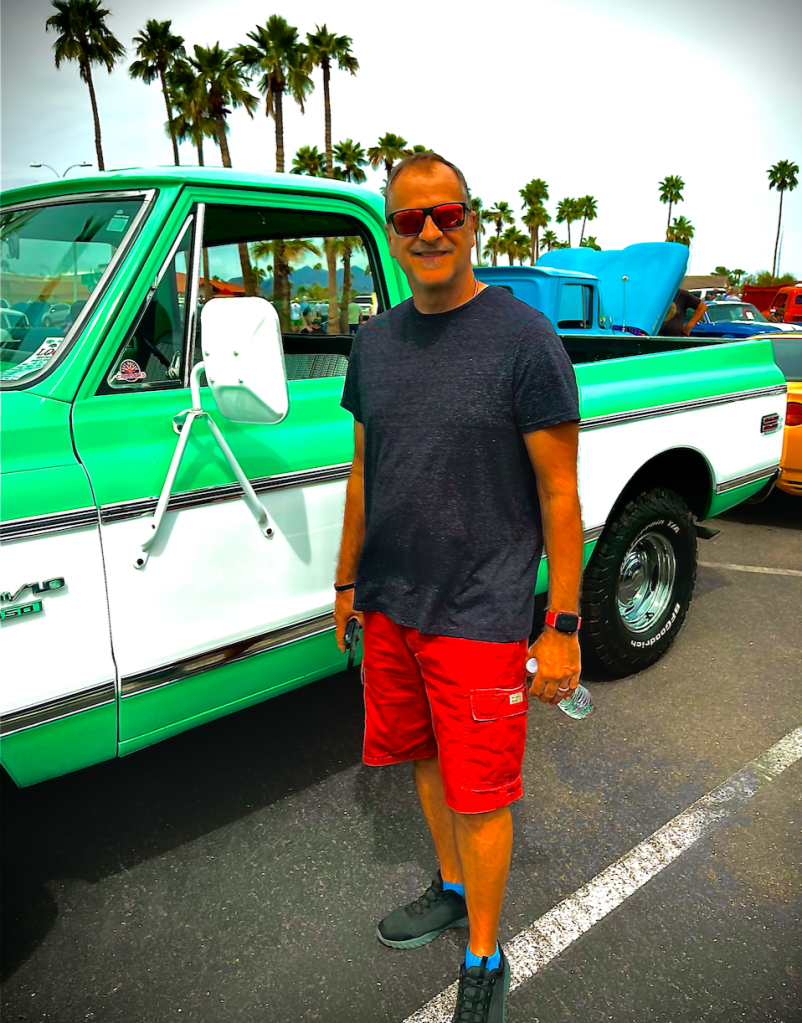
In the picturesque fusion of a town that captures the charm of Mayberry and the boundless frontier of Star Trek, two hearts found a love that defies time and space. Meet Ben and Steve, a couple whose love story is as enchanting as it is enduring—a beacon of hope and resilience that inspires all who witness it.

Ben and Steve

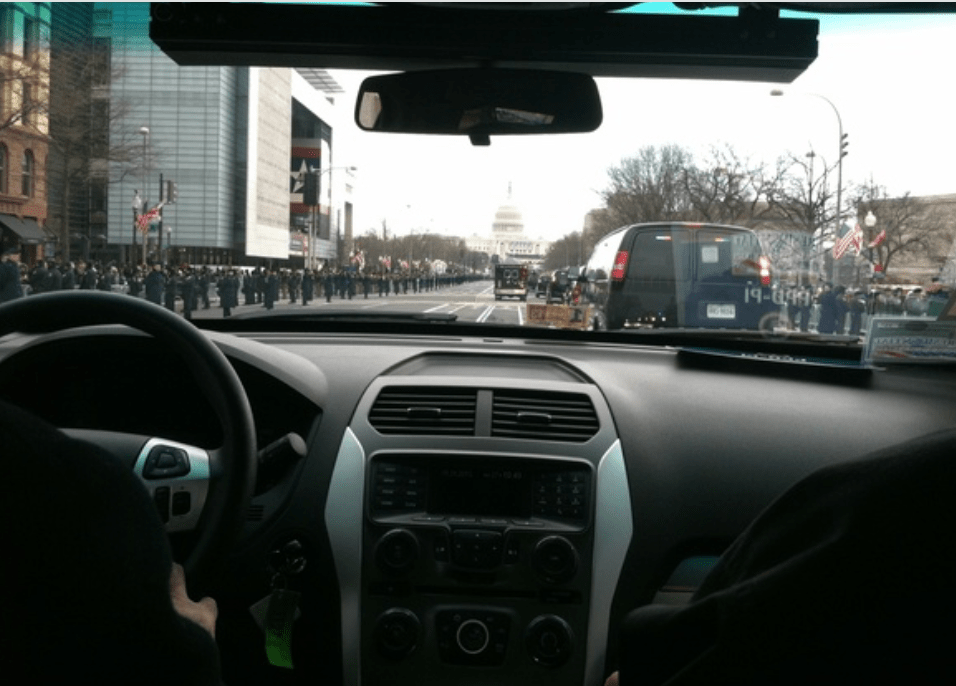
Steve, whose eyes sparkle like the constellations he admires, has always been a dreamer, casting his gaze toward the heavens with wonder and curiosity. On the other hand, Ben embodies justice and bravery, fearlessly chasing down thieves and reclaiming stolen cars. His badge shines brightly as a symbol of his commitment to protecting others.

Their worlds may seem galaxies apart, with Steve whispering messages to the cosmos through his microphone and Ben upholding the law with unwavering dedication. Still, these very differences make their love story so captivating. United by a love transcending boundaries, they lean on each other, their bond unbreakable, and their passion ever-growing.

Their love story began over four decades ago, a chance encounter that set the stage for a lifetime of shared dreams and unwavering commitment. Fourteen years ago, they leaped into matrimony, not just as a legal union but as a testament to their enduring love and resilience. In the face of uncertainty, it was a promise that their love would remain steadfast and accurate, and no matter what challenges lay ahead or rights that might be under threat, they would forever be united.

As the years have passed, their love has only grown stronger. They still greet each day with breakfast together, their laughter and companionship a testament to their enduring friendship and love. When future generations look back, marveling at how they managed to keep the flame of love alive for so long, the answer will be simple: it’s because of Ben and Steve and their unwavering passion and commitment to each other.

So, here’s to the kisses shared and the laughter exchanged, the dreams dreamed, and the challenges overcome. Their happiness is a daily reminder of the power of love, a beautiful reality that reminds us all to believe in the magic of true love. Cheers to Ben and Steve, whose love story inspires and enchants us all, proving that true love is timeless and everlasting.

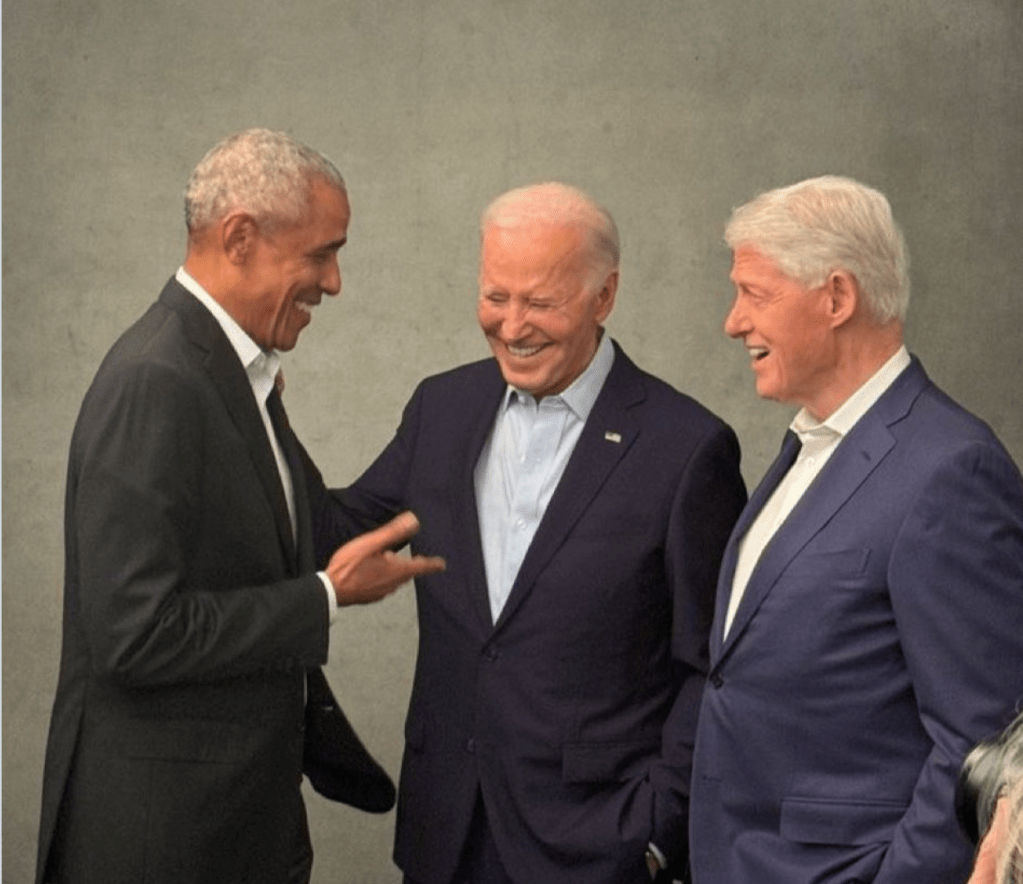
“Why do you back Joe Biden if you advocate for more young people in office?”

A Reanalysis by Benjamin G. benandsteve.com

This election isn’t about pitting the young against the old. It’s about ensuring that Gen Z and Millennials, who constitute a significant third of our nation’s population, have representation that mirrors their presence.

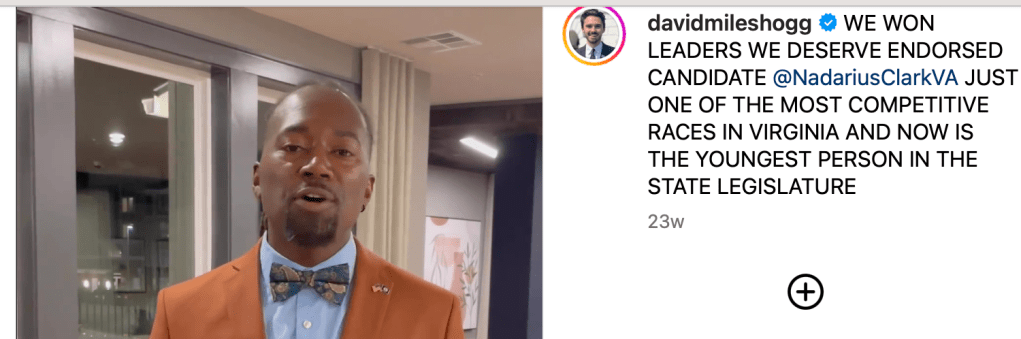
David Hogg Leaders We Deserve
PBS Interview

Although remembered as older, numerous influential leaders initiated their activism in their youth. We aim to support these leaders—like John Lewis, who embarked on a mission for vital change at a young age and became one of our country’s most pivotal and influential leaders.

Our goal is straightforward: elect more youthful leaders capable of introducing fresh perspectives into our government. 

Numerous barriers have historically prevented young people from entering public service and achieving the representation they deserve. Those who support America for all should make every effort to assist young candidates in overcoming these obstacles.

Visit Leaders We Deserve

After the setbacks of 2016, the 2018 blue wave brought the Democratic Party a renewed recognition of the influence young voters wield. In 2020, Joe Biden’s election, which was largely driven by the substantial turnout from Millennial and Gen Z voters, showcased the power of youthful participation. Your voice matters, and your vote can shape the course of our nation.

Vist The Post On Leaders We Deserve Winning!

In 2022, young voters reaffirmed their electoral influence, thwarting the anticipated “red wave.” Emerging young leaders like Justin Jones in Tennessee and Maxwell Frost in Florida gained prominence. Groups like “Leaders We Deserve” also celebrated their first endorsement success with Nadarius Clark’s election in Virginia.

Listen To Interview of radio interview

The benefits of electing young leaders extend beyond Gen Z and Millennials; they enrich the nation and shape our future. Commencing political involvement at a young age capitalizes on time, making it a potent political ally. Gen Z’s potential longevity in Capitol Hill eclipses many, underscoring the urgency of their ascent to power. The time to act is now.

If you resonate with a mission and aspire to bolster the election of deserving leaders in 2024 and beyond, please act to support feasible campaigns like “Leaders We Deserve” to support their endeavors or find a campaign that will help elect a Democratic Candidate to office.

Challenges and Solutions for Homelessness in America

Photo by MART PRODUCTION on Pexels.com
Photo by Timur Weber on Pexels.com

My household has always maintained a relatively liberal understanding of the country’s homeless situation. We disagree with outlawing their right to exist and have a place to live and shelter. They are, after all, doing the best they can with the current housing, employment, transportation, or other issues they face. Let them be!

Photo by Rosemary Ketchum on Pexels.com

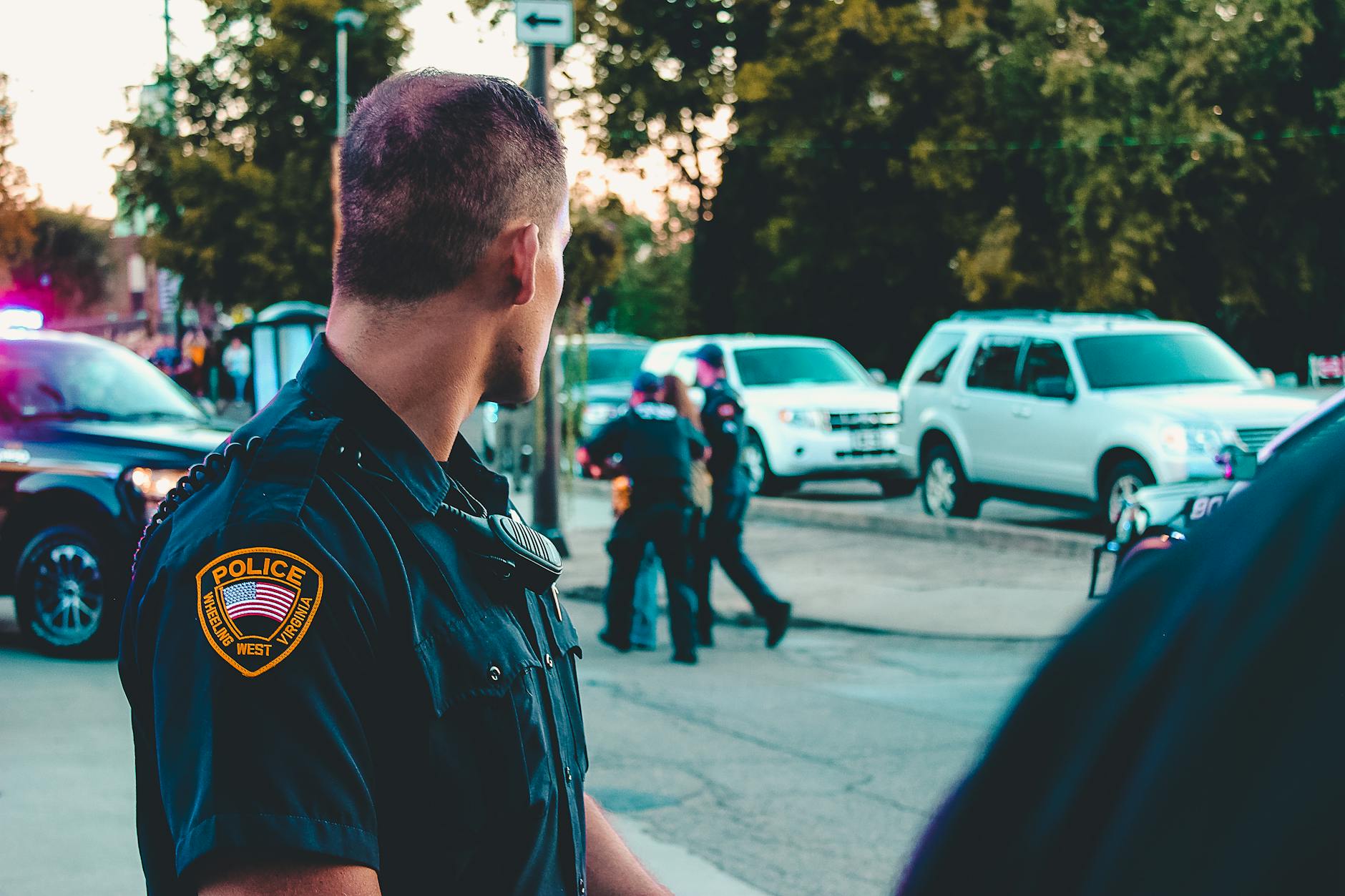
That is what our stance has been all along, until we went out to breakfast this past weekend and the police department was herding a group along the main boulevard we take to our restaurant. They appeared to be the characters you don’t want to run into in a dark alley at night—or daytime, for that matter. For Christ’s sake, were they planning to put roots down behind our neighborhood. We have a wall around the place, but salespeople always jump in and try to knock on doors. We have security but are not the type that can handle these characters. Every winter, we have a homeless troupe that typically arrives and camps near a river, but they are the same people every year, and they are like the snowbirds who flow in and out of the area from the north. These new homeless characters were of a family we never experienced before. 

And that is what is scaring so many in America. The police found a suitable place for the troupe to travel on to, and there were no more sights of them after that initial spotting. But that is different for many in the country. These homeless populations inundate their communities, and it is an issue they have never before had to face. What if they are following suit? How many more will come? What problems will they bring with them? Will the property values deflate wherever they plant a stake? Jesus, are they diseased? 

California has spent billions of dollars trying to fix its homeless problem and has failed to find a solution. The issue is greater there now than ever. Affordable housing remains unobtainable to those needing it. California is asking people to build tiny homes in their backyards, garages, wherever there is space, and make them available to house people. The problem is, if folks don’t want them in their alleys, will they want them in their garages?

Locally in Phoenix, Arizona. My husband hired an unhoused person years ago and knew she was, although she had not disclosed so on her introduction form. He worked with her schedule to make sure she kept her employment, and within six months, she was able to get a studio apartment, moving from her car. She then told him. He said he knew all along, and that is why he had worked so hard to keep her going, and she turned out to be one of the best employees. Such an example may not be the case with every person, but it is an example of how we can attribute ourselves to improving the situation one person at a time.

While feeling uneasy about sudden changes in your community is natural, it’s important to remember that homelessness is not a choice for many people. They often face a variety of challenges, including mental health issues, substance abuse, lack of affordable housing, and unemployment, which can contribute to their situation.

As for the broader issue of homelessness, it’s clear that a comprehensive and compassionate approach is needed to address the root causes and provide effective solutions. This approach may include increasing access to affordable housing, expanding mental health and addiction services, and providing job training and employment opportunities for homeless individuals.

The Supreme Court now has the issue, and the Lord only knows what they will come up with. But no doubt Texas will pass a law ordering the execution of all homeless people after 30 days of being homeless. 


Biden’s Time In Office VS. Trump’s.

Question on Quora –

Joe Biden has taken 382 vacation days off to date. That equates to over one full year on vacation out of 3 years as US president. Is he the most ineffective US president in history?

Answered by Benjamin via benandsteve.com 

We take your word it was 382. I need President Biden’s schedule to confirm such details. Since the job is 24/7, 365 days a year, you never have any privacy, nor a day without less than twenty interruptions, even when on vacation. The vacation days alone don’t necessarily reflect a president’s effort. Being president is a demanding job that comes with its own set of challenges and responsibilities. While the president must take breaks and maintain a work-life balance, one should consider the number of vacation days in the broader context of one president over another president’s performance, decision-making, and leadership.

Every presidency has challenges and circumstances, and comparing one president’s vacation days to another does not give a comprehensive view of their effectiveness. When evaluating a presidency’s effectiveness, it’s also essential to consider the accomplishments, policies enacted, and challenges faced.

The information provided may be more accurate or presented better to portray a specific narrative. It’s always a good idea to fact-check information and consider multiple perspectives before forming an opinion.

For a fact, here’s what Biden didn’t do:

  • He never only started his work days around 11 am or 11:3AM, crisis or not.
  • Never made an ass out of himself on a global stage.
  • Never has had disregards to promises made during his campaign.
  • He Never has been impeached.
  • Biden didn’t get impeached a second time.
  • Biden never had to survive a Senate trial that most senators later – admit that they should’ve voted and should’ve been guilty.
  • Biden didn’t get indicted – FOUR TIMES.
  • It wasn’t Biden who tried overturning the People’s Will in the 2020 *Election by inciting an insurrection!
  • No Biden didn’t call the Georgia Secretary of State and attempt to *Strong arm him into creating 12,000 more votes in his favor.
  • Biden didn’t take papers from the national archives and refuse to return them to the United States Government. Going as far as to tell employees to hide the location of the boxes that contained them from authorities. Then, he agreed to return them and never did so. Then, having the stated allegations recorded on the video camera and denying it was real, lying to the FBI (also a crime.)

The list of things President Biden never did could go on, but it would be easier if you tuned into Court TV Monday through Friday.

Those are the differences you can make between Biden and Trump, which is just the start!

QUESTIONING AND REEVALUATING LONG-HELD BELIEFS AND ENCOURAGING DIALOGUE, UNDERSTANDING AND ACCEPTANCE?

The documentary “1946: The Mistranslation That Shifted a Culture” delves into a controversial and thought-provoking topic that challenges conventional beliefs about the Bible and homosexuality. Directed by Sharon “Rocky” Roggio, the film examines the claim that the Bible originally did not mention homosexuality and that references to it were added due to mistranslation and misunderstanding of ancient Greek terms.

The film highlights the work of Christian scholars who delve into forgotten archives at Yale University to uncover the origins of this mistranslation. It argues that conservative Christians began to propagate this mistranslation in the 1970s to scapegoat the LGBTQ+ community and oppose their growing liberation movement.

Roggio, who identifies as a lesbian and is the daughter of an evangelical minister, engages in dialogues with her father throughout the film, attempting to find common ground and challenge his beliefs about homosexuality being a sin. This personal narrative adds depth and emotion to the documentary, as it explores the complexities of faith, identity, and acceptance within a family divided by differing views on sexuality and religion.

The documentary sheds light on the potential harm caused by misunderstandings and misinterpretations of religious texts, highlighting the real-world consequences faced by LGBTQ+ individuals who have been marginalized, discriminated against, and even persecuted due to these beliefs.

Overall, “1946: The Mistranslation That Shifted a Culture” offers a compelling perspective on a contentious issue, urging viewers to question and reevaluate long-held beliefs and encouraging dialogue, understanding, and acceptance.


Photo by Alexander Grey on Pexels.com

Gay, Lesbian, Bisexual and Transgender National Hotline 1-888-843-4564. “The Gay, Lesbian, Bisexual and Transgender National Hotline provide telephone and email peer-counseling, as well as factual information and local resources for cities and towns across the United States.

The Difference Between Scranton Joe And Don The Con. A Whole Lot!

You’ve undoubtedly heard a comprehensive debate about the economic situation during the transition from Trump to Biden.

Photo by Andrew Neel on Pexels.com

Indeed, the economic conditions at the end of Trump’s term were challenging due to the pandemic, and Biden inherited an economy facing significant headwinds. The pandemic’s impact on the economy was unprecedented, affecting employment, consumption, and global demand.

However, public perception and political narratives often prioritize certain aspects of an administration’s performance while downplaying others. People’s opinions become shaped by various factors, including media coverage, partisan affiliation, personal experiences, and messaging from political leaders.

Photo by Jozemara Friorili Lemes on Pexels.com

Trump had shut down the United States of America, a fact that nearly every American forgets today. They need to remember the closed stores, the empty shelves, the closed restaurants, the doctor’s office that had to refuse patients, hospitals that were so full no one could visit, and nursing homes where loved ones had to stand outside and wave to loved ones from the street, and Funeral Homes so full they were using rental refrigerator trucks to store bodies—the toilet paper shortages. That was Trump’s Administration. Biden had to clean it up. He received much blame for what must occur to get the nation back on track. But he got to work, and the country got back to life.

Here are a few points to consider when thinking about why public opinion might differ between Trump and Biden regarding the economy:

  1. Partisan Bias: Political affiliations can heavily influence people’s views on the economy. Republicans may be more inclined to credit Trump for positive economic developments during his term and blame external factors like the pandemic for any downturns. Conversely, Democrats may be more critical of Trump’s handling of the economy and more forgiving of the challenges Biden faced upon taking office.
  2. Messaging and Framing: Political leaders and media outlets shape public opinion. How economic data and policies get reported can influence people’s perceptions of the economy’s performance. Trump was known for touting positive economic indicators during his term, influencing public perception despite the broader challenges.
  3. Another significant factor that shapes public opinion on the economy is personal experience. People’s direct economic situations, such as job loss, financial hardship, or financial gains, can profoundly impact their views. For instance, someone who experienced a job loss or financial hardship during Trump’s term might have a negative view of his economic policies. Conversely, if someone benefited from tax cuts or saw their investments grow, they might have a more positive perception. Complexity of Economic Issues: Economic conditions are influenced by a multitude of factors, including global trends, monetary policy, fiscal policy, and more. It can be challenging for the average person to parse through these complexities and assign credit or blame to a particular administration accurately.
Photo by Anna Tarazevich on Pexels.com

In conclusion, public opinion on the economy is multifaceted, and partisan biases could dominate messaging, personal experiences, and the complexity of economic issues. While the data presented paints a challenging economic picture at the end of Trump’s term, public perception is by broader factors. And it is conveniently forgotten!

Praying At The State House

When A Law Maker Takes Amen Corner To The People’s House

In a scene straight out of a dystopian movie about America’s collapse into christofascism, here’s a video of Arizona State Senator Anthony Kern and his group of anti-abortion zealots on their hand and knees in the the AZ State House Chamber of the state capital, engaging in tongues-praying for the reinstatement of a near-total abortion ban from 1864. 

Image is not that of any person appearing in report.

Kern — a former code enforcement officer who was fired for lying and “string of other disciplinary problems” — can be seen on the carpet with his gang of extremists circled around the Arizona state seal in the carpet, babbling fervently for divine intervention to resurrect a Civil War-era law.

As Public affairs strategist Tony Cani points out, the real kicker is that they didn’t even need to pray; the groundwork for this moment had been meticulously laid out years prior.


That sounds like a striking and controversial scene, blending elements of politics, religion, and history. The image you’ve painted paints a vivid picture of the tensions surrounding issues like abortion and the intersection of religion and politics in American society.

Photo by John-Mark Smith on Pexels.com

It’s always concerning when political figures engage in such public displays of religious fervor to push a specific agenda, especially when it involves legislation that could significantly impact people’s lives. The blending of state and religious symbols in a governmental chamber can raise questions about the separation of church and state, a foundational principle in the United States.

The fact that Senator Anthony Kern has a history of disciplinary problems adds another layer of complexity to the situation. It raises questions about his credibility and the motivations behind such a public and symbolic act.

Tony Cani’s observation about the groundwork being laid out years prior underscores the idea that these moments are often carefully orchestrated for maximum impact. It highlights the strategic nature of political theater and the lengths to which some will go to advance their agenda.

It’s essential for citizens to remain informed and critically evaluate these actions, ensuring that decisions made by elected officials are in the best interest of all constituents and uphold the principles of democracy and justice.

One could bring up a valid point about the intersection of religion and politics, especially when politicians use religious displays as a means to appear more righteous or to gain public support for their agenda. The scripture from Matthew 6:5-8 that is mentioned highlights the importance of sincerity and humility in religious practice, cautioning against performative acts of piety.

Photo by Asad Photo Maldives on Pexels.com

When politicians engage in public displays of religious fervor, it can raise questions about their sincerity and motivations. Are they genuinely acting out of religious conviction, or are they using religion as a tool to advance their political goals? The line between genuine faith and political opportunism can become blurred, leading to skepticism and mistrust among the public.

It’s essential for voters and citizens to be discerning and critical of such displays, ensuring that they hold their elected officials accountable for their actions and motivations. Blind acceptance of religious or political rhetoric without critical evaluation can lead to the exploitation of faith for political gain.

Photo by Ric Rodrigues on Pexels.com

Ultimately, the misuse of religion for political purposes can undermine the true essence of faith, which should be centered on love, compassion, and genuine connection with the divine, rather than on power, control, or political advantage.

Florida The Land Of Detention

Florida has a new law that is designed to fill prisons.

Commercial Incarceration Facilities Prospering In Florida. Investments in private prisons contracted with Florida show favor with new laws designed to provide continous population on a rotational basis.

Photo by RDNE Stock project on Pexels.com

The growth and prosperity of commercial incarceration facilities in Florida have been a topic of debate and concern for many. Investments in private prisons have indeed increased in recent years, and this growth can be attributed to several factors, including new laws and policies that aim to maintain a steady population within these facilities.

One of the key issues often raised regarding private prisons is the potential conflict of interest that arises when profit motives intersect with the administration of justice. Critics argue that the financial incentives associated with running a for-profit prison may lead to practices that prioritize cost-cutting over the well-being and rehabilitation of inmates.

Photo by RDNE Stock project on Pexels.com

Proponents of private prisons, on the other hand, argue that these facilities can operate more efficiently than their public counterparts, potentially saving taxpayer money. They also point to contractual agreements that often include occupancy guarantees, ensuring a consistent revenue stream for investors.

However, concerns persist about the quality of care and services provided in private prisons, as well as the potential for abuse and neglect. Reports of overcrowding, inadequate medical care, and safety issues have raised alarm bells among advocates for criminal justice reform.

In Florida, the state has entered into contracts with private prison companies to house a portion of its inmate population. With new laws designed to ensure a continuous flow of inmates into these facilities, investors in private prisons may see this as a lucrative opportunity for growth.

Photo by RDNE Stock project on Pexels.com

It’s essential to approach the topic of private prisons with a critical lens, considering both the potential benefits and drawbacks associated with their operation. As the debate continues, policymakers, advocates, and stakeholders must work together to ensure that any expansion of private prisons prioritizes public safety, justice, and the well-being of inmates.

For Your Entertainment And More…

Finding Memories Lost To Generations

I recently sat down and tackled a project I had avoided for years. It involved a collection of hundreds of photos of my family. Photos, as far as I can tell, ever since the invention of the camera. Family members I knew, knew of, or who had died before I was born, all there staring back at me. I recollected many of the stories told to me by my grandparents, dad, and mother. So, with these stories, I want to begin sharing some photos with my regular mix of information. There are several already posted at benandsteve.com on the home page. You will also find updates on other pages on the site. ✌️🏼

After Spewing Hate In A Rant – A White Supremist On A Shooting Spree Killed Her Dad. Now The GOP Is Using The Same Hate Speech

www.huffpost.com/entry/el-paso-shooting-anti-immigrant-rhetoric_n_65bbe7a2e4b0102bd2d84f24

Tidbits, Snippets, & Flips!

flip.it/mMtmfy

A newspaper in 1924 predicted what life would be like in 2024 – we’re impressed

Hiyah ZaidiPublished Jan 23, 2024, 12:42pm|Updated Jan 24, 2024, 4:01pmComment

2024 predictions made in 1924 have been revealed
From horses going extinct to swapping engagement rings for sugar, 2024 could be interesting (Picture: Getty/Twitter)

Way back in 1924, a popular trend in newspapers was to predict what life would be like in 100 years’ time – i.e. today. 

And surprisingly, some are not too far from the truth. 

The sometimes accurate, sometimes outlandish clippings were shared on X by Paul Fairie, a researcher at the University of Calgary.

One that’s very recognisable is the city of the future.

‘Automobiles travelling on speedways through the centre of town’, ‘ever-moving sidewalks’ and ‘motorcars increasing and multiplying indefinitely’ all definitely came true.

Less so is the idea that those multiplying cars would bring about the extinction of the horse.

Newspaper clipping
This prediction is no where near true (Picture: X/ @paulisci)

Last year, a YouGov poll found that more than a quarter of people in the UK have tattoos. We reckon this one has come true, as it was anticipated that ‘debutantes will dye their skin all the colours of the rainbow’, with an expectation that hair would follow suit, much like a ‘Victorian debutante concealed her personality under voluminous hoops and draperies’. 

And pity those listening to the radio in 1924, when it was pretty dull apparently, because in another prediction, it was said ‘Americans will laugh at radios’. For 2024, it’s not just radio that bringing the LOLs, but also podcasts, which continue to soar in popularity. 

Newspaper clipping
Many Americans do laugh at something like a radio (Picture: X/@paulisci)

One that’s pretty much there is a longer life expectancy, where we would live to be 100 years old, and 75 years would be considered as young. 

zone post image for post 20153714

Major Gmail update sees millions of users get new function we’ve all been asking for

J. Rod the alien is one of the best Area 51 conspiracies out there. And it’s out there

Urgent warning for all iPhone owners: update now or risk attack

Dozens of new planets spark major breakthrough in search for alien lifeRead More Stories

Two that definitely came true are blocks of flats that are 100 stories tall, and family albums made of videos instead of photographs. 

A prediction that sadly hasn’t hit the mark – ‘movies will bring about world peace’ as people will establish a brotherhood but Hollywood has not yet accomplished a universal language or eliminated conflict from the civilised world. 

And while adorably optimistic, that is far from the most outlandish.

Newspaper clipping
Hollywood has not yet created a movie that brings world peace (Picture: X/@paulisci)

Some of the stranger predictions involve beds flinging children out of bed in the morning, people hopping from planet to planet as easily as we soar through the sky now (we wish), flying clothes and men’s legs withering away from underuse, Wall-E style. 

Newspaper clipping
Men do not live Wall-E style (Picture: X/@paulisci)

Oh, and diamond engagement rings should have lost their allure by now, being replaced with hundreds of pounds of sugar.

  1. A newspaper in 1924 predicted what life would be like in 2024 – we’re impressed
    1. MORE TRENDING
  1. A newspaper in 1924 predicted what life would be like in 2024 – we’re impressed
    1. MORE TRENDING