Discrimination Vs Inclusion. The difference between darkness and light
Discrimination is an act rooted in fear, ignorance, and an unwillingness to accept the fundamental dignity of all people. It has profound consequences for society. Wanting to deny others housing, clothing, and respect shows a belief that some lives hold less value. Such a stance reveals a deep-seated lack of empathy. It shows an indifference to the struggles of fellow human beings and a troubling inclination toward social division. It speaks volumes about moral values. It reflects the character of those who wish to wield power to diminish the lives of others.
The wish to remove protections that have given minority groups equal footing within society shows a disregard for historical injustices. These injustices have shaped the need for these safeguards. These protections exist not to give anyone an unfair advantage. They guarantee everyone has equal rights, opportunities, and access to resources without prejudice. Seeking to dismantle these safeguards implies a refusal to acknowledge historical injustices. It also shows a disregard for the ongoing struggles faced by marginalized communities. It shows a yearning for a past where exclusion was the norm. It rejects embracing a future that strives for fairness and justice.
Moreover, those who advocate for policies that exacerbate the hardships already endured by vulnerable populations are not merely indifferent. They are complicit in their suffering. If making life more difficult for those struggling is acceptable, what does that say about one’s character? It signals a lack of compassion, an absence of moral responsibility, and a failure to grasp the interconnectedness of humanity. A society that pays no heed to suffering undermines its stability, for one group’s oppression ultimately harms the whole. This is not just a moral issue but a societal one that demands immediate attention and action.
Most revealing is the wish to control who can join legal institutions like marriage. Love and family are not exclusive to a select few but are among the most fundamental aspects of human existence. To decide who can share in these joys is to place oneself in a position of unjust power. It denies them to others. It stems from a belief in personal superiority. It also involves a willingness to impose one’s values on others. This approach restricts their freedoms. It suggests an inability to recognize that love is universal. Love is deserving of legal and social acknowledgment. This is true regardless of the individuals involved.
Ultimately, seeking to discriminate, exclude, and strip away rights reveals one’s insecurity, fear, and wish for control. A society is judged by how it treats its most vulnerable members. Those who work to undermine equality and fairness reveal far more about themselves. They show more about their nature than they do about those they seek to oppress. True strength is found in embracing diversity. Morality involves protecting the rights of all. Decency ensures that everyone has the dignity and respect they deserve.
It was a quiet Sunday morning. A knock came at the door as the man leafed through the morning paper. He answered it, and there stood a stranger, looking road-worn but determined. ––––
“Is this where Benjamin Groff lives?”
the stranger asked.
“Yes, it is,”
the man replied, studying the stranger’s face.
“You must be his father,”
the stranger ventured his smile kind and knowing.
“Yes, I am,”
the man replied, both curious and wary.
The stranger introduced himself.
“My name is Samuel Johnson. I’ve driven over seventy miles to meet you, sir. You must have been one remarkable man to raise a son like Benjamin.”
The father, his heart swelling with pride, felt a mix of emotions.
“Thank you, Samuel,”
he said.
“But, please, how do you know my son?”
Samuel nodded as though expecting the question.
“I met Ben at the Oklahoma State Fair last fall. I was just there to do a job—keeping an eye on one of the old buildings. Some local boys had been giving me trouble, but Ben stepped in. Out of all the things he could have done at the fair, he chose to sit down and talk with me. We spoke for hours. Your son has a way of making people feel seen, of looking out for folks. He even asked me if anyone was bothering me, and from that moment on, I felt I wasn’t just working the fair—I was spending time with a friend.”
The father listened, deeply touched.
“That sounds like Ben,”
he said softly, gesturing for Samuel to take a seat.
“Let me wake him—he’ll want to know you’re here.”
Ben’s father went to his son’s room and gently shook him awake.
“Ben, you’ll never guess who’s here to see you,”
he said.
Still half-asleep, Ben slowly got up and followed his father into the living room. To his surprise, there sat Samuel, his old buddy from the State Fair. A smile of joy spread across Ben’s face as memories flooded back.
On that day at the fair, Ben had already taken in the sights, ridden the rides, and wandered through the livestock shows, which, to his surprise, had lost their charm despite his upbringing on a farm. He was winding down, simply walking, when he happened upon Samuel’s post.
Samuel was friendly, the kind of person who seemed to carry his life’s story in the lines of his face. Ben had sensed the man’s kindness right away, trusting him instinctively. They talked for hours, sharing stories. Samuel had offered him cold water from the employee stash and even let him use the private restroom in the back, which felt like a luxury compared to the crowded ones across the fairgrounds. Ben could still recall their easy camaraderie, even though much of what they’d discussed had faded over time.
Before parting, Ben had written down his number and directions to their home, saying,
“If you’re ever in town and need anything, look us up.”
Now, here was Samuel, having made good on that invitation.
After they caught up for a while, Ben suggested a tour of the campground where his father worked as a Ranger. The sprawling property had over 350 acres, six cabins, and a large recreation hall. As they rode around, they laughed about old times and marveled at the twists and turns that brought two unlikely friends together again.
Finally, as the afternoon sun started to wane, Samuel turned to Ben with a smile.
“I’d better head back to the city,”
he said, patting Ben on the shoulder.
“I’m grateful to have met your folks and seen your home—it’s even better than I’d imagined.”
He climbed into his Lincoln Continental, waved as he pulled away, and drove down the dusty road until he was out of sight. That was the last time Ben saw Samuel. But in the years that followed, he often recalled the kindness they’d shared, proof that a simple act of friendship could reach far beyond the boundaries of a single day.
Benjamin stood on the porch as Samuel drove off, watching the dust settle behind the Lincoln. He thought about how Samuel’s visit had bridged two worlds—a fact that didn’t escape him in a town where Black residents were often confined to the southwest corner, seen more as a separate community than as neighbors.
Growing up, Benjamin noticed the prejudices that ran through many families in town but never took root in his heart. His father, a man who saw people for who they were, not where they came from, profoundly influenced him. Samuel’s visit was a powerful reminder of how simple kindness could defy those boundaries, how a shared afternoon at a fair could lead to a journey across miles.
Though he never saw Samuel again, Benjamin often recalled those two encounters. They left him with a lesson he carried into adulthood and his career—a quiet but powerful truth about compassion. Samuel had come to honor Benjamin’s father. Still, Benjamin always remembered Samuel for showing him how friendship and decency could surpass any divide, leaving an enduring mark on his life.
In a way, Samuel had gifted him a legacy of his own: the reminder that sometimes, the connections we make in unexpected places leave the most enduring marks on our lives.
This election isn’t about pitting the young against the old. It’s about ensuring that Gen Z and Millennials, who constitute a significant third of our nation’s population, have representation that mirrors their presence.
David Hogg Leaders We Deserve PBS Interview
Although remembered as older, numerous influential leaders initiated their activism in their youth. We aim to support these leaders—like John Lewis, who embarked on a mission for vital change at a young age and became one of our country’s most pivotal and influential leaders.
Our goal is straightforward: elect more youthful leaders capable of introducing fresh perspectives into our government.
Numerous barriers have historically prevented young people from entering public service and achieving the representation they deserve. Those who support America for all should make every effort to assist young candidates in overcoming these obstacles.
Visit Leaders We Deserve
After the setbacks of 2016, the 2018 blue wave brought the Democratic Party a renewed recognition of the influence young voters wield. In 2020, Joe Biden’s election, which was largely driven by the substantial turnout from Millennial and Gen Z voters, showcased the power of youthful participation. Your voice matters, and your vote can shape the course of our nation.
Vist The Post On Leaders We Deserve Winning!
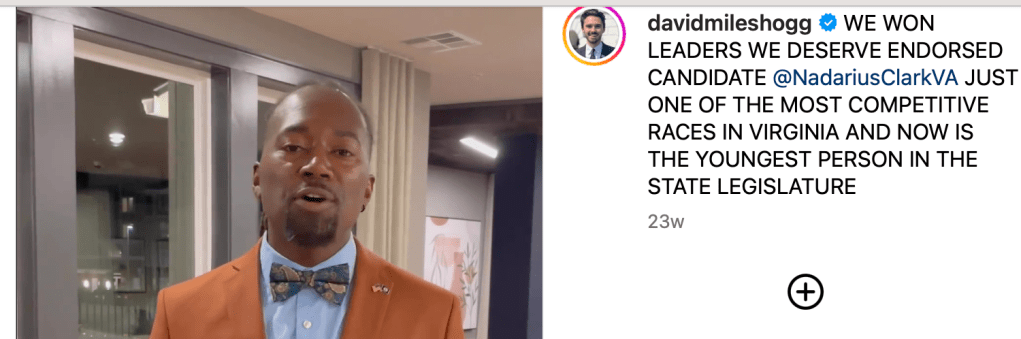
In 2022, young voters reaffirmed their electoral influence, thwarting the anticipated “red wave.” Emerging young leaders like Justin Jones in Tennessee and Maxwell Frost in Florida gained prominence. Groups like “Leaders We Deserve” also celebrated their first endorsement success with Nadarius Clark’s election in Virginia.
Listen To Interviewof radio interview
The benefits of electing young leaders extend beyond Gen Z and Millennials; they enrich the nation and shape our future. Commencing political involvement at a young age capitalizes on time, making it a potent political ally. Gen Z’s potential longevity in Capitol Hill eclipses many, underscoring the urgency of their ascent to power. The time to act is now.
If you resonate with a mission and aspire to bolster the election of deserving leaders in 2024 and beyond, please act to support feasible campaigns like “Leaders We Deserve” to support their endeavors or find a campaign that will help elect a Democratic Candidate to office.
A Vote For Trump Is A Vote Against Democracy! Remember, Vote Blue When You Do!
My household has always maintained a relatively liberal understanding of the country’s homeless situation. We disagree with outlawing their right to exist and have a place to live and shelter. They are, after all, doing the best they can with the current housing, employment, transportation, or other issues they face. Let them be!
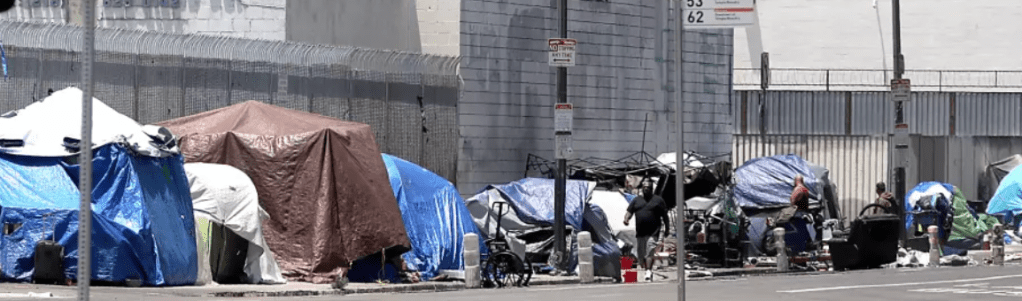
That is what our stance has been all along, until we went out to breakfast this past weekend and the police department was herding a group along the main boulevard we take to our restaurant. They appeared to be the characters you don’t want to run into in a dark alley at night—or daytime, for that matter. For Christ’s sake, were they planning to put roots down behind our neighborhood. We have a wall around the place, but salespeople always jump in and try to knock on doors. We have security but are not the type that can handle these characters. Every winter, we have a homeless troupe that typically arrives and camps near a river, but they are the same people every year, and they are like the snowbirds who flow in and out of the area from the north. These new homeless characters were of a family we never experienced before.
And that is what is scaring so many in America. The police found a suitable place for the troupe to travel on to, and there were no more sights of them after that initial spotting. But that is different for many in the country. These homeless populations inundate their communities, and it is an issue they have never before had to face. What if they are following suit? How many more will come? What problems will they bring with them? Will the property values deflate wherever they plant a stake? Jesus, are they diseased?
California has spent billions of dollars trying to fix its homeless problem and has failed to find a solution. The issue is greater there now than ever. Affordable housing remains unobtainable to those needing it. California is asking people to build tiny homes in their backyards, garages, wherever there is space, and make them available to house people. The problem is, if folks don’t want them in their alleys, will they want them in their garages?
Locally in Phoenix, Arizona. My husband hired an unhoused person years ago and knew she was, although she had not disclosed so on her introduction form. He worked with her schedule to make sure she kept her employment, and within six months, she was able to get a studio apartment, moving from her car. She then told him. He said he knew all along, and that is why he had worked so hard to keep her going, and she turned out to be one of the best employees. Such an example may not be the case with every person, but it is an example of how we can attribute ourselves to improving the situation one person at a time.
While feeling uneasy about sudden changes in your community is natural, it’s important to remember that homelessness is not a choice for many people. They often face a variety of challenges, including mental health issues, substance abuse, lack of affordable housing, and unemployment, which can contribute to their situation.
As for the broader issue of homelessness, it’s clear that a comprehensive and compassionate approach is needed to address the root causes and provide effective solutions. This approach may include increasing access to affordable housing, expanding mental health and addiction services, and providing job training and employment opportunities for homeless individuals.
The Supreme Court now has the issue, and the Lord only knows what they will come up with. But no doubt Texas will pass a law ordering the execution of all homeless people after 30 days of being homeless.
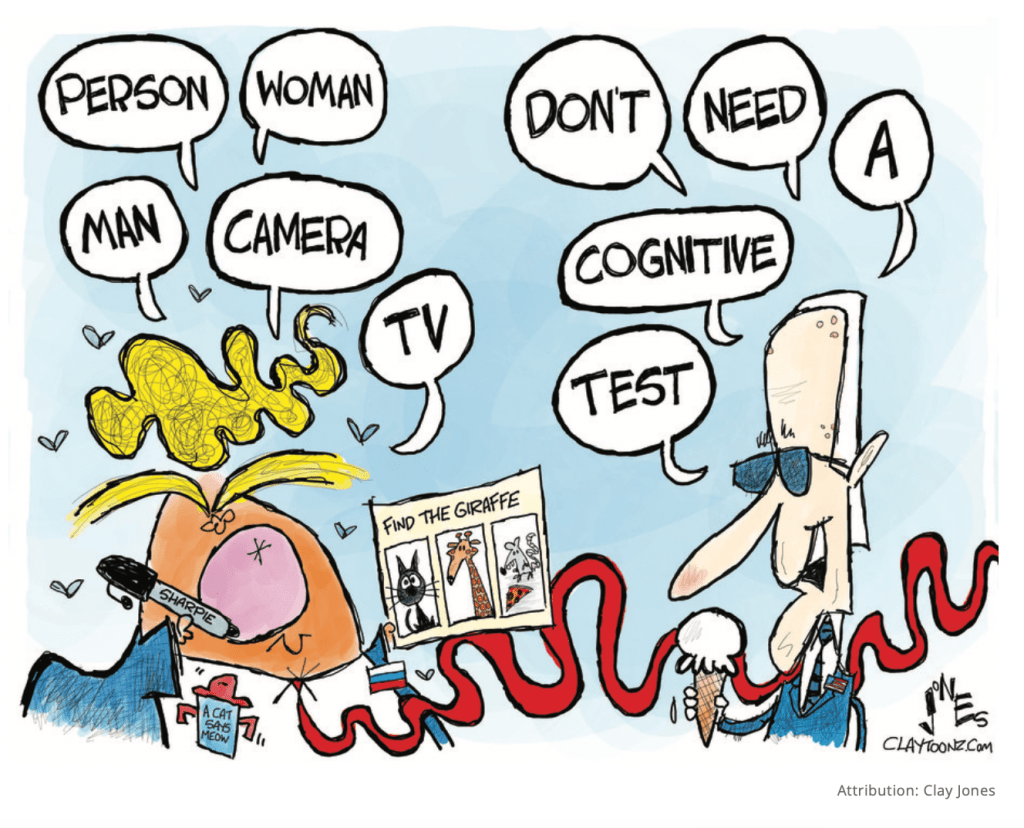
Joe Biden has taken 382 vacation days off to date. That equates to over one full year on vacation out of 3 years as US president. Is he the most ineffective US president in history?
Answered by Benjamin via benandsteve.com
We take your word it was 382. I need President Biden’s schedule to confirm such details. Since the job is 24/7, 365 days a year, you never have any privacy, nor a day without less than twenty interruptions, even when on vacation. The vacation days alone don’t necessarily reflect a president’s effort. Being president is a demanding job that comes with its own set of challenges and responsibilities. While the president must take breaks and maintain a work-life balance, one should consider the number of vacation days in the broader context of one president over another president’s performance, decision-making, and leadership.
Every presidency has challenges and circumstances, and comparing one president’s vacation days to another does not give a comprehensive view of their effectiveness. When evaluating a presidency’s effectiveness, it’s also essential to consider the accomplishments, policies enacted, and challenges faced.
The information provided may be more accurate or presented better to portray a specific narrative. It’s always a good idea to fact-check information and consider multiple perspectives before forming an opinion.
For a fact, here’s what Biden didn’t do:
He never only started his work days around 11 am or 11:3AM, crisis or not.
Never made an ass out of himself on a global stage.
Never has had disregards to promises made during his campaign.
He Never has been impeached.
Biden didn’t get impeached a second time.
Biden never had to survive a Senate trial that most senators later – admit that they should’ve voted and should’ve been guilty.
Biden didn’t get indicted – FOUR TIMES.
It wasn’t Biden who tried overturning the People’s Will in the 2020 *Election by inciting an insurrection!
No Biden didn’t call the Georgia Secretary of State and attempt to *Strong arm him into creating 12,000 more votes in his favor.
Biden didn’t take papers from the national archives and refuse to return them to the United States Government. Going as far as to tell employees to hide the location of the boxes that contained them from authorities. Then, he agreed to return them and never did so. Then, having the stated allegations recorded on the video camera and denying it was real, lying to the FBI (also a crime.)
The list of things President Biden never did could go on, but it would be easier if you tuned into Court TV Monday through Friday.
Those are the differences you can make between Biden and Trump, which is just the start!
Indeed, the economic conditions at the end of Trump’s term were challenging due to the pandemic, and Biden inherited an economy facing significant headwinds. The pandemic’s impact on the economy was unprecedented, affecting employment, consumption, and global demand.
However, public perception and political narratives often prioritize certain aspects of an administration’s performance while downplaying others. People’s opinions become shaped by various factors, including media coverage, partisan affiliation, personal experiences, and messaging from political leaders.
Trump had shut down the United States of America, a fact that nearly every American forgets today. They need to remember the closed stores, the empty shelves, the closed restaurants, the doctor’s office that had to refuse patients, hospitals that were so full no one could visit, and nursing homes where loved ones had to stand outside and wave to loved ones from the street, and Funeral Homes so full they were using rental refrigerator trucks to store bodies—the toilet paper shortages. That was Trump’s Administration. Biden had to clean it up. He received much blame for what must occur to get the nation back on track. But he got to work, and the country got back to life.
Here are a few points to consider when thinking about why public opinion might differ between Trump and Biden regarding the economy:
Partisan Bias: Political affiliations can heavily influence people’s views on the economy. Republicans may be more inclined to credit Trump for positive economic developments during his term and blame external factors like the pandemic for any downturns. Conversely, Democrats may be more critical of Trump’s handling of the economy and more forgiving of the challenges Biden faced upon taking office.
Messaging and Framing: Political leaders and media outlets shape public opinion. How economic data and policies get reported can influence people’s perceptions of the economy’s performance. Trump was known for touting positive economic indicators during his term, influencing public perception despite the broader challenges.
Another significant factor that shapes public opinion on the economy is personal experience. People’s direct economic situations, such as job loss, financial hardship, or financial gains, can profoundly impact their views. For instance, someone who experienced a job loss or financial hardship during Trump’s term might have a negative view of his economic policies. Conversely, if someone benefited from tax cuts or saw their investments grow, they might have a more positive perception. Complexity of Economic Issues: Economic conditions are influenced by a multitude of factors, including global trends, monetary policy, fiscal policy, and more. It can be challenging for the average person to parse through these complexities and assign credit or blame to a particular administration accurately.
In conclusion, public opinion on the economy is multifaceted, and partisan biases could dominate messaging, personal experiences, and the complexity of economic issues. While the data presented paints a challenging economic picture at the end of Trump’s term, public perception is by broader factors. And it is conveniently forgotten!
When A Law Maker Takes Amen Corner To The People’s House
In a scene straight out of a dystopian movie about America’s collapse into christofascism, here’s a video of Arizona State Senator Anthony Kern and his group of anti-abortion zealots on their hand and knees in the the AZ State House Chamber of the state capital, engaging in tongues-praying for the reinstatement of a near-total abortion ban from 1864.
Image is not that of any person appearing in report.
Kern — a former code enforcement officer who was fired for lying and “string of other disciplinary problems” — can be seen on the carpet with his gang of extremists circled around the Arizona state seal in the carpet, babbling fervently for divine intervention to resurrect a Civil War-era law.
As Public affairs strategist Tony Cani points out, the real kicker is that they didn’t even need to pray; the groundwork for this moment had been meticulously laid out years prior.
That sounds like a striking and controversial scene, blending elements of politics, religion, and history. The image you’ve painted paints a vivid picture of the tensions surrounding issues like abortion and the intersection of religion and politics in American society.
It’s always concerning when political figures engage in such public displays of religious fervor to push a specific agenda, especially when it involves legislation that could significantly impact people’s lives. The blending of state and religious symbols in a governmental chamber can raise questions about the separation of church and state, a foundational principle in the United States.
The fact that Senator Anthony Kern has a history of disciplinary problems adds another layer of complexity to the situation. It raises questions about his credibility and the motivations behind such a public and symbolic act.
Tony Cani’s observation about the groundwork being laid out years prior underscores the idea that these moments are often carefully orchestrated for maximum impact. It highlights the strategic nature of political theater and the lengths to which some will go to advance their agenda.
It’s essential for citizens to remain informed and critically evaluate these actions, ensuring that decisions made by elected officials are in the best interest of all constituents and uphold the principles of democracy and justice.
One could bring up a valid point about the intersection of religion and politics, especially when politicians use religious displays as a means to appear more righteous or to gain public support for their agenda. The scripture from Matthew 6:5-8 that is mentioned highlights the importance of sincerity and humility in religious practice, cautioning against performative acts of piety.
When politicians engage in public displays of religious fervor, it can raise questions about their sincerity and motivations. Are they genuinely acting out of religious conviction, or are they using religion as a tool to advance their political goals? The line between genuine faith and political opportunism can become blurred, leading to skepticism and mistrust among the public.
It’s essential for voters and citizens to be discerning and critical of such displays, ensuring that they hold their elected officials accountable for their actions and motivations. Blind acceptance of religious or political rhetoric without critical evaluation can lead to the exploitation of faith for political gain.
Ultimately, the misuse of religion for political purposes can undermine the true essence of faith, which should be centered on love, compassion, and genuine connection with the divine, rather than on power, control, or political advantage.
Florida has a new law that is designed to fill prisons.
‘We will catch you and we will prosecute you’: Florida Gov. Ron DeSantis is cracking down on retail theft – how he’ll ‘distinguish’ the state from ‘lawless jurisdictions’ https://t.co/ksBOXG9D7V via @flipboard
— benandstevecom Galaxy8News (@benandstevecom) April 17, 2024
Commercial Incarceration Facilities Prospering In Florida. Investments in private prisons contracted with Florida show favor with new laws designed to provide continous population on a rotational basis.
The growth and prosperity of commercial incarceration facilities in Florida have been a topic of debate and concern for many. Investments in private prisons have indeed increased in recent years, and this growth can be attributed to several factors, including new laws and policies that aim to maintain a steady population within these facilities.
One of the key issues often raised regarding private prisons is the potential conflict of interest that arises when profit motives intersect with the administration of justice. Critics argue that the financial incentives associated with running a for-profit prison may lead to practices that prioritize cost-cutting over the well-being and rehabilitation of inmates.
Proponents of private prisons, on the other hand, argue that these facilities can operate more efficiently than their public counterparts, potentially saving taxpayer money. They also point to contractual agreements that often include occupancy guarantees, ensuring a consistent revenue stream for investors.
However, concerns persist about the quality of care and services provided in private prisons, as well as the potential for abuse and neglect. Reports of overcrowding, inadequate medical care, and safety issues have raised alarm bells among advocates for criminal justice reform.
In Florida, the state has entered into contracts with private prison companies to house a portion of its inmate population. With new laws designed to ensure a continuous flow of inmates into these facilities, investors in private prisons may see this as a lucrative opportunity for growth.
It’s essential to approach the topic of private prisons with a critical lens, considering both the potential benefits and drawbacks associated with their operation. As the debate continues, policymakers, advocates, and stakeholders must work together to ensure that any expansion of private prisons prioritizes public safety, justice, and the well-being of inmates.
Welcome to our home chat page, where you will find a wealth of information. Thank you for stopping by. You can visit the main page of our website which has all the goods, this is only a primer! If you go there, you can check the various pages and find on your tour there are plenty of subjects to conquer any interests most people may have. If you are a member of our community and we are missing a view contact us through our contact pages. Again thank you for finding benandsteve.com find a sample of things here!
This Is An Important News Tip That You Should Take Note Of -And, It Should Be In The Mail Boxes Of Everyone You Know!
These 40 House Republicans voted against millions of dollars in federal funding that they secured for their districts
83 House Republicans voted against a bill to fund large portions of the federal government.
40 did so despite securing millions of dollars in funding for their districts.
It’s another example of “vote no, take the dough.”
On Wednesday, 83 House Republicans voted against a roughly $460 billion package of bills to fund large swaths of the federal government.
Forty of them did so despite requesting — and securing — millions of dollars in federal funding for a variety of projects in their districts.
Take Rep. Lauren Boebert for example. The Colorado Republican announced on Wednesday that she would vote against what she dubbed the “Swamp Omnibus,” slamming the bill as a “monstrosity” that “funds the Green New Deal.”
That’s despite the bill including more than $20 million that she herself had requested for projects across the state’s 3rd congressional district, which she recently abandoned to seek reelection in a safer district on the other side of the state.
Read the complete report by visiting BUSINESS INSIDER HERE!
Click the image to get more details!
Visit the image above for details
Congressman Mark Pocan (D-WI) has laid out a path forward for LGBTQ+ equality, which prioritizes defeating Donald Trump in November and pushing the right’s more extreme elements out of the mainstream Republican party. Americans can be convinced to support LGBTQ+ rights, but Trumpism — or, in Pocan’s words, “that hate, base-only mentality” — must be divorced from the Republican party.
Because, outside the most right-wing parts of the GOP base, there isn’t much support for lawmakers spending so much time attacking LGBTQ+ rights. Continue reading the report here…
Missing My Dad’s Funeral
At thirteen, I went to sleepaway camp, consumed by crushes, the Red Hot Chili Peppers, and my father’s worsening battle with aids. By Emily Ziff Griffin
The Last Dance with My Dad Emily Ziff Griffin on a trip with her father before he died of AIDS.
My first memory in life is of my father moving out. We lived in a two-bedroom apartment on the second floor of a carriage house on a quiet, dead-end lane in Brooklyn Heights. It was 1980, and he was leaving because he’d finally admitted to my mother that he was gay. I watched from the doorway of my room as my dad and his friend carried a wide wooden dresser down the stairs. I was two years old, and that moment etched itself in my mind, along with the texture of the apartment’s kitchen floor—white linoleum with little black specks.
My dad eventually settled in the upper half of a brownstone a few blocks away, in a three-story apartment that became the headquarters of an advertising agency my parents started together soon after they separated. I spent Wednesday nights there, along with every other weekend. After work, my father would come downstairs and prepare a small bowl of Lay’s potato chips, and we would watch “CBS Evening News” with Dan Rather. A story about the hijacking of T.W.A. Flight 847, in which passengers with Jewish-sounding names were isolated and threatened, left me concerned. My father wasn’t religious, but he was Jewish, and so was our last name. “They usually let the women and children go,” my mother assured me later when I suggested I use her German name if I ever got a passport.
After the news, my dad would listen to Ella Fitzgerald and cook dinner—steamed artichokes, maybe roasted fish—and I would play “office” alone at one of the desks upstairs, writing important memos and answering phantom calls. “I’m sorry, he’s unavailable—can I take a message?” I’d say, satisfied by the smooth click of the phone connecting with its cradle. My father was a marketing executive who had worked with the Brooklyn Academy of Music in the seventies before he and my mom started their company. He would often take me to see modern dance in Manhattan. Alvin Ailey, Trisha Brown, and Paul Taylor were all clients, and he took every opportunity to expose me to their work. Walking through the lobby of City Center was like striding alongside a prince. My dad was tall, handsome, young, and at the height of his creative powers. He dressed in Armani suits and bold neckties that signaled a hint of irreverence. Everyone in the dance world knew him. It was Dad’s domain, and I felt important because of his identity. In my regular life, I was terrified that my friends would discover that he was gay and that my family wasn’t like everyone else’s. In the theatre, the lights would dim, the curtain would rise, the music would start, and my father would take my hand as the dancers took the stage. For my father, it was one way we connected. We never learned to discuss hard things, but we shared this liminal space where bodies told stories, and words weren’t necessary.
It was very different at my mother’s house, which was quiet and small, a mere six hundred square feet, and where she often seemed tired or, as I imagine now, being a mother myself, weighed down by things. On Sunday nights, we watched the detective procedural “Murder, She Wrote.” Unlike in the world chronicled by Dan Rather, in this show, the crime—the problem—was always solved. On Mondays, it was “Kate & Allie,” a sitcom about two divorced moms who share an apartment. Perhaps their story gave my mother comfort as a young woman whose livelihood intermingled with her ex-husband, who had unceremoniously left her for another man. At the very least, these shows provided enjoyment and filled empty spaces when we didn’t feel like talking.
I found myself looking for normalcy in other people’s real-life families. I would often go to the Millers’ down the street (all names except those belonging to family members made a change in this story). Their daughter, Callie, was around my age, and if I slept over on a Saturday night, on Sunday, the family would invite me to church, where Callie’s father was an Episcopal reverend. We were not religious ourselves—my father didn’t go to the temple, and my mother was a Midwestern Protestant who referred to Christians as “God people.” But, even at seven and eight years old, I loved going to church, the smoke of frankincense and organ tones so deep and rich they seemed to vibrate inside my body. There were no surprises, and I liked bing told God would take care of me. And then, when I was nine, my mom and I left the neighborhood for a slightly more prominent place. We were just a mile away, but I quickly drifted apart from Callie and her family. As I moved into adolescence, I longed for the feeling of escape and safety I had found with them. By then, my father had been diagnosed with aids, something I did not feel I could discuss openly with anyone, not even my parents.
In December of 1991, when I was thirteen, I took the train to Baltimore to visit my best friend from sleepaway camp. Samantha Silverman took up space. She played lacrosse and was opinionated and seemingly unafraid of boys and life. She was also the youngest of three—her older sister was away at college, and her brother Teddy was in high school. Teddy was tall, played water polo, and was obsessed with the Red Hot Chili Peppers. I had never heard of the band, but when I visited Sam, I pretended I had.
I loved being at their house. Sam’s mother, Carol, worked part-time at a local news channel but was first and foremost a mom. She’d put a package of Velveeta in the microwave with a jar of salsa and served it with a mountain of chips and a direct gaze that said, “Come, sit, be, enjoy.” She wore voluminous cashmere sweaters that draped over her soft middle; hugging her felt like embracing a warm cloud. She was a mom who smiled and giggled. They had money—Sam’s dad was a surgeon—and plush wall-to-wall carpeting and a family room with a giant L-shaped sofa and a wide-screen TV, where we spent all our time. It seemed inevitable by then that my father was going to die. I was still afraid to talk about his illness with anyone, yet it was always there, hulking like a monster’s shadow. At least at Sam’s house, the shadow stayed outside, banished by the delicious snacks and the warm cloud of a mother, by a good friend and her handsome older brother. The Chili Peppers’ “Blood Sugar Sex Magik” had been released only a few months earlier, and Teddy would disappear into his room to blast the album. At the same time, I would think of excuses to talk to him, never mind that he was five years older and had a girlfriend and that I was just a kid.
On New Year’s Eve, the Chili Peppers performed on MTV, all shirtless and buff, sweaty with effort. The lead singer, Anthony Kiedis, his long hair swaying behind him, sang “Give It Away,” whose lyrics we (or maybe even more accurately, I) interpreted at the time as unabashedly demanding a girl’s virginity. A silver handprint was pressed onto the crotch of his black skater shorts, like a ghostly mark of desire. Watching him, I imagined that Teddy wanted to cradle a bass guitar and feel the thump and hum of the music surrounding him, to be held by a crowd, to be cheered for and adored. I don’t remember if it was that night or the next, but I found myself alone with Teddy in the family room at some point. Everyone else had gone to bed. We were watching a movie and decided to watch another when it ended. He lay on the floor; I sat on the couch. I pictured him getting up and moving toward me. He would kiss me, and I would let him. We would laugh at the impossibility of it even as it was happening. I would, at that moment, capture this elusive other life I wanted so badly—one where I was unique enough to overcome such barriers as the girlfriend, the age difference, the “sister’s friend” status, and, though it was something he didn’t even know about, the gay father with aids. I don’t know if Teddy was engaged in a parallel fantasy because I didn’t dare to ask, and he never made a move.
The next day, my mother called. My father had been found in his apartment unconscious and was now in the hospital. He was stable, but he couldn’t walk, and he was having trouble speaking. They suspected an infection. They thought he would be OK, but given the nature of aids, they weren’t sure. I said nothing about any of this to the Silvermans. Now, it seems outrageous and heartbreaking that I felt I needed to keep silent, but at that time, many people were afraid to come near an HIV-positive person. The Silvermans might have been angry. They might have been worried. Worse, they might have loved me anyway, and I found it necessary to hide my vast need for their love.
I took the train back to New York and gazed through the window at the bare trees. I felt heat coming through the vents and inhaled the smell of stale coffee drifting down the aisle. I thought about wanting the impossible: Teddy to kiss me, my father to live. The two desires had no overt relationship, yet they seemed to exist in tandem, as though one miracle could make the other possible.
Back in Brooklyn, I went to the local record store and bought “Blood Sugar Sex Magik” on CD. The album was like the tides—throbbing, aggressive tracks like “Suck My Kiss” and “Give It Away” interspersed with softer, more contemplative songs. It sounded like I felt. I wanted to scream into a microphone. I tried to kiss Teddy Silverman and tell him that I thought he was hot and my dad was dying.
That night, I spoke to my father on the phone, and the cord wrapped around my fingers like an anchor. Slurring his words, a mix of fear and steadfastness in his voice. Despite how he sounded, he was calling to let me know he was OK. I told him that I loved him. I didn’t allow myself to cry.
Later, I looked out my bedroom window at the dark winter sky, the neighborhood asleep as Kiedis’s voice drifted through the air: “It’s hard to believe that there’s nobody out there. . . .”
Within days, I went back to eighth grade, and my father went to stay with his parents at their home in Rye, New York. My grandparents, Ruth and Solomon, raised my father and his sister in the Bronx, then, as their circumstances improved, moved to Chappaqua and eventually to Rye, on the other side of Westchester County. Solomon had managed a successful career as a paint distributor, but Ruth had built most of their wealth as an advertising executive.
Their house was grand—two sprawling stories overlooking Long Island Sound, most covered in cream carpeting, like at the Silvermans’. The bathrooms smelled like baby powder and old lipstick. It was late January, cold and barren outside. My father had been relegated to a guest room downstairs, far in every sense from the upstairs living spaces where the family would gather on holidays. As the Sound churned silently beyond the windows, he worked on walking again. My father had been there for a couple of weeks by the time I went to visit. On my first morning, my grandparents and I watched from the hallway outside his room as he slowly made his way up the wide, carpeted staircase. We acted amazed, like encouraging a toddler’s amble across the floor. When he reached the sixth step and turned to come down, my grandmother said, “Tomorrow it will be seven.” My father’s face fell. Decades later, I understand her comment more as a defense against reality than an attempt to shame him into progressing faster. She, too, was trying to keep the monster’s shadow at the door.
In any case, my father wanted to return to his apartment, and within several weeks, he was well enough to do so. By then, he was living in a one-bedroom on the Upper West Side of Manhattan—a lifelong goal. I slept on a convertible sofa in the living room when I visited. My dad was back home, but he still couldn’t walk. Kaposi’s sarcoma now covered his legs in purple lesions. During the day, he had a nurse named Lester who would lift him in and out of his wheelchair and take him for walks. One of his friends, or sometimes my mother or I, would stay with him at night. I don’t remember what we did for dinner—I must have helped serve takeout or bake a frozen pizza. I also don’t remember discussing anything in particular, not how sick he was. One night, while staying there, I was awakened from a deep sleep. My father was calling for me. I stumbled into his room, and he showed me his bedpan, full of excrement. He told me to get surgical gloves from the bathroom, come back and retrieve the pan, dump the contents in the toilet, remove the gloves, and wash my hands. His eyes were glassy, his voice soft—he was embarrassed. I nodded and left his room. I turned on the bathroom light and saw myself in the mirror. Small breasts. Pimples. Long, wavy hair. I was a child and yet not a child. Had I ever even been a kid? I was shaking slightly as my hands reached for the bedpan. I wondered if I could catch aids. Afterward, I went back to the living room. I thought about the Millers and the prayer that they would say at bedtime, which ended, “If I should die before I wake, I pray the Lord my soul to take. . . .” Those words were supposed to be a safeguard against eternal suffering after death. But what about eternal suffering before death? I didn’t want the Lord to keep my father’s soul. I wanted my father to survive.
I didn’t know, as I lay there in the dark, my hands still damp from washing them, that this would be the last night I would spend in my father’s home. After, my parents concluded it was too much responsibility for me to be there alone, too complicated, too risky. They were right. Spring came, and my father got sicker and sicker, more and more frail. School ended, and it was a relief to know I was heading back to Evergreen, the sleepaway camp in Maine where I had gone every summer for the past five years. It was the same camp my father had attended when he was young, and I would be there for eight weeks. The day before I left, my mother and I went to my father’s apartment to spend time with him. I stood on his right as he lay in bed. His fingernails were longer than they should have been. His hands were skin and bones, nothing like the strong hands I had once held in the dark at City Center. I bent down and kissed his hollow cheek. I told him that I loved him. I told him I would miss him and see him when I got back, though there was little doubt in my mind that this was our last goodbye. He kissed me and nodded. Yes, he said. We’ll see each other then. I walked out, past the wide wooden dresser he’d once carried down the street, and into the stark hallway of his modern doorman building, my mother behind me. The following day, I went to camp. It wasn’t until I was sitting with Sam Silverman under the pine trees the first night, loons calling on the lake, a campfire crackling against the chill, that I felt I could breathe.
Days passed, and I settled into camp life. I water-skied over the lake’s glassy surface, my legs solid underneath me, the hum of the boat’s engine the only Sound. I played tennis, where I raged against the ball, screaming through every shot. I thought about my father, but the sunlight, the familiar routines, and a crush I was developing on a boy named Ben Goodstein kept the dark shadows away. On Saturday, July 4th, I woke up in my cabin, which I shared with Sam, two other girls, and a counselor. It was drizzling. The five of us dressed brushed our teeth and hurried to breakfast in ponchos and duck boots. Halfway through the otherwise unremarkable meal, Lynn, the camp director, came to our table and told me she needed to see me after breakfast.
A weird electric wave spread through me. I knew what this meant. I looked at Sam. “You have to come with me,” I said. But she had no idea why Lynn wanted to see me, no idea that seven months earlier, I had left her family’s home in Baltimore while my father was at the hospital in admittance. In some ways, she had no idea who I was.
When Lynn returned at the end of the meal, I asked if Sam could come with me, but Lynn said she needed to speak to me alone. I followed her out the side entrance of the dining hall, across the grass, to the bungalow she shared with her husband, Bill. I glanced at the wood structures that dotted the path: the sailing shed and the other cabins. How long had they stood there? The camp had been in Lynn’s family for decades. My dad had been a camper, then worked there, building the radio station and heading up the theatre program. He and Lynn were the same age; they had been friends. Were these buildings here when they were kids? Had my father walked this exact path before me?
We entered Lynn’s cabin, where Bill awaited us, and we all sat down. “I think I know what this is,” I said. Bill told me that my father had died that morning. I didn’t think about it at the time, but my dad’s death was a loss for Lynn, too. Bill said that I should call my mother.
I went to the phone in the next room. The windows faced the lake. No longer bright and blue under the shining sun, it was almost black as clouds twisted overhead. I dialed my father’s number. My mom answered. Her voice was high and bright with emotion. She said everyone was there—my father’s parents, sister, long-distance boyfriend, and best friend. She said they thought he was gone the night before, but he wasn’t. “He waited for the Fourth,” she said, “so there would be fireworks.” That was very him, I thought. He had always had a sense of occasion.
And then my mother asked me, “Do you want to come home?” Though I had known on some level that my father would not survive my two months away, I hadn’t considered what would happen when he died. I had made no plan. My mother said that my aunt was adamant that I come home and that I would regret it for the rest of my life if I didn’t. But my mom had once told me that when I was born after the chaos of delivery had passed and she was alone with me in her arms, she had looked down at my face and said, “You are not my property.” I was a child, yes, but I was also my person, capable of making decisions about my life. So what did I want to do?
I pictured myself surrounded by adults with tear-stained faces. They’d squeeze my shoulders and leave lipstick marks on my cheeks. Worse, some might be hysterical, and everyone would be looking at me. That poor girl, they’d be thinking as they watched to see what I would do, what I had to say. I didn’t have anything to say. On the way to the dining hall, I wanted to be with my friends, see the pine trees overhead, and feel the crunch of gravel under my feet.
“I want to stay at camp,” I told my mother. “OK,” she said. To this day, being able to stay at camp is one of the greatest gifts my mother ever gave me. My father’s illness had made everything about my life feel abnormal. I didn’t want to go back to that, not yet. Though Lynn and Bill knew the truth, we told my cabinmates that my dad had died of cancer. It seemed more manageable and safer that way. Everyone looked at the floor; none of us knew what else to say.
Because it was raining, there was bingo in the dining hall. I went, but because my dad had just died, I didn’t have to play. I sat alone on the upper level, watching the other campers play below me. My thoughts filled with spaces of drones and letters that were the announcer calls. He’s gone. Gone where? Should I be crying? I didn’t want people’s pity.
I got up and went outside. I walked down to the lake. My father used to swim in this water. I pictured him in the distance as a boy, his arms gliding like oars, his legs kicking to keep him afloat. I thought about him in his apartment where I’d left him, in the bed across from the expansive wooden dresser. I looked to the sky. I wanted a bolt of lightning—a bird. I wanted my father to appear, glowing like a saint. I wanted him to tell me that everything would be all right, that he was still with me. A row of Sunfish sailboats rattled against their moorings. I could feel the kids inside looking at me through the dining hall windows. I went back inside.
After lunch, I found Ben. I told him that my dad had died that morning. He looked confused, then concerned. He reached forward and hugged me. “I’m sorry,” he said. I said that it was OK, the way you might after you accidentally dropped a sandwich on the ground, like, It sucks, but, hey, that’s the way it goes sometimes.
That night was the Fourth of July carnival. Everyone dressed in red, white, and blue and went to a clearing by the lake where partiers placed games. Somebody gave us paper tickets that we could use for throwing a whipped cream pie at a counselor or swinging a sledgehammer like an axe to ring a bell. There was the buzz of girls gossiping, the hoots and hollers of prize-winning kids. The tug of Sam’s hand on my arm—Let’s go here, now there—meant I could be like every other kid that night. I could run, play, laugh. I could whisper about the guy approaching her or how good Ben looked in his chambray button-down and jeans. I could put aside everything except what was right in front of me.
At the end of the carnival, we all headed to the lakefront for fireworks. Fireworks. My mom’s words rocketed through my mind as I sat on the damp ground. My father waited for this. The show was for him, and my being there, watching it, meant that we were together. I sat, with Sam Silverman on one side and Ben Goodstein holding my hand on the other, looking out at the water as the first bloom of sparkling light erupted overhead. I heard the Chili Peppers in my head: “The stare she bares cut me / I don’t care, you see, so what if I bleed?” What if I had told my father a real goodbye? What if I had told everyone the truth? What if I had let people see me cry?
I had entered an alternate reality, not like the one found in a chapel or the rooms of someone else’s house. One that was real—indelible and mine. One in which there was loss, yes, but there was also light bursting in the sky. There was a hand in mine. My mother was back home, honoring my father in the way he deserved. There was my grandmother, Ruth, telling the stories of her son’s young life. And somewhere, there was music, a curtain rising, and dancers ready to take the stage.
~CREDITS~
New Yorker Favorites • A reporter’s relationship with Kurt Cobain before and after the singer’s death. • Who owns London’s most mysterious mansion? • The politics behind the creation of “Harriet the Spy.” • The aesthetic splendor of “The Simpsons.” • Fiction by Alice Munro: “Passion.” Sign up for our daily newsletter to receive the best stories from The New Yorker. Emily Ziff Griffin is a screenwriter, producer, author, and essayist. Her début novel, “Light Years,” was published in 2017.
Because LEVITICUS is so damn important to daily living, and the Christian nation this world is.
The verse tells us we are wasting billions yearly by blocking the borders of nations. If we believe in a God, it is all one, and there are no lines of division. The arguments over the border are sinful in that we are saying God’s people are not allowed to generate among their own. Attempts to vote in favor of those who would cast a vote to block the borders of a nation would be an act of blasphemy. Rev. Groff, Roads End Ranch Chapel.
I recently sat down and tackled a project I had avoided for years. It involved a collection of hundreds of photos of my family. Photos, as far as I can tell, ever since the invention of the camera. Family members I knew, knew of, or who had died before I was born, all there staring back at me. I recollected many of the stories told to me by my grandparents, dad, and mother. So, with these stories, I want to begin sharing some photos with my regular mix of information. There are several already posted at benandsteve.com on the home page. You will also find updates on other pages on the site. ✌️🏼
Billy Idol was doing a cover of “Mony Mony“…a song written and performed originally by Tommy James and the Shondells in 1968. The meaning of MonyMony is simply…Mutual of New York Insurance Company. M-O-N-Y.
Tommy James explained in an interview: “Originally, we did the track without a song. And the idea was to create a party rock record; in 1968 that was pretty much of a throwback to the early ’60s. Nobody was making party rock records really in 1968, those big-drum-California-sun-what-I-sing-money-type songs. And so I wanted to do a party rock record.
And we went in the studio, and we pasted this thing together out of drums here, and a guitar riff here. It was called sound surgery, and we finally put it together in probably a month. We had most of the words to the song, but we still had no title. And it’s just driving us nuts, because we’re looking for like a ‘Sloopy’ or some crazy name – it had to be a two-syllable girl’s name that was memorable and silly and kind of stupid sounding. So we knew what kind of a word we had, it’s just that everything we came up with sounded so bad. So Ritchie Cordell, my songwriting partner and I, are up in my apartment up at 888 Eighth Avenue in New York. And finally we get disgusted, we throw our guitars down, we go out on the terrace, we light up a cigarette, and we look up into the sky. And the first thing our eyes fall on is the Mutual of New York Insurance Company. M-O-N-Y. True story. With a dollar sign in the middle of the O, and it gave you the time and the temperature.
I had looked at this thing for years, and it was sitting there looking me right in the face. We saw this at the same time, and we both just started laughing. We said, ‘That’s perfect! What could be more perfect than that?’ Mony, M-O-N-Y, Mutual of New York. And so we must have laughed for about ten minutes, and that became the title of the song.”
The Story Of My Grandparents May Hold Guiding Strengths For Us Today
(gifted clock)
The story of my grandparents’ union goes back to August 10th, 1910. They wed on the Caddo and Washita County Line near where SH-152 is today, West of Cobb Creek. On that day, my grandfather, Benjamin Harrison Groff I., known as “Pop,” and my grandmother, Florence Lula McElroy, known as “Mom,” received a clock from Pop’s brother-in-law and sister, John and Laura Alice Groff Dowty. A piece of further history, Pop’s father was born in Switzerland, and Mom’s Father came into the world in Louisianna before its statehood.
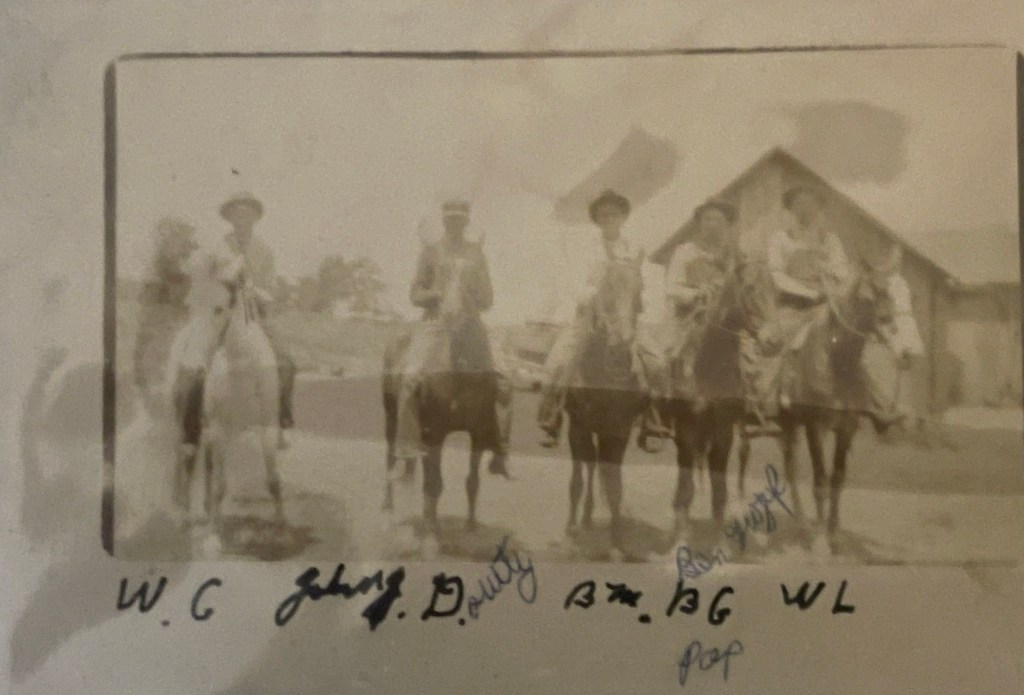
It was in 1908 that Florence traveled with some of her siblings to the area to visit her brother Jim, who had married into the McLemore family. While visiting, she met Benjamin and fell in love; in those days, Ben was to ask her father for a hand in marriage before asking the bride. But Florence’s father was in that 3-state area of Texas, Oklahoma, and Arkansas and unable to travel due to his age. Economically, the to-be groom could not travel to the area. So, the agreement was that the bride’s oldest brother, John, would come to Eakly and consider Benjamin’s request for her hand in marriage. And John rode a horse from far southeast Oklahoma to Eakly, Oklahoma, for the request. The answer must have been yes because they wed.
Mom’s family lived in Southwest Arkansas, Southeast Oklahoma, and parts of Northeast Texas. They were within rock-throwing distance, and they never knew which state they were in. Her father was a Baptist preacher who led a fire and brimstone ministry and led by strict rule. He had fought in the Civil War, but on which side I never knew. The only answer I ever got was, “he fought on the right side.” There were twelve kids in the McElroy family. Some of them were dead by old age when I was born in 1963.
Groff BARN
The Groff family migrated from Illinois, where Pop’s father was a farmer. He was known for having a huge barn in the community. It is one of the only to have been built by his sons and stands without a single piece of iron or nail. The Groff Barn built by Ulrich Groff and his sons remained put together using carpentry skills Ulrich Groff’s father taught him from the old land as late as 2000.
Above a rowdy bunch together the Groff Brothers who built the all wood barn in Illinois, in the 1800s.
OTIS GROFF
in 1905 two sons, Otis and Benjamin, took advantage of the opening of land in Oklahoma and claimed property west of Cobb Creek, north of SH-152 and Highway 58. It was then known as 41 Highway and Alfalfa Road. The brothers built two homes; Benjamin’s was on the property where, over sixty-five years later, the baseball player from Eakly, Michael Moore, and his family would live. It is the same home where the couple, Mom and Pop, would later raise three children and adopt another unofficially, taking in others in need. The father of the boys, Ulrich, came to Oklahoma, but word was he was afraid of being attacked by Indians, so he went back to Illinois.
(Mom & Pop Wedding Day)
On the day of their wedding, sitting in a buggy along a dirt road west of Cobb Creek, a photographer was on hand to record an image of the couple, and then John Dowty handed them a new clock he had bought from a hardware store in Eakly. To keep their love from running out of time. The clock remained in their home, ticking every day since.
The couple had three children: Bennie Ulridge, Dortha Eliouse, and JD.
JD GROFF 14YOA. 1936
My dad, JD, is named after John Dowty. But the Mom and Pop wished to honor a man known as either Big John Dowty or Uncle John Dowty by using just the two initials, without an abbreviation. It sometimes appeared as a curse for my dad because he would go through life telling people who placed periods with J and D that they had incorrectly spelled his name. I have heard him say, “It’s two letters, and you mess it up!”
Ben H. ‘Pop’ Groff I
The Clock: Even after retiring from their farm and moving to town, they took the clock, which remained essential to their lives. It remained running, being cleaned at a clock repair once, only when Mom and Pop watched over the repair man like hawks. When they passed, it came to my parent’s home, where it sat on the fireplace mantel and went silent. When the day came for our family to sell our homeplace, I retrieved the clock and brought it to Arizona. My first task was to clean it. It keeps time great. It is picky and must be balanced, and its ticker has to be ‘set’ at just the right spot, or it will stop. It is picky about the key turning the spring up tight. The springs are old. So it is like an old violin and has to be handled with kid gloves. The wood is brittle and old, and the design is very ornate. It may not be to the liking of every modern setting. But, it is over one hundred years old and dear. And it holds many hours of memories of sitting at my grandparents, hearing its tick-tock, listening to their stories, worries, and hopes for the day.
Mom & Pop Groff
The older people were our glue. They would hold yearly family reunions after the harvest had ended. Celebrate every holiday grandly and make weekends and summers the most incredible escapes. Plus, they oozed with class and style. The character and morals they possessed are qualities sorely missed and that are needed today as we try to soar in this world of divided opinions.
When Good Guys And Gals Still Finished First. They Were Made To.
JD Groff & his Horse My Molly’s Reed
My dad was known for doing such things unselfishly. He had a reputation throughout Western Oklahoma as a trustworthy horseman and businessman. I found this article while going through clippings. I discovered that it had been stored in an attic at my parent’s home after my mother sold it to move in with relatives due to her age. I was born in 1963 and have never heard this story. I had listened to my grandmother speak of a story in national newspapers about my dad helping a man, but I thought it had something to do with his being in World War II. He never spoke much of the past and only looked to the future. Something that I became used to and have often found myself doing until I found boxes of memories that took me into the lives of my parents and grandparents and a life that I am proud of bragging about.
(The following piece was first presented on Quora when a question was poised by a Trump supporter.)
I’m a little perplexed by your attitude here – why does it need to be so adversarial?
Let’s be straight here, though: Democrats don’t want to stop you voting for whoever you please. That’s the nature of a democracy: everybody gets a voice, and you can use that voice as you see fit. If you want to vote for Donald Trump, go right ahead – just know that you’re telling us quite a bit about yourself when you make that choice, and it’s not a positive one.
This is the part, I suspect, that some Republicans don’t understand. Democrats largely wouldn’t want to stop you from voting, although we can’t say the same for Republicans, because they do want to stop people voting, judging by all the state-level attempts at voter suppression. What we want is for you to stop making such god-awful decisions when you do vote. We want you to pick someone that raises your aspirations and wants something better for you, rather than the lowest common denominator.
We get it: you want to “own the libs”, and you want someone that will aggressively go after those people who don’t agree with you. I can understand that: you guys don’t like your lifestyle or beliefs being challenged, and when you feel that way, you probably feel under threat, and the response some will take in that situation is to lash out. You’re letting people like Donald Trump do that on your behalf.
Problem is, when you make decisions like that, you’re only thinking about yourself or your local bubble, rather than what’s best for everyone. The United States isn’t a religious, social or political monoculture: it’s an inclusive society that has a diverse range of beliefs, opinions and choices. Any effective government exists not to promote just the well-being of a single group (e.g. white ‘conservative’ Christians), but rather to promote what’s best for everybody.
Your choices aren’t something I’d consider laudable: I won’t stop you making them, because you have to let people make mistakes in order to learn from them. But you’re out of your mind if you don’t think I won’t advocate better choices, or at least encourage you to see your mistakes for what they are.
So, by all means, vote for Donald Trump if you must, but recognise that I’ll disagree with your choice, and encourage you to make better ones. When I look at who to vote for, I’ll always aim for the person who has higher aspirations for the country, for who has a clear desire to break past partisan bickering and legislative logjam, and aim to do what’s best for everyone, including you. You and I both know that Donald Trump is mostly out there to do what’s best for himself, and that you’re okay with that provided he hurts those you don’t agree with.
Just remember that these things have a way of backfiring. You put an aggressive, adversarial and ignorant President into office, particularly one known for cheating, philandering and lying his ass off, and it’s only a matter of time before he turns against you, particularly if he doesn’t feel the need for you anymore.
I think you can do better. Actually, I think you must do better. That’s what being a “true American” is all about, after all: striving towards something that was better than what came before it. It’s rather worrying that too many Americans have forgotten that.
BENANDSTEVEDOTCOM THE INSTAGRAM.COM PAGE
INFORMATION AND MORE THAT MAY BE USEFUL IN DAILY LIFE.
We are glad you found benandsteve.com —- this post brings you to a site where you can learn more about different individuals born into this world trying to find normalcy. I often call it “Being Straight In A Gay World!” For so many, they are forced not to live their true selves. And lies are sometimes fatal.
For hoots and to offer you relief from the hard-hitting info and news, we sometimes find pieces to keep a chuckle in the heart from deep inside the benandsteve.com files.
Live on!
Benjamin
You know why I am Gay? Because God Made Me That Way, or That’s The Way The Genes Flow. And It’s NObody’s Damn Business But Mind. You HEAR!
SCOOBY DOO! Looks Like Someone Is Going To Get A Scooby Snack!
Every day, anti-trans rhetoric is spreading and becoming more virulent. Conservative forces in statehouses across America are pushing bills that would strip trans people of rights, including access to vital medical care. In some places, these laws have already passed. This is all part of a concerted, coordinated effort, as Madison Pauly’s reporting shows. Paul
WHEN ANYONE GETS DENIED A RIGHT AFFORDED TO ANOTHER, WHETHER THE REASON FOR WITHHOLDING IS CIVIL OR PRIVILEGED, IT’S DENIAL TO ALL. BECAUSE IT IS A NEED FOR MANY – THAT – THE FEW ARE TOO PREJUDICED EVER TO UNDERSTAND.
About Gays And Why Laws, Book Bans, School Boards, And Other Restrictions Attempting To Bash And Attempted Genocide Against Queer Peoples Won’t Stop More People From Increasing The Populations In The LGBTQI Community!
We all remember that day. It may be a Spring afternoon following a light rain shower, with flowers peaking from beneath their winter hiding place for a first glimpse of the season’s sun. There we sit. We were pondering between the two choices. Will we be straight or gay? Surely everyone remembers that day, for if it is a choice, everyone faces the same options. You can choose both, they say. That needs to be clarified.
To be or not to be, when we were teens, first discovering who we were, for some, it was challenging to accept, and it took years for those who grew up in communities that were closed-minded and set to one way of life to finally get into their head that they were who they are and not who others expected them to be. They had tried to take the path of least resistance and attempted to take the straight route, not given another choice. But every piece of their biological body screamed at them, telling them something wasn’t right. They were misleading others, lying every minute of their life, and never being their true selves. They either had to leave and be their authentic self or die. Some tried to marry, but after a period, the inner madness kept them from carrying on, and their either killed themselves, came out and took the hell and damnation from the small communities in which they lived, or packed up and disappeared. Many may have turned to alcohol or drugs, appearing to believe it was better to be an addict than what they felt was their true self. If they were lucky, they met their soul mate and were rescued from the prison that so many are forced into by a society that is cruel and judgmental of others. Fortunately for others, they meet their lifemates just out of high school. They seem to know how to manage the world around them and find a world to live and operate in a life they would have otherwise missed out on, creating long-term relationships and being grateful things turned out as they do. They would not have wished to miss on so much love and so many adventures.
Forty-one years later, another couple still see simple rights afforded to their neighbors, rights that are threatened to be stripped from them by bigoted and power-hungry maga-republicans. So a question is asked to these groups suggesting they can kill off the gays. When did they choose to be straight? And, why is allowing this couple to live in peace so bad?
All the books, movies, and internet sites in the world may get banned; however, that will not stop the same amount of new homosexual and bisexual men and women from populating the earth each year. Some evil act does not make them. They are born, just like the couple you are reading about.Just like you!
One couple originates from small towns in Western Oklahoma. Growing up, they were never acquainted with gay anything. Both were church-attending, straight-laced lads all the way. Still, each began slowly dying from living in a suppressive community that had conditioned them to believe they were the worst people on the earth and were going to Hell. That worked until they met after high school and finally began to breathe life through one another. It took a lifetime to overcome the damage God-fearing sermons placed on them. They chose to move to a larger city and begin to grow privately, not making themselves the center attraction of life, but their community knew they coupled. As life continued, so did their love and energy, and now they live in a retirement community. But their rights are under threat daily. Because their property, retirement, and physical and fiscal security are in danger by daily threats of changing laws and bigotry. Research has discovered there should be signs on every front door of any religious establishment reading “for entertainment purposes only, because it does not produce a benefit for the community as a whole, just for the few!”
So When Did You Choose Your Sexual Preference?
And To Screw With It Would Cause Extinction!
This passionate talk from Dr. James O’Keefe, MD, gives us a deeply personal and fascinating insight into why homosexuality is a necessary and instrumental cog in nature’s perfection.
Research shows those making up the LGBTQI Communities are responsible for keeping the human race alive.
So When Did You Decide? When Did You Make Your Decision On Who To Be?
LGBTQI? It Is Natures Response To Maintaining The Magic Balance In Life – And To Screw With It Would Cause Extinction.
Maintaining The Magic Balance In Life
For those desiring more proof that the existence of gays is “born” to history and that the members of the LGBTQI Community do not simply choose to be Gay, this history lesson may help if you are an individual with a mind with enough room to learn new and factual information.
Another way to arrive at the understanding of whether LGBTQI members are born or are made of people choosing a lifestyle, ask yourself when you decided to be heterosexual (straight). What day did you choose between the options available and determine what life you wanted? Then consider who would ever pick a life where their being would face prejudices, denial of employment, housing, and services if they had a choice not to have to face the constant bigotry bashing them daily.
If you believe in a Higher Authority, a God. If this is your premise and you still object to these beings walking the earth, take it up with Him. When you do, if you believe scripture, consider Genesis 1:26-28, which announces that human beings are unique and all are in the image of God.
§Then God said, 'Let us make man in our image, according to our likeness, and let them rule over the fish of the sea and the birds of the sky and the cattle and over all the earth. Genesis 1:26-28
IF HE IS TRUE. AND THERE IS AN ALMIGHTY. AND HE DID SOMETHING WRONG IN DESIGNING CERTAIN INDIVIDUALS TO BE DIFFERENT. THEN YOU SHOULD TELL HIM HE IS WRONG!
Viewing the windows to the right will allow the Facebook Posting to open so the original content can be read.
Remember It…The Day You Decided!
This Is Not A Paid Advertisement
If you are God Fearing, then this message is for you!–Our supposed sins will not send you to Hell. But God will ask about yours, i.e., judging others, planting seeds of strife. So the sins you commit are the only ones you should be concerned with. We are fine in answering to the top, should there be anything to comment on. You take care of your side of the street. We will tend to ours!
A poster of Demi Lovato wearing a black colored bondage-style outfit and lying on a crucifix-shaped bed is being banished for causing offenseiveness to Christians.
The title of the singer’s new album clearly alluded to a swear word and, together with the image, linked sexuality to a sacred symbol, the UK’s advertising watchdog found.
Polydor Records said it was artwork designed to promote the album and did not believe it to be offensive.
The poster received four complaints. And, now days that is all it takes!
READ ALL ABOUT IT! Visit the original posting for this report by visiting this website by clicking here!



















 A Note From Benjamin







 benandsteve.com